Catalogue > Faire une recherche
Résultats pour : Tout le catalogue

Max Bloching
Tomorrow, the Burning Heavens
Doc. expérimental | digital | couleur | 22:0 | Allemagne | 2024
1560: the beginning of the so-called ‘Little Ice Age’. Uncanny celestial events ignite the skies over Germany and Switzerland, leading people to believe the world is ending. ‘Tomorrow, the Burning Heavens’ reconsiders these apocalyptic visions, once captured in hand-colored woodblock prints, and returns to the Alps to observe the industrial production of winter landscapes in a modern-day skiing resort. Here, past and present dreams and nightmares are melted together in a film about the interplay of image-making, technology and faith during times of environmental collapse.
Max Bloching (b. 1994 Germany) is an artist filmmaker and sound recordist based in Berlin. Max´s work is animated by an interest in participatory forms of filmmaking and a curiosity in the ways humans experience and imagine the world through sound and silence. Max`s work has been shown internationally at places such as APT Gallery London, Visions Du Reél and RAI International Festival of Ethnographic Film where he received the Willey Blackwell Student Film Prize. Max holds a BA in Social Anthropology from SOAS and an MA in Artists Film and Moving Image from Goldsmiths University of London.

Beth Block
Successive Approximations to the Goal
Film expérimental | hdv | couleur | 14:11 | USA | 2015
Successive Approximations to the Goal (2015), 14 min., 1080p digital Successive Approximations to the Goal is a term that is used in applied behavior analysis. It refers to the series of slight behavioral changes that are reinforced because they are increasingly more similar to the ultimate objective. Driven by the desire to spatially portray the passage of time, I filmed an LA Galaxy/Vancouver Whitecaps soccer game and then composited the images to portray the motion over time of the players, the refs and the ball. As the different pieces emerged, I was struck by the inevitability and futility of what I was seeing, which triggered in me thoughts of rats in cages, endlessly pushing rocks up mountains, video games that you always lose and the paradox of the movement of electrons. The sound interprets, in many different ways, the possible explanations for such strange human behavior.
Beth Block is a media artist who lives in Los Angeles. She worked in the film industry creating visual effects for major Hollywood films including TERMINATOR 2, ALTERED STATES, and JAMES AND THE GIANT PEACH and was among the first generation of artists to transition from cameras to computers to create visual effects. Her recent films exploit the ability of digital technology to be re-photographed multiple times without generational loss, enabling her to more fully explore her fascination with capturing motion depicted over time. In addition to her experimental films she is a freelance documentary director, cinematographer and editor. She currently teaches at USC’s School of Cinematic Arts and is also documentarian for the Unusual Suspects Theatre Company and the NewTown Pasadena Foundation. Her films and installations have been exhibited at Los Angeles Contemporary Exhibitions (LACE), The Cinematheque, San Francisco, Los Angeles Filmforum, Film in the Cities, Minneapolis, MN, and the Ann Arbor, Sinking Creek, Philadelphia, Athens, and Black Maria Film Festivals. Block was a founding member and former board president of the NewTown Pasadena Foundation, where she is still an active member, and from 1985-1995 was a Los Angeles Filmforum board member and past president.
Diana Blok
La Grande Dame Homme de Rio
Film expérimental | mov | couleur | 17:0 | Pays-Bas | 2022
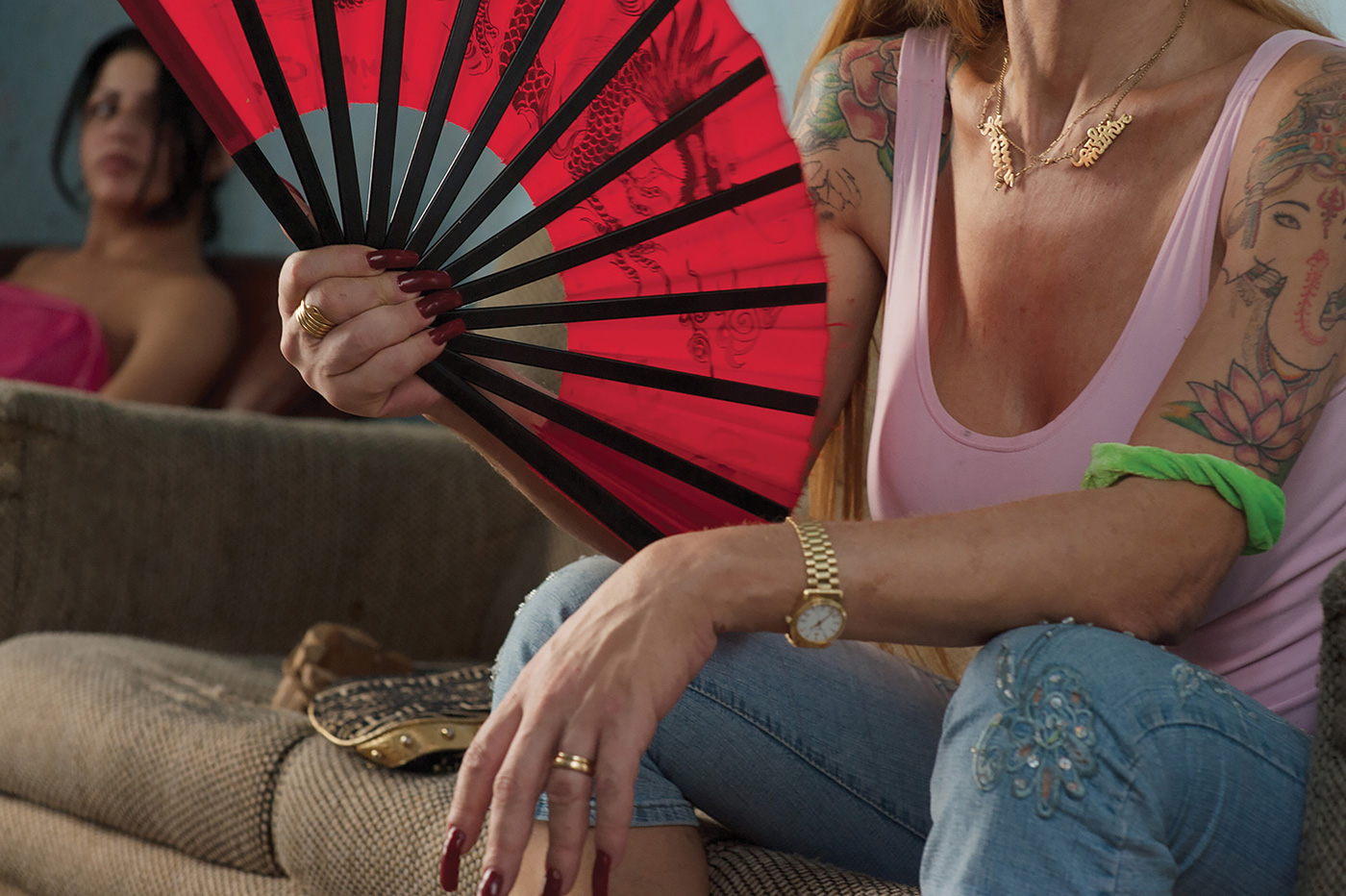
La Grande Dame Homme de Rio, ( 17min.) formaat 16:9 For artist Diana Blok, meeting the infamous Luana Muniz, the Brazilian transvestite activist known for sheltering other transvestites and transsexuals in her large run-down house downtown Rio de Janeiro, was no chance encounter. Unforgettable in a myriad of ways, Luana was also one of the creators of a project that offered education to the trans community, including a program around HIV awareness. She was someone you did not ‘mess around with’, in and ahead of her time, known in Rio’s underground scene as ‘la grande dame’ of the transvestite and transexual prostitution scene. She was intelligent, sharp and clever enough to have made a good living for herself, so that her personal retreat was none other than a grand old house where 30 other sex workers lived. This is where Diana made the interview, shot the film and took the photographs. Luana passed away in 2017 aged 59, due to a cardiac arrest following a strong pneumonia, six years after the material was made. This short raw film feels like a ‘divine souvenir’ of a memorable life within the LGBTQ community in a country where prejudice and crime against these individuals is rated as one of the highest worldwide. Direction and Camera : Diana Blok Editor : Reinier Zoutendijk La Grande Dame Homme de Rio, ( 17min.) formaat 16:9
Diana Blok (b. 1952, Montevideo) is a Dutch-Uruguayan, self-taught visual artist whose work centers on identity, gender, sexual diversity, and cultural heritage. She studied Sociology in Mexico City before relocating to Amsterdam in 1974, where she began her lifelong dedication to photography. She later expanded her practice to include the intersection of photography and film. A multilingual artist shaped by her diasporic background, Blok is known for her poetic and confrontational visual language. Her work consistently challenges conventional narratives and explores underrepresented voices across cultures. Her groundbreaking portrait series Adventures in Cross-Casting found new life in Brazil, evolving into Gender Monologues—a video installation created in collaboration with interactive designer Pawel Pokutycki. Since 2016, it has been exhibited in Rio de Janeiro, Brasília, Paramaribo, Valencia, and The Netherlands. In addition to her artistic practice, Blok is an active educator and guest lecturer at fine art academies across Europe and internationally. In 2024, the Cobra Museum ( NL) held a retrospective ' I challenge you to love me' ( 50 years overview) co-curated by Hripsime Visser, former photography curator in the Stedelijk Museum Amsterdam.
Diana Blok
Gender Monologues
Installation vidéo | 4k | couleur | 34:49 | Pays-Bas, Brésil | 2016
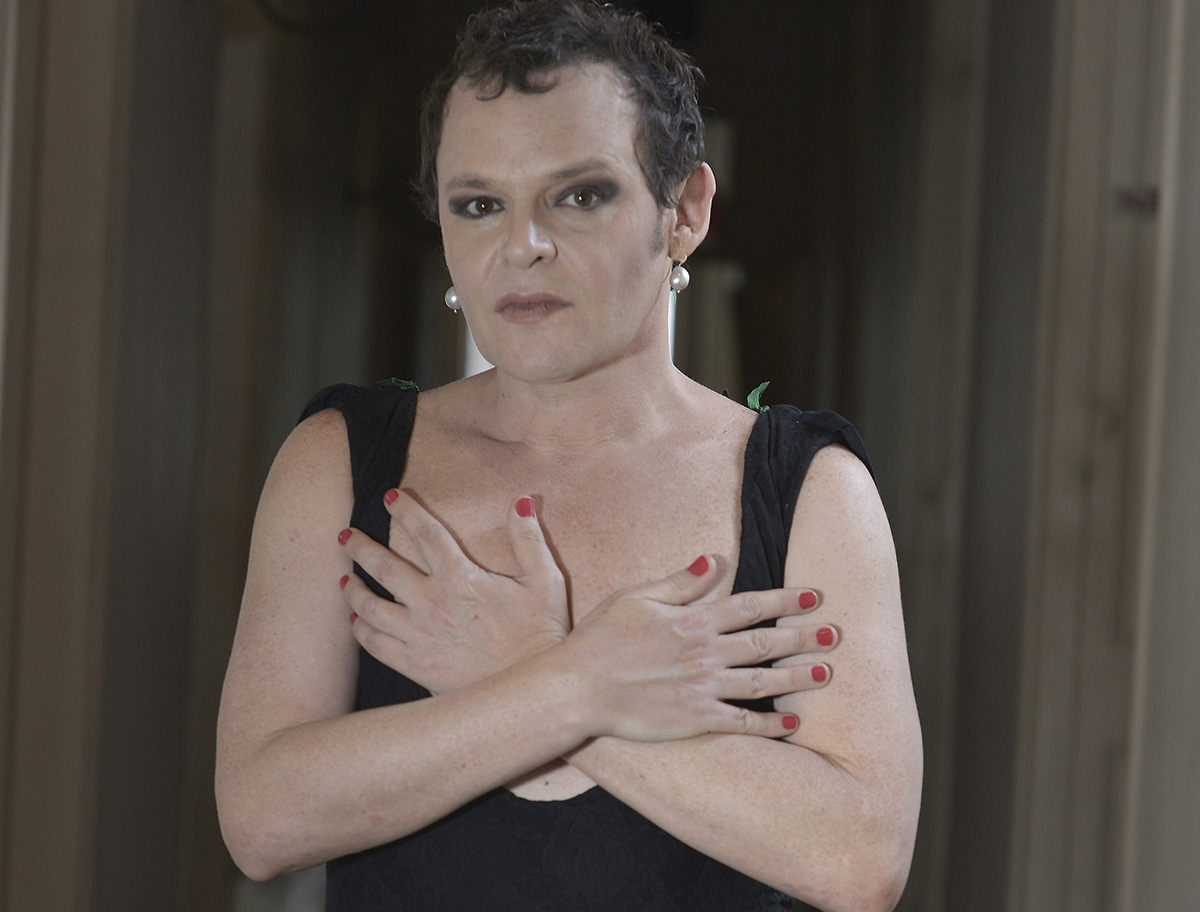
The installation consists of twelve filmed life-size portraits of actors viewed on six screens, each impersonating their favourite character of the opposite sex, performed in six-minute monologues. In total the installations lasts 72 minutes. The monologues are extracted from, or inspired by lines delivered by iconic characters in drama and literature, both historical and contemporary, criss-crossing time, space and language. During the 72 minute-installation all actors remain visually present, while only one voice speaks at a time. Between silence and the spoken word, the intrinsic tension of male/female border zones is redefined. The result is multidimensional: portraits of our time containing speeches and visions that bring revealing thoughts and insightful conversations about identity, revolution and desire in what feels like a personal confrontation with each actor. We challenge static, mental and cultural conventions by giving back the imagination to the limitations on gender and sexual identity.
Diana Blok is a self-taught visual artist born in Montevideo, Uruguay (1952), she lived in Mexico, Guatemala and Colombia before choosing Amsterdam as a base from which she could function more freely as a female artist. Her nomadic background allows Blok to capture different cultures and identities in her photography and video installations, challenging the structures of the established order as an inspirator, innovator and connector. She investigates subjects as identity, gender, sexual diversity, family structures and culture with poetic and confrontational imagery. In the past 6 years her work evolved into interactive-video installation ’Gender Monologues’, unsettling the gender binary and performing archetypes of femininity and masculinity blurring the disciplines of the moving image, performance and literature. She has had numerous exhibitions worldwide, received the grant for Established Artist from the Mondriaan Foundation in 2020 and will hold a retrospective in the Cobra Museum for Modern and Contemporary Art (NL) in 2024.
Ansuya Blom
Hither come down on me
Film expérimental | 16mm | noir et blanc | 11:15 | Pays-Bas | 2007
"Hither come down on me?" est le troisième et dernier volet de la série "Cowboys et Indiens". Comme dans les deux parties précédentes, "Chapter Three" et "Nervous", l?anxiété domine. C?est ici le langage qui émeut, et produit une expérience auditive. Dans ce troisième chapitre, la perception de la première personne du singulier est déformée par l?expérience de l?espace, tandis que dans "Nervous", la nature transformée en environnement de tournage peut être perçue comme doublement négative, car elle est à la fois familière et étrangère. Dans "Hither come down on me", l?anxiété est évoquée par le biais d?une confrontation avec la ville, cet environnement externe qui est littéralement opposé à la sphère domestique. Le protagoniste expérimente ce qu?il voit et entend comme une forme directe de communication, une voix s?adressant directement à lui et lui donnant des ordres.
Ansuya Blom travaille comme artiste depuis 1977. Elle est peintre et réalisatrice. Son travail traite de l?individu et de sa relation avec le monde interne et externe. La première personne du singulier est le moyen employé pour réfléchir à cette relation de l?individu au monde et aux stratégies qu?il emploie pour gérer l?anxiété. Dans les films d? Ansuya Blom, le monde est perçu au-travers des yeux et oreilles du protagoniste. Son travail a été exposé dans de nombreux musées et galeries aux Pays-Bas et ailleurs. Une exposition individuelle de ses peintures et films a été organisée au centre d?art de Camden, à Londres, ainsi qu?à la galerie Douglas Hyde de Dublin et au Stedelijk Museum d?Amsterdam. Ses films ont notamment été diffusés au Musée d?Art Moderne de New York.
Ansuya Blom
Nervous
Vidéo expérimentale | dv | noir et blanc | 9:21 | Pays-bas | 2004
Court-métrage basé sur une histoire écrite par Robert Walser. Il y décrit son état d'esprit, lequel oscille quelque part entre l'optimisme et le désespoir. Ses pensées sont lues à haute voix lors d'une promenade à la campagne. Doucement on passe de la nature extérieure à la nature intérieure.
Ansuya BLOM (Groningen 1956) a etudié de 1973 à 1974 à la Royal Academy de La Hague et de 1974 à 1976 aux Ateliers '63 à Haarlem. Ses peintures ont été notamment exposées au Stedelijk Museum à Amsterdam. Elle a également participé à de nombreuses expositions collectives à travers le monde.
Ansuya Blom
SPELL
Vidéo | hdv | noir et blanc | 6:31 | Pays-Bas | 2012
SPELL is a short video documenting the thoughts of a man who seems to be in a state between sleep and wakefulness. The sounds he hears within the space where he lives seem to invade his thoughts and get amplified. They mix with associative sounds from his past. Meanwhile the reality around him appears to deform at times. In this in-between world he tries to het a grip on his state, contemplating early beginnings but at the same time mocking his own state, the futility of actions and the daily rituals of existence. The images for this film were shot in the Doesburg Foundation in Meudon, during a residency in 2010 - 2011. The house, with it`s historic past bore many traces from history and the people that had stayed there. This absent presence was a motivating factor in making this film. The words of Franz Kafka speak for themselves and it was the strange mix of humour and despair that attracted me.
Biography Ansuya Blom Ansuya Blom works as an artist using the media of drawing and film. Her work focuses on the individual and the relation to the internal as well as the external world. ?The first person singular? is used by way of thinking about the position of the individual. Ansuya Blom is interested in the strategies this individual adopts in dealing with anxieties that are induced by alienation. In her films the world is seen through the protagonists` eyes and heard through their voices. Ansuya Blom`s work has been exhibited extensively in both galleries and museums in the Netherlands as well as abroad. Solo-exhibitions of her work have been held at Camden Art centre, London, Douglas Hyde Gallery in Dublin, and the Stedelijk Museum in Amsterdam. The Museum of Modern Art in New York has been among the venues where her films have been screened. She is an advisor at the Rijksakademie van beeldende kunsten in Amsterdam.

Ansuya Blom
Misty Man
Fiction expérimentale | mov | couleur | 15:48 | Pays-Bas | 2024
MISTY MAN – SYNOPSIS A young man has been accused of theft. We see him behind barbed wire, falling in slow motion onto the grass. The artist Ansuya Blom alternates this powerful image and others that she shot in Suriname, such as a group of pelicans screeching around a fishing boat in Paramaribo, with 8 mm recordings of a first communion procession from her family archive. Meanwhile we hear a woman’s voice reading from the 1982 book Disorderly Families by Arlette Farge and Michel Foucault, a collection of letters from the French Bastille archives. Many of the letters are pleas to the court to lock up a spouse or child to prevent the entire family falling apart. We also hear the battle song of the White Horse Society of the Dakota people in the US. In these ways, Misty Man offers food for thought about mental as well as physical confinement, while never making a clear-cut statement on the subject. The image of a young boy wearing a communion suit is significant in this context, with a digital zoom transforming his face into a pixelated, undulating surface—no matter how far we zoom in, we will never know the stirrings of his soul.
Since 1978, Ansuya Blom (Groningen, 1956) has built up an oeuvre that explores the boundaries of the world of our inner experiences. In drawings, collages, films and installations, she unravels the complex relationships humans maintain with themselves and the external world. These relationships often involve misconceptions and confusion. Solo exhibitions of Ansuya Blom’s work have been held at Camden Arts Centre in London; The Douglas Hyde Gallery in Dublin; the Stedelijk Museum in Amsterdam; and Huis Amelisweerd in collaboration with Centraal Museum Utrecht. Her work was part of the Aperto 90 at the Venice Biennal. Her films have been screened at The International Film Festival Rotterdam, Rencontres Internationales Paris-Berlin, IDFA and The Museum of Modern Art in New York. Her work is part of various private and public collections such as Stedelijk Museum Amsterdam, Museum Boijmans van Beuningen Rotterdam, Tate Modern London and Centraal Museum Utrecht. In recent years, Eye Filmmuseum in Amsterdam has been working with the artist to conserve and restore her films. Ansuya Blom is a regular advisor at the Rijksakademie van beeldende kunsten in Amsterdam. In 2020 she was awarded the Dr. A.H. Heineken Price for Art for her oeuvre.
Maria Blondeel, Michael VORFELD
Wireless, Even Through Walls
Vidéo expérimentale | dv | couleur | 9:0 | Belgique, USA | 2005
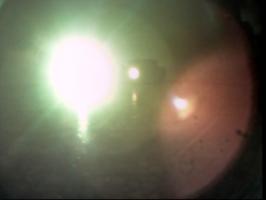
Une improvisation vidéo avec deux Kodak Ektagrahic III E Plus Slide Projector avec pax et transpax ; connexion pour contrôle externe, oscillateur FM avec senseur de lumière, enregistreur numérique et lentilles vidéos dirigés par Maria Blondeel : lampe incandescente verte, différentes ampoules, tube fluorescent, microphones, repiquages et appareillages électriques divers manoeuvrés par Michæl Vorfeld. Enregistré à Hyde Park Art Center, Outer Ear Festival of Sound ESS, Chicago, Illinois, États-Unis, 2002. Produit par Blondeel/Vorfeld 2005.
En tant que duo réalisant des spectacles, BlondeelVorfeld ont été actifs depuis 1996 ; L'un est artiste en sons éléctroniques et l?autre est percussionniste, l'un projetant la lumière, l?autre utilisant les sources de lumières presque comme des objets. Ce que l?on entend et voit est un dialogue en contrepoint entre des ondes carrées de lumière contrôlée et analogues et des sons électriques accompagnant ou accompagnés par des évènements de lumières projetée sur et dans des lumières, blanc éclatant et des couleurs jaunes, bleues ou rouges incandescentes. Maria Blondeel est une artiste intermédia basée à Ghent, en Belgique. Elle a fait des installations de lumière sonique ainsi que des ?uvres spécifiques à certains lieux pour des véhicules, des téléphones et de la radio. Elle a aussi participé à des concerts et des performances en collaboration avec des musiciens et produit des travaux pour des CD et des vidéos. Son travail a été exposé dans des galeries, des musées et des festivals en Europe, aux Etats-Unis et en Asie. Micheal Vorfeld est basé à Berlin. C?est un musicien et un artiste visuel. Il joue des percussions et des instruments à cordes qu´il créé lui-même, et réalise des ?uvres dans le domaine de la musique expérimentale, la musique improvisée et l?art sonore. Il réalise aussi des morceaux sonores électro-acoustiques. Son travail visuel se concentre sur l?utilisation de la lumière. Il crée des installations et des spectacles avec de la lumière, souvent spécifique aux lieux et en combinaison avec dès sons électriques ou instrumentaux. Sa liste d?activités comprend de nombreux concerts, spectacles et performances en Europe, aux États-Unis, en Asie et en Australie.
Jaygo Bloom
Continue play?
performance | dv | couleur | 5:46 | Royaume-Uni | 2005
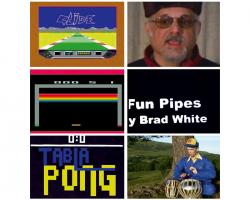
`CONTINUE PLAY?` est l?un d?une série de projets inspirés par des jeux et qui vous présente des classiques des jeux d?arcade des années 70 : `BREAK-OUT` `ELEKTRAGLIDE` et `PONG` avec une amélioration de l?accompagnement audiovisuel. Les techniques de ?jeux? particulières de JAYGO BLOOM?S apportent la structure et la tempe pour une réponse Audio Visuelle alternative, on répond construite à partir ?tutoriaux personnels musicaux? mal expliqués tout autant que télécharger au hasard.
Ramon Bloomberg
Glacis
Vidéo | hdcam | couleur | 35:7 | Royaume-Uni, France | 2013
Glacis The film explores the remnants of the French bourgeoisie, a world slowly but inexorably undermined by the forces of acceleration and globalised finance capitalism. dividing the sequences are still frames taken from the history of French aviation, the developments of which were a particularly bourgeois pastime of the 18th and 19th centuries enabled by family industrial infrastructure. The notions of speed and acceleration associated both with flight and post industrial capital are contrasted to slowness and investment associated with bourgeois values and the old industrial elites. Self professed Bourgeois are filmed in their family (secondary) homes performing role playing games that they themselves have chosen. These sequences are followed by "cinematic" sequences designed by the performers and produced by the film maker. The French aviation threads that bookend the chapters are accompanied by a narrated voice and composed of a single frame image. That image degrades over time. The degradation of the image is a result of algorithmic scripting that obliterates the traditional notion of decay by performing in fast forward, 1,000 years of the opening and closing of a jpeg image until the image itself is degraded to the point of being unrecognisable. This process formally performs the undermining - by technologies - of the temporal weapon of tradition and manners mobilised in the project of bourgeois hegemony. Glacis is an ancient military term that denotes a field of view unimpeded by obstacles where the enemy other is clearly visible, figured against the nothingness.
Ramon Bloomberg: Biography: Born 1971 Sheffield, United Kingdom. French / British nationality. Worked extensively as a film editor and film director on projects from fiction to documentary to music video and commercial. Currently PHD candidate Art Research, Goldsmiths College, London.

Felix Blume
Luces del Desierto
Vidéo expérimentale | mov | couleur | 29:50 | France, Mexique | 2020
Dans l’obscurité du désert mexicain, d’étranges lumières apparaissent. Les habitants décrivent celles qu’ils ont vues: une flamme, une boule de feu, une ampoule volante, des rayons qui tombent du ciel, ou une énergie lumineuse. Une histoire commune, racontée à plusieurs voix, de forme chorale, est dessinée par les expériences individuelles. La rencontre avec ce phénomène lumineux peut être surprenante, dangereuse, voire fatale. La nuit n’est pas si noire qu’elle le semble, et le désert est rempli de tous types d’êtres vivants. Le vide appartient à toutes et à tous. "Luces del Desierto | Lumières du désert" est une invitation à ouvrir grand les yeux dans la pénombre, et à écouter les sons cachés dans le noir. Un film d’horreur sonore, dans les ténèbres du désert.
Félix Blume (né en France, en 1984) est artiste sonore et ingénieur du son. Il vit actuellement entre le Mexique, le Brésil et la France. Il façonne le son comme une matière pour créer ses pièces sonores, ses vidéos, ses actions ou installations. Son travail, centré sur l’écoute, nous invite à transformer notre perception de l’environnement. Il utilise l’espace public tant comme lieu d’expérimentation que comme lieu de présentation de ses projets, effectués souvent en collaboration avec des groupes de personnes. Il est intéressé par les mythes et l’interprétation contemporaine que l’on peut en faire, par le dialogue entre les êtres humains et le contexte – naturel ou urbain – qu’ils habitent, par ce que les voix nous racontent, au-delà des mots. Ses pièces sonores ont été diffusées par des radios du monde entier. Il a reçu le prix du “Paysage sonore” pour sa pièce vidéo-sonore "Curupira, bête des bois" (2018), ainsi que le prix “Pierre Schaeffer” pour "Les Cris de Mexico" (2015), au festival Phonurgia Nova Awards, Arles (France). Il a participé à de nombreux festivals et expositions, notamment au LOOP Barcelona, Barcelone (Espagne) [2015]; au CCCB – Centre de Cutura Contemporània de Barcelona, Barcelone (Espagne) [2015]; au Tsonami Arte Sonoro, Valparaíso (Chili) [2015, 2018]; à la Fonoteca Nacional de Mexico (Mexique) [2016]; au Ex Teresa Arte Actual, Mexico (Mexique) [2016, 2018]; au CENTEX, Valparaíso (Chili) [2017]; au festival CTM, Berlin (Allemagne) [2017]; au Belluard Bollwerk Festival, Fribourg (Suisse) [2018]; à Arts Santa Monica, Barcelone (Espagne) [2018]; à la Biennale de Thaïlande, Bangkok (Thaïlande) [2018]; et à la Berlinale, Berlin (Allemagne) [2019].
Florin Bobu
Best Man
Vidéo expérimentale | dv | couleur | 1:20 | Roumanie, Serbia | 2007
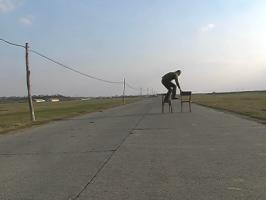
Une voix annonce : "En Serbie, l'homme le meilleur peut demander ce qu'il veut/Il peut même demander à traverser la rue sur des chaises." L'artiste traverse une rue déserte sur deux chaises.
L'artiste visuel et curator indépendant Florin Bobu est né en 1978 à Tecuci (Roumanie) et vit à Iasi (Roumanie). Il est diplômé de l'Academy of visual arts and design AKI (Pays-Bas) et a participé à plusieurs évènements d'art contemporain à Rotterdam, Munster et Anvers.
Raphaël Boccanfuso
Copyright (mise en vente)
Vidéo | dv | couleur | 1:30 | Suisse, France | 2007
Enregistrement de la mise en vente des droits de propriété et d`exploitation du verbe "avoir" à Drouot-Richelieu par Cornette-de-Saint-Cyr.
C?est au travers d?une attitude que l?oeuvre plurielle de Raphaël Boccanfuso trouve sa problématique d?ensemble, une attitude amusée et provocante qui met au défi toutes sortes de schémas référentiels. Son travail n?est pas d?ordre biologique, sa méthode relève pourtant d?un mode de processus viral. S?insinuant dans les failles de codes exigus, elle se plait à forcer les limites toujours trop marquées de systèmes de pensées étriqués. Si sa production peut être dérangeante, il faudrait l?assimiler à une rageante démangeaison plutôt qu?à une fatale pathologie. Car l?artiste n?a d?autre prétention ou revendication que celle d?affirmer sa liberté de création. Un slogan anarchiste clame qu?il faut mordre la main qui vous nourrit, pour sa part Raphaël Boccanfuso sait aussi remercier à outrance, il dit ainsi son indépendance avec une joyeuse dérision.
Giuseppe Boccassini
RAGTAG
Film expérimental | dcp | couleur et n&b | 85:0 | Italie, Allemagne | 2022
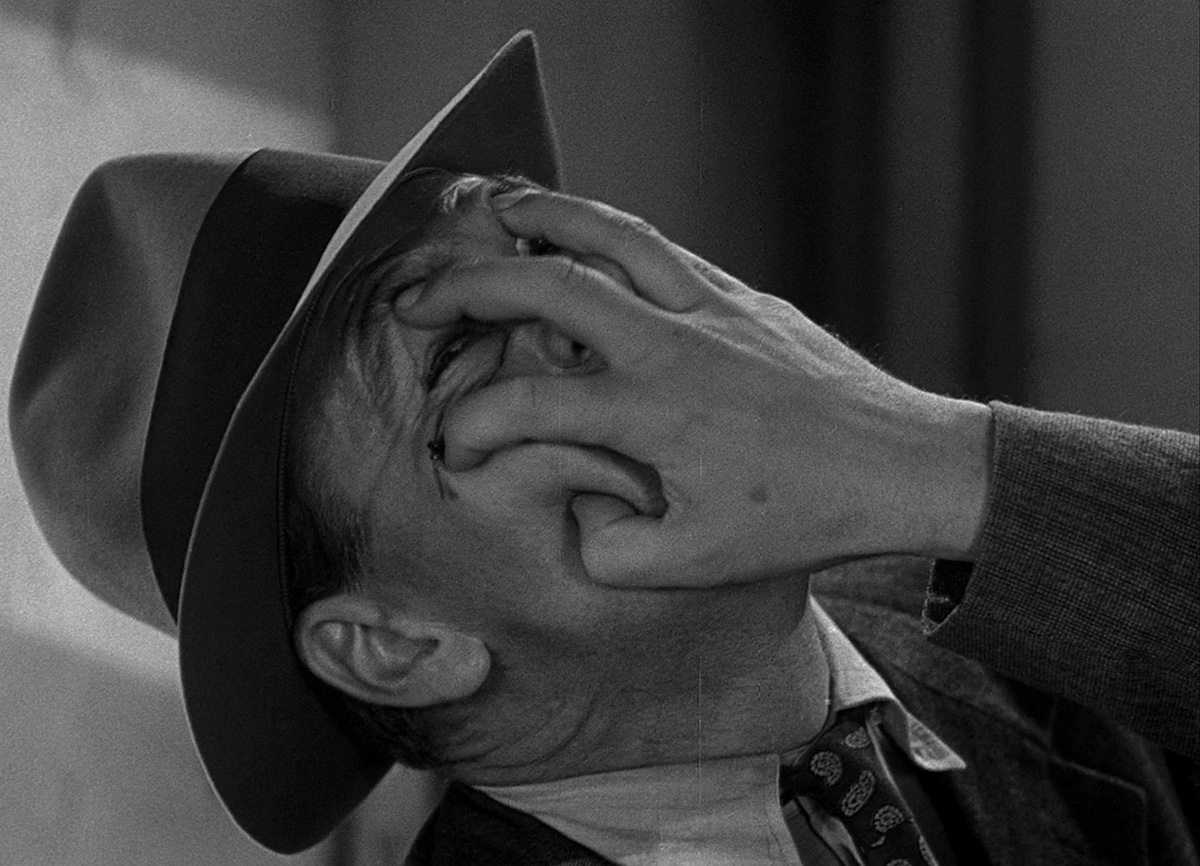
An intriguing, well-chosen collage of compelling moments from noir cinema, skillfully attuned to the social fantastic and the oneiric quality of the films. James Naremore, author of More Than Night: Film Noir in Its Contexts. An atlas of film gestures and Pathosformel: the montage - better the disassembly - isolates moments from the narrative and separates bodies from events, opening up to the unthinkable and the invisible of film noir. Ragtag, thus, becomes an immense archive of the imaginary that, far from being sequential and historical, becomes intensive and organic: a film-experience beyond film as such. Federico Rossin, film historian.
Giuseppe Boccassini is an Italian filmmaker mainly working in Germany and Italy. He graduated in film theory at the University of Bologna and film direction at The New University of Cinema and Television, Cinecittà, Rome. His work has been shown in several international film festivals and exhibitions, including the 79th Mostra Internazionale d'Arte Cinematografica, Venice, Italy FID Marseille, France, Edinburgh International Film Festival, Scotland, Ji.hlava International Documentary Film Festival, Czech Republic, Jerusalem IFF, Torino Film Festival, Italy, IndieLisboa, Portugal, FESTACURTAS BH, Brasil, Crossroads SF, USA, Avvistamenti, Italy, Punto de Vista, Spain, Trentino History Museum, Italy, Microscope Gallery, Brooklyn, NY, Pesaro Film Festival, Italy. Light Cone Paris distributes his entire film production. By transforming and manipulating various sources of archival material, his work reflects upon the notion of proximity in contemporary media. The director considers film as "a phallic conquerer that, folding in on itself, now flaccid deus ex machina, observes itself from the inside like a lysergic membrane that slowly founders between the folds of its material." His most recent collaborations include the film editing for Aldo Tambellini's solo exhibition Black Matters at ZKM Karlsruhe, Germany, and he is the artist for Chicago Film Archives' 2018 Media Mixer. He is in charge of programming at Fracto Experimental Film Encounter held yearly at Kunsthaus Acud, in the heart of Berlin.
Katinka Bock
Dort ist überall und wir sind immer HIER
Doc. expérimental | dv | couleur | 9:50 | Allemagne | 2005
LA-BAS, c'est partout, et nous sommes ICI. Vidéo en 16 chapitres (111 min.), 2005 Extrait (chapitre 1): ALAMANCI (9 min.) Le film "LA-BAS, c'est partout, et nous sommes ICI" est un documentaire sous forme d'interview consacré au thème du retour en Turquie de jeunes d'origine turque venant d'Allemagne. Les 14 personnes interrogées ont entre 15 et 40 ans, vivent à Berlin, Ankara ou Istanbul, sont turques, kurdes, allemandes ou simplement elles-mêmes. Leur point commun: tous sont les enfants ou les petits-enfants d'immigrés turcs, ont grandi en Allemagne et sont retournés en Turquie entre 12 et 20 ans. Le film montre des systèmes et des points de vue déterminés culturellement, et s'attache à dévoiler les strates politiques, personnelles et géographiques en mettant l'accent sur des mécanismes strcturels, et non individuels. Ceux qui sont rentrés sont confrontés à des questions d'identité, d'intégration, de délimitation, d'exclusion en Allemgne comme en Turquie, que les autres, restés sur place, ne se poseront jamais. Ils parlent dans le film de ce que signifient des mots comme ici et là-bas, partir et arriver, s'adapter et être à l'écart, être entre les deux. Au cours de la conversation, des notions évidentes disparaissent de notre géographie mentale: où est donc ICI? Quand étais-tu LA-BAS? Qui sont les AUTRES? Quel est le lien entre le propre déracinement culturel et le regard stigmatisant du monde extérieur? La dissolution du lieu et de l'appartenance culturelle se répercute dans la forme. Le lieu, la situation et l'individu ne se défninissent que par la parole et la présence d'un interlocuteur, pas par le lieu de tournage. Les 14 personnes parlent en 16 chapitres, chacun étant une clé pour comprendre un autre. Ce travail est comme un livre dont on peut lire indépendamment les chapitres.
Katinka Bock (née en 1976 à Francfort sur le Main) a étudié l'art et la sculpture à Berlin, Dresde et Paris (diplômée en 2002, master avec Inge Mahn en 2004). Elle a obtenu des bourses et des prix comme le Prix Marion-Ermer (2002) et le soutien aux jeunes artistes de la ville de Berlin en 2004. Elle termine actuellement son post-diplôme à l'ENBA de Lyon et sera accueillie en 2006 en résidence à La Box (Bourges). Katinka Bock vit et travaille à Berlin et Paris.
Sebastian Bodirsky
Kraft, Herrlichkeit
Fiction expérimentale | dv | couleur | 13:20 | Allemagne | 2005
Kraft, Herrlichkeit (force, magnificence) est le produit d?une recherche sur les sujets et l?idéologie néo-conservateurs. La vidéo commente un récit de l?auteur contemporain Georg Klein en utilisant les éléments de ce récit et en opérant une rupture. Le résultat est une fiction bouleversante d?une exaltante efficacité, des hiérarchies transparentes et une foi inébranlable en la grâce de la compétition. Sur la page web consacrée au film www.kraft-herrlichkeit.de on peut lire les textes de base dans une optique comparative.
Sebastien Bodirsky (né en 1981) vit à Berlin; il étudie actuellement dans la masterclass « film expérimental » du professeur Heinz Emigholz à l?Université des Arts de Berlin. Son travail cinématographique développe une réflexion sur la connaissance, l?observation et l?intervention.
Hannes Boeck
New Hefei
Fiction expérimentale | | noir et blanc | 10:11 | Autriche, Chine | 2008
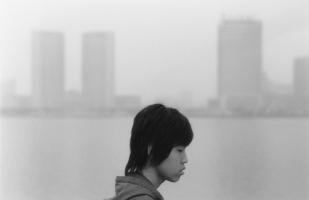
"New Heifei" enstand 2007/08 nach einem mehrmonatigen Aufenthalt in Hefei, China. Der 10 minütige in schwarzweiß gedrehte 16mm Film verhandelt die Darstellung von radikaler wirtschaftlicher Prosperität und der von Ihr geformten Räume. Dabei gelangt ein filmästhethischer und erzählerischer Kanon zur neuerlichen Anwendung, wie er im europäischen Kino ¬ über den italienischen Neorealismus hinaus ¬ etwa in Antonionis 1961 gedrehten Film "La Notte" die scheinbaren Ränder der städtischen Landnahme und ihre BewohnerInnen zu ebenbürtigen Protagonisten eines sich abzeichnenden kapitalistischen Dramas machte. "New Heifei" ist ein Experiment, bei dem Ordnung und Funktion von Drehorten und Figuren im Film und die an sie verantworteten Informationen getauscht werden. Der für eine Ausstellung konzipierte Film besteht auf die Konventionen realistischer Bildsprache um die ¬ in diesem Fall zeitlich und räumlich versetzt stattfindenden ¬ gesellschaftlichen Aufbrüche zu beschreiben.
Hannes Böck wurde am 19. 12. 1974 in Wien geboren. Nach einer Ausbildung zum Fotografen studierte er Konzeptuelle Kunst bei Renée Green an der Akademie der Bildenden Künste, Wien, und Experimentelle Filmgestaltung bei Heinz Emigholz an der Udk Berlin. Er ist freischaffender Künstler und lebt in Wien.

Radu Boeru
The Dark Side of the Flag, part 02 – “One Hundred”
Vidéo | mp4 | couleur | 10:0 | Roumanie | 2018
Happy 100, Romania. You`re old today, yet younger than most of Europe`s countries. Why linger on the past, since you let it be destroyed by ignorance and carelessness? Why dream of a bright future since you keep birthing corrupted leaders and let them pollute you? Why didn`t I leave you when all left? Maybe because you would have felt a little emptier without me? Or I would without you? I slap myself 100 times for your inability to become what I want you to become, my sad backward country. Would you slap yourself for me too?
Radu B. Boeru Date of birth: 30. 09. 1977 E-mail: radu.boeru@gmail.com Studies: 1996 - 1998: Graphics Dept. at the National Art Institute in Kishinev, Republic of Moldova. Specialisation: classical graphics, engraving techniques. 1998 - 2002: Graphics Dept. at the National University of Arts in Bucharest. Specialisation: digital graphics & advertising. I worked since 1999 in advertising, first as a copywriter then as an art director and creative director. Since 2013 I work at my own studio and experiment with different art genres, video being by far my favourite. I also experiment with painting and sculpture, audio recordings and poetry. At the moment I work on two lyrical journals and a whole series of short experimental films, hopefully will rise some funds to start a long feature film in the near future.
Thomas Bogaert
I am a star and i come and i go
Vidéo expérimentale | betaSP | couleur | 2:18 | Belgique | 2005
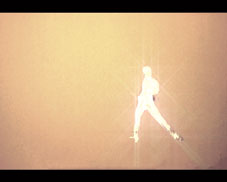
J´avais depuis longtemps prévu de faire quelque chose avec la légendaire scène de danse du film "la fièvre du Samedi Soir". J´ai décidé de créer une boucle dans laquelle on voit le danseur aller et venir, encore et encore, comme une sorte de dervishe occidental. J´ai ressenti le besoin de dessiner le danseur, comme pour créer une figure plus universelle; il m´est donc apparu comme logique d´utiliser les techniques d´animation classiques. 1700 dessins ont été nécessaires afin de représenter le danseur argenté aussi précisément que l´original. Lorsque je colorie le danseur d´une couleur argentée opaque, je ne garde que l´essentiel, les mouvements. Car au final, l´élan iconographique du film ne tient qu´à sa fantastique chorégraphie. J´ai gardé la bande-son originale, mais passée à l´envers. De ce fait, je décale la synchronisation, sans pour autant perdre le rythme ni le son délirant des Bee Gees. Les taches et les points sur l´image font partie du jeu. Le tout résulte en la création de nouveaux accents. Parfois des lettres apparaissent, épelant la phrase titre "je suis une star et je vais et viens" (I am a star and I come and I go). Ma vidéo peut servir de point de départ d´une discussion sur le sens du succès, ou alors vous pouvez juste la regarder et apprécier ...
Bogaerts utilise souvent ses propres archives vidéo comme point de départ pour ses films. Parmis elles il choisit et créé des vidéos et des boucles en 16mm. Ces dernières années il a beaucoup basé ses films sur les icônes de son enfance, qu´il examine et définit par rapport au présent, comme dans "the Superfast Series", "A Study for Bruce", et "I am a star, I come and I go". Les films conduisent essentiellement à une série de dessins ou d´objets qui sont montrés en même temps que le film. Concernant sa technique, il s´efforce toujours d´utiliser de nouvelles combinaisons et applications de dessin et de peinture, de même que des techniques de filmage. Dans sa dernière oeuvre il a souvent recours à la technique d´animation.
Baptiste Bogaert, Noëlle Bastin
On sourira de nous
Fiction | dcp | couleur | 65:0 | Belgique | 2022
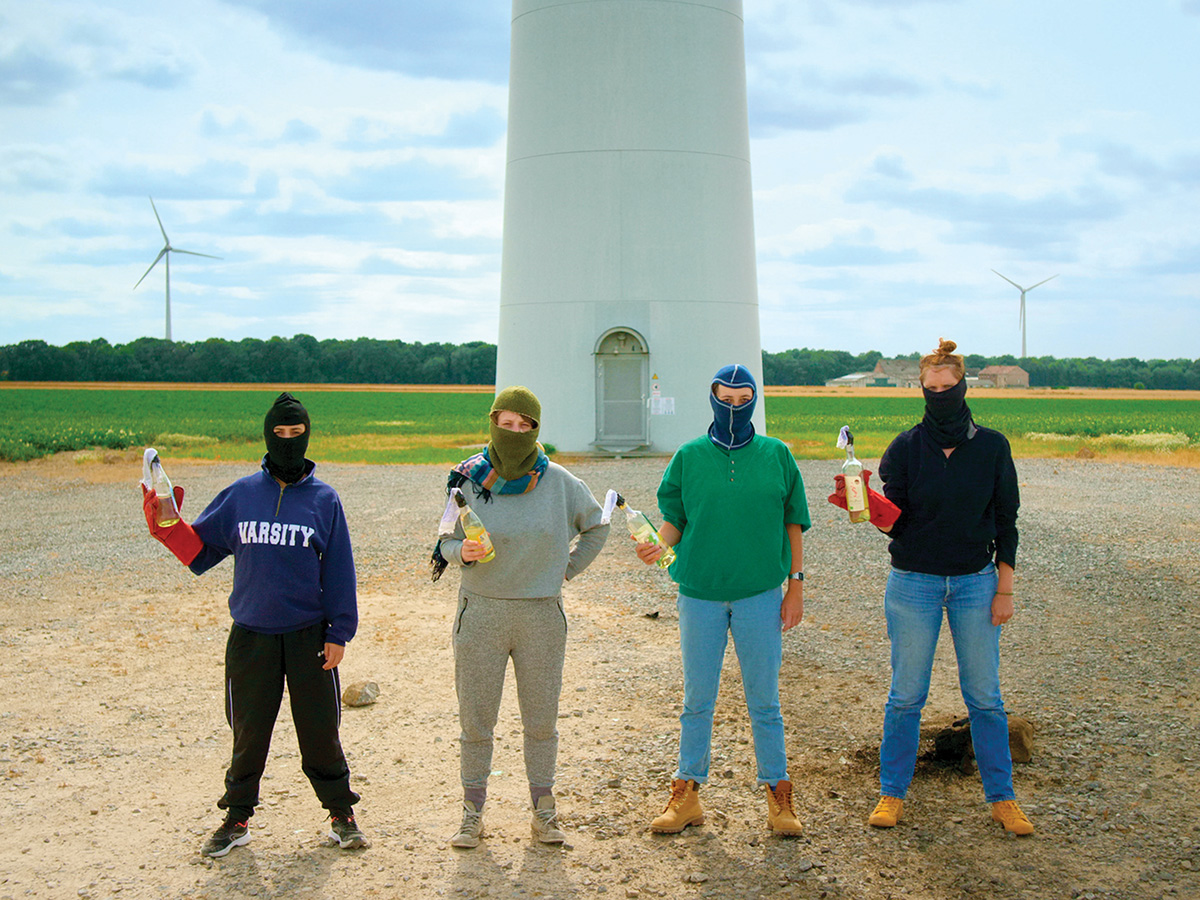
Bruxelles, 2019. Nous proposons à quatre amies de vingt ans de se placer dans un espace de fiction pour réfléchir à comment ébranler la société capitaliste. Elles décident de faire exploser un centre commercial du centre de Bruxelles et se retrouvent confrontées à la difficulté de faire groupe sans trahir ses idées, de passer à l’acte sans douter. Quels rôles doivent-elles jouer pour s’imaginer agir? Le changement viendra-t-il d’un attentat? La vie et l’amitié sont-elles conciliables avec l’acte radical qu’elles imaginent?
Baptiste Bogaert (1990) et Noëlle Bastin (1991) sommes un duo de réalisateur.trice.s belges résidant à Bruxelles. Le cinéma nous permet de réfléchir au monde d’aujourd’hui. À travers la forme propre à chaque film, nous cherchons à voir et à entendre ce qui fait notre époque, ce qui la travaille, comment elle nous modèle. Nous aimons travailler à cheval entre la fiction et le documentaire - où la fiction est un outil permettant de montrer le réel, ce qui a lieu. Pour les mêmes raisons, nos films sont souvent marqués par le travail en plan séquence et la collaboration régulière avec des acteurs non-professionnels. En parallèle aux films, nous concevons des installations vidéos.