Catalogue > Faire une recherche
Résultats pour : Tout le catalogue
Gregg Biermann
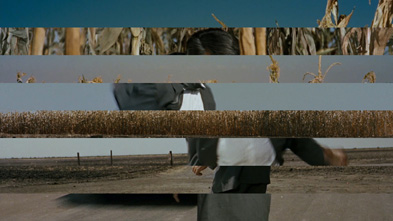
Cropduster Octet
Film expérimental | hdv | couleur | 5:32 | USA | 2011
One of the most iconic sequences in the history of Hollywood cinema (from Hitchcock?s North by Northwest) is deconstructed and reassembled to illuminate the patterns, rhythms and choreography of the original so as to break through and make for an eight banded kinetic tour de force. As the piece progresses the temporal displacement of each band gets closer and closer until they all unite into a remarkable grand finale. --John Columbus, Black Maria Film and Video Festival
Gregg Biermann is a video and multimedia artist whose work comes out of the avant-garde filmmaking tradition. His work takes advantage of digital technologies to advance rigorous compositional strategies.
Gregg Biermann
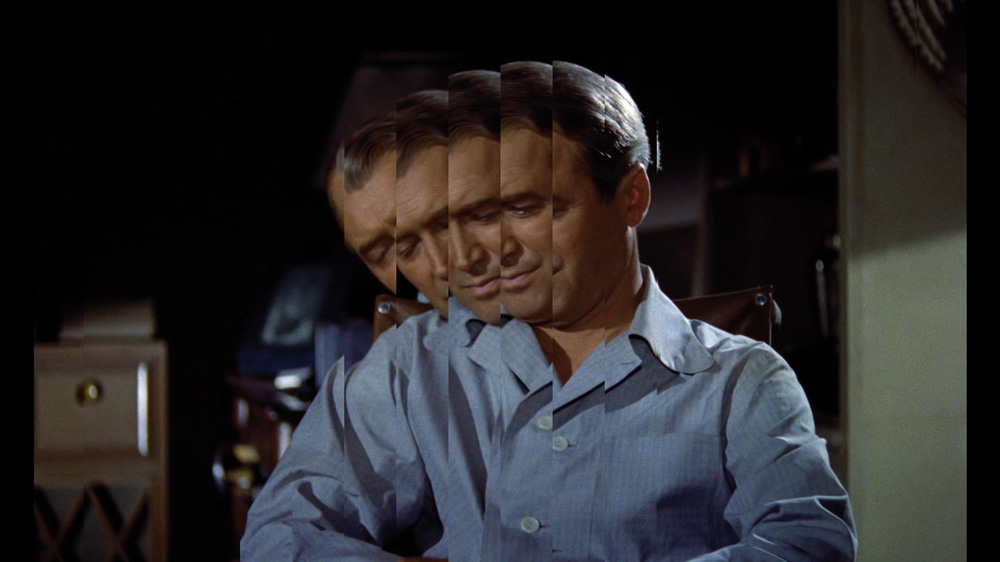
Iterations
Vidéo | hdv | couleur | 5:37 | USA | 2014
"In Iterations (2014), a sequence from Hitchcock’s Rear Window (1954) is sliced into nineteen columns, each moving at a slightly different speed, getting progressively faster from left to right. Only at one instant do all nineteen columns briefly align. This film invites us to experience different instants of the scene simultaneously, invoking our desire for time to cohere into a single instant but only briefly allowing for this satisfaction." — Jaimie Baron
“In this work Gregg Biermann has taken head-on some of the supreme moments of classical cinema and subjected them to a dazzling transformation in the digital domain. The results are exhilarating, surprising tours de force. They also have a zany quality that shows the artist to have a witty imagination. He is a prober into the hidden corners of cinema, and a master of computer-based wizardry.” — Larry Gottheim
Gregg Biermann
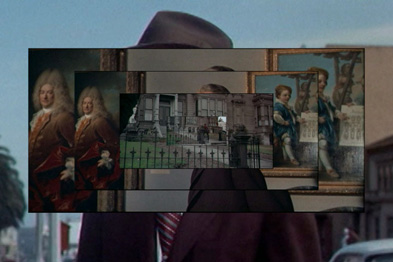
Labyrinthine
Vidéo expérimentale | dv | | 14:40 | USA | 2010
This is a recent piece in my series of computational transformations of iconic scenes taken from classic Hollywood films. Forty-one separate shots that have been appropriated and excised from the Hitchcock classic Vertigo are repeated and re-sequenced into a composite sequence of concentric rectangles. Each rectangle appears over the last and grows larger over time. The narrative of the original is all but lost and in its place is a hypnotic and meditative display of forms and sounds.
Gregg Biermann?s work is in the collection of FRAC Limousin has been exhibited internationally at Nam Jun Paik Art Center, Seoul, Korea; Museum of Modern and Contemporary Art Strasbourg; Festival Images Contre Nature, Marseille; Film Festival of Experimental and Different Cinemas of Paris; Rencontres Internationales, Paris; Electrochoc Festival, Rhones-Alpes; Centre Images, Vendôme, France; Osterreiches Filmmuseum, Vienna, Austria; European Media Art Festival, Osnabruek, Hamburg Film Festival, Germany; The Caracas Contemporary Art Museum; The National Cinematheque, Venezuela; Media Art Friesland, IMPAKT Panorama, Noordelijk Film Festival, The Netherlands; Optica International Festival of Video Art, Gijon, Spain;VIDEOEX, Zurich, Switzerland and INVIDEO, Milan, and Abstracta, Rome, Italy. His work has also been exhibited in the USA at the Yerba Buena Center for the Arts/San Francisco Cinematheque; Baltimore Museum of Art; Corcoran Gallery; Hunter Museum of American Art; National Gallery of Art; Cleveland Institute of Art; Anthology Film Archives; U.C. Berkeley Art Museum/Pacific Film Archive; Centraltrak Gallery, Univ. of Texas at Dallas; Weisman Art Museum, Univ, of Minnesota; California Institute of the Arts; Los Angeles Filmforum/Echo Park Film Center; ArtPace San Antonio; Hallwalls Contemporary Art Center; Visual Arts Center of New Jersey and the Jersey City Museum.
Gregg Biermann
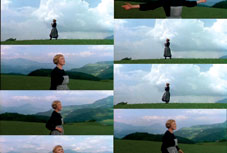
The hills are alive
Vidéo expérimentale | dv | couleur | 7:18 | USA | 2005
Dans "The Hills Are Alive" (Les collines sont vivantes), une scène iconique tirée de la comédie musicale Hollywoodienne à succès "The Sound of Music" subit une transformation par des effets d´écran fractionnés progressant en contrepoint. La mosaïque qui en résulte révèle des mélodies inoubliables et des dissonances retentissantes.
Gregg Biermann was born in 1969 in Brooklyn, New York. He graduated with Honours in Cinema from Binghamton University in 1991, and subsequently received an M.F.A. from the San Francisco Art Institute. He has been making films, videos, and multi-media pieces since 1988. These works have been exhibited internationally including exhibitions at Anthology Film Archives, Millennium, the San Francisco Cinémathèque, the Pacific Film Archive, the Documentary Film Society at the University of Chicago, Chicago Filmmakers, the Massachusetts College of Art Film Society, the Ontario Cinémathèque, and the Deutsches Filmmuseum. His works and activities have received critical attention in the San Francisco Bay Guardian, The Chicago Reader, and The Chicago Sun-Times. He has been collaborating with electronic music composer/performer Ron Mazurek for the past several years on a series of real-time music/video performances. He was a member of the Chicago x-film group, which mounted many programs of avant-garde films in and out of Chicago. More recently, he has done programming for the Robert Beck Memorial Cinema in New York. He has also written an avant-garde film including an article for the Millennium Film Journal on Nathaniel Dorsky's films, which was co-authored with his wife, Sarah Markgraf. Mr. Biermann has taught at Barat College, Horizons: the New England Craft Program, and is currently a Professor of Art at Bergen Community College.

Frank Biesendorfer
One
Film expérimental | 16mm | couleur et n&b | 1:30 | USA, Allemagne | 2016
.
Education: 1983 Pompano Beach High School, Florida. 1981-83 played Varsity Football. 1983-85 Palm Beach Junior College, Florida, studied Fine Arts. 1985-88 Military service U.S. Army. 1991-94 Cook apprenticeship, Bergiusschule, Frankfurt, Germany. 1995-2000 Staatliche Hochschule für Bildende Kunst Städelschule, Film and Cooking, Master student of Peter Kubelka.

Frank Biesendorfer, frank biesendorfer
Summer Drone Noir 2013 for Wolfram von Eschenbach
Film expérimental | 16mm | noir et blanc | 2:0 | USA, Allemagne | 2013
?Summer Drone Noir 2013 for Wolfgang von Eschenbach? is a collage film. Originally, I made this film in 2005, but I didn?t like it, so I chopped it up into little pieces. After much processing I?ve made a film in which consists; the original footage 8mm, the optical sound track, the composite print, the 16mm negative blow up and the 16mm work print. I also confectioned some of the film in a way that you can see what you are hearing, the optical sound track and the perforation holes-at times for composition purposes. The footage I shot in 2004 at a Hermann Nitsch action, which was dedicated to the book by Wolfgang von Eschenbach, Parsival. The soundtrack is an original composition from Bernhard Schreiner made for the film called ElectricMagnetic Impluse Drone, or EMI Drone. The title for this film I got from the soundtrack and added Noir to it. This film is an original, there are no prints. It is a tribute to Owen Land, Stan Brakage, Joseph Cornel, Hermann Nitsch and Peter Kubelka.
Education: 1983 Pompano Beach High School, Florida. 1981-83 played Varsity Football. 1983-85 Palm Beach Junior College, Florida, studied Fine Arts. 1985-88 Military service U.S. Army. 1991-94 Cook apprenticeship, Bergiusschule, Frankfurt, Germany. 1995-2000 Staatliche Hochschule für Bildende Kunst Städelschule, Film and Cooking, Master student of Peter Kubelka.

Marine Bikard
Coulisses
Animation | mp4 | couleur | 4:9 | France | 2020
Un mouvement de caméra comme un balancement de tête, de gauche à droite. Si bien qu’il y a toujours ce qui sort et ce qui entre dans le champ. Dans ce trajet, l’œil caméra croise un papier, du papier peint, et plus loin encore, un miroir dans lequel se reflètent papier-peint et papier.
Marine Bikard est née en 1988 et diplômée de l’ENSBA - École nationale supérieure des beaux-arts de Paris (France) en juillet 2020. Avant et en parallèle de ce cursus artistique, elle a travaillé comme sociologue et poursuit la réalisation d’enquêtes de terrain. Pendant ces cinq années passées à l’ENSBA de Paris, elle a travaillé dans les ateliers de Pascale Martine Tayou, Emmanuelle Huynh, Aurélie Pagès et Jean-Michel Alberola, et a régulièrement participé à des workshops de danse qui ont marqué son parcours, notamment sa rencontre avec la chorégraphe américaine Lisa Nelson. Depuis 2019, elle imagine des rencontres collectives pour explorer par le dessin différentes manières d’être avec ce qui nous entoure. En 2021, elle a été artiste en résidence à l’Embac – École municipale des beaux-arts de Châteauroux (France).
Ana Bilankov
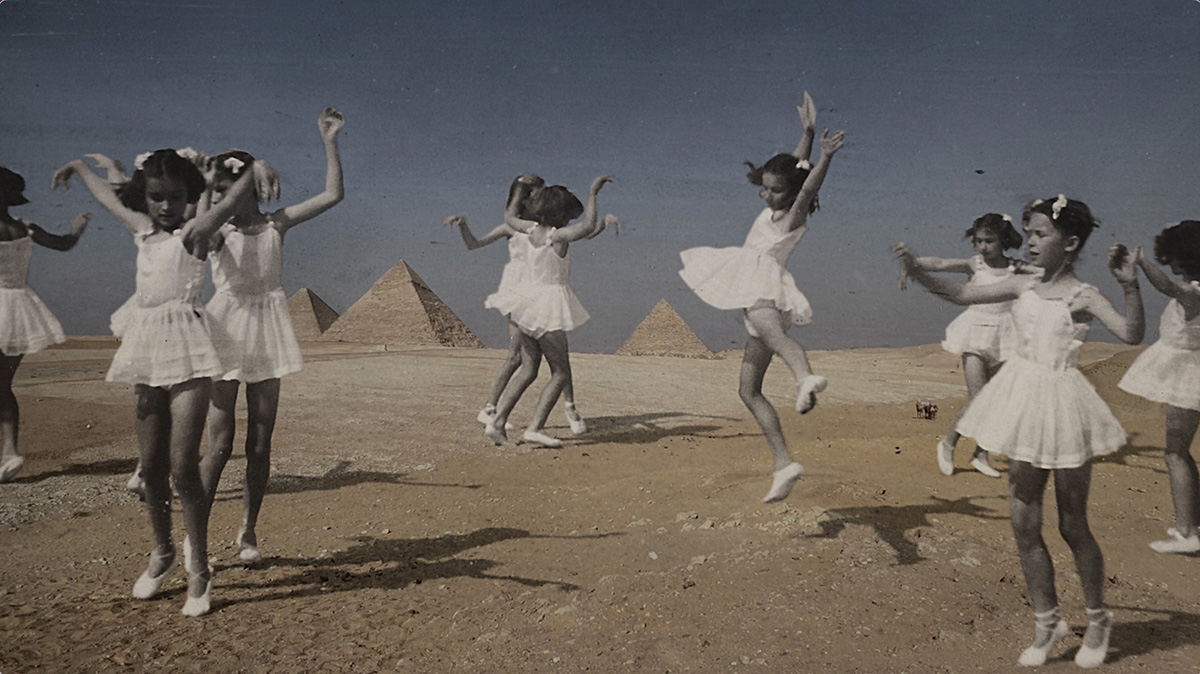
Dohvatiti sunce: El Shatt
Doc. expérimental | dcp | couleur | 19:30 | Croatie | 2023
The film touches on some historical facts about the largest refugee camp El Shatt in the Sinai desert in Egypt during the WWII, based on materials from Croatian and international archives and intertwined with the visuals of this desert non-place now. An attempt to reconstruct a fragmented memory of unknown history about migration in the Mediterranean as a transtemporal filmic journey.
Ana Bilankov (Berlin/Zagreb) is visual artist and filmmaker working in the media of experimental film, photography and video installation. She studied Art History and German Language and Literature at the Universities of Zagreb and Mainz and completed postgraduate studies „Art in Context“ at the University of the Arts in Berlin. She has shown her work in many exhibitions, won numerous international scholarships and participated in film and video festivals, where she has won several awards.

Anamary Bilbao
Prelude
Film expérimental | 16mm | couleur | 7:57 | Portugal, USA | 2024
“Bilbao’s work revolves around the figure of the lanternfly to articulate a political discourse on ontology that goes beyond fixed meanings of self and other, of human and non-human. Instead, the lanternfly acts as both a literal and metaphorical representation of how the current capitalist, global market produces, circulates, and then alienates othered beings. (…) In all its layers, Prelude challenges the distinction between human agency, anthropomorphism, and other––animal and human-created––intelligence. (…) In his canonical work Camera Lucida, Roland Barthes reminds us how cinema, unlike photography, which fastens down figures “like [preserved] butterflies,” enables beings to continue living (56–57). The cinematographic present is alive, carrying its referent without being tied to it. In their motionless movement, Bilbao’s lanternfly flutters, confronting the humanity of the anthropomorphic yet inert clown-like puppet. (…) Working with [archival images and also with the AI app DALL·E], Bilbao projects the images and films the projection with a 16mm Bolex. (…) even if digitalisation appears to dematerialise the production of images, Bilbao’s analogue camera reminds us how the digital is bound to the analogue world: kilometres of data centres and storage farms make possible the apparent immateriality of the digital visual realm.” (By Alejandra Rosenberg Navarro)
AnaMary Bilbao is a Portuguese-Spanish visual artist born in Lisbon (Portugal). In an endless play between analog and digital, Bilbao’s work challenges time’s dichotomy between beginning and end, and goes deeper into the notion of truth and the dialectics of doubt and certainty. Her work has been recently exhibited at Galeria Avenida da Índia - EGEAC (Lisbon), Photo Basel (Basel), ISCP (New York), Paris Photo / Curiosa (Paris), MAAT – The Museum of Art, Architecture and Technology (Lisbon), Opening Arco Madrid (Madrid), Leal Rios Foundation (Lisbon), PLMJ Foundation (Lisbon), among others. Bilbao's works have been screened in venues such as Anthology Film Archives (org. Mono No Aware, New York), MoMA - Museum of Modern Art (org. Mono No Aware, New York), Novo Negócio - ZDB (Lisbon), Batalha Centro de Cinema (org. Contemporânea, Porto), or MAAT (16.ª ed. Fuso, Lisbon). AnaMary Bilbao has been the recipient and/or shortlisted to various distinguished Portuguese awards such as: EDP Foundation / MAAT Acquisition Award (16.ª ed. Fuso, 2024); Calouste Gulbenkian Foundation Grant for studying visual arts abroad (2023/2024); Luso-American Development Foundation Artist Residency in the U.S.A. Grant (2022); FLAD Drawing Award (2021); EDP Foundation’s New Artists Award (2019); FCT PhD Fellowship (2015-19).
Manuel Billi
Battre, enlever
Vidéo | hdv | couleur | 11:0 | Italie | 2014
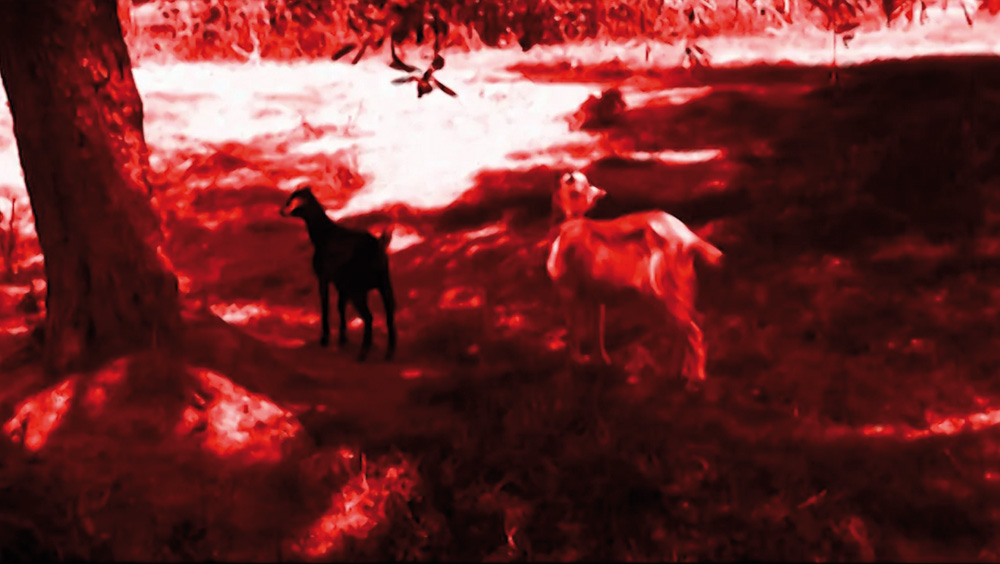
« Maintenant, je suis partout » « Maintenant, je te suis partout ». Des paupières qui s’ouvrent et se ferment en battant le rythme d’une rencontre amoureuse. Des captations de téléphone portable qui enlèvent au réel le sentiment du vécu. "Battre, enlever" est un compte-rendu vraisemblable de faits qui n’ont pas eu lieu ou qui ont eu lieu autrement, le récit d’un amour qui bride et élève à la fois.
Manuel Billi est écrivain, scénariste et producteur. Co-fondateur du collectif d'artistes Le Gauche, il a réalisé plusieurs courts-métrages à partir de captations de téléphone portable. Depuis 2013, il travaille avec Christian Merlhiot sur le scénario d'un long-métrage de fiction.

Manuel Billi
Guardarla negli occhi (La Regarder dans les yeux)
Doc. expérimental | hdv | couleur | 15:0 | Italie, France | 2020
Une journée dans la vie d'une famille. Une histoire de mains: des mains qui agissent, des mains qui assistent, des mains qui dansent jusqu'à la fin de la journée.
Manuel Billi vit et travaille à Paris. Critique cinéma et réalisateur, il est l'auteur de plusieurs essais sur le cinéma contemporain. Depuis 2000, il collabore avec différents magazines de cinéma italiens et français. En 2014, il réalise son premier film court expérimental, "Battre, enlever". Son premier film court de fiction, "Ghosts of Yesterday" (2017) a été présenté en avant-première à la Mostra de Venise (Italie). Par la suite, il a alterné entre fiction ("Enter", 2018, sélectionné dans plus de vingt festivals internationaux ; "Ten Times Love", 2020) et documentaire ("Guardarla negli occhi - La Regarder dans les yeux", sélection officielle 2020 à la Mostra Internazionale del Nuovo Cinema di Pesaro, Italie).
Richard Billingham
Sweep
Installation vidéo | dv | couleur | 14:10 | Royaume-Uni | 2004
Un panorama extrêmement lent sur des arbres sombres, contre un ciel au crépuscule. Tourné avec deux images par seconde, les mouvements des arbres semblent davantage être une photographie animée. Dans un silence complet, les arbres sont secoués par un vent fort, qui remue les couches et les textures de la forêt alors que, presque imperceptiblement, la caméra fait un panoramique de droite à gauche. C?est seulement lorsque la forêt s?éloigne que l?on prend conscience du mouvement de l?image, à la fois lentement et soudainement, juste comme la nuit qui prend la relève du jour et le calme qui succède à l?agitation. SWEEP possède certaines des qualités spatiales et temporelles habituellement associées à la peinture de paysage, de Ruysdael, Claude ou Poussin, Turner ou Constable, et manifeste du sentiment intense de l?environnement et de la nature de Richard Billigham. Il effectue une réappropriation contemporaine du paysage, dans ce mouvement de forêt lors d?une tempête. SWEEP a été projeté au festival de Locarno, et présenté au New Forest Pavilion à la biennale de Venise cette année
Richard Billingham est né en 1970. Il grandit dans une zone industrielle de Birmingham, alors très touchée par la crise économique. Il suit des cours à la fondation d?art de la ville et à l?université de Sunderland. Il prend des photographies de sa famille, et de son environnement immédiat. Ce travail photographique, intitulé « Who`s looking at the family », a été présenté à la Barbican Gallery, et dans de nombreuses expositions consacrées à l?art anglais. Billingham réalise aussi des vidéos, la plus connue est FISHTANK, qui reprend les mêmes éléments tirés de son environnement immédiat, et présente sa famille. FISHTANK est de type documentaire, mais avec des spécificités propres à un travail de plasticien, notamment l?utilisation que Billigham fait des très gros plans pour étudier le mouvement. Présenté en 1997 à la Anthony Reynolds Gallery, à Londres, il gagne en 1997 le prix de la Citybank, et est présent à Londres, Berlin, New York dans l?exposition de la collection Saatchi consacrée aux jeunes artistes britanniques. Il est nominé en 2001 pour le Turner Prize, avec sa vidéo RAY IN BED. Richard Billingham réalise actuellement des photographies de paysages non habités : terrains semi ruraux en déréliction, à l?arrière de murs de briques rouges, aire de jeux désertées dans les banlieues entre des blocs d?habitats sociaux, mais aussi des paysages infinis en pleine campagne, aux ciels orageux.

Sebastian Binder, Sebastian Fred SCHIRMER
U?ber Druck
Documentaire | 0 | couleur | 12:52 | Allemagne | 2016
Everyone knows it, everyone has it. No pressure in the kettle means deadlock. Nevertheless it always seems to strong. Pressure is not tangible, pressure ist mostly transparent. But if it is high enough it is noticeable. OVER PRESSURE (ÜBER DRUCK) cinematically searches for its manners in our everyday life. It shows truth, personality and surprise. A colourful atmospheric picture to think about.
Sebastian Binder. Born 1983 in Frankfurt am Main. Studied Media Design at Bauhaus- University in Weimar with emphasis on directing and postproduction from 2004 to 2009. After that postgraduate studies at the Academy of Media Arts Cologne. Winner, amongst others, of the Screenplay Award at the Kurzundschön Festival 2013, the MDR Unicato Award, the Award for Media Design of Bauhaus-University Weimar and the Jury Prize of the 5e Courts dans la Vallee. Sebastian Fred Schirmer was born 1981 in Filderstadt and raised in Lahr/Black Forest, Sebastian Fred Schirmer has been working as a camera assistant for Film and Televsion since 2002. He obtained his engineering degree from the Hochschule Offenburg in 2009. Between 2011 and 2015 he studied at the Academy of Media Arts in Cologne where he majored in Visual design/Camera. He lives and works in Cologne as a freelancing cameraman.
Juliette Bineau
Jour de chasse
| | | 10:19 | France | 0
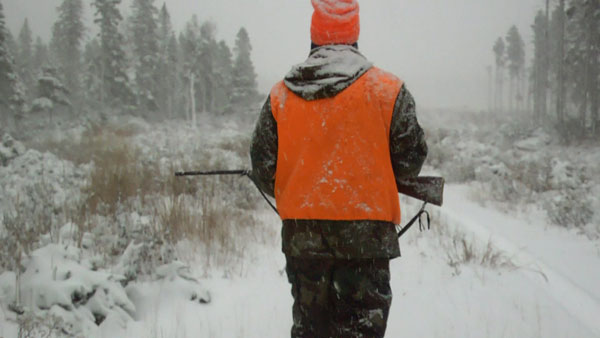
Steeve, Le chasseur marche dans la neige. Il s`est levé très tôt ce sont les premiers neiges. Il tue le temps, puis tue la bête. Qui as dit : "Un roi sans divertissement est une homme plein de misères "?
Juliette Bineau est Francaise, elle est né en 74. Elle a été comédienne avant de réaliser des films. Elle a réalisée Gertrud un remake du film éponyme de C th Dreyer et La Tête, d`après Sam Peckinpah. En 2013 elle est Lauréate de la résidence Hors les Murs , elle travaille sur un projet autour de Robocop, memory of Detroit. (projet en cours)

Juliette Bineau
LA TÊTE
Fiction expérimentale | | couleur | 44:54 | France, Argentine | 2010
Road-trip, Argentine 2009. Un remake de « Apportez-moi le tête d?Alfredo Garcia » de Sam Peckinpah. Alfredo Garcia, l? homme que l?on recherche, est mort. Sa tête est mise à prix. Bennie convaint Elita de le conduire à sa tombe pour decapiter la tête du cadavre. Le couple roule au travers des montagnes arides du nord de l?Argentine, tels des Yankees traversant un purgatoire indien ....
Juliette Bineau Est né en 1974. Elle fait les beaux Arts de Rennes et suit l?enseignement de théâtre de l?auteur scène Didier George Gabily, ce qui la mène à être un temps comédienne et metteur en scène. Elle est aujourd`hui musicienne (batteuse du groupe de free noise psychédélique Minitel)vidéaste et performeuse. Depuis quelques années elle s?intéresse particulièrement au remake comme moyen de revisiter et de s?approprier de grandes formes cinématographiques, de remettre en jeu dans ses films des questions de théâtre (la répétition, l?interprétation d?une ?uvre). Elle réalise « Gertrud » d?après le « Gertrud » de Carl Th. Dreyer. Ce projet a été soutenu par la DRAC Île-de-France (Bourse individuelle à la création 2008) et est montré à la Fémis par le collectif Point Ligne Plan, au centre Culturel de la Récolta de Buenos Aires, au Film Festival de Rotterdam, à la Cinémathèque Française, au Palais de Tokyo? En 2009, elle réalise « La Tête « d?après Apportez-moi la tête de SamPeckinpah : Un road movie argentin, dans le cadre d?une résidence de Cultures-France, avec le concours de l?allocation Image mouvement.
Juliette Bineau
Pleura
0 | 0 | couleur | 0:0 | France, Brésil | 2011
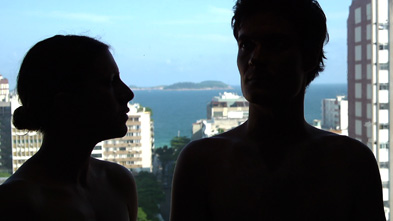
"Dieu? prit un de ses "pleura" (côte ou côté), l`édifia pour en faire une femme et l`amena à Adam?" Utopie androgyne et cannibale, Pleura décline en l`union et la séparation des amants. Diptyque : 1. Dans l`ascenseur de verre, nulle part au milieu du dehors, s`élévant au dessus d`un jardin inaccessible, un homme et une femme sont tues de pensées inavouables. 3. Ils s`enfoncent dans une forêt suintante, c`est après la chute, ils sont couverts de boue ou peints pour un rituel cannibale. Défloraison androgyne, ils dansent entre les branches, rognent un phallus reptilien...
Juliette Bineau est né en 1974. Elle étudie aux Beaux?Arts de Rennes puis auprès de l`auteur metteur en scène Didier George Gabily. Elle est comédienne, performeuse dans des groupes de noise music, cinéaste (Gertrud 2009, La Tête 2010, Robocop memory Room 2011). Elle rencontre la danseuse Cécilia Bengoléa en 2005, lors de la création de la pièce du duo Chaignaud-Bengoléa Pâquerette qu`elle accompagne à la batterie (tribale) dans son groupe Minitel.
Juliette Bineau
Pleura (Part. 1)
Vidéo | hdv | couleur | 3:49 | France, Brésil | 2011
"Dieu? prit un de ses "pleura" (côte ou côté), l`édifia pour en faire une femme et l`amena à Adam?". Utopie androgyne et cannibale, Pleura décline en l`union et la séparation des amants. Dans l`ascenseur de verre, nulle part au milieu du dehors, s`élevant au dessus d`un jardin inaccessible, un homme et une femme sont tues de pensées inavouables.
Juliette Bineau Est né en 1974. Elle fait les beaux Arts de Rennes et suit l?enseignement de théâtre de l?auteur scène Didier George Gabily, ce qui la mène à être un temps comédienne et metteur en scène. Elle est aujourd`hui musicienne (batteuse du groupe de free noise psychédélique Minitel)vidéaste et performeuse. Depuis quelques années elle s?intéresse particulièrement au remake comme moyen de revisiter et de s?approprier de grandes formes cinématographiques, de remettre en jeu dans ses films des questions de théâtre (la répétition, l?interprétation d?une ?uvre). Elle réalise « Gertrud » d?après le « Gertrud » de Carl Th. Dreyer. Ce projet a été soutenu par la DRAC Île-de-France (Bourse individuelle à la création 2008) et est montré à la Fémis par le collectif Point Ligne Plan, au centre Culturel de la Récolta de Buenos Aires, au Film Festival de Rotterdam, à la Cinémathèque Française, au Palais de Tokyo? En 2009, elle réalise « La Tête « d?après Apportez-moi la tête de SamPeckinpah : Un road movie argentin, dans le cadre d?une résidence de Cultures-France, avec le concours de l?allocation Image mouvement
Ines Birkhan, Ines Birkhan
den kreisrunden Todengwalzer tanzen
performance | dv | couleur | 26:0 | Autriche | 2004
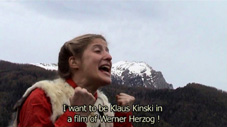
Dans les prairies, dans les forêts, dans les champs enneigés, sur les sommets, sur les courants, vivent et batifolent les petits habitants des Alpes ainsi qu'un orque gonflable en quête du blanc absolu. Un conte de fée tordu avec des jeux de mots, des chansons et des danses.
Ines Birkhan 1974 in Wien geboren, Tänzerin, Choreografin, Schriftstellerin. Studierte Bildhauerei an der Hochschule für Angewandte Kunst, Wien. Studierte Tanz und Choreographie am SNDO (School for New Dance Development) Amsterdam. Ihr Tanztraining reicht von Release Technique, Modern Dance über Westafrikanische Tänze, Bauchtanz, bis Butoh und Body Weather Training. Zur Zeit macht sie eine Ausbildung als Iyengar Yoga Lehrerin. In den letzten zwei jahren wurde sie als Schriftstellerin tätig und produzierte so einige Kurzgeschichten und den Roman: Bilder vom Entkommen Laufende Projekte: ?Mythen für die Zukunft 1?, Video Installationen und Schlußperformance in Zusammenarbeit mit Bertram Dhellemmes, Cabaret Renz, 2.-12. Dez. 2005 ?den kreisrunden Todengwalzer tanzen?, Tanz/Text Performance in Zusammenarbeit mit Bertram Dhellemmes, WUK, Festival: Wilde Mischung, Dez. 2005 "On the Bush administration", Performance iniziert von Robert Steijn, mit Kyung Sun Baek, Ro Hagers, Veem Theater, Amsterdam, Jan. 2006 "Butterflies, sex & hypochondria", Residenz für Tanz/Text Performance, Le Point Ephémère, Paris, June 2006. Bertram Dhellemmes Geboren 1967 in Lille, Multimedia Künstler, lebt und arbeitet in Berlin und Amsterdam. Studierte bildende Kunst und Film in Lille und Paris (Mag.dipl.), Postgraduate in bildender Kunst im Studio National des Arts Contemporains du Fresnoy, 1999, Musikalische Ausbildung und Praktik seid der Kindheit. Zuerst arbeitet er als bildender Künstler (Ausstellungen in Malerei und Installationen u.a. in Lille, Bourges, Paris, Nantes, Pittsburgh, Publikation von Photoarbeiten), als Videokünstler (Video Kunst und Videoinstallationen in mehreren Festivals, u.a. Herouville-St Clair, Rennes, Bourges, Helsinki) und als Musiker und Komponist (Mitglied verschiedener Bands experimenteller und improviserter Musik, zwei Cds im Label Kinpatsu und Even Stilte rausgebracht). Später vereint er diese verschiedenen Disziplinen in transmedialer Praxis, in Form von Videos und Film (Partie 0.1,1998, Alpiner Exorzismus mit Ines Birkhan, 2004), und transmedialen Performances (Oudapo, L.I.S.I.M., Ubik, N log h?). Von dieser Beschäftigung mit Performance ausgehend, studiert er und arbeitet seit 1996 mit ehemaligen Tänzern Min Tanakas Butoh Kompanie Maijuku, vor allem mit Christine Quoiraud und Body Weather Amsterdam (Frank van de Ven, Katerina Bakatsaki) und mit Min Tanaka selbst, u.a. während einem Japanaufenthalt in 1999, während er mit Akira Kasai und Kazuo Ohno studierte. Die letzten Jahre sind hauptsächlich dem Tanz gewiedmed ? u.a. gründete er die Kompanie Real Dance Super Sentai (kreierte das Stück Of human being as an animal degenerated by intellegence für das Aeronef, Lille, 2003) ? meistens im Zusammenspiel mit Musik, Video, Neuen Medien und Rauminstallationen. Er arbeitet regelmäßig mit Tänzerin in Choreographin Ines Birkhan für Performance und Video Projekte zusammen. Er ist auch Kunst und Film Kritiker und Theoretiker und ist ein Gründungsmitglied der Zeitschrift für audiovisuelle Kultur, Tausend Augen. Laufende Projekte: the wood for the trees (Tanz und Video, mit Esther Mugambi, Melkweg Theater, Amsterdam, Okt. 2005), mad scientists?(Tanz und New Media Langzeitprojekt, präsentiert beim Monaco Dance Forum, Dez. 2004, in Residenz im V2 institute für unstable media in Rotterdam in 2005), den kreisrunden Todengwalzer tanzen (Tanz und Videoinstallationen mit Ines Birkhan, Cabaret Renz und WUK, Wien, Dez. 2005), Wenchi travelogue (in Ghana gedrehter Tanz Dokumentarfilm, wird zur Zeit geschnitten), le fantôme qui ne revient pas (Kino-Konzert zum Film Abram Rooms von 1927, Juni 2005 im Festival 10 Vagues, Lille, tourt 2005-2006).
Dara Birnbaum
Canon: Taking to the Streets (Part One: Princeton University – Take Back the Night)
Documentaire | 0 | couleur | 10:0 | USA | 1990
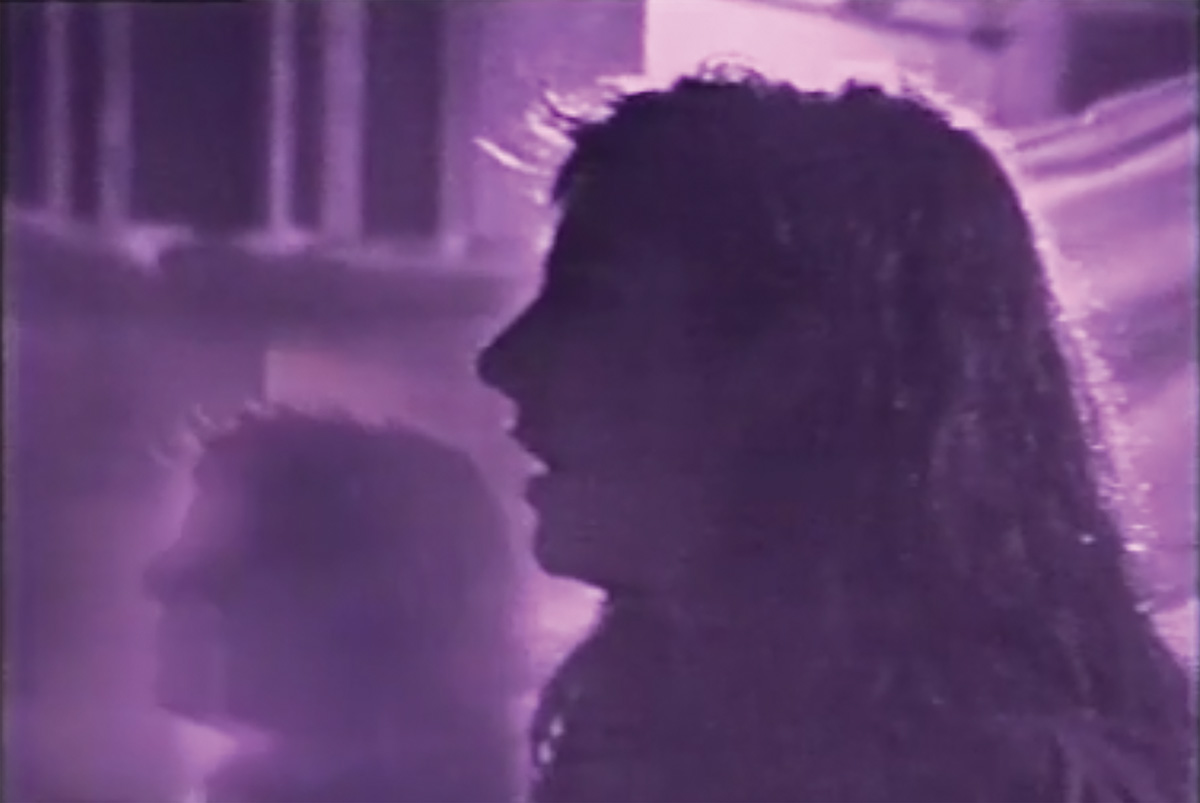
In Canon: Taking to the Streets, Birnbaum breaks with traditional documentary format. Using tools from the low-end and high-end of technology, she episodically views recent events of student activism in the United States. This is a study of the 1987 Take Back the Night march on the Princeton University campus. Birnbaum's treatment of the original student-recorded VHS footage reveals this march as having the potential to develop political awareness through personalized experience. The students attempt to "put across a historical message" that was started in San Francisco in 1978: the protest of any form of violence against women. Take Back the Night now represents men and women, in solidarity with one another, marching against sexual violence of any kind. Here the activity remains specific to violence as perpetrated against persons in the Princeton community.
For four decades, Dara Birnbaum's pioneering works in video, media and installation have questioned the ideological and aesthetic character of mass media imagery, and are considered fundamental to our understanding of the history of media practices and contemporary art. Dara Birnbaum was born in New York City in 1946 where she continues to live and work. Dara Birnbaum received a B.A. in architecture from Carnegie Mellon University in Pittsburgh, a B.F.A. in painting from the San Francisco Art Institute, and a certificate in video and electronic editing from the Video Study Center at the New School for Social Research in New York. Dara Birnbaum was one of the first artists to develop complex and innovative installations that juxtapose images from multiple sources while incorporating three-dimensional elements - large-scale photographs, sculptural or architectural elements - into the work. She is known for her innovative strategies and use of manipulated television footage. Birnbaum's work has been exhibited widely at MoMA PS1, New York (2019); National Portrait Gallery, London (2018); Cleveland Museum of Art, Ohio (2018); South London Gallery, UK (2011); major retrospectives at Serralves Foundation, Porto, Portugal (2010) and S. M.A.K. Stedelijk Museum voor Actuele Kunst, Ghent, Belgium (2009); Center for Contemporary Art, CCA Kitakyushu (2009); Museum of Modern Art, New York (2008); Kunsthalle Wien, Vienna, Austria (2006); and The Jewish Museum, New York (2003). His work has been exhibited at Documenta 7, 8 and 9. Birnbaum has won several prestigious awards including: John Simon Guggenheim Memorial Foundation Fellowship (2021); The Rockefeller Foundation Bellagio Center Arts Residency (2011); the Pollock-Krasner Foundation Grant (2011); and the prestigious United States Artists Fellowship (2010). In 2016, she was recognized and honored for her work by The Kitchen, New York, at their annual gala. She was the first woman in video to receive the prestigious Maya Deren Award from the American Film Institute in 1987. In February 2017, Carnegie Mellon University's School of Art established the Birnbaum Award in her honour.
Dara Birnbaum
Technology/Transformation: Wonder Woman
Vidéo | 0 | couleur | 5:50 | USA | 1979
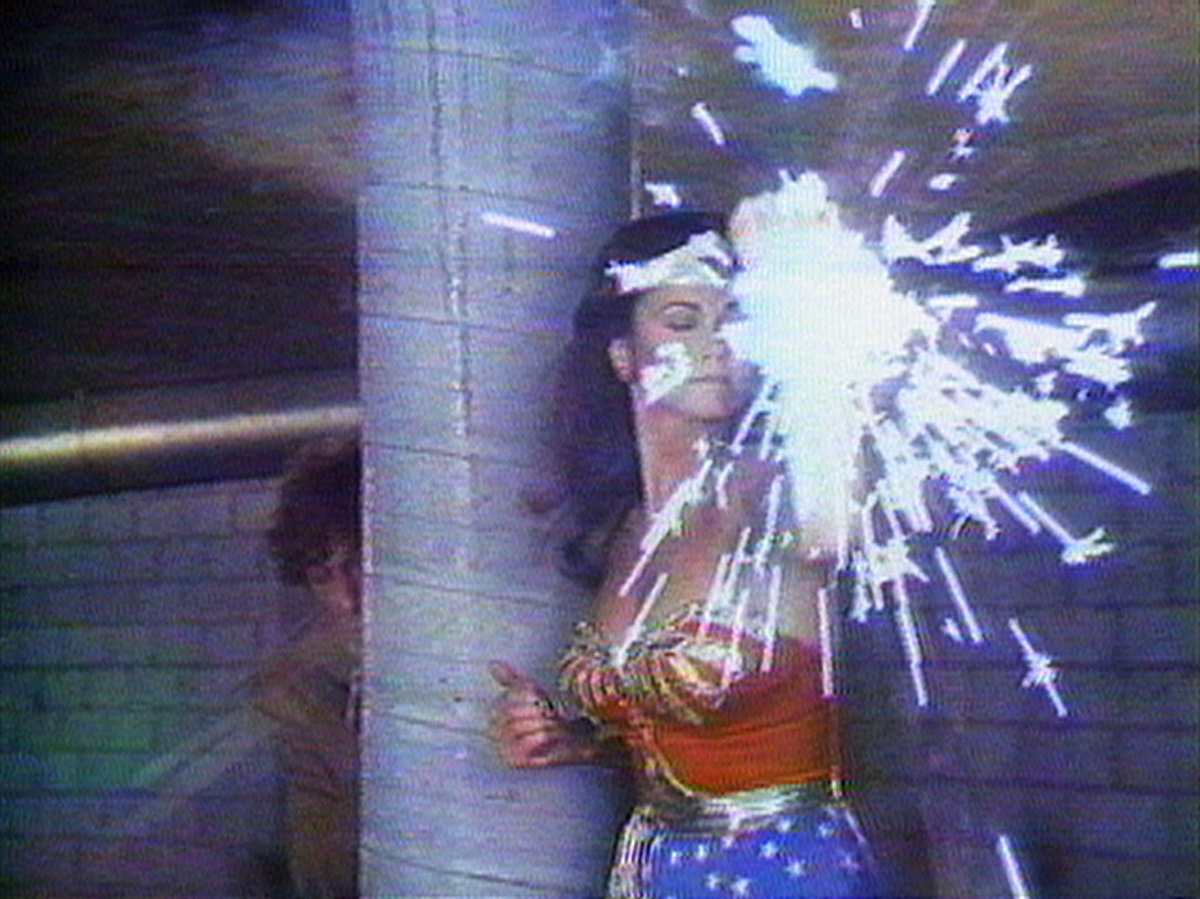
Explosive bursts of fire open Technology/Transformation, an incendiary deconstruction of the ideology embedded in television form and pop cultural iconography. Appropriating imagery from the 1970s TV series Wonder Woman, Birnbaum isolates and repeats the moment of the "real" woman's symbolic transformation into super-hero. Entrapped in her magical metamorphosis by Birnbaum's stuttering edits, Wonder Woman spins dizzily like a music-box doll. Through radical manipulation of this female Pop icon, she subverts its meaning within the television text. Arresting the flow of images through fragmentation and repetition, Birnbaum condenses the comic-book narrative — Wonder Woman deflects bullets off her bracelets, "cuts" her throat in a hall of mirrors — distilling its essence to allow the subtext to emerge. In a further textual deconstruction, she spells out the words to the song Wonder Woman in Discoland on the screen. The lyrics' double entendres ("Get us out from under... Wonder Woman") reveal the sexual source of the superwoman's supposed empowerment: "Shake thy Wonder Maker." Writing about the "stutter-step progression of 'extended moments' of transformation from Wonder Woman," Birnbaum states, "The abbreviated narrative — running, spinning, saving a man — allows the underlying theme to surface: psychological transformation versus television product. Real becomes Wonder in order to "do good" (be moral) in an (a) or (im)moral society."
For four decades, Dara Birnbaum's pioneering works in video, media and installation have questioned the ideological and aesthetic character of mass media imagery, and are considered fundamental to our understanding of the history of media practices and contemporary art. Dara Birnbaum was born in New York City in 1946 where she continues to live and work. Dara Birnbaum received a B.A. in architecture from Carnegie Mellon University in Pittsburgh, a B.F.A. in painting from the San Francisco Art Institute, and a certificate in video and electronic editing from the Video Study Center at the New School for Social Research in New York. Dara Birnbaum was one of the first artists to develop complex and innovative installations that juxtapose images from multiple sources while incorporating three-dimensional elements - large-scale photographs, sculptural or architectural elements - into the work. She is known for her innovative strategies and use of manipulated television footage. Birnbaum's work has been exhibited widely at MoMA PS1, New York (2019); National Portrait Gallery, London (2018); Cleveland Museum of Art, Ohio (2018); South London Gallery, UK (2011); major retrospectives at Serralves Foundation, Porto, Portugal (2010) and S. M.A.K. Stedelijk Museum voor Actuele Kunst, Ghent, Belgium (2009); Center for Contemporary Art, CCA Kitakyushu (2009); Museum of Modern Art, New York (2008); Kunsthalle Wien, Vienna, Austria (2006); and The Jewish Museum, New York (2003). His work has been exhibited at Documenta 7, 8 and 9. Birnbaum has won several prestigious awards including: John Simon Guggenheim Memorial Foundation Fellowship (2021); The Rockefeller Foundation Bellagio Center Arts Residency (2011); the Pollock-Krasner Foundation Grant (2011); and the prestigious United States Artists Fellowship (2010). In 2016, she was recognized and honored for her work by The Kitchen, New York, at their annual gala. She was the first woman in video to receive the prestigious Maya Deren Award from the American Film Institute in 1987. In February 2017, Carnegie Mellon University's School of Art established the Birnbaum Award in her honour.
Dara Birnbaum
Kiss the Girls: Make Them Cry
Vidéo | 0 | couleur | 6:26 | USA | 1979
Birnbaum manipulates off-air imagery from the TV game show Hollywood Squares in Kiss The Girls: Make Them Cry, a bold deconstruction of the gestures of sexual representation in pop cultural imagery and music. Minor celebrities (who Birnbaum terms "iconic women and receding men") confined in a flashing tic-tac-toe board greet millions of TV viewers, animating themselves as they say "hello." Birnbaum isolates and repeats these banal and at times bizarre gestures of male and female presentation — "repetitive baroque neck-snapping triple takes, guffaws, and paranoid eye darts" — wrenching them from their television context to expose stereotyped gestures of power and submission. Linking TV and Top 40, Birnbaum spells out the lyrics to disco songs ("Georgie Porgie puddin' and pie/kissed the girls and made them cry") with on-screen text, as the sound provides originally scored jazz interpolation and a harsh new wave coda. The result is a powerful, layered analysis of the meaning of the gestures of mass cultural idioms.
For four decades, Dara Birnbaum's pioneering works in video, media and installation have questioned the ideological and aesthetic character of mass media imagery, and are considered fundamental to our understanding of the history of media practices and contemporary art. Dara Birnbaum was born in New York City in 1946 where she continues to live and work. Dara Birnbaum received a B.A. in architecture from Carnegie Mellon University in Pittsburgh, a B.F.A. in painting from the San Francisco Art Institute, and a certificate in video and electronic editing from the Video Study Center at the New School for Social Research in New York. Dara Birnbaum was one of the first artists to develop complex and innovative installations that juxtapose images from multiple sources while incorporating three-dimensional elements - large-scale photographs, sculptural or architectural elements - into the work. She is known for her innovative strategies and use of manipulated television footage. Birnbaum's work has been exhibited widely at MoMA PS1, New York (2019); National Portrait Gallery, London (2018); Cleveland Museum of Art, Ohio (2018); South London Gallery, UK (2011); major retrospectives at Serralves Foundation, Porto, Portugal (2010) and S. M.A.K. Stedelijk Museum voor Actuele Kunst, Ghent, Belgium (2009); Center for Contemporary Art, CCA Kitakyushu (2009); Museum of Modern Art, New York (2008); Kunsthalle Wien, Vienna, Austria (2006); and The Jewish Museum, New York (2003). His work has been exhibited at Documenta 7, 8 and 9. Birnbaum has won several prestigious awards including: John Simon Guggenheim Memorial Foundation Fellowship (2021); The Rockefeller Foundation Bellagio Center Arts Residency (2011); the Pollock-Krasner Foundation Grant (2011); and the prestigious United States Artists Fellowship (2010). In 2016, she was recognized and honored for her work by The Kitchen, New York, at their annual gala. She was the first woman in video to receive the prestigious Maya Deren Award from the American Film Institute in 1987. In February 2017, Carnegie Mellon University's School of Art established the Birnbaum Award in her honour.