Catalogue > Search
Results for : Tout le catalogue

Graeme Roger, Kevin REID
Critique of Styrofoam Villians at Chris' art Farm
0 | dv | | 10:0 | United Kingdom, USA | 2004
Whilst on residency projects in Memphis and New York 2004, ROGER & REID used high powered potato canon`s to blast their way across the land of the free. In this piece they destroy villians as created by students of the Memphis School of Art. Further target practice was performed at PS1 MoMa New York, where the specially formed rock band`The Prairie Oysters` played with rock god `Justice` in a hail of haggis and jelly.
Graeme Roger & Kevin Reid studied at Duncan of Jordanstone College of Art in Dundee, Scotland & have worked collectively since 2002. They have shown their work through Europe and the USA.
Sophie Roger
Le point aveugle
Experimental doc. | hdv | color | 30:0 | France, Chile | 2012
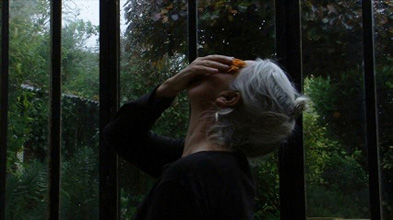
Synopsis Dans l`espace clos d`un jardin normand, on observe de très près un monde végétal et animal. Les gestes de la cinéaste-jardinière sont précis: elle plante et déplace les végétaux, égraine, protège. Elle soigne aussi régulièrement son oeil malade. Le territoire quotidien devient un jardin hanté : par un ailleurs (Le Chili) et un passé (la dictature) qui insistent, une atmosphère de catastrophe rodant autour, insinuant son inquiétude dans l`intime le plus apparemment protégé. Gestes de soin, aux plantes et à soi, pour panser des plaies qui restent mystérieuses, que l`on devine partagée avec l`autre, l`amie qui passe comme un fantôme, le temps d`un double portrait. On ne saura rien de l`origine du désir mais il sera présent dans les fleurs de courge et de gunnera, de rose et d`artichaut.
Note biographique rédigée Sophie Roger réalise depuis de nombreuses années une oeuvre libre et singulière, hors des feux de l`actualité et du commerce parisiens. Dessins ou films, son oeuvre s`ancre dans son territoire le plus familier, ce coin du Pays-de-Caux, au nord de son Havre natal, où elle vit et travaille à la campagne, non loin de la falaise. Depuis ce territoire intime, son travail ne cesse d`interroger l`ailleurs, la relation à l`autre, quel qu`il soit : amis, voisins, peuples lointains, habitants du passé, malades d`aujourd`hui. En 2010, son film Les Jardiniers du Petit Paris (en lisant Tristes tropiques, de Claude Lévi- Strauss) est une des révélations du Festival International du Documentaire de Marseille. De derrière sa fenêtre, Sophie filme ses voisins cultivant un potager collectif au fil des saisons, tout en lisant des passages de Tristes tropiques, quittant régulièrement son poste d`observation pour entrer dans le champ, rencontrer ses voisins, leur demander de poser pour de magnifiques portraits filmés. La rigueur et la simplicité du dispositif filmique produit la plus émouvante et universelle des pensées : qu`est-ce qu`un voisin ? Qu`est-ce que le proche, qu`est-ce que le lointain ? En 2011, Sophie Roger réalise le bouleversant Contre-Jour, dans le cadre d`une résidence dans un hôpital de sa région, avec des malades du sida. Là aussi, elle sait trouver le dispositif juste pour recueillir les récits de vie et instaurer un échange avec des patients qui acceptent de se confier tout en voulant rester anonymes. Le Point Aveugle prolonge ces deux films, en renouant plus précisément avec les questionnements des Jardiniers du Petit Paris. En resserrant le point de vue : il s`agit de son jardin, de ses plantes et de sa maison, filmés comme le lieu intime d`où une pensée du monde est possible. Ses films sont des essais, dans la haute tradition de Montaigne : Sophie se met à l`essai, essaie de se penser, elle face au monde, elle en rapport à l`autre, à l`opposé de toute forme de narcissisme ou de complaisance. Si elle se met en scène, c`est sur un mode burlesque ou inquiet, toujours à distance, avec rigueur et un grand sens de l`auto-dérision. Extrait d`une note de production écrite par Cyril Neyrat

Sophie Roger
Les vagues
Experimental doc. | hdv | color | 18:0 | France | 2017
On connait cet art du détour que Sophie Roger pratique pour nous mener par des chemins inattendus avec l’amitié comme fil, déplié avec Le point aveugle (fiD 2012) ou Les Jardiniers du petit Paris (fiD 2010). ici ce sera, tissée tout en délicatesse à l’écran, l’amitié avec Mohamed, réfugié soudanais au Havre. faite de partage, d’attention, d’écoute et de rire, et de vagues en vagues, celles du texte éponyme de Virginia Woolf qu’elle lui lit, à celle de Courbet au musée du Havre, qu’il animera de son regard. (NF)

Joyce Rohrmoser
Surviving in China
Video | dv | color | 19:0 | China | 2007
Surviving in China DVD 19 min, 2007 Ich lerne seit nunmehr 4 Jahren chinesisch. Seit gutem einem Jahr mache ich für eine italienische Firma Modefotos und Videos in China. In meiner Freizeit versuche ich das Leben dort zu meistern. Dafür habe ich eine Strategie entwickelt: Videominiaturen, in denen ich jeweils unterschiedliche Rollen übernehme. Es sind Situationen, die mir als Frau aus dem Westen fremd sind. Die Unterschiede zwischen meinem Tun als Darstellerin und Videomacherin, zwischen mir als Subjekt und Objekt, zwischen Bild und Abbild, werden beseitigt. Dieser Vorgang ist eine Anlehnung an die Praxis der Performance-Künstlerinnen der 70er Jahre. Ein Umstand, der mir hilft, meine Auseinandersetzung mit China kritisch und humorvoll zu hinterfragen.
JOYCE ROHRMOSER 1954 Geboren in Mailand, Italien AUSBILDUNG: 1972-74 Studium der Photographie im Istituto Europeo del Design, Mailand, und London College of Printing, London 1982 Doktorat in russischer Literatur und Kunstgeschichte Workshops bei Nan Goldin, Verena von Gagern, Dieter Appelt Lebt als freischaffende Foto- und Videokünstlerin in Salzburg 2006 Beginn der Auseinandersetzung mit der chinesischer Sprache und Kultur. Längere Aufenthalte in China.

Billy Roisz, dieb13
TWIXT
Multimedia performance | 4k | color | 45:0 | Austria | 2019
TWIXT is the brand new duo-project of Billy Roisz and Dieter Kova?i? a.k.a. dieb13, bringing together their works as film directors and their activities as live musicians. Over the years, the two have directed and produced several experimental short films dealing with classical film genres like western, horror film or road movie. The films explore the inner mechanisms of well established cinematic conventions and turn them into an immediate sensual experience. TWIXT uses re-arranged footage of these short films as a score for a live soundtrack and fuses abstract and concrete imagery and sounds into a synaesthetical and synecstatical media-meltdown.
Billy Roisz and Dieter Kova?i? have been active in Vienna’s electronic, improvised, noise music and experimental film scene since the 1990s. Billy Roisz’s work focuses on the links and gaps between visual and auditive perception, using various electronic instruments, electric bass guitar, cathode ray tube TVs, video projectors, synchronators and sometimes computer to generate sound and image. Dieter Kova?i? aka dieb13, best known for his turntable music activities and as founder of the experimental music platform klingt.org uses turntables, self-cut vinyls and self written software for his musical works in many different fields. His film works include photo films (‘schnitzel’) as well as abstract digital and analogue works. Their collaborative film works have been shown at Berlinale, Karlovary Film Festival, IFF Rotterdam, Hongkong Film Festival, Edinburgh Film Festival and SXSW Texas, a.o.. They performed their audio visual projects live at Bienal São Paulo, Nya Perspektiv (Västeras), 25FPS (Zagreb), BAWAG Foundation (Vienna), FBI (Osaka), Suoni Per Il Popolo (Montreal), Sonic Acts (Amsterdam), Transmediale (Berlin), Sonica (Ljubljana), Unconsciuos Archives Festival (London) a.o..
Miguel Angel Rojas
Border Panic
Video installation | dv | color | 4:33 | Colombia | 2007
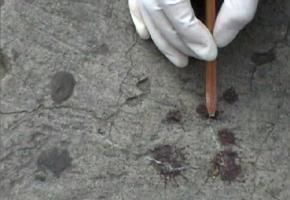
?Walking through downtown Bogotá it is common to find blood traces, witnesses of the violence that the lives in the city?s party nights, when excesses come next to crime. Border of Panic in the record of a trace left by someone who was injured, who probably ran in panic away from death. I wanted to exorcise those terrible moments going through the same path, slowly and continuously drawing from one blood drop to the other, turning this morbid happening into a plastic event. In the meanwhile I thought that by doing this I synthesized the efforts to reinterpret reality through art, that have oriented my work y the work of many other artists worried by this environment so distant from the utopias of balance and justice. ?
Born in 1946, Rojas made his first works on sexual difference during the eighties, long before the topic was introduced in the international sphere of the arts. Throughout the nineties, the artist left photography and personal themes aside to arrive to more universalizing themes, such as drug trafficking, the third world and uneven concentrations of power, amongst others. The work of Miguel Ángel Rojas, as a whole, has the stamp of an artist that has kept certain distance with the art market, has worked with vast creative independence and has grown to be a decisive referent in the history of Colombian art. Printmaking and photography have been relevant in the process of academic formation that Rojas took at the National State Univesity. Photography is precisely one of the media with which the artist has experimented the most, working with fragmentary enlargements, reductions to minimal scales and partial developments, that cast the referent for his most recognized works: ?Subjetivo,? an installation that recreates the atmosphere of the bathrooms in the ?Faenza Theatre? using sound, printmaking and drawing; and ?Grano / Grain,? an installation made with soils and vegetal coal powders over a floor that has been covered with paper, defined by the artist as both the construction of an urban ground with the dirt and soil of the countryside and a metaphorical expression of displacement. The work of Miguel Ángel Rojas has been extensively shown and acquired by different institutions, among others: The Sao Paulo and Havana Biennials. Museum of Modern Art (New York); Daros-Latinamerica Collection (Zurich) Ludwning Museum; Whitney Museum of American Art (New York); ?La Caixa? (Barcelona).

Karina Rojas Sandoval
Descomposición Aleatoria
Video | hdv | color and b&w | 4:51 | Chile | 2015
Family archives around the figure of Lucila. She had Alzheimer`s and was my grandmother. Corruption of the material as the manifestation of a degenerative disease, set in a visual decomposition process based on the destruction of memory. Dismantled and fragmented memories, unified by the soundtrack.
Karina Rojas Sandoval born in 1992, in Santiago, Chile. Bachelor in Audiovisual Communication, Film and Television Degree (2016), by Universidad de Chile. Exhibits and works regularly in video art since 2015. She works mostly in experimental videos and documentaries, where she organizes her work around found footage and the manipulation and intervention of archive materials as a part of her narrative and artistic research. Her work has been selected in Festivals, Exhibitions, Shows and Contests in Chile, Colombia, Finland, Indonesia, Mexico, Portugal, United States and Venezuela. Major and recent exhibits events: ‘Comic Unity’ Exhibition, Flux factory, NY, USA, 2017; 6th Edition of Samples-Mexico: Transvideo: Borderless Image, Mexico-Finland, 2016; 3rd edition Festival Internacional de Video Experimental "Proceso de Error", Valparaiso, Chile, 2016; 12th FONLAD International Videoart & Performance Festival, Coimbra, Portugal, 2016; 2nd edition Festival Video Arte NodoCCS, Caracas, Venezuela, 2016 and 5th Concurso Nacional de Video Arte Universitario (Universitary National Video Art Contest) ‘Visiones del Arte’, Category ‘International Selection’, Mexico City, Mexico. At the last mentioned two she gets the first place with her video ‘Descomposición aleatoria’.

Stéphanie Roland
Le cercle vide
Documentary | hdv | color and b&w | 19:0 | Belgium, France | 2022
Rien ne survit vraiment ici. Le fond est si profond qu’aucune lumière n’y pénètre jamais. Très peu de bateaux y passent. On ne sait pas quand les chutes auront lieu. Ce documentaire expérimental dresse le portrait d’un objet spatial et sa chute jusqu’aux ténèbres d’un cimetière spatial, une scientifique nous dévoile son attachement pour cet objet et l’absence d’images documentant ce lieu mystérieux. Voyage de Science-Fiction inversé, cet essai mélange archives réelles et fictives pour nous guider, tel un stalker, aux périphéries d’un lieu invisible.
Stéphanie Roland est une artiste visuelle et réalisatrice, basée à Bruxelles. Elle réalise des films et des installations qui explorent, entre le documentaire et l’imaginaire, les structures invisibles du monde occidental, les larges échelles du temps et les hyperobjets. ?Son travail est régulièrement présenté au niveau international, ses projets ont été inclus dans des expositions d'institutions majeures parmi lesquelles la Biennale de Venise, le Centre Pompidou, le musée du Louvre, le musée Benaki, la Biennale internationale d'art de Kampala, l’ISELP et le Wiels, entre autres.

Stéphanie Roland
Deception Island
Video | 4k | color | 14:0 | Belgium | 2017
L’expédition antarctique belge (1897-1899) a été un épisode audacieux de l’exploration du continent blanc. Après avoir approché de nouvelles terres et fait de nombreuses découvertes scientifiques, le bateau se retrouve coincé dans les glaces, pendant près de treize mois. Durant cet hivernage forcé, le manque de lumière de la nuit polaire a causé des maladies, des dépressions et même des cas de démences, au sein de l’équipage. "Deception Island" est une oeuvre multidisciplinaire - entre performance, film et installation - qui explore la face invisible d’un mythe de l’exploration belge et développe la narration d’un non-voyage paradoxal. Cet épisode, amputé de l’histoire officielle, est rejoué silencieusement par des acteurs dans le site industriel du "New Belgica", qui est le projet de construction d’un nouveau bateau, réplique à l’identique du "Belgica" (le bateau original de l’expédition s’est échoué dans les fonds marins). A la fois source d’inspiration du projet, espace de performance et décor du film, ce squelette de bateau peut être considéré comme une métaphore de la reconstitution historique, toujours en évolution, fragmentée et incomplète. L’usage exclusif du travelling tout au long du film immerge physiquement le spectateur dans un univers flottant et hypnotique.
Diplômée de l’ENSAV - La Cambre en communication visuelle, Stéphanie Roland (1984, Bruxelles) a également étudié les arts des médias à l’UDK-Universität der Künste, dans la classe d’Hito Steyerl. De nombreux prix et bourses lui ont été attribués, notamment la bourse de la Fondation de la Vocation, le Prix Médiatine (public) et le Full Contact Award du festival international de photographie SCAN de Tarragone. Elle a aussi été nominée pour le Prix HSBC Photographie, le prix Oskar Barnack Leica, Le Grand Prix Images du festival de Vevey et le Salomon Foundation Award. Elle expose régulièrement son travail à un niveau international. D’Amsterdam à Buenos Aires, de Berlin à Los Angeles, ses projets ont été présentés dans des institutions majeures telles que le Musée Benaki, le Botanique, la Biennale Internationale d’Art de Kampala et le Bozar. Breda Photo, Belfast Photo Festival, Manifesto, Encontros da Imagem, MOPLA et Unseen font partie des festivals dédiés à la Photographie auxquels elle a pris part. En 2017, elle est sélectionnée dans l’exposition de groupe du Pavillon de l’Antarctique pour la 57ème Biennale de Venise. Elle y expose son installation vidéo "Deception Island".
Michèle Rollin
A la recherche du Berlin perdu
Documentary | 4k | color | 90:0 | France | 2023
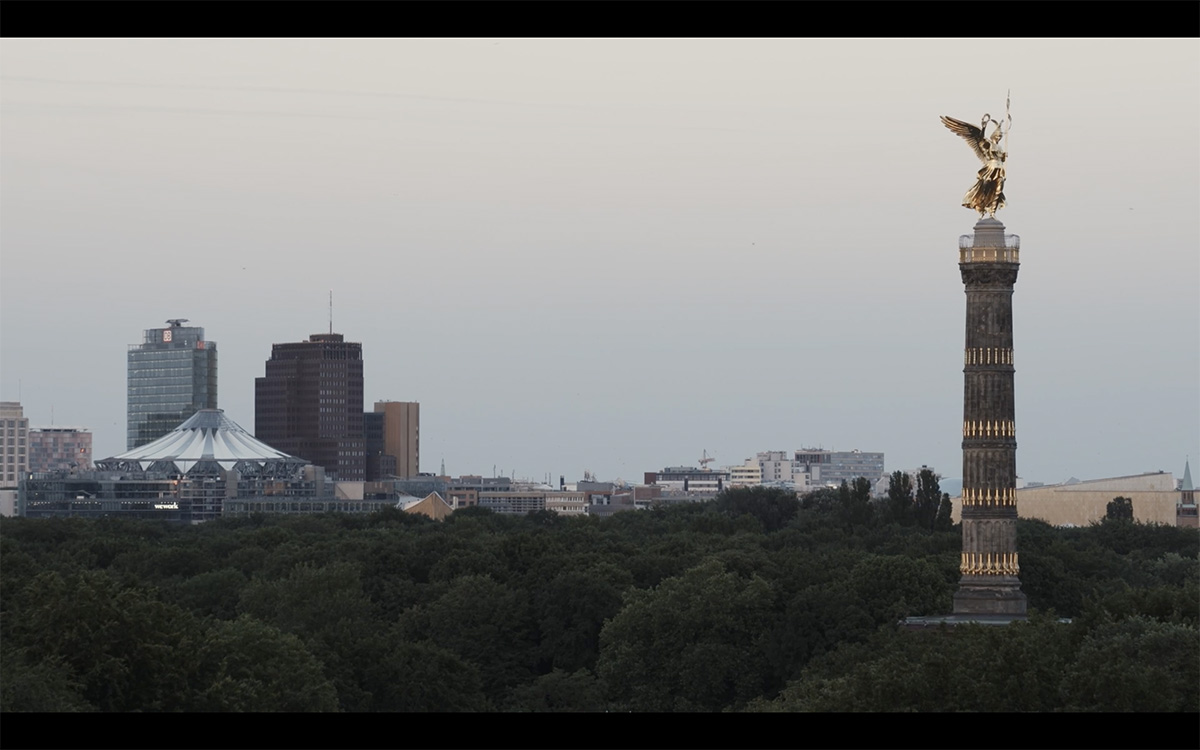
For almost 30 years, Michèle Rollin has been filming Berlin as it undergoes metamorphosis. A city symbolizing the innovations, convulsions and European tragedies of the last century, it has undergone unprecedented urban transformation since the fall of the Berlin Wall. Today, the director aims to chronicle these urban upheavals and the memories they erase or transmit, through the protagonists filmed then and now.
Michèle Rollin, born February 28, 1957 in Paris, is a French film director. Trained by Michel Zimbacca, Michèle Rollin worked as an editor with Hubert Knapp, André Voisin, Michel Huillard, Bernard Soulié, Dominique Rabourdin, Michel Vuillermet, Alain Dister, Alain Weiss, Marcel Boudou and Petra Weisenburger. Later, she directed short films. Since 1994, she has devoted herself entirely to documentary filmmaking. Founding member of Ondes sans frontières (OSF) (May 1998), an associative public access channel.
Sébastien Rollot, Pierce Warnecke
Distances
Experimental doc. | dv | color | 26:0 | France | 2009
A partir d`images filmées sur les îles de Java et de Bali, ce film vient restituer la sensation et l`abstraction de situations rencontrées au hasard de la route. Il n`y a aucun dialogue ni commentaire. Cette errance cinématographique s`est déroulée sans repérage. Qu`il s`agisse d`un regard caméra qui questionne la présence du spectateur, de l`effort physique d`hommes au travail, d`une cérémonie religieuse agitée. On ne voit que des visages, des corps, des expressions, sans véritablement connaître la situation en jeu. Elle est ici accessoire, elle importe peu. On ne s`intéresse alors qu`à la sensation et au mouvement dans lequel on est entraîné. Sans repère, on erre dans le film et l`on s`accroche au langage des corps, à l`émotion d`une image ou à l`histoire qu`elle peut nous raconter. Nous sommes dans un rêve, une mémoire fragmentée. On se laisse porter par la juxtaposition d`images brutes, sans artifices. Des hommes autour d`un feu, un train la nuit, des femmes qui se maquillent. Les séquences documentaires sont traitées de façon abstraite, sans visée anthropologique explicite. Ce film silencieux s`est prolongé par une collaboration sonore avec Pierce Warnecke, compositeur de musique drone.
Sébastien Rollot Né en 1983, Il étudie l`anthropologie et la sociologie en France et au Québec avant d`intégrer la formation de réalisation documentaire Creadoc à Angoulême. Installé sur Lyon, il est auteur réalisateur de films indépendants, membre du collectif Trois Petits Points qui regroupe des artistes travaillant autour de la musique et de l`image notamment. Ses différents films poursuivent une description documentaire du réel. Toujours dans un rapport qui privilégie la sensation et l`abstraction, ses réalisations se construisent sous forme d`essai cinématographique. Sans renier radicalement une narration linéaire, ses travaux se dirigent plutôt sur la piste d`un cinéma fragmenté et expérimental, essayant de questionner la frontière des relations entre le cinéma documentaire, l`art vidéo, et leurs fictions. Il travaille désormais sur l`écriture d`un film qui creuse la notion d`exil dans la ville. Cette réalisation débutera dans le cadre de la résidence des Inattendus dès 2011.
Stefan Roloff
LINDEN HOTEL
Video installation | dv | color | 27:0 | Germany | 2010
LINDEN HOTEL, Video Installation by Stefan Roloff The phenomenon of political imprisonment is timeless. Yet, its victims can only speak to us from the past. It is its nature to be silenced in the present. The group of former Stasi- prisoners I interviewed have never before spoken on tape or in public. To remove the boundaries of time I have interviewed them as silhouettes. At first glance, this gives them an air of illegality. The viewer gets the impression that they can?t reveal their identity. Faces can be misleading. Beauty, gender, age, race or other categories disappear when we view a silhouette. What remains is the tone of their voice and their body- language, keys to their subconscious. It is my goal to bring the experiences of former political prisoners into the present and communicate the immediacy they feel. Though they were released from jail decades earlier, their trauma continues to haunt them and - as many of the interviews show ? it extends into the lives of their children. Initially, I projected the talking silhouettes of nine former prisoners on to the walls of their former cells at the Stasi- prison in Potsdam.
Stefan Roloff is an independent artist and film maker, working in New York and Berlin. In 1984, he was invited to experiment on prototypes of digital video and imaging computers at the New York Institute of Technology. Here, he created ?Face?, his first Moving Painting which, produced by Peter Gabriel, was the predecessor of his video ?Sledgehammer?. Subsequently, he continued to combine his paintings and videos in collaborations with musicians. (?Zaar? with Gabriel, ?Dominic Christ? with Suicide, ?Big Fire? with Jazz musician Andrew Cyrille.) From 1989 to 1999, he worked on the documentary film ?Seeds?. Traveling through remote areas of West Virginia, he followed the story of a 22- year old woman who committed suicide in 1981 in an isolation cell at the State Prison for Women. The film was combined with an installation, ?Pence Springs Resort?, a life-size three-dimensional photographic rendering of the isolation cell which the viewers could physically enter. His second documentary film ?The Red Orchestra?, is a portrait of his late father, Helmut Roloff, a resistance fighter against the Nazis. It was nominated best foreign film 2005 by the Women Critics Circle. Currently, Stefan Roloff is preparing "Cafe Holland", his first feature film, with Carola Stabe, a former GDR dissident.

Aarnoud Rommens, Ingrid STOJNIC, Bert BALCAEN
Camouflage Comics: Dirty War Images
net art | 0 | color | 0:0 | Belgium, Netherlands | 2005
Camouflage Comics: Dirty War Images aims at producing reflections - both in the form of verbal and visual material - on the interplay between art, dictatorship and human rights in general and the legacy of the Argentine "dirty war" (1976-83) in particular, with a focus on comics. Now that the "Process of National Reorganization" is (seemingly) over, and democracy is reinstated, can we also say that there is no more censorship? Or are there only subtle shifts? The site Camouflage Comics: Dirty War Images explores both visually and verbally the ways in which the "Process" (or similar experiences) continues to leave imprints in the representational practices - i.e. in comics and illustrations - of the present and the past. There are roughly two sections in Camouflage Comics. First, there are the comics and illustrations made by graphic artists and scenarists. These visuals have been made especially for this project and have not been published elsewhere (with the exception of the works by Sergio Langer and Guillermo Escalante). These new works are pictorial articulations of what it means to be living in Argentina today, a country still haunted by the specter of the Proceso. At the same time however - while the country seems to be recovering from the economic collapse of 2001, Argentina is gradually bringing the issues of reconstitution and responsibility back to the public sphere, a domain once marked by institutional amnesia and amnesty. Secondly, Camouflage Comics contains essays concentrating on cartoons and comics published during the dictatorship, or during the time of transition from military rule to democracy. These analyses, although they are mainly concerned with the cultural production of a recent past, also shed light on the new comics. Indeed, the two parallel timelines cannot be clearly separated. On the contrary, they continuously intersect, urging us to interpret the `new` in light of the `old` - and vice versa. In addition, this site contains a discussion-blog where these subjects can be explored in full, with a view of generating new visuals/essays and insights - not specifically related to the `case` of Argentina, but covering a large array of topics, ranging from comics, censorship, (restrained) artistic practices, human rights, the institutionalization of memory (...) (Aarnoud Rommens, PAST, PRESENT, TEXT, IMAGE)
Titouan Ropert
Le Chant des bêtes
Fiction | 4k | color | 24:12 | France | 2023
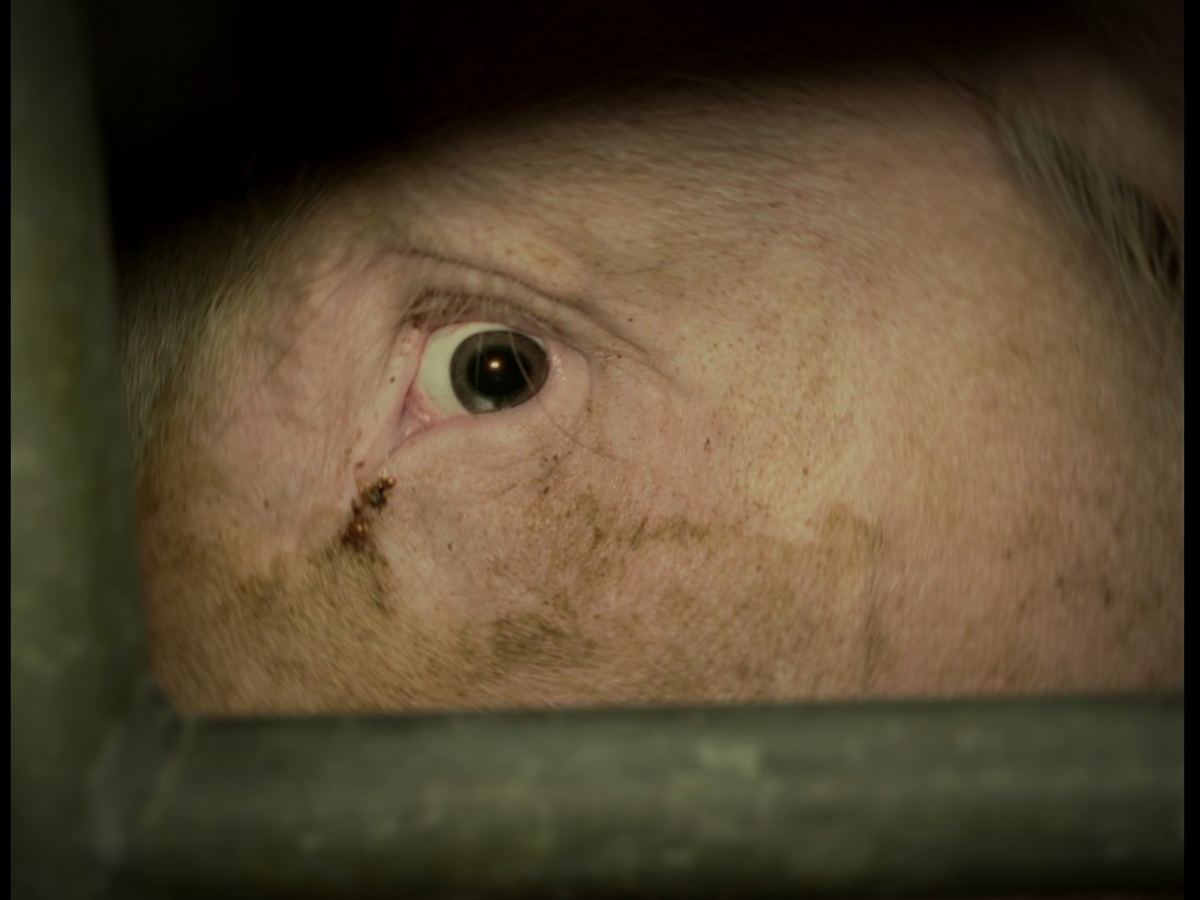
Conceived as an investigation into the heart of slaughterhouse images, Le Chant des bêtes tackles the question of the missing image: what goes on in these secret places, hidden from view, where thousands of animals are killed every day? The obsession of my journalist-character with the amount of violent archive footage he discovers, gradually leading him from shock to action, also guides the direction, borrowing from Dogme95, a style that is both nervous and instinctive.
Born in Grenoble, Titouan joined La Femis in the editing department after a Masters in cinema. Passionate about both editing and directing, his experience has enabled him to experiment with both practices in his own projects and those of others, with a particular taste for genre cinema.
Peter Rose
A Sign of the Times
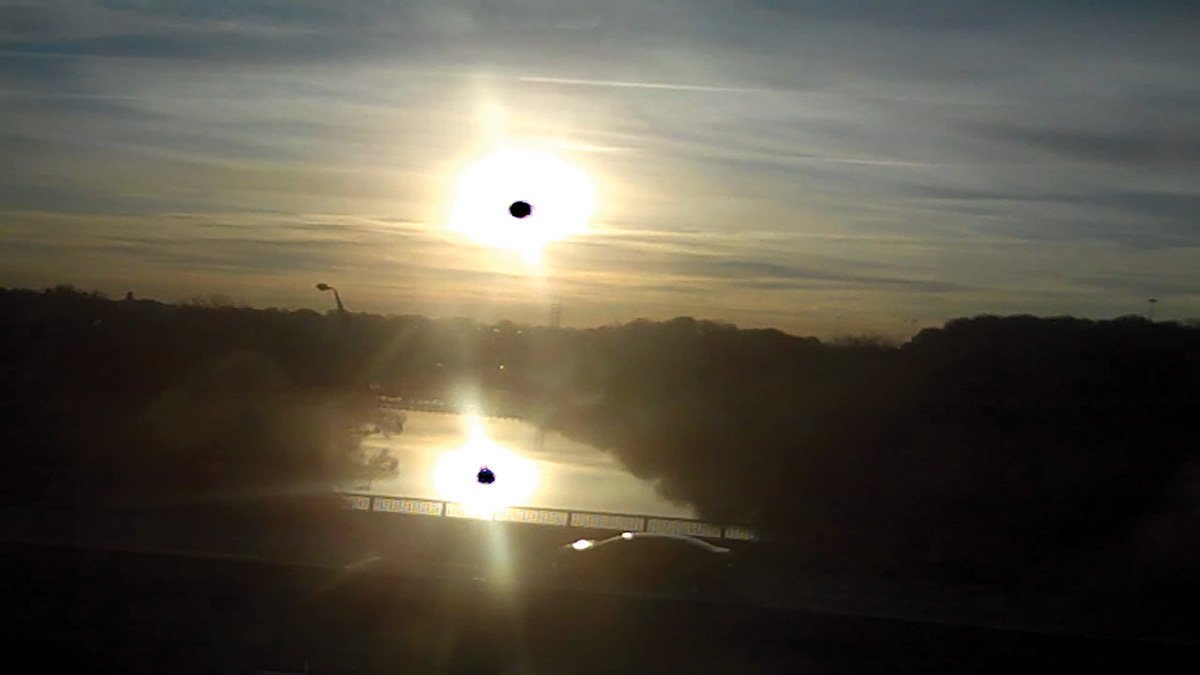
Experimental video | hdv | color | 1:46 | USA | 2021
A veiled metaphor for the instabilities of our times shot with a low-res Flip Camera
Peter Rose’s works in film, video, installation, and performance have received extensive national and international exhibition, including shows at the Whitney Museum, the Museum of Modern Art, the Centre Pompidou, the Yokohama Museum of Art, and more recently at the Fabric Workshop and Museum, the Rotterdam International Film Festival and the Film Society of Lincoln Center. Rose is concerned with new forms of vision, improvisations in fictitious languages, and the pleasures of obscure journeys. The work is included in several major international collections.
Peter Rose
Journey to Q'xtlan
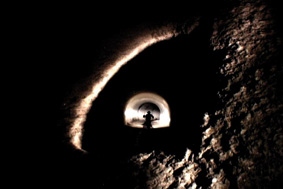
Video | dv | color | 7:30 | USA | 2009
For several years I have been experimenting with a tactic I call ?transfalumination,? I venture at night into the marginal geographies of the city and perform peculiar ceremonies with light, hoping to bring back images that appeal to some deep sense of the mysterious. ?Journey to Q?xtlan? is a journey, an opera, and a koan that presents some of the results of this research. It?s a kind of dream.
Peter Rose?s works in film, video, installation, and performance have received extensive national and international exhibition, including shows at the Whitney Museum, the Museum of Modern Art, the Centre Pompidou, the Yokohama Museum of Art, the Fabric Workshop and Museum, the Rotterdam International Film Festival and the Film Society of Lincoln Center. Rose is concerned with new forms of vision, the structures of language, and the pleasures of obscure journeys. His work is included in several major international collections.

Peter Rose
Odysseus in Ithaca
Experimental video | dv | color | 5:15 | USA, Ireland | 2004
Odysseus moors his boat in an alien architectural machine, a labyrinth with echoes of De Chirico and Escher- a place of mystery and power where the rules of visual perspective are transformed and other spaces emerge.
Peter Rose?s films, videos, and installations have been exhibited internationally and are in several major collections. He has been the recipient of significant grants and fellowships and has presented his work widely. Concerned with new forms of vision and the structures of language, his work nevertheless manages to offer a range of comic, sensual, and poetic pleasures.
Peter Rose
Odysseus in Ithaca
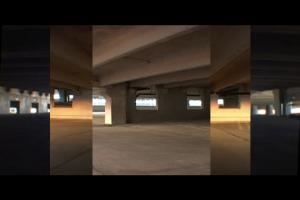
Experimental video | dv | color | 5:15 | USA | 2006
Odysseus moors his boat in the midst of an alien architectural machine, a labyrinth with echoes of De Chirico and Escher, a place of mystery and power where the rules of perspective are challenged and other spaces emerge. The video takes us on a dizzying, exhilarating swoop of a journey through the manifolds of a parking garage, down spiraling ramps into a deep interior space; it is a descent into the depths and it is a lament. Odysseus remembers the sea.
Peter Rose?s works in film, video, installation, and performance have received extensive national and international exhibition, including shows at the Whitney Museum, the Museum of Modern Art, the Centre Pompidou, the Yokohama Museum of Art, the Rotterdam International Film Festival, and the Film Society of Lincoln Center. Rose is concerned with new forms of vision, the structures of language, and the pleasures of obscure journeys. His films and videos are included in several major international collections and he has lectured widely on his work. More is available at www.peterrosepicture.com

Peter Rose
Dimensional Excursions (Oculis)
Experimental VR | hdv | color | 17:15 | USA | 2018
A suite of multi-dimensional riffs that use topological, performative, metapoetic, spatiotemporal, architectonic, kinaesthetic, choreographic, and observational strategies to conjure new forms of vision.
Since 1968 Peter Rose has made over thirty films, tapes, performances and installations. Many of the early works raise intriguing questions about the nature of time, space, light, and perception and draw upon Rose?s background in mathematics and on structuralist filmmaking. He subsequently became interested in language as a subject and in video as a medium and generated a substantial body of work that played with the feel and form of sense-a kind of intellectual comedy. Recent projects have involved a return to the landscape as subject and the mechanics of perception. His films, videos, installations, and performances have received extensive national and international exhibition, including shows at the Whitney Museum and the Museum of Modern Art, the Centre Pompidou, the Yokohama Museum of Art, and exhibition at the Fabric Workshop and Museum, the Rotterdam International Film Festival and the Film Society of Lincoln Center. His works have drawn support from an impressive roster of sources, including the National Endowment for the Arts, the Pennsylvania Council on the Arts, the Guggenheim, Independence and Pew Foundations, and have been the subject of a number of articles on contemporary media art. His work is included in several major international collections.

Peter Rose
Studies in Transfalumination
Experimental video | dv | color | 5:30 | USA | 2008
Studies in Transfalumination (5:30, 2008) exploits modified flashlights and stripped down video projectors to explore the visual complexities of the ordinary world: a tunnel, a clump of grass, a discarded table, the underside of a bridge, fog, a piece of rock, and a tree. All images were shot in real time- there is no animation. The video is the third in a series of works that explore light and darkness.
Since 1968 Peter Rose has made over thirty films, tapes, performances and installations. Many of the early works raise intriguing questions about the nature of time, space, light, and perception and draw upon Rose`s background in mathematics and on structuralist filmmaking. He subsequently became interested in language as a subject and in video as a medium and generated a substantial body of work that played with the feel and form of sense-a kind of intellectual comedy. Recent projects have involved a return to the landscape as subject and the mechanics of perception. His films, videos, installations, and performances have received extensive national and international exhibition, including shows at the Whitney Museum and the Museum of Modern Art, the Centre Pompidou, the Yokohama Museum of Art, and exhibition at the Fabric Workshop and Museum, the Rotterdam International Film Festival and the Film Society of Lincoln Center. His works have drawn support from an impressive roster of sources, including the National Endowment for the Arts, the Pennsylvania Council on the Arts, the Guggenheim, Independence and Pew Foundations, and have been the subject of a number of articles on contemporary media art. His work is included in several major international collections.
Peter Rose
Solaristics
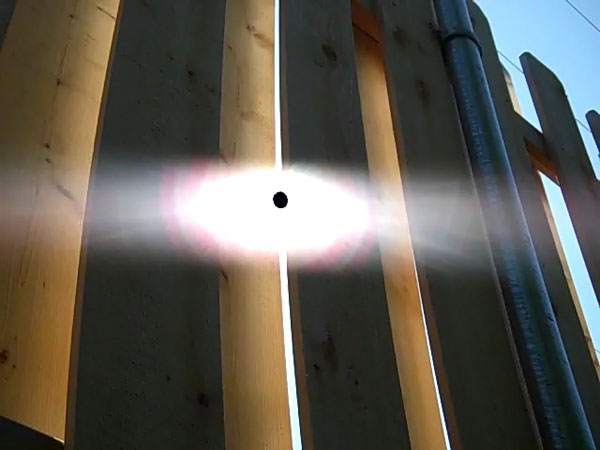
Experimental video | | color | 10:5 | USA | 2013
On the phenomenology of the black sun; an anthology of sightings; on ways of seeing; an ecoparable.
Peter Rose?s works in film, video, installation, and performance have received extensive national and international exhibition, including shows at the Whitney Museum, the Museum of Modern Art, the Centre Pompidou, the Yokohama Museum of Art, the Fabric Workshop and Museum, the Rotterdam International Film Festival and the Film Society of Lincoln Center. Rose is concerned with new forms of vision, with the structures of language, and with the pleasures of obscure journeys. His work is included in several major international collections.