Catalogue > Search
Results for : Tout le catalogue

Riar Rizaldi
Kasiterit
Experimental fiction | hdv | color | 18:22 | Indonesia | 2019
One-third of the global tin supply is extracted from Bangka island in Indonesia. Tin is the most impacted mineral by the upcoming technological development, which includes artificial intelligence and technology for renewable energy. Natasha is a solar-powered A.I. voice, and in this film, they trace their genealogy and the truth of their origin; from the capital liquidity to labour dynamic. With their feminised voice—as quite often performed by other AI-powered voice assistants produced by tech-companies, Natasha narrates the emergence of tin in Bangka island and their existence from the perspective of tropical anthropology of nature, value theory, philosophy of time, genetic mutation, geopolitics, and automation.
Riar Rizaldi works as an artist and researcher. Born in Indonesia and currently based in Hong Kong. His main focus is on the relationship between capital and technology, extractivism, and theoretical fiction. Through his works, he questions the notion of image politics, materiality, media archaeology and unanticipated consequences of technologies. He is also actively composing and performing sonic-fiction using the methods of field recording and foley through programming language. Riar has also curated ARKIPEL Jakarta International Documentary & Experimental Film Festival — Penal Colony (2017), Internet of (No)Things (2018) at Jogja National Museum and co-curated Open Possibilities: 'There is not only one neat way to imagine our future' at JCC, Singapore & NTT ICC, Tokyo (2019-2020). His works have been shown at Locarno Film Festival, BFI Southbank London, International Film Festival Rotterdam, NTT InterCommunication Center Tokyo, and National Gallery of Indonesia amongst others.
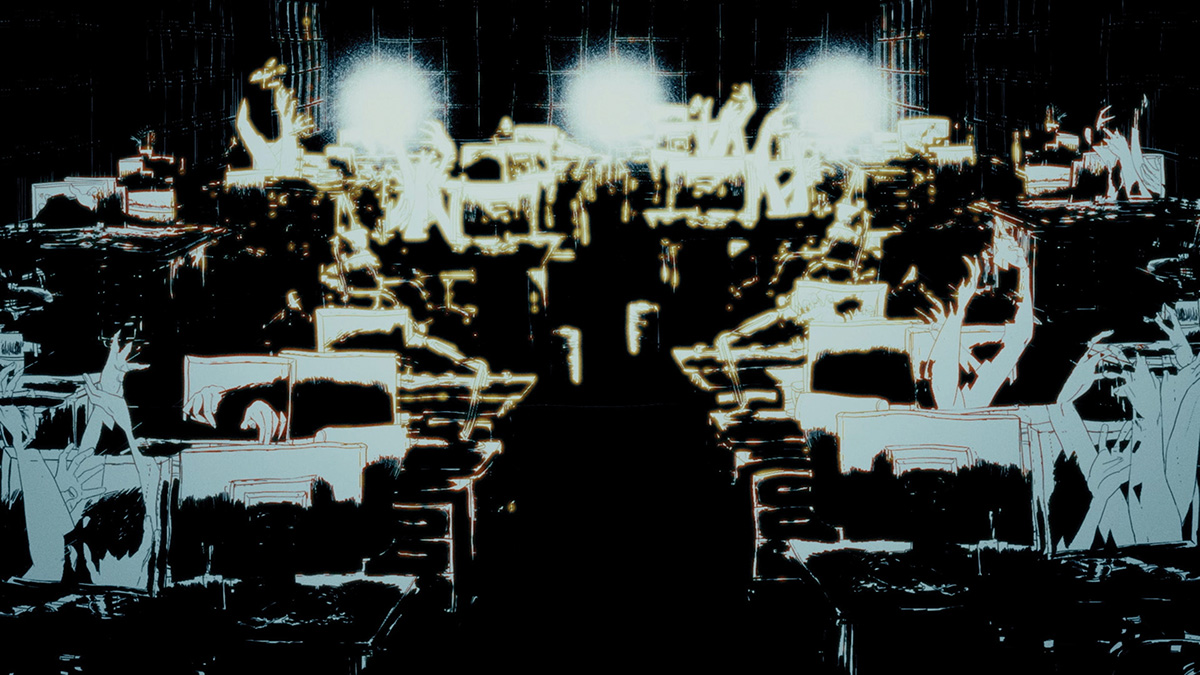
Riar Rizaldi
Notes from Gog Magog
Experimental doc. | 0 | color | 19:32 | Indonesia | 2022
An exploration of the interconnection between ghost stories, tech company culture in South Korea, and the economy of logistics in Indonesia told through a notebook/premake film and dossier of an unmade techno-horror feature-length film set in between port in Jakarta and an unnamed employee assistance programme office in Seoul.
Riar Rizaldi works as an artist and filmmaker. He works predominantly with the medium of moving images and sound, both in the black-box of cinema settings as well spatial presentation as installation. His artistic practice focuses mostly on the relationship between capital and technology, labour and nature, worldviews, genre cinema, and the possibility of theoretical fiction. His works have been shown at various international film festivals (including Locarno, IFFR, FID Marseille, Viennale, BFI London, Cinema du Reel, Vancouver, etc) as well as Centre Pompidou Paris, NTT InterCommunication Center Tokyo, Taipei Biennial, Istanbul Biennial, Venice Architecture Biennale, Biennale Jogja, National Gallery of Indonesia, and other venues and institutions. In addition, solo exhibitions and focus program of his works had been held at Batalha Centro de Cinema, Porto and Centre de la photographie Genève amongst others.

Dylan Rizzo
Nogooddream
Experimental film | 35mm | color | 3:14 | USA | 2024
A man wakes up in a nightmare where he finds his grandmother's favorite tree burning outside his window, and is haunted by whispers of his childhood. The text is adapted from a page in my notes app dedicated to things my younger sister says that I find strange, or sad, or hopeful. The images are from a recurring nightmare. This film was shot on 500 ft of 5219 Kodak 35mm film stock.
Dylan Rizzo is a filmmaker and photographer based in New York City. He is currently pursuing his MFA in directing at Brooklyn College’s Feirstein Graduate School of Cinema. His work draws from his experiences as a native New Yorker and Chinese - Italian American, often dissecting the meaning of memory and how reconciling the past informs the process of becoming. Last year he completed a 18 min short film titled “One Day I’ll Open My Fist”, shot on location in NYC’s Chinatown on 16mm film. It is currently being submitted to festivals.
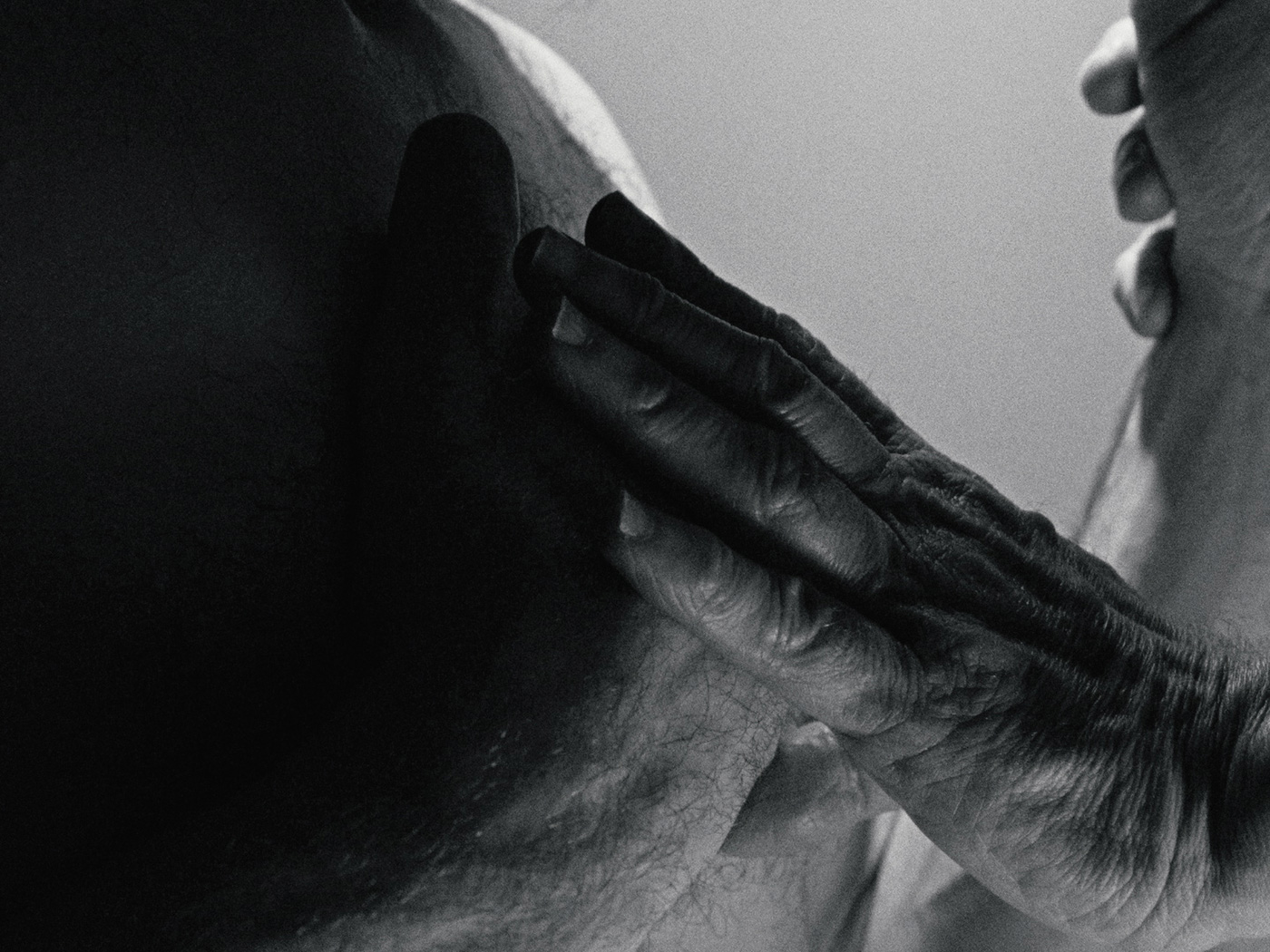
Louis Rizzo Naudi
In Here
Experimental fiction | mov | color and b&w | 8:50 | United Kingdom | 2024
“We dream of travelling through the universe… is the universe, however, not within us? We do not know the depths of our spirit. The mysterious path leads inwards. Eternity, with its worlds of past and future, is in us or nowhere. The outward world is the world of shadow; it throws its shadow into the realm of light. At present, it indeed appears so dark, lonely, formless inside; but how completely different it will seem to us when this eclipse has passed, and the body and shadow have moved away. We will enjoy more than ever, because our spirit has been deprived.” — Novalis, ‘Pollen’ (1798). Translated and adapted from the original German publication, with assistance from W. Hastie’s English translation in ‘Hymns and Thoughts on Religion’ (1888).
Louis Rizzo Naudi is a British-Maltese filmmaker. His practice explores the experience of the sublime and the constructed nature of visual perception, with his camera often focussed on natural phenomena, landscapes, and technology. He holds a B.A. in Film Studies from King’s College London, where he was awarded the Film Studies dissertation prize for his essay on the sublime in footage of the International Space Station, and an M.Sc. in Cognitive and Evolutionary Anthropology from the University of Oxford, where he researched how sublime experiences may lead to increased prosocial behaviours, such as generosity. His films have screened across Europe, including International Film Festival Rotterdam, Karlovy Vary International Film Festival, the British Film Institute, and the Tate St. Ives, and have also been used as relaxation aids in hospitals for patients undergoing medical procedures.

Daniel Robin
All The Leaves Are Brown
Experimental doc. | super8 | color | 11:0 | USA | 2017
What do we become when we realize that we are no longer what we used to be? Are we still ourselves, even though we no longer remember what we used to be? Through a collage of excerpts from conversations, thoughts, pictures of places and intimate family moments, "All the Leaves are Brown" is an autobiographical reflection, in film, of the American director Daniel Robin. The nostalgia for the past and for his life in California (as in the music by "The Mamas & The Papas" suggested by the title) is imprinted in the beautiful landscapes shot in Super8, which are in contrast with the narrator`s feeling of anguish, regarding the present and the future, a time that is characterised by what no longer exists or what has ceased to be. In a touching and intimate portrait about memory, family and loss, the fallen leaves of "All the Leaves are Brown" represent the end of a season and the beginning of another cycle: Daniel knows that, next year, the tree he sees from his window will once again be filled with leaves. He will have to learn to be another one. (LQ)
Daniel Robin’s film, “my olympic summer,†won the 2008 Sundance Film Festival Jury Prize for Short Filmmaking. The film also won the Grand Jury Award for Best Documentary Short at the Florida Film Festival, Best Documentary Short at the Nashville Film Festival, and best documentary short at several other festivals. The film was also selected to screen at the prestigious New Directors/New Films Festival in New York. His other films have twice screened at Sundance, at the SXSW Film Festival and festivals in Bogota, Cartagena, Abu Dhabi, Ireland, Israel, Italy, Spain, Philadelphia, London, Atlanta, Baltimore, Humboldt, Ann Arbor, and elsewhere. Filmmaker magazine recently named Robin one of the “25 New Faces of Independent Film,†a major honor. Robin is an innovative online artist, having pioneered web video in 2001, and with 6 episodic web series to date available at his website www.neighborhoodfilms.com. Robin recently wrote an essay about his experiences with web video for Movement, the NYU Tisch School journal. Daniel has been invited to present web video work at the Amsterdam Worldwide Video Festival and elsewhere. His projects have received support from the San Francisco Arts Commission, Apple Computers, the Fleishbacker Foundation, and the Film Arts Foundation. As Robin puts it: “My film/video work is primarily made for two distinct exhibition venues: film festivals and the Internet (web series). My short films are personal and, for the most part, interrogate relationships I have with women, my family, and Judaism. While the majority of my filmmaking can be read within a documentary framework, I’m more inclined not to use labels to categorize my work. I have a deep love and appreciation for narrative cinema and have incorporated some fictional devices in my more recent films. I use narrative strategies both as a means to critique how we consume documentaries and, in some sense, as a way to liberate my work from the constraints of conventional non-fiction storytelling. The most important aspect of filmmaking, for me, is to arrive at an emotional truth that resonates with the viewer.I began making web series at my site www.neighborhoodfilms.com in 2000. My first series, the valet chronicles, set the thematic standard for each new series, my relationship with a specific neighborhood, and or community. My work here maintains an aesthetic and tonal consistency that aligns itself with familiar tropes of documentary practice, yet I consider these web series an extension of my personal filmmaking.â€

Michael Robinson
Mad Ladders
Video | hdv | color | 9:45 | USA | 2015
A modern prophet’s visions of mythical destruction and transformation are recounted across a turbulent geometric ceremony of rising curtains, swirling set pieces, and unveiled idols from music television’s past. Together, these parallel cults of revelation unlock a pathway to the far side of the sun.
Michael Robinson (b.1981) is an American film, video and collage artist whose work explores the joys and dangers of mediated experience, riding the fine lines between humor and terror, nostalgia and contempt, ecstasy and hysteria. His work has shown in both solo and group shows at a variety of festivals, museums, and galleries including The 2012 Whitney Biennial, The International Film Festival Rotterdam, The New York Film Festival, The BFI London Film Festival, REDCAT Los Angeles, MoMA P.S.1, The Sundance Film Festival, The Walker Art Center, Anthology Film Archives, The Images Festival, The European Media Art Festival, and Whitechapel Gallery in London. Michael was the recipient of a 2014 MacDowell Colony Fellowship, a 2012 Creative Capital grant, a 2011-2012 Film/Video Residency Award from The Wexner Center for the Arts, a 2009 residency from The Headlands Center for the Arts, and his films have received awards from numerous festivals. He was featured as one of the “50 Best Filmmakers Under 50” by Cinema Scope magazine in 2012, and listed among the top ten avant-garde filmmakers of the 2000`s by Film Comment magazine. Michael holds a BFA from Ithaca College, and an MFA from the University of Illinois at Chicago. His work is distributed by Video Data Bank and represented by Carrie Secrist Gallery in Chicago.

Michael Robinson
The Dark, Krystle
Experimental fiction | dv | color | 9:34 | USA | 2013
The cabin is on fire! Krystle can't stop crying, Alexis won't stop drinking, and the fabric of existence hangs in the balance, again and again and again. – MR "The Dark, Krystle brilliantly re-purposes the artificiality of stock gesture, allowing viewers to see its hollowness and to feel it recharging with new emotional power. Equal parts archival fashion show and feminist morality play, Robinson’s montage rekindles the unfinished business of identity, consumption, and excess in 1980s pop culture." - Carrie Secrist Gallery, Chicago
Michael Robinson (b.1981) is an American film, video and collage artist whose work explores the joys and dangers of mediated experience, riding the fine lines between humor and terror, nostalgia and contempt, ecstasy and hysteria. His work has shown in both solo and group shows at a variety of festivals, museums, and galleries including The 2012 Whitney Biennial, The International Film Festival Rotterdam, The New York Film Festival, The BFI London Film Festival, REDCAT Los Angeles, MoMA P.S.1, The Sundance Film Festival, The Walker Art Center, Anthology Film Archives, Kurzfilmtage Oberhausen, Viennale, and Whitechapel Gallery in London. Michael was the recipient of a 2012 Creative Capital grant, a 2011-2012 Film/Video Residency Award from The Wexner Center for the Arts, a 2009 residency from The Headlands Center for the Arts, and his films have received awards from numerous festivals. He was featured as one of the “50 Best Filmmakers Under 50” by Cinema Scope magazine in 2012, and listed among the top ten avant-garde filmmakers of the 2000`s by Film Comment magazine. His work is distributed by Video Data Bank and Carrie Secrist Gallery in Chicago.

Michael Robinson
The General Returns From One Place to Another
Experimental film | 16mm | color | 10:45 | USA | 2006
Learning to love again, with fear at its side, the film draws balance between the romantic and the horrid, shaping a concurrently skeptical and indulgent experience of the beautiful. A Frank O`Hara monologue (from a play of the same title) attempts to undercut the sincerity of the landscape, but there are stronger forces surfacing.
Since the year 2000, Michael Robinson has created a body of film, video and photography work exploring the poetics of loss and the dangers of mediated experience. His work has screened in both solo and group shows at a variety of festivals, cinematheques and galleries including the International Film Festival Rotterdam, The New York Film Festival, The Times BFI London Film Festival, Media City, Anthology Film Archives, Viennale, Cinematexas, The Wexner Center for the Arts, ICA London, Impakt, The Yerba Buena Center for the Arts, Chicago Filmmakers, PDX, and the San Francisco, Oberhausen, and Hong Kong International Film Festivals. His film ?You Don?t Bring Me Flowers? was awarded ?Best International Film? at the 2006 Images Festival in Toronto, ?Best of Festival? at the 2006 Milwaukee Underground Film Festival, and Michael was awarded "Most Promising Filmmaker" at the 2007 Ann Arbor Film Festival. Originally from upstate NY, Michael holds a BFA from Ithaca College, and a MFA from the University of Illinois at Chicago. He currently resides in Chicago.

Andrea Robles, Adriana BRAVO
El Fish
Animation | dv | color and b&w | 4:7 | Mexico | 2008
This animation dives into the daily world of Benjamin. The soundtrack was constructed based on his emotional states. It is made by sounds produced by himself and by sounds that fascinate him. The images in this work are an attempt to interpret Benjamin′s perceptions and sensations.
Robles obtained a bachelor degree in Visual Communication in 1999. During her studies she took a workshop in animation where she made a spot for the UNICEF. This spot was awarded the first prize in the ″Television and Video Festival ANUIES 2000″ (National Association of Universities and Institutions for Education). In 2001 she formed the collaboration group dobleA (doubleA) together with Adriana Bravo. Since then they have produced all their work in collaboration. In 2002 Robles attended a workshop given by Jesse Lerner at the Centro de la Imagen (Image Center) where she created "Mirada pérdida" (Lost sight). It is an animation piece done with objects. In the same year she produced "Contemplación" (Contemplation) and "Experimento" (Experiment). She conceived the work "Anatomy of a Moth on 2004". This animation of pencil drawings won a grant from ″Consejo Nacional para la Cultura y las Artes″ (Arts and Culture National Council). During the same year she received the Jóvenes Creadores 2004-2005 stipend (Young Creators 2004-2005) from "Fondo National para la Cultura y las Artes" (Arts and Culture National Fund). Within this period Robles produced "Microftalmía" (Microphthalmie), an experimental animation of oil drawings on glass.

João Pedro Rodrigues
O corpo de Afonso
| | | 32:0 | Portugal | 0
How would it look like, the body of Dom Afonso Henriques, first king of Portugal, tutelary figure, subject to successive mythifications throughout Portuguese history?
Born in Lisbon in 1966. Pedro Rodrigues attended the Lisbon Film School, in which he graduated in 1989. From 1989 to 1996 he worked as assistant director and editor with well-known names of the portuguese cinema, such as Teresa Villaverde. His short ?Parabéns!? (1997) participated at the Cinema Festival of Venice of 1997 and received a special distinction of the Jury. And his feature, ?O Fantasma?, of 2000, received the Award for the Best Foreign Feature Film at the Cinema Festival of Belfort in the same year. Recently he directed ?Odete?, Special Mention from Cinémas de Recherche in Cannes 2005, Director?s Fortnight .

Hector Rodriguez
The Uncertainty Principle
Video installation | hdv | color | 0:0 | Spain, Hongkong | 2018
The Uncertainty Principle consists of videos and an interactive application about information and uncertainty in the domain of image analysis. The various elements of the work are produced by applying certain filters, known as 2D Gabor filters, to images. Gabor filters identify various kinds of edges -- horizontal, vertical, and diagonal – by responding to specific visual frequencies in an image.
Hector Rodriguez is a digital artist and theorist whose work explores the unique possibilities of computational technologies to reconfigure the history and aesthetics of moving images. His animation Res Extensa received the award for best digital work in the Hong Kong Art Biennial 2003. His 2012 video installation Gestus: Judex received an achievement award at the Hong Kong Contemporary Art Awards and was a jury selection of the Japan Media Art Festival. He received a commendation award from the Hong Kong Government for his contributions to art and culture in 2015. He was Artistic Director of the Microwave International Media Art Festival, and is now a member of the Writing Machine Collective. He currently teaches at the School of Creative Media, City University of Hong Kong. He has taught courses on art and science, game studies, generative art, software art, media art theory, contemporary art, and film history.

Hector Rodriguez
INFLECTIONS
Video | dv | black and white | 3:0 | Spain, Hongkong | 2012
INFLECTIONS is a real-time generative system that temporally rearranges video sequences based on mathematical equations. It explores the relationship between duration, simultaneity, and expectation. The technical concept of the work is based on the idea of a one-dimensional random walk: a mathematical representation of a journey along a linear path. The path contains several nodes or decision points. At each node along the path, the walker decides at random whether to go forward or backwards. In this work, the ?path? is the timeline of a movie clip. The program identifies a set of "inflection points" (or ?decision points?) along this timeline. An inflection point is a moment that contains no motion, where movement comes to a standstill. It is thus a good point to change direction. Imagine now the computer program walking along a movie timeline. When it reaches one of those inflection points, it makes a yes-no decision, either to go forward or move back. In this project, the walk is not random, because the program relies on some non-linear dynamical equation to make each decision. Inflections uses equations that exhibit chaotic behavior and for this reason can be used to simulate a random process.
Hector Rodriguez is a digital artist and theorist. His animation Res Extensa received the award for best digital work in the Hong Kong Art Biennial 2003 and has been shown in India, China, Germany, and Spain. His essays about film theory/history and digital art have been published in Screen, Cinema Journal, and Game Studies, and he has participated in various art and technology conferences. He was Artistic Director of the Microwave International Media Art Festival, where he has also taught workshops on Java programming and organized an exhibition on art and games, and is now a member of the Writing Machine Collective. He currently teaches at the School of Creative Media, City University of Hong Kong. He has taught courses on game studies, generative art, software art, media art theory, contemporary art, and film history.

Francisco Rodriguez Teare, Francisco Rodriguez Teare
Gois
Video | mp4 | color | 27:53 | Chile, France | 2020
With Vanja and other friends, we go swimming every summer in the rivers of Góis. We started going there in 2016, when we arrived in Europe and we were looking for a place that would remind us of the mountains of Chile, where we grew up. Every year new lovers arrive and new couples are made or broken. Everything is always in motion again. One afternoon of swimming, my friend Rodrigo tells me that some time ago he and his boyfriend started practicing a form of vampirization: they make small cuts in each other's skin with razor blades and suck each other's blood.
Francisco Rodríguez Teare is a Chilean artist and filmmaker based in France with a moving image practice working predominantly with cinema, video and installation. Since 2015 he has been creating film and video works and exhibiting them internationally both in film festival circuits and contemporary art contexts. His work explores the flow of power within fluid global networks and territories, opacity of violence, the traces of the dead in the world of the living, oral traditions and their intersection with personal memory and popular myths. Recently his work has been presented at Stedelijk Museum, Taipei Biennial, Film Society of Lincoln Center, VIDEONALE, FID Marseille, Collection Lambert, CPH:DOX, Shangai Film Festival, Courtisane, Doc Lisboa, Viennale, Palais des Beaux-Arts de Bruxelles, Govett-Brewster Art Gallery, Birkbeck Institute for the Moving Image. He has received awards at the Valdivia Film Festival, Festival Punto de Vista and the Fondation François Schneider, among others.

Francisco Rodriguez Teare
Octubre al mediodía
Experimental doc. | 16mm | color | 12:0 | Chile | 2024
A spring afternoon on the San Cristobal hill, in downtown Santiago de Chile. Four friends and a sound engineer talk about the events seen and experienced during the popular revolt that began in 2019 in Chile. The film brings to the surface certain conversations related to any revolution: hope, disillusionment, fire, torture and police violence. The name of the film comes from the poem April Noon by Eileen Myles.
Francisco Rodríguez Teare is a Chilean artist and filmmaker based in France with a moving image practice working predominantly with film, video and installation. Since 2015 he has been creating works and exhibiting them both in film festival circuits and contemporary art contexts. He has directed the shorts Appels téléphononiques, Una luna de hierro, Why are they equipped with eyes ?, Octubre al mediodía, El oro y el pez. The video installations and performances Gois, Colored Procession, This dream is mine and the hybrid feature film Otro sol. Recently his work has been presented at film festivals and museums as New Directors/New Films at MoMA, Toronto FIlm Festival, 62 New York Film Festival, Centre Pompidou, Taipei Biennial, Stedelijk Museum, Cinémathèque Française, Mar del Plata IFF, CPH:DOX, Shanghai IFF, IndieLisboa, FID Marseille, Viennale.

Alberto Rodríguez Collía
Ley Aurea (Golden Law)
Experimental video | hdv | color | 7:4 | Guatemala, Brazil | 2014
This video speaks about the exploitation and its institutionalized discrimination (economic and racial) and slavery. The location is Brazil, because this one of the most unequal countries worldwide and was the last to declare slavery illegal (Aurea Act of 1898).
Lives and works in Guatemala. With his work tries to explore the historical memory, sordid aspects of the human being and the ridicule of the societies that are imposed over others. He graduated as Engraver from Art School no. 10 of Madrid, with his final project received the Honourable mention at Aurelio Blanco awards. He was awarded with the residencies of FONCA / CASA of Oaxaca, Mexico; Des.Pacio of San Jose, Costa Rica, Fundaçao Armando Alvarez Penteado in Sao Paulo, Brazil, and AIT in Tokyo, Japan. Also participated in 32nd. Biennial of Ljubljana, in the XVI and XVII Biennial of Guatemala and the VII Central American Biennial. In 2007 he co-founded the TEGG, the only engraving workshop in Guatemala, where he teached and organized exhibitions related to graphic arts. From 2010 to 2014 he was in charge of the Cinematographic Art Center of the CCEG, coordinating films screenings and workshops of cinema. Rodriguez also coordinated the Contemporary Film Festival (MUCA) and has worked for the human rights oriented film festival “ Memoria, Verdad, Justicia ” since 2013. He participated in the films "Even the Sun has spots" that won "Prix Espérance" and "Honourable Mention" in the FID of Marseille.

Camila Rodríguez Triana
La Primera Vuelta De La Espiral
Experimental doc. | 4k | color | 20:42 | Colombia | 2025
The short film The First Turn of the Spiral is the result of months of theoretical and ethnographic research, a year-long pilgrimage to the sacred lagoons that form the Mhuysqa territory, and all that unfolds on both the physical and spiritual planes when one engages wholeheartedly in the search for identity and the lineage that came before. For the artist, the act of remembering is an exercise in connecting body, mind (consciousness), and heart—an integration that makes it possible to forge identity. This is why, through her work, she proposes to “make memory with the feet and with the hands— with the feet by traveling the territory, and with the hands by returning to the ancestral crafts.”
Camila Rodríguez Triana (Cali, 1985). Visual artist and filmmaker. She graduated from the Faculty of Integrated Arts at Universidad del Valle (2008) in Colombia and completed a Master’s degree in Film and Contemporary Art at Le Fresnoy – Studio National des Arts Contemporains (2019) in France, where she received the Des Amis du Fresnoy – Best Installation Award at Panorama 21. Throughout her artistic career, she has received several distinctions, including the Visual Arts Protégé grant from the Rolex Mentor and Protégé Arts Initiative, where she worked with American artist Carrie Mae Weems (2020); the Emerging Artist Award from Rencontres Artistiques Carré sur Seine in France (2021); the Emerging Artist Award at Artecámara, ARTBO in Colombia (2020); the National Colombian–Swiss Photography Award in Colombia (2008); and a nomination for the Cisneros Fontanals Art Foundation Emerging Artist Grant in the US (2020). As a filmmaker, she has also been recognized with awards such as Best Ibero-American Film at the Lima Independiente Film Festival in Peru (2018); Best Documentary at the Lisbon International Film Festival – Spring Edition in Portugal (2017); and the Renaud Victor Award in the International Competition at FIDMarseille in France (2016), among others. Her work has been exhibited in venues such as the National Museum of Contemporary Art in Athens, Greece (2023); Brown University, USA (2023); Galerie BAQ, Paris, France (2023); POUSH, Paris, France (2023); PS122 Gallery / The National Academy of Design, New York, USA (2022); BAM Fisher, Brooklyn, NYC, USA (2022); the 65th Salon de Montrouge, France (2021); and the PROYECTOR Festival, Spain (2020), among others. Her films have been selected by renowned festivals such as the Karlovy Vary International Film Festival (KVIFF), EnergaCAMERIMAGE – Directors’ Debuts Competition, FIDMarseille, DocLisboa, and Visions du Réel, among others.

Till Roeskens
Vidéocartographies : Aïda, Palestine - Un tour à Beer Sheva
Experimental doc. | dv | black and white | 4:39 | Germany, Palestine | 2008
I have asked inhabitants of Aida Camp, Bethlehem, to draw maps of what they see around them. The drawing process as well as the stories related to those subjective geographies have been recorded on video. Through six chapters that form as many potentially independent short films, step by step you?ll discover the refugee camp and it?s surroundings, you?ll follow the routes of some persons and their adventurous attempts to deal with the state of siege they live under. Let?s call it a tribute to resistance by going around obstacles, in times where the very possibility of that resistance seems to be vanishing.
Till Roeskens, born in 1974 in Freiburg (Germany), lives in Marseille. Amateur of applied geography, Till Roeskens, as an artist, belongs to the family of explorers. His work develops in the confrontation with a given territory and those who try to draw their own ways within it. What he brings back from his explorations, be it a book, a video film, a slide show lecture or other light forms, is never meant to be a simple report, but an invitation to exercice one?s perception, a questioning about what we are able to seize from the infinite complexity of the world. His «attempts to find his bearings» are done with a constant concern to touch an uninformed audience and to make them become co-authors of the work. Exercises his art all around France, e.g. at Plateau arts center in Paris, Forteresse de Salses, Villa Saint Clair, Museum of Modern and Contemporary Art and CEAAC Strasbourg (City of Strasbourg Arts Prize), Language Plus (Quebec), Museum of Modern Art Collioure (Collioure Prize), diverse Regional Art Funds: Alsace, Languedoc-Roussillon and Provence where he is presently working on his first full-length documentary film.

Axel Roessler
it's a small world
Experimental film | | color | 2:0 | Germany | 2009
Die Idee zum Clip "It`s a small world" entstand, als ich in auf einem Flohmarkt in Los Angeles ein Fotoalbum kaufte, in dem alte Polaroidfotografien einer amerikanischen Familie zu sehen sind. Der kurze Film ist eine Art Hommage an das längst vergangene Südkalifornien der sechziger Jahre und stellt die Reise nach, die die fotografierten Personen damals unternomen haben.
Biographie Axel Rössler: - geboren 1966 in Langenhagen / Hannover - 1986 Abitur, danach Zivildienst - bis 1995 Studium an der Johann Wolfgang Goethe Universtät Frankfurt am Main, Diplomabschluß als Sprachsoziologe - parallel seit ca. 1990 verstärkt Interesse an Graphiksoftware, diverse Jobs die zum Glück ausreichend Zeit für die autodidaktische Aneignung allermöglichen Sound- und Graphikprogramme erlauben, Betrieb eines Schallplattenlabels für Singles (?Stetzer?) - 1998 Gründungsmitgleid von saasfee*, einem Label für Medien, Design, Kunst und elektronische Musik, dabei Schwerpunkt Animationen und 3D sowie Musiklabelarbeit - seit 2000 diverse Musikvideos, Auftragsarbeiten und Experimentalfilme, Ausstellungen u.a. in Genf, Basel, Turin, München, Hamburg und Frankfurt - seit 2006 verstärkte Arbeit an www.countrytrouble.com zusammen mit Ellen Wagner - seit längerem befreundet mit Bertram Ritter, der hier die Musik beigesteuert hat. Bertram ist aktiv in diversen Frankfurter Bands, aktuell als Schlagzeuger bei ?Das grüne Hemd?, ?Perfumed Chambers? und ?Nachttierhaus?. Auch als Solokünstler aktiv.

Alicja Rogalska
What If As If
Experimental video | hdv | color | 13:31 | Poland, United Kingdom | 2017
What if As If explores legal fictions in international immigration law in collaboration with refugees, asylum seekers and immigrants based in the UK who trained as lawyers in their countries of origin. The video was filmed in a former courtroom and greenscreen, a device for filmic fiction, is used throughout. Legal fictions are used in legal reasoning when something is believed or assumed to be true - they allow for the law to be applied, without changing its text. For example, a refusal to accept an inheritance is legally possible if the inheritor is declared dead and having died before the person who left the legacy; another example is corporate personhood - i.e. treating companies as if they were persons. Immigration law is full of such artificial constructions: legal fictions of sovereignty, political community, the concept of entry, as well as fictions in welfare and employment law, and finally - citizenship and its terms and conditions. The lawyers` expertise and legal imagination combined with their personal, embodied experience of being exposed to the inherent contradictions and absurdities of immigration law, influences the way they see law in society. Legal fictions are used in the video as a vehicle for questioning existing legal structures, a tool for creative lawmaking and exploring speculative legal frameworks as possible resistance.
Alicja Rogalska is a multidisciplinary artist based in London and Warsaw and working internationally. She graduated with an MFA in Fine Art from Goldsmiths College and an MA in Cultural Studies from the University of Warsaw. In 2017 she was an artist in residence at KulturKontakt in Vienna and IASPIS - Swedish Arts Grants Committee`s International Programme in Stockholm. She was also a recipient of 2016-17 Artsadmin Bursary in London. Exhibitions include: For Beyond That Horizon Lies Another Horizon, Edith-Russ-Haus für Medienkunst (Oldenburg, 2017), Gotong Royong. Things We Do Together, Centre for Contemporary Art Ujazdowski Castle (Warsaw, 2017), Dreams and Dramas. Law as Literature, nGbK (Berlin, 2017), Social Design for Social Living, National Gallery (Jakarta, 2016), All Men Become Sisters, Muzeum Sztuki (Åódź, 2016); No Need For References, Kunsthalle Exnergasse (Vienna, 2015); Critical Juncture, Kochi-Muziris Biennale (Kochi, 2014); A Museum of Immortality, Ashkal Alwan (Beirut, 2014), IMS Project, Flat Time House (London, 2013); Melancholy In Progress, Hong-Gah Museum (Taipei, 2012); Jour de Fête, The Private Space Gallery / LOOP Festival (Barcelona, 2011); To Look is to Labour, Laden Für Nichts (Leipzig, 2010) and No Soul For Sale, Tate Modern (London, 2010).

Alicja Rogalska
Dark Fibres
Experimental video | 4k | color | 5:16 | Poland, Georgia | 2021
A song about scavenging, economic exploitation and post-internet reality performed by a Georgian polyphonic choir and based on a story of Hayastan Shakarian - an elderly, illiterate woman from the village of Armazi near Mtskheta, who in 2011 allegedly cut the internet cable connecting Georgia and Armenia whilst looking for scrap metal to sell. The story became global news though Shakarian denied any involvement, famously saying she had never heard of the internet, and many people disputed its veracity. The lyrics were sung to the tune of Chakrulo, a medieval Georgian song about peasants preparing for armed rebellion against their feudal master. The song was sent into space in 1977 on Voyager 2.? Commissioned by Arts Territory for Myth exhibition, Artisterium Festival, Tbilisi (song), filmed at Fraunhofer Institute for Applied Optics and Precision Engineering IOF and supported by the DAAD Artists-in-Berlin program (video).?
Alicja Rogalska's practice is research-led and focuses on social structures and the political subtext of the everyday; she mostly works in specific contexts making situations, performances, videos and installations in collaboration with other people to collectively search for emancipatory ideas for the future. She recently presented her work at National Gallery of Art (Vilnius, 2023), Scherben, Berlin Art Prize (2022, winner), Manifesta 14 (Prishtina, 2022), Temporary Gallery (Cologne, 2021-22), Kunsthalle Bratislava (2021), Kunsthalle Wien (Vienna, 2020-21), OFF Biennale (Budapest, 2020-21), Art Encounters Biennale (Timis?oara, 2019), Tokyo Photographic Art Museum (2019), Biennale Warszawa (2019), Museum of Modern Art (Warsaw, 2019), Kyoto Art Centre (2019) and Muzeum Sztuki (?ódz?, 2019). Rogalska was a fellow of the DAAD Artists-in-Berlin program (2020-21), and took part in residencies at City of Women Festival (Ljubljana, 2019), Stuart Hall Library (London, 2019), Paradise AIR (Matsudo, 2018), Museums Quartier (Vienna, 2018) and IASPIS (Stockholm, 2017), amongst others.

Sophie Roger
C'est donc un amoureux qui parle et qui dit :
Experimental film | hdv | color | 6:15 | France | 2015
Pages arrachées du Fragment d`un discours amoureux de Roland Barthes dans un grenier de montagne. La réalisatrice regarde et dessine les paysages qu`elle voit au travers des planches ajourées. Un papillon la suit jusque dans la neige.
Depuis plusieurs années, le travail de Sophie Roger fait dialoguer dessin et vidéo, lectures et quotidien. Cinéma d`essayiste, elle travaille seule et prend le temps. Ses films arpentent ses territoires les plus intimes (maison, jardin) tout en gardant comme horizon une pensée de l`autre et de l`ailleurs.