Catalogue > Search
Results for : Tout le catalogue

Frédéric Ramade
Go Forth
Documentary | hdv | color | 62:0 | France | 2014
À travers le portrait d’une femme de 79 ans, Taklit Adel, ma grand-mère, née en Algérie et vivant en France depuis 60 ans, se noue à la fois le fil de la petite et de la grande Histoire et l’exploration de la banlieue et de son ensemble. Une histoire personnelle prise dans l’histoire collective.
Soufiane Adel est né en 1981 en Algérie. Il arrive en France à 8 ans. C’est en faisant une école de design, l’ENSCI, Les Ateliers, qu’il découvre le cinéma. Pas par hasard, toute son enfance il s’est nourri des films de Jean Claude Van Damme et du Nouvel Hollywood. Il rencontre à 20 ans le néoréalisme italien et le cinéma expérimental, et amorce alors une longue cinéphilie, autodidacte, aléatoire, et compulsive. En 2004, il décide de filmer son père, lui demande de rejouer une scène qu’ils ont vécue ensemble. Ce sera son premier court métrage : « Nuits closes ». Après il y aura « La Cassette » puis « Kamel s’est suicidé six fois, son père est mort ». A partir de 2009, il co-réalise ses films avec Angela Terrail, avec qui il travaille depuis « La Cassette ». Ils réaliseront « Sur la tête de Bertha Boxcar » et prépare actuellement un long métrage, l’adaptation contemporaine d’un roman de Jack London « Martin Eden ».

Frédéric Ramade
Les Bonnes
Video | hdv | color | 8:0 | France | 2015
Le long de la nuit. Deux jeunes garçons sont dehors. Ils gardent un studio de cinéma. Ils sont frères. Seuls, la lune et un tigre les accompagnent pour traverser ce temps.
Soufiane Adel est né en 1981 en Algérie. Il arrive en France à 8 ans. C’est en faisant une école de design, l’ENSCI, Les Ateliers, qu’il découvre le cinéma. Pas par hasard, toute son enfance il s’est nourri des films de Jean Claude Van Damme et du Nouvel Hollywood. Il rencontre à 20 ans le néoréalisme italien et le cinéma expérimental, et amorce alors une longue cinéphilie, autodidacte, aléatoire, et compulsive. En 2004, il décide de filmer son père, lui demande de rejouer une scène qu’ils ont vécue ensemble. Ce sera son premier court métrage : « Nuits closes ». Après il y aura « La Cassette » puis « Kamel s’est suicidé six fois, son père est mort ». À partir de 2009, il co-réalise ses films avec Angela Terrail, avec qui il travaille depuis « La Cassette ». Ils réaliseront « Sur la tête de Bertha Boxcar » et prépare actuellement un long métrage, l’adaptation contemporaine d’un roman de Jack London « Martin Eden ».

Frédéric Ramade
Ode pavillonnaire
Experimental fiction | 16mm | color and b&w | 47:47 | France | 2005
Returning to his childhood suburban home, the director puts his relatives on camera and leads them to use a critical approach to think about the beginnings of their home and about the desires that guided their aesthetic and technical choices. A humoristic and symbolic reconstruction of the past between political criticism and civil disobedience.
Frédéric Ramade is both a writer and film director. In 2006, he achieved "Ode Pavillionnaire", a first medium-length personal film mixing fiction and documentary, on life in suburbian estates. Before "Ode pavillonnaire ", Frédéric Ramade directed numerous documentary films among which: "Raconte Moi... », animation films on fairy tales' characters, France 5, 2006, "Le Dessous Des Cartes", more than fifty issues of the geopolitical magazine, ARTE, 1999 to 2006, "Court-Circuit", portraits of film directors within the magazine - Patrick Bokanovski, Michael Snow, the Quay brothers, Jan Svankmaje, ARTE, 2001 to 2004, "Voyage au Féminin", portraits of towns on the outskirts of the Mediterranean sea through the points of view of women, Escale, 2002-2003. Aside from these, Frédéric Ramade has directed several experimental films: "Dernières représentations", video, 2000, a tribute to the French writer Bernard Lamarche-Vadel, screened during the Paris-Berlin festival, 2003, "Olhos Fechados", video, 2001, a reflexion on death through the picture of the famous Brazilian thief, Lampião, "En l'attente", S8 transfered on video, 2002, essay on photography through the work of the French photographer Magdi Senadji, screened at the Arthotèque of Caen, June 2002, "Un tombeau for Senadji", video, 2003, tribute to the dead photographer, screened in the Centre National de la Photographie. Frédéric Ramade has also published several illustrated books on Iran, Brazil, Vietnam, and Mexico, for Le Chêne and Flammarion, and has translated contemporary Iranian short stories for Gallimard. Frédéric Ramade is currently developing his first long feature film, "Rodeo", and an experimental documentary film, "Bienvenue à Charleworld", exploring the life and work of the American musician & artist Charlemagne Palestine.

Julie Ramage
How to order online
Experimental doc. | hdcam | color | 9:8 | France | 2019
Soumis au contrôle des conversations téléphoniques, à l'interdiction des connexions internet et plus généralement, de tout échange entre personnes détenues, l'espace carcéral constitue une zone blanche ancrée au cœur du tissu urbain. Contournant ce fonctionnement, ces derniers construisent une série d’outils permettant de transporter objets et messages au sein de l’architecture carcérale : les yo-yos, pendant mécanique de l’intranet, qui leur permettent de "commander en ligne". De tels artefacts témoignent du développement de savoir-faire artisanaux s'adaptant aux évolutions architecturales et juridiques du monde pénitentiaire, des relations de pouvoir et de contre-pouvoir mises en jeu dans l'enfermement, mais surtout, d'un besoin universel d'échanges, dont Adam Smith avait fait le point central de toute théorie économique.
Julie Ramage (née en 1987, en France) est artiste visuelle et docteure en Histoire et Sémiologie du Texte et de l’Image. Elle explore les relations complexes se tissant entre les communautés humaines et les lieux qu’elles occupent. Ce travail implique la mise en place d’enquêtes sur le terrain et de protocoles de recherche collective qui fournissent le matériau de performances, de micro-éditions et d’installations vidéos, sonores ou numériques. Son travail a été présenté aux États-Unis, en Argentine, en Espagne et en France, notamment au Centre Pompidou, Paris (France); à la Cité Internationale des Arts, Paris (France); au Centquatre, Paris (France); au Musée de l’Homme, Paris (France); à la Chapelle des Beaux-Arts de Paris (France); au Cube, Issy-les-Moulineaux (France); à la Maison Européenne de la photographie, Paris (France). Avec l'artiste Marina Ledrein, elle a fondé Blackcut, structure de production et de diffusion collaborative qu'elle co-dirige aujourd'hui.

Jules Ramage
Ghostmarkets
Experimental doc. | 0 | color | 6:24 | France | 2022
Ghostmarkets is part of a long-term collaboration with a group of men prisoners at Poissy prison (France). In 2019, in the wake of the prohibition of all transactions in the prison space, they engaged in the creation of a monetary production economy inside the walls. The debates conducted on this occasion testify to the prior existence of an invisible economic system, based on the exchange of services, debts of honor, and the performance of masculinity. As he was directing and recording the discussions of his work group, Jules Ramage came to realize the complex position he assumed inside the prison walls. The SD card verification protocol turned his camcorder into a surveillance tool. The sound, video, and textual archives of this collective experience were used to make an installed film, marked by the extraction of the voices of its detained collaborators, focusing on the material transformation and gain in symbolic value. With John Dow, Ben, Christophe, Brahli, Sparafucile, Youssef Rhnima, Philippe T., Ilich.
Jules Ramage (1987, France) is a visual artist and researcher. Associated with the CERILAC laboratory at the University of Paris, he is also a member of the Cité du Genre, interdisciplinary research institute in gender studies. He explores the relationships of power at play in disciplinary and institutional structures. Since 2013, he has conducted in-depth fieldwork in the prison space, where he implements collaborative protocols with inmates as well as prison guards. His work has been exhibited in France, the United States, Argentina, England, Spain, and Germany. He was a resident at CENTQUATRE-Paris, Cité internationale des arts, Ateliers Médicis, Fresnoy-studio national des arts contemporains. For Ghostmarkets, he worked with a group of men detained in the central prison of Poissy, formed in 2015 as part of the Section des Etudiants Empêchés, a teaching program run by the University of Paris. Over the years, the group has become self-sufficient, and, under the management of Jules Ramage, it has taken on the identity of a collaborative research-creation collective. It includes : John Dow, Ben, Christophe, Brahli, Sparafucile, Youssef Rhnima, Philippe T., Ilich.
Jules Ramage
The Bird
Experimental doc. | 0 | color | 11:39 | France | 2023
During her incarceration, Gauche described her daily life in pages that she slammed in the prison yard. On these occasions, she also invited her fellow inmates to sit in a circle and share their stories, which she noted in her notebook. Six months later, she performs these documents on the film set, testifying for the institutional control over bodies and sexualities, the violence of imposed medical treatments, and the absolute strenght of sorority as a condition for survival.
Jules Ramage (1987, France) is an intersex visual artist and researcher. Associated with the CERILAC laboratory at the University of Paris, he is also a member of the Cité du Genre, interdisciplinary research institute in gender studies. He explores the complex relationships of power at play in disciplinary and institutional structures. Since 2013, he has conducted in-depth fieldwork in the prison space, where he implements collaborative protocols with inmates. Their work has been exhibited in France, the United States, Argentina, England, Spain, and Germany.

Julie Ramaioli
france 2007
Experimental doc. | 16mm | black and white | 18:0 | France | 2007
Ar first, Gee-Jung Jun`s film debut is more reminiscent of randomly found film material from the beginning of the last century than a carefully constructed record of life in the Roma community in the French city of Lyon in 2007. In disconcerting silence, black-and- white pictures speak eloquently of people living on the edge of society. They have a quotidian quality as though they are being played out at a seemingly different time rooted in one moment without history. The director approaches his subjects with immediacy and profound human interest, but he maintains his distance in the film and offers room for reflection. This remarkable picture has picked up a host of awards at various European documentary festivals.
A South Korean filmmaker and photographer. He grew in an artistic environment. Most notably, his father's work as a painter allowed him to meet, at an early age, many of the recognized artists of his country. As an adolescent, he pursued dance and acting, in the National Theater Company. 1996: After studying acting, he turns to academic work in filmmaking and photography, joining the ?film and multimedia? department at the University of Honam. During this period, he works primarily on projects for television, as the curriculum he studies is primarily devoted to commercial activity. In 2002; in order to develop more personal, committed projects, he benefits from exchanges with the Ecole des Beaux-Arts de Saint-Etienne in order to seek out new experiences. In 2005, he begins working with the Film flamme collective. He then goes on to experiment with developing negatives ?in his bathtub? after his experiences with the film collective ?Besoin de rien" (May 1, 2006). In 2006-2007, he obtains the Diplôme National d` Arts Plastiques at the Ecole des Beaux Arts of Marseille. In 2008, he receives the Diplôme National Supérieur Expression Plastique des Beaux Arts of Geneva (Switzerland). He has also participated in several photographic exhibitions.

Julie Ramaioli, Spina Giuseppe, Gagliardo Alessandro
même père même mère
Experimental doc. | dv | color and b&w | 82:0 | France | 2008
Distance from the earth, known places, forms. A voice resonates, maybe it is the film's acting entity, maybe it is a country's. Arriving in Burkina Faso, sailing through its cities, trying to be detached from things, to stop feeling, to see. But the rigidity of cultural differences and its corruptions, the ignorance of places traps in a mental state which drives to madness, to hallucination. Low detoxification alongside Dario, a travel companion, in a town in the south. We start to open our eyes and become aware of what is hidden in the depth.
La Malastrada.film is a creation structure and dissemination research film which has chosen to make a direction method from low production. It is run by Allessandro Gagliardo, Giuseppe Spina eand Julie Ramaioli. It expresses the will to experiment on a new production/creation system that which allows to relate to numerous co-producers through the eye of an intellectual exchange and humane reciprocity. Low production means surpassing both the television and film industries, staying outside political control and multinational aesthetics, their imaginary and their stories. It is envisioning film as an instrument capable of investing in human processes and in the cultural dynamics of contemporary society, but beyond all as a means to research being, a means to "recognize the moments of feeling" as a consequence of an impulsive act.

Lou Rambert Preiss
Les Zumains (Doller)
Fiction | hdv | color | 13:58 | France, Switzerland | 2017
Jonathan, a lonely teenager, is used to dress up like his favorite virtual singer. Finding a fellow on internet lets him dream of a date and hope for a bit of humanity...
Lou Rambert-Preiss was born on August 10, 1993 in Paris, France. He is known for his work on Dans Paris (2006), La nuit sera longue (2003) and Ein weiterer Mann in Eile (2018).

Lou Rambert Preiss
Ici le chemin des ânes
Fiction | 0 | color | 22:0 | France, Switzerland | 2018
Dans une grande carrière de roche, une explosion révèle un objet venu d’un autre temps.
Lou Rambert Preiss nait en 1993. Après une licence de Philosophie à la Sorbonne, il entre en Bachelor Cinéma à l’Ecole Cantonale d’Art de Lausanne. Il vit maintenant à Paris.

Sj Ramir
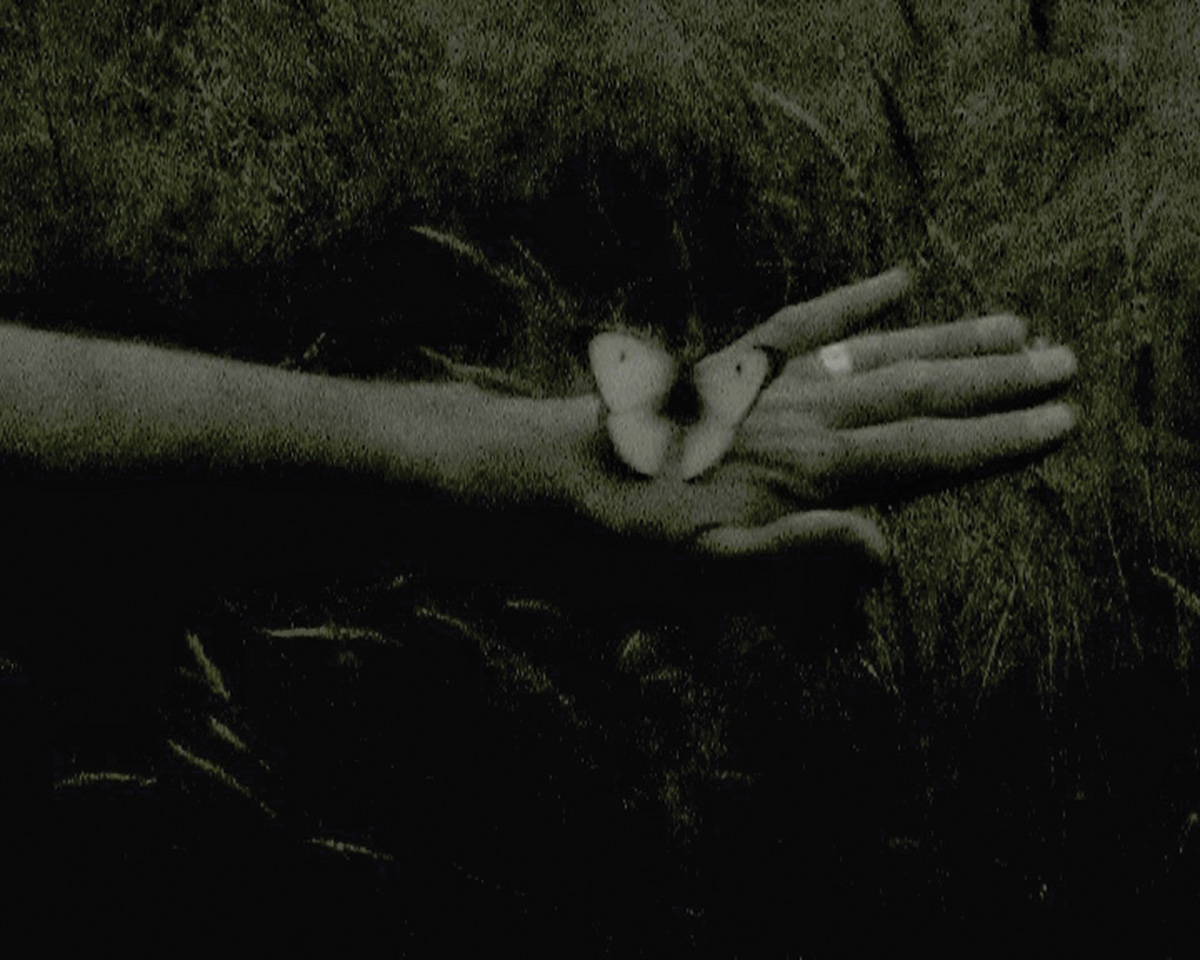
In This Valley of Respite, My Last Breath...
Experimental video | hdv | color | 5:6 | New Zealand, Australia | 2017
A valley starved of light. Weariness. Fatigue. An offering of shelter; a surrender of breath...
Originally a photographer, artist/filmmaker SJ.Ramir later moved to digital video - shooting scenes of lone figures moving across remote and isolated geographical landscapes. The landscapes and structures in his films are often a mix of real and/or constructed 3D models. The prominent style of his films came from early years of experimentation with custom-made lens filters. These filters enhanced video pixels and produced hazy, distorted images, which Ramir felt were visually suggestive of emotional states connected with a central theme in his work: isolation. His films have been exhibited at art galleries worldwide and screened at many prestigious film festivals including: the 67th Venice International Film Festival, International Film Festival Rotterdam (2009 and 2010), Edinburgh International Film Festival (2012 and 2013), Melbourne International Film Festival (2011) and the International Short Film Festival Oberhausen (2009).
Sj. Ramir
I Found Water
Experimental film | hdv | color and b&w | 9:33 | New Zealand, Australia | 2023
Experimenting with custom made lens filters to diffuse and distort, I Found Water is an autobiographical film that contemplates memory and experience.
SJ.Ramir is a New Zealand filmmaker residing in Melbourne, Australia. His films are concerned with existence and its relationship to, and occupation of, geographical space. The landscapes and structures in his films are a mix of actual locations and constructed 3D models.

Sj Ramir
In This Valley, My Heart Is Buried Deep...
Experimental film | hdv | color | 6:7 | New Zealand | 2014
“On the morning of my death – just after sunrise, and before my spirit had departed, a mysterious figure entered the house... “ In This Valley My Heart Is Buried Deep, is an experimental narrative that uses a combination of visuals and text. Based on an actual dream, the video explores what it means to belong; connection to the land; connection to a place…
Originally a photographer, artist/filmmaker SJ.Ramir later moved to digital video - shooting scenes of lone figures moving across remote and isolated geographical landscapes. The landscapes in his films are often a mix of real and/or constructed 3D models. The prominent style of his films came from early years of experimentation with custom-made lens filters. These filters enhanced video pixels and produced hazy, distorted images, which Ramir felt were visually suggestive of emotional states connected with a central theme in his work: isolation. Ramir’s distinctive films have screened at numerous film festivals worldwide including the Venice International Film Festival, International Film Festival Rotterdam, Edinburgh International Film Festival and the Melbourne International Film Festival. He currently resides in Melbourne, Australia.

Sj. Ramir
We Are Without
Experimental video | mov | color and b&w | 3:9 | New Zealand, Australia | 2020
Our hands cannot resurrect. Set amongst the shadows of a grainy, dystopian landscape, "We Are Without" is a visual response to life, death and self-delusion...
SJ.Ramir is a New Zealand filmmaker residing in Melbourne, Australia. His films often contain scenes of lone figures moving across remote and isolated geographical landscapes. The landscapes and structures in his films are a mix of actual locations and constructed 3D models. The prominent style of his films came from early years of experimentation with custom-made lens filters. These filters enhanced video pixels and produced hazy, distorted images, which Ramir felt were visually suggestive of emotional states connected with a central theme in his work: isolation. His films have been screened at many prestigious film festivals worldwide, including the 67th Venice International Film Festival, International Film Festival Rotterdam, Melbourne International Film Festival, Jih.lava IDFF and the Oberhausen International Short Film Festival.

Enrique Ramirez
Brises
Fiction | 16mm | color | 13:0 | Chile | 2008
?Breezes? is a ten minute film of sequence shot while the camera crosses the Presidential Palace (Moneda). This film deals mainly with the memory of a place which was the scenario of the Coup d'Etat and the return of democracy, a place which was the cradle of tragedies and joys of a whole race.
Enrique Ramirez was born in Chile in 1979. There he studied music and audio-visual communication with cinematographic touch, and is currently a professor with the National Studio of Contemporary Arts Le Fresnoy. The artistic path of Enrique Ramirez was profitable and intense. His attentive perspective of contemporary history is reflected in his works: popular culture in its funk expression in ?the Central Track? (2003), the invention of enemies for the intervention and the occupation of other people, and the open or underhand complicity of the rest of the world in ?the Allies? (2003), the stories of immigrants in ?the Landscape? (2007), the history and the memory in ?Breezes? (2008). Ramirez works with two central elements: an object which is attached directly to the concept which works and a projection with sequences of images on the object. In this way, it brings up to date and contextualizes the object by instigating it with the means of the movement which the images create, while creating at the same time channels of correspondence between the various components of work.

Enrique Ramirez
La memoria verde
Experimental fiction | 4k | color | 12:59 | Chile, Cuba | 2019
Video installation, which takes an internal journey through memories and landscapes: The ex-tinction of memory as well as plants and traditions. Through its inhabitants, this film talks about plants, and through them, people and their society.
Enrique Ramírez est né en 1979 à Santiago du Chili. Vit et travaille à Paris (France) et Santiago (Chili). Il a étudié la musique populaire et le cinéma au Chili avant de rejoindre en 2007 le Studio National des Arts Contemporains-Le Fresnoy (Tourcoing, France). En 2013, il a remporté le prix des Amis du Palais de Tokyo, Paris, France. En 2014, il remporte le prix Loop fair, Barcelone. Il a notamment exposé au Le Palais de Tokyo, Centre Pompidou, Espace Culturel Louis Vuitton, IX Bienal international d?art, Bolivie; Museo Amparo, Puebla, Mexique; Musée de la mémoire, Santiago; Centre Culturel MATTA, Argentine, Buenos Aires et au Grand Café à Saint-Nazaire. En 2017, il est invité par Christine Macel à participer à l?exposition "Viva Arte Viva" de la 57ème exposition internationale de la Biennale di Venezia Aujourd?hui Ramírez est nominé au prix Marcel Duchamp 2020

Enrique Ramirez
Deux faisceaux blancs groupés et rotatifs
Experimental fiction | 4k | color | 24:41 | Chile, France | 2017
In this twilight work, the sea appears calm or turbulent: effusions of foam stand out against dark matter, the beam of light mechanically pierces the night sky, and multiple voices accompany this elemental choreography. One voice invites us to discover the beliefs of certain Native American tribes, who felt that the white marks in the sky (the stars) were holes through which entered the light of the universe, where darkness did not exist. Other famous voices revive great moments of political history, burning words that have guided humanity, or evocations of tragic events that have left it distraught. This confirms the existential and generic dimension of Enrique Ramírez’s universe, profoundly structured by the motif of cycle, revolution and eternal beginnings. There is no moralism in this meditative approach: the artist suggests rather the clandestine development of thought, and the experience of immersion in the noise of the world.
Enrique Ramírez. Born in 1979 in Santiago, Chile. He has a master degree in Contemporary art and New Media in Studio National of art contemporain Le Fresnoy, France. Enrique Ramirez’s work could be described as poetic incursions towards the humanization of contemporary dystopias. His film-installations and photography deals with the politics of exodus and exile and the discontinuity of memory, but for Ramirez this always means an arduous search into subjective imaginary. The vast landscapes that often appear in his works are conceived as geo-poetic spaces for imagination, territories open for vision and deambulation. The mood of the images is a contemplative one; the landscape, the breeze, the water, the sand, they all seem to work together in an effort to place a subjective view.
Mary-audrey Ramirez
Forced Amnesia
Multimedia installation | hdv | color | 0:0 | Luxembourg | 2024
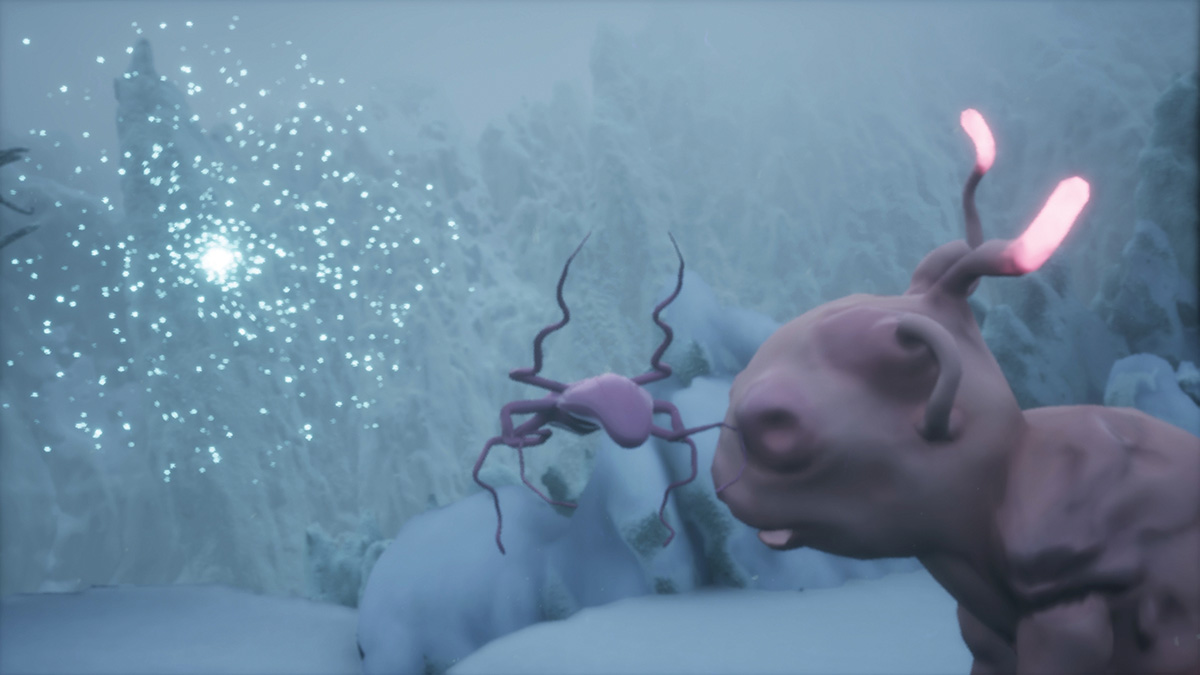
The game follows ideas such as design by subtraction. A world devoid of time and space where the great dichotomies of human thought no longer cast a shadow. A post-anthropocentric world with a non-hierarchical structure. Here we cannot orient ourselves, which defies our understanding in a refreshing way and makes us forget - at least for a few moments - who we are; where we come from; and that we believe we are of particular importance. Forced Amnesia follows a simple instruction pattern: explore and you will find. As it is devoid of language all we have to do is follow our instinct. What we learned in games that we played before. The idea for Forced Amnesia started 2023 as an art exhibition, which led to the development of a video game. Forced Amnesia is a game with focus on quiet moments, inspired by the concept of design by subtraction, philosophy introduced by Fumito Ueda. The game gives the player lots of space to navigate through. Forced Amnesia’s aesthetics moves through a stage of comforting uncertainty, the player does not know if they are above or under water, swinging or flying. This state, fused with a calm soothing musical score creates a space for relaxation and calm. Places that nowadays are getting increasingly harder to find. Forced Amnesia aims at an older generation of gamers. Gen X and Gen Y will be the first generation to grow old playing video games. As we slowly age, our lifestyle and perception changes, Forced Amnesia is there to accompany us.
Mary-Audrey Ramirez studied under Thomas Zipp at the University of the Arts in Berlin Germany from 2010 to 2016. In 2019 she was the recipient of the prestigious Edward Steichen Award in Luxembourg for her textile-based sculptural and pictorial works. Early 2025 Ramirez’s Qrst percent for art work will be Qnalized in Berlin Spandau. Her works have been shown in both solo and group exhibitions at institutions such as Casino Luxembourg, forum d’art contemporain, Luxembourg; Kunsthalle Gießen, Gießen; Dortmunder Kunstverein, Dortmund; TRAUMA BAR UND KINO, Berlin; Kai 10 Arthena Foundation, D sseldorf; Haus Mödrath, Kerpen; Margot Samel Gallery, New York City; Polansky Gallery, Prague and MARTINETZ, Cologne. She was also part of Esch2022+ARS ELECTRONICA, Luxembourg/Linz. “Ramirez creates a dense image of a world with her figurative representations in pictures, objects and games, It is a world devoid of time and space where the great dichotomies of human thought no longer play a role. A post-anthropocentric world that is not organised hierarchically. A world in which we cannot orientate ourselves, which defies our understanding in a refreshing way and makes us forget, at least for a few moments, who we are, where we come from and that we believe we are of particular importance” - (Annekathrin Kohout)
Enrique Ramirez
Las tres memorias
Experimental fiction | 4k | color | 15:54 | Chile | 2023
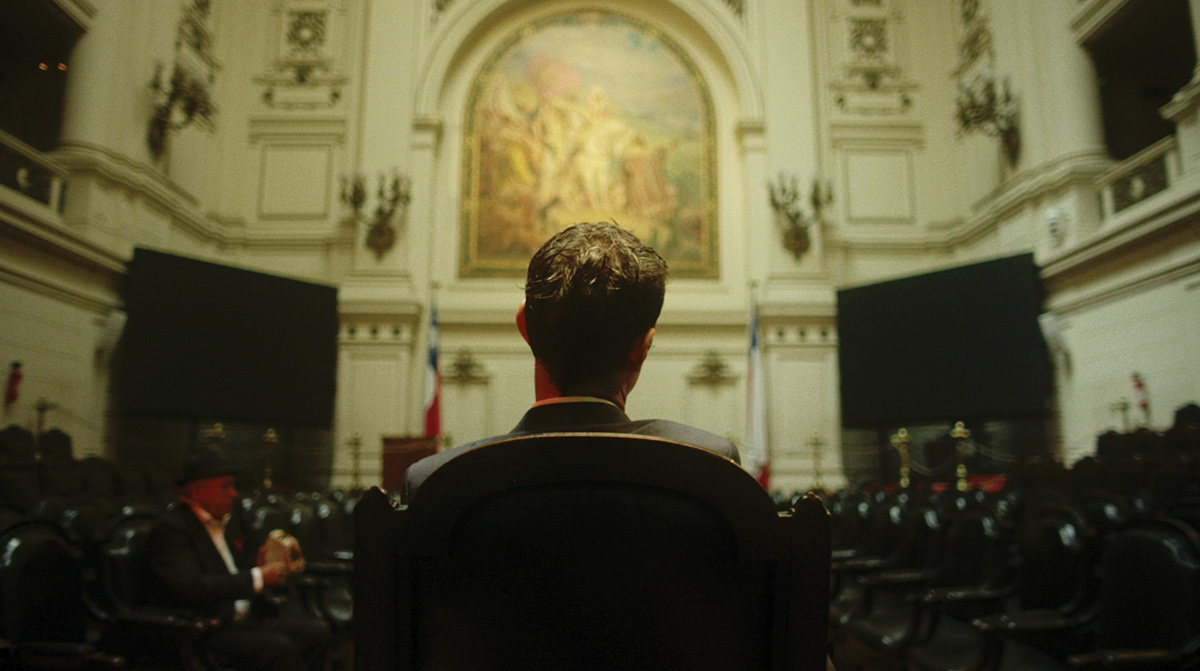
A man with no memory walks through the hall of honor of the former national congress of Chile, a place that was closed during the military dictatorship and that has become an important place again during the writing of the two new failed constitutions in Chile. In front of him is the famous painting of Pedro Subercaseaux that represents the discovery of Chile, this man without memory tries to remember our national anthem. Through this effort is built this film that seeks to make us travel inside an imaginary landscape in the heart of the History and architecture of the main hall of governmental power in Chile, where all presidents promised a fairer and better country ... this landscape is Chile : an experiment of neoliberalism that, despite everything, continues to breathe on our sky and dream
Enrique Ramírez was born in 1979 in Santiago de Chile. Since 2007, he lives and works between Paris (France) and Santiago (Chile). He studied popular music and cinema in Chile before joining the postgraduate master in contemporary art and new media of Le Fresnoy – Studio National des Arts Contemporains (Tourcoing, France). In 2014 he won the discovery price of Les Amis du Palais de Tokyo, Paris, France. He has since exposed in some major places as Le Palais de Tokyo, Centre Pompidou, Espace Culturel Louis Vuitton or le 104), France (le Grand Café, Saint-Nazaire) and in Central and South America (Museo Amparo, Puebla, Mexico ; Museo de la memoria, Santiago ; Parque de la memoria en Argentina, Buenos Aires). In 2017, he is invited to the 57th International Art Exhibition - La Biennale di Venezia curated by Christine Macel, Ramírez is nominated for the Marcel Duchamp Prize 2020

Stefan Ramirez Perez, Ramírez Pérez, Benjamin
CONFLUENCE
Experimental doc. | dcp | color | 20:45 | Germany | 2018
CONFLUENCE centers around Serbian pop singer and former child star Doris Bizeti. In a mixture between pop and lecture performance Doris’ biography is conflated with histories of architectures in Belgrade.
Stefan Ramírez Pérez (*1988) was a participant at the residency program Schloss Ringenberg in 2018. He studied at the Academy of Media Arts Cologne from 2010 - 2017. His works have been screened at International Film Festival Rotterdam, International Short Film Festival Oberhausen, Visions du Réel Nyon and Julia Stoschek Collection Düsseldorf, among others. He had recent Group and Solo shows at Artothek Cologne, Kunstmuseum Bonn, Museum of Contemporary Art Belgrade and Alternative Space LOOP, Seoul. He received the Chargesheimer Scholarship by the City of Cologne in 2018, and the Graduation Award by the Academy of Media Arts Cologne in 2017. Benjamin Ramírez Pérez (*1988, Germany) lives and works in Cologne. He studied at the Academy of Media Arts Cologne from 2009-2015 with Phil Collins, Matthias Müller and Julia Scher. He undertook the residency programme at de Ateliers from 2016 - 2018. His works have been screened at Locarno, Edinburgh, Toronto and Rotterdam International Film Festival, among others. He had recent Group and Solo shows at Artothek Cologne, Kunsthalle Recklinghausen, Kunstmuseum Bonn, Museum of Contemporary Art Belgrade and Alternative Space LOOP, Seoul.

Karolina Ramírez, Ana DIAS, Andrés LAGUNA
En el camino dejé...
Experimental doc. | dv | color and b&w | 14:0 | Colombia | 2004
"In April 9, 1948, when the Liberal Jorge Eliécer Gaitan was killed, the crude period called La Violencia started in Colombia: Conservatives and Liberals created armed groups to kill each other. Today, 54 years after, SHE, from the distance, and HIM, fighting against Parkinson, narrate their story, demonstrating that the "historic facts" not only interrupted the development of the national life, but also the conslusion of unknown personal stories." source:proimagenescolombia.com