Catalogue > Search
Results for : Tout le catalogue

Sergey Provorov, Myznikova Galina
Vechnost
Video | hdv | color | 41:0 | Russia | 2012
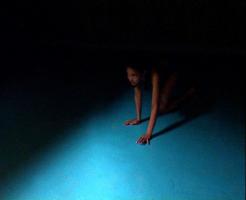
In the system of culture, eternity is perceived as something transcendental and which is beyond human understanding. Circumstances, that devour life, and beings, that are doomed to live, are metaphorically brought together in the ?Eternity?project. A metaphor of Eternity is a little girl who mentally withstands and resists destructive force and always wins a victory over it. This is the Eternity of an absolute and timeless being. The little girl finds herself in a number of deadly circumstances, it gradually turns into existential cycle, her ?life appears to be Eternity, and her death appears to be only an instant?.
The artists work in various genres of contemporary art: video art, experimental films, photography installations and opera theater. Their works were presented at the 51st Venice Biennale, Kunstfilm Biennale (Museum Ludwig, Cologne), Hors Pistes (Centre Pompidou, Paris), Biennial of Moving Images (Saint-Gervais, Geneva) and other notable events. Over twenty films of the art group participated in international festivals and were awarded with: Tiger Award for Short Film (38th International Film Festival Rotterdam), Gran Premio (25th Asolo International Art Film Festival), Best Experimental Film (15th Chilean International Short Film Festival). In 2010 the ?Inspiration? film was a part of ?Orizzonti? program at the 67th Venice International Film Festival and in 2012 the ?Eternity? is invited by Roma International Film Festival to competition program ?Cinema XXI?. ?Three String Quartets For One Video? was a Grand Prix winner of the Kuryokhin Contemporary Art Awards.
Nicolas Provost
Exoticore
Fiction | dv | color | 27:0 | Belgium | 2004
A tale about an immigrant from Burkina Faso and his attempt to integrate in an alien culture, Norway. Exoticore is a touching film about people trying to find their place in the world. A film about being a foreigner, about solitude and contemporary insanity. A dark journey into exoticism.
Nicolas Provost is a visual artist and recently moved back to Belgium after a 10 years stay in Oslo, Norway. Now he lives and works in Antwerp. His work is to be seen worldwide on both film- and visual arts platforms. His films ?Papillon d?amour?, ?Bataille?, ?Oh Dear?? and ?EXOTICORE? have been awarded at prestigious festivals as among others The Sundance Film Festival, The San Francisco International Filmfestival, The Nashville Film Festival, The Ann Arbor Film Festival, Clermont-Ferrand, The Asian International Film Festival, Seoul, and Vila Do Conde Filmfestival? The work of Nicolas Provost balances between fiction and fine arts, the grotesque and the moving, beauty and cruelty and it intends to walk on the fine line between dualities. Time and again his phantasmagorias provoke both recognition and alienation and succeed in catching our expectations into an unravelling game of mystery and abstraction that impacts emotionally as much as intellectually. With manipulations of time and form, cinematographic and narrative language is analysed, accents are shifted and new stories are told. The extraordinary is elucidated in order to reveal the global. Apart from the use of film and visual language, sound is also a constant factor in Provost?s body of work, as a rhythmical spine or an emotional guideline. In some videos filmic memory and perception are stimulated by fragments from classic films by Akira Kurosawa, Igmar Bergman, Alain Resnais or Russ Meyers. But Provost is as likely to shoot films and videos with inspiration from obscure B-films aswell as from contemporary cinema. Provost recently wrote, produced and directed "EXOTICORE", his first fictionfilm.
Nicolas Provost
Gravity
Experimental video | dv | color | 6:7 | Belgium | 2007
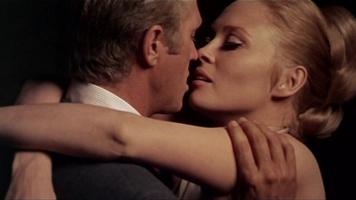
Dans "Gravity", l`univers rassurant créé par un enchaînement de scènes de baisers est brisé par un effet stroboscopique qui nous perd dans le vertige étourdissant de l?étreinte où, comme souvent dans le cinéma de Nicolas Provost, l`amour devient une bataille passionnée dans laquelle les monstres finissent par être démasqués.
Artiste visuel, Nicolas Provost a vécu 10 ans à Oslo. Il vit et travaille actuellement à Bruxelles. Son travail est diffusé dans le monde entier dans des lieux de cinéma et d`arts visuels. Ses oeuvres ont reçu de nombreux prix et sont diffusées dans des festivals prestigieux comme le Festival du Film de Sundance, le Festival International du Film de San Francisco, Cinevagas, le Festival International du Film de Rotterdam, la Viennale, le Festival du Film de Locarno, le Ann Arbor Film Festival, le Festival de Clermont-Ferrand, Impakt Film Festival, The Asian International Film Festival (Séoul). Les oeuvres de Nicolas Provost sont à la fois des tableaux audiovisuels et des expériences cinématiques dans lesquelles il tente de s`accommoder des dualités et de trouver le ton juste entre grotesque et émouvant, beauté et cruauté, émotionnel et intellectuel, cinéma et beaux-arts. Ses fantasmagories provoquent à la fois reconnaissance et aliénation et répondent à retiennent notre attention avec une énigme mystérieuse et abstraite qui nous force à développer une réflexion sur le phénomène de l`audiovisuel. Le langage cinématographique est analysé via des manipulations de temps, de codes et de forme, l`angle d`approche est modifié, de nouvelles histoires sont racontées. Le son est, avec le langage filmique et visuel, une composante essentielle de l`?uvre de Nicolas Provost dont il constitue une charpente rythmique et un guide émotionnel. Dans son oeuvre faite de fragments de films récupérés, Nicolas Provost stimule la mémoire et la perception filmique. Il réalise également des films d`art contemporain. "Exoticore", un moyen métrage de fiction sur le cauchemar de l`intégration d`un immigré en Norvège, était en compétition au Festival du Film de Sundance en 2006. Son film "Papillon d`amour" a reçu de nombreux prix et une Mention Spéciale au Festival du Film de Sundance en 2004. "Induction", une déconstruction cinématique, était en compétition à Sundance en 2007. Il travaille actuellement sur "The Invader", un long-métrage sur le déclin psychologique d`un homme sur fond d`immigration clandestine à Bruxelles. Ce cauchemar poétique sur un thème universel offre une nouvelle fois une réflexion sur la question cinématographique et son impact émotionnel.
Nicolas Provost
Induction
Fiction | dv | color | 12:0 | Belgium | 2005
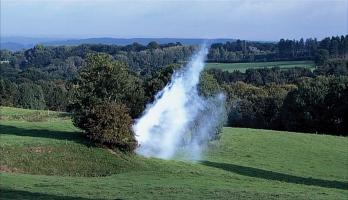
The unexpected meeting of a shaman, a lonely woman, and a young boy, whose paths will cross and slip away. After magnifying suffering in "Exoticore" and "Papillon d?amour", and revealing wonder in "Oh Dear", Nicolas Provost dives into a world of anxiety and strangeness, questioning our fears for the invader and plunging us into the heart of a new emotional experience. Provost, just like his alter ego the shaman, plays tricks, working once again on the cinematographic matter and the sensorial shock it engenders, but also on its illusionary nature like white magic, manipulating time and narrative logic, finally leaving us alone with his latest creation's unfathomable mystery.
Nicolas Provost is a visual artist and recently moved back to Belgium after a 10 year stay in Oslo, Norway. He now lives and works in Brussels. His work is to be seen worldwide on both film- and visual arts platforms. His films "Papillon d?amour", "Bataille", "Oh Dear...", and "EXOTICORE" have been awarded at prestigious festivals such as The Sundance Film Festival, The San Francisco International Film Festival, The Nashville Film Festival, The Ann Arbor Film Festival, Clermont-Ferrand, The Asian International Film Festival Seoul, and Vila Do Conde Filmfestival... Nicolas Provost's work balances between fiction and fine arts, the grotesque and the moving, and beauty and cruelty, and it attempts to walk on the fine line between dualities. Time and again his phantasmagorias provoke both recognition and alienation and succeed in catching our expectations in an unravelling game of mystery and abstraction that impact emotionally as much as intellectually. With manipulations of time and form, cinematographic and narrative language is analysed, accents are shifted, and new stories are told. The extraordinary is elucidated in order to reveal the global. Apart from the use of film and visual language, sound is also a constant factor in Provost's body of work, as a rhythmical spine or an emotional guideline. In some videos filmic memory and perception are stimulated by fragments from classic films by Akira Kurosawa, Igmar Bergman, Alain Resnais, and Russ Meyers. But Provost is as likely to shoot films and videos with inspiration from obscure B-films as well as from contemporary cinema. Provost recently wrote, produced and directed "EXOTICORE", his first fiction film. In his own words, "My field of interest is to analyse and question the phenomenon of cinema, its various elements, its influence, and conventional rules. My work is a reflection on the grammar of cinema and the relation between visual art and the cinematic experience".
Nicolas Provost
Moving Stories
Experimental fiction | | color | 7:0 | Belgium | 2011

Nicolas Provost
Plot point
Experimental video | dv | color | 13:39 | Belgium | 2007
Après avoir joué avec les émotions des spectateurs dans "Cinématics", sa précédente exposition, Nicolas Provost nous propose avec "Plot Point" un voyage en apnée. Si le choc sensoriel reste un élément majeur, l`artiste en appelle cette fois à nos capacités de narration. L`intuition est au centre de ces ?uvres que ce soit du point de vue de leur conception ou de la façon dont elles sont investies par les spectateurs. Sans jamais dévoiler leur essence et leur signification, ces films sont autant de puzzles mystérieux qui distillent ça et là des indices et réveillent notre imagination et nos pulsions les plus sombres. Dans "Plot Point", le célèbre univers de la police américaine avec ses sirènes, ses uniformes, ses ambulances et ses rues bondées se transforme rapidement en un décor de cinéma parfait. Le film pose la question des frontières entre réalité et fiction et des codes narratifs au cinéma (tension ascendante, climax, n?ud de l?intrigue). Mais "Plot Point", tout en jouant avec les attentes du spectateur, laisse le mystère entier.
Artiste visuel, Nicolas Provost a vécu 10 ans à Oslo. Il vit et travaille actuellement à Bruxelles. Son travail est diffusé dans le monde entier dans des lieux de cinéma et d`arts visuels. Ses oeuvres ont reçu de nombreux prix et sont diffusées dans des festivals prestigieux comme le Festival du Film de Sundance, le Festival International du Film de San Francisco, Cinevagas, le Festival International du Film de Rotterdam, la Viennale, le Festival du Film de Locarno, le Ann Arbor Film Festival, le Festival de Clermont-Ferrand, Impakt Film Festival, The Asian International Film Festival (Séoul). Les oeuvres de Nicolas Provost sont à la fois des tableaux audiovisuels et des expériences cinématiques dans lesquelles il tente de s`accommoder des dualités et de trouver le ton juste entre grotesque et émouvant, beauté et cruauté, émotionnel et intellectuel, cinéma et beaux-arts. Ses fantasmagories provoquent à la fois reconnaissance et aliénation et répondent à retiennent notre attention avec une énigme mystérieuse et abstraite qui nous force à développer une réflexion sur le phénomène de l`audiovisuel. Le langage cinématographique est analysé via des manipulations de temps, de codes et de forme, l`angle d`approche est modifié, de nouvelles histoires sont racontées. Le son est, avec le langage filmique et visuel, une composante essentielle de l`?uvre de Nicolas Provost dont il constitue une charpente rythmique et un guide émotionnel. Dans son oeuvre faite de fragments de films récupérés, Nicolas Provost stimule la mémoire et la perception filmique. Il réalise également des films d`art contemporain. "Exoticore", un moyen métrage de fiction sur le cauchemar de l`intégration d`un immigré en Norvège, était en compétition au Festival du Film de Sundance en 2006. Son film "Papillon d`amour" a reçu de nombreux prix et une Mention Spéciale au Festival du Film de Sundance en 2004. "Induction", une déconstruction cinématique, était en compétition à Sundance en 2007. Il travaille actuellement sur "The Invader", un long-métrage sur le déclin psychologique d`un homme sur fond d`immigration clandestine à Bruxelles. Ce cauchemar poétique sur un thème universel offre une nouvelle fois une réflexion sur la question cinématographique et son impact émotionnel.
Nicolas Provost
Stardust
Video | hdv | color | 20:0 | Belgium, USA | 2010
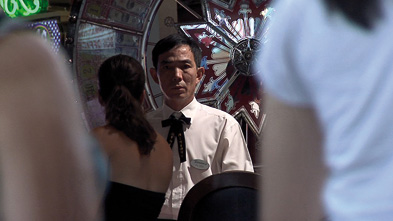
Provost`s 2007 piece `Plot point` used a subtle combination of music, editing and photography to lead the viewer into a subconscious process of establishing and discovering a story. `Stardust` takes this a stage further, manipulating recorded conversations taken from films as well as background music. Provost moves from New York to Las Vegas, filming the public going about their daily business. He then uses these clips of people engaging in conversations, making phone calls, watching a screen or gazing into space, and adds film music and dialogue over the top. Provost is the master of exploiting the associations and reactions learned by the public through years of watching crime and action films and television programmes, using film music to build tension, to induce emotional responses, to alter the nature of what is seen or heard. He also uses parataxis to great effect, presenting two separate and unrelated things together, so that the audience generates links. For example, hearing gunshots while the camera shows only a closed door, we think that the shots have been fired in the room behind the door. Through his understanding of cinematographic language, Provost manipulates the audience into generating narratives and developing characters. As the piece progresses, the plots that must be built become more complex and less believable, exposing the tricks Provost is playing.
Nicolas Provost (b.1969, Belgium) is a filmmaker and visual artist living and working in Brussels, Belgium. His work is a reflection on the grammar of cinema and the relationship between visual art and the cinematic experience. He has also written and directed several short and mid-length fiction films. His work has been broadcast, screened and exhibited worldwide on both visual art platforms and film festivals and have earned a long list of awards and screenings at prestigious festivals including The Sundance Film Festival, The Berlinale, The Viennale, The San Francisco International Filmfestival, Cinevegas, The International Film Festival Rotterdam, and The Locarno Film Festival. Solo exhibitions include The Seattle Art Museum, USA, Musée d!art moderne et contemporain, Strasbourg, France, De Brakke Grond, Amsterdam, Tim Van Laere Gallery, Antwerp, Belgium, C-Space Gallery, Beijing, China, The International Media Art Biennale, Poland, Solar Galeria de Arte Cinematica, Vila do Conde, Portugal.
Nicolas Provost
The Diver
Experimental video | dv | color | 6:40 | Belgium | 2005
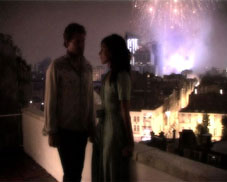
Provost most often makes use of the sister disciplines of video art as a reference for the viewer, most notably using those aspects that are etched in our collective cultural memory. For "The Diver", he chose the balcony scene from the theatre ? immortalised in Romeo and Juliet - as the setting for a lovers' tryst. He uses music for emotions that are too great to be described in words ? in a way that is familiar from film classics. The way in which colour and light determine the atmosphere is reminiscent of the art of painting. From modern dance he has borrowed the ability to express great yearning by the slightest physical change in posture, gesture or glance. The title of this work, "The Diver", evokes literary-dramatic associations, in so far as it remains unclear from the video whether the couple standing there on the edge of a tall building are not in fact experiencing a dreamed-up yearning. The distance between them could well be unbearable for one of them. With all these ingredients combined, Provost reaches an over-the-top effect, so that each still from this scene would serve very well as the cover of a pulp-fiction book. The music and the bang of fireworks in the background swell up in such a way that the loudspeakers become agitated, and the surroundings are basked in dramatic light. Passion is all around, and the viewer shares in what the two lovers must secretly be feeling.
Nicolas Provost
Tokyo Giants
| | | 23:0 | Belgium | 0
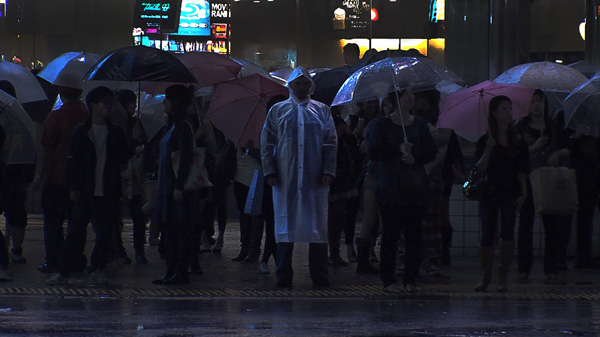
Provost shot this final part of the `Plot Point Trilogy` in Tokyo. He here presents the man in the street as a film protagonist whose reality lies somewhere between a dream and a nightmare. In these three aesthetic reinterpretations, Provost, using seemingly insignificant raw material, not only moulds mystical spaces that compellingly absorb the viewer, but also masterfully shows that the dream-world called ?cinema? is simply a constructed parallel reality comprising clichés, technical rules and dramaturgical conventions.
Nicolas Provost (° 1969, Belgium) is a visual artist who recently moved back to Belgium after a 10 years? stay in Oslo, Norway. Now he lives and works in Brussels, Belgium. His work is to be seen worldwide on both film- and visual arts platforms. His films have earned a long list of awards and screenings at prestigious festivals as among others The Sundance Film Festival, The San Francisco International Filmfestival, Cinevegas, The International Film Festival Rotterdam, The Viennale, The Locarno Film Festival, The Ann Arbor Film Festival, Clermont-Ferrand, Impakt Film Festival, The Asian International Film Festival (Seoul), ?? The works of Nicolas Provost can be seen as cinematic experiences as much as they are poetic audiovisual paintings. They intend to walk on the fine line between dualities and balance between the grotesque and the moving, beauty and cruelty, the emotional and the intellectual, between cinema and fine arts. Time and again his phantasmagorias provoke both recognition and alienation and succeed in catching our expectations into an unravelling game of mystery and abstraction forcing the viewer to reflect on the fenomenon of the audiovisual. With manipulations of time, codes and form, cinematographic and narrative language is analysed, accents are shifted and new stories are told. Apart from the use of film and visual language, sound is also a constant factor in Provost?s body of work, as a rhythmical spine or an emotional guideline.
Sarah Pucill
Stages of Mourning
Experimental film | 16mm | color and b&w | 18:0 | United Kingdom | 2004
I ritualize a lament through a performance to camera, the coming to terms with the loss of my partner, Sandra Lahire. A journey of mourning incorporates a staging both for myself and for the camera. The hallucinatory power of the phantom of memory is set alongside the nature of lens based material to carry ghosts. Textures of the skin and voice of the deceased are infused with the pixellation and grain of photograph, film and video. --S.P.
"Sarah Pucill is a Senior Lecturer of the Fine Art Mixed Media BA at University of Westminster. She studied Creative Arts at Manchester Metropolitan University (BA 1987) and Fine Art-Media at the Slade School of Art in London (Postgraduate Diploma 1990). She then did an MA in Visual Theory at the University of East London (1997). Her photographic work and films have been shown internationally in museums, film festivals and galleries. She has been nominated for awards at the Norwich Women`s Film Festival for Back Comb and Milk and Glass. Her film You Be Mother won the experimental award at the Oberhausen Short Film Festival (Germany, 1991) and the innovation award at the Atlanta Short Film Festival (USA, 1995). Sarah?s film Stages of Mourning will be premiered at the London Lesbian and Gay Film Festival 2004, on 29 March at 20.40pm and 1st April at 18.30 at the NFT. Sarah?s films: Backcomb UK, Mirrored Measure Australia, and You be Mother UK are to be televised later on in the year." source: luxonline
Noëlle Pujol
Les Lettres de Didier
Experimental doc. | mov | color | 66:0 | France | 2021
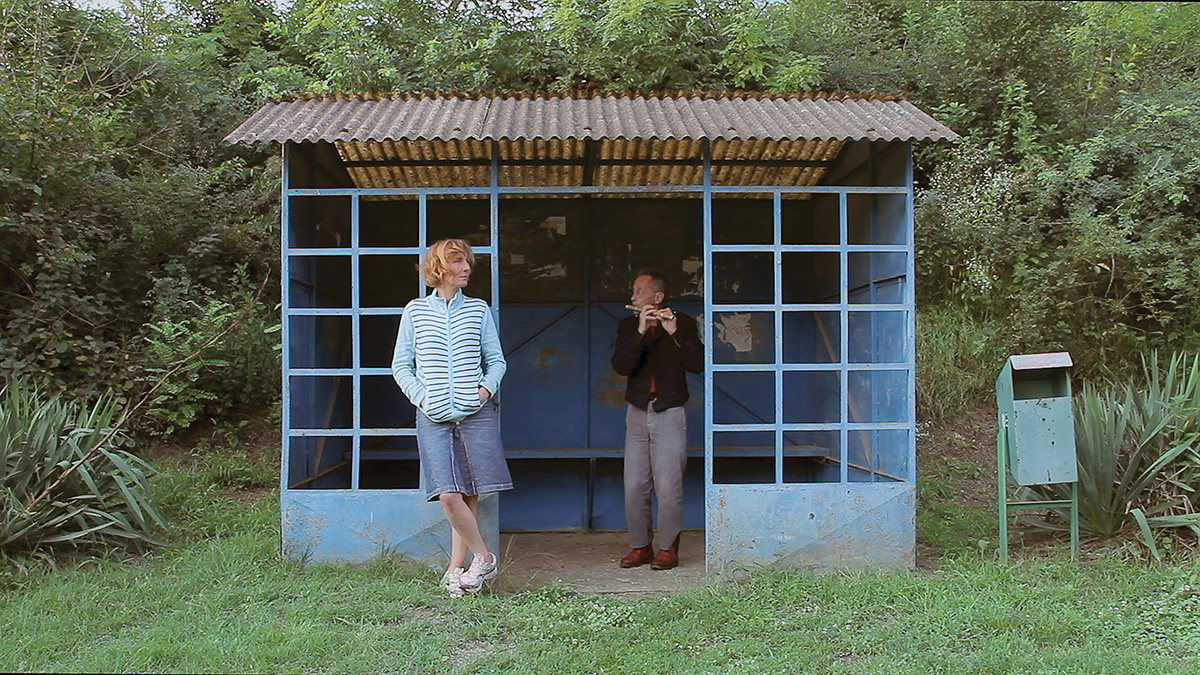
Est-il vrai qu’on peut s’attacher une jeune femme par l’écriture ? Correspondance longue de 149 lettres, ce film est basé sur les lettres que m’a adressées mon frère Didier. Deux acteurs portent son écriture poétique à la perception inédite. Axel Bogousslavsky et Nathalie Richard sont le frère et la sœur. Ils chantent, ils dansent sur les routes, en voyage. Ce film explore comment l’écriture, l’expérience d’un langage hybride, fabriquent un film d’amour.
La filmographie de Noëlle Pujol est une constellation de courts et longs métrages qui ont été présentés dans des festivals internationaux et des institutions artistiques. Ses différents films mêlant l’enquête et des éléments autobiographiques questionnent des enjeux de société intimes et collectifs à la fois. Son univers visuel simple et dépouillé mêle avec force et excitation, malice et gravité, l’étonnement qui s’ouvre sur des mondes qu’elle traverse et qu’elle habite longuement. http://noellepujol.free.fr

Noëlle Pujol, Andreas BOLM
Dossier Scolaire
Experimental fiction | | color | 23:0 | France | 2012
Two young girls are haunting the corridors of a deserted school building. A boy enters their space and becomes a prisoner of their game. Based on documents of the school archive the film tells a story about love, betrayal and endlessly returning. A ghost story.
Andreas Bolm is a german filmmaker who studied at the University of Television and Film in Munich. He directed and produced several films that have been screened at many festivals worldwide. Jaba (2006) was presented by Cinéfondation at the Festival de Cannes and won the ?Golden Mikeldi? for best documentary at the Zinebi film festival in Bilbao. In 2009 Andreas attended the Cinéfondation Residence Festival du Cannes, where he developed his film Die Wiedergänger/ The Revenants (2012). The film was premiered in 2013 at the 63th Berlinale, Perspektive deutsches Kino. Noëlle Pujol is a french artist and a filmmaker. Her practice spans documentary films, video installations, photography and drawings. Since 1998 Noëlle had numerous presentations of her work in contemporary art spaces and international film festivals. Her latest work consists in two films, Histoire racontée par Jean Dougnac (2010) and Le Dossier 332 (2012), meant as a two-part piece.

Noëlle Pujol
Jumbo/Toto, histoires d’un éléphant
Experimental doc. | mov | color | 67:0 | France | 2016
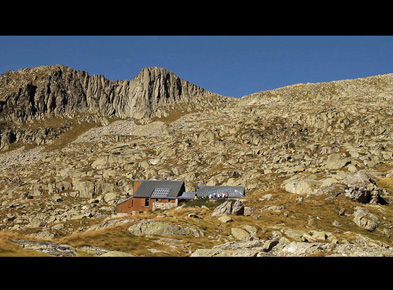
From Germany to Italy, the United States to Île-de-France, Jumbo/Toto, Stories About an Elephant shadows the itinerary of a single forgotten animal, an African elephant doubly-named Jumbo/Toto. Jumbo, as he was called on German colonial ships, at the Amerikakai port of Hamburg, and in Carl Hagenbeck’s zoos; Toto, as he’d come to be known with great fame in fascist Italy. An urban investigation and an adventure film, a ballet of flora and fauna and pavement and sea, Jumbo/Toto, Stories About an Elephant is a modern epic of the joy and pain of the 20th century set in what still remains strange and unknown: the 21st century, and the solitude of telling a story.
Noëlle Pujol
Le Dossier 332
Documentary | hdv | color | 43:0 | France | 2012
Through a voice-off reading of the letters kept in her social services file, the filmmaker indirectly tells the story of a childhood marked by bureaucracy. The images of landscapes edited in counterpoint banish all pathos from this very originally authored film.
Noëlle Pujol was born in 1972, in Saint Girons, and now works between France and Hungary. She graduated from the High School of Fine Arts in Paris and Le Fresnoy National Studio of Contemporary Arts. Her practice spans documentary films, video installations, photography and drawings. Since 1998 Noëlle had numerous presentations of her work in contemporary art spaces and international film festivals.

Noëlle Pujol, Ludovic Burel
Rien n'a été fait
Documentary | dv | color | 39:0 | France | 2007
Mrs and Mr B. have been running the M. K. factory for 20 years. From a hundred twenty employes down to two, the firm has been approching its end for many years. Their main activity "perruquer" ("to go canny"). With their son, they use a `working time` in a roundabout way, they recycle their machines tools, some materials and files for household, artistic and various other purposes. "They hedge for pleasure to create free products,to make through their `work` known a peculiar skill and to reply with an expense in solidarity with the working-class and households..." (Michel de Certeau)
Noëlle Pujol was born in 1972 in Saint-Bosoms (France). She is a graduate from École Nationale Supérieure of the Art schools of Paris and National Studio of Contemporary arts Le Fresnoy, in Tourcoing. Her artistic work explores the fields of the documentary cinema and video installation. Her films were shown at the International Festival of Documentary Film of Marseilles, at the International Festival of Film of Belfort, at the Filmmaker Film Festival - Doc11 of Milan, at the International Festival of Locarno. In 2008, two personal exhibitions of the artist took place in the Gallery of the Triangle in Rennes and at the ERBA of Valence. The work of Noëlle Pujol was shown in many group exhibitions in particular ?Variations? at the Gallery the Girls of the Martyrdom of Paris in 2007 and at the World Fair of Aïchi, French house in 2005. She is currently preparing her first full-length film ?They were once monmon?.
Marija Mojca Pungercar
Bratstvo in enotnost
Documentary | dv | color | 38:0 | Slovenia | 2006
The documentary Brotherhood and Unity was shot in April and May 2006 on the building site of the Hrastje ? Lesnica highway section at Novo mesto in Slovenia. The highway section was opened on June 23nd, 2006. In 1958 were the Yugoslavian shock brigades building the Dolenjska highway, the part of the road called the Road of Brotherhood and Unity, in the same place. With the construction of the new one most of the old highway was demolished and rebuilt a new. A documentary gives an insight into the lives of men working on construction sites and living in single`s home. Most of them have only a temporary job in Slovenia. Times of shock brigades with the higher goal to bring people together are over, and today all that workers have in common is the struggle to survive. Slovenia, once a part of the common fatherland is now a foreign country for them.
Marija Mojca Pungercar was born in Novo mesto and lives and works in Ljubljana. A former fashion designer, she holds a BFA in painting from the Academy of Fine Arts in Ljubljana (1989) and an MFA in new genres from the San Francisco Art Institute (2001). She works as a freelance artist (video, photography, performance, installation), edits the web portal Artservis, and designs theatre costumes. She exhibits nationally and internationally. Her work is marked by a strong social engagement, critically reflecting consumerist culture and underscoring issues of locality and community. Her awards include an Austrian Academic Exchange Scholarship, an ArtsLink Grant and a Fulbright Scholarship. More at: www.mojca.info

Wojciech Pus
Endless - VR Segue
VR 360 video | 0 | color | 18:0 | Poland | 2022
A queer poem about gender transformations, hallucinogenic desires, and uncanny relationships. It’s past dawn, in an apartment inhabited by several figures. They are frozen in time, frozen in the movements they were making. They look at each other, caress each other, sleep, masturbate with VR helmets on their faces. In one magical moment, they come to life and start a languidly intoxicating party. In Wojciech Pu?’s essayistic 360° film, we follow several people of different genders and ethnic identities as they navigate a path through night, life, desire, and futility. Fragments of their stories are only fleetingly revealed in poetic speeches that resemble a verbal symphony rather than a narrative. The director builds the experience on hallucinogenic light work and uncomfortable camera movements. Will this party ever end, or have we found ourselves trapped with the characters in a labyrinth of existence that has no end?
Wojciech Pu? - filmmaker and artist. They work with moving images and sound. Their films/installations/live acts have been screened / exhibited / shown at Warsaw’s Museum of Modern Art, Haus der Kulturen der Welt in Berlin (Rencontres Internationales Paris/Berlin), ICA in London, Museé du Louvre in Paris (Rencontres Internationales Paris/Berlin), Foksal Gallery in Warsaw, Art Museum in Lodz, Urban Glass in New York, A:D: Curatorial in Berlin, Spike Art Magazine / Yvonne Lambert in Berlin and Exchange Gallery in Lodz. Professor at the Cinematography Department in Lodz Film School, Poland.

Wojciech Pus
Queer Landscapes | Segues from Endless
Experimental fiction | 4k | color | 22:13 | Poland | 2020
“Queer Landscapes | Segues from Endless” is an experimental portrait of the character in the state of transition. Through their research the different characters and voices form a multilayered essay about queer intimacy, loneliness and resistance. This daydream plot becomes a choir of an oppressed identities, which become revolutionary and free. The essence of the film is based on the informal community of performers of different social backgrounds, gender identities, nationalities and migration status (Chile, France, Mexico, Poland, Ukraine). The combination of their personal stories, alongside fragments of literary works, films, memoirs, and dream notes creates a mosaic structure, situated in the genre of queer abstraction.
Wojciech Pus is an artist engaged in various fields of art: film, theatre, visual arts, and opera. In his works he combines the aesthetics of experimental film with elements of light and video installations, giving them a cinematographic character. He has created an original, recognisable style, largely referring to rhythm, movement, and time, analysed by the artist using the medium of film. Pu? confronts the viewer with abstract representations having narrative potential, constructed with the use of montage and music. His works are on the verge of two realities – the actual one, and the one created by the film’s visuality.
Joakim Pusenius
Allegory Of The Cave
Experimental fiction | hdv | color | 15:36 | Finland | 2014
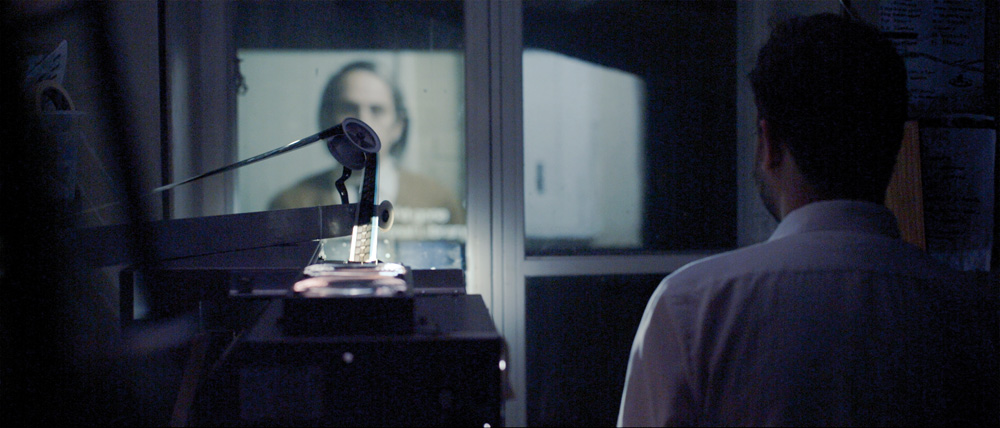
The film follows four disconnected and fragmentary events that constitute something that is called being in the world.The film is seeking the ontological traces of the human being from contemporary moments of solitude.
Joakim Pusenius is filmmaker born in (1984) and he is graduating 2014 december from Finnish Academy of Fine Arts. Joakim Pusenius` work is trying to rethink the fundaments of human being and at the same time searching the fundaments of cinematic expression.

Joakim Pusenius
I Don't Know the River
Experimental doc. | hdv | color | 27:44 | Finland | 2016
Experimental documentation of three peculiar events that took place in three different forests. Audiovisual notation that is unravelling the moments of fear in the eternal process of transformation.
Joakim Pusenius (b. 1984) graduated (BFA & MFA) from Finnish School of Fine Arts in 2014. Before the arts school Pusenius studied in University of Helsinki theoretical philosophy, aesthetics and tv- and media studies (BA). Pusenius works mainly with moving image. In his artistic practise he is focusing on the means of the audiovisual medium by developing new ways of using camera and storytelling. He is interested in film making without a strict sense of storyline or the arch of drama. More likely he is interested in the dichotomy of the cinema: The possibility of cinemas metaphysical otherness and its capability of immersion. Eternal recurrence, existential solitude and disconnection by the modern technology are common themes in Pusenius` works. Last year Pusenius was working in Le Fresnoy - Studio National des arts Contemporains producing his most recent film work "Reste pour la nuit".
Nicholas Pye
A Life of Errors
Experimental fiction | 16mm | color | 13:50 | Canada | 2006
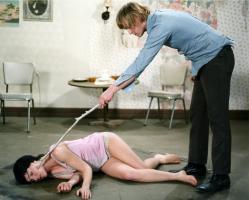
In a decrepit three-room house, two lovers, played by the filmmakers, fall out of each other?s graces and turn bitter enemies without exchanging words. In the theatrical dream world of their sleep, they endeavour to harm each other though a series of childish games which inevitably go too far. Growing increasingly distrustful of one another, these somnambulists become skilled at the unmaking of love.
Sheila Pye was born near Hamilton, Ontario in 1978. She studied painting, photography, and video at the Ontario College of Art and Design, from which she graduated, winning the top scholarship for graduate studies. She completed her MFA in film production at Concordia University in Montreal. Currently, she lives and works in Toronto, where she is a resident at the Canadian Film Centre in the Director?s Lab. She has written, directed, and produced 8 short films and is currently developing her first feature film "The Young Arsonists". Her work has been exhibited internationally in art galleries, museums, and film festivals. She has been the recipient of numerous awards for her filmmaking and visual art. Sheila also maintains an active art practice which integrates her interest in performance, cinema, and large format still photography. She has upcoming solo exhibitions in New York, Chicago, Los Angeles, and Naples. Sheila was invited to be a participant at Rencontres Internationales Paris/Berlin and was recently short listed to attend the Cannes Festival de Résidence in 2006. Born in Torquay, England in 1976, Nicholas Pye now lives and works in Toronto. He recently completed his Master of Fine Arts degree at Concordia University's Mel Hoppenheim school of cinema, and received his Fine Art undergraduate degree at the Ontario College of Art and Design in spring 2002. His work as yet has been primarily of a photographic nature but he often collaborates on short films and video work with his wife, Sheila Pye. Nicholas has had numerous solo gallery exhibitions in Toronto, Montreal, Miami, New York and Chicago. While a student at OCAD and Concordia, Nicholas received several awards for contemporary photography and cinema. Nicholas currently teaches image arts at the Ontario College of Art and Design.