Catalogue > Search
Results for : Tout le catalogue

Dominik Ritszel
Film o szkole
Experimental fiction | hdv | color | 8:59 | Poland | 2014
The video was recorded in primary school, which I graduated in 2003. This work is inspired by architectural elements in space of the school. I am mainly interested about functionality of certain spaces of the school, for example halls, passages, gyms, dressing room and also how institutional rules and statutes can take a form of game.
Dominik Ritszel was born in 1988 in Rybnik. He studied at the Faculty of Graphics in the Institute of Arts at the University of Silesia in Cieszyn and at the Academy of Fine Arts in Katowice, where he did graphic arts. His works were exhibited, among others, at international video art festivals Les Rencontres Internationales (Gaîté Lyrique, Palais de Tokyo, Paris) and Video Art Review THE 02 Spaces as a tool for shaping social attitudes. He participated in group exhibitions - in the Show Off Section at the Krakow Photomonth Festival (2013), Curators Network in the Museum of Contemporary Art (MOCAK) in Krakow (2012), Mum, I just really need to focus on my art right now in the Arsenał Gallery in Poznan (2012), among others, and in a joint exhibition presenting works of young Silesian artists Mleczne Zęby (Milk Teeth) in the BWA Contemporary Art Gallery in Katowice (2013). He had individual exhibitions in the Centre for Contemporary Arts Kronika in Bytom and in the Silesian Museum in Katowice. He was chosen among the three finalists of the Talenty Trójki 2013 contest in the Visual Arts category, he was short-listed for the Grey House Foundation Prize. In 2014 he was granted the Young Poland Programme scholarship. In spring 2014 as an artist in residence he stayed in the A-I-R Laboratory in the Centre for Contemporary Art Ujazdowski Castle where he produced Versus, showed in Ujazdowski Castle in Bank PEKO Project Room (Warsaw).
Dominik Ritszel
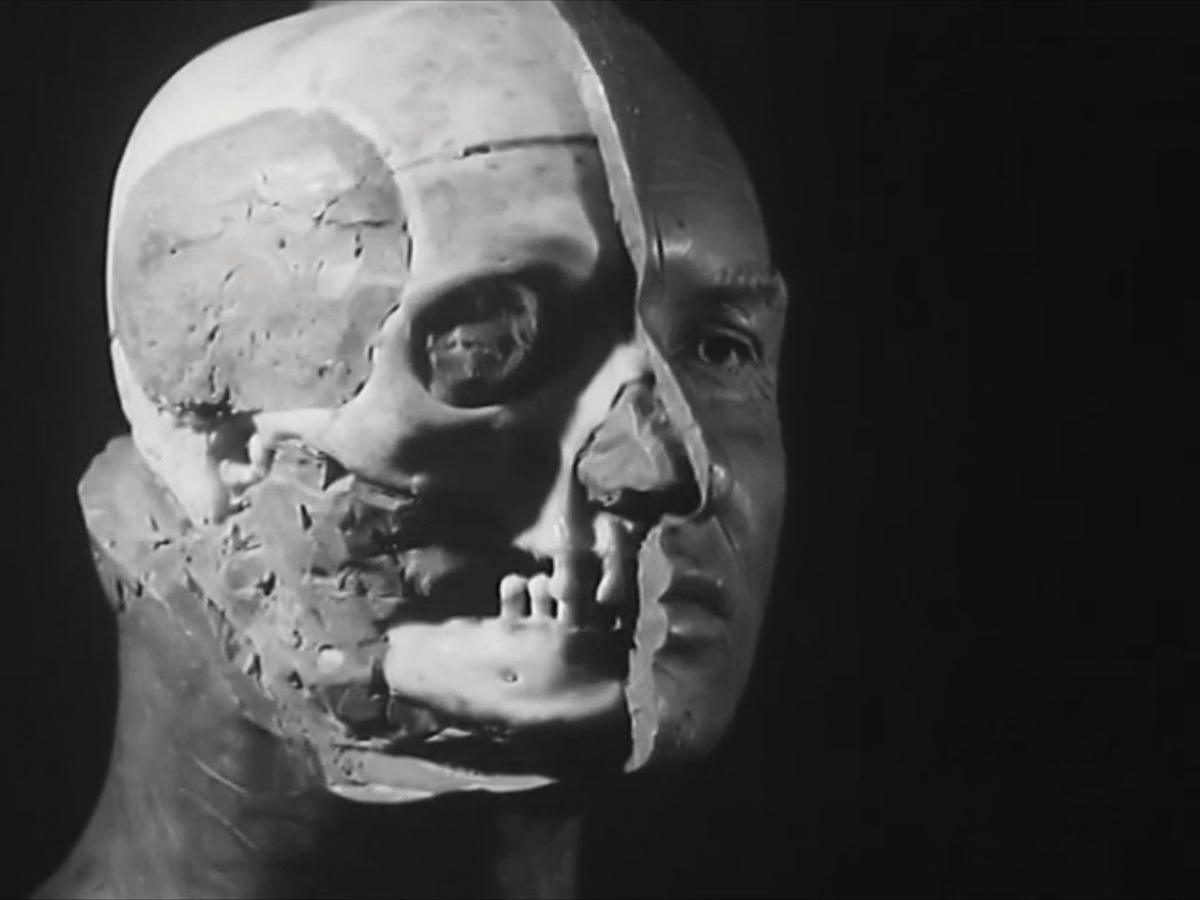
Ziemia wch?onie to wszystko
Experimental video | mp4 | color | 8:48 | Poland | 2022
The change of the political system that occurred in Poland in the early 1990s brought not only hopes related to the social and economic transformation, but also anxieties and fears. At the time, such fears were treated as evidence of incompatibility with the new capitalist order and thus consistently relegated to the margins of public debate. The film is an attempt to recall the traumatic experiences of this period. In this context, the concept of trauma is directly related to the process of repression, the essence of which coincides with the naturalizing, hegemonic discourse which justifies the social costs of transformation as necessary on the way to modernization. "The Earth Will Swallow it All" is a story about Upper Silesia. It was based on the accounts of mining families, the archives of the Polish Film Chronicle, 3D animations and seismographic charts. The collected materials connect into a description of the social catastrophe, which is shown from the perspective of people who in the past were united by the working-class community.
Dominik Ritszel (b. 1988) active in the area of visual arts. Working with film and video instalations. B.A. Graphics M.A. (2013), doctoral degree (2020) graduated at the Academy of Fine Arts in Katowice. Winner of the scholarship Young Poland, listed on the Forbes lists 30 Under 30 Europe, Prize winner of the Trieste Contemporanea Award 2015. Lives and works in Katowice, Poland.

Dominik Ritszel
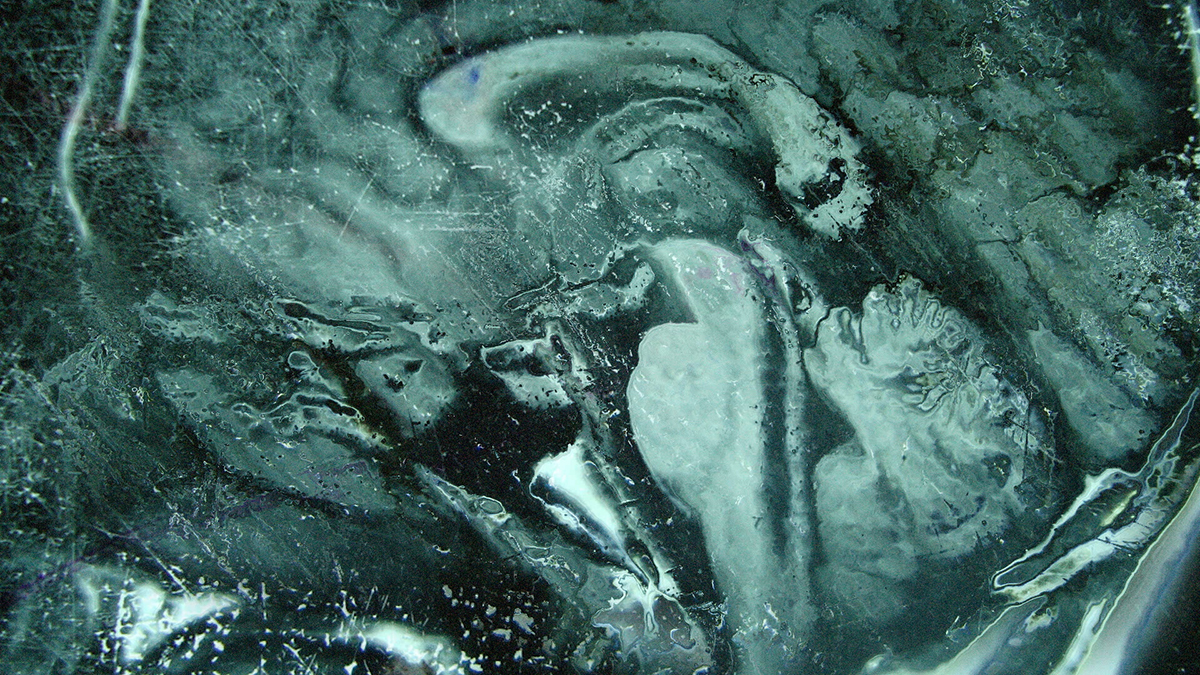
Studium postaci
Video | mp4 | color | 7:46 | Poland | 2020
Figure Study is a video collage consisting of found footage and the artist's original recordings. It consists of a video installation, archival material and training videos filmed by the US government during the Cold War, as well as recordings of the Spartakiada, a mass sports competition organised in the Eastern Bloc during the period of Soviet domination. In his work, Dominik Ritszel manipulates the content of these materials by juxtaposing them with his own images, focusing on individual narrative elements as well as formal techniques. The issues raised in the work, ie. public safety, physical hygiene and a healthy lifestyle outline the political meanings attributed to the body, especially the male body. The figurative representations of unified military force and society as a mass aim to reveal the hidden content contained in the archival recordings and reconstruct a vision of patriarchal society.
(b. 1988) active in the area of visual arts. Working with film and video instalations. B.A. Graphics M.A. (2013) graduated at Academy of Fine Arts in Katowice, (2020) Doctoral degree in fine arts at Academy of Fine Arts in Katowice. Winner of the scholarship YOUNG POLAND (2014) and the Polish Ministry of Culture and National Heritage (2017). Prize winner of the Trieste Contemporanea Award 2015, Listed in Forbes magazine in category of Arts (2016). Lives and works in Katowice, Poland. Co-op with Szara Gallery in Warsaw.
Dominik Ritszel
The Body Dissolver
Experimental doc. | 0 | color | 11:0 | Poland | 2023
“The Body Dissolver” is based on interviews with professional boxers recalling the moment they were knocked out. The Film combines documentary and fictional elements into a dense parafiction, tinted with body horror genre. Unreal 3D animations generated by the artist are confronted with found footage and the images of human bodies with the representations of imaginary, hyperbolic machines. The storyline reveals the recurring fantasies about the abandonment of the body and the visions of ecstasy, exploited in various spiritual discourses and pop-culture alike.
Dominik Ritszel was born in 1988. A visual artist who creates films, objects and video installations. In 2013, he graduated from the Academy of Fine Arts in Katowice at the Faculty of Workshop Graphics. In his works, he refers to phantasms and images of masculinity set in historical, cultural, and political contexts. His creations constitute a critical reflection on issues related to power, institutions and mechanisms of exclusion.

Dominik Ritszel
Pogłos
Video | hdv | color | 14:30 | Poland | 2015
Ritszel in his movie Reverb cleans view of audial perception. He introduce the viewer to his laboratory, spread through whole city. Process of the civilization has been reverse and for a moment, receiver gain privilege of sharpen hearing,. Sounds act on the same rules as they act in horror movies. They grow from what is known. They grow stronger and stronger, minute after minute. They become powerful and than they spread. Dynamic of the horror movie shows, that what scarry the most are not perfectly design monsters but minor, accumulative sounds. Creak of slowly opening wordrobe doors,expending floor planks under footsteps, TV which swich on itself, scraping, grating, crashing, and the most, sudden, ominous, dead silent.
Dominik Ritszel was born in 1988 in Rybnik. He studied at the Faculty of Graphics in the Institute of Arts at the University of Silesia in Cieszyn and at the Academy of Fine Arts in Katowice, where he did graphic arts. His works were exhibited, among others, at international video art festivals Les Rencontres Internationales (Gaîté Lyrique, Palais de Tokyo, Paris), Proyector, International Video Art Festival (Spain, Italy, Portugal) and Video Art Review THE 02. He participated in group exhibitions - in the Show Off Section at the Krakow Photomonth Festival (2013), The increased Difficulty od Concretation in Prague (2015), What’s Hidden in National Gallery of Art (2015), Curators Network in the Museum of Contemporary Art (MOCAK) in Krakow (2012), Mum, I just really need to focus on my art right now in the Arsenał Gallery in Poznan (2012), among others, and in a joint exhibition presenting works of young Silesian artists Milk Teeth in the BWA Contemporary Art Gallery in Katowice (2013). He had individual exhibitions in the Centre for Contemporary Arts Kronika in Bytom, in Grey Gallery in Cieszyn, Grey House Gallery in Krakow and in the Silesian Museum in Katowice. He was chosen among the three finalists of the Talenty Trójki 2013 contest in the Visual Arts category, he was short-listed for the Grey House Foundation Prize. In 2014 he was granted the Young Poland Programme scholarship. In spring 2014 as an artist in residence he stayed in the A-I-R Laboratory in the Centre for Contemporary Art Ujazdowski Castle where he produced Versus, showed in Bank Pekao Project Room in Warsaw. In 2015 he participated in group exhibition Waiting for better times Curatorated by Magda Kardasz (Zachęta Project Room, Warsaw). During of the 8th edition of Biennale of Young Artists RYBIE OKO his video Reverb received special award. He has been crowned the 2015 winner of the Young European Artist Trieste Contemporanea Award. His next individual exhibition will take place in Studio Tomaseo (Italy) 26th of March.

Dominik Ritszel, Dominik Ritszel
Preludium
Video | hdv | color | 7:57 | Poland | 2013
Video explore the relations between son and father (student/master), which is bring to inconspicuous, childish game. Situation plays in family house, where actors are my father, brother and myself. ?Preludium? is a memoir of my request to my father, who refused to teach me play piano, saying, that is too late.
In 2008 I began study on Academy of Fine Arts in Katowice. My first individual exhibition ?See you all? took place in CSW Kronika in Bytom. In 2012 I took part in group exhibition; ?Whoever seen, whoever knows?, (CSW Kronika, Bytom). I was invited to take part in project ?Public space as tool for shaping social attitudes? in Chisinau (Moldova) where I made film ?Campers?. My second individual exhibition was in Częstochowa (Centrum Promocji Młodych); entitled ?No fun?. In collaboration with French curator Lore Gablier, I was co-create film ?D?eux?, based on two weeks traveling through France and England. I was chosen, as one of 20 polish artist, in polish edition of project Curators Network, which intend to promote selected artists by international group of curators in Poland and abroad. In 2013 I was participant in group exhibition young Silesian artists ?Milk Teeth? in BWA (Katowice) where I showed my film ?Preludium?. I was chosen, as one of 10 artist, in project Showoff?13. On behalf on project Showoff (cooperating with Photo Month in Krakow) I was showing my works in gallery Grey house Exhibition was entitled ?Eine kleine Werke?.

Paul Ritt
Connected
Video | hdv | black and white | 2:2 | Netherlands | 2014
Connected,a video/drawing of a short journey through fragments of intuitive moments. The work is about following, exploring known/unknown directions, registering, leaving traces,emerging into patterns, maps of the free spirit.
Paul Ritt was born in the Netherlands (1957). He studied monumentale vormgeving at the Academie Beeldende Kunst, Maastricht, (1980-1984). He lived and worked in Australia from 1984 -1999. After studying for the Advanced diploma of Arts in Electronics, design and interactive media at the Royal Melbourne Institute of Technology Melbourne (1997-1998), he started making short films.
Cao River Yuhao
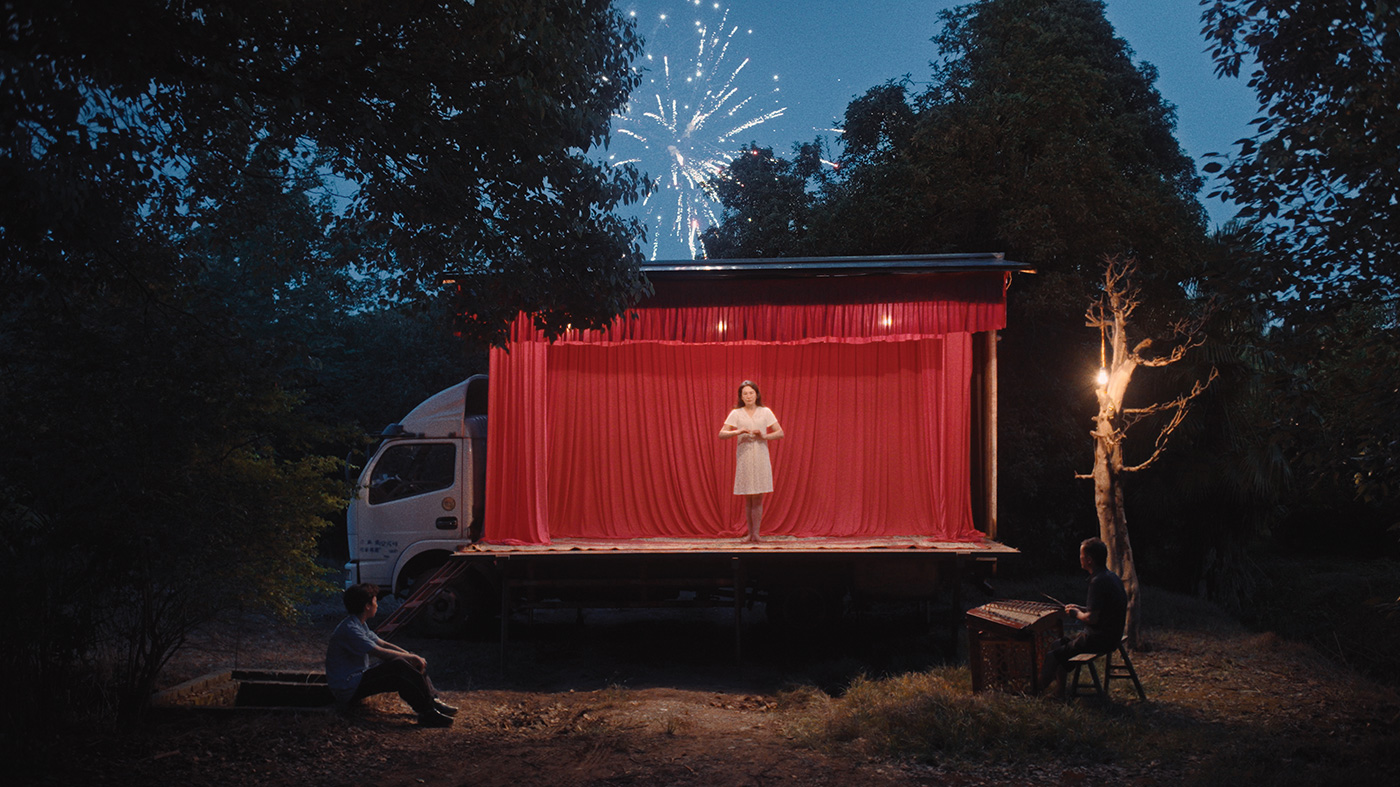
The Glass Essays
Experimental film | dcp | color | 16:33 | China, United Kingdom | 2025
Unable to sleep, a young man is lured into the woods by a mysterious sound. He follows it across a river, through forest and shadows, until he finally comes upon the red curtains of a travelling funeral performance stage. The mesmerising mourning recital that unfolds is a dreamlike invitation into a sensorial exploration of memories, rituals, and ghosts.
River Yuhao Cao ??? (b. 1997, China) is an artist filmmaker and performance artist based in London. Inspired by the performative aspects of mourning in regional Chinese folk traditions, River explores it as a regenerative practice. Through this lens, he reconstruct landscapes from his early memories of Southern China in his work, while uncovering the perspective of the revenant. River is interested in how lamentation as a translation strategy interprets the fluidity of the subject. Cao’s first artist film ‘The Glass Essays’ has been featured in Visions du Réel, Switzerland; Vancouver International Film Festival, Canada; Kassel Dokfest, Germany; South London Gallery, UK; Middlesbrough Institute of Modern Art (MIMA), UK; His previous work has been featured in B3 Biennial of the Moving Image, Germany; Tofu Collective, Denmark; Sadie Coles HQ, UK; Saatchi Gallery, UK; Nottingham Contemporary, UK; and the London Institute of Contemporary Arts (ICA), among others.

Esteban Rivera Ariza
Die Versteinerten
Video | hdv | color | 7:27 | Colombia, Germany | 2015
An interview with David Stodolsky, member of the Cryonics Institute, who guides us trough the Building-Monument built over the previous house of Walter Gropius in Dessau, Germany. Renovated by Bruno Fioretti Marquez Architects in 2008, the construction reproduces the original volume of Gropius` house. In the film, the house works as a metaphor of what is fossilized. The idea of Modernism remains in this case in a fossil state, and survives in time as a trace of what once was. This video is part of a reflection on the act of conservation (of ideas, of bodies) as a human activity.
Esteban Rivera, Bogotá, Colombia (1981). He is finishing his Master studies in Art and Media in the Arts University in Berlin (Universität der Künste, Berlin) under Prof. Ai Weiwei and also as student of Prof. Anna Anders. He studied Graphic Design and a Master in Arts in the National University of Colombia (Universidad Nacional de Colombia). He makes films and videoinstallation and currently works in Berlin.

Jorge Rivero
La presa
Experimental doc. | 35mm | color | 20:0 | Spain | 2009
Ben Rivers
Ah, Liberty!
Experimental doc. | 16mm | black and white | 16:0 | United Kingdom | 2008
A family?s place in the wilderness, outside of time; free-range animals and children, junk and nature, all within the most sublime landscape. The work aims at an idea of freedom, which is reflected in the hand-processed Scope format, but is undercut with a sense of foreboding. There?s no particular story; beginning, middle or end, just fragments of lives lived, rituals performed.
Ben Rivers studied Fine Art at Falmouth School of Art. Since then he has worked predominantly in 16mm film, showing in galleries and international festivals, where he has won a number of awards. Most recent shows include; `If` Bloomberg Space, London; `Nought to Sixty`, ICA, London; `On Overgrown Paths` Permanent Gallery, Brighton.
Ben Rivers
Look Then Below
Experimental film | 16mm | color | 22:30 | United Kingdom | 2019
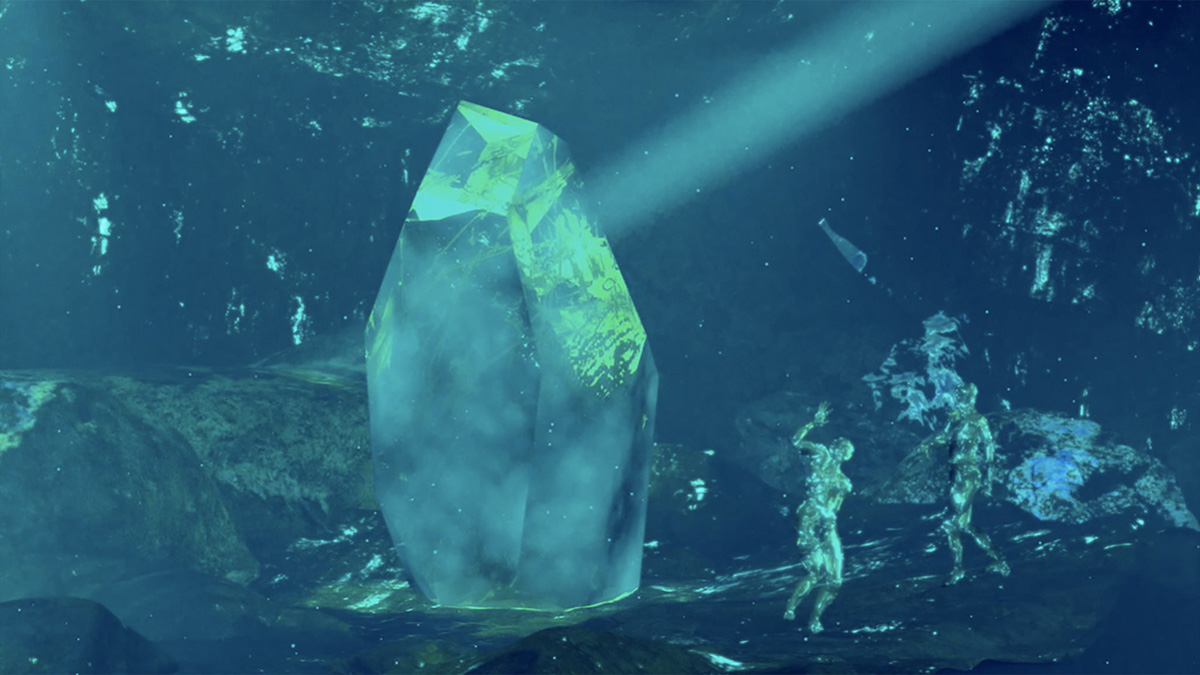
Ben Rivers' films study the otherworldly, looking for places and stories outside the daily conventions of reality. Look Then Below was filmed in a Somerset transformed into a coloured, mist-enveloped island in an oily ocean with a cave basking in a subterranean glow. Time seems to stand still there. After Slow Action and Urth, this is the final part of a trilogy developed with American SF author Mark von Schlegell.
Ben Rivers studied Fine Art at Falmouth School of Art, initially in sculpture before moving into photography and super8 film. After his degree he taught himself 16mm filmmaking and hand-processing. His practice as a filmmaker treads a line between documentary and fiction. Often following and filming people who have in some way separated themselves from society, the raw film footage provides Rivers with a starting point for creating oblique narratives imagining alternative existences in marginal worlds. He is the recipient of numerous prizes including: FIPRESCI International Critics Prize, 68th Venice Film Festival for his first feature film Two Years At Sea; the Baloise Art Prize, Art Basel 42, 2011; shortlisted for the Jarman Award 2010/2012; Paul Hamlyn Foundation Award for Artists, 2010. Recent exhibitions include: Slow Action, Hepworth Wakefield, 2012; Sack Barrow, Hayward Gallery, London, 2011; Slow Action, Mattâ’s Gallery, London and Gallery TPW, Toronto, 2011; A World Rattled of Habit, A Foundation, Liverpool, 2009. Artist-in-focus include Courtisane Festival; Pesaro International Film Festival; London Film Festival; Tirana Film Festival; Punto de Vista, Pamplona; Indielisboa and Milan Film Festival. In 1996 he co-founded Brighton Cinematheque which he then co-programmed through to its demise in 2006 “ renowned for screening a unique programme of film from its earliest days through to the latest artist’s film and video.

Ben Rivers
Trees Down Here
Experimental doc. | 16mm | color | 13:56 | United Kingdom | 2018
Trees are the silent characters, narrating the architecture and life of Churchill College (opened in 1960) through its natural history. 6’s Cowan Court (completed in 2016) inverted the spatial and material order of the picturesque Brutalism of the original college, shifting its mineral world of brick and shuttered concrete to timber. Cowan Court’s oak, both new and old, defines its structure and in turn encloses a central court filled with recently planted birch trees. The analogue materiality of Churchill College is matched by the film which, like the architecture and landscape, leaves traces of its own development. The human habitat is seen through nature ‘ swaying trees, lost animals, birds of prey, the seasons “ to create a new dreamlike environment in which any distinction between human life, architecture and nature is erased.
Ben Rivers studied Fine Art at Falmouth School of Art, initially in sculpture before moving into photography and super8 film. After his degree he taught himself 16mm filmmaking and hand-processing. His practice as a filmmaker treads a line between documentary and fiction. Often following and filming people who have in some way separated themselves from society, the raw film footage provides Rivers with a starting point for creating oblique narratives imagining alternative existences in marginal worlds. He is the recipient of numerous prizes including: FIPRESCI International Critics Prize, 68th Venice Film Festival for his first feature film Two Years At Sea; the Baloise Art Prize, Art Basel 42, 2011; shortlisted for the Jarman Award 2010/2012; Paul Hamlyn Foundation Award for Artists, 2010. Recent exhibitions include: Slow Action, Hepworth Wakefield, 2012; Sack Barrow, Hayward Gallery, London, 2011; Slow Action, Mattâ’s Gallery, London and Gallery TPW, Toronto, 2011; A World Rattled of Habit, A Foundation, Liverpool, 2009. Artist-in-focus include Courtisane Festival; Pesaro International Film Festival; London Film Festival; Tirana Film Festival; Punto de Vista, Pamplona; Indielisboa and Milan Film Festival. In 1996 he co-founded Brighton Cinematheque which he then co-programmed through to its demise in 2006 “ renowned for screening a unique programme of film from its earliest days through to the latest artistâ’s film and video.
Ben Rivers
Ghost Strata
Experimental doc. | 16mm | color | 45:44 | United Kingdom | 2019
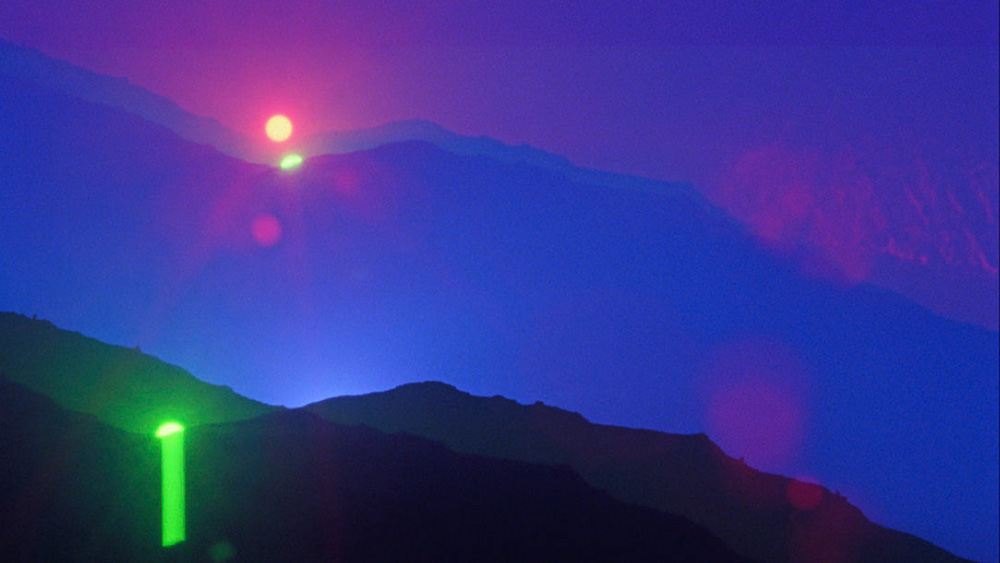
‘Ghost Strata’ refers to the missing elements from within the rock strata that despite their absence offer hints of what was once there. The film is divided into the months of the year in which the footage was captured. Filmed in various places over the globe, charting various personal movements of the filmmaker, Ghost Strata explores the differing scales of impact that humanity’s presence has on the earth in the past, present and into the future. Found sound and text create a meditation on time, memory, leftovers and extinction.
Ben Rivers studied Fine Art at Falmouth School of Art, initially in sculpture before moving into photography and super8 film. After his degree he taught himself 16mm filmmaking and hand-processing. His practice as a filmmaker treads a line between documentary and fiction. Often following and filming people who have in some way separated themselves from society, the raw film footage provides Rivers with a starting point for creating oblique narratives imagining alternative existences in marginal worlds. He is the recipient of numerous prizes including: FIPRESCI International Critics Prize, 68th Venice Film Festival for his first feature film Two Years At Sea; the Baloise Art Prize, Art Basel 42, 2011; shortlisted for the Jarman Award 2010/2012; Paul Hamlyn Foundation Award for Artists, 2010. Recent exhibitions include: Slow Action, Hepworth Wakefield, 2012; Sack Barrow, Hayward Gallery, London, 2011; Slow Action, Matt’s Gallery, London and Gallery TPW, Toronto, 2011; A World Rattled of Habit, A Foundation, Liverpool, 2009. Artist-in-focus include Courtisane Festival; Pesaro International Film Festival; London Film Festival; Tirana Film Festival; Punto de Vista, Pamplona; Indielisboa and Milan Film Festival. In 1996 he co-founded Brighton Cinematheque which he then co-programmed through to its demise in 2006 – renowned for screening a unique programme of film from its earliest days through to the latest artist’s film and video.

Ben Rivers
Origin of the Species
Experimental doc. | 16mm | color | 16:0 | United Kingdom | 2008
?Some things didn?t really matter, you know, some mutations didn?t matter all that much?they were neither beneficial to survival nor detrimental to survival?but if they just hung on, there?d come a time when?that was the thing that saved the day.? Charting the beginnings of the time, through the descent of man, on to an uncertain future - all shot throughout the seasons in the garden of S, who lives in the wilderness and builds contraptions.
Born 1972. Studied Fine Art at Falmouth School of Art. Co-founded and programmed Brighton Cinematheque from 1996-2006. He has exhibited at many international film festivals and galleries, winning various awards, including Tiger Award, IFF Rotterdam 2008. He has been the recipient of a number of commissions, most recently a London Artist?s Film and Video Award. Recent shows include; ?A World Rattled of Habit? A Foundation, Liverpool; ?An Entangled Bank? Talbot Rice Gallery, Edinburgh; and artist-in-focus screenings in Courtisane Festival; Pesaro International Film Festival, London Film Festival, Punto de Vista, and upcoming at Tirana Film Festival and Indielisboa.
Ben Rivers
The House Was Quiet
Experimental film | 16mm | color | 4:25 | United Kingdom | 2020
The parts of a house: a door, the shabby ceiling, the wooden floorboards, the portrait of a little girl. And the crackling of the 16mm film on which they are printed, "concrete" like the objects he films and in opposition to the fading of things in the pixels of digital. The verses of a poem by Wallace Stevens accompany the images: "The house was quiet and the world was calm/the reader became the book/and the summer night was like being aware of the book". In the succession of verses - and in the repetition of the days locked in the house during the lockdown - the reader, the book, the house and the summer night become one, cradled by the crackling of the film.
Ben Rivers studied Fine Art at Falmouth School of Art, initially in sculpture before moving into photography and super8 film. After his degree he taught himself 16mm filmmaking and hand-processing. His practice as a filmmaker treads a line between documentary and fiction. Often following and filming people who have in some way separated themselves from society, the raw film footage provides Rivers with a starting point for creating oblique narratives imagining alternative existences in marginal worlds. He is the recipient of numerous prizes including: FIPRESCI International Critics Prize, 68th Venice Film Festival for his first feature film Two Years At Sea; the Baloise Art Prize, Art Basel 42, 2011; shortlisted for the Jarman Award 2010/2012; Paul Hamlyn Foundation Award for Artists, 2010. Recent exhibitions include: Slow Action, Hepworth Wakefield, 2012; Sack Barrow, Hayward Gallery, London, 2011; Slow Action, Mattâ’s Gallery, London and Gallery TPW, Toronto, 2011; A World Rattled of Habit, A Foundation, Liverpool, 2009. Artist-in-focus include Courtisane Festival; Pesaro International Film Festival; London Film Festival; Tirana Film Festival; Punto de Vista, Pamplona; Indielisboa and Milan Film Festival. In 1996 he co-founded Brighton Cinematheque which he then co-programmed through to its demise in 2006 “ renowned for screening a unique programme of film from its earliest days through to the latest artistâ’s film and video.
Ben Rivers
The Coming Race
Experimental film | 16mm | black and white | 5:0 | United Kingdom | 2006
The Coming Race (2006, 5 min, 16mm, b/w, Ireland) A hand processed film in which thousands of people climb a rocky mountain terrain. The destination and purpose of their ascension remains unclear. A vague, mysterious and unsettling pilgrimage fraught with unknown intentions. The title ?The Coming Race? is after a Victorian novel by E.G.E. Bulwer-Lytton, about a race of people who live under a mountain.
Studied Fine Art at Falmouth School of Art. Co-founded and programmed Brighton Cinematheque from 1996-2005, while developing his artistic practice -predominantly working with moving-image. He has exhibited at many international film festivals and galleries, and won various awards, most recently Jury Prize at IFF Rotterdam. He has been the recipient of a number of commissions, most recently a London Artists Film and Video Award, for which he will make a new work: « Origin of the Species ». Current/upcoming shows include 'If' Bloomberg Space, London, 'Art with Strangers' Turnpike Gallery, Leigh, and solo show with Measure, London, and retrospective screenings in Chicago, Hull IFF and Courtisane, Ghent.

Ben Rivers
There is a Happy Land Further Awaay
Experimental film | 16mm | color and b&w | 20:0 | United Kingdom | 2015
THERE IS A HAPPY LAND FURTHER AWAAY (20 mins, S16, col/b+w, 2015) There Is A Happy Land Further Awaay (2015), captures the landscapes of the remote volcanic Republic of Vanuatu archipelago, before they were devastated by Cyclone Pam in early 2015, the footage becoming a ghostly document of an ecosystem now irrevocably altered. A hesitant female voice reads a poem by Henri Michaux, recounting a life lived in a distant land, full of faltering and mistakes. Island imagery of active volcanoes, underwater WW2 debris, children playing, and wrecked boats transform into intangible digital recollections of the island, made on the opposite side of the world. Images of the eroded land merge with eroding film, a lone figure on a boat drifts at sea.
Ben Rivers (born in 1972) is an artist and experimental filmmaker based in London. His work has been shown in many film festivals and galleries around the world and has won numerous awards. His work ranges from themes about exploring unknown wilderness territories to candid and intimate portrayals of real-life subjects. Rivers`s practice as a filmmaker treads a line between documentary and fiction. Often following and filming people who have in some way separated themselves from society, the raw film footage provides Rivers with a starting point for creating oblique narratives imagining alternative existences in marginal worlds. Rivers uses near-antique cameras and hand develops the 16 mm film, which shows the evidence of the elements it has been exposed to – the materiality of this medium forming part of the narrative.
Ben Rivers
The Hyrcynium Wood
Experimental film | 16mm | black and white | 3:0 | United Kingdom | 2005
A fragmented narrative and exploration of abandoned spaces, using film sounds and music to create suspense and play with audience expectations.
Ben Rivers studied Fine Art at Falmouth School of Art. Since then he has worked predominantly in 16mm film, showing in international festivals, galleries, and UK theatres. In 1996 he co-founded and has since co-managed/programmed Brighton Cinematheque.

Jacob Rivkin
Fortunate Isles: Landings
Video | hdv | black and white | 3:50 | USA | 2016
Drawing upon the name of earthly paradise in Greek mythology, the film ‘Fortunate Isles: Landings’ explores the awakening of sentience and biological complexity within digital images. To fully inhabit utopian and cinematic visions of analog & digital interpretations of landscape, ‘Fortunate Isles: Landings’ is filmed on location at sites of human achievement and continuous habitation; the level Bonneville Salt Flats, Utah and remote cliffs of Salvage, Newfoundland. During filming, performers wore chroma-key suits on location that, in post-production, allow the suit’s geometric faces to be digitally blanked and replaced with hand-drawn animation. Through the dialogue of gaps and joins created by the subtle collapsed spaces between layers of inter-narrative animation, questions of evolution, reality, and wonder begin to surface. The figures each carry a drawn experience inscribed into their outer forms. A patina of frames progressing forward echoes an imprinted memory; Landscapes are portable.
Jacob Rivkin is an interdisciplinary artist living and working in Philadelphia, PA, USA. His animations and sculptures focus on how we experience and internalize landscape, memory, and desire. His work has exhibited widely, including at the Arlington Arts Center, the Chemical Heritage Foundation Museum, the Vancouver Art Gallery, the Animation Block Party, and the National Museum of Australia. He holds lecturer positions at the University of Pennsylvania and the Mason Gross School of the Arts at Rutgers University. He received his MFA from the University of Pennsylvania in 2013 and BA from Vassar College in 2007. His awards include selection as a finalist for the anthropoScene Film Competition in 2016, a Fulbright Student Grant in 2008 to study Chinese Traditional Landscape Painting in Hangzhou, China, and the Weitzel Barber Art Travel Prize in 2006 to study Buddhist Sculpture Practices in Western China. He is a member of the OOF Animation Collective and in 2014 he was an Artist-in-Residence at the Hacktory in Philadelphia, PA.
Faozan Rizal
Yasujiro Journey
Experimental fiction | dv | color | 46:0 | Indonesia | 2006
"Yasujiro's journey" is a portrait of a fictional wandering, that of Yasujiro Yamadawho, who, in 2002, travelled in Indonesia in search of his grandfather, whose name he inherited. This grandfather had apparently been a Japanese soldier who survived a plane crash above Indonesia, on his way to Pearl Harbour in 1942, but who never returned home. The journey is not as much a quest in the literal sense to find the elderly man, as it is a spiritual search through this foreign landscape his ancestor crossed. The fact that he doesn't find what he is looking for, and that he doesn't find himself, is particularly significant in one scene, in which he piles up stones until filling the height of the screen, then moves away, unsatisfied, knocks them over, and builds a new mound. The sound of the wind, very present throughout the film, functions as a warning, as if a Socratic demon was warning him of an error. The theme of the journey is central in this film, and in the filmmaker's works. He questions his native country and the former generations who never lived in an urban environment. Faozon Rizal also wills to explore the landscape from a foreigner's point of view, and it is significant that the protagonist of this wandering is Japanese.
Faozan Rizal is a young Indonesian filmmaker. His films were the object of an unofficial retrospective at the 18th International Singapore Film Festival in 2005. He has produced several experimental short films or films situated at the frontiers of various practices. He explores the qualities and textures of a film and the regions between cinema and photography. He has also produced a series of medium-length films of about thirty minutes, in collaboration with the dancer Katia Engel, in which dance and photography are so intimately linked that it would be an error to describe them simply as experimental films. It would actually be very difficult to imagine the performance without its transcription on film. The interweaving of different art forms is not surprising in the work of Faozan Rizal, who studied and practiced Javanese Dance in his youth, then painting before joining the Fémis. He has been an actor, a director of photography, a screenwriter and a producer. His work goes beyond linear narration. He expresses feelings and conveys ideas through the juxtaposition of concrete and specific images, the repetition of movements and the use of long sequence shots. His films do not present a transparent narration, but the sound is highly significant. Rizal did not abandon the idea of storytelling, but he gave up what was not necessary to the core of narration, the core being the very essence of narration.