Catalogue > Search
Results for : Tout le catalogue

Ben Donateo, Michel Zylberberg
Muzungu
Documentary | 16mm | color | 50:0 | Switzerland | 2024
In the kilimanjaro area the life of a boy, a young adult and an old blind man intersect amidst cultural and climate changes.
Ben Donateo is a filmmaker from Switzerland. In 2023 he took part in the Locarno Residency with The Slaughter, his first feature project. Meanwhile he co-directed the film Muzungu, which world premiered at the 55th Visions du Réel 2024.

Tommaso Donati
Monte Amiata
Experimental fiction | hdv | color | 22:29 | Switzerland | 2018
Monte Amiata is a residential complex in the Gallaratese neighbourhood in Milan, designed by architects Carlo Aymonino and Aldo Rossi at the end of the 1960s. It was created with the intention of representing a parallel microcosm, a sort of alternative city of the future. In referring to its unusual colour and shape, its inhabitants call it the red dinosaur.
Tommaso Donati (1988) lives and works between Paris and Lugano. I His output to date has been split between documentary, experimental cinema and photography. Recurrent themes in his work are the relations between humans and the nature-space in which they live. In the last three years he participates with his short films at Locarno Festival.

Tommaso Donati
Dormiente
Fiction | hdv | color | 18:15 | Switzerland | 2016
A man and a woman living on the margins of society move and meet between urban and natural spaces, seeking a forgotten freedom and trying to stay awake.
Tommaso Donati, born in 1988, lives and works in Lugano. In 2013, he gains a diploma from the École internationale de création audiovisuelle et de réalisation (EICAR) in Paris. His output to date has been split between documentary, experimental cinema and photography. Recurrent themes in his work are the relations between humans, animals and the nature-space in which they live.

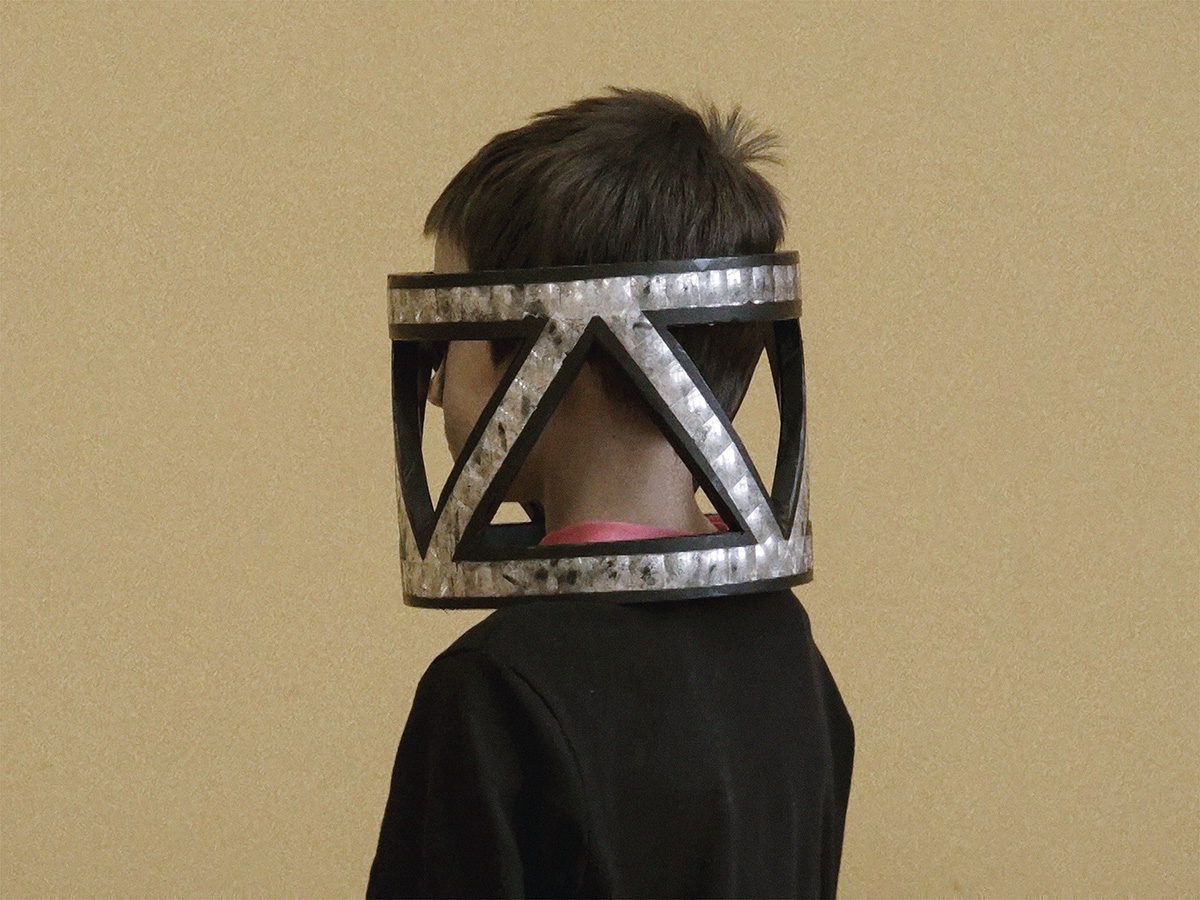
Tommaso Donati
Faim
Experimental fiction | hdv | color | 16:4 | Switzerland, France | 2015
An homeless woman shares her life in a highway station with her dog. After his missing, she starts to wander around the station and the woods searching for him; in the meantime the gestures of a mysterious man that works in a prehistorical museum in the middle of the forest take place like every day. Linked by the same basic human need the woman, the man and the animal will move and cross each other looking for something more elevated.
Tommaso Donati
L'epoca geniale
Experimental doc. | hdcam | color | 45:0 | Switzerland | 2021
L'epoca geniale (The Age of Genius) is a film that enters a place where form is mixed with lyricism and the magic of body movements and gazes. The eyes are filled with wonder and reveal themselves as a metaphor for a society that wishes to become children again. The protagonists' exercises have nothing of realistic, but lean towards theatricality and imagination. The walls of this universal space thus become silent witnesses of these complicated gestures, of these endlessly repeated attempts to finally reach maturity.
Tommaso Donati (Lugano, 1988). His work combines a narrative approach with documentary cinema and is structured around the theme of marginality. His films have been presented at various national and international festivals. He currently lives and works in Lugano

Tommaso Donati
Cligne-musette
Experimental doc. | hdcam | color | 21:30 | Switzerland | 2020
Until the beginning of the 20th century in France, the game of hide and seek was called "cligne-musette". In a winter landscape, the film follows five kids and a young man who wanders alone between the desolate buildings of the Valibout neighbourhood, located in the province town of Plaisir. They will not cross paths but seem destined to meet the same fate, that of being abandoned to themselves; to hide and not to be found.
Born in 1988, Tommaso Donati lives and works in Lugano, Switzerland. His work combines a narrative approach with documentary cinema and is structured around the theme of marginality.

Tommaso Donati
Poetenleben
Experimental doc. | hdv | color | 63:0 | Switzerland | 2023
The film seeks to reveal the humble personality of the Swiss writer Robert Walser (1878-1956), through an immersion in the archive of his “Microscripts”. These minuscule writings at the limit of the indecipherable, little sheets written in pencil in microscopic handwriting, which the writer himself called the “pencil method”, allowed him to write more freely and less laboriously. A process that seems to reflect his desire to discreetly distance himself from the world and society.
Tommaso Donati was born in 1988 in Lugano, Switzerland. He lives and works in Ticino. His work combines a narrative approach with documentary cinema and revolves around the theme of marginality. His short films have been screened at several national and international festivals, including the Locarno Film Festival. His first feature-length documentary, Forma del primo movimento (2022), premiered at the Solothurner Filmtage, in competition in the Opera Prima section. His latest film, Poetenleben, is produced by Noha film and co-produced by RSI. He has participated in various development programmes such as Berlinale Talents and Locarno Residency.

Tommaso Donati
Je parle à mes démons
Experimental doc. | hdv | color | 22:30 | Switzerland | 2019
Patrice is an inmate in the french prison Bois d’Arcy. As an actor and at the same time a silent spectator he hides his drama through a routine of daily gestures and ambiguous postures.
Tommaso Donati (1988, Switzerland) lives and works in Lugano. His work explores the meeting point of documentary, experimental fiction and photography in telling stories of marginalisation and relations between people and the and the nature-space in which they live.

Tommaso Donati
A Song from the Future
Experimental doc. | hdv | color | 17:29 | Switzerland | 2017
A Somali migrant seeks refuge in the underground of a building near the Swiss-Italian border. A popular song from his country awakens in him the desire to leave.
Tommaso Donati,(1988 ), lives and works in Lugano. In 2013, he gains a diploma from the école internationale de création audiovisuelle et de réalisation (EICAR) in Paris. His output to date has been split between documentary, experimental cinema and photography. Recurrent themes in his work are the relations between humans, animals and the nature-space in which they live.

Ralitsa Doncheva
Baba Dana Talks To The Wolves
Experimental doc. | 16mm | color | 10:38 | Bulgaria, Canada | 2015
Baba Dana Talks To The Wolves is an impressionistic portrait of Baba Dana, an 85 year-old Bulgarian woman who has chosen to spend her life in the mountains, away from people and cities. She lives in one of the oldest monasteries in Bulgaria, Zelenikovsky Monastery. Once known as a favorite place of repose for Bulgaria’s last Tzar, the place is now known as Baba Dana’s home.
Ralitsa Doncheva (b. 1987) is a Montréal-based filmmaker, originally from Bulgaria. A graduate from The Mel Hoppenheim School of Cinema in Montreal, she makes short films and video installations. Her recent works are focused between documentary and experimental cinema using analogue film techniques and photochemical processes.

Yanyu Dong
Ayesha
Experimental fiction | 4k | color | 19:43 | China, India | 2018
An imaginary biography of my mother who, in her youth, dreamed of being a Bollywood dancer. In a lush fantasy through the heart of India, I reclaim her destiny and desires lost in another age.
Yanyu Dong is a Chinese visual artist currently based in Los Angeles. She uses video, photography, and performance as platforms to examine her cultural dissonance as an international artist. She received her BFA at the Tianjin Academy of Fine Arts and her MFA at the California Institute of the Arts. Her work has been exhibited at venues internationally.

Deirdre Donoghue
What Belongs To The Sky?
Experimental doc. | hdv | color | 14:7 | Finland | 2012
What Belongs To The Sky? investigates social aspects between language and communication in a situation where the ability to speak is broken down. Together with my video and audio recording equipment, I inserted myself in the everyday life of an elderly couple living on an isolated, bi-lingual island of Utö in the middle of the Baltic Sea. The man has Bingswangers disease, a type of dementia, and as a result suffers of aphasia. Previously a bi-lingual, charismatic and an eloquent public speaker, his speech has in the last few years been reduced to a very basic level, consisting of simple sentences, isolated words, and supporting bodily gestures. More often than not, he is unable to finish his sentences and give form to his thoughts through words. His inability to partake in the social through language and speaking is heightened by his poor sight and hearing. However, it is specifically his loss of language and its creative power to construct, order and mediate that has placed him in a social abyss with diminished means to navigate in the social and so to have proper agency as a human being.
Deirdre M. Donoghue (b. 1971, Finland) lives and works in Rotterdam, The Netherlands. She is a performance and visual artist, writer and researcher with a background in theatre, directing, photography and fine arts. She received a BA in Photography at the Dublin Institute of Technology, Ireland, and a MA in Fine Arts at the Piet Zwart Institute, the Netherlands, and The Plymouth University, United Kingdom. She is a co-founder of ADA, Area for Debate and Art, (NL), where she has been co-curating and developing its public program since 2008 and curated the project The Open Office for Words (2008-2010). She has co-edited the publications Resonant Bodies, Voices, Memories, (Willem de Kooning Academy, Rotterdam University, 2009) and Pick Up This Book (ADA Rotterdam, 2013), and has contributed to the publications P.A.I.R: Chorografie (PeerGrouP, 2010) and Our House in The Middle of The Street (ed. Bekan, Kromhout, Kunsthuis SYB, 2010.) She is currently running a long term research project entitled (m)other voices, the maternal as an attitude, maternal thinking and the production of time and knowledge in collaboration with Witte de With Centre for Contemporary Art, (NL).

Doplgenger
SNIMAK PEJZAŽA BEZ PREDISTORIJE
Experimental video | mov | color | 14:22 | Serbia | 2020
A visual story that invokes the experience of forgetting, filmed in a desolated socialist children's health resort in the coastal town of Krvavica, Croatia. The title is borrowed from a poem by the Yugoslav surrealist and revolutionary poet Oskar Davi?o, which is an attempt to record the inner images left without music and sonority. The poet invokes words and terms that he forgets because he suffers from aphasia. A Record of Landscape without Prehistory indirectly relies on Davi?o’s poetry, linking it to the lost future of a site on the Adriatic coast. An epistolary narrative based on documents - postcards from summer vacations, is placed at the site and told in a repetitive time circle. A circle, which is always a new subtraction in the medium of recording, is forgetting. This forgetting is not forgotten but desired since the medium itself records (digital), communicates (magnetic) and exposes (analog) human inability to preserve the memories and history.
Doplgenger is an artist duo from Belgrade, comprising Isidora Ili? and Boško Prostran. Doplgenger engages as a film/video artist, researcher, writer, and curator. The work of Doplgenger deals with the relation between art and politics by exploring the regimes of moving images and the modes of their reception. They rely on the tradition of experimental film and video, and through some of the actions of these traditions intervene on existing media products or work in expanded cinema forms. Their work has been shown internationally at institutions such as Museum Wiesbaden, Kunstmuseum Bonn, the Centre Pompidou in Paris, Stedelijk Museum Bureau Amsterdam, Osage Gallery in Hong Kong, the Museum of Contemporary Art in Zagreb, and the Museum of Contemporary Art Vojvodina. Doplgenger’s films have been screened and selected for film festivals including the International Film Festival Rotterdam, Seattle International Film Festival, Kassel Documentary Film and Video Festival, Cairo Video Festival, Festival des cinémas différents et expérimentaux de Paris. Doplgenger has participated in symposia and discussions, organised educational projects and workshops, presented lectures, and screened curated programs worldwide. They edited publication „Amateurs for Film” and serve as curators and selectors for the Alternative Film/Video Festival.

Anja Dornieden, Juan David González Monroy
The End Of The Human Eyes
Multimedia installation | 0 | color | 0:0 | Colombia | 2025
This system is an interactive installation where a group of ferns are equipped with a network of sensors capable of detecting environmental stimuli such as light intensity, humidity, temperature, or even subtle movements of the plants. These sensors are connected to a central processing chip, which continuously collects and analyzes the data from the ferns. The sensory data reflects the environmental conditions experienced by the plants in real time.
OJOBOCA is a Berlin-based artist duo formed by Anja Dornieden and Juan David González Monroy. Their work is rooted in an exploration of cinema as a social ritual and as a tool for generating collective experience. They call their practice Orrorism, which they define as a simulated method of inner and outer transformation. Since 2010, OJOBOCA has created a series of experimental films, installations, and performances that have been screened at film festivals and art venues worldwide, among them the Museum of the Moving Image, ICA London, Wexner Center for the Arts, Österreichische Filmmuseum, Anthology Film Archives, Haus der Kulturen der Welt, Kunstverein Mu?nchen, Ullens Center for Contemporary Art, Berlinale, International Film Festival Rotterdam and New York Film Festival.

Wojtek Doroszuk
Prince
Experimental doc. | hdv | color | 18:50 | Poland, Congo (Brazzaville) | 2014
A man performs the same ritual every day: he cleans his shoes, dresses up in his shiny blue suit, wears his white gloves and grey hat, and spends his time walking around Brazzaville. His presence generates an absurd apparition in the urban chaos of the city, which reflects the imaginary produced by one of the up-most icons of pop culture.
Wojtek Doroszuk (b. 1980 in Poland) is a video artist based in Krakow, Poland and Rouen, France. He graduated from the Academy of Fine Arts in Kraków, Poland, Faculty of Painting, in 2006. His works have been shown in numerous solo and group shows in, among others, Centre for Contemporary Art Ujazdowski Castle (Warsaw), Zachęta National Gallery of Art (Warsaw), Museum of Modern Art (Warsaw), Location One (New York), Marina Abramovic Institute (San Francisco), The Stenersen Museum (Oslo), Joseph Tang Gallery (Paris) etc.

Alice Dos Reis
Our Lady Who Burns
Experimental fiction | 16mm | color | 8:0 | Portugal | 2023
Portugal’s Serra da Gardunha is a mountain known for the paranormal. Where before it was revered as a site of saintly apparitions, nowadays it is known for alien sightings, with rumours of a UFO hangar hidden inside it. Atmospheric and dream-like, Our Lady Who Burns guides us through this mountain and an intergenerational lore of infatuations. In parallel, two friends lament the pregnancy of their old cat, speculating on whether the mystical energy of the mountain might be able to interrupt its gestation. Shot on 16mm with an small and intimate crew, Our Lady Who Burns is a personal voyage through the biographical landscape of the director, for whom the presence of the otherworldly, the geology of the territory, and a biography of unwanted bodily gestation are expressed through acts of cinematic apparitions.
Alice dos Reis, born in 1995 in Lisbon, is a visual artist and filmmaker, and has a Masters in fine arts from the Sandberg Instituut in Amsterdam. In 2019, she won the Novo Banco Revelation prize for young artists, and in 2018, she won the VISIO Young Talent Acquisition Prize. She was also a recipient of Foundation Botin Visual Arts Grants (2022-2023), and previously, the Mondriaan Fonds Stipend for Young Artists (2020-2021)
Barbara Doser
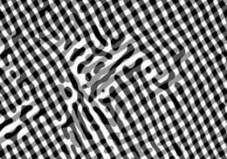
Even odd even
Art vidéo | dv | black and white | 7:30 | Austria | 2004
?even odd even? is the artistic interpretation of a time- and space-based analysis of video feedback and delivers an insight into a fascinating world of spatial complexity and dynamic behavior. ?The vision is drawn in a highly suggestive way to a pulsating pattern of black and white lines. By the rhythmic movements of these bar codes, permeated by a thick carpet of sound, the vision glides at times as in picture puzzles into a new spatial dimension ... ? (Gunnar Landsgesell) It concerns the focused center of video feedback (1:18 min), with very fast moving image content. To be able to experience not only the fascinating flow of information, but also the content and correlation in more detail, the video feedback is decomposed into its essential parts ? the alternate successive odd and even fields, each lasting 1/50 second. Separated from each other, newly ordered and their speed manipulated, various sequences are created which are placed in relationship to the original video feedback. The apparently hidden becomes visible in a process of aesthetic experience.
Born in 1961 in Innsbruck, Austria. Lives and works in Vienna, Austria. Studied art history at the University of Innsbruck, Doctorate in 1989. Since 1994 freelance artist (media/video and fine arts). Artistic domain: video feedback ? processed in experimental videos, video/media installations, prints and paintings (video stills). Exhibitions/events in Austria and abroad, numerous videos presented in more than 30 countries at international festivals for film, video and new media. Cooperation in international media art projects. www.sunpendulum.at/barbaradoser
Kamil Dossar
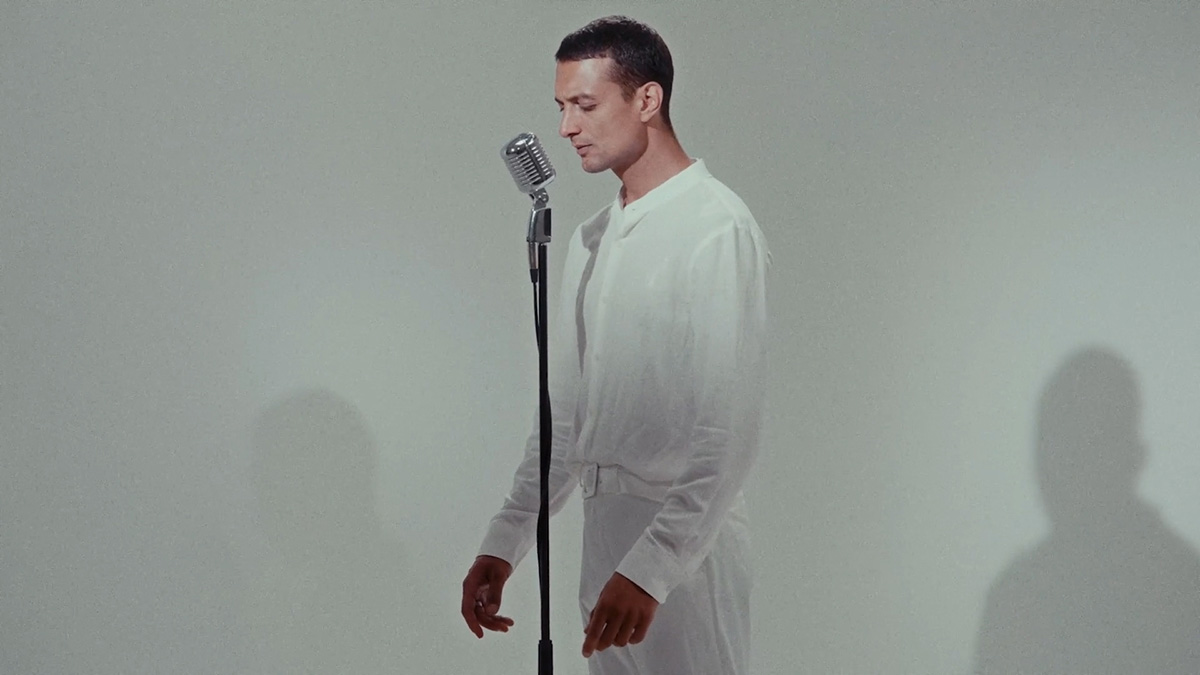
Insert Song
Experimental film | mp4 | color | 11:9 | Denmark | 2022
A stage unfolds and a love song is sung displaced from it’s owner. INSERT SONG is video-essay meditating on music and semiotics in relation to love, and how love declarations are falling victim to the image.
Kamil Dossar (b. 1988) is a Danish artist currently based in Copenhagen. Dossar’s practice is rooted in an interest in themes concerning identity and how we relate to images in contemporary society. Central to his work is the relationship between identity and the loss of it, and exploring the image in relation to the imageless, as a son to political refugees. By investigating visual identity and semiotics he renegotiates the status of the image by rearranging it into new modes of associations.

Marco Douma, Roel Meelkop
The Clearing
Experimental video | 4k | black and white | 8:49 | Netherlands | 2024
The video work The Clearing reveals a fascination for exploring the indescribable and the ambiguous, a space in which certainty falls away and one can experience moments of thoughtlessness, perhaps even timelessness. This concept of an indefinable space is a recurring theme in Marco Douma and Roel Meelkop's audiovisual works.
Since the 1990s, both makers have been active in art in their own fields. Roel Meelkop developed from visual art to sound artist and Marco Douma developed from painting to multimedia artist. They made the acquired expertises their own and are in that sense self-taught in their current fields. At the same time, their visual academic background still plays a major role in the creation process. Perhaps this common denominator, which they recognise in each other's work, makes their collaboration so natural and complete. The collaboration began in 2011 and since then they have created video installations, performances and video works.
Peter Downsbrough
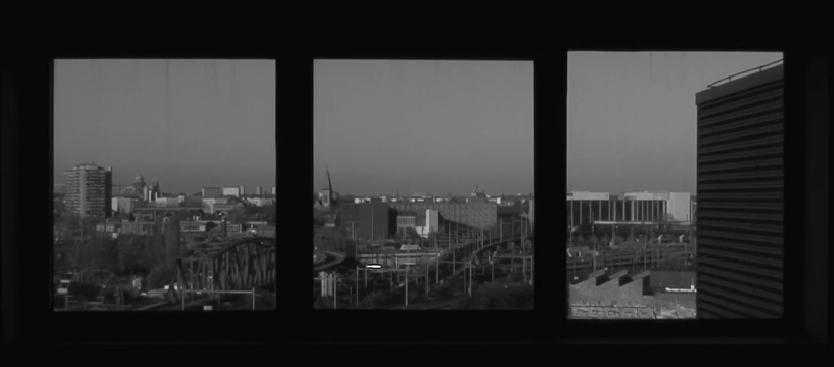
AS ...
| hdv | black and white | 1:46 | USA, Belgium | 2013
Peter Downsbrough
And [ Back
Video | dv | black and white | 4:37 | USA, Belgium | 2006
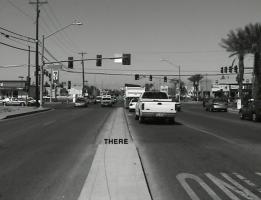
AND [BACK ?plays? a complex ?game? with the words AND and BACK, where the word BACK sometimes functions as indicator, sometimes as trigger, sometimes as a comment on what is happening on-screen. It?s especially the left/right and right/left (?back? also meaning ?backwards?) movement of represented things ? mostly vehicles ? but of that of cinematic interventions as well, that is of importance. This BACK movement is sometimes repeated in the typography; finally it penetrates and in a sense organises the film in its entirety: as a ?story? that unfolds, as a ?structure? with its symmetries and morphologic qualities. The very first image is black. Then, like a shutter (or some puppet theatre) the image opens itself, a black strip moving from right to left, gradually showing an archetypical American bungalow park: one white bungalow after the other, some slightly weaving trees, a dark sky, a somewhat cracked road; a very symmetrical image. After ten seconds, at the lower part of the image (more or less in the middle) a part of the title is shown, while the ?curtain? still opens and half of the image is exposed: [BACK. It?s unsure ? as always with Downsbrough, where things are often noticed afterwards, on second view? when exactly the viewer actually sees the [BACK; perhaps only after eighteen seconds, when the title is suddenly visible in its totality: AND [BACK. Then there?s a shot of another setting, somewhere in the USA as well, no bungalows this time but a road lined with commercial-looking buildings and palm trees, and cars and trucks passing. Followed by a view from inside a car, driving on the motorway, and low-screen in the right corner, the word AS, mirrored right to left. The little words, seemingly coming from other Downsbrough films (from AS] IN? or from AS] THEN?) gradually invade the screen. A truck driving by on the left suddenly ?wears? the AND from the title, more or less at the spot where we expect a number plate. It stays there, becoming smaller as the vehicle moves away from the viewer. When it fully disappears, the mirrored AS becomes a BACK, and as if on command (?Back!?) we?re back at the preceding image, with the palm trees, the passing vehicles, the commercial facilities. Next, another image is shown, symmetrical as well, presenting a similar road (the same?), not filmed from the side this time, but with the camera placed more or less in the middle of it. At the same spot as where the first word block ([BACK) appeared, the word THERE is shown. After it has faded out, there are new shots from inside a car, showing a similar motorway. For some seconds, the word CONTAIN appears, in the right corner of the screen, tilted to the right at a 90° angle. And in the blink of an eye it communicates with ?Welsh Cargo? ? a container company ? not inserted there by Downsbrough, but part of the industrial landscape the car is driving through. During a split second, typography in the represented space and ?presented?, inserted (stitched-on) typography intersect: both worlds are interchangeable. AS appears again on regular, graphic white walls, the camera panning, still filming from inside a car. The image fades to black, AND appearing again, like CONTAIN before, in the upper right corner and tilted 90°. We?re back to where the film began: the symmetrical bungalow view with the weaving trees. The shutter closes now, from left to right. There?s AND in the middle, where [BACK was before, then just the [ , finally the image is black again. B(L)ACK. (Steve Tallon)
° 1940, New Brunswick, N.J. Lives and works in Brussels, Belgium In Downsbrough?s oeuvre, the relationship between work (sculpture, photo, videos, books, or some combination) ?exhibition? space (including its specific architecture, which can be the city as a whole) and viewer (in front of the work and inside exhibition space or town) is central. ?Inside? the work, this triangle is often doubled or mirrored, by underscoring the link and the tension that exists between image and language. In doing so, many spaces ? many places ? are being created, where the viewer can lodge him/herself mentally. There?s the architectural space itself, the space created between the work and the exhibition space, the space (or spatial relations) within the work, and finally a purely mental space, produced by the game between word and image (?mind sculptures?). The viewer positions himself before the works and inside the space ? POSITION was the title for a recent exhibition at BOZAR, Brussels ? but is at the same time positioned by both work and space (and its continuum: the interstice between work and space). Sometimes these spaces may become genuine places: cuts in time/space where the visitor can dwell. Inversely, s/he may get lost in the labyrinth, even ? or especially ? with those works that include somehow ironic ?indications?: spatial or linguistic ?pointers?. Because of his interest in language, and in incorporating written language in his work (both as signifier and as plastic form), Downsbrough is often seen as a ?conceptual? artist. But his work is very personal and rather idiosyncratic, while at the same time being open to the world as it exists outside the ?art games?. The world as social construct in particular is a recurring theme: the urban, and the organisation of urban space, are a permanent source of inspiration. Among other things, he shows us how thinking about space and giving form to (social) space is culturally relative, and how space co-defines the social. Inversely, some of his maquettes were actually executed, witnessing a thinking-in-practise.