Catalogue > Search
Results for : Tout le catalogue
Alberto De Michele
I Lupi (The wolves)
Video | dv | | 17:0 | Italy | 2009
The protagonists of this project are a group of 40-to 70-year old thieves from the north of Italy called ?I Lupi? the Wolves. The only time they steal is when it`s very foggy. The fog makes everything invisible including them. They rob houses, banks, jewelers, trucks - everything they can profit from. The video `I Lupi` is part of an installation that was made in collaboration with the Wolves.
Alberto De Michele (IT,1980) received his education at the Rietveld Academy, Amsterdam, department Audiovisual (1997-2001) and the Sandberg Instituut (Master Degree), Fine Arts, Amsterdam (2001-2004). His work straddles the line between (pulp) fiction and (plain) fact. It involves highlighting an individual, a phenomenon, an experience. His aim is to penetrate into the most expressive part, the core of his chosen subject. De Michele shows himself to be a captivating narrator with an eye for gripping personal stories or penetrating observations, causing intangible and alienating experiences. In the past three years he has mainly been focusing on the world around his father. His was given an upbringing surrounded by thieves, gangsters and gambling addicts, a social environment most people experience as sinister and unsavoury. Since De Michele grew up in this environment and still has one foot in his father`s world, he?s able to communicate easily with the people in it. The artist can build up a bond of trust between them and himself that enables him to explore their lives in a privileged way. De Michele has participated in several group exhibitions, for example at W139 - Amsterdam, Montevideo - Amsterdam, Kunsthal - Rotterdam, Apexart - New York, The Alternative Film Video - Belgrade. In 2007/08 the artist had a solo exhibition entitled ?Adriano? at the Appel in Amsterdam, an installation about an Italian bank robber who for a period of time was hiding in Amsterdam. From january 2010 Alberto De Michele will be a resident artist at the Rijksakademie, Amsterdam.

Regina De Miguel
El conocimiento nunca viene solo
Experimental doc. | hdv | color | 39:31 | Spain, Chile | 2013
This work tries to delve into the production of hybrid objects and knowledge, by means of an extensive field work with the collaboration of experts in many different areas whose research methods include the use of concepts such as the invisibility or the difficulty of the parameters that characterize their search, as well as the negotiations with the territory, taking the dark matter as a metaphor and thread of this story. Let?s just say that the aim is to make up a story or scientific historiography which, in some of its particularities, transforms into more general stories based in the specific characteristics of a physical and political territory that becomes an exceptional parameter for the study of specific problems. "The supposed neutrality of geographical knowledges has at best proven to be a beguiling fiction and at worst a downright fraud. Geographical knowledges have always internalized strong ideological content. In its scientific (predominantly positivist) forms, natural and social phenomena are represented objectively as things, subject to manipulation, management and exploitation by dominant forces of capital and the state". Spaces of Capital: Towards a Critical Geography, David Harvey. In this scientific forms, eventuality considered as a possibility or risk of change, fact or unexpected problems is presented as a fundamental concept at facing the reading and rewriting of facts before a ?mathematization? of the Universe. The documentary filmed in Chile, in the Atacama desert, the most arid in the World, shows how this landscape and the extreme life conditions in it substantially affect the work carried out there by some scientists. Both recent and past history of this territory are present in the activities and reports elaborated by the scientists, making up a unique paradigm to investigate and rethink the relationship between policies, contexts and knowledge produced within them. This choral story includes people (archaeologist, anthropologists, natives, engineers, astrophysicists, cosmologists, etc) as well as landscapes in which their activities are carried out (an archaeological museum in Arica, in the Peru-Bolivia border, an experimental station in a territory recently revealed to science -Alto Patache-, the Chuquicamata copper mine, the Paranal astronomic observatory (ESO), ... and archaeological ruins arisen from industrial development: old mining cities abandoned in the desert, cemeteries of ancient dwellers of those settlements, etc. The change in the cosmological model emerged from the studies of dark matter and energy plays the role of an allegory and a mental image of the need of change in the archetype used when dealing with the production of knowledge, orders and paradigms, all of which are apparently intact.
Artist and cultural producer. Regina?s work develops connections between situations of scientific analysis and perception as objective knowledge, (scales of verisimilitude), non-experiential learning as derived from the technological imagination, (estrangement and projection), and levels of development of the ideal and critical consciousness, (new means of orientation). Part of her production has dealt primarily with the strategies of the formation of desire, crises in subjective meaning, and the visualization of the psychological landscape as a form of map making. In the same vein, she also analyzes the speculative transfer in scientific and cultural learning tools. Her work has been shown at institutions as Palais de Tokio (Paris), Haus der Kulturen der Welt (Berlin), Gaswork (London), Fundación Telefónica (Santiago de Chile), Artium y Montehermoso (Vitoria), La Panera (Lleida), Can Felipa (Barcelona), Musac (León), La casa Encendida (Madrid), Manifesta (Murcia), CGAC (Santiago de Compostela) y Matadero (Madrid). It has also been shown in independent spaces as Atelierhof Kreuzberg, General Public, Reh Kunst, Altes Finanzamt (Berlin) and Le Commissariat (Paris).
Regina De Miguel
Nouvelle Science Vague Fiction
Experimental doc. | hdv | color and b&w | 20:37 | Spain, Netherlands | 2011
?Nouvelle Science Vague Fiction? focuses on the relationship between construction and analysis of human ecologies. This raises as a syntactic space in which connections are made between analytic situations and scientific perception (verisimilitude scales), non-experiential learning derived from technological imaginary (estrangement and projection) and levels of configuration of ideal and critical conscience (new orientation forms). An off-screen voice in the position of a ?super observer? guides us through various possible ends of the world, in a markedly objective tone; leaving these apocalyptical prophecies behind, it concludes with some irony on the spectator?s role and the meaning of those events and images, that nobody will ever be able to contemplate. The soundtrack is made in collaboration with the musician Jonathan Saldanha from sound recordings of the black hole Sagitarius A*, located in the centre of the Milky Way, captured by the Dwingeloo Radio Telescope in the Netherlands. The composition has been transferred to vinyl disc which is imaged by a scanning electron microscope with a magnification of ten thousand times, giving rise to a landscape impossible to perceive by simple view.
Regina de Miguel, Málaga, Spain, 1977. Artist and cultural producer.

Unidad De Montaje Dialéctico
Biombo de Acapulco
Experimental doc. | 16mm | color | 29:25 | Mexico | 2023
Once a world-famous tourist destination, Acapulco is now one of the cities with the most murders per capita. Assembling stories about five emblematic Acapulco objects and characters, Acapulco Folding Screen is an experimental documentary that registers the contrasting complexity of this old global port. Inspired by the oriental folding screens that arrived in America through the port of Acapulco in the 16th century, the film combines a non-linear and polyphonic narrative with a discordant montage composed of diverse audiovisual material about the place.
Unidad de Montaje Dialéctico (UMD) is a faceless artistic collective. Its refusal to show their faces and use proper names stems from a defense of clandestinity and collectivity as a tactic to confront the logic of spectacle and the industrial-celebrity complex. The practice of the collective has focused on the film essay as a way to generate constellations of dialectical images that put in tension multiple realities and temporalities. Their work has been presented in festivals across the world, such as the Havana Film Festival (Cuba), Punto de Vista (Spain), MIDBO (Colombia), FICUNAM (Mexico), FICValdivia (Chile), FIDOCS (Chile), London Short Film Festival (UK), and L'Alternativa (Spain), among others.

Eléonore De Montesquiou
Diamonds
Experimental doc. | hdv | black and white | 5:0 | Estonia, Ghana | 2015
Who is responsible for a rape? The victim or the rapist? Is the victim responsible for not having been at the right place at the right time and for not being dressed in another fashion? Diamonds should be treasured and hidden from robbers says the educator in this film. Are educators helping the girls, in this case, to defend themselves and be stronger, or are they manipulating their or our possible feelings of guilt?
Eléonore de Montesquiou (1970, Paris, France) is a French-Estonian artist. Her work revolves around the articulation between private and official histories, personal and national identities. It tackles the intricacies and ambiguities of living in the margins, based on her personal experience of uprootedness. Eléonore primarily working with video, she tapes testimonies, creating prosthetic memories of repressed histories. In her documentary-informed works, her camera becomes the voice of these voiceless people. Her work is based on a documentary approach, translated in films, drawings and texts; it deals mainly with issues of integration/immigration/meaning of a nation in Estonia, giving voice to the Russian community.

Eléonore De Montesquiou
Olga&Olga
Experimental doc. | hdv | black and white | 29:39 | Estonia, Russia | 2017
OLGA&OLGA are two strong soviet women discussing their struggles through life, with men, themselves and their political environment. Emancipated in the marxist sense, they don’t need men to survive, but does feminism mean anything more for them than a fairy tale? is the recurrent question that I have been asking Olga and Olga for almost ten years. Both Olgas live on the Estonian-Russian border. Olga Afanasyeva was born in Tver, she studied in Moscow before being displaced to a factory in Ivangorod in the 70s. Olga Tüvi was born in Narva, now Estonia, and worked as a metallurgist in a factory in Ivangorod. She has an Estonian passport and family, but she speaks only Russian. In the nineties, they both lost their jobs, since factories were remodeled or closed down all over the ex-Soviet Union. Today, the pensions that they receive in Russia allows them to live with a few Euros a day, to make ends meet, Olga Afanasyeva sells socks and stockings in the Ivangorod market, Olga Tüvi is an elevator repair woman in panel housings in Ivangorod and they both smuggle things daily across the Estonian border. The men have disappeared from their lives and we can discuss it all freely.
French-Estonian, born 1970 in Paris, lives in Tallinn and Berlin. Eleonore de Montesquiou's work revolves around the articulation between private and official histories, personal and national identities. It tackles the intricacies and ambiguities of living in the margins, based on her personal experience of up rootedness. Eléonore primarily working with video, she tapes testimonies, creating prosthetic memories of repressed histories. In her documentary-informed works, her camera becomes the voice of these voiceless people. Her work is based on a documentary approach, translated in films, drawings and texts; it deals mainly with issues of integration/immigration/meaning of a nation in Estonia, giving voice to the Russian community. A few years, she started working with asylum seekers from French speaking countries in Estonia.
Eleonore De Montesquiou
Televisao
Experimental video | dv | color | 4:45 | France, Brazil | 2005
In Brazil, the Telenovelas (soap opera) are very popular, omnipresent. I filmed the look of young people watching TV in Atins, a village close to Sao Paulo
Eléonore de Montesqiou was born in 1970 in Paris, she lives in Berlin and Tallinn. She has been working since 1998 with the gallery Zücher in Paris. Her work is based on an documentary approach of reality translated in films (videos), drawing and texts. Her previous projects dealt with the symbolism of the wedding " (1998, France), of the relation of a woman to maternity: Swing, ma demeure (2003, Paris, Berlin), to the relation with her house, Minu maja on minu maa (2001, Estonia) and Par exemple, Ebenthal (2004, Austria). With Olga Olga Helena (2005, St Petersburg) Eléonore de Montesquiou questions the leaving of politic refugees and their life in exile. During 2005, Eléonore de Montesquiou is in residence in Tallinn, realizing ATOM CITIES, a documentary project on Sillamäe,the ex-soviet city closed for nuclear research, a city exclusively sheltering Russians, the strongest minority in Estonia.
Eléonore De Montesquiou
Horses People Time
| | | 16:12 | France | 0
«The seagulls are waking up, can you hear them? It’s really hard to believe that these are now two different cities with a border.» told Olga to Eduard on the roof of a collective housing building where she works as a lift supervisor. A white night in this border town between Estonia and Russia, Olga and Eduard are tired, they are waiting for the sun to rise. "Horse, people and time", Eduard refers to Lermontov’s poem "Borodino" and indeed at this time in this peculiar place, almost non existing, philosphy, politics, all possible topics are grasped and dealt with.
Eléonore de Montesquiou (1970, Paris, France) is a French-Estonian artist. Her work revolves around the articulation between private and official histories, personal and national identities. It tackles the intricacies and ambiguities of living in the margins, based on her personal experience of uprootedness. Eléonore primarily working with video, she tapes testimonies, creating prosthetic memories of repressed histories. In her documentary-informed works, her camera becomes the voice of these voiceless people. Her work is based on a documentary approach, translated in films, drawings and texts, it deals mainly with issues of integration/immigration/meaning of a nation in Estonia, giving voice to the Russian community.
Eleonore De Montesquiou
Katrin
Experimental doc. | dv | color | 5:0 | France | 2006
Leaning upon a documentary practice constituted mainly of interviews and films, Eléonore de Montesquiou gathers personal histories and descriptions that she then has exist in a fictional mode, all while remaining very close to the intimate sphere or the social life of her most common aspects. The "I" is not the one of the artist, nor the one the people who free themselves to her ear, but the "I" that is crossbred and mixed, whose abstract and collective timbre resounds in a way that is strangely close to our own lives. Texts, photographs, installations, video, and films prove the same regard without complacency over the beings et with a precise and sensitive analysis of relational space.
Born in 1970, Eléonore de Montesquiou lives and works in Berlin. Her videos explore identities and frontiers with a minimal formal vocabulary and a dreamlike aesthetic. Having lived a long time in Austria, Estonia, and Germany, she constantly finds herself between two languages, two cultures, two generations, two stories. She interviews the people who live in border areas, urban intervals, and forgotten cities, and gathers their testimonies in a sensitive way. Her videos attest to the love she bears for these inhabitants through the careful attention given to their particular stories of every day life.
Eleonore De Montesquiou
KALAMEES
Experimental doc. | dv | color | 23:10 | France, Estonia | 2009
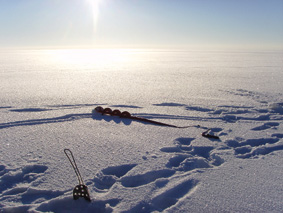
Sasha is a fisherman. In the winter, he goes out with others for one day, on the frozen lakes and rivers. Each of them makes a hole in the ice and stays sometimes all day long, in the cold, waiting for the fish. It is both a common passion the fishermen share, leaving together for the daily adventure, and a very solitary one, they all sit apart from each other and hardly communicate. Sasha grew up in Ivangorod, his parents were given an apartment in the highest building of the city, overlooking the river, the bridge, in a word the border. Now Sasha is in his late twenties, he works in Kreenholm textile factory, in Narva ?Estonia- he walks the Russian-Estonian border daily, he goes out at night in Saint Petersburg and doesn?t speak a word of Estonian My film is a portrait of Sasha, of his silent fishing, how he is organized to resist the cold. Through this individual portrait, his words raise the issue of Ivangorod?s particular situation: what does it mean to live right on a border? On the border between Russia and Estonia, on the very edge of Europe, a border which did not exist when Sasha was born. Sasha?s mother, Olga, told me once that she did not know where she came from anymore, where she belongs to, in between: Estonian, living in Russia, speaking only Russian or Russian living almost in Estonia, married to an Estonian man and whose children both work in Estonia.
"Eléonore de Montesquiou was born in 1970 in Paris, she lives in Berlin and Tallinn. Her work is based on a documentary approach, translated in films, drawings and texts. With Olga Olga Helena (2005, St-Petersburg), Eléonore de Montesquiou questions the experience of political refugees and their life in exile. In 2005-2006 in Estonia, she was working on ATOM CITIES, a documentary project dealing with the Russian minorities living in ex-closed nuclear cities in Estonia. The current NA GRANE is a prolongation of these issues in the border city of Narva-Ivangorod. Eléonore de Montesquiou?s projects are collaborations with composers (Tanja Kozlova, Lembe Lokk, Marcel Türkowsky, Helena Tulve) and graphic designers (Aadam Kaarma, Heidi Sutterlütty, Jose Soares)." http://nagrane.blogspot.com/ http://eleonoredemontesquiou.blogspot.com/
Eleonore De Montesquiou
Los Chicos
Experimental video | dv | color | 5:30 | France | 2006
A short film about children, their games, their violence, their tenderness, in a never ending spirale, switching from an extreme to another.
Eléonore De Montesquiou
Swordfish
Experimental doc. | 0 | color | 6:0 | Estonia, Russia | 2022
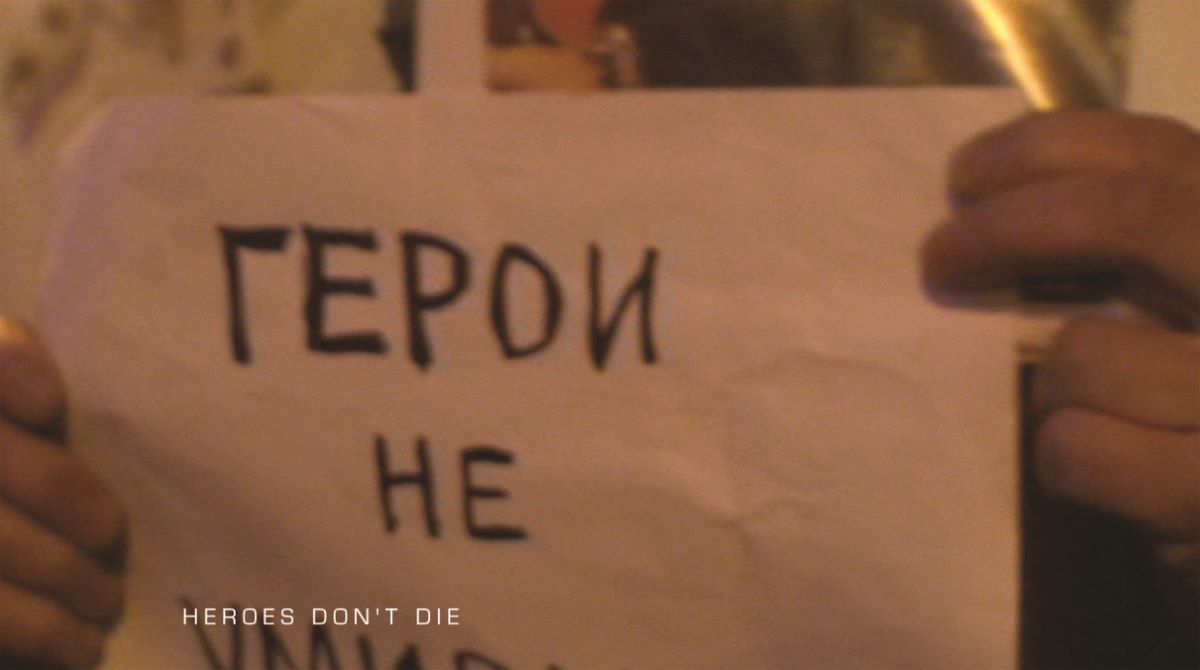
February 2015, Vladimir Putin’s opponent, Boris Nemtsov, was assassinated not far from the Kremlin in Moscow. Images of pain and protest, texts by Pablo Neruda are an open call for reflection in the short film ‚Swordfish’. Today, sadly, these images take on an even more painful resonance. Against hatred, against war, let's keep yelling!
Eléonore de Montesquiou was born in Paris, she lives in Berlin and Tallinn. Her work revolves around the articulation between private and official histories, personal and national identities. It tackles the intricacies and ambiguities of living in the margins, based on her personal experience of up rootedness. Eléonore is primarily working with video, she tapes testimonies, creating prosthetic memories of repressed histories. In her documentary-informed works, her camera becomes the voice of these voiceless people. Her work is based on a documentary approach, translated in films, drawings and texts. In Estonia she is giving voice to the Russian community or asylum seekers from French speaking countries arriving in Estonia. The films follow the protagonists over time. „Traverses“, with shepherds in La Grave, in the Hautes Alpes, since 2011, or „Nagrane“ with women living on the Estonian-Russian border, since 2005.
Eleonore De Montesquiou
Paljassaare
Experimental video | dv | color | 6:30 | France, Germany | 2007
Tallinn, Estonia 2005-2008 During Soviet times, the Paljassaare peninsula was a military base, with access forbidden. From 1991 to 2006, only Russians from Tallinn visited there. Since the summer of 2006, the beach and its surroundings have undergone a process of relandscaping. Only five minutes from Tallinn?s historic center, the peninsula is a top choice for real estate investors. The beach has been cleaned, a space has been cleared for a parking lot, and French fry and ice cream stands rub elbows with surveillance patrols. In 2005 and 2006, I filmed Paljassaare beach. These images make up the film ?Paljassaare,? whose soundtrack was composed by Lembe Lokk. In 2007, I began to photograph the signs of change. The project includes a film and a dozen color photographs. It will be accompanied by a poster that connects the images of the beach with a text by Triin Ojari. Triin Ojari, editor of the architecture journal ?Maya,? takes stock of the real estate projects underway at Paljassaare. The poster was created in collaboration with the graphic artist Aadam Kaarma.
Eléonore de Montesquiou is a French-Estonian artist born in 1970, she lives and works in Berlin and Tallinn. The films of Eléonore de Montesquiou explore the identities and the borders, with a minimal formal vocabulary and an oniric esthetics. The artist, having lived a long time in Austria, Estonia, Germany, is located constantly between two languages, two cultures, two generations, two stories. She interviews the inhabitants of border areas, urban intervals, forgotten cities, and assembles their testimonys in a significant way. Her videos, of a subtle poetry, shows of a true love for the interviewed people and a singular attention for strange stories of every day life. In 2008, Eléonore de Montesquiou was awarded the Senat Stipendium (Berlin, Germany) for a film in Moscow. In 2006, she was awarded the Villa Médicis Hors les Murs in France, and a Senat Stipendium in Berlin to realise a film and publication in Poland with women who travel between Poland and Germany to earn a living: Podroznizcki (?Travellers?). In 2005-2006, she worked on ATOM CITIES, a documentary project dealing with the Russian minorities living in ex-closed nuclear cities in Estonia. Eléonore de Montesquiou has been working since 1998 with the Galerie Zürcher in Paris. Her work is based on a documentary approach to reality, translated in films, drawings and texts. Her previous projects dealt with the symbolism of the wedding dress in Robes (1998, France), the relationship of a women to her body regarding pregnancy in Swing, ma demeure (2003, Paris-Berlin), the relationhip to one?s home in Minu maja on minu maa (2001, Estonia) and Par exemple, Ebenthal (2004, Austria). With Olga Olga Helena (2005, St-Petersburg), Eléonore de Montesquiou was questionning the experience of political refugees and their life in exile.
Eléonore De Montesquiou
Parole à la femme
Experimental doc. | dv | black and white | 8:35 | Estonia, Togo | 2010
?Parole à la femme? is a radio broadcast in Togo devoted to women. It lasts less than ten minutes. At first, a cereal retailer in a market is invited to speak. She tells about her economic calculations and about the market relationship in African villages. The next participant after her is a female diet adviser. I chose to transmit this broadcast because of the eloquence of the various participants, but overall because it was one of the rare attempts I witnessed of giving women in Africa the chance to speak, of paying attention to those who spend their entire days carrying heavy weights, cooking and taking care of their many babies or young children.
Eléonore de Montesquiou (1970, Paris, France, Franco-Estonian artist) her work revolves around the articulation between private and official histories, personal and national identities. It tackles the intricacies and ambiguities of living in the margins, based on her personal experience of uprootedness. Eléonore primarily working with video, she tapes testimonies, creating prosthetic memories of repressed histories. In her documentary-informed works, her camera becomes the voice of these voiceless people. Her work is based on a documentary approach, translated in films, drawings and texts, it deals mainly with issues of integration/immigration/meaning of a nation in Estonia, giving voice to the Russian community.

Eléonore De Montesquiou
Commando Sacko
Experimental doc. | hdv | black and white | 17:35 | Estonia | 0
Sacko, or "Commando" as the Estonian police called him, was detained in the Estonian prison of Harku, three years all in all. He had applied for asylum in Estonia, was released and put on the street in September 20. He took refuge "elsewhere" and talks. He tells about the treatment of the Harku detainees, the solitary confinement isolation cells, the injections, the oblivion of these people who cannot communicate.
Eléonore de Montesquiou’s work revolves around the articulation between private and official histories, personal and national identities. It tackles the intricacies and ambiguities of living in the margins, based on her personal experience of up rootedness. Eléonore is primarily working with video, she tapes testimonies, creating prosthetic memories of repressed histories. In her documentary-informed works, her camera becomes the voice of these voiceless people. Her work is based on a documentary approach, translated in films, drawings and texts; it deals mainly with issues of integration/immigration/meaning of a nation in Estonia, giving voice to the Russian community. A few years ago, she started working with asylum seekers from French speaking countries in Estonia.
Eléonore De Montesquiou
Radiotehnika
Experimental doc. | hdv | black and white | 18:51 | Estonia, Latvia | 2011
RADIOTEHNIKA 20 min. b&w Riga, 2011 Russian with English subtitles Credits: Camera and editing: Eléonore de Montesquiou Sound by PHONIC PSYCHOMIMESIS With GALINA TRAUMANE, AUSMA SMILTNIECE and MIKHAIL BOGDANOV original language: Russian with English subtitles "Radiotehnika" is a film about the last units in a radio factory in Riga. It is also a film about a woman engineer who was working there years ago. She tells about that time, the Soviet Time and its social organisation with the factory. I was intrigued by her career and how, as a woman, she chose to study engineering.
Eléonore de Montesquiou (1970, Paris, France) is a Franco-Estonian artist. Her work revolves around the articulation between private and official histories, personal and national identities. It tackles the intricacies and ambiguities of living in the margins, based on her personal experience of uprootedness. Eléonore primarily working with video, she tapes testimonies, creating prosthetic memories of repressed histories. In her documentary-informed works, her camera becomes the voice of these voiceless people. Her work is based on a documentary approach, translated in films, drawings and texts, it deals mainly with issues of integration/immigration/meaning of a nation in Estonia, giving voice to the Russian community.

Eléonore De Montesquiou
Relatively Small Circles
Experimental doc. | hdv | color and b&w | 9:35 | Estonia, Russia | 2015
The film is a portrait or rather a monologue of Kyril Zinovieff. He was almost 100 years old when we discussed his feelings and opinions about Russia. Kyril left us last year, when he 105 years old, and it is about time that I share these momentsand thoughts of his. Kyril Zinovieff was born in 1910 in Saint Petersburg. He was a child during the Russian Revolution, when his family fled to Estonia and then moved to England. A British intelligence officer, Kyril Zinovieff wrote historical essays about Russia and translated Russian novels.
Eleonore De Montesquiou
Sillamäe
Experimental doc. | dv | color | 18:0 | France, Estonia | 2006
During the Soviet period, from 1944 until Estonia's independence in 1991, Sillamäe was a secret and closed town built to house Russian scientists and workers who would extract uranium and do nuclear research. Sillamäe was closed even to the Estonian people, it had only a code name and did not figure in film or photo and map archives in Estonia. Since 1991, Sillamäe has become an open city with a capitalist organization replacing the former centralised socialist system. These new circumstances meant that working conditions changed in no time, the factory was closed, and the very reason for this city to exist vanished. The Russian people who had settled there became a minority, unable to speak the official language, in an independent Estonia. Some have Estonian citizenship, others have Russian passports, most of them have the grey non-citizen's passport, and they are not, or little, integrated in the socio-economic life of Estonia. They don't speak Estonian, but their home is here, where they were born, here life is easier than in Russia, and Estonia is a door to Europe.
Eléonore de Montesquiou was born in 1970 in Paris. She lives in Berlin. Her films explore the relationship between geographic borders and identities, using a minimal formal vocabulary and a dreamlike aesthetic. The artist, having lived a long time in Austria, Estonia, and Germany, constantly finds herself between two languages, two cultures, two generations, two stories. She interviews the people who live in border areas, urban intervals, and forgotten cities, and gathers their testimonies in a sensitive way. Her videos, subtle and poetical, attest to the love she bears for these inhabitants through the careful attention given to their particular stories of every day life.
Eléonore De Montesquiou
Eksperiment Katja
Experimental doc. | mov | black and white | 9:26 | Estonia | 2020
Katja’s generation was an experiment for the new Republic of Estonia. She was born in 1992 in Narva, in the Eastern part of Estonia bordering Russia. Her birth coincides with the creation of the new Republic of Estonia and she received Estonian citizenship. Katja's mother tongue is Russian, but her grandfather was Estonian and taught her the language at home. The film suggests several metaphors to describe the trauma of this generation - from Little Red Riding Hood to the keyword of experiment.
French-Estonian, born in 1970 in Paris Eléonore de Montesquiou’s work revolves around the articulation between private and official histories, personal and national identities. It tackles the intricacies and ambiguities of living in the margins, based on her personal experience of up rootedness. Eléonore is primarily working with video, she tapes testimonies, creating prosthetic memories of repressed histories. In her documentary-informed works, her camera becomes the voice of these voiceless people. Her work is based on a documentary approach, translated in films, drawings and texts; it deals mainly with issues of integration/immigration/meaning of a nation in Estonia, giving voice to the Russian community. A few years ago, she started working with asylum seekers from French speaking countries in Estonia.

Eléonore De Montesquiou
Phoenix Katja
Experimental doc. | hdv | color and b&w | 12:0 | Estonia | 2024
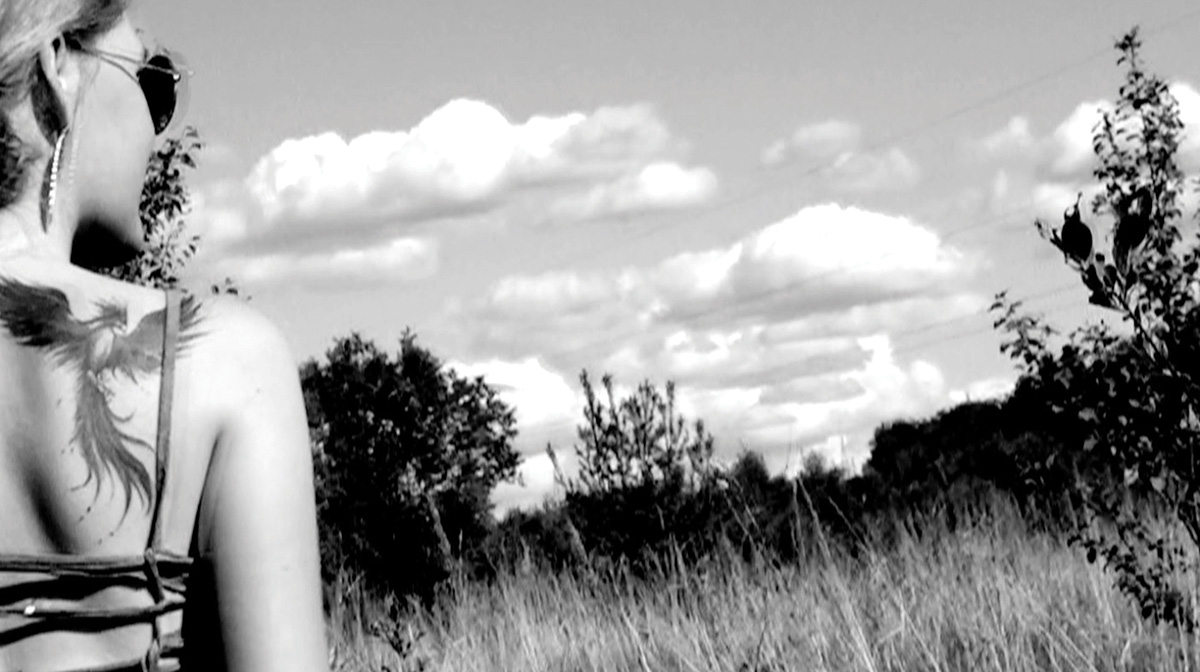
“I am a phoenix bird. It's hard for me take off and fall.” writes Katja. She is a kindergarten teacher in Narva, a border town between Estonia and Russia. She was born in 1992, with the new Estonian Republic, in a Russian speaking family and environment. Katja considers that her generation was an experiment for the new republic. Today she is trapped between languages that reflect opposite positions about war and peace and freedom.
Eleonore de Montesquiou is French-Estonian, she was born in 1970 in Paris. Her work revolves around the articulation between private and official histories, personal and national identities. It tackles the intricacies and ambiguities of living in the margins, based on her personal experience of up rootedness. Eleonore is primarily working with film, she tapes testimonies, creating prosthetic memories of repressed histories. In her documentary-informed works, her camera becomes the voice of these voiceless people. Her work is based on a documentary approach, translated in films, drawings and texts; it deals mainly with the search for freedom, issues of integration/immigration/meaning of a nation in Estonia, giving voice to the Russian community. Since 2007, she films women living on the Estonian-Russian border town of Narva: “Na Grane”, in 2016, she started working with asylum seekers from French speaking countries in Estonia: “Hope is no home” while pursuing a long time film project in France with peasants in the Haute-Alpes : “Traverses”.
Eva De Prosperis, Eduardo Castaldo
Je m'appelle Ariton
Video | | color | 7:1 | Italy | 2012