Catalogue > Search
Results for : Tout le catalogue

Pedro Costa, Harun FAROCKI, Eugène GREEN
MEMORIES
Experimental video | dv | color | 102:0 | Portugal, Korea, South | 2007
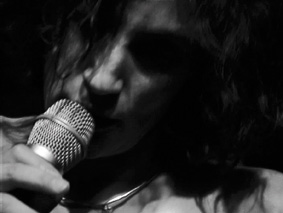
Diplômé de l`Escola Superior de Cinema (l`Ecole de Cinéma du Conservatoire National de Lisbonne), Pedro Costa suit les cours de l`acteur portugais Antonio Reis. Il réalise en 1987 son premier court métrage,"Cartas a Julia", suivi bientôt d`une série pour enfants pour la télévision portugaise. Très influencé par Friedrich-Wilhelm Murnau, il signe en 1989 "Le Sang", un drame encensé par la critique qui ne le satisfait pourtant pas tout à fait. "La Maison de lave" en 1994 confirme le talent de ce réalisateur portugais aux yeux des professionnels du cinéma, qui dévoile dès lors les caractéristiques de son travail : un esthétisme qui frôle le maniérisme, des noirs et blancs variés et très travaillés, des thèmes récurrents tels que le sordide et le crasseux, mais une certaine tendance à les sublimer. Son goût pour le sang et la violence froide se retrouve dans "Ossos" (1997). Les critiques voient en son style un retour au cinéma des origines, héritage du cinéma muet. Le film sera primé notamment à Venise et à Belfort. En 2000, il signe "Dans la chambre de Vanda" narrant la déchéance d`une toxicomane. L`esthétisme de Costa transforme cette histoire sombre en poème filmique. "Où gît votre sourire enfoui ?"(2001) est un hommage au couple de cinéastes Danièle Huillet/Jean-Marie Straub. "Il faut se risquer dans chaque plan, c?est ce que disait Antonio Reis. Risquer sa vie même dans chaque plan, chaque moment, chaque intonation d?un acteur. Sinon le cinéma ne sert à rien. Pour moi, il est fondamental qu?un film soit utile." Pedro Costa
Pedro Costa
Ne change rien
Documentary | 35mm | black and white | 98:0 | Portugal, France | 2009
Pedro Costa
O nosso homem / Notre homme
Fiction | | color | 23:0 | Portugal | 2010
« J?étais un bon maçon. J?ai jamais fais un mur de travers. Mon patron s?est jamais plaint de moi. Un jour le travail s?est arrêté, j?ai perdu mon chômage. Pas de pension de retraite, pas d?allocations familiales. J?ai cherché du travail partout, mais rien. Je ramenais pas d?argent à la maison, Suzete m?a foutu à la porte »
Pedro Costa
Ossos
Fiction | 35mm | color | 94:0 | Portugal | 1997
The first film in Pedro Costa?s transformative trilogy about Fontainhas, an impoverished quarter of Lisbon, Ossos is a tale of young lives torn apart by desperation. After a suicidal teenage girl gives birth, she misguidedly entrusts her baby?s safety to the troubled, deadbeat father, whose violent actions take the viewer on a tour of the foreboding, crumbling shantytown in which they live. With its reserved, shadowy cinematography by Emmanuel Machuel (who collaborated with Bresson on L?argent), Ossos is a haunting look at a devastated community. (Criterion)
Pedro Costa graduated from the Escola Superior de Cinema (the Film School of the National Conservatory of Lisbon). He took lessons with the Portuguese actor, Antonio Reis. In 1987 he produced his first short film, "Cartas a Julia", then soon after a series for children for Portuguese TV. Very influenced by Friedrich-Wilhelm Murnau, in 1989 he made "Le Sang", a drama acclaimed by the critic, but that did not satisfy him absolutely. "La Maison de lave" in 1994 confirmed the endowment of this Portuguese film maker from the point of view of film professionals, who reveal the features of his work: an aestheticism that comes closer with mannerism, various and very detailed blacks and whites, and recurrent themes like the woeful and the dingy, but a certain tendency to sublimate them. His taste for blood and cold violence are also in "Ossos" (1997). The critics analyze his style like a comeback to the origins of cinema, a heritage from the silent film. This work has been awarded at Venice and Belfort. In 2000, he made "Dans la chambre de Vanda", which relates the lowering of a drug addict. Costa`s aestheticism changes this dark story into a filmic poem. "Où gît votre sourire?" (2001) is a homage to the filmmaker twosome Danièle Huillet and Jean-Marie Straub. "One has to take risks in each image; this is what Antonio Reis said. Even risking one`s life in each image, in each moment, each intonation of an actor. Without this risk, cinema is useless. It is fundamental that a film is useful." - Pedro Costa
Pedro Costa
O Nosso Homem
Experimental doc. | hdv | color | 23:0 | Portugal | 2015
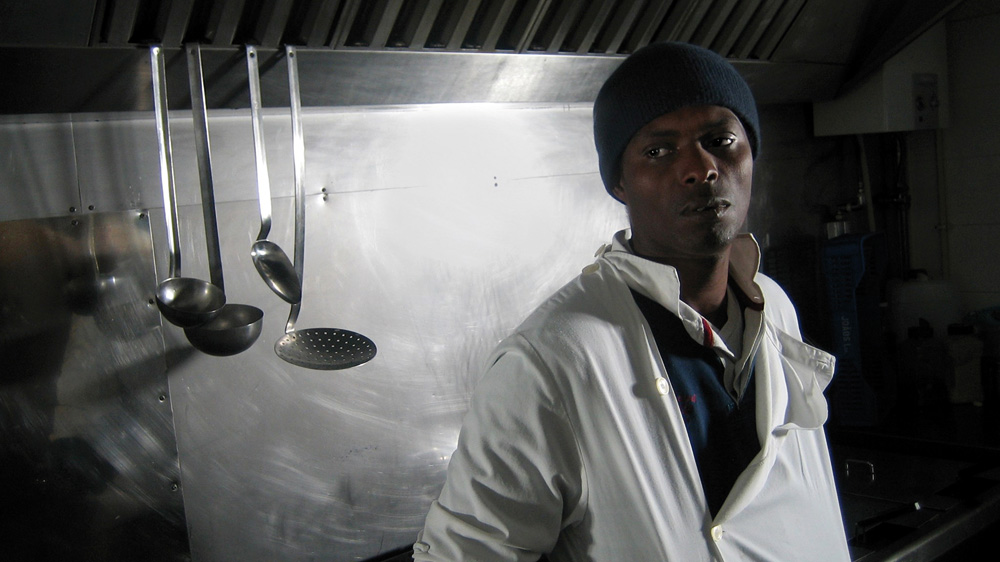
Nouveau montage, inédit de «O Nosso Homen». Un matin de l’été 2007. L’intérieur d’une baraque en bois et plaques d’étain dans la périphérie de Lisbonne. José Alberto, vingt-sept ans, et sa mère, cinquante-cinq ans, tous les deux Cap-Verdiens. Ils sont assis à une table. José Alberto se coupe les ongles avec un petit couteau de poche. Ils parlent en créole.
Pedro Costa est réalisateur, scénariste et directeur de la photographie portugais. En 1994, «Casa de Lava» est sélectionné au Festival de Cannes. «Ossos» remporte en 1997 le prix de la photographie de la Mostra de Venise. «La chambre de Vanda» est primé au Festival de Cannes en 2002. «En avant jeunesse !», qui revient sur la vie d’immigrés cap-verdiens déplacés dans un quartier HLM neuf de Lisbonne, est sélectionné en compétition internationales au Festival de Cannes en 2006, et est primé par le Los Angeles Film Critics Association en 2008. «Ne Change rien» est présenté à la Quinzaine des réalisateurs du Festival de Cannes en 2009. Son dernier film «Cavalo Dinheiro» a reçu le Léopard du meilleur film au Festival international du film de Locarno en 2014. «Il faut se risquer dans chaque plan, c’est ce que disait Antonio Reis. Risquer sa vie même dans chaque plan, chaque moment, chaque intonation d’un acteur. Sinon le cinéma ne sert à rien. Pour moi, il est fondamental qu’un film soit utile.» Pedro Costa
Ico Costa
Balane 3
Documentary | 16mm | color | 98:0 | Portugal | 2025
BALANE 3 is a neighborhood in Inhambane, a city in the south of Mozambique. In 2019, I filmed a bit of the life of its inhabitants. Like any people in the world, the characters in this film work as fishermen, butchers or car washers, they go to school, hospitals, hair salons and markets, they drink and dance at night, they talk about politics, illnesses, friendships, love and sex. They talk a lot about sex.
Ico Costa is a Portuguese film director and producer of Oublaum Filmes. He has made the short films FOUR HOURS BAREFOOT, NYO VWETA NAFTA, TIMKAT and DOMY+AILUCHA: KET STUFF!, the documentaries UPROAR, ECLIPSE and BALANE 3, and the fiction feature films ALVA and GOLD SONGS. His films were presented at festivals like Rotterdam, Visions du Réel, Cinéma du Réel, FidMarseille, New Directors/New Films, among many others.
Pedro Costa
Six bagatelles
Experimental doc. | dv | color | 20:0 | Portugal | 2004
Pedro Costa has taken six scenes from "Où gît votre sourire enfoui?" and has located them in a different context. These bits are not only "bagatelles", but above all they are a personal look at Danièle Huillet and Jean-Marie Straub.
Pedro Costa graduated from the Escola Superior de Cinema (the Film School of the National Conservatory of Lisbon). He took lessons with the Portuguese actor, Antonio Reis. In 1987 he produced his first short film, "Cartas a Julia", then soon after a series for children for Portuguese TV. Very influenced by Friedrich-Wilhelm Murnau, in 1989 he made "Le Sang", a drama acclaimed by the critic, but that did not satisfy him absolutely. "La Maison de lave" in 1994 confirmed the endowment of this Portuguese film maker from the point of view of film professionals, who reveal the features of his work: an aestheticism that comes closer with mannerism, various and very detailed blacks and whites, and recurrent themes like the woeful and the dingy, but a certain tendency to sublimate them. His taste for blood and cold violence are also in "Ossos" (1997). The critics analyze his style like a comeback to the origins of cinema, a heritage from the silent film. This work has been awarded at Venice and Belfort. In 2000, he made "Dans la chambre de Vanda", which relates the lowering of a drug addict. Costa's aestheticism changes this dark story into a filmic poem. "Où gît votre sourire?" (2001) is a homage to the filmmaker twosome Danièle Huillet and Jean-Marie Straub. "One has to take risks in each image; this is what Antonio Reis said. Even risking one's life in each image, in each moment, each intonation of an actor. Without this risk, cinema is useless. It is fundamental that a film is useful." - Pedro Costa
Orwa Costa
syrrialism
Experimental fiction | hdcam | | 2:41 | Syria, Lebanon | 2013
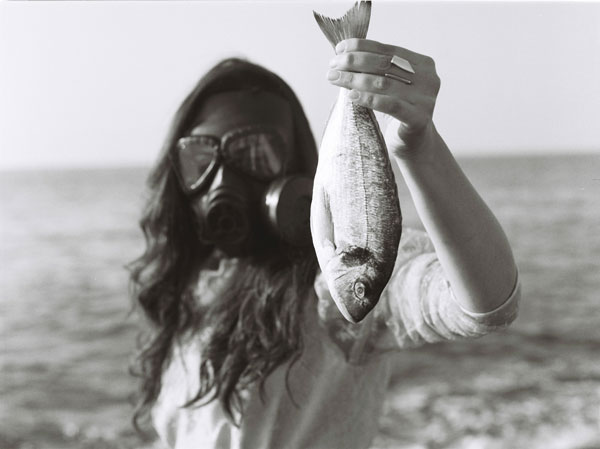
My short film ?syrrialism? is about a Syrian activist who took part of the protest and then arrested, to begin his trip with hallucinations and dreams caused by the subconscious mind of a man saw a large amount of crimes in a short time, but he did not give up hope and still sticking to his dream of free future. In this film I mixed some consequences of our revolution like pain, creating, starving, traveling, and souls meeting..
I own a furniture store in Damascus, began photography in 2003, mostly black & white, all developed and printed in my dark room. in 2011 I participated in the peaceful protests against the Syrian regime , then i utilized my art for the sake of Syrian revolution, via photography page on Facebook called Syrrialism (Syria+ Surrealism) always anonymous for my safety. In the end of 2012, I?ve been kidnapped and tortured by the FSA (free Syrian army) accused of being a leader of a pro Assad militia ! After being released and healed, I got other threat so i traveled with my family to Lebanon, and start making short films. My films are produced by small NGO with tiny budget, but it helps me expressing my vision as an artist and an activist, in order to continue my non-violent contribution and not living the destiny of Syria in the hands of the warlords
Pedro Costa
The Rabbit Hunters
Experimental fiction | betaSP | color | 23:0 | Portugal | 2007
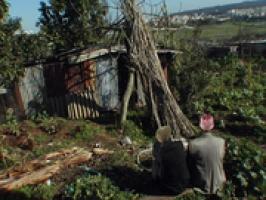
Fontainhas is a lost community, a shanty-town on the outskirts of Lisbon. This film shows the day-by-day stories of the residents eager for the new, better life announced with its promises of warm comfort and economic growth. We see characters like Virgilio who asks himself if he really needs another refrigerator, Benvindo and Maria who break-up and Isabel who cant`t take it anymore.
Pedro Costa graduated from the Escola Superior de Cinema in Lisbon and followed classes by the Portuguese actor Antonio Reis. He directs his first film in 1987, "Cartas a Julia", shortly followed by a television serie for children in Portugal. Being strongly influenced by Frierich-Wilhelm Murnau, he directs in 1989 "Le Sang", although praised by critics, the drama does not satisfy him. "La Maison de Lave" in 1994 confirms the talent of this Portuguese director in the eyes of cinema professionals. It is then that he develops his work's characteristic: aesthetics flirting with mannerism, varied black and whites very well studied, recurring themes such as what is sordid and filthy while sublimating them. His taste for blood and cold violence shines through again in "Ossos" in 1997. Critics see in him a comeback to a cinema of origins, legacy of silent cinema. The film was awarded a prize in Venice and Belfort. In 2000 he signs "Dans la Chambre de Vanda"narrating the downfall of a junky. Costa's aesthetics transform this dark story into a filmic poem. "Ou gît votre sourire enfoui?" is a tribute to the directing couple Danièle Huillet/Jean-Marie Straub. "One has to risk himself on every frame, is what Antonio Reis said. (one has) To risk one's life in each frame, in each moment, each actor's intonation. If not, cinema is useless. To me, it is fundamental for a film to be useful."
Pedro Costa
Minimo macho, minimo Fêméa
Fiction | dv | color | 37:0 | Portugal | 2005
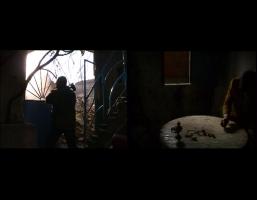
Consisting of double projections of footage from Costa?s film "No quarto da Vanda", the installation "Minimo macho, minimo fêméa" provides a view alternating between exterior scenes and the respective interiors of houses in Lisbon?s Fontainhas neighborhood. It thus documents and illustratively intensifies the existence of immigrants from the former colonies in a calm and clear way.
Noé Cottencin
Reality and Fiction
Experimental fiction | mov | color | 10:20 | France, Netherlands | 2021
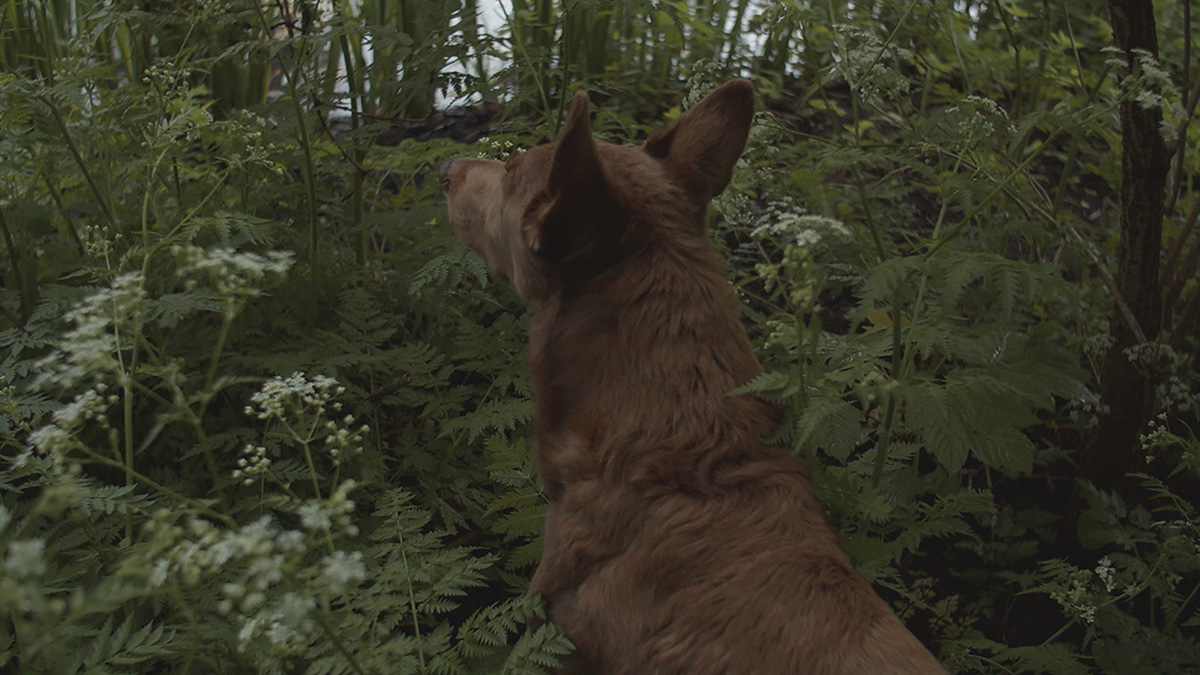
Un chien, une fille, des adolescents et d’autres créatures fantastiques font l’insurrection de leur vie quotidienne à travers des marches dans la ville, des détournements d’espaces et autres actions à travers lesquelles ils observent et transforment la réalité et le monde autour d’eux.
Noé Cottencin (France, 1994) a étudié l’image en mouvement à l’Académie Gerrit Rietveld et au Sandberg Institute. Son travail, à travers des récits qui prennent différentes formes (dessins, films, interventions, publications), s’intéresse principalement à la mise en commun des individualités. Il vit et travaille à Amsterdam et Los Angeles.
Noé Cottencin
Life
Experimental fiction | mov | color | 5:0 | France, Netherlands | 2022
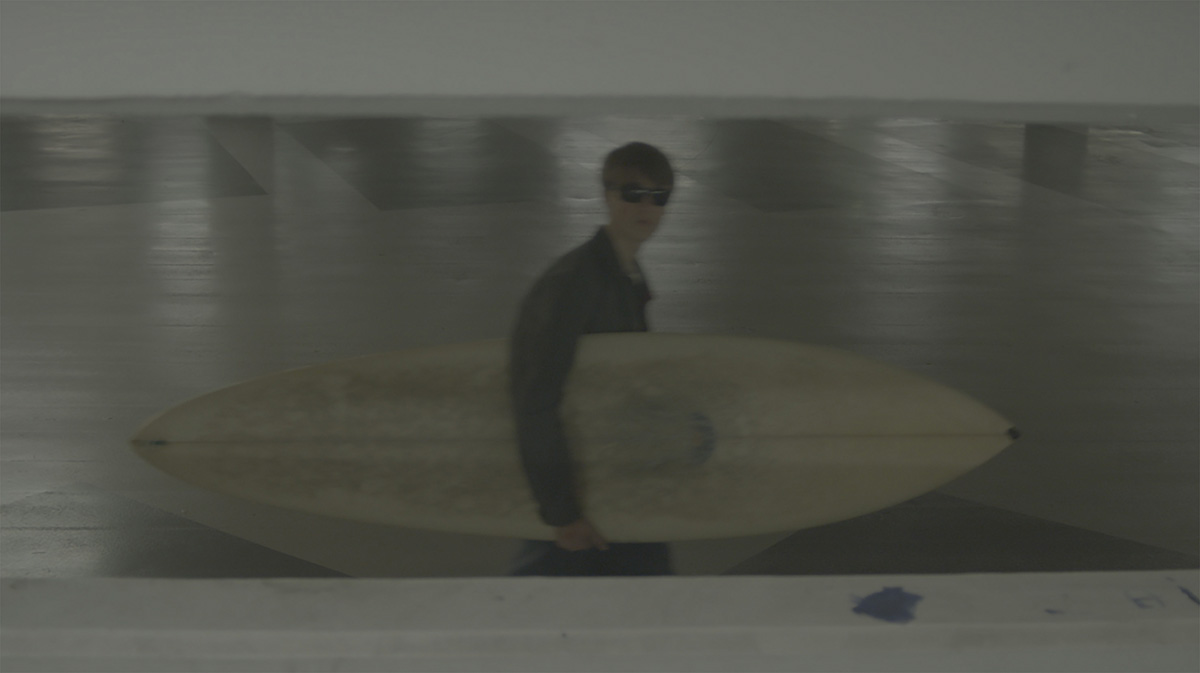
LIFE « Post-disaster logbook. Everything begins in a garage. We had imagined there were no cars here, only surfboards and gardening tools. We couldn’t hear anything anymore because of the explosion. Only a sort of constant ringing in our ears. We had to learn how to listen again. » Life is a story taking place after a mysterious collapse were everything has to be reinvented. Here, there is no need to work, blankets are shared for warmth, and a parking lot is transformed into a playground from where life can restart. In this strange world, people look for a wave underground and listen to Marc Bolan all day long… A FILM BY Noé Cottencin WITH Milla Sikora, Xavier Warming, Simone Avalon, Morris Draijer, Noé Cottencin, Clément Gingreau, Katerina Lymar CAMERA Sam Broekman, Noé Cottencin EDITING Noé Cottencin Produced with SoundImageCulture 2023, with support from Sabam for Culture, Stichting Stokroos, and NL Film Fonds.

Laure Cottin Stefanelli
Double You Double You
Experimental film | hdv | color | 17:53 | France, Belgium | 2019
Within a few years, through the practice of bodybuilding, Yukio Mishima, a Japanese writer, metamorphosed from a creator of words into a "creature of words." Charles Gaines, an American writer and journalist, compares the bodybuilder to a sculptor of his own flesh. How does work, sport, cultural and sexual norms define one's body and identity? How do we determine our own image, and through which dilemmas do we go about to achieve this? "Double You Double You" reenacts the stages of a bodybuilding competition. Jennifer Teuwen* is the only athlete to compete and the camera is her only audience. The film stages the Scopic Drive - watching being watched endlessly - and offers a visual and auditory, sensuous and sensorial exploration of Jennifer's body. * Jennifer is a Belgian professional bodybuilder, champion in the category of "Women's Physics," and the most muscular woman according to the IFBB (International Federation of Bodybuilding).
Laure Cottin Stefanelli is a french visual artist and a filmmaker based in Brussels and Paris. Through her films, photographs and installations, she pursues a research around stories focused on characters inhabited by paradoxical tensions – life, death and erotic impulses – those resulting from the separation between mind and body. Her work had been exhibited and screened at venues including États Généraux du Film Documentaire (Lussas, FR) ; KANAL – Centre Pompidou (Brussels, BE) ; Belo Horizonte International Short Film Festival (BR) ; Kasseler Dok Festival (Kassel, DE) ; Moscow Biennal (RU) ; Art Brussels (BE) ; FIDMarseille (FR) among others. Her first medium-length film « No blood in my body » received the short film prize at Écrans Documentaires d’Arceuil (FR). She has completed several residencies including the Hoger Instituut Voor Schone Kunsten, HISK (BE). Laure Cottin Stefanelli studied literature and cinema at the University of Paris III and graduated in Photo-Video from École des Arts Décoratifs de Paris. Since 2018, she teaches at École d’Art de La Cambre in Brussels, Belgium.

Pierre Coulibeuf
Doctor Fabre Will Cure You
Experimental fiction | 35mm | color | 60:10 | France, Belgium | 2013
Synopsis Fictitious portrait of the Flemish artist Jan Fabre, based on his diary and his performances. The film?a modern fairy tale?projects Jan Fabre into his own imaginative universe and composes a character who changes ceaselessly identity, plays numerous roles under the most varied disguises; behind a mask, still another mask? The female character, like a ?demon of passage? using different faces, haunts the male character and inspires his metamorphoses, ad infinitum. The concepts of the work are repetition, simulacrum and metamorphosis, in essential relation as much with Jan Fabre`s oeuvre as with my own. Metamorphosis means the transition from one form to another, from one intensive state to another, from one identity to another, or from one universe to another. The work as `transposition` ?the ?performance` form turns into a cinema form? new creation. ?Existence simulates, it dissimulates, and it dissimulates that, even when dissimulating and playing a role, it continues to be authentic existence, thus binding the simulacrum to genuine authenticity with an almost inextricable malice.? Maurice Blanchot.
Film-maker and visual artist. Lives in Paris. Pierre Coulibeuf develops a cross-disciplinary project: he makes experimental fictions that skilfully invest the sphere of art and in which changes of identity affect the universes and artists inspiring his works. His films are shown in cinemas as well as, recomposed, in the form of installations (video-photo) in museums. Coulibeuf?s works are part of main public collections. The main concepts of his works are doubling, simulacrum, metamorphosis, labyrinth, reality as fiction or mental projection. Coulibeuf has had solo exhibitions all over the world: in Germany, Deichtorhallen, Hamburg (2006); in Portugal, Museu Colecçào Berardo, Lisbonne (2010); in France, Musée d?Art Moderne de Saint-Etienne (2009); Musée d?Art Roger-Quilliot, Clermont-Ferrand (2013); in Brazil: Iberê Camargo Foundation (2009); in Russia, Museum of Contemporary Art, Perm (2011); in China : MOCA, Museum of Contemporary Art, Chengdu (2012) ; Yuan Space, Beijing (2013), and group exhibitions: in Brazil, 5th Mercosur Visual Arts Biennial (2005); in Russia: 1st Ural Contemporary Art Biennial (2010); in Germany, Haus der Kunst (2012)? In 2013, Coulibeuf has been nominated for the AAC China Award (Most influential foreign Artist in China, with Warhol, Marcel Duchamp, Araki, Shirin Neshat).
Pierre Coulibeuf
PAVILLON NOIR
Experimental fiction | 35mm | color | 24:0 | France | 2006
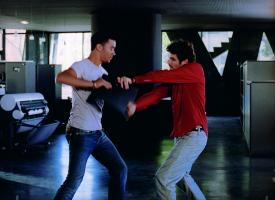
Parodic fiction by Pierre Coulibeuf based on choreographic proposals by Angelin Preljocaj. The seven characters who move in the architecture of Rudy Ricciotti?s Pavillon Noir break shamelessly with the codes of choreography and cinema: contamination, overflow, distance, - fiction tests reality.
Born in Elbeuf (France). Lives in Paris. Film-maker and visual artist. (Doctoral studies in Modern Literature-thesis on Pierre Klossowski and Leopold von Sacher-Masoch). Pierre Coulibeuf uses contemporary creation as material for his cinematic and artistic work. In a cross-disciplinary relation to film genres (fiction, experimental...), as well as to modes of presenting the image in motion (35mm screening, video-installation, photography), his works invent a place and a language on the borderline of the other arts, critiquing established forms and questioning representations of reality. Since 1987, he has made short and feature-length films based on the universes of Pierre Klossowski, Michelangelo Pistoletto, Marina Abramovic, Michel Butor, Jean-Marc Bustamante, Jan Fabre, Meg Stuart, Angelin Preljocaj, Benoît Lachambre... His films have been selected in many international film festivals (fiction, experimental, video art). A retrospective of his films : ?The Demon of passage? conceived by French Ministry of Foreign Affairs, is touring worldwide. Pierre Coulibeuf makes video-installations with his films and photographs in the contemporary art network. In 2005, he has been artist invited in the International Pavillion of the Bienniale of Contemporary Art of Mercosul, Porto Alegre (Brazil). In 2006, he had a few solo exhibitions in Germany, specially in Deichtorhallen-Haus der Photographie in Hamburg. In 2007, he was part of the opening exhibition of Berardo Museum in Lisboa (Portugal). In 2008, the Iberê Camargo Foundation in Porto Alegre (Brazil), commissioned him a film and a video-installation, for an exhibition in June 2009. His works are part of main public collections. (1993- Leonardo da Vinci Grant from the French Ministry of Foreign Affairs for a residency in Italy (Cinema) 1995-96- Artist in residency at the Center of Contemporary Art of the Domaine de Kerguéhennec, Brittany, France 2001- Chevalier de l?Ordre des Arts et des Lettres (Knight of the Arts and Literature?s Order)).
Pierre Coulibeuf
Who's Meg Stuart (in Who's who? Series)
Art vidéo | 35mm | color | 7:46 | France | 2006
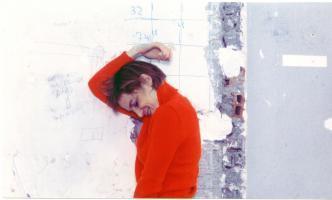
The subject?s fiction / the fiction?s subject. About the idea of ?portrait?: the constantly evolving subject, fluctuations of identity, metamorphosis, the dissolution of the self; the space between images: a shift from the social image, the status of the artist, to imaginary images. "We are a plurality that has imagined itself a unity" (Nietzsche). The question of representation: images as simulacra: interpretations: pure inventions. Cross-disciplinarity: the ambiguity or uncertainty of identities, but also of artistic codes. Inventing a place ?on the frontier?: between the language of cinema and the language of video.
Pierre Coulibeuf was born in Elbeuf, France. He is a filmmaker and plastician and lives in Paris. Contemporary creation is the basis of Coulibeuf's cinematographic and plastic work. In a transversal approach to various genres of cinema (fiction, experimental), as well as with different modes of presenting motion pictures (projection 35mm, installation, video, photo) his work invents its own place and language at the boundaries of disciplines. They criticize established shapes, question different representations of reality. His work is out of the norms, off limits and one of his kind. He has had a few exhibitions in Germany, notably at the Deichtorhallen-Haus of Photography in Hamburg in 2006, also in 2005 in Brazil, at the international Pavilion of the 5th Mercosul international biennale of contemporary art in Porto Alegre. In 2007 he had an exhibition for the opening if the Berardo Museum in Lisbon, Portugal.

Yves Coussement
Insert the name of the city here
Art vidéo | dv | color | 9:5 | Belgium | 2005
These days, reflections on the future generally dwell on a commercial or global economic context. The extent to which various cities present themselves, on an innovative and globally competitive scale, on the internet via PowerPoint presentations serves to illustrate this statement. The starting point in "Insert the Name of the City Here" is the fact that each of these PowerPoint presentations consists of the same topics and structure: a slogan that is placed on a standard background, accompanied by a logo. The apparently naive and utmost dogmatic technique becomes even more dubious as a video sequence displays these pages one by one as each presentation is read aloud by a series of tourists.
Yves Coussement, born in 1978, in Ghent, Belgium, studied Engineer-Architecture at the Department of Architecture and Urbanism at the University of Ghent, Belgium, from 1996 to 2001. After a brief period of working for the architect Luc Deleu, he decided to fully concentrate on his own work as a video artist. His work has recently been shown at video festivals like Image Forum Festival (Tokyo) and Transmediale Festival (Berlin), where his video "Insert the Name of the City Here" received an honourable mention. He is currently working on two new videos that he recently shot in New York and Mexico City.
Cindy Coutant, Théo Pozoga
OH FAT BABY
Experimental doc. | mp4 | color | 14:14 | France | 2023
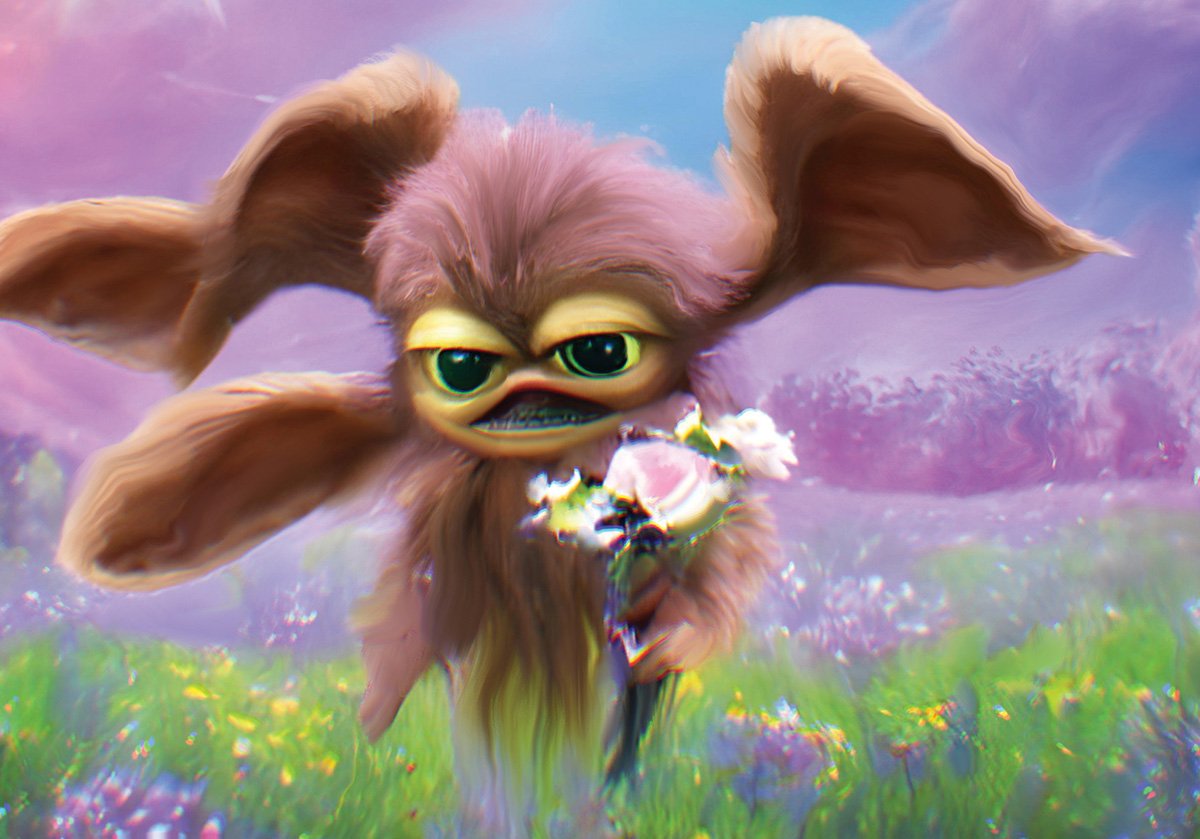
Should we clap at the future or cry about it? OH FAT BABY is a musical film-essay that claps in rhythm with the buffon inventions of our time and pins down civilizational patriotism and its big cannibal babies. Through borrowed images, the film sketches the portrait of a dysfunctional technological culture whose whims are deadly pranks.
Cindy Coutant is a visual artist and researcher. Her work focuses on the desire of the living to connect with beings and things and the co-evolution between species or techno-species. Her installations, films and augmented readings dismember Western technological narratives and add to them a missing imaginary in which technology is revealed as non-instrumental, slimy, erotic and indefinite. Her practice-led research sets up a genealogy of the minor critique of technology to actualize our relationship to the future. It addresses the anxiety of bodies and the indeterminacy of effects as crucial issues for capitalist industry, but also as the foundation of another technological narrative. Her work has been shown in Europe, North-America and Asia, in places such as Ars Electronica, Linz; Mamco, Geneva; Queer Sicilia film festival, Palais de Tokyo, Paris; SPOT, Taipei; Berlin Porn Film Festival, Berlin; CPH:DOX, Copenhagen; The Living Art Museum, Reykjavik; La Maison de la Littérature, Québec; and received the CIC prize for contemporary art (2018); Award of Distinction (computer animation) at Ars Electronica (2019); a digital revelation mention by ADAGP (2020). //////////// Theo Po?oga is an electronic musician and sound artist who explores concepts of affect, time and space by mixing both so-called popular sound material and experimental methods of composition and broadcasting. His audiovisual works have been exhibited in Berlin at Gr_und, the French Institute, the Haus Der Statistik as well as in the Center For Unfinished Business installed among others at the Transmediale 2020 exhibition. He collaborated with Cindy Coutant for the musical creation and sound design of her film "Télédésir" in 2018 as well as for her performances known as "augmented readings" at Printemps de Septembre in Toulouse in 2018 and at Gaité Lyrique in Paris in 2022. Théo Po?oga is currently at the Institute for Art in Context as part of the UDK Berlin. He is also co-founder of the collective W.E.L.T.
Nicky Coutts
Passing Place
Experimental video | dv | color and b&w | 24:0 | United Kingdom | 2009
Passing Place (2009) is set at a remote crossroads in the North East of England. Scenes from six feature films, where significant moments occur at crossroads, are re-enacted by local people who live or work nearby and know the location well. Re-visited excerpts from Oedipus Rex, (Paolo Pasolini, 1967); Down By Law, (Jim Jarmusch 1986); Cool Hand Luke (Stuart Rosenberg, 1967); Castaway, (Robert Zemeckis 2000); Divine Horsemen: The Living Gods of Haiti, (Maya Deren, 1985) and The Discreet Charm of the Bourgeoisie, (Luis Buñuel, 1972) show people hiding from the law, getting shot, killing members of their own family, performing voodoo rituals; all in this one location. Crossroads are traditionally where life-changing decisions are made. Seen as unhallowed ground in most Western cultures, they represent a threshold between the worlds of the real and the imaginary, the living and the dead. Although familiar with the location, participants in Passing Place have a fragile relationship with the unrehearsed parts they are asked to play. The film exposes non-professional actors in the process of adopting roles, relating to the stories of others, intuitively presenting their own version of events.
Nicky Coutts (b. 1968) works primarily with film, video and photography, but also with sculpture and installation. Her work often contains elements of collage, or the reuse of materials such as film clips, paintings and photographs. Her work has been shown widely in the UK and internationally. She was awarded a six-month scholarship at Künstlerhaus Schloss Balmoral April-Oct 2010. Her work was also shown during 2010 at Ha Gamle Prestegard, Havegen, Naerbo, Norway; Doris, Stedefreund, Berlin; Es War Einmal Ein Papegei?, Künstlerhaus Schloß Balmoral, Germany and Multichannel, Artsway, UK. The solo show Millions Like Us at Danielle Arnaud Contemporary Art, London (Nov 5th- Dec 19th 2010) features film works and photographs made over the past 2 years. Her work often engages with the complicated perceptions one culture might have of another. ?A Tower in the Minds of Others?, commissioned for Tatton Park Biennial (2008), was a stack of three English garden sheds reminiscent of a pagoda, overlooking the Japanese Garden. In 2011 she returns to Japan for a 3 month residency to make a film at Youkobo Artspace, Tokyo. Coutts has an MA from Chelsea College of Art and a Phd from the Royal College of Art, London. www.nickycoutts.com
Daan Couzijn
Buried in the Rain
Performance | 0 | | 1:52 | Netherlands | 2020
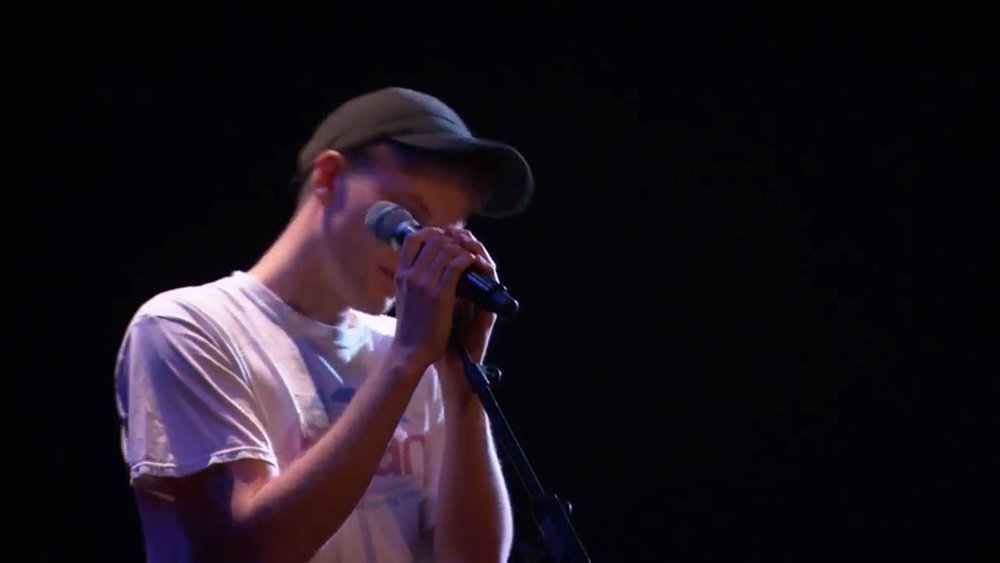
"Buried in the Rain" opens a minimalist sound space where the artist own voice unfolds, singing the possibility of memory and questioning our identity.
Daan Couzijn (Haarlem, 1994) is a multidisciplinary artist currently based in Amsterdam. After having studied singing at the Conservatory of Music in Rotterdam, he continued his studies at the Institute of Performative Arts in Maastricht where he graduated with a BA in Performance Art. Concluding his education, Couzijn graduated in June 2019 from a Post-Graduate program (Radical Cut-Up department) at the Sandberg Institute in Amsterdam, where he received the title of MA in Fine Art and Design. Couzijn is a creative all-rounder - musically skilled with a very strong eye for visual aesthetics who focuses on authenticity, existentialism and the way external influences (in particular digital influences such as social media) shape us. Often using the richness of the internet and the possibilities of technology as an inspiration for his works, Couzijn believes that every idea, every creation, is a combined effort of everything we?ve ever witnessed and experienced. Besides working as a professional actor/performance artist, he performs live with his own music under the pseudonym of Cousin. As Cousin, he creates minimalistic, electronic music combined with his own angelic vocals. More recently he also started exhibiting several audio/visual- ánd kinetic installation works, often using video and other digital media as an expressing tool.
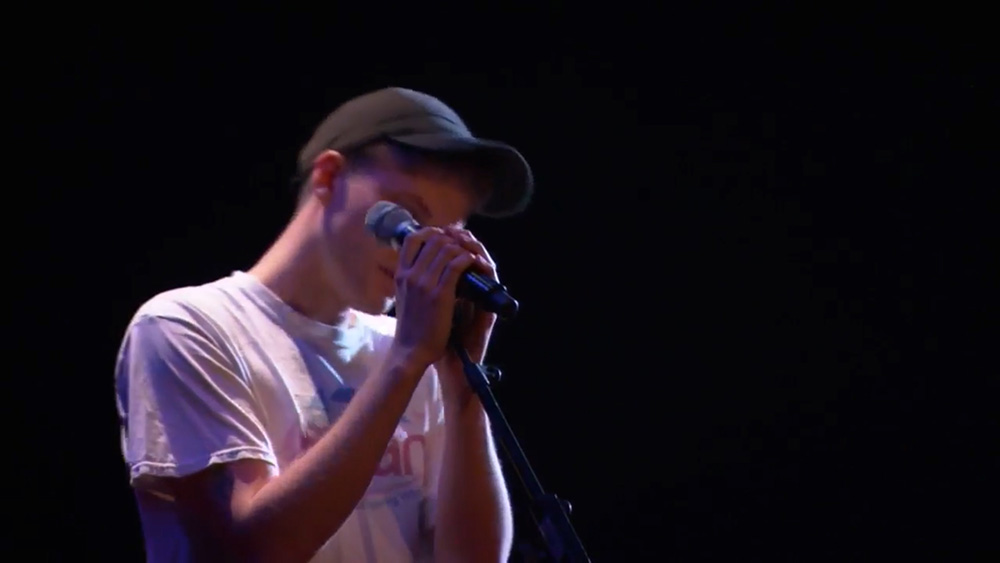
Daan Couzijn
Blood
Performance | 0 | | 5:0 | Netherlands | 0
Daan Couzijn (Haarlem, 1994) is a multidisciplinary artist currently based in Amsterdam. After having studied singing at the Conservatory of Music in Rotterdam, he continued his studies at the Institute of Performative Arts in Maastricht where he graduated with a BA in Performance Art. Concluding his education, Couzijn graduated in June 2019 from a Post-Graduate program (Radical Cut-Up department) at the Sandberg Institute in Amsterdam, where he received the title of MA in Fine Art and Design. Couzijn is a creative all-rounder - musically skilled with a very strong eye for visual aesthetics who focuses on authenticity, existentialism and the way external influences (in particular digital influences such as social media) shape us. Often using the richness of the internet and the possibilities of technology as an inspiration for his works, Couzijn believes that every idea, every creation, is a combined effort of everything we've ever witnessed and experienced. Besides working as a professional actor/performance artist, he performs live with his own music under the pseudonym of Cousin. As Cousin, he creates minimalistic, electronic music combined with his own angelic vocals. More recently he also started exhibiting several audio/visual- ánd kinetic installation works, often using video and other digital media as an expressing tool.