Catalogue > Search
Results for : Tout le catalogue
Franziska Cordes
sans titre, O.T.
Video installation | | | 1:35 | Germany | 2007
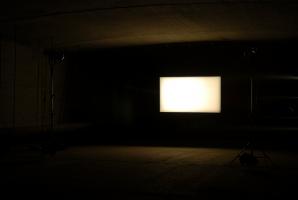
Untitled (Against any uncertainty and discouragement of the ideal pioneers of reform and contrareform) Installation | Phosphorus Screen | 2 Spots | Audio | 2007 From the Mirage series (Concrete Garden) The screen, a wooden tablet covered with phosphorus, becomes near endlessly filled with light ? and reflects it again in the dark. The video projector projects no information, rather the screen itself saves the information of light. The image remains absent in a tragic comic way. The other side of the free hanging screen appears in the dark through backlight of the flood lamps. Two Sine waves careen, a seemingly continuous scale descends, the two tones cross over and into each other receding in opposite directions. The idea of a beginning and an end, extreme opposites and progression, becomes replaced through rotating illusion. Any sort of image remains, regardless of the deliberately constructed, continuously ascending expectation, absent. Whoever comes is the right people. Whatever happens is the only thing that could have. Whenever it starts is the right time. When it?s over it?s over. Just give me a call if you feel like it! The installation is inherently a socio-cultural psychogram and indicates a running stand still, which through its ironic breaking down of a medial illusion shows an unnerving state of condition and threshold of fear, thereby establishing the origin of the series Mirage (concrete garden).
Franziska Cordes was born in 1979 in Hannover, Germany. 2001-2006 she studied Virtual Realities and Fine Arts at Kunsthochschule Kassel with Bjørn Melhus. Currently Cordes graduates the Postgraduate Programme ?Audio Visual Media Arts? at the Academy for Media Arts in Cologne. Since 2004 she participated at numerous international Exhibitions and sceenings, as 2007 at Kunst- und Ausstellungshalle der Bundesrepublik Deutschland and 2006 at Kunstverein Hannover. Since February 2008 she is deputised by Arsenal Experimental Berlin and Gallery Sandra Bürgel Berlin. Cordes lives and works in Cologne. The videos from Franziska Cordes appear at first glance to destruct the senses, yet on closer inspection they establish a unique subtleness, in which the most personal issues of an individual become fragmented as if in a strudel or spectacular world: Cordes thereby stages her own person as protagonist of differing cultural codes, in order to approach a contemporary societal analysis. Her stories begin and end in the abstraction of a very personal experience. With her idiosyncratic, often contrapointal combination of picture and text, as in the larger meaning of cross-referencing, she succeeds the placing of a seemingly shattering discentrism, Like the dance of a dervish this rotation of the sence refers to a center, which promises to open the personal mystery. Within her work Franziska Cordes does not try to reproduce reality but to create pictures, which grasp the real of reality in an associative room of thinking. Thereby her stories are often interrupted, undercut or neutralized and become a status of the speeding stagnancy. This self-conscious destruction of linear conclusiveness and a climax-oriented, narrative motion in this case does not prove to be just the manifestation of the pretended collapse of the communication system in the age of communication. Rather they describe those processes of association and dissociation causing an eternal metamorphosis of sense. Franziska Cordes debates personality as a nomads provoking spirit, which tries to find the self concept by dissemination through and by the use of media. In her current project Franziska Cordes concentrates on the search for the significant source of pictures/images, for the production of her structures, her specific language, and their reduction to her pure materiality. Thereby she intends to convict her previous filmic work into an installation (sculpture) to analyse the concrete instances, in which identitiy is taking place. These installations are moving psychograms of a standstill showing the picture of an oppressive state of fear of embarking on something new in terms of deconstruction and recontextualisation. Thereby they form a starting point for Mirage (concrete garden), a series constructing essential scenarios of fear and harassment in different ways. Bjørn Melhus
François Cormier
Débat
0 | 0 | | 0:0 | Canada | 2005
L?organisme Champ Libre (fondé en 1992) qui ?uvre maintenant dans les domaines de l?image en mouvement, des arts électroniques, de l?architecture et de l?urbanisme a emprunté son nom à l?histoire récente du Québec. En effet au moment de la fondation de l?organisme en 1992, François Cormier l?un des co-fondateurs, cherchait un nom à donner à ce nouvel espace de réflexion et de diffusion artistique qui émergeait à partir de l?effervescence de rencontres avec d?autres co-fondateurs issus du milieu de l?architecture, des arts visuels, de la philosophie, de la littérature et de l?urbanisme. À cette époque ce collectif définissait son action entre autres par le besoin de regrouper les forces de ses co-fondateurs et proposer de nouvelles façons de voir, d?entendre et de comprendre. C?est au hasard d?une visite dans une librairie de livres usagés du plateau Mont-Royal à Montréal en 1991 que fut découverte une édition ancienne et originale de la revue de cinéma québécoise CHAMP LIBRE ayant existé dans les années soixante-dix le temps de quelques numéros. L?édition no 1 de cette revue clamait en 1971 que : ?il consiste à donner aux colonisés que sont les Québécois les images d?eux-mêmes qui leur manquent, à reconquérir un reflet volé et à proposer des schémas d?analyse et de lutte. Inutile de dire que CHAMP LIBRE participe à ce combat. C?est la force éditoriale de ces propos et le désir, la volonté de faire revivre le nom inspirant de cette revue de cinéma d?auteur qui a fait naître dans sa continuité le nom de l?organisme CHAMP LIBRE que l?on connaît aujourd?hui.
CHAMP LIBRE * (fondé en 1992) est un diffuseur et un laboratoire artistique nomade qui présente des événements in situ, s`insérant dans la communauté et mettant en relation les pratiques contemporaines de l`art, de l?architecture, de l?urbanisme et des nouvelles technologies.

Juliette Corne
La Starosta
Video | 4k | color | 15:0 | France | 2024
Dans l'Est de l'Ukraine, la route M03 relie Kharkiv au Donbass, marquant l'ancienne ligne de front de 2022. Le long de cette route, une station-service carbonisée accueille la réunion des habitants du village de Kamynka, détruit à plus de 90 %. Les bancs sont les caisses de missiles de l’armée russe, laissées après leur retrait lors de la contre-offensive de septembre. Malgré une tentative de rester rationnels et méthodiques, les tensions entre les habitants deviennent palpables, transformant la recherche de réponses en un véritable combat. Cette vidéo explore les conséquences de la guerre sur la population de l’Est, à travers la destruction matérielle, psychologique et relationnelle.
Juliette Corne est titulaire d’un diplôme national supérieur d’arts plastiques des Beaux-Arts de Paris. Son travail navigue entre l’art contemporain et le cinéma, explorant les évènements socio-politiques contemporains et leurs conséquences sur les représentations et les intimités. Attachée à révéler les mécanismes qui engendrent une normalisation de la violence, elle capte, à travers ses films, ses installations et ses photographies, des moments de vie qui continue malgré l’horreur et la guerre. Comment envisager l’espoir, l’amour ou l’avenir dans des situations où l’exil, la solitude et la peur cristallisent toutes les énergies vitales ? En questionnant les biais des point de vue occidental hégémonique, en transmettant une parole et des silences recueillis avec pudeur et sensibilité, elle sonde ces endroits où des formes de liberté se réinventent à travers l’imaginaire et où la rencontre avec l’autre devient possible.
Juliette Corne
Izioum
Documentary | mov | color | 4:18 | France, Ukraine | 2025
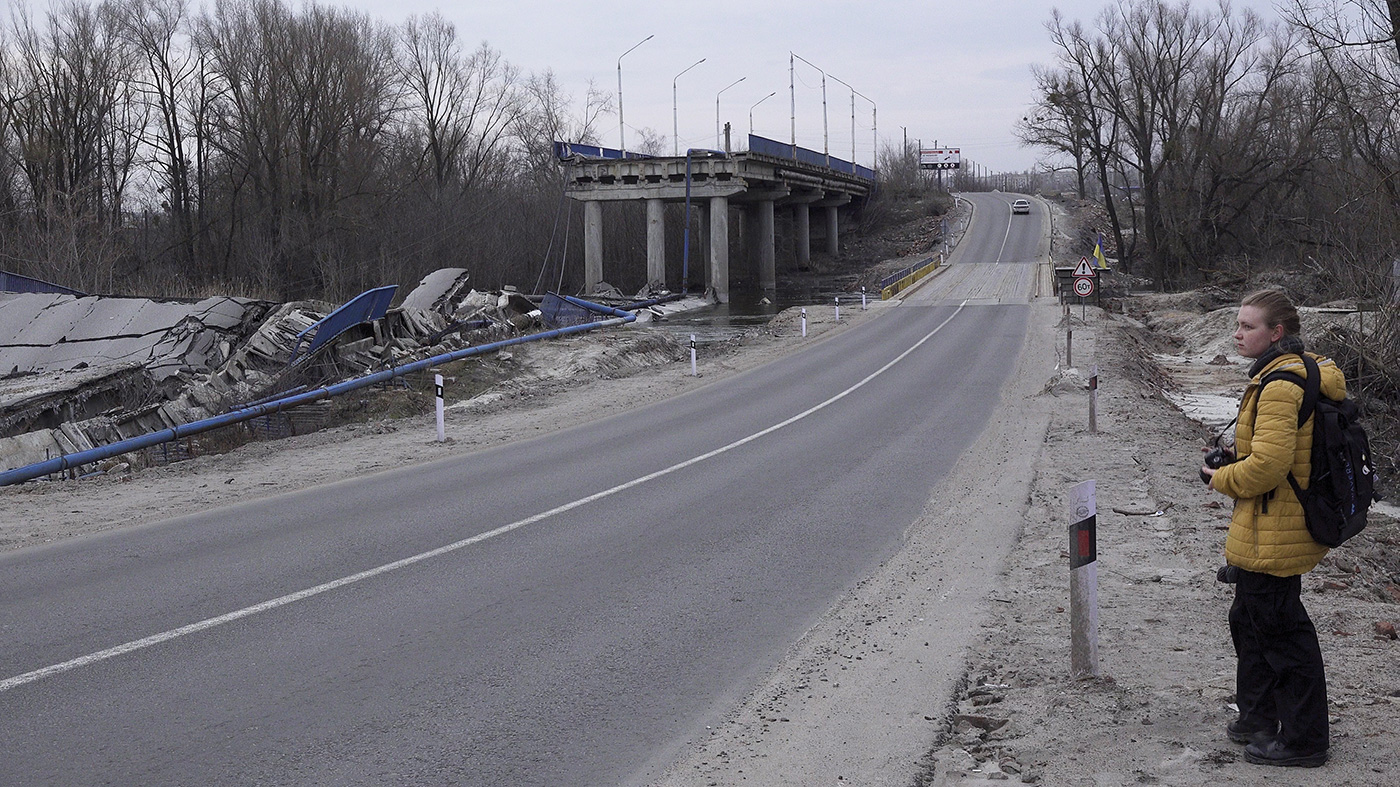
The central square of Izium, a few months after the city’s liberation. A hesitant camera pans over the traces of war, while residents resume their daily lives.
Juliette Corne holds a national higher diploma in visual arts from the Beaux-Arts de Paris. Her work navigates between contemporary art and cinema, exploring contemporary socio-political events and their consequences on representations and intimacy. Committed to revealing the mechanisms that lead to the normalization of violence, she captures, through her films, installations, and photographs, moments of life that continue despite horror and war. Zoé Monti
Juliette Corne
En Cours
Documentary | mov | color | 18:0 | France, Ukraine | 2022
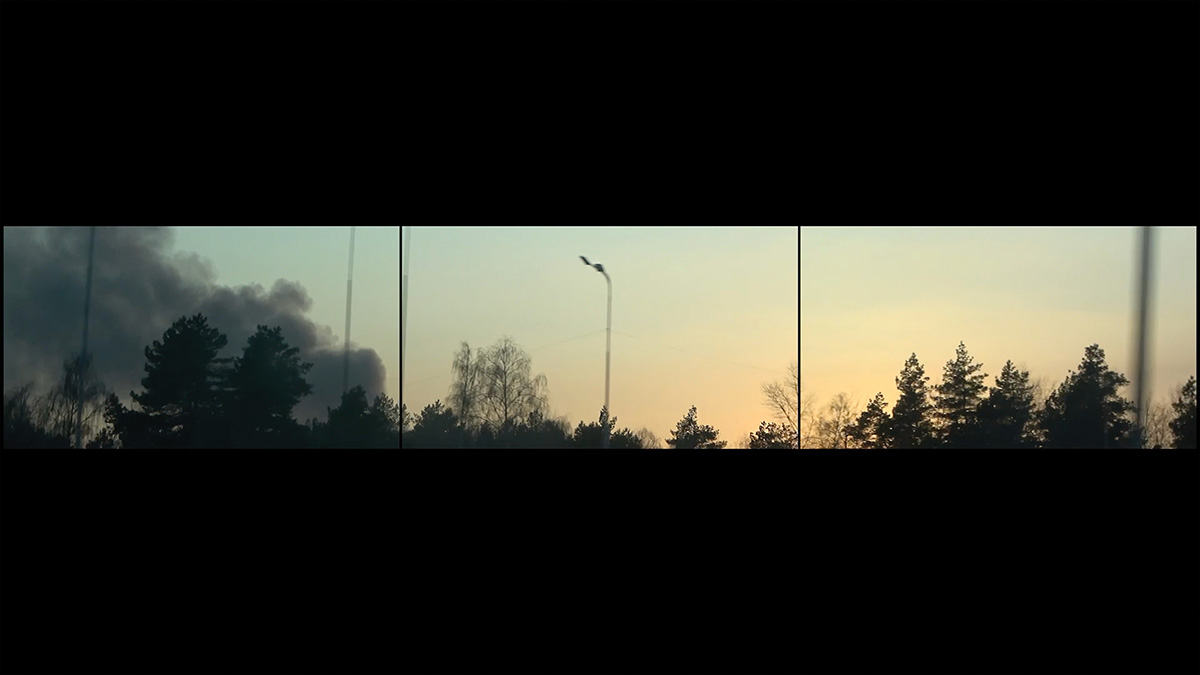
Mars 2022, l'invasion totale de l'Ukraine par la Russie a commencé depuis peu. De la frontière polonaise jusqu'à Kyiv, un parcours fragmenté se dessine. Du plein au vide, des corps en mouvement à l'absence, des sons stridents à la confusion entre le vent et les bombardements, les voix anonymes portent vers l'immensité d'un événement indescriptible.
Diplômée avec les félicitations du jury des Beaux-Arts de Paris en 2022, Juliette Corne est une artiste vidéaste. En 2018, en collaboration avec Laure Despres-Khatib, étudiante de l’EHESS, elle entame un travail documentaire autour de l’exil. Elles co-réalisent Oria, un film de 74 minutes tourné en 2021 dans le camp de Moria, sur l’île de Lesbos en Grèce. Plusieurs installations vidéos naissent de ces images. Pendant trois ans, elle suit les ateliers d'Angelica Mesiti et de Clément Cogitore. Elle fait ses débuts en tant qu'assistante de mise en scène sur le film Goutte d’or de ce dernier, puis poursuit avec le film Le Lycéen de Christophe Honoré. Parallèlement, elle s'investit au sein de l'association Atelier Ati, qui organise des résidences artistiques à Lomé au Togo. Elle demeure attentive aux politiques migratoires et reste engagée aux côtés des exilés en France. Peu après les premiers bombardements massif russes en Ukraine, elle se rend à la frontière polonaise, puis à l'intérieur du pays en tant que volontaire. Elle collecte des sons et des images qui donneront naissance au triptyque vidéo intitulé En Cours. Un projet documentaire autour de l’Ukraine est actuellement en développement avec Les Films de l’Après-Midi. Ce projet a obtenu la bourse Brouillon d'un rêve et participe aux Rencontres d’Août de Lussas 2023.

Giorgiomaria Cornelio, Lucamatteo Rossi
Nell'insonnia di avere in sorte la luce
Experimental doc. | mp4 | color and b&w | 27:0 | Italy, Ireland | 2017
"Nell`insonnia di avere in sorte la luce" is a journey between Italy and Ireland, an atlas of different languages and places that display the possibilities of contemporary cinema as a place of endless exploration. This movie (filmed mostly in Ireland, in archaeological sites of interest as Hill of Tara or Glendalough) is an attempt to present an idea of cinema before the invention of cinema itself, connecting the mythical Ogham alphabet (engraved on the surface of the stones) with the practice of experimental cinema (cameraless movies) and also with Italian avant-garde artists like Antonio Burri, Paolo Gioli, Corrado Costa, Emilio Villa, Stefano Scodanibbio, Osvaldo Licini. By doing that, Giorgiomaria Cornelio and Lucamatteo Rossi tried to create a map of meanings, inspired by Aby Warburg`s "Mnemosyne Atlas".
Giorgiomaria Cornelio (14th January 1997) and Lucamatteo Rossi (3rd December 1996) founded the atlas Navegasión in 2016. The same year they presented the film “Every bush a god that burns” on the 52nd edition of the International Film Festival of Pesaro and won the ISPEC CINEMA Special Award Locarno 2016 (the film has been also included in the selection of Rencontres Internationales Paris/Berlin 2018). In parallel with their second film (Nell-insonnia di avere in sorte la luce”), they curated the exhibition “Like the grave of a stone, like the cradle of a star” which was hosted in the Italian gallery Philosofarte, in the Marienbad Film Festival and in Trinity College Dublin, where they both study. They also collaborated with Franko B in the performance “Playtime” and the collective exhibition “Young at heart, old on the skin”. Giorgiomaria is also a writer. His articles have been published in blogs and magazines such as ArtNoise, Nazione Indiana, Le Parole e le Cose, Anterem, Il Manifesto, Il Tascabile, Doppiozero. He is the curator of the online film catalogue “La Camera Ardente” (The burning Camera).

Giorgiomaria Cornelio, Lucamatteo Rossi
Ubi Amor Ibi Oculus
Experimental doc. | mp4 | color and b&w | 24:30 | Italy | 2020
"Ubi Amor Ibi Oculus" is the last chapter of a "trilogy of the wanderers" and an investigation of the relationship between blindness, faith and cinema. As Diderot once wrote: "It is the first time that I write in the darkness […] without knowing if I form characters. Where there will be nothing, read that I love you".
Giorgiomaria Cornelio (1997) and Lucamatteo Rossi (1996) founded the atlas Navegasión in 2016. The same year, they presented the film “Every bush a god that burns” on the 52nd edition of the International Film Festival of Pesaro. Their "Trilogy of the wanderers" (2016-2020) has been presented in numerous festivals and venues, such as the Rencontres Internationales Paris/Berlin, the Marienbad Film Festival, the Asolo Film Festival, the Dublin Science Gallery and the Richmond Center for Visual Arts (Western Michigan University). They curated exhibitions, books and theatrical works. They also collaborated with Franko B in the performance “Playtime” and in the collective exhibition “Young at heart, old on the skin” (Palazzo Lucarini).

Giorgiomaria Cornelio, Lucamatteo Rossi
Ogni roveto un dio che arde (Every Bush a God That Burns)
Experimental film | hdv | color and b&w | 21:0 | Italy | 2016
A pilgrim awakes during the adolescence of the world and starts walking, proposing, like in the story by Jorge Luis Borges, to design the universe. Thus begins a film conceived as an invented hagiography, the discovery of a new memory, as well as a testimony of what one can experience making films today: a place of endless encounters, a promise of fidelity to the imaginal topography of the world. *** Source: Giorgiomaria Cornelio and Lucamatteo Rossi (authors and directors of the film)
Giorgiomaria Cornelio (14th January 1997) and Lucamatteo Rossi (3rd December 1996) founded the impressum Navegasión in 2016. The same year they presented the film "Every bush a god that burns "on the 52nd edition of the International Film Festival of Pesaro and won the ISPEC CINEMA Special Award Locarno 2016. Together they curated the exhibition “ Like the Grave of a Stone, Like the Cradle of a Star ”, which was hosted in Trinity College Dublin and inspired by their second film "Nell`insonnia di avere in sorte la luce." They also collaborated with Franko B in the performance "Playtime" and the collective exhibition "Vibrators". Giorgiomaria is also a writer. His articles have been published in blogs and magazines such as ArtNoise, Nazione Indiana, Le Parole e le Cose, Anterem.
Robbie Cornelissen
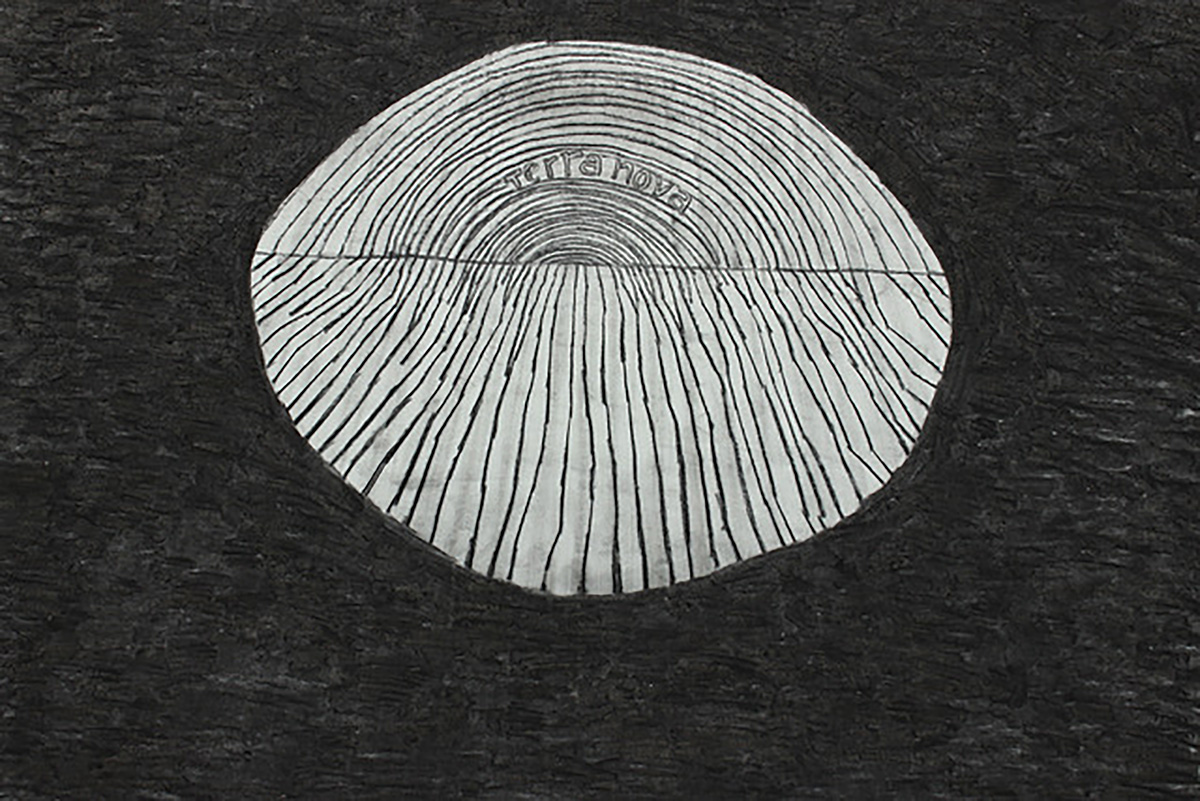
Terra Nova
Animation | mp4 | black and white | 17:10 | Netherlands | 2021
The film’s opening shot shows a bird’s eye view of what could be the earth, or are we looking at a drawing? We could say that after this intro, individual scenes appear to follow one another in an associative way, it shows elements and processes in a rapidly changing world on earth. The words ‘Absence’ and ‘Presence’ appear and flicker in the darkness like neon signs. We look at this play of creating and taking away, of drawing and erasing in the stop motion technique, that brings us in the transformation process of different scenes. At the end of the first part of the film a spaceship set off on a flight towards infinity. The vanishing point, the limit of the drawing’s perspective is our destination. The second part of the film we are in the cosmos and look at the development of a floating architecture, like a space station. This station clusters to its essence and sett off to a planet. In the final scene a human figure, an astronaut appears, stands up and walks towards an exit and dives, to disappear into the extra-terrestrial, floating and circling alone in the black mass.
Robbie Cornelissen ( Utrecht, The Netherlands, 1954) graduated In Biology at the University in Utrecht, and graduated in Fine Art at the Rietveld Academy in Amsterdam. He was teaching fine art at Artez Academy in Arnhem until 2020. Robbie Cornelissen (1954) is one of the Netherlands leading contemporary draughtsmen. Cornelissen made his name with virtuoso pencil drawings of futuristic interiors and urban landscapes in which memory and fantasy come together.The complex, vertiginous pieces draw the spectator into an illusionistic space that does not seem confined to the paper. Cornelissen is a kind of a researcher in the field of drawing. He is well known for his animation movies and public events around drawing. His animation project The Black Room was the winner of the special jury price of The Holland Animation Festival in 2015. In 2019 Cornelissen was working as a guest curator and artist for the exhibition ‘The Line Up’ , an exhibition around drawing with 100 artists for The Centraal Museum Utrecht. In 2022 Cornelissen made a solo exhibition ‘Terra Nova’ In the Kunsthalle Mannheim in Germany about the connection of his drawings and animation movies.

Robbie Cornelissen
The Number 9 Sessions
Animation | hdv | black and white | 8:36 | Netherlands | 2017
.
Cornelissen was born in Utrecht in 1954. He lives and work in Utrecht. Before practicing art, he studied Biology and Ecology. He attended the Vrije Akademie in Den Haag from 1982 to 1984 and then studied at Rietveld Akademie in Amsterdam from 1984 to 1987. He began his art career as a painter, but shortly switched to drawing, in which he developed a signature style of monumental drawings that show imaginary architectural spaces and enigmatic figures. His grid-like patterned drawings are not only part of paper-based work, but also come to life in 3-D in his animated videos. The highly detailed representations in Cornelissen's work examine the construction of space. He often creates a reality full of the strange and the familiar where the viewer becomes lost in a labyrinth of lines, rooms, and buildings.
Aladin Corovic
Drakstor
Experimental doc. | dv | color | 24:6 | Germany | 2006
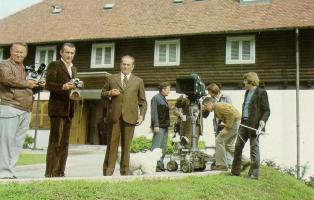
"Drakstor" (=drugstore) is a visual translation of the socio-political circumstances in a small Serbian village in the period of transition in the 90ths, combining the existence of a small shop keeper and founder of the communist party Josip Broz Tito (KPJBT), with the figure of TITO himself. The scenario transposes this micro cosmos to another location, to another system, and to another time. Part 1 of the project "The Ballads of Echec" is based on video takes shot in 1999 and on interviews made shortly after the NATO bombardment of Serbia and the end of the war in Kosovo.
Aladin Corovic was born on 04.05.1977, in Novi Pazar, Serbia. He 2000 he studied at the Kunsthochschule in Kassel, Germany, and in 2003 he studied Virtual Realities with Profossor Bjorn Melhus. His exhibitions include: 2001 "Echolalia" (with Penny Yassour); Kulturbahnhof Kassel/ Kunstverein; 2002 "Real Presence" Museum des 25. Mai (ex- Tito Museum) Belgrade, Serbia, by Biljana Tomic and Harald Zeeman; 2003 "Mega America" Galerie Loyal, Kassel; 2004 "Cetinje Biennale" Cetinje, Montenegro, by Rene Block and Natasa Ilic; "Soylent Green" Museumsnacht, Kassel; 2005 "Kunstmesse Karlsruhe" (Galerie Anita Beckers), Karlsruhe; "EMAF-European Media Art Festival", Osnabrück; "Visual Games" Contemporary Art Festival, Varna, Bulgaria; "Privacy 101" Grand Hotel Londres, Istanbul, Turkey; 2006 "Colaboration on Site", Kiasma, Contemporary Art Museum, Helsinki, Finland, by Mika Hannula and Mary Jane Jacob; "Art, Life & Confusion" October Salon, Belgrade, Serbia, by Rene Block.

Daniel Santiago Cortés
84
Experimental doc. | super8 | color | 13:22 | Colombia | 2020
Today in Colombia, the last peace agreement shatters to pieces and violence takes over the country. Two films shot in 1984, lost for more than thirty years, come to light together. 84 drags the viewer between fiction and documentary through this cursed reels, into a divided country, between cities and countryside, condemned by a dark omen of repetition and death.
Filmmaker and producer of documentary cinema, his work focuses on experimentation with film archives around the notions of history and memory in Colombia, questioning official truths against hidden accounts. He directed the shorts ELAN (2014), MEMORIES (2016) and 84 (2020), he is producer of the feature documentary The reasons of the wolf (2020). His documentary short AVALANCHA (2021) and his first feature Espejos Rotos (2021) are in post production stage.
Eli Cortiñas
Confessions with an open curtain
Video | hdv | | 5:25 | Spain, Germany | 2011
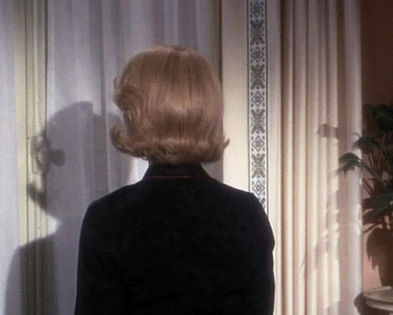
As in previous works, the video which is based on found-footage, deals with the construction of female identity, as well as with the portrayal of pictorial details, the interpretation of the specifics of a dramaturgic scene and the relevant film scenography. Things which within the context of film history are already ?embedded? in the film material and could thus be overlooked, are brought to the forefront. Paradoxically the supposed confessional referred to by the artist is described as having an open curtain, in contrast to the usual situation in the Catholic Church where its confessional booths consist of a dividing wall and a curtain. The curtain has long been regarded as being at the beginning, an item which veils and conceals. In the baroque and bourgeois theatre of the 18th century it is accorded a particular power, which gives it an active role. Not only does it announce the play, it becomes a figure itself, with its folds, movements and shades of colour, ranging from opaque to transparent. In Cortiňas? work the curtain turns into the central figure with its individual sounds, sweeping size and physical characteristics. In front of it and behind it are blonde women, allowing the viewer only to look over their shoulders. Cortiňas utilizes this motif from Romanticism which permits the female figures to be made anonymous as well as be typified, seeming to merge into one. Alongside the women we gaze out of the window into the distance, into the past, into the future, celebrate the nostalgic image of the romantic idea of inner freedom and are halted by the rasping voice of a mature woman: Every woman has a career ? the career of being a woman. Cortiňas approach to the re-enactment of the longings of her mostly female heroines, who reveal their supposed confessions in a collage of sounds, and in excerpts, is accompanied by an aesthetic reflection, in the sense of an ?atmospheric? perception. The pictorial-compositional and narrative excerpts which occur simultaneously provoke us into completing the ellipses in the visual and the content. Through the distance to the usual cinema experience ? the linear dramaturgy is constantly interrupted both on the levels of image and sound ? Cortiňas confronts the viewer with completely different versions of the individual motifs. She creates a layer of desires, most of which turn out to be unrealistic. The goal as an endless pipe-dream.
ELI CORTIÑAS Born 1976 in Las Palmas de Gran Canaria/Spain. Lives and works in Berlin and Cologne/ Germany. 2003-2008 Academy of Media Arts Cologne, Prof. Matthias Müller, Prof. Marcel Odenbach 2001-2002 European Film College, DK AWARDS / GRANTS 2011 Shortlist Award for young Film Art, Freunde der Neuen National Galerie und Deutsche Filmakademie 2009 Promotion Prize NRW 2009 for Media Art, Düsseldorf/ Germany Winner of the 19th Art Students Competition by the States Department for Education and Research, Kunst- u. Ausstellungshalle der Bundesrepublik, Bonn/ Germany Short List Nomination for the Columbus Art Foundation Project, Leipzig/ Germany 2nd Price NRW Competition at the International Filmfestival Oberhausen/ Germany 2008 Nominated for the German Short film Award in Gold for experimental film, Berlin/ Germany 2005 Promotion Price of the Big Art Exhibition North Rhine-Westphalia, Düsseldorf/ Germany 2001 Grant from the Film foundation MSH, Lübeck/ Germany EXHIBITIONS 2011 Street Girls Bringing Sailors In Must Pay In Advance I + II, Michael Wiesehöfer Gallery/ Haus Im Süden, Cologne/ Germany Dorothea, Ancient & Modern Gallery, London Based Around Babusch, Babusch Art Project, Berlin What a pity, it was indeed a great city, Van Bau Gallery, Vestfossen, Norway The New Rhineland. The Post-ironic Generation, Museum Morsbroich, Leverkusen/ Germany (C) BIWAK III, Eli Cortiñas, Jürgen von Dückerhoff, Diango Hernández, Alexander Lieck, Anthony McCall, Thom Merrick, Richard Allen Morris, Trevor Paglen, Peter Piller, Thomas Zander Gallery, Schmidt Maczollek Gallery, Michael Wiesehöfer Gallery, Cologne/ Germany 2010 Hypercinema!, Les Rencontres Internationales, Centre Pompidou, Paris/ France (C) The New Rhineland. The Post-ironic Generation, Museum Morsbroich, Leverkusen/ Germany (C) Saw it & Loved it # 4: Saw it, Loved it # 4: Better living with... From young collections, Museum Ludwig, Cologne/ Germany New Positions, Art Cologne, solo booth, Michael Wiesehöfer Gallery, Cologne/ Germany (C) (Solo) The excitement of ownership, Waldburger Gallery, Brussels/ Belgium (Solo) The sky is burning, 6 positions towards collage, Rupert Pfab Gallery, Düsseldorf/ Germany 2009 Liste Basel, Basel/ Switzerland (C) (Solo) Dial M for Mother, Michael Wiesehöfer Gallery, Cologne/Germany (Solo) Footloose, Waldburger Gallery, Brussels/ Belgium Moon Star Love, Marcelle Alix Gallery, Paris/ France +10/ Shortlist Columbus Art Foundation Project, Halle 14, Spinnerei Leipzig/ Germany (C) Regarding Düsseldorf 4, Düsseldorf/ Germany (C) Art Students Competition Exhibition, Kunst- u. Ausstellungshalle der Bundesrepublik, Bonn/ Germany (C) 2008 Cinéma Revisité, Centre Pompidou, Paris/ France (C) Documental: Contemporary Video Art from Europe, Guggenheim Gallery, L.A./ U.S.A. 13. Marler Video Art Price, Glaskasten Marl, Marl/ Germany (C) Lies. Nowhere. Between fiction and reality, exhibition screening, Museum for Contemporary Art Münster, Münster/ Germany (C) Recently seen and admired, Kunstagenten Gallery, Berlin/ Germany Minus Eins, Minus Eins experimental Lab, curated by Mischa Kuball, Cologne/ Germany Family Matters, Gallery NB8, Oslo/ Norway Zur Zeit, Künstlerhaus Bregenz, Palais Thurn & Taxis, Bregenz/ Austria There will be no funeral, e*raum, Cologne/ Germany (Solo) 2007 Rettung ohne Untergang, Deutzer Brücke, Cologne/ Germany CROPPED, Figge von Rosen Gallery, Cologne/ Germany 2006 Exhibition due to Promotion Price of the Big Art Exhibition North Rhine-Westphalia, Düsseldorf/ Germany (C) 2005 Köln Kunst 7, Cologne/ Germany (C) 5. Augsburger Art Lab (LAB 30), Augsburg/ Germany Guten Tag: Auf Wiedersehen, Rutgers Arts Center, New Jersey/ U.S.A. SCREENINGS 2011 Xperimenta, Xcèntric, CCCB, Barcelona (November 2011) IFFF Dortmund, Espressofilm, Viena, Austria 2008 ? 2011 Les Rencontres Internationales, Paris, Madrid, Berlin 2009 Norwegian Short Film Festival Grimstad/ Norway Reel to Real, Künstlerhaus Mousonturm, Frankfurt am Main/ Germany ZKMax showroom: Passage Maximilianstrasse, Landeshauptstadt München Kulturreferat in cooperation with ZKM Center for Art and Media Karlsruhe, München/ Germany 2008 CINÉMA REVISITÉ Centre Pompidou Paris/ France Int. Women Film Festival Dortmund, Panorama section, Dortmund, Cologne/ Germany "LUX" Max Ophüls Price, Experimental Film / Video, Saarbrücken/ Germany Short Cuts Cologne, Cologne/ Germany 2007 LOOP, video art fair, Barcelona/ Spain European Media Art Festival, Osnabrück/ Germany Int. Short Film Festival, Oberhausen/ Germany L´Alternativa, Barcelona/ Spain 2006 XXX Forum ? Video Art, Museum Ludwig, Cologne/ Germany Geladen: Videokunst", Junge Kunstfreunde, Museum Ludwig, Cologne/ Germany "Traveller auf Reise wohnen", Galerie Sammler, Leipzig/Germany 2003 Oldenburg Film Week, Oldenburg/ Germany Filmfest Augenweide, Kiel/G Germany Int. Leipzig Festival for Documentary & Animated Film, (Competition), Leipzig/ Germany Film Tournee Unterwegs, Germany 2002 Feminale, Cologne/ Germany Nordic Film Week, Lübeck/ Germany Mediawave, Ungarn Int. Women?s Film Festival, Seoul/ Korea CURRENT PUBLICATIONS/ PRESS ?TWIN ? Cinematic New Talents: Eli Cortiñas, Conrad Ventur, Angelika Markul and Ruth Hinkel-Pevzner ? by Freire Barnes, TWIN-Factory ,London, UK. ?Despite moments of clarity there is no ism in this book: 100 New Artists?, by Francesca Gavin, Laurence King Publishing, London, UK., coming out: September 2011 ?RISING: Young Emerging Artists?, by Julia Ritterskamp u.a., Herausgeber: Daab Verlag, Erscheinungstermin: Mai/ Juni 2011 GQ MAGAZINE, British Edition, ?Up and Coming Artists? by George Daniell, May 2011 MONOPOL, 1/2011 January, ?Komisch: Leverkusen predigt Postironie und die Generationsschublade klemmt?, Alexandra Wach, S.95 (http://www.monopol-magazin.de/drucken/artikel/2337/) Welt am Sonntag, 28. November 2010, ?Die neue rheinische Ehrlichkeit?, Christiane Hoffmans, S.48 MOFF ? Artists Magazine, 2/2010, ?Eli Cortiñas?, S.30-34 (C= Catalogue)
Eli Cortiñas
Dial M for Mother
Video installation | 0 | color | 11:30 | Spain, Germany | 2008
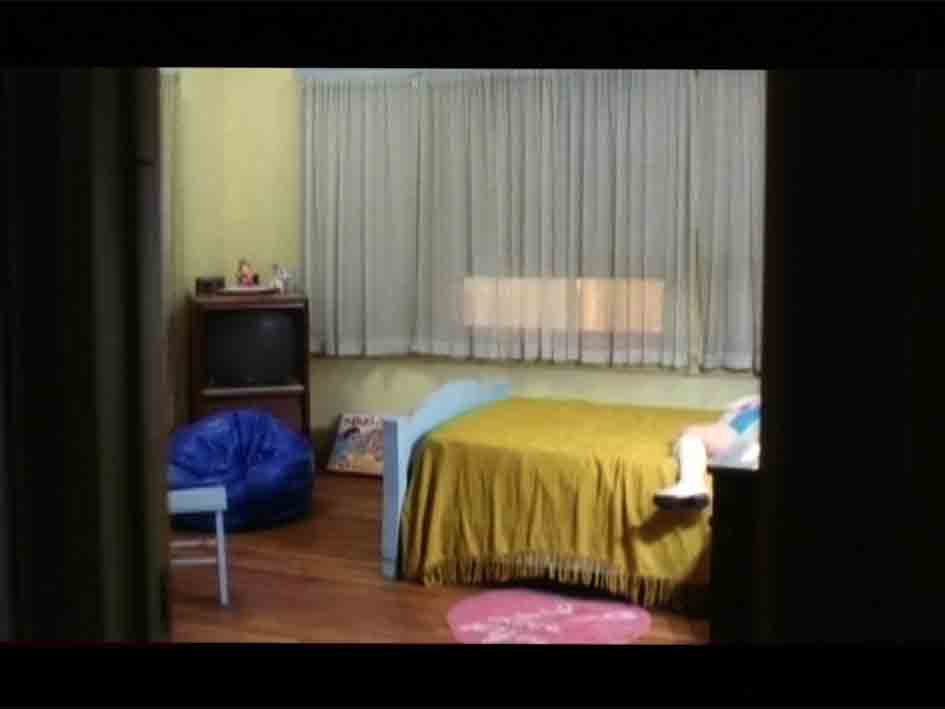
Dial M for Mother ? 2 channel video, 12:30 min/ loop A persisting phone ringing goes across Dial M for Mother and dominates the sound and visual scene as well as the figure of Gena Rowlands who fights while being chased by the persecuting ringing. A spanish voice is heard talking to her as someone who seems to be a mother. Eli Cortiñas Hidalgo presents in her final work at the Academy of Media Arts Cologne a fascinating tour de force throught the depth of human psychology. The mother-daughter conflict on the surface reveals himself more and more as the struggle of a human being longing for identity and autonomy as well as a role in life. A struggle which can either be win nor lost, within a vicous circle of a never ending life fight, with the attempt to find a solution by becoming a ?play? and rescuing himself from the emptiness directly into the stage floor. [...] Petra Pechtheyden
ELI CORTIÑAS HIDALGO Born on the 6th of April 1976 in Las Palmas de Gran Canaria, Spain. From 2003 - 2008 studies at the Academy of Media Arts Cologne with Prof. Matthias Müller and Prof. Marcel Odenbach (Diploma July 2008). From 2001 -2002 studies at the European Film College, DK awards/ grants Nominated for the GERMAN SHORTFILM AWARD 2008 in Gold for experimental film, Berlin Promotion Price of the BIG ART EXHIBITION NORTH RHINE-WESTPHALIA 2006, Düsseldorf Grant from the Film foundation MSH 2001, Lübeck film/ video I AM THE RABBIT!, 3 channel video, to be completed 2009 BIRD, CHERRY, LOVER, 2 channel video, to be completed 2009 DIAL M FOR MOTHER, 2 channel video, 2008 LOVERS ? ALL THE SAME IN FRONT OF GOD, 1 channel video, 2007 2 OR 3 THINGS I KNEW ABOUT HER, experimental film , 2006/ 2007 NO PLACE LIKE HOME, 2 channel video for monitor installation, 2006 FAMILIAR FACES, experimental film/ animation, 2003 BUÑUEL´S DREAM, experimental film, 2001
Eli Cortiñas
I‘ve Always Demanded More From The Sunset
Video | mov | color and b&w | 4:0 | Spain, Germany | 2022
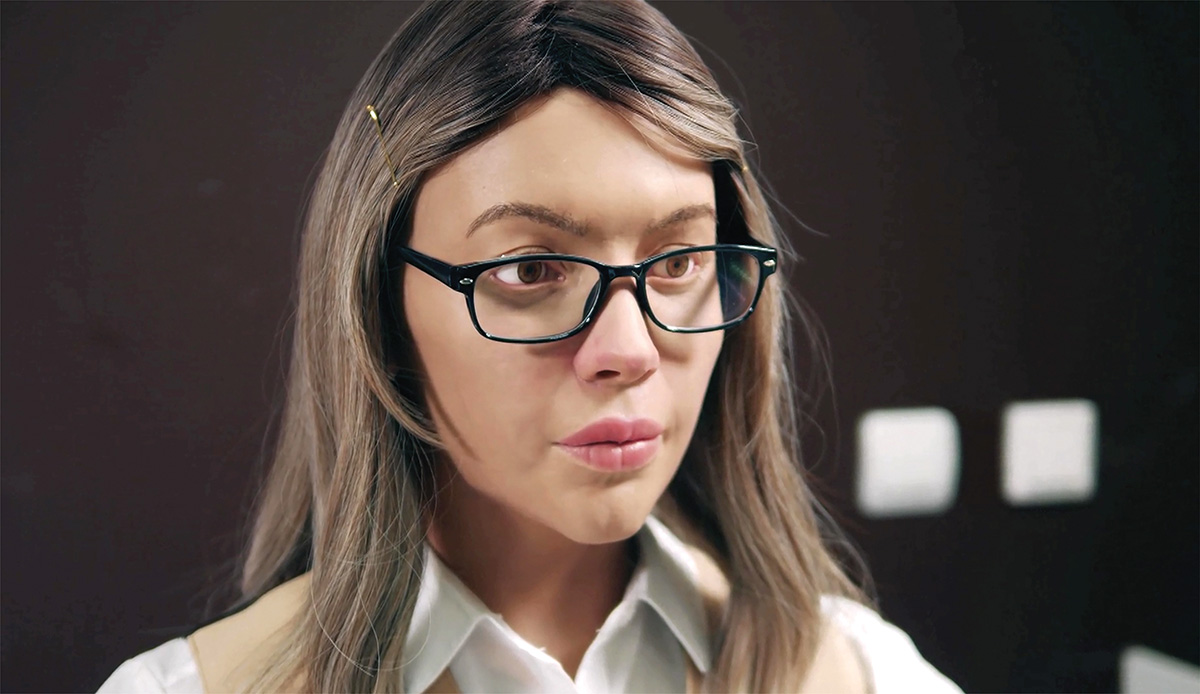
In the three channel video installation 'I’ve Always Demanded More From The Sunset' a mysterious female artificial intelligence warns us about humans being naturally drawn to killing. While navigating different sequences of breathing exercises to overcome fear and what seems to be an array of non human entities in a state of uncanniness and disbelief, different associations and questions beginn to appear: What stories lie in the forest? What arises in the ruins of man made devastation? An orchestrated symphony of mushrooms emerges from the ground like a poetic anticipation of post-human life.
Eli Cortiñas is a video artist of Cuban descent, born in Las Palmas de Gran Canaria. She was a guest professor at the Art Academy Kassel and the Art Academy Mainz and shared a professorship for Spatial Concepts with Candice Breitz at the University of Art Braunschweig from 2019 till 2022 Cortiñas has recently been appointed professor for Media Art at the Academy of Fine Arts Leipzig. She has received numerous grants and residencies, including Fundación Botín, Kunstfonds, Villa Massimo, Berlin Senate, Villa Sträuli, Goethe Institute, Kölnischer Kunstverein, Rupert and Karl Schmidt Rottluff among others. Cortiñas’ work has been presented in solo and group exhibitions at institutions such as Museum Ludwig, Kunsthalle Budapest, CAC Vilnius, SCHIRN Kunsthalle, SAVVY Contemporary, Kunstverein Braunschweig, Museum Marta Herford, Kunstraum Innsbruck, Centro Atlántico de Arte Moderno, Centre Georges Pompidou, Museum of Modern Art Moscow, Kunstmuseum Bonn and MUSAC et al., as well as in international Biennials and festivals such as Ural Industrial Biennial, Riga Biennale, Moscow International Biennale for Young Art, Mardin Biennale, International Short Film Festival Oberhausen, International Curtas Vila Do Conde and Nashville Film Festival et al. She lives and works in Berlin.
Eli Cortiñas
Quella che cammina
Video | hdv | color and b&w | 9:30 | Spain | 2014
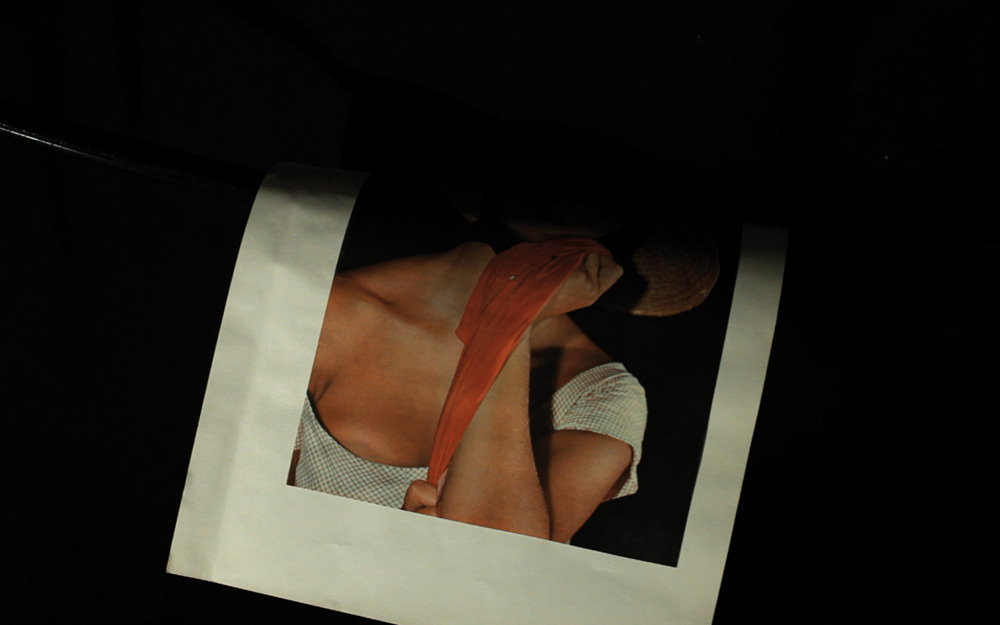
"The One Who Walks" ("Quella Che Cammina") is a central female character in Carlo Lizzanis contribution to the neorealist anthology film "L'amore in città" of 1953. Eli Cortiñas' unconventional filmic composition used this figure of an aging, impoverished prostitute as a nucleus an associative montage of self-filmed material, found footage and fragile sculptural constructions circle around to question her own role as a self-responsible individual, as a working class child, as a woman, as a daughter, as an artist.
Eli Cortiñas was born in Las Palmas de Gran Canaria, Spain, 1976. She studied at the Academy of Media Arts Cologne and has been awarded the Villa Massimo and the Karl Schmidt-Rottluft grant among others. Her work has been presented in solo and group shows at museums such as Museum Ludwig, Cologne, Kunsthalle Budapest, Museum Marta Herford, Kunstraum Innsbruck, Museum La Regenta and MUSAC, Spain, as well as in international festivals such as the 3rd Moscow International Biennale for Young Art, the 2nd Mardin Biennale, the 58th International Short Film Festival Oberhausen, the 20th International Curtas Vila Do Conde and the Nashville Film Festival. She lives and works in Berlin.

Eli Cortiñas
Vogel, Kirsche, Geliebte
0 | betaSP | color | 8:0 | Spain, Germany | 2010
A woman trapped in a vicious circle between redemption and ruin.
Eli Cortinas was born en 1976 in Las Palmas de Gran Canaria in Spain. He lives and Works in Cologne in Germany. From 2001 to 2002 he studied at the European Film College in Danemark, then from 2003 to 2008, at the Academy of Media Arts Cologne. He has been granted the Prize for Media Art NRW 2009, Düsseldorf, Germany. He made several movies, including the two channel vidéos "Bird, Cherry, Lover" (2010), and "No Place Like Home" (2006), the experimental movie "2 or 3 Things I knew About Her" (2006), the one channel video "Lovers ? all the same in front of G.O.D." (2007, the two channel vidéo "Dial M for Mother? (2008) and the one channel video ?FIN? (2009).
Pedro Costa
Ne change rien
Documentary | 35mm | black and white | 90:0 | Portugal | 2009
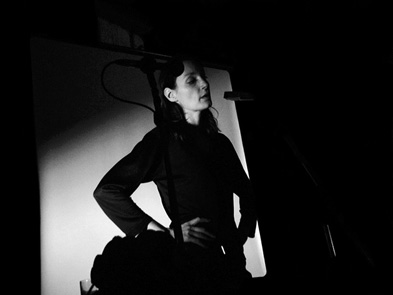
Ne Change Rien, expressing that he sought to make a film about the process of creating music. In so doing, he captured his friend, who, disillusioned with the caliber of roles offered to her as an actress, decided to pursue singing. With films such as Juventude Em Marche (Colossal Youth, 2006) and No Quarto da Vanda (In Vanda?s Room, 2000) the majority of Costa?s recent work has focused on the marginalised and poverty stricken in his native Portugal?so it is intriguing that Pedro Costa's new subject is French actress, Jeanne Balibar.
Pedro Costa (born 1959) is a Portuguese film director. He is acclaimed for using his ascetic style to depict the marginalised people in desperate living situations. Many of his films are set in a district of Lisbon inhabited by the socially disadvantaged and shot in a natural and low-key way that makes them resemble documentaries. While studying history at University of Lisbon, Costa switched to film courses at School of Theatre and Cinema (Escola Superior de Teatro e Cinema). After working as an assistant director to several directors such as Jorge Silva Melo and João Botelho, he made a first feature film O Sangue (The Blood) in 1989. He collected the France Culture Award (Foreign Cineaste of the Year) at 2002 Cannes International Film Festival for directing the film No Quarto da Vanda (In Vanda?s Room). Juventude em Marcha (Youth on the March, known as ?Colossal Youth? in Anglophone countries, and ?En avant, jeunesse? ? ?Onward, Youth? ? in Francophone countries) was selected for the Cannes Film Festival in 2006 and earned the Independent/Experimental prize (Los Angeles Film Critics Assossiation) in 2008.
Pedro Costa
Casa de lava
Fiction | 35mm | color | 110:0 | Portugal | 1994
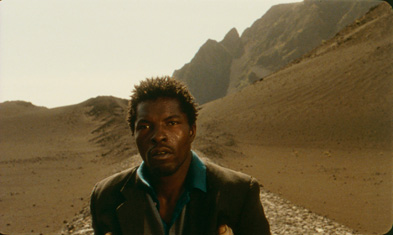
For his second feature film, from 1994, the Portuguese director Pedro Costa constructs a politically savvy homage to Jacques Tourneur?s 1943 horror film, I Walked with a Zombie, in which postcolonial decay is invested with both metaphysical and erotic allure. Leão (Isaach De Bankolé), an immigrant laborer in Lisbon, is knocked unconscious in an industrial accident; Mariana (Inês de Medeiros), a nurse, volunteers for the medical transport that repatriates the comatose man to one of the Cape Verde islands. She busies herself at the rustic hospital that has taken him in, but she quickly comes under the spell of the volcanic island?s loamy mysteries?many of which seem to revolve around the still inanimate man. Psychology takes a back seat to the overtones of history as Mariana finds herself growing increasingly involved with the family that lays claim to Leão as well as with a Portuguese émigrée, Edite (the French cult actress Edith Scob, from Eyes Without a Face), whose madness derives from social traumas of the local past. With a strikingly modern yet humanistic style, Costa elicits quietly declamatory performances from his remarkable cast (which joins nonactors and seasoned professionals) and creates moody, luminous tableaux to conjure an incantatory, Faulknerian earthiness.
Pedro Costa (born 1959) is a Portuguese film director. He is acclaimed for using his ascetic style to depict the marginalised people in desperate living situations. Many of his films are set in a district of Lisbon inhabited by the socially disadvantaged and shot in a natural and low-key way that makes them resemble documentaries. While studying history at University of Lisbon, Costa switched to film courses at School of Theatre and Cinema (Escola Superior de Teatro e Cinema). After working as an assistant director to several directors such as Jorge Silva Melo and João Botelho, he made a first feature film O Sangue (The Blood) in 1989. He collected the France Culture Award (Foreign Cineaste of the Year) at 2002 Cannes International Film Festival for directing the film No Quarto da Vanda (In Vanda?s Room). Juventude em Marcha (Youth on the March, known as ?Colossal Youth? in Anglophone countries, and ?En avant, jeunesse? ? ?Onward, Youth? ? in Francophone countries) was selected for the Cannes Film Festival in 2006 and earned the Independent/Experimental prize (Los Angeles Film Critics Assossiation) in 2008.
Pedro Costa
Minimo macho, minimo Fêméa
Video installation | dv | color | 37:0 | Portugal | 2005
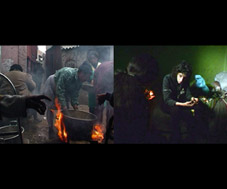
Consisting of double projections of footage from Costa?s film "No quarto da Vanda", the installation "Minimo macho, minimo fêméa" provides a view alternating between exterior scenes and the respective interiors of houses in Lisbon?s Fontainhas neighborhood. It thus documents and illustratively intensifies the existence of immigrants from the former colonies in a calm and clear way.
Pedro Costa
Où gît votre sourire enfoui
Documentary | 35mm | color | 104:0 | Portugal, France | 2001
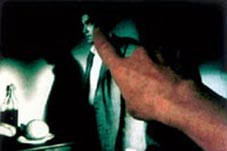
Pedro Costa films Jean-Marie Straub and Danièle Huillet during different steps of the editing of the film "Sicilia!" Jean-Marie Straub defines editing as a "struggle with the matter". Indeed, here there is an exhausting test of patience, because this document plunges us not in the general composition of central choices, but simply in an irksome work of connections. Each of them implies very small choices, which are decisive in each case for the overall meaning of the coming film. Pedro Costa dwells upon these constantly explored, slowed, flashbacked, immobilized images until he manages to produce an hypnotic effect. He also explores a dark laboratory's atmosphere, and then he includes, without explanation, two surprising sequences where the Sraub present their films to few spectators.
Pedro Costa graduated from the Escola Superior de Cinema (the Film School of the National Conservatory of Lisbon). He took lessons with the Portuguese actor, Antonio Reis. In 1987 he produced his first short film, "Cartas a Julia", then soon after a series for children for Portuguese TV. Very influenced by Friedrich-Wilhelm Murnau, in 1989 he made "Le Sang", a drama acclaimed by the critic, but that did not satisfy him absolutely. "La Maison de lave" in 1994 confirmed the endowment of this Portuguese film maker from the point of view of film professionals, who reveal the features of his work: an aestheticism that comes closer with mannerism, various and very detailed blacks and whites, and recurrent themes like the woeful and the dingy, but a certain tendency to sublimate them. His taste for blood and cold violence are also in "Ossos" (1997). The critics analyze his style like a comeback to the origins of cinema, a heritage from the silent film. This work has been awarded at Venice and Belfort. In 2000, he made "Dans la chambre de Vanda", which relates the lowering of a drug addict. Costa's aestheticism changes this dark story into a filmic poem. "Où gît votre sourire?" (2001) is a homage to the filmmaker twosome Danièle Huillet and Jean-Marie Straub. "One has to take risks in each image; this is what Antonio Reis said. Even risking one's life in each image, in each moment, each intonation of an actor. Without this risk, cinema is useless. It is fundamental that a film is useful." - Pedro Costa