Catalogue > Search
Results for : Tout le catalogue
Michael Dietrich
zone of silence (scream machine)
Experimental film | hdv | color | 9:30 | Austria | 2025
The experimental film Zone of Silence (Scream Machine) explores the interplay between light, fog, and resonance to depict inner isolation and psychological disorientation. The city is enveloped in a dense atmosphere, while reflections of light and muffled sounds create a “zone of silence” in which orientation and communication begin to dissolve. Inspired by historical maritime navigation problems—where foghorns became inaudible under certain weather conditions—the film translates this phenomenon into the realm of the human unconscious. Theodor Reik’s psychoanalytic concept of the “zone of silence” serves as a central motif for repressed emotions and the difficulty of breaking through them. The closing sequence shows the fading inscription “EUROPA,” a bleak reflection on the continent’s political future. Through its dense atmosphere, a composition blending field recordings and synthesized sound, and the use of visual metaphors, the film offers a profound exploration of inner emptiness and the search for orientation.
Michael Dietrich (*1985, Vienna, Austria)studied social design at the HfbK Hamburg and Photography at the Academy of Fine Arts Vienna. His work explores the impact of human intervention on nature, often unfolding unsettling scenarios through video and acousmatic.

Vincent Dieutre
This is the end
Documentary | digital | color | 108:37 | France | 2022
On Facebook, I recognized him right away. 40 years after we met, we don't even know if it's a good memory. Despite the virus, I was able to join Dean in Los Angeles. Here everything is closed, and from Malibu to Watts, we let ourselves be crossed by the immensity of the city, in the momentum of the Mustang. Hold my hand tight, my beloved, the end has already happe- ned, everyone knows it in Hollywood, but now only poetry can reveal it.
After studying art history, Vincent Dieutre entered IDHEC (Fémis) in 1983. In 1989, he won the Villa Medici outside the walls in New York, and then lived in Rome and Berlin. After these years of drift, he returned to Paris in 1990 and wrote his DEA dissertation there (“Aesthetics of confusion” Paris III) before turning definitively to directing with Rome Désolée. Filmmaker, critic (la Lettre du cinema, les Lettres Françaises), he also often teaches in film and art schools in France and Europe (Paris VIII, HEAD, Fresnoy, la Cambre, etc.). Both do- cumentaries and autofiction nourished by music, painting, Queer culture, his work questions the links between the intimate and the collective but also the forms of cinema. His films have received several awards at international festivals.
Adam Diller
PROJECT 02
Experimental doc. | 4k | color and b&w | 67:40 | USA | 2025
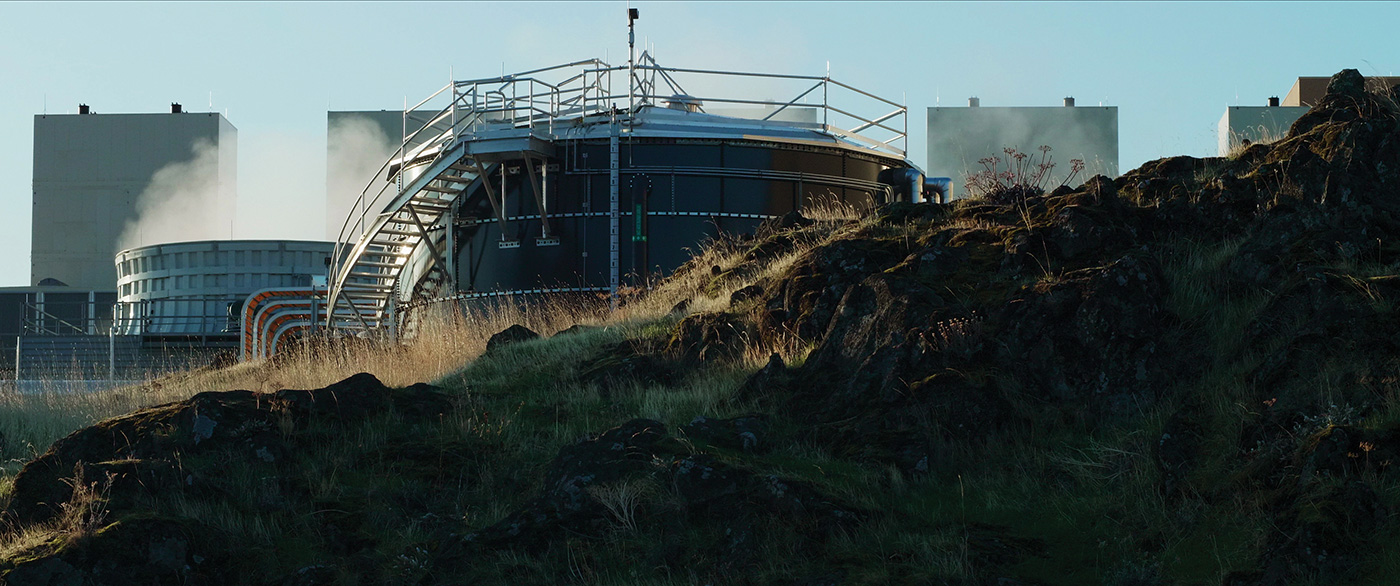
Interweaving archival audio, photographs, and films; eight years of visits to Google’s first hyperscale data center in The Dalles, Oregon; Google’s promotional videos; and encounters with local residents, PROJECT 02 untangles layers of power that underlie this Internet.
Adam Diller’s film and media works challenge our understandings of the ecologies, cultures, and media within which we live. He has exhibited internationally at venues including Anthology Film Archives, Big Sky Documentary Film Festival, Center on Contemporary Art, Susquehanna Museum of Art, Kassel Documentary Film and Video Festival, Athens International Film and Video Festival, Northwest Film Forum, Knitting Factory, Roulette, Issue Project Room, Sugar Refinery, and D-22. He has released music on labels including Line (12K), Locust Music, Gruenrekorder, DRAFT, Gift Tapes, and Present Sounds.
Igor Dimitri
Salsa
Experimental fiction | 16mm | color | 13:0 | Portugal | 2020
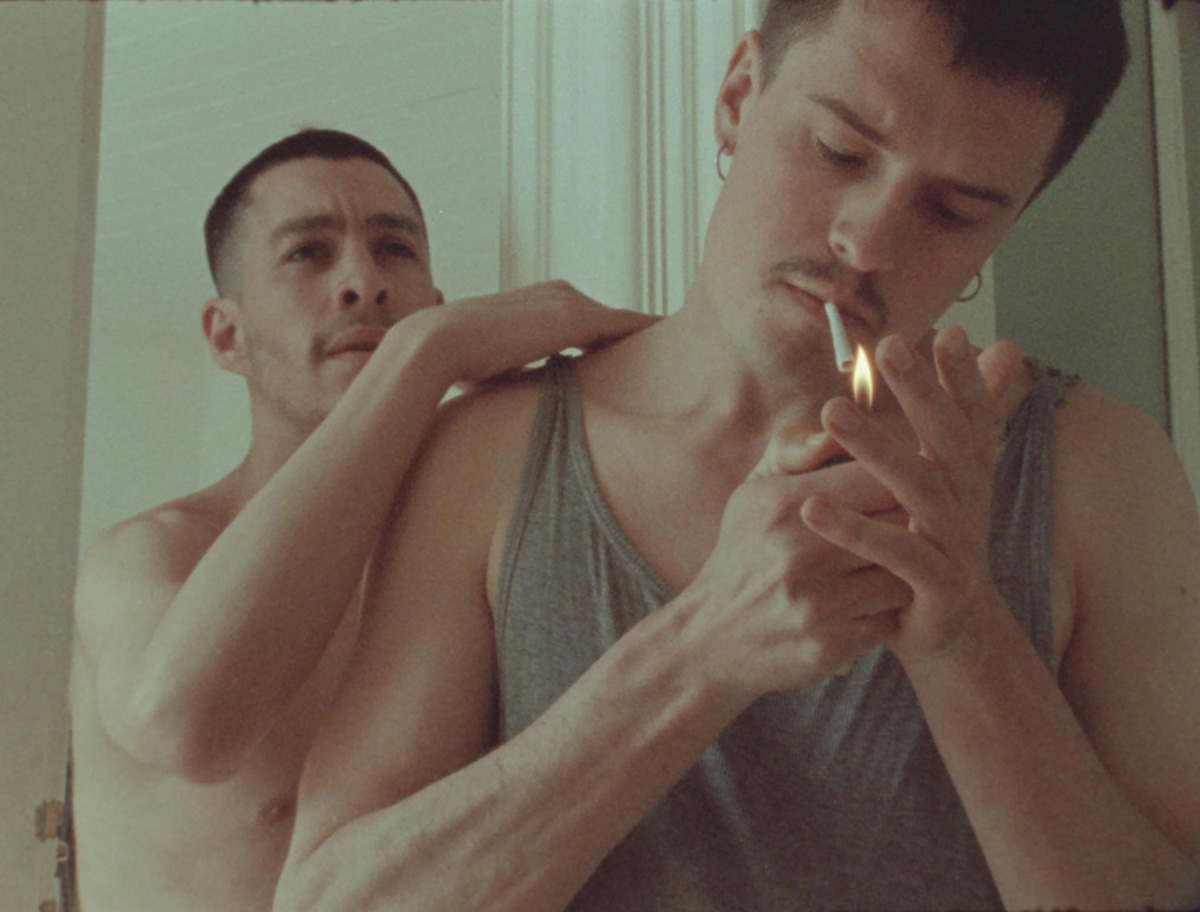
One Buenos Aires afternoon in the dominican hairdresser saloon, in which characters from different origins reunite around the musical feeling of the place. From dancers to performers and actors, clients and reggaeton singers.
MA in Documentary Cinema and Profesor Assistant at Universidad del Cine, Buenos Aires. PhD Candidate at University NOVA, Lisboa. Currently working on my first feature film. I'm interested in the notions of displacement, ritual and longing. In color, rhythm, body and mixing genres in a surrealist way.

Alice Diop
Vers la Tendresse
Documentary | 4k | color | 39:0 | France | 2015
This film is an intimate exploration of the male territory of a city commuter. By following the wanderings of a band of young men, we walk a world where female bodies are only virtual and ghostly silhouettes. The wanderings of the characters lead us inside everyday places (gym, building hall, parking lot of a shopping center, squatted apartment) where we follow the staging of their manhood; while in off voice, intimate narratives reveal unsuspected share their stories and their personalities.
Born in 1979 in Aulnay-sous-Bois (France), Alice Diop fell in the documentary, despite herself "It is the fruit of a happy meeting with an documentary of Eliane de Latour" meeting enabling it to achieve strength of messages that can be conveyed in documentaries and the possibility of crossing a sociological glance with a cinematic treatment. Alice is interested in people we do not see, she tells the cultural diversity. For Alice Diop, realize a good documentary is to "tell intelligent things by using an artistic and human way." Combating ideas to advance society. " Alice Diop passed a Master Image and Society and incorporates a writing workshop to Fémis, in Paris. Director for The Eye and Hand (France 5), she is the author of documentaries. Alice Diop is the recipient of the Stock Exchange "Author documentary" of the Jean-Luc Lagardère Foundation. It carries two 52 minutes in 2006, for example Clichy and the world tour. In 2007, "Senegalese and sénégauloises". In 2011, his film The Death of Danton earned him several selections in festivals and awards
Art Collective Disnovation.org
A BESTIARY OF THE ANTHROPOCENE
Video installation | 4k | color | 15:0 | France | 2025
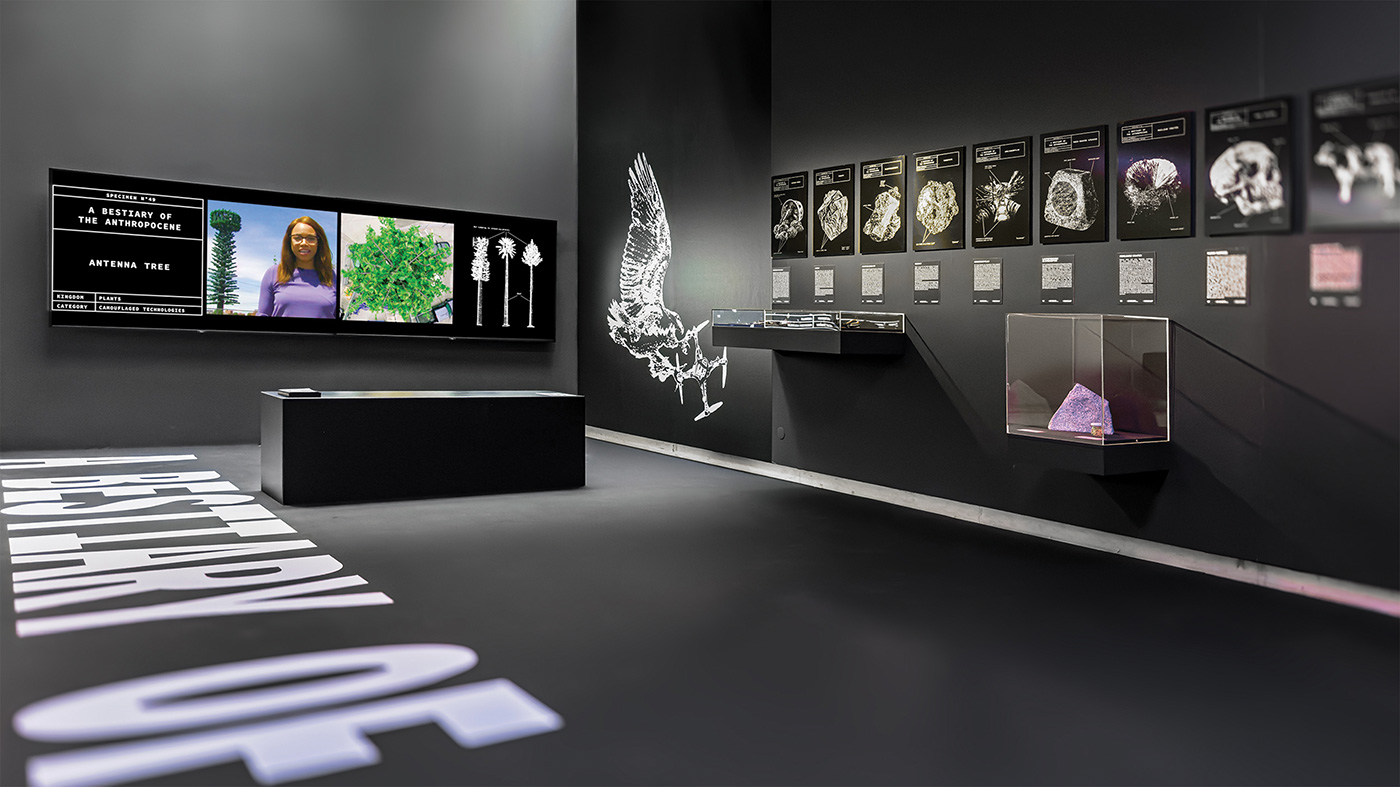
What happens when the consequences of human actions are so pervasive and profound that everything on Earth becomes artificial to some degree? This new 15-minutes video essay explores the most iconic specimens from A Bestiary of the Anthropocene book & research, combining video footage from around the world, this 2-channel video exposes the hybrid beings humans are now coexisting with in the Anthropocene era, merging in various forms and degrees the natural with the artificial. This new video work was commissioned by the Max Ernst Museum, and will be presented together with a large-scale installation featuring our full collection of physical specimens. BASED ON "A BESTIARY OF THE ANTHROPOCENE" BOOK 2021. An illustrated compilation of hybrid creatures of our time, equally inspired by medieval bestiaries and observations of our damaged planet. Designed as a field handbook, it aims to help us observe, navigate, and orient ourselves in the increasingly artificial fabric of the world. Plastiglomerates, surveillance robot dogs, fordite, artificial grass, antenna trees, Sars-Covid-2, decapitated mountains, drone-fighting eagles, standardized bananas… each of these specimens is symptomatic of the rapidly transforming “post-natural” era we live in. Often, without us even noticing them, these creatures exponentially spread and co-exist with us. A BESTIARY OF THE ANTHROPOCENE seeks to capture this precise moment when the biosphere and technosphere merge and mesh into one new hybrid body. What happens when technologies and their unintended consequences become so ubiquitous that it is difficult to define what is “natural” or not? What does it mean to live in a hybrid environment made of organic and synthetic matter? What new specimens are currently populating our planet at the beginning of the 21st century?
DISNOVATION.ORG merges contemporary art, research, and hacking to critically translate complex eco-social debates into operative and provocative exhibitions. They create radical artworks staged as large-scale laboratory experiments focused on energy, ecology, and economics, which act as catalysts for imagining futures that diverge from prevailing narratives. Their exhibitions, books, and videos have permeated cultural landscapes worldwide, fostering critical dialogue at the intersection of artistic, political, and scientific inquiry. They co-edited A Bestiary of the Anthropocene with Nicolas Nova, an atlas of anthropic hybrid creatures, and The Pirate Book, an anthology on media piracy. DISNOVATION.ORG’s works have been exhibited, performed, published, and reviewed internationally, including at the Palais de Tokyo, Centre Pompidou, Jeu de Paume (Paris), Museum of Arts and Design (New York), Fonderie Darling (Montréal), HMKV (Dortmund), Haus der Kulturen der Welt (Berlin), ZKM (Karlsruhe), Ars Electronica (Linz), MU (Eindhoven), Strelka Institute (Moscow), China Museum of Digital Arts (Beijing), Chronus Art Center (Shanghai), Polytechnic Museum (Moscow), ISEA (Paris, Hong Kong), Elektra (Montréal), and HEK (Basel). Their work has been featured in Forbes, Wired, Vice, Motherboard, Libération, Die Zeit, Arte, Next Nature, Hyperallergic, Le Temps, Neural, Digicult, Gizmodo, and Filmmaker Magazine, among others.

Sebastian Díaz De León, Katherine Ball
Contaminations, Bodies between Nature and Culture
Video installation | mp4 | color | 21:49 | Germany | 2023
Twenty performing artists and dancers embedded themselves in sites with different dynamics between nature and culture: the Berlin Botanical Garden, a cultural site focused on nature; a power plant, where nature is burned to make culture; a landfill and recycling center where the detritus of culture re-enters nature; a spy station built on a hill of rubble from the second world war; and a nature paradise impacted by climate change. Contaminations is an outdoor, experimental educational programme for people who want to work with their bodies (floating-berlin.org/contaminations). This short film shows scenes from Contaminations 2022. In this film, you see roads washed out by floods induced by climate change, with their guardrails floating in midair. There are metal structures newly constructed to prevent landslides in a forest impacted by forest fires worsened by climate change. When trees burn, their roots no longer hold the soil, and landslides further destroy the forest and homes.
Sebastian Díaz de León lives in Berlin with a spatial practice at the interface of architecture, film, photography and research. He examines existing structures to imagine a social and climate-just future, combining a variety of disciplines to address contemporary spatial challenges. As part of the collective ufoufo - urban fragment observatory they edited and published the book „VISITING - inken baller & hinrich baller, berlin 1966-89" (2022), including the accompanying exhibition at DAZ berlin (2022), Freie Akademie der Künste in hamburg (2023) and Kunsthochschule Kassel (2024). With ABRISSSTOP! (2023) they fight against the demolition of buildings in Berlin through film, performance and exhibitions. IVRY-AFFAIRES (2023) is a 3-channel video installation displayed in the public spaces of Ivry-sur-Seine and berlin. It shows the stories of Ivry-sur-Seine’s inhabitants and unfolds collective imaginaries emerging from the multi level terrace housing by Renée Gailhoustet and Jean Renaudie. After teaching architectural design at the chair of Jean-Philippe Vassal, he is currently teaching at the chair of Stéphanie Bru at Universität der Künste berlin. Katherine Ball is a habitat for fungi and bacteria located on planet Earth. Katherine is a member of Floating University e.V., runs the program Contaminations, and is part of the Hybrid Infrastructure Working group there. Their art practice includes things like: living in an off-grid floating island building mushroom filters to clean a polluted lake and coordinating a national day of action to halt business at banks and corporations influencing state laws. Katherine has a Master of Environmental Management from Yale University School of the Environment (2022), a Master’s in Fine Arts in Social Practice from Portland State University (2012), and studied at the School of Walls and Space in Copenhagen (2011, 2015). Katherine has exhibited and performed at Smackmellon (NY), apexart (NY), Kampnagel Hamburg (DE), Schauspiel Dortmund Theater (DE), Wien Woche (AT), Wiener Festwochen (AT) and their work is in the collection of the Museum of Modern Art in New York (MoMA, NY). Their books include Not Broken Yet: Life in the Mojave Desert (High Desert Test Sites, 2014) and Utopia Walks Away: Infrastructure in Copenhagen, Denmark (LikeLichen Press, 2014). Katherine has been a Fulbright Fellow in Copenhagen, a German Chancellor Fellow (Bundeskanzler-Stipendium), a Macdowell Fellow, an artist in residence at Andrea Zittel's High Desert Test Sites in the Mojave Desert, an observer delegate at the United Nations Climate Change Summit in Mexico, and a member of the inflatable sculpture collective Tools for Action (2014-2017). Originally from Detroit, Katherine lives between Colorado, Berlin and Hawaii.
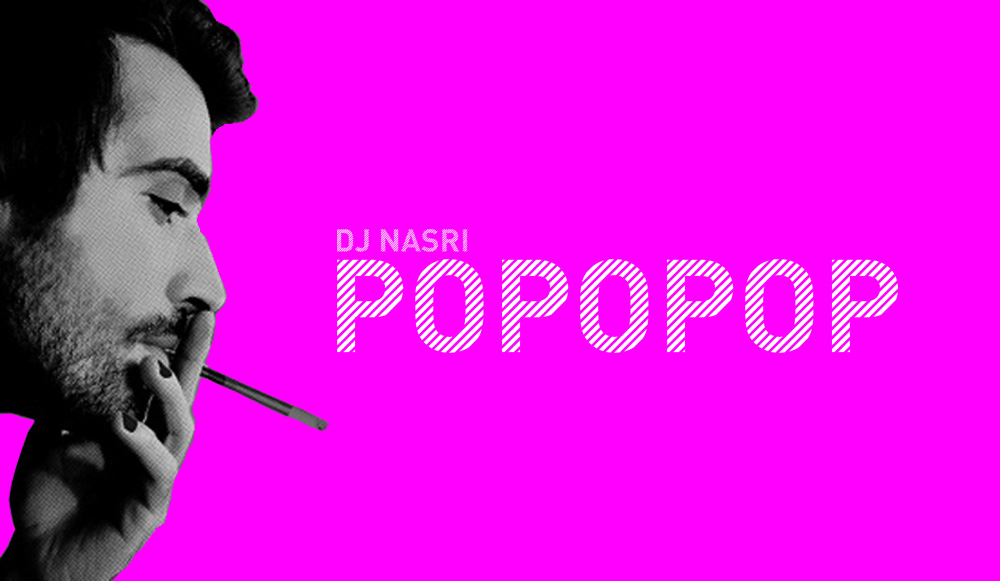
Dj Nasri
Popopop
Performance | | | 120:0 | Lebanon | 2015
When Oum Kalthoum meets Serge Gainsbourg meets Billie Holliday meets Aisha Al Marta meets Sabah meets Taxi Girl meets Esther Phillips meets Yasmine Hamdan meets Souad Abdallah meets Jeanne Moreau meets Dina Washington meets PJ Harvey meets Marylin Monroe meets Astrud Gilberto meets Sara Vaughan meets Catherine Deneuve meets Mohamad Mounir meets Madonna meets Delphine Seyrig meets Soapkills meets Ahmad Adawiya meets Eartha Kitt meets Mirwais meets Bandali Family meets Feyrouz meets Asmahan meets Cheikh Imam meets Marguerite Duras meets Nina Simone meets Cole Porter meets Omar Zeini meets Fleetwood Mac meets Tarab meets Kitsch meets Choubi meets you.
Actor (notably directed by Christian Merlhiot, Jocelyne Saab, Georges Hachem, Roy Samaha, Omar Fakhoury and Jad Youssef…) and journalist, Nasri has also been a DJ for over 8 years in Beirut, and Berlin where he is currently based. With an eclectic mix of uninhibited pop with borderless genres and tastes - good or bad - Nasri creates the musical encounter with the great names of the Arab world`s classical repertoire alongside those of Western pop, music of the Emirates, Egypt, Lebanon, and beyond with stars and starlets of French cinema and literature. A fanatic of Jazz divas, Nasri links Asmahan and Delphine Seyrig, Grace Jones and Jeanne Moreau, as well as the most kitsch of Arabic sounds with acoustic dialogues by Bette Davis, among other great actresses of International cinema.
Rachid Djaïdani
Sur ma ligne
Documentary | dv | color and b&w | 49:0 | France | 2006
Rachid Djaïdani, a young author, films himself as he is writing his second novel and takes us along during the various stages of his creation. The life of this self-taught artist, gifted with an extraordinary capacity to talk about himself while explaining his own world, unrolls through these brutal images.
Daniel Nicolae Djamo
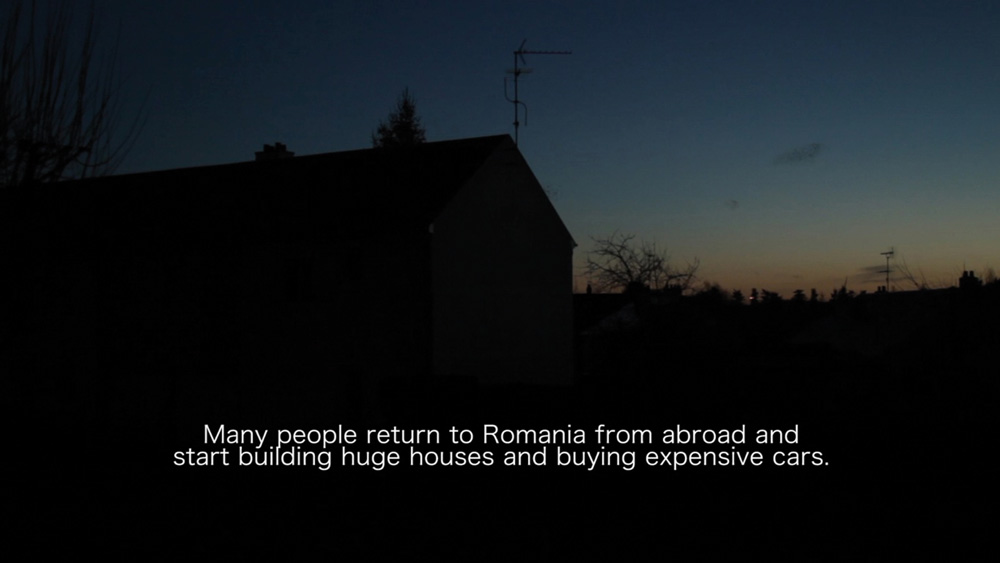
Pasari
Video | hdv | color | 7:32 | Romania | 2014
The work is based on fragments from interviews taken from Romanian immigrants living in Paris in 2011, 2013 and 2014. Shot in Nogent sur Vernisson. Loiret, on December 28th, 2013. 2013 had a warm autumn and an even warmer winter debut. "I think that this is one of the reasons why the birds that live along the Loire chose to rest longer. Some rested even until late December. I filmed this material when they started preparing to fly away. ”Birds” presents 7 minutes of French sunset, on continuous shooting, with the migratory birds preparing to leave. It presents the sunset of the West, with governments taking measures belonging to the right. I chose to draw a paralel between this story and statements that I had previously recorded in Paris, belonging to Romanian immigrants."
Daniel Djamo (b.1987, lives and works in Bucharest) is a young Romanian artist and film director, being interested in personal and group histories. He combines film with video art and installation with photography in order to evoke the past and to underline “the now.” Winner of the ESSL award, Henkel Art.Award. Young artist prize CEE, Startpoint Prize Romania and the Grand Prize of the National University of Fine Arts from Bucharest. Daniel benefited from residencies in Paris, Kassel, Chemnitz, Bruxelles, Vienna and Liege. He exhibited at the Museum of Moscow, Kunsthaus Dresden, Moscow Museum of Modern Art (MMOMA) and the ESSL museum from Vienna, while also presenting his works in Germany, Italy, Canada, Netherlands, USA, Russia, Portugal, Czech Republic, Estonia etc. His video artworks have been screened in numerous video art and film festivals. He is a PhD candidate at the National University of Fine Arts from Bucharest.

Daniel Nicolae Djamo, Daniel Nicolae DJAMO
Territorial marking
Video | hdv | color | 19:44 | Romania | 2014
I’m marking the area surrounding the home of my mother in Nogent-sur-Vernisson (Loiret, France) with the flag of Romania. I marked a Romanian territory in France. My mother left the country when I was 20, being one of those who left in the first waves of immigration after the acceptance in the EU. She works as a doctor and has her own private business close to Montargis, France. The sound represents my mother’s reaction to a work I had planned to do in Paris, on July 14th, 2014. I wanted to take yellow graffiti spray and transform all of the French flags from Champs Elysee into Romanian ones.
Daniel Djamo (b.1987, Bucharest) is a young Romanian artist and film director, interested in personal and group histories and stories and in themes such as the national identity. He combines film with video art and installation with photography in order to evoke the past and to underline “the now.” Winner of the 2013 ESSL award CEE (offered by the ESSL museum), the 2013 Henkel Art.Award. Young artist prize CEE (given by mumok - Museum Moderner Kunst Stiftung Ludwig Wien - and KulturKontakt Austria) and the 2011 Grand Prize of the National University of Fine Arts from Bucharest. In 2015 he won Premio Combat’s Video art award at Museo Giovanni Fattori, in Livorno, Italy. Also, in 2015, Djamo won the Special Award for Documentary Film given by the Romanian Filmmakers Union, while also being nomineed for the 2015 Best Debut for a feature film (Opera Prima award) by the Romanian Filmmakers Union. Daniel had solo exhibitions in Glasgow (Briggait, 2014), Leipzig (KunstKraftWerk, 2015), Kassel (tokonoma, 2012), Vienna (Schleifmuhlgasse 12-14 Gallery, 2014), Bucharest (Anca Poterasu Gallery – 2014 and 2015, Victoria Art Gallery – 2013 and 2015), Timisoara (Calina Gallery, 2012) and Kuala Lumpur (WOLO and Wei-Ling Gallery, 2015).
Nazim Djemai
Nawna (Je ne sais pas...)
Experimental doc. | dv | | 113:0 | France | 2007
Cambridge Bay is an arctic Canadian town where a community of Inuit lives. They have recently gone from a nomadic to a sedentary situation following the arrival of the Hudson Bay Company, wich has brought with it the forces of order, religious representatives, etc. The Inuit population has thus been subjected to profound changes. Notably, the generation gap has become wider and has made cultural transmission improbable. However, such a description only presents the backdrop of a film that is engaged in something in other than an ethnological or sociological exercise.

Stefan Djordjevic
Putovanje
Documentary | hdcam | color | 4:40 | Serbia | 2012

Shwan Dler Qaradaki
The Golden Wish
Video | mov | color | 5:29 | Norway, Iraq | 2019
The backstory for The Golden Wish is that the danish left government`s suggestion that the police could be able to seize jewelry and valuables from asylum seeker as they arrive in to the country. The jewelry and the valuables would finance board and lodging for the newcomers. In connection with this project I have been to Iraq and visited two large refugee camps outside of Suleimaniah. The refugee camps are Arbar and Barika and they are located 29 km southeast of the city Suleimaniah. In all their are 32 000 refugees in both camps together. I was on the lookout in their local markets and contacted jewelry dealers and private persons in the area. I then buyed their gold jewelry, melted and casted it to a text based installation, formed to the sentence: “Everything will be ok”.
I am a artist that works within drawing, painting, installation, video and film. Thematically in several of my work I have worked with my own experiences as a Kurdish refugee, but my experiences can provide knowledge of universal issues that can be linked to being a human being on the run. I am originally from Iraqi Kurdistan, I completed a five-year art education before fleeing due to persecution in 1997. After a challenging escape through 11 countries, I came to Norway in December 1999 and completed art education here as well.
Alexei Dmitriev
Dubus
Experimental video | dv | black and white | 4:9 | Russia | 2005
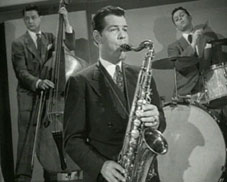
A slow dance of classical cinema to the music of Zelany Rashoho. The work deals with well-known films: 'Sun Valley Serenade', 'Casablanca', 'Some Like It Hot', 'In the Waterfront', 'Citizen Kane'. The footage of these films is transformed in order to coincide with the new music made by Zelany Rashoho which is a mixture of jazz, electronics and dub.
AV are two video artists from St.-Petersburg, Russia. AV = Alexei and Sergei Dmitriev, 21 and 19 years old visual artists from Saint-Petersburg, Russia. We do experimental film and live video. Perform with a band called Zelany Rashoho.
Patrick Doan
Density 1
Experimental video | dv | color | 4:7 | Canada | 2005
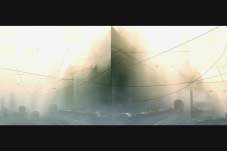
"DENSITY 1" is a sensory video about displacement, time, and space. It attempts to capture the essence of temporal spaces that we so often dismiss frivolously.The relationship between audio and video is intensified by its complimentary, subconscious transmission of its fundamental characteristics. Overall, this pieces comments on the ephemeral nature of long term memory, and how its representations are distorted through a person`s environment, experience, and temperament.
Patrick Doan currently resides in Montreal, Canada, and is currently studying design at Concordia University. Specializing in digital animation, his work is characterized by the investigation of the relationship that exists within digital information, space, and the urban landscape. Having worked extensively in graphic design, his work layers cinematic composition and typographic treatment. Since 2001, he has been producing work under DEFASTEN, a creative outlet and reservoir of client work.

Sarah Dobai
Hidden in Plain Sight (Cache en Evidence)
Experimental film | hdv | color | 14:41 | United Kingdom | 2015
Hidden in Plain Sight was commissioned by the Centre d’art et photographie de Lectoure. The film is based on fragments of Robert Bresson’s acclaimed film Pickpocket (1959). The work re-enacts short scenes from Bresson’s film in which the protagonists rehearse and perform the techniques that pickpockets use to avoid being caught. Accompanied by a voiced script written from the intimate perspective of one of the characters, the work was shot in the studio with a small group of non-professional actors. The film reflects on the position of the actor and the thief both of who rely on the arts of mimicry and deception. My interest in the figure of the pickpocket as represented by Bresson’s film was partly informed by about thinking about the banking industry and its routine use sleight of hand and misdirection to acquire what rightly belongs to us. Hidden in Plain Sight was originally conceived to be screened alongside a voice over performed live by an actor standing by the screen. It can also be shown as a projection work only where the voice over is made integral to the soundtrack of the film.
Sarah Dobai is an artist based in photography and film. Over recent years her production has also extended into publication and performance. The work engages with realism, artifice and illusion in relation to pictorial or cinematic conventions. Recent exhibitions and projects include the artist’s book The Overcoat, (Four Corners Books, Raven Row), The Vanishing Point in History, Centre d’art et photographie de Lectoure with Matthew Buckingham, Lina Selander and Eric Baudelaire. Her performance Study was commissioned by Whitechapel Art Gallery, London and Spike Island, Bristol. The film Twenty Second Hold will be shown next year at Bristol Museum and Art Gallery. The fixed frame 16mm work Nettlecombe showed both as an installation and projected work at multiples venues internationally including Tate Modern, FACT Liverpool, Site Gallery (Sheffield), Dundee Contemporary Arts, Kamloops Art Gallery, Canada, Kuandu Museum of Fine Art, Taipei. Other exhibitions include Theatres of the Real, Antwerp FotoMuseum, Darkside II, FotoMuseum Winterthur, Sarah Dobai: Photographs & Film works, Kettles Yard, and Above the City, Artist’s Space (solos), New York. Dobai completed a Masters in Fine Art at the University of British Columbia studying under Jeff wall and Mark Lewis. She lives and works in London.
Selma Doborac
Those Shocking Shaking Days
Documentary | 16mm | color | 88:0 | Austria, Bosnia & Herzegovina | 2016
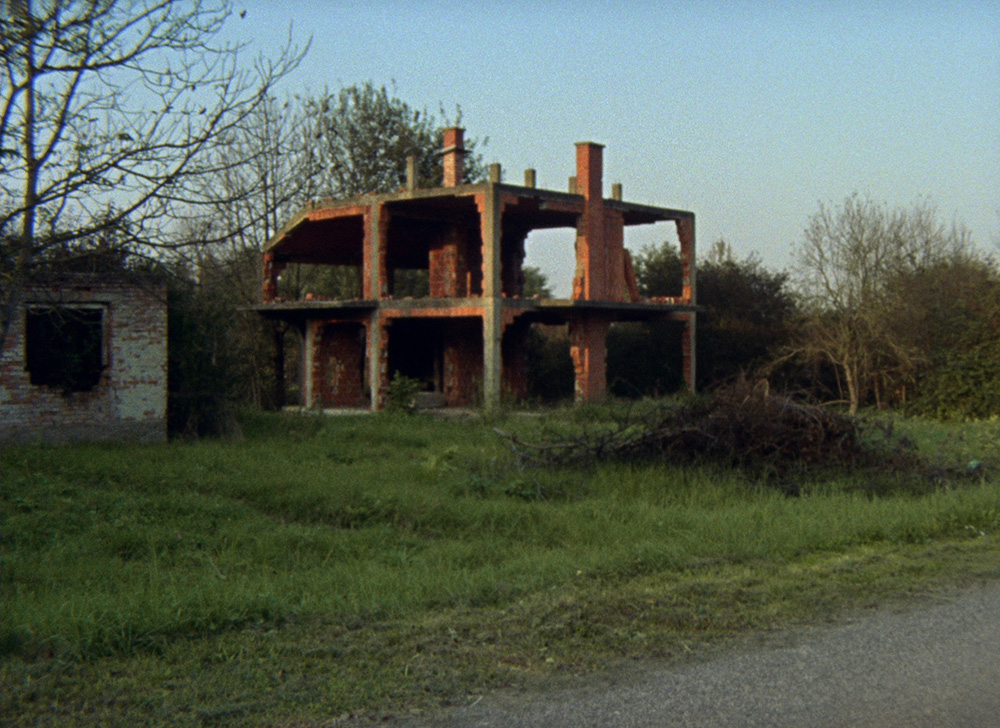
Can a critical reflection of a war be achieved for example by means of poeticity or visuality, or would it be advisable in such an undertaking to tendentially forego unambiguous words and images in favour of a more critical reflection of a war? If a text or a film was made in such a way as to seem to lack reference to reality, would it then make finding the truth redundant, since no reference points to factuality ’’ the atrocities, for instance ’’ could be found “Or would such a design of a text or a film allow conclusions about the problematic nature of any attempt at describing, at showing the complexity of evil”
Dodo Dodo
DODO animale inetto al
Experimental film | dv | color and b&w | 120:0 | Italy | 2005
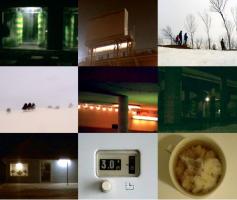
DODO was born in the winter of 2003 as an experimental experience, concluding itself with the creation of a colossal movie made of 90 scenes, both autonomous and linked together by their style and content. The film, created during a year and a half by 7 DODOs, is the result of a mix between randomness and thought: some scenes were developed from contingent situations that presented themselves; others were born from the individuals` intuitions, and were subsequently planned and staged. The film represents the world seen through the DODO`s eyes, that focus on the contemplation of nature -with a succession of atmospheric, physical, and metaphysical visions-, on the observation of manufactured objects -the means used by man to intervene on and converse with nature-, and on the investigation on man, who is often an inadequate actor, marginal and unaware, and at the same time able to create a surprise with his disarming beauty.
DODO (in alphabetical order) Simone Facchinetti Seriate (Bergamo), 7th of December 1977. He is a graphic designer. In September 2003 he co-founded the visual communication agency &1 lab (andonelab.com). Michela Facchiro Bergamo is born 1st of February1981. She studies Anthropology. She is interested in film. Since 2003 she has directed several short films: Voir le jour, B/N, Il Trittico della violenza, Anna VS Oliva and La visione di P., the last two produced together with Luca Ferri. In March 2005 she collaborated for the realisation of the ?15° African, Asiatic and latin America Movie Festival? organized by ONG COE ? Center Orientation Educative-in Milan. In 2005-06 she is a social service volunteer at COE, and in May-June 2006 she collaborated for the organization of the contest and exhibition of short films ?Cortopotere V? which is organized every year in Bergamo by the ?Fidelio? association. Luca Ferri Bergamo is born 16th of April 1976. He deals with words and images. Works in the literary sphere: 30 Personaggi in previsione dell?estate (Lubrina Editore, 2002), Il suicidio di Amerigo Vezzi (Edizioni Pulcino Elefante, 2003), Cappa Caballo (2003 inedito), La circonvuallazione di Broca (2005 inedito). Works in the cinematic sphere: 4(short film, 2002), Movere Educere Billiardo (short film, 2005), Fiori di Broca (short film, 2005), Dodo animale inetto al ( long film, 2005), Scano boa (short film, 2005). Annamaria Materazzini She divides and multiplies herself between two cities. Most of the time she thinks. Marinella Tasca Bergamo, 7th of December 1978. She works on sewn material that she wears (www.marinellaconfezioni.it), and environmental education. Vittorio Turla Rovato (Brescia), 30th of March 1975. He has always rarely drawn. In 2002 he co-founded studiocharlie, a group of graphic designers (www.studiocharlie.org) _riga Zingonia (Bergamo), 27th of August 1976. He is interested in photography, video and other things. In 2002 he co-founded studiocharlie (studiocharlie.org). His most important video works: short experimental videos (1999-2001, various authors), Polvere (2003, video installation, studiocharlie), No Comment (2003, film), Fiori (2004, video), Speranza (2005, short documentary), 1208 (1999-2006, short film, with LP).

Christo Doherty, Aryan Kaganof
Lamentation/Klaaglied
Experimental doc. | hdv | color | 18:0 | South Africa | 2015
Blackface in a film about a secret war Experimental SA documentary challenges hidden memories of a faraway and forgotten fight Blackface and South Africa’s secret border war are exposed and explored in a poignant and troubling new film by Christo Doherty and Aryan Kaganof, which was shown in Cape Town and Joburg (South Africa) for the first time in June 2016. For 23 years from 1967 to 1989, young white men were conscripted to kill and die for apartheid during a long deadly war on the border of Namibia and Angola. In 2011, Doherty presented his ground-breaking BOS exhibition of constructed miniature models and blackfaced conscript portraits based on the rare photographs leaked from the conflict zone, often at great risk to the photographers at the time. Described by its directors as an ‘experimental psychic documentary’, Lamentation is a filmic response to Doherty`s BOS exhibition of physical suffering,traumatic memory and the border war. Doherty and Kaganof’s 18-minute film is a formal meditation on the traumatic memory of an illegal war in which tens of thousands of young white South African men were forced to participate and uncounted numbers of black Namibians were killed or injured. It is a contemporary attempt to explore one of the unexamined aspects of apartheid’s military misadventures, a conflict which killed and injured unknown numbers of civilians and well as soldiers and left a generation of men and women traumatised on both sides of the conflict. The film makers are not afraid to challenge and to shock. And they stress that the film is about memories and understanding for all participants and victims of the border war, not only SA soldiers. Lamentation’s delicate musical score, by leading South African composer Michael Blake, accompanies the camera’s slow movement up the uniformed chest of a solemn white model with painted black face, cutting to scan a miniature scene showing the mutilated corpse of a black Namibian civilian alongside an armoured SA military vehicle. Throughout the film, the disconcerting and shocking imagery is presented through an insistently choreographed interplay of cinematography and sound design. “We know this is difficult material, but interpreted and constructed images in art are an important way to reflect on a war which we don’t think South Africa has fully dealt with,” Doherty says. “Many white men, including myself, firmly shut the door on their army days, yet the SADF was a dark formative experience which we need to expose and understand.” White soldiers: black faces The filmmakers’ portrayal of white men in brown army uniform with black faces sparked controversy in South Africa, but the use of this make-up was a survival mechanism in the war. The blackface device in the film and in BOS is based on the combat body paint used as camouflage in the Angolan bush by apartheid’s soldiers, ironically known to the white troops as ‘black is beautiful’. “White faces painted black are currently taboo, but were very much part of a conscripted white soldier’s experience during South Africa’s war in Namibia and Angola,” Doherty says. The photographs in BOS, and now Lamentation, use re-enacted representations of this wartime practice, together with miniature reconstructions of scenes of battle and violence, to probe the psychological and ethical transformation of young men who joined in an involuntary battle against a hidden enemy. Beautiful music: origins of a difficult film The film emerged through Doherty and film-maker Aryan Kaganof`s mutual involvement with the hauntingly beautiful music by South African composer Michael Blake, Tombeau de Mosoeu Moerane(2011) for soprano birbyne and 5-track (or 2-track) tape. Written in homage to the little-known South African black composer Mosoeu Moerane, the film score features Lithuanian clarinet virtuoso Darius Klysis playing the birbyne, a simple keyless wooden wind instrument. The conclusion to the film is underscored by an extract from another composition by Michael Blake, his String Quartet No 1, performed by The Fitzwilliam String Quartet. Cinematographer Eran Tahor’s beautifully choreographed and achingly-slow camera movements match the cadences of Blake`s music and provide a powerful visual sense of the isolated and estranging experience of South Africa’s war on a distant and dangerous border. The editing and sound design by Aryan Kaganof bring together the music and the cinematography with strands of found audio, including a voice softly singing fragments of "Die Stem van Suid Afrika", the old National Anthem.
Christo Doherty Christo is Associate Professor of Digital Arts in the Wits School of Arts at Wits University. He is a photographer and artist with a keen interest in the visual representation of conflict and trauma. He was conscripted into the apartheid army at the age of 17. Aryan Kaganof Aryan Kaganof is a South African film maker, novelist, poet and fine artist. His extensive filmography includes Threnody for the Victims of Marikana, Decolonising Wits, Western 4.33, and Nicola’s First Orgasm. Aryan left SA aged 19 to avoid conscription into the apartheid army.
Karel Doing
Antipodes
Experimental doc. | dv | color | 19:25 | Netherlands, Japan | 2006
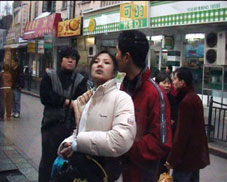
In this place there was no time. Only progress. He missed time. Not that time had been particularly friendly to him, the only effect it had was death. Death was everywhere. He felt bleak, miserable, and unremarkable, he was looking for life... A portrait of a globe-trotter in four corners of the world: Shanghai, Marrakech, Rotterdam, Kabelvåg.
Karel Doing was born in 1965, in Canberra, Australia. He makes film poems in various forms; personal documentaries, visual music, fairy tales, and expanded cinema projects. He lives and works in Rotterdam, Holland. His work is shown in a variety of contexts; film festivals, museums, theatres, and institutions for contemporary art. He is also active as a producer and curator.