Catalogue > Search
Results for : Tout le catalogue
Giulio Squillacciotti
A War Play
Experimental fiction | 16mm | color | 8:0 | Italy | 2024
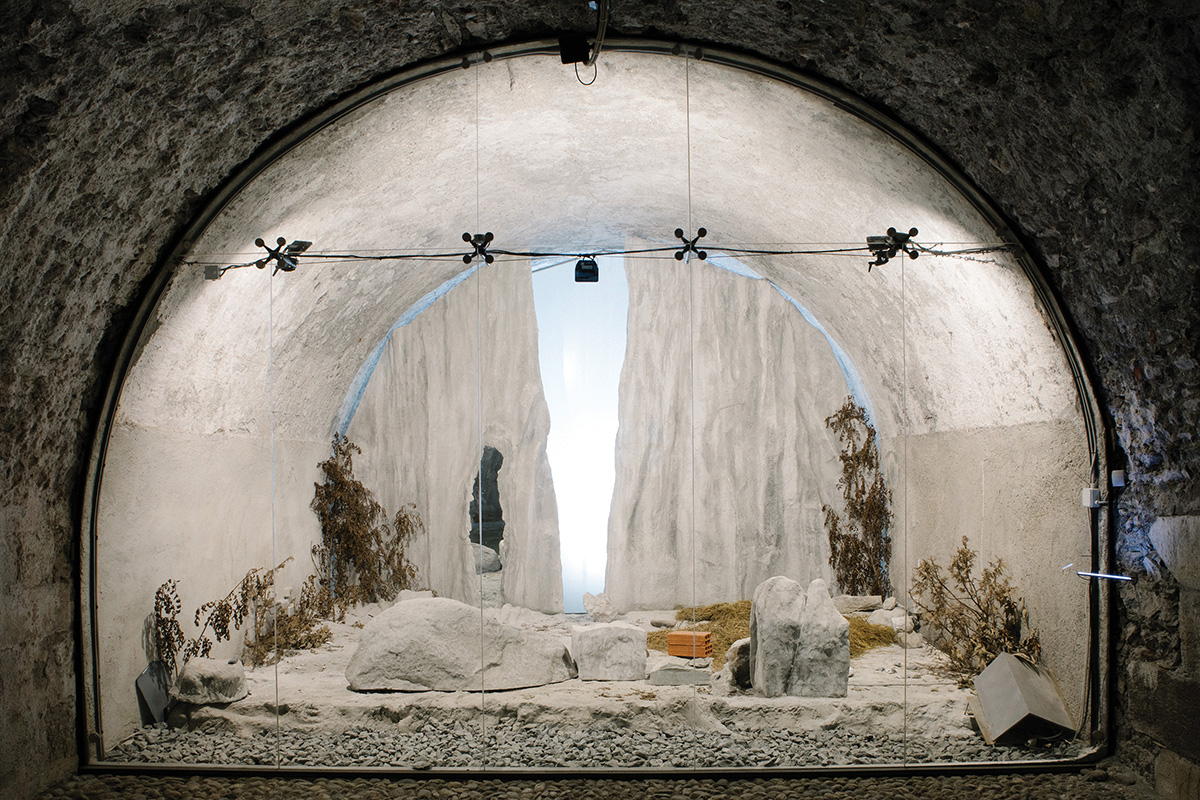
Around 1920, a wealthy man from northern Italy returns from the First World War. Without having actively fought, neither having seen the blood of battle or an actual trench, he asks a group of people to stage for his camera scenes from the war as he imagined it. In 2024, four individuals are asked, in an attempt at freezing time, to didactically re-enact the scenes already staged in the 1920s photographs. In the corridors of a war museum housing a series of dioramas depicting war landscapes without figures, the endless cycle of the representation of war unfolds in an infinite suspended moment.
Giulio Squillacciotti is an artist and film-director born in Rome in 1982, living and working in Milan. After an education in Medieval Art History and Humanities in Rome and Barcelona, he studied Visual Arts at the University of Architecture in Venice. He was a fellow resident at the Jan Van Eyck Academie in Maastricht and one of the artists of the Dutch pavilion at the 2018 Architecture Biennale. His work is oriented mainly on the invention and mutation of traditions by merging together fiction and historical facts. Using film, documentary, sound and scenography, Squillacciotti produces research-based investigations that revisits history, crafting new stories from subjective perspectives, religion, language and popular culture. He is currently working on his first fiction feature film, co-produced among Italy, Ireland and Poland, project recipient, so far, of the MEDIA Creative Europe Grant and the Screen Ireland writing fund.
Giulio Squillacciotti
Casi la mitad de la historia
Fiction | | color | 7:46 | Italy | 2011
All the memory of the world is contained in an old Academy we don?t know the location and time. The quarrel between two men from two different generations is told through vocal notes as annotations for a possible story yet to be told. The argument stands in the chances History has to be written. How do these two persons can tell a story? How do they deal with what History already told and what is possible to add? How to tell something while is happening? A story telling method as an inheritance, to be passed on from Maestro to pupil in the aseptic spaces of an Academy. Looking for the right balance between tradition and the possible re-invention of it, as two different generations and their different approach to key words of the Historic Study. The voice leading us to these spaces has never a face, but her subjective eye has the right detach of the present on past issues. Shot for the double solo show of Antoni Muntadas and Giulio Squillacciotti in Rome (I) in 2011.
Giulio Squillacciotti (Rome, Italy 1982) studied Medieval Art History in Barcelona and Rome, where he got his BA from Sapienza University. He earned a Master?s Degree (hons) in Visual Arts from the School of Architecture in Venice in 2009, where he studied Philosophy, Semiotics and Anthropology. Once completed his studies he won, again in Venice, a one year residency at the Bevilacqua La Masa Foundation with the Ateliers Program. Never trained as an artist, neither a film maker, his work is mainly oriented on storytelling and cultural apexes and their possible reinvention in different contexts. He deals with the idea of tradition and the fictitious outlets of it, all spread through a system of layered meanings, which formally goes from film to documentary, from installation to live performing and talks. His works and talks have been shown and heard in New York and Boston (USA), Den Bosch (NL), Paris and Grenoble (FR), Istanbul (TR), Murcia (Manifesta 8, ES), Prague (CZ), Teheran (IR), Weimar (D); in Italy in Rome, Milan, Turin, Venice and Verona. He recently finished the editing of a feature documentary film (RMHC) on the punk/hardcore scene in Rome from the 80s and 90s.

Giulio Squillacciotti, Insom Camilla
Archipelago
Documentary | hdv | color | 61:0 | Italy, Iran | 2017
Archipelago is a journey through ancient myths, exorcism rituals, sounds and spirits. In the south of Iran, on a group of islands of the Persian Gulf, humans and spirits coexist since centuries. The culture and traditions of these Islands are the result of the encounters between the African Diaspora, the Arab Countries and Iran, generating a unique system of syncretic beliefs. Spirits of different heritages and origins, called BÄd, the Persian word for wind, moving through the air, take possession of the islanders bodies and can only be quieted through a music ceremony called the ZÄr Ritual. Thanks to an unprecedented access given to foreign film makers, the Film showcases stories and landscapes of the islanders daily life within the frame of the Rituals, giving, through pounding drum rhythms and wailing vocal chorus, a rare and unexpected glimpse of the Islamic Republic of Iran.
Giulio Squillacciotti (Rome, Italy 1982). Artist, Film maker and researcher lives and works in Milan (I) and Maastricht (NL). He studied Medieval Art History in Barcelona and Rome. He owns a MA in Visual Arts from the University of Architecture in Venice IUAV, where he studied Art, Philosophy, Semiotics and Anthropology. His work is mainly oriented on storytelling, cultural apexes and the way traditions re- shape in new contexts. His research merges together ction and historical facts. Using lm, documentary, sound and performance, Squillacciotti produces research-based investigations that revisits history, crafting new stories from subjective perspectives, storytelling, religion and popular culture. His work has been exhibited and screened internationally at, among the others, Les Rencontres Internationales at Centre Pompidou and Gayte Lyrique in Paris, the Berlin Haus der Kultur der Welt and (D), the Manifesta 8 in Murcia (E), Le Magasin CNAC in Grenoble (F), Istanbul 2010 European Capital of Culture, the Beirut Art Centre in Lebanon, the New York Photo Festival, the Dumbo Video and Columbia University in New York City and in the Official Competition at the 33rd and 35th Torino Film Festival Camilla Insom (Rome, Italy 1983). Anthropologist lives and works in Rome, Italy and Sulaimaniyah, Iraqi Kurdistan. After completing the MA in Cultural Anthropology at the University of Rome Sapienza, she’s currently a Phd candidate in Iranian Studies at University of Naples “ L`Orientale ”. Focus of her research is the modi cation of the category of sacred in different contexts through the analysis of ritual practices and their changing. In 2013 she researched the funerary practices of the Zoroastrian Parsi community of Bombay. Since 2014 her studies revolve around the Islam of the Kurds in Sulaimaniyah and Sangaw, Iraqi Kurdistan Kasnazaniyya, with particular reference to the Kasnazaniyya Su Brotherhood. She is in charge of the Anthropological Studies for the Italian Archaeological Mission in Iraqi Kurdistan (MAIKI) of “ Sapienza ” University of Rome, member of the Societas Iranologica Europea (SIE) and member of the International Institute of Kurdish Culture.

Giulio Squillacciotti
What Has Left Since We Left
Experimental fiction | 4k | color | 21:15 | Italy, Netherlands | 2020
On February 7th 1992, the Treaty on European Union was signed in the Dutch city of Maastricht. Decades later, the representatives of the last three countries left in Europe meet again in the very same room where it was signed, this time to deliberate on the permanent shutdown of their Union. In what seems to be a looped therapy session, the three characters - helped by a British interpreter as a self-appointed analyst - try to deal with their feeling of loss. The conversation allows their political and personal bonds to be woven together metaphorically, compelling them to face their identity crisis and acknowledge what is left, what no longer is and what still could be of their Union.
Giulio Squillacciotti (Born in Rome, Italy 1982) Artist and film-maker lives and works between Milan (I) and Maastricht (NL). He studied Medieval Art History in Barcelona and Rome, where he earned a BA in Humanities from Sapienza University and holds a MA in Visual Arts from the Venice University of Architecture IUAV. His work is mainly oriented on storytelling, cultural apexes and the way traditions re-shape in new contexts. His research merges together fiction and historical facts. Using film, documentary, sound and set design, Squillacciotti produces research-based investigations that revisits history, crafting new stories from subjective perspectives, religion and popular culture. His work has been exhibited and screened internationally at, among the others, the Dutch Pavilion of the Venice Architecture Biennale, Les Rencontres Internationales at Centre Pompidou, Palais de Tokyo, La Fe?mis and Gayte Lyrique in Paris and Centre d’Art Contemporain de Brest (F), at the Berlin Haus der Kulturen der Welt and Neues Museum in Weimar (D), Screen Space in Melbourne (AU), the Manifesta 8 in Murcia (E), Le Magasin CNAC in Grenoble (F), AKV of Den Bosch (NL), Istanbul 2010 European Capital of Culture (TR), the Beirut Art Centre in Lebanon (RL), the New York Photo Festival, Dumbo Video and the Columbia University in New York City (USA), Art Institute of Boston (USA), the Los Angeles Now Instant Image Hall (USA), OCAT in Shanghai (PRC); in Italy at PAC, Triennale, MACRO, MAXXI, 16th Quadriennale of Rome, MAMbo, Sandretto Re Rebaudengo and at the Official Competition of the 33rd, 35th and 36th Torino Film Festival.
Giulio Squillacciotti
Mut
Documentary | 0 | color | 18:0 | Italy | 2024
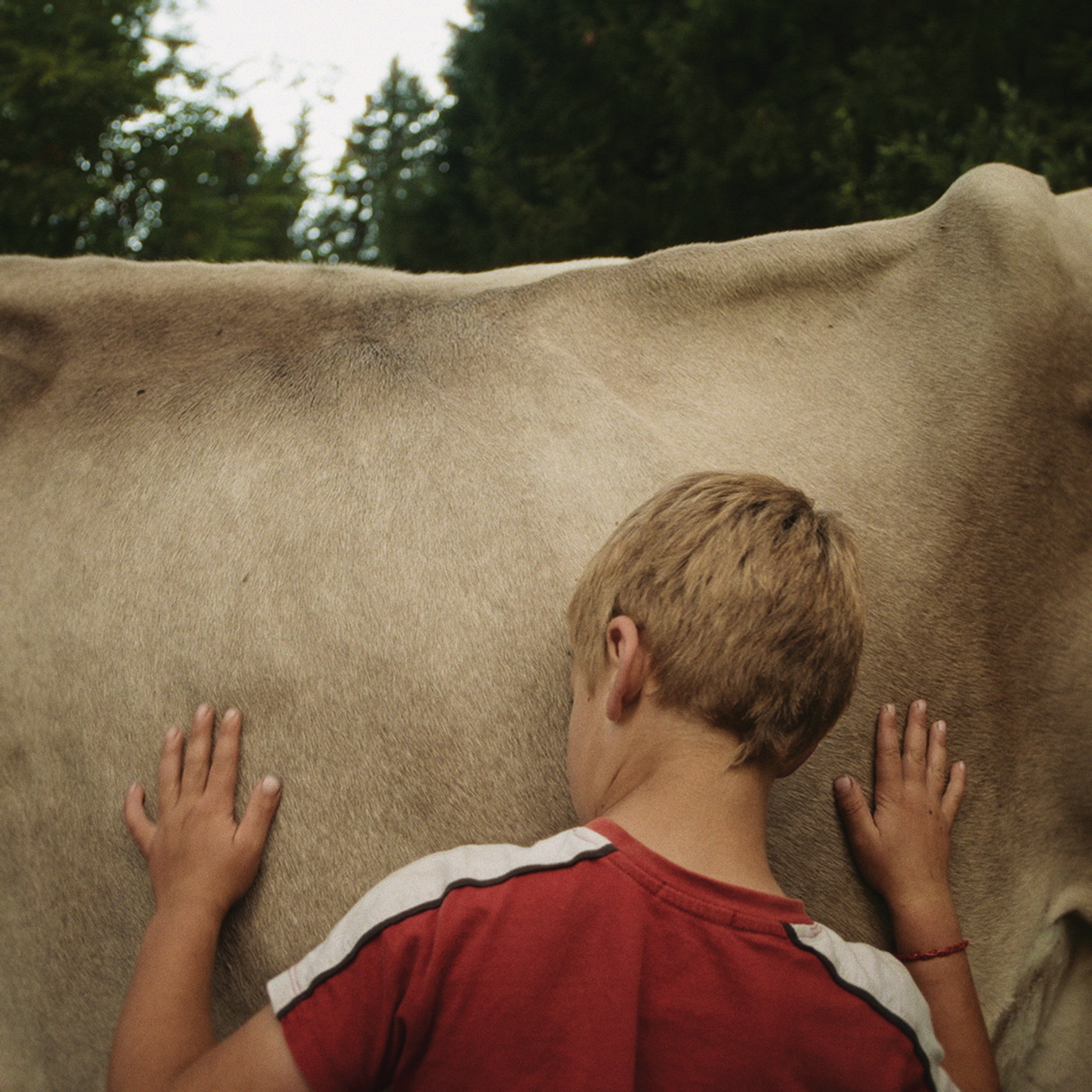
Mut (mountain in the dialect of Bergamo) is a day in the highlands, an allegory for a centuries-old summer tradition of life across mountain pastures. Through the eyes of two young herders and their parents, the cyclical rhythm of life becomes a universal testament to the enduring bond between humans and animals, revealing a kinship molded by gestures, silences, and affection, deeply embedded within the surrounding natural world.
Giulio Squillacciotti (Roma 1982) is an artist and film director. His work is based on the investigation of possible narratives, the sophistication of real events of historical-anthropological matrices and the way traditions take new forms by changing context. He studied Medieval Art History in Barcelona and Rome before obtaining a Master’s degree in Visual Arts at the IUAV in Venice. He was a Fellow Resident at the Jan Van Eyck Academie in Maastricht where he developed a project on the fictitious end of Europe and the loss of the shared identity of a political project. He recently received MEDIA Creative Europe and Screen Ireland funds to develop a feature film co-produced by Italy, Ireland and Poland.
Giulio Squillacciotti
RMHC 1989/1999 - Hardcore a Roma
Experimental doc. | dv | color and b&w | 86:0 | Italy | 2011
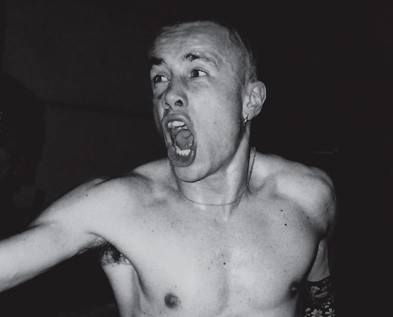
From the mid 80s until the end of the 90s, Rome was the scene of a local phenomenon linked to the music and lifestyle of American Punk/Hardcore. This is the story of those who were the first to import some musical and attitudinal features from the USA until they shaped a new tradition out of it in Rome. Shot in five years, following the Do It Yourself convictions, the film is a a socio-anthropological journey into the daily nowadays life of those who, back then, were struggling to set such spontaneous movement into the roman society and the already existing underground movement. An analysis on about 15 years of self-made life before the internet, featuring fanzines, early italian skateboarding, records, counter-culture, animalism, music, fashion, with a narrative structured through the juxtaposition of interviews and original footage. How notions of a foreign phenomenon can be imported before the internet, develop its own features based on the the local possibilities and become something else from the origin? How a tradition can be re-invented by moving the scenario of its happenings? www.rmhc-film.com
Giulio Squillacciotti was born in Rome (I) in 1982 and has been living in Ireland, Spain, U.S.A., and Turkey. He owns a BA in Medieval Art History from Rome University and a MA hons in Visual Arts from the Architecture School of Venice. He is an artist working mainly with film, video, photography, text and installations. This is his first feature documentary film. His work has been exhibited, presented and screened in various international locations like, among the others, the ENSBA in Paris and the Magasin CNAC in Grenoble (FR), the Columbia University in New York City, the New York Photo Festival 2012 and the M.I.T. in Boston (USA), the Fondazione Sandretto Re Rebaudengo in Turin and MAXXI Museum in Rome (I), the Haus der Kultur der Welt in Berlin and the Neues Museum in Weimar (D), the Manifesta 8 Venue in Murcia (E), the Prague Biennale (CZ). He lives between Milan (I) and Vienna (A).

Giulio Squillacciotti
Visto due volte
Experimental doc. | hdv | color | 11:40 | Italy | 2017
In a school trip to the Cloister of Collegno, the biggest italian Insane Asylum closed in 1978, a class of teenagers visit the spaces as if they had been turned into a museum. Through the auxiliary help of an audio guide of apparently non-sense indications, the students shape a museum path which only exists around their steps.
Giulio Squillacciotti (Rome, Italy 19829. Artist, film-maker and researcher lives and works in Maastricht (NL). He is 2018/2019 Van Eyck Academie Residency Fellow and was part of the Dutch Pavilion at the 2018 Venice Architecture Biennale. Studied Medieval Art History in Barcelona and Rome, he later owned a MA hons in Visual Arts from the Venice University of Architecture IUAV. His work is mainly oriented on storytelling, cultural apexes and the way traditions re-shape in new contexts. His research merges together fiction and historical facts. Using film, documentary, sound and set design, Squillacciotti produces research-based investigations that revisits history, crafting new stories from subjective perspectives, storytelling, religion and popular culture.

Giulio Squillacciotti
Zimmerreise
Fiction | super8 | color | 2:30 | Italy, Austria | 2010
A woman wanders around the 19th floor of a building, from an anonymous industrialized city. She has been told, through a series of cryptic indications, how to paint an imaginary landscape where to meet with the author of those letters. The geographical and physical distance with the person who is writing to her, can be reduced only through a methodic work of imagination and detach from what is surrounding her. The chance of traveling from a room, by seeing with eyes closed, to a place that exists only in both their minds. The difficult task is here expressed by the contradictory indications he gives her, as an explicit giving of what is a long distance communication with its time lapses. The strength to disclose the hitch can only be found in the accurate recollection of memories she has of their real encounters, once happened, far in time, but far, from where they both came.
Giulio Squillacciotti (Rome, Italy 1982) studied Medieval Art History in Barcelona and Rome, where he got his BA from Sapienza University. He earned a Master?s Degree (hons) in Visual Arts from the School of Architecture in Venice in 2009, where he studied Philosophy, Semiotics and Anthropology. Once completed his studies he won, again in Venice, a one year residency at the Bevilacqua La Masa Foundation with the Ateliers Program. Never trained as an artist, neither a film maker, his work is mainly oriented on storytelling and cultural apexes and their possible reinvention in different contexts. He deals with the idea of tradition and the fictitious outlets of it, all spread through a system of layered meanings, which formally goes from film to documentary, from installation to live performing and talks. His works and talks have been shown and heard in New York and Boston (USA), Den Bosch (NL), Paris and Grenoble (FR), Istanbul (TR), Murcia (Manifesta 8, ES), Prague (CZ), Teheran (IR), Weimar (D); in Italy in Rome, Milan, Turin, Venice and Verona. He recently finished the editing of a feature documentary film (RMHC) on the punk/hardcore scene in Rome from the 80s and 90s.
Richard Squires
PROGRAMME
Experimental doc. | dv | color | 35:0 | United Kingdom | 2007
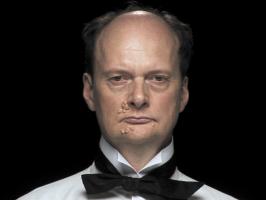
PROGRAMME is the culmination of a project based around the Salpêtrière Hospital in Paris, initiated by artist Richard Squires in 2003: a hybrid video work that interweaves drama, documentary and sporadic attempts at hypnotic communication. At the end of the nineteenth century the Salpêtrière was the stage for Dr Charcot`s ?leçons du mardi? - highly theatrical presentations of Salpêtrian hysteria that featured `star patients` such as Blanche Wittman. PROGRAMME examines aspects of the neurologist`s practice that imply manipulation, collusion or simulation and revisits the Salpêtrière`s history as an establishment of social control during the ancien régime. Interviews with historians, dramatic reconstructions, cataleptic performances and a syphilitic narrator come together to fashion a hysterical narrative that eventually unravels to expose its own construction. With Véronique Leroux-Hugon (curator, Charcot Library), Mary Bosworth (criminologist), Thirza Vallois (author), Alexis Terry and Nick Ewans.
Richard Squires is a visual artist (born 1970) who lives and works in London. His practice has involved the use of film, video, installation and interactivity. He is also a founder member of London-based comic art project LET ME FEEL YOUR FINGER FIRST who disseminate comics, animation, live and web-based work. His work has been shown internationally with recent shows and screenings of work at Whitechapel Gallery, London, Site Gallery, Sheffield and Centre d`art contemporain de Basse-Normandie, France. In 2003 he completed a residency at the Cité Internationale des Arts, Paris that was the catalyst for his work on the Salpêtrière Hospital. Working with LMFYFF, he has just completed ?Francis? an Animate TV commission that tours UK animation festivals from November and will be broadcast on Channel 4 television in December 2007.

Maxence Stamatiadis
Période Killer
Experimental doc. | hdv | color | 50:0 | France | 2015
From his council flat above the freeway, Edouard Mouradian, a retired unrelenting old man, can’t stand the daily abuses anymore. But how can one strangle a meter maid with impunity ? Or blow up the neighbour with a hand grenade or even stab the youngster that stole its wife’s handbag ? Edouard Mouradian dreams hard about these things...
Born in 1988 in Paris, Maxence still works and lives there today. He graduated from the Ecole Nationale Supérieure des Arts Décoratifs (ENSAD) in Paris in 2012 after he followed an advanced course in literature.He has directed a number of short films and produced several photo series during his studies. In 2012, he left Paris to spend several months in New York where he worked assisting directors among whom the Safdie brothers and Abel Ferrara.Since 2013 he has worked on many movies, short films and experimental videos as director, assistant or photographer.

Marina Stanimirovic
Des carcasses de tout
Experimental doc. | mov | color | 4:15 | France, Germany | 2022
Recorded in France and Germany, "CARCASSES OF ALL KINDS" is a wild recording of a discussion with my mother before it was too late. My mother, who was ill, told me about our first return to Bosnia and Herzegovina, the year following the end of the war. But this piece is not so much about war as about fragility, our memories, scars and departure. The voice and the words are used as sculptural material and mixed with additional recorded sounds. It uses recordings made in the cancerology department of the Argenteuil hospital center, rubbing of clothes, cutting of glass and metal, hammering, an industrial printer and vocals. Every summer, my mother used to cut lavender from her garden and place it in used stockings. After she died, I collected it all in the same bag. The video is a dive into that bag.
Marina Stanimirovic (1988, Argenteuil) is a French born artist based in Berlin. She studied Contemporary Jewellery at the Ecole Boulle, in Paris (2007 - 2011), and London, were she completed a Master at the Royal College of Arts (2011 - 2013). From violence against women to social disparities or dysfunctional economic systems she observes the ugly, the beautiful, the sad, the absurd and translate it through sculptures, installations, photography, video and sound experimentations. In 2022 she initiate DERIVAT, a platform that invites to reflect on the contemporary art market. Since 2023, she is part of the curatorial board of the project space Gr_und, Wedding Berlin.
Annette Stav Johanssen
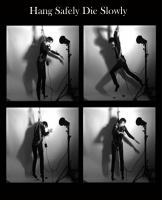
HANG SAFELY DIE SLOWLY
Experimental video | dv | color | 6:0 | Norway, Sweden | 2007
A media-exorsistic agentcy act, where unpredictability functions as the developing map. It challenges the post-speculative behaviourisme, where role and character is pre-determined in pre-written script. It seeks risk, chances, immense movement and embodied situations, direct reaction and continually action. The choice of dramaturgi is an extraction from Aristotelian and Hollywood thinking, where the essence of action and composition always is driven by hinder and conflict, planted in the pre-written story line with the involved character. The set-up is a Brechtian technic, where the film-medium is illustrating it´s illusion, and in that moment becomes an alienated effect of narration. There is one rule; control the whole system, be the inside picture and manage the outside frame. There is one room, the door is locked, you should be safe. WE, strapped in the system of informative totality, this has become an act of formality.
Annette Stav Johanssen, 1979 from Kristiansand in Norway, but for the moment lives and work in Malmö, Sweden. She is an artist, mainly producing performances, video, text-wriring and concerts.She often uses herself as performer, challenging the embodiedment situation, and also experiment a lot with the voice (even though this is a silent movie, Hang Safely Die Slowly). She is a member of Fine Art Union, in collaboration with Synnøve G. Wetten, another norwegian artist. Fine Art Union; is an interdiciplinary, mixed media, collaboration who operates in the dynamic of spectacular expressions bounced against controlled analytic behavior, through neo sci-fi-cinematic and ritualistic actions.
Christopher Steel
Tube
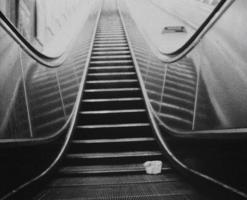
Experimental film | 16mm | black and white | 7:30 | United Kingdom | 2004
The daily spectacle of London?s underground train network is emphasized by in-camera superimposition and perfected by the removal of advertising and graffiti by painting on the negative.
Born Roehampton 1968; Edinburgh University 1990; 16mm Film Production course at the Half-Way Production House, Balham, 1993; Joined London Film-Makers? Coop 1993.
Lisa Steele, Kim TOMZAK
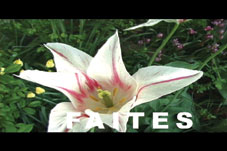
Make love not war
Video installation | dv | color | 2:10 | Canada | 2003
In the very succinct "Make Love, Not War" (2003), the title's classic phrase appears in a form of writing slowly advancing over large shots of superb tulips and of ants busy feeding themselves.
Lisa Steele was born in Kansas City, Missouri in 1947, and studied at the University of Missouri before installing herself in Toronto in 1971. Born in Victoria, British Columbia in 1952, Kim Tomczak has a degree from the Vancouver School of Art (Today the Emily Carr Institute of Art and Design). Steele and Tomczak both teach in the Fine Arts department at the University of Toronto. They have been working in the media arts medium since the 70s. As artists, administrators, professors, authors, commissioners, and event and project designers, they have profoundly influenced video and connected disciplines in Canada since the beginning of their collaboration in 1983.

Lisa Steele, Kim Tomczak
The Afternoon Knows What the Morning Never Suspected
Experimental doc. | 4k | color and b&w | 21:0 | Canada | 2018
The Afternoon Knows What the Morning Never Suspected. It is a 3-channel 22-minute work that opens with a brief history of the Vietnam War, assembled from historical documents and footage, and then proceeds to detail Canada's complicity in the conflict, drawing attention to the massive profit that Canadian companies made during this time. The work also references the American draft dodgers who settled in Canada in the late 1960s, creating a context for the connection to today with a mesmerizing drive down Yonge Street in 2017. It is an interesting time to re-examine Canada's self-view in relation to the Vietnam War: yes we took in the draft dodgers (the work makes ample reference to this) but we also profited from the war (in spite of the fact that these profits were strictly against our own laws). The work concludes with the on-screen presence of our two performers, each telling the other's life story: one a first generation Canadian, the child of a Serbian/Croatian marriage; the other born in Canada to Vietnamese immigrant parents.
Lisa Steele and Kim Tomczak have worked exclusively in collaboration since 1983, producing videotapes, performances and photo/text works. In 2009, Steele + Tomczak were awarded an Honourary Doctorate by the University of British Columbia (Okanagan); in 2005, a Governor General`s Award for Lifetime Achievement in Visual & Media Arts; in 1994 they received both a Toronto Arts Award and the Bell Canada prize for excellence in Video Art. They are co-founders of Vtape, an award-winning media arts centre established in 1983 in Toronto. Currently Steele is Artistic Director and Tomczak is Restoration and Collections Management Director. Both teach at the University of Toronto in The John H. Daniels Faculty of Architecture, Landscape, and Design. Major public art commissions include: Watertable (2009, and expanded in 2011) a light and sound installation under the Gardiner Expressway (a raised highway) that marks the original shoreline of Lake Ontario at the foot of historic Fort York; …bump in the night (Barrie) (2010) commissioned by McLaren Art Centre and installed in bus shelters; Falling Up (2006) a video work for the Winnipeg Art Gallery; Love Squared (2006) screened on the 2400 square foot video board at Yonge & Dundas Square in Toronto. A major survey of their work, The Long Time: the 21st century work of Steele + Tomczak, curated by Paul Wong (with a 84 page catalogue), opened at On Main Gallery and VIVO, Vancouver, BC in September 2012; the exhibition traveled to A Space Gallery, Toronto, ON (2013), the Art Gallery of Windsor, ON (2016-17), and Dalhousie University Art Gallery, Halifax, NS (2017). Legal Memory, their first feature-length work, has been shown in a number of film festivals since its release including: The Los Angeles Gay and Lesbian Festival, the Festival Internazionale Cinema Giovani (Turin, Italy), the Toronto Festival of Festivals and broadcast on TVOntario. In 1996, their work BLOOD RECORDS: written and annotated, received a world premiere at the Museum of Modern Art in New York and toured across Canada with a bi-lingual catalogue published by The Oakville Galleries. Recent solo exhibitions of their works have taken place at Anna Leonowens Gallery, Halifax, (2014); Le Mois de la Photo a Montreal (2011); WHARF Centre D`art contemporain, Herouxville-St. Clair, France (2010); Diaz Contemporary, Toronto (2009); Akademie Schloss Solitude, Stuttgart, (2009); Dazibao, Montreal (2008); the Canadian Cultural Centre, Paris (2003). Selected group exhibitions and screenings of their work include: Every. Now. Then. Reframing Nationhood, Art Gallery of Ontario (2017); Imago Mundi, Instituto Veneto di Scienze, Lettere e Arti, Venice, Italy (2017); La Biennale de Montréal, Musee d'art contemporain de Montréal (2014); Carbon 14: Climate is Culture, Royal Ontario Museum, Toronto (2013); STITCHES: Suzhou Fast Forward, Workshop, Toronto (2011); Empire of Dreams: phenomenology of the built environment at the Museum of Contemporary Canadian Art, Toronto (2010); a focus screening at EXIS: Experimental Film and Video Festival in Seoul, Korea (2010); the Berlin Film Festival, Forum Expanded (2009); Akbank Sanat, Istanbul (2009); TIFF (Toronto International Film Festival) Future Projections (2009); Sophia, Bulgaria at the Central Bath House (2008); a focus screening at Rencontres Internationales Paris/Berlin/Madrid (2006); Beyond/In Western New York, organized by Albright Knox Gallery, Buffalo (2005); Trivandrum Video Festival, New Delhi (2003); City of York Public Gallery, York, England (2000).

Jakob Steensen
RE-ANIMATED
Experimental VR | 4k | | 14:32 | Denmark, USA | 2019
RE-ANIMATED explores the intersections of extinction, preservation of immortality. It is a re-imagining of ornithologist Douglas H. Pratt’s memories of the now extinct Kaua’i ???? bird, as told to director Jakob Kudsk Steensen. In the work, a vast virtual landscape based on Kaua’i unfolds and transforms into a photorealistic new world for people to explore. 3D-scanned organic material sourced from both field work and the American Museum of Natural History, as well as real archival audio are all remixed together, alongside algorithmic music composed by Michael Riesman, Musical Director for the Philip Glass Ensemble. Plants, moss, and insects respond to the pulse of music generated in real-time, and the audience’s breath and voice organically impact the virtual atmosphere through the VR headset. As a slow-moving, poetic virtual environment, RE-ANIMATED ultimately investigates how we relate to nature irrevocably altered by human activity. It provokes fresh perspectives on our ecological future, which may become unbound by the physical conditions governing our present reality.
Jakob Kudsk Steensen (b. 1987) is a Danish artist based in New York concerned with how imagination, technology and ecology intertwine. His works range from immersive VR ecosystems to mixed reality installations bridging physical and digital worlds, which invite audiences to enter new ecological realities. He collaborates with NGO’s, residencies, scientists and artists from different fields and ventures on excursions where he collects organic material, which is digitised and converted into digital worlds with 3D scanners, photogrammetry, satellite data and computer game software. Inspired by ecology-oriented science fiction and conversations with biologists and ethnographers, his projects are ultimately virtual simulations populated by mythical beings existing in radical ecological scenarios. Kudsk Steensen has exhibited internationally at the 5th Trondheim Biennale for Art and Technology; the Carnegie Museum of Art; Serpentine Augmented Architecture, Serpentine Galleries; Jepson Center for the Arts; Time Square Midnight Moment; MAXXI Rome; FRIEZE London; Podium, and Ok Corral. He was shortlisted for the Future Generation Art Prize 2019, and as part of the awards program, he was invited to create and exhibit new installations of RE-ANIMATED (2017-18) in Kiev and the Venice Biennale. He has received awards from the Danish Arts Foundation, The Augustinus Foundation, the Lumen Arts Prize, The International Academy of Digital Arts and Sciences, Games for Change, the Lumiere Foundation, The Telly Awards, and Cinequest Festival. His work has shown at Sundance, TriBeCa and Cannes among other film festivals. Steensen is an alumni of NEW INC, a technology and culture incubator by The NEW MUSEUM, in NYC.

Grzegorz Stefanski
Restraint
Video | hdv | black and white | 1:0 | Poland | 2016
I created this work for Wola Museum in Warsaw. I was inspired by anonymous documentary photograph probably from 50` that puzzled me as very contemporary and unbelievably well staged as for a snapshot. I was thinking a lot about how language of “reality” changes over time and how it can be easily influenced reinterpreted. And then I relied that reenactments are very bodily reinterpretation of images, that they make individual bodies to be mediums of transformation meanings; and I realised that their growing popularity and superficial innocence frightens me. I decided to reenact this photograph I came across and asked members of historical re-enactment groups to do it. Later I also wrote accompanying essay in which I have put into words my interest in language of documentary in contemporary art
Grzegorz Stefanski, born in 1983 in Czluchow (PL), lives and works in Warsaw and London where he is currently an artist in residence at Sarabande Foundation. Before attending art school, he earned master’s degree in philosophy and made his artistic debut in with solo exhibition during Cracow Photomonth Festival in 2010. He concluded his artistic education at The Slade School of Fine Art in London and Miroslaw Balka’s Studio of Spatial Activities in Warsaw. In 2017 he won the Ivan Juritz Prize in London and the Grand Prix at the Biennale of Young Art in Poland. He has exhibited his works at the Whitechapel Gallery in London (2018), Museum of Modern Art in Warsaw (2018), Ujazdowski Castle Centre of Contemporary Art (2018), Manifesta 11 in Zurich (2016), Pastificio Cerere Foundation in Rome (2014) and the NY Art Book Fair at MoMA PS1 in New York (2010). He has collaborated, among others, with Nowy Teatr in Warsaw (2016), National Museum in Warsaw (2017), and Bunkier Sztuki Gallery of Contemporary Art in Cracow (2018).
Steina
Hraun og mosi
Art vidéo | dv | color | 13:5 | Iceland, USA | 2005

Malte Steiner
The Big Crash VR
Experimental VR | 0 | color | 0:0 | Germany, Denmark | 2019
The Big Crash VR is a nonlinear immersive virtual reality artpiece based on data mined from real estate sites. The audience experience it either on an Oculus Quest headset within an exhibition context or online with a desktop browser or the one within a VR device. This piece is part of Malte Steiner's art project The Big Crash. The thematic departure point is the instability of the real estate market as a consequence of extreme gentrification. Something that is actively taking place in all bigger cities around the globe. There is a pending ‘big bubble crash’ awaiting as a consequence of this and the piece deals with the growing instability this movement creates and its effects on society. The VR world is build with graphical artifacts derived from real estate ads from Berlin with a custom software. Images from these ads are segmented into objects by a Machine Learning algorithm and used to create a surreal architecture in the 3D environment. Sound based on the data from the prices and square meters over a span of several months provides an additional layer.
Malte Steiner (born 1970) is a German media artist, electronic musician and composer, currently living in Aalborg in Denmark. Steiner started creating electronic music and visual art around 1983, developing his own vision of the interdisciplinary Gesamtkunstwerk, working with, and not limited to, film, theater, paintings, video games, interactive installations and sound. First exhibitions already in 1983. In 1986 Steiner took a course in electro-acoustic music in Lüneburg by H.W. Erdmann and gave his first live performances in the following years, e. g. in Germany, France and Belgium and started 1987 to release his music on cassette, later on vinyl, CD and online. Steiner was a co-founder of the Hörbar club for experimental music located in Hamburg (DE), which opened in 1991 and is still active today. In 1998 he started creating electronic art and installations and in 2003 additionally several netart projects including a collaborative visual networking environment, shown in the Java museum in Sofia, Bulgaria. In 2011 Steiner moved to Berlin, where he opened his own non-public media lab block 4. Besides diverse music projects Steiner is also involved in several open source projects and has done lectures, radio features and workshops. 2018 he relocated to Aalborg, Denmark.
Jörg Steinmann
Monologue
Art vidéo | dv | color | 1:30 | Germany | 2004
The video MONOLOGUE is assembled of single pictures and appears like a flip-book-motion. One can see the author?s reflection in an apartment window. The single pictures were taken without a tripod so the position of the picture is seems restless. The musical accompaniment is a looped guitar chord. About in the middle of the video comes the distorted sound of Morse code. At the same time we hear the Morse code, the video image is coloured in red. The translated Morse code is the word M-O-N-O-L-O-G-U-E. After that, the video fades out.
I was born on February 4, 1959, in Oberhausen, Rhineland, where I grew up. I was at school from 1965 to 1978, when I took the exit exam, the "Abitur". In 1978/79 I spent my military service in Emmerich, Rhine, as a truckdriver. In 1979 I began studying Latin and Geography, which I stopped in 1980 to study at the academy of fine arts in Dusseldorf. I studied with the sculptors Prof. Norbert Kricke and Prof. David Rabinowitch. In 1985, I was nominated as a "Master?s Pupil" (Meisterschueler). I finished my studies in 1990. Since then I have lived as an independent artist in Dusseldorf. In 1997 I was working on my first video works and performances - always with a combination of the creation of sounds and noises. In 2004, I got to know the musicians of the experimental-duo "Interzone perceptible" from Essen, Ruhr, with whom I developed a video project for the music of American composer Jeff Kowalkowski. The results of this project-in-progress, titled "Westbeth," were shown at the Van Abbemuseum in Eindhoven (NL) in April and in the "Eulenspiegel"-cinema in Essen in June 2005.

Annett Stenzel
,D (Silence Song)
Experimental fiction | mov | color | 13:17 | Germany | 2018
Annett Stenzel ist Künstlerin und Filmemacherin. Sie studierte Bildende Kunst in Halle, Berlin und aktuell Film in Hamburg. Sie lebt und arbeitet derzeit in Hamburg.