Catalogue > Search
Results for : Tout le catalogue

John Skoog, Richard Vogel, David Skoog, Kettil Kasang
Nosferatu
Experimental doc. | hdv | color and b&w | 23:2 | Sweden | 2017
The shadow of a tall and hunched man moves around a labyrinthine apartment full of bookcases, video tapes and plastic bags like a modern Max Schreck who is restlessly looking for something that has been lost forever. The mystery and melancholy from Murnau’s vampire classic is preserved in John Skoog’s interpretation of « Nosferatu », which is a (self-)portrait of the Swedish « outsider artist » Richard Vogel, with whom Skoog has created his latest film work. A film that gives a new meaning and dignity to the concept of Scandinavian Expressionism by being filmed on an antiquated video format and copied from an antique video projector, whose three colours constantly threaten to dissolve the porous picture into a vacuum of abstraction. The recently deceased Vogel was a close friend of Skoog’s family, but lived a quiet life dedicated to accumulating hours of videotaped television shows and almost aggressively meaningless own projects, which in an almost lexical fashion document the welfare state’s invisible corners and waste products in countless works.
In his films, videos, and photography John Skoog combines research into history and everyday life with a poetic and fictional atmosphere that is grounded in the film and literary traditions. His work explores social contexts of individuals and communities; unpacking their complex relationship to collective rituals and historical forces, as well as to existential and natural scenarios of transition. Skoog’s works make clear references to mythological iconography; they remind us of the profane origins of myth and in this way they aim to demystify both nature and society.
John Skoog
Federsee
Experimental doc. | hdv | color | 8:2 | Sweden, Germany | 2014
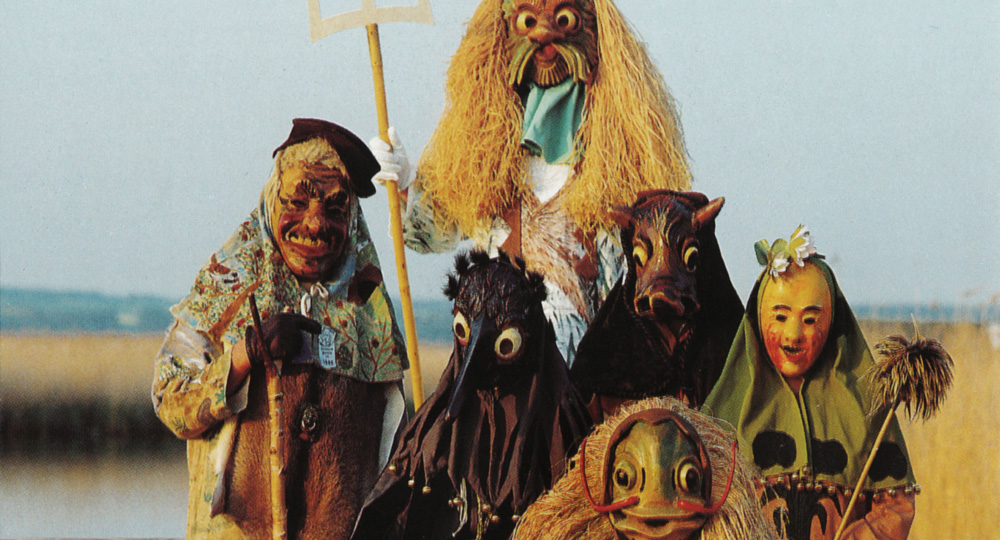
A film that looks at the traditional folklore surrounding the celebration of Fasnet (carnival) in the small Schwabian town of Bad Buchau.
Working with film and video John Skoog follows in the tradition of Scandinavian film making through the use of stark landscapes and slow pacing. The poetic use of the Swedish landscape and powerful studies of character and emotion evoke memories of film works by cinema greats such as Victor Sjostrom and Mauritz Stiller. Skoog has been awarded the Baloise Art Prize, Art Basel (2014), ’1KM film scholarship’ from Stockholm Film festival (2013), the Hessische Kulturstiftung travel grant (2013), the ARS-VIVA Prize (2013/14), Malmö Art Museum 2013 Art Grant, Aase & Richard Björklund fund, and the ARTFILM Prize, Lichter International Film Festival (2013) and a one year working grant from Stiftung Kunstfonds, Bonn (2014). As part of winning the Ars-Viva Prize 2013/14, Skoog has shown at Neues Museum Weimar, MMK Museum fur Moderne Kunst Frankfurt am Main and GAM – Galleria civica d’arte moderna e contemporanea Torino. In 2015, as the winner of the Baloise Art Prize, Skoog will have two major solo exhibitions at Museum für Moderne Kunst (MMK), Frankfurt am Main and Museum Moderner Kunst Stiftung Ludwig Wien (MUMOK). Born in Kvidinge 1985, Skoog graduated from the Staedelschule, Frankfurt in 2012. Selected shows and festivals include: Real DMZ Project 2014, Cheorwon-gun, Gangwon-do & Artsonje Center, Seoul (2014); Redoubt, Towner Contemporary Art Museum, Eastbourne (2014); A Time for Dreams: 4th Moscow International Biennale for Young Art, National Centre for Contemporary Arts (NCCA), Moscow (2014); Ars Viva Preis: Truth/Reality – Björn Braun, John Skoog and Adrian Williams, MMK Museum fur Moderne Kunst Frankfurt am Main – DE; GAM – Galleria civica d’arte moderna e contemporanea, Turin – IT (2014); Taming the Narrative, Basis as a part of b3 Biennale, Frankfurt am Main (2013); Echo Release, NKV Nassauischer Kunstverein Wiesbaden, Wiesbaden (2013); Internationale Kurzfilmtage Oberhausen (2014 & -13); Weltkulturen Museum, Frankfurt am Main (2013); Video_Dumbo, Eyebeam Art + Technology Center, New York (2013); Spectrum Rotterdam International Film Festival, Rotterdam (2013); Sent på Jorden, Art Lab Gnesta, Gnesta (2013); Indielisboa, Lisbon International Film Festival, Lisbon, (2014 & -12), Onde, Torino International Film Festival, (2011), Rencontres Internationales: Paris, Centre Pompidou, Paris, (2014 & -11), En passant (with et al.*), Schirn Kunsthalle, Frankfurt am Main, (2011), In the absence of Glenn Gould, Ludlow 38, Goethe Institute, New York City (2008) and PS1 Contemporary Art Center, Long Island City, New York, (2007), Malm1, Malmö Konsthall, Malmö (2004). John Skoog lives and works in Frankfurt.

John Skoog
Förår
Experimental fiction | hdv | color | 18:0 | Sweden | 2013
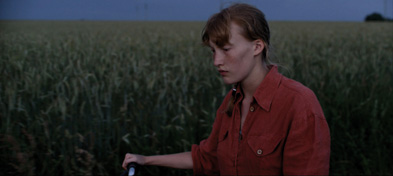
Förår is loosely based on the news-story about an 11-year old girl that stole her fathers hunting rifle and paraded down main-street in the small town she lived in. Captured is the memory of a day re-collected. Things happened but its hard to remember exactly the right order, how you got to one place from another, what someone said.
John Skoog, b. 1985, in Kvidinge, Sweden, started making experimental video as a teenager. His photography and film installations have been shown at museum and film festivals around the world. In 2013 he was, as the youngest person ever, awarded the prestigious Ars-Viva Kunstpreis. John studied fine arts at Staatliche Hochschule für bildende Kunst, Städelschule in Frankfurt am Main.

John Skoog
Shadowland
Experimental doc. | 16mm | black and white | 15:5 | Sweden | 2015
A film that shows locations in California that has "played" other parts of the world in early Hollywood films. By revisiting these old locations, documenting them as they look today and by letting sounds from the old films inhabit them, the films constructs the Californian landscape as a place out of time and place.
John Skoog (born 1985 in Malmö, lives and works in Copenhagen) studied at the Städelschule in Frankfurt. He was awarded the Baloise Art Prize in 2014 and the Ars-Viva prize in 2013. Recent exibitions and screenings include Mad Horizon, Index Contemporary Art Foundation, Stockholm, SE (2016) Värn, Museum Moderner Kunst Stiftung Ludwig Wien (MUMOK, 2015), Slow Return, Museum für Moderne Kunst Frankfurt am Main (2015), Shadowland, Pilar Corrias, London (2015),Berlin International Film Festival (2015) and Federsee, Johan Berggren Gallery, Malmö (2013). Skoog is currently the professor of the film class at the Art Academy in Mainz.
John Skoog
Sent på Jorden
Experimental fiction | hdv | color | 12:0 | Sweden | 2011
Synopsis: A film taking place in the dusk hour between that the sun has set and it gets dark. Thirteen scenes that show a rural village in the southern provinces of Sweden. Dusk falls, and you`re walking home and suddenly you can?t tell if it is the neighbor?s dog or a wolf standing further down the road.
Sent på Jorden is John Skoog?s debut film. Skoog, b. 1985, started as a teenager making experimental film, photography and film installations, shown at film festivals and museums around the world. John studied fine arts at Staatliche Hochschule für bildende Kunst, Städelschule in Frankfurt am Main.

John Skoog
VÄRN
Experimental doc. | 4k | | 14:45 | Sweden, Denmark | 2014
In the early 1940’s the farm-worker Karl-Göran Persson started to fortify his small house in the flat farmlands of southern Sweden. He wanted to build a place where he and the people in the village could find refuge in the event of a Soviet invasion. He took any metal he could get cheap or for free from the neighboring farmers and used it as reinforcement for the cement casting of the house`s new exterior walls. Karl-Göran lived alone in the house and continued his re-construction until his death in 1975.
Working with film and video John Skoog follows in the tradition of Scandinavian film making through the use of stark landscapes and slow pacing. The poetic use of the Swedish landscape and powerful studies of character and emotion evoke memories of film works by cinema greats such as Victor Sjostrom and Mauritz Stiller. Skoog has been awarded the Baloise Art Prize, Art Basel (2014), ’1KM film scholarship’ from Stockholm Film festival (2013), the Hessische Kulturstiftung travel grant (2013), the ARS-VIVA Prize (2013/14), Malmö Art Museum 2013 Art Grant, Aase & Richard Björklund fund, and the ARTFILM Prize, Lichter International Film Festival (2013) and a one year working grant from Stiftung Kunstfonds, Bonn (2014). As part of winning the Ars-Viva Prize 2013/14, Skoog has shown at Neues Museum Weimar, MMK Museum fur Moderne Kunst Frankfurt am Main and GAM – Galleria civica d’arte moderna e contemporanea Torino. In 2015, as the winner of the Baloise Art Prize, Skoog will have two major solo exhibitions at Museum für Moderne Kunst (MMK), Frankfurt am Main and Museum Moderner Kunst Stiftung Ludwig Wien (MUMOK). Born in Kvidinge 1985, Skoog graduated from the Staedelschule, Frankfurt in 2012. Selected shows and festivals include: Slow Return, MMK Museum fur Moderne Kunst Frankfurt am Main (2015); 65th Berlinale, Berlin (2015); Real DMZ Project 2014, Cheorwon-gun, Gangwon-do & Artsonje Center, Seoul (2014); Redoubt, Towner Contemporary Art Museum, Eastbourne (2014); A Time for Dreams: 4th Moscow International Biennale for Young Art, National Centre for Contemporary Arts (NCCA), Moscow (2014); Ars Viva Prize: Truth/Reality, MMK Museum fur Moderne Kunst Frankfurt am Main; GAM Galleria civica d’arte moderna e contemporanea, Turin (2014); Taming the Narrative, Basis as a part of b3 Biennale, Frankfurt am Main (2013); Echo Release, NKV Nassauischer Kunstverein Wiesbaden, Wiesbaden (2013); Internationale Kurzfilmtage Oberhausen (2014 & -13); Video_Dumbo, Eyebeam Art + Technology Center, New York (2013); Spectrum Rotterdam International Film Festival, Rotterdam (2013); Sent på Jorden, Art Lab Gnesta, Gnesta (2013); Indielisboa, Lisbon International Film Festival, Lisbon, (2014 & -12), Rencontres Internationales: Paris, Centre Pompidou, Paris, (2014 & -11). John Skoog lives and works in Frankfurt.
Ran Slavin, The Beautiful Schizophonic
A radiophonic fairytale
Experimental video | dv | color | 2:0 | Israel | 2005
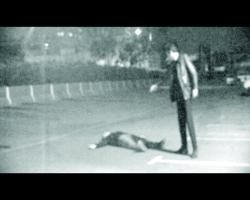
A Radiophonic Fairytale Digital film, specially made for the Cronica 021-2005 DVD: "Can I have 2 minutes of your time?". All Images by Ran Slavin Audio by The Beautiful Schizophonic
ran slavin aka Tonr, Extract, Iran_Comp, Aerial, Rose Of Jericho, is an audio/video composer and improviser. As a bassist, guitarist and installation artist, he started playing and performing in various experimental noise bands in Israel and London in the 80?s and 90?s, but since the mid 90?s became involved in digital music, sound and video processing. His work is often a cross over between sound and image and the symbiotic connection between them, exploring non linear video and real-time cinema with customized video and sound software through themes of abstract graphics, urbanism, dislocation and digital processing. His narratives evolve and mutate around deconstruction of video and sound.
Ran Slavin
Alenbi Moment
Experimental video | dv | color | 1:52 | Israel | 2007
ALENBI MOMENT. IMAGINED SCENARIO. THIS SHORT FILM FOCUSES ON THE MEMORY OF A PLACE. AS IF THE `PLACE`, IN THIS CASE ALENBI STREET IN TEL AVIV, WOULD HAVE ITS OWN GHOSTLY MEMORY OF A MURDER. THE ONLY WITNESSES AND SILENT COMMENTATORS ARE THE MYSTERIOUSLY SHED MANNEQUINS IN A DARKLY LIT STORE FRONT AND THE GRAFFITI BASHED IMAGES OF A BUS STOP SIGN.
>Bio Ran Slavin is a cross media audio-visual artist. An image hunter. He is working with various forms of video and sound, live audio visual improvisation, non interactive video, cinema, digital and acoustic music, painting. Working within the contemporary art world and the new music scene, his visual and sound oeuvre are hard to define and have been described as multi faceted, intensely urban, dark and often surreal. His audio work is a wide culmination of sonic processes and panoramas of electro acoustic digital manipulations, often guitar and piano derived. His exploration into live audio visual improvisation is image based, collapsing the narrative. Digital formations of non linear story telling and generative sound. Holding a close interaction between real time sound and video where the visual flow triggers sound alternately, based on data such as colors and speed of the moving image, like a mind stream or a reassembly of memory. For this he has built a program where he can take control or lose control over the course of things, in real time, in a platform where text sound and image juxtapose, streams of images morph and surface. His diverse catalogue of videos is a hybrid body of works ranging from short mini `stories` to medium length feature videos. He released on the record labels Cronica, Mille Plateaux, Sub Rosa among others and exhibiting and performing his works in various platforms. www.ranslavin.com BIO Currently Lives in Tel Aviv, works freelance as director and online/compositing artist 1986-1990 Graduates from the Betsalel Art Academy - Jerusalem 1985 Lives in Singapore 1983-1986 Lives in London 1975-78 Lives in San Francisco 1967 Born in Jerusalem AWARDS 2007 Production benefit for Insomniac City, the Rabinowits-Yehosua fund for cinema projects, Tel Aviv Israel 2006 Prize in Art and Design from the Ministry of Science and Culture, Israel 2006 Production benefit for Insomniac City, the Rabinowits-Yehosua fund for cinema projects, Tel Aviv Israel 2004 Prize for alternative music video with Lior Har Lev at the ?951? video awards, Tel Aviv Israel 2002 Prize for best music video at the ?951? video awards, Tel Aviv Israel 2002 First prize for sound design of channel `5+` id`s, Promax, Los angeles USA 1999 Best soundtrack prize for the music of the documentary film: `Stress`. at the Doc-Aviv Film Fest, Tel Aviv Israel 1996 Prize for original director at the haifa music video competition, Israel 1994 The Young Artist Award, Tel Aviv Israel 1991 The Sharet Fund Award, Tel Aviv Israel
Ran Slavin
Golden twilight moments
Experimental video | dv | color | 2:0 | Israel | 2005
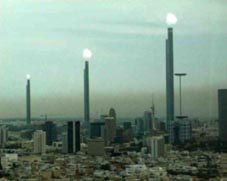
GOLDEN TWILIGHT MOMENTS Digital film, specially made for the Cronica 021-2005 DVD: "Can I have 2 minutes of your time?". All Images and Audio by Ran Slavin
ran slavin aka Tonr, Extract, Iran_Comp, Aerial, Rose Of Jericho, is an audio/video composer and improviser. As a bassist, guitarist and installation artist, he started playing and performing in various experimental noise bands in Israel and London in the 80?s and 90?s, but since the mid 90?s became involved in digital music, sound and video processing. His work is often a cross over between sound and image and the symbiotic connection between them, exploring non linear video and real-time cinema with customized video and sound software through themes of abstract graphics, urbanism, dislocation and digital processing. His narratives evolve and mutate around deconstruction of video and sound.
Ran Slavin
Insomniac city
Experimental fiction | dv | color | 40:0 | Israel | 2006
Insomniac City [vesion1] `Insomniac City` Is based upon an interlaced mix of urban contemporary snapshots and fiction, presenting the current city of Tel Aviv, and an unstable radical shift of the city space time and matter. This video works with the city space, with its scapes and sounds, combining digital interventions in the real [in the documentary] drifting between the known reality and a hallucinatory one. The movie blenders urban spaces and modes of perception. It encounters a loss of identity, estrangement, water, dream, a gun, a girl, present, futuristic architecture, a cab, deserted space and an artificial island. Through the figure at play, It explores the city spaces, from the new shiny high towers to the slums, from air to sea, processing the city / experienced through a confused labyrinth of insomnia. It explores through video and sound, a hidden psych in the chaos of urban texture and offers a mixed gaze on a city in transit, shift and decay while continuously checking the boundaries of reality and illusion, present dream and future, architecture - possible architecture and artificial islands - both physical and meta physical. Through an insomniac like stream, a gaze drifts from external perception to internal suspension, rendering what we see and what we think we see into an emotional twilight zone. Insomnia: A periodical suspension of the functions, as well as of those of the voluntary and rational soul; that state of the animal in which there is a lessened acuteness of sensory perception, a confusion of ideas, and a loss of mental control, followed by a more or less unconscious state. Insomniac City, by video and sound artist Ran Slavin is a cinematic project in parts which changes form and length as it develops. The first part has been shown at the 9th Venice Biennial of Architecture in september 2004, then at the Tel Aviv Haifa and Jerusalem Cinematheque`s, at the 27th festival Cinéma Méditerranéen de Montpellier in October, at "Documentaire Sur Grand Ecran" ? Paris in November [part1], at Audio-Frames sonic arts festival ? Lille ,France and at the 9th International Istanbul Biennial. written ,directed, edited, music, camera, & post production: Ran Slavin actors: Irad Matzliah, Ran Slavin stereo mix: Ran Slavin dolby mix: Itzik Cohen underwater camera: Alain Daniel special thanks to Daniel Milo and Itzik Cohen made in Tel Aviv [2004-5]
BIO 1967 BORN IN JERUSALEM, ISRAEL. 1975-78 LIVES IN THE USA. 1983 1986 LIVES LONDON. 1985 LIVES IN SINGAPORE 1986-1990 GRADUATES FROM THE ?BETSALEL ART ACADEMY? 1990-2005 LIVES IN TEL AVIV, WORKS FREELANCE IN POST PRODUCTION AS ONLINE EDITOR. AWARDS 1991 ?THE SHARET FUND AWARD? 1994 ?THE YOUNG ARTIST AWARD? 1999 BEST SOUNDTRACK CATEGORY PRIZE FOR THE FILM ?STRESS? AT THE ?DOC-AVIV? DOCUMENTARY FILM FESTIVAL, TEL AVIV. 2002 FIRST PRIZE FOR SOUND DESIGN FOR CHANNEL IDS, PROMAX,LOS ANGELES. 2002 FIRST PRIZE FOR BEST VIDEO CLIP AT THE ?951? VIDEO AWARDS, TEL AVIV SECOND PRIZE FOR BEST ALTERNATIVE MUSIC VIDEO CLIP AT THE ?951? VIDEO AWARDS, TEL AVIV
Ran Slavin
Insomniac City [vers 3]
Experimental fiction | dv | color | 40:0 | Israel | 2006
"Insomniac City" is a mutation of experimental cinema and dark thriller, combing digital interventions over documentary images. Tel Aviv is cut up and seemingly grafted into a landscape that is both physical and mental; between reality and dreams, and documentary and fiction. Through figures that are staged, this video explores the areas of the city, which is experienced through maze-y insomnia, from the sparkling new towers, to the poorest districts, from the atmosphere to the sea. It explores a psyche hidden in the chaos of urban texture.
Ran Slavin was born in Jerusalem in 1967. He has lived in the USA, London, and Singapore. He currently lives and works in Tel Aviv. His videos are screened in film libraries, art centres, international digital art and new media festivals and exhibitions, and events in the area of sound and experimental music. A selected few include Transmediale, at V2 in Rotterdam, and at the Istanbul Biennial in Peking. Slavin participated in the 9th Venice Biennial of architecture with "Insomniac City". In addition, he collaborates with dancers and choreographers, and with musicians like John Zorn and Thomas Köner.
Ran Slavin, James Eck RIPPIE
Radio
Experimental video | dv | color | 2:0 | Israel | 2005
Radio Digital film, specially made for the Cronica 021-2005 DVD: "Can I have 2 minutes of your time?". All Images by Ran Slavin Audio by James Eck Rippie
ran slavin aka Tonr, Extract, Iran_Comp, Aerial, Rose Of Jericho, is an audio/video composer and improviser. As a bassist, guitarist and installation artist, he started playing and performing in various experimental noise bands in Israel and London in the 80?s and 90?s, but since the mid 90?s became involved in digital music, sound and video processing. His work is often a cross over between sound and image and the symbiotic connection between them, exploring non linear video and real-time cinema with customized video and sound software through themes of abstract graphics, urbanism, dislocation and digital processing. His narratives evolve and mutate around deconstruction of video and sound.
Ran Slavin
Smoke and Mirrors
Video | hdv | color | 3:54 | Israel | 2012
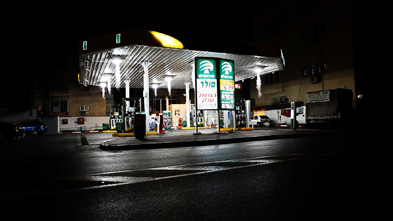
Smoke and Mirrors / Ran Slavin / Video and sound / Length: 3:54 minutes/ Loop / Media: 1 or 3 channel HD video file screening. Exterior, south Tel Aviv, night, a gas station`s spot lights suddenly burst with steam, a nearby car suddenly sets on fire. Mirrored smoke patters appear to hover under a bridge and to burst in old dusty luck machines in a beat pinball game arcade. A silhouette of a mysteriously still man blinks on and off nervously. Smoke and Mirrors. from Wikipedia: Smoke and mirrors is a metaphor for a fraudulent, deceptive or insubstantial explanation or description. The source of the name is based on magician`s illusions, where magicians make objects appear or disappear by extending or retracting mirrors amid a confusing burst of smoke and also a slang for magic acts and `freak show` displays that depend on`trompe l`oeil` effects. More generally, "smoke and mirrors" may refer to any sort of presentation by which the audience is intended to be deceived. The term is derived from the dubious vaudeville ( vaudeville etymology: voix de ville, or "voice of the city") techniques traditionally used by stage magicians.
Ran Slavin is a video and digital media artist. After graduating from the Art Academy in Jerusalem in 1990, continuously treading both visual and sound paths. Today Ran works with video installation, cinema, experimental film and live-video-sound performance. Attracted to the uncanny, a world of wonder and a universe of unresolved mysteries, some of the narratives and visual vocabulary in his work feature images of an abandoned gas station bursting in steam and a car on fire (Smoke and Mirrors), a sunken man underwater with a gun, a tied tattooed woman in a hotel room in Shanghai plotting with a stranger on the phone and a dancing dandy assassin in the corridor (The Insomniac City Cycles), people sound-synched to the barking of dogs (Everything Is Urgent), a medieval science fiction history revealed under Jerusalem (Ursulimum). Sound; With various wide activity in the Israeli underground music scene, from pioneering punk in the early 80`s and post punk in late 80`s in London, to experimental and contemporary electronica. Ran`s brief history in music includes collaborations with musicians and dance ensembles, groups, and performances with over ten solo records released on the labels Crónica, Mille Plateaux, Sub Rosa, Ak Duck, Earsay, Hed Arzi, Nana Discs. Ran has explored metal music, drum and bass, punk, ambient, glitch, experimental. His sound is restless and currently verges on drone compositions. Live video-sound; In Ran`s live performances, pulses of video and texts translate live into a visual-sound meltdown in a process of randomization. Disturbance and contradiction form a visual-musical score. Accidental esthetics form a music of chance. A custom Module, interprets video data of motion, color velocity, mouse movements into sound. The result can`t be fully predetermined. This exploration questions the true essence of live performance. Is it destined to be a repetition and presentation of a well rehearsed and predetermined score or a complete new and unforeseen event? How does video interpret into sound? What kind of meanings will it produce? Selected exhibitions, screenings and presentations include Mediations Biennale (Polin), Manifesta (Belgium), Venice Architecture Biennial, Liverpool Biennial, The Torino Film festival, Maerzmusic (Berlin) Ars Electronica [Austria, an honorary mention], Transmediale [Berlin], Deaf [Rotterdam], Rencontres Internationales [Madrid-Berlin-Paris], 9th International Istanbul Biennial, Videoformes (France) Netwerk Contemporary Art Centre [Aalst], Petah Tikva Art Museum [Israel], Museum on the Seam (Jerusalem), Gallery Givon (Israel)
Ran Slavin
The Insomniac City Cycles
Fiction | betaSP | color | 70:0 | Israel | 2009
THE INSOMNIAC CYCLES Written produced and directed by Ran Slavin 70" min. A man is waking up in a parking lot, shot in the shoulder, he can?t recall how he ended up there, where did the gun he carried with him disappear and whether he is a victim of a crime, or alternatively, a killer. ?The insomniac city cycles?, fluctuates at that point on the axis of reality versus fiction, reality versus imagination and creates an affinity between the protagonist?s mental space and the urbanite one. The colossal and frantic urban topography which envelops the protagonist exhibits a limbo which fables to a mental state where the character is ?stuck? between wakefulness and sleep up to the point where all borders become blurred and reality itself resembles a dream, or better said, a nightmare, in which one can no longer distinguish between truth and lie. He continuously asks himself, ?Is it real??, ?Am I dreaming??, ?Where am I?? Slavin succeeded in creating a spectacular cinematic process in which opposites simultaneously occur as an action of self negation (for example, through the intelligent and rational use of instant replay) and by doing so constructs a space-time devoid reality, both imaginary and real at the same time, which enables us to examine all occurrences, including dreams and memories, as having an equal ontological status. The 2nd part of the film starts when a woman waking up in a hotel room in Shanghai to the sound of a ringing phone. Her legs are weakly tied and she is lying alone in bed. On the line there is a guy who, according to the woman, ?resembles the shot man from the dream?. That is to say, was it a dream after all? The plot keeps branching out and the photogenic solitude asks for her own death. She paid in advance and she is entitled to it. A serial killer enters the frame. The city?s denseness clears off itself to re-repeated images of helpless caged animals which exhibits the woman?s hallucinatory mental space, which in itself, is the mind, the consciousness. The first encounter with a narrative based screenplay (after more than 30min into the film) initially creates a factious sense of a firm grasping point, of orientation, though Slavin creates a screenplay without determination. By that, it enables the viewer to continuously ask himself ? Is it real? A dream? Or is it a memory? The fact that the tale of the protagonist is actually the woman?s own dream (which her own story might be a dream, a hallucination or a nightmare deprived of concrete time and space) discerns the veracity question of ?what?s real? as irrelevant and thus expands the discussion to the rational recognition and the perception of time as an a-priory conscious idea. In order to understand the artistic process in ?The insomniac city cycles? one must remember that this film is actually the 4th version of this film project, created as a direct continuation to the 3rd version named ?Insomniac City? (which is the first part of this film with slight changes). The fact that the film is so much different from one version to the other, changing the narrative using the same images in a different cut, and thus expand and deepen the discussion over it, while using documentary photography to create a hallucinatory alternative reality. (Liora Belford) Cast: Lee Trifon, Adi Gilad, Yaniv Abraham, Irad Mazliah, Ran Slavin Crew Dialogues co-written with Monika Bielskyte Voice of man in pet shop: Ohad Naharin Line Producer; Lior Ianai Lighting; Nimrod Golan Dressing; Maayan Goldman Makeup; Dorit Cohen Camera; Ran Slavin Underwater camera; Alain Daniel Editor; offline, online and post production; Ran Slavin Music and soundtrack design; Ran Slavin Sound mix; Itzik Cohen Sound editors; Ran Slavin, Itzik Cohen, Omri levy
Ran Slavin, who is in charge of writing the screenplay, directing, editing, sound design and original music of ?The insomniac city cycles?, is one of the most prominent new video-sound artists to emerge from Israel with continuous international screenings and exhibitions. His work is cross media and includes photography, cinema, video and sound installations, digital and acoustic music and lives video/sound improvisations. He is active in both the contemporary international music and art scenes. His audio work is a culmination of digitally processed acoustic sources which he turns into generative yet evasive atmospheres. It exists somewhere between the audible and the visual, at times, combined into real time performances.
Victor Sloan
Walk
Experimental video | dv | color | 28:0 | Ireland | 2004
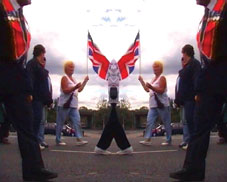
"Walk" is a 28 minute long video, which should be looped. It depicts the Orange Order at their annual parade in Portadown, Co. Armagh, Northern Ireland. The Orangemen say that they do not march - they walk, accompanied by various marching bands playing flutes, fifes, accordions, bagpipes, drums, and brass and silver instruments. The stereo soundtrack of their music has been distorted. The participants walk into themselves, eventually disappearing, leaving only an empty road. The Orange Order is a Protestant organisation based predominantly in Northern Ireland. It was founded near Portadown, County Armagh, Northern Ireland in 1795. To its members and supporters the Orange Order celebrates Protestant culture and identity, but its critics accuse it of sectarianism and anti-Catholicism. These parades take part throughout the summer "marching season", climaxing on the 12th of July. They celebrate the victory of the Protestant King William of Orange (William III) over the Catholic King James II at the Battle of the Boyne in 1690. Each year in Portadown the demonstration causes friction as they attempt to pass through the Catholic Garvaghy Road on their way to church in Drumcree, and often ends in violence with the police and British army intervening to keep order.
Victor Sloan was born in Dungannon, Co. Tyrone in Northern Ireland. He lives and works in Portadown, Co. Armagh. He studied at Belfast and Leeds Colleges of Art. Victor Sloan is an influential artist and educator. As one of Ireland's major visual artists, he has developed an international reputation for creating powerful images, which display his prodigious versatility and inventiveness. He employs video and photography to produce works commenting on various political, social and cultural aspects of Northern Ireland. The Ormeau Baths Gallery in Belfast initiated a major retrospective exhibition in 2001. In 2002 Victor Sloan was awarded an MBE. He is a Fellow of the Royal Society of Arts, a Fellow of the Royal Photographic Society and an academician of the Royal Ulster Academy. He has won many awards including the Academy?s Conor Prize in 1988 and the Gold Medal in 1995. Victor Sloan has exhibited widely throughout Europe, North America, South America and Asia. His work can be found in numerous private and public collections worldwide.
Gregg Smith
Backstage of my life
Experimental fiction | hdcam | color | 8:41 | South Africa, France | 2013

Frank Smith
LES FILMS DU MONDE / 70 CINÉTRACTS
Experimental film | mp4 | color | 189:0 | France | 2021
Les Films du monde constituent une série inédite de 70 cinétracts, qui sont, à l’origine, des films de banc-titre réalisés à la prise de vue à partir de documents photographiques de l’actualité nationale, une initiative lancée en mai 1968 par Chris Marker. L’ensemble renoue avec cette expérience cinématographique, tant poétique que politique, en se concentrant sur les failles du monde contemporain. Selon leur protocole, les cinétracts devaient « contester-proposer-choquer-informer-interroger-affirmer-convaincre-penser-crier-rire-cultiver » afin de « susciter la discussion et l’action ». « Utilisant les moyens facilités d’appropriation qu’offrent les médias contemporains, les Cinétracts de Frank Smith sont autant de messages d’urgence, de réflexions sur le devenir d’un monde, celui de notre début de 21e siècle, devenu violent et chaotique. Il s’agit ici d’estampiller un devenir global, planétaire, « un état du monde » où une situation de tension politique au Venezuela, au fin fond du Texas ou sur la Méditerranée, est « un coup de couteau dans notre destin », comme l’aurait formulé le Sartre de Qu’est-ce que la littérature ? Portés par une réflexion profonde mêlant considérations politiques, humanistes, philosophiques et esthétiques, ces quelques 70 addenda rajoutés par Frank Smith au jet original de 1968 continuent le combat, dans un esprit de synthèse complexe — une complexité à la mesure de ce que l’on appelait naguère, au temps où l’on entendait encore changer l’Histoire, la « représentation du monde », à ce jour fuyante, démultipliée et multipolaire. » Paul Ardenne
Né en 1968, Frank Smith est écrivain et poète, vidéaste et réalisateur. Il vit à Paris et Los Angeles. Il est représenté par la Galerie Analix Forever (Genève). Frank Smith est le créateur du Bureau d'Investigations Poétiques depuis lequel il explore les jonctions/disjonctions actuelles s’exerçant entre Poésie, Politique et Image au moyen de livres, de films, d’installations, d’expositions et de performances. Sont ainsi délivrés « des protocoles d’expérimentation qui interrogent la possibilité, l’efficience, la performativité de la littérature et du film. Prolongeant le Pour en finir avec le jugement d’Artaud dans un "Pour en finir avec le régime de la représentation et de la narration", Frank Smith pose des dispositifs mettant en scène la question de l’émergence de la parole ou de l’image. » (Véronique Bergen, art press, déc. 2017). Frank Smith a publié à ce jour une vingtaine de livres et dans le prolongement de ces publications, il réalise des films et des installations vidéo à partir desquels est notamment mis en pratique le non-rapport entre Voir et Parler et sont développés les arcanes d’un nouveau « cinéma de poésie ». Tous ses films ont notamment fait l'objet d'une présentation au Centre Pompidou-Paris.

Smith
Les Apocalyptiques
Experimental fiction | hdv | black and white | 20:0 | France | 2019
Paris - temps incertain, temps de la fin. Une cycliste, cavalière d'une possible apocalypse, erre autour de la ville éteinte, déserte, muette - guettant d'hypothétiques survivances. La Samaritaine, cube blanc, désaffecté, semble s’offrir comme un refuge ; mais elle se révèle le théâtre d’univers parallèles où se décide, avec les quatre derniers vivants, le sens de l'effondrement en cours. Les personnages qui y vivent sont en “arrêt de mort”, suspendus entre deux états, traversant les possibles, pris dans une fin du monde sans cesse imminente, et pourtant sans cesse différée, et encore sans cesse recommencée. C’est le bâtiment même qui va incarner de manière vivante cet interstice travaillant toutes les apparitions qui semblent traverser le lieu. Ce sont les modalités fluctuantes de cet espace de la Samaritaine qui vont se déployer, amenant d’oracles SM en chansons nihilistes, de danses de séduction désespérées en rituels de mutation, la révélation claire qu’il n’y aura pas de révélation. Les fins du mondes et les croyances sont défaites. Il n'est plus question de fin du monde, mais de commencements d'autres mondes - par la métamorphose. Apocalypse nous-autres.
SMITH ?http://www.fillesducalvaire.com/artiste/smith/ Le travail de SMITH s’appréhende comme une observation des mues de l’identité humaine. La photographie y côtoie le cinéma, la vidéo, la chorégraphie, le bio-art, la sculpture et l’utilisation des nouvelles technologies, dans une exploration des combinaisons des approches scientifique et philosophique, ouvertes sur les potentiels de la fiction. Après l’obtention d’un Master de Philosophie à la Sorbonne, du diplôme de l’Ecole Nationale Supérieure de Photographie d’Arles, et du Fresnoy - Studio National des Arts Contemporains, SMITH engage l’écriture d’une thèse de doctorat, à l’UQAM (Montréal). Ses travaux furent présentés sous la forme d’expositions personnelles aux Rencontres internationales de la photographie d’Arles, à la galerie les Filles du Calvaire et au Palais de Toyko à Paris, au musée de la Photographie d’Helsinki en Finlande, mais aussi dans de nombreux pays d’Europe (Suisse, Suède, Autriche, Luxembourg, Allemagne, Espagne, Italie...), d’Asie (Chine, Cambodge, Corée du Sud) et d’Amérique Latine (Mexique, Chili, Uruguay) et aux USA. Sa première monographie, «Löyly», est parue aux éditions Filigranes en 2013, suivie de « Saturnium » aux éditions Actes Sud en 2017, et d’un livre d’entretien avec l’historienne de l’art Christine Ollier en 2017 aux éditions André Frère. Paraissent en 2018 puis 2019 deux autres livres de photographie : "Astroblème" (Filigranes) et "Valparaiso" (André Frère). Son premier et son second moyen-métrages, "Spectrographies" et "TRAUM", furent diffusés en festivals et cinémas en Europe. Ses performances artistiques et chorégraphiques furent présentées au Centre Pompidou, au Théâtre de la Cité Internationale avec le soutien de la Fondation Hermès – New Settings, au CND (Pantin), au Musée de la Danse (Rennes) et au CCN de Montpellier. SMITH travaille actuellement à l’élaboration de son nouveau projet-monde "Désidération", avec la Cellule Cosmiel (Lucien Raphmaj, Jean-Philippe Uzan, SMITH) et le studio DIPLOMATES, qui explore les liens entre l’humanité contemporaine et son cosmos originaire : http://www.desideration.space ** Lucien Raphmaj https://lucienraphmaj.wordpress.com/ Lucien Raphmaj, écrivain né d’une œuvre élaborée avec SMITH, a écrit avec lui le scénario de ses films, depuis "Spectrographies" (2015) jusqu’aux "Apocalyptiques" (2019) en passant par leurs projets multidisciplinaires tels que "TRAUM" (film, exposition, textes, vidéos, spectacle de danse). C’est cette écriture à mille voix, fruit d’un travail personnel, mais aussi expérience d’une spectralisation de l’écriture qui se laisse traverser par d’autres voix, qui est celle qu’il mène encore à travers l’univers des « Apocalyptiques ». Il participe, en tant que critique, à la revue culturelle en ligne Diacritik et tient un blog sur la latérature. Son premier ouvrage, "Blandine Volochot", paraît aux éditions Abrüpt en Janvier 2020.

John Smith
Dad's Stick
| | | 5:0 | United Kingdom | 0
Dad?s Stick features three objects that my father showed me shortly before he died. Two of these were so well-used that their original forms and functions were almost completely obscured. The third object seemed to be instantly recognizable, but it turned out to be something else entirely.
Born 1952 - London, England John Smith was born in London in 1952 and studied film at the Royal College of Art. Since 1972 he has made over 40 film, video and installations works. His films have been shown in cinemas, art galleries and on television throughout the world and awarded major prizes at film festivals in Leipzig, Oberhausen, Hamburg, Cork, Geneva, Palermo, Graz, Uppsala, Bangkok, Ann Arbor and Chicago. One-person presentations of his work include exhibitions at Ikon Gallery (Birmingham), Pearl Gallery (London), Open Eye Gallery (Liverpool), Kunstmuseum Magdeburg (Germany) and retrospectives at the Venice Biennale and Oberhausen, Cork, Tampere, Uppsala, Regensburg and Winterthur international film festivals. John Smith is Professor of Fine Art at the University of East London. "The films of John Smith conduct a serious investigation into the combination of sound and image, but with a sense of humour that reaches out beyond the traditional avant-garde audience. His films move between narrative and absurdity, constantly undermining the traditional relationship between the visual and the aural. By blurring the perceived boundaries of experimental film, fiction, and documentary, Smith never delivers what he has led the spectator to expect." ?Mark Webber, Leeds International Film Festival, 2000 "The popularity of John Smith?s films can be explained by his wry sense of humour, his play on language, and the elegance of his visual style. His understated humour thinly conceals a darker layer of meaning in his films. John Smith?s skill as both narrator and composer of visual narratives leaves us discomforted even as we smile." ?Catherine Elwes, UK/Canadian Video Exchange, 2000 "These films can be enjoyed as stories; films for everyone, especially in their humour. They comprise a personal topography of East London, blighted but alive. Viewers are enticed to interrogate the very illusions that films construct in front of their eyes?and behind their backs." ?A.L. Rees, A Directory of British Film and Video Artists, 1996
Sam Smith
Form Variations
Experimental fiction | hdv | color and b&w | 5:28 | Australia | 2014
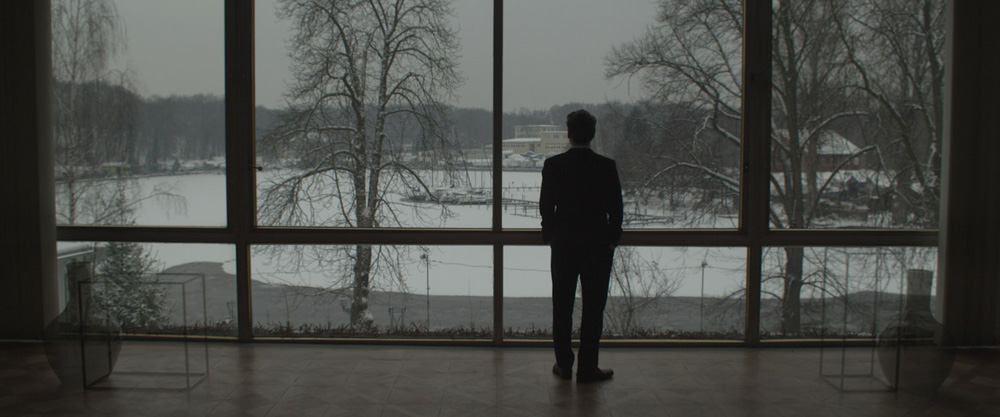
“Things are never by themselves. Neither are we. They are among themselves and linger in our surroundings. And we sometimes see them, and us among them, as things among things. Yes, but not quite, not only.” This is how Jan Verwoert starts his text ‘Enter the Eerie Thingscapes’ on Sam Smith’s video installation ‘Form Variations’ (2014). The work, shot in the widescreen CinemaScope ratio, is an atmospheric looping meditation on cinema’s relationship to space and things. The non-narrative structure coalesces object, figure and location into a series of composed vignettes that swing between the hyperreal and the surreal. Key to the work are two specific references from the beginning of Michelangelo Antonioni’s ‘L’Eclisse’ that illuminate ideas that lie subtly in the fabric of the 1962 film. Specifically, the opening shot in which the character of Riccardo`s arm is perceived first as inanimate form, then revealed as flesh.
Sam Smith lives and works between London and Sydney. His current artistic practice spans video, sculpture, installation and performance. From 2013 to 2014 he was an artist in residency as part of the Künstlerhaus Bethanien International Studio Programme in Berlin. Recent solo exhibitions and performances include ‘The Performative Minute’ at KW Institute for Contemporary Art, Berlin (2014); ’Notes on the Apparatus' selected by Vdrome for the Artists' Film Biennial, Institute of Contemporary Arts, London (2014); 'Frames of Rererence', a solo exhibtion at The Royal Standard as part of their Liverpool Biennial 2014 programme (2014) and 'Form Variations' at Künstlerhaus Bethanien, Berlin (2014); He has participated in numerous group shows including 'Online/Offline. Encoding Everyday Life for Vorspeil Transmediale', Altes Finanzamt, Berlin (2014); 'Oblivion', Zweigstelle Berlin (2014); 'Conquest of Space', COFA Galleries, Sydney, Australia (2014); 'Larger than life', Temporära Konsthallen, Stockholm (2013) and 'Framed Perceptions', Sinne, Helsinki (2013).
Frank Smith
LE FILM DU NON-LIEU
Experimental film | mov | | 20:0 | France | 2025
Le Film du non-lieu 20 minutes, 2025 Un film de Frank Smith Voix et présence Rodolphe Perez Image Arnold Pasquier & Frank Smith Montage Frank Smith & Arnold Pasquier Son, partition et création musicale originale Philippe Langlois Mouvement chorégraphique Mylène Benoit Production Même si & Sans Production Comment nous représenter ce monde qui nous échappe, non parce qu’il est insaisissable, mais parce qu’au contraire il y a peut-être trop à saisir. A partir d’une série de plans fixes (tournés sur les bords de Salton Sea, Californie, et aux confins de Malaga) pour tenter d’épuiser des lieux abandonnés, la réapparition pleinement visible d’une pluralité de dehors désertés les plus lointains coexiste ici avec le dedans le plus profond d’une présence humaine au sein d’une image audio-visuelle qui prend forme dans un dédoublement. Un texte est dit en surimpression avec les images. Parfois l’acteur qui n’agit rien, figure et dit ce qui ne peut être vu. Alors quoi ? On le revoit à la fin dans la même position que dans les milieux du film mais dans un ailleurs et là on danse et c’est la danse du non-lieu, et là on danse ce qui ne peut plus coller au sol et qui ne peut plus coller à la terre pour recommencer ailleurs, peut-être sur une autre terre et sur un autre sol. Un film de « cinéma primitif », à la recherche de ses propres règles, en quête d’une nouvelle orientation, à partir de la voix et du corps et non plus de l’image seule.
Hors pistes (Centre Pompidou, Paris) Frank Smith est écrivain et réalisateur. Il a longtemps été producteur à France Culture où il a dirigé l’Atelier de création radiophonique (2001-2011). Travaillant les notions de « poésie forensique » et de « cinéma de poésie », Frank Smith est le créateur du Bureau d'Investigations Poétiques depuis lequel il explore les jonctions s’exerçant entre Poésie, Politique et Image au moyen de livres, de films, d’installations, d’expositions. Auteur d’une trentaine de livres, il a réalisé une douzaine de films présentés dans de nombreuses institutions et festivals dans le monde (Collection Lambert Avignon, Louvre-Lens, CAC La Maréchalerie Versailles, Musée des arts déco. Bourges, Pera Museum Istanbul, Station Beyrouth, Steven Kasher Gallery New York, Centre de la photographie Genève, Fondation Boghossian Bruxelles, Fondation Michalski Lausanne, MOCA Los Angeles, États généraux du film documentaire Lussas, Côté Court Pantin, Festival de Sapporo Japon, de Jaipur Inde, etc.) et tous montrés au Centre Pompidou, Paris. Dernières publications : Irak 24 heures, Créaphis, et Deleuze Memories, LanSkine, 2025. Dernier film : Un Film sans autrui, commande du Centre Pompidou dans le cadre de L’Inventaire Deleuze.