Catalogue > Search
Results for : Tout le catalogue

Jens Settergren
The GPS Will Take Me Home
Experimental video | hdv | color | 8:49 | Denmark | 2019
In “The GPS Will Take Me Home” pigeons sing and speak in a futuristic tongue on various subjects including GPS technology, love and the medical prolonging of human life. The pigeons communicate and interact with electronic apparatuses such as a microwave oven, a robot vacuum cleaner and a cryostat— a machine created with the purpose of reviving frozen human bodies in the future. The pigeons appear as hybrids between organism and machine. They sing autotuned pop songs infused with EDM and mixed with recordings of electromagnetic fields and synth sounds, creating tensions between the emotional and the artificial. As oracles receiving signals from a future that can only be seen in glimpses through the fog. Pigeons are an omnipresent phenomenon in the metropolis. They have adapted to our form of life and have substituted human settlements for their natural habitats. The pigeon can be seen as a domesticated observer of human life, but in “The GPS Will Take Me Home” it appears as a sentient entity, a cyborg, with a particular insight into the human world.
Jens Settergren is a visual artist based in Copenhagen, Denmark. He is concerned with the production of collective imaginaries, contemporary mythologies, desires, and visual culture. His works reflect how these subjects are expressed in images, objects, and language. He explores correlations between technology, nature, cognition, and power. He has exhibited internationally at museums and venues such as The National Gallery of Denmark; INCA, U.S.; die raum, Germany; KØS Museum of public art, Denmark; Kunsthal Aarhus, Denmark; Kunsthal Nord, Denmark; Struer Tracks Biennial, Denmark, The Great Poor Farm, U.S. and Art Museum Brandts, Denmark. Jens Settergren graduated The Jutland Art Academy in 2016. In 2019 he was a resident at iscp in New York City, and in 2020 he received the Carl Nielsen and Anne Marie Carl-Nielsen Talent Award.

Anne-lise Seusse
De la guerre, Mont royal , fragments
Video | hdv | color | 15:16 | France, Canada | 2011
De la guerre, Mont Royal,fragments 2011 présentée est une double projection qui se focalise sur un parc de Montréal connu pour regrouper différentes activités de loisir et de plein air. En position centrale, situé sur une colline dominant la ville, le parc du Mont Royal cristallise par son esthétique tout un imaginaire tenant à l?idée de ré-ensauvagement dans la ville. Anne-Lise Seusse s?intéresse à ce lieu comme générateur de liens, et aux personnes qui y évoluent, dont elle tire cependant des portraits solitaires. De manière synchrone, apparaissent lentement des vues de l?environnement, où se gravent des restes de rituels, et les portraits, saisis dans des moments de repos, d?inaction. Mêlant la nature aux bruits de la ville proche, le son restitué des lieux contribue à une atmosphère d?attente vaguement menaçante. L?un des deux écrans de projection est en outre ponctué de textes extraits du célèbre traité de stratégie militaire De la guerre de Von Clausewitz, paru à titre posthume à partir de 1832 et qui gardera une certaine actualité en matière de réflexion politique et économique. Les descriptions implacables et les raisonnements dialectiques donnent alors une coloration et un rythme particuliers au scénario créé par Anne-Lise Seusse, entre réalité fantasmée et hostilité anticipée.
Photographe et vidéaste, Anne-Lise Seusse s?intéresse à des territoires situés aux lisières des villes et investis par des activités de loisirs (ball-trap, moto-cross, cérémonies de communautés de Second Life?). Espaces périphériques indéfinissables, entre l?urbain et le naturel, ces zones a priori sans qualité ni identité se marquent peu à peu d?un relief et d?un imaginaire bien particuliers. En position d?anthropologue, l?artiste « zoome » sur ces espaces porteurs de récits et se rapproche de leurs occupants en réalisant des portraits à la fois objectifs et rêveurs. Les lieux portent les empreintes des interventions humaines, parfois évocatrices d?une nouvelle forme de « earth art » (trous creusés dans la terre, rampes de planches de bois, couleurs des matériaux?). Les personnes revêtent les signes distinctifs de personnages (costumes de jeux de rôles?) et se prêtent sobrement à la pose, à la prise de vue extrêmement précise de l?artiste, qui travaille à la chambre, dans le paysage même.
Igor Sevcuk
Gravity
Experimental doc. | dv | color | 13:20 | Bosnia & Herzegovina, Netherlands | 2005
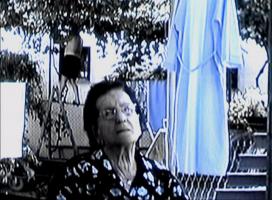
Gravity considers a tension between love (as the supposed subject of the film) and the traumatic remembrance of an old woman (the central figure of the narrative). She tells a story of a little boy who liked to climb trees and fell from one. In her background a man is climbing a ladder to prune grapevines. This seemingly ritual act contrasts with the oppressive shots of airplanes and cloudy skies. Gradually, the story of maternal love is transformed into an all-conquering totalitarian force. The video is occasionally underlined by music of Laibach / NSK (`Nova Acropola` 1983). "There is a more or less ignored fact that the historical object under discussion, the earth, has its metaphysical peculiarities, which like to hide behind an everyday appearance. We are dealing with a geographical-philosophical bastard here, the logical and physical particulars of which are not easy to fathom." Peter Sloterdijk, Theory of Globalisation.
Igor Sevcuk is born in 1972, Bosnia and Herzegovina/ ex-Yugoslavia. Since 1991 he lives and works in the Netherlands. He got a master degree of visual arts at Piet Zwart institute in Rotterdam. During Dutch art award, ?Prix de Rome? 2002, Sevcuk won the first price in the category of film and video. Sevcuk is since 1999 involved with a series of interrelated video installations, documentary and filmic narratives. Here he looks for a tension between the concepts of freedom and actual limitations of human structure. His work includes: Looking for Rebels (2000), Kalle (2004), Gravity (2005), Haso (2007).
Igor Sevcuk
Kalle
Experimental doc. | dv | color and b&w | 20:0 | Bosnia & Herzegovina, Netherlands | 2005
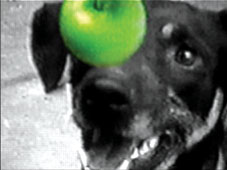
In July 2003 the artist went as a translator with a Dutch student ensemble on its tour through former Yugoslavia. The materials he collected during these concerts were the base of further investigation. He called it "Kalle". In short, "Kalle" is about religious and historical myths that condense in the reality of everyday life. What does Bach's 'Mass in B minor' have in common with the symptoms of one mad dog? And why does this 'Balkan dog' have the Scandinavian name 'Kalle'? In this 20 minute video the complementary colours of green and red alter opinions and put them into question. Through additional installations, these colours further underline the contradictions of the dog's identity. Twenty minutes of video are projected on the wall. A map of Europe shows the origin and spreading of the name Kalle. Next to it is an anamorphic image (4,5 meters long) composed of A4 prints. Together with one small photograph, two paper country flags, and their legends, they reflect upon 'Kalle's Europe'. In between this 'documentation', an extra monitor shows video with stories from Kalle?s youth. Whistling in this 5 minute video edit is a kind of dog-friendly variation to Bach?s 'Mass'.
Igor Sevcuk was born in 1972 in Bosnia-Herzegovina, ex-Yugoslavia. Since 1991 he has been living and working in the Netherlands. After finishing art school in Den Haag, Sevcuk received a Masters Degree at Piet Zwart institute in Rotterdam. During the Dutch art awards, 'Prix de Rome 2002', he won first prize in the category of film and video. From 2004 until 2005 he participated at the Research Residency Rijksacademie in Amsterdam. In 2007 he will be a guest at the Changdong National Art Studio in the Republic of Korea.
Masha Sha
Clamp
Experimental video | dv | color | 3:0 | Russia | 2006
The tightness of grey banal reality clamps, at least there is still strength to come up for air.
Masha Sharafutdinova Education: 2003 ? 2005 Pro Arte Institute, Foundation for Art and Culture, St.-Petersburg New Media Art Studies Program 2000 ? 2005 St.-Petersburg State University of Art and Culture Social and Cultural Technologies 2000 ? 2001 St.-Petersburg College of Optics and Mechanics. Photography Prizes: First prize, "New Generation" young artist, Russian state competition of contemporary art, March 2006.
Tejal Shah, Natasha MENDONCA
Anando's Door
Art vidéo | dv | color | 4:57 | India | 2005
Tejal Shah
Between the Waves
Video | hdv | color | 26:14 | India | 2012
.
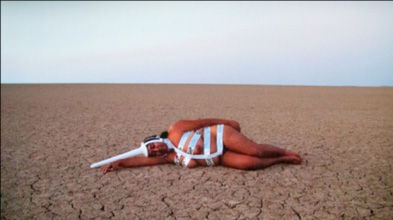
Tejal Shah (b. 1979) is a multi-disciplinary artist primarily working with video, photography, performance, sound and installation. Her work, like herself, is feminist, queer and political. She has exhibited widely in museums, galleries and film festivals. Recent presentations include, Paris-Delhi-Bombay?, Centre Pompidou, Paris, 2011, Where Three Dreams Cross, Whitechapel Gallery, London, 2010; Lost and Found - Queerying the Archive, Nikolaj Contemporary Art Center, Copenhagen, 2009; Global Feminisms, Brooklyn Museum, NY, 2007 and Saturday Live, Tate Modern, London, 2006. Solo exhibitions include The Incidental Self, Barbara Gross Gallery, Munich, 2011; There is a spider living between us, La Centrale, Montreal, 2011; Pentimento, Kashi Art Gallery, Cochin, 2009; ?What are You??, Thomas Erben Gallery, New York and Galerie Mirchandani + Steinruecke, Bombay, 2006 and The Tomb of Democracy, Alexander Ochs Gallery, Berlin, 2003. Her work is in the collection of Centre Georges Pompidou, Paris; Devi Art Foundation, New Delhi and several other private collections in India and abroad. Tejal Shah is a multi-disciplinary artist working primarily with video, photography, performance, sound and installation. Her work, like herself, is feminist, queer and political. She has exhibited widely in museums, galleries and film festivals. Her photography, video work and installation art questions the normal and the queer, bringing to light the dissonance between norm and, perception of the norm.
Shake
Who is Writing History?
Video | hdv | color | 24:56 | Taiwan | 2023
What aspects of our own identity construction stem from the collective memory of the previous generation? And what kind of collective memory will we pass on to the next generation? The resulting 12 performance art pieces, centered around the theme of identity construction, resemble narrative fragments of minor history, reconstructed using the language of film imagery. As an archive, film aids in remembering society and offers a contemporary interpretation of history. Is it a societal memory of the past or a historical narrative?
Visual artist, Shake studied in Paris Cergy National Graduate School of Art. She employs film language as the methodology to experiment the moving image narrative. Her recent works center on Asian geopolitical history, identity construction and relation between collective/individual memory. Shake has done multiple international artist residencies, and her works have been exhibited in France, Korea, Japan, the US, etc.

Shake
Subduction Zones: Our Status Quo
Experimental film | 4k | color | 4:8 | Taiwan | 2016
Located at the subduction zone where the Eurasian Plate converges with the Philippine Sea Plate, the island of Taiwan has developed a unique topography as a result of the downwelling tectonic activity. Similarly, Taiwan’s position at the boundaries of different political forces within the global geography, and the hidden forces exerted by political, economic, cultural, and ideological plates, have shaped its national identity. Taiwan’s unique landscape and geopolitical history serves as a theme for The Subduction Zone by Shake. Comprised of three short films entitled Our Status Quo, Our Story and Our Suite de Danses, the work traces the intersection of the tectonic plates and travel to Taipei’s Tatun Volcanoes; the Yuli to Antun section of the old railway line in Hualian that traverses the Eurasian Plate and Philippine Sea Plate; and to the Jili Badlands in Taitung. In the eyes of a geologist, these locations are ideal textbook examples of plate tectonics; but what Shake contemplates is whether these landscapes enable an imagining of the political struggles that have taken place on this island. How does an individual find a resting place within the conflicts of divergent social structures, political systems, and ideological modes? How can the status of the self be reimagined and the story of the self be told? In addition to landscapes, Shake also includes constructions of narrative elements in the film, such as archived historical documents, personal memoire, school activities, and cultural rituals, in the artistic practice of cinematic writing.
Cinematic writing (écriture cinématographique), is the initial creative approach that inspired Shake’s work. In order to experiment the possibility of narrative form, she plays with the plasticity of moving image to liberate the sense of sound and image, and then make them derived. Meanwhile, so as to resist the film’s rigid institutional mode of representation, in addition to the filming as the only manner, she also tries to work with other different medium and expression form to experiment. Recently, she tries to study Asian geopolitical history in her works. She has participated many international artist residency program, and presented her works in different countries.
Lior Shamriz
Before the Flowers of Friendship Faded Friendship
Experimental film | dv | color | 7:0 | Israel, Germany | 2007
This short experimental work, led mainly by dialogues, tells the story of an encounter between three old friends. The aim was to create an unusual emotional effect by constructing a realistic picture after a much darker sountrack which was prepared prior to shooting. The actors were later lip-syncing the fully edited soundtrack.
Born in Ashkelon, Israel, 1978 Studied Film at the Jerusalem Film School (2002-2005) Currently attending the Institut for Time-Based Media at the University of Arts (UdK) Berlin. Makes movies and music.
Lior Shamriz
Tiru Et Mi Hikhnasti Habaita
Documentary | dv | color | 20:0 | Israel | 2004
At 19, after dismissing himself from a brief army service, Lior Shamriz left his parents' home. He soon became an "immoral fag" and they became "old-fashioned provincials". By March 2004, after his older brother had moved in with his Catholic girlfriend in Madrid, and his younger brother had enrolled as a volunteer with the Israeli ground forces despite health problems, his parents were living alone. At that time, the situation in Israel, as almost always, was not that great. Suicide bombers hit Israeli towns despite the newly built "Fence" or "Wall" which was supposed to disable such attempts. Shamriz' father was very fragile, continuously listening to old music from Iran, which he had left at the age of 14. His mother was becoming addicted to the stories of the Telenovelas on TV, watching them day and night. Shamriz wanted to portray that period of time in the life of his parents by documenting one visit to their house, his home. A small mini-dv camera hung in his hands, enabling him to somewhat shoot his point of view, sometimes acting like a candid camera and other times taking an active part in the situation.
Born in 1978, Ashkelon, Israel, Lior Shamriz currently lives in Berlin. He studied at the Jerusalem Film School and is now attending the UdK Berlin in the Experimentelle Medien department. Selected works include: 2005, "Return to the Savanna", 75 mins program of 6 short films; 2006, "Ho! Terrible Exteriors" 30 mins short movie, "The Farewell" - a 50 minutes cooperation with the street theater group Zaza; "Japan Japan" (in editing) - an experimental featurette.

Sangam Sharma
Strings
Experimental video | 0 | color and b&w | 3:39 | Austria | 2005
Strings (3:39): Basé sur la théorie des cordes, qui dit que les particules élémentaires (comme les protons, les nucléons, les quarks...) sont produits par les vibrations de ce que l'on appelle les cordes. La matière sonore est un enregistrement du choc d'origine (la fréquence est multipliée par 100000).
Courte biographie: Je vis et travaille à Vienne, en partie aussi à Londres. Depuis 2000: Etudes de sciences du théâtre, du cinéma et des médias depuis 2003: Etudes à l'académie d'arts plastiques, masterclass de Peter Kogler (art vidéo infographie) également en 2005: séjour d'un semestre à Londres à la Slade School of fine Art, département: "fine art media". Depuis 2001 en parallèle avec une réflexion théorique sur le cinéma, une approche pratique a suivi. De nombreux travaux ont depuis vu le jour (voir la sélection dans la partie filmographie). En-dehors de mes travaux vidéo, je produis aussi entre autres de plus en plus de photographies, des travaux graphiques (sur ordinateur), des dessins et des images. Ci-joint une liste détaillée des mes participations à des festivals de cinéma ainsi qu'à des expositions. En outre je travaille dans le journalisme spécialisé dans le cinéma pour divers médias. En ce moment je travaille à une installation vidéo ainsi qu'à différents projets photographiques, et à un magazine.

Melanie Shatzky, Brian M. Cassidy
Interchange
Experimental doc. | hdv | color | 60:33 | Canada | 2018
Straddling the line between photography and cinema, Interchange is a near-wordless observational depiction of life alongside a stark and imposing Montreal highway. The film weaves portraits, landscapes, architecture and objects in its reflection on the city’s inhabitants, its traffic jams, the shipping of commercial goods and the nature of time itself. The highway portrayed in Interchange is less the subject of the film than its organizing structure: a large concrete heart, whose arteries intersect with the landscape and its residents in often startling ways, and serve as the framework for an extended meditation on the individual and their surroundings in the post-industrial age.
The films of Brian M. Cassidy and Melanie Shatzky have screened at the Berlin, Sundance, Toronto, Locarno and Rotterdam film festivals, The Museum of Modern Art, The National Gallery of Art, Le Musée de la Civilisation, ICA London, The Museum of the Moving Image and Lincoln Center. In 2012, they were nominated for a Gotham Award for Breakthrough Director and won Best New Director from Québec/Canada at the Montreal International Documentary Festival (RIDM). Their feature debut, Francine, was called “a small gem of bleak neorealist portraiture” by The New York Times and was selected as a New York Times Critics` Pick. Their documentary, The Patron Saints, was called "one of the most powerful Canadian documentaries of recent years" by POV Magazine. Cassidy & Shatzky also maintain an active photography practice and have had their work featured in ZeitMagazin, GUP Magazine, Der Greif, It`s Nice That, Wired, and FlakPhoto, among others. In 2015, The Montreal International Documentary Festival (RIDM) invited the duo to guest curate "A Photographer`s Eye: Photography & The Poetic Documentary", a special program about the intersection of photography and documentary film, which was showcased at La Cinémathèque Québécoise. Both Cassidy & Shatzky hold an MFA from The School of Visual Arts in NYC.

Mohammad Shawky Hassan
Wa 'ala Sa'eeden Akhar
Experimental video | mov | color | 24:0 | Egypt | 2015
And on a Different Note is a navigation of an attempt to carve out a personal space amid an inescapable sonic shield created primarily by prime time political talk shows with their indistinguishable, absurd and at times undecipherable rhetoric/ noises. Equally repulsive and addictive, these noises travel across geographies gradually constituting an integral part of a self-created map of exile.
Mohammad Shawky Hassan studied philosophy, film directing and cinema studies at The American University in Cairo, The Academy of Cinematic Arts & Sciences and Columbia University. His films include balaghany ayyoha al malek al sa’eed/ it was related to me (2011), On a Day like Today (2012) and Wa Ala Sa’eeden Akhar/ And on a Different Note (2015). He presented film programs at the Oberhausen Short Film Festival, Anthology Film Archives, The New York Public Library and UnionDocs, and was running the Network of Arab Arthouse Screens (NAAS)till 2016.

Rachel Shearer
Hold Still
Experimental video | dv | | 6:36 | New Zealand | 2009
Ethel Garden, Lucy Mills and Violet Winstone, women of means in 1930?s New Zealand use 16mm film cameras to document their lives and surroundings. Incidental to this act, a psychic tracery is drawn of simultaneous moments. The intimacy of their home movie making has been edited and re- assembled into a study of a landscape - internal, physical, cultural - and these women`s place within it. The addition of sound looks to support a cinematic treatment of the images by drawing on traditional aspects of film sound design but reducing the usual combination of elements (ambience, music, Foley, sound effects, dialogue) to selected singular layers - the musical sequences drawing on silent movie?s tradition of theatre cinema organ music, the emotive devices of gothic film noir, progressively reduced to sound effect gestures, coloured ambience and back to silence, implying a selective listening/remembering of history.
Rachel Shearer is a sound artist based in Auckland, New Zealand. A history in a range of sound practices and their relationship with moving image informs her work. Active as a performing and recording musician since the late 1980?s, Rachel has released material internationally with well-known music labels, (Xpressway (NZ), Flying Nun (NZ), Ecstatic Peace (US), Corpus Hermeticum (NZ), Family Vineyard (US) among them. Rachel trained in Cologne, Germany in live sound engineering, subsequently working freelance in both live sound and in post-production audio for film and television. She has sound designed and composed for a number of NZ award winning features and short films. Her most recent sound art commissions include permanent site-specific sound installations in New Zealand.

Rina Sherman
Ovaryange tji veya
Documentary | dv | color | 30:0 | South Africa, Namibia | 2006
"Ovaryange tji veya / Quand les invités arrivent" is about the relationship between Rina Sherman, filmmaker and ethnographer, and an Omuhimba family with whom she lived for seven years, filming and photographing aspects of their everyday and ritual lives. Halfway through her tenure in the field, Rina Sherman presented a multimedia exhibition, entitled "The Ovahimba Years: Work in Progress" in Windhoek, Namibia. A group of young people from the community of Etanga participated in the exhibition. The film explores the evolution of this relationship that lead to the exhibition; shows the group of young people discovering the presentation of their cultural heritage at the exhibition, with performances as part of the programme presented; and shows the resulting discussions and consequences of the exhibition once everyone is back in Ovahimba country. "Ovaryange Tji Veya" is a film about an anthropologist in situ, and evokes several notions central to fieldwork, such as the nature of the bond between the observer and the observed, the observed observer, participant-anthropology, and emotion as a possible vector or hindrance in fieldwork.
Rina Sherman was born in South-Africa. Exiled from her birth country, she settled in France in 1984 where she has been living and working ever since. She became a French citizen in 1988. A musician by training, she worked as a theatre actress and as a vision mixer in television before turning to filmmaking. In 1990 she successfully completed a doctorate at the Sorbonne supervised by Jean Rouch. Her first novel, "Uitreis", (Leaving) was published in South Africa in 1997 to critical acclaim. Writer, filmmaker and anthropologist, Rina Sherman has initiated several cultural projects. She was the audiovisual director for the manifestation, "South Africa: Music of Freedom", La Villette, 1995. She was awarded the prestigious French prize, Villa Médicis Hors les Murs, which allowed her to undertake research in the film archives of the Southern African region. In 1996, she organised Jean Rouch?s tour of South African universities in collaboration with the French Institute in South Africa and the French Embassy in Namibia. In 1997 Rina Sherman was awarded a Lavoisier Research Bursary by the French Ministry of Foreign Affairs for the project "The Ovahimba Years", a multi disciplinary long-term research programme (drawings, oral tradition, video, film, photography) aimed at creating a living trace of Ovahimba cultural heritage. For a period of seven years, Rina Sherman filmed and photographed aspects of the daily and ritual lives of the Ovahimba. In 2002, she presented a multimedia exhibition, "Work in Progress", at the Franco-Namibian Cultural Centre in Windhoek. In 2003, she extended her research into the south west of Angola, and has hence covered the entire Otjiherero socio-linguistic cultural heritage landscape. She is currently writing and editing films about her seven years spent with the Ovahimba. The project received support from the French Ministry of Foreign Affairs, various EU Embassies, The Ford Foundation, and numerous private sponsors.
Sophie Sherman, Némo Camus
L Eau Était Là
Experimental doc. | 16mm | color | 15:0 | Belgium | 2025
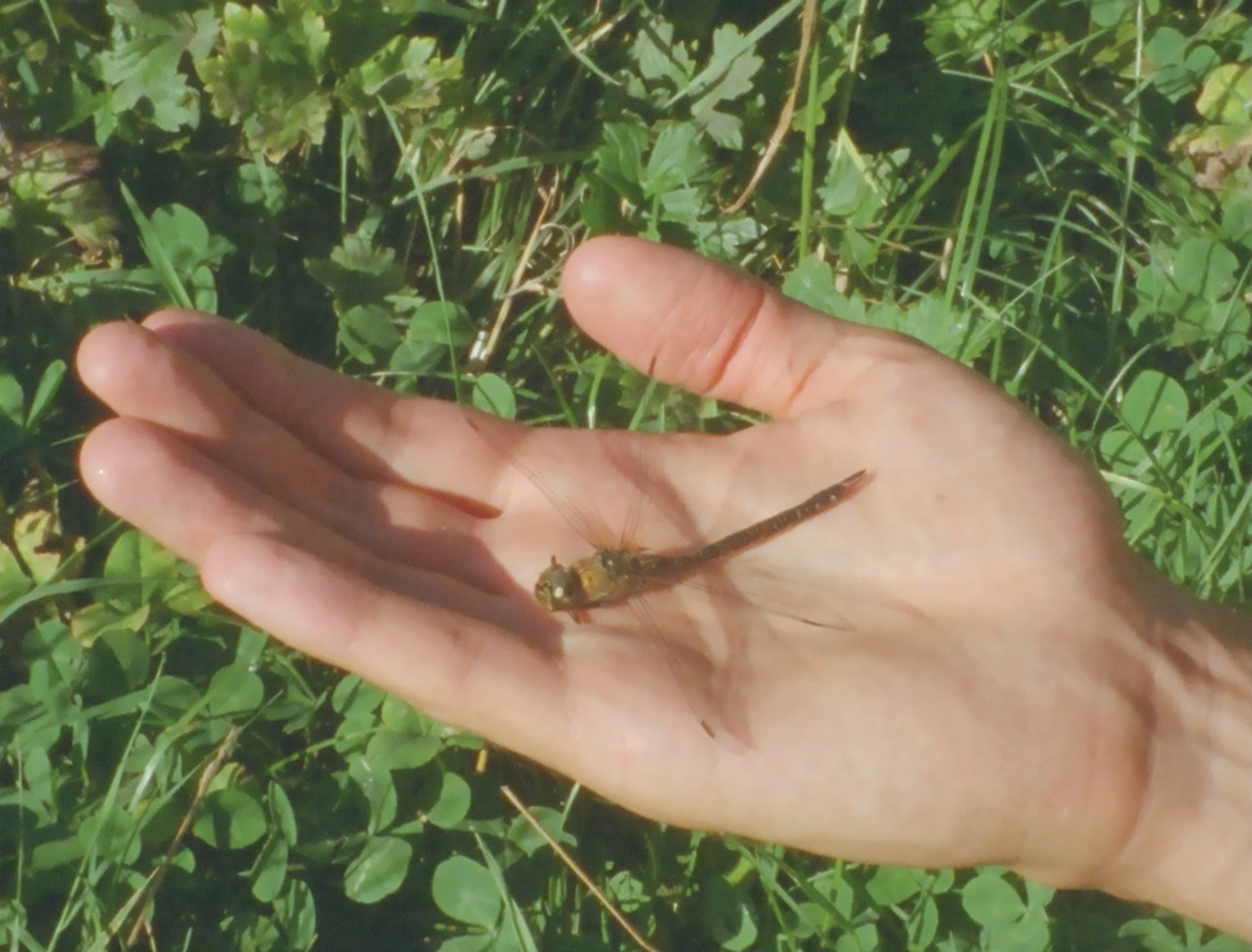
Filmed in 16 mm at the Wiels Marsh in Brussels. This marsh emerged after the water table was pierced during excavation work for a real estate project. Insects, birds, and humans coexist in this refuge, where life and magic resist.
Sophie Sherman is a French artist and filmmaker born in 1980 based in Brussels, Belgium. She studied film at Aix-Marseille University where she obtained a Master’s degree in Documentary Filmmaking, as well as at Le Fresnoy, National Studio for Contemporary Arts. In recent years, she has mainly explored the medium of 16 mm, with films such as La marche (2015, 19’), L’eau était là (2025, 15’, co-directed with Némo Camus), and Hold my hand (2025, 17’). Her films have been screened at the Torino Film Festival (It), L’Alternativa (Es), the Thessaloniki International Film Festival (Gr), Écrans Documentaires (Fr) Wiels Art Center in Brussels (Be), Ontsteking Art space in Ghent (Be), among others. Némo Camus is a French artist born in 1994, who lives and works in Brussels. After a degree in film theory and a Master's in sociology, he turned to sound creation and trained at INSAS. His work, strongly rooted in the practice of sound recording, investigates the back-and-forth between fieldwork and speculative approach, focusing on notions of trace, clue and tremor. He is specifically interested in the entanglement and gaps between intimate narrative and historical document in the context of contemporary memorial issues. His work takes the form of radio creations, sound installations, performances, texts and films. For performance and visual arts, he collaborates with Pélagie Gbaguidi, On-Trade-Off, Joëlle Sambi, Esther Mugambi, Robson Ledesma, Aïssatou Ciss, Sophie Sherman and Davide Tidoni. His work has recently been presented at GMEM in Marseille, iMAL in Brussels, Framer Framed in Amsterdam, the Biennale de Dakar and the Bienal Internacional de Dança do Ceará in Fortaleza, Brazil. He teaches sound creation workshops at the Université Paris 8.
Wenhua Shi
Endless
Experimental film | 16mm | color | 10:0 | USA, China | 2005
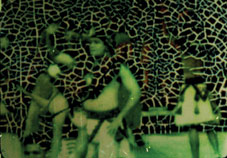
"Endless" is a meditation on the inevitable deterioration of certain traditional values that have been established (or destroyed) throughout civilization. This elegiac account uses symbolic representation from natural elements in order to convey the inevitability of remembering the social and cultural erosion, and places a layer of texture in front of the elliptical glimpses of imagery, separating the viewer from the past. The re-occurring image of flames remains untouched by the erosion aspects of reticulation, ultimately alluding to nature's powerful quality.
Wenhua Shi, originally trained as a doctor in China, departed from the medical field and began working in radio and TV in his hometown of Wuhan. At the end of 2000, he came to Colorado, studying with the experimental Film giant Stan Brakhage and Phil Solomon. He started making and exploring film as a medium at the University of Colorado at Boulder (BA & BFA) and the University of California, at Berkeley. His films have been screened at Pacific Film Archive, Smithsonian Freer Gallery of Art and Arthur M. Sackler Gallery, the National Museum of Film, Photography and Television (UK) , Denver Contemporary Museum of Art, Beijing Film Academy, The Jack Kerouac School of Naropa University, and dozens of international film festivals, including Rotterdam, Hamburg, Bradford, and Mexico City, where his works have been recognized with top honours. He works on the poetic approach to filmmaking and crossing the boundary of narrative and experimental style. He is very engaged with sound projects (Chinese New Ear/ director: Dajuin Yao) and is also the curator of Flickercafe, a monthly experimental film screening in Boulder, CO, in the post-Stan Brakhage age.
Lo Shih-tung
Ghosts next to the city
Video installation | 0 | color | 14:3 | Taiwan | 2011
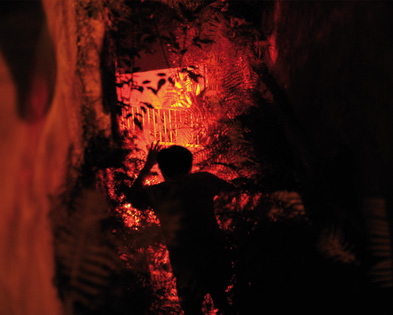
The script is written according to a conflagration which happened years ago in Treasure Hill. Through photo documents and interviews with residents, one can relate various images of fire to the past lifestyles of residents, whether it be fire accidents, bonfires, or fires for the purpose of producing light and warmth. These flickers of light can be seen as historical signifiers, linking together all the different people and memories belonging to this land. At present, Treasure Hill has been transformed and regenerated as an Artist Village. How to recollect the historic local memories and let them permeate into the present or even the future through the practice of contemporary art is a major issue that challenges us today. To this date, the flames of Treasure Hill have not yet ceased and are continuing to spread. Through various forms of fire (light) and images, it allows us to "see / illuminate" the different textures of Treasure Hill.
I regard the special textures present in our daily life, seeing them as in Walter Benjamin?s discourse, fragments and reflection of a complete structure, a whole world. My works are organic documents attempting to inquire and contemplate ever-changing warped messages. They do not only focus on one direction. Painting, photography, performance, audio/ video, installation, happenings can all be part of a creation thrown to public arenas awakening its refraction and feedback. Through the process of creating and interacting with spectators and communities, the fragmented, fissured, and forgotten history can be restored or even fictionalized. It is about seeking one?s identity, residence, hometown, and city; those long forgotten, unseen ghosts.
Hara Shin
Monumental Ether. Bodies.
Experimental doc. | 0 | color | 24:58 | Korea, South | 2025
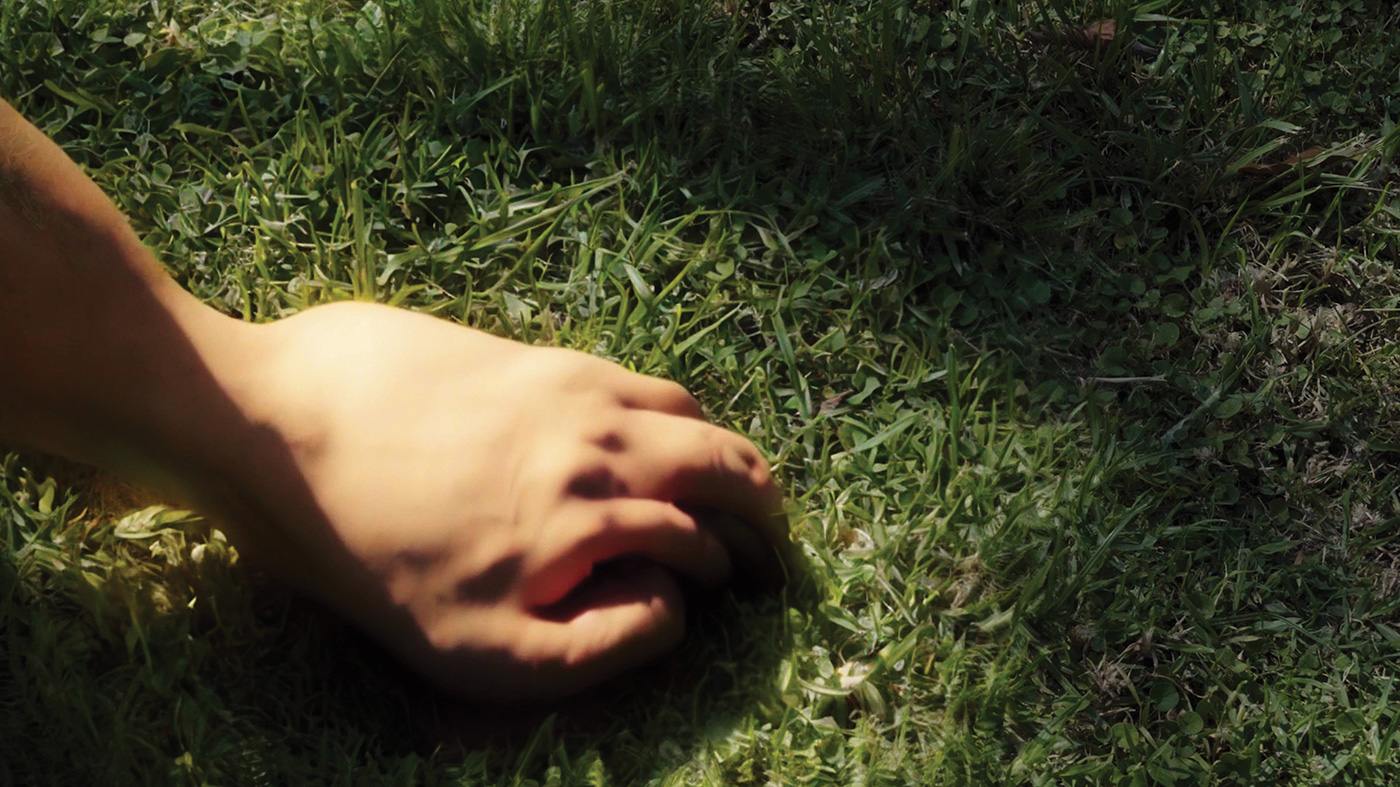
This work is an experimental documentary video that explores the entangled geopolitical temporalities of three sites shaped by anthropocentric violence: Kückenmühler Anstalten in Szczecin, a former Nazi forced-sterilization facility and hospital for the disabled; the Tropical Botanical Garden in Lisbon, once a Colonial Garden; and Tancheon Stream in Seoul, associated with the legend of Dongfang Shuo’s death. Through multispecies narratives of erasure, survival, and regeneration, the work investigates how dead bodies might come back to life and how tragedy can be reconfigured into new modes of being—ultimately weaving a textured fabric of memory. Its nonlinear structure reflects the layered realities of these places, where time does not flow in a straight line but folds inward, revealing how past, present, and future communities coexist within ecologically and politically marginalized spaces. At the work, a fictional being from the future, who continuously interrogates her entangled existence. The piece draws inspiration from Manifesto Antropófago (1928) by Oswald de Andrade, which frames cannibalism as a radical act of cultural resistance. Bodies, fleshes, and plants traverse histories—digesting, absorbing, and fusing them. Through these ritual acts of mutual consumption, the work enacts an ongoing unfolding of memory and being. The past is not buried in death; it arrives before us—still alive, in transformed and transforming forms.
Hara Shin is an artist based in Berlin and Seoul. Working with film, multimedia installations, and storytelling, she explores speculative ecosystems reflected by planetary concerns such as habitat loss, mass extinction, and involuntary migration alongside the residual memories and hegemonic structures left behind by humanity. Her works have been exhibited and screened at venues including Busan Museum of Contemporary Art (Busan MoCA) (2025), Spazio Supernova in Rome (2025), DA Z Digital Arts Zurich, Kunsthaus Zürich (2024), galerie weisser elefant in Berlin (2023), DMZ International Documentary Film Festival in Goyang (2023), ACUD Galerie in Berlin (2022), TRAFO Center for Contemporary Art in Szczecin (2022), Drugo More in Rijeka,(2022), and Art Center Nabi in Seoul (2021). In 2023, she participated in the Goldrausch Künstlerinnenprojekt, supported by the Federal State of Berlin & European Social Fund Plus, and was selected for the 2024 Emerging Visual Artist Support Program by the Arts Council Korea. She is a laureate of In situ 2024–2025 at the Cité Internationale des Arts in Paris, in partnership with the Foundation Daniel et Nina Carasso.
Yoshida Shingo
journal intime
Art vidéo | | color | 5:45 | Japan, Swaziland | 2010
journal intime «Mon travail se base sur des interventions parasitaires dans l`espace public, à travers l?observation, l?expérience et le souvenir des comportements humains. Les actions que je realise en transforment le sens, interrogeant l?usage et les relations des gens à leur environnement. Ce que je réalise est un constat teinté d?humour. Je travaille comme un voyageur, sans atelier fixe. Mon activité artistique dépend de l?endroit où je me trouve et permet d?identifier cet endroit. Je suis autonome, mon atelier est mobile. Il est primordial pour moi d?envisager les villes du monde entier, comme des lieux de création, de jeu et de me confronter aux différents modes de vie et différents codes sociaux.»
Shingo Yoshida est né le 18 avril 1974 à Tokyo. Il entre en 1999 à la Villa Arson à nice où il se consacre au son ainsi qu`a la vidéo.Il en sort en 2004 avec les félicitations du jury. Puis il emménage à lyon où il fait un post-diplome en Art , suite à quoi il intègre le programme La Seine des beaux arts de Paris (2005). Depuis Shingo Yoshida voyage à travers le monde dont il a fait son atelier, adaptant sa pratique à l endroit où il se trouve, il est pour lui primordial d` envisager les villes du monde entier comme des lieux de création, de jeux et de se confronter à différents modes de vie et différents code sociaux ce dont son travail se nourrit