Catalogue > Search
Results for : Tout le catalogue

Floris Schönfeld, Michaël SEWANDONO
WEIGHT - End of the World
Video | dv | color | 5:0 | Netherlands | 2009
Weight is a series of short films that are each based on different excerpts from literature. The selected excerpts served as the scenario for the films, and demonstrate the moments of subtle tension that precede a significant event in the plot. A search for the moment, and for the physical state of the decision making. Removed from the context of the original story these excerpts are enigmatic, but retain the same tension inherent to their former position. As they start to interact on a suggestive level a new, highly tense, charged story emerges. The project strives to convey the `weight` of the moments without the context of their original narratives. The series currently consists of four films; 1. Oracle Night based on Oracle Night by Paul Auster 2. Miso Soup based on In the Miso Soup by Rui Murakami 3. End of the World based on Hard-boiled wonderland and the End of the World by Haruki Murakami 4. The Outsider based on The Outsider by Albert Camus
Floris Schönfeld (Houston, VS, 1982) is a visual artist and filmmaker working in Amsterdam and The Hague. He studied time-based arts at the Gerrit Rietveld Academy in Amsterdam and has recently completed a masters at the Interfaculty ArtScience at the Royal College of the Arts/Royal Conservatoire The Hague. In his film and performance work he is primarily concerned with the awesome power of fiction and it?s effects on humanity. Michaël Sewandono (1979) studied audiovisual art at the Gerrit Rietveld Academy in Amsterdam and he studied at the Escuela Internacional de Cine Y Television de Cuba, Havana. Between 2005 and 2008, he has been working on film projects, commercials and music videos. Sewandono currently works on the completion of short films and the development of two feature films.
Volker Schreiner
Cycle
Experimental film | betaSP | color and b&w | 4:14 | Germany | 2010
?Clips from Curtiz to Lynch, from A Place in the Sun to White Noise. Assembled under the aspect of the dominating light source in each particular excerpt, which in this unsettling four minutes work shows off as the merciless ruler over the sound. Or, in the words of found-footage-virtuoso Volker Schreiner: ?Rooms illuminated by oscilling light, lightened up in rhythmic intervals by lamps and neon signs or irregular flashes of light . People are waiting, awaiting, pondering, searching, worrying.?? (catalogue Viennale 10, 2010)
VOLKER SCHREINER 1988/89 grant Cité Internationale des Arts Paris, 1993 lectureship HfG Karlsruhe, 1994-98 lectureship HBK Braunschweig, 1998/99 grant Deutsche Akademie Villa Massimo Rome, 2000/01 visiting professor HBK Braunschweig, 2002/03 visiting professor Johannes-Gutenberg-Universitaet Mainz, lectures, workshops and seminars a.o. in Rome, Istanbul, Ankara, Casablanca, Jerusalem, Bangkok, participation in numerous festivals and tours, works owned a.o. by the NBK Berlin, the ZKM Karlsruhe, the Ludwig Museum Cologne, the Museum fuer Neue Kunst Karlsruhe, the Amsterdam Film Museum www.volkerschreiner.de
Volker Schreiner
Counter
Art vidéo | dv | color and b&w | 6:30 | Germany | 2004
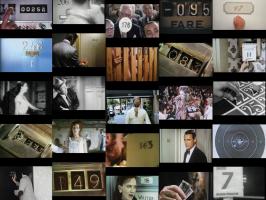
?This is a work based on found footage. Schreiner extracted sequences with numbers from many movies, both classic and obscure. Using these short fragments he compiled a countdown starting from the number 266. A strong effect of suspense is created, the tight-paced montage holding the viewer`s attention.? (catalogue Invideo, Milan 2004)
Volker Schreiner
Cell
Experimental film | dv | color | 4:27 | Germany | 2006
"Living rooms coolly lit by white noise on TV screens are a familiar harbinger of approaching doom in most feature films. In Cell, just this one unheimisch cinematographic element is put under the magnifying glass. A concentrated montage of countless fragments with flickering and spooky snow-covered screens from Hollywood films. This is the ultimate meta-cinema. No message, just medium." (catalogue International Film Festival Rotterdam 2007)
Volker Schreiner, since 1988 videos, video-installations and video sculptures/ a.o. grant Villa Massimo Rome, grant Cité des Arts Paris, grant Kunstfonds Bonn, prize winner of the 5th Marl Video-Kunst-Preis/ lectureships at the HfG Karlsruhe and the HBK Braunschweig, associate professor at the HBK Braunschweig and the Johannes Gutenberg-University Mainz/ works owned a.o. by NBK Berlin, ZKM Karlsruhe, Museum Ludwig Cologne, Museum fuer Neue Kunst Karlsruhe, Film Museum Amsterdam
Volker Schreiner
From Afar
Experimental film | dv | color and b&w | 5:25 | Germany | 2007
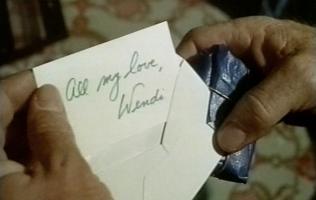
A compilation of 200 notes from movies.
Volker Schreiner, since 1988 videos, video-installations and video sculptures/ a.o. grant Villa Massimo Rome, grant Cité des Arts Paris, grant Kunstfonds Bonn, prize winner of the 5th Marl Video-Kunst-Preis/ lectureships at the HfG Karlsruhe and the HBK Braunschweig, associate professor at the HBK Braunschweig and the Johannes Gutenberg-University Mainz/ works owned a.o. by NBK Berlin, ZKM Karlsruhe, Museum Ludwig Cologne, Museum für Neue Kunst Karlsruhe, Film Museum Amsterdam
Volker Schreiner, Christoph GIRARDET
Fiction Artists
Art vidéo | dv | color and b&w | 45:0 | Germany | 2004
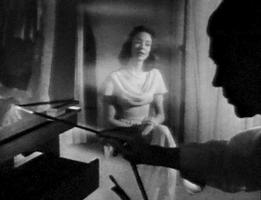
Artists from films, whose lives are made-up, fictional artists: who are they, how do they live, how do they work? What kind of clichÈs do they convey? Do they reflect the way that contemporary artists view themselves or do they represent an anachronistic image of theartist in a society heavily influenced by modern media? The twelve montages, taken from more than one hundred films ranging from classics to B-movies, engage in a subjective game with these questions.
Volker Schreiner
GRID
Experimental film | betaSP | black and white | 5:32 | Germany | 2009
Traces, devices, indications, found and discovered, clues and hints referring to absentees - a compilation of excerpts from movies and feature films.
VOLKER SCHREINER 1988/89 grant Cité Internationale des Arts Paris, 1993 lectureship HfG Karlsruhe, 1994-98 lectureship HBK Braunschweig, 1998/99 grant Deutsche Akademie Villa Massimo Rome, 2000/01 visiting professor HBK Braunschweig, 2002/03 visiting professor Johannes-Gutenberg-Universitaet Mainz, participation in numerous festivals and tours, works owned a.o. by the NBK Berlin, the ZKM Karlsruhe, the Ludwig Museum Cologne, the Museum fuer Neue Kunst Karlsruhe, the Amsterdam Film Museum

Volker Schreiner
Hollywood Movie
Experimental film | hdv | color and b&w | 7:0 | Germany | 2012
A transformation of Nam June Paik`s text "film scenario" into a movie. Hollywood stars speak Paik: "You can make any Hollywood movie interesting, if you cut the movie several times ..." Michael Caine, Humphrey Bogart, Elizabeth Taylor, John Torturro, Katharine Hepburn and other protagonists of mainstream cinema are assembled to speak a text about deconstructing film watching.
Volker Schreiner video works since 1988/ grants at the Cité Internationale des Arts Paris, the Deutsche Akademie Villa Massimo Rome/ lectureships at the HfG Karlsruhe and the HBK Braunschweig/ visiting professorships at the HBK Braunschweig and the Johannes-Gutenberg-Universitaet Mainz/ lectures, workshops and seminars a.o. in Rome, Istanbul, Casablanca, Jerusalem, Bangkok/ participation in numerous festivals and tours/ works owned a.o. by the NBK Berlin, the ZKM Karlsruhe, the Ludwig Museum Cologne, the Museum fuer Neue Kunst Karlsruhe, the Amsterdam Film Museum/ distribution by Heure Exquise! and Light Cone Paris/ internet: volkerschreiner.de
Volker Schreiner
Pair Of
Experimental film | betaSP | black and white | 4:38 | Germany | 2011
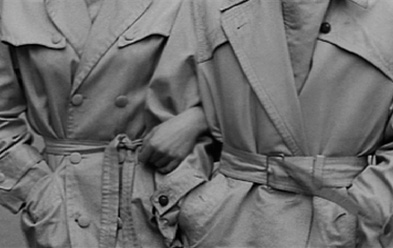
A pair of hands, a pair of rings, two candles, cards, cables, fingers, photos, needles, glasses, chairs ? a couple, a pair, pairwise, pairs of words ? close-distant, longing-leaving, connecting-separating, remembering-forgetting, inside-outside, ahead-behind, before-after.
Volker Schreiner video works since 1988/ grants at the Cité Internationale des Arts Paris, the Deutsche Akademie Villa Massimo Rome/ lectureships at the HfG Karlsruhe and the HBK Braunschweig/ visiting professorships at the HBK Braunschweig and the Johannes-Gutenberg-Universitaet Mainz/ lectures, workshops and seminars a.o. in Rome, Istanbul, Casablanca, Jerusalem, Bangkok/ participation in numerous festivals and tours/ works owned a.o. by the NBK Berlin, the ZKM Karlsruhe, the Ludwig Museum Cologne, the Museum fuer Neue Kunst Karlsruhe, the Amsterdam Film Museum/ distribution by Heure Exquise! and Light Cone Paris/ internet: volkerschreiner.de
Volker Schreiner
Radar
Experimental film | dv | color and b&w | 5:14 | Germany | 2006
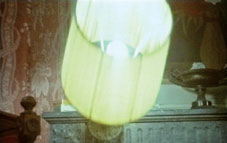
A compilation of cones of light from electric torches. "Radar" leads to an eerie pursuit of tracks. Hesitant cones of light, made from fragments of innumerable films, light up in a sporadic manner a path leading to nothingness. A metaphorical reflection on the darker side of existence as well as the light of knowledge. 2006 5 minutes 14 seconds Color / b&w Mono channel 1+2 PAL
Volker Schreiner was born in Germany in 1957. He has led numerous lectures and seminars, has held several lectureship and associate professor positions, and has won numerous awards and grants, such as a grant at the Cité Internationale des Arts Paris in 1988/89, and a grant at the Deutsche Akademie Villa Massimo Rome in 1998/99. His work has been presented at festivals in, among other places, Berlin, Oberhausen, The Haag, Rotterdam, Paris, Madrid, Rome, New York, Montréal, Tokyo, Sydney and Moscow, and he has participated in numerous tours. Schreiner's works are owned by the Neuer Berliner Kunstverein, the Mediathek of the Zentrum für Kunst und Medientechnologie Karlsruhe, the University of Québec Montréal, the Ludwig Museum Köln, the Museum für Neue Kunst Karlsruhe, and the Amsterdam Film Museum, to count a few.
Volker Schreiner
Scope
Experimental film | betaSP | color and b&w | 4:57 | Germany | 2008
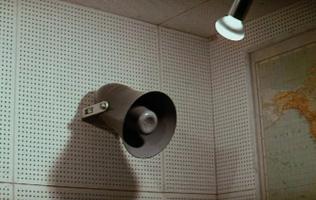
"Main motive is the speaker - on masts, in halls, on roofs in cars, living rooms, in headphones and handsets, in radio installations. Sound get through the speakers, as unclear part of communication and dialogues, distorted music and announcements, search of transitions, noise." (catalogue Viennale 2008)
VOLKER SCHREINER 1988/89 grant Cité Internationale des Arts Paris, 1993 lectureship HfG Karlsruhe, 1994-98 lectureship HBK Braunschweig, 1998/99 grant Deutsche Akademie Villa Massimo Rome, 2000/01 associate professor HBK Braunschweig, 2002/03 associate professor Johannes-Gutenberg-Universitaet Mainz, participation in numerous festivals and tours, works owned a.o. by the NBK Berlin, the ZKM Karlsruhe, the Ludwig Museum Cologne, the Museum fuer Neue Kunst Karlsruhe, the Amsterdam Film Museum www.volkerschreiner.de

Volker Schreiner
Sites
Experimental film | hdv | color and b&w | 8:20 | Germany | 2015
A filmic tryptic of three landscapes.
video works since 1988/ grants at the Cité Internationale des Arts Paris, the Deutsche Akademie Villa Massimo Rome/ lectureships at the HfG Karlsruhe and the HBK Braunschweig/ visiting professorships at the HBK Braunschweig and the Johannes-Gutenberg-Universitaet Mainz/ lectures, workshops and seminars a.o. in Rome, Istanbul, Casablanca, Jerusalem, Bangkok/ participation in numerous festivals and tours/ works owned a.o. by the NBK Berlin, the ZKM Karlsruhe, the Ludwig Museum Cologne, the Museum fuer Neue Kunst Karlsruhe, the Amsterdam Film Museum/ distribution by Heure Exquise! and Light Cone Paris/ internet: volkerschreiner.de

Luise Schroeder
UNAMERICA-Relocating memories
Video installation | 0 | color and b&w | 16:31 | Germany | 2018
`UNAMERICA Relocating memories’, by the artist Luise Schröder, deals with the commemoration of the internment of Japanese-Americans at the former War Relocation Center in Manzanar, USA during World War II. Once a year survivors, their relatives, as well as sympathizing groups come together to commemorate the forced displacement and detention of more than 10,000 people to Manzanar authorized by president Roosevelt through the Executive Order 9066. In 1985 the place was declared a national memorial site. Since 9/11 the Japanese-American community intensively expresses its solidarity also with Muslim communities in the USA and invites them to participate in the events at Manzanar. The video focusses on different historical, political and visual narratives with the purpose to understand how and in which way the historical events are represented and reconstructed today. The historical photos used in the video are taken by Ansel Adams and Dorothea Lange.
Luise Schroeder is a visual artist, photographer and filmmaker, who is based in Potsdam, Leipzig and Berlin. Within her artistic practice she is dealing with aspects of “history in the making” from a today’s perspective and how cultures of remembrance and commemoration are influenced and formed by media and image production. In recent years, the artist has taken part in solo exhibitions at the Kunstverein Bielefeld and the C/O Berlin Amerikahaus in Germany and in numerous group exhibitions. Among others in the Brno House of Arts (Czech Republic), in the 7th Berlin Biennale for Contemporary Art in 2012 and in the Gallery Eigen+Art in Berlin as well as in the Goethe Institut Washington DC, USA. In 2016 she was awarded a three-months scholarship in Los Angeles at the Villa Aurora and in 2018/19 she was holding a residency at the Cité des Arts in Paris, France.

Stefanie Schroeder
40h, max. 2 Monate
Experimental doc. | hdv | color | 0:0 | Germany | 2017
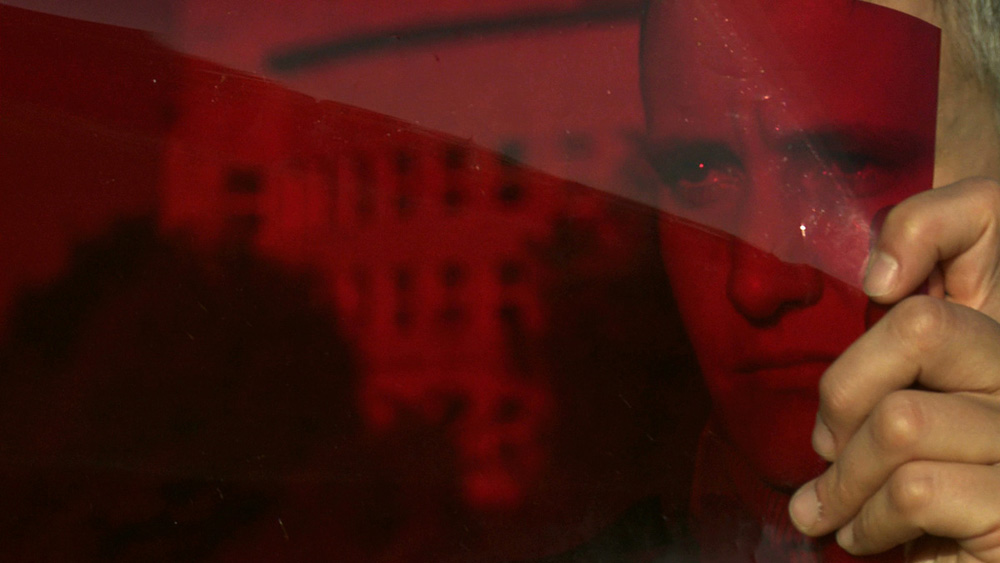
To speed up the process of becoming an independent self-employed artist and to end my dependence on Hartz 4 unemployment benefit, I had to participate in a program for business optimization, carried out by a management consultancy that was engaged by the Jobcenter. My proposal to make a film documentation of the process was denied. I transformed recordings of conversations, hand-outs, correspondence, my dream diary and the pre-printed form F 5.5 into a scenario about my “project on the artistic business personality,” in which the role models of artist, entrepreneur and welfare recipient, all represented by myself, clash and make me grapple with their compatibility. What does optimization mean? Which language is used? How are my actions and how am I described, adapted and, if so, deformed?
Studies in art education, art history, communication science, Greifswald University. Organisation of WBS70, independent culture centre, Greifswald. Participant of art squat project prora.allinclusive Guest student in media art at HFG Karlsruhe. Exchange student at Villa Arson, Nice. Studies in photography at HGB Leipzig. Participant of Professional Media Master Class / PMMC LAB at Werkleitz e.V. Halle/Saale. Member of the Cinematic Initiative Leipzig FILZ https://filz.works/de/about. Supervisor/teacher for digital photography and image editing, Kulturbahnhof e.V. Markkleeberg. Participant of Pilot Programme for emerging filmmakers, MDM. www.schroederstefanie.de
Kerstin Schroedinger, Bernien Mareike
Rainbow's Gravity
Experimental doc. | hdv | color | 32:50 | Germany | 2014
Rainbow's Gravity is a cinematic study on the Agfacolor-Neu colour film stock made in Nazi Germany. Along its three layers of emulsion, the film digs deep into the escapist colourised landscape of this time and asks for the material requirements, retentions and ideological continuities of the Agfacolor palette. The film sequences, projected in the former production line, dismantle not only themselves, but also our view accustomed to historicise. Those scenes aim to visualise what the colour does not show. The film tries to realise, not only how it had been - in the darkrooms of the Agfa film factory - but also how it can be possible at all to face this reality today within film, in images and movements without a final or even conciliatory view of the past
Mareike Bernien (Berlin) and Kerstin Schroedinger (London / Zurich) working in collaboration since 2006 in joint film, exhibition and text projects. In their work they seek to critically interrogate image productions and to produce and reproduce images as material of thought. They work with film, radio play, music and text with a historiographical practice, questioning the means of production, historical continuities and ideological certainties of representation. They are interested in an experimental and critical approach to media formats, with an implicit entanglement of content and form.
Susanne Schuda, Florian SCHMEISER
Chaos in the trolley
Création sonore | 0 | | 10:0 | Austria | 2005
"Chaos in the Trolley" is a picture- and soundinstallation, that plays with the informationsystem within trade - the barcode. Embedded into a picture is a barcode-scanner. The barcode-informations of any scanned goods are translated into sound, which is influenced by chaotic algorythmes. On the visual level of the work chaos becomes visible through fictitious products. The advertising-like sujet of a trolley filled with ?chaotic? goods is shown in front of the supermarket and in the surrounding field.
schuda and schmeiser work together in the field of public space and mixed media installation since 1998. Florian Schmeiser 1973 born in Graz; study of philosophy, university of vienna degree in visual media, university of applied arts, Vienna works within the ranges installation, video, sound, Web Susanne Schuda 1970 born in Vienna; degree in visual media, university of applied arts, Vienna various works within the bounds of art in public space, installation, video, web and digital-collage

Florine Schueschke
After a while what is strange
Experimental fiction | mov | color | 19:50 | Germany | 2020
In the near future, Berlin is flooded. There is water up to the first floor of buildings, yet life goes on. The film combines surreal scenes filmed in an analogue model, narrative scenes played by actors and actresses and montages of both. The laconic everyday life in the city is oscillating between catastrophe and catharsis, yet the images also give hope for new ways of living in the future. Despite the precariousness the characters struggle with, their surrounding is one of a postcapitalistic society that has achieved positive changes by necessity: new architectonic spacial arrangements inside the house, a local food and energy supply on the roof, autonomy. The film therefore holds different possibilities for futures that we can approach from where we are now, hopeful and dreadful ones.
Florine Schueschke is an artist and architect living in Berlin. She has studied architecture at the University of the Arts in Berlin and the University of Illinois at Chicago.

Roswitha Schuller, Markus Hanakam
Mobile
Experimental video | 0 | color | 8:0 | Austria | 2017
In the pieces by Hanakam & Schuller, the device is a recurring motif. That is to say, all that apparatus that is used to render optical imagery and also generate their specific formats, to control or trigger images or even manipulate them. The device - or gadget - is a type of artifact, a functional object that is charged with both everyday and mystical meaning. In their recent video piece Mobile, two hands move one object after the other into focus, creating an endless sequence of object chains. In his allegorical reference to a kind of Jacob’s ladder of the media, the video in the loop becomes a sort of perpetuum mobile. The mobile can also be understood as a mobile. The mobile device allows data to flow and data to be exchanged. The accompanying voice over with a computer-simulated voice reproduces several tracks from Tree of Technologies of the classic computer game Civilization that was released again in 2016, revealing the absurdity of the strictly linear development of technology and culture, as illustrated here by the game.
Many of the artifacts of Hanakam & Schuller, an artist duo that lives in Vienna, are shapeshifters, changing their outer form and then reappearing in a variety of contexts. As artists and explorers, Markus Hanakam and Roswitha Schuller redesign the rules of the fine arts for their own purposes and create unconventional arrangements and new world designs in videos and objects. They also work with applied artforms. Their works have been shown in Berlin’s Haus der Kulturen der Welt, the Eyebeam art and technology center in New York, Paris’ Palais de Tokyo, Moscow’s Garage Museum of Contemporary Culture, Vienna’s MAK, the MAK Center for Art and Architecture in Los Angeles, and Tokyo’s National Art Center.

Roswitha Schuller, Markus Hanakam
The Emblematic Cabinet
Experimental doc. | 4k | color | 11:39 | Austria, USA | 2019
More recently, the artist duo has looked at the artistic practice of the emblem. This is to consider an emblem as a variety of being a symbol, a trick, or a figure of thought. By so doing, Hanakam & Schuller rely on their profound examination of the formal language of everyday objects, liberating these from their context or their supposedly mysterious meanings. Inspired by the “Building Duke” research, Hanakam & Schuller worked on Duke University’s (Durham, NC) variety of architectural forms during their stay in spring 2019. In other words, the idea is to develop a short film featuring both physical architectural details of the campus buildings, and also virtually twisting these by means of a playful range of emblems.
Markus Hanakam (1979) and Roswitha Schuller (1984) both studied at the Universtiy of Applied Arts in Vienna. Since 2004 they collaborate as duo, their work is shown at Museums and Festivals in an international context, including Rencontres Internationales at Haus der Kulturen der Welt, Berlin and Palais de Tokyo, Paris, Eyebeam Center for Art and Technology, New York, , SIGGRAPH 2012 Los Angeles, ISEA 2011, Istanbul, 4th Moscow International Biennale for Contemporary Art 2011 among others. Recently they have been visiting artists at Duke University, Durham, NC. The artefacts made by the two artists who live in Vienna are often shape-shifters, changing their exterior forms and reappearing in different contexts. As artists and researchers they are engaged in restructuring the visual art rulebook and building up idiosyncratic systemic orders and new visions of the world in their videos and objects. In the process they reflect and make ironic various historical and contemporary artistic strategies as well as their means of expression. They work primarily in the realm of video, interactive computer applications and applied forms of art.

Roswitha Schuller, Markus Hanakam
Trickster
Experimental film | hdv | color | 13:15 | Austria, Japan | 2014
In all chaos there is a cosmos, in all disorder a secret order. In C.G. Jungs sense the archetype as an object conduce to determination of a “big picture” - of wholeness - as a subject it serves as structure for universal and individual experiences. Like a role-play-gaming kit Markus Hanakam & Roswitha Schuller’s video-work Trickster provides a card index on archetypical places, figures, artifacts and actions; a mode of narration on a coherent world design. To support the layer of moving image a text layer is composed by assembling passages from a historical inventory catalogue of the National Gallery of Scotland. A traditional spectrum of subjects, mostly Genre painting like landscape and portrait, declares the semiotics of art historical reading and puts it into a gaming context.
Markus Hanakam was born 1979 in Essen, Germany. After studying two years at the University Essen (Faculty for Art and Design), 2000-2002, he graduated in 2006 with a Master degree in Art Education, 2009 Master degree in Sculpture and Multimedia from the University of Applied Art Vienna. Roswitha Schuller was born in 1984 in Friesach, Austria. She graduated 2007 with a Master degree in Art Education, 2009 Master degree in Sculpture and Multimedia from the University of Applied Art Vienna; she holds a Doctoral Degree in Art Sociology. Since 2004 they collaborate as duo, their work is shown at Museums and Festivals in an international context, including Videodumbo Festival 2013 at Eyebeam Center for Art and Technology, New York, Recontres Internationales 2012 at Palais de Tokyo, Paris, ISEA 2011, Istanbul, 4th Moscow International Biennale for Contemporary Art 2011. They gained several awards like the MAK Schindler Fellowship in Los Angeles as well as an Artist in Residency at the Citè International des Art, Paris. Their short Film “INVASION” is awarded as Jury Selection Work at Japan Media Arts Festival 2012. Markus Hanakam & Roswitha Schuller have been visiting curators at Medienwerkstatt Wien 2014.
Liv Schulman
Une Vieille Terre Pour Une Nouvelle Chanson Qui Sonne Comme La Vieille Chanson Avec Le Même-Même Et Le Vieux-Vieux Et Rien de Nouveau
Video | hdv | color | 40:25 | France | 2023
This fiction, filmed on the Carnac alignments in Brittany, France, shows us a world where a group of household electric appliances have acquired a series of affects. Together they stage a version of a Victorian drama, a very free adaptation of Charlotte Bronte’s Jane Eyre, where an air conditioner named AC suffers the adventures of being poor and orphaned in a loveless world in the midst of climate change. This drama, performed entirely by household appliances, takes place at a time when its moral content is linked to the first industrial revolutions. The idea would be to take up the fundamental themes of Victorian literature, such as the evolution of Romanticism towards reason, religious skepticism, the gradual urbanization of society, the creation of the bourgeoisie, the appearance of the figure of the snob, prejudice, glory and sensibility, as well as high moralism and the repression of sexuality.
Born in 1985, Liv Schulman grew up in Buenos Aires, where she attended public school. Fascinated by television, the arrival of cable in 1990 and the financial crash of 2001 are among the most striking moments of her life. A graduate of the École nationale supérieure d’ans de Paris-Cergy, she has lived in France since 2015. Liv Schulman’s work takes the form of filmed fictions, TV series, readings-performances and novel writing. The narratives at the core of her work deal with the role of subjectivity in the political space and the difficulty of giving it credit. In this way, a real telenovela is shown on television as if in a museum. In her approach, creating means directly experiencing an environment, a system, a subject. She has exhibited her work at the Villa Vassilieff in Paris, the CAC La Galerie in Noisy-Ie- Sec, the Centre Pompidou in Paris, the Crac Alsace, the Steirischer Herbst Festival in Austria, the Ricard Foundation in Paris, the SMK in Copenhagen, the Museo de Arte Moderno in Buenos Aires, the Reina Sofia Museum in Madrid, and the Bennis Center for Contemporary Arts in Nebraska. She has benefited from the ADAGP grant, the sponsorship of the Fondation des Artistes, the DAAD residency programme in Germany, and was awarded the Ricard prize in 2018.