Catalogue > Search
Results for : Tout le catalogue

Manuel Saiz
Parallel Paradises
Experimental video | dv | color | 5:0 | Spain | 2006
Parallel Paradises (Japan) ES/JP, 2006, 5`00? Parallel Paradises starts with sparkling images of a young forest in autumn colours. The forest is portrayed in just a few shots: thin trunks, the ground covered with needles and leaves, sunlight finding its way through the foliage. Then two girls are standing there, out of the blue, each wearing a flower in her black hair. Has the Spanish artist Manuel Saiz, just as Paul Gauguin a century ago, become obsessed with exoticism? If he wanted to reflect the seductive eroticism of the scantily dressed girls onto the woods, his choice of season is strange, to say the least. Spring or summer would be much more suitable for sensual connotations. Moreover, the choice of a temperate-zone forest rather than a tropical rainforest and the fact that their pink and white high-heels are totally out of place in these surroundings suggest that this is about something else. And finally, the dance that the two girls carry out perfectly synchronously is too quick and contemporary to pass off as ancient and traditional. The title points to the artist?s main intention: two very different worlds momentarily entering into a symbiosis. Nature documentary meets Saturday Night Fever. These Japanese beauties are dancing the parapara, a popular disco trend in Japan. The crown of sunlight around their heads replaces the pulsating disco lights. The rhythmical sound of their steps is an accompaniment to the bird songs.

Manuel Saiz
Sic transit
Art vidéo | 0 | color | 5:0 | Spain, Italy | 2009

Manuel Saiz
The Two Teams Team
Art vidéo | | color | 10:0 | Spain, United Kingdom | 2008
A short film about the differences and similarities of video-art and cinema. Two actors are chatting in a film set, on a break, in the middle of props and cables. The conversation is about film sets in film and video-art projects, they are pointing out the differences of both ways of filming. They talk about budget, emotions and about the different approaches to fiction and reality that cinema and video-art have. Along the conversation the camera is getting closer and the quality of the image becomes more cinematographic. What at the beginning was a casual video in a break of a shooting is now a proper film of two characters talking. The reality becomes seamlessly fiction until the microphone irrupts on the frame and someone shouts: cut!
Manuel Saiz started working as an artist in the 1980?s in Spain, creating paintings, sculptures, photography and installations. He shows regularly since then in public and commercial galleries worldwide. In 1989 he showed a group of installations at the Sao Paulo Biennale and in 1990 he took part in Artificial Nature curated by Jeffrey Deitch at the Deste Foundation in Athens. Since 1995 he works mainly in video art and media installations. In 1998 he moved to London where he produced Video Hacking, a work that received an honourable mention in Hamburg Film Festival. In 2005 he produced Specialized technicians Required: Being Luis Porcar, which was shown widely and got the firmst Prize in the Winterthur Kurtztfilm Festival and an honorable mention in Transmediale 06. His installations have been shown in Intercommunication Center (Tokyo), Transmediale (Berlin), Whitechappel gallery (London), ICA (London), among others. His video productions have been shown at Impakt Festival (Utrecht), EMAF(Osnabruck), London Film Festival, Reina Sofia Art Centre(Madrid), Rencontres Internationales (Paris, Madrid, Berlin), VideoFormes (Clermont-Ferrand), World Wide Video Festival (Amsterdam), among many others. He has curated artist projects as Art Summer University (Tate Modern London), Communicating Vessels (Hara Museum Tokyo), 25hrs (El Raval Barcelona) or videoDictionary (multiple venues), involving internationally known media artists. Last year he had a 9 months fellowship at the Spanish Academy in Rome. He has published several books, as the 2009 101 Excuses. How Art Legitimizes Itself. His video work is distributed by Montevideo in Amsterdam and Vtape in Toronto. He is represented by Galeria Moriarty (Madrid).

Manuel Saiz
Upwards compatible
Video | betaSP | color | 8:30 | Spain, United Kingdom | 2001
?Sic Transit? is a short film in which several people run towards the camera to deliver sequentially some phrases, in a high moment of panting and emotional intensity. The text is only complete by the recite of all the participants and then it forms a poetical recount of the encounter of the artists with the load of centuries of Art and Culture. The video has been shot at the riverside in Rome, with the collaboration of foreign artists living in the city.
Born in Logrono (La Rioja) in Spain, Manuel Saiz is a London based artist. He started working as an artist in the 1980?s in Spain, creating paintings, sculptures, photography and installations. Since then, he has been regularly exhibiting his work in public and commercial galleries worldwide. In 1989 he showed a group of installations at the Sao Paulo Biennale and in 1990 he took part in ?Artificial Nature? curated by Jeffrey Deitch at the Deste Foundation in Athens. Since 1995 he works mainly in video art and media installations. In 1998 he moved to London where he produced ?Video Hacking?, a work that received an honorable mention in Hamburg Film Festival. In 2005 he produced ?Specialized Technicians Tequired: Being Luis Porcar?, which was shown widely and got the first Prize in the Winterthur Kurtztfilm Festival and an honorable mention in Transmediale 06. His installations have been shown in Intercommunication Center (Tokyo), Transmediale (Berlin), Whitechappel gallery (London), ICA (London), among others. His video productions have been shown at Impakt Festival (Utrecht), EMAF(Osnabruck), London Film Festival, Reina Sofia Art Centre(Madrid), Rencontres Internationales (Paris, Madrid, Berlin), VideoFormes (Clermont-Ferrand), World Wide Video Festival (Amsterdam), among many others. He has curated artist projects as Art Summer University (Tate Modern London), Communicating Vessels (Hara Museum Tokyo), 25hrs (El Raval Barcelona) or videoDictionary (multiple venues), involving internationally known media artists. Last year he had a 9 months fellowship at the Spanish Academy in Rome. He has published several books, as the 2009 ?101 Excuses. How Art Legitimizes Itself?. His video work is distributed by Montevideo in Amsterdam and Vtape in Toronto. He is represented by Galeria Moriarty (Madrid).

Rimas Sakalauskas
Synchronisation
Video | dv | color | 7:45 | Lithuania | 2009
Like in a child?s dream, buildings from the Soviet era start leading their own life in a separate reality. Synchronisation has been compiled from free associations and small impossibilities. The slow tempo and spatial soundtrack give the film a compelling atmosphere and inner logic. Buildings from the Soviet era make the scenes monumental and suggestive.
Rimas Sakalauskas (b.1985) is youngest generation video artist from Lithuania. From early childhood he tend to visual arts and music and thereby was studying in National M. K. Ciurlionis School Of Art. In 2009 he received BA in audiovisual arts, department of photography and media art, Vilnius Academy of Arts. His diploma being awarded with special prize. From 1997 he successfully started to participate in various artistic competitions, shows, exhibitions, festivals and other events. Among most important of his achievements is Baltic Award for the Best Work in the Field of Visual Art in International video and contemporary art festival "Waterpieces 2009", held in Riga, Latvia. His bigest success as visual artist is first prize in International Art Competition "Sound and Vision" which took place in 1997 in Helsinki, Finland. Till now he is an active video artist.

Umut Sakallioglu
Rally
Vid�o | dv | color | 3:47 | Turkey | 2007
It?s the documentation of a performance made in Istanbul. The performer attends to public demonstrations held by several groups: nationalists, Islamists, leftists, women etc. In this piece there are real public demonstrations taking place. And the performer ( which the viewer understands after seeing a series of clips) takes part as a `fake attender` . There are demonstrations of nine groups which is chosen randomly, which can be seen in the political scene of Istanbul/Turkey. There are intertitles used to tell about these groups.
Umut Sakalıoğlu Born: 16.06.1986 Ordu, Turkey. Resides: İstanbul. Studying: Marmara University, Fine Arts Faculty, Cinema-TV Department, 3rd grade. Works: in/on video- art, short-film, performance-art, cinema. GROUP EXHIBITIONS 2006 - Fabrikartgroup 1.st International Modern Arts Festival, Sinasos, Turkey - Istanbul Urban Theaters, 22. Youth Days, Democracy Park of Machka, Istanbul, Turkey 2007 - Winds into Future I, Selected works for the 13th Biennial of Young Artists from Europe and Mediterranean, Kasa Gallery, Istanbul, Turkey 2008 - 4th Kargart Performance Days, Istanbul, Turkey - 13th Biennial of Young Artists from Europe and Mediterranean, Bari, Italy - Urban Jealousy, the 1st International Roaming Biennial of Tehran, Istanbul, Turkey - 7th Strange Screen, Film and Video Festival, Thessaloniki, Greece. PUBLIC SPACE PERFORMANCES 2006 - To throw in the towel, Yard of Marmara University Fine Arts Faculty, Istanbul, Turkey - Animals, Democracy Park of Machka, Istanbul, Turkey - Ilovethefairychimnies, Sinasos Bazaar, Cappadocia, Turkey 2007-2008 - Motorway Speeches, E-5 Motorway, Istanbul, Turkey - Rally, Several squares in Istanbul, Turkey ACADEMIC ACTIVITIES 2006 - ?Chaos? , installation, video installation, solo exhibition in a classroom, Marmara University, Istanbul, Turkey 2007 - Screening and presentation of DVD; Avant-Garde, Experimental Cinema of the 1920s and 1930s, Kino Video®, Marmara University, Fine Arts Faculty, Department of Painting, Murteza Fidan Studio, Istanbul, Turkey JOB EXPERIENCE 2007-2008 - Asisstant cameraman and assistant editor in Karincalar Film Production Company, Istanbul, Turkey - First assistant editor in feature film ?Autumn? ,dir. Özcan Alper, Istanbul, Turkey WORKSHOPS 2008 - Bari lungoilmare, organisators; DEDΆ Studio, Francesco Marocco, Bari, Italy
Paul Sakoilsky
Haroot's first experiment after arrival on earth
Experimental video | dv | color | 1:23 | United Kingdom | 2006
according to nietzsche, the quality of a philosopher can be seen from if, and especially how, he laughs. (for a sour face like hobbes, he rightly had nothing but contempt). the greatest laugh longest and loudest. the pinnacle being 'golden', 'olympian' laughter; the laughter of the gods, of dionysis... laugh... stretch out your arms... embrace everything... ha ha ha.
Paul Sakoilsky was born in 1964 in Norfolk, England, and was brought up in England & S.E. Asia. He studied philosophy, earning a BA (Honours) from the University of North London. He was a curator and programmer of Interdisciplinary & Live Art a the 30 Underwood St Gallery (underwoodaudio), 1995-2001. Currently he is a London & Vienna based freelance artist, writer, and curator.

Taiki Sakpisit
A Ripe Volcano
Experimental film | hdcam | color | 15:15 | Thailand | 2011
A Ripe Volcano reflects Bangkok as a site of mental eruption and emotionally devastated land during the heights of terrors, primal fears, trauma, and the darkness of time. A Ripe Volcano revisits The Rattanakosin Hotel, the site where the military troops captured and tortured the civilians, students and protesters who were hiding inside the hotel during the Black May of 1992; and Rajadamnern Stadium, a Roman amphitheatre styled Muay Thai boxing arena, which was built in 1941-45 during the Second World War and since then has become the theatrical labyrinth of physical and mental explosions. The work builds around the recollections of human experiences that took place within these spaces and shifts through the mental space distilled from the possessed memory of wounded time.
Taiki Sakpisit is a visual artist and filmmaker living and working in Bangkok. Over the past years, he has been prolific as an experimental filmmaker in Thailand producing series of works that may have similar in narrative structures but vastly different in details of visual language that narrates the world of images and sound with a repetitive sense of enigmatic gloaming atmosphere. Sound has a big role in his films, by either working in collaboration with sound designer, or combining his cinematic languages with existing music, he paves to a unique situation to discover layers of meanings hidden in the stories. In latest work The Age of Anxiety (2013), he immerses into the world of sound and found footages from period Thai soap opera creating a textured and transforming experience. His works have shown in exhibitions and screened both in Thailand and many festivals abroad. (Bangkok Art and Culture Centre)

Taiki Sakpisit
The Mental Traveller
Experimental doc. | hdv | color | 18:0 | Thailand | 2019
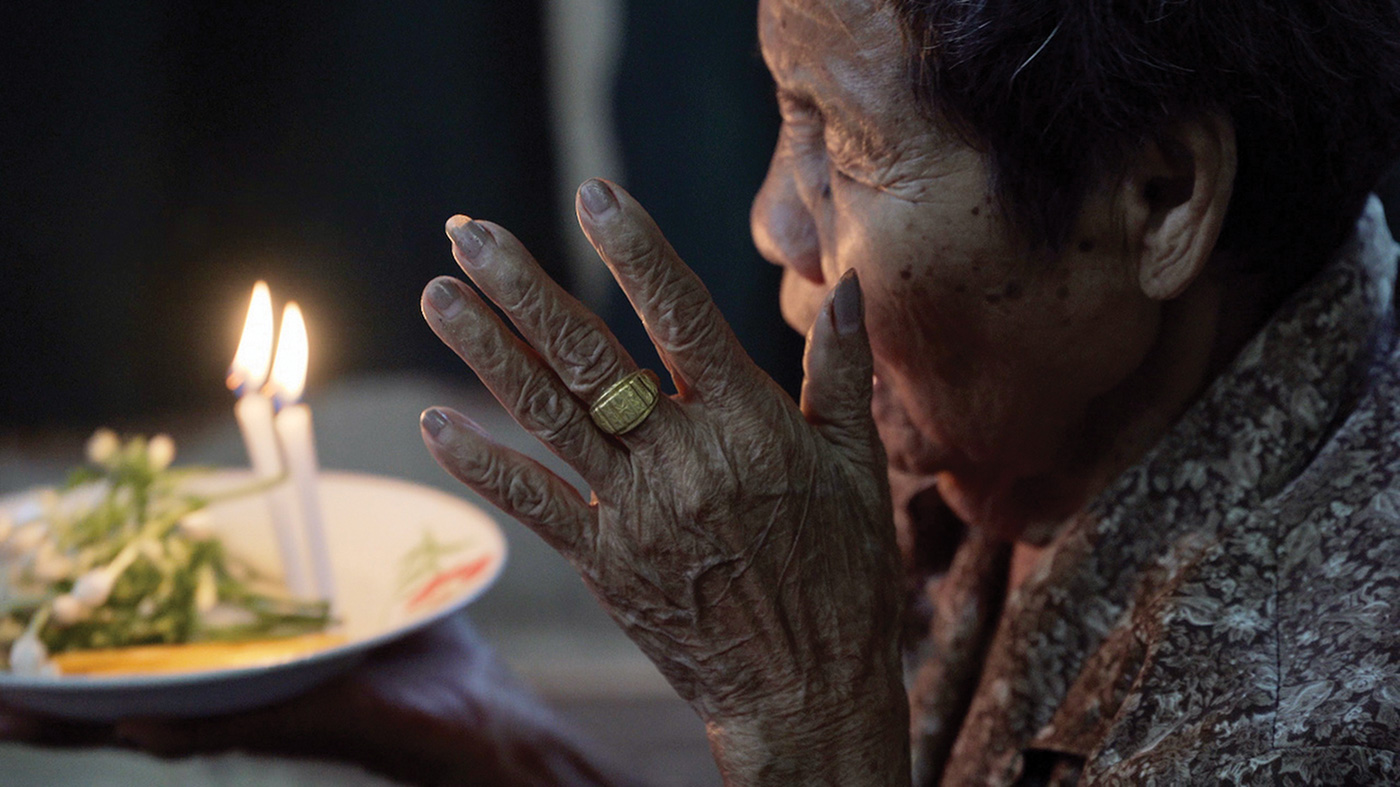
The Mental Traveller is a poetic reflection on the nature of remembrance. It navigates through the mental spaces of people consumed by memories of lost time. The film meditates on the passing of time, external behaviors, habitual patterns of thought and the sensorial realities of five mentally disordered men inside the psychiatric ward in Chanthaburi Province, east of Thailand, in which it is filmed. The film was conceived from the director’s connections to his parents and companions as they went through states of sickness, impending death, dementia, grief, and temporary insanity. At the same time it echoes upon the turbulent years of political upheavals and repercussions in Thailand, resulting the nation in a state of delirium, lunacy and trauma.
Taiki Sakpisit is a filmmaker working in Bangkok. His works explore the underlying tensions and conflicts, and the sense of anticipation in contemporary Thailand, through precise and sensorially overwhelming audio-visual assemblage using a wide range of sounds and images. His films produce heightened and uneasy modes of spectatorship that often relate to the tumultuous socio-political climate in Thailand. Taiki’s moving images and experimental shorts have been presented at numerous exhibitions and film festivals, including International Film Festival Rotterdam, Images Festival, Yebisu International Festival for Art, Les Rencontres Internationales, Dallas Contemporary and Kunstverein Gottingen. His previous work A Ripe Volcano (2011) has been screened internationally at more than 40 film festivals and museums. His first feature film The Edge of Daybreak is currently in post-production.
Taiki Sakpisit
The Spirit Level
Experimental video | 4k | color and b&w | 20:30 | Thailand | 2024
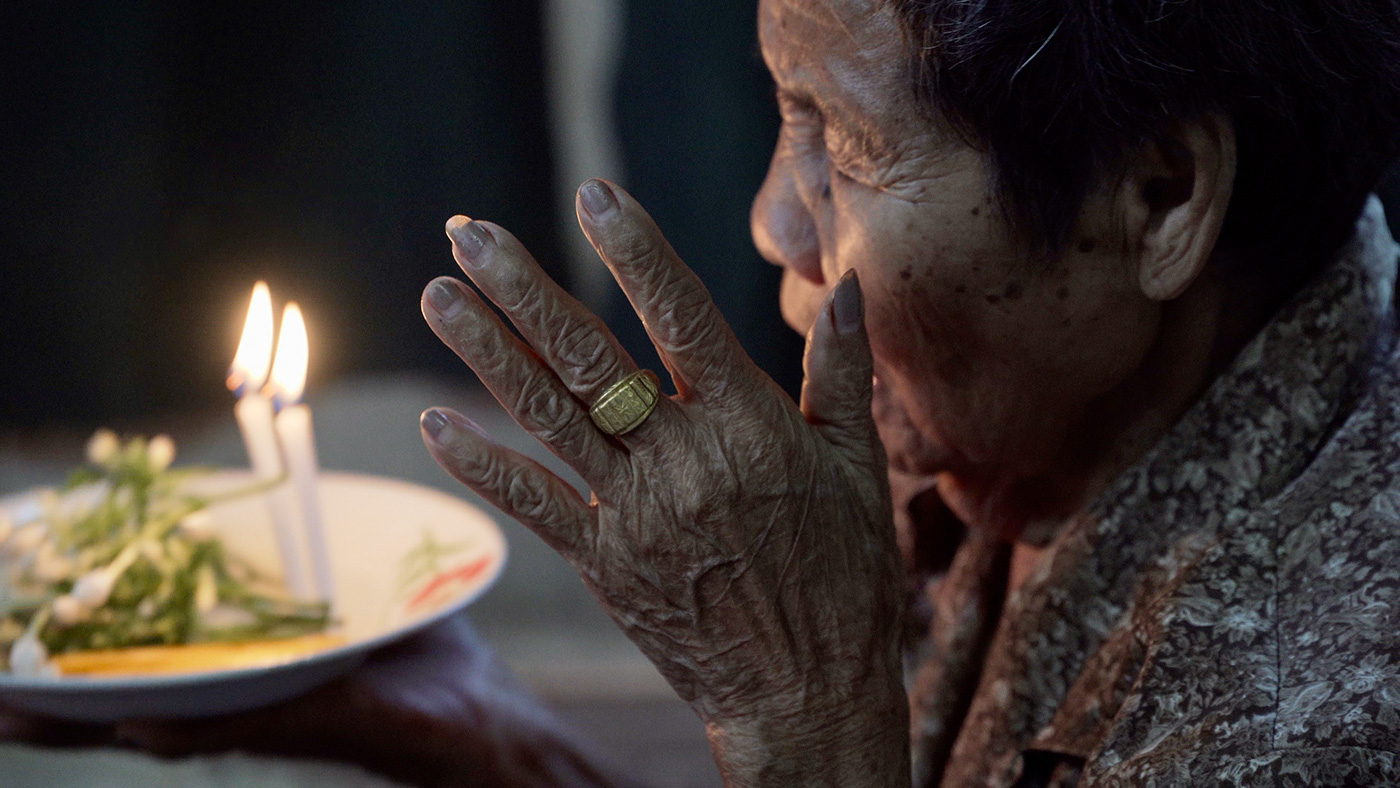
The Spirit Level meditates on the trauma and violence in the troubled Thailand reflected through the artist’s road trips across the northeastern region of Thailand along the Mekong River. The film begins with a downstream river that descends from Than Thong waterfall and flows into the Mekong River and explores the mythic underground cave that according to legend was a subterranean kingdom below the Mekong River where the divine Naga resides in the netherworld. At the heart of The Spirit Level is a frantic sequence of a spirit medium in the midst of possession. This epileptic episode emulates the optic feedback eliciting the trancelike revenant images as the spirited entity registers the medium’s body. Gradually the hallucinatory double images are disrupted by a freeze frame. This suspension of time occurs to commemorate the dislocated spirits of the three anti-government activists whose mutilated bodies were found in Mekong River in December 2019. The three men had been in exile since the 2014 coup d'état, until they were kidnapped by an officially sanctioned death squad. Their bodies were found handcuffed, disemboweled and stuffed with concrete blocks, wrapped in brown rice sacks and dumped into the Mekong River. It is one of countless forced disappearances and assassinations of political dissidents by the state since the 1970s and still ongoing and unresolved. The Spirit Level alludes to the undercurrents of darkness that ripple beneath the surface of problematic Thailand.
Taiki Sakpisit (???? ?????????????) is a filmmaker and visual artist based in Bangkok, renowned for his innovative approach to storytelling and his profound exploration of Thailand’s complex history. Through the lens of cinema, Sakpisit unpacks the nation's turbulent past, infusing his experimental films with a subtle yet resounding political commitment. His works delve into the underlying tensions, conflicts, and anticipations of contemporary Thailand, meticulously crafted through precise and sensorially overwhelming audio-visual assemblage. Utilizing a diverse array of sounds and images, Sakpisit creates immersive experiences that challenge conventional narratives and provoke thought. His feature-length film The Edge of Daybreak won the FIPRESCI award at the International Film Festival Rotterdam for its for its “Mysterious atmosphere and rich imagery in depicting trauma and violence, for its capacity of dealing with 40 years of political turmoil through a powerful and hypnotic cinematic journey, and for its compromise with the past in order to confront the present and the next future.” His recent works have been showcased at the 14th Gwangju Biennale, the Museum of Contemporary Art Busan, the 2024 Bangkok Art Biennale, the 14th Mercosul Biennial and Thailand Biennale.
Taiki Sakpisit
Seeing in the Dark
Experimental film | digital | color and b&w | 29:0 | Thailand | 2021
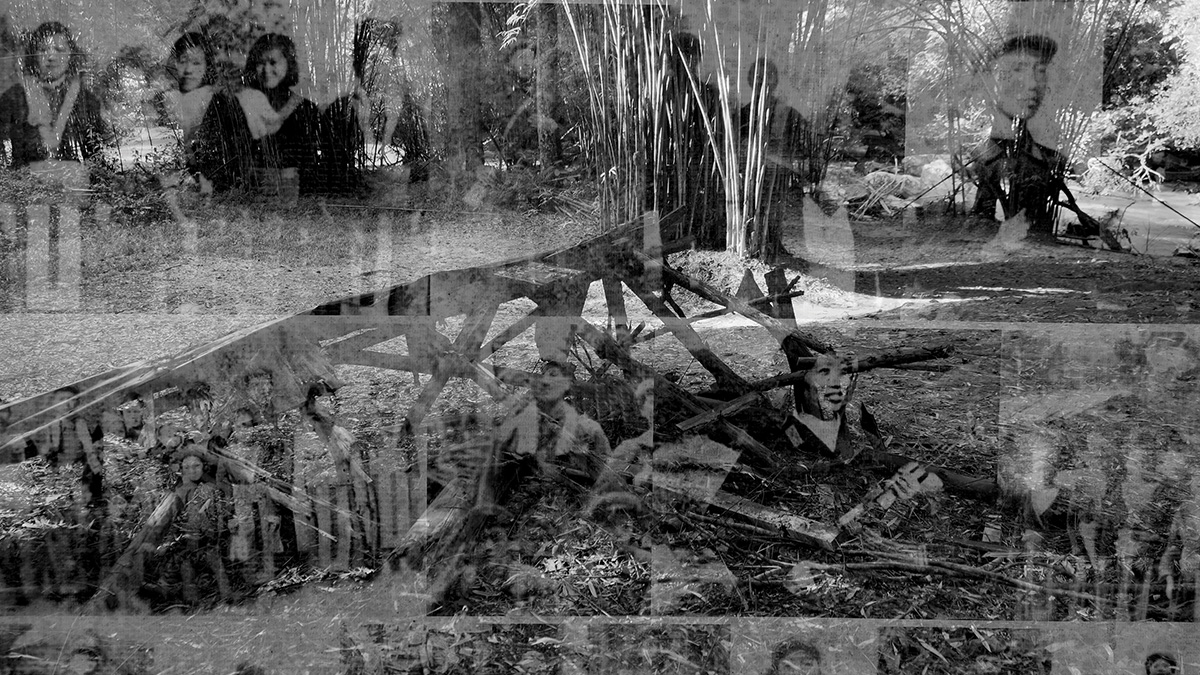
A sensorial, left-field take on Thai political history that moves between a subdued past etched in the landscape of Khao Kho mountain, once a stronghold of communist insurgents, and a dynamic near-present marked by Bangkok’s 2021 anti-government protests.
Taiki Sakpisit is a filmmaker and visual artist working in Bangkok. His works explore the underlying tensions and conflicts, and the sense of anticipation in contemporary Thailand, through precise and sensorially overwhelming audio-visual assemblage using a wide range of sounds and images. His films produce heightened and uneasy modes of spectatorship that often relate to the tumultuous socio-political climate in Thailand. Taiki’s moving images and experimental shorts have been presented at numerous exhibitions and film festivals. His feature length film The Edge of Daybreak premiered at the International Film Festival Rotterdam in the Tiger Competition and won the FIPRESCI award. His film, A Ripe Volcano was presented at Les Rencontres Internationales in 2014.
Taiki Sakpisit
The Spirit Level
Experimental film | 0 | color and b&w | 20:30 | Thailand | 2024
The Spirit Level hauntingly captures a psychic summoning a spirit to learn the truth about the deaths of Thai protestors who had been in exile since the 2014 coup d’état. In a frantic frame, the psychic appears to be paralyzed in the moment. Capturing the collective ethos, the section served as a reminder of everyday forms of resistance and touched deeply on the power and effects of human connections and encounters.
Taiki Sakpisit is a Thai filmmaker and artist based in Bangkok, known for his innovative approach to storytelling and his profound exploration of Thailand’s complex history. Sakpisit unpacks the nation's turbulent past, infusing his films with a subtle yet resounding political commitment. His works delve into the underlying tensions, conflicts, and anticipations of contemporary Thailand, meticulously crafted through precise and sensorially overwhelming audio-visual assemblage. Utilizing a diverse array of sounds and images, Sakpisit creates immersive experiences that challenge conventional narratives. His feature-length film The Edge of Daybreak won the FIPRESCI prize at the International Film Festival Rotterdam for its “Mysterious atmosphere and rich imagery in depicting trauma and violence, for its capacity of dealing with 40 years of political turmoil through a powerful and hypnotic cinematic journey, and for its compromise with the past in order to confront the present and the next future.” He was Artist-in-Residence at the Rijksakademie van beeldende kunsten in Amsterdam (2022-23) and the NTU Centre for Contemporary Art in Singapore (2018). His recent works have been exhibited at the Gwangju Biennale, MOCA Busan, M+ Hong Kong, Bangkok Art Biennale, the Mercosul Biennial, and Thailand Biennale, Phuket.

Ivan Salatic
Dvorista
Experimental fiction | 4k | color | 20:59 | Montenegro | 2015
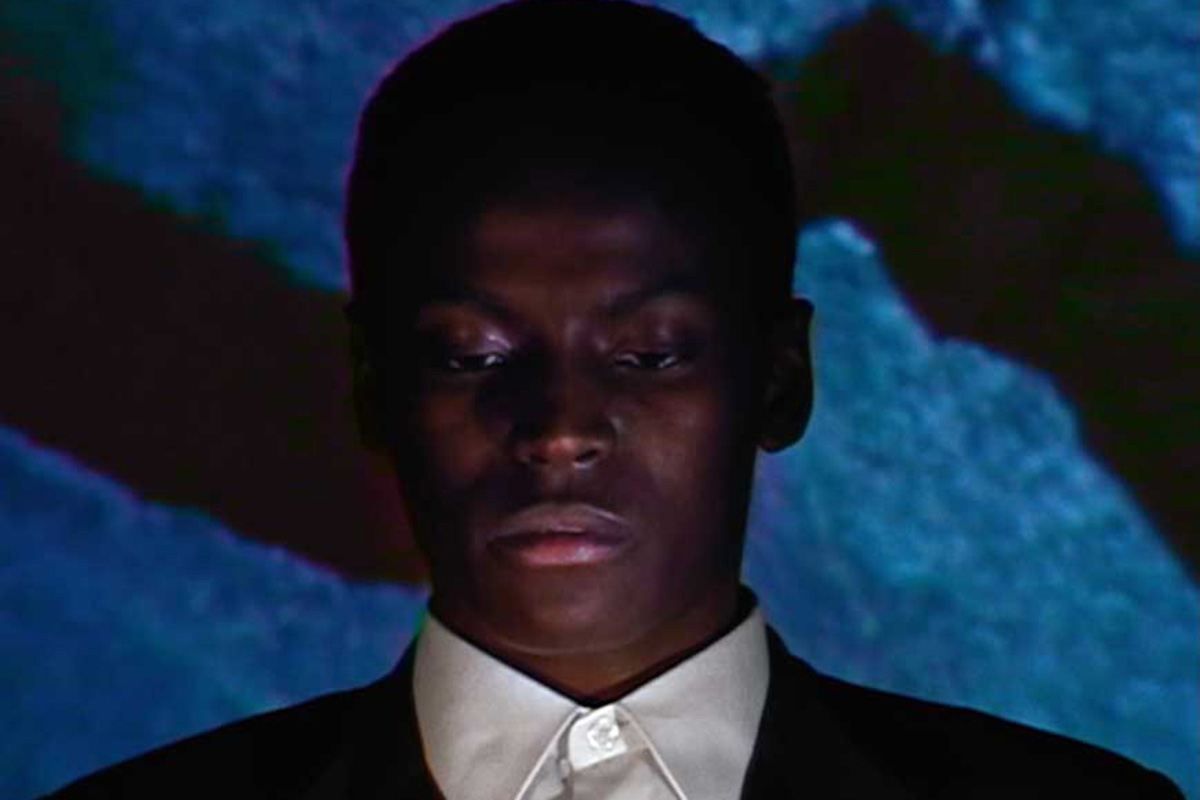
In the backyards there are sheds, a huge old tree, wild plants with wild offspring, waste scattered around. This is where they spend their time. A decaying building is about to be destroyed and someone may go beyond. Soon one of them becomes aware of the sea.
Ivan Salatic was born in 1982 in Dubrovnik and grew up in Herceg Novi. He finished the School of Fine and Applied Arts in Belgrade and graduated from the Faculty of Dramatic Arts in Cetinje. He has directed several short films that have participated in festivals such as Venice Film Festival, Sarajevo Film Festival, Torino Film Festival.
Jonathan Saldanha
AFTER THE LAW
Experimental fiction | hdv | color | 27:0 | Portugal | 2020
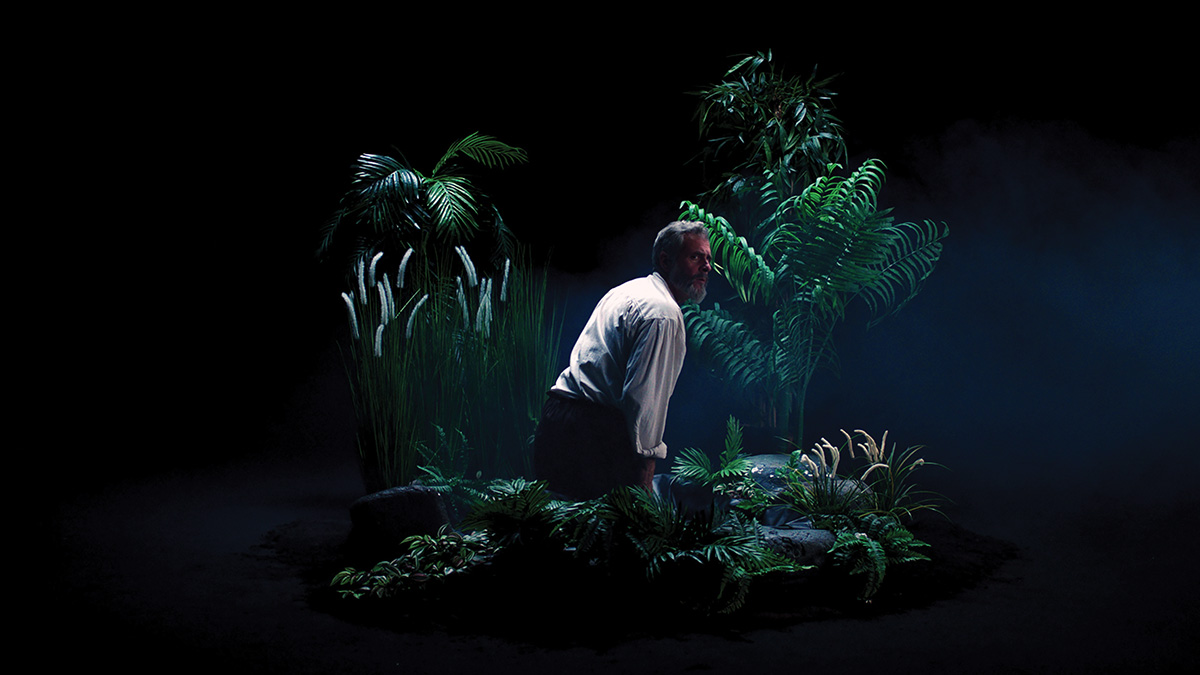
AFTER THE LAW is a courtroom short movie where a tribunal of humans and objects are contaminated by an untraceable virus. This judgement addresses an unknown accident that fractured the law and eroded speech. Trough a toxic mutation of roles and shapes, evidences, gestures and haptics the court colapses its capacity of deliberation. Shot in tape has a live performance, using a single camcorder, this court was designed has a cybernetic mechanism for haptic responses were collective drive, light, vibration, face recognition and empathy collide with a synthetic voice. All speech was generated with Google WaveNet, a generative model using neural networks to simulate human voices, this protocol was explored and accelerated to find moments were the voice of the machine breaks, stutters and drives glossolalia. In 2019 the images were used as a visual score for a group of deaf teenagers to interpret in an extended signe language, exploring the gaps of description and extending them to body description of this aphasic court. The coral voices were recorded through hypnosis induced states, blending the surface frontiers that separate the body from its spatial resonators. A broken voice haunts a political paradox in a reversed bio engineering.
Jonathan Uliel Saldanha studied sculpture at the Faculty of Fine Arts of the University of Porto and devoted himself to studying the tabla - Indian percussion instrument - with the Hindu musical group Jugalbandi. He is the founder of the collective SOOPA, a visual, performative and sound laboratory, and Silorumor, a member of the Fujako duo and director of the group HHY & The Macumbas. Since 2010, he has composed several experimental sound pieces, co-created the pieces “Boca Wall”, “Shark” and “King Trilogy” and directed “Jungle Machine”, “Khorus Anima”, “The Well” and “Oxidation Machine”. , presented in venues such as Serralves, Porto - Rivoli Municipal Theater, Palais de Tokyo (Paris, France) and Accès (s) Festival (Billère, France). He collaborated with artists such as Carlos Zíngaro, Steve Mackay, Adrian Sherwood, Vera Mantero, Mark Stewart, João Fiadeiro among others, and as a musician, performed in festivals such as Nyege Nyege (Uganda), Unsound (Poland), Sónar (Spain). , Primavera Sound, Amplifest, Out.Fest, Circular, Million Party, Neopop, Tapettefest (France) and Elevate (Austria). In 2019 he presented the installation Vocoder & Camouflage (Vanishing Point: works from the António Cachola collection, Torreão Nascente Lisboa), the piece “Scotoma Cintilante”, for the blind choir and score-sculpture (Porto Catholic University, São Carlos Lisbon National Theater ) at the 2019 BoCa Biennial, and “Broken Field Atlantis” a light-sheet concert (Porto Municipal Theater: Rivoli). Also in 2018, a work that precedes this exhibition, he presented the play “SØMA” where a group of deaf teenagers translate in gesture the filming of an animist court, presented at Culturgest Lisboa and at the Porto Municipal Theater: Rivoli. At the same time, he presented the exhibitions “Behemoth Republic”, in the Sonic Geometry cycle in the Archipelago São Miguel Arts Center, in the Azores and “Dismorfia”, at the Catholic University of Porto.
Miranda Salvador
Life Eternal
Experimental film | 4k | color | 23:19 | Canada, Netherlands | 2022
Life Eternal tells three intertwining stories about immortality. The first story is about Spanish explorer Juan Ponce de Leon and his legendary search for the Fountain of Youth. The second story tells us of Henrietta Lacks, a poor black tobacco farmer whose cancer cells were used to create the first immortal human cell line. The third story takes up James Bedford, the first person to undergo cryogenic freezing in hopes of future revival. Spanning centuries, the film installation explores the desires and emotional entanglements of these stories. At the same time, it touches upon the complex and troubling historical themes that jump out so vividly from them - colonialism, exploitation, and techno-utopianism. This work is a poetic dialogue on the eternal conversation on time, our place in a constructed reality and our attitude toward it.
Salvador Miranda is a Mexican-Canadian filmmaker, artist, and producer. His debut short film, This is my land... (2019), premiered at the International Film Festival Rotterdam (IFFR). His film installation, Life Eternal (2022), premiered at Kasseler Dokfest, received a nomination for the 2022 Golden Cube Prize, and won the 2024 Hertzog da Silva Award. His latest documentary short, Promised Land (2023), also premiered at IFFR. In addition to international screenings, his films are frequently featured in gallery and art festival settings, including Eye Filmmuseum (Netherlands), Ruhrtriennale (Germany), Proyector (Spain), and IMPAKT Festival (Netherlands). Miranda is an alumnus of the Kunstinstituut Parallel Curriculum programme and holds an MFA cum laude in Lens-Based Media from the Piet Zwart Institute.

Mark Salvatus
Jalan-Jalan
Experimental fiction | mp4 | color | 10:15 | Philippines | 2019
Kaliurang in Jogjakarta is located near the active volcano Merapi, where ghosts of memories and history are part of the landscape. A subtle video is presented created specifically for 900 mdpl 2019 where local residents of the town become actors/ as ghosts. Once in a while the people of Kaliurang sees a Dutchman walking, or a Japanese soldier walking, or a Javanese woman with a jar of water, or a wild animal or a supernatural being… passing by as if they are there, living amongst us. They are hiding in the trees – like the trees and forest and the mountain are the bare witnesses of all the history of colonialism, war, and the neoliberal progress of development. A fictional work with no narrative flow. The ghosts are walking amongst us or are we the ghost?
Mark Salvatus (b. 1980) works and lives in Manila, Philippines. He studied Advertising Arts at the University of Santo Tomas, Manila. His works has been presented in different exhibitions and venues including the 2nd Lahore Biennale,; Kyoto Art Center; ISCP, New York; Kunstraum Kreuzberg/Bethanien, Berlin; Sharjah Biennial 14; Mill6 CHAT, Hong Kong; PCAN Pavilion, Gwangju Biennale; Museum of Modern and Contemporary Art, Seoul; Osage Art Foundation, Hong Kong; Mori Art Museum, Tokyo; Rencontres Internationales Paris/Berlin; Philippine Pavilion, Venice Architecture Biennale; 6th Thessaloniki Biennale; SONSBEEK International, Arnhem; 3rd Singapore Biennale; 4th Guangzhou Triennale; 14th and 16th Jakarta Biennale; Koganecho Bazaar, Yokohama; Hotel Inmigrantes, Manifesta 9, Brunei Gallery, SOAS, University of London; Hasselt (Belgique); Prologue Exhibition: Honolulu Biennale; Survival Kit Festival, Umea; Sharjah Art Foundation; Asia Society, New York; Art Center Ongoing Tokyo; Museum Baerengasse, Zurich; La Trobe Art Institute, Bendigo; Cultural Center of the Philippines and Vargas Museum and Filipiniana Research Center. He had residencies in Asia Culture Center (ACC) Gwangju, Rijksakademie van beeldende kunsten (Amsterdam), IASPIS Umea; Art OMI, New York, Common Room Networks Foundation, Bandung, Indonesia and Goyang Art Studio in South Korea.

Mark Salvatus
Notes from the New World
Video | hdv | color | 12:24 | Philippines | 2015
The Philippine Constabulary Band was a symphonic band formed in 1901 by African-American Lt. Walter Loving of the US Army’s 48th Volunteer Infantry during the American period in the Philippines. Since its first public performance on May 20, 1903, the band has brought the country international fame through its participation in international competitions, including the 1904 St. Louis Exposition in the USA, where the band placed second. In this infamous fair where live Filipinos were exhibited especially the dog-eating Igorot tribe, the band performed Rossini’s classical music ‘Willam Tell Overture’. Forward to the year 2015, the artist’s father’s has a vast vinyl record collection and one of them is a Philippine Constabulary band record that was released in the 70’s under the New Society period of the dictator Ferdinand Marcos. Creating a new narrative about the band and the collection, the current Philippine Army band played Rossini’s Willaiam Tell Overture after 100 years ago side by side by the vast collection of the artist’s father that were gathered slowly since the 70’s.
Mark Salvatus is a contemporary artist from Manila, Philippines. His works crosses various disciplines and media that deal with chance encounters and everyday politics creating his own narrative and visual language. Calling his works and practice as “Salvage Projects”, he has shown his projects in different international exhibitions including the Philippine Pavilion, Venice Architecture Biennale (2016); SONSBEEK International, Arnhem, The Netherlands (2016); Singapore Biennale (2011), Guangzhou Triennale (2011), Jakarta Biennale (2011/2015), Koganecho Bazaar, Yokohama (2011), Hotel Inmigrantes, Manifesta 9, Hasselt, Belgium (2012), Prologue Exhibition: Honolulu Biennale (2014), Survival Kit Festival, Umea, Sweden (2014) and Next Wave Festival, Melbourne (2010). He had also presented his works in different museums and galleries including La Trobe University, Visual Arts Centre, Bendigo; Asia Society, New York; Museum Brengasse, Zurich; Center for Contemporary Art, Singapore; Ateneo Art Gallery; Cultural Center of the Philippines, Vargas Museum; Metropolitan Museum of Manila; Osage Foundation, Hong Kong; 1335 Mabini in Manila; Art Center Ongoing, Tokyo. Mark is a recipient of the 13 Artists Award from the Cultural Center of the Philippines (2012) and Ateneo Art Awards (2010). In 2012 he founded and acts as the artistic director of 98B COLLABoratory, a multi-disciplinary site for creative sharing, discussion and collaboration.
Mark Salvatus
Should the Source of Fulfillment Be Seen with Our Eyes
Experimental video | hdv | color | 16:25 | Philippines | 2024
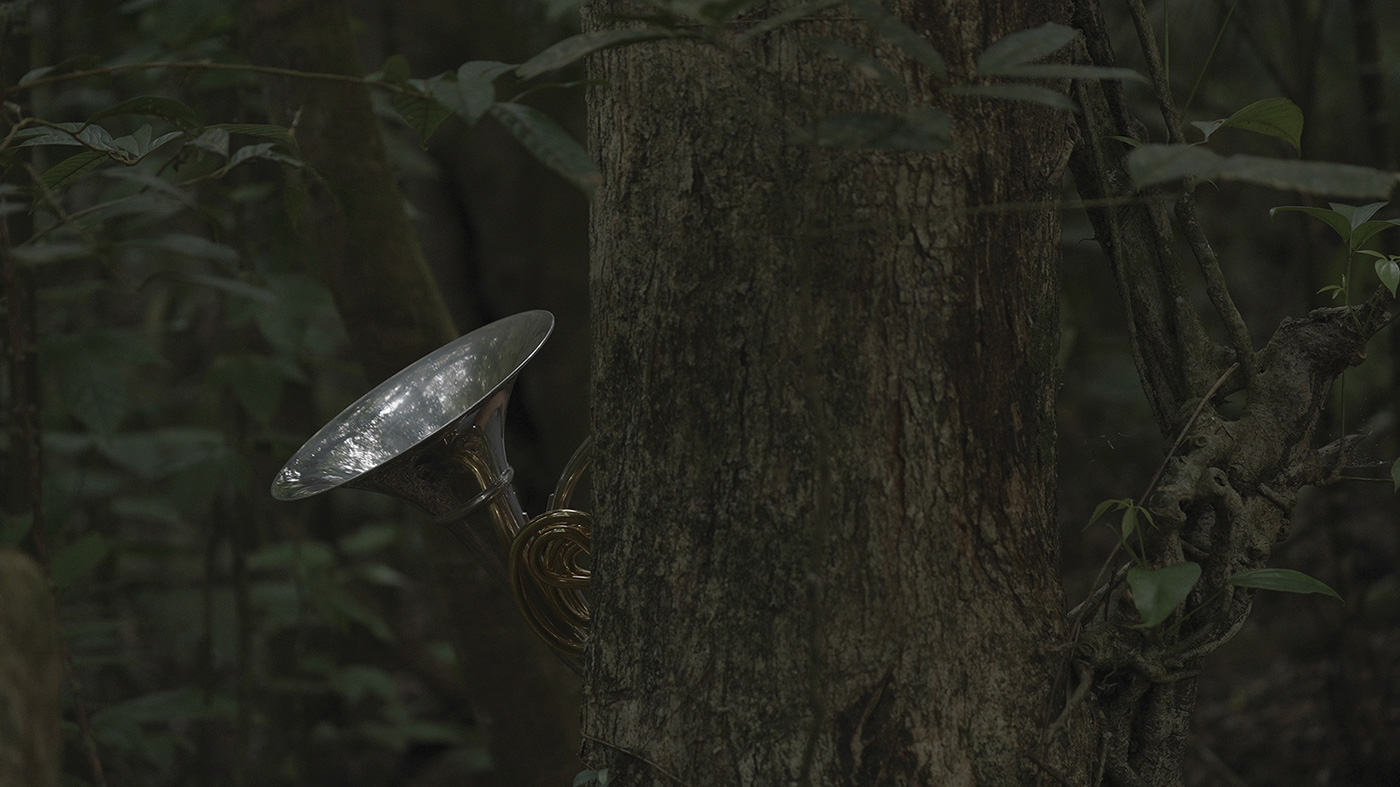
Kung ang Makagiginhawa ay Matingnan ng Ating mga Mata (Should the Source of Fulfillment Be Seen with Our Eyes) 2024 Exploring the ethno-ecologies of Mt. Banahaw—how the surrounding more-than-human world shapes and are shaped by cultural imaginations. It weaves together Salvatus’s ongoing research on the vernacular histories of Mt. Banahaw and Lucban, convened from family archives, popular history, and mythical motifs. It looks at several trajectories of millenarian renewal that converge in Mt. Banahaw as mystical and ethno-ecological topos: from a revolution that aimed to encourage the native folk to find their own idiom of religious discernment, a history of marching bands and musicians and their place in a postcolonial regional modernity, to Salvatus’s very own practice of assembly and salvaging that situates us in this shared mystical world, animates in us a planetary political spirit.
Mark Salvatus, a Filipino artist hailing from Lucban and residing in Manila, defines his extensive artistic approach as ‘Salvage Projects.’ This concept, echoing his surname, serves as a framework for his diverse investigations into the remnants of urban politics, the layered narratives of national history, and the ceaseless motion of contemporary life. Working across various disciplines—from objects and photography to video, installations, and participatory art—Salvatus crafts direct and indirect engagements that illuminate the multifaceted outcomes of energies, meanings, and experiences.

Roy Samaha
Sun Rave
Video | hdv | color | 11:0 | Lebanon | 2018
This video explores childhood anecdotes heard around an apartment, which until 1989, when a major solar storm erupted, had been inhabited by a strange couple. Some suspected them of being undercover agents while others said they were just some new age sorcerers. The work addresses the relationship between layers of history, outstanding events in nature and ancient cyphering of language; how the cycles of the Sun’s unpredictable release of energetic flares affect the magnetic fields of the earth and influence radio transmissions, communication and reason on a mass scale.
Roy Samaha is a Lebanese artist, living and working in Beirut. He explores the boundaries of filmic language, perception of reality and the memory of personal objects.

Roy Samaha, Fakhoury Omar
Incarnation of a Bird from an Oil Painting
Experimental fiction | hdcam | color | 8:0 | Lebanon | 2013
??Once Dr. Dahesh referred to a painting made by Mrs Marie Haddad, and which showed a bird on a tree. The colours of the painting moved and took the form of flesh, blood and feathers and the bird in that painting was converted into a living bird, which was placed in a cage and remained there for several years. Its place on the linen remained white.?
Omar Fakhoury Artist, Beirut Born in 1979, Omar Fakhoury is a multidisciplinary visual artist. He holds a Bachelor in Painting and a Masters of Fine Arts Roy Samaha, Artist, Beirut Born in 1978, a video artist and photographer living and working in Beirut Lebanon where he completed a Masters degree in film studies.
Roy Samaha
Please rewind me later
Experimental doc. | dv | color | 30:0 | Lebanon | 2007
This work is intended to be a way to investigate one?s own past life. It reconnects childhood homes, dreams and VHS tapes, all together what forms a body that remembers. How to make a self-portrait without giving in to the clichés of the historical archives? Once it was said: " You must understand: the memory of objects records and retains the actions of humans.... so that following generations inherit them...But it was also asked of you to leave backwards to do as if you had never come in. Things, places possess a kind of memory. When you enter a closed space, a part you remains attached to it, you lose something. You must learn to take leave without losing a parcel of your being... Learn to circulate without leaving a trace."
Born in Beirut on April 3 1978, lives and works there also as a part time news videographer. Roy Samaha majored in film studies at the Holy Spirit University of Kaslik (USEK), Lebanon.