Catalogue > List by artist
Browse the entire list of Rencontre Internationales artists since 2004. Use the alphabetical filter to refine your search. update in progress
Vincent Roven
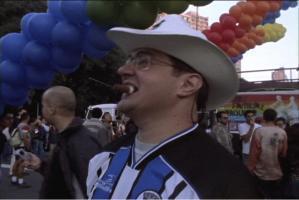
Catalogue : 2006Logologo | Fiction | 16mm | color | 7:30 | France, Brazil | 2005
Vincent Roven
Logologo
Fiction | 16mm | color | 7:30 | France, Brazil | 2005
"After the bridge, starts the land of ghosts" (Dracula - Bram Stocker)
Vincent Royen was born in May 1968. He studied in Marseilles´s Fine Arts School- Luminy. He obtained his superior studies diploma in plastics arts in 1994. Since 1995, he has been living and working in Sao Paulo, Brazil, and took part in the realization of several AV/cinema works among which: - "Kyrie ou le début du Chaos" (fiction, 35mm, 15 min., 1998): filmmaker assistant/artistic director: - "Jusqu´à 120 ans" (documentary, digital, 70 min., 2002): co-direction - ULALAPA (fiction/doc - digital, 12 min., 2003): co-direction, editing, sound - LOGOLOGO (fiction - digital, 7 min., 2005): realization, editing, sound and photography He also develops activities linked with plastic arts and has realized many group and solo exhibitions among which: 2001 - "Medodanóia" - solo exhibition realized at "Centro Cultural São Paulo" - São Paulo - Brazil 2000 - "SUNSET" - solo exhibition realized at the "FUNARTE" (Fondation Nationale des Arts) - São Paulo - Brazil
Jeffrey Rovinelli
Catalogue : 2017Empathy | Documentary | 16mm | color | 82:45 | USA | 2016
Jeffrey Rovinelli
Empathy
Documentary | 16mm | color | 82:45 | USA | 2016
This documentary film follows a heroin-addicted professional escort as she moves between New York City, Pittsburgh, and Los Angeles. Combining frank images of the actual labor of sex work with intimate portraits of her interpersonal life, the film is an alternately humorous and harrowing look at a seldom depicted side of American life as well as a meditation on the performativity at the core of documentary filmmaking and the sex industry alike. Shot on a mixture of 16mm and HD digital video in luxuriant long takes, its disciplined style foregrounds the sensual texture of the everyday while playing with the conventions of narrative cinema, focussing on the profound interrelation of performance and identity within the socioeconomic fabric of the U.S. Written in close collaboration with its subject/star, Empathy marks the feature-length directorial debut for Jeffrey Dunn Rovinelli, editor/producer of Bx46 (FID Marseille 2014).
Jeffrey Dunn Rovinelli was born in 1988 in Boston, USA. Following a degree in Film Studies from Wesleyan University. They currently reside in New York City, where they also work as a critic, editor, and colorist. Empathy is their first feature, following two short films.
Steve Rowell
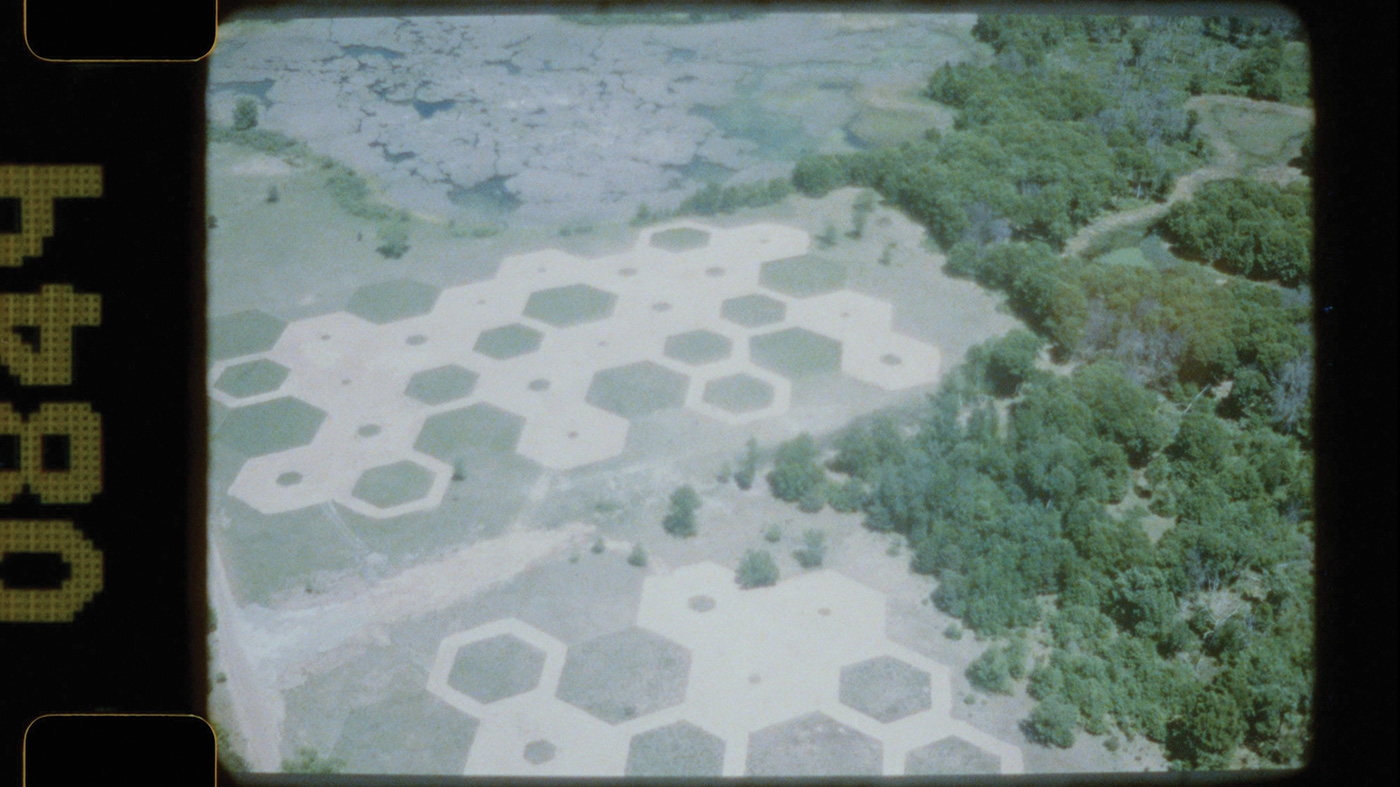
Catalogue : 2026Lost Prairie Valley | Experimental doc. | 4k | color | 14:24 | USA | 2024
Steve Rowell
Lost Prairie Valley
Experimental doc. | 4k | color | 14:24 | USA | 2024
Lost?Prairie?Valley (2025) explores the intersection of machine vision, ecology, and extinction on Minnesota’s prairie lands. Using 4K digital video, 16?mm film, LiDAR, and AI image recognition, the film observes threatened plant species and landscape change across research sites—asking how our technological gaze shapes what we see and what we lose.
Steve Rowell is an artist and educator working across photography, moving image, sound, and spatial media. His research-driven practice investigates landscape as a site of political imagination, focusing on perception, nonhuman intelligence, extinction, and ecological crisis. Drawing on methods from geography and archaeology, he explores the entanglements of built systems and natural terrains. Steve holds an MFA with Distinction from the University of Oxford and a BA in Studio Art from the University of Texas. He is a Guggenheim Fellow (2019), a MacDowell Fellow (2021–22), and a 2024 McKnight Media Artist Fellow. Additional support includes Creative Capital, the Graham Foundation, the Minnesota State Arts Board (2022, 2025), and international residencies in Berlin, Vienna, and Fogo Island. Formerly a longtime collaborator with the Center for Land Use Interpretation, SIMPARCH, and the Office of Experiments, Steve has lived and worked in Los Angeles, Oxford, Berlin, D.C., and Chicago. He is currently based in Minneapolis, where he teaches and conducts field-based research at the Minneapolis College of Art and Design.
Steven Rowell
Catalogue : 2025Lost Prairie Valley | Experimental doc. | 4k | color | 25:0 | USA | 2023
Steven Rowell
Lost Prairie Valley
Experimental doc. | 4k | color | 25:0 | USA | 2023
This is a film about plants. It was made by plants. They transmitted their instructions to the human director through artificially intelligent means. “Every day the urge grows stronger to get hold of an object at very close range by way of its likeness, its reproduction.”- Walter Benjamin, "The Work of Art in the Age of Mechanical Reproduction," (1935) in Illuminations, ed. Hannah Arendt, trans. Harry Zohn, (New York: Shocken, 1969) Prior to the nineteenth century, western philosophers thought of eyes as broadcast centers, producing images of the world. As this perceived center of the universe shifted away from humans, and the Earth, it became more difficult to see the natural world exactly at the moment that industrial society’s exploitation began driving entire species towards extinction. Since that time, increasingly complex machines and algorithms do the work of seeing and recording the effects of the global climate emergency. Lost Prairie Valley investigates this moment at ecological research stations in the American state of Minnesota, with a little object recognition help from artificial intelligence.
Steve Rowell is a human, artist, and educator who works with photography, moving image, sound, maps, and spatial relations. His research-based practice investigates terrains of perception, nonhuman intelligence, extinction, and technology, exploring the landscape as a site of political imagination. Steve contextualizes the morphology of the built environment with the surrounding medium of Nature, appropriating the methods and tools of the geographer and archaeologist.
Catalogue : 2017Parallelograms | Experimental doc. | hdv | color | 30:0 | USA | 2015
Steven Rowell
Parallelograms
Experimental doc. | hdv | color | 30:0 | USA | 2015
Parallelograms is an experimental documentary film and mapping project aimed at representing corruption and dark money in American politics. Political Action Committees, think tanks, trade associations, lobbying agencies, and advocacy groups are institutions where experts gather to discuss, map, and strategize, creating political and economic environments that help secure their visions of the future. This project is concerned with the multiverse of these near futures -- some more probable than others -- as well as with the present. Parallelograms is about where vectors of geography, landscape, politics, finance, and temporality intersect and how they are manifested. It also serves as a linear “cognitive mapping” experiment in which the viewer experiences a compressed, systematic tour of a dense and complex political terrain. Abstraction coexists with the real as a reflection of the current state of political discourse in America today. Corrupted power and distorted influence affects us all by exacerbating economic disparity, resource depletion, environmental degradation, and civil rights abuses. The intent of Parallelograms is not simply to present documentation from an exhaustive list, or to dictate any particular activist agenda, but rather, to extrapolate from the political landscape in a way that compels discussion about dark money.
Steve Rowell is a research-based artist who works with still and moving images, sound, installation, maps, and spatial concepts. Currently based in Los Angeles, he has lived in Berlin, Chicago, and Washington DC, over the past 20 years. His transdisciplinary practice focuses on overlapping aspects of technology, perception, and culture as related to ontology and landscape. Rowell contextualizes the built environment with the surrounding medium of nature; appropriating the methods and tools of the geographer and archaeologist. In addition to being Program Manager at The Center for Land Use Interpretation (Los Angeles) since 2001, he has collaborated with SIMPARCH (Chicago) and The Office of Experiments (London).
Paul Rowley
Catalogue : 2019L'Albero Rosso | Experimental doc. | mov | color | 21:0 | Ireland, USA | 2018
Paul Rowley
L'Albero Rosso
Experimental doc. | mov | color | 21:0 | Ireland, USA | 2018
THE RED TREE / L`ALBERO ROSSO is short documentary that tells the little known history of Italian gay men being arrested and exiled to a remote island during Mussolini`s Fascist regime. In the film, an elderly man returns to the island of San Domino where 60 years before during the Fascist era he was imprisoned with hundreds of other men for being homosexual. As he walks the island alone, memories come back - of all-male dances in his home town in Sicily in the 1930s, of his beating and arrest, the difficulty of prison life on the island, the suffering of gay men under fascism, and their public humiliation after their return. And of this unique island where all the prisoners were gay, and the seeds of a community were first sown.
A visual artist and filmmaker, Paul began making films in 1995. Since then he has completed over forty shorts, documentaries, video installations, and experimental films, which have shown internationally from the Berlin Film Festival to San Francisco International to the Centre Pompidou.
Catalogue : 2014DMC-13 | Experimental video | dv | color | 9:22 | Ireland | 2013
Paul Rowley
DMC-13
Experimental video | dv | color | 9:22 | Ireland | 2013
DMC-13 is a short video produced on analog video synthesisers at the Experimental Television Center in New York. The film uses images from a documentary on John DeLorean - the ill fated automobile manufacturer - who opened his luxury sports car factory in Belfast at the height of the troubles in the north of Ireland. As the US car industry collapsed, and DeLorean was arrested for alleged cocaine smuggling, his dream of `affordable luxury`, which had spent over £100 million of taxpayers money, also perished.
Paul Rowley is a visual artist and filmmaker. He first began making films in 1995. Since then he has completed over 30 shorts, feature films, video installations, and documentaries. The works are shown both in galleries and film festivals. Previous screenings include - Centre Pompidou Paris, Hammer Museum Los Angeles, Forum Expanded at the Berlin Film Festival, Photographers` Gallery, London, Rencontres Internationales Paris/Berlin/Madrid, Museum of Modern Art Dublin. He recently completed a 60 screen permanent installation at Los Angeles International Airport.
Catalogue : 2011The Rooms | Experimental video | 16mm | color and b&w | 62:0 | Ireland | 2010
Paul Rowley, Tim Blue
The Rooms
Experimental video | 16mm | color and b&w | 62:0 | Ireland | 2010
The Rooms looks back at the remnants of the 20th century through the eyes of the 21st. Watching the film is like wandering through a ghosted world. You find yourself in unfamiliar places as if arriving in a dream, suddenly and without direction, yet with apparent logical precision. A theatre operates by and for itself; a museum archives its own contents; a city attempts to replicate language; an unfinished embassy recalls political turmoil; an abandoned spy station collects fragments of historical data and re-programmes itself. These Rooms operate as quantum architectures, forming and collapsing by themselves, defying categorisation. With rich sound design and diverse formats, the film is a visually complex study of a world abandoned that somehow continues to operate. People exist only as echoes in the empty spaces. Filmed in Italy, Germany, Spain, the United States and Korea, the numerous locations become the interconnected sites of a post-human environment. Disparate fragments come together to form a whole through the film`s unique reading of time. The wages of human endeavour are leveled and treated as data. The perspectives of the past ? modernist, machine, space-age ? are scrutinized by a future that escaped prediction. The Rooms is a collaborative project by Paul Rowley and Tim Blue made with the support of a Projects Grant from the Irish Arts Council
BIO: Paul Rowley Paul Rowley is a filmmaker and visual artist. He began making experimental short films in 1995, and has presented his work internationally since. His films have received numerous awards over the years from the Irish Arts Council, New York State Council for the Arts, Irish Film Board, Culture Ireland, the Glen Dimplex Artists? Award (Irish Museum of Modern Art?s contemporary art prize), the Irish American Arts Awards, and a Golden Spire at the San Francisco International Film Festival. His recent documentary, Seaview premiered at the Berlin Film Festival, was nominated for an Irish Film and Television Award and received a Special Jury Mention at the DMZ Documentary Festival in Korea. Recently completed projects include a feature length experimental film, The Rooms, and a perma- nent public video art installation for LAX airport Los Angeles. He is currently in production on a new feature documentary commissioned by the Dublin Film Festival. BIO: Tim Blue Tim Blue is a film maker who also works in other diverse media. His videos have screened at many international festivals including the Berlin Film Festival, Oberhausen, Art Basel, Mix, Rencontres Internationales, and Darklight, among others. Based in Berlin, he also composes music for theatre and film, has conducted video workshops for youth, and has performed throughout Europe with his group, CHEAP. Tim?s recorded audio work is prolific, and includes several solo as well as collaborative works. The Rooms is his first feature film.
Catalogue : 2009The Rooms | Experimental video | dv | color and b&w | 6:50 | Ireland | 2008
Paul Rowley, Tim Blue
The Rooms
Experimental video | dv | color and b&w | 6:50 | Ireland | 2008
A collaboration between friends. Tim shot footage of his home town while visiting there after many years. The images were sent to Paul who worked with them combining the raw footage with animated abstractions of the shots. Full frame images became fractured. A sequence based on grammar was constructed. Within each section the rooms were imagined as fragments of a quantum architecture - discreet, finite, minute.
NB AUTHOR IS PAUL ROWLEY & TIM BLUE PAUL ROWLEY AN TIM BLUE MET IN SAN FRANCISCO IN 1997. THEY HAVE COLLABORATED ON A VARIETY OF PROJECTS SINCE THEN INCLUDING A FEATURE LENGTH EXPERIMENTAL WORK `AS LATHAIR` (2002) AND THIS NEW WORK `THE ROOMS`. TIM IS BASED IN BERLIN WHERE HE MAKES EXPERIMENTAL FILMS AND MUSIC. HE IS A MEMBER OF THE PERFORMANCE COLLECTIVE `CHEAP`. PAUL IS BASED IN DUBLIN AND BROOKLYN AND WORKS BOTH AS AN INSTALLATION ARTIST AND FILMMAKER. HIS FEATURE DOC `SEAVIEW` PREMIERED AT THE BERLIN FILM FESTIVAL IN 2008.
Catalogue : 2008Commonwealth | Art vidéo | dv | color | 4:30 | Ireland | 2007
Paul Rowley, Phillips/Rowley
Commonwealth
Art vidéo | dv | color | 4:30 | Ireland | 2007
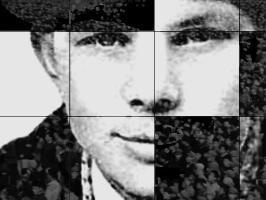
Commonwealth examines ideas of social progress through re-visiting the Soviet Space program of the 1960`s, in particular Yuri Gagarin`s orbit of the earth in 1961. The presentation of the public events in shaping perceptions of what is good for a society, uplifting the spirit of a community, is examined in relation to the role of the individual figurehead, selected from the masses to represent a society internationally. Inspired in part by Hobbes` writings on the Body Politic, and writings on the history of science, the piece examines ideas of governance and community, and the use of division in social models to create order. A rich collection of visual references are brought together in building the piece; for example, Ambrogio Lorenzetti`s Allegories of Good Government: The Effects of Good Government in the City and Country, Soviet mosaic murals, the iconography of the space race, the visual language of progress, and the utopian architectures and designs of the World Fairs of the late 1960s and early 1970`s.
Dublin born Paul Rowley and Memphis born David Phillips currently work primarily with film, video and sound, exhibiting their work in galleries, museums and festival screenings. Some recent exhibitions include Re:mote at the Photographers? Gallery, London, Your chance to live at 300m3 in Gothenburg, the Kunst Film Biennial in Cologne, Fricción, at the Museum of Contemporary Art in Mexico City, Videonale at the Bonn Kunst Museum, and Bambi at the ICA in Philadelphia. Recent festival screenings include the Impakt festival in Holland, and retrospectives at the Darklight Digital Festival in Dublin and Prog:ME, the Rio de Janeiro Festival of Media Arts. Their exhibition Intrusion was at Bischoff/Weiss Gallery in London in July. In 2000 they were awarded the Glen Dimplex Artists? Award, the Irish Museum of Modern Art?s annual contemporary art prize and seen as the Irish equivalent of the Turner Prize. Their short video Suspension was awarded a Golden Spire at the San Francisco International Film Festival and they were the recipients of the New Langton Arts Award for video. Paul recently won the Irish American Arts Awards, in both the under 35 category and the overall prize. Paul was artist in residence at the Atlantic Center for the Arts in Florida with Gillian Wearing, and has received many awards from the Irish Arts Council for his work since 1997. He was a fellow at the Macdowell Artist Colony in New Hampshire, and recently to traveled to Italy to work on a new series of videos at the Bogliasco Foundation. He was awarded a residency at the Experimental television Center in New York in 2005, which recently led to a grant from NYCSA, the New York State Council for the Arts. Paul and David have just completed a collection of films to accompany a live performance of John Cage?s Sonatas and Interludes, premiered at The Stone in New York this July in collaboration with pianist Emily Manzo. Paul is currently finishing a feature length documentary shot in the former Butlin`s holiday camp at Mosney, which is now used as a holding center for asylum seekers. They are also currently shortlisted to produce a new multi-screen video work for LAX airport in Los Angeles, to be announced in 2007.
Catalogue : 2007Gravity Loop | Experimental video | dv | color | 3:0 | Ireland, USA | 2006
Paul Rowley, David PHILLIPS
Gravity Loop
Experimental video | dv | color | 3:0 | Ireland, USA | 2006
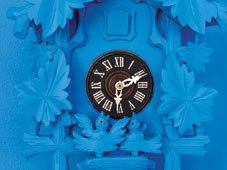
"Gravity Loop" is a series of photographs and video works which reconfigure a single image in order to present multiple approaches to viewing time. Taking its starting point in relativity, the series moves to consider recent movements in Theoretical Physics and String Theory, which discuss the possibilities of time as a non-continuous dimension, that is, that at the quantum level there may be gaps in time. Much as the model of the atom as a solid sphere of matter was replaced in the early Twentieth century with a model that describes the atom as almost empty space, the work uses similar ideas to illustrate possible models of timekeeping in a non-continuous time. One way to imagine this concept visually is to consider the use of clocks to tell time. Instead of a single clock that displays the passing of time continuously, we must imagine an infinite number of identical clocks, each of which come into existence for the tiniest fraction of a second, display the time, and then disappear. In between the appearance of these clocks is nothing, a gap in time where no matter or movement exists.
Dublin born Paul Rowley and Memphis born David Phillips currently work primarily with film, video, and sound, exhibiting their work in galleries, museums and festival screenings. Some recent exhibitions include: "Re:mote" at the Photographers' Gallery, London; "Your chance to live at 300m3 in Gothenburg", the Kunst Film Biennial in Cologne; "Fricción", at the Museum of Contemporary Art in Mexico City; "Videonale" at the Bonn Kunst Museum; and "Bambi" at the ICA in Philadelphia. Recent festival screenings include the Impakt festival in Holland, retrospectives at the Darklight Digital Festival in Dublin and Prog:ME, and the Rio de Janeiro Festival of Media Arts. Their exhibition "Intrusion" was at Bischoff/Weiss Gallery in London in July. In 2000 they were awarded the Glen Dimplex Artists' Award, the Irish Museum of Modern Art's annual contemporary art prize seen as the Irish equivalent of the Turner Prize. Their short video "Suspension" was awarded a Golden Spire at the San Francisco International Film Festival and they were the recipients of the New Langton Arts Award for video. Paul recently won the Irish American Arts Awards in both the under 35 category and the overall prize. Paul was artist in residence at the Atlantic Center for the Arts in Florida with Gillian Wearing, and has received many awards from the Irish Arts Council for his work since 1997. He had a fellowship at the Macdowell Artist Colony in New Hampshire, and recently travelled to Italy to work on a new series of videos at the Bogliasco Foundation. He was awarded a residency at the Experimental Television Center in New York in 2005, which recently led to a grant from NYCSA, the New York State Council for the Arts. Paul and David have just completed a collection of films to accompany a live performance of John Cage's Sonatas and Interludes, premiered at The Stone in New York this July in collaboration with pianist Emily Manzo. Paul is currently finishing a feature length documentary shot in the former Butlin's Holiday Camp at Mosney, which is now used as a holding center for asylum seekers. They are also currently shortlisted to produce a new multi-screen video work for LAX airport in Los Angeles, to be announced in 2007.
Catalogue : 2007Latent Heat | Experimental video | betaSP | color | 3:30 | Ireland | 2004
Paul Rowley, David PHILLIPS
Latent Heat
Experimental video | betaSP | color | 3:30 | Ireland | 2004
In classical physics, the energy of a system in which matter changes from one state to another seems to plateau as we approach the critical temperature. Taking simple observations from Physics, the piece examines how structural change and associated intermediary states can be applied to sociological readings. Examining societies in times of crisis, and looking at the operation of flash-points as catalysts of accelerated social change, the piece ties elements of social and physical sciences together aesthetically to examine what a society might look like in a moment of extreme unrest.
Dublin born Paul Rowley and Memphis born David Phillips currently work primarily with film, video, and sound, exhibiting their work in galleries, museums and festival screenings. Some recent exhibitions include: "Re:mote" at the Photographers' Gallery, London; "Your chance to live at 300m3 in Gothenburg", the Kunst Film Biennial in Cologne; "Fricción", at the Museum of Contemporary Art in Mexico City; "Videonale" at the Bonn Kunst Museum; and "Bambi" at the ICA in Philadelphia. Recent festival screenings include the Impakt festival in Holland, retrospectives at the Darklight Digital Festival in Dublin and Prog:ME, and the Rio de Janeiro Festival of Media Arts. Their exhibition "Intrusion" was at Bischoff/Weiss Gallery in London in July. In 2000 they were awarded the Glen Dimplex Artists' Award, the Irish Museum of Modern Art's annual contemporary art prize seen as the Irish equivalent of the Turner Prize. Their short video "Suspension" was awarded a Golden Spire at the San Francisco International Film Festival and they were the recipients of the New Langton Arts Award for video. Paul recently won the Irish American Arts Awards in both the under 35 category and the overall prize. Paul was artist in residence at the Atlantic Center for the Arts in Florida with Gillian Wearing, and has received many awards from the Irish Arts Council for his work since 1997. He had a fellowship at the Macdowell Artist Colony in New Hampshire, and recently travelled to Italy to work on a new series of videos at the Bogliasco Foundation. He was awarded a residency at the Experimental Television Center in New York in 2005, which recently led to a grant from NYCSA, the New York State Council for the Arts. Paul and David have just completed a collection of films to accompany a live performance of John Cage's Sonatas and Interludes, premiered at The Stone in New York this July in collaboration with pianist Emily Manzo. Paul is currently finishing a feature length documentary shot in the former Butlin's Holiday Camp at Mosney, which is now used as a holding center for asylum seekers. They are also currently shortlisted to produce a new multi-screen video work for LAX airport in Los Angeles, to be announced in 2007.
Catalogue : 2006Microfiche:diamond trade | Art vidéo | dv | color | 5:0 | Ireland | 2004

Paul Rowley, David PHILLIPS
Microfiche:diamond trade
Art vidéo | dv | color | 5:0 | Ireland | 2004
On the night of the 27th of April, 1974, members of an armed IRA gang stole nineteen paintings from Russborough House worth a total of £8 million, including works by Gainsborough, Vermeer, and Velásquez. The gang demanded the return of Irish republican prisoners from England as well as £500,000 in ransom money. The authorities responded by offering a £100,000 reward for information and mounting a massive nationwide search. Ten days after the robbery, the police recovered the paintings in a house in Co. Cork. A wealthy Englishwoman, Dr. Rose Dugdale, was charged and convicted. She was also convicted of involvement in an earlier IRA operation, a hijacked helicopter attack on an RUC station. Rose Dugdale received a total of 18 years in prison, and served 9 of them. In this work, the genealogy of this event is traced using the now outdated library microfiche image archiving system. Shots from national news reports of the time are re-photographed from the internet, and edited together in a sequence of pairings that enable the viewer to piece together the event anew. Of interest here in this exercise in spectatorship is the series of exchanges that are presented. The Beit family fortune, which was initially used to buy these paintings, was accumulated by Alfred Beit in partnership with Cecil Rhodes as the De Beers Consolidated Mines in South Africa, which in 1891 owned 90% of the world?s diamond production. These profits were used to buy paintings, which were stolen from Russborough house a total of four times over the last thirty years. The sequence of exchanges is what is interesting here; where African diamonds become Western European art masterpieces, swapped for political prisoners, and later bargaining chips used by organized crime gangs in negotiations with the Irish state.
David Phillips (Memphis, Tennessee 1970) and Paul Rowley (Dublin, Ireland 1971) have been working together collaboratively since 1998, primarily with film, video installation and sound. In 2000, they won the Glen Dimplex Artists? Award, the Irish Museum of Modern Art?s annual contemporary art prize, seen as the Irish equivalent of the Tate?s Turner prize. Their short video Suspension was awarded a Golden Spire at the 1999 San Francisco International Film Festival. In the same year they were the recipients of the New Langton Arts Bay Area Award for video. Recent exhibitions include Re:mote at the Photographers? Gallery, London, Videonale at the Bonn Kunst Museum, and Bambi at the ICA in Philadelphia. Their work was recently selected by New Museum?s senior curator Dan Cameron to participate in the annual ev+a exhibition in Limerick, Ireland, this spring. Recent festival screenings include the Impakt festival in Holland, special mention at the Zemos:98 festival in Sevilla, and retrospectives at the Darklight Digital Festival in Dublin and Prog:ME, the Rio de Janeiro festival of Media Arts. Paul has been artist in residence at the Atlantic Center for the Arts, Florida, with Gillian Wearing, and a fellow at the Macdowell Artist Colony in New Hampshire. He has received numerous awards from the Irish Arts Council for his work.
Catalogue : 2006Security Fugue | Art vidéo | super8 | color | 4:0 | Ireland | 2004

Paul Rowley, David PHILLIPS
Security Fugue
Art vidéo | super8 | color | 4:0 | Ireland | 2004
Contrasting the promise of rescue with threats of captivity and injury, ?Security Fugue? examines personal responses to crisis in the current arena of ubiquitous security. Images of a rescue helicopter move across the screen in exaggerated slow motion, while on a second screen, the camera tracks over aeriel views of a hospital and rescue crew on the ground below. In the audio track, stuttering confessions and dislocated murmurs echo in unison with the constant rhythm of chopping helicopter blades which fills the space. Sources for the piece are varied; a small excerpt of a 35mm Hollywood trailer from the early 1970`s, a 16mm educational film about psychological responses to disasters, taped recordings of phone calls made by Patty Hearst from captivity in 1974, interviews with Hearst from 2003 describing her revisited experiences of captivity, and original sound compositions by the artists. The memory lapse of the amnesiac is taken as a starting point from which to investigate the process of forgetting, remembering and rewriting of recent memories. These editorial patterns of amnesia are juxtaposed visually with images of physical constraint that parallel the collective mental state of a society in a state of siege. Musically, the imitative polyphonic compositional structure of the fugue in which a theme is stated successively in several voices is used both to determine the editing structure of the work and for its references to pursuit and flight. In psychiatry, the fugue is described as a condition of pathological amnesia during which one is apparently conscious of one`s actions, but has no recollection of them after returning to a normal state. This condition, usually resulting from severe mental stress, is of interest in describing a trauma that is experienced both individually and collectively. In installation, the piece is presented as two side-by-side large-scale projections with a surround sound audio mix. A single channel version is also available for cinema and festival screenings.
Artists David Phillips (Memphis, Tennessee 1970) and Paul Rowley (Dublin, Ireland 1971) have been working together collaboratively since 1998, primarily with film, video installation and sound. In 2000, they won the Glen Dimplex Artists? Award, the Irish Museum of Modern Art?s annual contemporary art prize, and seen as the Irish equivalent of the Tate?s Turner prize. Their short video Suspension was awarded a Golden Spire at the 1999 San Francisco International Film Festival. In the same year they were the recipients of the New Langton Arts Bay Area Award for video. Recent exhibitions include Re:mote at the Photographers? Gallery, London, Videonale at the Bonn Kunst Museum, and Bambi at the ICA in Philadelphia. Their work was recently selected by New Museum?s senior curator Dan Cameron to participate in the annual ev+a exhibition in Limerick, Ireland. Recent fesitval screeings include the Impakt festival in Holland, special mention at the Zemos:98 festival in Sevilla, and retrospectives at the Darklight Digital Festival in Dublin and Prog:ME, the Rio de Janeiro festival of Media Arts. Paul has been artist in residence at the Atlantic Center for the Arts, Florida, with Gillian Wearing, and a fellow at the Macdowell Artist Colony in New Hampshire. He has received numerous awards and bursaries from the Irish Arts Council for his work.
Paul Rowley, David PHILLIPS
Catalogue : 2019L'Albero Rosso | Experimental doc. | mov | color | 21:0 | Ireland, USA | 2018
Paul Rowley
L'Albero Rosso
Experimental doc. | mov | color | 21:0 | Ireland, USA | 2018
THE RED TREE / L`ALBERO ROSSO is short documentary that tells the little known history of Italian gay men being arrested and exiled to a remote island during Mussolini`s Fascist regime. In the film, an elderly man returns to the island of San Domino where 60 years before during the Fascist era he was imprisoned with hundreds of other men for being homosexual. As he walks the island alone, memories come back - of all-male dances in his home town in Sicily in the 1930s, of his beating and arrest, the difficulty of prison life on the island, the suffering of gay men under fascism, and their public humiliation after their return. And of this unique island where all the prisoners were gay, and the seeds of a community were first sown.
A visual artist and filmmaker, Paul began making films in 1995. Since then he has completed over forty shorts, documentaries, video installations, and experimental films, which have shown internationally from the Berlin Film Festival to San Francisco International to the Centre Pompidou.
Catalogue : 2014DMC-13 | Experimental video | dv | color | 9:22 | Ireland | 2013
Paul Rowley
DMC-13
Experimental video | dv | color | 9:22 | Ireland | 2013
DMC-13 is a short video produced on analog video synthesisers at the Experimental Television Center in New York. The film uses images from a documentary on John DeLorean - the ill fated automobile manufacturer - who opened his luxury sports car factory in Belfast at the height of the troubles in the north of Ireland. As the US car industry collapsed, and DeLorean was arrested for alleged cocaine smuggling, his dream of `affordable luxury`, which had spent over £100 million of taxpayers money, also perished.
Paul Rowley is a visual artist and filmmaker. He first began making films in 1995. Since then he has completed over 30 shorts, feature films, video installations, and documentaries. The works are shown both in galleries and film festivals. Previous screenings include - Centre Pompidou Paris, Hammer Museum Los Angeles, Forum Expanded at the Berlin Film Festival, Photographers` Gallery, London, Rencontres Internationales Paris/Berlin/Madrid, Museum of Modern Art Dublin. He recently completed a 60 screen permanent installation at Los Angeles International Airport.
Catalogue : 2011The Rooms | Experimental video | 16mm | color and b&w | 62:0 | Ireland | 2010
Paul Rowley, Tim Blue
The Rooms
Experimental video | 16mm | color and b&w | 62:0 | Ireland | 2010
The Rooms looks back at the remnants of the 20th century through the eyes of the 21st. Watching the film is like wandering through a ghosted world. You find yourself in unfamiliar places as if arriving in a dream, suddenly and without direction, yet with apparent logical precision. A theatre operates by and for itself; a museum archives its own contents; a city attempts to replicate language; an unfinished embassy recalls political turmoil; an abandoned spy station collects fragments of historical data and re-programmes itself. These Rooms operate as quantum architectures, forming and collapsing by themselves, defying categorisation. With rich sound design and diverse formats, the film is a visually complex study of a world abandoned that somehow continues to operate. People exist only as echoes in the empty spaces. Filmed in Italy, Germany, Spain, the United States and Korea, the numerous locations become the interconnected sites of a post-human environment. Disparate fragments come together to form a whole through the film`s unique reading of time. The wages of human endeavour are leveled and treated as data. The perspectives of the past ? modernist, machine, space-age ? are scrutinized by a future that escaped prediction. The Rooms is a collaborative project by Paul Rowley and Tim Blue made with the support of a Projects Grant from the Irish Arts Council
BIO: Paul Rowley Paul Rowley is a filmmaker and visual artist. He began making experimental short films in 1995, and has presented his work internationally since. His films have received numerous awards over the years from the Irish Arts Council, New York State Council for the Arts, Irish Film Board, Culture Ireland, the Glen Dimplex Artists? Award (Irish Museum of Modern Art?s contemporary art prize), the Irish American Arts Awards, and a Golden Spire at the San Francisco International Film Festival. His recent documentary, Seaview premiered at the Berlin Film Festival, was nominated for an Irish Film and Television Award and received a Special Jury Mention at the DMZ Documentary Festival in Korea. Recently completed projects include a feature length experimental film, The Rooms, and a perma- nent public video art installation for LAX airport Los Angeles. He is currently in production on a new feature documentary commissioned by the Dublin Film Festival. BIO: Tim Blue Tim Blue is a film maker who also works in other diverse media. His videos have screened at many international festivals including the Berlin Film Festival, Oberhausen, Art Basel, Mix, Rencontres Internationales, and Darklight, among others. Based in Berlin, he also composes music for theatre and film, has conducted video workshops for youth, and has performed throughout Europe with his group, CHEAP. Tim?s recorded audio work is prolific, and includes several solo as well as collaborative works. The Rooms is his first feature film.
Catalogue : 2009The Rooms | Experimental video | dv | color and b&w | 6:50 | Ireland | 2008
Paul Rowley, Tim Blue
The Rooms
Experimental video | dv | color and b&w | 6:50 | Ireland | 2008
A collaboration between friends. Tim shot footage of his home town while visiting there after many years. The images were sent to Paul who worked with them combining the raw footage with animated abstractions of the shots. Full frame images became fractured. A sequence based on grammar was constructed. Within each section the rooms were imagined as fragments of a quantum architecture - discreet, finite, minute.
NB AUTHOR IS PAUL ROWLEY & TIM BLUE PAUL ROWLEY AN TIM BLUE MET IN SAN FRANCISCO IN 1997. THEY HAVE COLLABORATED ON A VARIETY OF PROJECTS SINCE THEN INCLUDING A FEATURE LENGTH EXPERIMENTAL WORK `AS LATHAIR` (2002) AND THIS NEW WORK `THE ROOMS`. TIM IS BASED IN BERLIN WHERE HE MAKES EXPERIMENTAL FILMS AND MUSIC. HE IS A MEMBER OF THE PERFORMANCE COLLECTIVE `CHEAP`. PAUL IS BASED IN DUBLIN AND BROOKLYN AND WORKS BOTH AS AN INSTALLATION ARTIST AND FILMMAKER. HIS FEATURE DOC `SEAVIEW` PREMIERED AT THE BERLIN FILM FESTIVAL IN 2008.
Catalogue : 2008Commonwealth | Art vidéo | dv | color | 4:30 | Ireland | 2007
Paul Rowley, Phillips/Rowley
Commonwealth
Art vidéo | dv | color | 4:30 | Ireland | 2007
Commonwealth examines ideas of social progress through re-visiting the Soviet Space program of the 1960`s, in particular Yuri Gagarin`s orbit of the earth in 1961. The presentation of the public events in shaping perceptions of what is good for a society, uplifting the spirit of a community, is examined in relation to the role of the individual figurehead, selected from the masses to represent a society internationally. Inspired in part by Hobbes` writings on the Body Politic, and writings on the history of science, the piece examines ideas of governance and community, and the use of division in social models to create order. A rich collection of visual references are brought together in building the piece; for example, Ambrogio Lorenzetti`s Allegories of Good Government: The Effects of Good Government in the City and Country, Soviet mosaic murals, the iconography of the space race, the visual language of progress, and the utopian architectures and designs of the World Fairs of the late 1960s and early 1970`s.
Dublin born Paul Rowley and Memphis born David Phillips currently work primarily with film, video and sound, exhibiting their work in galleries, museums and festival screenings. Some recent exhibitions include Re:mote at the Photographers? Gallery, London, Your chance to live at 300m3 in Gothenburg, the Kunst Film Biennial in Cologne, Fricción, at the Museum of Contemporary Art in Mexico City, Videonale at the Bonn Kunst Museum, and Bambi at the ICA in Philadelphia. Recent festival screenings include the Impakt festival in Holland, and retrospectives at the Darklight Digital Festival in Dublin and Prog:ME, the Rio de Janeiro Festival of Media Arts. Their exhibition Intrusion was at Bischoff/Weiss Gallery in London in July. In 2000 they were awarded the Glen Dimplex Artists? Award, the Irish Museum of Modern Art?s annual contemporary art prize and seen as the Irish equivalent of the Turner Prize. Their short video Suspension was awarded a Golden Spire at the San Francisco International Film Festival and they were the recipients of the New Langton Arts Award for video. Paul recently won the Irish American Arts Awards, in both the under 35 category and the overall prize. Paul was artist in residence at the Atlantic Center for the Arts in Florida with Gillian Wearing, and has received many awards from the Irish Arts Council for his work since 1997. He was a fellow at the Macdowell Artist Colony in New Hampshire, and recently to traveled to Italy to work on a new series of videos at the Bogliasco Foundation. He was awarded a residency at the Experimental television Center in New York in 2005, which recently led to a grant from NYCSA, the New York State Council for the Arts. Paul and David have just completed a collection of films to accompany a live performance of John Cage?s Sonatas and Interludes, premiered at The Stone in New York this July in collaboration with pianist Emily Manzo. Paul is currently finishing a feature length documentary shot in the former Butlin`s holiday camp at Mosney, which is now used as a holding center for asylum seekers. They are also currently shortlisted to produce a new multi-screen video work for LAX airport in Los Angeles, to be announced in 2007.
Catalogue : 2007Gravity Loop | Experimental video | dv | color | 3:0 | Ireland, USA | 2006
Paul Rowley, David PHILLIPS
Gravity Loop
Experimental video | dv | color | 3:0 | Ireland, USA | 2006
"Gravity Loop" is a series of photographs and video works which reconfigure a single image in order to present multiple approaches to viewing time. Taking its starting point in relativity, the series moves to consider recent movements in Theoretical Physics and String Theory, which discuss the possibilities of time as a non-continuous dimension, that is, that at the quantum level there may be gaps in time. Much as the model of the atom as a solid sphere of matter was replaced in the early Twentieth century with a model that describes the atom as almost empty space, the work uses similar ideas to illustrate possible models of timekeeping in a non-continuous time. One way to imagine this concept visually is to consider the use of clocks to tell time. Instead of a single clock that displays the passing of time continuously, we must imagine an infinite number of identical clocks, each of which come into existence for the tiniest fraction of a second, display the time, and then disappear. In between the appearance of these clocks is nothing, a gap in time where no matter or movement exists.
Dublin born Paul Rowley and Memphis born David Phillips currently work primarily with film, video, and sound, exhibiting their work in galleries, museums and festival screenings. Some recent exhibitions include: "Re:mote" at the Photographers' Gallery, London; "Your chance to live at 300m3 in Gothenburg", the Kunst Film Biennial in Cologne; "Fricción", at the Museum of Contemporary Art in Mexico City; "Videonale" at the Bonn Kunst Museum; and "Bambi" at the ICA in Philadelphia. Recent festival screenings include the Impakt festival in Holland, retrospectives at the Darklight Digital Festival in Dublin and Prog:ME, and the Rio de Janeiro Festival of Media Arts. Their exhibition "Intrusion" was at Bischoff/Weiss Gallery in London in July. In 2000 they were awarded the Glen Dimplex Artists' Award, the Irish Museum of Modern Art's annual contemporary art prize seen as the Irish equivalent of the Turner Prize. Their short video "Suspension" was awarded a Golden Spire at the San Francisco International Film Festival and they were the recipients of the New Langton Arts Award for video. Paul recently won the Irish American Arts Awards in both the under 35 category and the overall prize. Paul was artist in residence at the Atlantic Center for the Arts in Florida with Gillian Wearing, and has received many awards from the Irish Arts Council for his work since 1997. He had a fellowship at the Macdowell Artist Colony in New Hampshire, and recently travelled to Italy to work on a new series of videos at the Bogliasco Foundation. He was awarded a residency at the Experimental Television Center in New York in 2005, which recently led to a grant from NYCSA, the New York State Council for the Arts. Paul and David have just completed a collection of films to accompany a live performance of John Cage's Sonatas and Interludes, premiered at The Stone in New York this July in collaboration with pianist Emily Manzo. Paul is currently finishing a feature length documentary shot in the former Butlin's Holiday Camp at Mosney, which is now used as a holding center for asylum seekers. They are also currently shortlisted to produce a new multi-screen video work for LAX airport in Los Angeles, to be announced in 2007.
Catalogue : 2007Latent Heat | Experimental video | betaSP | color | 3:30 | Ireland | 2004
Paul Rowley, David PHILLIPS
Latent Heat
Experimental video | betaSP | color | 3:30 | Ireland | 2004
In classical physics, the energy of a system in which matter changes from one state to another seems to plateau as we approach the critical temperature. Taking simple observations from Physics, the piece examines how structural change and associated intermediary states can be applied to sociological readings. Examining societies in times of crisis, and looking at the operation of flash-points as catalysts of accelerated social change, the piece ties elements of social and physical sciences together aesthetically to examine what a society might look like in a moment of extreme unrest.
Dublin born Paul Rowley and Memphis born David Phillips currently work primarily with film, video, and sound, exhibiting their work in galleries, museums and festival screenings. Some recent exhibitions include: "Re:mote" at the Photographers' Gallery, London; "Your chance to live at 300m3 in Gothenburg", the Kunst Film Biennial in Cologne; "Fricción", at the Museum of Contemporary Art in Mexico City; "Videonale" at the Bonn Kunst Museum; and "Bambi" at the ICA in Philadelphia. Recent festival screenings include the Impakt festival in Holland, retrospectives at the Darklight Digital Festival in Dublin and Prog:ME, and the Rio de Janeiro Festival of Media Arts. Their exhibition "Intrusion" was at Bischoff/Weiss Gallery in London in July. In 2000 they were awarded the Glen Dimplex Artists' Award, the Irish Museum of Modern Art's annual contemporary art prize seen as the Irish equivalent of the Turner Prize. Their short video "Suspension" was awarded a Golden Spire at the San Francisco International Film Festival and they were the recipients of the New Langton Arts Award for video. Paul recently won the Irish American Arts Awards in both the under 35 category and the overall prize. Paul was artist in residence at the Atlantic Center for the Arts in Florida with Gillian Wearing, and has received many awards from the Irish Arts Council for his work since 1997. He had a fellowship at the Macdowell Artist Colony in New Hampshire, and recently travelled to Italy to work on a new series of videos at the Bogliasco Foundation. He was awarded a residency at the Experimental Television Center in New York in 2005, which recently led to a grant from NYCSA, the New York State Council for the Arts. Paul and David have just completed a collection of films to accompany a live performance of John Cage's Sonatas and Interludes, premiered at The Stone in New York this July in collaboration with pianist Emily Manzo. Paul is currently finishing a feature length documentary shot in the former Butlin's Holiday Camp at Mosney, which is now used as a holding center for asylum seekers. They are also currently shortlisted to produce a new multi-screen video work for LAX airport in Los Angeles, to be announced in 2007.
Catalogue : 2006Microfiche:diamond trade | Art vidéo | dv | color | 5:0 | Ireland | 2004
Paul Rowley, David PHILLIPS
Microfiche:diamond trade
Art vidéo | dv | color | 5:0 | Ireland | 2004
On the night of the 27th of April, 1974, members of an armed IRA gang stole nineteen paintings from Russborough House worth a total of £8 million, including works by Gainsborough, Vermeer, and Velásquez. The gang demanded the return of Irish republican prisoners from England as well as £500,000 in ransom money. The authorities responded by offering a £100,000 reward for information and mounting a massive nationwide search. Ten days after the robbery, the police recovered the paintings in a house in Co. Cork. A wealthy Englishwoman, Dr. Rose Dugdale, was charged and convicted. She was also convicted of involvement in an earlier IRA operation, a hijacked helicopter attack on an RUC station. Rose Dugdale received a total of 18 years in prison, and served 9 of them. In this work, the genealogy of this event is traced using the now outdated library microfiche image archiving system. Shots from national news reports of the time are re-photographed from the internet, and edited together in a sequence of pairings that enable the viewer to piece together the event anew. Of interest here in this exercise in spectatorship is the series of exchanges that are presented. The Beit family fortune, which was initially used to buy these paintings, was accumulated by Alfred Beit in partnership with Cecil Rhodes as the De Beers Consolidated Mines in South Africa, which in 1891 owned 90% of the world?s diamond production. These profits were used to buy paintings, which were stolen from Russborough house a total of four times over the last thirty years. The sequence of exchanges is what is interesting here; where African diamonds become Western European art masterpieces, swapped for political prisoners, and later bargaining chips used by organized crime gangs in negotiations with the Irish state.
David Phillips (Memphis, Tennessee 1970) and Paul Rowley (Dublin, Ireland 1971) have been working together collaboratively since 1998, primarily with film, video installation and sound. In 2000, they won the Glen Dimplex Artists? Award, the Irish Museum of Modern Art?s annual contemporary art prize, seen as the Irish equivalent of the Tate?s Turner prize. Their short video Suspension was awarded a Golden Spire at the 1999 San Francisco International Film Festival. In the same year they were the recipients of the New Langton Arts Bay Area Award for video. Recent exhibitions include Re:mote at the Photographers? Gallery, London, Videonale at the Bonn Kunst Museum, and Bambi at the ICA in Philadelphia. Their work was recently selected by New Museum?s senior curator Dan Cameron to participate in the annual ev+a exhibition in Limerick, Ireland, this spring. Recent festival screenings include the Impakt festival in Holland, special mention at the Zemos:98 festival in Sevilla, and retrospectives at the Darklight Digital Festival in Dublin and Prog:ME, the Rio de Janeiro festival of Media Arts. Paul has been artist in residence at the Atlantic Center for the Arts, Florida, with Gillian Wearing, and a fellow at the Macdowell Artist Colony in New Hampshire. He has received numerous awards from the Irish Arts Council for his work.
Catalogue : 2006Security Fugue | Art vidéo | super8 | color | 4:0 | Ireland | 2004
Paul Rowley, David PHILLIPS
Security Fugue
Art vidéo | super8 | color | 4:0 | Ireland | 2004
Contrasting the promise of rescue with threats of captivity and injury, ?Security Fugue? examines personal responses to crisis in the current arena of ubiquitous security. Images of a rescue helicopter move across the screen in exaggerated slow motion, while on a second screen, the camera tracks over aeriel views of a hospital and rescue crew on the ground below. In the audio track, stuttering confessions and dislocated murmurs echo in unison with the constant rhythm of chopping helicopter blades which fills the space. Sources for the piece are varied; a small excerpt of a 35mm Hollywood trailer from the early 1970`s, a 16mm educational film about psychological responses to disasters, taped recordings of phone calls made by Patty Hearst from captivity in 1974, interviews with Hearst from 2003 describing her revisited experiences of captivity, and original sound compositions by the artists. The memory lapse of the amnesiac is taken as a starting point from which to investigate the process of forgetting, remembering and rewriting of recent memories. These editorial patterns of amnesia are juxtaposed visually with images of physical constraint that parallel the collective mental state of a society in a state of siege. Musically, the imitative polyphonic compositional structure of the fugue in which a theme is stated successively in several voices is used both to determine the editing structure of the work and for its references to pursuit and flight. In psychiatry, the fugue is described as a condition of pathological amnesia during which one is apparently conscious of one`s actions, but has no recollection of them after returning to a normal state. This condition, usually resulting from severe mental stress, is of interest in describing a trauma that is experienced both individually and collectively. In installation, the piece is presented as two side-by-side large-scale projections with a surround sound audio mix. A single channel version is also available for cinema and festival screenings.
Artists David Phillips (Memphis, Tennessee 1970) and Paul Rowley (Dublin, Ireland 1971) have been working together collaboratively since 1998, primarily with film, video installation and sound. In 2000, they won the Glen Dimplex Artists? Award, the Irish Museum of Modern Art?s annual contemporary art prize, and seen as the Irish equivalent of the Tate?s Turner prize. Their short video Suspension was awarded a Golden Spire at the 1999 San Francisco International Film Festival. In the same year they were the recipients of the New Langton Arts Bay Area Award for video. Recent exhibitions include Re:mote at the Photographers? Gallery, London, Videonale at the Bonn Kunst Museum, and Bambi at the ICA in Philadelphia. Their work was recently selected by New Museum?s senior curator Dan Cameron to participate in the annual ev+a exhibition in Limerick, Ireland. Recent fesitval screeings include the Impakt festival in Holland, special mention at the Zemos:98 festival in Sevilla, and retrospectives at the Darklight Digital Festival in Dublin and Prog:ME, the Rio de Janeiro festival of Media Arts. Paul has been artist in residence at the Atlantic Center for the Arts, Florida, with Gillian Wearing, and a fellow at the Macdowell Artist Colony in New Hampshire. He has received numerous awards and bursaries from the Irish Arts Council for his work.
Paul Rowley, Tim Blue
Catalogue : 2019L'Albero Rosso | Experimental doc. | mov | color | 21:0 | Ireland, USA | 2018
Paul Rowley
L'Albero Rosso
Experimental doc. | mov | color | 21:0 | Ireland, USA | 2018
THE RED TREE / L`ALBERO ROSSO is short documentary that tells the little known history of Italian gay men being arrested and exiled to a remote island during Mussolini`s Fascist regime. In the film, an elderly man returns to the island of San Domino where 60 years before during the Fascist era he was imprisoned with hundreds of other men for being homosexual. As he walks the island alone, memories come back - of all-male dances in his home town in Sicily in the 1930s, of his beating and arrest, the difficulty of prison life on the island, the suffering of gay men under fascism, and their public humiliation after their return. And of this unique island where all the prisoners were gay, and the seeds of a community were first sown.
A visual artist and filmmaker, Paul began making films in 1995. Since then he has completed over forty shorts, documentaries, video installations, and experimental films, which have shown internationally from the Berlin Film Festival to San Francisco International to the Centre Pompidou.
Catalogue : 2014DMC-13 | Experimental video | dv | color | 9:22 | Ireland | 2013
Paul Rowley
DMC-13
Experimental video | dv | color | 9:22 | Ireland | 2013
DMC-13 is a short video produced on analog video synthesisers at the Experimental Television Center in New York. The film uses images from a documentary on John DeLorean - the ill fated automobile manufacturer - who opened his luxury sports car factory in Belfast at the height of the troubles in the north of Ireland. As the US car industry collapsed, and DeLorean was arrested for alleged cocaine smuggling, his dream of `affordable luxury`, which had spent over £100 million of taxpayers money, also perished.
Paul Rowley is a visual artist and filmmaker. He first began making films in 1995. Since then he has completed over 30 shorts, feature films, video installations, and documentaries. The works are shown both in galleries and film festivals. Previous screenings include - Centre Pompidou Paris, Hammer Museum Los Angeles, Forum Expanded at the Berlin Film Festival, Photographers` Gallery, London, Rencontres Internationales Paris/Berlin/Madrid, Museum of Modern Art Dublin. He recently completed a 60 screen permanent installation at Los Angeles International Airport.
Catalogue : 2011The Rooms | Experimental video | 16mm | color and b&w | 62:0 | Ireland | 2010
Paul Rowley, Tim Blue
The Rooms
Experimental video | 16mm | color and b&w | 62:0 | Ireland | 2010
The Rooms looks back at the remnants of the 20th century through the eyes of the 21st. Watching the film is like wandering through a ghosted world. You find yourself in unfamiliar places as if arriving in a dream, suddenly and without direction, yet with apparent logical precision. A theatre operates by and for itself; a museum archives its own contents; a city attempts to replicate language; an unfinished embassy recalls political turmoil; an abandoned spy station collects fragments of historical data and re-programmes itself. These Rooms operate as quantum architectures, forming and collapsing by themselves, defying categorisation. With rich sound design and diverse formats, the film is a visually complex study of a world abandoned that somehow continues to operate. People exist only as echoes in the empty spaces. Filmed in Italy, Germany, Spain, the United States and Korea, the numerous locations become the interconnected sites of a post-human environment. Disparate fragments come together to form a whole through the film`s unique reading of time. The wages of human endeavour are leveled and treated as data. The perspectives of the past ? modernist, machine, space-age ? are scrutinized by a future that escaped prediction. The Rooms is a collaborative project by Paul Rowley and Tim Blue made with the support of a Projects Grant from the Irish Arts Council
BIO: Paul Rowley Paul Rowley is a filmmaker and visual artist. He began making experimental short films in 1995, and has presented his work internationally since. His films have received numerous awards over the years from the Irish Arts Council, New York State Council for the Arts, Irish Film Board, Culture Ireland, the Glen Dimplex Artists? Award (Irish Museum of Modern Art?s contemporary art prize), the Irish American Arts Awards, and a Golden Spire at the San Francisco International Film Festival. His recent documentary, Seaview premiered at the Berlin Film Festival, was nominated for an Irish Film and Television Award and received a Special Jury Mention at the DMZ Documentary Festival in Korea. Recently completed projects include a feature length experimental film, The Rooms, and a perma- nent public video art installation for LAX airport Los Angeles. He is currently in production on a new feature documentary commissioned by the Dublin Film Festival. BIO: Tim Blue Tim Blue is a film maker who also works in other diverse media. His videos have screened at many international festivals including the Berlin Film Festival, Oberhausen, Art Basel, Mix, Rencontres Internationales, and Darklight, among others. Based in Berlin, he also composes music for theatre and film, has conducted video workshops for youth, and has performed throughout Europe with his group, CHEAP. Tim?s recorded audio work is prolific, and includes several solo as well as collaborative works. The Rooms is his first feature film.
Catalogue : 2009The Rooms | Experimental video | dv | color and b&w | 6:50 | Ireland | 2008
Paul Rowley, Tim Blue
The Rooms
Experimental video | dv | color and b&w | 6:50 | Ireland | 2008
A collaboration between friends. Tim shot footage of his home town while visiting there after many years. The images were sent to Paul who worked with them combining the raw footage with animated abstractions of the shots. Full frame images became fractured. A sequence based on grammar was constructed. Within each section the rooms were imagined as fragments of a quantum architecture - discreet, finite, minute.
NB AUTHOR IS PAUL ROWLEY & TIM BLUE PAUL ROWLEY AN TIM BLUE MET IN SAN FRANCISCO IN 1997. THEY HAVE COLLABORATED ON A VARIETY OF PROJECTS SINCE THEN INCLUDING A FEATURE LENGTH EXPERIMENTAL WORK `AS LATHAIR` (2002) AND THIS NEW WORK `THE ROOMS`. TIM IS BASED IN BERLIN WHERE HE MAKES EXPERIMENTAL FILMS AND MUSIC. HE IS A MEMBER OF THE PERFORMANCE COLLECTIVE `CHEAP`. PAUL IS BASED IN DUBLIN AND BROOKLYN AND WORKS BOTH AS AN INSTALLATION ARTIST AND FILMMAKER. HIS FEATURE DOC `SEAVIEW` PREMIERED AT THE BERLIN FILM FESTIVAL IN 2008.
Catalogue : 2008Commonwealth | Art vidéo | dv | color | 4:30 | Ireland | 2007
Paul Rowley, Phillips/Rowley
Commonwealth
Art vidéo | dv | color | 4:30 | Ireland | 2007
Commonwealth examines ideas of social progress through re-visiting the Soviet Space program of the 1960`s, in particular Yuri Gagarin`s orbit of the earth in 1961. The presentation of the public events in shaping perceptions of what is good for a society, uplifting the spirit of a community, is examined in relation to the role of the individual figurehead, selected from the masses to represent a society internationally. Inspired in part by Hobbes` writings on the Body Politic, and writings on the history of science, the piece examines ideas of governance and community, and the use of division in social models to create order. A rich collection of visual references are brought together in building the piece; for example, Ambrogio Lorenzetti`s Allegories of Good Government: The Effects of Good Government in the City and Country, Soviet mosaic murals, the iconography of the space race, the visual language of progress, and the utopian architectures and designs of the World Fairs of the late 1960s and early 1970`s.
Dublin born Paul Rowley and Memphis born David Phillips currently work primarily with film, video and sound, exhibiting their work in galleries, museums and festival screenings. Some recent exhibitions include Re:mote at the Photographers? Gallery, London, Your chance to live at 300m3 in Gothenburg, the Kunst Film Biennial in Cologne, Fricción, at the Museum of Contemporary Art in Mexico City, Videonale at the Bonn Kunst Museum, and Bambi at the ICA in Philadelphia. Recent festival screenings include the Impakt festival in Holland, and retrospectives at the Darklight Digital Festival in Dublin and Prog:ME, the Rio de Janeiro Festival of Media Arts. Their exhibition Intrusion was at Bischoff/Weiss Gallery in London in July. In 2000 they were awarded the Glen Dimplex Artists? Award, the Irish Museum of Modern Art?s annual contemporary art prize and seen as the Irish equivalent of the Turner Prize. Their short video Suspension was awarded a Golden Spire at the San Francisco International Film Festival and they were the recipients of the New Langton Arts Award for video. Paul recently won the Irish American Arts Awards, in both the under 35 category and the overall prize. Paul was artist in residence at the Atlantic Center for the Arts in Florida with Gillian Wearing, and has received many awards from the Irish Arts Council for his work since 1997. He was a fellow at the Macdowell Artist Colony in New Hampshire, and recently to traveled to Italy to work on a new series of videos at the Bogliasco Foundation. He was awarded a residency at the Experimental television Center in New York in 2005, which recently led to a grant from NYCSA, the New York State Council for the Arts. Paul and David have just completed a collection of films to accompany a live performance of John Cage?s Sonatas and Interludes, premiered at The Stone in New York this July in collaboration with pianist Emily Manzo. Paul is currently finishing a feature length documentary shot in the former Butlin`s holiday camp at Mosney, which is now used as a holding center for asylum seekers. They are also currently shortlisted to produce a new multi-screen video work for LAX airport in Los Angeles, to be announced in 2007.
Catalogue : 2007Gravity Loop | Experimental video | dv | color | 3:0 | Ireland, USA | 2006
Paul Rowley, David PHILLIPS
Gravity Loop
Experimental video | dv | color | 3:0 | Ireland, USA | 2006
"Gravity Loop" is a series of photographs and video works which reconfigure a single image in order to present multiple approaches to viewing time. Taking its starting point in relativity, the series moves to consider recent movements in Theoretical Physics and String Theory, which discuss the possibilities of time as a non-continuous dimension, that is, that at the quantum level there may be gaps in time. Much as the model of the atom as a solid sphere of matter was replaced in the early Twentieth century with a model that describes the atom as almost empty space, the work uses similar ideas to illustrate possible models of timekeeping in a non-continuous time. One way to imagine this concept visually is to consider the use of clocks to tell time. Instead of a single clock that displays the passing of time continuously, we must imagine an infinite number of identical clocks, each of which come into existence for the tiniest fraction of a second, display the time, and then disappear. In between the appearance of these clocks is nothing, a gap in time where no matter or movement exists.
Dublin born Paul Rowley and Memphis born David Phillips currently work primarily with film, video, and sound, exhibiting their work in galleries, museums and festival screenings. Some recent exhibitions include: "Re:mote" at the Photographers' Gallery, London; "Your chance to live at 300m3 in Gothenburg", the Kunst Film Biennial in Cologne; "Fricción", at the Museum of Contemporary Art in Mexico City; "Videonale" at the Bonn Kunst Museum; and "Bambi" at the ICA in Philadelphia. Recent festival screenings include the Impakt festival in Holland, retrospectives at the Darklight Digital Festival in Dublin and Prog:ME, and the Rio de Janeiro Festival of Media Arts. Their exhibition "Intrusion" was at Bischoff/Weiss Gallery in London in July. In 2000 they were awarded the Glen Dimplex Artists' Award, the Irish Museum of Modern Art's annual contemporary art prize seen as the Irish equivalent of the Turner Prize. Their short video "Suspension" was awarded a Golden Spire at the San Francisco International Film Festival and they were the recipients of the New Langton Arts Award for video. Paul recently won the Irish American Arts Awards in both the under 35 category and the overall prize. Paul was artist in residence at the Atlantic Center for the Arts in Florida with Gillian Wearing, and has received many awards from the Irish Arts Council for his work since 1997. He had a fellowship at the Macdowell Artist Colony in New Hampshire, and recently travelled to Italy to work on a new series of videos at the Bogliasco Foundation. He was awarded a residency at the Experimental Television Center in New York in 2005, which recently led to a grant from NYCSA, the New York State Council for the Arts. Paul and David have just completed a collection of films to accompany a live performance of John Cage's Sonatas and Interludes, premiered at The Stone in New York this July in collaboration with pianist Emily Manzo. Paul is currently finishing a feature length documentary shot in the former Butlin's Holiday Camp at Mosney, which is now used as a holding center for asylum seekers. They are also currently shortlisted to produce a new multi-screen video work for LAX airport in Los Angeles, to be announced in 2007.
Catalogue : 2007Latent Heat | Experimental video | betaSP | color | 3:30 | Ireland | 2004
Paul Rowley, David PHILLIPS
Latent Heat
Experimental video | betaSP | color | 3:30 | Ireland | 2004
In classical physics, the energy of a system in which matter changes from one state to another seems to plateau as we approach the critical temperature. Taking simple observations from Physics, the piece examines how structural change and associated intermediary states can be applied to sociological readings. Examining societies in times of crisis, and looking at the operation of flash-points as catalysts of accelerated social change, the piece ties elements of social and physical sciences together aesthetically to examine what a society might look like in a moment of extreme unrest.
Dublin born Paul Rowley and Memphis born David Phillips currently work primarily with film, video, and sound, exhibiting their work in galleries, museums and festival screenings. Some recent exhibitions include: "Re:mote" at the Photographers' Gallery, London; "Your chance to live at 300m3 in Gothenburg", the Kunst Film Biennial in Cologne; "Fricción", at the Museum of Contemporary Art in Mexico City; "Videonale" at the Bonn Kunst Museum; and "Bambi" at the ICA in Philadelphia. Recent festival screenings include the Impakt festival in Holland, retrospectives at the Darklight Digital Festival in Dublin and Prog:ME, and the Rio de Janeiro Festival of Media Arts. Their exhibition "Intrusion" was at Bischoff/Weiss Gallery in London in July. In 2000 they were awarded the Glen Dimplex Artists' Award, the Irish Museum of Modern Art's annual contemporary art prize seen as the Irish equivalent of the Turner Prize. Their short video "Suspension" was awarded a Golden Spire at the San Francisco International Film Festival and they were the recipients of the New Langton Arts Award for video. Paul recently won the Irish American Arts Awards in both the under 35 category and the overall prize. Paul was artist in residence at the Atlantic Center for the Arts in Florida with Gillian Wearing, and has received many awards from the Irish Arts Council for his work since 1997. He had a fellowship at the Macdowell Artist Colony in New Hampshire, and recently travelled to Italy to work on a new series of videos at the Bogliasco Foundation. He was awarded a residency at the Experimental Television Center in New York in 2005, which recently led to a grant from NYCSA, the New York State Council for the Arts. Paul and David have just completed a collection of films to accompany a live performance of John Cage's Sonatas and Interludes, premiered at The Stone in New York this July in collaboration with pianist Emily Manzo. Paul is currently finishing a feature length documentary shot in the former Butlin's Holiday Camp at Mosney, which is now used as a holding center for asylum seekers. They are also currently shortlisted to produce a new multi-screen video work for LAX airport in Los Angeles, to be announced in 2007.
Catalogue : 2006Microfiche:diamond trade | Art vidéo | dv | color | 5:0 | Ireland | 2004
Paul Rowley, David PHILLIPS
Microfiche:diamond trade
Art vidéo | dv | color | 5:0 | Ireland | 2004
On the night of the 27th of April, 1974, members of an armed IRA gang stole nineteen paintings from Russborough House worth a total of £8 million, including works by Gainsborough, Vermeer, and Velásquez. The gang demanded the return of Irish republican prisoners from England as well as £500,000 in ransom money. The authorities responded by offering a £100,000 reward for information and mounting a massive nationwide search. Ten days after the robbery, the police recovered the paintings in a house in Co. Cork. A wealthy Englishwoman, Dr. Rose Dugdale, was charged and convicted. She was also convicted of involvement in an earlier IRA operation, a hijacked helicopter attack on an RUC station. Rose Dugdale received a total of 18 years in prison, and served 9 of them. In this work, the genealogy of this event is traced using the now outdated library microfiche image archiving system. Shots from national news reports of the time are re-photographed from the internet, and edited together in a sequence of pairings that enable the viewer to piece together the event anew. Of interest here in this exercise in spectatorship is the series of exchanges that are presented. The Beit family fortune, which was initially used to buy these paintings, was accumulated by Alfred Beit in partnership with Cecil Rhodes as the De Beers Consolidated Mines in South Africa, which in 1891 owned 90% of the world?s diamond production. These profits were used to buy paintings, which were stolen from Russborough house a total of four times over the last thirty years. The sequence of exchanges is what is interesting here; where African diamonds become Western European art masterpieces, swapped for political prisoners, and later bargaining chips used by organized crime gangs in negotiations with the Irish state.
David Phillips (Memphis, Tennessee 1970) and Paul Rowley (Dublin, Ireland 1971) have been working together collaboratively since 1998, primarily with film, video installation and sound. In 2000, they won the Glen Dimplex Artists? Award, the Irish Museum of Modern Art?s annual contemporary art prize, seen as the Irish equivalent of the Tate?s Turner prize. Their short video Suspension was awarded a Golden Spire at the 1999 San Francisco International Film Festival. In the same year they were the recipients of the New Langton Arts Bay Area Award for video. Recent exhibitions include Re:mote at the Photographers? Gallery, London, Videonale at the Bonn Kunst Museum, and Bambi at the ICA in Philadelphia. Their work was recently selected by New Museum?s senior curator Dan Cameron to participate in the annual ev+a exhibition in Limerick, Ireland, this spring. Recent festival screenings include the Impakt festival in Holland, special mention at the Zemos:98 festival in Sevilla, and retrospectives at the Darklight Digital Festival in Dublin and Prog:ME, the Rio de Janeiro festival of Media Arts. Paul has been artist in residence at the Atlantic Center for the Arts, Florida, with Gillian Wearing, and a fellow at the Macdowell Artist Colony in New Hampshire. He has received numerous awards from the Irish Arts Council for his work.
Catalogue : 2006Security Fugue | Art vidéo | super8 | color | 4:0 | Ireland | 2004
Paul Rowley, David PHILLIPS
Security Fugue
Art vidéo | super8 | color | 4:0 | Ireland | 2004
Contrasting the promise of rescue with threats of captivity and injury, ?Security Fugue? examines personal responses to crisis in the current arena of ubiquitous security. Images of a rescue helicopter move across the screen in exaggerated slow motion, while on a second screen, the camera tracks over aeriel views of a hospital and rescue crew on the ground below. In the audio track, stuttering confessions and dislocated murmurs echo in unison with the constant rhythm of chopping helicopter blades which fills the space. Sources for the piece are varied; a small excerpt of a 35mm Hollywood trailer from the early 1970`s, a 16mm educational film about psychological responses to disasters, taped recordings of phone calls made by Patty Hearst from captivity in 1974, interviews with Hearst from 2003 describing her revisited experiences of captivity, and original sound compositions by the artists. The memory lapse of the amnesiac is taken as a starting point from which to investigate the process of forgetting, remembering and rewriting of recent memories. These editorial patterns of amnesia are juxtaposed visually with images of physical constraint that parallel the collective mental state of a society in a state of siege. Musically, the imitative polyphonic compositional structure of the fugue in which a theme is stated successively in several voices is used both to determine the editing structure of the work and for its references to pursuit and flight. In psychiatry, the fugue is described as a condition of pathological amnesia during which one is apparently conscious of one`s actions, but has no recollection of them after returning to a normal state. This condition, usually resulting from severe mental stress, is of interest in describing a trauma that is experienced both individually and collectively. In installation, the piece is presented as two side-by-side large-scale projections with a surround sound audio mix. A single channel version is also available for cinema and festival screenings.
Artists David Phillips (Memphis, Tennessee 1970) and Paul Rowley (Dublin, Ireland 1971) have been working together collaboratively since 1998, primarily with film, video installation and sound. In 2000, they won the Glen Dimplex Artists? Award, the Irish Museum of Modern Art?s annual contemporary art prize, and seen as the Irish equivalent of the Tate?s Turner prize. Their short video Suspension was awarded a Golden Spire at the 1999 San Francisco International Film Festival. In the same year they were the recipients of the New Langton Arts Bay Area Award for video. Recent exhibitions include Re:mote at the Photographers? Gallery, London, Videonale at the Bonn Kunst Museum, and Bambi at the ICA in Philadelphia. Their work was recently selected by New Museum?s senior curator Dan Cameron to participate in the annual ev+a exhibition in Limerick, Ireland. Recent fesitval screeings include the Impakt festival in Holland, special mention at the Zemos:98 festival in Sevilla, and retrospectives at the Darklight Digital Festival in Dublin and Prog:ME, the Rio de Janeiro festival of Media Arts. Paul has been artist in residence at the Atlantic Center for the Arts, Florida, with Gillian Wearing, and a fellow at the Macdowell Artist Colony in New Hampshire. He has received numerous awards and bursaries from the Irish Arts Council for his work.
Paul Rowley, Phillips/Rowley
Catalogue : 2019L'Albero Rosso | Experimental doc. | mov | color | 21:0 | Ireland, USA | 2018
Paul Rowley
L'Albero Rosso
Experimental doc. | mov | color | 21:0 | Ireland, USA | 2018
THE RED TREE / L`ALBERO ROSSO is short documentary that tells the little known history of Italian gay men being arrested and exiled to a remote island during Mussolini`s Fascist regime. In the film, an elderly man returns to the island of San Domino where 60 years before during the Fascist era he was imprisoned with hundreds of other men for being homosexual. As he walks the island alone, memories come back - of all-male dances in his home town in Sicily in the 1930s, of his beating and arrest, the difficulty of prison life on the island, the suffering of gay men under fascism, and their public humiliation after their return. And of this unique island where all the prisoners were gay, and the seeds of a community were first sown.
A visual artist and filmmaker, Paul began making films in 1995. Since then he has completed over forty shorts, documentaries, video installations, and experimental films, which have shown internationally from the Berlin Film Festival to San Francisco International to the Centre Pompidou.
Catalogue : 2014DMC-13 | Experimental video | dv | color | 9:22 | Ireland | 2013
Paul Rowley
DMC-13
Experimental video | dv | color | 9:22 | Ireland | 2013
DMC-13 is a short video produced on analog video synthesisers at the Experimental Television Center in New York. The film uses images from a documentary on John DeLorean - the ill fated automobile manufacturer - who opened his luxury sports car factory in Belfast at the height of the troubles in the north of Ireland. As the US car industry collapsed, and DeLorean was arrested for alleged cocaine smuggling, his dream of `affordable luxury`, which had spent over £100 million of taxpayers money, also perished.
Paul Rowley is a visual artist and filmmaker. He first began making films in 1995. Since then he has completed over 30 shorts, feature films, video installations, and documentaries. The works are shown both in galleries and film festivals. Previous screenings include - Centre Pompidou Paris, Hammer Museum Los Angeles, Forum Expanded at the Berlin Film Festival, Photographers` Gallery, London, Rencontres Internationales Paris/Berlin/Madrid, Museum of Modern Art Dublin. He recently completed a 60 screen permanent installation at Los Angeles International Airport.
Catalogue : 2011The Rooms | Experimental video | 16mm | color and b&w | 62:0 | Ireland | 2010
Paul Rowley, Tim Blue
The Rooms
Experimental video | 16mm | color and b&w | 62:0 | Ireland | 2010
The Rooms looks back at the remnants of the 20th century through the eyes of the 21st. Watching the film is like wandering through a ghosted world. You find yourself in unfamiliar places as if arriving in a dream, suddenly and without direction, yet with apparent logical precision. A theatre operates by and for itself; a museum archives its own contents; a city attempts to replicate language; an unfinished embassy recalls political turmoil; an abandoned spy station collects fragments of historical data and re-programmes itself. These Rooms operate as quantum architectures, forming and collapsing by themselves, defying categorisation. With rich sound design and diverse formats, the film is a visually complex study of a world abandoned that somehow continues to operate. People exist only as echoes in the empty spaces. Filmed in Italy, Germany, Spain, the United States and Korea, the numerous locations become the interconnected sites of a post-human environment. Disparate fragments come together to form a whole through the film`s unique reading of time. The wages of human endeavour are leveled and treated as data. The perspectives of the past ? modernist, machine, space-age ? are scrutinized by a future that escaped prediction. The Rooms is a collaborative project by Paul Rowley and Tim Blue made with the support of a Projects Grant from the Irish Arts Council
BIO: Paul Rowley Paul Rowley is a filmmaker and visual artist. He began making experimental short films in 1995, and has presented his work internationally since. His films have received numerous awards over the years from the Irish Arts Council, New York State Council for the Arts, Irish Film Board, Culture Ireland, the Glen Dimplex Artists? Award (Irish Museum of Modern Art?s contemporary art prize), the Irish American Arts Awards, and a Golden Spire at the San Francisco International Film Festival. His recent documentary, Seaview premiered at the Berlin Film Festival, was nominated for an Irish Film and Television Award and received a Special Jury Mention at the DMZ Documentary Festival in Korea. Recently completed projects include a feature length experimental film, The Rooms, and a perma- nent public video art installation for LAX airport Los Angeles. He is currently in production on a new feature documentary commissioned by the Dublin Film Festival. BIO: Tim Blue Tim Blue is a film maker who also works in other diverse media. His videos have screened at many international festivals including the Berlin Film Festival, Oberhausen, Art Basel, Mix, Rencontres Internationales, and Darklight, among others. Based in Berlin, he also composes music for theatre and film, has conducted video workshops for youth, and has performed throughout Europe with his group, CHEAP. Tim?s recorded audio work is prolific, and includes several solo as well as collaborative works. The Rooms is his first feature film.
Catalogue : 2009The Rooms | Experimental video | dv | color and b&w | 6:50 | Ireland | 2008
Paul Rowley, Tim Blue
The Rooms
Experimental video | dv | color and b&w | 6:50 | Ireland | 2008
A collaboration between friends. Tim shot footage of his home town while visiting there after many years. The images were sent to Paul who worked with them combining the raw footage with animated abstractions of the shots. Full frame images became fractured. A sequence based on grammar was constructed. Within each section the rooms were imagined as fragments of a quantum architecture - discreet, finite, minute.
NB AUTHOR IS PAUL ROWLEY & TIM BLUE PAUL ROWLEY AN TIM BLUE MET IN SAN FRANCISCO IN 1997. THEY HAVE COLLABORATED ON A VARIETY OF PROJECTS SINCE THEN INCLUDING A FEATURE LENGTH EXPERIMENTAL WORK `AS LATHAIR` (2002) AND THIS NEW WORK `THE ROOMS`. TIM IS BASED IN BERLIN WHERE HE MAKES EXPERIMENTAL FILMS AND MUSIC. HE IS A MEMBER OF THE PERFORMANCE COLLECTIVE `CHEAP`. PAUL IS BASED IN DUBLIN AND BROOKLYN AND WORKS BOTH AS AN INSTALLATION ARTIST AND FILMMAKER. HIS FEATURE DOC `SEAVIEW` PREMIERED AT THE BERLIN FILM FESTIVAL IN 2008.
Catalogue : 2008Commonwealth | Art vidéo | dv | color | 4:30 | Ireland | 2007
Paul Rowley, Phillips/Rowley
Commonwealth
Art vidéo | dv | color | 4:30 | Ireland | 2007
Commonwealth examines ideas of social progress through re-visiting the Soviet Space program of the 1960`s, in particular Yuri Gagarin`s orbit of the earth in 1961. The presentation of the public events in shaping perceptions of what is good for a society, uplifting the spirit of a community, is examined in relation to the role of the individual figurehead, selected from the masses to represent a society internationally. Inspired in part by Hobbes` writings on the Body Politic, and writings on the history of science, the piece examines ideas of governance and community, and the use of division in social models to create order. A rich collection of visual references are brought together in building the piece; for example, Ambrogio Lorenzetti`s Allegories of Good Government: The Effects of Good Government in the City and Country, Soviet mosaic murals, the iconography of the space race, the visual language of progress, and the utopian architectures and designs of the World Fairs of the late 1960s and early 1970`s.
Dublin born Paul Rowley and Memphis born David Phillips currently work primarily with film, video and sound, exhibiting their work in galleries, museums and festival screenings. Some recent exhibitions include Re:mote at the Photographers? Gallery, London, Your chance to live at 300m3 in Gothenburg, the Kunst Film Biennial in Cologne, Fricción, at the Museum of Contemporary Art in Mexico City, Videonale at the Bonn Kunst Museum, and Bambi at the ICA in Philadelphia. Recent festival screenings include the Impakt festival in Holland, and retrospectives at the Darklight Digital Festival in Dublin and Prog:ME, the Rio de Janeiro Festival of Media Arts. Their exhibition Intrusion was at Bischoff/Weiss Gallery in London in July. In 2000 they were awarded the Glen Dimplex Artists? Award, the Irish Museum of Modern Art?s annual contemporary art prize and seen as the Irish equivalent of the Turner Prize. Their short video Suspension was awarded a Golden Spire at the San Francisco International Film Festival and they were the recipients of the New Langton Arts Award for video. Paul recently won the Irish American Arts Awards, in both the under 35 category and the overall prize. Paul was artist in residence at the Atlantic Center for the Arts in Florida with Gillian Wearing, and has received many awards from the Irish Arts Council for his work since 1997. He was a fellow at the Macdowell Artist Colony in New Hampshire, and recently to traveled to Italy to work on a new series of videos at the Bogliasco Foundation. He was awarded a residency at the Experimental television Center in New York in 2005, which recently led to a grant from NYCSA, the New York State Council for the Arts. Paul and David have just completed a collection of films to accompany a live performance of John Cage?s Sonatas and Interludes, premiered at The Stone in New York this July in collaboration with pianist Emily Manzo. Paul is currently finishing a feature length documentary shot in the former Butlin`s holiday camp at Mosney, which is now used as a holding center for asylum seekers. They are also currently shortlisted to produce a new multi-screen video work for LAX airport in Los Angeles, to be announced in 2007.
Catalogue : 2007Gravity Loop | Experimental video | dv | color | 3:0 | Ireland, USA | 2006
Paul Rowley, David PHILLIPS
Gravity Loop
Experimental video | dv | color | 3:0 | Ireland, USA | 2006
"Gravity Loop" is a series of photographs and video works which reconfigure a single image in order to present multiple approaches to viewing time. Taking its starting point in relativity, the series moves to consider recent movements in Theoretical Physics and String Theory, which discuss the possibilities of time as a non-continuous dimension, that is, that at the quantum level there may be gaps in time. Much as the model of the atom as a solid sphere of matter was replaced in the early Twentieth century with a model that describes the atom as almost empty space, the work uses similar ideas to illustrate possible models of timekeeping in a non-continuous time. One way to imagine this concept visually is to consider the use of clocks to tell time. Instead of a single clock that displays the passing of time continuously, we must imagine an infinite number of identical clocks, each of which come into existence for the tiniest fraction of a second, display the time, and then disappear. In between the appearance of these clocks is nothing, a gap in time where no matter or movement exists.
Dublin born Paul Rowley and Memphis born David Phillips currently work primarily with film, video, and sound, exhibiting their work in galleries, museums and festival screenings. Some recent exhibitions include: "Re:mote" at the Photographers' Gallery, London; "Your chance to live at 300m3 in Gothenburg", the Kunst Film Biennial in Cologne; "Fricción", at the Museum of Contemporary Art in Mexico City; "Videonale" at the Bonn Kunst Museum; and "Bambi" at the ICA in Philadelphia. Recent festival screenings include the Impakt festival in Holland, retrospectives at the Darklight Digital Festival in Dublin and Prog:ME, and the Rio de Janeiro Festival of Media Arts. Their exhibition "Intrusion" was at Bischoff/Weiss Gallery in London in July. In 2000 they were awarded the Glen Dimplex Artists' Award, the Irish Museum of Modern Art's annual contemporary art prize seen as the Irish equivalent of the Turner Prize. Their short video "Suspension" was awarded a Golden Spire at the San Francisco International Film Festival and they were the recipients of the New Langton Arts Award for video. Paul recently won the Irish American Arts Awards in both the under 35 category and the overall prize. Paul was artist in residence at the Atlantic Center for the Arts in Florida with Gillian Wearing, and has received many awards from the Irish Arts Council for his work since 1997. He had a fellowship at the Macdowell Artist Colony in New Hampshire, and recently travelled to Italy to work on a new series of videos at the Bogliasco Foundation. He was awarded a residency at the Experimental Television Center in New York in 2005, which recently led to a grant from NYCSA, the New York State Council for the Arts. Paul and David have just completed a collection of films to accompany a live performance of John Cage's Sonatas and Interludes, premiered at The Stone in New York this July in collaboration with pianist Emily Manzo. Paul is currently finishing a feature length documentary shot in the former Butlin's Holiday Camp at Mosney, which is now used as a holding center for asylum seekers. They are also currently shortlisted to produce a new multi-screen video work for LAX airport in Los Angeles, to be announced in 2007.
Catalogue : 2007Latent Heat | Experimental video | betaSP | color | 3:30 | Ireland | 2004
Paul Rowley, David PHILLIPS
Latent Heat
Experimental video | betaSP | color | 3:30 | Ireland | 2004
In classical physics, the energy of a system in which matter changes from one state to another seems to plateau as we approach the critical temperature. Taking simple observations from Physics, the piece examines how structural change and associated intermediary states can be applied to sociological readings. Examining societies in times of crisis, and looking at the operation of flash-points as catalysts of accelerated social change, the piece ties elements of social and physical sciences together aesthetically to examine what a society might look like in a moment of extreme unrest.
Dublin born Paul Rowley and Memphis born David Phillips currently work primarily with film, video, and sound, exhibiting their work in galleries, museums and festival screenings. Some recent exhibitions include: "Re:mote" at the Photographers' Gallery, London; "Your chance to live at 300m3 in Gothenburg", the Kunst Film Biennial in Cologne; "Fricción", at the Museum of Contemporary Art in Mexico City; "Videonale" at the Bonn Kunst Museum; and "Bambi" at the ICA in Philadelphia. Recent festival screenings include the Impakt festival in Holland, retrospectives at the Darklight Digital Festival in Dublin and Prog:ME, and the Rio de Janeiro Festival of Media Arts. Their exhibition "Intrusion" was at Bischoff/Weiss Gallery in London in July. In 2000 they were awarded the Glen Dimplex Artists' Award, the Irish Museum of Modern Art's annual contemporary art prize seen as the Irish equivalent of the Turner Prize. Their short video "Suspension" was awarded a Golden Spire at the San Francisco International Film Festival and they were the recipients of the New Langton Arts Award for video. Paul recently won the Irish American Arts Awards in both the under 35 category and the overall prize. Paul was artist in residence at the Atlantic Center for the Arts in Florida with Gillian Wearing, and has received many awards from the Irish Arts Council for his work since 1997. He had a fellowship at the Macdowell Artist Colony in New Hampshire, and recently travelled to Italy to work on a new series of videos at the Bogliasco Foundation. He was awarded a residency at the Experimental Television Center in New York in 2005, which recently led to a grant from NYCSA, the New York State Council for the Arts. Paul and David have just completed a collection of films to accompany a live performance of John Cage's Sonatas and Interludes, premiered at The Stone in New York this July in collaboration with pianist Emily Manzo. Paul is currently finishing a feature length documentary shot in the former Butlin's Holiday Camp at Mosney, which is now used as a holding center for asylum seekers. They are also currently shortlisted to produce a new multi-screen video work for LAX airport in Los Angeles, to be announced in 2007.
Catalogue : 2006Microfiche:diamond trade | Art vidéo | dv | color | 5:0 | Ireland | 2004
Paul Rowley, David PHILLIPS
Microfiche:diamond trade
Art vidéo | dv | color | 5:0 | Ireland | 2004
On the night of the 27th of April, 1974, members of an armed IRA gang stole nineteen paintings from Russborough House worth a total of £8 million, including works by Gainsborough, Vermeer, and Velásquez. The gang demanded the return of Irish republican prisoners from England as well as £500,000 in ransom money. The authorities responded by offering a £100,000 reward for information and mounting a massive nationwide search. Ten days after the robbery, the police recovered the paintings in a house in Co. Cork. A wealthy Englishwoman, Dr. Rose Dugdale, was charged and convicted. She was also convicted of involvement in an earlier IRA operation, a hijacked helicopter attack on an RUC station. Rose Dugdale received a total of 18 years in prison, and served 9 of them. In this work, the genealogy of this event is traced using the now outdated library microfiche image archiving system. Shots from national news reports of the time are re-photographed from the internet, and edited together in a sequence of pairings that enable the viewer to piece together the event anew. Of interest here in this exercise in spectatorship is the series of exchanges that are presented. The Beit family fortune, which was initially used to buy these paintings, was accumulated by Alfred Beit in partnership with Cecil Rhodes as the De Beers Consolidated Mines in South Africa, which in 1891 owned 90% of the world?s diamond production. These profits were used to buy paintings, which were stolen from Russborough house a total of four times over the last thirty years. The sequence of exchanges is what is interesting here; where African diamonds become Western European art masterpieces, swapped for political prisoners, and later bargaining chips used by organized crime gangs in negotiations with the Irish state.
David Phillips (Memphis, Tennessee 1970) and Paul Rowley (Dublin, Ireland 1971) have been working together collaboratively since 1998, primarily with film, video installation and sound. In 2000, they won the Glen Dimplex Artists? Award, the Irish Museum of Modern Art?s annual contemporary art prize, seen as the Irish equivalent of the Tate?s Turner prize. Their short video Suspension was awarded a Golden Spire at the 1999 San Francisco International Film Festival. In the same year they were the recipients of the New Langton Arts Bay Area Award for video. Recent exhibitions include Re:mote at the Photographers? Gallery, London, Videonale at the Bonn Kunst Museum, and Bambi at the ICA in Philadelphia. Their work was recently selected by New Museum?s senior curator Dan Cameron to participate in the annual ev+a exhibition in Limerick, Ireland, this spring. Recent festival screenings include the Impakt festival in Holland, special mention at the Zemos:98 festival in Sevilla, and retrospectives at the Darklight Digital Festival in Dublin and Prog:ME, the Rio de Janeiro festival of Media Arts. Paul has been artist in residence at the Atlantic Center for the Arts, Florida, with Gillian Wearing, and a fellow at the Macdowell Artist Colony in New Hampshire. He has received numerous awards from the Irish Arts Council for his work.
Catalogue : 2006Security Fugue | Art vidéo | super8 | color | 4:0 | Ireland | 2004
Paul Rowley, David PHILLIPS
Security Fugue
Art vidéo | super8 | color | 4:0 | Ireland | 2004
Contrasting the promise of rescue with threats of captivity and injury, ?Security Fugue? examines personal responses to crisis in the current arena of ubiquitous security. Images of a rescue helicopter move across the screen in exaggerated slow motion, while on a second screen, the camera tracks over aeriel views of a hospital and rescue crew on the ground below. In the audio track, stuttering confessions and dislocated murmurs echo in unison with the constant rhythm of chopping helicopter blades which fills the space. Sources for the piece are varied; a small excerpt of a 35mm Hollywood trailer from the early 1970`s, a 16mm educational film about psychological responses to disasters, taped recordings of phone calls made by Patty Hearst from captivity in 1974, interviews with Hearst from 2003 describing her revisited experiences of captivity, and original sound compositions by the artists. The memory lapse of the amnesiac is taken as a starting point from which to investigate the process of forgetting, remembering and rewriting of recent memories. These editorial patterns of amnesia are juxtaposed visually with images of physical constraint that parallel the collective mental state of a society in a state of siege. Musically, the imitative polyphonic compositional structure of the fugue in which a theme is stated successively in several voices is used both to determine the editing structure of the work and for its references to pursuit and flight. In psychiatry, the fugue is described as a condition of pathological amnesia during which one is apparently conscious of one`s actions, but has no recollection of them after returning to a normal state. This condition, usually resulting from severe mental stress, is of interest in describing a trauma that is experienced both individually and collectively. In installation, the piece is presented as two side-by-side large-scale projections with a surround sound audio mix. A single channel version is also available for cinema and festival screenings.
Artists David Phillips (Memphis, Tennessee 1970) and Paul Rowley (Dublin, Ireland 1971) have been working together collaboratively since 1998, primarily with film, video installation and sound. In 2000, they won the Glen Dimplex Artists? Award, the Irish Museum of Modern Art?s annual contemporary art prize, and seen as the Irish equivalent of the Tate?s Turner prize. Their short video Suspension was awarded a Golden Spire at the 1999 San Francisco International Film Festival. In the same year they were the recipients of the New Langton Arts Bay Area Award for video. Recent exhibitions include Re:mote at the Photographers? Gallery, London, Videonale at the Bonn Kunst Museum, and Bambi at the ICA in Philadelphia. Their work was recently selected by New Museum?s senior curator Dan Cameron to participate in the annual ev+a exhibition in Limerick, Ireland. Recent fesitval screeings include the Impakt festival in Holland, special mention at the Zemos:98 festival in Sevilla, and retrospectives at the Darklight Digital Festival in Dublin and Prog:ME, the Rio de Janeiro festival of Media Arts. Paul has been artist in residence at the Atlantic Center for the Arts, Florida, with Gillian Wearing, and a fellow at the Macdowell Artist Colony in New Hampshire. He has received numerous awards and bursaries from the Irish Arts Council for his work.
Georgie Roxby Smith
Catalogue : 2025Just Breathe | Video | mp4 | color | 2:39 | Australia | 2024
Georgie Roxby Smith
Just Breathe
Video | mp4 | color | 2:39 | Australia | 2024
'Just Breathe' merges GTAV in-game machinima selfies with AI to probe the intersection of virtual realities and human identity. The work infuses AI-induced physiological functions into a digital avatar, typically constrained by game mechanics, highlighting the duality of entrapment and perceived freedom in digital personas and gaming experiences. The piece is accompanied by an ambient soundscape, drawn from the game itself and IRL sounds to blur the distinctions between the digital and physical selves. It challenges viewers to reflect on the boundaries and interactions between virtual and real identities. Through 'Just Breathe', Smith prompts a re-evaluation of identity, presence, and reality in the digital era, exploring how online spaces both mirror and distort our physical existence.
Georgie Roxby Smith works across a range of disciplines exploring new pathways between virtual and physical worlds. Employing a variety of tools - including 3D graphics, live performance, shared virtual and gaming spaces, installation and projection - these works explore the increasingly blurred border between identity, materiality, reality, virtuality and fantasy in contemporary culture. In 2010 Georgie was selected for The Watermill Center Spring Residency Program, NY, by an international selection committee of cultural leaders including Marina Abramovi?, Alanna Heiss & Robert Wilson. In 2011 Georgie completed her MFA at the Victorian College of the Arts in Melbourne. Since 2012 Georgie has been focusing on online identity, gender representation and violence in video games, particularly that directed towards women on screen and in online communities. Most recently she has been utilising AI in video collages exploring digital portraits. Georgie has exhibited extensively both nationally and internationally including Art in Odd Places, New York, (where her work was featured in Time Out NY), Prospectives International Festival of Digital Art Nevada, Game Art Festival at Hammer Museum Los Angeles, Gamerz Festival (FR), Festival Miden (GR) and Generation i.2 - Aesthetics of the Digital in the 21st Century at Edith Russ Huas for Media Art (DE). Other highlights include curating and showing in NOW13:New Media Art Now, Substation Contemporary Art Prize and Self Help at Rawson Projects Brooklyn, curated by Jocelyn Miller (MoMa PS1). Awards and grants include the Australia Council of the Arts New Work, Artstart, Nellie Castan Award, Australian Postgraduate Award, Ian Potter Cultural Trust, Dame Joan Sutherland Fund and the Eldon and Anne Foote Trust Travel Grant.
Stefan Römer
Catalogue : 2009Boulevard of Illusions | Experimental doc. | dv | color | 25:0 | Germany | 2007

Stefan RÖmer
Boulevard of Illusions
Experimental doc. | dv | color | 25:0 | Germany | 2007
A car drives from the Square of the Republic over Brancos Bridge in the direction of New Belgrade on the Boulevard Mihajla Pupina up to the Cinema Fontana and back. On the road you see a lot of advertisement billboards. One billboard at the beginning and one near Fontana display the title of the project »Boulevard of Illusions ? Learning from Novi Beograd« and define the project. From site to site and from billboard-installation to billboard-installation the car drives with some off-voices talking about the city and the different places which pass by. These stories range from a kind of information style to more subjective impressions, experiences or historical reflections. It consists of different perspectives on urbanism, history, graffiti or art. The sites will be more or less on the road. The filmscreen displays found graffitis as textanimations which reflect the last fifteen years in a kind of street culture history as a transparency screen before the architectural facades. From site to site the gaze of the camera follows the street life and shows the apartment blocks that pass by. The project »Boulevard of Illusions« prospects historical aspects of New Belgrade?s development on the former »Boulevard of Lenin« where Tito drove up and down in his Mercedes facing thousands of waving people.
Pia Rönicke
Catalogue : 2021The Times, replayed | Experimental film | 16mm | color and b&w | 11:12 | Denmark | 2020
Pia RÖnicke
The Times, replayed
Experimental film | 16mm | color and b&w | 11:12 | Denmark | 2020
The Times, replayed unfolds in a time loop that is both enigmatic and very concrete. From an isolated room images of the world comes into appearance being both out of sync and in actuality with the news stream. The materiality of images are put into question, how they are contextualized and how they decompose, how rapidly the are rendered out of date or take one new meanings. Within this space an actual presence is slowly starting to emerge.
Pia Rönicke is an artist based in Copenhagen. In recent years, she has been investigating different botanical collections that show traces of colonial and geopolitical conditions. Her work is concerned with problems of space and spatial transformations. She is interested in the connection between work space and filmic space, and how we conceive historical matters in relationship to our daily activities. Rönicke often works with archives and the practice of collecting is a recurring theme in her artworks. Her artistic practice spans film, prints, sculptures, and objects, which together build narratives. Solo exhibitions, Drifting Woods, Gävle Art Center, Sweden, Word for Forest, Parallel Oaxaca, Mexico, 2018 The Cloud Document, Overgaden Institute of Contemporary Art, Copenhagen, 2017; The Pages of Day and Night, gb agency, Paris, 2015; Aurora, Museo Rufino Tamayo, Mexico City, 2012. Group exhibitions, film festivals, CPH:DOX, Copenhagen, 2018; FIDMarseille, 2018; Botany Under Influence, Apexart, New York, 2016; A story within a Story, Göteborg International Biennial for Contemporary Art, 2015, Buildering: Misbehaving the City, Contemporary Arts Center, Cincinnati, 2014; Rehabilitation, WIELS, Brussels, 2012; After Architecture, Centre d'Art Santa Mònica, Barcelona, 2010; Imagine Action, Lisson Gallery, London, 2008; Elephant Cemetery, Artists Space, New York, 2007; Anachronism, ARGOS, Brussels, 2007; GNS, Palais de Tokyo, Paris, 2003
Catalogue : 2019Word for Forest | Experimental film | 16mm | color and b&w | 22:30 | Denmark | 2018
Pia RÖnicke
Word for Forest
Experimental film | 16mm | color and b&w | 22:30 | Denmark | 2018
Word for Forest is a cinematic journey that travels from the Botanical Garden in Copenhagen to Santiago Comaltepec in the mountains of Oaxaca. The film records a seed's displacement from Mexico, where it was collected by the botanist Frederik Liebmann in 1842, to the Botanical Garden in Copenhagen. The film returns to the plant`s original home, the unique habitat of the cloud forest. The cloud forest in this region has an exceptionally high biodiversity, where specific oaks and pines grow side by side with a rich plant life that is not found anywhere else. In Santiago Comaltepec, the forest is taken care of by the community, which has long resided in this area, but has not always had the right to use the land. Both the Spanish colonial empire and the Mexican state have previously demanded control over the forest. In the 1980s, the community fought for the forest's rights. Through "comunalidad", the forest became common land and only the naturally fallen wood can be logged. The film invites one to listen to the rhythms of the language and the sounds of the forest and to absorb the variations in the many ferns.
In recent years, I have been investigating different botanical collections. These plant collections show traces of geopolitical conditions not only within the practices of botany but also map out colonial territorializations. This work including, The Pages of Day and Night (2015) and The Cloud Document (2017) attempts to examine some of the consequences of botanical systemization.I am interested in how we conceive historical matters in relationship to our daily activities and the connection between workspace and filmic space. I often work with different kinds of archives and the practice of collecting is a recurring subject in my practice - The personal, ethical and political dimensions of it. I work with blind spots' that which contains spatial dimensions, and a set of coordinates of unnoticed, undisclosed material.
Pia Rönicke
Catalogue : 2022Bordered | Experimental doc. | 16mm | color | 31:2 | Denmark | 2021
Pia Rönicke
Bordered
Experimental doc. | 16mm | color | 31:2 | Denmark | 2021
In an unknown near future and past, a filmmaker is trying to retrace the steps of Silvia. “Who is Silvia? What is Silvia?” Silvia has gone missing. In this filmic reconstruction, Silvia drifts with the forest, attempting to attune with its temporalities. In a quest for co-existence, Silvia bridges the supposedly opposing world-views of ‘Sequency and Simultaneity’, presence and duration. At the borders of not only the forest but also of science, the destructive powers of a proprietarian society only obey the laws of succession. Here, the socialists plans of the post war era are being demolished and cleared for new and profitable housing. But in Silvia’s archive, city infrastructure and forest root systems are being integrated. Silvia’s recordings are cut in intervals where time itself becomes unstable. Through a numbering system of repeating patterns, progression is broken. Silvia has abandoned the society of ‘means to an end’. In this movement lays the path to un-build the walls that have infiltrated all aspects of this world. In the film there are excerpts by: Ursula K. Le Guin, The Author of the Acacia Seeds' and Other Extracts from the Journal of the Association of Therolinguistics and The Dispossessed, 1974. Walter Benjamin, Painting, or Signs and Marks, 1917. Una Canger, What the Eye Sees, 1986. Prints, photographs, drawings and architectural plans by among others: Florence Henri, Lotte Stam-Beese, Alma Buscher and Silvia.
In recent years, Pia Rönicke has been investigating different botanical collections that show traces of colonial and geopolitical conditions. She is in her work concerned with problems of space and spatial transformations. She is interested in the connection between workspace and filmic space, and how we conceive historical matters in relationship to our daily activities. Rönicke often works with archives and the practice of collecting is a recurring theme in her practice. She works with film, prints, sculptures and objects, which together builds narratives. CURRICULUM VITAE Pia Rönicke Born: Denmark, Roskilde. 1974 Education 1995-1999 The Royal Danish Academy of Fine Art 1999-2001 California Institute of the Arts. Solo Exhibitions (selected): 2022: Drifting Woods, Munkeruphus, Denmark 2021: Drifting Woods, Deserted Forest, Gävle Konstcentrum, Sweden 2020 Astrid, Lotte og Florence, Astrid Noacks Atelier, Copenhagen 2019: one artist / 2 films / one week, gb agency, Paris 2018: Word for Forest, Parallel Oaxaca, Mexico 2017: the Cloud Document, Overgaden. Institute of Contemporary Art 2015: The Pages of Day and Night, gb agency. 2012: Aurora, Museo Tamayo, M?xico City. Dream and action find equal support in it, gb agency, Paris 2011: Dream and action find equal support in it, Andersen’s Contemporary, Copenhagen 2010: Scanning Through Landscapes, WALDEN AFFAIRS, Den Haag 2009: Facing, CENTRO CULTURAL MONTEHERMOSO KULTURENEA, Vitoria, Spain. 2008: A Usual Story from a Nameless Country, gb Agency, Paris Travel Stories, Casco, Utrecth, Holland. 2007: Rosa’s Letters - Telling a Story, croy nielsen, Berlin. 2006: Rosa’s Letters - Telling a Story, gb Agency, Paris Capitol Punishment, in collaboration with Olga Koumoundouros Glassell School of Arts, Houston. The Plan is Dictator. Lunds Konsthall, Lund, Sweden.* 2005: Hoardings II, public project, Tate Modern. London Without a Name. Gallery Andersen’s, Copenhagen. Land/Documents. Display Gallery, Prague. 2004: Without a Name, Gallery gb Agency, Paris. Landscapes of Resistance,Trafo Gallery, Budapest. Six Architects – An Architectural Rorschach Test, •• A collaporation with Michael Bears. Lunds Kunsthal, Sweden. 2003: Seven Architects – An Architectural Rorschach Test, Schindler residency, The Makey Apartments, Los Angeles ••A collaporation with Michael Bears. 2002: ‘A Place Like Any Other’, Gallery Tommy Lund, Copenhagen, Denmark. Group Exhibitions (selected): 2022: Busan Biennale, Museum of Contemporary Art, Busan (MoCA Busan) Flowers, MAMAC, Museum of Modern and Contemporary Art, Nice 2021: Acts of Listening: A Common Attempt to (Re) Articulate a Feminist Position, Astrid Noacks Atelier, Copenhagen Perspectives #01,Fonds regional d’art contemporain, Alsace The Secret Life of Plants, Casa da Cerca, Almada, Portugal 2020: The City, BEK – Bergen Centre for Electronic Arts, Bergen 2019: Artistic Undressings of the Royal Seaport, Moss exhibitions, Stockholm Drawing Attention, DEN FRIE, Contemporary Artcenter. Kbenhavn I slipped into my metamorphosis so quietly that no one noticed, DEN FRIE This is Not An Apricot, SixtyEight Art Institute, Copenhagen 2018: Case of Emergency, public project, Gävle, Sverige 2018: Word for Forest, Parallel Oaxaca, Mexico 2017: AMIF, LUX Scotland. Tramway, Glasgow. Collaboration with Henriette Heise, Deirdre Humphrys, Mia Edelgart Conversation I: Family, work, art, surroundings, Tom Christoffersen. Pia R?nicke, S?nder Boulevard 88, 3.tv 1720 Copenhagen V. E-mail: piaronicke@gmail.com Mapping with Plants, book work and symposium, Hamborg Art Academy. DFU Kino, screening, Den Frie Udstillingsbygning. 2016: Botany Under Influence, Apexart, New York. But Still Tomorrow Builds into My Face, Lawrie Shabibi, Dubai. 2015: A story within a Story G?teborg International Biennial for Contemporary Art.Old News, cneai, Paris. Kvinder frem. Museum of Contemporary Art, Denmark. Lokale, Flensborggade 57, Copenhagen 2014: Photography and Architecture. Photographic Center, Copenhagen Human- Space-Machines. Henie Onstad Kunstsenter (HOK), Oslo. Buildering : Misbehaving the City, Contemporary Arts Center (CAC), Cincinnati, Ohio 2013: Reports from New Sweden, Tensta Konsthall. Human- Space-Machines: Stage Experiments At The Bauhaus, Stiftung Bauhaus, Dessau Fokus, Nikolaj Kunsthal, Copenhagen. 2012: Horizons persistants, Centre d’art le LAIT, Albi Cities of Light: Film Programme curated by Inheritance Projects, Devi Art Foundation, Gurgaon, India. Newtopia: The State of Human Rights, exhibition for the City of Mechelen, Belgium VISIT TINGBJERG, Artfestival in Tingbjerg. A Gathering, locus Athens, Athen Envisioning Buildings, MAK, Wien 2011: Ficciones Urbanas, Centro Cultural Koldo Mitxlena, San Sebastian. Community without Propinquity, Milton Keynes Art Gallery, UK Terms of Belonging (gaaafstand collaboration with Nis R?mer) Overgaden. Institute of Contemporary Art, Copenhagen. L'idee de nature, Mulhouse Kunsthalle, Frankrig 2010: hem ljuva hem, Konsthall C, Stockholm. THIS STORY IS NOT READY FOR ITS FOOTNOTES, Ex Elettrofonica, Roma. Danmark 2010 - en vejledning til nationen for 'verdens lykkeligste folk'. (gaaafstand collaboration with Nis R?mer) Overgaden. Institute of Contemporary Art, Copenhagen. Wiels, Rehabilitation, Bruxelles – Brussel Both Before and After, gb agency, Paris Mostra Internacional de Films de Dones de Barcelona, Film festival, Barcelona. Where are yesterday's tomorrow? Film screening, Mus?e d'Art Contemporain de Montreal. Montreal. 2009: Changes in the contemporary city, Sculpture International Rotterdam (SIR), Coolsingel cinema, Rotterdam. The Curve is Ruinous (film screening program), Grazer Kunstverein, Graz. After Architecture, CASM, Barcelona. In May (After October), Gallery TPW Toronto Gets Under the Skin (film screening program), The Storefront for Art and Architecture, New York Os demos, Publik, Copenhagen 2008: Overcoming, Ernst Museum, Budapest After October, Elizabeth Dee gallery, New York Zero Gravity, The Week of Contemporary Art in Plovdiv, Bulgaria U-TURN Quadrennial for Contemporary Art, Copehagen The Map is not the Territory, Esbjeg Artmuseum, Denmark Technically Sweet, Participant Inc, New York Danskjävlar – A Swedish declaration of love, Kunsthal Charlottenborg. Copenhagen. A NEW STANCE FOR TOMORROW, The Gallery Sketch, London 2007: “The Other City”, Hungarian cultural center, New York. “Sue?o de casa propia”, La casa encendida, Madrid “Archaeologies of the Future, Sala Rekalde, Bilboa. ”Building Society”, Contemporary artcenter La Panera, Lleida, Spain. “Imagine Action”, Lisson Gallery, London. “A Number of Worlds Resembling Our Own”, Smart Project Space, Amsterdam. Habitat/Variations, B?timent d'art con temporain, Geneve “Anachronism”, ARGOS, Brussels. "Elephant Cemetary”, Artist Space, New York "Dibujos animados (Cartoons)", Museo Colecciones ICO, Madrid 2006: Exportable Goods, Krinzinger Projekte, Vienna Dreamlands Burn, Mucsarnok / Kunsthalle Budapest Version Animee, Centre pour l'image contemporaine, Geneve. Urban Appearances, video parcour at Rosa-LuxemburgPlatz, Berlin Closely Observed Plans, Transit workshops, Bratislava. Super nova, Pommery#3, Reims, France Esplanaden, The Frie, Exhibition Hall, Copenhagen. 2005: At the Same Time Somewhere Else, Fruitmarket Gallery, Edinbourg gb Agency. Paris. Opening exhibition, Andersen’s Gallery, Copenhagen. Urban Cirkulation, public project, Berlin. 2004: Channel _0, CATV Project, Local TV-NETWORK, AIAV, Japan Non Standard Cities, Stadtkunstverein, Berlin. Cycle Tracks Will Abound In Utopia, ACCA, Melbourne Architectual Adventures, Overgaden, Institute of Contemporary Art, Copenhagen. Monument, an exhibition in the city of Copenhagen. 2003: Abcity, Trafo, Budapest. Plunder, Dundee Contemporary Arts, Dundee, Scotland. Feu de bois, Frac des Pays de la Loire, Nantes, France. Rent a Bench, Trapholt Moderne Museum of Art, Kolding, Denmark. Coup de Coeur- a sentimental choice, CRAC Alsace, Altkirch, France. Video festival, Creating New Spaces, Kunstverein Langenhagen, Germany. Venice biennale, Utopia Station, Venice. gb agency, Present Perfect, Paris. GNS, Palais de Tokyo, Paris Nomadic Structures, Cubiitt Gallery, London. Mursollaici, Centre Culturel Suisse, Paris. 2002: Home Scenes: 8 days of revision. The Schindler House, Los Angeles. Site-seeing: disneyfication of cities? Ku?nstlerhaus, Vienna. The Fall Exhibition, Charlottenborg, Copenhagen, Denmark. ••A collaporation with Johan Tiren. Rent-a-bench, in the street on bus benches, Los Angeles. Culture meets culture, Busan Biannale, Korea. Urbane Sequenzen, Kunsthalle Erfurt/Museum Schloss Hardenberg Manifesta 4, European Biennial of Contemporary Art, Frankfurter Kunstverein, Frankfurt am Main, Germany* ’Concrete Garden’, Museum of Modern Art, Oxford 2001: ‘Dedalic Convention’, MAK – Austrian Museum for Applied Arts, Wien. ‘Blick’, Screening touring Nordic and international venues. ‘Exile Video’, Rum46, Aarhus, Denmark. ‘New Settlements’, Nikolaj Contemporary Art Center, Copenhagen, Denmark. ‘Take Off’, Aarhus Art Museum, Aarhus, Denmark 2000:‘Site Geist’, The Porter Troupe Gallery, SanDiego, USA. ‘No swimming’, org. by Heike Ander, Kunstverein Mu?nchen, Germany. ‘Use your illusion/part 3’, Duchamp's Suitcase, Arnolfini, Bristol, England. ‘Momentum’. Nordic Biennale for Contemporary Art, Moss, Norway. ’Taenk om/What if?’, Moderna Museet, Stockholm,Sweden.
Pia Rönicke
Catalogue : 2023Drifting Woods | Experimental doc. | 16mm | color and b&w | 95:50 | Denmark, Sweden | 2022
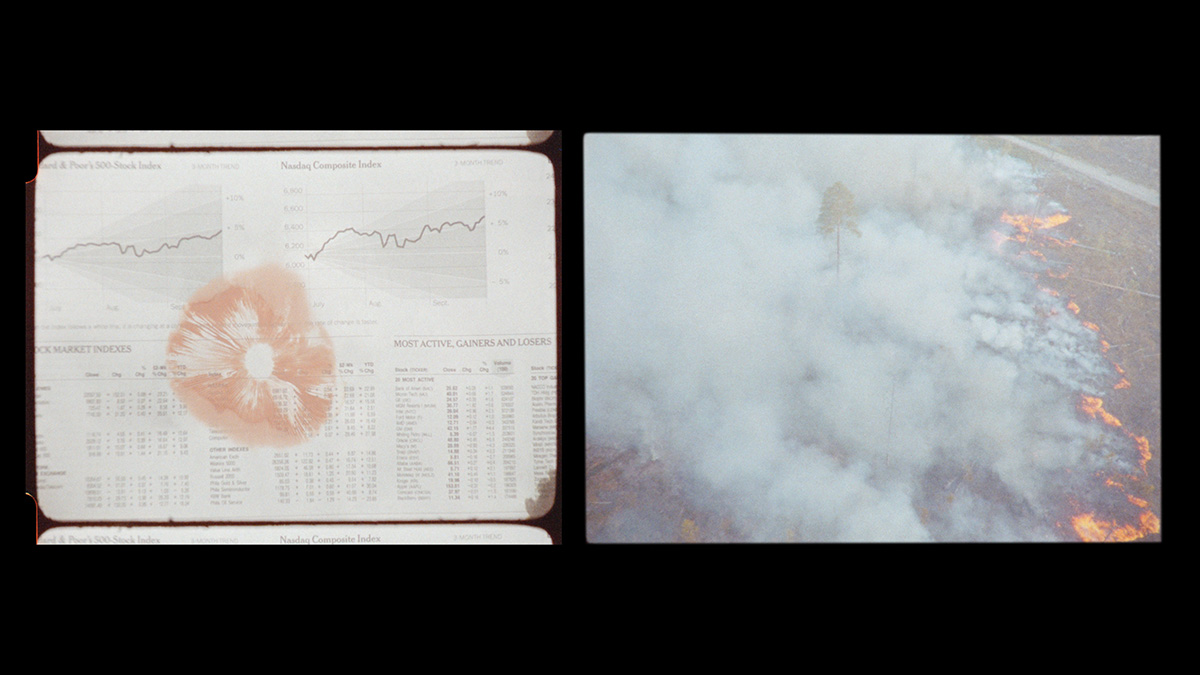
Pia Rönicke
Drifting Woods
Experimental doc. | 16mm | color and b&w | 95:50 | Denmark, Sweden | 2022
"Drifting Woods" is a filmic work that engages with the local histories of a dense forestland located two hours north of Stockholm. A forest has existed in this area for as long as records have been kept, and only in the last 250 years has it been extensively utilized for industrial production. Through a non-linear composition, the work brings forth the various stages of the forest's development: from the planting and cultivation of saplings, through the different phases of tree felling, to the production of paper pulp and lumber. The work captures how the forest is documented and consistently represented – through scientific experiments, data collections, botanical studies, and retellings of the area's history. The film conveys the histories of both local and migratory perspectives, showing how the expulsion of nomadic practices from the forest is closely linked to the forest's enclosure. What becomes evident through the film is that the capitalization of forests is intertwined with surveillance technology derived from racist ideologies. The work collaborates with biologists to gain a deeper understanding of tree life and its interconnection with the underground mycelium, forming what the biologist Suzanne Simard refers to as network topologies. "Drifting Woods" is also a network topology, connecting the forest with the narratives that inhabit it. Listening to the stories of this network also means hearing how the forest is portrayed and understanding that its future depends on how the forest's stories are retold within a broader narrative.
Pia Rönicke's work spans from film, prints, sculptures to objects, which together build narratives. Her work arises from perspectives of a drifting practice that opens up to new connections to land and ways of being present within an everyday, to zones where plant life transgresses existing borders of occupation. Collecting is a recurring aspect of her practice, the personal, ethical and political dimensions of it.
Augustin Perez Rubio
Catalogue : 2007MUSAC | 0 | 0 | | 0:0 | Spain | 2007
Augustin Perez Rubio
MUSAC
0 | 0 | | 0:0 | Spain | 2007
Agustín Pérez Rubio (Valence, Espagne 1972), historien d'art, critique d'art et commissaire d'exposition, est aussi conservateur en chef du MUSAC, Museo de Arte Contemporáneo de Castilla y León (musée d'art contemporain de Castille y Léon). Il a été directeur du Jornadas de Estudios de la Imagen de Madrid de 2001 à 2004. Des contributions régulières dans des magazines internationaux comme NU : The Nordic Art Review (Suède); Art Journal (Philadelphie), Kalias (Espagne), Tema Celeste (Milan), Arts Mediterranea (Milan, Barcelone, Paris), Atlantica, (Espagne), Le Journal des Arts (Paris), entre autres. Il a organisé de nombreuses manifestations telles que Trasvases: artistas españoles en vídeo (Buenos Aires, Mexico D.F., Lima, 2000); Antro-apologías (Valence, 2001), Michael Elmgreen & Ingar Dragset (Madrid, 2002); mais aussi BAD BOYS, la biennale off espagnole officielle au sein de la 50ème biennale de Venise; Cruising Danubio (Madrid, 2003), et Tobias Rehberger. "I die everyday. Cor I 15,31", (Madrid, 2005). Son poste de conservateur au MUSAC l'a amené être co-commissaire d'expositions de groupe comme Fusion. "Aspects of Asian Culture" dans la collection MUSAC en co-commissiariat avec Kristine Guzmàn, ou "Globos Sonda / Trial Balloons", en commissariat avec Octavio Zaya et Yuko Hasegawa; sans compter l'organisation et de montage d'expositions monographiques d'artistes comme Dora Garcia, Julie Mehretu, Muntean & Rosemblum, Pierre Huyghe ? avec Marta Gerveno-, ou l'équipe d'architectes japonais SANAA. Il a aussi été co-commissaire avec Octavio Zaya des Project Rooms de l'ARCO ?06 intitulé Curva de Persecución / Pursuit Curve, sans mentionner son projet Present-Future organisé avec Katerina Gregos pour Artissima -Torino´06.
Julika Rudelius
Catalogue : 2008Forever | Experimental video | dv | color | 16:52 | Germany, Netherlands | 2007
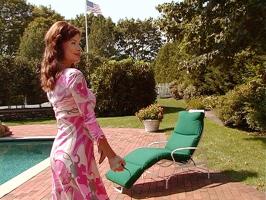
Julika Rudelius
Forever
Experimental video | dv | color | 16:52 | Germany, Netherlands | 2007
Forever NL, installation, configuration 16`52? A number of well-dressed American women, lounging by the swimming pool in a deck chair or strolling in the garden, take turns in this double-screen installation. Each individually they tell us what matters to them, what makes them happy and how they see themselves. The women in `Forever` are mostly talking about their outer appearance. And yet, inner beauty is what is most important, says one of them, `although that is reflected by someone`s looks,` she adds. Does she mean that what it is about is the preservation of external beauty, which is after all the reflection of the unchangeable inner self? It is difficult to guess how old they are exactly. Nevertheless, the dark, slightly worn voice that we hear when we see a girlish figure with streaming hair sitting there in a little pink summer dress, betrays that this cannot possibly be a young woman of around thirty. They take photos of themselves with a self-timer. The camera of the filmmaker always cautiously keeps its distance. The carefully created illusion of the age of their choice is not undermined anywhere just to make the image `more realistic`. `Forever` is a portrait of the way these women want to see themselves, and of the way they want us to see them if a filmmaker should portray them. Rudelius graciously gives them the chance. Fifteen minutes of fame. Forever as young as they were then, with the promise of the future preserved.
Robert Rudolf, Peter MACHAJDIK, David MOSS
Catalogue : 2006 | Création sonore | 0 | | 40:0 | France | 2005

Robert Rudolf, Peter MACHAJDIK, David MOSS
Création sonore | 0 | | 40:0 | France | 2005
Le projet de trio d?improvisation est une première collaboration entre trois musiciens venus d?horizons différents. Slovaques (MACHAJDIK et RUDOLF) et américains d?origine (MOSS), leurs villes d?adoptions sont respectivement Paris et Berlin. Ces deux capitales forment un axe idéal pour une course imaginaire. C?est autour de ce thème et à l?image du Tour de France ou du fameux Prague ? Berlin - Varsovie (un course cycliste de l?époque communiste), que les trois interprètes ? commentateurs, plongent dans le peloton de coureurs (cyclistes ou autres ? ) pour livrer une radiographie des instants vécus par les participants, en mélangeant l?atmosphère de l?événement aux exposés officiels et photos musicales instantanées. Il s?agit d?un sorte de bloc-notes intense et incomplet d?une compétitions où l?important est de survivre. Peter MACHAJDIK ? guitare électrique David MOSS ? percussions et voix RUDOLF Robert - ordinateurs
Markus Ruff
Catalogue : 2007Aus der Leere | Experimental film | 16mm | black and white | 15:0 | Germany | 2005
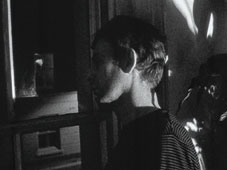
Markus Ruff
Aus der Leere
Experimental film | 16mm | black and white | 15:0 | Germany | 2005
The film observes human meetings staged in a context of lights and shadows. The series of portraits binds relationships in which glances are body movements.
Born in Stuttgart in 1977. Trained as a cook. Has been studying experimental creation using arts and media at the Arts University of Berlin since 2002.
Kivu Ruhorahoza, Christian Nyampeta
Maria Ruido
Catalogue : 2013ElectroClass | Experimental doc. | dv | color and b&w | 53:0 | Spain | 2012
Maria Ruido
ElectroClass
Experimental doc. | dv | color and b&w | 53:0 | Spain | 2012
ElectroClass is a film about the imaginary of labour made by a regional television broadcasting channel in Spain starting from the 80s. Taking the archives of ETB (Basque Country broadcasting channel) as source material and the city of Bilbao as a specific case study, ElectroClass reflects upon the dissolution of the traditional concept of the working class, the changes in our working conditions from industrial capitalism to cognitive capitalism,the expansion of the tertiary sector and the radical transformation of the 'polis' city into the 'Bilbao brand'.
born in 1976. Artist, filmmaker, researcher and cultural producer, since 1998, María Ruido has been developing interdisciplinary projects about the imaginaries of labour in postfordist capitalism, as well as about the mechanisms for the construction of memory and its relation to the narrative forms of history. She lives in Madrid and Barcelona, where she works as a teacher at University of Barcelona, and she is part of various research studies on politics of representation and its contextual relations.
Catalogue : 2012ZONA FRANCA | Experimental doc. | dv | color and b&w | 20:0 | Spain | 2009
Maria Ruido
ZONA FRANCA
Experimental doc. | dv | color and b&w | 20:0 | Spain | 2009
Catalogue : 2010PLAN ROSEBUD 2 | Documentary | dv | color and b&w | 120:0 | Spain | 2008
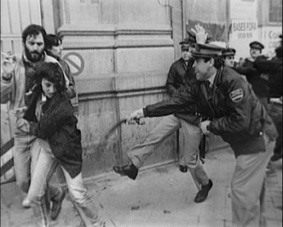
Maria Ruido
PLAN ROSEBUD 2
Documentary | dv | color and b&w | 120:0 | Spain | 2008
Plan Rosebud 2 focuses its attention specifically in the Spanish Transition period and in its cultural context, as well as in the last years of British labour period in the seventies and in the arrival to power on the conservative leader Margaret Thatcher. It tries to dismantle, trough the analysis of some specific cases of social movements and productions of the popular culture, the idea of Transition as a pact among elites, the official discourse, teleological and compact of a political class that, with Adolfo Suárez and the king Juan Carlos at the front, it ?saved? the Spanish state from a new civil war thus making it possible the ?pacific? change to a democratic regime (as we can see and listen, for example in the most famous mythological-media account, La Transición española, the series directed by the journalist Victoria Prego in the first years of the government of Felipe González).
María Ruido (Spain) works as a filmmaker, cultural producer and researcher. Since 1995 she has been developing, mainly through video and writing, interdisciplinary projects about the social elaboration of the body and its place in the imagining of work, as well as about the mechanisms of constructing memories and their relationship with narrative forms of history. She is a teacher at the Department of Media at Barcelona University. She has published many texts about representation and its contextual relationships, such as Ana Mendieta (2002), Corpos de producción: miradas críticas e relatos feministas en torno aos suxeitos sexuados nos espacios públicos (2005) and Plan Rosebud: sobre imágenes, lugares y políticas de memoria (2008). Her audio-visual projects include the videoactions Cronología (1997) or La voz humana (1997), and the documentary-essays La memoria interior (2002), Tiempo real (2003), Ficciones anfibias (2005), Las narrativas del trabajo (2005) and Plan Rosebud (2008).
Maria Ruido
Catalogue : 2010PLAN ROSEBUD 1 | Documentary | dv | color and b&w | 114:0 | Spain | 2008
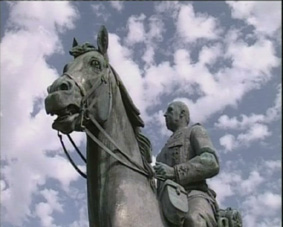
Maria Ruido
PLAN ROSEBUD 1
Documentary | dv | color and b&w | 114:0 | Spain | 2008
Title: PLAN ROSEBUD 1 Genre: DOCUMENTARY ESSAY Producer: CGAC (GALICIAN CENTER OF CONTEMPORARY ART) Director: MARIA RUIDO Year: 2008 Length: 114 MINTS. Country: SPAIN Synopsis: Plan Rosebud 1: Crime scene Plan Rosebud 1 is focused on the recent social debate around ?The Historical Memory Act? in Spain, and the current relations between the sites of memory and the politics of memory that are produced through cultural industries. They are studied in details, in our case, through war tourism and commemorative tourism. In Plan Rosebud 1we visit Museums and Commemorative Historical War Sites and these materials form the main part of Plan Rosebud 1. This study, is not only limited to the Spain, and especially to the Spanish province of Galicia (where I, and General Franco were born), but it is presented as a comparative study with war and commemorative tourism site in Great Britain and Normandy as the European memory policy site of the WWII. The reason to choose Great Britain as more significant comparative variable was related to the fact that Britain is a well established European democracy with a completely different past from the one we have inherited from the Franco dictatorship and, nonetheless, as we discovered throughout the process, we have much more similar dynamics than expected in terms of links between cultural industries and production of memory (as an unstoppable and supra-state phenomenon due to economic globalisation). The politics of memory is in fact equally selective in relation to episodes that may contradict or question the compact and linear heroic narratives that are transmitted by the state or the media (I am referring, for example, to the very low interest in research about the condition of German and Italian prisoner in detention camps in the United Kingdom until very recently).
María Ruido (Spain) works as a filmmaker, cultural producer and researcher. Since 1995 she has been developing, mainly through video and writing, interdisciplinary projects about the social elaboration of the body and its place in the imagining of work, as well as about the mechanisms of constructing memories and their relationship with narrative forms of history. She is a teacher at the Department of Media at Barcelona University. She has published many texts about representation and its contextual relationships, such as Ana Mendieta (2002), Corpos de producción: miradas críticas e relatos feministas en torno aos suxeitos sexuados nos espacios públicos (2005) and Plan Rosebud: sobre imágenes, lugares y políticas de memoria (2008). Her audio-visual projects include the videoactions Cronología (1997) or La voz humana (1997), and the documentary-essays La memoria interior (2002), Tiempo real (2003), Ficciones anfibias (2005), Las narrativas del trabajo (2005) and Plan Rosebud (2008).
Maria Ruido