Catalogue > Faire une recherche
Résultats pour : Tout le catalogue
Karel De Cock
Unheard Silence
Vidéo | betaSP | noir et blanc | 4:30 | Belgique | 2009
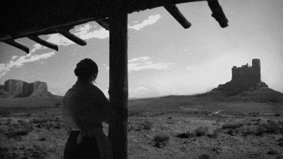
Unheard Silence is a meditation on the role of women in the western genre. I came to realize that I related this subject matter to an image of The Searchers that was imprinted on my memory. So I decided to use this image hoping it would trigger a similar memory and communicate this subject to others as well. We stand together with a woman. Waiting and staring into the empty desert. Not knowing if the men will return or not.
Karel De Cock °1982: Lives in Brussels and studies Audiovisual arts at the Sint-Lukas Hogeschool in Brussels. In 2008 he received his Bachelor diploma with his film Resonance (2008). The film has been selected by various festivals e.g. Rencontres Internationales (FR), Transmediale 09 festival (DE) and Migrating Forms (New York Underground Film Festival). His films are character based and situate themselves in the search and recover of identity and relations. He has a background in the traditional fiction genre but since Resonance he finds himself crossing the borders of both fiction and documentary. Right now he finishes his studies in the master department of documentary with guidance from Herman Asselberghs, Rob Rombout and Ronnie Ramirez
Max De Esteban
Proposition Two
Vidéo | dv | couleur | 7:38 | Espagne | 2012
Proposition Two: The Collection SYNOPSIS The Propositions series assemble my projects dealing with contemporary art issues through photography and video. Contemporary art, as most intellectual endeavors today, has its own narratives, languages and contradictions that often feel highly specialized and removed. These projects search for visual structures that raise questions and pull them back to the social and political. In particular, ?Proposition Two: The Collection? addresses the permanent collections in contemporary art museums today. A collection necessarily reflects the dominant/institutional understanding of the nature of art and its role in society. Long gone the alternative visions led by artists such as Broodthaers and Haacke, the model initiated by Thomas Krens has been carried out to its logical consequences by incorporating advertising and entertainment into the museums core values.
Biography Max was born in 1959 in Barcelona, Spain. Lived and worked in Palo Alto, New York, Madrid and London. In 2009 opened his first stable studio in Barcelona and since then focuses exclusively on personal project-based work. Solo Exhibitions: Elegies of Manumission, Quartier Gallery, Vienna, Feb. 2013 Proposition One. Festival de la Luz, Buenos Aires, 2012 Elegies of Manumission, CEHP, Bratislava, 2012 Proposition One. Klompching Gallery, New York, 2011 Proposition One. Spicer House, Barcelona, 2011 Vertige. Fotofestiwal, Lodz, 2010 Don?t listen to me. Spicer House, Barcelona, 2010 Selected Group Exhibitions: Museum of Fine Arts Houston, USA, 2012 Post Script, Cork, Irland, 2012 The Gathering. Rhubarb. Diemar/Noble, London, 2012 Winter Salon. Klompching Gallery, New York, 2012 PNetwork, Siegen, Germany, 2011 Fnac. Madrid and Barcelona, 2011 Escuela Arte, Granada, 2011 FotoTageTrier Triennial, Trier, Germany, 2010 Awards: Encontros da Imagem, Best Portfolio, Finalist, 2011, Portugal National Award of Professional Photography, Gold LUX, 2010, Spain Grand Prix Jury`s Special Award, Fotofestiwal 2010, Poland Monographs: Elegies of Manumission, Nazraeli Press, USA, 2012 Selected TV, Magazine, Journal and Online Features: TA3, TV feature, July 2012, Slovakia Pravda Kultura, Elegies of Manumission, by Jena Opoldusová, July 2012, Slovakia ARTVAS, Vertige, by Joanne Junga Yang, June 2012, Korea Lens Culture, Elegies of Manumission, by Jim Casper, May 2012, France DW-TV Deutsche Welle, TV feature, November 2011, Germany Feature Shoot, by Alison Zavos, November 2011, USA NYC Art Scene, November 2011, USA NY Art Beat, October 2011, USA Wired, August 2011, Italy, USA and Japan Conscientious, by J. Colberg,, March 2011, USA Hotshoe Magazine, by Bill Kouwenhoven, February 2011, UK Education: Graduate from Universitat Politècnica de Catalunya (Spain) Master from Stanford University (USA) PhD from Universitat Ramon Llull (Spain) Fulbright Alumni. Representation: Klompching Gallery (New York) Charles Guice Contemporary (San Francisco) Spicer House (Barcelona)
Daniela De Felice
LIBRO
Doc. expérimental | dv | couleur | 20:0 | Italie, France | 2007
Mon grand-père Guglielmo entre en maison de retraite. Il confie un dossier à chacun de ses enfants. Ma mère ne l'ouvre pas. Moi je le lis. J'ai toujours entendu parler de ce dossier. Le dossier noir. J'étais persuadée que ce n'était qu'une image, un mythe. Le dossier noir existe, il est marron. C'est un recueil de documents relatifs à ma mère. J'y trouve un classement de lettres, de dessins, de cartes de voeux, de bulletins scolaires et même une liste de ses fautes. Les documents sont en ordre plus ou moins chronologique. Gugliemo a nourri sa collection pendant cinquante années. Sa fille, son gendre et ses petits enfants, dans cet herbier. Je trouve des articles qui racontent une tentative de suicide de ma mère, soulignés au bic rouge. À vingt et un ans, Paola a avalé des somnifères, dans la salle d'attente de la gare de Pise, après avoir raté un examen d'anatomie. Je trouve aussi les pages du journal intime de ma mère. Mon grand-père les avait arrachées les jours suivants. Je les lis aujourd'hui, comme il les a lues hier. Guglielmo classe, vole, investigue, mais il n'écoute pas.
Daniela de Felice est née à Milan en Italie en 1976. De 1990 à 1994 elle étudie le dessin et l?histoire de l?Art à Novara (Liceo Artistico). De 1994 à 1998 à Bruxelles elle fréquente l?ERG (Ecole de Recherche Graphique) où elle expérimente tous les supports visuels et narratifs. De 1999 à 2000 elle est boursière à Fabrica (Treviso-Italie), le centre de recherche sur la communication et les nouveaux médias. Elle collabore notamment au court métrage « Afterwords », sélection offi cielle de la Mostra di Venezia en 2000. Elle travaille à des projets de création graphique avec Amnesty International, Witness, Move our Money, Istituto Luce, Domus Magazine, Alessi, ID. Elle assiste aux workshops de Amy Franceschini - web design, Alan Fletcher - graphisme, James Victore - graphisme, John Maeda - web design, Marti Guixe - design, Gijs Bakker, droog design - design, Stephan Sagemaister - fi lm d?animation, Marina Abramovic - body art, Wim Crowel - graphisme et typographie. Elle publie dans Novum Magazine (Berlin), I-D Magazine (London), Abitare (Milano), La Repubblica (Roma), Il Corriere della Sera (Roma). A partir de ses dessins, elle réalise plusieurs fi lms vidéo, dont «Coserelle» sélectionné à Paris Berlin Hors Circuit, , les Inattendus, Festival international de Bruxelles etc? Daniela de Felice obtient une bourse d?aide à la création FIACRE du Centre National Arts Plastiques en 2001, pour « Libro Nero », une série d?images et de textes autour du fascisme en Italie à travers son expérience familiale. Depuis quelques années, son travail pictural croise le support multimédia et, en collaboration avec le cinéaste Matthieu Chatellier, elle a réalisé « Quelle vie heureuse » et « Courage Fuyons ! » deux cédéroms soutenus par la DRAC Basse Normandie et présentés au Centre d?Art Contemporain de Basse Normandie.
Javier De Frutos
Whoever You Are
Fiction expérimentale | hdv | noir et blanc | 6:9 | Espagne | 2021
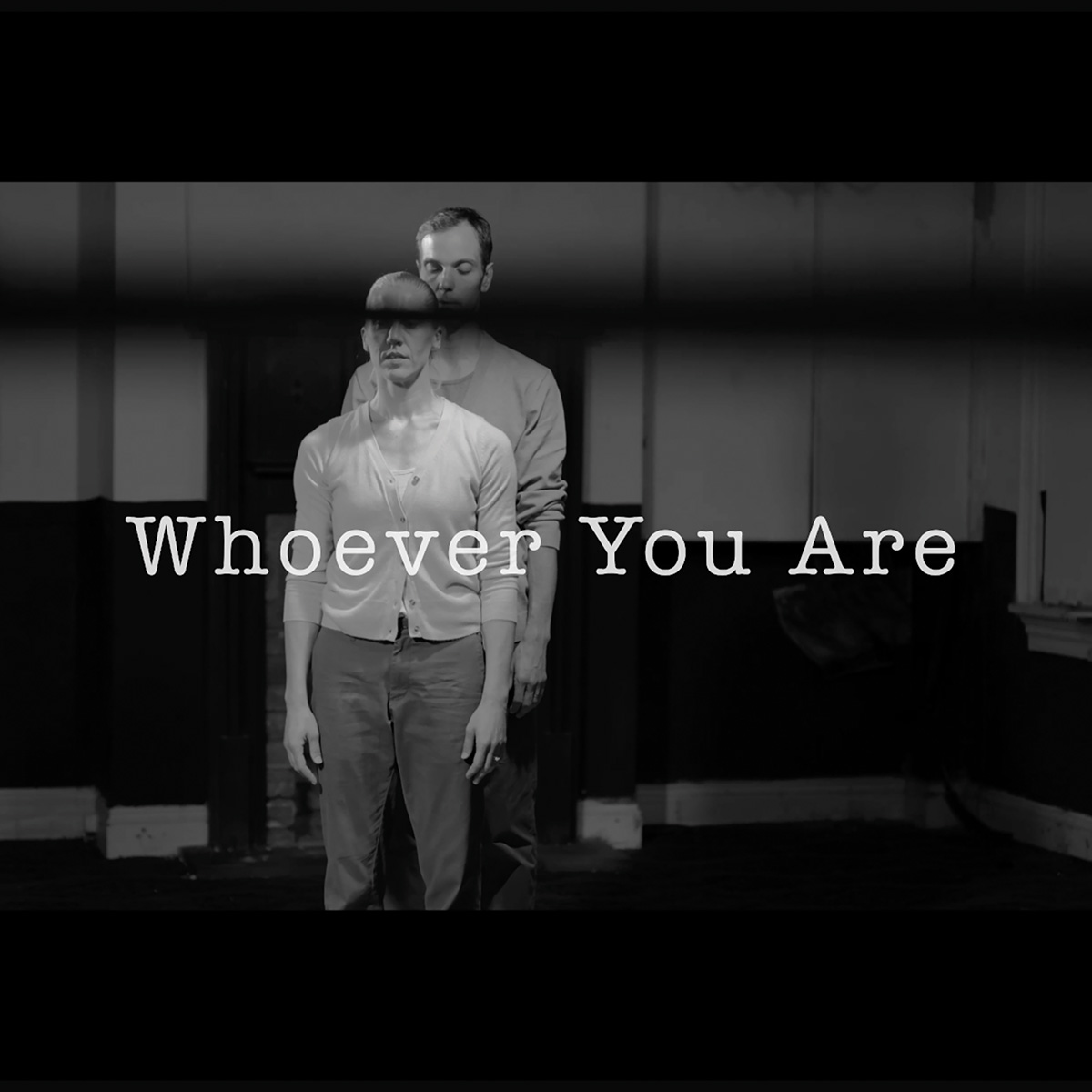
“Whoever You Are” is a cinematic adaptation of Walt Whitman's seminal poem, “Whoever You Are Holding Me Now In Hand” directed by Javier De Frutos and produced by Whoever You Are Productions. Following a lifelong scholarship and appreciation of American literature, De Frutos adapted Walt Whitman's poem into a screenplay for the film. Within “Whoever You Are”, De Frutos utilizes several different mediums of execution including dance and vocals, which he combines using his unique directorial and choreographic style blended with dexterous editing.
Shocking, sensual, raw, radical – these are words synonymous with work by Olivier award-winning director and choreographer Javier De Frutos. Renowned for creating brutal yet beautiful film and stage work, De Frutos has consistently stunned audiences with his ability to make work that not only is violently challenging, but also sears the stage and screen with its intelligence and wit. Prompted by the pandemic to expand their film-making practice, producers Paul Chantry and Rae Piper of Whoever You Are Productions, invited De Frutos to collaborate with them in creating a new short film. This collaboration sought to build on a fruitful prior relationship which Chantry had enjoyed with De Frutos, that had involved working together on several productions, two of which had been filmed for the BBC ("Eternal Damnation to Sancho & Sanchez" and "The Most Incredible Thing"). Chantry and Piper had enjoyed a longstanding relationship of 7 years collaborating with award-winning company Evenlode Films and Productions, who were additionally invited to join the project.

Matthias De Groof
Diorama
Documentaire | mov | couleur | 34:40 | Belgique | 2018
When the staff of the AfricaMuseum destroys the very dioramas they used to guard for decades, a colonial worldview is demolished. What remains are dead animals staring at you amidst ecocide. The violent destruction forms an allegory of museological and ecological relations. Diorama literally means “through that which is seen”. It is a window which wants to suggest life as truthful as possible through death. The diorama then, becomes a still life: a Vanitas. So still, that the sculptural becomes pictorial, until men enter the broken window and become part of the nature morte. Men animate death through caress and tear the animals loose from a morbid decorum that offered them verisimilitude of an obsolete landscape.
Dr. Matthias De Groof has a strong interest in film, Congo and (post)colonialism. He has a Master’s in Philosophy (HIW - KUL), International Relations (UCL) and Cinema Studies (UA). He studied African Studies at UMU (Uganda) and became a Fulbright and BAEF visiting scholar at NYU’s Tisch School of the Arts. His PhD in Cinema Studies looked at African cinema. As a Postdoctoral Fellow of the Research Foundation - Flanders (FWO), he studied postcolonial film theory at the Antwerp University where he also taught World Cinema, Aesthetics and Curating & Exhibiting. His scholarly work has been published in Third Text and Columbia University Press amongst others. He is regularly asked to talk and write in non-academic contexts and to curate film programs. His own films have been presented i.a. at the IFFR, Media City, Cannes Pan-African Film Festival and the San Francisco Art Institute. Currently, he works at the Collegium for Advanced Studies in Helsinki. His film-triptych on postcolonial museology (CobraFilms) and his book on Lumumba’s Iconography (Leuven University Press) are about to be published.
Matthias De Groof
Onder het witte masker: de film die Haesaerts had kunnen maken
Doc. expérimental | 4k | couleur | 9:0 | Belgique | 2021
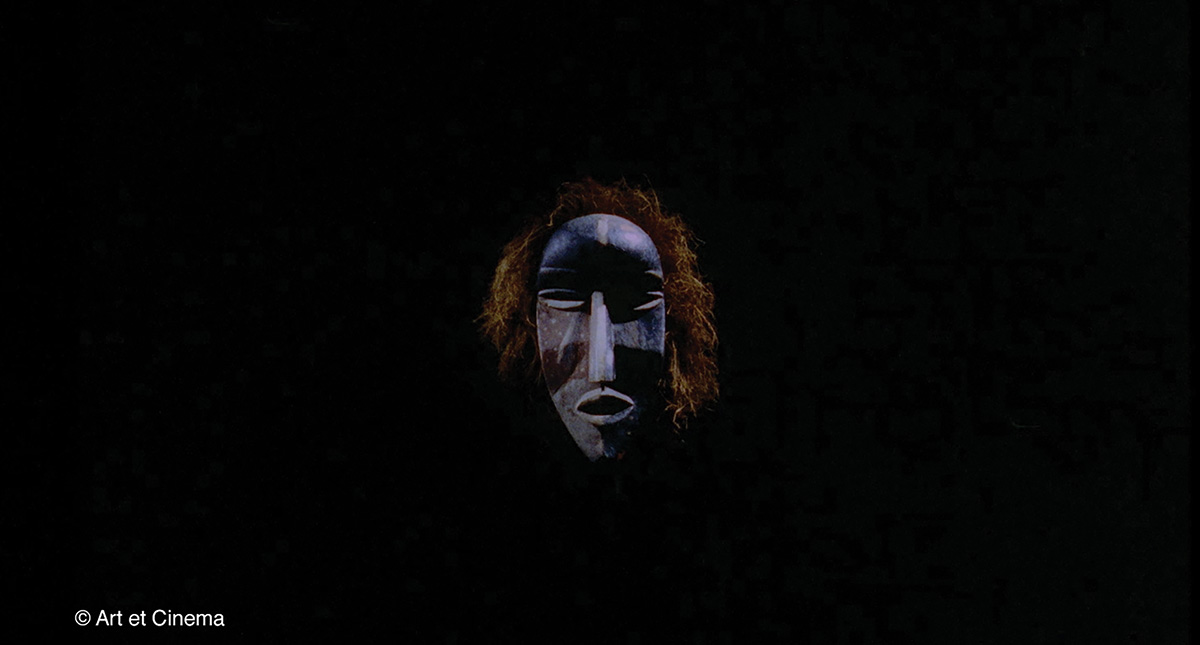
"Under the White Mask: the film Haesaerts could have made" uses fragments of "Under the Black Mask", a 1958 film about Congolese art directed by the Belgian artist Paul Haesaerts and qualified as colonial propaganda. This new film imagines what the masks, now subjects and not objects, would say. Aimé Césaire's "Discourse on Colonialism" is spoken in Lingala for the first time. This speech is still a critical mirror for Europe. "Under the White Mask" is limited to elements already existing in 1958.
Matthias De Groof (1981) Belgium. Filmmaker and scholar. His award-winning films have been presented at venues like the IFFR, Cannes Pan-African Film Festival, Le FIFA and the Berlinale. His edited book “Lumumba in the Arts” is published with Leuven University Press, and reached the top-100 "books to escape the news" (LitHub). He has held appointments at the New York University’s Tisch School of the Arts; the Helsinki Collegium for Advanced Studies; the Africa Multiple Cluster of Excellence of the Bayreuth University; and the Waseda University in Tokyo. Throughout is artistic and academic career, he was granted fellowships by the Canon Foundation, the KONE Foundation, Fulbright and BAEF. His filmography, produced by Cobra Films, includes “Under the White Mask” (2021), “Palimpsest of the Africa Museum” (2019), “Lobi Kuna" (2018), “Diorama” (2018) and “Jerusalem, the Adulterous Wife” (2008) among others.

Matthias De Groof
Pauline . Lumumba
Vidéo | hdv | couleur | 10:46 | Belgique | 2023
Now that Lumumba's mortal remains have been repatriated, renowned artists Marlene Dumas (South Africa) and Luc Tuymans (Belgium) talk about their paintings of Pauline and Patrice Lumumba respectively. About paintings, politics of nudity and death.
I’m a Belgian filmmaker and professor in film studies and visual cultures. Since 2005, my work centers around exploring the failures of decolonization. I've been trained in Philosophy (MA), African Studies, International Relations (MA), and Cinema Studies (MA). After I completed a thesis on Eurocentrism (Europa Mensura) and co-created a video series on Alterity (ôtre k’ôtre 2007), I researched African cinema and postcolonial film theory at the New York University’s Tisch School of the Arts; at the Helsinki Collegium for Advanced Studies; the University of Bayreuth’s Africa Multiple Cluster of Excellence and at the Waseda University in Tokyo. I teach/taught courses on World Cinema, Aesthetics, Curating & Exhibiting, Documentary Theory, Film Criticism, and Script Writing. My current Marie Sk?odowska-Curie research at the Amsterdam School for Cultural Analysis of the University of Amsterdam, explores scattered worldviews and aesthetics as politics of forms. My films, including Under The White Mask(2020), Palimpsest of the Africa Museum (2019), Lobi Kuna (2018), Diorama (2018), and Jerusalem, the Adulterous Wife (2008), have been showcased at festivals such as the Berlinale and numerous platforms. I guest lectured at EHESS, Paris1-Panthéon, Humbold… and published with Interventions, Third Text, Cambridge Scholars, Columbia UP, Black Camera, Artl@s Bulletin, Visual Anthropology, Francofonia, Imaginations, Journal of African Cinema, Image [&] Narrative, Ethische Perspectieven, L'Harmattan, Sternberg Press and Wallflower Press amongst others. My writings include an edited book on Lumumba in the Arts (Leuven University Press) which reached a list of the top-100 "books to escape the news" (LitHub). Besides, I was regularly invited to talk in non-academic contexts (Bozar, RFI, Klara, KVS, De Roma, Bruzz, Cinematek, WIELS), to curate film programs (MuZee, NOVA) and to write for MO* Magazine, Rekto:Verso, l’Art Même, Aktief, Filmmagie and Décadrages.
Lotte Louise De Jong, Antonia Hernández
currently_off_sight
Doc. expérimental | mov | couleur | 10:58 | Pays-Bas | 2022
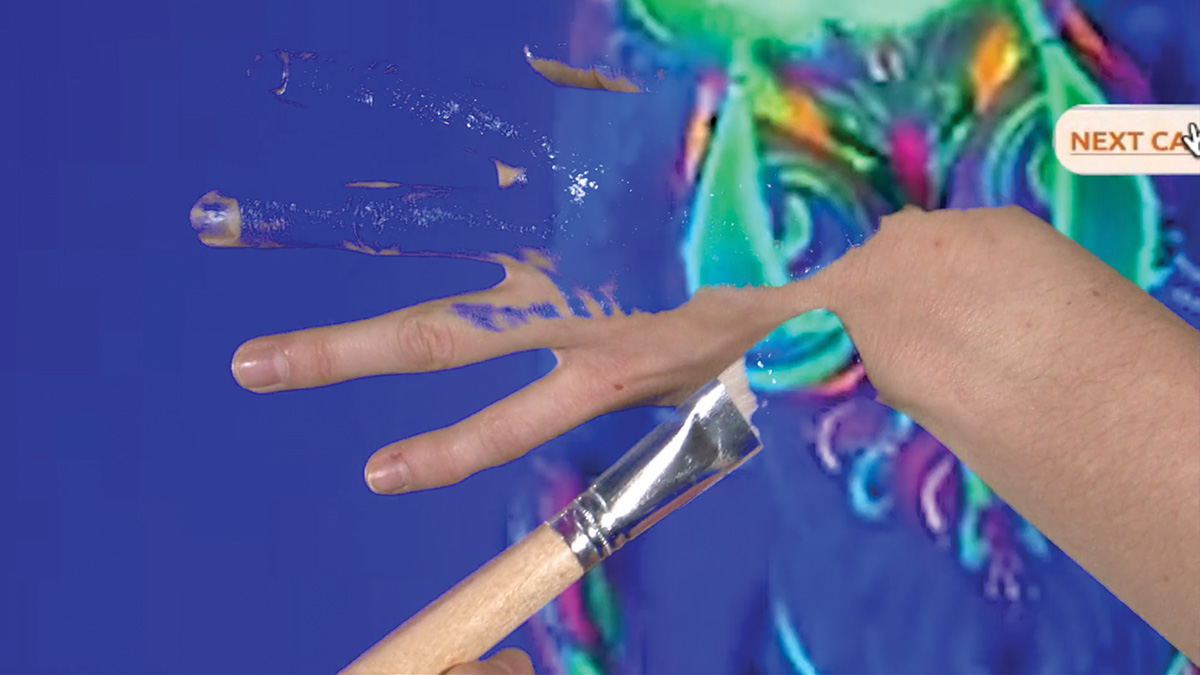
Currently_off_sight investigates visibility on sex webcam platforms through the testimonies of webcam performers. Despite the asymmetry of power between them and the sexcam platform, currently_off_sight resists a binary understanding of what is and what is not visible in that context. In this way, the project questions the purpose of rendering things (hyper)visible at the expense of others while exploring the many shades of online perception. Foregrounding webcammers’ voices, currently_off_sight examines how visibility manifests on the platform, and the various degrees of agency the different actors have there. Both in its web and video versions, the project is divided into chapters concerning the different topics addressed by the webcammers. Quoting the aesthetics used in the camming environment, these elements are placed on a simulated desktop that works as a stage and place of observation, while it also acknowledges the presence of a user in this entanglement.
Lotte Louise de Jong is a media artist from the Netherlands with a background in filmmaking. Her work is research-based and ranges from physical, digital and online installations to more traditional forms of narrative. Her practice addresses how we, as a society, view and shape our identity through mediated spaces like the digital world. The internet as a space for exploring intimacy has been the main focus of her past projects. She obtained a master’s degree in Fine Art and Design at the Piet Zwart Institute in Rotterdam in 2019. In 2020 she received an emerging artist grant from the Mondriaan Fonds. Antonia Hernández is a writer, designer, and media artist whose work explores infrastructural relations of intimacy, combining theoretical investigation with arts-based practices to understand the fleshy, living, and domestic aspects of media. She has presented her work and research-creation methodologies widely at conferences, exhibitions, and in artist talks, and is preparing a book on the role of fictional currencies in sexcam platforms.
Joëlle De La Casiniere, Michel BONNEMAISON
Rose de Lima
Doc. expérimental | 16mm | couleur et n&b | 39:59 | Belgique, Pérou | 1975
Est-ce que le paradis peut exister dans une société corrompue ? Est-ce que l?éducation peut vaincre la télévision et la pornographie qu?on y voit ? De quelle manière est-ce que la citoyenneté peut jouer un rôle dans l?éducation, et l?éducation encourager la citoyenneté ? A 19 kilomètres de la capitale du Pérou, Lima, Villa El Salvador n?est pas une ?barriada? ordinaire. C?est une ville de plus de 300 000 habitants et un véritable exemple d?autogestion, d?autonomie et d?esprit communautaire. Joëlle de la Casinière dresse un portrait de cette ?nouvelle ville? qui fut construite à partir de rien, extrêmement rapidement et au milieu de nulle part. Le travail qu?elle a effectué sur la bande-son relève véritablement du poème musical en langage radiophonique. Avec le même style de collage ? à la fois produit et anticipation de l?ère du zapping ? qui caractériserait le travail de de la Casinière dans les années 80, ?Rose de Lima? joue avec les contradictions et les sens nouveaux que produit la juxtaposition du son et des images. En associant des boléros, des rancheras et d?autres genres de musique populaire Sud Américaine avec la vue accablante de routes en plein milieu du désert et de voitures industrielles, de la Casinière joue sur les stéréotypes qui existent à propos de l?Amérique du Sud et souligne ainsi les grands contrastes de ce continent.
D?origine française mais Belge d?adoption, Joëlle de la Casinière, qui est née en 1944, est connue principalement pour son travail avec le Centre de Recherche Montfaucon dans les années 80. Les vidéos Montfaucon, qui s?inspirent de Marshall McLuhan, sont des images de télévision qui se réfléchissent elles-mêmes dans le but de déconstruire l?idole qu?est devenue la télévision. Ce sont des ??uvres d?art complètes?, ils utilisent tous les systèmes sémiotiques que la télévision utilise : musique, images (des séquences trouvées et auto générées) et langage parlé, écriture et chansons. Le collage qui en résulte interrompt la perception conventionnelle et rend donc possible une réflexion sur ce medium. Entre 1972 et 1979, Joëlle de la Casinière et son compagnon Michel Bonnemaison (1923-2006) ont voyagé à travers le continent américain et ils ont rapporté de ce voyage une série de dix films.
Astrid De La Chapelle
Corps Samples
Film expérimental | 16mm | couleur | 13:45 | France, Allemagne | 2021
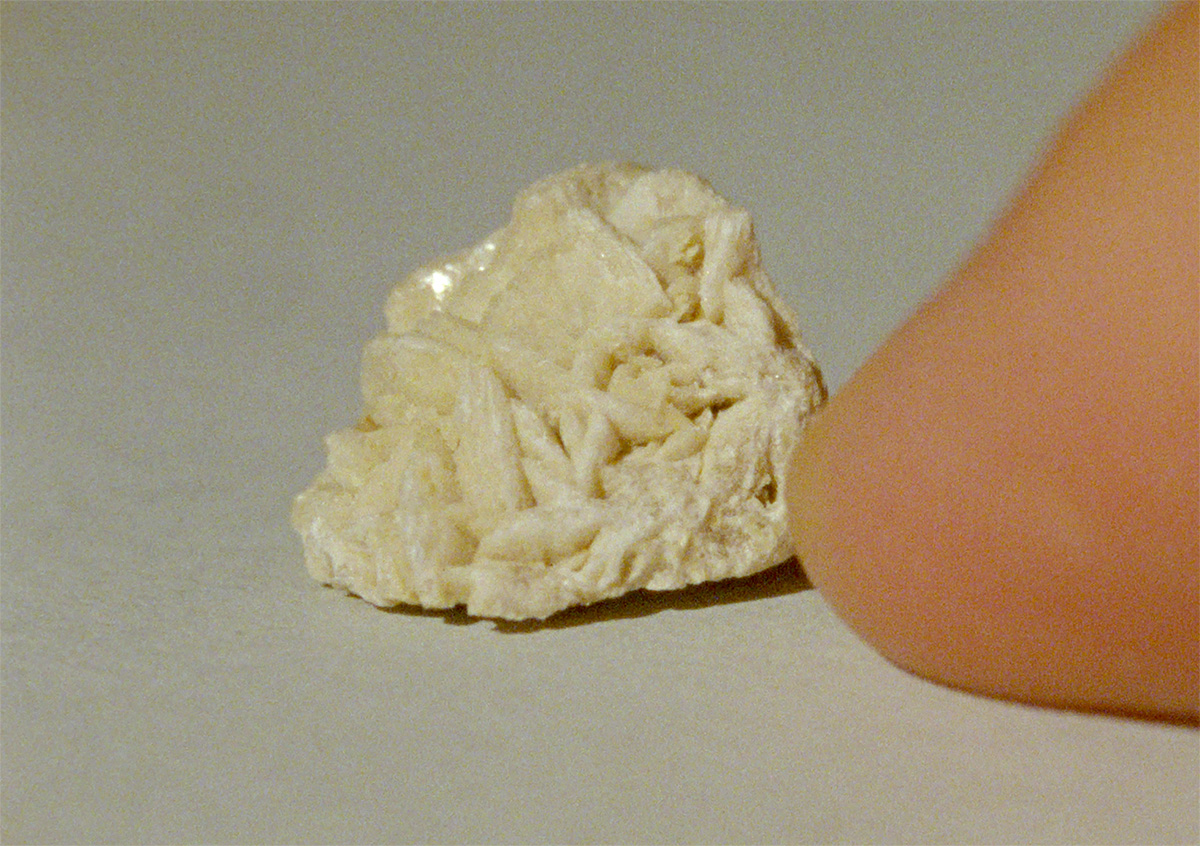
Au départ, il y a une simultanéité. Un fossile marin de crinoïde mis à jour près du sommet de l'Everest, un célèbre alpiniste britannique qui s’évapore et un leader russe qui s'éteint sont le point de départ d’une histoire de la transformation de la matière. Dans un vaste mouvement, les matières terrestres se brassent et se métamorphosent, les échelles et les temporalités se télescopent, et les corps humains se nichent au creux des grands processus terrestres.
Astrid de la Chapelle est une réalisatrice et une artiste française. Elle développe dans ses films des expériences autour du récit, notamment en lien avec la géologie et les circuits économiques des ressources terrestres, mais aussi de la science-fiction. Son travail se déploie au sein de l’image en mouvement, mais également dans d’autres champs comme la musique, avec le groupe Shrouded and the Dinner depuis 2012. Ses films ont été présentés entre autres au Cinéma du Réel (FR), au festival d’Oberhausen (DE), à l’ECRA Experimental Festival (BR), au FID Marseille (FR), aux Rencontres Internationales Paris/Berlin (FR/DE), au Musée d'histoire naturelle (FR), au Musée de la Chasse et de la Nature (FR)…

Astrid De La Chapelle
Uccello
Film expérimental | 16mm | couleur | 2:20 | France | 2016
L'épopée sur branches et en sous-bois, télescope: nature, peinture: uccelli et Uccello. Le film tisse un dialogue avec des éléments photos et vidéos trouvés sur internet d'oiseaux et d'extraits de tableaux de Paolo Uccello.
Astrid de la Chapelle est réalisatrice, artiste et musicienne. Elle est née en 1983 à Paris. Dans ses films 16mm, dessins et projets éditoriaux, elle procède à des transcriptions entre médiums et à des reconstructions narratives en renouvelant les hiérarchies de récit et l’utilisation de documents. Son travail explore les potentiels qu’ouvre les espaces ou les paysages. Elle auto-édite le fanzine de science-fiction Futu et joue en parallèle dans le groupe de musique, Shrouded and the Dinner, avec quatre autres artistes et musiciens. Elle a étudié à l’Ecole nationale supérieure des Arts Décoratifs de Paris (diplômée en 2008), à la School of Visual Arts de New-York (USA) et à l’Ecole Supérieure des Arts Appliqués Duperré. Invitée par le Muséum national d’Histoire naturelle en 2017, elle a imaginé le cycle sur l’île de Pâques avec une sélection de films et de conférences.
Nieves De La Fuente
Tanque de Tormentas
VR expérimental | 0 | couleur | 0:0 | Espagne, Allemagne | 2021
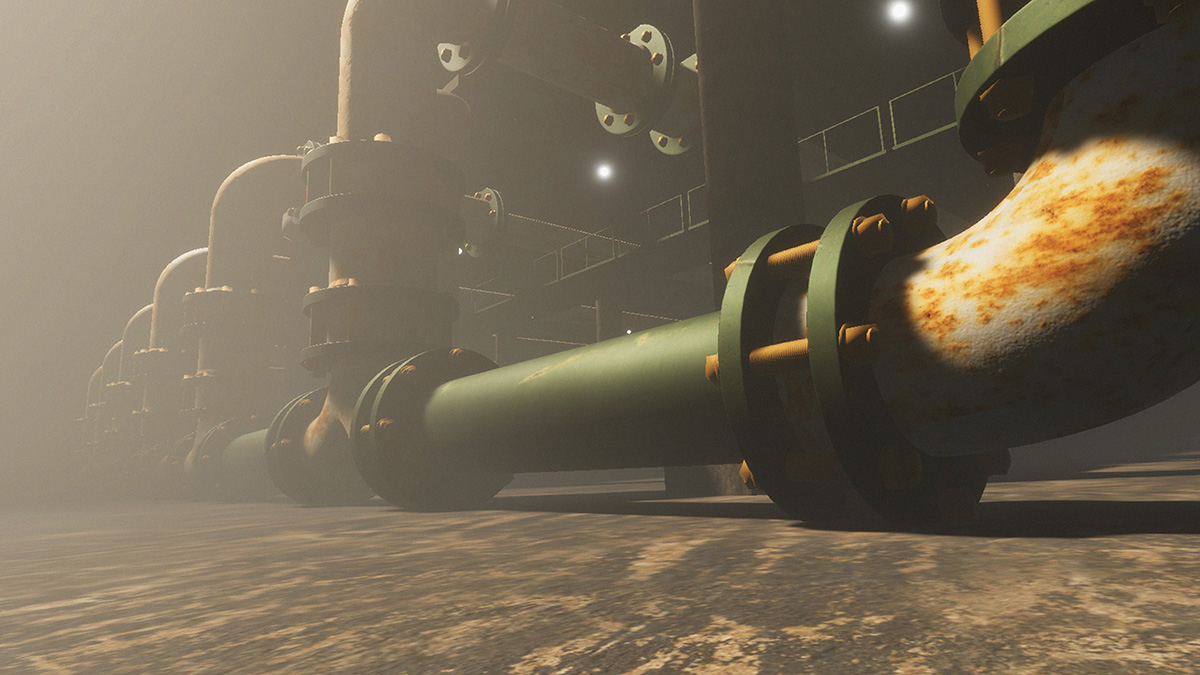
Water tanks work as collectors that help to control water levels in times of extreme rainfall, ensuring the availability of this resource in future times of drought. The one in Madrid is one of the largest in the country. I was not aware of its existence until a few months ago when I heard about it on the radio. It was a feature about everything that could be found there along the years: a dead donkey, an rusty small car, chandeliers... What kind of memories do we throw away in the water of these places where they cannot be carried away by the current? Do we want to forget them? Or do we want just to keep them preserved under water? In this virtual reality experience, the water-collector is part of the subconscious. It is a place where childhood memories are encapsulated. We can revisit them in the virtual world, but probably they will drown us.
Born in Madrid (Spain) 1988. Nieves de la Fuente studied Fine Arts at the Universidad Complutense de Madrid. She finished her studies with an Erasmus Scholarship at the Kunsthochschule Kassel with Professor Norbert Radermacher. During her Posgradual Studies at the Kunsthochschule für Medien in Cologne, she worked as a 3D artist and improved her understanding of the 3D medium. The work in 3D, open her a different approach to sculpture and a way into immersive technologies. She uses these as a medium to deliver a message and keeps working as a conceptual artist. Her current line of work oscillates among the construction of memory and its experience in immersive processes and the investigation of non-human perception delivered through these technologies. She has shown her work in institutions and festivals around Germany, Spain, Canada, Taiwan and Croatia among others.
Jaime De La Jara
Reality (Show)
Vidéo | dv | couleur | 13:17 | Espagne | 2009
In his essay Prison Time, Michael Hardt maintained that we have to construct a way for the moment of love to return, for it to be repeated endlessly and take on a tempral density, a duration that would become the material structure for a new time. That is what I wanted to construct, tinking in terms of the literal meaning of the word construct. To modify time and make visible not only something that generates a crucial change, but also something that apparently does not, whose change we are unable to perceive because of their fleetingness or because they are too commonplace. Using the strategy and the power of slowness. As Genet, who Hardt addresses in his Prison Time, might have put it, somebody could have achieved it even if it were only for a thousandth of a second. Things are not as they seem. They are much more coplex or contain more than we can see at first glance. Paraphrasing Frank Stella, "things are as they seem, but for me they are not as they seem...". Reality is much more complex, as well as changing and fragile. Any detail can breach it, one single event can transform a scene from reality into something completely different. We to are part of this reality, and that makes us just as fragile and changing. We are a reflection of what is happening around us. With this project, I continue transgressing reality, looking for ways to explore it further and find that which is difficult to see, accentuating the importance of what surrounds us in order to reach a better understanding and valuation. I have constructed a path twelve metres long by one metre wide for a trolley to circulate automatically along it in both directions. On it is a six metre high tower with a 500 watt spotlight. The trolley moves at a very slow speed from one end of the path to the other, pausing for one minute on both ends. It takes approximately one minute to cover the twelve metre stretch. At this speed, the trolley iluminates everything along its path as it comes under its focus. When bringing the work into the exhibition hall as we see in the intervention shown in the video, something that I touched on earlier happens: the structure somehow loses its core role and the place takes on a greater centrality, thus transforming it into an object and part of the installation. It takes on the false appearance of a stage set and reveals all its fragility, its harshness, or it is simply transgressed. Everything is a to-and-fro, a coming and going, endlessly repeating itself and marking this temporal density Michael Hardt spoke of. The idea is form this moment to keep on repeating itself and to generate a false way of controlling the uncontrollable, which is time.
Jaime de la Jara (Madrid, 1972) graduated with a degree in Fine Arts from de Universidad Complutense of Madrid in 1996. Since then he has won several prizes and grants, including one from the Fundación Marcelino Botín in 2003 and another from the Artistic Creation Awards of the Region of Madrid in 2008. His works have been seen in various exhibition and competitions such as: Generaciones 2005 and 2006 at La Casa Encendida and Destino Futuro, the selection of young artists by the Region of Madrid at the Botanical Garden, curated by Oliva María Rubio. He took part in LOOP 05 with an individual project and at the Planes futuros exhibition curated by Lorena and María Corral. De la Jara is on the roster of Fúcares Gallery in Madrid where he showed his work in the 15 inches project in 2007. It was then seen at art fairs like Balelatina (Miami, New York and Basel), ParisPhoto, Foro Sur, MACO, D-Foto, Vienna Fair, ARCO, Artorama (Marsella)? His work is in public and private collections like Fundación Coca-Cola, Caja Madrid, Fundación Marcelino Botín in Santander, Artium Museum in Vitoria, Caja de Ahorros del Mediterráneo, Region of Madrid and ABC Vocento. In 2005 he was runner-up at the ABC Vocento Prize. He is currently preparing a one-person show for Sala Tecla in Barcelona.

Manuela De Laborde
EN LA ERA
Doc. expérimental | 16mm | couleur et n&b | 18:50 | Mexique | 2019
"En La Era" est une œuvre abstraite qui documente le déroulement du workshop Béton Expérimental (Experimental Concrete Workshop) de Las Pozas, à Xilitla. Diptyque du style de documentation subjectif de Manuela, le film utilise la couleur et le noir et blanc pour créer deux expressions distinctes, oniriques et fragmentées d'un même événement: un groupe d'étrangers immergés dans la jungle parmi les constructions surréalistes d'Edward James et créant leurs propres œuvres sculpturales. Le spectateur est plongé dans tout ce que ce cadre étonnant implique -les habitants, la nature, la préparation des repas... "En La Era" est fermement ancré dans le sensoriel, à travers la bande son de Camila Fuchs qui mêle les partions musicales à des enregistrements de terrain recueillis hors-champ lors du workshop.
Manuela de Laborde est originaire de Mexico. Elle est artiste et cinéaste. Sa pratique, en abstrayant les concepts de leurs propriétés concrètes, cherche à créer des espaces [virtuels] et à [régénérer] l'image. Inspirée par la simplicité de l'expression, l'économie du détail, le lieu de l’exposition, sa pratique est une méditation sur la présence physique. Son travail est visiblement porteur de revendications esthétiques et de plaisir, tout en étant performatif dans sa présentation et conceptuel dans son objectif. En 2012, elle a présenté son exposition solo, "Maquettes", aux Generator Projects, Dundee (Royaume-Uni). En 2013, elle a projeté "Sun" au MexFest de Londres accompagnée de la musique live de Camila Fuchs. Ses films courts "Viveros", "The exponential Nature of Images" et "Le Visible et L'Invisible" ont été présentés au Festival Antimatter, au Festival international du film documentaire de Jihlava (République Tchèque) et au Milwaukee Underground Film Festival (USA). Son film de thèse, "As Without So Within", a été projeté entre autres au TIFF - Festival international du film de Toronto (Canada), au festival WNDX de Winnipeg (Canada) [meilleur film court international], au Festival 25FPS de Zagreb (Croatie) [Grand Prix], au FICM - Festival international du film de Morelia (Mexique), au Festival international du film de Rotterdam (Pays-Bas), au New Directors du MoMA et du FSLC (USA), et à VideoBrasil (Brésil). Elle est actuellement cinéastes "en résidence" du Festival du film d'Oberhausen – Conditional Cinema (Allemagne), où elle termine son film "Ficciones". En octobre dernier, Manuela a participé à une résidence d'artiste au LIFT - Liaison of Independent Filmmakers in Toronto (Canada).

Manuela De Laborde
En la era
Doc. expérimental | 16mm | couleur et n&b | 19:0 | Mexique | 2019
In The Era is an abstract work documenting the Experimental Concrete Workshop in Las Pozas, Xilitla. A diptych of Manuela’s subjective style of documentation, the film uses color and black and white to create two separate dreamlike and fragmented expressions of a single event: a group of foreigners immersed in the jungle among the surreal constructions of Edward James while creating sculptural works of their own. The film’s viewer is thrust into all that this stunning setting entails – the local residents, the nature, food preparation… In The Era is firmly grounded in the sensorial, with Camila Fuchs’ sound design melding sound scoring with field recordings from beyond the viewer’s visual frame of reference.
In 2012 she exhibited her solo show, Maquettes, in Generator Projects, Dundee; in 2013 screened, Sun, at London MexFest with the live score of Camila Fuchs; her short films Viveros, The exponential Nature of Images and Le Visible et L’Invisible where shown at Antimatter FF, Jihlava IDFF and Milwaukee UFF; and this year her thesis film, As Without So Within, was screened at Toronto International Film Festival, Winnipeg WNDX (Best International Short), 25fps Festival in Zagreb (Grand Prix), FICM of Morelia and International Film Festival Rotterdam, New Directors MoMA + FSLC and VideoBrasil among others.
Manuela De Laborde
La espina dorsal de un duelo
Doc. expérimental | digital | couleur et n&b | 81:0 | Mexique | 2022
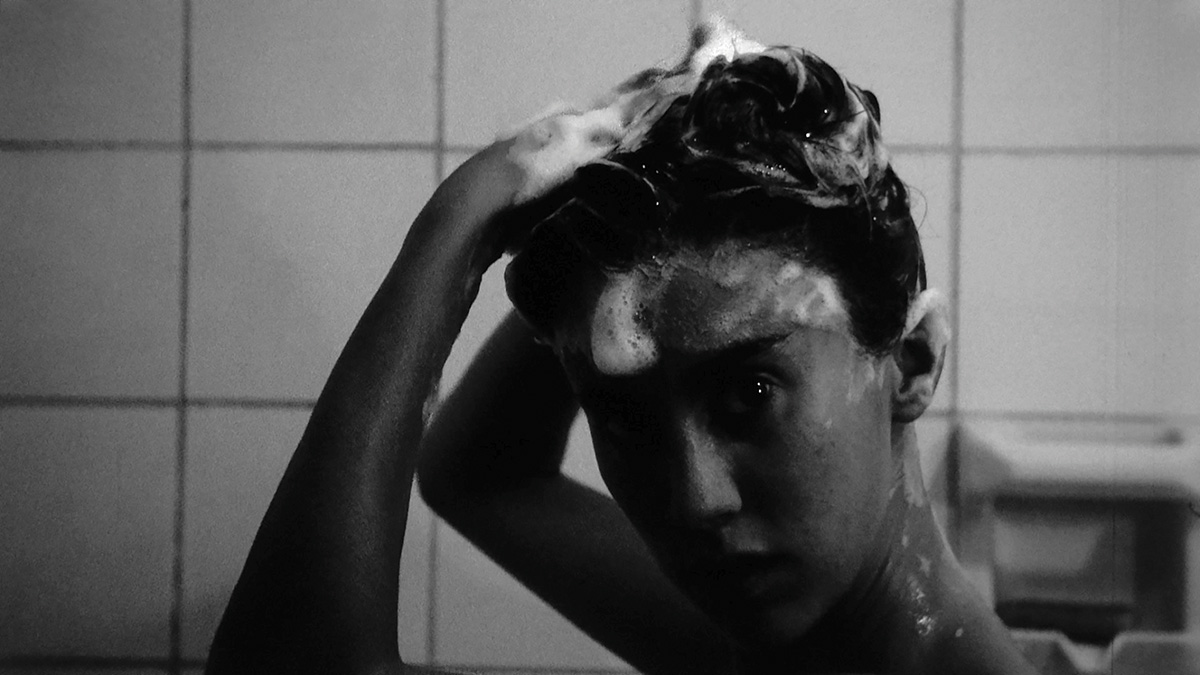
Some accounts bend the soul. Such changes, such losses, fold us. We curl up around the hollow. Then, to raise is to unfold. That which requires forms of return, to dwell and reflect. Then, memories prove themselves useful: stacked up, a column of support; moved around they play novel roles and entertain. At the peripheries of such accounts, in the process of change, external beings turn towards us, the world becomes loaded with entrails, the other moves us, while in face of everything we pour ourselves. Divides where never so present and simultaneously misty. The backbone of loss is a trajectory. It is myth as verb and essay intertwined. It is the flexible virtuality of structures; diverse forms talk like sisters. Like Chiropractice, this film is an adjustment, proper and of cinema’s patterns towards the unpredictable, the playful or loving.
Artist and filmmaker based in Mexico City.?At first glance, her work carries aesthetic and pleasure claims, right up to a tenuous range of sensations. However, its presentation is performative - soaked with temporality; and its purpose, conceptual or perhaps spiritual. The work revolves around a quest to locate and isolate concepts built around tangible elements, to then create abstractions that regenerate their image and position their force within a new context. Virtual spaces rise and with them propositions for change: towards kindness, backwardness, slowing down, Ecology... Her practice ponders on presence; greatly inspired by the simplicity of certain formations, the economic and exponential nature of proposals, the power of hosting bodies and the playful air of philosophical reverberations. Laborde just finalized her first feature: The Backbone of Loss; as well as, attended Atelier 105 - Post production residency with her experimental documentary of Havana, Fiñe. As a result she is now distributed and archived by Light Cone. Her solo show, El duelo de una espina dorsal, curated by José Esparza Chong Cuy, Director and Chief Curator at Storefront for Art and Architecture took place at Luis Barragán’s J17 as a PEANA Off-site exhibition, February 2022. In 2021 Laborde aside having a retrospective with DocumentaMadrid, had a year long residency at The Museo Rufino Tamayo CDMX with her project -ito/-ita, a production residency at LIFT CA, and a three year, hybrid residency with Internationale Kurzfilmtage Oberhausen - Conditional Cinema for the production of her film Ficciones, recently presented at the New York Film Festival and BFI among others. Her thesis, AS WITHOUT SO WITHIN, is part of the catalogue: Ism, Ism, Ism / Ismo, Ismo, Ismo: Experimental Cinema in Latin America and was widely screened among these: Toronto International Film Festival, International Film Festival Rotterdam (Competition Tigger Shorts), New Directos/New Films at MoMa, FSLC and 20th Contemporary Art Festival Sesc_Videobrasil… and awarded GRAND PRIX at 25fps Zagreb and JURY AWARD at 24th CUFF. Collaboration Notas y notas y notas… with Jenny Berger Myhre was commissioned and presented at Borealis Festival for Experimental Music in 2019. Manuela de Laborde holds an Intermedia Art BA hons from Edinburgh College of Art and an MFA in Film and Video from The California Institute of the Arts.

Jean De Lacoste
A Place
Art vidéo | dv | couleur | 16:6 | Belgique | 2008
"A Place" is a video triptych that depicts a singular apprehension of familiar interior and exterior spaces, brought together by various lines of flight. Three physical and mental spaces, inhabited by the affective presence of those who cross them or occupy them, follow one another, responding and canceling each other out.
Jean De Lacoste, born March 27, 1984; Belgian video artist and musician; graduated in 2009 from the E.R.G., Brussels and lives and works in Brussels. His work is a reflection on the phenomenological apprehension of inhabited, familiar places (related to souvenirs, family, anecdotes) and of non-places who don?t really belong to anyone, places we go through, that can even liberate us. This notion of « affect » is translated rather suggestively and distantly through editing image and sound.
Henri De Latour
L'asile du droit
Documentaire | betaSP | couleur | 54:30 | France | 2007
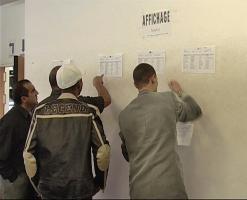
résumé : En 2006, près de 40 000 personnes se sont présentées comme victimes de persécutions dans leur pays et ont demandé protection à la France. Dès leur arrivée elles se sont adressé à l?OFPRA, l?Office Français de Protection des Réfugiés et Apatrides qui a statué sur la validité de leurs demandes. 92% ont été rejetées. Les demandeurs d?asile rejetés par l?OFPRA peuvent faire réexaminer leur dossier en faisant appel à la Commission des Recours des Réfugiés. C?est la plus grande juridiction française, elle est composée de magistrats issus de la société civile assistés par un représentant du Haut Commissariat aux Réfugiés et un autre de l?OFPRA. Cette année là, la Commission des Recours des Réfugiés a annulé 4081 décisions de l`OFPRA, soit 14% des recours déposés. Le film expose le face à face souvent bouleversant de cinq requérants, assistés de leurs avocats et interprètes, avec la Commission et l?attente des résultat affichés dans le hall. Devant ce grand mur blanc se joue leur destin.
Biographie de Henri Pradelle de Latour, réalisateur. Né en 1949 en Autriche d`un père ambassadeur de France et d`une mère Cévenole, issus tous deux de vieilles familles conservatrices, Henri de Latour se rebelle à 20 ans contre les bonnes manières et les idées reçues . Il abandonne ses études de sciences économiques à Assas et achète une péniche avec quelques amis pour satisfaire sa passion, la musique. L`idée est de partir sur les canaux et de vivre de spectacles itinérants. Mais très vite la crise économique l`oblige à vendre la péniche et il se fait embaucher comme docker sur le port d`Anvers. Il part ensuite en Afrique et fait de l`import-export pour le compte d`un trafiquant qui le licencie quand il prend partie pour les dockers en grève. Toujours en mer, il part pour une saison de pêche en Islande ce qui lui a définitivement ôté le gout du poisson. L`Afrique l`attire et il y reviendra pour réaliser ses premiers films de 1985 à 1992 , dont une collection de 26` intitulée « Chercheur d`aventures ». LA DEMOCRATIE SOUS PRESSE, 1992, Bénin, une des premières démocraties en Afrique, vue à travers sa presse indépendante. PROFESSEURS BURKINABÉS, 1990 : Burkina Faso - Deux scientifiques burkinabés reviennent vivre dans leur pays après leurs études en Occident. VETERINAIRE DU DÉSERT, 1990 : la vie quotidienne d?un jeune vétérinaire dans le Nord-Est du Tchad. A PREMIERE VUE, 1986 : Portrait du musicien africain : Fela Randsom Kuti, chez lui, au Nigeria et lors de sa tournée européenne. SURINAM", 1986 : la guérilla dans l`ancienne colonie hollandaise. ... En 1985, il a créé ADL avec sa compagne, Anne Marie Luccioni et produit avec elle de nombreux documentaires sur les problèmes de société et sur les créateurs qui vivent dans leur région d`adoption, le Languedoc-Roussillon. Il réalise une série de 4 films sur le thème de la Justice : PAROLE D?EVANGILE, 2003 , Portrait de Georges Frêche, Maire de Montpellier, plan séquence de 24 minutes, UN JUGE DE PAIX, 2002 , MISE EN EXAMEN" en 2000, et L?asile du droit en 2007. Il crée en 2001, le festival du film documentaires de Lassalle en Cévennes ? berceau de sa famille ? dont il a été élu maire aux dernières élections.
Arjen De Leeuw
a place where life was captured
Film expérimental | 0 | | 11:48 | Pays-Bas | 2011
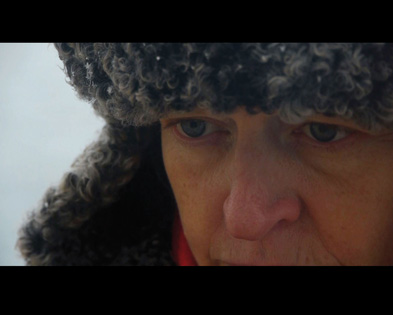
A woman tries to understand who she is and what her life was like. A group of scientists found her standing on an icefloat in Arctic waters. She used to be one of them. They found her back, but her memory is gone. Her state of mind and the state of the melting glacial ice surrounding her run parallel in the film.
Arjen de Leeuw is a visual artist, mainly working in the field of video and sculpture. Featuring within fictional settings his protagonists are challenged to deal with existential questions. They are forced to ask themselves how to position within these often absurd circumstances. Recurring elements in his work consist of the limitations of our western notion of freedom, fate and controllabilty, and the question if our (technological) progress brings us closer to the subliminal. Arjen de Leeuw was born in Amsterdam in 1972 where he still lives and works. He graduated from the Royal Academy of arts in The Hague. His work has been exhibited and screened both nationally and internationally. Including exhibitions in Galeria Joan Prats, Barcelona and Keith Talent gallery, London. Recent screenings of his work have been at the Centre Pompidou, Paris, the Reine Sophia museum, Madrid, the International Film Festival Rotterdam and 25fps in Zagreb. Parallel to his practice, he has designed theatre sets and costumes for several experimental theatre productions.
Arjen De Leeuw
Eruptions
Vidéo | dv | couleur | 7:30 | Pays-Bas | 2008
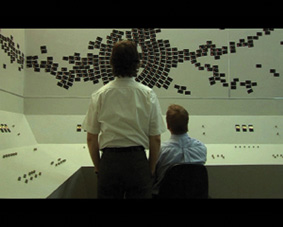
Eruptions a video by Arjen de Leeuw concept, setdesign, camera, editing, sound: Arjen de Leeuw actors: Luc van Esch, Emanuel Muris running time: 7.33min format: 16:9 miniDV,Betacam/PAL color/sound, no dialogue year: 2009 screeningformat: dvd/beta SP/Pal shot in Japan at mount Aso and in the Netherlands Synopsis: 2 men are working in a control room, monitoring a volcano. With all their buttons and control panels they give the impression they can adjust and manage these natural forces.
Curriculum Vitae Name Arjen de Leeuw Date of birth 17-08 1972 Place of birth Amsterdam, The Netherlands Education 1991-1995 Bachelor of fine arts, sculpturedepartment Koninklijke Academie van Beeldende Kunsten Den Haag, the Netherlands Grants: 2006 Basisstipendium Dutch Fund for visual arts (Fonds BKVB) 2002 Basisstipendium Dutch Fund for visual arts (Fonds BKVB) 1996 Startstipendium Dutch Fund for visual arts (Fonds BKVB) Prizes 2007 Workspace 2007, filmhuis, Den Haag Selection of recent exhibitions 2009 Visions of William Living ( a collaboration with Pia Wergius) is shown as part of her solo exhibition in Kristinehamns Konst Museum , Sweden Video festival Narave, Mestna-galerija,Ljubljana, Slovenija 2008 Amsterdam Int Filmfestival, de Melkweg, Amsterdam, the Netherlands Visions of William Living, met Pia Wergius, de Veemvloer, Amsterdam, the Netherlands 2007 Festival del creativita, Florence, Italy de altijd prijs prijs, de Fabriek, Eindhoven, The Netherlands Visions of William Living, met Pia Wergius, Filmhuis, Den Haag, the Netherlands 2005 the Videodictionary, as part of Impakt festival, Utrecht, the Netherlands Disegnitudine, la quotidianita?dell?utopia curated by Fiametta Strigoli La Giarina arte Contemporanea,Verona, Italy Access, Consortium, Amsterdam, the Netherlands Use this Kind of sky, curated by Paul Eachus and Nooshin Farhid, Keith Talent Gallery, London, UK La mossa delle idee, Sala santa Rita, curated by Fiametta Strigoli, Rome, Italy/Spacio Uno, Firenze, Italy 2004 No premises/no conclusions, curated by Manuel Saiz, Moriarty gallery, Madrid, Spain 2003 De Grote Verbeelding, de Grote kerk, Den Haag, the Netherlands Overexposed, curated by Jorge Bravo, Joan Prats Gallery, Barcelona, Spain 2001 Vertrek en verblijf, op Admiralengracht 52, Amsterdam, the Netherlands recent Screenings/videofestivals 2009 Noordelijk filmfestival, Leeuwarden, the Netherlands Architecture filmfestival, Rotterdam, the Netherlands Floss, VHDG, Leeuwarden, the Netherlands Revision, Dutch filmfestival, Utrecht, he Netherlands 25fps, Zagreb, Croatia 2007 Indie Memphis Micro Cinema Club ,Memphis, Tennessee, USA Central Cinema Seattle, Washington, USA Metropolis, broadcasted on TVE(spanisch national television) Spain. Filmfrontfestival, Gorcums museum, Gorichum, the Netherlands Videoar(Te)mpoAttivo, curated by Fiammetta strigoli,Plasma Art, Firenze, Italy, 2006 Prescriptions, a videonight by Spark video at ForestCity gallery, London Ontario, Canada Videothek, Korperein/satz. Hedah, Maastricht, the Netherlands, MuseumAbteiberg, Mönchengladberg, countryclub InternationalVideo.ArtFestival and Competiton.,Germany NPS new arrivals, web site 2005 Impakt avBBQ night, Impakt festival,Utrecht, the Netherlands 2004 Halloweird, Microcinema, shown oa, New York, San Francisco , USA All tomorrows deja vu, Video Mundi, Chicago, USA Island art film and videofestival, London, UK Love and other difficulties, Microcinema, shown oa in San Francisco, Houston, Oakland, USA Rotterdam VHS festival, of Corso, het Wilde Weten, Rotterdam, the Netherlands 2003 Videovisions, broadcasted by Edith Russ haus fur Medienkunst, Oldenburg, Germany Exploding cinema, London,UK 25HRS, the videoartfoundation, Barcelona, Spain the video?s are also distributed by De Filmbank, Amsterdam. Recent Theatreworks/stage and costume design/ projects 2008 teaching and lecturing at Hogeschool voor de kunsten Utrecht. costumedesign Alles is goed, direction Gienke Deuten, Toneelschuurprodukties, Haarlem 2006 Springplank voor de Val, a theatreproject with Gienke Deuten, produced by het Lab, Utrecht,The Netherlands 2005 costumedesign De Groote Storm, direction Rieks Swarte, Toneelschuurprodukties, Haarlem, the Netherlands 2004 costumedesign Woord and Van de wind en de berg, direction Rieks Swarte, Emanuel Muris, Toneelschuurprodukties, Haarlem, the Netherlands

Inês De Lima Torres
De Madrugada
Fiction | hdv | couleur | 30:6 | Portugal | 2017
In the hot month of August, Alice and her siblings go to their grandmother’s summer house. As the days go by, the house becomes a hive of slow straying bodies, as Alice becomes more and more engrained in her grandmother’s colonial past.
Inês de Lima Torres was born in 1995 in Setúbal, Portugal. She graduated from university at Lisbon School of Theatre and Film, majoring in Cinema, in the branch of Directing in 2017 “De Madrugadaâ€, her graduation film, premiered at IndieLisboa 17’ National Competition and was also screened at other festivals such as San Sebastián International Film Festival.