Catalogue > Faire une recherche
Résultats pour : Tout le catalogue

Patrick Wallochny
attractions
Doc. expérimental | mov | couleur | 4:27 | Allemagne | 2020
Dans "attractions", le regard est centré sur les animaux. Toute activité humaine paraît étrange. Elle s'immisce dans le mode de vie, par ailleurs paisible, du Gori Park, remettant finalement en question la facilité avec laquelle les humains se considèrent constamment au-dessus de la nature.
Patrick Wallochny est né à Düsseldorf (Allemagne) en 1990. Il est cinéaste et artiste vidéo. Il travaille comme réalisateur, monteur et producteur, et vit à Berlin (Allemagne). Ses films courts, ainsi que ses installations audio et vidéo in situ, se positionnent entre le documentaire et la fiction, et tentent d'explorer de manière ludique les limites du médium. Ils sont en dialogue avec le cinéma, d'autres formes d'art et la culture pop. Le regard de Patrick Wallochny se pose aussi bien sur les lieux que sur les gens. Sur l'humour comme sur la mélancolie.
Alexander Walmsley
Memory Architecture
Fiction expérimentale | hdv | couleur | 14:29 | Royaume-Uni, Suède | 2023
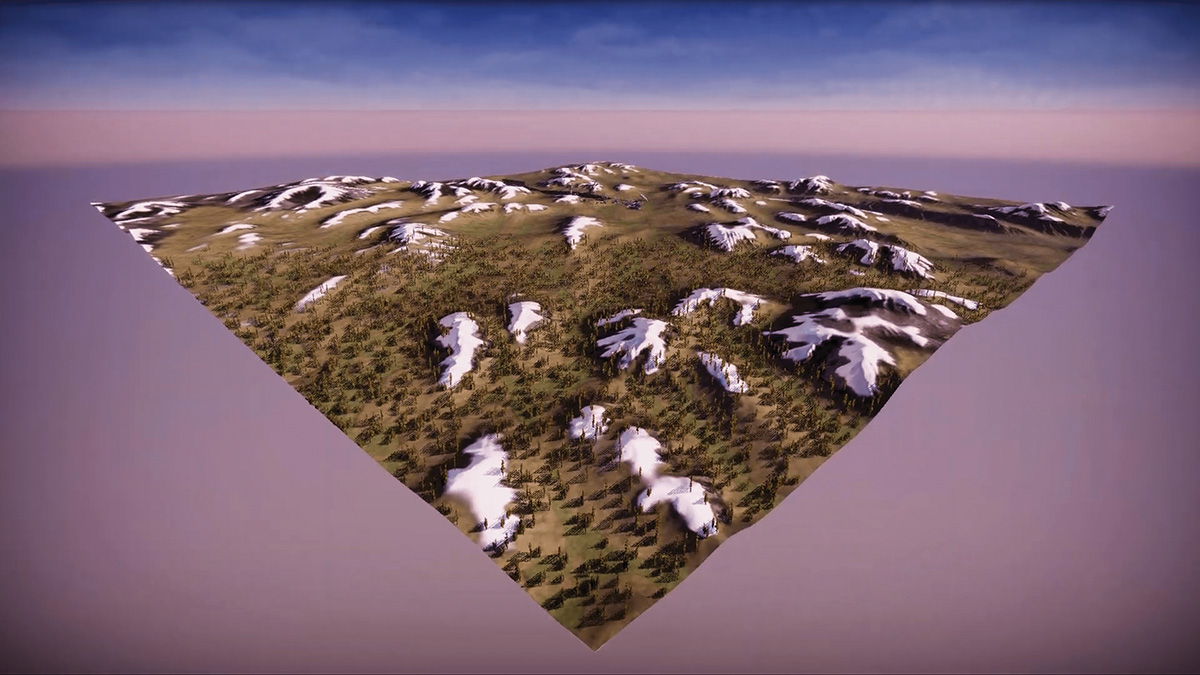
In Memory Architecture, a surveyor travels to the north of Sweden to survey a site for the building of a new data centre. This systematic task of transforming the terrain into a digital model quickly becomes a desperate search for some kind of underlying structure of the surveyor’s surroundings.
Alexander Walmsley (UK, b. 1992) is a filmmaker and photographer. In his research-based practice, he investigates how our understanding of the earth is shifting, mediated by the new technological, environmental and social realities of the 21st century. His recent work has been shown at the Daejeon Biennale of Arts and Sciences, Tirana Art Lab, Sharjah Art Foundation, The Photographers' Gallery, and Athens Digital Art Festival. He was a commissioned artist for the Albanian pavilion of the 59th Venice Biennale and was shortlisted for the Deloitte Photo Grant in 2023 and Istanbul 212 Photography Prize in 2021. He previously studied Anthropology and Archaeology at the University of Cambridge (UK) and the University of Geneva (CH), and is currently a lecturer at the Film University Konrad Wolf in Potsdam, Germany, where is also undertaking an artistic PhD on the subject of real-time representations of the planet.
Alexander Walmsley
Tropical Depression
Doc. expérimental | 0 | couleur | 31:9 | Royaume-Uni, 0 | 2025
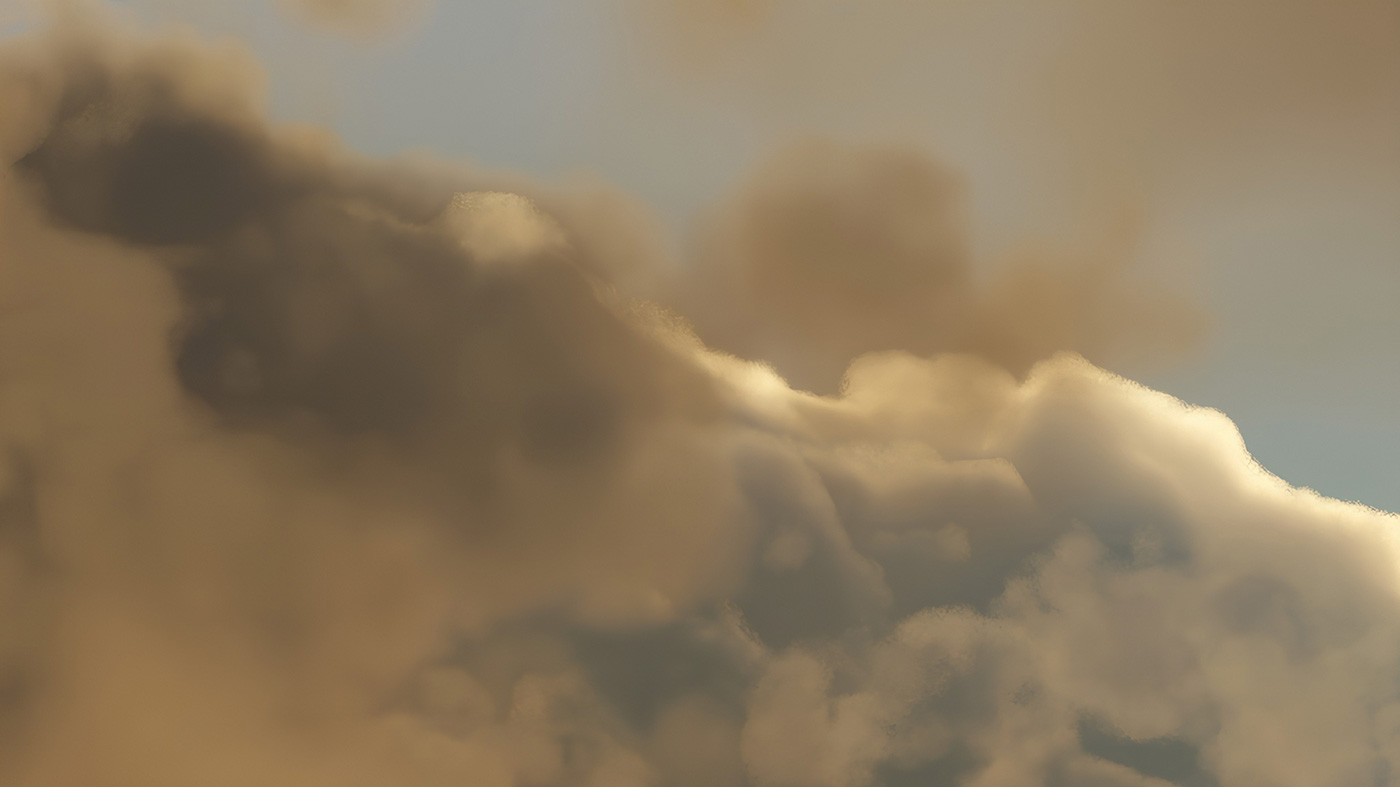
Tropical Depression follows the life and death of 21 cyclones that took place in the southern Hemisphere during the 2023 to 2024 cyclone season. Combining found footage and text fragments with recorded footage of the storms within Microsoft Flight Simulator - a videogame where weather is visualised in realtime using meteorological data - the film explores the aesthetic implications of documentary filmmaking that relies on data-generated rather than lens-based imagery, and the depiction of violent weather events as data-driven climate models.
Alexander Walmsley (UK, b. 1992) is an artist working between film, photography and digital media. In his research-based practice, he investigates how our understanding of the earth is shifting, mediated by the new technological, environmental and social realities of the 21st century. His recent work has been shown at the Daejeon Biennale of Arts and Sciences, Tirana Art Lab, Sharjah Art Foundation, The Photographers' Gallery, and Athens Digital Art Festival. He was a commissioned artist for the Albanian pavilion of the 59th Venice Biennale and was shortlisted for the Deloitte Photo Grant in 2023 and Istanbul 212 Photography Prize in 2021.

Alexander Walmsley
Tirana Time Capsules
VR expérimental | 4k | couleur | 0:0 | Royaume-Uni, Albanie | 2021
The Tirana Time Capsules are a series of three virtual environments, accessible via web browser, that act as time capsules for three different neighbourhoods of Tirana in 2021. The chosen areas - 21 Dhjetori, Kombinat, and the Teatri i Gjelbërimit, an area of the Tirana Great Park - each embody different aspects of Tirana’s urban development over the past 100 years. Particularly since the early 2000s, this has been characterised by the gradual disappearance of public space as the building sector has increasingly become controlled by private interests. Drawing on the metaphor of the time capsule and employing so-called high-fidelity recording techniques such as photogrammetry and field recording, the work re-appropriates and re-constitutes these different areas of the city as virtual environments as a way of exploring the intersection of personal memory and community heritage. In addition, the work seeks to question the promises made by such recording technologies that claim to render and preserve reality as a high-fidelity digital copy: in short, what exactly is being preserved when we use these techniques of digital preservation?
Alexander Walmsley (b. 1992) is a media artist with a particular interest in the landscapes of the real and the virtual. In his practice, he investigates how our understanding of these landscapes is shifting, mediated by the new technological, environmental and social realities of the 21st century. His work is situated primarily between 3D, photography, animation, and XR. His recent work has been shown at the Daejeon Biennale of Arts and Sciences, Tirana Art Lab, Sharjah Art Foundation, The Photographers' Gallery, and VRHam! Festival. He was a commissioned artist for the Albanian pavilion of the 59th Venice Biennale and has taken part in residencies at the Tirana Art Lab, Albania, and Moskosel Creative Lab, Sweden, among others. Previously, he studied Anthropology and Archaeology at the Universities of Cambridge (UK) and Geneva (CH).
Emmett Walsh
The Pathfinder: Prospect
Vidéo | hdv | couleur | 13:11 | Irlande, USA | 2011
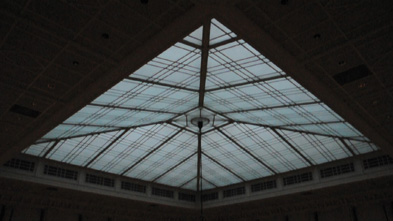
`The Pathfinder: Prospect`, begins with the painted portrait of a 19th century politician and pioneer, John C. Frémont, housed in the Brooklyn museum, New York. From this figure the camera begins to build curious panning views of staged historical dwellings and stuffy expansionist-era oil paintings, before moving on to stationary shots of the nearby Prospect Park, with its carefully allotted tracts of woodland and pasture. The pace of the footage is dictated by a recording of a local drum circle; a loose collective of neighbourhood residents who come together each week, with no clear leader, and improvise African and Caribbean drum rhythms. A crescendo is reached through fragmented visions of paths and roads, dissected by painted lines and cracked patterns. A series of subtitles appear throughout the video, in which a loose conversation is recounted. A narrator struggles to clarify it`s own position in remembering a past journey to distant islands, when utopian ideals were discussed and only half formulated. Throughout `The Pathfinder: Prospect`, the uneasy collision between 19th and 20th century urban planning, the displacement of migrant communities, and idealised visions of pastoral equilibrium are melded together through the intuitive, pulsing efforts of the drum circle.
Emmett Walsh is an artist and writer from the UK, currently based in Los Angeles. His work spans sculpture, writing, video, photography, and print. He graduated from the MFA program at the Glasgow School of Art in 2008.
Michael Walter, Susanne BERGGREN
Der Hörnermann
Vidéo expérimentale | dv | couleur | 17:30 | Allemagne, Suède | 2004
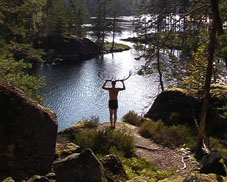
"Der Hörnermann" -Un phénomène animal et conceptuel sur une médidation à travers un paysage d'horizons. The Hörnermann est une créature qui oscille entre nature et culture. Sur les images, vous voyez un humain portant des cornes à sa tête, marchant doucement à travers la forêt. Par moment, il semble être étranger au paysage, réalisant une mascarade pour rentrer dedans ou se cacher, à d'autres moments il semble être le souverain, ou encore en faire partie, n'étant plus un humain. Filmé dans la forêt de Tiveden en Suède, l'image est magnifique et évite de devenir ironique mais reste sensible, les deux en compassion et fidélité au regard des changements de visages de l'être Hörnermann. "C'est assez étrange dans sa simplicité, et dans son refus de montrer autre chose que ce qu'il montre au début, à l'exception de petites variations (ce qui vous incite à faire attention). J'aime le son et la quiétude que provoque la musique. J'aime le fait que ce ne soit pas ennuyeux, et à l'opposé, dans un certain sens, c'est plutôt drôle. Le mouvement de Hörnermann est si "suspendu" (...)entre beaucoup de choses que vous ne pouvez pas remarquer, qui vous laisse deviner, même si c'est très simple. J'aime aussi l'idée que cela vous permet de regarder et d'apprécier le paysage pendant le déroulement de cette action peut-être sentimentale et kitsch." Commentaire par J-P A
MICHAEL WALTER (1966) travaille comme artiste visuel. Différentes expositions en Europe. SUSANNE BERGGREN (Stockholm/Berlin) a travaillé en tant que chorégraphe à partir du milieu des années 1990 dans un contexte de danse, d'arts visuels et de club. Elle travaille habituellement en étroite collaboration avec des artistes de disciplines variées, et réalise des oeuvres dans différents médias. Son travail a été présenté en Suède et de manière internationale. Ces dernières années, elle a aussi beaucoup travaillé comme danseuse avec des chorégraphes tels que Xavier LeRoy, Eszter Salamon, et Antonia Baehr, en tournées en Europe. Parmi les salles de théâtres et de danse: Musée d'Art modern de Fylkingen et divers clubs et restaurants à Stockholm, à Hau (Berlin),la Thomas Nordanstad Galerie de New-York, Art Genda 2000 à Helsinki, Appartement International de Vienne, Wien et Äbo.
Calum Walter
Entrance Wounds
Film expérimental | hdv | couleur | 17:48 | USA | 2023
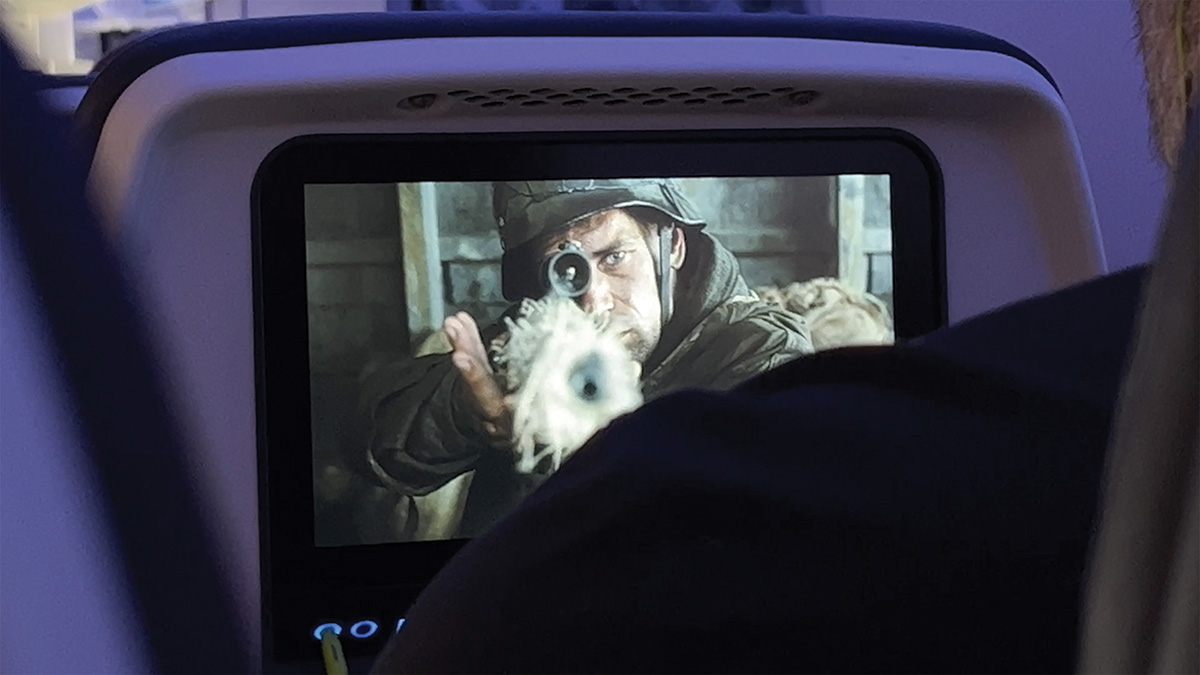
A meditation on the image and the bullet. Entrance Wounds considers the modern challenge of trying to unsee an image. The film sifts through moments of the everyday, imagining a world where afterimages of disaster drift near transparency over the present.
Calum Walter is an artist working in sound and moving image. His recent work has focused on human and machine error, collective anxieties, and the cultural moment as it is shaped by emerging and consumer technologies. His films have screened at the Berlinale, Sundance, Toronto International Film Festival, New York Film Festival, Rotterdam International Film Festival, Ann Arbor Film Festival, Rencontres Internationales Paris/Berlin, FIC Valdivia, Images Festival, Slamdance and the Hong Kong Arts Centre. He is a 2018 MacDowell Fellow and has received awards from the Harpo Foundation and the Illinois Arts Council. He lives in the Los Angeles area and teaches in the Film/Video program at CalArts.

Calum Walter
Unknown Hours
Vidéo | hdv | couleur | 12:30 | USA | 2016
Unknown Hours studies a precarious nightscape. An observer journeys down a main street in Chicago towards a neighborhood known for its nightlife. The moving image is slowed to reveal the intermittence of street lights and sports bar televisions. A camera peers into the moments between events.
Calum Walter is a filmmaker, artist and sound designer. He has a BFA from the University of Colorado where he studied filmmaking with an emphasis on sound, and later received a MFA from the School of the Art Institute of Chicago. He continues to do sound design and recording for his own films, and has collaborated with artists as cinematographer, sound recordist and designer. His work has screened widely at places including New York Film Festival, Toronto International Film Festival, Rotterdam International Film Festival, Slamdance, Ann Arbor Film Festival and the Big Ears Music Festival. He Teaches in the department of Radio/Television/Film at Northwestern University.

Alexia Walther, Maxime Matray
L'élan
Fiction | 16mm | couleur | 15:24 | Suisse, France | 2008
Aujourd`hui encore, il arrive parfois ceci : on est debout dès l`aube, on n`est pas seul, on traverse la campagne, on s`encourage, on redoute, on pérore, on joue, on fredonne. On est attendu. On n`a pas grand-chose à perdre, fors l`honneur.
Alexia Walther est née en 1974 à Genève, elle travaille actuellement à Paris. Elle est diplômée depuis 1999 de l?ESAV (École Supérieure d?Art Visuel), Genève, en section media-mixte. Maxime Matray est né en 1973 à Paris. Plasticien et auteur, il est diplômé depuis 1995 de l?EPIAR (École Pilote Internationale d?Art et de Recherche), Villa Arson, Nice. Leur collaboration a débuté avec le court-métrage Twist, qui a gagné plusieurs prix dans de nombreux festivals. Ils ont écrit et réalisé ensemble le court-métrage l?élan.

Jan Wandrag
David+Jonathan
Fiction expérimentale | dv | couleur | 15:0 | Afrique du sud, USA | 2006
David+Jonathan est un projet qui utilise des photographies de rues qui ne sont pas droites. C'est une adaptation de l'histoire de la Bible qui se déroule dans le New York moderne. Après que David ait vaincu Goliath, le roi s'intéresse à lui. David développe ensuite une relation avec le fils du roi, Jonathan. lorsque le roi le découvre, il interdit à Jonathan de revoir David. Le film repose sur une série d'instantanés rephotographiés. Les images commencent comme une vidéo tournée en public de deux jeunes hommes filmés à leur insu. Jan Wandrag a composé des scènes fictives à partir de ces images en les manipulant numériquement et en plaçant les acteurs trouvés dans son histoire.
Jan Wandrag est né en Afrique du Sud en 1976. Son travail vidéo a été montré dans des festivals à New York, Cicago, Dallas et Washington DC. Jan a récemment fait pour la première fois une exposition personnelle, "Images of David+Jonathan", au Peter Halpert Fine Art à New York. Il a également participé à de nombreuses expositions collectives aux Etats Unis, en Afrique du Sud et en Europe. Jan a reçu la bourse Aaron Siskind en 2004. En 2005 il a achevé une maîtrise des beaux-arts (MFA) en "photography, video and related media" à l'école des arts visuels de New York. Il vit actuellement à New York avec son partenaire David.
Joel Wanek
Sun Song
Doc. expérimental | hdv | couleur | 14:35 | USA | 2013
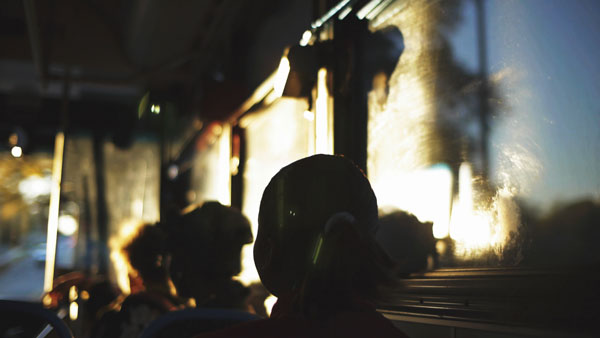
A poetic journey from the darkness of early dawn into the brightness of the midday sun in the American South. Filmed on one bus route over the course of six months in Durham, North Carolina, Sun Song is a celebration of light and a meditation on leaving.
Joel Wanek (1974, Nebraska, USA) is a filmmaker and photographer living in Oakland. Over the years he has developed a creative documentary practice that often blurs the line between subject and maker, mixes techniques of narrative and vérité modes, and uses public spaces for collaborative engagement. He holds a MFA in Experimental and Documentary Arts from Duke University.
Yuyan Wang
Look On the Bright Side
Doc. expérimental | mov | couleur | 17:2 | Chine, France | 2023
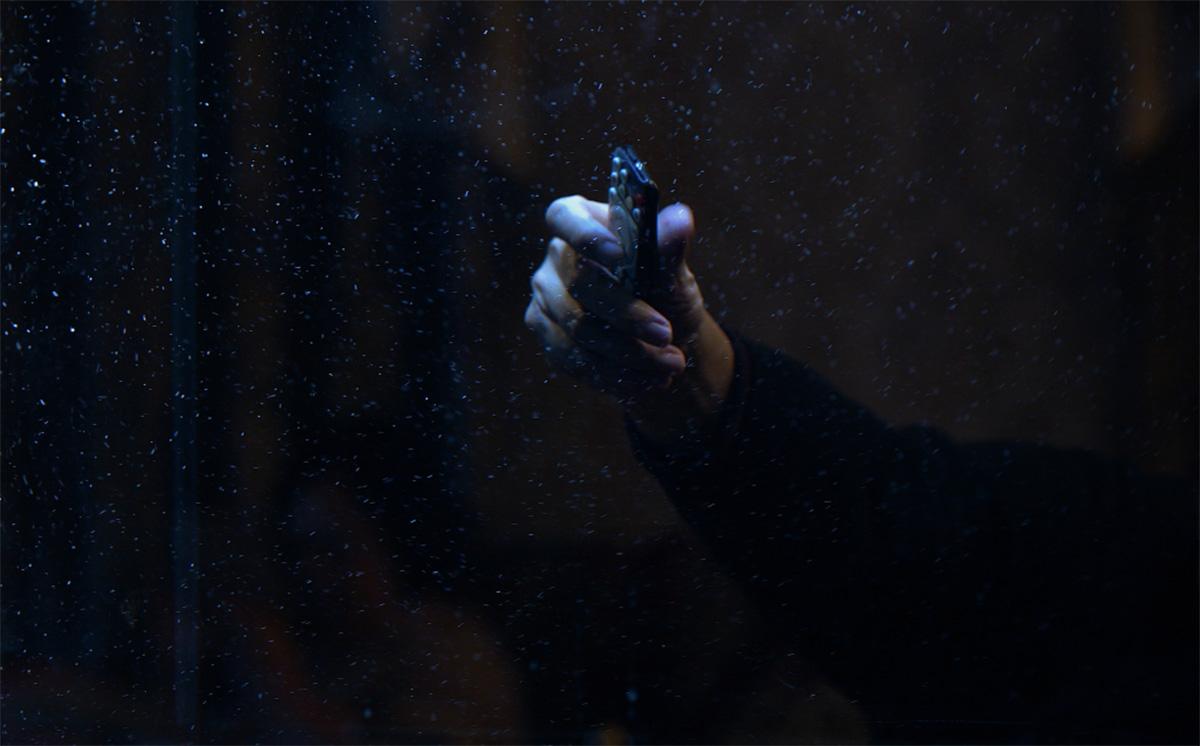
In an age of wire and string, futuristic visions anchor in lithic time. In the dark, people are driven to shine in the most spectacular ways. Light, emitted from our digital extensions, has roots traversing millions, even billions of years.
Yuyan Wang, born in 1989 in China and currently based in Paris, is a filmmaker and video artist. Her works involve recycled materials from the industrial sphere of image production, tracing their mutation and proliferation within the digital frameworks and representations. Through the editing process, Wang deconstructs and recontextualizes the intricate hierarchies and inherent meanings in materials —whether found, processed, and produced—striping symbols of their conventional paths of perception and turning them into immersive sensory experiences. Wang completed her studies at the École des Beaux-Arts de Paris in 2016 and later at Le Fresnoy - Studio national des arts contemporains in 2022. Her work has been showcased at Tate Modern, Palais de Tokyo, UCCA Beijing, the 12th Berlin Biennale and various festivals, such as the Berlinale International Film Festival, the International Film Festival Rotterdam, MoMa Doc Fortnight, CPH:DOX, the European Media Art Festival, receiving numerous awards.
Lingjie Wang, Jingfang HAO
Flotter dans le noir
Vidéo expérimentale | | couleur | 6:23 | Chine, Mali | 2011
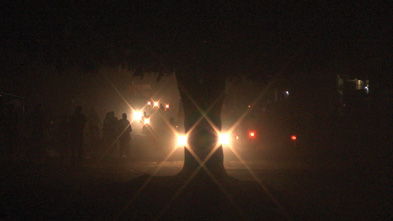
Déambulation dans la nuit, flotter dans le noir. Vidéo tournée en février 2011, à Bamako, Mali, dans le quartier Djicoroni Para, avec l`appel du muezzin radiodiffusé. Par manque d`éclairage public, le paysage de la rue ne nous est plus familier. Tout l`environnement a changé. Les maisons, les surfaces, les déchets, les plantes, jusqu`aux vêtements des passants, tout se fond dans le noir. Nous ne regardons que les lumières et les ombres, les images extraites. Le mouvement des lumières et des personnages d`ombre construit le mémoire du territoire qui passe avec le temps.
Après l`obtention d`un diplôme d`ingénieur en conception industrielle en 2007, en Chine, WANG Lingjie a décidé de poursuivre dans la création. Mais il va emprunter un chemin différent, peut-être plus difficile mais plus fondamental : l`art. Il entreprend un cursus de 5 ans d`études en France. Très curieux, ce jeune artiste a plusieurs centres d`intérêt et dans les premières années, il a exploré les technologies de l`information, l`écologie et l`architecture, qu`il a intégrées à sa démarche artistique. Il est très sensible au contexte politique et aux courants de pensées idéalistes. Aujourd`hui, il adopte une démarche qui mêle fiction et documentaire et Wang Lingjie concentre sa pratique sur l?installation, la photographie et la vidéo. Ses projets portent la marque de ses réflexions sur notre existence, nos relations avec la nature et l`univers. WANG Lingjie vit et travaille à Lorraine, France et à Shanghai, Chine.
Yu Wang
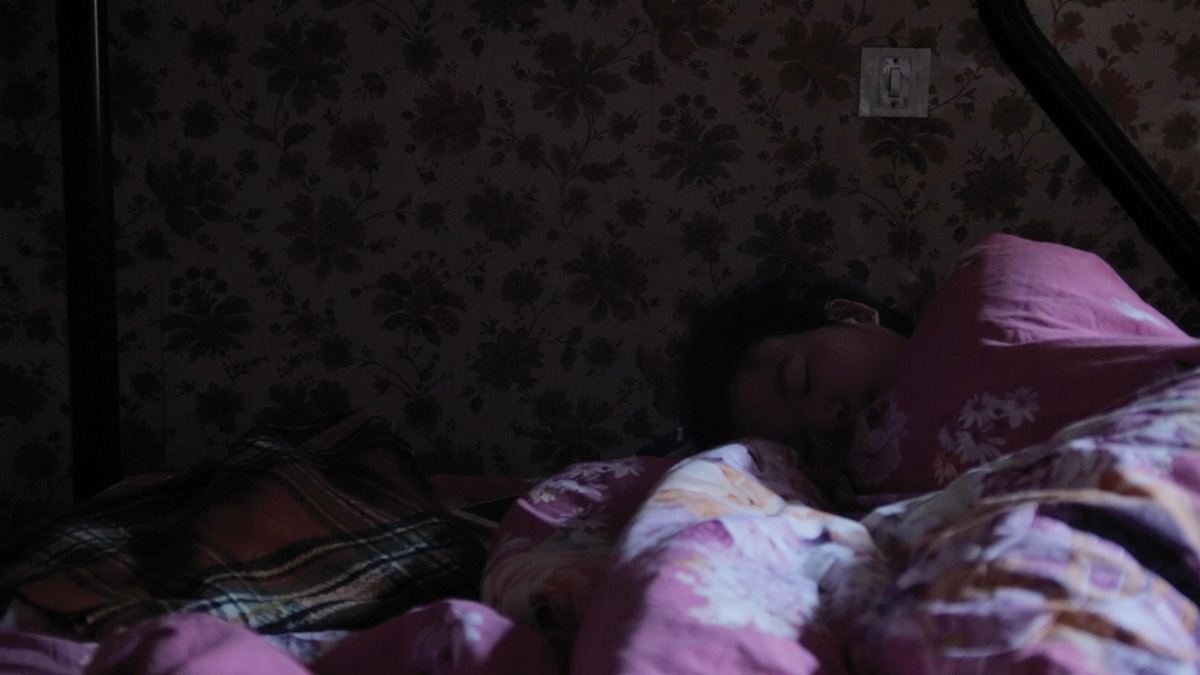
Sous un même toit
Fiction expérimentale | mov | couleur | 20:0 | Chine | 2022
Bin et Yuan sont frère et sœur. Ils partagent un appartement marseillais qu’ils occupent hors des heures de travail. C’est leur espace de repos, de calme. D’ici leur lien à l’extérieur est permanent à travers leurs téléphones, connectés à toute heure du jour et de la nuit avec leur pays d’origine, la Chine, où Yuan planifie son retour.
Née en Chine, WANG Yu est une réalisatrice basée en France depuis 2018. Suite à ses précédentes études de cinéma à Pékin et Taipei, elle développe actuellement son travail entre France et Chine.
Lingjie Wang, Catherine Egloffe, Andrea Palade Flondor, HAO Jingfang, Serge Desire Ouedraogo, Bouna Cherif Fofana
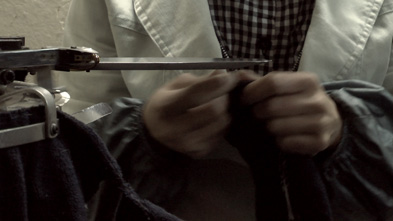
ouvrières ?
Doc. expérimental | hdv | couleur | 10:46 | Chine | 2012
Comment les ouvrières se voient à leur travail ? Pourquoi font elles ce métier ? Qui sont elles ? Pas seulement ici, mais aussi ailleurs. Le regard se concentre sur les femmes de l`industrie textile mais porte au delà d`un pays. Il va là où des artistes partagent cette même envie de regarder les femmes se regardant au travail. Ce qui importe d`abord c`est la manière dont chacune se voit, se pense. Les femmes parlent de leur désir, désir d`indépendance, pour le reste elles décrivent leur vie au travail, les difficultés, la dureté, le besoin de travailler, les peurs, les envies, les regrets... Souvent, elles se ressemblent, par leurs gestes attachés aux machines, mais aussi par leur histoire, le besoin d`argent, d`indépendance, certaines ont peur, d`autres se rebiffent, refusent. Ce qui importe aussi c`est la manière dont chaque artiste voit ces femmes au travail. Les croisements de regards, se font au gré des images et des paroles, sans autre guide que le jeu du loin et du proche, dans l`espace recomposé des usines, du rapport des corps aux machines, au travail.
«Images en transit », C`est un processus artistique collectif, qui a commencé en 2010 avec un travail expérimental sur le regard des femmes au travail, dans le textile. Nous sommes 6 artistes, de 3 continents, Europe, Afrique, Asie, qui avons imaginé peu à peu un dispositif pour travailler en collectif. Chacun a filmé dans son pays des ouvrières au travail, puis nous avons mis en commun les images. L?idée a été de réaliser une vidéo, avec une écriture commune, mais chacun a pu et pourra continuer à sa manière le travail engagé. Les images appartiennent au collectif et à chacun. Le temps de l`écriture collective a été celui du projet, puis celui du montage, chacun ?uvrant à partir des ses propres images et de celles des autres. Une centaines d?heures au total. Toutes les interviews ont été intégralement traduites. Le processus est expérimental et très ouvert donc. Nous ?uvrons sur l`écart des regards, l`écart dans le travail, des artistes et des femmes, les idées comme les images circulent. Co auteurs : Catherine Egloffe (France), WANG Lingjie (Chine), Andrea Palade Flondor (Roumanie), HAO Jingfang (Chine), Serge Desire Ouedraogo (Burkina Faso), Bouna Cherif Fofana (Mali)
Chun Wang
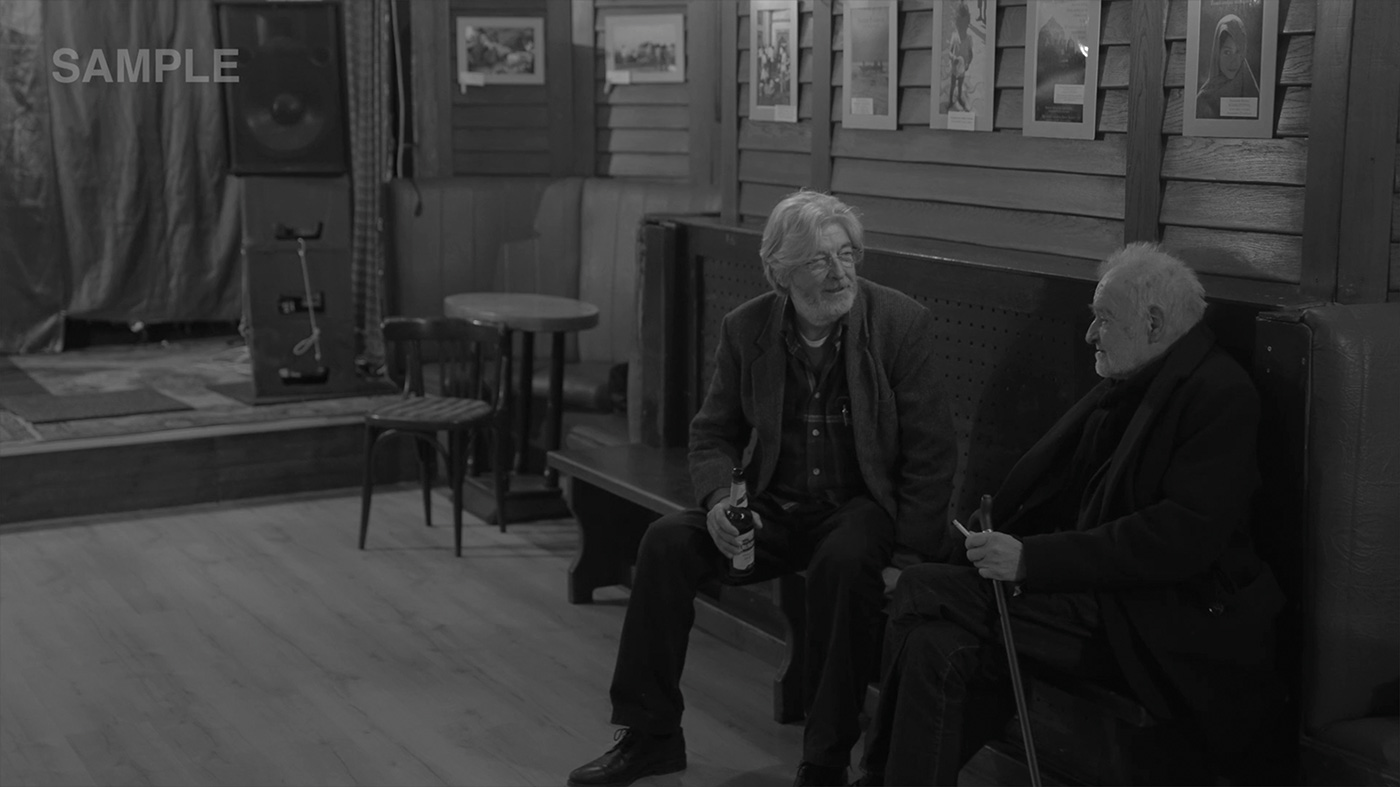
Budapest Is Grey And Blue, But Hell Is Purple
Film expérimental | 4k | couleur et n&b | 16:10 | Taiwan, Hongrie | 2023
Ces images apparaissent dans ce monde uniquement grâce à un garçon gitan de dix-huit ans, Pisti. Une rencontre fortuite, une faille existante dans notre chaîne de cause et d’effet. Comme ouvrir une porte et réaliser qu’elle n’a pas de fin, et qu’elle ne pourra désormais plus jamais être refermée. “Je” est un lieu où les événements ont lieu, une exploration existentielle.
WANG Chun (né en 1988, Taïwan) est technicien en production vidéo et producteur de films. Sa pratique s’appuie sur les transformations entre différents langages créatifs (ceux de l’image, du texte, du son et du corps), à la recherche des limites du langage et tentant de mesurer la distance contenue dans l’acte de regarder.
Yuyan Wang
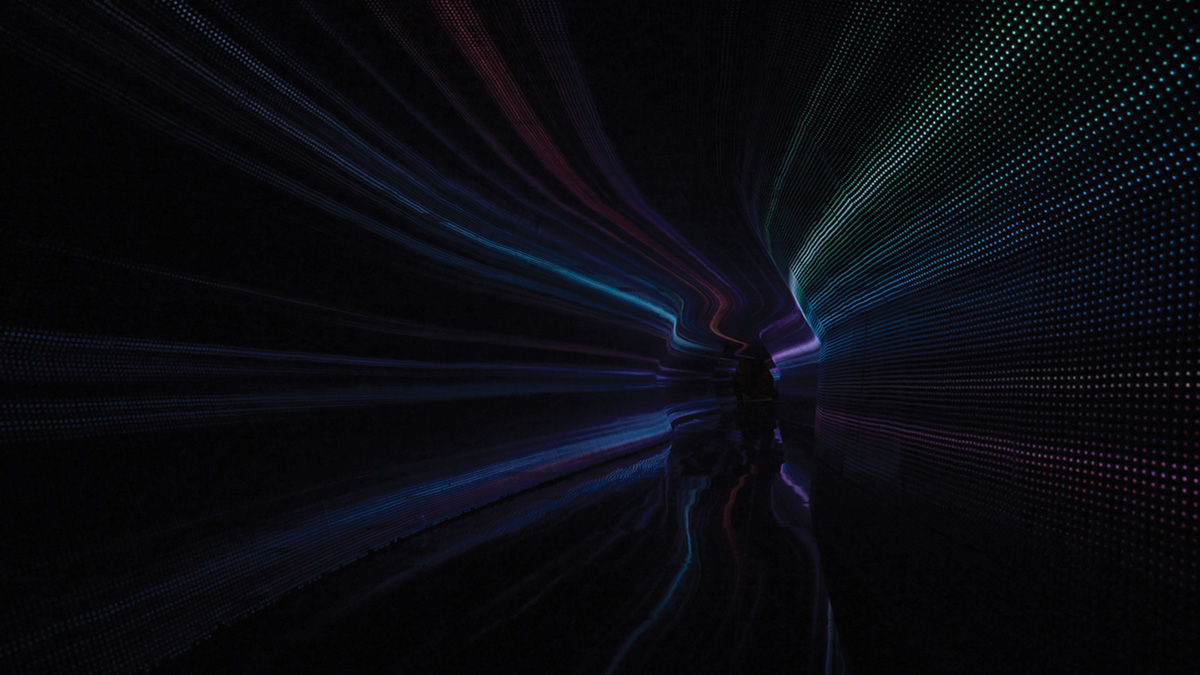
The Moon Also Rises
Doc. expérimental | hdv | couleur | 23:40 | Chine, France | 2024
Alors que le lancement de lunes artificielles est imminent, un couple de retraités trouve refuge dans une obscurité qui s'estompe. En tentant de rattraper le rythme de la modernité, leur quotidien retrace la généalogie de cette luminosité à venir jusqu’à ses origines terrestres.
Yuyan Wang (b. 1989, China) is a filmmaker and multidisciplinary artist. Her work focuses on the impact of image creation in media, representation, and the attention economy. By deconstructing and recontextualizing inherent meanings of found materials, her practice probes the continual mutations within the industrial production chain of images, a perpetual development leading to an abstraction of reality. Her work has been showcased at Tate Modern, Palais de Tokyo, the 12th Berlin Biennale and various festivals, such as Berlinale, IFFR, European Media Art Festival, Indie Lisboa, receiving numerous awards.
Franz Wanner
Berlin-Lichtenberg
Documentaire | mp4 | couleur et n&b | 7:20 | Allemagne | 2024
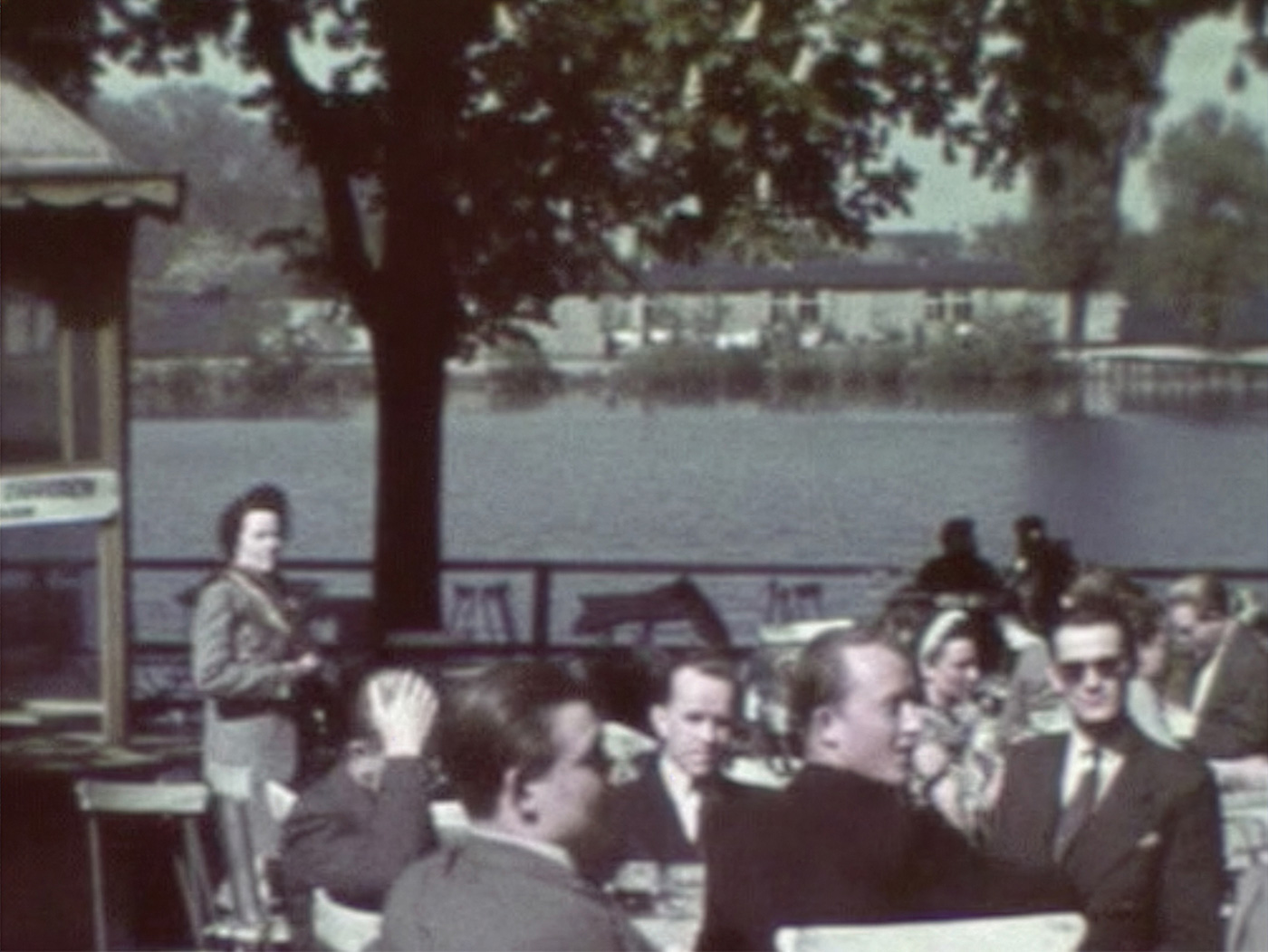
La vidéo Berlin-Lichtenberg utilise des images provenant d’un film familial tourné en 1943. L’intention apparente du filmeur — saisir des moments paisibles de la vie familiale, comme une promenade avec sa femme et son enfant, ou un moment de détente au restaurant au bord du lac dans le quartier berlinois de Lichtenberg — est troublée par l’irruption d’éléments visuels non intentionnels. À l’arrière-plan, la vie quotidienne du système de travail forcé devient visible : un groupe de travailleuses forcées en route vers leur lieu de travail, ainsi que les baraquements d’un camp de travail forcé derrière le lieu de promenade. Ces éléments n’ont pas été choisis consciemment : ils constituent au contraire une documentation fortuite de l’omniprésence du travail forcé dans l’Allemagne nazie. Pour la vidéo, ces images amateurs ont été remontées et accompagnées de cartons qui contextualisent les images muettes et y ajoutent un niveau fictionnel.
Dans son travail artistique, Franz Wanner (*1975 à Bad Tölz, Allemagne ; vit à Zurich) aborde des thèmes tels que la politique migratoire de l’Union européenne, les services secrets allemands et l’industrie de l’armement, ainsi que leur histoire, leurs structures actuelles et les effets du nazisme sur l’impératif allemand de prospérité. « Dans une pratique conceptuelle dont la rigueur de recherche et la cohérence formelle, dans la lignée de Hans Haacke, continuent — par l’enquête et le transmedia — de poser des questions là où personne ne l’a encore fait » (Nora Sternfeld, HFBK Hambourg), « il produit des images d’une dissonance cognitive collective et une poésie analytique autour de la pathologie du non-regard dans l’Allemagne d’aujourd’hui et ses idiomes » (Stephanie Weber, Lenbachhaus Munich). En tant qu’artiste en résidence au Harun Farocki Institute, il a développé l’exposition Mind the Memory Gap pour le KINDL – Centre for Contemporary Art à Berlin. Sous le titre Eingestellte Gegenwarten, il a réalisé sa première exposition personnelle en Italie, à Merano Arte, qui sera présentée en version modifiée au Lenbachhaus de Munich en 2026.
Feargal Ward, Jonathan Sammon
Ivanko the Bear's Child
Doc. expérimental | dcp | couleur | 25:0 | Irlande | 2024
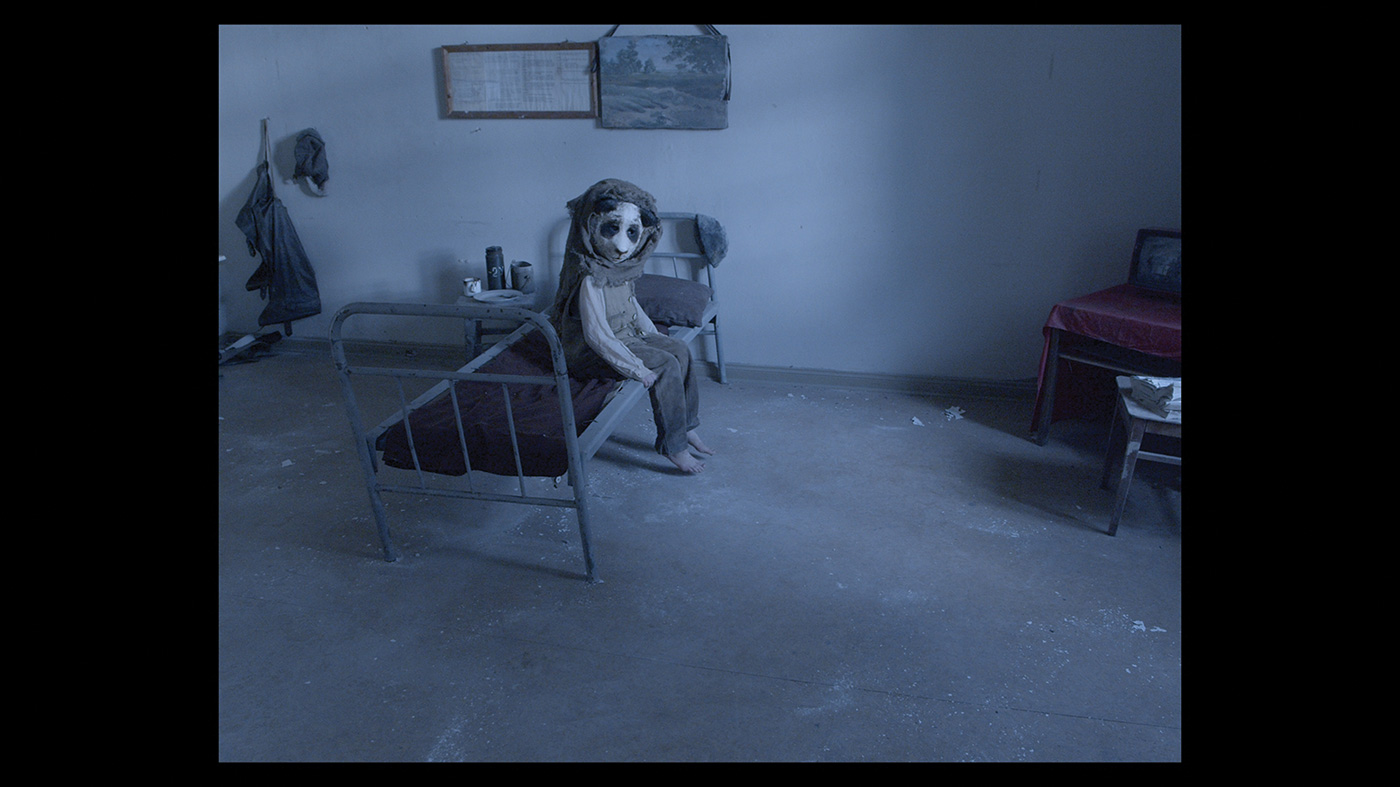
La femme d’un paysan s’égare dans la forêt et tombe sur la tanière d’un ours. L’ours la garde auprès de lui, et avec le temps naît un être mi-ours, mi-enfant. Tous deux aspirent à s’enfuir. Sur ce fond, nous avançons dans les couloirs et les rues d’une ville militaire allemande désertée, autrefois siège central de l’occupation de l’Europe de l’Est par l’armée soviétique. Fermé au public pendant des décennies, cet ensemble énigmatique est devenu pour les étrangers « la Ville Interdite ». Un conte russe primitif sert de guide pour traverser ce site labyrinthique, qui semble évoquer à la fois l’héritage de ce passé disputé et les résonances troublantes de notre présent. Un conte russe primitif sert à parcourir ce site labyrinthique, qui semble évoquer à la fois l'héritage de ce passé controversé et les résonances troublantes de notre présent.
Feargal Ward et Jonathan Sammon sont deux cinéastes irlandais. Une grande partie de leur travail explore les frontières et les potentialités de la forme documentaire hybride, où les codes et dispositifs du cinéma narratif sont souvent appropriés ou détournés afin d’interroger des vérités établies. Parmi leurs précédentes collaborations figure Tin City, présenté en avant-première à la Berlinale cette année (Forum Expanded), puis sélectionné dans plusieurs festivals, dont Karlovy Vary, Cinéma du Réel et le Festival dei Popoli, où il a reçu le Prix International Discoveries. Leurs autres collaborations, impliquant Adrian Duncan, incluent Lowland (Cork International Film Festival), Memory Room (IDFA, EVA International, Dokufest Kosovo) et Tension Structures (IDFA, Hot Docs, RIDM). Le long métrage documentaire de Ward, The Lonely Battle of Thomas Reid, a été présenté en première mondiale en compétition principale à l’IDFA, puis montré dans de nombreux festivals avant d’être diffusé à la télévision allemande, irlandaise et finlandaise. Son premier long métrage documentaire, Yximalloo (co-réalisé avec Tadhg O’Sullivan), a été présenté en première à FID Marseille, où il a remporté le Prix Premier

Dan Ward
Performance
Doc. expérimental | hdv | couleur | 18:0 | Royaume-Uni | 2015
A single day spent in a motion-capture studio documenting actors, a director and technical crew provide the subject matter for this film. Using a cliché B-movie script, the studio Audiomotion test workflow patterns to standardise and improve the production process (e.g. adjusting cameras and monitors, rehearsing with equipment, transferring data etc.) The actor’s movements are recorded during the scene, followed by minute facial gestures (aided with face paint), and finally edited as 3D models. We see how technique and dialogue must change to avoid disrupting the motion-capture technology, how the actors choose their expressions (stylised, but with an emphasis on naturalism), what other jobs the actors may have, and how standards or ideal gestures are created via these technical methods.
Dan Ward is a filmmaker based in London.
Phillip Warnell
I first saw the light
Film expérimental | 16mm | couleur | 12:0 | Royaume-Uni, 0 | 2012
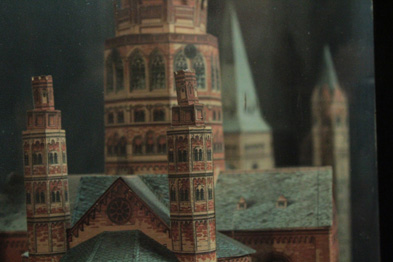
I first saw the light channels the vestige of Joseph Carey Merrick?s surviving output. Better known as The Elephant Man, he produced a two-page autobiography, sold to those attending a freak show in which he was displayed in victorian London. The inter-titled text is coupled with stark sequences of a model church he constructed, now sealed within a glass and ebony container, together forming the basis for this poignant, silent film. A reminder of Merrick?s profound humanity in the face of such extreme adversity, the film also serves as a footnote to David Lynch?s feature film, in which the model is employed as a central motif and metaphor for Merrick?s psychological and emotional fluctuations.
Phillip Warnell produces films channelling the circumstances, thoughts and character of extraordinary subjects. The work is concerned with the exploration of, and curiosity with, ideas around bodies and environments. Thinking through film, his work explores an extra-sensory, pre-scientific world, infused with invisible, supra-organic phenomena. The premise for his work locates the body as an axis or point of orientation, around which can be hosted a series of investigations and transformations, into both the human and animal corpus, its biology, psychology and chemistry. A filmmaker, academic and artist, Phillip Warnell presents his work in a range of contexts and guises: including live performance pieces, time-based work, image and text. His recent cinematic work has included ?The Girl with X-ray Eyes? and ?Outlandish: Strange Foreign Bodies?, made in collaboration with Jean-Luc Nancy. Recent presentations of his work include a solo exhibition at The South London Gallery, London (Sept, 2012); Locarno Film Festival (2012); FNC Montreal (2012), Loop Barcelona (2011); CPH-Dox (2010); FID Marseille (2009/8), with exhibitions at Matts Gallery, London (2005) and 300m3, Gothenburg (2008).