Catalogue > Faire une recherche
Résultats pour : Tout le catalogue
Rolando Vargas, Catherine CELY
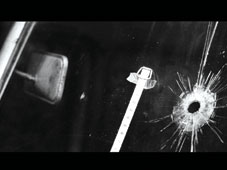
Automovil
Doc. expérimental | dv | noir et blanc | 3:51 | Colombie | 2004
"Automóvil" est le premier d'une série appelée "M.I." composé de sept fragments d'art-vidéos qui travaille avec du matériel d'archives photograpiques , en plaques d'acétate de cellulose de l'institution légale Colombienne datée de 1953 à 1979 et qui tourne autour de deux questions fondamentales: Comment établir une relation avec du matériel d'archive, produit de conséquence de notre violence? Comment rendre visibles les petits fragments ayant pour fonction la conservation de la mémoire? Les séries de "M.I." est une histoire alternée, antagoniste à l'histoire de la télévision, due au fait qu'elle ne s'intéresse pas aux histoires criminelles, au sens réduit du terme. Son réel intérêt réside dans les Restes, les sens multiples présents de réserve qui a résisté la capacité probante, sont capables d'intégrer une catégorie plus vaste qui permet la compréhension d'autres situations et d'autres représentants. Les oeuvres des séries "M.I." avec leurs interstices de documents historiques, où l'événement criminel est abandonné et qui par ailleurs, s'intéresse plus en détails, à la particularité, au signe, relaté ou non à un fait ou à un évènement spécifique. L'image traitée en ce sens devient indépendante de son expédient, retrouve sa vie propre dû à son lien perdu avec l'histoire ancienne, et se prouve elle-même dans sa propre existence.
Catherine et Rolando, travaillent ensemble depuis 2001, dans leurs projets ils utilisent du matériel d'archive produisant ainsi des travaux expérimentaux du genre art-vidéo. Leur première oeuvre est un film documentaire intitulé "Exiliados en Exilio", qui a recu desrécompenses du gouvernement Colombien et Français ,sur les camps de concentration durant la Seconde Guerre Mondiale en Colombie. La série "M.I" a été projetée dans les festivals suivants: "EMAF", "Transmediale", "MediaArt Friesland", "II inter-american Biennial of video art" parmi d'autres .

Helena Estrela Vasconcelos
Heroísmo
Fiction | 4k | couleur | 21:38 | Portugal | 2016
Un garçon vit seul, la nuit, dans un centre commercial abandonné.
Helena Estrela Vasconcelos was born in 1993, in Porto. Finished in 2015 a degree in Cinema in Escola Superior de Teatro e Cinema de Lisboa. She was the co-producer in the film “A Rapariga de Berlim” which won the section “Novi?ssimos” at IndieLisboa 2015. “Heroismo”, her first film, premiere at Nacional Competition in Indie Lisboa 2016. She currently lives in Porto, where she is developing research for future film projects.

Marlon Vasquez, David SANCHEZ
Doña Ana
Animation | dv | couleur | 1:44 | Colombie | 2005
Mme Ana est une femme âgée qui vend des plantes médicinales dans la ville de Medellin en Colombie. Le fait de manger des fraises et de parler de leurs propriétés montre l?étendue des connaissances présentes dans la culture populaire.
Marlon Vasquez est un réalisateur colombien de 26 ans. Il a obtenu son diplôme en arts visuels à l?université nationale de Colombie et a réalisé depuis plusieurs courts-métrages indépendants et des projets artistiques visuels. Il a obtenu une mention spéciale à la troisième Biennale Interaméricaine d?art vidéo, banco Interamericano de Desarrollo à Washington en 2006 ainsi qu?au Slow Food Film Festival 2006 en Italie. Il a été sélectionné en tant que talent 2006 pour la Berlinale Talent campus #4 à Berlin en Allemagne. Il a également été sélectionné pour représenter la Colombie à la rencontre artistique ?Dream Project Public Art for Equality? en 2005. Sa vidéo?Golfie? a été nommée meilleure vidéo au deuxième International Sample of Electronical Art de Bogota en 2004. Et enfin sa vidéo ?Homeless? a été nommée dans la catégorie meilleure vidéo au Medellin Vision Festival organisé par Universidad Pontificia Bolivariana en 2003.

Lesia Vasylchenko
Postcard From A Nonexisting City
Animation | mov | couleur | 8:32 | Ukraine | 2021
“Postcard From a Nonexisting City” is a video work that explores the Soviet imaginary and its relation to the future. The work features a virtual rendering of an architectural landscape that contrasts physical and temporal scales and stamps function as graphic messengers of a political and cultural transition. Constructed between the frameworks of speculative architecture, philately and the politics of time, “Postcard From a Nonexisting City” is a work that reflects on temporal arrangements and geopolitical effects produced by space communication technologies.
Lesia Vasylchenko is a Kyiv-born artist based in Oslo. Her practice spans between installation, moving image and photography. Vasylchenko is a co-curator of the artist-run gallery space Podium and a founder of STRUKTURA. Time, a cross-disciplinary initiative for research and practice within the framework of visual arts, media archaeology, literature, and philosophy. She holds a degree in Journalism from the Taras Shevchenko National University of Kyiv and Fine Arts from Oslo National Academy of the Arts. Her works have been shown among others at Louvre Museum, Paris; Haus der Kulturen der Welt, Berlin; Haugar Art Museum, Tønsberg; Tenthaus Gallery, Oslo; The Wrong New Digital Art Biennale.

Lesia Vasylchenko
Zaraz
Fiction expérimentale | mov | couleur et n&b | 15:46 | Ukraine, Norvège | 2020
"ZaraZ" est un essai vidéo de science-fiction, expérimental, de la chronopolitique et de la philosophie. À l'ère post-communiste, après la chute du mur de Berlin et l'effondrement de l'Union soviétique, des discours à propos de la fin de l'Histoire ont émergé. Au lieu de la structure passé-présent-avenir, nous assistons à un glissement temporel vers le Maintenant, qui se coule continuellement dans le présent du futur. "ZaraZ" réfléchit aux conséquences de l'accélération et de l'aliénation dans les sociétés modernes. Y sont dépeints des sites d'architecture brutaliste, construits pour concrétiser dans les espaces publics la "promesse" d'un avenir meilleur, et des paysages urbains endommagés par l'industrialisation et la croissance économique. La nostalgie de l'avenir s'exprime dans la désintégration des formes architecturales des espaces publics et privés, et dans la possibilité que de multiples présents émergent de passés multiples. "ZaraZ" interroge les temporalités spéculatives de la ville et explore les relations entre le temps et l'architecture; entre le virtuel, le réel et le véritable; entre les modes actuels d'instrumentalisation de l'histoire et la mémoire. Dans un monde où il n’y a qu’une seule synchronicité temporelle urbaine, la question demeure: quels sont les Temps responsables de la création de futurs imaginés?
Lesia Vasylchenko est artiste. Née à Kiev (Ukraine), elle vit à Oslo (Norvège). Sa pratique s’étend de l'installation à l'image en mouvement et à la photographie. Elle est co-curatrice de la galerie d'art autogérée Podium, Oslo (Norvège) et fondatrice de STRUKTURA.Time, une initiative transdisciplinaire de recherche et de pratique en arts visuels, archéologie des médias, littérature et philosophie. Elle est diplômée en journalisme à la Taras Shevchenko National University de Kiev (Ukraine) et en arts plastiques à la Oslo National Academy of the Arts (Norvège). Ses œuvres ont été présentées, entre autres, au Haugar Art Museum, Tonsberg (Norvège); à la Tenthaus, Oslo (Norvège); au Transnational Queer Underground, Berlin (Allemagne); à la Wrong New Digital Art Biennale, São Paulo (Brésil) et au Korea Queer Film Festival, Séoul (Corée du Sud).

Mona Vatamanu, Florin Tudor
Omnia Communia Deserta
Doc. expérimental | mp4 | couleur | 29:0 | Roumanie | 2020
Le film explore, analyse, le thème de la modernité efficace, dont la dernière conséquence sera l'extinction; le discours d'Ovidiu Tichindeleanu a pour toile de fond, pour motif, le présent post-apocalyptique de la salle Omnia, qui prend ainsi le sens d'un avertissement: nous sommes à nouveau au bout d'un chemin, celui du culte de la production.
Mona Vatamanu est née en 1968, et Florin Tudor en 1974. Ils vivent et travaillent à Bucarest (Roumanie). Leur pratique consiste en une observation attentive et une prise en compte des éléments matériels de la réalité. Ils choisissent souvent ce qui est éphémère, petit, marginal, comme la poussière, la rouille, le feu, le duvet des graines d’un arbre, ou la terre. Leur travail avec ces matériaux peut se faire le point de départ d’un questionnement à propos des relations sociales, des changements technologiques et économiques, et des conflits politiques.

Mona Vatamanu, Florin TUDOR
Fire is Always the Same
Vidéo | hdv | couleur | 19:27 | Roumanie, 0 | 2019
Mona Vatamanu & Florin Tudor, born 1968/1974, work together since 2000. Based in Bucharest, currently living in Berlin (DAAD Berliner Kunstlerprogramm). Selected Solo Exhibitions: 2009 - Mona Vatamanu & Florin Tudor, All Power to the Imagination!, Secession, Grafischess Kabinett, Vienna; Mona Vatamanu & Florin Tudor, Surplus Value, BAK, basis voor actuele kunst, Utrecht; 2003 - Living Units, Project Room, Ludwig Museum, Budapest. Selected Group Exhibitions : 2011 - Untitled (12th Istanbul Biennale), Istanbul; Call the Witness, Roma Pavilion Collateral Event, 54th Venice Biennale, Venice; Image projected until it vanishes, Museion, Bolzano; 2010 - Flying Down to Earth, FRAC Lorraine, Metz; Modern Dialect, M HKA, Museum of Contemporary Art, Antwerp; Shockworkers of the Mobile Image, 1st Ural Industrial Biennial, Ekaterinburg; Over the Counter, Mucsarnok Kunsthalle, Budapest; 2008 - 5th Berlin Biennial, When Things Cast No Shadow, KW Institute for Contemporary Art, Berlin; 6. Gyumri Biennial, Transformation of History or Parallel Histories, Gyumri; Art as Gift, Periferic Biennial 8, Iasi; Like an Attali Report, but different, On fiction and political imagination, Kadist Art Foundation, Paris; 2007 - 52nd Venice Biennial, Romanian Pavilion, Low-Budget Monuments, Venice.

Mona Vatamanu, Mona Vatamanu and Florin Tudor
Cu totii devenira pasari
Documentaire | mov | couleur et n&b | 40:29 | Roumanie | 2024
The mythologies of the Tierra del Fuego peoples, Selk’nam, Yamana, Kawesqar, and Haush, tell a story of a time when supernatural immortal beings inhabited the earth and transformed into celestial bodies: stars, the moon, and the sun, as well as mountains, lakes, birds, and animals. After 1880, the ancestral lands of the Indigenous people of Tierra del Fuego were politically divided between Argentina and Chile and colonized by mostly European settlers – adventurers, gold seekers, and farmers. The film examines the role of Romanian explorer Iuliu Popper (also known as Julius Popper, Julio Popper) in the aggression against Indigenous peoples, particularly his involvement in the genocide of the Selk’nam. Popper’s actions in Tierra del Fuego can be understood as part of a broader phenomenon of self-colonization and assimilation of Western European colonial imaginaries in Romania, reflecting local colonial aspirations disguised as geographical explorations.
Mona Vatamanu and Florin Tudor (1968/ 1974). Working together for over two decades Mona Vatamanu and Florin Tudor address the theme of history in films, installations, paintings and performative actions that revisit ideologies, utopias and modernist projects. Exhibitions (selection): Makeshift Memorials, Small Revolutions, Kadist San Francisco, 2024; Tara de foc, Kunthalle Bega, Timisoara, 2024; The Cynics Republic, Palais de Tokyo, Paris, 2024; After Rain, Diriyah Biennial, 2024; 5th Kyiv Biennial: Against the Logic of War, Augarten Contemporary, Vienna, 2023; Kathmandu Triennale 2077, Patan Museum, Kathmandu, 2022; Omnia Communia Deserta, La Loge, Brussels, 2020 (solo); The Street. Where the World Is Made, Maxxi, Roma, 2019; Gaudiopolis – Attempts at a Joyful Society, GfZK, Leipzig, 2018; Pr?p?denia p?mântului, Salonul de proiecte, Bucuresti, 2016 (solo); All Men Become Sisters, Muzeum Sztuki ms2, Lodz, 2015; Social Factory, 10th Shanghai Biennale, Power Station of Art, Shanghai, 2014; A History, Centre Pompidou, Paris, 2014.
Mona Vatamanu, Florin TUDOR
Ploaia
Art vidéo | 0 | noir et blanc | 3:40 | Roumanie | 2005
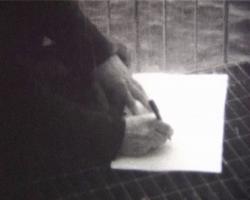
Dans ?The Rain?, Florin s?assied sous une pluie torrentielle et essaie de faire un croquis à partir de sa mémoire du bloc(communiste)dans lequel lui et Mona vivent, avec la pluie, qui, bien sûr fait couler l?encre et détruit le papier. Le travail est basé sur "La Pluie" (Projet pour un texte)de Marcel Broodthaers, un artiste qui avait utilisé le cinématographe comme un appareild?inscription et d?effacement simultané. Les citations déplacées fonctionnent comme un commentaire subtil sur l?architecture communiste, architecture dont la sérialité dérangée et les banlieues infinies se moquent de l?organisation de la mémoire.
Mona Vatamanu & Florin Tudor 1968 / 1974 work together since 2000 2005 Art-chitecture of Change, Isola Art Center, Milano Nu s-au semnalat incidente deosebite, Galeria Noua, Bucuresti Breakfast / Persepolis / Consuming the City, Artbug Gallery, Bassano / solo The ABC, Art & Activism, Neurotitan Gallery, Berlin A WarLike People, Monorchid Gallery, Phoenix, Arizona Continental Breakfast, MEMORY (W)HOLE, Ljubljana Castle Unitati de locuit, CIAC, Bucuresti / solo Storyboards, Galeria Vector, Iasi The Literal Space, Living Units, Institut fur Entwerfen, Innsbruck / solo Directors Lounge festival, Berlin Longtime, Trafo Gallery, Budapest 2004 Terrorvision, Exit Art Gallery, New York Revolutions Reloaded, Artra Gallery, Milano; Play Gallery, Berlin Media-Space 04, Micro Utopia Re-Utilisation and Shifts in Urban Space, Stuttgart Orase de Consum, Galeria Vector, Iasi / solo Cosmopolis Biennial, State Museum of Contemporary Art, Thessaloniki Formate / Moving Patterns, Kunsthalle Karlsplatz, Wien Opening MNAC, Bucuresti Bukarest Stereo, Edith-Russ-Haus fur Medienkunst, Oldenburg Consuming the City, Buchsenhausen Labor, Innsbruck / solo Europa Jetzt, Mak Nite, MAK, Wien Persepolis/ The Palace, 2020 home gallery, Bucharest / solo The Making of Balkan Wars: The Game, Centro Cultural Conde Duque, Media Lab Madrid / Channel 0, Personal Cinema, Montevideo Time Based Arts, Emaf 2005 2003 Living Units, Project Room, Ludwig Museum, Budapest / solo Cybersonica 03, ICA, London LOOP`00, Canal loop, Barcelona Personal Places, A+A Gallery Venice Border Device(s), insert in Border Counter / Multiplicity Collective, Utopia Station, the 50th Venice Biennial; Roomade Gallery, Bruxelles Arcipelago, 11th International Festival of Short Films and New Images, Rome Stuttgarter Filmwinter Festival for Expanded Media, Stuttgart 2002 ISEA, Orai, Nagoya / electronic theatre Viper Festival for Film, Video and New Media, Basel (Florin Tudor) Open, l?Imaginaire feminin, Lido di Venezia (Mona Vatamanu) Coop Media Festival Kalinderu Medialab, MNAC Bucharest Backup Festival, Weimar 5 Senses, CRCA, San Diego Artist in residence 2005 USF Verftet, Bergen 2004 Kunstlerhaus Buchsenhausen, Innsbruck 2003 Project Room, Ludwig Museum Budapest Lectures 2005 - Living Units, Khib, Bergen - After the Happy 90es, Goethe Institut, Bucuresti 2004 - Living Units, Consuming the City, Buchsenhausen Labor, Innsbruck - Post Communist Architecture in Bucharest, workshop, Institute of Architecture Ion Mincu, Bucharest in collaboration with Columbia University NY 2003 - SHORT BREATH ? Experiencing Architecture in Time of Displacements, International Symposium, CIAC, Bucharest

Mona Vatamanu, Florin Tudor
Rite of Spring
Film expérimental | super8 | couleur | 7:51 | Roumanie | 2010
In this film, the simple and poetic gesture of Roma children starting small fires in which to burn mounds of white poplar fluff implies a promise?the promise of renewal. Some are street kids, some have a family and some do not, some have a home, some are nomadic, and some just squat a derelict house without a roof. Occasionally the mesmerising play of the children leads the fire to consume a tree, and then fire fighters rush to extinguish it, leaving the burned trunk as a black drawing on the sky. This yearly ritual performed by kids is a metaphor for the spark that sets the existing order on ?fire,? and leads to a change. The sparks and small fires in the film symbolically suggest associations with many things?they could be the fires in the French banlieues in recent years, the perpetually deported and repatriated Roma people through out Europe, anti-war protesters against the invasions in Iraq and Afghanistan around the globe, or this year?s uprisings in North Africa and the Middle East?all of which point to the hope of a more equal world. (Mona Vatamanu & Florin Tudor)
Mona Vatamanu & Florin Tudor, born 1968/1974, work together since 2000. Based in Bucharest, currently living in Berlin (DAAD Berliner Kunstlerprogramm) Selected Solo Exhibitions: 2009 - Mona Vatamanu & Florin Tudor, All Power to the Imagination!, Secession, Grafischess Kabinett, Vienna; Mona Vatamanu & Florin Tudor, Surplus Value, BAK, basis voor actuele kunst, Utrecht; 2003 - Living Units, Project Room, Ludwig Museum, Budapest. Selected Group Exhibitions : 2011 - Untitled (12th Istanbul Biennale), Istanbul; Call the Witness, Roma Pavilion Collateral Event, 54th Venice Biennale, Venice; Image projected until it vanishes, Museion, Bolzano; 2010 - Flying Down to Earth, FRAC Lorraine, Metz; Modern Dialect, M HKA, Museum of Contemporary Art, Antwerp; Shockworkers of the Mobile Image, 1st Ural Industrial Biennial, Ekaterinburg; Over the Counter, Mucsarnok Kunsthalle, Budapest; 2008 - 5th Berlin Biennial, When Things Cast No Shadow, KW Institute for Contemporary Art, Berlin; 6. Gyumri Biennial, Transformation of History or Parallel Histories, Gyumri; Art as Gift, Periferic Biennial 8, Iasi; Like an Attali Report, but different, On fiction and political imagination, Kadist Art Foundation, Paris; 2007 - 52nd Venice Biennial, Romanian Pavilion, Low-Budget Monuments, Venice.

Mona Vatamanu, Florin Tudor
Copacul lui Gagarin (Gagarin's Tree)
Film expérimental | hdv | couleur | 22:50 | Roumanie | 2016
An interview with philosopher Ovidiu Tichindeleanu engages issues of space exploration, imagination and propaganda in the socialist utopia, the post-communist condition as liberal colonisation, linked – Ovidiu proposes – to other sites of decolonisation through a new historical consciousness. The protagonist's reflection departs from the unstable nature of today's ruins: these are the ruinous future of different pasts, of different messianisms, or modes of conceiving the notion of historical destination in the last decades. Ovidiu's analysis revolves around the reciprocal construction of pasts and futures, ideas of renewal or historical horizon, temporal or spatial 'elsewheres'. The backdrop for the conversation the film proposes is the Gagarin Youth Centre, in Chisinau, Moldavia, where most of the footage was filmed. Now deserted, and waiting to be replaced by a construction more adapted to today's oligarchic liberalism, the building reads like a palimpsest of unrealized historical projections, perhaps captured in the large mosaic of outer space labor: a worker ploughing the universe. "An entirely different history of the world was about to be written. The feeling and the memory of this divergence is still active and alive, and it is awakened in connection with those utopias that actually became daily life and are now the history of the people who grew up in the tradition of real socialism. But if the post-communist transition meant a colonisation, and if real socialism was partially an attempt to write a history divergent from that of Western modernity, then what is left of that, what is alive?" Ovidiu's insistence on communism as a heresy, as deviation from other forms of imagining the modern selfhood and society, may have left something behind, a residue that might activate its catalytic, transformative potential. In his words, this is "the power of a dream to bring people together and create another history".
Mona Vatamanu and Florin Tudor have been collaborating since 2001, producing mixed-media installations, actions, and videos through which they confront the traumatic legacy of Communism in their native Romania and Eastern Europe, while wrestling with the ongoing challenge of how to process history. Remnants of Socialist architecture figure prominently in their work, serving as visual evidence, in their words, of “the complicated situation of people living after these ideals failed.” While the Socialist past is the focus of most of their evocative installations and atmospheric films, Vatamanu and Tudor also find connections between the history they know intimately and struggles worldwide. In Rite of Spring (2010), for example, they film children burning the white fluff of the poplar tree, seeing in each mini-conflagration a symbol of renewal and of such incendiary and hopeful revolutionary movements as the Arab Spring.

Regina Vater, Regina Vater
Sleeping Beauty
Fiction expérimentale | super8 | couleur | 7:44 | Brésil | 1982
Sleeping Beauty was poetically made in Super8 later digitalized and it was inspired by a short story I wrote in Paris in 1973 about a woman who waits eternally for her lover who never shows up.
Regina Vater is one of the pioneers in the use of video as an art form. Her first work in video, shot in Paris in 1974 upon the invitation of Ruth Escobar, was a poetic documentary about Escobar’s theater group from S.Paulo, which was later finished by Andrea Tonachi. Regina made her second video, “Miedo”, in 1975, sponsored by CAYC of Buenos Aires. Most of her extensive video work was realized with very limited budget. Her videos were shown in several American festivals. Examples of the many awards and honors her work has received are, among others: honors from the American Film Institute; the Best of ACTV Programming; Video Travel Grants Pilot From the Arts International & National Endowment; "My Own Home Town" award for video; GPIA grant from Program for Interdisciplinary Artists - Southwest Alternate Media Project and New Jersey Council for the Arts Fellowship.As an artist, Regina has also received many other international awards, such as a Guggenheim Fellowship in 1980 which brought her to the U.S. From 1980 to 1985, she lived, worked and had many shows in New York. Regina lives and work in Rio de Janeiro Brazil.

Emilio Vavarella
Genesis (The Other Shapes of Me)
Vidéo | 4k | noir et blanc | 21:36 | Italie | 2021
The film Genesis (The Other Shapes of Me) is simultaneously a part of the installation rs548049170_1_69869_TT as well as a stand-alone art film. The film documents a year-long performance during which a large piece of fabric that codifies and contains all of my genetic information is woven by my mother on one of the first computers of history, the Jacquard loom. In the tension between the loving gestures of a mother and the automatic movements of a mechanical loom, Genesis gives form to my reflections on technical reproducibility, the materiality of information, and on the interplay between biological, mechanical and computational life. The series The Other Shapes of Me is based on the translation of my genetic code into fabric. This stratified series of interrelated works is the result of my research into the origin and current applications of binary technology: from weaving to programming, algorithms, software, automation processes, up to the complete computerization of a human being.
Emilio Vavarella is an Italian artist working at the intersection of interdisciplinary art practice, theoretical research and media experimentation. His work explores the relationship between subjectivity, nonhuman creativity and technological power. It is informed by the history of conceptual art, digital and network cultures, and new media practices. Vavarella moves seamlessly between old and new media, and exploits technical errors and other unpredictabilities to reveal the logic and the hidden structures of power. Esteemed venues that have exhibited Vavarella’s work include: MAXXI – Museo nazionale delle arti del XXI secolo; KANAL – Centre Pompidou; Hermitage Museum in St. Petersburg; MAMbo – Museo d’Arte Moderna di Bologna; Museum of Contemporary Art – Zagreb; Museu de Ciències Naturals of Barcelona, The Photographer’s Gallery of London, Museo de Arte de Caldas; Museo Nacional Bellas Artes in Santiago; Museu das Comunicações of Lisbon, National Art Center of Tokyo; Eyebeam Art and Technology Center and Museum of Contemporary Art Vojvodina. His artworks have been exhibited at film festivals such as Toronto’s Images Festival; Torino Film Festival, and the St. Louis International Film Festival, and at many international media art festivals, among which: EMAF – European Media Art Festival; JMAF – Japan Media Arts Festival; Stuttgarter Filmwinter – Festival for Expanded Media; BVAM – Media Art Biennale; and NYEAF – New York Electronic Arts Festival. Vavarella has been awarded numerous art prizes and grants, among which the Exibart Art Prize (2020); Italian Council award (2019); Premio Fattori Contemporaneo (2019); SIAE – Nuove Opere (2019); the NYSCA Electronic Media and Film Finishing Funds grant (2016); the Francesco Fabbri Prize for Contemporary Art (2015) and the Movin’Up Grant (2015). He has been invited to present his work at: Harvard Advanced Leadership Initiative; Istituto Italiano di Cultura – New York; ISEA – International Symposium on Electronic Arts; Goldsmiths University of London; the University of East London; the School of the Art Institute of Chicago; and SIGGRAPH. His academic writings have been published in peer-reviewed journals such as Leonardo – The Journal of the International Society of the Arts, Sciences and Technology (MIT Press), Digital Creativity (Routledge), and CITAR Journal – Journal of Science and Technology of the Arts. His writings have also appeared in Behind the Smart World: Saving, Deleting and Resurfacing Data produced by the AMRO Research Lab and in exhibition catalogues like Low Form: Imaginaries and Visions in the Age of Artificial Intelligence (MAXXI and CURA Books); That’s IT! (MAMbo), and Robot Love (Niet Normaal Foundation). His work is regularly discussed in art magazines, academic books and peer-reviewed journals, and has been covered by all major global media outlets. His most recent artist book, published by Mousse, is entitled rs548049170_1_69869_TT. Vavarella is currently working toward a PhD in Film and Visual Studies and Critical Media Practice at Harvard University and is the artist in residence of the Broad Institute of MIT and Harvard. He holds an M.A. cum laude in Visual Arts from Iuav University of Venice, with study abroad fellowships at Bezalel Academy of Arts and Design, Tel Aviv and Bilgi University of Istanbul and received a B.A. cum laude in Visual, Cultural, and Media Studies from the University of Bologna.

Ond?ej Vavre?ka
Lišejníky
Doc. expérimental | 16mm | couleur | 43:0 | Tchèque (Rép.) | 2024
Ils ne représentent pas une culture du « toujours plus », mais une culture du « suffisant » : les lichens. Et les deux hommes qui leur ont consacré leur vie dans la nature sauvage. Les lichens sont des organismes extraordinaires, sans équivalent sur Terre. On ne peut pas les considérer comme des individus, comme une jacinthe, un héron ou un être humain ; ils représentent une relation. Les deux entités qui composent un lichen, un champignon et une algue, ont, pour des raisons inconnues, décidé que vivre ensemble serait mieux que vivre séparément. Les lichens constituent une métaphore capable d’inspirer l’humanité pour survivre dans l’avenir. Ils représentent une histoire nouvelle, révélée par l’enfant terrible de la biologie, Trevor Goward. Lui et son partenaire Curtis Randal Björk nous guident à travers le film. Une expérience purement cinématographique tournée dans la vallée canadienne de Wells Gray, où se trouve le Wilderness Learning Centre.
Ond?ej Vavre?ka est réalisateur, artiste visuel, musicien et enseignant. Il a étudié la programmation avant de se tourner vers la philosophie et la linguistique. Il a ensuite suivi des études de cinéma à Prague (FAMU) et à Moscou (VGIK). Ses films ont reçu plusieurs distinctions. Il expose ses peintures, sculptures et costumes lors d’expositions personnelles et collectives. Il joue de la musique et compose souvent pour ses propres films. Il a publié plusieurs textes «?filmosophiques?». Actuellement, il travaille sur une série de peintures inspirées par le monde des lichens, pour lesquelles il a réalisé l’an dernier un film qui circule dans des festivals internationaux. Cette année, il a terminé un documentaire musical sur l’idée de progrès intitulé 1+1+1. Il prépare également un film de fiction sur les traumatismes générationnels, Beton, et un documentaire sur l’écoute, Mythos. Il enseigne à la FAMU, au Centre d’études audiovisuelles. Plus d’informations sur : www.ondrejvavrecka.cz
César Vayssié
Ricorda ti che è un film comico
Fiction expérimentale | hdv | couleur | 130:0 | France | 2024
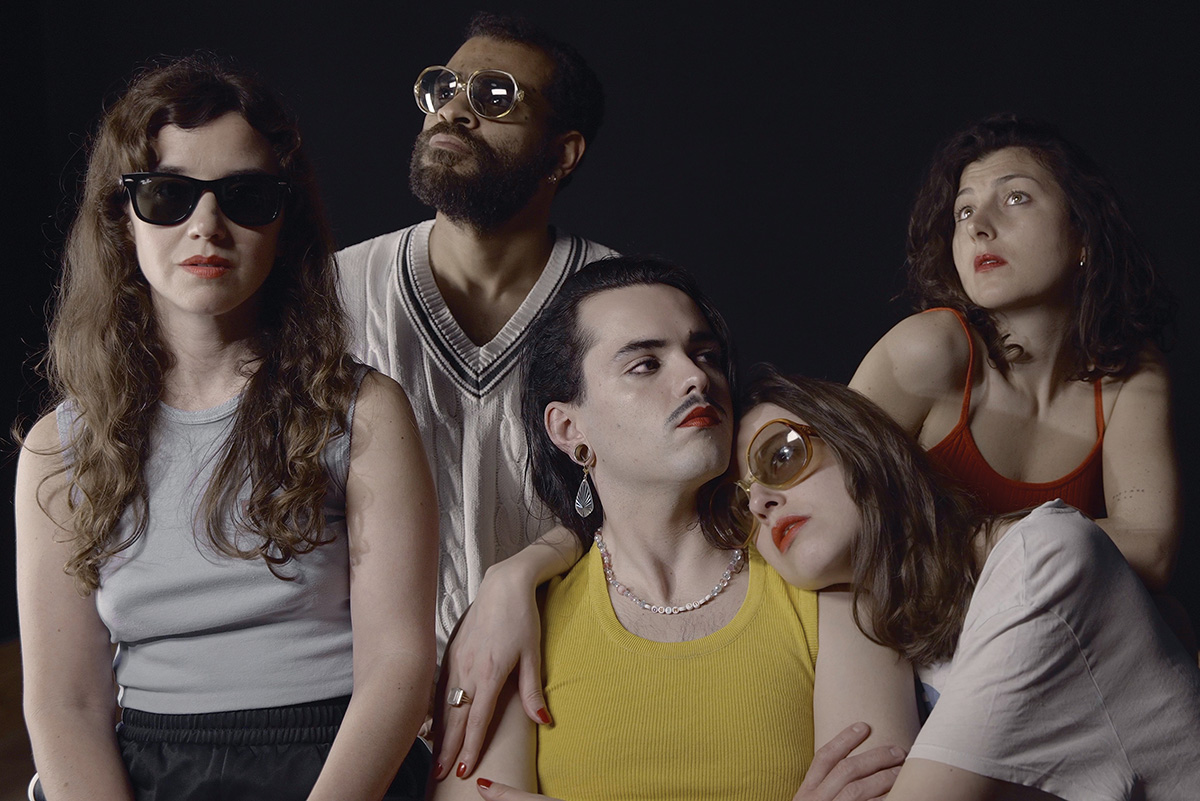
Cernés par la férocité du monde, cinq jeunes artistes tentent de transcender l’angoisse contemporaine avec un projet collectif en guise de futur ou d’ultime extase. Réfugiés dans l’Hôtel du Belvédère, audace architecturale des années 30 en forme de paquebot, ils tentent une recherche chaotique à partir de Beethoven, exemple incongru d'un dépassement héroïque de la catastrophe: faire de la musique sans l’entendre, envers et contre tout. Alix Boillot, Noémie Develay-Ressiguier, Théodora Marcadé, Gaël Sall et Ferdinand Vayssié sont plus ou moins eux-même et les pseudo-héros d’une fable au titre italien, à la frontière franco-espagnole, à bord d’un bateau ivre resté à quai. Une histoire de dépression et de jouissance qui hésite entre le pathétique et le poétique. Les vertiges existentiels de la création comme allégorie désinvolte d’un naufrage collectif consenti. Il faut bien se souvenir que c’est un film comique.
César Vayssié est diplômé de l’ENSA Dijon, il a été pensionnaire à la Villa Médicis à Rome (1996-97). Artiste hors catégorie, il raconte la confusion entre art, politique et discours amoureux. Ses films et performances mélangent avec insolence les identités artistiques à la recherche de phénomènes narratifs qui engagent le corps. Ses oeuvres sont montrées dans de nombreux lieux et festivals à travers le monde. Son film UFE a remporté le Prix Georges De Beauregard National au FID Marseille 2016. Le film NE TRAVAILLE PAS a obtenu le Fipresci Prize à la Viennale 2018.

Ana Vaz
Ha terra! (Terre!)
Vidéo | hdv | couleur | 12:0 | Brésil | 2016
"Há terra !" est une rencontre, une chasse, un conte diachronique du regard et du devenir. Comme dans un jeu, comme dans une course-poursuite, le film oscille entre personnage et terre, terre et personnage, prédateur et proie.
Ana Vaz (b. 1986, Brasília) is an artist and filmmaker whose films and other expanded works speculate upon the relationships between self and other, myth and history through a cosmology of signs, references and perspectives. Assemblages of found and shot materials, her films combine ethnography and speculation in exploring the frictions and fictions imprinted upon both cultivated and savage environments and their multiple inhabitants. A graduate from the Royal Melbourne Institute of Technology and Le Fresnoy – Studio National des Arts Contemporains, Ana was also a member of SPEAP (SciencesPo School of Political Arts), a project conceived and directed by Bruno Latour. Recent screenings of her work include the New York Film Festival – Projections, TIFF Wavelenghts, CPH:DOX, Videobrasil, Courtisane, Cinéma du Réel and Lux Salon. In 2015, she was the recipient of the Kazuko Trust Award presented by the Film Society of Lincoln Center in recognition of artistic excellence and innovation in her moving-image work. Ana is also a founding member of the collective "Coyote" along with Tristan Bera, Nuno da Luz, Elida Hoëg and Clémence Seurat, a cross-disciplinary group working in the fields of ecology, anthropology, ethnology and political science through an array of crosscutting platforms.

Ana Vaz
Olhe bem as montanhas
Doc. expérimental | 16mm | couleur | 30:40 | Brésil, France | 2018
« Regardez bien les montagnes ! » : l`impératif vient de l`artiste Manfredo de Souzanetto, pendant les années de dictature au Brésil. L`exploitation minière était en train de détruire l`environnement dans l`État du Minas Gerais, dans le Sud-Est du pays. Par le biais du montage, Ana Vaz met en parallèle cette région et celle, géographiquement très éloignée, du Nord-Pas-de-Calais, également marquée par trois siècles d`exploitation minière. D`un côté, des montagnes érodées, dont les habitants subissent les glissements de terrain meurtriers. Les montagnes creuses, évidées, deviennent réceptacles d`une mémoire spectrale. De l`autre, en France, les traces de l`exploitation, un temps effacées, font aujourd`hui l`objet d`une revalorisation patrimoniale, et paradoxalement, les tas de déchets miniers sont devenus des montagnes, des réservoirs de biodiversité, la frontière entre nature et technique s`avérant insituable. La cinéaste surprend à chaque plan, la poésie primant sur tout discours militant ou environnemental – ainsi de la séquence des scientifiques qui mesurent les chauves-souris sous la lune. Le « regardez bien » pousse vers le détail, la matière visuelle et sonore. Jamais cependant détachées du politique : un plan du ciel pris du fond d`un ravin suffit à évoquer les fantômes de peuples indigènes éradiqués, dont subsistent encore cependant des peintures pariétales.
Née en 1986 à Brasilia, Ana Vaz est une artiste et cinéaste dont les films et le travail spéculent sur les relations entre le soi et l’autre, le mythe et l’histoire au travers d’une cosmologie de signes, références et perspectives. Des assemblages de matériau filmé et trouvé, ses films combinent ethnographie et spéculation dans l’exploration des frictions et fictions inscrites dans les environnements naturels comme bâtis. Diplômée du Royal Melbourne Institute of Technology et du Fresnoy-Studio National des Arts Contemporains, Ana Vaz fut également membre de SPEAP (SciencesPo School of Political Arts), un projet conçu et mené par Bruno Latour. Son travail est régulièrement projeté partout dans le monde : New York Film Festival, TIFF Wavelengths, CPH:DOX, Videobrasil, Courtisane, Cinéma du Réel, Lux Salon. En 2015, elle reçoit le Kazuko Trust Award présenté par la Film Society du Lincoln Center en reconnaissance de l’excellence artistique et de l’innovation de son travail filmique.

Pedro Vaz
Monólito
Vidéo | hdv | noir et blanc | 56:10 | Portugal | 2013
A young man, the lonely character of this tale, is on a journey of (self) discovery inside an unbounded, abstract space, where primitive Nature reigns. In this space, the faint glimmers of the Man passage are offered by some constructions in ruins. However, most of the surrounding is uncharted Nature, this seems to have a magnetic effect on the character who, still an outsider, feels the urge to explore. Although he doesn`t know exactly what he is searching for, his journey is ordained by a calling – and his (uphill) journey progressively becomes more grueling.
Pedro Vaz (Maputo, 1977) obtains a degree in Fine Arts - Painting, Faculty of Fine Arts, University of Lisbon in 2006. This year, he exposed Atlântica individually in Baró Gallery in São Paulo, Brazil, Neblina in Galeria 111, Lisbon and Monólito in Casa da Cerca - Contemporary Art Centre in Almada, Portugal. In 2014 was awarded in the international competition "Beers Award for Emerging Contemporary Art" in London, and was granted a scholarship for the development of the project "Tour du Mont-Blanc" by the Calouste Gulbenkian Foundation and the Duplacena. In the same year, Pedro Vaz exhibits: "Tour du Mont-Blanc" integrated into the Festival Temps D`images 2014 and presented at the MNAC: National Museum of Contemporary Art Chiado, in Lisbon; "Stimmung" exhibited in CAPC - Circle of Fine Arts of Coimbra and co-exhibits "Raukoon - Pedro Vaz X João Queiroz" at CAPC (Coimbra Fine Arts Circle) alongside another project "50 Years of Galeria 111" in Lisbon. Pedro Vaz, lives and works in Lisbon and Sao Paulo.
Ana Vaz
A árvore
Doc. expérimental | 16mm | couleur | 20:32 | Brésil | 2022
Emerging from a regular and spontaneous practice of film, A Árvore is an encounter with and an homage to the filmmaker’s father Guilherme Vaz (1948-2018). Major Brazilian artist, composer, experimental musician and maestro, as well as one of the pioneers of conceptual and sound art in Brazil, his compositions often traverse the filmography of Ana Vaz in a constant dialogue between music, sound and place. Guilherme Vaz’s work is marked by his experience living at the recently inaugurated Brasília, where Ana was born, as well as the many years spent collaborating with remote indigenous communities in the Brazilian Amazon. A Árvore is a ghostly ritual woven through the fragments of a recorded conversation between father and daughter transposed to various significant geographies in life lines of both.
Ana Vaz (1986, Brazil) is an artist and filmmaker who works with cinema as an instrument. Her films, or rather her film-poems, travel through territories and events haunted by the perennial consequences of internal and external forms of colonialism, and their footprints on the earth as well as on human and different from human forms. Her practice can also take the shape of writing, critical pedagogy, installations, film programs or ephemeral events, which are expansions or developments of her films. Her works have been presented at film festivals, seminars and institutions such as Locarno Film Festival – Cineasti del presente; Berlinale Forum Expanded; IFFR, Rotterdam; Viennale; Palais de Tokyo, Paris; Pivô, São Paulo; Jeu de Paume, Paris; CPH:Dox; New York Film Festival – Projections; TIFF Wavelengths, Toronto; BFI, London; Cinéma du Réel, Paris; Tate Modern, London; LUX Moving Images, London; Tabakalera, San Sebastián; Whitechapel Gallery, London; MAM Museum of Modern Art, São Paulo; Matadero, Madrid; Jameel Arts Center, Dubai; Mostra de Cinema de São Paulo; Savvy Contemporary, Berlin; among others. She is a recipient of the Sundance Film Institute Nonfiction Grant (2019), the Film Society of Lincoln Center Kazuko Trust Award (2015), as well as grand prizes at Festival dei Popoli (2022), Entrevues Belfort (2022), FIDOCS (2022), Punto de Vista (2020), 25FPS (2020), Cinéma du Réel (2016), Media City Film Festival (2015), Fronteira Experimental and Documentary Film Festival (2015). Ana Vaz is also a founding member of the COYOTE collective, an interdisciplinary group working between ecology and political science through conceptual and experimental formats.

Ana Vaz
Occidente
Doc. expérimental | | couleur | 15:20 | Brésil, France | 2014
Antiques become reproducible dinner sets, exotic birds become luxury currency, exploration becomes extreme-sport-tourism, monuments become geodata. A film-poem of an ecology of signs tracing a colonial history repeating itself: celebration and power relations, objects and fetishes, roots and branches, power and class relations in a struggle to find ones' place, ones' sitting around a table.
Ana Vaz (b. 1986, Brazil) is an artist and filmmaker whose films and other expanded works speculate upon the relationships between self and other, myth and history through a cosmology of signs, references and perspectives. Assemblages of found and shot materials, her films combine ethnography and speculation in exploring the frictions and fictions imprinted upon both natural and built environments and its multiple inhabitants. A graduate from the Royal Melbourne Institute of Technology and Le Fresnoy – Studio National des Arts Contemporains, Ana was also a member of SPEAP (experimental research group in art and politics), a project conceived and directed by Bruno Latour. Her films have been showed at a number of international film festivals including the New York Film Festival, Visions du Réel, TIFF Wavelengths, CPH:DOX, Media City and Ann Arbor as well as solo and group shows at Rosa Brux (Brussels), Museum of Contemporary Photography (Chicago) and Temporary Gallery (Cologne). In 2015, she was awarded the Grand Prize for the international competition at Media City Film Festival as well as the Main Prize at Fronteira Experimental and Documentary Film Festival for her film “Occidente”. She is the 2015 recipient of the Kazuko Trust Award presented by the Film Society of Lincoln Center in recognition of artistic excellence and innovation in her moving-image work. Ana is also a founding member of the collective "Coyote" along with Tristan Bera, Nuno da Luz, Elida Hoëg and Clémence Seurat, a cross-disciplinary group working in the fields of ecology, anthropology, ethnology and political science through an array of crosscutting platforms.
Carlos Vásquez Méndez
Vientos del Oeste/Vientos del Este
Doc. expérimental | 16mm | noir et blanc | 15:46 | Chili | 2014
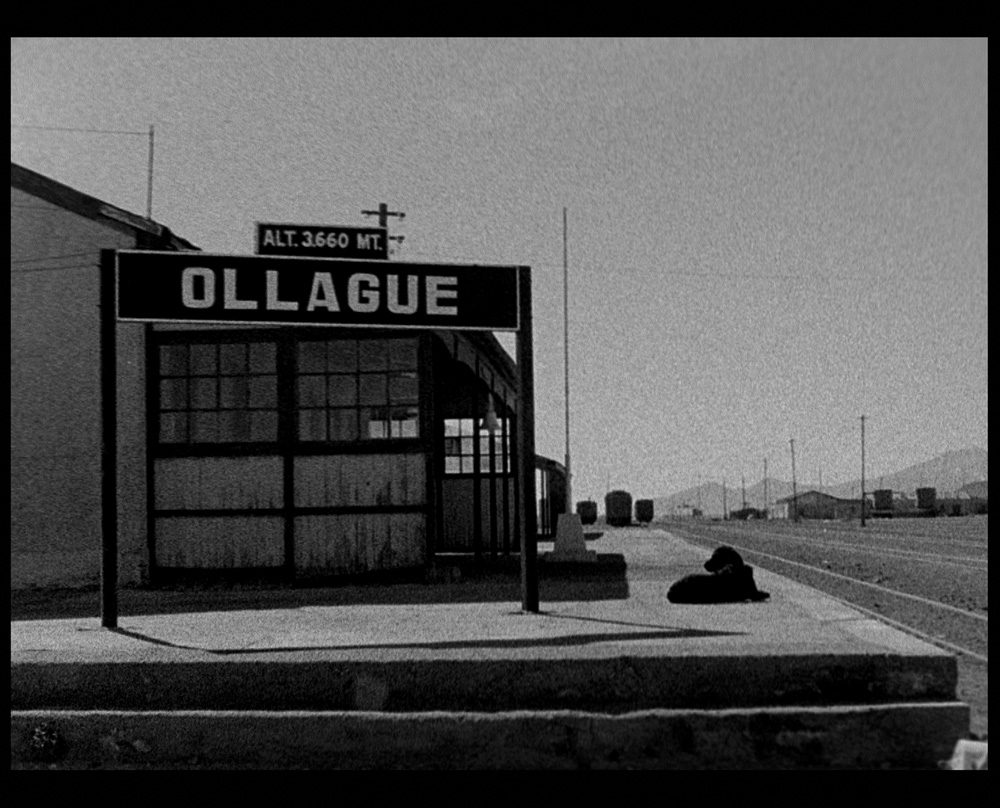
Vientos del Oeste/Vientos del Este is a film about the frontier as a junction of eastern and western winds, an imaginary line crossed by multiple traditions, information and modernity embodied in the transit of people and merchandise through the chilean-bolivian high plateau. As an answer to the authority`s denial to film some activities proper to a delicate border between two countries without diplomatic relations, I search an analogy in the wind and its effects in the landscape, which as the frontier, it is also unable to be seen but easily perceived.
I studied at the Escuela de Cine de Chile, after I completed my degree with materials of visual anthropology and cultural studies, I worked at a film lab before moving permanently to Spain. After completing the Master of Creative Documentary at the Pompeu Fabra University, I concentrated on developing my own film work linked to essay and experimental cinema. Simultaneously I also collaborate on projects by other filmmakers, I teach and write about Art and Cinema. In 2012 along with Amanda Villavieja, we created Atelier La Faz, a sound art and experimental cinema laboratory.