Catalogue > Faire une recherche
Résultats pour : Tout le catalogue
Clemens Von Wedemeyer, Maya SCHWEIZER
Rien du tout
Fiction | 35mm | couleur | 30:0 | France | 2006
Une réalisatrice veut tourner un film médiéval dans la banlieue de Paris. Pendant le casting, elle se concentre sur une seule personne. Le parking, devant le théâtre, sur lequel les jeunes acteurs attendent leur tour, devient vite le décor de la nouvelle scène. Pendant qu´à l´intérieur, l´aliénation entre la réalisatrice et son assistant, atteint son paroxysme, commence à l´extérieur, la danse des « superflus ».
Maya Schweizer, née le 10 janvier 1976 à Maisons-Alfort,vit et travaille à Berlin En juin 1998 Licence d´arts plastiques à l´ Université d´Aix-en-Provence. De 2000 à 2002 elle entre à la Hochschule für Grafik und Buchkunst (HGB), de Leipzig puis entre en équivalence à l´ Universität der Künste(UdK) de Berlin où elle est diplômée en janvier 2005.

Clemens Von Wedemeyer
Transformation Scenario
Vidéo | 4k | couleur | 20:0 | Allemagne | 2018
In the background of blockbuster films, algorithms have been employed to replace extras in post-production. Since years we are used to scenes in which masses of automated characters fill the screen, animated by algorithms that let them interact, similar to computer games and agents in computational sociology. Such artificial masses are stepping in the foreground. Simulating life began in the movies and computer games, but is influencing many fields today. In architecture, city planning and traffic navigation as well as in predictions of markets and trade, virtual scenarios influence society and change the way we live. Transformation Scenario (2018) by Clemens von Wedemeyer creates a speculative narration on the impact of emulated group behaviour in society. It follows an idea that could be inspired by Jean Luc Godards film Le Gai Savoir: “To find the solution to a problem, be it a chemical or political problem, one has to dissolve it: dissolve hydrogen, dissolve the parliament. Therefore we will now dissolve images and sounds.“ The film is part of a long term project by the artist making reference to the work Mass and Power (1960) by Elias Canetti, shifting the view on imageries of society, crowd control and potentials of masses today. This is especially relevant in times of populism, when numbers are used to construct power, and demonstrations and mass events form moments of resistance.
Clemens von Wedemeyer, born in 1974 in Göttingen, Germany, currently lives and works in Berlin and holds a professorship for media art at the Academy of Fine Arts Leipzig. The artist and filmmaker participated in group shows such as the 1st Moscow Biennale (2005), the 4th Berlin Biennale (2006), Skulptur Projekte Münster in 2007, the 16th Biennale of Sydney (2008), and dOCUMENTA (13) (2012). He had solo shows among others at MoMA PS1, New York, ARGOS Centre for Art and Media, Brussels, the Barbican Art Centre, London, Frankfurter Kunstverein, Museum of Contemporary Art, Chicago, Neuer Berliner Kunstverein and Hamburger Kunsthalle. His works can be found in major collections such as The Museum of Modern Art, New York; Museum Ludwig, Cologne; Tate Modern, London.

Nicole Vögele
nebel
Doc. expérimental | 16mm | couleur | 60:0 | Suisse, Allemagne | 2014
Une gare dans la brume; des rails qui se perdent dans la blancheur. Un homme qui attend. Entre les nappes de brouillard, un renard, le nez au vent. Mugissements, vacillements, puis le silence. Et toujours la brume. Des images de la nature se mêlent à des rencontres fugitives, des hommes qui habitent leurs propres mondes: un astronome, un musicien, un éleveur de chevaux. Tous sont animés d’une soif secrète de contacts, de liens et aspirent à un regard ouvert sur le monde. Loin des explications, le film restitue un grondement intérieur.
Born in 1983 in Gretzenbach (Switzerland). 2002 she got her first job at the Swiss Television. Over the last ten years she has been working as a journalist and reporter for several programs as «CASH-TV», «10vor10» and «Reporter». At the Swiss TV she started making documentaries. In 2010 Nicole Vögele enrolled at the Baden-Württemberg Film Academy, studying documentary filmmaking. Her first short documentary „Frau Loosli“ won the Postproduction Prize for the best swiss film at Visions du Réel 2013. Her latest film „nebel“ premiered at Berlinale 2014 and received an honorable mention by the dialogue en perspective jury. Nicole Vögele is currently working on her diploma project.

Viet Vu
Nguoi Kien
Fiction | hdv | couleur | 26:19 | Viet nam | 2018
The daily life of a homosexual man whose body is inhabited by ants.
Viet Vu (Ph?m Quang Trung) is a newcomer in moving image. He was introduced to images in a workshop at Hanoi Doclab by artist Jamie Maxtone-Graham in 2016. So far he has made one image collection of "Mom-me" (2017 - group exihibition at Hanoi Manzi Art Space) and a short film of "Ant-Man" (2018). Viet likes to approach the sublimity in vision of humanity through his camera.

Viet Vu
An Act Of Affection
Documentaire | mp4 | couleur | 16:0 | Viet nam, Portugal | 2020
En réalisant le portrait d'un homosexuel célibataire à Lisbonne, un cinéaste offre à son personnage un petit cadeau du fond du cœur. Ce film ne se contente pas de capturer de belles interactions entre deux individus par le biais d’une caméra à la première personne, c'est aussi un film sur l'acte de filmer.
Viet Vu (Quang Trung Pham) a été critique de cinéma avant de percer dans la réalisation avec son premier film court, "Ant-Man" [2018]. Ce film lui a valu le Purin Award for The Most Promising Filmmaker from South East Asia. Depuis, il a réalisé une série de courts métrages portant sur la mémoire, le temps et la décolonisation interne. Ses œuvres ont été présentées dans divers festivals de cinéma, notamment à Locarno (Suisse), à Rotterdam (Pays-Bas), à Tampere (Finlande), et à Singapour (Chine). Actuellement, Viet termine DOC NOMADS, un programme de Master en réalisation de films documentaires dans trois villes européennes: Lisbonne (Portugal), Budapest (Hongrie) et Bruxelles (Belgique).
Matthijs Vuijk
La Soledad de Montaña
Doc. expérimental | mp4 | couleur | 12:53 | Pays-Bas, Colombie | 2021
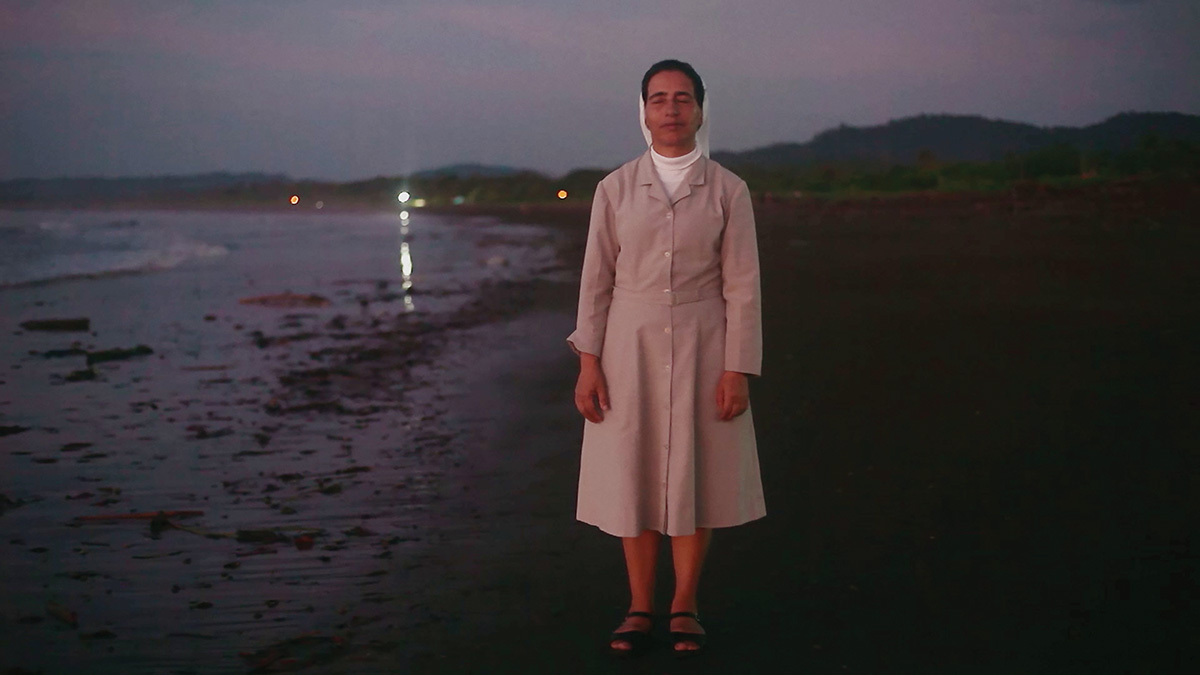
In a small village on the Pacific coast of Colombia, there is a single mountain surrounded by the ocean. On this mountain, a very special bird species settled a long time ago named Soledad de Montaña, directly translated as ‘the solitary mountain’. These birds carry a magical story and it's said that it can be heard during the stormy winds once in a while..
Matthijs Vuijk (1995, NL) is a director, artist and cinematographer with a diverse background in photography, film, and virtual reality. After studying photography at the Royal Academy of the Arts in Ghent, Belgium, he pursued a Bachelor Honours in Film & Television at the University of the Witwatersrand (WITS) in Johannesburg, South Africa. Matthijs' collaborative graduation film, "Sikelela Tapes" (2020), was selected for the prestigious International Documentary Festival Amsterdam (IDFA). His work revolves around creating captivating worlds through a powerful audiovisual atmosphere, exploring fragmented memory, space, and the emotional impact of societal shifts. Matthijs' practice has been recognized with a 'Starting Artist' stipend from the Dutch Mondriaan Fonds and gained Netherlands Film Fund support for his recent virtual reality project, "With the Whole World Crumbling, We Pick this Time to Fall in Love". Currently, he is actively engaged in various cultural initiatives in Johannesburg and Amsterdam.

Matthijs Vuijk, Straub Sammie
What do I see when I see me
Doc. expérimental | mp4 | couleur | 3:23 | Pays-Bas, Afrique du sud | 2020
Une jeune femme interagit avec son propre cyborg. Libéré de sa chair et de ses pensées dans le cyberespace, son corps numérique prolonge les mouvements et les expressions de son corps biologique. De cette manière, la jeune femme échappe aux conventions matérielles liées au corps féminin.
Sammie Straub est née en 1994, et a grandi à Amsterdam (Pays-Bas). Elle est artiste multidisciplinaire, et s'intéresse à la culture visuelle, à la philosophie et à la musique. Dans ses œuvres visuelles, ses performances et ses installations, elle recherche l'esthétique (de la mode) au milieu du chaos politique et des distractions de la société. Ses œuvres contiennent des éléments de critique sociale, de stylisme, de direction artistique, de musique et de design graphique. Dans ses œuvres musicales, elle a une préférence pour la musique électronique: breaks, wave, EBM et techno, dépassant les frontières des genres musicaux tout comme ses origines transcendent les frontières et les nations définies par la colonisation. Sammie Straub étudie actuellement la photographie à l'Académie Willem de Kooning de Rotterdam (Pays-Bas) et la philosophie à l'Université d'Amsterdam (Pays-Bas). Matthijs Vuijk est né en 1995 aux Pays-Bas. Il a étudié la photographie à la Royal Academy of the Arts, Gand (Belgique). Après avoir fait un stage auprès de la réalisatrice néerlandaise Lara Verheijden, Matthijs a déménagé à Johannesburg (Afrique du Sud). Il y a obtenu un Honours Degree en cinéma et télévision à la WITS - University of the Witwatersrand, Johannesburg (Afrique du Sud), et a participé à un projet de réalité virtuelle en collaboration avec la Filmuniversität Babelsberg, Berlin (Allemagne) et la WITS - University of the Witwatersrand, Johannesburg (Afrique du Sud). Matthijs Vuijk a fait le montage du nouveau film de Lara Verheijden, "Coco" (2020), a reçu un financement régional de la province de Zélande (Pays-Bas) pour son nouveau documentaire, et participe actuellement à différentes initiatives culturelles à Johannesburg (Afrique du Sud) et à Amsterdam (Pays-Bas).

Matthijs Vuijk
With the Whole World Crumbling, We Pick This Time to Fall In Love
VR expérimental | 0 | couleur | 7:0 | Pays-Bas, Afrique du sud | 2021
This immersive experience includes three-dimensional scans combined with voice-memos, images, videos and WhatsApp messages which together form an assemblage of distant yet intimate encounters with friends and subjects. The viewer is able to walk through a personal and emotional digital landscape, creating their own non-linear narrative between dream and reality, a liminal space of longing.
Matthijs Vuijk (1995, NL) is an independent new media artist and filmmaker who has been studying photography at the Royal Academy of the Arts in Ghent, Belgium, from which he graduated with distinction. After doing an internship with Dutch filmmaker Lara Verheijden, Matthijs moved to Johannesburg, South Africa. There Matthijs finished a Bachelor Honours in Film & Television at the University of the Witwatersrand (WITS) with distinction and participated in a collaborative VR project between the Filmuniversität Babelsberg and WITS. Matthijs’ background in visual art, film and VR encompass his passion, which lies in the creation of captivating worlds through a strong visual atmosphere. He is formally and technically interested in different mediums while the important narrative factors within his work have a strong emphasis on emotions, intimacy and connection. His recent collaborative film What do I see when I see me with Sammie Straub has been selected at the Rencontres Internationales Paris/Berlin 2021, while Matthijs’ newest immersive experience With the Whole World Crumbling, We Pick this Time to Fall in Love participates in the 2021 edition of the Fak’ugesi Digital Innovation Festival in Johannesburg, South Africa. His collaborative graduation film Sikelela Tapes was selected for the ‘Frontlight’ competition of the renowned International Documentary Festival Amsterdam (IDFA) and had its world premier at the Zanzibar International Film Festival (ZIFF) in Tanzania. Matthijs is currently involved in different cultural initiatives in both Johannesburg and Amsterdam.
Nicolas Wackerbarth
Halbe Stunden
Fiction | 35mm | couleur | 20:0 | Allemagne | 2007
Mélanie vit au jour le jour, un samedi elle se (re)trouve toute seule dans sa maison: sans obligations dans le nouveau vide de sa vie.
Emmanuelle Waeckerle, Jimmy ROBERT
Newsflash
Art vidéo | dv | couleur | 8:4 | France, Royaume-Uni | 2004
Dans une série de tableaux comiques, nous répondons avec pathos et humour à la manipulation des médias concernant la guerre et le terrorisme ? tout en essayant de faire un signe personnel de protestation. Derrière notre satire apparemment désespérée et une attitude auto-dérisoire se cache une critique de la violence et de la démagogie. La présentation était faite au départ pour les Rencontes Internationales de Berlin en 2003, @ La gaîté Lyrique à Paris en 2003, comme une réponse personnelle à la guerre "contre l?Irak?" qui avait tout juste commencé. L??uvre tombe à point nommé aujourd?hui comme ce fut le cas en 2003.
Les pratiques du travail interdisciplinaire d?Emmanuelle Wæclerle évoluent entre le langage sonore et le corps, explorant leurs intersections fonctionnelles. L?idée de fluidité et de flux dans l?identité et l?espace fut centrale à la modernité et a toujours trouvé son chemin dans les pratiques interdisciplinaires de l?art ; peut-être à cause de sa propre expérience d?une trame culturelle mélangée (du Maroc, de France et d?Angleterre). Mais aussi comme dans les travaux de Henri Michaux, les mots "l'un des meilleurs remèdes contre sa propre vulnérabilité, dissatisfaction et sens fondamental de l?iniquité dans le monde". Elle explore en ce moment les nouvelles technologies de l?interactivité en relation avec l?utilisation, la vision et l?entente de la voix avec les possibilités vocales et la communication non-verbale. Sa recherche est supportée par la London Art and Survey Institute of Art and Design où elle est une chargée de cours vétéran en Communication visuelle. Jimmy Robert est en ce moment en train de finir un programme local de deux années de doctorat à la Rijks Academie d?Amsterdam. Son travail gravite dans l?espace entre la matérialité et la représentation, évoluant de la photographie vers le film et la performance autant que vers l?écriture. Il tente de mettre en marche la porosité des différents supports identificatoires comme la littérature et le cinéma, pour atteindre le derrière de la page ou de l?écran en ne faisant plus qu'un avec l?image ou incarnant le texte.

Beny Wagner
Coal Mine in the Canary
Doc. expérimental | mp4 | couleur | 18:34 | Allemagne, Royaume-Uni | 2020
Film-essai raconté à travers le corps, "Coal Mine in the Canary" explore le travail de John Scott Haldane, physiologiste de la fin du XIXe siècle, dont les expériences sur la respiration dans des conditions atmosphériques extrêmes l'ont amené à placer des canaris dans des mines de charbon, pour être les premiers indicateurs de la toxicité de l'air. Le film explore cette technique historique comme une forme de contrôle de l'environnement, qui façonnerait finalement les possibilités d'échange entre les organismes et leur environnement, déterminé comme une série de variables régulées. Avec le canari, Haldane a développé un nouveau paradigme: modifier un organisme représente une forme de contrôle environnemental car il n'y a pas de frontière entre l'organisme et l'environnement.
Beny Wagner est artiste, réalisateur, chercheur et écrivain. Travaillant les images en mouvement, le texte, l'installation et les conférences, il construit des récits non linéaires situés à l’intérieur des limites toujours changeantes du corps humain. Il a présenté son travail dans des festivals, des expositions et des conférences à l’international, notamment à la Berlinale, Berlin (Allemagne); au Festival international du film de Rotterdam (Pays-Bas); au Eye Film Museum, Amsterdam (Pays-Bas); à la Haus der Kulturen der Welt, Berlin (Allemagne); à la Media Art Biennale WRO, Wroclaw (Pologne); à la 5e et à la 6e Moscow Biennale for Young Art, Moscou (Russie); au Moscow International Experimental Film Festival, Moscou (Russie); à Plato Ostrava, Ostrava (République tchèque); à la Künstlerhaus Bremen, Brêmes (Allemagne); à la Kunsthalle Amsterdam (Pays-Bas); à Sonic Acts, Amsterdam (Pays-Bas); au Impakt Festival, Utrecht (Pays-Bas); à Berlin Atonal, Berlin (Allemagne); à la Biennale de Venise (Italie); et à White Columns, New York (USA). Son travail a été présenté dans Artforum, Spike Magazine Quarterly, Frieze Magazine, Kaleidoscope Press, Flash Art et Die Zeit. Ses écrits ont notamment été publiés dans Valiz et Sonic Acts Press.
Janaina Wagner
Quebrante
Doc. expérimental | 4k | couleur et n&b | 23:0 | Brésil | 2024
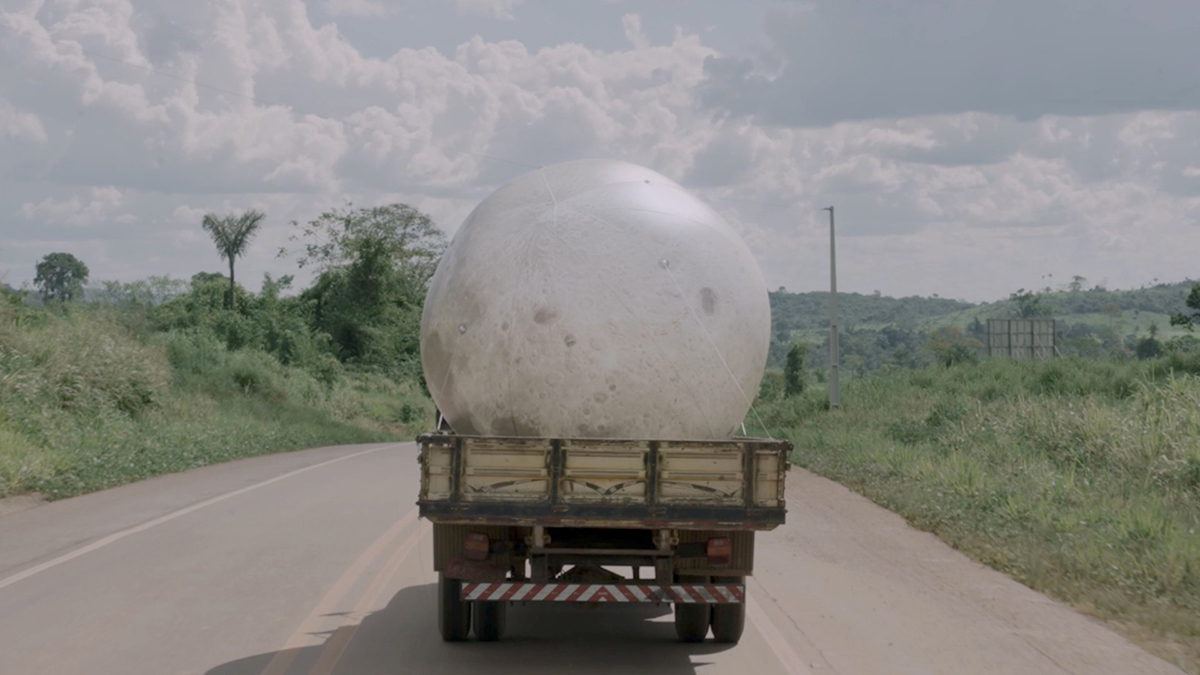
A spell breaking, QUEBRANTE traverses the caves, ruins and phantasmagorias of Transamazon BR230 Highway, portraying its stones and its ghosts. A conversation between the moon and the stones, QUEBRANTE is freely inspired in Robert's Smithson project THE TRULY UNDERGROUND CINEMA (1971) and in the film THE VERY EYE OF THE NIGHT (1958) by Maya Deren. Set in the tiny town of Rurópolis (Pará) - the very first one to be build in the Highway to serve as a base for the workers that were building it - QUEBRANTE follows Ms. Erismar, known in the region as "The Cave Woman". A retired elementary school teacher, Ms. Erismar was the one responsible for the discovery of the region's caves: she would enter the dark unknown holes till their ends, with only a candle in her hands and a lighter tied to her pants - in case the flame would fade out. A huge nationalistic propaganda part of the progress and development project of Brazil, Transamazônica Highway was implemented during the civic-military dictatorship that took place at the moment – and it is till nowadays a warm scar of the wreckage dream of the history of the country.
Janaina Wagner (1989) develops her research in film, drawing and installations. Her work aims to present a critical understanding of the ways in which humans impose systems of order and control upon their surroundings. Currently a Phd student at Le Fresnoy-Studio National des Arts Contemporains (FR), Janaina has participated in several residencies, such as Gasworks (UK); VISIO - European Program on Artists’ Moving Images (IT); FID Campus (FR), Bolsa Pampulha (BR). Her work is part of important collections, such as Instituto Inhotim (BR), Galeria Municipal do Porto (PT) and Coleção Moraes Barbosa (BR). Among the main exhibitions, stand out the individuals CINEMA CAVERNA (BR) and With burning love - Villa Belleville (FR); and the group 22a Bienal Videobrasil (BR), Ensaio de Tração - Pinacoteca do Estado de São Paulo (BR); Garganta - CIAJG - José de Guimarães International Arts Center (PT); Aliens are temporary - Kunstraum Kreuzberg/Bethanien (DE). Janaina has been participating in several film festivals, such as Berlinale (DE) and Tiradentes Film Festival (BR). Janaina Wagner is currently developing her first feature film, the experimental documentary A Mala da Noite. Janaina lives and works between Paris and São Paulo.
Janaina Wagner
Quebrante
Doc. expérimental | 16mm | couleur | 23:0 | Brésil | 2024
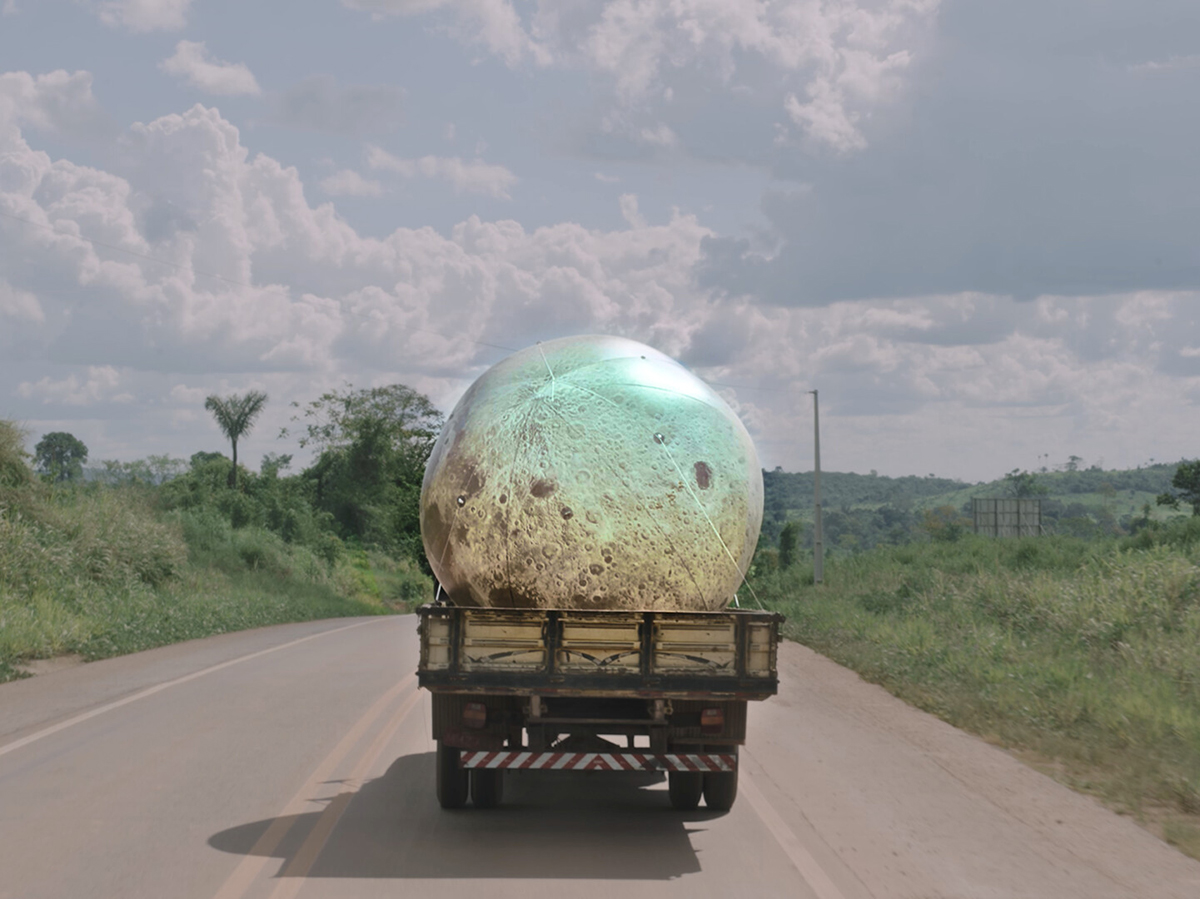
A spell breaking, QUEBRANTE traverses the caves, ruins and phantasmagorias of Transamazon BR230 Highway, portraying its stones and its ghosts. QUEBRANTE follows Ms. Erismar, known in the region as "The Cave Woman". A huge nationalistic propaganda part of the progress and development project of Brazil, Transamazônica Highway was implemented during the civic-military dictatorship that took place at the moment – and it is till nowadays a warm scar of the wreckage dream of the history of the country. A conversation between the moon and the stones, QUEBRANTE is freely inspired in Robert's Smithson project THE TRULY UNDERGROUND CINEMA (1971) and in the film THE VERY EYE OF THE NIGHT (1958) by Maya Deren.
Janaina Wagner (1989) develops her research in film, drawing and installations. Her work aims to present a critical understanding of the ways in which humans impose systems of order and control upon their surroundings. Currently a Phd student at Le Fresnoy-Studio National des Arts Contemporains (FR), Janaina has participated in several residencies, such as Gasworks (UK); VISIO - European Program on Artists’ Moving Images (IT); FID Campus (FR), Bolsa Pampulha (BR). Her work is part of important collections, such as Instituto Inhotim (BR), Galeria Municipal do Porto (PT) and Coleção Moraes Barbosa (BR). Among the main exhibitions, stand out the individuals CINEMA CAVERNA (BR) and With burning love - Villa Belleville (FR); and the group 22a Bienal Videobrasil (BR), Ensaio de Tração - Pinacoteca do Estado de São Paulo (BR); Garganta - CIAJG - José de Guimarães International Arts Center (PT); Aliens are temporary - Kunstraum Kreuzberg/Bethanien (DE). Janaina has been participating in several film festivals, such as Berlinale (DE) and Tiradentes Film Festival (BR). Janaina Wagner is currently developing her first feature film, the experimental documentary A Mala da Noite. ?Janaina lives and works between Paris and São Paulo.

Janaina Wagner
Cães Marinheiros
Vidéo | mov | couleur | 7:0 | Brésil | 2020
Cães Marinheiros (Sailors Dogs) was filmed in the ruins of the small town of Velho Aira?o, in the Brazilian Amazon, at the confluence of Rio Negro and Rio Jaú. Founded by Portuguese missionaries in 1694, Airão concentrated the entire rubber production in the region. After a rapid and unsustainable economic growth, followed by the decline of the Rubber Cycle, the city went bankrupt. A politician at the time said that the population was being eaten by ants. Ruined, Airão was abandoned. Sailors Dogs juxtaposes the homonymous tale by Portuguese poet Herberto Helder with the dismantled landscapes of the village. In a perspectivist inversion, textual and visual images assemble and disassemble within a forest eaten away by men. By reflecting on the precarity and fragilities of human nature, and the limits of our relationship with the environment, the film questions our place of dominance in the universe that we inhabit.
Franco-Brazilian artist JANAINA WAGNER (1989) works with cinema, photography, scenography, drawing, video and installations, researching the relations of limit, control and contention that human-kind establishes with the world. Currently on a PhD at Le Fresnoy-Studio National des Arts Contemporains (FR), Wagner participated in several artistic residencies, such as Gasworks, VISIO, FID Campus - Festival International de Cinéma de Marseille, Bolsa Pampulha, Festival Mondes Possibles - Théâtre Nanterre-Amandiers, Casa Tomada, Anarcademia W139 Amsterdam and NES Skagaströnd. Among the main exhibitions and film festivals, stands out Eco-spectrality: Residual Fabulations - Glasgow Film Festival, Thinking Beyond: Images for a post pandemic world (IT), Aliens are Temporary - Kunstraum Bethanien (DE), A natural history of Ruins – Pivô (BR), Mostra de Cinema de Tiradentes (BR), Casa Carioca – MAR Museu de Arte do Rio de Janeiro (BR), Ensaio de Tração - Pinacoteca do Estado de São Paulo (BR), Simultan Festival XV – Unseen (RO), 10 ª Semana de Cinema do Rio de Janeiro (BR), Bestiário - Centro Cultural São Paulo - CCSP (BR). Graduated both in Fine Arts and in Journalism (BR), her references derives from the procedures through which human-kind registers and articulates its progress and legacy – a constellation of tales, facts and images. Janaina lives and works between Paris and São Paulo.

Beny Wagner
Outside
Film expérimental | mp4 | couleur | 14:0 | Allemagne | 2017
`Outside` traverses two cyclical metabolic paths in the attempt to forge a reciprocal relationship between the two. Moving from the metabolism of the human body to the metabolism of waste infrastructures, the film creates an inverted exchange wherein the concealment of waste inside the human body turns to the concealment of the human body inside waste. The boundary that divides waste from production would seem to contain an underlying set of moral implications. The film considers these as situated somewhere between law enforcement and class structure as defined through labor positions.
Wagner has exhibited his work and screened films world wide: International Film Festival Rotterdam, Media Art Biennale WRO, Movimenta Biennale (Nice), Rongwrong (Amsterdam), Haus der Kulturen der Welt (Berlin), Art Athina (Athens), Impakt Festival (Utrecht), 5th Moscow Biennale for Young Art, Eye Film Museum (Amsterdam), Venice Biennale, Plato (Ostrava), Import Projects (Berlin), Future Gallery (Berlin), Center (Berlin) among others. His work has been featured in Artforum, Spike Magazine Quarterly, Frieze Magazine, Kaleidoscope Press, and Die Zeit. He has published texts with Valiz, BLOCK Magazin and 60 pages. Wagner graduated with honors from Bard College, New York in 2008. He was a researcher at Jan van Eyck Academy, The Netherlands in 2015-6. He is currently a lecturer at Gerrit Rietveld Academy, Amsterdam, and has been a guest teacher at several other academies.
Nicolas Wagnieres, benoit peverelli
hotel jugoslavija 1.0
Documentaire | 16mm | couleur | 12:50 | Suisse, Serbia | 2006
Ce film retrace l`histoire de l`hôtel JUGOSLAVIJA, à Belgrade, témoin d`une époque passée et des multiples changements historiques qu`a connu le pays depuis lors. A travers les témoignages en voix off d`un ancien directeur et d`anciens employés, l`histoire du bâtiment nous est racontée et renaît en partie tandis que la caméra balaie par de longs travellings et panoramiques l`architecture, rigoureuse des lieux, jusqu`à nous ramener dans un présent en chantier.
Né à l?automne 1971 à Lausanne, Nicolas Wagnières se lance dans un apprentissage de dessinateur en bâtiments suite à un échec scolaire, Il a alors 16 ans. Son certificat en poche, il s?essaie au métier de manière épisodique, il frôle le concours d?admission à l?école d?art de Lausanne, puis au gré de ses amitiés rejoint les fondateurs de TRACKS records, magasin de disques spécialisés, nous sommes alors au printemps 1992. Une carrière de disc jockey et de production musicale se développe ainsi en parallèle, et lorsque le marché se met à rendre le travail des indépendants plis délicat, les magasins sont cédés à d?autres, nous sommes en 1999. Il se présente ensuite au concours de l?Ecole supérieure d?audiovisuel de Genève, pour y étudier quatre ans le cursus de cinéma. Il obtient son diplôme en 2005 avec un court-métrage tourné à Belgrade : Tranzit. Il suit ensuite le cours postgrade de l?école supérieure des beaux-arts de Genève, et obtient un poste d?assistant dans le département de cinéma. Il réalise actuellement un film sur la transformation d?un hôtel à belgrade en Serbie, et vient de terminer deux films de danse avec le chorégraphe genevois Foofwa d?Imobilité.

Gwenola Wagon
Chroniques du soleil noir
Fiction expérimentale | hdv | couleur et n&b | 17:0 | France | 2023
Dans un avenir dystopique, les humains ont dû masquer le soleil pour rester en vie sur Terre. La sècheresse est extrême et la planète se transforme peu à peu en un brûlant désert où les survivants, installés dans les caves des grands observatoires, vivent dans une perpétuelle éclipse. Pour combler l’image d’un soleil qu’ils ne peuvent plus voir et dont ils n’ont pas de souvenir, ils chargent un logiciel d’Intelligence Artificielle de le reconstituer. À cette fin, l’IA choisit l’image mentale d’une jeune femme. En s’inspirant sur la structure en photo-roman avec voix off du film La Jetée (1962) de Chris Marker, Chroniques du soleil noir propose un récit de science-fiction où un algorithme est missionné pour recréer le passé grâce à une image d’enfance de la protagoniste, comme dans le film de Marker. En recyclant des photographies de l’album personnel de l’artiste, des images publicitaires et des clichés scientifiques de la collection de l’Observatoire de Meudon, retraités par une IA, le film porte sur notre rapport avec la technologie d’une manière inquiétante et ironique. La vidéo se compose comme une fable contemporaine qui nous donne à réfléchir sur la cohabitation de temps et la non-durabilité de notre manière d’habiter cette planète. Le film est réalise avec le soutien du Hangar Y, en partenariat avec l’Observatoire de Paris-PSL
Gwenola Wagon est artiste et chercheuse. Elle enseigne à l’École des Arts de la Sorbonne à l’Université Paris 1. À travers des installations, des films et des livres, elle imagine des récits alternatifs et paradoxaux pour penser le monde numérique contemporain. Elle arpente le globe virtuel avec ses premiers films Globodrome, enquête dans l’espace de l’hyperinformation et des infrastructures d’Internet en collaboration avec l’artiste Stéphane Degoutin avec qui elle co-réalise World Brain, le livre Psychanalyse de l’aéroport international. Après Bienvenue à Erewhon, Virusland et Chroniques du soleil noir fables post-cybernétique avec Pierre Cassou-Noguès, elle publie le livre Planète B un essai qui mêle enquête et fiction afin d’appréhender un monstre en pleine expansion.

Hamid Waheed
Etterkrigstid
Fiction | 4k | couleur | 30:0 | Norvège | 2018
A city dweller moves through various routines and encounters throughout a single day. The gradually revealed circumstances point toward a crisis starting to unfold.
Hamid Waheed is a filmmaker and artist currently based in Oslo, Norway. He works with the film and video, as well as utilizing writing and performance. The work often emphasizes characterization and queerness as methods of investigating social/physical structures, with a particular interest in history and archived data. Film projects are initiated through ’Verbal Film’, often in collaboration with other parties. Aside from this, a practice in curating video works is ongoing through the collective ?HÆRK’. He has a BFA in Moving Images from Nordland College of Art and Film.

Hamid Waheed
Areoles
Vidéo | 4k | couleur | 13:46 | Norvège | 2021
Queer characters talk about their lives and making sense of their worlds.
Hamid Waheed is a filmmaker and visual artist utilizing moving images, as well as writing and performing. His work often emphasizes characterization, dramaturgy and queer desires as methods of investigating psycho-social structures, ruminating on time, intimacies and violence. He is also interested in histories and the materialities of archived data. Works have been presented a number of places, including the Museum of Cultural History, Fotogalleriet and Kunstnernes Hus Kino (Oslo), METEOR International Theatre Festival (Bergen), Open Out Festival (Tromsø), Nikolaj Kunsthal (Copenhagen) and Rencontres Internationales Paris. He’s also part of the curatorial collective ’HÆRK’ and has a BFA in Moving Images from Nordland College of Art and Film. Currently, he’s pursuing an MFA at the Oslo National Academy of the Arts.

Kay Walkowiak
Minimal Vandalism
Video | hdv | couleur | 3:49 | Autriche | 2013
Touching art objects in an exhibition space is usually not allowed. Not so in Kay Walkowiak´s Minimal Vandalism, where this prohibition is practically stomped on. The setting, the Generali Foundation in Vienna is the epitome of a modernist exhibition building, which—as neutral White Cube-like shell—is meant to intervene as little as possible in the act of viewing art.. Well, other than the tube-like enfilade with the massive concrete wall running down the middle along which a parcours of minimalist sculptures is set up in Minimal Vandalism. And it truly is a parcours, as after a brief exposition, in which the jerky camera movements already lead us to suspect that something’s up, an entirely unexpected performance unfolds. In one of the few calm takes, a surveillance camera soon becomes visible and the show begins: a skateboarder (Kilian Martin) coming from the depths of the room makes his approach on three boards piled on top of one another, to subject the sculptures to a test of endurance, or skill. The “performer” relentlessly includes the objects in his acrobatics, regardless of the fact that they are art, gliding up onto them, sliding across their surfaces, and daringly jumping over them.
*1980 in Salzburg, lives and works in Vienna. Several Grants and awards; e.g. Artist in Residence Grant Banff(2014), Beijing(2013), Varansi (2013), Theodor Körner Preis (2010), Otto Prutscher award (2008), Fred Adlmüller scholarship (2006). He studied philosophy and psychology at the University of Vienna, photography and video art at the Academy of fine Arts, Vienna and art & communication and sculture & multimedia art at the University of Applied Arts, Vienna.
Susanna Wallin
Lizzy
Doc. expérimental | 4k | couleur | 15:0 | Suède, USA | 2024
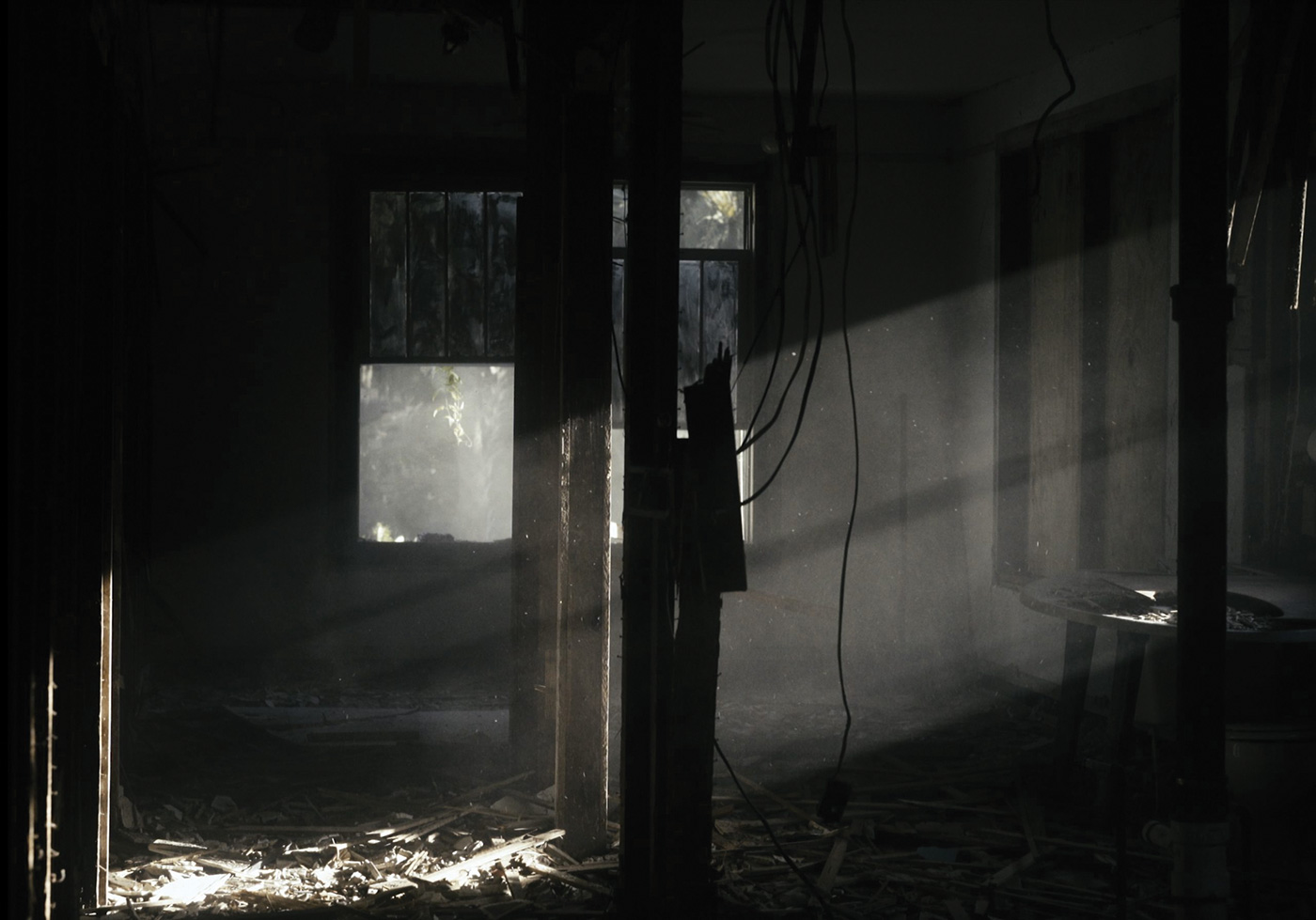
Lizzy est le fruit des jours passés à la suite de la mort d’une voisine, disparue dans la maison où elle avait vécu toute sa vie, au bord de la rivière Hillsborough à Tampa, en Floride, et qui a laissé derrière elle un orgue électrique adressé à la cinéaste, sans aucune note. Le recevoir fut comme une énigme sauvage. Comment une histoire peut-elle se poursuivre entre les mains d’une autre ? Quelles forces organisent le récit ? En tissant l’intérieur avec l’extérieur, la poussière avec le marécage, la célébration avec la critique, le film traverse des notions binaires telles que soi–monde, vérité–fiction, témoigner–imaginer, et nature–expérience, entre autres.
Susanna Wallin est une artiste et cinéaste engagée dans des questions liées à ce que nous faisons de notre temps, de nos corps et des outils dont nous disposons pour vivre une vie. Elle explore ses sujets à travers des contextes, des modalités et des temporalités diverses, s’immergeant souvent longuement dans un lieu particulier. Attentive à ce qui émerge dans l’hésitation, dans le « faire ensemble », par l’expérimentation et l’ouverture, elle prête une oreille à l’indicible, avec la fiction comme pratique. Née et élevée en Suède, elle a étudié le cinéma et la pratique/la théorie artistiques à Goldsmiths College et à l’University of the Arts London, au Royaume-Uni. Elle a reçu de nombreux prix, notamment The Flamin London Artist Film and Video Award, New Approaches (Film London, UK), Pure Fiction (Suède), ainsi que des commandes du UK Film Council, de Channel 4, de la BBC, de l’Arts Council England, d’Arte France/Allemagne, de SVT (Suède) et du BFI au Royaume-Uni. Ses films primés circulent entre salles de cinéma et espaces d’exposition, et ont été montrés notamment au MOCA LA, à The American Cinematheque, au Barbican, à la Whitechapel Gallery, dans le métro londonien, à l’ICA et au British Film Institute. Ces dernières années, Wallin développe plusieurs projets de longs métrages, dont l’un, tourné en Floride, est actuellement en postproduction. Elle fait partie de la Research School de l’University of the Arts London, où elle prépare un doctorat par la pratique, et elle est professeure assistante en cinéma et vidéo à l’University of South Florida, aux États-Unis. Elle vit et travaille entre Tampa et Londres.