Catalogue > Liste par artiste
Parcourez la liste complète des artistes présentés dans le cadre des Rencontres Internationales depuis 2004. Utilisez le filtre alphabétique pour affiner vos recherches.
Arfang Sarr
Catalogue : 2009L'Infini chez soi | Documentaire | dv | couleur | 52:0 | Sénégal | 2008
Arfang Sarr
L'Infini chez soi
Documentaire | dv | couleur | 52:0 | Sénégal | 2008
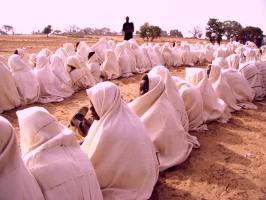
L?INFINI CHEZ SOI Synopsis Chez les sérères, la deuxième ethnie la plus nombreuse au Sénégal, la vie de l?individu est rythmée par des évènements importants qui lui confèrent son statut au sein de la communauté. L?initiation appelée « Ndout » en sérère est un moyen d?éducation primordial chez les hommes et marque le passage à l?age adulte pour les garçons. Elle a lieu tous les dix ans et se fait dans la brousse. Chez les femmes, cette même cérémonie se fait à l?occasion du mariage et à la fin,la jeune mariée,accompagnée des jeunes femmes initiées de son quartier,ramassent le linge des plus vieilles personnes du village, qu?elles vont laver dans un marigot, loin de tous regard. Ce rituel se fait à travers une longue procession accompagnée de chants initiatiques. Cette initiation qui constitue un moment de prières pour la fécondité et l?abondance des prochaines récoltes est également un événement particulier dans la vie de la communauté où de nombreux chants épiques et poétiques provoquent la fierté, l?attachement au terroir mais également le sentiment d?appartenance à la communauté. L?infini chez est un documentaire qui tente d?analyser la problématique identitaire dans la société sérère islamisée et de plus en plus connectée aux interfaces culturelles ouvertes par la mondialisation. Le film a été entièrement tourné dans le petit village insulaire de Simal, qui est un maillon essentiel de ce chapelet d?îles piégées entre tans (terres salées) et bolongs (bras de mer) dans ce que le poète Léopold Sédar Senghor appelle le Royaume d?enfance.
NOTE BIOGRAPHIQUE DE L?AUTEUR Arfang Sarr-Crao est l?un des artistes montant de la scène dakaroise des arts plastiques. Diplômé en sciences (math, physique chimie et sciences naturelles), il tourne le dos à la fac de science de l?université Cheikh Anta Diop de Dakar pour s?adonner à la peinture et à la création littéraire (poésie et nouvelles). En tant que plasticien autodidacte, il a participé à plusieurs biennales Dak?Art et à de nombreuses expositions au Sénégal et à l?étranger (France, Belgique, Canada, Suède Espagne etc.). Arfang est également lauréat du Grand Prix Birago Diop de poésie en 2004 avec son premier recueil Litanie pour les cheveux de Fadima publié aux Editions Feu de Brousse. Artiste polyvalent, porte étendard de la nouvelle génération des créateurs sénégalais férus de nouvelles technologies, Arfang a opté très tôt pour un mélange des genres et des outils de création à travers une démarche expérimentale qui associe arts plastiques, cinéma, photographie et littérature. Il est l?auteur de plusieurs vidéo installation et de documentaires parmi lesquels : Art Manifest ou le rêve de la jeune peinture sénégalaise, Dakar une syntaxe urbaine et l?Infini chez soi entre autres. Il prépare le tournage de sa première fiction Histoires de Sowanna, avec le FACMAS (Fonds d?Appui à la production de Courts Métrages en Afrique)
Varun Sasindran
Catalogue : 2020Omarska | Documentaire | hdv | couleur | 19:0 | Inde, France | 2018
Varun Sasindran
Omarska
Documentaire | hdv | couleur | 19:0 | Inde, France | 2018
In this film, the filmmaker enters into conversation with the survivors of the Omarska concentration camp in Prijedor (Bosnia-Herzegovina). The film begins with the recollection of their memories and eventually touches on the present situation of the former camp. Former site of the concentration camp Omarska is now a factory owned by Arcelor Mittal Company. The company’s manufacturing process now takes place where the civilians used to be detained. Despite of several requests from survivors, there is no memorial for the killed victims at Omarska. Once in a year, the premises are open to public for the commemoration. Film intents to construct a memorial in 3D animation from the archive images, videos, recent photographs -guided by the testimonies of the survivors of the camp.
Thirty two years old (2nd April 1987), born and raised in Kerala, India. He graduated in Electronics and Communication engineering, during the year of 2008. Post study, worked as a software engineer for four years. In 2012, he decided to quit the job and decided to study films. He mainly got inspired from the film he has seen in the international film festivals he attended during the course of this time. He pursued his further studies in Visual media Studies from Calicut University. And then he joined for M.A at Sarajevo Film Academy followed by the research from Le Fresnoy, where he received a full scholarship from Institut Francais. His Film “Omarska”, has already won Honorable jury mention at Berlinale, Jury special mention at Kyiv international short film festival, Best Director award at Bucharest international experimental film festival and has been also presented at many other festivals all over the world.
Martín Sastre
Catalogue : 2007Montevideo : the dark side of the pop | Fiction expérimentale | dv | couleur et n&b | 15:0 | Uruguay, Espagne | 2006
Martín Sastre
Montevideo : the dark side of the pop
Fiction expérimentale | dv | couleur et n&b | 15:0 | Uruguay, Espagne | 2006
Martin Sastre was born in 1976 in Montevideo, Uruguay. He now lives and works in Madrid, Spain.
Martin Sastre
Catalogue : 2009Diana, The Rose Conspiracy | Fiction expérimentale | dv | couleur | 20:0 | Uruguay | 2005
Martin Sastre
Diana, The Rose Conspiracy
Fiction expérimentale | dv | couleur | 20:0 | Uruguay | 2005
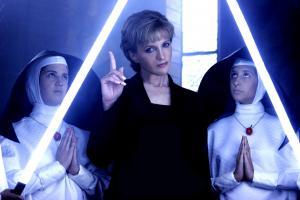
« Diana, The Rose Conspiracy » se déroule autour de l'idée que la princesse Diana n?est pas morte dans un accident de voiture à Paris mais qu'elle vit maintenant une nouvelle vie heureuse et secrète, dans un quartier pauvre de Montevideo, en Uruguay.
Né à Montevideo (Uruguay) en 1976, Martin Sastre a été exposé internationalement depuis 2002 et a participé aux biennales de Busan (Corée) en 2008, d?Usuahia (Argentine), de Pontevedra (Espagne) en 2007, de Genève (Suisse) en 2006, de Venise (2005), de Sao Paulo (Brésil) en 2004, de La Havane (Cuba) en 2003, de Prague (République tchèque) en 2002, ainsi qu?à la Biennale du Mercosur en 2001. Lui ont été décernés les prix suivants : le Prix ARCO de la Foire Internationale d?Art de Madrid en 2004 et le prix Faena en 2008, attribué par un jury formé de Jessica Morgan (Tate Modern), Okwui Enwezor (San Francisco Institute of Art) et Carlos Basualdo (Philadelphia Museum of Art) pour une intervention urbaine à Buenos Aires (Argentine).
Catalogue : 2008Bolivia 3: Confederation Next | Fiction expérimentale | dv | couleur | 15:0 | Uruguay, Espagne | 2007

Martin Sastre
Bolivia 3: Confederation Next
Fiction expérimentale | dv | couleur | 15:0 | Uruguay, Espagne | 2007
"Bolivia 3: Confederation Next" nous transporte dans le futur et plus précisément en 2876, à une époque ou la carte politique du continent américain est à l'opposé de celle que nous connaissons aujourd'hui. L' Amérique du Sud est devenue une gigantesque confédération appelée Bolivie tandis que l'Amérique du Nord s'est divisée en petits pays émancipés des anciens Etats Unis et Canada. Un futur où Tom Cruise est un vampire immortel vivant dans les sombres marécages que sont devenus Hollywood et où l'on nous raconte comment les américains ont remporté la guerre pour le contrôle de la fiction au terme d'un duel à l'épée entre Martin Sastre et Matthew Barney.
Martin Sastre est né en 1976 à Montevideo (Uruguay). Fortement influencé par la culture vidéo des années 80, il expérimente l'image vidéo et cinématique depuis son plus jeune âge. Il est aujourd'hui considéré comme l'un des artistes latino-américains les plus représentatifs de sa génération. Ses ?uvres ont été présentées dans le monde entier, à la 1ère Biennale de Prague; à la 8e Biennale de La Havane, à la 28e Biennale de Sao Paulo, à la 51e Biennale de Venise et à la 11e Biennale de l'Image en Mouvement de Genève. Il travaille actuellement sur son dernier long métrage ainsi qu'au développement de la Martin Sastre Foundation for the Super Poor Art dont l'objectif est de soutenir les artistes latino-américains qui ne peuvent habituellement pas accéder aux circuits internationaux et faire ainsi évoluer les définitions de centre et de périphérie.
Ari Satria Dharma
Catalogue : 2007Igra | Vidéo expérimentale | dv | couleur | 2:15 | Indonésie | 2005
Ari Satria Dharma
Igra
Vidéo expérimentale | dv | couleur | 2:15 | Indonésie | 2005
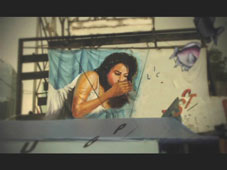
About how if letters, which form words and then sentences ? part of our daily life as a medium for communication and promotion ? would suddenly go away slowly, or become "erased", leaving the platform space empty. Is it because we are a consumptive society that we really see it as a empty space? Or do the letters just want to convey their own messages? What if this really happened?
Expositions: Transmediale.05 (Berlin, Fevrier 2005); Ko Video Festival (Durban , Octubre 2005); ]]]Prog:Me[[[ (Rio de Janeiro, Septembre 2005)
Reetu Sattar, n/a
Catalogue : 2023Shabnam | Film expérimental | 4k | couleur et n&b | 22:32 | Bangladesh | 2022
Reetu Sattar
Shabnam
Film expérimental | 4k | couleur et n&b | 22:32 | Bangladesh | 2022
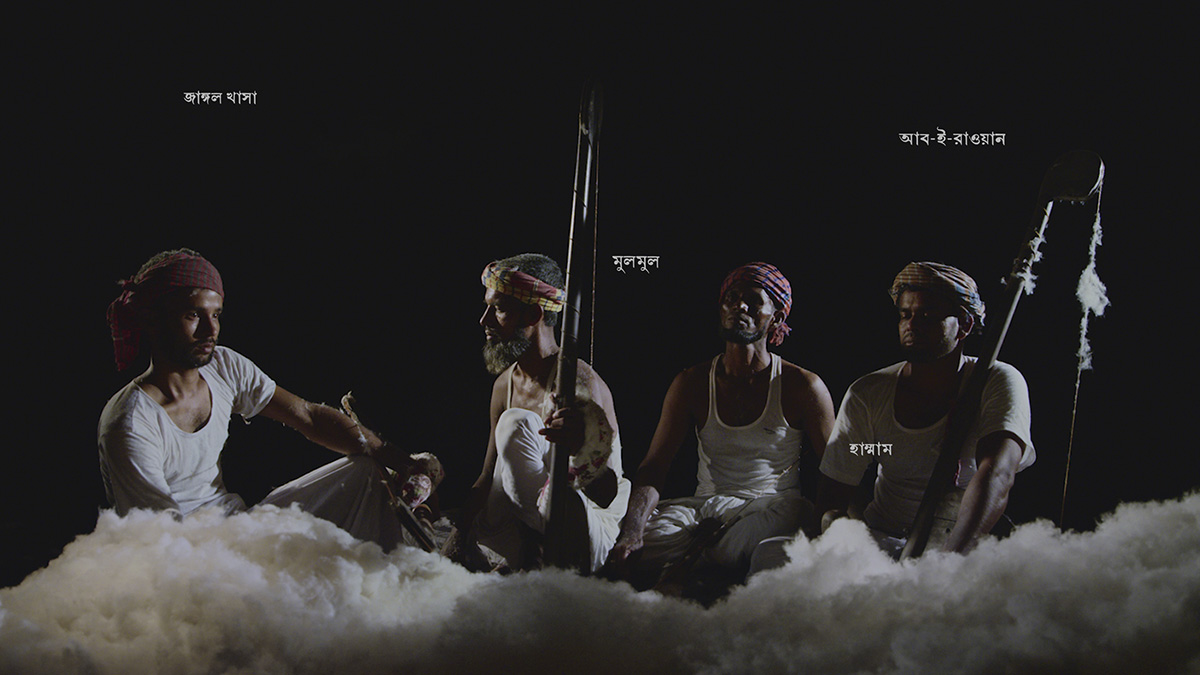
Shabnam unfolded a research on my colonial history in relation to Muslin where I tried to visualize a certain nerve-racking situation when people from a certain part of the world reflect an accumulation of knowledge and wealth. Sometimes the monumental museum display gives a strange complexity. The difference between the one who needs to rumble around archives all around the world to connect the threads between past and present and one who gets everything compiled and labelled is an important one. By process, Shabnam is like a patchwork. The idea was cautiously extended over found images and sounds. Here, the Bangla language is a part of the sonic experience; that is why the subtitle is always coming later as part of an image. I think the sonic experience of the film is something to bear the uneasiness about unequal relationships and exchanges that we have in this world. The drawing of the Bangla letters or the sound of the language played a pivotal role in telling disturbed cartography. What was a work about cotton and lost heritage, has reached me to few questions. How do you visualize the feeling of ‘other’? How do you visualize the churn in your stomach when you find yourself in front of unresolved loss?
Reetu Sattar is an artist and film-maker, based in Dhaka, Bangladesh. Her practice, both performative and experimental in nature, questions human perception and imperceptible nature by re-examining history and the creation of knowledge. In a constant dialogue with immediate surroundings, her work engages with the poetics of environments and explores inner urges for change, perception, (re)relation to body and matter. Born in Dhaka Reetu works and lives in Dhaka. Her recent exhibitions include Istanbul Biennial, British Textile Biennial, International Film Festival Rotterdam, Liverpool Biennial, and Dhaka Art Summit as well as venues including the British Film Institute, London; Alserkal Avenue, Ishara Art Foundation, Dubai; Artspace, Sydney; Palais de Tokyo, Paris and NTU CCA Singapore. Her performances have been staged internationally at venues in London, Birmingham, Bangkok and Goa. Reetu’s first film premiered at International Film Festival Rotterdam, in 2019 and the second film Shabnam premiered at the latest IFFR. Reetu’s performance installation programmed in Spring 2020 will be presented at The Museum of Modern Art, New York on a date forthcoming. Reetu Sattar is a member of Britto Arts Trust, an artist collective based in Dhaka. She also works with Dhaka-based theatre group Prachyanat. Reetu is currently in an 11-month residency at Jan Van Eyck, Netherlands.
Reetu Sattar
Catalogue : 2023Shabnam | Film expérimental | 4k | couleur et n&b | 22:32 | Bangladesh | 2022
Reetu Sattar
Shabnam
Film expérimental | 4k | couleur et n&b | 22:32 | Bangladesh | 2022
Shabnam unfolded a research on my colonial history in relation to Muslin where I tried to visualize a certain nerve-racking situation when people from a certain part of the world reflect an accumulation of knowledge and wealth. Sometimes the monumental museum display gives a strange complexity. The difference between the one who needs to rumble around archives all around the world to connect the threads between past and present and one who gets everything compiled and labelled is an important one. By process, Shabnam is like a patchwork. The idea was cautiously extended over found images and sounds. Here, the Bangla language is a part of the sonic experience; that is why the subtitle is always coming later as part of an image. I think the sonic experience of the film is something to bear the uneasiness about unequal relationships and exchanges that we have in this world. The drawing of the Bangla letters or the sound of the language played a pivotal role in telling disturbed cartography. What was a work about cotton and lost heritage, has reached me to few questions. How do you visualize the feeling of ‘other’? How do you visualize the churn in your stomach when you find yourself in front of unresolved loss?
Reetu Sattar is an artist and film-maker, based in Dhaka, Bangladesh. Her practice, both performative and experimental in nature, questions human perception and imperceptible nature by re-examining history and the creation of knowledge. In a constant dialogue with immediate surroundings, her work engages with the poetics of environments and explores inner urges for change, perception, (re)relation to body and matter. Born in Dhaka Reetu works and lives in Dhaka. Her recent exhibitions include Istanbul Biennial, British Textile Biennial, International Film Festival Rotterdam, Liverpool Biennial, and Dhaka Art Summit as well as venues including the British Film Institute, London; Alserkal Avenue, Ishara Art Foundation, Dubai; Artspace, Sydney; Palais de Tokyo, Paris and NTU CCA Singapore. Her performances have been staged internationally at venues in London, Birmingham, Bangkok and Goa. Reetu’s first film premiered at International Film Festival Rotterdam, in 2019 and the second film Shabnam premiered at the latest IFFR. Reetu’s performance installation programmed in Spring 2020 will be presented at The Museum of Modern Art, New York on a date forthcoming. Reetu Sattar is a member of Britto Arts Trust, an artist collective based in Dhaka. She also works with Dhaka-based theatre group Prachyanat. Reetu is currently in an 11-month residency at Jan Van Eyck, Netherlands.
Volker Sattel
Catalogue : 2006Unternehmen Paradies | Doc. expérimental | 16mm | couleur | 60:0 | Allemagne | 2003
Volker Sattel
Unternehmen Paradies
Doc. expérimental | 16mm | couleur | 60:0 | Allemagne | 2003
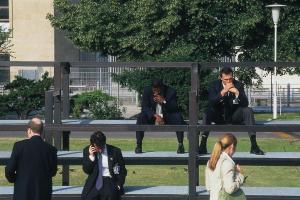
?Unternehmen Paradies? Un essai filmique sur Berlin qui parvient de façon presque incidente à fixer des relations complexes. Les images marquantes, arrachées au cours amorphe du temps, se rassemblent en un collage sur l'urbanisme, la masse et la solitude. Le film, magnifiquement composé, s'émancipe ainsi d'un sujet apparemment rebattu et rend une partie de son innocence à l'objet de l'observation. Il ne fictionnalise pas la réalité, mais découvre plutôt ses possibilités de mise en scène publique, et ce faisant il a le mérite de saisir les oscillations cachées qui entrent en interaction pour constituer le caractère d'un ensemble urbain, et de les amplifier en douceur.
Volker Sattel Né en 1970 à Speyer. 1993-1999: études de mise en scène/caméra à la Filmakademie du Bade- Wurtemberg. Cinéaste indépendant. Différents travaux en tant qu'auteur, metteur en scène et caméraman dans le domaine du long-métrage, film documentaire et expérimental. Collaborations à divers projets de films, de théâtre et de vidéo avec les artistes Olaf Nicolai et Daniel Klein, le musicien Tim Elzer (don?t dolby/Cologne) et l'auteur Mario Mentrup (Maas Media/Berlin). 2002 Création du "Büro für Film und Gestaltung" à Berlin. 2005 création du Vakant Film avec Mario Mentrup. Filmographie (sélection) Letztes Jahr im Rossija en cours de préparation, documentaire, 70min After Effect (caméra) en cours, film de Stefan Geene, 90min Pascha (caméra) en cours, documentaire de Stefanie Gaus, 30min Stadt des Lichts Film en collaboration avec Mario Menrtup, 60min, vidéo 2005 invain Opéra de Georg Friedrich Haas, mise en scène Olaf Nicolai, Theater Basel, réalisation visuelle d'une projection vidéo sur 6 écrans | 65 min | 16mm | 2003 Unternehmen Paradies Documentaire| 59 min | Super16 | 2002 Die Welt in der wir wohnten pour une série de manifestations de Maas Media Berlin | Video | 13 min | 2002 Pocket Park im Auftrag des Kulturkreis des BDI e.V. | Video| 5min | 2001 Über den morgendlichen Blick eines gebeutelten Filmemachers auf einer ziemlich langen Fahrt durch London Video | 30 min | 2001 040 Documentaire | Film pour l'obtention du diplôme de la Filmakademie | 16 mm | 34 min |1999 Sattel der Liebe Documentaire | 16 mm | 30 min | 1999 Fer-sehen court-métrage Super 16 | 5 min | Coproduction avec Südwestfunk | 1996 Wirrsaal court-métrage | 10 min | 16 mm | 1995
Heta Saukkonen
Catalogue : 2016Powyłamywanymi | Vidéo | hdv | noir et blanc | 10:42 | Finlande | 2015
Heta Saukkonen
Powyłamywanymi
Vidéo | hdv | noir et blanc | 10:42 | Finlande | 2015
Powyłamywanymi is an experimental video. The inspiration and the title comes from a polish tongue twister "Stół z powyłamywanymi nogami" meaning "a table with broken legs". The word in the title means breaking only in context of this sentence. Supposedly it dates back to the Soviet times when everything used to be more or less broken. Through repetitive breaking of different tables the work examines how absurd is constructed, but also fragilities of any given systems such as language, political structures or a human body.
Heta Saukkonen (b. 1990) has a Bachelor of Arts from Aalto University and currently completes master’s degrees in Photography at Aalto University and in Time and Space Arts at University of the Arts Helsinki. She works with mediums of video, photography and installation in the borderline between the visual and the verbal and is interested in the absurd, systems and the unexplainable.
Nicolas Sauret, Ashley WONG
Catalogue : 2010Nønspace | Installation vidéo | | couleur | 22:55 | France, Hong Kong | 2009
Nicolas Sauret, Ashley WONG
Nønspace
Installation vidéo | | couleur | 22:55 | France, Hong Kong | 2009
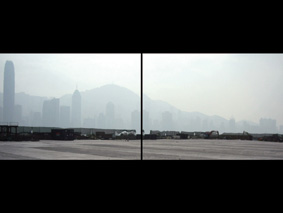
Nønspace A filmic artwork by Nicolas Sauret & Ashley Wong 2-channel video / 23min / 2009 Nønspace is a work that attempts to probe at the often puzzling and elusive space of Hong Kong. Through its unique history, geography and politics, Hong Kong has sprouted from a small Chinese fishing village to a globalized financial city. From British influence of Western capitalism to a return to a long lost Chinese reality, Hong Kong has formed into a place of in-betweenness. Through interwoven voice interviews with artists, academics, architects, Nønspace approaches notions of space to reveal aspects of a city and culture that is difficult (and perhaps impossible) to underpin. Topics of density, public/private space, colonialism/post-colonialism, identity, society, urban development, and government policy quickly emerge. Through collected materials, photographs and field-recordings from a two and three year stint in Hong Kong, the creators piece back through memory in a desire to understand and in a dialogue with the city and self. Nønspace is hazy in content and in form. The fluid construction of photographic stills and voice, speak around a city, but never at it. It is an approach to space that can be used to navigate any city and environment to explore what is behind the construction of a space and place. Conversations with: Linda LAI (professor, City University), Andrew LAM, (director Museum of Site), Kit LAM (sociologist, Chinese University), Warren LEUNG (independent artist), Map Office (Laurent Gutierrez & Valérie Portefaix, artists), Alvin YIP (architect, Poly University)
Nicolas Sauret is a filmmaker and artist based in Paris, France. After attaining a degree in Engineering of Cultural Industries at Université de Technologie of Compiègne, he spent 3 years in Laos working in documentary film. He later moved to Hong Kong to pursue an MFA in Creative Media at City University. His work has been featured in a number of exhibitions and festivals including the Tokyo Video Festival, Hong Kong Asian Film Festival and Urban Nomad Film Festival. Ashley L. Wong is an artist and curator/facilitator. Born and raised in Canada, she attained a BFA in Digital Image/Sound and the Fine Arts from Concordia University in Montreal. She is founder of experimental events project LOUDSPKR and is former project manager of Videotage - Hong Kong`s Media Art Institution. She is completing an MA at Goldsmiths`, University of London.
Marcin Sauter
Catalogue : 2006Za Ploten | Documentaire | dv | couleur | 15:0 | Pologne | 2005
Marcin Sauter
Za Ploten
Documentaire | dv | couleur | 15:0 | Pologne | 2005
L'une des principales motivations à l'origine de ce film est d'essayer de retourner au temps de l'enfance, des vacances et des étés chauds . Je me souviens du sentiment éprouvé lorsque le nombre illimité de détails remarquables, de choses à découvrir, d'histoires à explorer et de sujets auxquels réfléchir, donnaient l'impression que chaque jour durait une éternité.
Marcin Sauter Né en 1971. Il travaille comme photographe de presse pour les quotidiens les plus importants de Pologne. Il est auteur des projets de décors photographiques pour le théâtre et co-réalisateur d'un long-métrage, "I co wy na to, Ga³uszko" (2000), projeté dans les cinémas d'art et essai de Pologne. Diplômé du "Documentary Course" à la Andrzej Wajda Master School of Film Directing. "Behind the Fence" (10 min, 2005) est son premier documentaire.
Renu Savant
Catalogue : 2025The Orchard and the Pardes | Doc. expérimental | hdv | couleur | 119:42 | Inde | 2024
Renu Savant
The Orchard and the Pardes
Doc. expérimental | hdv | couleur | 119:42 | Inde | 2024
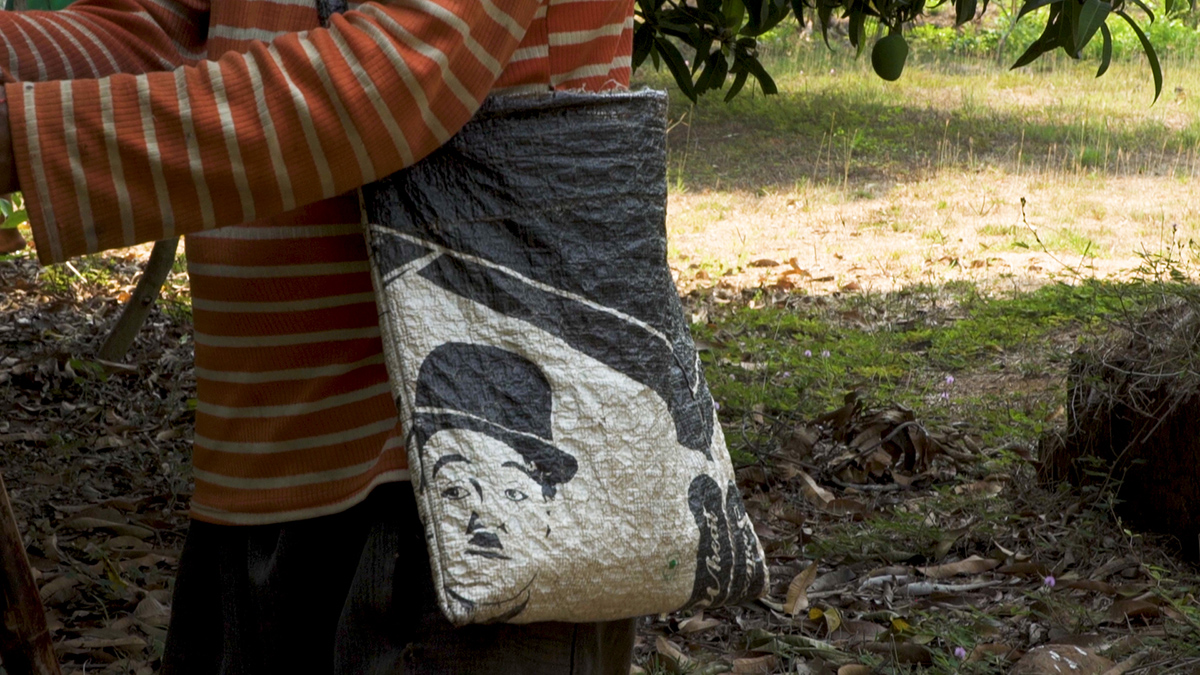
In 2021, during the second summer of the pandemic, I lived and video recorded in the small coastal town of Ratnagiri, India. Shot in the mango orchards of this region the film, "The Orchard and the Pardes", chronicles the last two months of their work with 4 immigrant (Nepalese) labourers during the mango harvesting season. In doing so it reveals not only their conditions of work but also a certain politics of intimacy across conflicting power relations between the labourers, their employer and myself as the filmmaker. It is a personal documentation film in a series of films, I have been making in this region. The film looks at once into small inter-personal spaces and at the same time critically examines the day to day working of a deeply fraught phenomenon of our global times - migrant labour. While looking critically at the processes of ethnographic filmmaking itself, "The Orchard and the Pardes", is a self-reflexive and personal work as much as it documents working conditions of immigrant labour in this western coastal region of India. It casts questions of identity, language and interpersonal politics and importantly the role of deceit in communication across class and gender. Mango growing, a booming agro-industry in this region, relies almost solely on seasonal migrant labour. The film reveals the vulnerability faced by the migrant labourers and how power dynamics works at the micro, day to day level. It explores the relationship between the woman filmmaker and the masculine world of agro-business playing out through various currents of interpersonal dialogue and becomes a deliberation on the complex insidiousness of power systems and their unfolding at a micro level.
Renu Savant is a filmmaker based in Mumbai. She is a Film and Television Institute of India graduate and has worked as a journalist and researcher. She is also a lover of literature and has completed her MA in English Literature. In 2012 she received the Special Jury Award in the 59th National Film Awards held in New Delhi for her short film “Airawat”; and the “Swarna Kamal” for Best Direction in the 62nd National Film Awards in 2015 for her short film “Aaranyak”, amongst other awards.
Catalogue : 2015Aaranyak | Fiction expérimentale | 35mm | couleur | 22:20 | Inde | 2014
Renu Savant
Aaranyak
Fiction expérimentale | 35mm | couleur | 22:20 | Inde | 2014
The film strives to create the symbolic echoes in the story of two girls searching for their imaginary friend, whose invisible quality they associate with the anonymity of the industrial black hole - the water pipe. On this, the backdrop of another story - an elemental and existential search for water in a dried up river by two migrant workers from the city. The film moves between the lyrical and the referential, the self-reflexive statement and the existential search, ending in an ironic arrival into the real.
The director, Renu Savant, is a graduate from the Film and Television Institute of India, Pune. Before this she has worked as researcher, journalist, lecturer. Her short film, Airawat, received the National Award in 2012, apart from other accolades.
Denis Savary
Catalogue : 2015Pégase | Vidéo | dv | couleur | 1:51 | Suisse | 2009
Denis Savary
Pégase
Vidéo | dv | couleur | 1:51 | Suisse | 2009
A la vallée de Joux, en Suisse, un vélo cycliste tente la traversée d`un lac gelé. Le titre de la vidéo, Pégase, provient de la sculpture que l’on voit en arrière plan. Ce petit film s’inscrit dans une série d’une trentaine de films autonomes réalisés entre 2003 et aujourd’hui.
Denis Savary est né en 1981 à Granges-Marnand en Suisse. Il vit et travaille à Genève. Diplômé de l’Ecole Cantonale d’Arts de Lausanne, il est en résidence à l’atelier des Arques, puis au Pavillon du Palais de Tokyo en 2006/2007. Il a participé à de nombreuses expositions de groupe : Enchanté château, organisée par Christian Bernard à la Fondation pour l’art contemporain Claudine et Jean-Marc Salomon en 2005, au MAMCO de Genève en 2006, Voici un dessin suisse (1990-2010), au Musée Rath (Genève), Wind, me souffle entre les images au Quartier à Quimper, au Printemps de Septembre à Toulouse en 2009 et 2008... Son travail a également été montré en 2008 au Jeu de Paume (Paris) dans le cadre de la programmation Satellite et au Musée Jénisch à Vevey (Suisse). Lors de l’exposition Le Narrenschiff au Centre Pasquart en 2010, on a pu découvrir un vaste ensemble de films de l’artiste. En 2012, la Kunsthalle de Berne lui consacre une exposition intitulée Balthiques. Plus récemment, une sélection de ses films a été projetée au Centre Georges Pompidou (Paris) lors du festival Hors Pistes. En 2015, une exposition monographique lui sera consacrée au MAMCO de Genève.
Kirill Savchenkov
Catalogue : 2023The Past Ripens in the Future | Vidéo | hdv | couleur | 5:1 | Russie, Italie | 2022

Kirill Savchenkov
The Past Ripens in the Future
Vidéo | hdv | couleur | 5:1 | Russie, Italie | 2022
Kirill Savchenkov, born in 1987 in Moscow, currently lives and works in France. He works with various media including mediated sculpture, installation, performance, and sound. His artistic practice raises the questions of agency, identity and autocracy in the tech-social milieu. He was nominated to represent Russia in the national pavilion at the 59th Venice Biennial in 2022 but withdrew from the project in protest over the full-scale Russian invasion of Ukraine. Over the years, his works have been presented in institutions such as Transart Festival, Italy, 2022; 14th Baltic Triennial, Lithuania, 2021; Garage Museum of Contemporary Art, Russia, 2021; V-A-C Zattere, Italy, 2019; 12th Gwangju Biennale, South Korea, 2018.
Alli Savolainen
Catalogue : 2009Excuse Me Could You Make Me Photo | Vidéo | dv | couleur | 3:0 | Finlande | 2007
Alli Savolainen
Excuse Me Could You Make Me Photo
Vidéo | dv | couleur | 3:0 | Finlande | 2007
Kristina Savutsina, Georg Kussmann
Catalogue : 2022Khan’s Flesh (Telo Khana) | Documentaire | mp4 | couleur | 57:30 | Allemagne, Biélorussie | 2021
Kristina Savutsina, Georg Kussmann
Khan’s Flesh (Telo Khana)
Documentaire | mp4 | couleur | 57:30 | Allemagne, Biélorussie | 2021
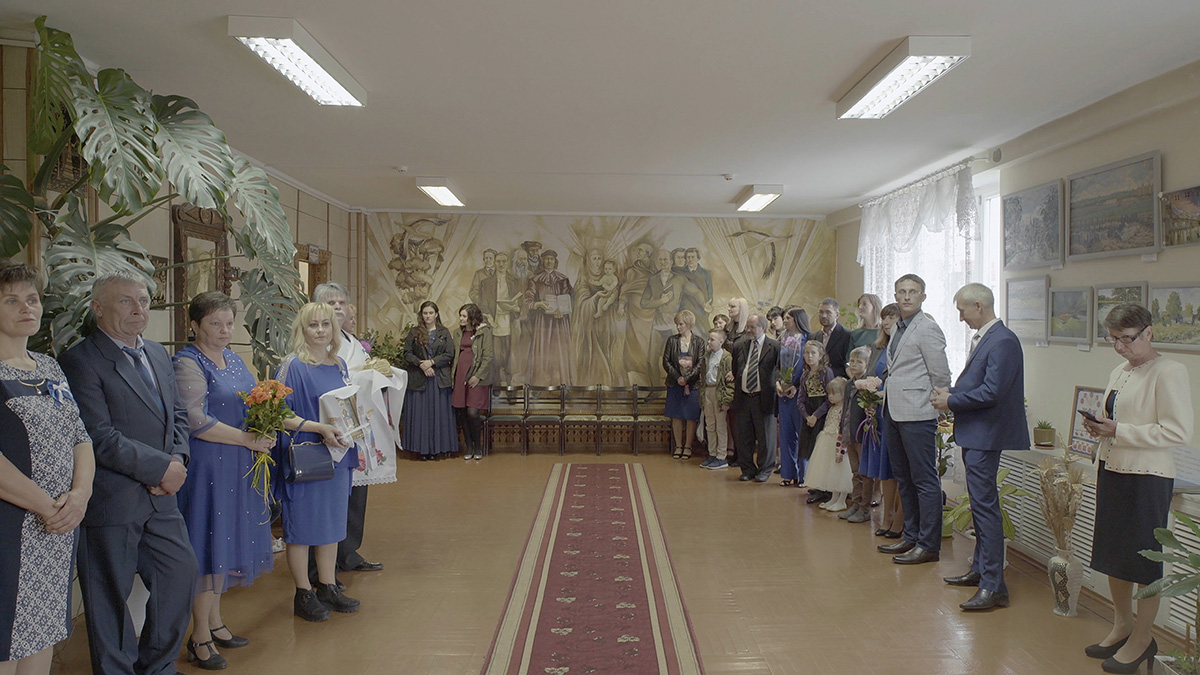
Kristina Savutsina détaille avec finesse les chorégraphies quotidiennes auxquelles s’adonnent ou se soumettent les habitant.e.s d’une bourgade biélorusse. En choisissant le plan fixe et un montage associatif, Khan’s Flesh porte ainsi un regard distancié et teinté d’ironie sur une société corsetée par d’intangibles relations de pouvoir.
Kristina Savutsina was born in 1989 in Riga, into a Belarusian family. From 1993 to 2014 she lived in Belarus. She graduated with diploma in cultural studies in Minsk. In 2014 Kristina moved to Germany, where she has been studying film and fine arts at the University of Fine Arts Hamburg (HFBK). In her work Kristina deals with regulatory politics and its concrete manifestations in Belarus. Besides artistic practice she works as curator and translator. She lives and works in Hamburg. Georg Kussmann was born in Halle/Saale, East Germany in 1989 and grew up there. He studied photography and film at the University of Fine Arts in Hamburg. Currently he lives in Berlin and works as an artist, filmmaker and cinematographer.
Jacky Sawatzky
Catalogue : 2007Social metronome | Création numérique | 0 | couleur | 0:0 | Canada | 2006
Jacky Sawatzky
Social metronome
Création numérique | 0 | couleur | 0:0 | Canada | 2006
Il y a quelques années Jacky Sawatzky vivait dans le West End, un quatier de Vancouver au Canada. son appartement donnait sur une ruelle et quatre poubelles. A l'aube elle étais réveillée par les sans-abris qu'elle entendait pousser leur caddy dans la ruelle ainsi que par des portes qui claquaient et des moteurs qui démarraient. La ruelle était un endroit animé. Durant cette même période, elle faisait des recherches sur les méthodes de surveillance qui utilisent des ordinateurs avec des applications qui distinguent autrement que par la vision. Social Metronome est un ensemble de sept vidéos dans lesquels l'image, aussi bien que la structure du montage, sont déterminés par le mouvement dans la ruelle. Une caméra contrôlée par un programme informatique utilise la structure syntaxique du language utilisé en programmation informatique, la proposition logique de 'si ... alors ...', pour créer un portrait de cette ruelle. Le programme sélectionne selon l'intensité du mouvement et non pas son contenu. Ce système fut installé pour les sept jours de la semaine, du matin au soir, et il en résulte environ 500 clips par jour. Ces clips ont ensuite été montés afin de réaliser sept vidéos qui représentent une ruelle en se basant sur le mouvement. Un extrait de l'oeuvre peut être visionné à l'adresse suivante : HTTP://www.jackysawatzky.net/social
Jacky Sawatzky est une artiste de la performance et des média. Originaire de Winnipeg au Canada, elle a passé une grande partie de sa vie aux Pays-Bas où elle a accompli la majorité de sa scolarité et plus tard elle a déménagé à Vancouver, au Canada, pour passer une maîtrise en beaux-arts à l'université Simon Fraser (Simon Fraser University). Ses projets récents ont pour but de nous rendre conscients des concepts qui se cachent derrière la technologie numérique et d'explorer l'influence que cette dernière exerce sur notre perception et notre consommation de celle-ci.Elle a ensiegné à la Ryerson University, School for Image Arts, à Toronto au Canada. Elle se consacre actuellement à sa propre pratique de l'art.
Victoria Sayago, Stecconi Bruno
Catalogue : 2015Tromü (o un estudio para un volcán) | Vidéo | hdv | couleur | 16:0 | Argentine | 2014
Victoria Sayago, Stecconi Bruno
Tromü (o un estudio para un volcán)
Vidéo | hdv | couleur | 16:0 | Argentine | 2014
Tromü (o un studio para un volcán) Author: Victoria Sayago and Bruno Stecconi Tromü means cloud in mapuche* language. A volcano becomes active and emits not lava but ashes so the inmense Patagonia is transformed. What is beautiful and tragic blends into a record that far from mummifying perhaps sublimes the openness of time and its transformations. The tragedy is only an instant in time, a man a point in space and life is in every particle, above all things, as a question form. *The word Mapuche is used both to refer to the original inhabitans of southwestern Argentina and southcentral Chile and to the language they speak.
Victoria Sayago (Argentina, 1980) Graduate (BA Cinematography) by Universidad del Cine. Her field of investigation, teaching and production is audiovisual experimental arts and photography. Curator of “El cine experimental de Narcisa Hirsch” by MQ2 Editora. She teached in FUC and IUNA (Universitary National Art Institute). Nowadays she teaches in Electronic Arts career UNTREF. She won the national grant of Fondo Nacional de las Artes and worked in the art curator department of the National Ministry of Education of Argentina. Her videos were shown in 60 Internationale Kurzfilmtage Oberhausen, 15º Festival de Artes Electrónicas Videobrasil, BIM (First Price), 11ème Biennale de l’image en Mouvement Geneva, Premio MAMBA- Fundación Telefónica 2005, others. She lives and works in Buenos Aires. Bruno Stecconi (Argentina, 1981) Graduated from the FUC (Cinema University Fundation) he is finishing his master degree in Media and Arts, at the European Degree School. His field of work is photography, video and cinema. His videos and photos took part of many different international and national festivals like: 60 Internationale Kurzfilmtage Oberhausen, BIM (First Price), Premio Repsol Lima Perú (First price), Talent Campus Berlin-Buenos Aires, FIVA, Bienal del Fin del Mundo, Bienal de Almeria, among others. With Daniel Böhm created MQ2 Editora. He lives and works in Buenos Aires city.
Nasri Sayegh
Catalogue : 2022OÙ NUL.LE AUTRE NE PEUT VOIR | Vidéo | mp4 | couleur et n&b | 8:30 | Liban | 2021
Nasri Sayegh
OÙ NUL.LE AUTRE NE PEUT VOIR
Vidéo | mp4 | couleur et n&b | 8:30 | Liban | 2021
4 Août 2020. Explosion de 2750 tonnes de nitrate d’ammonium sur le port de Beyrouth. Nous disparaissons; un instant. Certains n’apparaitront plus. Les images déferlent. Elles sont spectaculaires. Fascinent. Me viennent alors ces mots: De L’Impotence De L’Image. Image Partiale Image Partielle Impotente Inapte Assassine Faire Feu De Toute Image Tordre La Pellicule Saboter Les Pixels Pulvériser La Chambre Obscurcie Non Je N’Irai Pas Capturer L’Image Du Crime Faire Brasier De Toute Image Et Tenter Le Mot Encore Une Photographie Ne Saurait Faire Office De Document Empreinte Cérébrale Empreinte Corporelle Ceci Est Mon Image Ceci Est Mon Apocalypse Nous Sommes La Photographie Nous Sommes Le Document Ceci Est Mon Corps Exhibez-Le Sur La Place Publique Dans Vos Musées Puis Approchez Vous Regardez Dans Nos Yeux Tout Au Fond Le Brasier Le Souffle La Puissance L’Horreur Plus tard, cette autre tentative: “Où Nul.le Autre Ne Peut Voir Et/Ou Violets For My Furs”. Prologue, préliminaire, chant dernier, ce film est un essai de déplacements / polyphonies / frottements / césures erratiques / plaques mnémoniques et autres failles didascaliques. A travers l’archive intime et/ou collective, je tente de composer un prologue-prolongement d’images, pré-texte aux mots en cours, et ceux à venir.
Les images [photographies, collages, montages, broderies et mots] de Nasri Sayegh sont troubles, floues, furtives. Inquiètes, elles encourent à tout moment le risque soudain d’effacement. Puisant dans ses archives intimes, Sayegh altère, déconstruit l’image pour mieux reconstituer sa propre historiographie. Fouille archéologique/archétypale, il remonte le fil de ses Histoires au gré d’impulsions mnémoniques. Découpage, dissection dans le corps de l’image et recoupement de données visuelles deviennent prétextes pour inventer/déterrer/monter de nouvelles strates d’images et de mots. Interstitielle, l’entre-image, la presqu’image, ou le glitch (la Faille), deviennent quelque part le portrait en négatif, en creux, de l’artiste. Après des études de Lettres à l’USJ (Beyrouth) et à la Sorbonne (Paris), Sayegh s’investit dans les pratiques théâtrales et cinématographiques à l’ESAD-Paris. Acteur, il a été dirigé par Christian Merlhiot, Eileen Hofer, Jad Youssef, Jocelyne Saab. Performeur, il a été l'artiste-invité de Ilya & Emilia Kabakov, de Saâdane Afif, et de Rabih Mroué. Son approche multidisciplinaire a été présentée dans de nombreuses expositions au Liban parmi lesquelles: «Beyrouth, Peut-Être» (2016), «Unravelled» (2016), «Keine Fotos Bitte», «Tout doit Disparaître»(2018), et au Salon d’Automne du Musée Sursock de Beyrouth (2018). En 2017 il reçoit le second Prix Photomed et publie “Mes Nuits sont plus Amères que vos Jours”. En 2021, il a été résident à la Cité des Arts (Paris), la Villa des Auteurs (Marseille) et la Villa Arson (Nice). Né à Zahlé (Liban) en 1978, Nasri Sayegh Jr. vit et travaille dans un déplacement permanent.
Susannah Sayler, Edward Morris
Catalogue : 2026The Amazon is Elsewhere | Film expérimental | 4k | couleur et n&b | 12:0 | USA | 2025
Susannah Sayler, Edward Morris
The Amazon is Elsewhere
Film expérimental | 4k | couleur et n&b | 12:0 | USA | 2025
Amazon is Elsewhere est un court métrage qui médite sur l’inconnaissabilité et la puissance de l’Amazonie pour celles et ceux qui n’y vivent pas. Pour beaucoup, l’Amazonie symbolise « les poumons de la Terre » ou la « Nature » elle-même. Pour les peuples autochtones de la région, dont nombre n’ont pas de mot distinct pour désigner la jungle ou la forêt, c’est simplement la maison. Le film se concentre sur un bâtiment situé à l’orée de la jungle : un mélange de styles architecturaux où les arbres traversent les sols en béton, où les plantes poussent dans des colonnes pseudo-corinthiennes, et où des jaguars en carreaux de céramique gardent l’entrée. Des images générées par IA expriment des forces à l’œuvre, à la fois dans le bâtiment et dans la jungle, dont il est difficile de savoir si elles sont maléfiques ou salvatrices. Le film s’inscrit dans un ensemble de travaux qui cherchent à comprendre comment représenter l’Amazonie à la lumière de la multiplicité de significations refractées dont elle est porteuse.
Susannah Sayler et Edward Morris (Sayler/Morris) travaillent la vidéo, la photographie et l’installation pour interroger nos conceptions changeantes de la nature, de la culture et de l’écologie. Leur pratique est souvent ancrée dans des lieux précis et s’appuie fortement sur la recherche historique. Ils ont reçu de nombreuses distinctions, parmi lesquelles la bourse Guggenheim (2023), le New York Artist Fellowship (2016), la Smithsonian Artist Research Fellowship (2014), le Center for Art and Environment Research Fellowship (2013), ainsi que la Loeb Fellowship de la Harvard Graduate School of Design (2008). Leur travail a été largement exposé aux États-Unis et à l’international, notamment au Massachusetts Museum of Contemporary Art, à la Kunsthal de Rotterdam, au North Carolina Museum of Art, au Belvedere Museum et au Southeast Center for Contemporary Art. Sayler enseigne actuellement au sein du département Film and Media Arts de l’Université de Syracuse, tandis que Morris est directeur exécutif du Marble House Project. Leurs archives sont conservées au Nevada Museum of Art / Reno, Center for Art and Environment. En 2006, Sayler/Morris ont cofondé The Canary Project, un studio produisant des médias visuels et des œuvres destinées à approfondir la compréhension publique du changement climatique. En 2021, ils ont fondé Toolshed, une plateforme visant à relier pensée écologique et action.
Lucas Sá
Catalogue : 2017Balada Para os Mortos | Fiction expérimentale | hdv | couleur | 22:0 | Brésil | 2016
Lucas SÁ
Balada Para os Mortos
Fiction expérimentale | hdv | couleur | 22:0 | Brésil | 2016
The city I live is the city I die. "The Ballad of Death" is a hybrid film that uses real and fictional scenes to question the different forms of urban violence. Mostly about the reality on Brazil, but most of all to treat the issue as a universal problem.
Lucas Sá was born in Brazil, 1992. He realized his short films: "O Membro Decaído" (2012), “Ruído Branco” (2013), “No Interior da Minha Mãe” (2013), "Nua por Dentro do Couro" (2014) and "Balada para os Mortos" (2016). Graduated on Cinema at Universidade Federal de Pelotas (UFPEL), his films was on the selection of Cinélatino – Rencontres de Toulouse, Guanajuato International Film Festival , PiFan - Puchon International Fantastic Film Festival, Festival Luso-Brasileiro de Santa Maria da Feira, Festival de Brasília, Janela Internacional de Cinema de Recife, Festival Internacional de Curtas de São Paulo, Mostra de Tiradentes and others. Nowadays, he is on the process of finalizing his first feature called "Canecalon - The Long Hair of Death".