Catalogue > List by artist
Browse the entire list of Rencontre Internationales artists since 2004. Use the alphabetical filter to refine your search. update in progress
Arfang Sarr
Catalogue : 2009L'Infini chez soi | Documentary | dv | color | 52:0 | Senegal | 2008
Arfang Sarr
L'Infini chez soi
Documentary | dv | color | 52:0 | Senegal | 2008
Among the Sereres, the second biggest ethnic group in Senegal, the life of the individual is paced by important events which confer on him his stature within the community. Initiation is called ?Ndout? in Serere - it?s a paramount means of education for the men and marks the passage into adulthood for the boys. It takes place every ten years and is done in the bush. Among women, this same ceremony is done at the time of their marriage and finally the bride, accompanied by the initiated young women of her district, collect the linen from the elders of the village, then they wash in a backwater, far from any spectators. This ritual is done following a long procession accompanied by initiatory songs.
Arfang Sarr-Crao is one of the up and coming artists from the Dakar scene of visual arts. A graduate in sciences (mathematical, physics, chemistry and natural science), he turns his back on the faculty of science of the University Sheik Anta Diop of Dakar (Senegal) to devote himself to painting and literary creation. In as far as being a self-educated plastics technician, he has taken part in several biennial Dak' Art and many exhibitions in Senegal and abroad. Arfang is also a prize winner of the Great Price Birago Diop of poetry (2004), with his first collection ?Litany for the hair of Fadima?, published in the Bush Fire Editions. An all round artist, he carries the banner of a rising generation of Senegalese artists set on new technologies, Arfang chose very early on a mixture of the kind of tools for his creations through an experimental step which combines visual arts, cinema, photography and literature.
Varun Sasindran
Catalogue : 2020Omarska | Documentary | hdv | color | 19:0 | India, France | 2018
Varun Sasindran
Omarska
Documentary | hdv | color | 19:0 | India, France | 2018
In this film, the filmmaker enters into conversation with the survivors of the Omarska concentration camp in Prijedor (Bosnia-Herzegovina). The film begins with the recollection of their memories and eventually touches on the present situation of the former camp. Former site of the concentration camp Omarska is now a factory owned by Arcelor Mittal Company. The company’s manufacturing process now takes place where the civilians used to be detained. Despite of several requests from survivors, there is no memorial for the killed victims at Omarska. Once in a year, the premises are open to public for the commemoration. Film intents to construct a memorial in 3D animation from the archive images, videos, recent photographs -guided by the testimonies of the survivors of the camp.
Thirty two years old (2nd April 1987), born and raised in Kerala, India. He graduated in Electronics and Communication engineering, during the year of 2008. Post study, worked as a software engineer for four years. In 2012, he decided to quit the job and decided to study films. He mainly got inspired from the film he has seen in the international film festivals he attended during the course of this time. He pursued his further studies in Visual media Studies from Calicut University. And then he joined for M.A at Sarajevo Film Academy followed by the research from Le Fresnoy, where he received a full scholarship from Institut Francais. His Film “Omarska”, has already won Honorable jury mention at Berlinale, Jury special mention at Kyiv international short film festival, Best Director award at Bucharest international experimental film festival and has been also presented at many other festivals all over the world.
Martin Sastre
Catalogue : 2009Diana, The Rose Conspiracy | Experimental fiction | dv | color | 20:0 | Uruguay | 2005

Martin Sastre
Diana, The Rose Conspiracy
Experimental fiction | dv | color | 20:0 | Uruguay | 2005
Princess Diana didn?t die in a car accident in Paris; she?s now living a happy and new undercover life in a poor neighborhood of Montevideo, Uruguay.
(Montevideo,1976). Has been showing solo internationally since 2002 and has participated in Biennials such as the Busan Bienal, Korea (2008), Usuahia, Argentina and Bienal de Pontevedra, Spain (2007), Bienal de l?Image in Geneva (2006), Venice (2005), Sao Paulo Bienal as the National Representation (2004), La Habana (2003), Praga (2002) y Mercosur (2001), Awards include 2004 ARCO Prize at the Madrid International Art Fair and 2008 Faena Prize given by a jury formed by Jessica Morgan (Tate Modern), Okwui Enwezor ( San Francisco Institute of Art) and Carlos Basualdo (Philadelphia Museum of Art) for a urban intervention in Buenos Aires, Argentina.
Catalogue : 2008Bolivia 3: Confederation Next | Experimental fiction | dv | color | 15:0 | Uruguay, Spain | 2007

Martin Sastre
Bolivia 3: Confederation Next
Experimental fiction | dv | color | 15:0 | Uruguay, Spain | 2007
"Bolivia 3: Confederation Next", takes us to the future,more precisely to the year 2876, to a time were the American Continent presents an inverse political map from the one we know today. South America has became a huge confederation named Bolivia, while North America is divided in small countries emancipated from the former United States of America and Canada. In this future Tom Cruise is an immortal vampire that lives in a dark swamp where at some time was Hollywood and tell us the story of how the other Americans won the "War for Fiction Control" with a sward fight between Martin Sastre and Matthew Barney.
Born in 1976 in Montevideo, Uruguay, Martin Sastre was formed by 80`s VCR culture, experimenting on video and cinematic images since childhood. Now he`s considered one of the most representative Latin-American artists of his generation and has participate in International Biennials like the 1st. Prague Biennial, 8ª La Havana Biennial, 28ª Sao Paulo Biennial, 51ª Venice Biennial and the 11ª Biennial for Moving Images of Geneva. Nowadays his working on his first feature film and developing The Martin Sastre Foundation for the Super Poor Art to sponsor Latin -American artists who normally can`t access the international circuits with the aim of changing the historic definition of center and periphery
Martín Sastre
Catalogue : 2007Montevideo : the dark side of the pop | Experimental fiction | dv | color and b&w | 15:0 | Uruguay, Spain | 2006
Martín Sastre
Montevideo : the dark side of the pop
Experimental fiction | dv | color and b&w | 15:0 | Uruguay, Spain | 2006
Ari Satria Dharma
Catalogue : 2007Igra | Experimental video | dv | color | 2:15 | Indonesia | 2005
Ari Satria Dharma
Igra
Experimental video | dv | color | 2:15 | Indonesia | 2005
About how if letters, which form words and then sentences ? part of our daily life as a medium for communication and promotion ? would suddenly go away slowly, or become "erased", leaving the platform space empty. Is it because we are a consumptive society that we really see it as a empty space? Or do the letters just want to convey their own messages? What if this really happened?
Reetu Sattar, n/a
Catalogue : 2023Shabnam | Experimental film | 4k | color and b&w | 22:32 | Bangladesh | 2022
Reetu Sattar
Shabnam
Experimental film | 4k | color and b&w | 22:32 | Bangladesh | 2022
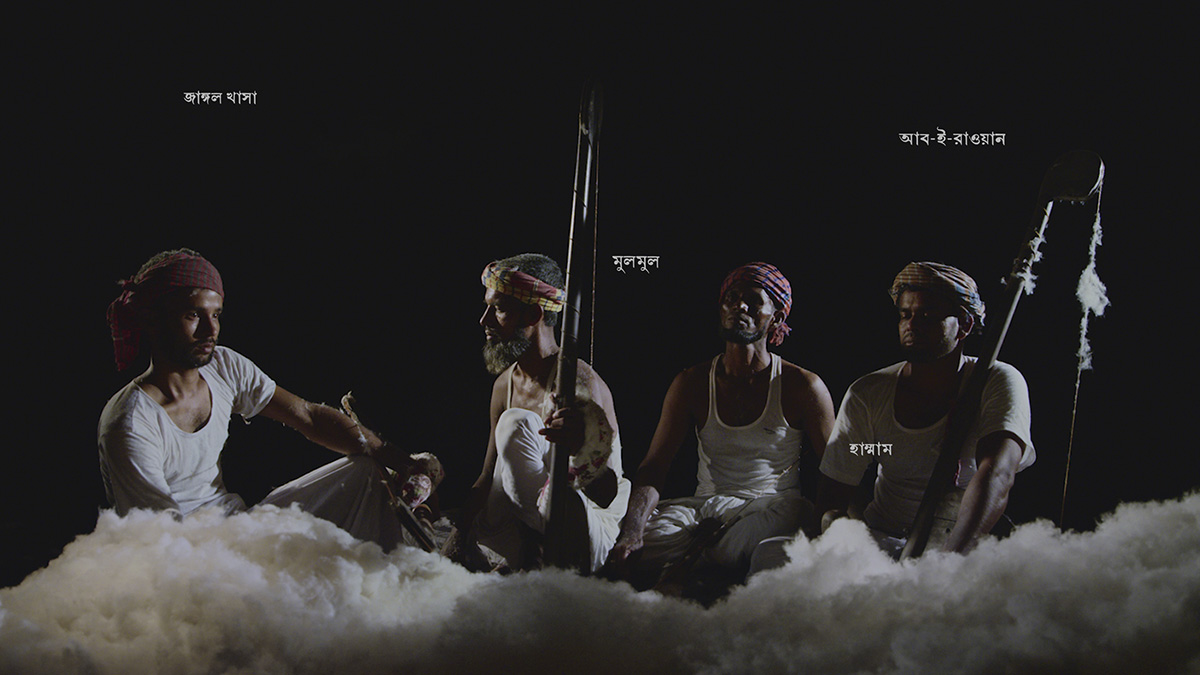
Shabnam unfolded a research on my colonial history in relation to Muslin where I tried to visualize a certain nerve-racking situation when people from a certain part of the world reflect an accumulation of knowledge and wealth. Sometimes the monumental museum display gives a strange complexity. The difference between the one who needs to rumble around archives all around the world to connect the threads between past and present and one who gets everything compiled and labelled is an important one. By process, Shabnam is like a patchwork. The idea was cautiously extended over found images and sounds. Here, the Bangla language is a part of the sonic experience; that is why the subtitle is always coming later as part of an image. I think the sonic experience of the film is something to bear the uneasiness about unequal relationships and exchanges that we have in this world. The drawing of the Bangla letters or the sound of the language played a pivotal role in telling disturbed cartography. What was a work about cotton and lost heritage, has reached me to few questions. How do you visualize the feeling of ‘other’? How do you visualize the churn in your stomach when you find yourself in front of unresolved loss?
Reetu Sattar is an artist and film-maker, based in Dhaka, Bangladesh. Her practice, both performative and experimental in nature, questions human perception and imperceptible nature by re-examining history and the creation of knowledge. In a constant dialogue with immediate surroundings, her work engages with the poetics of environments and explores inner urges for change, perception, (re)relation to body and matter. Born in Dhaka Reetu works and lives in Dhaka. Her recent exhibitions include Istanbul Biennial, British Textile Biennial, International Film Festival Rotterdam, Liverpool Biennial, and Dhaka Art Summit as well as venues including the British Film Institute, London; Alserkal Avenue, Ishara Art Foundation, Dubai; Artspace, Sydney; Palais de Tokyo, Paris and NTU CCA Singapore. Her performances have been staged internationally at venues in London, Birmingham, Bangkok and Goa. Reetu’s first film premiered at International Film Festival Rotterdam, in 2019 and the second film Shabnam premiered at the latest IFFR. Reetu’s performance installation programmed in Spring 2020 will be presented at The Museum of Modern Art, New York on a date forthcoming. Reetu Sattar is a member of Britto Arts Trust, an artist collective based in Dhaka. She also works with Dhaka-based theatre group Prachyanat. Reetu is currently in an 11-month residency at Jan Van Eyck, Netherlands.
Reetu Sattar
Catalogue : 2023Shabnam | Experimental film | 4k | color and b&w | 22:32 | Bangladesh | 2022
Reetu Sattar
Shabnam
Experimental film | 4k | color and b&w | 22:32 | Bangladesh | 2022
Shabnam unfolded a research on my colonial history in relation to Muslin where I tried to visualize a certain nerve-racking situation when people from a certain part of the world reflect an accumulation of knowledge and wealth. Sometimes the monumental museum display gives a strange complexity. The difference between the one who needs to rumble around archives all around the world to connect the threads between past and present and one who gets everything compiled and labelled is an important one. By process, Shabnam is like a patchwork. The idea was cautiously extended over found images and sounds. Here, the Bangla language is a part of the sonic experience; that is why the subtitle is always coming later as part of an image. I think the sonic experience of the film is something to bear the uneasiness about unequal relationships and exchanges that we have in this world. The drawing of the Bangla letters or the sound of the language played a pivotal role in telling disturbed cartography. What was a work about cotton and lost heritage, has reached me to few questions. How do you visualize the feeling of ‘other’? How do you visualize the churn in your stomach when you find yourself in front of unresolved loss?
Reetu Sattar is an artist and film-maker, based in Dhaka, Bangladesh. Her practice, both performative and experimental in nature, questions human perception and imperceptible nature by re-examining history and the creation of knowledge. In a constant dialogue with immediate surroundings, her work engages with the poetics of environments and explores inner urges for change, perception, (re)relation to body and matter. Born in Dhaka Reetu works and lives in Dhaka. Her recent exhibitions include Istanbul Biennial, British Textile Biennial, International Film Festival Rotterdam, Liverpool Biennial, and Dhaka Art Summit as well as venues including the British Film Institute, London; Alserkal Avenue, Ishara Art Foundation, Dubai; Artspace, Sydney; Palais de Tokyo, Paris and NTU CCA Singapore. Her performances have been staged internationally at venues in London, Birmingham, Bangkok and Goa. Reetu’s first film premiered at International Film Festival Rotterdam, in 2019 and the second film Shabnam premiered at the latest IFFR. Reetu’s performance installation programmed in Spring 2020 will be presented at The Museum of Modern Art, New York on a date forthcoming. Reetu Sattar is a member of Britto Arts Trust, an artist collective based in Dhaka. She also works with Dhaka-based theatre group Prachyanat. Reetu is currently in an 11-month residency at Jan Van Eyck, Netherlands.
Volker Sattel
Catalogue : 2006Unternehmen Paradies | Experimental doc. | 16mm | color | 60:0 | Germany | 2003
Volker Sattel
Unternehmen Paradies
Experimental doc. | 16mm | color | 60:0 | Germany | 2003
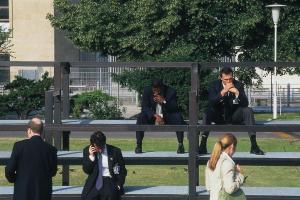
In this unusual city portrait, Berlin is not presented as a buzzing new metropolis, but as a city that goes about its business quite unexcitedly. Choosing a slow pace, this documentary grants us the privilege of observing from afar the gestures and movements of people pursuing their different activities in Berlin`s often vast and surprisingly empty urban spaces. A seemingly indifferent camera takes us to international summits, demonstrations, parades, housing estates and shopping centres. As we begin to discern the patterns of life in the city, it is as if we are witnesses to life on another planet, an impression enhanced by the film`s intricate score which provides the film`s only, yet subtle commentary.
Heta Saukkonen
Catalogue : 2016Powyłamywanymi | Video | hdv | black and white | 10:42 | Finland | 2015
Heta Saukkonen
Powyłamywanymi
Video | hdv | black and white | 10:42 | Finland | 2015
Powyłamywanymi is an experimental video. The inspiration and the title comes from a polish tongue twister "Stół z powyłamywanymi nogami" meaning "a table with broken legs". The word in the title means breaking only in context of this sentence. Supposedly it dates back to the Soviet times when everything used to be more or less broken. Through repetitive breaking of different tables the work examines how absurd is constructed, but also fragilities of any given systems such as language, political structures or a human body.
Heta Saukkonen (b. 1990) has a Bachelor of Arts from Aalto University and currently completes master’s degrees in Photography at Aalto University and in Time and Space Arts at University of the Arts Helsinki. She works with mediums of video, photography and installation in the borderline between the visual and the verbal and is interested in the absurd, systems and the unexplainable.
Nicolas Sauret, Ashley WONG
Catalogue : 2010Nønspace | Video installation | | color | 22:55 | France, Hongkong | 2009
Nicolas Sauret, Ashley WONG
Nønspace
Video installation | | color | 22:55 | France, Hongkong | 2009
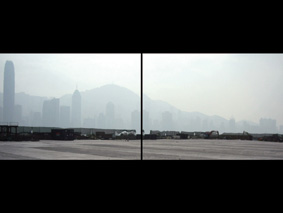
Nønspace A filmic artwork by Nicolas Sauret & Ashley Wong 2-channel video / 23min / 2009 Nønspace is a work that attempts to probe at the often puzzling and elusive space of Hong Kong. Through its unique history, geography and politics, Hong Kong has sprouted from a small Chinese fishing village to a globalized financial city. From British influence of Western capitalism to a return to a long lost Chinese reality, Hong Kong has formed into a place of in-betweenness. Through interwoven voice interviews with artists, academics, architects, Nønspace approaches notions of space to reveal aspects of a city and culture that is difficult (and perhaps impossible) to underpin. Topics of density, public/private space, colonialism/post-colonialism, identity, society, urban development, and government policy quickly emerge. Through collected materials, photographs and field-recordings from a two and three year stint in Hong Kong, the creators piece back through memory in a desire to understand and in a dialogue with the city and self. Nønspace is hazy in content and in form. The fluid construction of photographic stills and voice, speak around a city, but never at it. It is an approach to space that can be used to navigate any city and environment to explore what is behind the construction of a space and place. Conversations with: Linda LAI (professor, City University), Andrew LAM, (director Museum of Site), Kit LAM (sociologist, Chinese University), Warren LEUNG (independent artist), Map Office (Laurent Gutierrez & Valérie Portefaix, artists), Alvin YIP (architect, Poly University)
Nicolas Sauret is a filmmaker and artist based in Paris, France. After attaining a degree in Engineering of Cultural Industries at Université de Technologie of Compiègne, he spent 3 years in Laos working in documentary film. He later moved to Hong Kong to pursue an MFA in Creative Media at City University. His work has been featured in a number of exhibitions and festivals including the Tokyo Video Festival, Hong Kong Asian Film Festival and Urban Nomad Film Festival. Ashley L. Wong is an artist and curator/facilitator. Born and raised in Canada, she attained a BFA in Digital Image/Sound and the Fine Arts from Concordia University in Montreal. She is founder of experimental events project LOUDSPKR and is former project manager of Videotage - Hong Kong`s Media Art Institution. She is completing an MA at Goldsmiths`, University of London.
Marcin Sauter
Catalogue : 2006Za Ploten | Documentary | dv | color | 15:0 | Poland | 2005
Marcin Sauter
Za Ploten
Documentary | dv | color | 15:0 | Poland | 2005
One of the main thrusts behind the making of the film is an attempt to return to the time of childhood, vacation, and hot summer. I remember the feeling when the indefinite number of noteworthy details, things to discover, stories to explore, matters to think over made each day seem to last forever.
Marcin Sauter Born in 1971 Works as a press photohrapher for the biggest daily newspapers in Poland. Author of the photographic set design projects for the theatre and co-director of a feature film ?I co wy na to, Ga³uszko? (2000) shown in art house cinemas across Poland. Graduated from the Documentary Course at the Andrzej Wajda Master School of Film Directing. ?Behind the Fence? (10 min, 2005) is his first documentary.
Renu Savant
Catalogue : 2025The Orchard and the Pardes | Experimental doc. | hdv | color | 119:42 | India | 2024
Renu Savant
The Orchard and the Pardes
Experimental doc. | hdv | color | 119:42 | India | 2024
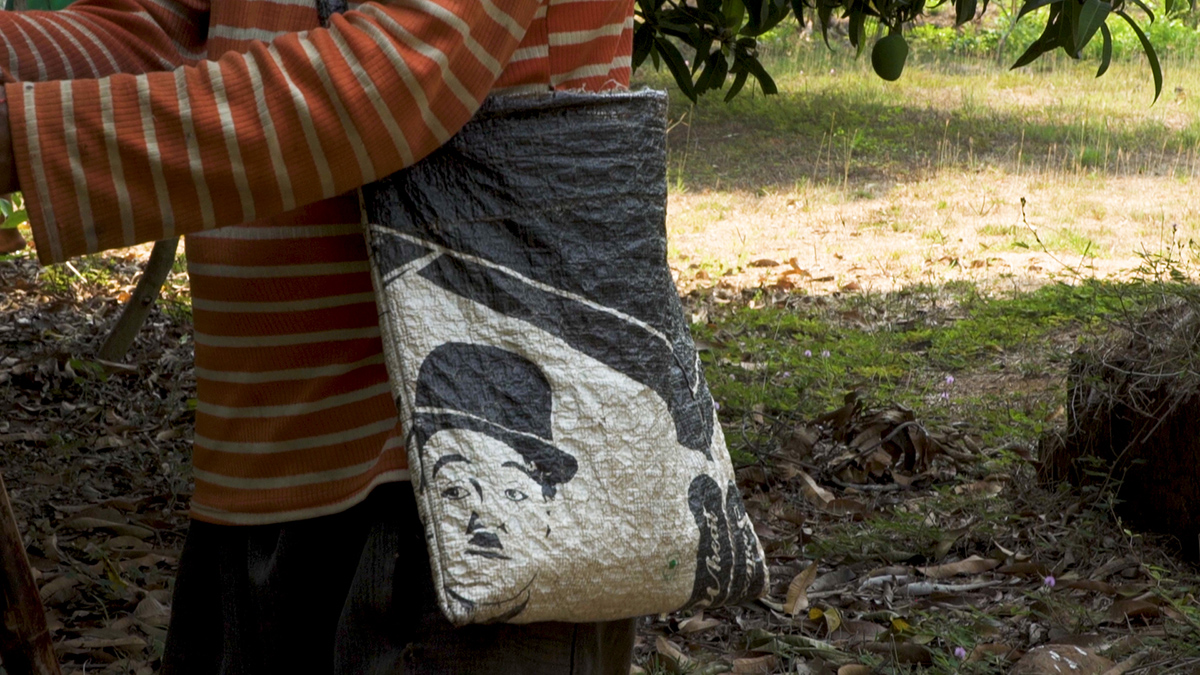
In 2021, during the second summer of the pandemic, I lived and video recorded in the small coastal town of Ratnagiri, India. Shot in the mango orchards of this region the film, "The Orchard and the Pardes", chronicles the last two months of their work with 4 immigrant (Nepalese) labourers during the mango harvesting season. In doing so it reveals not only their conditions of work but also a certain politics of intimacy across conflicting power relations between the labourers, their employer and myself as the filmmaker. It is a personal documentation film in a series of films, I have been making in this region. The film looks at once into small inter-personal spaces and at the same time critically examines the day to day working of a deeply fraught phenomenon of our global times - migrant labour. While looking critically at the processes of ethnographic filmmaking itself, "The Orchard and the Pardes", is a self-reflexive and personal work as much as it documents working conditions of immigrant labour in this western coastal region of India. It casts questions of identity, language and interpersonal politics and importantly the role of deceit in communication across class and gender. Mango growing, a booming agro-industry in this region, relies almost solely on seasonal migrant labour. The film reveals the vulnerability faced by the migrant labourers and how power dynamics works at the micro, day to day level. It explores the relationship between the woman filmmaker and the masculine world of agro-business playing out through various currents of interpersonal dialogue and becomes a deliberation on the complex insidiousness of power systems and their unfolding at a micro level.
Renu Savant is a filmmaker based in Mumbai. She is a Film and Television Institute of India graduate and has worked as a journalist and researcher. She is also a lover of literature and has completed her MA in English Literature. In 2012 she received the Special Jury Award in the 59th National Film Awards held in New Delhi for her short film “Airawat”; and the “Swarna Kamal” for Best Direction in the 62nd National Film Awards in 2015 for her short film “Aaranyak”, amongst other awards.
Catalogue : 2015Aaranyak | Experimental fiction | 35mm | color | 22:20 | India | 2014
Renu Savant
Aaranyak
Experimental fiction | 35mm | color | 22:20 | India | 2014
The film strives to create the symbolic echoes in the story of two girls searching for their imaginary friend, whose invisible quality they associate with the anonymity of the industrial black hole - the water pipe. On this, the backdrop of another story - an elemental and existential search for water in a dried up river by two migrant workers from the city. The film moves between the lyrical and the referential, the self-reflexive statement and the existential search, ending in an ironic arrival into the real.
The director, Renu Savant, is a graduate from the Film and Television Institute of India, Pune. Before this she has worked as researcher, journalist, lecturer. Her short film, Airawat, received the National Award in 2012, apart from other accolades.
Denis Savary
Catalogue : 2015Pégase | Video | dv | color | 1:51 | Switzerland | 2009
Denis Savary
Pégase
Video | dv | color | 1:51 | Switzerland | 2009
A la vallée de Joux, en Suisse, un vélo cycliste tente la traversée d`un lac gelé. Le titre de la vidéo, Pégase, provient de la sculpture que l’on voit en arrière plan. Ce petit film s’inscrit dans une série d’une trentaine de films autonomes réalisés entre 2003 et aujourd’hui.
Denis Savary est né en 1981 à Granges-Marnand en Suisse. Il vit et travaille à Genève. Diplômé de l’Ecole Cantonale d’Arts de Lausanne, il est en résidence à l’atelier des Arques, puis au Pavillon du Palais de Tokyo en 2006/2007. Il a participé à de nombreuses expositions de groupe : Enchanté château, organisée par Christian Bernard à la Fondation pour l’art contemporain Claudine et Jean-Marc Salomon en 2005, au MAMCO de Genève en 2006, Voici un dessin suisse (1990-2010), au Musée Rath (Genève), Wind, me souffle entre les images au Quartier à Quimper, au Printemps de Septembre à Toulouse en 2009 et 2008... Son travail a également été montré en 2008 au Jeu de Paume (Paris) dans le cadre de la programmation Satellite et au Musée Jénisch à Vevey (Suisse). Lors de l’exposition Le Narrenschiff au Centre Pasquart en 2010, on a pu découvrir un vaste ensemble de films de l’artiste. En 2012, la Kunsthalle de Berne lui consacre une exposition intitulée Balthiques. Plus récemment, une sélection de ses films a été projetée au Centre Georges Pompidou (Paris) lors du festival Hors Pistes. En 2015, une exposition monographique lui sera consacrée au MAMCO de Genève.
Kirill Savchenkov
Catalogue : 2023The Past Ripens in the Future | Video | hdv | color | 5:1 | Russia, Italy | 2022

Kirill Savchenkov
The Past Ripens in the Future
Video | hdv | color | 5:1 | Russia, Italy | 2022
Alli Savolainen
Catalogue : 2009Excuse Me Could You Make Me Photo | Video | dv | color | 3:0 | Finland | 2007
Alli Savolainen
Excuse Me Could You Make Me Photo
Video | dv | color | 3:0 | Finland | 2007
Kristina Savutsina, Georg Kussmann
Catalogue : 2022Khan’s Flesh (Telo Khana) | Documentary | mp4 | color | 57:30 | Germany, Belarus | 2021
Kristina Savutsina, Georg Kussmann
Khan’s Flesh (Telo Khana)
Documentary | mp4 | color | 57:30 | Germany, Belarus | 2021
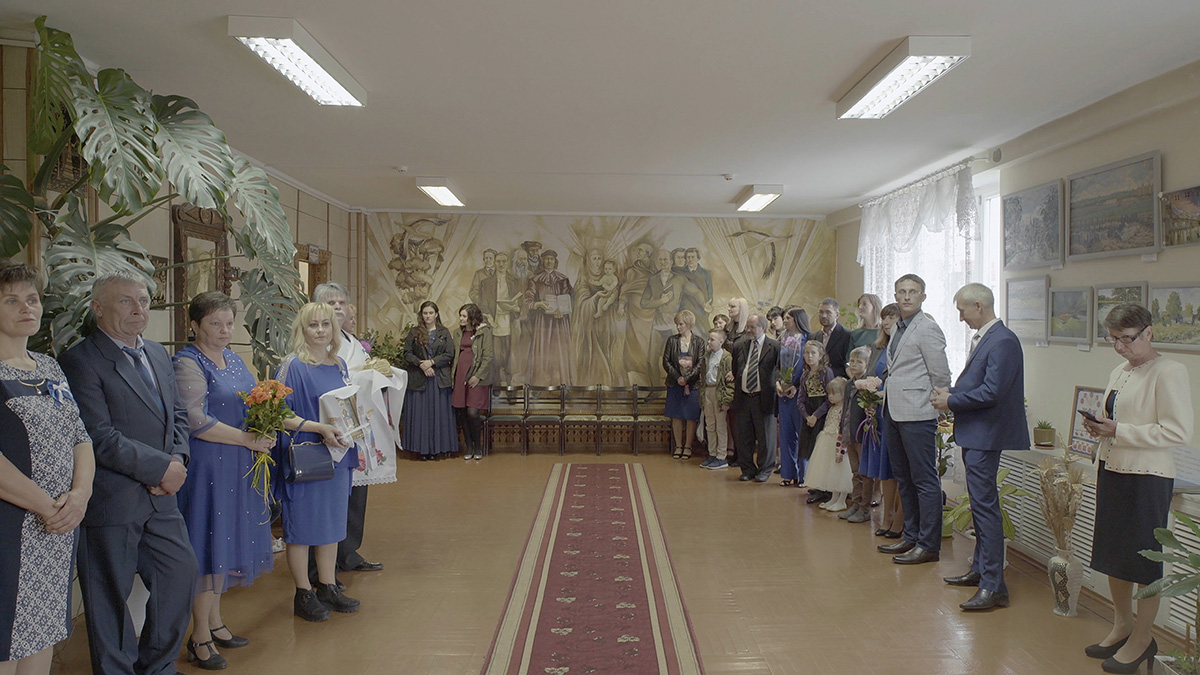
Choreographies of everyday life in a small town in Belarus. Through static images and associative montage, Telo Khana (Khan’s Flesh) conveys a perspective on society and the intangible power relations it is permeated by. The priest's ear recognizes the sins of the parishioners. The heartbeat of the fetus is monitored. Workers leaving factory. Telo Khana (Khan’s Flesh) shows the everyday life of a small town in Belarus as choreographies within stage-like images. The inhabitants move and position their bodies depending on the situation and according to their social and professional status. A skeleton of norms, rules and role models, completed with the bodies of active citizens, becomes a vital structure whose components alternatingly discipline themselves through mutual control, praise and punishment. These interwoven social structures are getting traced, broken up and recontextualized by a dance-like montage. The images strict tableau-style reveals a surreal theatricality of the institutionally shaped everyday life. At the same time Telo Khana (Khan’s Flesh) is a contemporary document of life in the Belarusian province, barely a year before the beginning of the nationwide protests against the state apparatus.
Kristina Savutsina was born in 1989 in Riga, into a Belarusian family. From 1993 to 2014 she lived in Belarus. She graduated with diploma in cultural studies in Minsk. In 2014 Kristina moved to Germany, where she has been studying film and fine arts at the University of Fine Arts Hamburg (HFBK). In her work Kristina deals with regulatory politics and its concrete manifestations in Belarus. Besides artistic practice she works as curator and translator. She lives and works in Hamburg. Georg Kussmann was born in Halle/Saale, East Germany in 1989 and grew up there. He studied photography and film at the University of Fine Arts in Hamburg. Currently he lives in Berlin and works as an artist, filmmaker and cinematographer.
Jacky Sawatzky
Catalogue : 2007Social metronome | Création numérique | 0 | color | 0:0 | Canada | 2006
Jacky Sawatzky
Social metronome
Création numérique | 0 | color | 0:0 | Canada | 2006
A few years ago, artist Jacky Sawartzky was living in the West End, a neighbourhood in Vancouver (Canada). Her apartment looked out on a back alley and four garbage bins. At dawn her wake-up call was the sound of the homeless pushing their shopping carts through the back alley intersected by car doors slamming and motors starting. The back alley was a lively place. In that same period she was doing research around surveillance methods that use a computer application other then vision to discriminate. "Social Metronome" is seven videos in which the image as well as the editing structure is determined by movement in the back alley. A camera controlled by a computer program uses the syntactical structure of a computer programming language - the logical proposition of 'if followed by then', to create a portrait of this back alley. The program selects according to the intensity of movement and not the content of movement. For seven days of a week, this system was set up from dawn to dusk, resulting in an average of 500 clips a day. These clips were then assembled into seven videos that portray a back alley based on movement.
Jacky Sawatzky is a performance and media artist. Originally from Winnipeg (Canada), she spent most of her life in the Netherlands, where she completed the majority of her formal training, and later moved to Vancouver to complete a MFA degree at Simon Fraser University. Her recent projects are intended to create an awareness of the concepts behind digital technology and explore the influence this technology has on our perception and consumption of such. She taught at Ryerson University, School for Image Arts, in Toronto, and is currently spending time on her own art-practice.
Victoria Sayago, Stecconi Bruno
Catalogue : 2015Tromü (o un estudio para un volcán) | Video | hdv | color | 16:0 | Argentina | 2014
Victoria Sayago, Stecconi Bruno
Tromü (o un estudio para un volcán)
Video | hdv | color | 16:0 | Argentina | 2014
Tromü (o un studio para un volcán) Author: Victoria Sayago and Bruno Stecconi Tromü means cloud in mapuche* language. A volcano becomes active and emits not lava but ashes so the inmense Patagonia is transformed. What is beautiful and tragic blends into a record that far from mummifying perhaps sublimes the openness of time and its transformations. The tragedy is only an instant in time, a man a point in space and life is in every particle, above all things, as a question form. *The word Mapuche is used both to refer to the original inhabitans of southwestern Argentina and southcentral Chile and to the language they speak.
Victoria Sayago (Argentina, 1980) Graduate (BA Cinematography) by Universidad del Cine. Her field of investigation, teaching and production is audiovisual experimental arts and photography. Curator of “El cine experimental de Narcisa Hirsch” by MQ2 Editora. She teached in FUC and IUNA (Universitary National Art Institute). Nowadays she teaches in Electronic Arts career UNTREF. She won the national grant of Fondo Nacional de las Artes and worked in the art curator department of the National Ministry of Education of Argentina. Her videos were shown in 60 Internationale Kurzfilmtage Oberhausen, 15º Festival de Artes Electrónicas Videobrasil, BIM (First Price), 11ème Biennale de l’image en Mouvement Geneva, Premio MAMBA- Fundación Telefónica 2005, others. She lives and works in Buenos Aires. Bruno Stecconi (Argentina, 1981) Graduated from the FUC (Cinema University Fundation) he is finishing his master degree in Media and Arts, at the European Degree School. His field of work is photography, video and cinema. His videos and photos took part of many different international and national festivals like: 60 Internationale Kurzfilmtage Oberhausen, BIM (First Price), Premio Repsol Lima Perú (First price), Talent Campus Berlin-Buenos Aires, FIVA, Bienal del Fin del Mundo, Bienal de Almeria, among others. With Daniel Böhm created MQ2 Editora. He lives and works in Buenos Aires city.
Nasri Sayegh
Catalogue : 2022OÙ NUL.LE AUTRE NE PEUT VOIR | Video | mp4 | color and b&w | 8:30 | Lebanon | 2021
Nasri Sayegh
OÙ NUL.LE AUTRE NE PEUT VOIR
Video | mp4 | color and b&w | 8:30 | Lebanon | 2021
4 Août 2020. Explosion de 2750 tonnes de nitrate d’ammonium sur le port de Beyrouth. Nous disparaissons; un instant. Certains n’apparaitront plus. Les images déferlent. Elles sont spectaculaires. Fascinent. Me viennent alors ces mots: De L’Impotence De L’Image. Image Partiale Image Partielle Impotente Inapte Assassine Faire Feu De Toute Image Tordre La Pellicule Saboter Les Pixels Pulvériser La Chambre Obscurcie Non Je N’Irai Pas Capturer L’Image Du Crime Faire Brasier De Toute Image Et Tenter Le Mot Encore Une Photographie Ne Saurait Faire Office De Document Empreinte Cérébrale Empreinte Corporelle Ceci Est Mon Image Ceci Est Mon Apocalypse Nous Sommes La Photographie Nous Sommes Le Document Ceci Est Mon Corps Exhibez-Le Sur La Place Publique Dans Vos Musées Puis Approchez Vous Regardez Dans Nos Yeux Tout Au Fond Le Brasier Le Souffle La Puissance L’Horreur Plus tard, cette autre tentative: “Où Nul.le Autre Ne Peut Voir Et/Ou Violets For My Furs”. Prologue, préliminaire, chant dernier, ce film est un essai de déplacements / polyphonies / frottements / césures erratiques / plaques mnémoniques et autres failles didascaliques. A travers l’archive intime et/ou collective, je tente de composer un prologue-prolongement d’images, pré-texte aux mots en cours, et ceux à venir.
Les images [photographies, collages, montages, broderies et mots] de Nasri Sayegh sont troubles, floues, furtives. Inquiètes, elles encourent à tout moment le risque soudain d’effacement. Puisant dans ses archives intimes, Sayegh altère, déconstruit l’image pour mieux reconstituer sa propre historiographie. Fouille archéologique/archétypale, il remonte le fil de ses Histoires au gré d’impulsions mnémoniques. Découpage, dissection dans le corps de l’image et recoupement de données visuelles deviennent prétextes pour inventer/déterrer/monter de nouvelles strates d’images et de mots. Interstitielle, l’entre-image, la presqu’image, ou le glitch (la Faille), deviennent quelque part le portrait en négatif, en creux, de l’artiste. Après des études de Lettres à l’USJ (Beyrouth) et à la Sorbonne (Paris), Sayegh s’investit dans les pratiques théâtrales et cinématographiques à l’ESAD-Paris. Acteur, il a été dirigé par Christian Merlhiot, Eileen Hofer, Jad Youssef, Jocelyne Saab. Performeur, il a été l'artiste-invité de Ilya & Emilia Kabakov, de Saâdane Afif, et de Rabih Mroué. Son approche multidisciplinaire a été présentée dans de nombreuses expositions au Liban parmi lesquelles: «Beyrouth, Peut-Être» (2016), «Unravelled» (2016), «Keine Fotos Bitte», «Tout doit Disparaître»(2018), et au Salon d’Automne du Musée Sursock de Beyrouth (2018). En 2017 il reçoit le second Prix Photomed et publie “Mes Nuits sont plus Amères que vos Jours”. En 2021, il a été résident à la Cité des Arts (Paris), la Villa des Auteurs (Marseille) et la Villa Arson (Nice). Né à Zahlé (Liban) en 1978, Nasri Sayegh Jr. vit et travaille dans un déplacement permanent.
Susannah Sayler, Edward Morris
Catalogue : 2026The Amazon is Elsewhere | Experimental film | 4k | color and b&w | 12:0 | USA | 2025
Susannah Sayler, Edward Morris
The Amazon is Elsewhere
Experimental film | 4k | color and b&w | 12:0 | USA | 2025
Amazon is Elsewhere is a short film that mediates on the unknowability and power of the Amazon for those who do not live within it. For many, the Amazon symbolizes “the lungs of the earth” or “nature” itself. For the indigenous people of the region, many of whom have no separate word for jungle or forest, it is simply home. The film centers around a building on the edge of the jungle: a mélange of architectural styles where trees break through the concrete floors; plants grow in the faux Corinthian columns; and jaguars made from ceramic tiles guard the entrance. AI-generated images express forces at play in both the building and the jungle that are difficult to parse as being malevolent or redemptive. The film is part of a body of work that considers how to represent the Amazon in light of its multiplicity of refracted meanings.
Susannah Sayler and Edward Morris (Sayler/Morris) work with video, photography and installation to examine our changing notions of nature, culture, and ecology. Their work is often place-based and focused on historical research. They have been awarded numerous fellowships including the Guggenheim Fellowship (2023) New York Artist Fellowship (2016), the Smithsonian Artist Research Fellowship (2014), the Center for Art and Environment Research Fellowship (2013), and the Loeb Fellowship at Harvard Graduate School of Design (2008). Their work has been exhibited broadly in the U.S. and internationally, including at the Massachusetts Museum of Contemporary Art, the Kunsthal in Rotterdam, the North Carolina Museum of Art, the Belvedere Museum, and the Southeast Center for Contemporary Art. Sayler currently teaches in the Film and Media Arts Department at Syracuse University, while Morris is Executive Director of Marble House Project. Their archives are collected by the Nevada Museum of Art / Reno, Center for Art and Environment. In 2006, Sayler/Morris co-founded The Canary Project, a studio that produces visual media and artworks that deepen public understanding of climate change. In 2021, they founded Toolshed, a platform for connecting ecological thought and action.
Lucas Sá
Catalogue : 2017Balada Para os Mortos | Experimental fiction | hdv | color | 22:0 | Brazil | 2016
Lucas SÁ
Balada Para os Mortos
Experimental fiction | hdv | color | 22:0 | Brazil | 2016
The city I live is the city I die. "The Ballad of Death" is a hybrid film that uses real and fictional scenes to question the different forms of urban violence. Mostly about the reality on Brazil, but most of all to treat the issue as a universal problem.
Lucas Sá was born in Brazil, 1992. He realized his short films: "O Membro Decaído" (2012), “Ruído Branco” (2013), “No Interior da Minha Mãe” (2013), "Nua por Dentro do Couro" (2014) and "Balada para os Mortos" (2016). Graduated on Cinema at Universidade Federal de Pelotas (UFPEL), his films was on the selection of Cinélatino – Rencontres de Toulouse, Guanajuato International Film Festival , PiFan - Puchon International Fantastic Film Festival, Festival Luso-Brasileiro de Santa Maria da Feira, Festival de Brasília, Janela Internacional de Cinema de Recife, Festival Internacional de Curtas de São Paulo, Mostra de Tiradentes and others. Nowadays, he is on the process of finalizing his first feature called "Canecalon - The Long Hair of Death".