Catalogue > Liste par artiste
Parcourez la liste complète des artistes présentés dans le cadre des Rencontres Internationales depuis 2004. Utilisez le filtre alphabétique pour affiner vos recherches.
Paul Sakoilsky
Catalogue : 2007Haroot's first experiment after arrival on earth | Vidéo expérimentale | dv | couleur | 1:23 | Royaume-Uni | 2006

Paul Sakoilsky
Haroot's first experiment after arrival on earth
Vidéo expérimentale | dv | couleur | 1:23 | Royaume-Uni | 2006
D'après Nietzsche, la qualité d'un philosophe peut se voir à son rire et surtout à la façon dont il rit. Pour un visage fermé comme Hobbes il n'a, à juste titre, que du mépris. Le meilleur des rires, le plus long et le plus éclatant. Le pinacle étant le rire "doré", "olympien"; le rire des Dieux, le rire de Dionysos...Paul Sakpolsky engage le spectateur à tendre les bras et à tout étreindre.
Paul Sakoilsky. Né en 1964 à Norfolk, Angleterre. Elevé en Angleterre et dans le Sud-Est asiatique. Licence d'Art et de Philosophie (avec les Honneurs) à l'Université de Londres-Nord. Conservateur/ Programmateur pluridisciplinaire et Art Live, 30 Underwood St Gallery /underwoodaudio, 1995-2001. Artiste freelance basé à Londres et à Vienne, écrivain et conservateur.
Taiki Sakpisit
Catalogue : 2023Seeing in the Dark | Film expérimental | digital | couleur et n&b | 29:0 | Thaïlande | 2021
Taiki Sakpisit
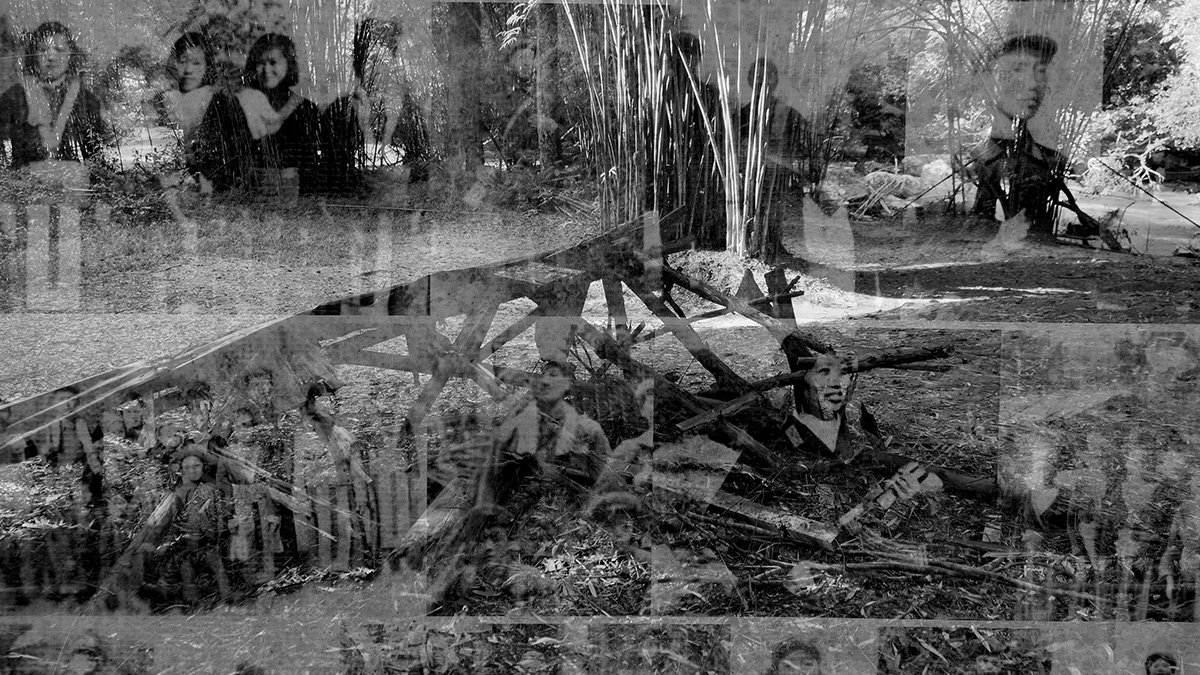
Seeing in the Dark
Film expérimental | digital | couleur et n&b | 29:0 | Thaïlande | 2021
A sensorial, left-field take on Thai political history that moves between a subdued past etched in the landscape of Khao Kho mountain, once a stronghold of communist insurgents, and a dynamic near-present marked by Bangkok’s 2021 anti-government protests.
Taiki Sakpisit is a filmmaker and visual artist working in Bangkok. His works explore the underlying tensions and conflicts, and the sense of anticipation in contemporary Thailand, through precise and sensorially overwhelming audio-visual assemblage using a wide range of sounds and images. His films produce heightened and uneasy modes of spectatorship that often relate to the tumultuous socio-political climate in Thailand. Taiki’s moving images and experimental shorts have been presented at numerous exhibitions and film festivals. His feature length film The Edge of Daybreak premiered at the International Film Festival Rotterdam in the Tiger Competition and won the FIPRESCI award. His film, A Ripe Volcano was presented at Les Rencontres Internationales in 2014.
Taiki Sakpisit
Catalogue : 2020The Mental Traveller | Doc. expérimental | hdv | couleur | 18:0 | Thaïlande | 2019
Taiki Sakpisit
The Mental Traveller
Doc. expérimental | hdv | couleur | 18:0 | Thaïlande | 2019
The Mental Traveller is a poetic reflection on the nature of remembrance. It navigates through the mental spaces of people consumed by memories of lost time. The film meditates on the passing of time, external behaviors, habitual patterns of thought and the sensorial realities of five mentally disordered men inside the psychiatric ward in Chanthaburi Province, east of Thailand, in which it is filmed. The film was conceived from the director’s connections to his parents and companions as they went through states of sickness, impending death, dementia, grief, and temporary insanity. At the same time it echoes upon the turbulent years of political upheavals and repercussions in Thailand, resulting the nation in a state of delirium, lunacy and trauma.
Taiki Sakpisit is a filmmaker working in Bangkok. His works explore the underlying tensions and conflicts, and the sense of anticipation in contemporary Thailand, through precise and sensorially overwhelming audio-visual assemblage using a wide range of sounds and images. His films produce heightened and uneasy modes of spectatorship that often relate to the tumultuous socio-political climate in Thailand. Taiki’s moving images and experimental shorts have been presented at numerous exhibitions and film festivals, including International Film Festival Rotterdam, Images Festival, Yebisu International Festival for Art, Les Rencontres Internationales, Dallas Contemporary and Kunstverein Gottingen. His previous work A Ripe Volcano (2011) has been screened internationally at more than 40 film festivals and museums. His first feature film The Edge of Daybreak is currently in post-production.
Catalogue : 2014A Ripe Volcano | Film expérimental | hdcam | couleur | 15:15 | Thaïlande | 2011
Taiki Sakpisit
A Ripe Volcano
Film expérimental | hdcam | couleur | 15:15 | Thaïlande | 2011
A Ripe Volcano reflects Bangkok as a site of mental eruption and emotionally devastated land during the heights of terrors, primal fears, trauma, and the darkness of time. A Ripe Volcano revisits The Rattanakosin Hotel, the site where the military troops captured and tortured the civilians, students and protesters who were hiding inside the hotel during the Black May of 1992; and Rajadamnern Stadium, a Roman amphitheatre styled Muay Thai boxing arena, which was built in 1941-45 during the Second World War and since then has become the theatrical labyrinth of physical and mental explosions. The work builds around the recollections of human experiences that took place within these spaces and shifts through the mental space distilled from the possessed memory of wounded time.
Taiki Sakpisit is a visual artist and filmmaker living and working in Bangkok. Over the past years, he has been prolific as an experimental filmmaker in Thailand producing series of works that may have similar in narrative structures but vastly different in details of visual language that narrates the world of images and sound with a repetitive sense of enigmatic gloaming atmosphere. Sound has a big role in his films, by either working in collaboration with sound designer, or combining his cinematic languages with existing music, he paves to a unique situation to discover layers of meanings hidden in the stories. In latest work The Age of Anxiety (2013), he immerses into the world of sound and found footages from period Thai soap opera creating a textured and transforming experience. His works have shown in exhibitions and screened both in Thailand and many festivals abroad. (Bangkok Art and Culture Centre)
Taiki Sakpisit
Catalogue : 2026The Spirit Level | Film expérimental | 0 | couleur et n&b | 20:30 | Thaïlande | 2024
Taiki Sakpisit
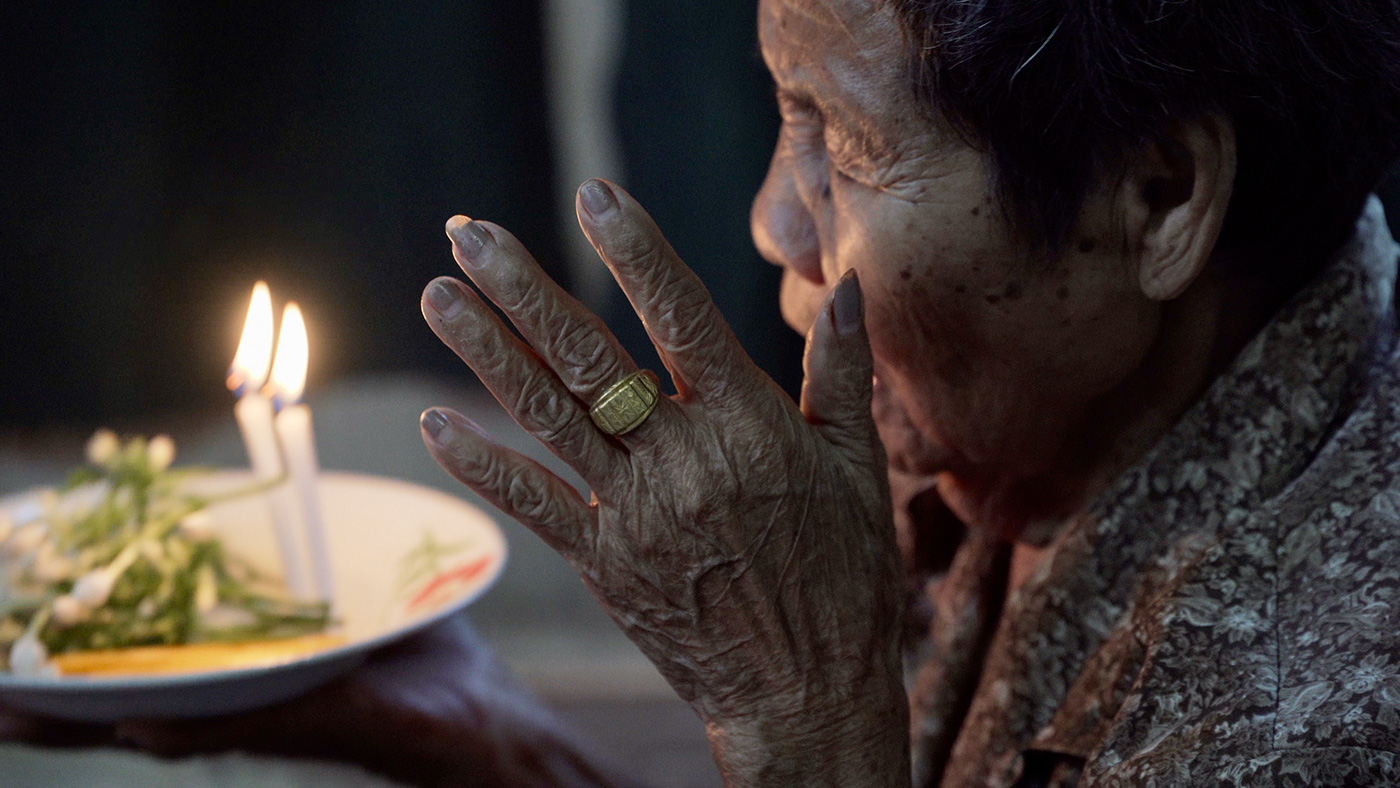
The Spirit Level
Film expérimental | 0 | couleur et n&b | 20:30 | Thaïlande | 2024
The Spirit Level hauntingly captures a psychic summoning a spirit to learn the truth about the deaths of Thai protestors who had been in exile since the 2014 coup d’état. In a frantic frame, the psychic appears to be paralyzed in the moment. Capturing the collective ethos, the section served as a reminder of everyday forms of resistance and touched deeply on the power and effects of human connections and encounters.
Taiki Sakpisit is a Thai filmmaker and artist based in Bangkok, known for his innovative approach to storytelling and his profound exploration of Thailand’s complex history. Sakpisit unpacks the nation's turbulent past, infusing his films with a subtle yet resounding political commitment. His works delve into the underlying tensions, conflicts, and anticipations of contemporary Thailand, meticulously crafted through precise and sensorially overwhelming audio-visual assemblage. Utilizing a diverse array of sounds and images, Sakpisit creates immersive experiences that challenge conventional narratives. His feature-length film The Edge of Daybreak won the FIPRESCI prize at the International Film Festival Rotterdam for its “Mysterious atmosphere and rich imagery in depicting trauma and violence, for its capacity of dealing with 40 years of political turmoil through a powerful and hypnotic cinematic journey, and for its compromise with the past in order to confront the present and the next future.” He was Artist-in-Residence at the Rijksakademie van beeldende kunsten in Amsterdam (2022-23) and the NTU Centre for Contemporary Art in Singapore (2018). His recent works have been exhibited at the Gwangju Biennale, MOCA Busan, M+ Hong Kong, Bangkok Art Biennale, the Mercosul Biennial, and Thailand Biennale, Phuket.
Taiki Sakpisit
Catalogue : 2026The Spirit Level | Vidéo expérimentale | 4k | couleur et n&b | 20:30 | Thaïlande | 2024
Taiki Sakpisit
The Spirit Level
Vidéo expérimentale | 4k | couleur et n&b | 20:30 | Thaïlande | 2024
The Spirit Level médite sur les traumatismes et la violence qui traversent la Thaïlande troublée, reflétés à travers les voyages en voiture de l’artiste dans la région nord-est du pays, le long du fleuve Mékong. Le film commence avec une rivière descendant de la cascade Than Thong pour se jeter dans le Mékong, et explore une grotte souterraine mythique qui, selon la légende, abritait un royaume enfoui sous le Mékong, là où réside le divin Naga dans le monde inférieur. Au cœur de The Spirit Level se trouve une séquence frénétique montrant une médium en plein état de possession. Cet épisode épileptique émule un effet de rétroaction optique, suscitant des images spectrales semblables à une transe, alors que l’entité spirituelle s’inscrit dans le corps de la médium. Progressivement, ces images hallucinées se délitent et sont interrompues par une image figée. Cette suspension du temps surgit pour commémorer les esprits disloqués des trois militants anti-gouvernementaux dont les corps mutilés furent retrouvés dans le Mékong en décembre 2019. Exilés depuis le coup d’État de 2014, ils furent kidnappés par un escadron de la mort officiellement soutenu. Leurs corps furent découverts menottés, éventrés, lestés de blocs de béton, enveloppés dans des sacs de riz brun, puis jetés dans le fleuve. Il s’agit de l’un des innombrables cas de disparitions forcées et d’assassinats de dissident·e·s politiques perpétrés par l’État depuis les années 1970, une violence toujours en cours et jamais résolue. The Spirit Level évoque ainsi les courants souterrains d’obscurité qui ondulent sous la surface d’une Thaïlande profondément problématique.
Taiki Sakpisit (???? ?????????????) est un cinéaste et artiste visuel basé à Bangkok, reconnu pour son approche innovante du récit et son exploration profonde de l’histoire complexe de la Thaïlande. À travers le prisme du cinéma, Sakpisit met à nu le passé tumultueux du pays, imprégnant ses films expérimentaux d’un engagement politique subtil mais retentissant. Ses œuvres sondent les tensions, les conflits et les anticipations sous-jacentes de la Thaïlande contemporaine, méticuleusement façonnées par des assemblages audiovisuels précis et sensoriellement saisissants. Utilisant une vaste gamme de sons et d’images, Sakpisit crée des expériences immersives qui défient les récits conventionnels et suscitent la réflexion. Son long métrage The Edge of Daybreak a remporté le prix FIPRESCI au Festival international du film de Rotterdam pour sa « mise en scène d’une atmosphère mystérieuse et d’images riches dépeignant le traumatisme et la violence, pour sa capacité à aborder quarante ans de bouleversements politiques à travers un voyage cinématographique puissant et hypnotique, et pour sa volonté d’affronter le passé afin de confronter le présent et l’avenir ». Ses œuvres récentes ont été présentées à la 14e Biennale de Gwangju, au Museum of Contemporary Art de Busan, à la Bangkok Art Biennale 2024, à la 14e Biennale du Mercosur ainsi qu’à la Thailand Biennale.
Avelino Sala
Ivan Salatic
Catalogue : 2017Dvorista | Fiction expérimentale | 4k | couleur | 20:59 | Montenegro | 2015
Ivan Salatic
Dvorista
Fiction expérimentale | 4k | couleur | 20:59 | Montenegro | 2015
In the backyards there are sheds, a huge old tree, wild plants with wild offspring, waste scattered around. This is where they spend their time. A decaying building is about to be destroyed and someone may go beyond. Soon one of them becomes aware of the sea.
Ivan Salatic was born in 1982 in Dubrovnik and grew up in Herceg Novi. He finished the School of Fine and Applied Arts in Belgrade and graduated from the Faculty of Dramatic Arts in Cetinje. He has directed several short films that have participated in festivals such as Venice Film Festival, Sarajevo Film Festival, Torino Film Festival.
João Salaviza
Jonathan Saldanha
Catalogue : 2021AFTER THE LAW | Fiction expérimentale | hdv | couleur | 27:0 | Portugal | 2020
Jonathan Saldanha
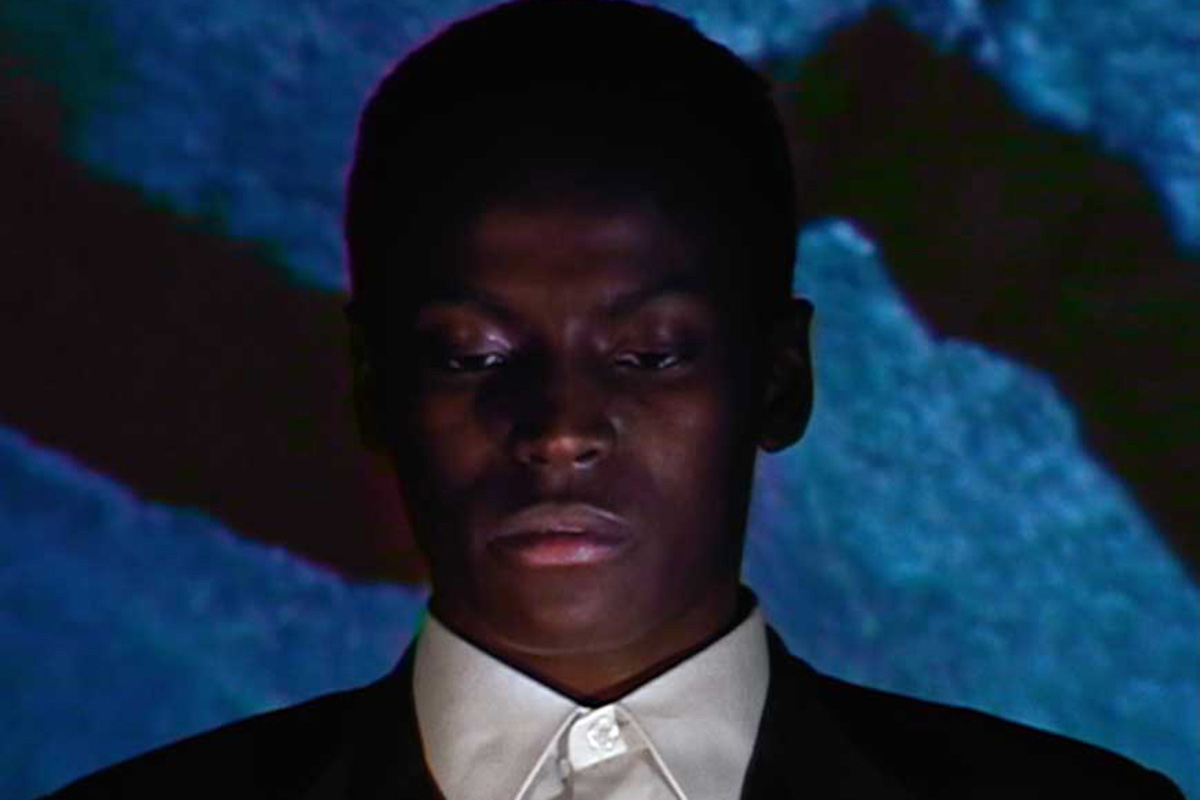
AFTER THE LAW
Fiction expérimentale | hdv | couleur | 27:0 | Portugal | 2020
"AFTER THE LAW" est un film court, où un tribunal d'humains et d'objets est contaminé par un virus impossible à trouver. Le verdict porte sur un accident inconnu, qui a fracturé la loi et érodé la parole. A travers une mutation toxique des rôles et des formes, des preuves, des gestes et des sensations haptiques, le tribunal perd sa capacité à délibérer. Tourné pendant une performance en direct, à l'aide d'un seul caméscope, ce tribunal a été conçu comme un dispositif cybernétique pour des réponses haptiques, où le mouvement collectif, la lumière, les vibrations, la reconnaissance des visages et l'empathie se heurtent à une voix synthétique. Tout le discours a été généré à l’aide de Google WaveNet, un modèle génératif utilisant des réseaux neuronaux pour simuler des voix humaines. Ce protocole a été exploré et accéléré pour trouver des moments où la voix de la machine se brise, bégaie et scande une glossolalie. En 2019, ces images ont été utilisées comme une partition visuelle pour qu'un groupe d'adolescents sourds les interprète dans une langue des signes étendue, explorant les lacunes de la description et les étendant à la description corporelle de cette cour aphasique. Les voix ont été enregistrées dans des états induits par l’hypnose, rendant floues les frontières qui séparent le corps de ses résonateurs spatiaux. Une voix cassée hante un paradoxe politique dans une bio-ingénierie inversée.
Jonathan Uliel Saldanha a étudié la sculpture à la Faculté des Beaux-Arts de l'Université de Porto (Portugal), et s'est consacré à l'étude du tabla – un instrument de percussion indien - avec le groupe musical hindou Jugalbandi. Il a fondé le collectif SOOPA, un laboratoire visuel, performatif et sonore, et le groupe Silorumor. Il est membre du Fujako duo, et est directeur du groupe HHY & The Macumbas. Depuis 2010, il a composé plusieurs œuvres sonores expérimentales, co-créé les pièces "Boca Wall", "Shark" et "King Trilogy", et réalisé "Jungle Machine", "Khorus Anima", "The Well" et "Oxidation Machine". Il a présenté ses œuvres dans divers lieux, notamment au musée Serralves, Porto (Portugal); au Rivoli Teatro Municipal do Porto (Portugal); au Palais de Tokyo, Paris (France); et au festival Accès(s), Billère (France). Il a collaboré avec des artistes tels que Carlos Zíngaro, Steve Mackay, Adrian Sherwood, Vera Mantero, Mark Stewart, João Fiadeiro entre autres. En tant que musicien, il s'est produit dans divers festivals, notamment au Nyege Nyege, Jinja (Ouganda); à Unsound, Cracovie (Pologne); à Sónar, Barcelone (Espagne); à Primavera Sound, Barcelone (Espagne); à Amplifest, Porto (Portugal); au Out.Fest, Barreiro (Portugal); Circular, Vila do Conde (Portugal); à Million Party; au Neopop, Viana do Castelo (Portugal); au Tapettefest, Campénéac (France); et à Elevate, Graz (Autriche). En 2019, il a présenté l'installation "Vocoder & Camouflage", dans "Vanishing Point: works from the António Cachola collection", Torreão Nascente Lisbonne (Portugal); la pièce "Scotoma Cintilante", pour chœur d'aveugles et sculpture-partition, à l’Université catholique de Porto (Portugal), au São Carlos Lisbon National Theater, Lisbonne (Portugal) et à la Biennale BoCa 2019 (Portugal); et "Broken Field Atlantis" un concert de nappes de lumière, a été présenté au Rivoli Teatro Municipal do Porto (Portugal). Toujours en 2018, avant cette exposition, il a présenté la pièce "SØMA", où un groupe d'adolescents sourds traduit en gestes le tournage d'un tribunal animiste, à Culturgest Lisboa, Lisbonne (Portugal) et au Rivoli Teatro Municipal do Porto (Portugal). En même temps, il a présenté les expositions "Behemoth Republic", dans le cycle "Sonic Geometry" au Archipelago São Miguel Arts Center, Ribeira Grande (Açores, Portugal); et "Dismorfia" à l'Université Catholique de Porto (Portugal).
Aarno Salosmaa
Miranda Salvador
Catalogue : 2025Life Eternal | Film expérimental | 4k | couleur | 23:19 | Canada, Pays-Bas | 2022
Miranda Salvador
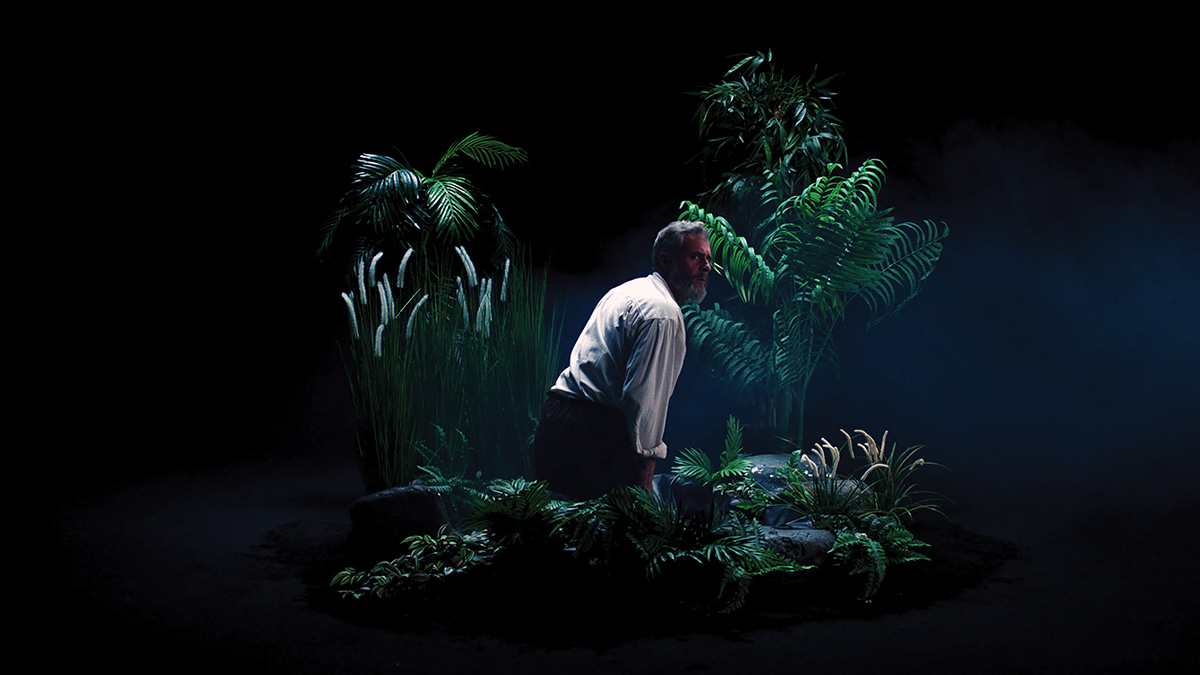
Life Eternal
Film expérimental | 4k | couleur | 23:19 | Canada, Pays-Bas | 2022
Life Eternal tells three intertwining stories about immortality. The first story is about Spanish explorer Juan Ponce de Leon and his legendary search for the Fountain of Youth. The second story tells us of Henrietta Lacks, a poor black tobacco farmer whose cancer cells were used to create the first immortal human cell line. The third story takes up James Bedford, the first person to undergo cryogenic freezing in hopes of future revival. Spanning centuries, the film installation explores the desires and emotional entanglements of these stories. At the same time, it touches upon the complex and troubling historical themes that jump out so vividly from them - colonialism, exploitation, and techno-utopianism. This work is a poetic dialogue on the eternal conversation on time, our place in a constructed reality and our attitude toward it.
Salvador Miranda is a Mexican-Canadian filmmaker, artist, and producer. His debut short film, This is my land... (2019), premiered at the International Film Festival Rotterdam (IFFR). His film installation, Life Eternal (2022), premiered at Kasseler Dokfest, received a nomination for the 2022 Golden Cube Prize, and won the 2024 Hertzog da Silva Award. His latest documentary short, Promised Land (2023), also premiered at IFFR. In addition to international screenings, his films are frequently featured in gallery and art festival settings, including Eye Filmmuseum (Netherlands), Ruhrtriennale (Germany), Proyector (Spain), and IMPAKT Festival (Netherlands). Miranda is an alumnus of the Kunstinstituut Parallel Curriculum programme and holds an MFA cum laude in Lens-Based Media from the Piet Zwart Institute.
Mark Salvatus
Catalogue : 2026Should the Source of Fulfillment Be Seen with Our Eyes | Vidéo expérimentale | hdv | couleur | 16:25 | Philippines | 2024
Mark Salvatus
Should the Source of Fulfillment Be Seen with Our Eyes
Vidéo expérimentale | hdv | couleur | 16:25 | Philippines | 2024
Kung ang Makagiginhawa ay Matingnan ng Ating mga Mata (Should the Source of Fulfillment Be Seen with Our Eyes) – 2024 Cette œuvre explore les ethno-écologies du mont Banahaw — la manière dont le monde plus-qu’humain qui l’entoure façonne, et est façonné par, les imaginaires culturels. Elle tisse ensemble les recherches continues de Salvatus sur les histoires vernaculaires du mont Banahaw et de Lucban, rassemblées à partir d’archives familiales, de récits populaires et de motifs mythiques. Elle examine plusieurs trajectoires de renouveau millénariste qui convergent vers le mont Banahaw en tant que topos mystique et ethno-écologique : d’une révolution destinée à encourager les populations locales à trouver leur propre idiome de discernement religieux, à une histoire de fanfares et de musiciens et leur rôle dans une modernité régionale postcoloniale, jusqu’à la propre pratique d’assemblage et de « salvaging » de Salvatus qui nous inscrit dans ce monde mystique partagé, éveillant en nous un esprit politique à l’échelle planétaire.
Mark Salvatus, artiste philippin originaire de Lucban et vivant à Manille, décrit son approche artistique étendue sous le terme de « Salvage Projects ». Ce concept, qui fait écho à son nom, constitue un cadre à partir duquel se déploient ses multiples investigations portant sur les vestiges de la politique urbaine, les strates narratives de l’histoire nationale, et le mouvement incessant de la vie contemporaine. Travaillant à travers une pluralité de disciplines — objets, photographie, vidéo, installations et pratiques participatives — Salvatus conçoit des formes d’engagement directes et indirectes qui mettent en lumière les résultats multiples des énergies, des significations et des expériences.
Catalogue : 2021Jalan-Jalan | Fiction expérimentale | mp4 | couleur | 10:15 | Philippines | 2019
Mark Salvatus
Jalan-Jalan
Fiction expérimentale | mp4 | couleur | 10:15 | Philippines | 2019
Kaliurang, à Yogyakarta, est situé près du volcan actif Merapi, un lieu où les fantômes des souvenirs et de l'histoire font partie du paysage. Il s’agit d’une vidéo subtile, créée spécialement pour 900mdpl en 2019, dans laquelle les habitants de la ville deviennent acteurs, dans le rôle de fantômes. De temps en temps, les habitants de Kaliurang voient un Hollandais à pied, ou un soldat japonais qui marche, ou une Javanaise portant une jarre d'eau, ou un animal sauvage ou un être surnaturel... passer comme s'ils étaient là, vivant parmi nous. Ils se cachent dans les arbres - comme si les arbres, la forêt et la montagne étaient les témoins nus de toute l'histoire du colonialisme, de la guerre et du processus néolibéral du développement. Une œuvre de fiction sans flux narratif. Les fantômes marchent-ils parmi nous ou sommes-nous les fantômes ?
Mark Salvatus (né en 1980) vit et travaille à Manille, aux Philippines. Il a étudié les arts publicitaires à l'université de Santo Tomas, à Manille. Ses œuvres ont été présentées lors de différentes expositions et dans différents lieux, notamment à la 2e Biennale de Lahore (Pakistan); au Kyoto Art Center (Japon); à l'ISCP, New York (USA); au Kunstraum Kreuzberg/Bethanien, Berlin (Allemagne); à la 14e Biennale de Sharjah (Émirats arabes unis); au Mill6 CHAT, Hong Kong (Chine); à la Biennale de Gwangju - Pavillon PCAN (Corée du Sud); au Musée d'art moderne et contemporain, Séoul (Corée du Sud); à l'Osage Art Foundation, Hong Kong (Chine); au Mori Art Museum, Tokyo (Japon); aux Rencontres internationales Paris/Berlin; à la Biennale d'architecture de Venise - Pavillon des Philippines, (Italie); à la 6e Biennale de Thessalonique (Grèce); SONSBEEK International, Arnhem (Pays-Bas); à la 3e Biennale de Singapour; à la 4e Triennale de Guangzhou (Chine); aux 14e et 16e Biennale de Jakarta (Indonésie); au Koganecho Bazaar, Yokohama (Japon); à l’Hotel Inmigrantes, Manifesta 9; à la Brunei Gallery - SOAS, Université de Londres (Royaume-Uni); à Hasselt (Belgique) ; à la Biennale d’Honolulu - Exposition Prologue (USA); au Survival Kit Festival, Umea (Suède); à la Sharjah Art Foundation (Émirats arabes unis); à l’Asia Society, New York (USA); au Art Center Ongoing Tokyo (Japon) ; au Museum Baerengasse, Zurich (Suisse); à La Trobe Art Institute, Bendigo (Australie); au Cultural Center of the Philippines et au Vargas Museum and Filipiniana Research Center (Philippines). Il a été artiste en résidence à l'ACC - Asia Culture Center, Gwangju (Corée du Sud); à la Rijksakademie van beeldende kunsten, Amsterdam (Pays-Bas); au IASPIS Umea (Suède); à la Art OMI, New York (USA); à la Common Room Networks Foundation, Bandung (Indonésie) et au Goyang Art Studio (Corée du Sud).
Catalogue : 2017Notes from the New World | Vidéo | hdv | couleur | 12:24 | Philippines | 2015
Mark Salvatus
Notes from the New World
Vidéo | hdv | couleur | 12:24 | Philippines | 2015
The Philippine Constabulary Band was a symphonic band formed in 1901 by African-American Lt. Walter Loving of the US Army’s 48th Volunteer Infantry during the American period in the Philippines. Since its first public performance on May 20, 1903, the band has brought the country international fame through its participation in international competitions, including the 1904 St. Louis Exposition in the USA, where the band placed second. In this infamous fair where live Filipinos were exhibited especially the dog-eating Igorot tribe, the band performed Rossini’s classical music ‘Willam Tell Overture’. Forward to the year 2015, the artist’s father’s has a vast vinyl record collection and one of them is a Philippine Constabulary band record that was released in the 70’s under the New Society period of the dictator Ferdinand Marcos. Creating a new narrative about the band and the collection, the current Philippine Army band played Rossini’s Willaiam Tell Overture after 100 years ago side by side by the vast collection of the artist’s father that were gathered slowly since the 70’s.
Mark Salvatus is a contemporary artist from Manila, Philippines. His works crosses various disciplines and media that deal with chance encounters and everyday politics creating his own narrative and visual language. Calling his works and practice as “Salvage Projects”, he has shown his projects in different international exhibitions including the Philippine Pavilion, Venice Architecture Biennale (2016); SONSBEEK International, Arnhem, The Netherlands (2016); Singapore Biennale (2011), Guangzhou Triennale (2011), Jakarta Biennale (2011/2015), Koganecho Bazaar, Yokohama (2011), Hotel Inmigrantes, Manifesta 9, Hasselt, Belgium (2012), Prologue Exhibition: Honolulu Biennale (2014), Survival Kit Festival, Umea, Sweden (2014) and Next Wave Festival, Melbourne (2010). He had also presented his works in different museums and galleries including La Trobe University, Visual Arts Centre, Bendigo; Asia Society, New York; Museum Brengasse, Zurich; Center for Contemporary Art, Singapore; Ateneo Art Gallery; Cultural Center of the Philippines, Vargas Museum; Metropolitan Museum of Manila; Osage Foundation, Hong Kong; 1335 Mabini in Manila; Art Center Ongoing, Tokyo. Mark is a recipient of the 13 Artists Award from the Cultural Center of the Philippines (2012) and Ateneo Art Awards (2010). In 2012 he founded and acts as the artistic director of 98B COLLABoratory, a multi-disciplinary site for creative sharing, discussion and collaboration.
Roy Samaha
Catalogue : 2020Sun Rave | Vidéo | hdv | couleur | 11:0 | Liban | 2018
Roy Samaha
Sun Rave
Vidéo | hdv | couleur | 11:0 | Liban | 2018
This video explores childhood anecdotes heard around an apartment, which until 1989, when a major solar storm erupted, had been inhabited by a strange couple. Some suspected them of being undercover agents while others said they were just some new age sorcerers. The work addresses the relationship between layers of history, outstanding events in nature and ancient cyphering of language; how the cycles of the Sun’s unpredictable release of energetic flares affect the magnetic fields of the earth and influence radio transmissions, communication and reason on a mass scale.
Roy Samaha is a Lebanese artist, living and working in Beirut. He explores the boundaries of filmic language, perception of reality and the memory of personal objects.
Roy Samaha, Fakhoury Omar
Catalogue : 2014Incarnation of a Bird from an Oil Painting | Fiction expérimentale | hdcam | couleur | 8:0 | Liban | 2013
Roy Samaha, Fakhoury Omar
Incarnation of a Bird from an Oil Painting
Fiction expérimentale | hdcam | couleur | 8:0 | Liban | 2013
??Once Dr. Dahesh referred to a painting made by Mrs Marie Haddad, and which showed a bird on a tree. The colours of the painting moved and took the form of flesh, blood and feathers and the bird in that painting was converted into a living bird, which was placed in a cage and remained there for several years. Its place on the linen remained white.?
Omar Fakhoury Artist, Beirut Born in 1979, Omar Fakhoury is a multidisciplinary visual artist. He holds a Bachelor in Painting and a Masters of Fine Arts Roy Samaha, Artist, Beirut Born in 1978, a video artist and photographer living and working in Beirut Lebanon where he completed a Masters degree in film studies.
Catalogue : 2008Please rewind me later | Doc. expérimental | dv | couleur | 30:0 | Liban | 2007
Roy Samaha
Please rewind me later
Doc. expérimental | dv | couleur | 30:0 | Liban | 2007
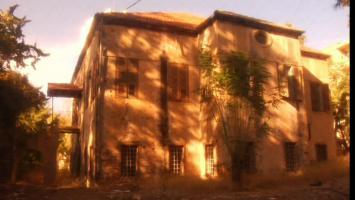
Cette oeuvre se veut un outil de recherche dans son propre passé. Il s'agit de relier les lieux d'enfance, les rêves et les enregistrement VHS. Comment réaliser un autoportrait sans s'adonner aux clichés des archives historiques? Il a été dit : "Vous devez comprendre: la mémoire des objets enregistre et retient les actions humaines... de sorte que les générations futures en héritent... Mais on vous a aussi demandé de partir, de tout laisser derrière vous comme si vous n'étiez jamais venu. Les choses, les lieux possèdent une sorte de mémoire. Quand vous entrez dans un espace fermé, une partie de vous y reste attachée, vous perdez quelque chose. Vous devez apprendre à partir sans abandonner une parcelle de votre être... Apprendre à circuler sans laisser de trace."
Roy Samaha est né à Beyrouth en avril 1978. Il y vit et travaille comme vidéographe à ses heures. Il est diplômé en cinéma de la Holy Spirit University of Kaslik (USEK), au Liban.
Roy Samaha
Catalogue : 2014Incarnation of a Bird from an Oil Painting | Fiction expérimentale | hdcam | couleur | 8:0 | Liban | 2013
Roy Samaha, Fakhoury Omar
Incarnation of a Bird from an Oil Painting
Fiction expérimentale | hdcam | couleur | 8:0 | Liban | 2013
??Once Dr. Dahesh referred to a painting made by Mrs Marie Haddad, and which showed a bird on a tree. The colours of the painting moved and took the form of flesh, blood and feathers and the bird in that painting was converted into a living bird, which was placed in a cage and remained there for several years. Its place on the linen remained white.?
Omar Fakhoury Artist, Beirut Born in 1979, Omar Fakhoury is a multidisciplinary visual artist. He holds a Bachelor in Painting and a Masters of Fine Arts Roy Samaha, Artist, Beirut Born in 1978, a video artist and photographer living and working in Beirut Lebanon where he completed a Masters degree in film studies.
Catalogue : 2008Please rewind me later | Doc. expérimental | dv | couleur | 30:0 | Liban | 2007
Roy Samaha
Please rewind me later
Doc. expérimental | dv | couleur | 30:0 | Liban | 2007
Cette oeuvre se veut un outil de recherche dans son propre passé. Il s'agit de relier les lieux d'enfance, les rêves et les enregistrement VHS. Comment réaliser un autoportrait sans s'adonner aux clichés des archives historiques? Il a été dit : "Vous devez comprendre: la mémoire des objets enregistre et retient les actions humaines... de sorte que les générations futures en héritent... Mais on vous a aussi demandé de partir, de tout laisser derrière vous comme si vous n'étiez jamais venu. Les choses, les lieux possèdent une sorte de mémoire. Quand vous entrez dans un espace fermé, une partie de vous y reste attachée, vous perdez quelque chose. Vous devez apprendre à partir sans abandonner une parcelle de votre être... Apprendre à circuler sans laisser de trace."
Roy Samaha est né à Beyrouth en avril 1978. Il y vit et travaille comme vidéographe à ses heures. Il est diplômé en cinéma de la Holy Spirit University of Kaslik (USEK), au Liban.
Roy Samaha
Catalogue : 2012Transparent Evil | Vidéo | | couleur | 27:0 | Liban, Allemagne | 2011

Roy Samaha
Transparent Evil
Vidéo | | couleur | 27:0 | Liban, Allemagne | 2011
Late 2010, I got commissioned by Leica to follow in the footsteps of James Bruce and document the Nile river from Alexandria to Aswan. I invited my friend Gheith El-Amine to join me on this trip. it was his first time in Egypt. December 10, 2010: we made plans to leave on February 1, 2011. He contacted two Egyptian friends of his, and we were supposed to meet them as soon as arrived there. January 25. The revolution started in Egypt. the only incoming images so far were made by protesters with cellular phones and uploaded on the net. They were much more efficient than the state-owned television station which was still doing the pro-regime propaganda in high definition resolution.
Rajee Samarasinghe
Catalogue : 2022Show Me Other Places | Doc. expérimental | super 16mm | couleur | 11:25 | Sri Lanka, USA | 2021
Rajee Samarasinghe
Show Me Other Places
Doc. expérimental | super 16mm | couleur | 11:25 | Sri Lanka, USA | 2021
At the center of this film is a Sri Lankan woman accessing other places in digital form, while situated in her own physical reality. Navigating through a multitude of spaces from the natural world to man-made environments as well as virtual planes, traditional relationships between the creator, the tool, and the subject are questioned, shattered and reconstructed. Reflecting on my own practice as a filmmaker working in non-fiction, the film takes a collage-like approach to examining issues around representation, verisimilitude, the ethnographic image, and the limitations of the form itself. Shot on seven different cameras (and a video synthesizer) on both film and video over the course of a decade in Sri Lanka, China, and the United States, I delve into some of my fundamental curiosities as a filmmaker.
Rajee Samarasinghe was born and raised amidst the decades-long civil war in Sri Lanka. He later left for the United States where he is now based. He received his BFA from the University of California San Diego and his MFA from the California Institute of the Arts. His filmmaking practice was born out of a desire to understand the circumstances around his childhood and his work often navigates the terrain of memory, migration, and impermanence within the framework of deconstructing the ethnographic image and the colonial gaze in contemporary media. Rajee is currently working on his debut feature film, "Your Touch Makes Others Invisible," which explores post-civil war Sri Lanka—the project has received support from the Sundance Institute, Berlinale Talents' Doc Station, Field of Vision, and True/False Film Festival’s inaugural PRISM program. Rajee was also named one of Filmmaker Magazine’s 25 New Faces of Independent Film in 2020, and had solo shows at the Museum of Modern Art (MoMA) and the Berwick Film & Media Arts Festival in 2021. His short films have been exhibited at venues internationally including the Tiger Short Competition at the International Film Festival Rotterdam, New Directors/New Films presented by Film Society of Lincoln Center & MoMA, MoMA Doc Fortnight, BFI London Film Festival, FIDMarseille, Festival du nouveau cinéma, Internationale Kurzfilmtage Oberhausen, Slamdance, SFFILM Festival, REDCAT, CROSSROADS at SFMOMA, Vancouver International Film Festival, Guanajuato International Film Festival, Media City Film Festival etc. He’s received the Tíos Award for Best International Film at the Ann Arbor Film Festival, the Film House Award for Visionary Filmmaking at the Athens International Film + Video Festival, and an Honorable Mention Award at the Thomas Edison Film Festival among others.
Rajee Samarasinghe
Catalogue : 2022Misery Next Time | Doc. expérimental | mp4 | noir et blanc | 4:58 | Sri Lanka | 2021
Rajee Samarasinghe
Misery Next Time
Doc. expérimental | mp4 | noir et blanc | 4:58 | Sri Lanka | 2021
This associative stream of visuals, culled from the past, reflect on the roles of art, labor, and journalism in contemporary Sri Lanka, facing a dubious future ahead. Memory and ethnographic deconstruction cascade in an obliterated form, forging a dire and prescient assemblage.
Rajee Samarasinghe was born and raised amidst the decades-long civil war in Sri Lanka. He later left for the United States where he is now based. He received his BFA from the University of California San Diego and his MFA from the California Institute of the Arts. His filmmaking practice was born out of a desire to understand the circumstances around his childhood and his work often navigates the terrain of memory, migration, and impermanence within the framework of deconstructing the ethnographic image and the colonial gaze in contemporary media. Rajee is currently working on his debut feature film, "Your Touch Makes Others Invisible," which explores post-civil war Sri Lanka—the project has received support from the Sundance Institute, Berlinale Talents' Doc Station, Field of Vision, and True/False Film Festival’s inaugural PRISM program. Rajee was also named one of Filmmaker Magazine’s 25 New Faces of Independent Film in 2020, and had solo shows at the Museum of Modern Art (MoMA) and the Berwick Film & Media Arts Festival in 2021. His short films have been exhibited at venues internationally including the Tiger Short Competition at the International Film Festival Rotterdam, New Directors/New Films presented by Film Society of Lincoln Center & MoMA, MoMA Doc Fortnight, BFI London Film Festival, FIDMarseille, Festival du nouveau cinéma, Internationale Kurzfilmtage Oberhausen, Slamdance, SFFILM Festival, REDCAT, CROSSROADS at SFMOMA, Vancouver International Film Festival, Guanajuato International Film Festival, Media City Film Festival etc. He’s received the Tíos Award for Best International Film at the Ann Arbor Film Festival, the Film House Award for Visionary Filmmaking at the Athens International Film + Video Festival, and an Honorable Mention Award at the Thomas Edison Film Festival among others.
Catalogue : 2021Imitation of Life | Vidéo expérimentale | mov | couleur | 0:58 | Sri Lanka | 2020
Rajee Samarasinghe
Imitation of Life
Vidéo expérimentale | mov | couleur | 0:58 | Sri Lanka | 2020
Retrouvant la trace du regard colonial à la fois dans l'image ethnographique et dans les formes des médias dominants, cette courte réalisation décrit une rencontre impressionniste avec une femme vue de très loin, qui cache son visage au téléobjectif curieux.
Rajee Samarasinghe est cinéaste. Originaire du Sri Lanka, il habite actuellement aux États-Unis. Il est titulaire d'une licence de la UCSD – University of California San Diego (USA) et d'un Master de CalArts – California Institute of the Arts, Los Angeles (USA). Il travaille actuellement sur son premier long métrage, "Your Touch Makes Others Invisible", inspiré par ses expériences d'enfance pendant la guerre civile au Sri Lanka - le projet a reçu une bourse du Sundance Documentary Fund, Salt Lake City (USA), en 2019; a été invité à la Doc Station de Berlinale Talents, Berlin (Allemagne), ainsi qu'au Inogural PRISM Programm du True/False Film Festival, Columbia (USA) en 2020. Il a également été nommé comme l'un des 25 nouveaux visages du cinéma indépendant par le "Filmmaker Magazine" en 2020. Son travail a été présenté à l'international, notamment dans le cadre de la Tiger Short Competition du Festival international du film de Rotterdam (Pays-Bas); du New Directors/New Films présenté par la Film Society of Lincoln Center et le MoMA – Museum of Modern Art, New York (USA); du BFI London Film Festival, Londres (Royaume-Uni); du FIDMarseille (France); du Festival du nouveau cinéma, Montréal (Canada); des Internationale Kurzfilmtage Oberhausen (Allemagne); du Slamdance Film Festival, Park City (USA); du REDCAT – Roy and Edna Disney/Calarts Theater, Los Angeles (USA); du SFFILM Festival – San Francisco International Film Festival (USA); du Media City Film Festival, Windsor (Canada); et du Guanajuato International Film Festival, Guanajato (Mexique). Entre autres prix, il a reçu le "Tíos Award for Best International Film" au Ann Arbor Film Festival, Ann Arbor (USA); le "Film House Award for visionary filmmaking" au Athens International Film + Video Festival, Athènes (Grèce), et un "Audience Award" au festival CROSSROADS au SFMOMA – San Francisco Museum of Modern Art (USA).
Catalogue : 2019Pituvahalaya | Doc. expérimental | mov | couleur | 7:49 | Sri Lanka | 2018
Rajee Samarasinghe
Pituvahalaya
Doc. expérimental | mov | couleur | 7:49 | Sri Lanka | 2018
Shot improvisationally in 2010, shortly after the end of the Sri Lankan civil war, this film takes a lyrical approach to examining recent history and the process of reconstruction in the post-war era. The visions of an exile are carried through an immoral silence, to an end both dubious and bittersweet.
Rajee Samarasinghe is an award-winning Sri Lankan filmmaker and visual artist. Some of his recent work examines contemporary ethnographic practices through associations of family and heritage. He received his BFA from the University of California San Diego and his MFA from the California Institute of the Arts. Rajee`s work has been exhibited at venues internationally.
Catalogue : 2017If I Were Any Further Away I’d Be Closer to Home | Doc. expérimental | hdv | noir et blanc | 14:30 | Sri Lanka | 2016
Rajee Samarasinghe
If I Were Any Further Away I’d Be Closer to Home
Doc. expérimental | hdv | noir et blanc | 14:30 | Sri Lanka | 2016
Le déroulement de la pellicule se confronte à d’autres rouleaux manufacturés face à l’objectif. Le grain des images restitue, en noir et blanc, les habitants, les animaux, les paysages. La fabrication quotidienne voisine la vie domestique dans le découpage rythmé des gestes du travail. L’action semble accueillir quelques à côtés du labeur. Le film s’organise sous nos yeux, animé par de nouvelles itérations. L’absence de piste sonore n’annule que le bruit mécanique des projecteurs anciens. - Gilles Grand
Rajee Samarasinghe is a Sri Lankan visual artist. He received his BFA from the University of California San Diego and his MFA from the California Institute of the Arts. Rajee`s work has been exhibited at venues internationally.
Catalogue : 2016An Appearance of Fortitude | Film expérimental | hdv | couleur | 5:14 | Sri Lanka, USA | 2015
Rajee Samarasinghe
An Appearance of Fortitude
Film expérimental | hdv | couleur | 5:14 | Sri Lanka, USA | 2015
Part of an ongoing series of American psychogeographies, this particular piece investigates the idea of "remoteness," as two people establish a curious rapport in a sleepy Southern Californian suburb.
Rajee Samarasinghe is a Sri Lankan visual artist. His work often examines consciousness and impermanence. Some of his recent work develops questions into contemporary ethnographic practices. Rajee attended the University of California San Diego and is currently an MFA candidate at the California Institute of the Arts.
Catalogue : 2015Untitled (Horse) | Doc. expérimental | hdv | noir et blanc | 4:23 | Sri Lanka, USA | 2014
Rajee Samarasinghe
Untitled (Horse)
Doc. expérimental | hdv | noir et blanc | 4:23 | Sri Lanka, USA | 2014
A symbiotic collaboration in movie motion. After Muybridge.
Rajee Samarasinghe is a relatively young imagemaker, once upon a time Sri Lankan. He makes fake narratives and destructive formal experiments. He aspires to make videos of a respectable length and standard. Rajee attended the University of California, San Diego and is currently an MFA candidate at the California Institute of the Arts.
Keith Sanborn
Catalogue : 2018An Epilogue | Vidéo | hdv | couleur et n&b | 3:3 | USA | 2016
Keith Sanborn
An Epilogue
Vidéo | hdv | couleur et n&b | 3:3 | USA | 2016
A détournement of Walter Benjamin`s "Theses on the Philosophy of History," reconfigured for an era dominated by the digital, the instability of the physical body, and the seeming triumph of technology over art and the virtual over the real. Is technology the handmaiden of art? Is art the handmaiden of technology? Or is the notion of a handmaiden so hopelessly obsolete, then it can no longer provide metaphors which provoke us to think?
Keith Sanborn is a media artist, theorist, translator, and curator based in New York.
Catalogue : 2012Oh, David, you know what colors I like... | Vidéo expérimentale | | couleur et n&b | 1:34 | USA | 2011
Keith Sanborn
Oh, David, you know what colors I like...
Vidéo expérimentale | | couleur et n&b | 1:34 | USA | 2011
This video was produced for an exquisite corpse project by Jason Simon to be screened on Bastille Day, 2012 in Narrowsburgh, NY. I added a title to my segment and kept the first second of picture from the previous video, the starting point for my work. The title was inspired by a remark of Paul Sharits. One of his assistants had just screened a test for him of an elaborate optical printer film. The title was his response. Also, the Stones played several times on the David Frost Show. Also James Brown was Black and Proud. Also I?m going to dye my hair black and you can?t stop me.
Keith Sanborn is a media artist, theorist, curator and translator based in New York.
Samuel Sanchez
Vanja Sandell Billström, Pagano, Lucia
Catalogue : 2025Diskret Matematik | Fiction expérimentale | 4k | couleur | 15:20 | Suède | 2024
Vanja Sandell BillstrÖm, Lucia Pagano
Diskret Matematik
Fiction expérimentale | 4k | couleur | 15:20 | Suède | 2024
A passage between two buildings, a nail salon, a stairwell, a badminton hall, an atrium, a hospital culvert. Life takes place. With the small details of existence in focus, rather than the larger narratives and conflicts, fragments are connected to a possible outcome. In mathematics, the word discrete is used to describe objects that are not continuous and separated from each other. Discrete mathematics is applied in a number of different areas such as encryption, databases, game theory, graph theory and algorithms.
Lucia Pagano and Vanja Sandell Billström were educated at the Lodz Film School and at the Royal Institute of Art in Stockholm. Discrete Mathematics is their second film as a duo which further explores methods developed in their previous film Park. Park was nominated to the Best Swedish Short at Göteborg Film Festival 2020, Tempo Short Award, 1KM Film Award, and winner of the Tempo Sound Award the same year. Previously they have shown their work at festivals and art venues around the world.
Catalogue : 2021Park | Documentaire | mov | couleur | 14:58 | Suède | 2020
Vanja Sandell BillstrÖm, Pagano, Lucia
Park
Documentaire | mov | couleur | 14:58 | Suède | 2020
Scènes de personnes en mouvement. Certains travaillent, d'autres profitent de leur temps libre. Le bruit des avions et des métros nous rappelle la ville située derrière ce bout de nature artificielle. Un court documentaire fait de scènes filmées dans les parcs de Stockholm, pendant une année.
Lucia Pagano est née en 1984. Elle est réalisatrice et artiste, et a été formée à la Lodz Film School, Lodz (Pologne) et au Royal Institute of Art, Stockholm (Suède). Ses films s'intéressent aux détails de la vie quotidienne, souvent en observant, parfois jusqu'à l'absurde, des fragments de réalité en apparence insignifiants. Ils ont été projetés dans des festivals à l’international, notamment à São Paolo (Brésil); à San Francisco (USA), à Kiev (Ukraine) et à Varsovie (Pologne). Ils ont été récompensés ou ont reçu une mention honorifique aux festivals du film de Los Angeles (USA), Oberhausen(Allemagne), Stockholm (Suède), et au Nordisk Panorama, Malmö (Suède). Vanja Sandell Billström est née en 1983. Elle est réalisatrice et artiste. Elle a été formée au Royal Institute of Art, Stockholm (Suède). Elle travaille à la fois la forme documentaire, des situations mises en scène, et des installations vidéo. Ses films portent souvent sur des situations quotidiennes, et présentent des personnages qui semblent réfléchir spontanément aux conditions de leur vie quotidienne ou aux situations du film lui-même. Vanja Sandell Billström a déjà été nommée pour le Prix Guldbagge du meilleur film court suédois, et a exposé au Göteborg Konsthall (Suède); à la Supermarket Art Fair, Stockholm (Suède); à la Box Gallery, Göteborg (Suède); et Färgfabriken, Stockholm (Suède). "Park" est le premier film qu’elles ont réalisé ensemble. Il a été nommé pour le prix du meilleur film court suédois au festival du film de Göteborg (Suède); pour le Tempo Short Award, Stockholm (Suède); pour le 1KM Film; et a remporté le Tempo Sound Award, Stockholm (Suède) [2020].