Catalogue > Search
Results for : Tout le catalogue
Artavazd Pelechian
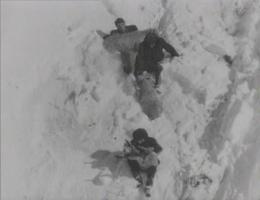
Les saisons
Experimental doc. | 35mm | black and white | 30:0 | Armenia | 1972
?The seasons? is a very beautiful poem evoking in a vast parable certain moments in Armenian history, from its volcanic origins, up to the industrial period.
Artavazd Pelechian?s cinema ? who, Jean-Luc Godard assures us, is the greatest filmmaker in the world - remains still today not very known in the West. The film maker of Armenian origins got his formation with the VGIK between 1963 and 1968. He lives and works in Moscow, city that he very seldom leaves. His work, which is built film upon film, for the sake of research and experimentation implies what we have discovered, tired levels in movement of evolution. Pelechian films little and only short films. The density of any new opus is in fact every time a rare piece of work.
Artavazd Pelechian
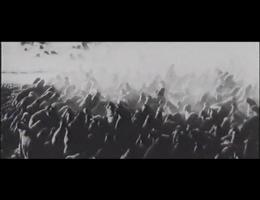
Les habitants
Experimental doc. | 35mm | black and white | 10:0 | Armenia | 1970
The film is built on the idea of `` a relationship full of mankind with nature and animals. It deals with the attacks perpetrated by man against nature, and the threat of the destruction of the natural harmony.
`Artavazd Pelechian?s cinema ? who, Jean-Luc Godard assures us, is the greatest filmmaker in the world - remains still today not very known in the West. The film maker of Armenian origins got his formation with the VGIK between 1963 and 1968. He lives and works in Moscow, city that he very seldom leaves. His work, which is built film upon film, for the sake of research and experimentation implies what we have discovered, tired levels in movement of evolution. Pelechian films little and only short films. The density of any new opus is in fact every time a rare piece of work.
Artavazd Pelechian
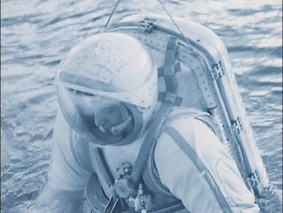
Notre siècle
Documentary | 35mm | color | 30:0 | Russia | 1982
Artavazd Pelechian
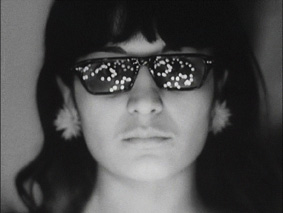
Nous
Documentary | 35mm | black and white | 30:0 | Russia | 1969
Artavazd Pelechian
Vie
Experimental doc. | 35mm | color | 6:30 | Armenia | 1993
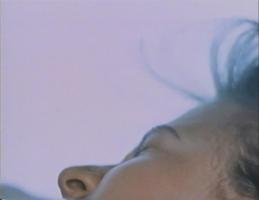
The profile of a woman, lying disfigured - as in pleasure ? in an ancestral gesture. The holding of the child which has just been born, magnified by an ideal, a contrast and abstraction of space which surrounds them, evokes a religious iconography just like the portrait of the mother and child.
`Artavazd Pelechian?s cinema ? who, Jean-Luc Godard assures us, is the greatest filmmaker in the world - remains still today not very known in the West. The film maker of Armenian origins got his formation with the VGIK between 1963 and 1968. He lives and works in Moscow, city that he very seldom leaves. His work, which is built film upon film, for the sake of research and experimentation implies what we have discovered, tired levels in movement of evolution. Pelechian films little and only short films. The density of any new opus is in fact every time a rare piece of work.

Sini Pelkki
Sheet N°4
Experimental film | 16mm | color | 12:0 | Finland | 2018
Sheet No4 examines the outlines and borders of a photograph -and a human being. How to look, how to see, how to move. Using repetition and reinterpretation to both construct and deconstruct the image and its boundaries. A Conflict between outlines and content. One of the starting points of the work was the dialogue between Pelkki and the four multidisciplinary artists, whom she invited to collaborate; Emma Hammarén, Magnús Logi Kristinsson, Johan Jonason and Keiko Yamamoto. The interaction and diverse interpretations embodied in those exchanges becomes the core of Sheet No4. The name of the work refers to a contact sheet, a proposal for a photograph, where all the options are there with possible re-framing and remarks.
Sini Pelkki (b. 1978 Helsinki) works with photography and moving image. She is interested in the subjectivity of seeing, introspective lives of spaces within spaces. In her works landscapes, figures and objects turn into layered narratives that lead to various paths and ambiguous readings. Recent years her work has been going towards different kind of collaborations. Her first work in book form Arranged Lines was released in 2018. Sini Pelkki (b. 1978 Helsinki) works with photography and moving image. She is interested in the subjectivity of seeing, introspective lives of spaces within spaces. In her works landscapes, figures and objects turn into layered narratives that lead to various paths and ambiguous readings. Recent years her work has been going towards different kind of collaborations. Her first work in book form Arranged Lines was released in 2018. Pelkki gained her Bachelor degree in Fine Art from Chelsea College of Art and Design, London (UK) in 2002 and MA from the Academy of Fine Arts Helsinki in 2008. Her works have been shown in exhibitions and film festivals internationally.

Sini Pelkki
Embarkation
Experimental film | 16mm | color | 7:10 | Finland | 2012
Embarkation is a moving image that is framed like a photograph. Through repetition it builds up into a single image, like a photograph that consists of countless images. With simultaneous presence and absence, the work explores the realtionship between still and moving image.
Sini Pelkki is an artist working with photography and moving image. Her work derives and evolves around photography and the photographic image. Her film works are often based on photographic images. Focusing on the subjectivity of seeing and the relation between a human and different physical and psychological environments and spaces. Her work has been shown across Europe in exhibitions and festivals. Pelkki was born 1978 in Helsinki, Finland. She studied fine art in Chelsea College of Art and Design in London (UK) and at the Academy of Fine Arts in Helsinki. She is currently based in Helsinki.

Sini Pelkki
Length
Experimental film | 16mm | color | 7:23 | Finland | 2016
the work examines the length of a thought, the length of a moment. Through repetition and rhythm, the piece builds a sense of a narrative, distance and closeness at the same time. We are looking at a figure in an urban landscape, soon to be dislocated. The Gaze abandons and re-draws the images. Perception grapples with distances; between the figure and its landscape, between the viewer and the piece itself.
Sini Pelkki (born 1978) is an artist based in Helsinki, Finland. She gained her BA (Hons) Fine Art from Chelsea College of Art and Design, London (UK) in 2002 and her MFA from the Academy of Fine Arts, Helsinki in 2008. Sini Pelkki’s work derives and evolves around photography and the photographic image. Focusing on the subjectivity of seeing and the diverse dialogue between environments and the layers of spaces within spaces.
Christelle Pellerin
En plein désert, il y avait un puits
Documentary | dcp | color | 45:2 | France | 2025
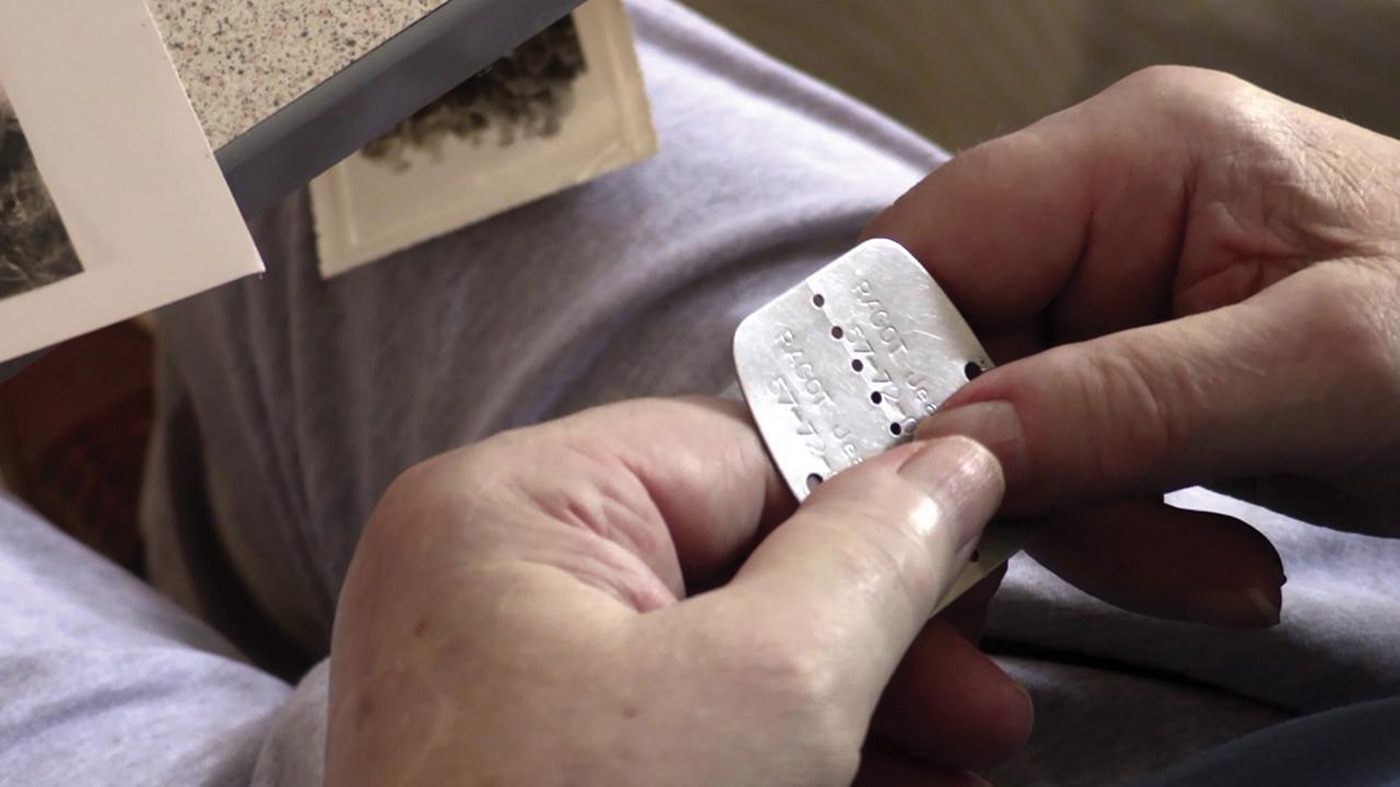
Jean is 84 years old. He looks at photos of his past in Algeria wishing to ‘relive it to forget’. At 20, he was called up for military service. Amateur archives resonate with his visions, revealing the paradox between a colonialist and paternalistic political discourse and the reality of a war that lasted 7 years. He tells his story to exorcise. "We were killing civilians. We tortured the guy." It was in the desert, where there was a well — a source of life — which couldn't withstand the contamination of a war that wasn't even acknowledged as such.
Chris Pellerin, born in Brest in 1970, studied theatre in England and modern foreign literature in Italy, where she joined an experimental Shakespearean theatre lab. A self-taught artist in drawing and painting, she later returned to France and earned a Master of Fine Arts from the Beaux-Arts in Caen. There, she developed a dual practice of drawing and video, using the latter as a visual diary where intimacy and transience intertwine. She went on to create experimental visual and plastic art workshops in confined institutions—psychiatric hospitals, prisons, hospices—seeking to restore identity and visibility to people often forgotten or labeled. Her work focuses on self-portraiture and self-representation as tools for personal emancipation. Participants actively take part in the creative process, expressing themselves beyond words through what unconsciously emerges. Her films approach intimacy through visual devices, particularly drawing, avoiding any voyeuristic gaze. This protean cinematic practice has led to a filmography marked by formal and narrative experimentation, including Vue d’intérieurs (psychiatric center) and Fort intérieur (prisons). Since 2010, she has lived and worked between France and Belgium, where she directed En attendant le déluge and In the middle of the desert, there was a well, both awarded in numerous national and international festivals.

Caroline Pellet
Birds Bark
Experimental doc. | hdv | color | 20:30 | France | 2016
Birds bark is inhabited by dogs, cats, beetles, ants, parrots, humans, snails, chickadees, verms. These beings appear as shadows, stains, abstract forms, projections, in a kind of ventriloquist image. They imitate, hunt, love each other and engage with, hide from and play with each other. The one making noises is not who you think it is; dialogues punctuate these noises, from the man imitating birds in front of an hilarious assembled, to this girl asking questions about prehistorical dragonflies, and the concomitant existence of mosquitos, or this man making his dog resolve math equations, and this group of persons trying to identificate a nocturnal insect. The film is crossed by duplication and imitation through the choice of "indirect" images and the "noisist" sound, forming a strange bestiary which human is a part of.
BIOGRAPHY/EXHIBITIONS 2016 : -Residency at atelier 105 @lightcone -Dome, group show, ELA projects, Athen 2015 : -Streaming festival, cyan program -Festival des cinémas différents, Paris 2014 : -Streaming festival, orange program -Rencontres internationales Paris-Berlin-Madrid -"Point de curie", opening show @laTrap with Thu Van Tran and Pier Francesco Lerose 2013 : -Artist film festival, Cutlog official selection, Paris -Cologne OFF: section ExDoc Before : -Workshop & conference run by Gabrielle Reiner at National School of Fine Arts, Paris-Cergy (ENSAP-C) about Oblique, Imagos and Silex -Independant film festival, Lisboa -FID, section cahiers du cinéma, Marseille

Caroline Pellet
Oblique
Experimental doc. | hdv | color | 13:24 | France | 2010
OBLIQUE (Texte de Gabrielle Reiner) Oblique est un documentaire expérimental sur un groupe d'astronomes. L'artiste filme ces chercheurs d'étoiles et entrecoupe ces plans avec ceux des «objets » (le nom donné aux étoiles par les astronomes) observés au travers de l'oculaire. La prise de vue adopte les caractéristiques de la caméra de surveillance(1) et une voix-off évoque les techniques utilisées pour améliorer la vision scotopique (2). Les astronomes se documentent avec des photographies d'astres génériques ce qui leur permet à l'observation de mieux discerner les détails des astres. On peut parler d'« expérience améliorée ». Le spectateur est invité à une « expérience esthétique » (Cf. Jauss) paradoxale qui oscille entre deux points de vue: l?exploration optique des observants répond à celle sensible et relative de l'?uvre artistique. En confrontant théories scientifiques et théories esthétiques de la perception, la vidéaste interroge de manière critique la normativité de l'expérience perceptive. 1. Le night shot est le procédé qui permet de filmer la lumière infra-rouge, invisible à l'?il nu. Fait à l ́origine pour les caméras de surveillance, il a été transposé sur les caméras amateurs. 2. Il faut en effet entre vingt et quarante cinq minutes à l'?il pour basculer en scotopique, perception qui sollicite des cellules appelées bâtonnets situées non pas au centre de l'?il mais en périphérie. A cause de cette répartition des cellules ayant la plus grande sensibilité, les astronomes utilisent un regard « oblique » ou décalé, c'est à dire qu'ils visent à coté de l'objet qu'ils veulent voir afin d'obtenir une perception plus détaillée.
BIOGRAPHIE Vit et travaille à Saint-Ouen (France) née en 02/02/1984 en France

Christophe Pellet
Et dans le flux, tu le perdras
Experimental fiction | hdv | color | 61:0 | France | 2023
Léo is fed up with the reproaches of his friend Kaspar, who pushes him to join social networks to make their love story public. Their breakup marks Leo's departure for Berlin, a city in which he hopes to be reborn through contact with an alternative milieu. But the city's real estate speculation pushes Leo to the margins. Years later, Kaspar's biological daughter, raised by a couple of women, recalls this love story on a theater stage.
Christophe Pellet was born in Toulon in 1963, he is graduated from FEMIS. His texts, published by l’Arche Editeur, were staged by Jacques Lasalle, Mathieu Roy, Anne Théron, Stanislas Nordey, Renaud Marie Leblanc, Olivier Martinaud, Michael Delaunoy, Madeleine Louarn, Jacques David, Jean-Louis Thamin,Carlos Manuel, Jean-Pierre Miquel, Mary Peate. They were translated into English, German, Portuguese, Arabic, Spanish. He made two short films and one medium-length film: – Soixante trios regards, with Mireille Perrier, Dominique Reymond, Françoise Lebrun, Katarzyna Krotki in 2011 (Bathysphère production, 50 mn). – Plus dure sera la chute, in 2010 (Sedna film, 10 mn). – Le garçon avec les cheveux dans les yeux, with Edith Scob, in 2008 (20 mn). He was Villa Medicis Hors les murs laureate) in 2004, and scholarship holder from CNL.
Eric Pellet
Sept micro-films aporétiques
Video | mov | color and b&w | 37:25 | France | 2024
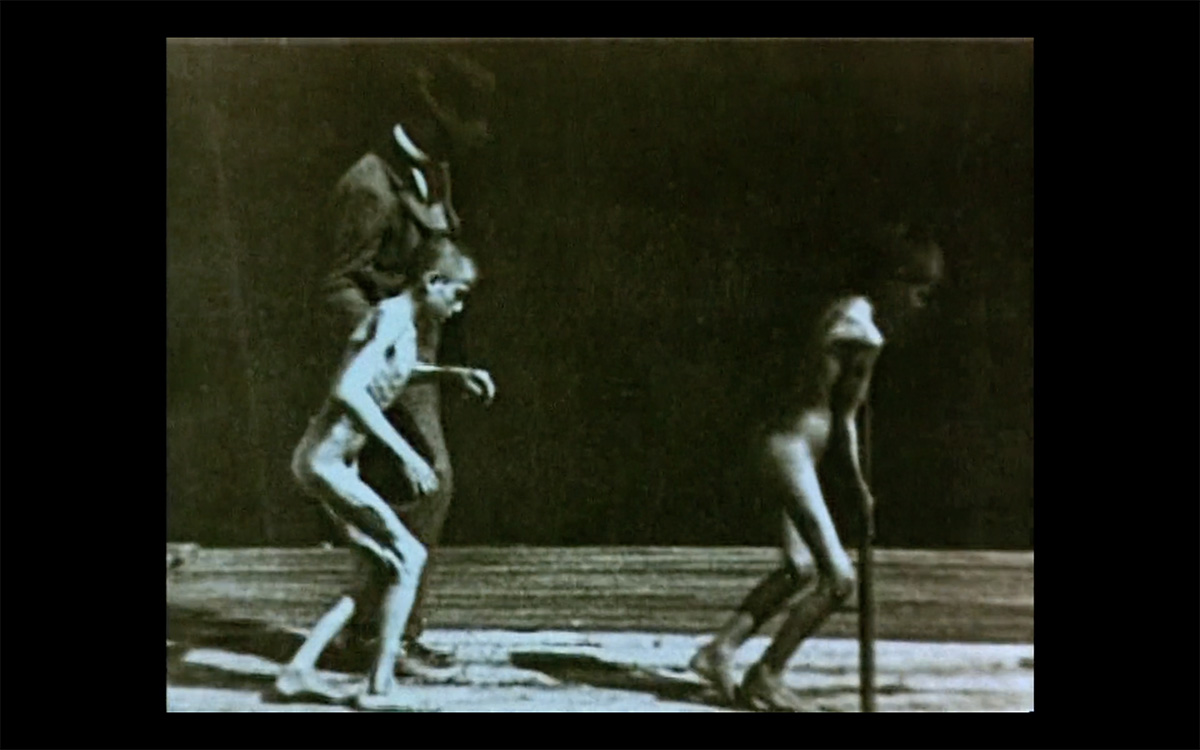
It's a question of taking this title literally, as a literal statement: seven filmic forms of very short film, whose sum of titles ironically renders their vanity, their impossibility: war, magic, murder, love, death, trance, resurrection; all in less than thirty-eight minutes. In terms of images, this is an exclusively montage film, with material taken from sequences or rushes from the history of world cinema. The music, meanwhile, is entirely composed to induce a magnetic field of force and tension between them. The literary fragments are used in two forms: as reading cards, or embodied by voices and interwoven with the musical composition. The idea is to organize a constellation of signs, to weave poetic correspondences, to make affects as intelligent as they are enigmatic. How to move things in time through feelings, crystallize them in forms, so that these feelings move inner mountains.
Eric Pellet is a director, composer and artist. He creates experimental forms of fiction, documentary, essay and poem, interacting with dance, contemporary literature and poetry, sound creation and cinema. He works in a variety of complementary media, including film, photography, installation, radio, sound and music. He has made some thirty personal films, including Le désastre ne figure pas dans l'image, Livre des morts, Admosh, Noir-écran, Le premier jour, Né un peu étonné, Passion(s), Je ne suis personne. He has taken part in some twenty group exhibitions in France and abroad. His films are shown at dozens of film festivals.

Fred Pelon
De Godsberg
Experimental doc. | betaSP | color and b&w | 17:0 | Netherlands | 2005
Experistorical film based on found footage filmed at Dutch Nazi (NSB) meetings in the centre of the Netherlands in the years 1937 - 1940. The place now functions as a camping area with all the Nazi architecture still in place. Through thorough research, the filmmaker discovers all kinds of audio and printed material that, like the 8mm film he discovered, shows how common fascism actually was in Holland from 1933 until 1945. He travelled to the site and spent some time in a trailer home opposite the monumental wall. His film shows a mixture of past and present, with his own personal touch.
Fred Pelon (1961) works in the Eyediom Film Workshop in Amsterdam and films on Super8. He also works with found footage, recycling, and telecine-techniques.
Gael Peltier
Percussion mécanique
Performance | mov | color | 2:2 | France | 2018
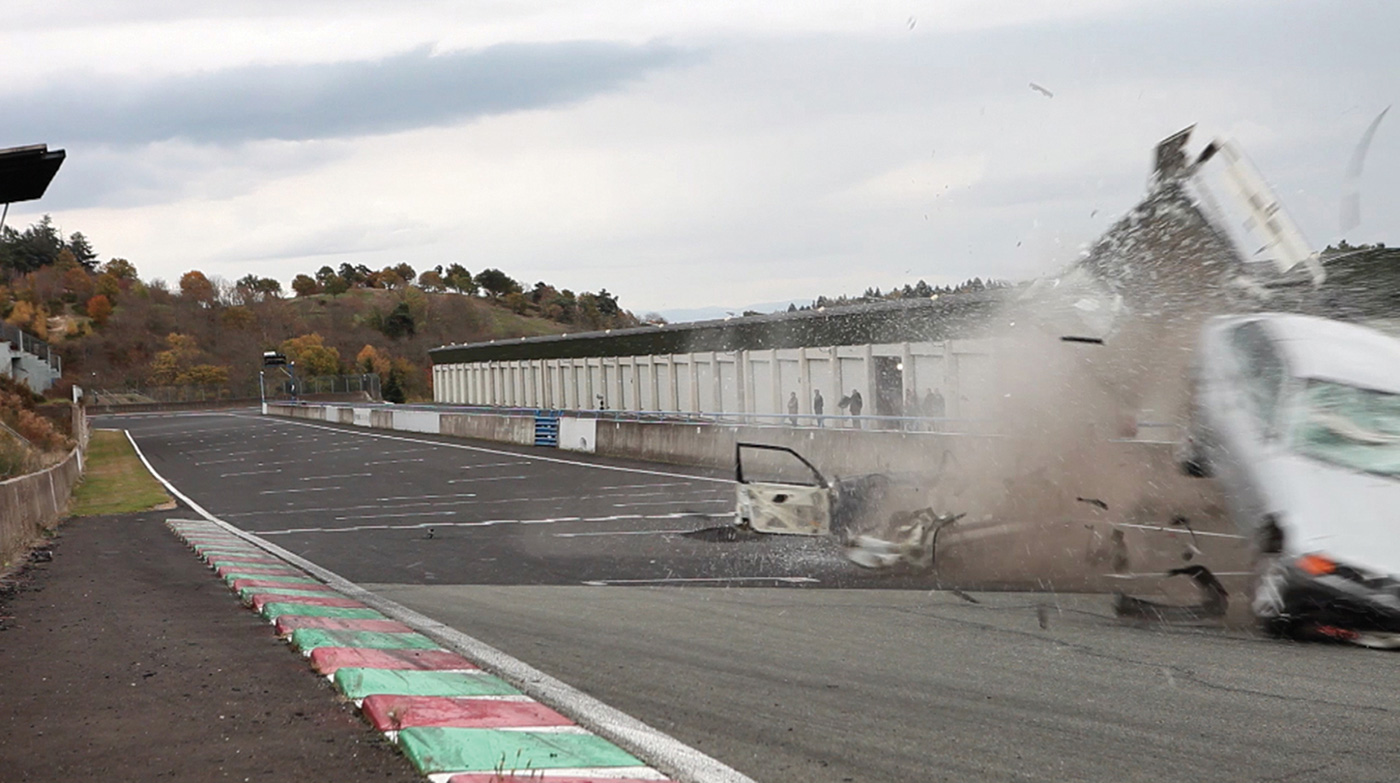
For Gaël Peltier, video is above all a means of recording a performance that cannot be repeated. It is an art of the instant which, as here, culminates in violent mechanical destruction. Its proximity to cinema lies in the procedures behind the actions he undertakes, willingly putting himself in danger and, like a stuntman, accepting the constraints and risks of an operation prepared with meticulous care. Beyond this technical kinship and the references that inevitably come to mind — Crash by David Cronenberg, after J. G. Ballard’s novel, for instance — everything in this work stands in opposition to cinema. There is no narrative: the focus rests on an accident, on the acceleration that leads to it, and on the brutal impact to which the performer submits himself. He places himself entirely within reality; only the driver’s protective gear and harness distinguish this deliberate crash from a fortuitous event of the kind that so often occurs on the road. This resemblance unsettles the viewer’s eye and reveals the presence of a latent desire — not only to watch, but to take part in something that is usually perceived solely as a dramatic event, frequently with fatal consequences.
Gaël Peltier develops a practice in which attitude takes precedence over the production of objects, ready-mades or films, placing his work in the lineage of artists without oeuvre. He describes himself as an “infra-conceptual artist by default,” adopting a lateral position in which a protocol applied to reality becomes the material itself. His projects involve precise forms of commitment: gaining 30 kg in New York for a role that did not exist (La Conjuration, 2010), a car crash staged as critical action (Percussion Mécanique, 2018), or interventions that subtly disturb an otherwise ordinary situation. Video records these processes not in order to produce an effect, but to render visible the conditions of their emergence within real-world circumstances. His work has been exhibited in France and abroad since 2002.

Anu Pennanen
Sõprus -Dru?ba
Experimental doc. | 16mm | color | 30:0 | Finland, Estonia | 2006
ANU PENNANEN Sõprus - Дружба (Friendship) Pennanen's video installation works explore the complex relationship between the individual and the urban environment. Typically her work occupies a space between documentary and fiction, using the built environment as a framework within which to display the emotional and metaphorical interchange between urban spaces and those who inhabit them. Sõprus - Дружба (Friendship) is based on workshops, texts and discussions with the nine Estonian and Russian speaking teenagers that feature in the film. The workshops lead to the development of a structure for the film which highlighted the ways in which these teenagers inhabited their environment. The artist provided a framework within which to play out their daily experiences, setting them in a conscious dialogue with the urbanized cityscape. The artist follows her 'characters' as they move through Tallinn, the capital of Estonia. As the fragmentary narration of the film tightens towards the end, the teens, separated by language, history and perhaps even youth culture dress codes, get curious about each other. In juxtaposing the historical architecture of the country's Soviet past, alongside the contemporary urban mall, the artist draws attention to the socio political changes that have led to Tallinn becoming one of the most liberal capitalistic market economies in the European Union. Through juxtaposing these conflicting urban spaces, the artist draws and analogy between the changing urban public spaces, the political systems bearing them and the teenagers who float within it. Pennanen's work reflect on the ways that any city, particularly those in the rapidly transforming Baltic regions, offer a complex combination of charged historical locations, and contemporary urban spaces. Despite these paradoxical juxtapositions, these sites are given cohesive meaning by those personally interacting with them. Emily Cormack for SCAPE 2006 Biennial of Art in Public Space. Don't Misbehave!, Christchurch, New Zealand Please ask the permit to publish from Emily Cormack Emily.Cormack@vuw.ac.nz
Anu Pennanen, born in 1975 in Kirkkonummi, Finland. She is based in Helsinki, Finland and has worked in various countries after graduating for the Helsinki Fine Arts Academy in 2003. Her work focuses on the influence spatial organization, urban architecture and modernization have on human behavior. She works collaboratively and site-specifically with people, who in her works are the mirrors and investigators of built environment.

Anu Pennanen
Untitled
Art vidéo | 0 | color | 15:0 | Finland | 2005

Anu Pennanen, Laura HORELLI
Viesti
Documentary | dv | color | 14:3 | Finland | 2009
"Relay" is based on a performance where the makers invited eight participants ? individuals and not-for-profit organisations ? to highlight a cause by running a lap of honour at a sports stadium in Finland. The participants were paired. Whilst one of them ran, the other one discussed the topics central to the running group. "Relay" shows the two actions simultaneously in split screen and references the conventions of sports coverage. The name refers both to the sharing of information and to the sport event that acted as the framework.
Anu Pennanen: Anu Pennanen was born in 1975 in Kirkkonummi, Finland, to the family of a social worker mother and technician father. She is based in Helsinki and works internationally. She is an artist working with urban public space and its relation to cinema and media. She works collaboratively and site-specifically with people, who in her works are the mirrors and investigators of built environment. She frequently collaborates with experimental musicians. After graduating from the Academy of Fine Arts in Helsinki 2003 she has exhibited widely internationally; including 2nd Moscow Biennale. Monuments of our Discontent: Expiration of Place. Special project curated by Lolita Yablonskene. Moscow, Russia (2007), Ars Baltica Triennale. Don`t Worry - Be Curious! Stadtgalerie Kiel, Germany; KUMU, Estonian Art Museum, Tallinn, Estonia; Pori Art Museum, Finland (2007), Liverpool Biennial, UK (2006), Scape Biennial of Art in Public Space, Christchurch, New Zealand (2006), Busan Biennale, South Korea (2006), Under your skin, White Box Gallery, New York USA (2005), Manifesta 5, San Sebastian, Spain (2004), Momentum, Moss, Norway (2004). Laura Horelli: Born 1976 in Helsinki. Lives and works in Berlin. Art studies: 1997-2002 Staatliche Hochschule für Bildende Künste - Städelschule, Klasse Bayrle, Frankfurt, Germany. 1995-2001 Academy of Fine Arts Helsinki, Department of Time and Space, MFA.

Miranda Pennell
Drum Room
Experimental doc. | | color | 15:5 | United Kingdom | 2007
The empty spaces of an ambiguous building open-up to reveal a group of aspiring musicians as they play together, alone.
Miranda Pennell studied contemporary dance before she started working with film and video. Her work has been shown in different contexts including broadcast, independent cinema, and gallery settings. Recent one-person exhibitions include `I AM/WE ARE` Centre pour Image Contemporain St Gervais Genéve (2008), `PLAY` Void Gallery, Derry (2007), a retrospective program at Cinema Nova Bruxelles (2008), and at the Festival International du Film de La Rochelle (France, 2007). She lives in London.

Miranda Pennell
Strange Object
Experimental doc. | 0 | color and b&w | 15:20 | United Kingdom | 2020
The ‘Z’ Unit’s operation in a world far from our own was an experiment of sorts, a test. And this place, inhabited by beings different from ourselves, served as a laboratory. A successful outcome would secure the Z Unit’s future, enabling its enterprise to expand and its methods to be applied to other worlds. An investigation into imperial image-making, and destruction.
Miranda Pennell is an artist filmmaker based in London. Her recent and current work uses photographic archives as the starting point for a reflection on colonial legacies. She originally trained in contemporary dance, and her award-winning videos exploring choreography in everyday life have been widely screened and broadcast internationally. Pennell received an MA in visual anthropology in 2010 from Goldsmiths College, University of London, and undertook practice-led PhD research completed in 2016. Selected screenings and exhibitions include Intersectional Georgraphies (2022) Martin Parr Foundation, Bristol; Lahore Biennale (2020),Tanzbilder at the Neues Museum Nuremberg (2019), one-person programme at the Stuttgart FilmWinter Festival for Expanded Media (2019), Miranda Pennell: choreographies and archives at the Film Museum Munich (2017), Choreocinema: Siobhan Davies & Miranda Pennell, Barbican, London (2017), Co-op Dialogues 1976-2016: Lis Rhodes & Miranda Pennell, Tate Britain (2016), All Systems Go, Cooper Gallery, Dundee (2016), Europe – The Future of History at Kunsthaus Zurich (2015), and The World Turned Upside Down, Mead Gallery (2013).

Miranda Pennell
The Host
Experimental doc. | hdv | color and b&w | 60:0 | United Kingdom | 2015
A filmmaker turns forensic detective as she pieces together hundreds of photographs in search of what she believes to be a buried history, only to find herself inside the story she is researching. The Host investigates the activities of British Petroleum (BP) in Iran; a tale of power, imperial hubris and catastrophe. While the tectonic plates of geopolitical conspiracy shift in the background, the film asks us to look, and look again, at images produced by the oil company and personal photos taken by its British staff in Iran– including the filmmaker’s parents– not for what they show, but for what they betray. The Host is about the stories we tell about ourselves and others, the facts and fictions we live by - and their consequences.
Miranda Pennell originally trained in contemporary dance and later studied visual anthropology.Her short film and video works that explore performance and choreographies of the everyday, have been screened internationally including for broadcast. Her most recent moving-image work reworks colonial archives as the starting point for investigations into the colonial imaginary. Her film Why Colonel Bunny Was Killed (2010) was awarded best international film at the Images Festival, Toronto, and Courtisane Festival of Media Art, Ghent and is published on DVD by Filmarmalade. The Host (2015) is Pennell’s first feature length film. Selected screenings and exhibition of Pennell’s work includes mixed programs and group shows at Tate Britain (2014), Whitechapel Gallery (2015), Museum of Modern Art Vienna (2012), Kunsthaus Zurich (2015).