Catalogue > Search
Results for : Tout le catalogue
Yana Osman, Anton Khamchishkin
Pwéra úsog
Experimental doc. | mov | color and b&w | 19:50 | Afghanistan, Russia | 2025
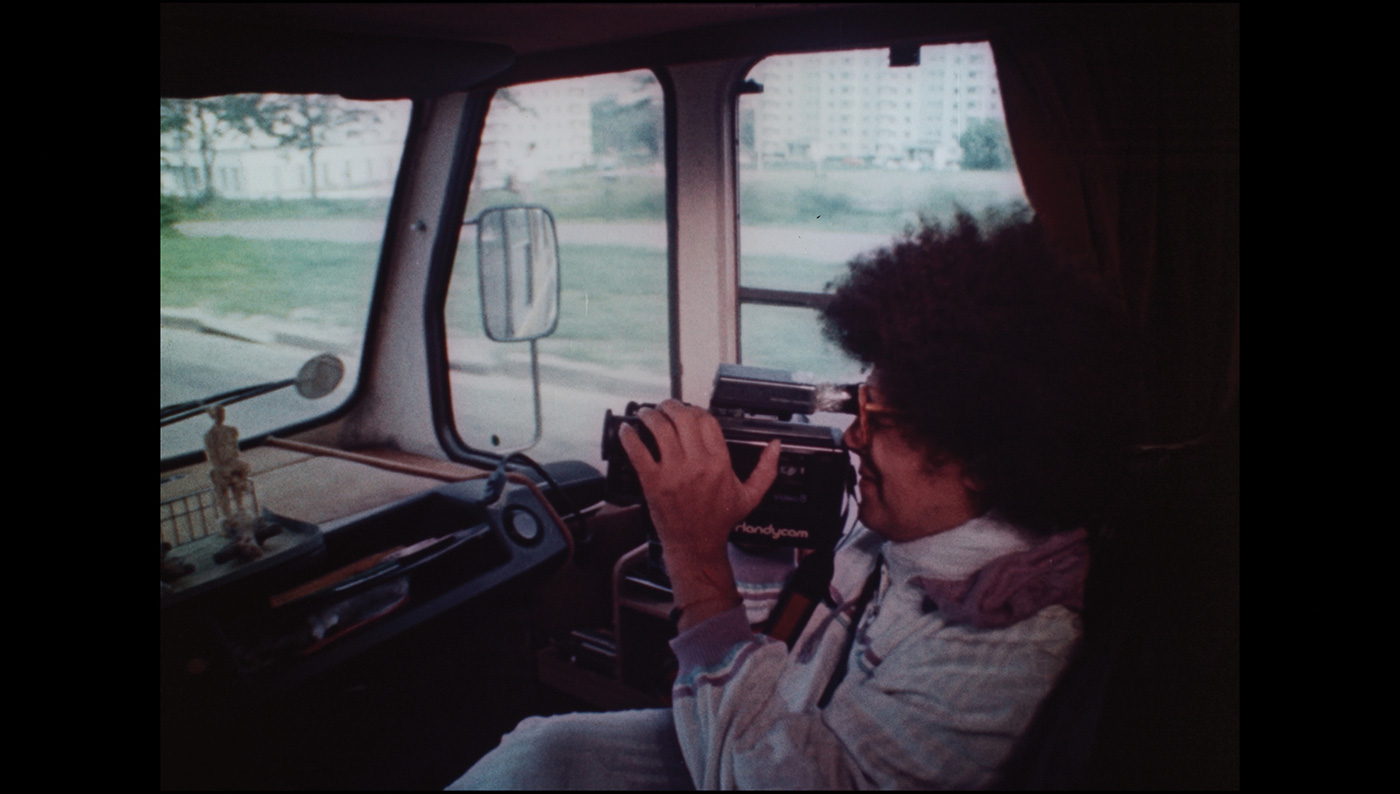
Pwe?ra u?sog (2025). 19 min dir. Yana Osman, Anton Khamchishkin In 1945, in Paris, the Women’s International Democratic Federation (WIDF) was founded. According to historian Francisca de Haan, it was “the largest and probably the most influential international women’s organization of the post–World War II era.” Today, assessments of the organization’s legacy remain contested. Some scholars, citing reports from the FBI and the House Un-American Activities Committee, describe WIDF as a communist attempt to manipulate women. Others view it as a movement advocating for women’s rights, and researchers like Elizabeth Armstrong note WIDF’s role in anti-colonial and anti-racist struggles led by women in Asia, Africa, and Latin America. In 1987, during the Perestroika era, WIDF organized the World Congress of Women in Moscow, under the slogan: “Toward 2000 — Without Nuclear Weapons! For Peace, Equality, Development!” The congress brought together 2,800 women from 150 countries. Among them, there was the protagonist’s grandmother, an interpreter who collected words from global conversations that had no equivalents in other languages. Revisiting her notes, archival footage, and sites of official delegations, the protagonist is guided by these fragments to a question: what words can capture the present, when language itself slips away, dissolves, and borrowed slogans drown out one’s voice?
Yana Osman, Anton Khamchishkin (Afghanistan, Russia) — artists and filmmakers. Work with gaps in storytelling, filling in the unsaid and uncovering narratives suspended between real and imaginary, facts and speculation. Their films were selected at Hong Kong Film Festival, DOK Leipzig, Slamdance, Rencontres Internationales Paris/Berlin, as well as supported by CNC, Cité Internationale des Arts, Usage du Monde au 21ème siècle, Institut Français, among others.

Jonathan Ospina
Recorded Dreams #1
Experimental fiction | hdv | color | 12:44 | Colombia | 2019
An essay film on the memory of dreams, how one recalls affections, investigating the politics of representation and observation in times of an ever-growing production of images. An onomatopoetic road journey in Italy and dream-storytelling.
1990, Bogota. Artist and filmmaker, he studied film directing at Universidad del Cine in Buenos Aires. He holds a BA in fine arts and video from Zürcher Hochschule der Künste (ZHdK), with an exchange in the MA in film at (ENS) École Nationale Supérieure Louis-Lumière in the suburbs of Paris. Since 2018 is part of the MA in fine arts at ZHdK. His performances, listening sessions, films and videoinstallations have been shown in Doclisboa, Bogoshorts, Manifesta 11, M12, across Europe, Hong Kong and South America.

Luis Ospina
La desazón suprema
Documentary | dv | color and b&w | 90:0 | Colombia | 2003
"Incessant portrait of Fernando Vallejo" is a feature-length documentary about the controversial Colombian writer exiled in Mexico. Despite having directed three films and written five autobiographical novels, Fernando Vallejo was practically unknown until the publication and later film adaptation of "Our Lady of the Assassins," directed by Barbet Schroeder. Shamelessly expressing his loves and hates, Vallejo breaks with an ingrained literary tradition: the omniscient writer who sees and knows everything. The documentary not only covers his literary output but also his many interests: film, music, science, and politics. Made with the full support and participation of the author, the documentary provides a candid and disturbing portrait of one of the best writers of the Spanish language.
Luis Ospina Born in Cali (Colombia) in 1949, Luis Ospina completed his film studies at USC and UCLA. He has directed the features Pura sangre / Pure Blood (1982) and Soplo de vida / Breath of Life (1999), and more than thirty documentaries and short films, among them Agarrando pueblo (1978), Andrés Caicedo: Unos pocos buenos amigos (1986), Nuestra película (1993) and Capítulo 66 (co-directed by Raoul Ruiz, 1994). His films have obtained prizes at several international film festivals: Oberhausen, Sitges, Toulouse, Havana, Bilbao, Huesca, Biarritz, Cádiz, Cartagena, and Bogotá.

Silvia Ospina
Ephemeres Monument
Experimental film | mov | color | 41:25 | Germany | 2018
EPHEMERES MONUMENT Stories and traces of the body in open space. An audiovisual intervention made by young new Berliners, from Syria, Afghanistan, Iraq, Eritrea, Romania and Poland. The film is a collective creation, made between young people and local artists from Berlin (DIE KÖRPERGEMEINSCHAFT). Exploring in different methods of body work, performance and the audiovisual medium, the film is developed as a narration through the body and the image, about the personal identification that the young new Berliners, have about the German capital.
Silvia OSPINA was born in Bucaramanga, Colombia. She's is a dancer, choreographer and video artist based in Berlin. Her work focuses on the dialogue between dance, performance and media-arts, and explores the possible narratives through the body and the image, in different formats (stage, film, performance, video ...) For 7 years, she conducted the Movement Laboratory for the Physical Theater and Acting department at the Folkwang Universität der Künste, where she teaches Movement training, Improvisation and Composition classes. Her coaching has taking place too at the Kunsthochschule für Medien Köln, Universidad Nacional de Colombia and at UIS-Artes Bucaramanga. In 2017 she founded together with Oktavia VÖHRINGER, DIE KÖRPERGEMEINSCHAFT, an international and interdisciplinary artists’ network in Berlin. The members have many years of experience of working artistically in a wide range of different countries and cultural contexts. In DIE KÖRPERGEMEINSCHAFT they interweave their expertise: from dance, movement therapy, film, theatre and performance; to pedagogy and (inter)cultural education. The uniting interest in DIE KÖRPERGEMEINSCHAFT is encounter, exchange and the artistic work that is happening in Berlin. DIE KÖRPERGEMEINSCHAFT is a constantly expanding network. Its structure enables the creation of long-term, professional works that explore the potential of this diverse community.

Noemi Osselaer
Erpe-Mere
Experimental doc. | dcp | | 20:44 | Belgium | 2020
Surrounded by the sound of nocturnal animals, a girl falls into a deep sleep. Gradually we are drawn into her dream, which unfolds into a cosmic journey through the meadows of Erpe-Mere, a rural community in Belgium.
Noemi Osselaer was born in Aalst, Belgium. She studied audiovisual arts at the Royal Academy of Fine Arts Ghent. Her graduation film ‘Erpe-Mere’ screened at several festivals including Dok Leipzig and IFFR. From January 2021 till December 2022 she will be a resident at the Higher Institute for Fine Arts (HISK) in Ghent.

Jurgen Ostarhild
KIRCHE, KIPPI, KOMA
Documentary | super8 | color | 7:0 | Germany | 1990
KIRCHE, KIPPI, KOMA (drunken camera vs. drunken lantern) A super-8 film of a mock crucifixion with MARTIN KIPPENBERGER as CHRIST. The social liaison of alcohol and christianity; the proximity is not just territorial. Shot in Umhauen, Austria, 1990. Transferred to video and edited in 2010. soundtrack provided by ACHIM KUBINSKI: LA PASION SEGUN SAN MATEO by J.S. BACH. JURGEN OSTARHILD, 7 min. The soundtrack is LA PASION SEGUN SAN MATEO -J.S. BACH, is reference to the crucifying scene in a beer tent. At the time KIPPENBERGER was working in Austria on the "FERD THE FROG" sculptures (crucifyed frog with beermug). Drunken lamp vs. drunken camera is a reference to the DRUNKEN LAMP sculpture appearing between crossing lines of the beer tent.
Jurgen Ostarhild, born in Überlingen, Germany was self-taught as a photographer and recognised as an artist by the Verband bildender Künstler, Baden-Württemberg in 1981. Since 1984, he worked internationally as a photographer before settling in Paris for 20 years until 2013. Jurgen Ostarhild gained commercial acclaim photographing editorials, celebrities and advertising for international brands, such as Levis, Adidas, L’Oréal and magazines like ID, Jalouse, Wad, Paper Sunday Times, In 1995, Ostarhild became one of the pioneers of Photoshop and was successful with his colour and object manipulation. This experimentation found expression in visual art work, which questions the essence of photography and the photographer-subject-technology relationship in the digital age. Although the logic of Ostarhild’s work, which lies in creating a technical image of reality by pushing a trigger, has always remained the same, in the last decade, the computer has become his image producing machine of choice. Today’s reality largely consists of algorithms and code. Ostarhild produces minimal, graphic text, color and screen work which explores the boundaries of direct visual language in the post-photographic landscape. He deconstructs color by showing it as code itself, which brings on a new level of reality, resulting from the process of digitalisation.

Anna-claria Ostasenko Bogdanoff
Ariane
Experimental fiction | 4k | color | 8:37 | France | 2025
Synopsis La mythologie raconte qu’Ariane fut abandonnée par Thésée sur l’île de Naxos, à l’aube. Le film explore l’écho contemporain de ce mythe. Texte de présentation "Ariane" (8 min) est un court-métrage expérimental tourné sur l’île de Naxos, en Grèce. Inspiré du mythe d’Ariane abandonnée par Thésée, le film propose une exploration sensorielle de l’abandon et de l'attente qui s’ensuit. Sans dialogues, il invite à une immersion dans les paysages de Naxos, en regard des corps d'une femme et d'un homme. Le film interroge le lien entre les corps et ces espaces, entre la chair vivante et la chair disparue. Il s’attache à capter ce qui subsiste après le départ. Il reprend ce vers des Héroïdes d’Ovide : « Je touche, autant que je le puis, tes traces au lieu de toi ». Ces traces oscillent entre matière minérale d'une statue, et pixels dans la lumière d'un écran. L'attente devient obsessionnelle, révélant également notre propre besoin de retrouver l'autre à travers le virtuel aujourd'hui. Quitte à se perdre soi-même. "Ariane" a été réalisé entièrement en autoproduction, avec une équipe professionnelle.
Née en 1991, Anna Ostasenko Bogdanoff sort diplômée de la Fémis section Décor en 2019. Elle signe en tant que réalisatrice et scénariste plusieurs courts métrages. Sa fiction expérimentale "Mon Corps livré pour Vous" (2020) est en demi-finale aux Oscars étudiants et remporte une mention spéciale au Sao Paulo International Short Film Festival. Son court métrage documentaire "Her Scents of Pu Er" (2021) dresse le portrait de Maître Tseng, première femme maître du thé dans l’histoire de la Chine. Le film est en sélection à Hot Docs, DOC NYC et Odense Film Festival entre autres. Anna clôture en 2022 une année de résidence au Musée des Arts Décoratifs. Elle a réalisé dans les locaux des films sur les collections et les expositions. Depuis, elle collabore avec divers artistes pour créer des films inspirés de leur travail. En 2023, elle co-réalise "Puisque tout brûle", un court-métrage explorant le skate sous le prisme du corps qui chute. En 2025, elle réalise le court métrage expérimental "Ariane", tourné à Naxos, Grèce, inspiré du mythe d’Ariane. Son prochain court métrage, soutenu par le CNC et la région Pays de la Loire, sera tourné en 2026. Elle écrit également son premier long métrage avec les Films du Poisson. Ces deux projets explorent des thèmes personnels tels que le deuil, le corps et l’héritage familial. Enfin, elle écrit son premier roman, une autofiction, qui sera publié aux éditions JC Lattès en septembre 2026.

Vivian Ostrovsky
Ice/Sea
Experimental film | super8 | color and b&w | 32:0 | USA, France | 2005
"Play collage of sun and ice for an aquatic fantasy filled with crazy surfers, swimming tigers and plunging mermaids... "Why shouldn't I make a beach movie for a change? (...) I used images I filmed with my Super 8 camera and a mini DV when I was traveling and then added existing footage. It is a kind of diary. This is pure entertainment." (Vivian Ostrovsky)
Vivian Ostrovsky was born in New York and studied psychology and pursued film studies at the Sorbonne. She started her career as a filmmaker in 1980 and at first shot films about dance. In her works, she shows places where urbanism dominates and points out our failings and little passions. Her work is represented in the permanent collections of several renowned cultural institutions establishing her as a key visual artist.

Vivian Ostrovsky
Mais ailleurs c’est toujours mieux
Experimental doc. | super8 | color | 4:9 | France, USA | 2016
A new short film by Vivian Ostrovsky remembering Chantal Akerman, beginning with their first meeting in the early 1970s. Using her own footage of Chantal Akerman, the filmmaker remembers a few moments that illustrate Chantal`s personality. Forty years of friendship condensed into four minutes…
Vivian Ostrovsky, (b.1945, New York) grew up in Rio, studied film studies and psychology in Paris. When she started filming in 1980, she focused on using analog formats - especially Super8 - for experimental cinema. Her signature collage shorts and avant-garde documentaries have been shown at the main film festivals (Berlin, Rotterdam, Viennale, Tribeca) and have been part of collections such as the MOMA, NY, the Centre Pompidou in Paris and the Freunde der Deutschen Kinemathek in Berlin. Her moving image work is noted for its span of super 8, 16mm, video and digital media, found footage and immersive installations. This screening includes films connected to Latin America and more particularly Brazil. Whether more personal or historical projects, they are always infused with dreamlike playfulness and intimate nostalgia.

Vivian Ostrovsky
Son chant
Experimental doc. | mov | color and b&w | 12:46 | France, USA | 2020
Visionnant des mini DV filmés ces dernières années, je suis tombée sur des images tournées comme nous nous quittions après un dîner à Montparnasse, Chantal Akerman Sonia Wieder-Atherton et moi. J’ai décidé d’en faire un petit film en hommage au travail de son de Chantal, en particulier à sa collaboration avec la violoncelliste Sonia Wieder-Atherton avec laquelle elle a fait plus de 20 films. Et, comme New York, Paris, Moscou sont des lieux que nous avions toutes les trois en commun, j’ai mêlé quelques-unes de mes images aux siennes.
Née à New York, aux États-Unis, Vivian Ostrovsky fait ses études secondaires à Rio de Janeiro, puis poursuit des études supérieures à Paris-Sorbonne, en psychologie ainsi qu’en cinéma. Elle commence alors son activité au sein de Ciné-Femmes International, organisme de diffusion luttant pour le féminisme et sa visibilité. Devenant elle-même cinéaste en 1980, elle abandonnera le militantisme. Associée au cinéma expérimental pour son approche de l’animation, du film-journal et de la notion de collage, Vivian Ostrovsky a, à ce jour, consacré plus de 40 ans à parcourir le monde, à embrasser d’un regard curieux et généreux, doublé d’un sens de l’humour taquin et ironique, le quotidien, la famille, le cinéma et l’histoire du cinéma. Elle vit actuellement aux États-Unis. Son travail a fait l’objet de nombreuses rétrospectives et d’expositions dans les musées et les festivals à travers le monde.

Vivian Ostrovsky
P.W.- Pincéis e Painéis
Experimental doc. | dv | color and b&w | 15:51 | France, USA | 2010
The video was made for an exhibition in Rio on Paulo Werneck one of Oscar Niemeyer?s collaborators. Werneck was the first to introduce mosaics in Brazilian Modernist architecture. P.W. shows the context of the artist?s work in Rio and Belo Horizonte in the 50s and the 60s as well as Brasilia at the time of its construction in 1960. It?s an inventive collage of archival footage, music and Werneck?s modernist mosaics.
Manhattan, New York was where I happened to be born. After 6 months of stress, I boarded the first plane to Rio de Janeiro, Brazil, to meet my parents and sister. My primary and secondary school was not too far from Copacabana Beach. My university years were spent in Paris, suffering from a Psychology major (Institut de Psychologie). To make life more pleasurable, I ended up seeing more films around the corner from the Sorbonne than attending classes. After my B.A. in Psychology I enrolled in Film Studies courses at Sorbonne- Paris 3, at the Institut d?Art et Archeologie ( Eric Rohmer?s classes) and at the Cinemathèque Française ( Henri Langlois? classes). In the early 70s I traveled throughout Europe in a rundown Renault pick-up, organizing women?s film festivals and distributing films made by women (the distribution company was called Cine-Femmes International). My debut as an experimental filmmaker came in 1980, when I co-directed CAROLYN 2 with Martine Rousset (starring choreographer/dancer Carolyn Carlson). It was an expanded cinema film/slide installation. Many films came afterwards, mostly shot in super-8 then blown-up to 16mm. These films have been shown in festivals worldwide (Toronto, Berlin, Locarno, Rotterdam, Tribeca, Vienna and others), in cinematheques and in art fairs such as the Sao Paulo Biennale and Arco in Madrid. Other venues have also screened them, such as : M.O.M.A., Lincoln Center, NY, Hirshhorn Museum, Washington DC, Centre Georges Pompidou, Paris, Anthology Film Archives, NY, Pacific Film Archives, Berkeley, CA. Simultaneously my film-related activities have expanded to curating programs for venues such as the Jerusalem Film Festival. My main interests are in Avant-Garde work and documentaries. My home is wherever I feel at home ? and that is usually in a plane on my way to an unknown destination with my camera and DAT recorder in my carrier bag.

Vivian Ostrovsky
DizzyMess
Experimental film | super8 | color and b&w | 7:43 | France, USA | 2017
Dizziness, in the sense that it inspires artists and filmmakers to move beyond their known borders. Or how a state of altered perception, instability, and confusion can be a catalyst for exploring new surroundings. Let go of the ground and attain giddiness or perhaps even foolishness?
Vivian Ostrovsky, (b.1945, New York) grew up in Rio, studied film studies and psychology in Paris. When she started filming in 1980, she focused on using analog formats - especially Super8 - for experimental cinema. Her signature collage shorts and avant-garde documentaries have been shown at the main film festivals (Berlin, Rotterdam, Viennale, Tribeca) and have been part of collections such as the MOMA, NY, the Centre Pompidou in Paris and the Freunde der Deutschen Kinemathek in Berlin. Her moving image work is noted for its span of super 8, 16mm, video and digital media, found footage and immersive installations. Her films are connected to Latin America and more particularly Brazil. Whether more personal or historical projects, they are always infused with dreamlike playfulness and intimate nostalgia.

Vivian Ostrovsky
Hiatus
Experimental doc. | hdv | black and white | 6:20 | France, USA | 2018
The protagonist of this film is the reclusive, introspective Ukrainian - Brazilian writer Clarice Lispector (1920 - 1977). What she says in the 1977 interview is still very pertinent and corresponds to a feeling of ‘in-betweenness’ which I myself feel today.
Vivian Ostrovsky, (b.1945, New York) grew up in Rio, studied film studies and psychology in Paris. When she started filming in 1980, she focused on using analog formats - especially Super8 - for experimental cinema. Her signature collage shorts and avant-garde documentaries have been shown at the main film festivals (Berlin, Rotterdam, Viennale, Tribeca) and have been part of collections such as the MOMA, NY, the Centre Pompidou in Paris and the Freunde der Deutschen Kinemathek in Berlin. Her moving image work is noted for its span of super 8, 16mm, video and digital media, found footage and immersive installations. Her films are connected to Latin America and more particularly Brazil. Whether more personal or historical projects, they are always infused with dreamlike playfulness and intimate nostalgia.

Vivian Ostrovsky
THE TITLE WAS SHOT
Experimental video | dv | | 9:0 | France | 2009
THE TITLE WAS SHOT was commissioned for a conference of film theoreticians in Berlin in 2009 entitled: The Cinematic Configurations of the ?I? and ?We?. Composed of fragments from over 25 films dating from the 1920s to the 90s, this whimsical short features cowboys, Indians and damsels in distress. Tarzan, Jane, a transgender gorilla, and a menacing lion tango from frame to frame, prodded by Wittgenstein, Gilles Deleuze and Slavoj Zizek?s philosophical considerations. A fast-paced, heart-pounding cinephilic farce. Date: April 2009 Length: 9? Sound: Mono Color and B&W 4/3 1.33 Shooting format : Mini-DV Screening format : Beta SP pal / MINI DV pal / DV CAM pal / DVD Language : English, French English subtitles JET LAG Productions Director: Vivian Ostrovsky Editing: Vivian Ostrovsky, Ruti Gadish, Claude Mercier Sound: Vivian Ostrovsky, Claude Mercier
Vivian Ostrovsky www.vivianostrovsky.com BIOFILMOGRAPHY Born Nov. 17 in New York (USA) High school in Rio de Janeiro (Brazil) University : Paris-Sorbonne (Psychology, Film studies) Film-related activities : - Festival programmer - Curator Avant-garde film - Filmmaker Filmography : - Carolyn 2, 1980, (expanded cinema) with Carolyn Carlson, co-directed with Martine Rousset - Top Ten Stylists, 1981, documentary on Thierry Mugler, Karl Lagerfeld, Issey Miyake, etc., co-directed with Soft Ware Prod. - Movie (VO), 1982 - Copacabana Beach, 1983 - Allers-Venues, 1984 - Stalingrad, 1984, film installation - U.S.S.A. 1985 - * * * ( Trois étoiles), 1987 - Propos Décousus, 1987, expanded super 8 (Galerie J & J Donguy) - Eat, 1988 - M.M. in Motion, 1992 - Uta Makura ( Pillow Poems) , 1995 - Public Domain, 1996 - American International Pictures 1997 - Interview with Woody Allen for Jerusalem Film Festival, 1997 - Work and Progress, 1999, co-directed with Yann Beauvais. - Nikita Kino, 2002 - Ice/Sea , 2005 - Telepattes, 2007 - Fone Fur Follies, 2008 - Ne Pas Sonner, 2008 - P.W.- Pincèis e Panèis, 2008 - The title was shot, 2009 - Tatitude, 2009 Main venues : - Museums: Centre Pompidou, Louvre, Paris ; MOMA, New York ; M.A.M. Rio de Janeiro ; Hirshhorn Museum, Washington, Kunsthalle, Basel - Film Festivals: Berlin, Rotterdam, Toronto, London, Jerusalem, Rio de Janeiro, etc. - Universities : Berkeley (Pacific Film Archives), Yale, Paris VI , Ecole des Beaux Arts - International Art Fairs : Arco (Madrid) ; Biennales : São Paulo, Paris - Anthology Film Archives (New York), London Filmmakers Coop, Scratch Projections (Paris)- Other: Sydney, Montreal, Chicago, San Sebastian, Sorrento, Osnabrück, Copenhagen, Brussels, Frankfurt, Vienna, Tokyo, etc. Acquisitions: - Centre Georges Pompidou, Paris - Forum des Images, Paris - Israel Film Archives - Ministry of Foreign Affairs for French Institutes worldwide. - MOMA, New York - Freunde der Deutschen Kinemathek e.V., Berlin
Vivian Ostrovsky
WHEREVER WAS NEVER
Experimental video | super8 | | 6:0 | France, USA | 2011
An intimate film made on the occasion of the 30th annniversary of her father, Rehor Ostrovsky?s death. Re-collecting snippets of my first 8m and super 8 films, old photos, letters, and other memorabilia. À slow pan through my adolescent years, family trips, holidays and everyday scenes. Listening for lost accents, impromptu songs at the dinner table, and bits of conversation.A landscape of flickering memories somewhere between home movies and photo albums.
Manhattan, New York was where I happened to be born. After 6 months of stress, I boarded the first plane to Rio de Janeiro, Brazil, to meet my parents and sister. My primary and secondary school was not too far from Copacabana Beach. My university years were spent in Paris, suffering from a Psychology major (Institut de Psychologie). To make life more pleasurable, I ended up seeing more films around the corner from the Sorbonne than attending classes. After my B.A. in Psychology I enrolled in Film Studies courses at Sorbonne-Paris 3, at the Institut d?Art et Archeologie (Eric Rohmer?s classes) and at the Cinemathèque Française (Henri Langlois? classes). In the early 70s I traveled throughout Europe in a rundown Renault pick-up, organizing women?s film festivals and distributing films made by women (the distribution company was called Cine-Femmes International). My debut as an experimental filmmaker came in 1980, when I co-directed CAROLYN 2 with Martine Rousset (starring choreographer/dancer Carolyn Carlson). It was an expanded cinema film/slide installation. Many films came afterwards, mostly shot in super-8 then blown-up to 16mm. These films have been shown in festivals worldwide (Toronto, Berlin, Locarno, Rotterdam, Tribeca, Vienna and others), in cinematheques and in art fairs such as the Sao Paulo Biennale and Arco in Madrid. Other venues have also screened them, such as : M.O.M.A., Lincoln Center, NY, Hirshhorn Museum, Washington DC, Centre Georges Pompidou, Paris, Anthology Film Archives, NY, Pacific Film Archives, Berkeley, CA. Simultaneously my film-related activities have expanded to curating programs for venues such as the Jerusalem Film Festival. My main interests are in Avant-Garde work and documentaries. My home is wherever I feel at home ? and that is usually in a plane on my way to an unknown destination with my camera and DAT recorder in my carrier bag.

Matthew Ostrowski
Atopia:levigation and apophenia
Multimedia installation | 0 | color | 0:0 | USA | 2004
Atopia is the non-existence of place, an experience masquerading as an environment - a set of pointers to sets of data which only exist in the encoded and mediated universe whose sole occupant is information - the World Wide Web. Our habits of speech lead us to believe that there is a destination at the end of a link, but there is no actual place - there is only a flow of data, an act of accumulation and disposal. This installation crawls the web from several randomly selected starting points, downloading all data, storing and representing it without regard for its intended structure. Levigation: the smoothing out of differences. We can only make sense out of this pseudo-environment because of a set of rules dividing a stream of zeroes and ones into files of different types. The heavily mediated nature of this project is all but invisible to us - we simply accept this mode of consuming information into our construction of 'nature'. In this project, all the structure and complexity of the encoded information is returned to the simplicity of the bitstream in the form of sound. The downloaded information is interpreted entirely as audio samples. The 'true' form of information, the foundation stone of atopia, remains insubstantial and always unreal. Apophenia: the imaginary perception of the meaningfulness of unrelated phenomena. The technologies we use to gather information from the World Wide Web are designed to move us through paths of meaning, which limit, define, and direct signification. If this information is simply taken en masse and at face value, devoid of its contextualization, we find ourselves in a wholly different mental environment. As one hears the files in sound form, they are simultaneously displayed: HTML code, images, etc., disassociated from the links and instructions which create the illusion of a unifying context, assemble and disassemble themselves in a constantly shifting collage.
A New York City native, Matthew Ostrowski has been working with electronics since the early 1980s, in improvised music, music theatre, and audio installations; with a continuing interest in density of micro events, rapid change, and using technology to stretch the bounds of perception and experience. His work has been exhibited or performed at festivals on four continents, including the Vienna Modern Festival, the Krakow Audio Art Festival, Sonic Acts in Amsterdam, PS 1 and The Kitchen in New York, the Melbourne Festival, and Unyazi, the first festival of electronic music on the African continent. His work appears on over a dozen recordings. Recently, after returning from an extensive concert and workshop series in the Balkans, the Czech Republic, and South Africa, he exhibited Draden, a work for amplified and processed fluorescent light bulbs, and is presently a member of Fair Use, a trio whose work orbits around spontaneous soundtracks to highly sped-up film classics.

Paul Otchakovsky-laurens
Sablé-Sur-sarthe, Sarthe
Documentary | betaSP | color and b&w | 95:0 | France | 2007
Paul Otchakovsky-Laurens was only one year old when he arrived in Sablé-sur-Sarthe following his father?s death in 1946. When his mother fell seriously ill, he was adopted by an aged cousin who brought him up until 1962. During his life there, many events took place which shaped him, serious events which were not spoken about and which became what we refer to clumsily as family secrets. It was there, too, that he stumbled across his Jewish origins. What he aimed to do was to recreate the magnitude of those silences. He wanted to bring those spaces and those times to life, the life of a child and then an adolescent in a stagnant, inward-looking little provincial town with its twitching curtains. Ridding oneself of a weighty secret, as Freud would have us believe, presupposes that it be brought out into the open. Yet, when such a secret is caught up in the shape of a town, it is then the town that becomes the stumbling block which needs to be put under the spotlight. It needs to be overcome, described and unearthed so that it can be patiently dismantled. An examination of the evolution of this provincial community, its landscapes, streets and inhabitants, research into family archives and a revisiting of accounts of personal memories is the plait which the film tries to weave. While refusing to give pride of place to any one of these three strands at the expense of the others, the film brings us both a gently-paced and modest confession and a portrait of a particular kind of France.
Paul Otchakovsky-Laurens entered the world of publishing in the late eighties. After a training course with Christian Bourgois in 1969, he worked at Flammarion, where he created the collection ?Textes? in 1969. He inaugurated Hachette/P.O.L in 1978 with ?Life, A User?s Guide? by Georges Pérec, before creating his own publishing company, P.O.L, in 1983. He has progressively been perceived as one of the most discreet, demanding and innovating Parisian independent publishers, who passed across the new poetry of Olivier Cadiot and Valère Novarina, and who won the confidence of Marguerite Duras, before encountering success in the nineties with Marie Darrieussecq?s ?Pig-tails? and Martin Winkler?s ?The Case of Dr. Sachs? as well as Camille Laurens?s ?In Those Arms.? Today, P.O.L means 3000 manuscripts read every year, by Paul Otchakovsky-Laurens himself, with no reading comity. Forty a year are published. He has a catalogue of one thousand titles and a family of one hundred or so authors to whom he is totally faithful, whether they be famous or not. His interest in cinema is less well known. In the sixties, he collaborated with the review ?Jeune Cinéma? and the Fédération Jean Vigo, along with Télé-Ciné. At Flammarion, in the early seventies, one of his main duties was to organise the updating of ?Histoire du Cinéma,? a task done by Bernard Eisenschitz, by Georges Sadoul. At Hachette, he published around one hundred titles of French and foreign literature, amongst which ?On the Ice Roads? by Werner Herzog. At P.O.L, he republished Werner Herzog?s book as well as the scenario of ?The Country of the Dreaming of Green Ants,? and he created the review ?Trafic? with Serge Daney, which today celebrates its sixty-third issue. He also published the first eighteen issues of ?La Lettre du Cinéma.? Alongside the ?Trafic? collection (ten titles since 1999), quite a number of texts published by P.O.L deal with cinema, from Jean-Louis Schefer to Jean-Luc Godard, from Pierre Alferi to Emmanuel Carrère, from Santiago Amigorena to Jérôme Beaujour and Marguerite Duras. Parallel to these experiences, he has realised around sixty short videos, from two to fifteen minutes, of readings by his authors, on the P.O.L website. He was a member of the second college of the ?Avance sur recettes? in 1990. He was invited by the ?Forum des images? to select films in July 2003. He edited Emmelene Landon?s movie, « The Fantastic Journey of the Red Container » (video ? 52` ? 2004 ? Production Le Volcan, Scène nationale du Havre). His first movie, ?Sablé-sur-Sarthe, Sarthe » (video ? 1h 36? ? 2007 - Production L?Arsenal ? Flight Movie), was chosen to be shown in the international competition at the FID Festival of Marseille, 2007.

Manon Ott, Grégory Cohen
Narmada
Documentary | super8 | color and b&w | 43:0 | France, India | 2012
Shot on super 8, the film appears like a journey, a dream along the Narmada river in India, between myths of Progress and myths of the river. ?Dams are the temples of modern India,? declared Nehru as the country proclaimed its independence. Construction on a vast complex of dams is soon to be completed on the Narmada river. A social struggle is organized. As we cross the Narmada River valley, we encounter the inhabitants, beliefs and convictions brought into conflict as this river undergoes great transformation.

Laurenz Otto, x
Allen Zweifeln zum Trotz
Experimental fiction | 4k | color | 15:0 | Germany | 2022
Faszination klebt an der fremd-vertrauten Vaterfigur und vermischt sich mit aufkeimender Sehnsucht nach Nähe. Blindes Vortasten, Erforschen und Beobachten. Ein riskantes Spiel aus Ablehnung und Zuneigung, dessen Anspannung sich schließlich entlädt und die fragile Beziehung nachhaltig in Frage stellt.
1994 in Jakarta, Indonesien geboren; aufgewachsen in Köln-Holweide; absolvierte 2021 seinen B. A. in Filmregie an der ifs – internationale filmschule; ist als Filmvorführer in der Filmpalette Köln anzutreffen; arbeitet aktuell an dem Drehbuch für seinen Debütfilm TOTE KÖRPER RENNEN NICHT welches von der Film- und Medienstiftung gefördert wird

Halima Ouardiri
Clebs
Documentary | 4k | color | 18:11 | Canada | 2019
Les pelages bruns, beiges, blancs et noirs se fondent à l’ocre de la terre et des murs inondés de soleil. Calme à l’heure du repos, l’endroit devient assourdissant quand vient le moment de nourrir les bêtes, qui entament alors leur concert d’aboiements. Dans le refuge pour chiens errants d’Agadir au Maroc, plus de 750 animaux trouvent aide et protection en attendant d’être adoptés par une famille. Chaque journée ressemble à la suivante, rythmée par la seule distraction des repas. Avec un regard aussi empathique qu’alerte aux jeux de lumière et de textures, Halima Ouardiri observe la chorégraphie qui régit la vie de la population animale, dont le quotidien suspendu évoque l’attente bien plus tragique de millions d’êtres humains à la recherche d’une terre d’accueil.
Halima Ouardiri est cinéaste. Suisso-Marocaine, elle travaille entre le Canada, le Maroc et la Suisse. Elle a obtenu un B.A. en Science Politique et un B.F.A. en Production filmique à la Mel Hoppenheim School of Cinema à Montréal (Canada). Son premier film, "Mokhtar", tourné en Super 16mm, a reçu un très bon accueil dans une centaine de festivals internationaux tels que le TIFF – Toronto International Film Festival (Canada); la Berlinale, Berlin (Allemagne); le Festival international du film de Rotterdam (Pays-Bas); et le Festival international du film de Dubaï (Émirats arabes unis), avant d’être diffusé sur France 3, sur CBC et sur la TSR. Le film a remporté de nombreux prix, dont deux Prix de la Meilleure Réalisation et cinq Prix du Meilleur Film. Tourné dans un petit village du sud du Maroc, le film met en scène les villageois, beaucoup de chèvres et un hibou. De tous les interprètes, seul le hibou est un acteur professionnel. Aujourd’hui, Halima Ouardiri passe au long-métrage avec "Nico", un récit initiatique inspiré de son expérience comme garde du corps à Genève (Suisse), sa ville natale, et avec le développement du scénario de "La Camel Driving School".

Nour Ouayda
Nour Annahar Al-Shaheb
Experimental fiction | hdv | color | 22:0 | Lebanon | 2014
A woman is leaving the country. A house cat is faced with an abrupt change : he is moving to a new home. A young girl roams the city in a taxi. The fine line between running away and leaving everything behind.
Nour Ouayda (b. 1991 in Canada to Lebanese parents) lives in Beirut, Lebanon. She graduated from IESAV – USJ in June 2014 with a degree in performing arts and an emphasis on audio-visual practices. Her short films explore feelings of belonging and exile in relation to one’s country, questioning the ability of sounds and images to shape our identity and heritage. Alongside directing, Nour works as a cinematographer and editor on short films and videos.