Catalogue > Search
Results for : Tout le catalogue
Christoph Oertli
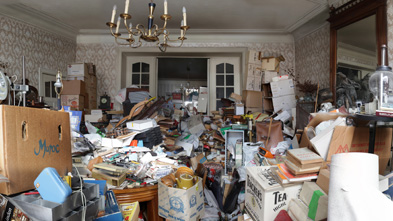
Monsieur René
Video | hdv | color | 11:11 | Switzerland, Belgium | 2012
The camera is invading an over-stuffed apartment, floating through an almost surreal material world. There is a presence of the real tenant, supposedly an old man, who we don?t get to see. Instead, a younger man in search of a place to rest is wandering about. The rooms reveal the standstill of a lonley person, who has separated himself from life and the outside world by pileing up consumer objects. A glance out of the window shows a formerly fancy boulevard in Brussels, ruled today by Moroccan traders and African immigrants.
1962* Winterthur/Switzerland, lives and works in Basel/Switzerland and Brussels/Belgium HGK Zürich, Graphic design; Swiss Television Zürich, stage design; HGK Basel, audiovisual design. videotapes, video installations, documentary videos. Works 1995-97 on cruise-ships around the world, lives 1998-2000 in Montréal/Canada and 2002-07 in Paris, then moves to Brussels. 2000-02 lecturer for video Fachhochschule Vorarlberg/Austria. From 2004 guest lecturer HGK Lucerne/CH.
Christoph Oertli, Ahmad El-Sawy
Sinbad - new voyages
Video | dv | color | 43:0 | Switzerland | 2009
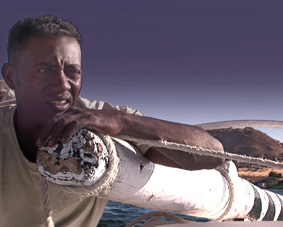
This project consists of a musical live-performance by Ahmad El-Sawy (oud/voice/electronics) with a video-projection by Christoph Oertli. Starting point is the legend of Sinbad and his journeys on the sea. What would Sinbad get to see if he?d be travelling nowadays? This interrogation should produce images and music, which juxtapose past realities and myths with the actual situation of the Arab World. The cooperation of the Egyptian musician and the Swiss video artist combines different medias and view points: Ahmad El-Sawy has transferred Arabic poems into music. Some of those texts can be read as comment about our times dispite the fact that they originate from past centuries. The writers talk about the loss of values and most importantly about the loss of the own culture. Christoph Oertli has shot video images during two longer stays in Egypt and compressed these images into a visual strand, which resembles a journey through different centuries: landscapes, urban scenes and ultramodern building complexes slowly drift past the camera. A young man embodies todays? Sinbad; occasionally he?s travelling within his own country, but he undertakes as well virtual journeys at his computer, since means and possibilities are missing for travelling abroad.
1962* Winterthur/Switzerland, lives and works in Basel/Switzerland and Brussels/Belgium education: HGK Zürich, Graphic design; Swiss Television Zürich, stage design; HGK Basel, audiovisual design. Works as video artist, produces videotapes, video installations, documentary videos.
Christoph Oertli
The ground is moving
Video | hdv | color | 10:30 | Switzerland, Belgium | 2010
1962* Winterthur/Schweiz, lebt und arbeitet in Basel und Brüssel. HGK Zürich, Grafik; Schweizer Fernsehen Zürich, Bühnenbild; HGK Basel, Audiovisuelle Gestaltung. ab 1995: Videobänder, Videoinstallationen, Dokumentarfilme. Fährt 1995-97 auf Schiffen rund um die Welt, lebt 1998-00 mehrheitlich in Kanada, ab 2002 in Paris, ab 2007 in Brüssel. 2000-02 Dozent für Video an Fachhochschule Vorarlberg/Oesterreich. 2004/06/11 Gastdozent HSLU Luzern.
Christoph Oertli
Tension Box
Experimental doc. | hdv | color | 16:22 | Switzerland | 2014
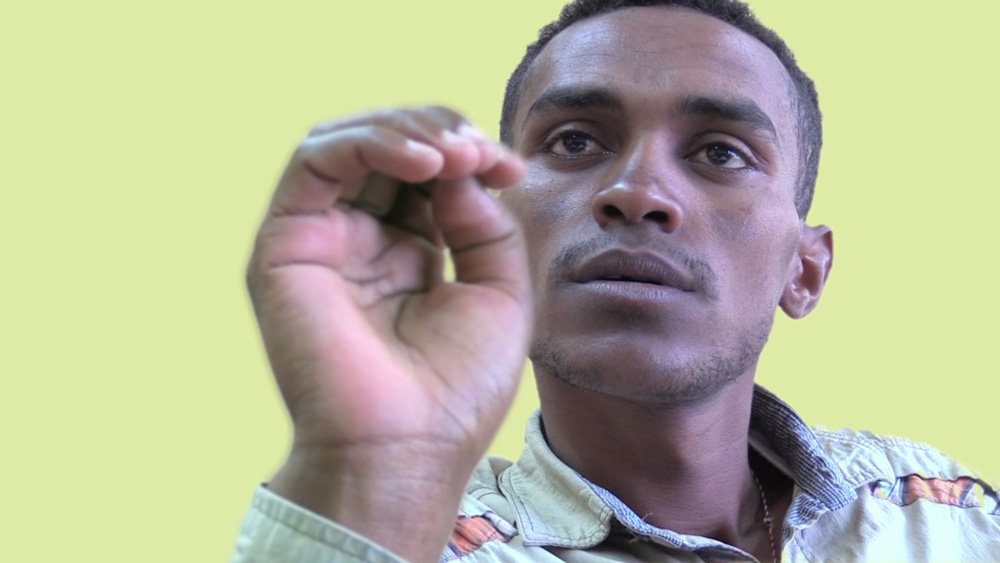
Two young Ethiopians tell about their lifes as students of Addis Ababa University; they focus on the sharing of a small room in the dormitory and the reality of a multi-ethnic country like Ethiopia. The observing camera shows the dormitory, as it were a stage, consisting of bunk beds, built-in cupboards and a corridor. Eight young men share this narrow space, where they sleep, eat, study or pray. They are Christians or Muslims, communicate in one of the many local languages or help themselves with English in order to understand each other. What may look like a refugee camp allows us actually to gain an insight into a community of young people, who prepare their future in a promising African country.
* Winterthur/Switzerland, lives and works in Basel/Switzerland and Brussels/Belgium education ZHdK Zürich, Graphic design; Swiss Television Zürich, stage design; FHNW Basel, audiovisual design. from 1995: videotapes, video installations, documentary videos, video for dance and theater. Works 1995-97 on cruise-ships around the world, lives 1998-2000 in Montréal/Canada and 2002-07 in Paris, then moves to Brussels. 2000-02 lecturer for video Fachhochschule Vorarlberg/Austria. 2004-14 guest lecturer HSLU Lucerne/Switzerland.

Christoph Oertli
Sensing Bodies
Experimental doc. | 4k | color | 48:0 | Switzerland | 2019
‚Sensing Bodies‘ deals with the use of our bodies in a perfectly structured and built environment. The film takes a look at a highly organized society and explores questions of active body experience versus the static state of the virtual experience. How far from nature can humans live their lives?
1962* Winterthur/Switzerland, lives and works in Basel/Switzerland. education ZHdK Zürich, Graphic design; Swiss Television Zürich, stage design; FHNW Basel, audiovisual design. from 1995: videotapes, video installations, documentary videos, video for dance and theater. Works 1995-97 on cruise-ships around the world, lives 1998-2000 in Montréal/Canada and 2002-07 in Paris, 2008-16 in Brussels. 2000-02 lecturer for video Fachhochschule Vorarlberg/Austria. from 2004 guest lecturer HSLU Lucerne/Switzerland.

Christoph Oeschger, Waltenspül/Schulze
Unlearning Flow
Documentary | hdv | black and white | 11:9 | Switzerland | 2019
“Machining of Steel”, “Mating of Two Males”, “Dumdum Bullet Effect” and “String Figures” played by the Inuit, the Krahô or the Taulipang in Guyana exemplify that the Institute for Scientific Film (IWF) in Göttingen aimed at capturing all the movement processes of the world on celluloid. The scientific films that the IWF produced, archived and distributed were supposed to be “documents of reality”. Without using commentary, they should make movements visible, storable and re-analyzable at any time. Can there be pictures that are more real than others? The essay film “unlearning flow” examines both National Socialist prehistory and the legacy of the IWF. It reveals the ideology of the distant, objectifying camera view and also the active white washing of the Institute’s history after World War II. With their film, filmmaker Christoph Oeschger and the historians of media and knowledge, Sarine Waltenspül and Mario Schulze, touch only the tip of the iceberg: (war) research with film, the (re-)production of colonial power relations and the creation of (a lack of) knowledge through film.
Christoph Oeschger (1984*) lives in Zurich as an artist, photographer and publisher. In 2014 he founded the book publisher cpress an in 2020 cpressfilms an agency for artist films together with Christof Nüssli. He works with various forms of the documental. His work has been shown in various museums including Fotomuseum Winterthur (CH), Zentrum für Kunst und Medientechnologie , Karlsruhe (DE), Centre de la Photographie Geneve (CH). Mario Schulze (*1986, Halle/Saale) is a cultural scientist and scientific researcher who works on the history of exhibitions, object theories and scientific films. His doctoral thesis is due in 2017 under the title "How things learned to speak. A History of the Museum Object 1968-2000". He has taught at the universities of Leipzig, Berlin, Zurich and Frankfurt as well as at the Zurich Art Academy. Sarine Waltenspül (*1986, Basel) works as a media historian on scientific films. In 2018, she received her doctorate on cinematographic models in films. She co-directs the SNSF research project Aerial Photographs/Light Images and the DFG network Lens On! Furthermore, she has been involved in various functions in the conception and production of music videos, theatre documentaries and feature films and was head of the "Hungerkünstler Verlag".
Martin M. Oesterheld
LA MULTITUD
Documentary | hdcam | color | 60:0 | Argentina | 2012
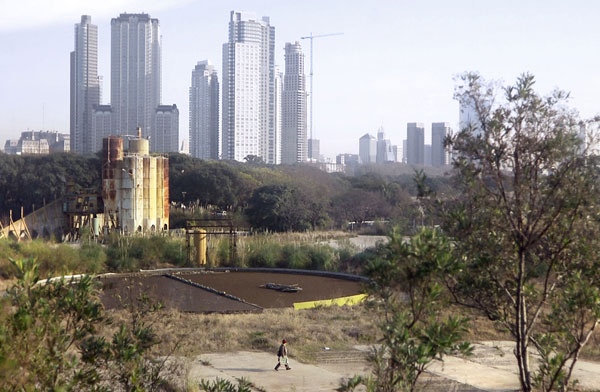
In the margins of the city, two lots sharing coincidences are placed in a dialogue. They were both locations for entertainment built by different dictatorships: The Sport City of La Boca, and the Interama amusement park. Today both places are in ruins and their surroundings harbor settlements and shanty towns where thousands of families live, many of them migrants and in extreme poverty. Through a thorough investigation, the documental shows the transit of those characters as they frequently pass though these places, and it depicts the present day over the tracks history left on the urban landscape. The result is a Buenos Aires City seen from its ends with perplexity, beauty, emotion and a neutral eye. The film combines densities with an analytical storytelling that is yet deeply atmospheric and transforming through the reality it manages to capture.
Born in 1974, Martín M. Oesterheld is a visual artist with a scholarship from the UBA / CC Rojas Research Lab for Arts Parctices. His most recent work includes the documentary "La Multitud" (Crowd), the video shorts ?Tránsito? (Transit), and ?Para la Defensa? (To the defense) made together with Julián D?Angiolillo and premiered in the Tecnopolis Exhibition.

Barbara Oettinger, Sabatini Pedro
Sombra
Animation | mp4 | color | 8:12 | Chile | 2020
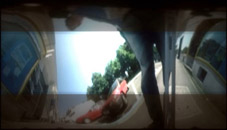
One of the great concerns that we have had in times of pandemic, has undoubtedly been how much it would affect us physically and mentally to be confined, not being able to see our loved ones. Under this concern, and reviewing some articles on the web, we found an experiment carried out by Donald Hebb in the 1950s where he decided to isolate a number of volunteers (separated from each other) in a space that was completely devoid of stimuli. Under these extreme conditions, volunteers began to experience multiple auditory and visual hallucinations over time. Sombra is a video that was made under confinement due to quarantine, where we have also been deprived of significant human contact. Hence, Shadow explores in a metaphorical sense, about the effects of isolation in relation to our sense of body, time and space. As mentioned above, our sensory perception can be affected as a result of confinement, causing our minds to create a science fiction world, questioning the idea of authenticity or whether what we see or hear is real or not. In the realization of Sombra, we have used a video game platform, in which we re-use scenarios and characters that have been previously created / simulated, modifying certain functionalities and aesthetic elements typical of these video games, and reorganizing them within the virtual scenario, with the objective to produce a cinematographic short film under what is known as Machinima. Characters and fictional worlds are digitally cloned, multiple versions of a trapped and duplicated character an endless number of times, which sometimes manages to "escape" from her mind by projecting her body onto more simulated information, generating various layers of representations. *Project in collaboration with Pedro Sabatini.
Bárbara Oettinger (Santiago, 1981) has a Bachelor's degree in Fine Arts at the University of Chile and a Master of Arts degree from the Catholic University of Chile. She has participated in various exhibitions and screenings in cultural centers, galleries and museums in Chile, Perú, Bolivia, Argentina, Uruguay, Brazil, U.S., India, Indonesia, Ukraine, Slovenia, Spain, France, Portugal, Korea and Taiwan. Currently, she holds a Master of Fine Arts in Integrated Practices degree from Pratt Institute, New York, U.S, funded by the chilean government / CONICYT. My current projects are encounters with dialogues, with a focus on testimonies that retain historical meaning, while telling of the psychological experience. Testimonies not only based on the supposed immediacy and accuracy of the historical source, but also on the subjective construction of different narratives. Pedro Sabatini (Santiago, 1979) has a Bachelor’s degree in Cinema. During these last 3 years he have been working on advertising film production. He has experience in adapting to all kinds of budgets while remaining competitive. His contributions are linked to the fascination for independent cinema and the search for new languages. His work has been recognized as best fiction short film UNIACC (Santiago, Chile), best international documentary ARCOS (Santiago, Chile), and official selection in Festival Biarritz Amérique Latine (France).
Dietmar Offenhuber, Sam AUINGER
Heinz weiss (naredmanet)
Experimental video | dv | color | 4:0 | Austria | 2005
Some time ago, a moving company cleared out the residence of the retired Heinz k. (name changed). Among his belongings were a tape recorder including a 90-minute tape. Heinz K. spent the last 5 years of his retirement spying on his neighbors and recording his thoughts and observations. The Munich based record label ?bodensatz? came into possession of the tapes, which they kindly made available to us as raw material for our film.
Dietmar Offenhuber, born 1973, graduated in Architecture and has been working since 1994 in animation, interactive environments and digital architecture. Between 2002 and 2004 Dietmar worked as key researcher in the Interactive Space departement at the Ars Electronica Futurelab. Since Fall 2004 he is Professor for animation and interactive media at the University of Applied Sciences in Hagenberg / Austria.

Anna Ogden Smith
The Lie
Video | | color | 2:40 | Lebanon | 2008
Anna Ogden Smith
The Dream
Video | | color | 2:10 | Lebanon | 2008
Anna Ogden-smith
The Dream (VHS: 1989-1994)
0 | dv | color | 4:20 | Lebanon | 2008
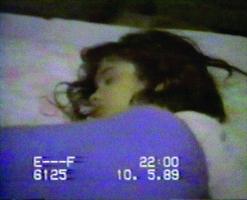
While stumbling across a collection of home made videos my mother recorded from 1989 up until 1994, I became very interested in how VHS archives serve the process of filtration of our memory. Can I alter this registered memory by re appropriating these records and infiltrating them? How do the recorded and the remembered intersect and collide?
Born in Beirut, Lebanon, in 1984, Anna Ogden-Smith graduated with a BA in Graphic Design from the American University of Beirut in June 2006. Since then, she has mainly worked as a freelancer in print design and has pursued her vocation as a contemporary dancer in London and Beirut. More recently, she started exploring different mediums of which these two auto fictions, "The Lie" and "The Dream", are a result.
Senem Gökce Ogultekin, Levent Duran
Void
Experimental film | digital | color | 16:57 | Turkey, Germany | 2024
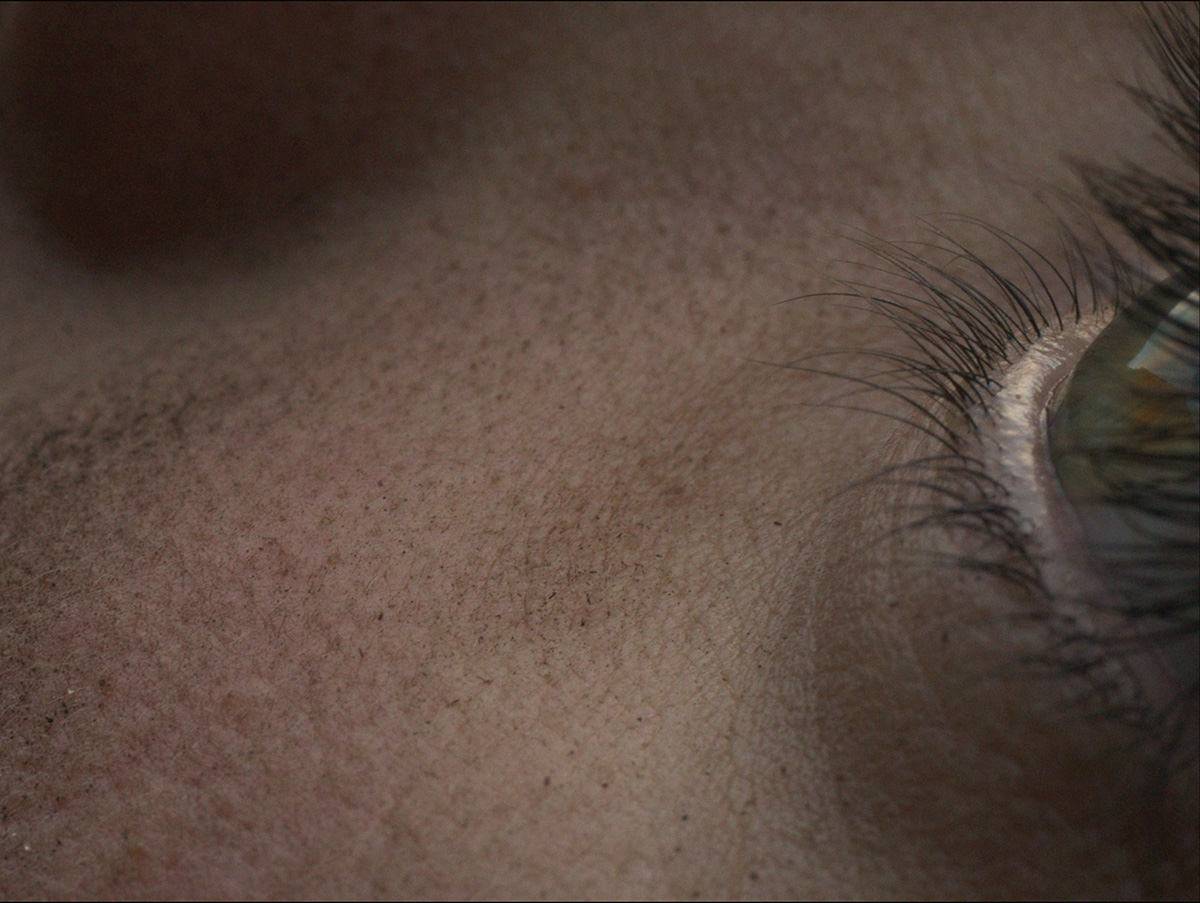
While the shade of a tree is being stolen away, bodiless organs sit in the enormous gaps of the drained earth. Under the constant noise of unseen machines, disjointed body parts touch the drying soil and breaths are only audible to insects. In this quiet, distorted world, old songs of goodwill are sung: “Future times of vain sorrow do not disturb our gentle sleep...” While we are waiting for the miracle to come the sand continues to fly.
SENEM GÖKCE OGULTEKIN work spans the disciplines of choreography, performance, vocal work and film. In 2019, "Dun/Home" was chosen for Artist´s Film International, an international event initiated by Whitechapel Gallery in London and was shown at various museums and galleries of the world. In 2020, Senem Gökce Ogultekin was awarded the Allbau Foundation Culture Prize and was appointed to the Young College by the North Rhine-Westphalian Academy of Sciences and Arts in 2021. LEVENT DURAN is a multidisciplinary artist and writer. They studied sociology at Istanbul University and film at the Fine Arts University of Hamburg, where they obtained their master's degree. Their writings have been published in major magazines and newspapers in Turkey, and their visual creations (video, painting, sculpture, installation) have been exhibited internationally. Their film project "Murmuring Draft Dodgers" received the Courageous Citizen Award from the European Cultural Foundation.

Noriko Okaku
The Interpreter
Animation | hdv | color | 6:29 | Japan, United Kingdom | 2015
The Interpreter contains a vague narrative that follows the structure of original tarot card, Major Arcana, such as The fool’s journey throughout the rest of 21 scenes to acquire enlightenment towards the end. Okaku created her original Derbyshire tarot card during a residency in Derby, England (2015). Each card draws on the artist’s own insight of Derbyshire’s history and myths - spanning a myriad of symbolic imagery. The animation is revealing an intimate interpretation of stories between each card. As this work is titled ‘”The Interpreter”, it contains many metaphor expressions in order to query audience what is their own interpretation. It is similar to how people play with tarot card. It has the multitude of possible interpretations. Messages can be revealed depending on which combination of the cards they pick - the translation of the cards are distinct as to who is reading, where they are reading, when they are reading and what intention is being transmitted in the moment of the reading.
Noriko Okaku was educated at Chelsea College of Art and Design and the Royal College of Art, completing an MA (RCA) in Animation. She is a collage artist who borrows, adopts, copies and recycles existing images to explore the diverse avenues of perception.

Yuki Okumura
Countdown in NYC
Art vidéo | dv | color | 1:43 | Japan | 2006
The artist videotaped people on the road in New York City who wear T-shirts with numbers, and reassembled them to count down from 99 to 0. It is about revealing or reconstructing an order hidden in the chaos of the city.
Bon in Aomori, Japan, 1978, Yuki Okumura is a video installation artist based in Tokyo, having exhibited his work both domestically and internationally. He was awarded grand prix of Philip Morris Art Award 2000 and is the recipient of the 2006 Asian Cultural Council fellowship to be an artist in residence at Location One, New York. The other residency programs he has participated include Taipei Artist Village, Taipei and Irish Museum of Modern Art, Dublin in 2007.
Erwin Olaf
dusk & dawn
Video | 35mm | color and b&w | 5:12 | Netherlands | 2009
Dusk: A mother mourns the death of her husband while her son questions his existence. Dawn: A mother mourns the death of het child, while her husband tries to deal with the death and the misshapen newborn.
Erwin Olaf Born in Hilversum in the Netherlands in 1959, Erwin Olaf lives and works in Amsterdam since the early 80`s. His current studio is situated in a former church hall. Mixing photojournalism with studio photography, Olaf emerged in the international art scene in 1988 when his series `Chessmen` was awarded the first prize in the Young European Photographer competition. This award was followed by an exhibition at the Ludwig Museum in Cologne, Germany. Since then Olaf has continued to explore issues of gender, sensuality, humor, despair and grace in each successive series. Printing his early work in documentary style black-and-white, he first gradually introduced color and then digital manipulation. There is great contrast between each series. Mature (1999): golden-hued portraits of elderly women in the poses of kittenish supermodels; Fashion Victims (2000): a lewd commentary on the consumerism of sex and designer labels; Royal Blood (2000): minimalist white-on-white portraits, depicting the vengeful nature of members of the aristocracy who have suffered unsavory deaths; Paradise (2001): picturing a dark and baroque underworld of gleeful clowning and lunacy; Separation (2003) portraying an ice cold and introverted family in a sterile living room. In his four most recent series Rain, Hope, Grief and Fall, Erwin Olaf returns to classic imagery with minimal computer retouching. Video and film offer new possibilities to explore. His first film Tadzio (1991, co-directed with painter F. Franciscus) was soon followed by comic videos for children`s television, short documentaries, music clips and commissions by the Dutch National Ballet. Recently Olaf has created autonomous video works like Separation, Rain and Grief, starring models who also appear in the accompanying photo series. In the films they play a different character, as though his moving images provide a parallel history to his color photographs. These short films have been selected for film festivals all over the world. Over the years many of Olaf`s works - from his unabashed nude portraiture and intense symbolism to the unflinching gaze in his blood-drenched images of staged violence - have provoked controversy. Not surprisingly, this ability to attract attention has seen his work embraced by the advertising world, resulting in commercials for Lavazza, BMW, Microsoft and Nintendo among many others. Lately Erwin is frequently shooting in commission for magazines such as The New York Times Magazine, The Sunday Times Magazine, Elle and Citizen K. In 1999 his worldwide campaign for Diesel Jeans won him the coveted Silver Lion at the Festival for Advertising in Cannes. He was awarded the same prize two years later for his imagery produced for Heineken. Among numerous other international art and media prizes, in 2006 he was awarded Photographer of the Year in the International Color Awards. In 2007 Kunstbeeld magazine chose him Artist of the Year of the Netherlands. Recently he received a Lucie Award for his entire oeuvre
Erwin Olaf
Grief
Experimental video | dv | color | 3:59 | Netherlands | 2007
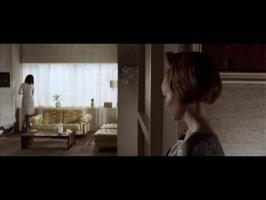
Grief NL, 2007, 3`59? Thunder-like sounds accompany the image of a woman who, withdrawn into herself, is staring out of the window. A radio voice, only partly intelligible, reports on certain events, and a second woman hesitantly enters the room. Neither woman says anything; silence persists between them. The rain, the radio, the back of the woman at the window and the tenseness of the visitor keep one another in a grip. Interacting with the radio report the claps of thunder suddenly sound threatening, and the viewer begins to suspect that there is a connection between the thunderstorm, the vague messages seeping through into the room and the state of mind of the waiting woman who remains physically unapproachable to the other. She keeps on turning her back on her; she is hiding her silent tears. In one single scene and with minimal means, Grief conjures up a whole story of unfolding misery.
Erwin Olaf was born in 1959 in Hilversum, The Netherlands. Olaf has a passionate love affair with life, and enjoys to the full everything it has to offer. His oeuvre is a manifestation of his passion and of his genuine engagement with his subjects. Olaf has been professionally active for twenty-five years and in this period he has succeeded in evolving from a participating photographer to a director who creates his own reality. Olaf's pictures are filled with humor, imagination and exuberance, but they go much further than simple visual intrigue. His works deal with freedom, beauty, loneliness, and being different. He convinces his public in a shameless and versatile manner, questioning established norms. Olaf consistently expresses his own standpoints, fulminating against narrow-mindedness, smugness, and rigid norms, but not without humor, bravura and bite. An authentic Olaf is a blow to the head, ruthlessly direct, but simultaneously wrong footing the viewer and poking fun. One reviewer remarked that in Erwin Olaf's photographs everyone stares unwaveringly into the lens--thus looking straight into the photographer's big blue eyes, as it were. Olaf approaches the world openly and enthusiastically and this is also the way in which, in his work, he dares to enter the public debate. Olaf is a master in generating his own world, whether this be in autonomous photographic series or film projects. He is also hypercritical, nothing escapes him, so that pictures are created with a placement composed so meticulously that it is almost painful to examine. With these, Olaf manages to produce fictitious yet convincing images of bygone days, fairytales and dreams, populated by historical figures, elves, dwarves, lunatics, and god knows who.
Erwin Olaf
La tristesse riche
Experimental fiction | hdcam | color | 10:30 | Netherlands | 2010

Jaamil Olawale Kosoko, Ima Iduozee
Chameleon (A Visual Album)
Video | hdv | color | 21:16 | USA, Germany | 2020
Chameleon is an experimental visual album inspired by the radical queer feminist genre of the “Biomythography” which refers to Audre Lorde’s foundational work entitled Zami: A New Spelling of My Name published in 1982. It combines history, biography, and myth, and holds a literary perspective that serves as a guiding light for complex narrative storytelling rooted in a queer, Black self-defined, feminist imagination.
jaamil olawale kosoko, (they/them) of Yoruba and Natchez descent is an award winning filmmaker, movement artist, poet, and facilitator whose work in embodied poetics and performance has been presented internationally and is rooted in the intergenerational passage of Black feminist knowledge, queer theories of the body, and sacred rituals of intimacy & wellness as a means to craft perpetual modes of freedom, healing, and care where/when/however possible. Their new book, Black Body Amnesia: Poems & Other Speech Acts was released in Feb. 2022. jaamil is the recipient of a MacDowell Fellowship, PEW Fellowship in the Arts, Princeton Arts Fellowship, 2019 Red Bull Writing Fellowship, and a 2017 Cave Canem Poetry Fellowship. Their works in poetry, curation, performance and education have taken them all around the world having performed and taught in over 21 countries on 5 continents including Morocco, South Africa, Germany, Finland, Sweden, UK, Norway, Switzerland, Canada, Mexico, Japan, and throughout the Americas. Of Nigerian and Finnish descent, Ima Iduozee is a choreographer, director, dancer and filmmaker based in Helsinki, Finland. His debut solo work, This is the Title, premiered in 2012 and went on to garner international acclaim, touring in 15 countries across Europe, North America and Asia. In 2015 the annual honorary prize of the Finnish Critics Association, Critics Spurs´, was given to Iduozee, as an acknowledgement for the best artistic breakthrough of the year. Earlier commissions include works for The Finnish National Theatre, Aalto International, Stockholm City Theatre, Helsinki City Theatre, Finnish National Opera and Helsinki International Film Festival. In 2016 Iduozee graduated from the Arts University of Helsinki (Theatre Academy).
Hoisan Oleksandr
analohiia prostoru
Experimental doc. | mp4 | color | 12:0 | Ukraine | 2022
Due to long-term observation of the NPCs (Non-Playable Characters) in the classic GTA: San Andreas (2004) video game the player witnesses certain documentary events that take place in different parts of the in-game world. To some extent, the constant movement which accompanies the player-observer throughout the in-game space is the only salvation from quotidian violence on the streets but not always.
Oleksandr Hoisan (b. 2001, Ivano-Frankivsk, Ukraine). A member of the NGO CUC (Contemporary Ukrainian Cinema), a member of the Ukrainian Guild of Directors. The first student films participated in more than 100 national and international festivals (incl. Oberhausen, Sarajevo Film Festival, FIDMarseille, BRNO16, Molodist), received awards. In 2022, he graduated from the bachelor's degree in film and television directing at the Kyiv National University of Culture and Arts, in the Roman Shirman studio. Currently, he continues his studies at the master's degree.
Joachim Olender
Tarnac. Le chaos et la grâce
Animation | hdv | color | 23:0 | France | 2012
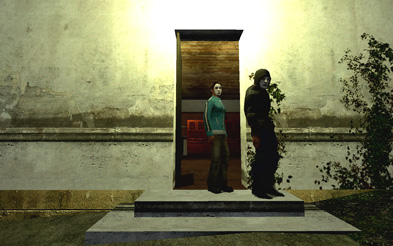
Le 11 novembre 2008, cent cinquante policiers envahissent le petit village de Tarnac en Corrèze. Neuf personnes sont soupçonnées d?avoir posé des crochets métalliques sur des caténaires pour désorganiser les lignes SNCF. A l?issue de leur garde à vue, cinq d?entre elles sont placées en détention provisoire pour terrorisme. Le principal suspect restera incarcéré durant six mois sans preuve à l?appui. Voici l?affaire de Tarnac. Ce film en retrace la fiction.
Joachim Olender est scénariste, réalisateur et vidéaste. Sa démarche découle d?un va-et-vient entre l?écriture et l?image, le cinéma et la vidéo. Il a étudié le droit et le cinéma à Bruxelles. En 2006, il débute une thèse à l?EHESS sur la faille dans le cinéma US des années 2000. Accompagné par le cinéaste Luc Dardenne, il écrit un scénario de long métrage, adapté du roman Les Choses de Georges Perec, dont une première apparition se déroule à la BNF dans l?exposition « Choses lues choses vues » conçue par Alain Fleischer (fin 2009). Il est publié dans Pylône Magazine. En 2010, il intègre Le Fresnoy studio national des arts contemporains et réalise Bloody eyes (fiction 22 min, prod. Le Fresnoy, 2011), tiré d?une nouvelle de Luc Dardenne. En 2012, il réalise Tarnac. Le chaos et la grâce, documentaire d?animation entièrement tourné dans un jeu vidéo, qui explore les méandres de cette fiction d?Etat. En 2012, il entame le développement d?un documentaire sur Herman Daled et sa collection d?art conceptuel rachetée par le MOMA et s?associe à Camille de Toledo et Grégoire Hetzel dans l?opéra vidéo « La chute de Fukuyama ». Il poursuit actuellement sa recherche avec Le Fresnoy. Joachim Olender est né en Belgique en 1980. Il vit et travaille entre Paris et Bruxelles.