Catalogue > Search
Results for : Tout le catalogue
Tania Parovic
ATTENTATE
Experimental film | dv | color and b&w | 10:40 | Germany | 2006
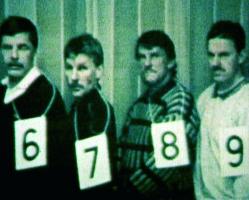
The term assassination describes a planned, attempted or successfull assassination of a public figure. The goal of such an assassination is not the killing of a private person. The assassination is meant to destroy the person as a political, social or public persona. The project assembles diverse material from film, TV and the press and shows in its structure and composition different approaches to the collected material. By structuring the material series arise showing homogenic structures which embody different aspects like the various scenes of the crime, media coverage, speculations, collective mourning, victims, assassins and remembrance of assassinations. With the serial character in mind a kind of game unfolds which produces the possibility to highlight one specific aspect, an assassination, an assassin, a motive, the results of the assassination or the victim - or serve as a model. The serialisation of the assassinations results in continuous correlations of the different deeds, a shift of themes within the series but it also shows their interchangeable character. It is not the meaning of a specific image or text or crime scene that matters by treating this theme artistically. More important are the associations and interpretations of the beholder and the interactions of the pictures themselves.
Tania Parovic. Born 1977 in Aachen, germany. 2002 Diploma in Communications Design at the academy of fine arts Msastricht, netherlands with the film »0709.«. 2003?2005 Postgraduate study at the academy of media arts Cologne and various works and projects for Television, fashion and art. 2006 Diploma with the filmproject »ASSASSINS«.

Agustín Parra
Autorretrato 2
Performance | dv | color and b&w | 1:42 | Colombia | 2008
This work develops a reflection about the performative character of drawing. Autorretrato (Self-portrait) belongs to a series of video performances that explore basic elements of drawing in relation to the idea of self representation. The intimate and indissoluble connection between mind and body permits a drawing becomes an event, that is to say, an alive experience that not only takes place during the execution of the outline but also during the route of spectators? glance. The video media emphasizes the ephemeral character of the drawing, focusing the awareness of spectators in the processes involved in the act of drawing instead of in the drawing itself. The video presents the shadow of a hand that tries to draw its contour. As the shadow is mutable, immaterial and impermanent, the drawing tries to establish the limits of that elusive form, which resists by its own nature to be fixed. Thus, the resulting outline is a product of being in time: the track of an event instead of the representation of any objective element of the material reality.
Pocas Pascoal
Time To Change
Experimental doc. | 0 | black and white | 6:6 | Angola, Portugal | 2024
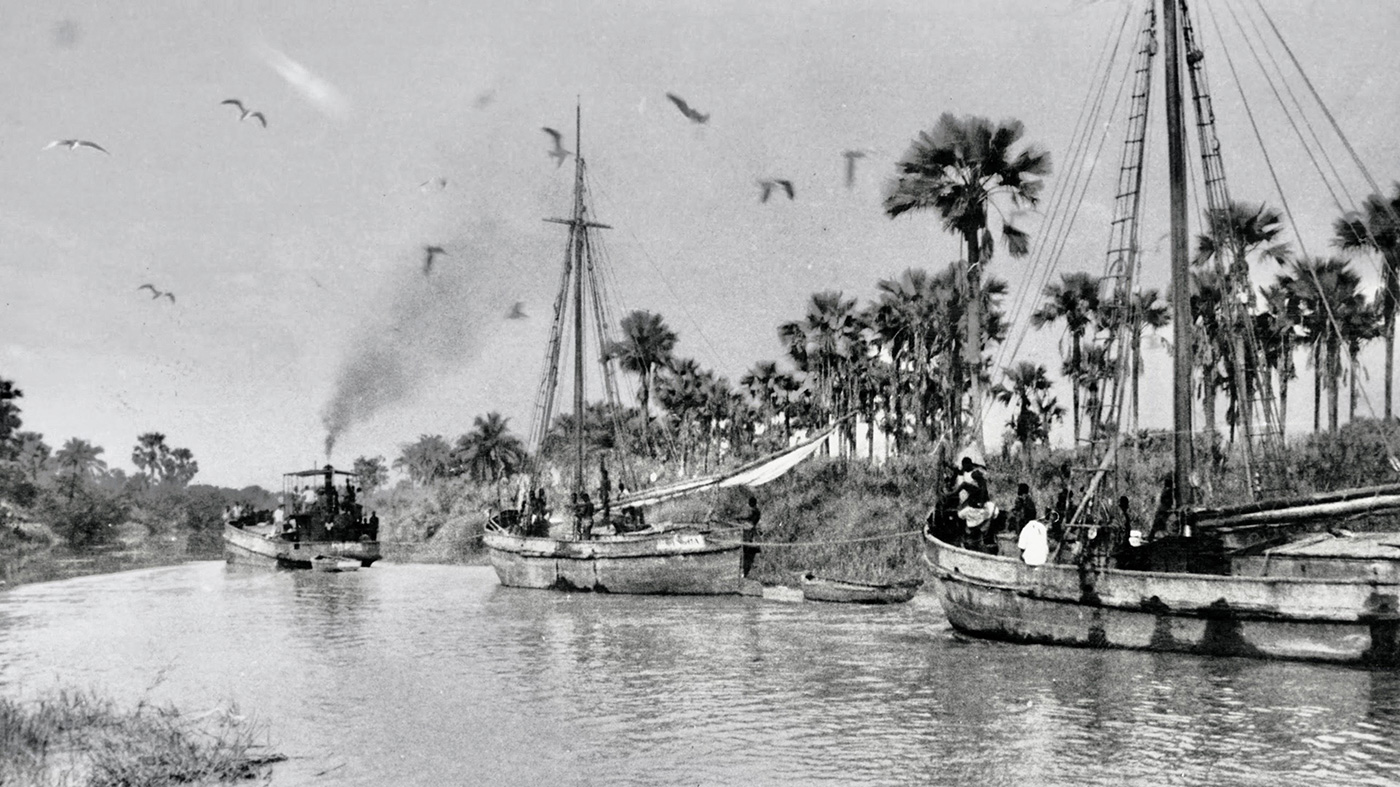
Under the merciless yoke of the all-powerful white man, nature and mankind are quickly tamed. Colonization, like a forced and destructive transplant, leads to ruin, desolation, and the enslavement of fauna, flora and humans. The colonialism, capitalism, their impact on humanity.
Director, videographer and scriptwriter, Pocas Pascoal was born in Luanda where she trained in visual arts and became the first female Angolan camera operator. In France, she graduated in editing and worked for 15 years as an editor. In 1998, she made her first short film Pour Nous. She participated in various exhibitions including the Havana Biennial, Bordeaux Architecture Biennial and Luanda Triennial. Two other documentaries followed: Childhood Memories in 2000 and There's Always Someone Who Loves You in 2004. In 2008, she turned to fiction with the short film Demain Sera Différant. Based on her personal experience, she shot the feature film Alda and Maria in 2012. This film was part of the official selection of the Locarno Film Festivals, and she won seven international awards, such as Best Feature Film at the Los Angeles Independent Film Festival, the EU Award at FESPACO and the Best Feature Film at the IndieLisboa FF in 2012. In 2021, she directed the Tv film A Palavra Magica and the documentary Blow, which won the Arvore da Vida Award for Best Film at the IndieLisboa FF 2021. In 2022 she was invited by the Natural History Museum of Lisbon to create a video installation. In 2024 she participated at the Dakar Biennale and in the collective project GREENHOUSE, which represented Portugal at the 60th International Art Exhibition — La Biennale di Venezia. With the film Time to Change, which is currently touring international festivals, having been presented, among others, in Clermont-Ferrand IFF, Curtas Vila do Conde IFF; RIDM, Uppsala, FilmFest Dersden and premiered in theaters in Portugal in July 2025. Currently in development, the feature film Sarah Maldoror.
Arnold Pasquier
Borobudur
Fiction | hdv | color and b&w | 80:0 | France, Italy | 2015
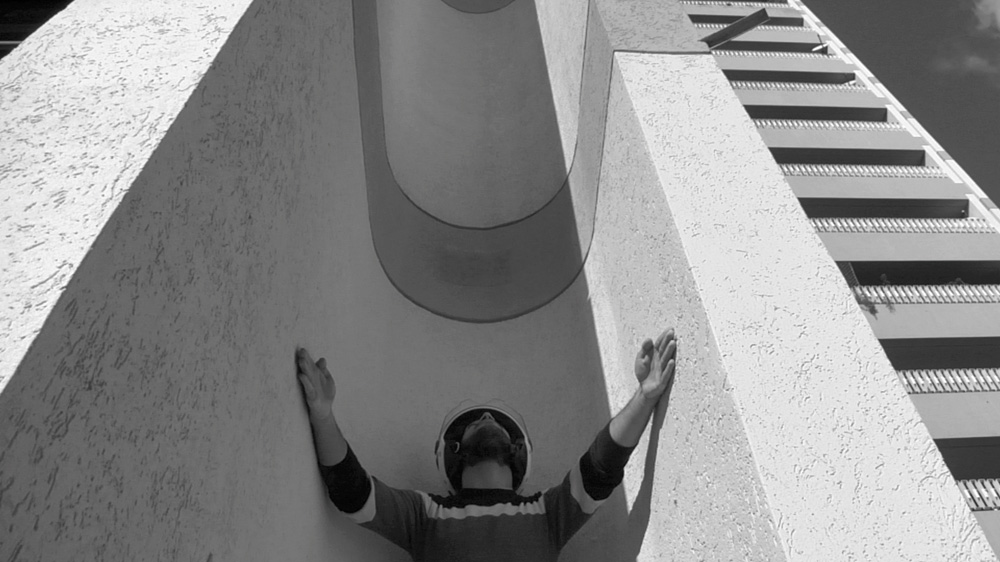
Federico est étudiant en architecture à Palerme. Il parcourt la ville à la recherche de bâtiments moderne qu’il dessine et photographie. Dans un parc, il rencontre un jeune homme, Borobudur, qui va lui ouvrir les portes d’une autre urbanité. Dans le sillage de ce garçon magique, Federico abandonne son quotidien et découvre une ville qui le métamorphose.
Arnold Pasquier est né à Paris en 1968. Dès ses études d’arts plastiques et de cinéma, il réalise des essais en Super 8 et en vidéo dans lesquels il développe un univers de journaux filmés et de fictions. À vingt ans, il se rapproche de la danse contemporaine et collabore avec des chorégraphes comme documentariste et comme danseur. Cette expérience marque la réalisation d’une œuvre où la danse tient une place importante. En 1997, il est reçu comme résident au Fresnoy, Studio national des arts contemporains à Tourcoing où il conçoit l’installation C’est ici que je donne des baisers. En 1999, il présente dans la Grande Nef du Fresnoy le spectacle C’est merveilleux pour 10 danseurs et acteurs. Il est l’auteur de nombreux films (fiction, documen- taire, art vidéo), de mises en scène de spectacles, de scénographies, d’émissions de radio pour les Ateliers de Création Radiophonique de France Culture. Son travail s’articule aux croisements de ces différentes disciplines. En 2004-2005, à la faveur d’une résidence de l’association française d’action artistique, programme, «Villa Médicis hors-les-murs», il réalise le film Celui qui aime a raison fiction de long métrage sortie en salle en 2006.Il collabore avec des cinéastes et des plasticiens comme cadreur ou monteur.

Arnold Pasquier
O amor moderno
Video | hdv | color | 8:52 | France, Brazil | 2017
L'installation vidéo d'Arnold Pasquier fait partie d'une série qui vise à reflèter les conditions d'une expérience sentimentale en lien avec un paysage et à inventer la forme spectaculaire d'un amour contemporain. Deux paysages creusent une absence et révélent la possibilité d'une rencontre. D'une part, une sculpture monumentale couvre les ruines du village de Gibellina en Sicile, détruit par un tremblement de terre; d'autre part, une autoroute coupe irrémédiablement en deux un quartier d'immigrants italiens de la ville de Sao Paulo au Brésil. Ce cercueil blanc, ce moulage en béton débordant, offre une nouvelle scène pour exprimer - jour et nuit - un amour qui est en lui-même l'invention d'une forme d'amour.
Arnold Pasquier est né en 1968 à Paris. Dès ses études d’arts plastiques et de cinéma à l’Université Paris 1 Panthéon-Sorbonne, il réalise des essais en super 8 et vidéo dans lesquels il développe un univers de journaux filmés et de fictions. À vingt ans, il se rapproche de la danse contemporaine et collabore avec des chorégraphes en tant que documentariste et danseur. Ces expériences inaugurent la réalisation d’une oeuvre où la danse tient une place importante. En 1997, il intègre le Fresnoy, Studio national des arts contemporains. Arnold Pasquier est l’auteur de nombreux films, vidéos, documentaires, fictions, mises en scène de spectacles et émissions radiophoniques : son travail se dèveloppe au croisement de ces différentes disciplines. Ses films ont été présentés et primés dans de nombreux festivals de cinéma en France et à l’étranger (Festival du film de Locarno, Festival Côté Court à Pantin, Vidéodanse, Biennale de Busan, FIDMarseille, Rencontres Internationales Paris Berlin Madrid). En 2005, il est lauré d’une bourse Villa Médicis Hors les Murs et il réalise le film Celui qui aime a raison au Brésil, sorti en salle en 2006. Son film Notre amour est présenté en sélection officielle au Festival du film de Locarno en 2009. En 2012, il présente un court métrage intitulé L’Italie et, lauréat d’une résidence de réalisation du Festival Côté Court de Pantin, il achéve la réalisation d’un long métrage de fiction expérimentale, Si c’est une île, c’est la Sicile.

Arnold Pasquier
L'amour moderne [solitude]
Experimental doc. | hdv | black and white | 35:0 | France, Brazil | 2019
Le film propose une promenade architecturale dans le centre historique de Salvador de Bahia, au Brésil, dans les pas de l'architecte italo-brésilienne Lina Bo Bardi. A la fin des années 80, elle entreprend une intervention de récupération des espaces publics ainsi que la restauration de quelques bâtiments.
Arnold Pasquier est l’auteur d'une œuvre qui couvre les champs de la fiction, du documentaire, de l'essai et du cinéma expérimental. Il partage son activité entre projets personnels, enseignement et collaborations en tant que chef-opérateur et monteur. Dès ses études d’arts plastiques et de cinéma, il réalise des essais en Super 8 et en vidéo où il mêle journaux filmés et fictions. À vingt ans, il se rapproche de la danse contemporaine et collabore avec des chorégraphes comme documentariste (Mathile Monnier, Josef Nadj, Dominique Boivin, Christian Rizzo) et comme danseur (Ami Garmon, Régis Huvier, Felix Ruckert, Julie Desprairies). En 1997, il est résident au Fresnoy, Studio national des arts contemporains à Tourcoing. En 2004, à la faveur d’une bourse «Villa Médicis hors-les-murs» de l’AFAA, il réalise au Brésil le film de long métrage Celui qui aime a raison. Cette expérience marque un intérêt pour la représentation de la ville et de l’architecture qui se développera avec L'Italie (2012), puis Borobudur (2015).
Arnold Pasquier
Mosaiko
Experimental fiction | 4k | color | 21:0 | France | 2024
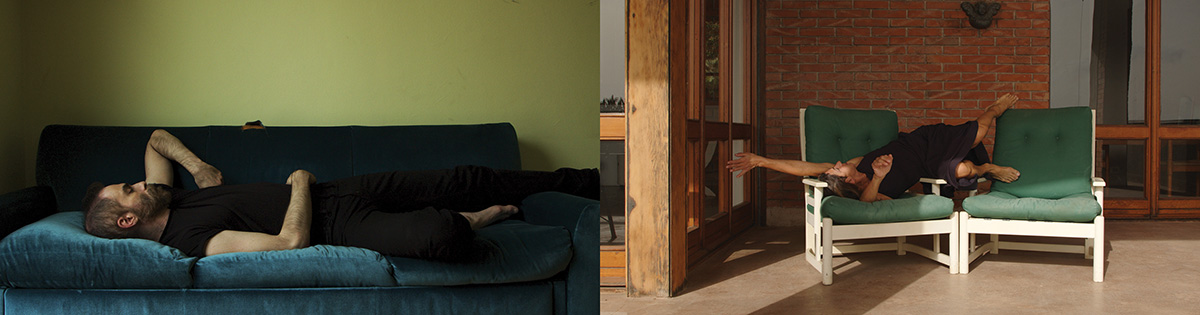
2024 • 21’ • Vidéo • couleur, sonore. Avec Maria Donata D’Urso, Thanos Samaras. Réalisation, image, montage, Arnold Pasquier Un homme seul dans un appartement, une femme seule dans le jardin. Ils mettent en scène leurs solitudes dans une cérémonie secrète où leurs corps cherchent à embrasser une absence. En vis-à-vis se déploie une déambulation dans deux parcs d’Athènes dont les sentiers mènent à un panorama. Ce mouvement entre nature et architecture fait écho aux quêtes des corps séparés.
Arnold Pasquier est l’auteur d'une œuvre qui couvre les champs de la fiction, du documentaire, et de l'essai. Dès ses études d’arts plastiques et de cinéma, il réalise des essais en Super 8 et en vidéo où il mêle journaux filmés et fictions. À vingt ans, il se rapproche de la danse contemporaine et collabore avec des chorégraphes comme documentariste et comme danseur. Il partage son activité entre projets personnels, enseignement et collaborations en tant que chef-opérateur et monteur.

Arnold Pasquier
Ivry-sur-Seine
Experimental fiction | hdcam | black and white | 8:45 | France | 2020
Dans un appartement, des amis se retrouvent, se rencontrent et s'embrassent.
Arnold Pasquier est l’auteur d'une œuvre qui couvre les champs de la fiction, du documentaire, de l'essai, et du cinéma expérimental. Il partage son activité entre projets personnels, enseignement, et collaborations en tant que chef-opérateur et monteur. Dès ses études d’arts plastiques et de cinéma, il réalise des essais en Super 8 et en vidéo, où il mêle journaux filmés et fictions. À vingt ans, il se rapproche de la danse contemporaine et collabore avec des chorégraphes comme documentariste (Mathile Monnier, Josef Nadj, Dominique Boivin, Christian Rizzo) et comme danseur (Ami Garmon, Régis Huvier, Felix Ruckert, Julie Desprairies). En 1997, il est résident au Fresnoy - Studio national des arts contemporains à Tourcoing (France). En 2004, à la faveur d’une bourse "Villa Médicis hors-les-murs" de l’AFAA – Association française d’action artistique, il réalise au Brésil le film de long métrage "Celui qui aime a raison". Cette expérience marque un intérêt pour la représentation de la ville et de l’architecture, qui se développe avec "L'Italie" (2012), puis "Borobudur" (2015).

Arnold Pasquier
L'amour moderne [allemagne]
Fiction | 4k | color | 10:44 | France, Brazil | 2018
Après avoir fait l'amour, deux hommes étrangers l'un à l'autre communiquent en traduisant questions et réponses via un écran de téléphone. L'un est brésilien, l'autre allemand, et ce dernier quitte São Paulo le jour-même. S'embrasser encore une fois, puis embrasser la ville d'une étreinte qui retient l'instant d'une présence passagère.
Arnold Pasquier est l'auteur de plus de 70 films qui couvrent les champs de la fiction, du documentaire, de l`essai et du cinéma expérimental. Il est metteur en scène, producteur d`émissions radiophoniques, acteur et danseur. Il partage son activité entre projets personnels, enseignement et collaborations en tant que chef-opérateur et monteur. Dès ses études d'arts plastiques et de cinéma, il réalise des essais en Super 8 et en vidéo où il mêle journaux filmés et fictions. A vingt ans, il se rapproche de la danse contemporaine et collabore avec des chorégraphes comme documentariste (Mathile Monnier, Josef Nadj, Dominique Boivin, Christian Rizzo) et comme danseur (Ami Garmon, Régis Huvier, Felix Ruckert, Julie Desprairies). En 1997, il est résident au Fresnoy, Studio national des arts contemporains à Tourcoing où il conçoit l'installation multimédia C'est ici que je donne des baisers et en 1999, il présente dans la Grande Nef le spectacle C'est merveilleux. En 2004, à la faveur d'une bourse «Villa Médicis hors-les-murs» de l'AFAA, il réalise au Brésil le film de long métrage Celui qui aime a raison. Cette expérience marque un intérêt pour la représentation de la ville et de l'architecture qui se développera avec L`Italie (2012)5, puis Borobudur (2015) et les 12 films de l`exposition Lina Bo Bardi, enseignements partagés (2017) présentés à l`école d`architecture de Paris-Belleville.

Chiara Passa
Still Life
Virtual/Augmented/eXtended Rea | 4k | color | 0:0 | Italy | 2020
“Still life” is an art-installation both physical - because it is composed of several AR sculptures made of ceramic, 3D printing, and other materials - and VR, because it is usable through oculus rift 3D viewer. “Still life” analyses the processes of nature by investigating the relation with it and what is represented in art nowadays as still life. The VR artwork puts in question what is really dead in nature and what is still alive in history of art, by speculating on landscapes, paintings and objects, and so creating through virtual reality an object-oriented space formed by a vibrant still-life environment designed all around the spectators. To design the vr artwork’s environment I used the techniques of photogrammetry and 3D scan objects, then I worked on manipulating the related maps/textures. The onlookers wearing the headset can touch the things ( i.e. food, flowers, fake dead animals, plants, rocks, shells, drinking glasses, books, vases, jewellery, coins, pipes, etc. ) in the still-life recreated by the real objects placed physically on situ. Audience can discover hidden senses by interacting with wired objects and new spaces of perception unfolding into diverse meanings. I make a sort of Duchampian détournement / decontextualization on the use of the vr medium itself, by designing immersive milieu in which, sometimes, the vr camera view angle is locked at 180°, 220°, or 310° instead of 360°. So, the onlooker is forced to peek/peep through the real space, into a reconstructed and resized immersive space sometimes semi-open or semi-closed, but made of wired geometric angles and futuristic views, playing with the concept of infinite including infinitely large, infinitely small, micro and macro dimensions, producing an unexpectable slide and shift of meaning. “Still life” is an experimental project, which challenges physical place to render it vibrant and participatory. It is through audience experience that “Still life” addresses us to the paradox of the modern space-time condition, even more diluted between physical and liquid space. “Still life” is part of a vr research project which I began in 2015 and which slots into my artistic journey since 1997, the fruit of a deep interest in space and how it is transformed and shaped “by” and “in” the language of informatics. In software and electronic devices, I find potential vehicles for the investigation and visualization of my research and theories. My “Still life” by investigating and analysing the ancient and fervid European Still Life art-practice, wants to keep alive its tradition across the magical ontology of the VR vision. In “Still life” I designed each piece to behave and move beyond its own functionality, according also to the Object Oriented Ontology philosophy.
Chiara Passa, visual artist (b. Rome 1973) working in media art since 1997. I graduated (M.F.A.) from the Fine Arts Academy of Rome, Master in audio-visual media at the Faculty of Modern Literature. After living in many different places I’m currently living and working around & in Rome. My artistic research analyses differences in virtual spaces through a variety of techniques technologies and devices - often using virtual reality and augmented reality technologies as an artistic medium to explore architecture as interface. I use VR and AR to comprise their intrinsic language and so on for shaking-up and challenging the static notion of architecture, by exploring the liminal duality between tangible and virtual place, achieving in art a strange oscillation between spaces. Yet, I work with animations, net-artworks, interactive and site-specific video-installations and AR / VR video-sculptures, sometimes made of Carrara marble, fresco technique, plexiglass, or 3D printing parts. Yet, I use VR medium in order to create site-specific video installations using a wide range of google cardboards. Typically, the 3D viewers are installed all over the real space, designing geometric shapes in liminal areas where onlookers can peek/peep thru 3D viewers over the wall, and so immerse themselves into a re-constructed/resized VR space made of wired geometric angles and futuristic views, sometimes semi-open or semi-closed at 180°, 220° or 360°, so highlighting the paradox of the modern space-time condition, which nowadays is even more diluted in between physical and liquid space. My work has been internationally exhibited from festivals, conferences, and institutions, including: 2019 «Object Oriented Space». Solo show at Museum MLAC Rome. «Virtual Natives – Sculpture», Roehrs & Boetsch gallery, Zurich (2019); «Oslo Night show», HEK Museum Basel (2018); «InSonic» immersive art show, ZKM | Center for Art and Media Museum, Karlsrhue (2017); «From live architecture: Dimensioning», solo show at Furtherfield gallery, London (2016); «Off Biennale Cairo» (2015-2016); «ISEA Disruption», Conference and exhibition at Vancouver Art Gallery. (2015); «Morphos», Vortex Dome - immersion media, Los Angeles (2014); Media Art Histories IV - RENEW conference, Riga. (2013). FILE | Electronic Language International Festival, São Paulo. (2011); Electrofringe - festival of new media art, Newcastle, Australia. (2008); BizArtCenter, Shangai (2005); MACRO – Museo di Arte Contemporanea, Roma (2004), 11° Biennale of young artists of Europe and the Mediterranean countries: «Cosmos - a sea of art», Athens. (2003); 48a Biennale di Venezia (with Oreste group), Venezia (1999) e Fondazione Bevilacqua La Masa, Venezia (1999).
Gregor Passens
Wake up
Experimental video | dv | color | 5:18 | Germany, Argentina | 2005
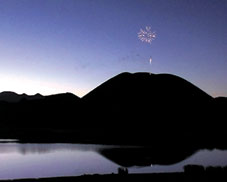
In the crater of a volcano in Catamarca, Argentina, a firework is set off at dawn, at 4000 metres altitude.
Born in 1974, Gregor Passens lives and works in Munich and Buenos Aires, Argentina. He studied at the Munich Academy of Arts, where he was part of Professor Nikolaus Gerhart's class; he graduated in 2002. Selection of Scholarships: 2002/03 Annual scholarship from DAAD, Buenos Aires, Argentina 2005 International Villa of Artists, Concordia, Bamberg 2006 American scholarship of Bavaria. Selected Exhibitions: 2003 "Verboden op het Werk te komen" W 139 in Brakke Grond, Amsterdam; II Biennial of Tirana, Albania 2004 STUK, Louvain, Belgium; "Xtreme Houses" Lothringer 13, Munich + Halle 14 Federkiel foundation, Leipzig; "Muslim Mulligi Prize", the Kosovo Art Gallery, Pristina 2005 "A Parasite Showing" k-forum, Vienna, and ARGE Gallery, Bozen; "Buenos dias Santiago" - an exhibition as expedition, Museum of Contemporary Art, Santiago of Chili 2006 VIDEOTHEKA, Vienna Kunsthalle; "Triumph", El Basilico, Buenos Aires; Open Space, Art Cologne, Cologne
Vijai Patchineelam
Part 2
Video | hdv | color | 15:31 | Brazil | 2014
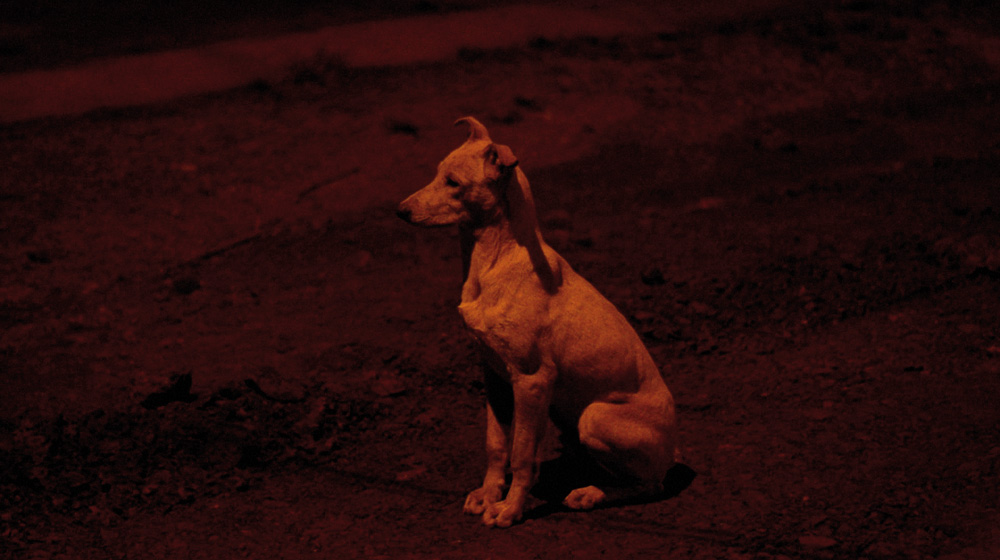
Part 2 (2014) is a non-speech moving image work that puts into motion a succession of mostly nocturne images of an industrial landscape. Filmed in Jardim Canadá in the state of Minas Gerais (BRA), the project documents the material conditions on the ground of a once small rural town which has been radically industrialized in the last decade by the mining industry. The artist filmed several discarded objects and debris from several ad hoc landfills located in different sections of Jardim Canadá. Because of the region’s accelerated and under-planned transformation, it does not have a proper systemic waste management, and thus most of the trash and unwanted furniture of the inhabitants are thrown in vacant lots and at times set on fire. Part 2 follows the movement of a pack of street dogs at an eye level exploration of the landfills of Jardim Canadá.
Vijai Patchineelam (1983) was born in Brazil. He is a graduate from the School of Fine Arts at the Federal University of Rio de Janeiro, and a Master in Fine Arts at Konstfack University College of Stockholm, Sweden. Earlier this year he concluded a one-year research project at Jan van Eyck Academie in Maastricht, The Netherlands. Patchineelam mainly works with the mediums of video, photography and books. In 2013 he participated in the 18o Videobrasil Festival and opened two solo exhibitions in 2013. Recently the show Wild Attacks of Cynicism at Ignacio Liprandi Gallery in Buenos Aires, Argentina; and earlier that year the show Cut Corner at Seven Art Gallery in New Delhi, India.
Vijai Patchineelam
Resistir o passado, ignorar o futuro e a incapacidade de conter o presente
Experimental doc. | hdv | color | 28:2 | Brazil, Netherlands | 2015
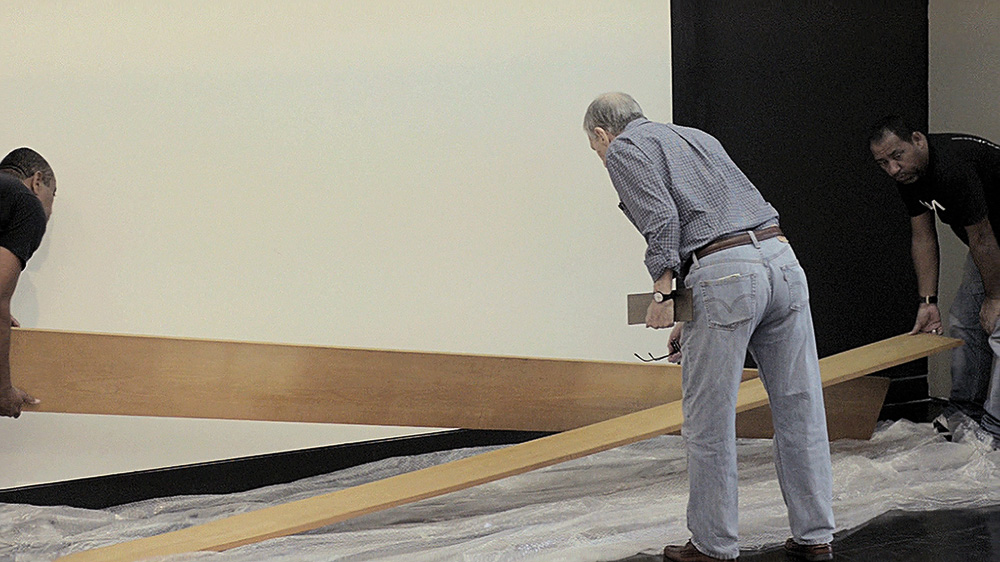
The video Resist the past, ignore the future and the incapacity of containing the present (2015) begins with a reflection on the installation Equilibrium I, II, III (1977) by artist Carlos Zilio. In order to construct a sort of script in accordance with the variation of cuts present in the installation. Where wooden planks are placed horizontally along the floor and placed in equilibrium from cuts made by metal saws that remains inserted into the wood. The title Resist the past, ignore the future and the incapacity of containing the present is distributed throughout the video in three sequences. Each sequence searches in different subjects forms of political engagement outside or in parallel to the main activity and the tension that is generated regarding your area of action because of this engagement. This search does not result in a didactic video but through a conceptual approaches that seek to decentralize the subject / topic as a means of generating linguistic material around the moving image. The video begins showing the assembly of the work Equilibrium I, II, III at the Museum Rio de Janeiro. The second sequence puts the viewer in two different but related situations, the first in at the end of what appears to be a lecture where the speakers answer audience questions on engagement in a march or other forms of mass protest. Soon after the viewer is placed along side a protest march in which the viewer does not see the march itself but the change in the landscape. Ending with a interview where activist Mahmoud Keshavarz and Amin reflect on a advertisement campaign for an job vacancy at a immigration detention center in Sweden, and how this ad ironically uses mobility and cultural diversity as positive gains for the future employee. In collaboration with Marhmoud Keshavarz, Amin Parsa and Carlos Zilio.
Vijai Patchineelam, born in 1983 in the city of Niterói, Brazil. Holds a Master in Research in Arts and Design at Sint Lucas University College of Art and Design, Antwerp, Belgium; an MFA at Konstfack University College of Arts Crafts and Design, Stockholm, Sweden and a BA in Industrial Design at the Federal University of Rio de Janeiro, Brazil. Held a research position at the Jan van Eyck Academie, Maastricht, Netherlands.
Chinmoyi Patel
Chin Goes to Stansted
Video | dv | color | 2:36 | India, United Kingdom | 2009
Chinmoyi Patel
Oasis Grande-Tranquility
Video | hdv | color | 3:57 | India | 2013
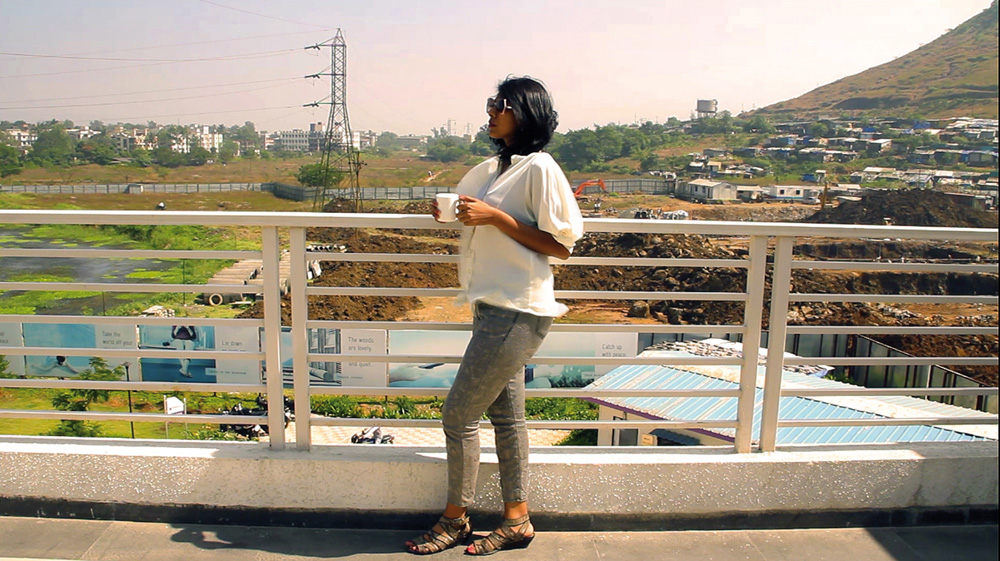
This is the first in an ongoing series of explorations on the changing rhythms of urban life, especially in India. In the era of `development` and `progress`, where a predominant and aspirational middle class is shaping the face of India, this work explores the role of the burgeoning construction industry and westernized concepts of `ideal`, `weekend` homes propagated by it. It is shot at a model/sample row house at a popular hillside holiday destination near Mumbai. It mimics the luxurious fantasy furnished and perpetuated by advertising. However, sudden movements or breaks serve to disrupt and make one question this fantasy.
Chinmoyi Patel works primarily with new media and currently teaches part time at Department of Fine Arts, South Gujarat University, Surat, India. She graduated with an MFA from Goldsmiths, University of London in 2009. In 2013 she organised (with Emma Hunt) and participated in the Paradise Lodge International Artists Residency in Mumbai/Lonavala. She has been artist-in-residence at Ondarte, Mexico (2012); Changdong Art Studio, National Museum of Contemporary Art, Seoul (2011) and Green Papaya Art Projects, Manila, Philippines (2011). In 2011 she was a finalist for the Celeste Art Prize. She has participated in several screenings and exhibitions, including OMG! Elephant in the Room!, Galleria M, Calcutta (2014); The Moving Image Project, UK (2014); Continuum, Video Art Network, Lagos (2013)/Belgrade Art Fair, Serbia (2012); Paradise Lodge @ Studio X, Mumbai (2013); AR Festival, Paju, South Korea (2012); “Shall We?” (Solo Project), Green Papaya Art Projects, Manila (2011); Rencontres Internationales Paris/Berlin/Madrid 2010, Centre Pompidou, Paris; ”Home”, Air Space Gallery, Stoke-on-Trent, UK (2010); Bloomberg New Contemporaries, Rochelle School, London/Cornerhouse Gallery, Manchester (2009).
Paolo Patelli
Saaret
Experimental doc. | super8 | color | 19:0 | Italy, Denmark | 2025
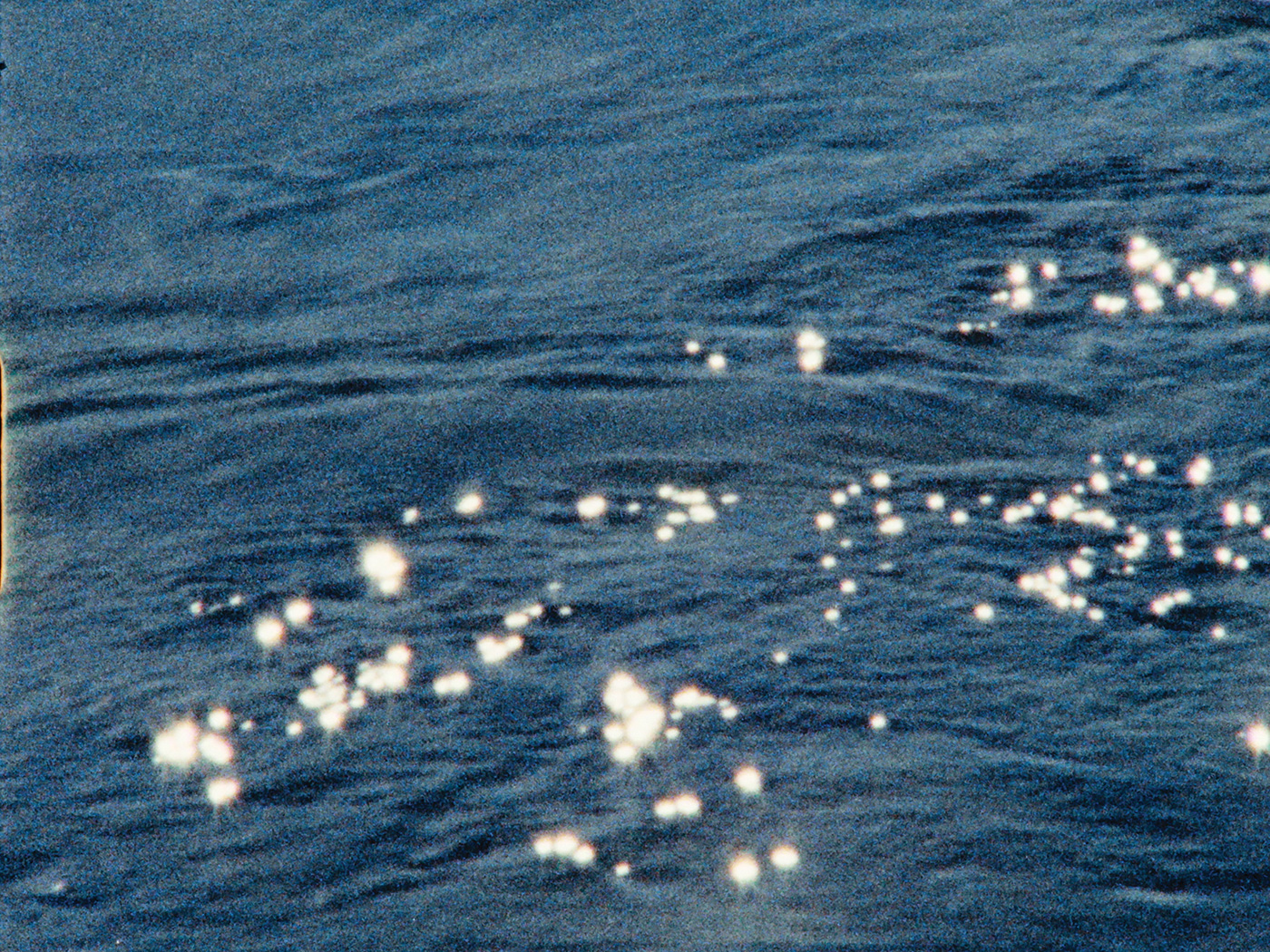
Saaret navigates the city of Helsinki as an environmental archipelago composed of heat and energy islands, insulated atmospheres, and artificial climates, leaking both from the past and future. Through stories that connect different areas of the city, a hybrid narrator voice emerges as an ecological subjectivity produced by and through sensing, at once abstract and embodied into different physical forms and temporal perspectives. Each narrative moment provides a glimpse into the complex layers of time and space, offering perspectives that transcend traditional boundaries between nature, technology, and the urban environment. The essay film alludes to the now-extinct genre of the city symphony, while the Super8 film format creates a dreamlike temporal ambivalence reminiscent of travel films and nature documentaries. The image frames appear as fragile envelopes themselves. The work ultimately creates a sensory, cinematic reflection on the interactions between human life, urban infrastructure, and the natural world.
Paolo Patelli (1984) manipulates architecture, research and artistic practice. His work is scaffolded in observations, excavations and mediations in lived space, media and archives. Through artistic methods and collaborative enquiries, he engages with the materialities, scenes and atmospheres at the intersections of space and society, technologies and environments. Paolo is currently a Postdoctoral Researcher at Aarhus University, where he investigates the architectural contexts of environmental data construction through multi-modal methods, as part of the Design and Aesthetics for Environmental Data project headed by Jussi Parikka. He was a Research Associate at the Research Center for Material Culture (2020-22), a 2020/2021 Fellow at the Akademie Schloss Solitude; a 2019/2020 Research Fellow at Het Nieuwe Instituut; artist-in-residence at the Jan van Eyck Academie in Maastricht in 2017/18; IdeasCity Fellow at the New Museum (2016). He holds a PhD in Architecture and Urban Design from Politecnico di Milano (2015). He collaborated with the Programme d’Expérimentation en Arts Politiques (SPEAP) directed by Bruno Latour at Sciences Po (2016–2018), and taught at The New School’s Parsons Paris. He was a tutor and associate lector at the Design Academy Eindhoven (2017–2021) and a core tutor in the Studio for Immediate Spaces (Sandberg Instituut, 2019–2022).

Fabrizio Paterniti Martello
La Tigresse
Experimental doc. | 16mm | black and white | 13:49 | Italy | 2019
A man recounts a horrible event he has witnessed. Survivor. He is alone among the rubble. The memory of her torments him. That image carved in the mind. A nightmare. A dream.
Fabrizio Paterniti Martello (1988) is an Italian filmmaker. He has studied classics at university and has graduated in film editing at Centro Sperimentale di Cinematografia in Rome. His first film Ex Voto was awarded as Best Short Film at 34th Torino Film Festival. La Tigresse is his second film.

Sara Pathirane
Holding Clouds
Video | hdv | color | 9:40 | Finland | 2018
Holdind Clouds depicts a choreography on Huangshan the Yellow Mountain in China. The mount Huang is famous from the old chinese shan shui – mountain-water ink paintings. Still now the landscape gathers people to witness it. The view itself is often covered in clouds, only a peak of a mountain hovering in the sight. Still a thousand photos are taken there daily. People pose for photos infront of the landscape. The rythm of gestures done by the visitors, the reaching out, pointing, holding the air and touching the mountains formulates a choreography for the mountain. Chilean composer Fernando Munizag’s piece Mi última palabra china (My last Chinese word) binds the poses into a broken language, an attemp to get hold of tones and diftongs hidden in the grayscale of the moving clouds. The music is based on discoveries Munizaga made in the field of phonetic analysis of Mandarin language. There is a constant movement, with rather simple materials and gestures. All the harmony of the piece is based on strings’ natural harmonics.
Sara Pathirane’s work deals with the tradition of landscape painting and the problematics of taking a picture. As shooting locations for her videos she uses nature areas known from movies and paintings, shifting between the everyday and the fiction. She works with video, painting and live-installations. Pathirane lives and works in Helsinki. She has studied in the Finnish Academy of Fine Arts and Accademia Albertina in Torino. Her works have been shown for example at Taiga-Space, Saint-Petersburg (2016), Colombo Art Biennale (2016) and Kiasma (2010, 2013).
Lois Patiño
Ecos del bosque
Experimental doc. | | color | 6:30 | Spain | 2011
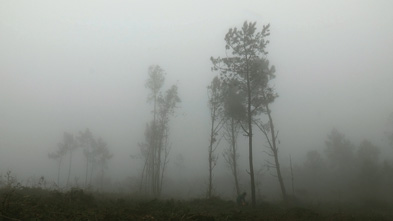
From a conception of the forest as a mythical space we observe this landscape being transformed by the woodcutters. The fog´s atmosphere emphasize the idea of the spiritual linked to the Nature. The tree as a sacred symbol. The man is here observed from the distance, we keep the point of view of the forest being cut down. This suggest a reflection about the relationship between man and landscape. From a poetic look we try to find the revelation in the landscape, a perceptive look to the process of changing in the landscape. The woodcutters cut down one by one the tall trees as a mechanical action. Again the contrast of the mythical thought inspired by the Nature and the idea of the scientist progress by the machines.
LOIS PATIÑO (b. Spain, 1983) Lois Patiño studied Psychology at the Universidad Complutense of Madrid, and cinema at the NYFA of New York and the UdK of Berlin. He studied documentary cinema in Barcelona at the UPF. He has done workshops with directors and artists such as Pedro Costa, Joan Jonas, José Luis Guerín or Víctor Erice. He has worked with the filmmaker Mercedes Álvarez in her second film Future´s´Market. His works around identity and landcape have been exhibited in places such as Reina Sofía, Centre Georges Pompidou, CGAC, Casa Encendida, CGAI... and in festivals (Documenta Madrid, Festival de Las Palmas, Jihlava festival, VideoFormes, Big Screen Project New York...)
Lois Patiño
Montaña en sombra
Experimental doc. | | color | 14:0 | Spain | 2012
A poetic view into the relationship of immensity, between man and landscape. We contemplate, from the distance, the activity of the skiers on the snowy mountain. The pictorial image and the dark and dreamlike atmosphere transforms the space into something unreal, imprecise, converting it also in a tactile experience.
Lois Patiño was born in Vigo (Spain) in 1983. He combined his Psychology studies in the Complutense University of Madrid with cinema studies at TAI School. He followed his cinema education at NYFA, in New York and with the Master in Cinema Documentary at Pompeu Fabra University in Barcelona. He has developed courses of videocreation in the UdK of Berlin, and in different ateliers with artist and filmmakers such as Joan Jonas, Donald Kuspit, Pedro Costa, Víctor Erice, José Luis Guerín or Daniel Canogar. He has worked in collaboration with the director Mercedes Álvarez in her second feature film ?Futures Market?. His works have been shown in art centres screens such as Centro Cultura San Martín (Buenos Aires), Casa Encendida (Madrid), MARCO (Vigo), Luis Seoane Foundation(A Coruña)... and in international festivals as Locarno, Rotterdam, New York Film Festival, BAFICI, Oberhausen, Rome, Vila do Conde, Media City, Viennale, Clermont-Ferrand, Punto de Vista... With his work "Mountain in Shadow" won a Prize at the Oberhausen IFF, and at the Locarno IFF he recieved the prize for the best emerging director with his work "Costa da Morte", among others.
Lois Patiño
NA VIBRACIÓN
Experimental doc. | hdv | color | 12:30 | Spain, Iceland | 2012
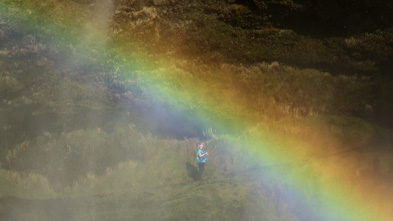
A poetic journey through a primitive landscape, where the processes of formation of the Earth are present. The earth beats and vibrates. The human being, insignificant, is overwhelmed and reduced to a spectator of this natural force.
Lois Patiño was born in Vigo (Spain) in 1983. He combined his Psychology studies in the Complutense University of Madrid with cinema studies at TAI School. He followed his cinema education at NYFA, in New York and with the Master in Cinema Documentary at Pompeu Fabra University in Barcelona. He has developed courses of videocreation under the guidance of Katherin Sieverding and different ateliers with artist and filmmakers such as Joan Jonas, Donald Kuspit, Pedro Costa, Víctor Erice, José Luis Guerín and Daniel Canogar.