Catalogue > List by artist
Browse the entire list of Rencontre Internationales artists since 2004. Use the alphabetical filter to refine your search. update in progress
Roman Selim Khereddine
Catalogue : 2023SCULPTORS | Experimental video | digital | color | 22:32 | Switzerland | 2022
Roman Selim Khereddine
SCULPTORS
Experimental video | digital | color | 22:32 | Switzerland | 2022
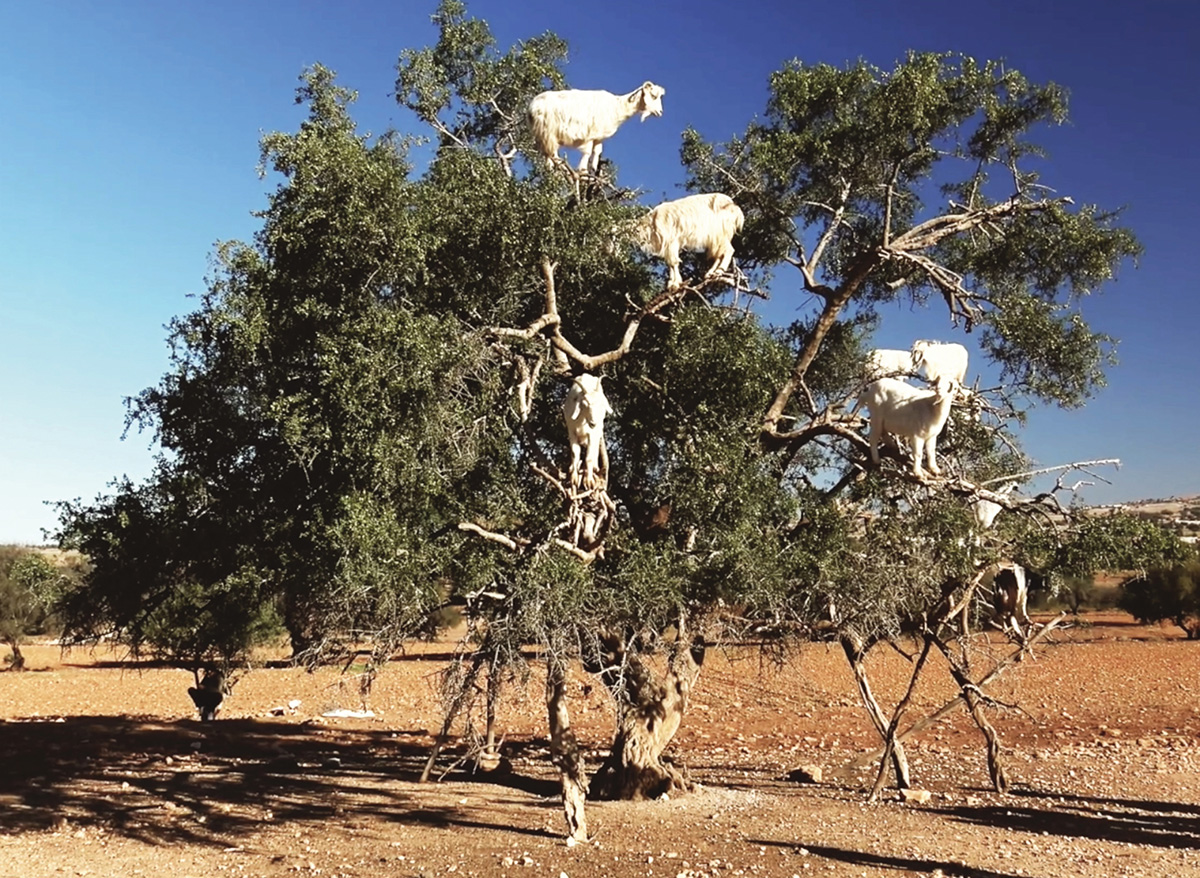
SCULPTORS deals with the hardships of a farmer on dry land and those of a taxidermist who wants to stuff a species threatened with extinction. Both men find special solutions to their problems: The farmer places his entire herd of goats in the branches of a tree next to the motorway to attract tourists who want to capture the bizarre image. The taxidermist, on the other hand, makes do with two black bear skins, one of which he bleaches white and then sews together with the second skin to end up with something resembling the black and white fur of a giant panda. In describing these strategies, Khereddine is concerned with the relationship between image and thing, copy and original, imagination and reality, appearance and essence. In both examples examined, the obsession with the repetition of the image, the consumer’s desire to always have everything, and the individual’s urge to stand out from the crowd shines through.
In his work, Roman Selim Khereddine combines academic research and essayistic writing, found footage and his own moving images. His video essays deal with topics such as the popularity of police dogs in North Africa (German Shepherds Need Heroes Too, 2020), two of the most iconic photographs of the 21st century (Falling Man / Hooded Man, 2021), the history of Moroccan workers in Swiss circusses (‘How the Circus got its Moroccans’, 2021), the difficulties of making a taxidermy mount of a Panda (SCULPTORS, 2022) or the trials and tribulations of zookeepers in Palestine (behind a thousand bars no world, 2023). Khereddine holds Master’s degrees in History and Fine Arts. He lives and works between Zurich and Paris.
Bani Khoshnoudi
Catalogue : 2007Tehran portraits | Experimental video | dv | color | 8:0 | Iran, France | 2006
Bani Khoshnoudi
Tehran portraits
Experimental video | dv | color | 8:0 | Iran, France | 2006
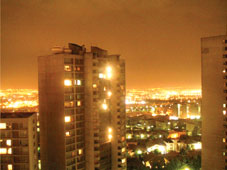
"Tehran Portraits" is an experimental diary; a contemplation of the details of a city of 14 million people. Despite the image of a country in turmoil, nothing "special" happens in the everyday life of this city. Either presented in installation format or screened individually, the 5 segments of "Tehran Portraits" each offer the viewer a tuned regard, an observant take on the cracks and corners of this immense city. From Freedom Square, to the hundreds of construction sites, to the chic shopping malls in the north of the city, the viewer travels through the every day images and sounds of Tehran, confronted with his/her preconceived notions of this capital city. As an installation, the viewer enters a pentagonal space where each screen projects a different perspective of the city in loops. The space is silent, but headphones diffuse ambient sounds of the city electronically tampered with by the director. Images and sounds can come together if the spectator wills them to. The portraits can also be screened as five consequential pieces, the sounds blending together in much the same way as the sounds in space.
Bani Khoshnoudi was born in Tehran. She studied photography and video in Texas and currently lives in Paris. While in the USA, she worked as a director and editor on numerous projects, including experimental short films and documentaries. In France she has worked as artistic director on a number of documentaries, like the "Other Iran" series produced by Article Z in 2002. In 2004 she directed "Transit", for which she received the Grand Jury Prize at the Angers European First Film Festival and which played at many festivals, including Rotterdam, Sao Paulo, and Brooklyn. She also produced and directed the documentary "Shirin Ebadi : a simple lawyer", for ARTE television in 2004. She is currently producing and directing her first feature length documentary film in Iran.
Mony Khoury, Lois Winkler
Catalogue : 2006Mutilation | Experimental film | dv | color | 2:0 | Syria, Austria | 2004
Mony Khoury, Lois Winkler
Mutilation
Experimental film | dv | color | 2:0 | Syria, Austria | 2004
Berlin/Chalottenburg On Thursday March 20th, I was sitting in front of the TV screen, zapping through the channels in order to watch the beginning of the war on Iraq instead of having my first cup of coffee in the morning. I felt bewildered, powerless, and tense at the same time. The following weeks I found myself sitting in front of the TV screen every day, scraping my feet raw on each other until they were mutilated. Like a chained woman who cannot come to terms with the situation and is incapable of changing it. On a permanent quest for answers, I switched to and forth between news in German, English, French, and Arabic; and I went through online papers. I wanted to understand and felt a profound longing and craving for news, live ? broadcasts, confronting discussions. Everything was simply delivered right into the living room. Being an Arabic woman in Europe, I was often asked about the situation in the Middle East, especially at the beginning of the war. The question was part of the greeting at every phone call. I could sense caution or sympathy. Some consoled me with the hope that it would be over soon. I could very well understand their behavior, yet I felt tortured because people were constantly talking about nothing else. The never-ending discussions about the causes and effects of every new event and the feeling that I even have to justify myself, wore me down. And I asked myself how much longer this kind of occupation is going to last ? or rather when the awakening will take place. Everybody asked how I felt. ?Like that!? I responded.
1965 born in Damascus, Syria. Study at the University of Damascus and at the university for applied art in vienna. Painting, grafik, video performance, photography.
Sonia Khurana
Catalogue : 2008Flower carrier | Experimental video | dv | color | 5:30 | India | 2007
Sonia Khurana
Flower carrier
Experimental video | dv | color | 5:30 | India | 2007
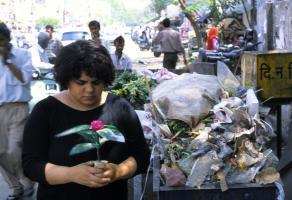
The flower carrier Version I 2000 to 2006 © 2006 performance video. Flower carrier is a performed sequence over a period of six years of the myself walking with a plastic flower through various streets in various cities. Each location is revealed both visually as well as acoustically, through the cacophony of road noises as the flower carrier moves fluidly between the streets of the small town of Modinagar, through the heavy-traffic streets of Delhi., through the hilly village of Rajpur, through the busy undergrounds of London and through the Badarur border, that neighbours Delhi, forever caught in messy states of [under] development. The simple act of a walk in the streets, while tenaciously looking at the tip of a flower [ : recycled plastic ] soon becomes a somewhat personalised ritual; a study of self in city very quickly transforms into an insurrection of turbulent city... There is no grand narrative. The narrative here is pursued in and through the act of making, almost as a form of psycho-visual enquiry.
S o n i a K h u r a n a abridged bio: Sonia Khurana?s studies in art include an M.A. in 1999 at the Royal College of Art, London, earllier art education in Delhi, a short course at the Film and Television institute in Pune, and in 2002, a 2-year Research residency at the Rijksakademie in Amsterdam. All of the above was pursued through sholarships and Awards, including the coveted INLAKS Award, in 1997. She now lives and works in New Delhi. « My art practice embraces areas in-between video, photography, elements of performance, text, drawing and installation. In my work I often makes psycho-sexual enquiries into two main areas of experience: interiority, or embodied experience, and the dynamics of identity. Recent body of work focuses on the poetics of inner experience mostly through performance-based videos that are often visually simple and understated Through deleberately poetic intimations, I strive to explore and re-define the space of the political. » During and beyond November 2007, Sonia?s works are currently showing at : ?Public places Private Spaces? - Newark Museum, ? Horn Please? - Kunstmuseum Bern, ? Tiger by the tail ? - Rose Museum, Boston, ?India-Art Now? Spazio Oberdan, Milan, Film Festival Roma, Rome, ?Performa 2007? ? Gallery Elga Wimmer, New York and ?Global Feminisms? - Davis Museum, Wellselly.
Yelim Ki
Catalogue : 2026Princess | Multimedia installation | mov | color | 26:0 | Netherlands | 2024
Yelim Ki
Princess
Multimedia installation | mov | color | 26:0 | Netherlands | 2024
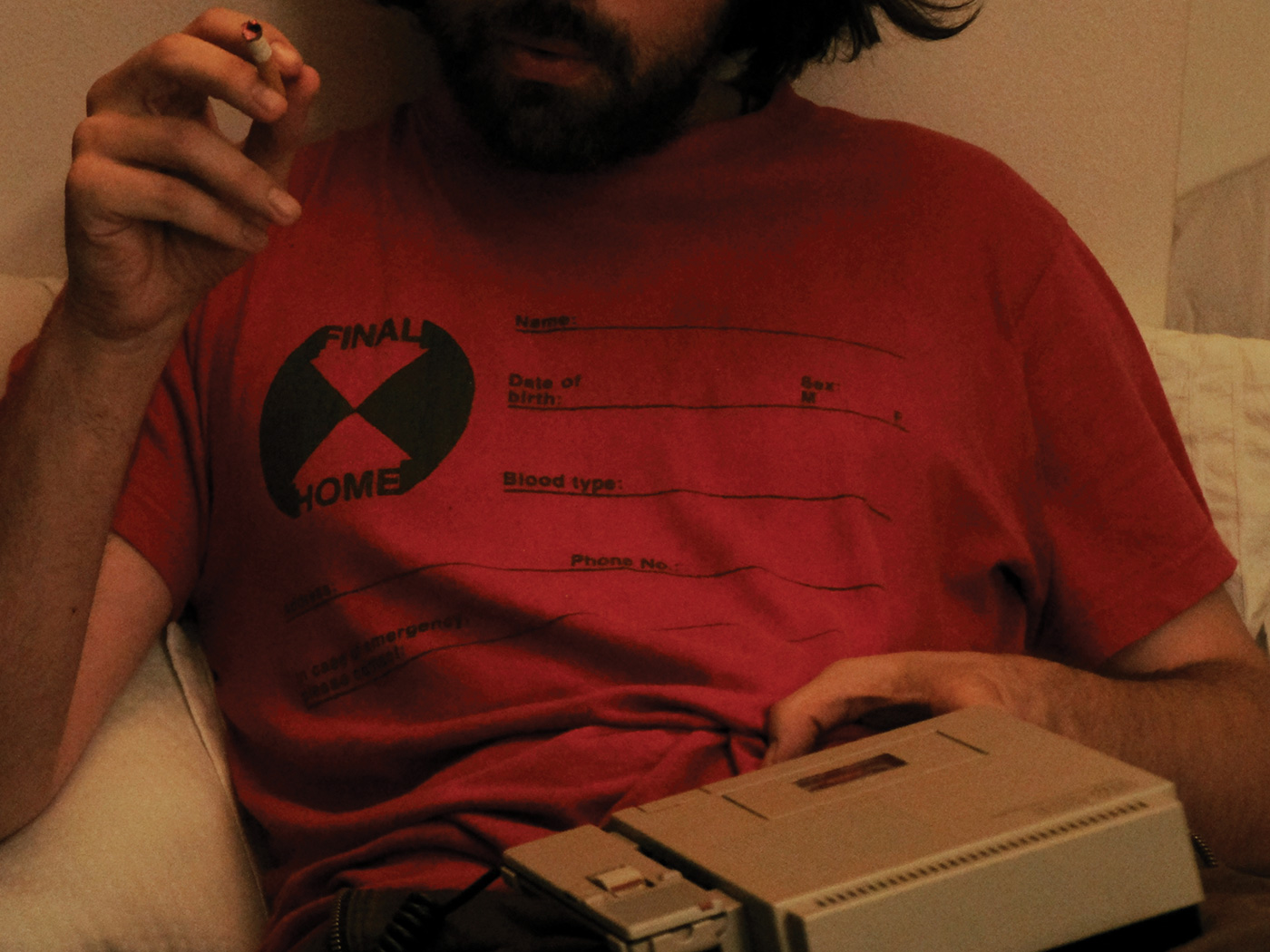
In a world of eternal life, Xana struggles to reconstruct his fragmenting memory within an ordinary apartment. His only anchor is an obsolete tape recorder playing a single recorded message. As he performs mundane routines, his voice becomes increasingly overtaken by AI-generated voices trained on mechanical noise.
Ki explores technological obsolescence and the paradox of permanence—how digital memory deteriorates while physical waste accumulates eternally. In her sculptural practice, she transforms discarded industrial materials into responsive lighting installations by programming an interactive system with sound. Parallel to this, she produces essay films where non-human entities—virtual operating systems, mythological beings, and other technological agents—articulate speculative perspectives on the residues left by technological progress: psychopathological conditions, infrastructural failures, and systemic breakdowns.
Sonia Kichah, Sonia KICHAH
Catalogue : 2009les oublies de cassis | Documentary | dv | color | 71:13 | France | 2008
Sonia Kichah, Sonia KICHAH
les oublies de cassis
Documentary | dv | color | 71:13 | France | 2008
A Shantytown This is the story of a village that had no name. A mute village, with no children and no women. A village that is still young and yet is inhabited with elders A village of 93 Tunisians who came to work here more than 40 years ago. Most of them were craftsmen and they have built the villas of another village? Cassis, which is in the south of France. They are themselves living in the old Fontblanche?s quarry. A shantytown? This story begins in 2005?
Sonia Kichah studied in Paris and acquired in 1998, DEA of cinema in the Sorbonne. Having been helper in realization in "Frantz Fanon" of Cheick Djemai, it passes in 2001 behind the camera to sign its 1st short film "Green light". Then, it assists Cheick Djemai once again in 2002 on the film " Memory found ". It accomplishes its first documentary " veiled Identitée " in 2005. In 2007, it acquires a grant of the French-speaking world for the realization of a short film, the widow, the aunt and the child ». It accomplishes its second documentary in 2008 «A shantytown?
James N. Kienitz Wilkins
Catalogue : 2014Public Hearing | Experimental doc. | 16mm | black and white | 110:0 | USA | 2012
James N. Kienitz Wilkins
Public Hearing
Experimental doc. | 16mm | black and white | 110:0 | USA | 2012
A BODY POLITIC CLOSE UP Public Hearing is the verbatim re-performance of a rural American town meeting from a transcript downloaded as publicly available information. Shot entirely in cinematic close-up on black-and-white 16mm film, a cast of actors and non-actors read between the lines in an ironic debate over a Wal-Mart store expansion.
James N. Kienitz Wilkins (b. 1983, USA) is a filmmaker and artist living in Brooklyn. He is the recipient of numerous grants and periodic awards for various projects of specific and/or universal proportions. He is a graduate of the Cooper Union School of Art in New York City.
Edward Kihn
Catalogue : 2023A Vague Dread Seems to Silence the Tongue | Experimental doc. | hdv | color and b&w | 63:6 | USA | 2022
Edward Kihn
A Vague Dread Seems to Silence the Tongue
Experimental doc. | hdv | color and b&w | 63:6 | USA | 2022
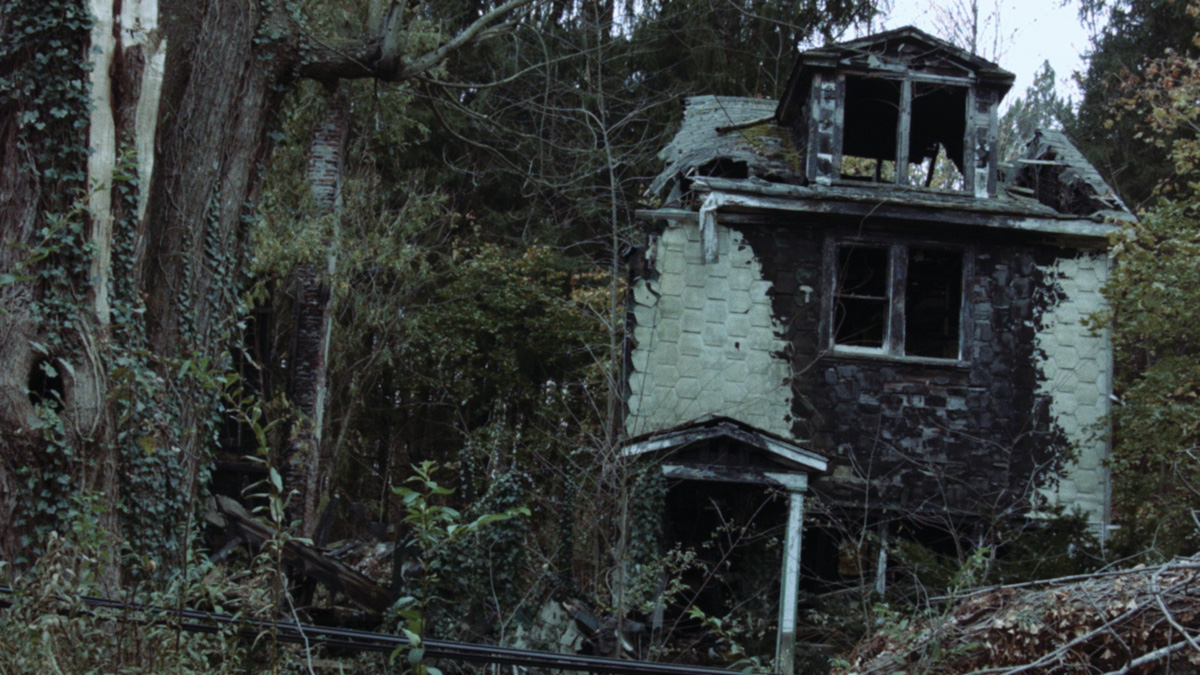
In the 1860s and 70s the so-called Molly Maguire assassinations rocked Pennsylvania’s anthracite region and made national headlines. A Vague Dread Seems to Silence the Tongue attempts to conjure the specter of violence that emerged out of the racial animus and labor struggles of the Civil War in the present day, setting the bloody events of the late 19th century against the contemporary landscape of a fading coal economy.
Edward Kihn’s work ranges across documentary and experimental cinema, photography and installation, and focuses on entanglements of politics, technology and labor--especially as they reflect and shape the particularities of place. He has received awards and fellowships from organizations such as NYFA and the Whitney Independent Study program and his work has been shown at venues such as Ji.Hlava, CPH:DOX, MSPIFF, Mimesis, Arquiteturas, Artists Space and others. He teaches Film Studies and media production at CUNY and UCSD.
Kristina Kilian
Catalogue : 2020Which Way to the West | Experimental fiction | 4k | color and b&w | 36:17 | Germany | 2019
Kristina Kilian
Which Way to the West
Experimental fiction | 4k | color and b&w | 36:17 | Germany | 2019
Jean-Luc Godard shot a film in Germany 28 years ago. A young female director retraces his steps through Germany. She is 28 years old and searches for answers about her german identity and the art of filmmaking. Godards Film is a film about ghosts and history. Does she become a ghost in her own film?
*Born 1990 in Southern Germany. Studied Scenography and Exhibition Design at the University of Arts and Design in Karlsruhe. One year visiting student at the Städelschule in Frankfurt am Main in the class of Douglas Gordon. Since 2013 studies documentary film at the University of Film and Television in Munich.
Ezgi Kilinçaslan, KILINÇASLAN Ezgi
Catalogue : 2012Er Meydanı | Multimedia installation | dv | color | 12:35 | Turkey | 2009
Ezgi KilinÇaslan, KILINÇASLAN Ezgi
Er Meydanı
Multimedia installation | dv | color | 12:35 | Turkey | 2009
We react to the multitude of images of the world - of the world we live in. This work explores the effects of synchronizing intent, delivery and objectification. The artwork is named after the arena where the tournaments take place, Er Meydani, Place for (brave) Men. This three channel video installation attempts to create a hyper-gaze by coordinating, directing, forcing together the many components that constructed the atmosphere of the arena. My attempt is to intensify the relationship between the observed and the observer. The power of the gaze is empowering. The situation that I construct rises to a lesser extent from a desire to dominate. It is born from the empathic valence of the images of he who surrenders. It is a theater of the momentary defeated, of the broken wrestler.
Ezgi Kilincaslan was born in 1973, Besni-Turkey. She received a degree in art and pedagogic at Marmara University, Istanbul. She lives in Berlin and graduated as "Meister Schüler" from the University of the Arts (UdK) with Prof. Katharina Sieverding. While initially formed as a painter, she is now experimenting with a variety of mediums including photography, video and installation - exploring and questioning matters of power, related with patriarchy and gender. Her films have been shown at various film festivals amongst which the International Film Festival Oberhausen, the International Film Festival of Rotterdam and the Center for Contemporary Art, Geneva.
Heidi Kilpeläinen
Catalogue : 2026Metanoia | Experimental fiction | mp4 | color | 51:29 | Finland | 2025
Heidi KilpelÄinen
Metanoia
Experimental fiction | mp4 | color | 51:29 | Finland | 2025
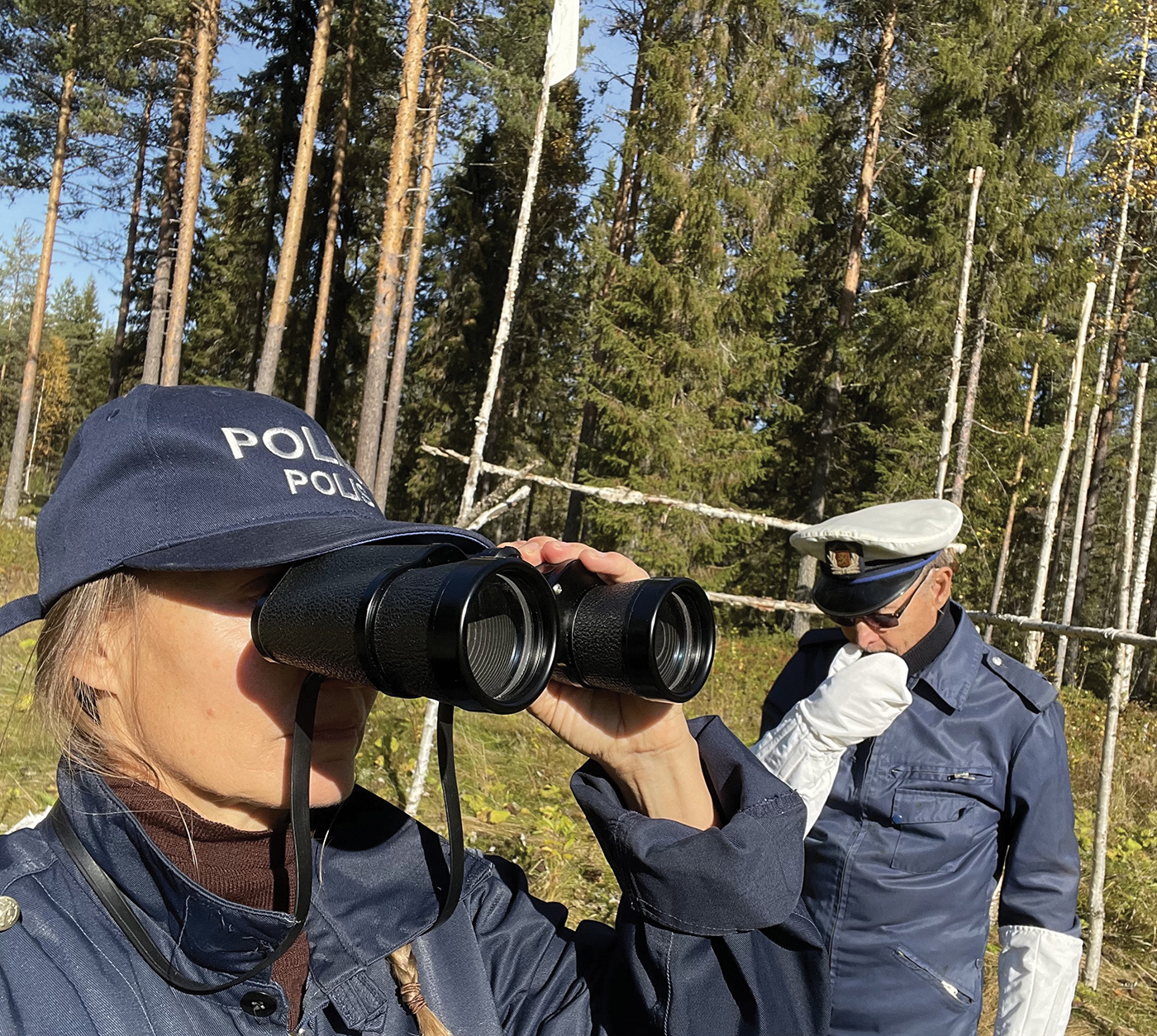
Metanoia is a multi-channel video installation by artist Heidi Kilpeläinen that consists of footage shot in a sparsely populated rural area in the north of Finland during the pandemic. The work is autotheoretical, multi-layered and fluctuates between past and present. In a near future scenario, in a world where hurting insects is a crime, father and daughter work as insect police patrolling and monitoring a wild meadow from their workstation. Utopian practices are framed by everyday life events between the daughter and ageing father, who suffers from Alzheimer's disease and is grieving the recent death of his life partner. This single parent father-daughter dynamic sets in motion unresolved issues from childhood, beginning an inner journey of transformation that is gracefully and compassionately witnessed by the father. His presence, decades later, plays an important role in processing these flashbacks and somatic memories—initiating a deeper sense of healing. While the related research into developmental psychopathology, inner processes and daily life unfold, their police work throughout the seasons saves any remaining insect lives, while also monitoring the quality of the surrounding air, earth, and water by using canvas for painting. The nurturing ecofeminist values of the insect police contrast with the status quo of patriarchal systems, represented by their decaying uniforms—leftovers from her father's career as a policeman. This utopian, microcosmic practice between father and daughter mirrors the macrocosm of issues embedded in current environmental concerns. Personal, generational, and planetary traumas interplay, and roles reverse. Hurt, grief, and rage transform into love, compassion, and sensuous environmental actions and activism; perhaps the same qualities that need to be applied to mother earth for the coexistence and survival of companion species. The work has been supported by the Arts Promotion Centre Finland (Taike), the Finnish Cultural Foundation, Kainuu regional fund.
Heidi Kilpeläinen explores crossovers between visual art and music, merging their boundaries into 'total works of art'—creating combinations of video, installation art, and performance. Her work is equally inspired by the contemporary world and its technological fascinations, as well as the ancient, mythological forms that run through collective memory. She produces works of aesthetic interest with a critical eye on our social environment, reflecting on our human condition within it. Kilpeläinen has also released three albums under the title HK119 (One Little Independent Records, 2005-2013) and has performed internationally in clubs, galleries, museums, and festivals such as Performa, Tate Gallery, Victoria & Albert Museum, Madame JoJo's, Casa da Musica, and Kiasma, Museum of Contemporary Art.
Catalogue : 2022Land of Dreams | Documentary | mp4 | color | 59:44 | Finland | 2021
Heidi KilpelÄinen
Land of Dreams
Documentary | mp4 | color | 59:44 | Finland | 2021
Land of Dreams title is a translation of a much loved Finnish tango ‘Satumaa’, which Heidi Kilpeläinen sang during her two Tango Therapy performance tours at Refugee Centres and war invalids and their widows homes in Finland (2017/2018). On this tour Kilpeläinen also invited the participants to sing back to her, in their own languages. The performances were filmed and edited into a 3-channel video installation and a shorter, single channel video. Songs and encounters with people from Iraq, Yemen, Syria, Afganistan, Somalia and Eritrea – to mention a few – combine with accounts of Finnish war invalids and widows talking about their experiences of the war between Russia and Finland during the second World War. Tango Therapy is a performance in which artist Heidi Kilpeläinen sings to one person at a time, sitting on opposite chairs, while rest of the audience listens and follows the performance. Anyone from the audience is welcome to sit on the chair as it becomes free. It is an intimate and personal performance of songs, mainly of Finnish tangos, with no technology or amplification. The focus in the performance is on the human presence and eye contact. Understanding Finnish language is not necessary, it is the melody and the sentiment which communicate beyond the boundaries of language.
Heidi Kilpeläinen (HK119) explores crossovers between visual art and music merging their boundaries in 'total works of art' and creating combinations of video, installation art and performance. Her work is equally inspired by the contemporary world and its technological fascinations, as well as the ancient, mythological forms that run through collective memory. She produces works of aesthetic interest with a critical eye on our social environment, reflecting on our human Heidi Kilpeläinen (HK119) explores crossovers between visual art and music merging their boundaries in 'total works of art' and creating combinations of video, installation art and performance. Her work is equally inspired by the contemporary world and its technological fascinations, as well as the ancient, mythological forms that run through collective memory. She produces works of aesthetic interest with a critical eye on our social environment, reflecting on our human condition within it. In recent years she has focused her attention to understanding the effects of transgenerational trauma and transformation as alchemical process. Kilpeläinen has widely exhibited and performed in galleries and prestigious institutions, with a rich record of participations in shows and festivals, such as Rajatila gallery, Tampere (2021) Od Arts Festival, Somerset (2021) Kiasma, Museum of Contemporary Art, Helsinki (2019 / 2005) Kajaani Art Museum, Kajaani (2019) Tate Modern / Tate Exchange, London (2018) Camden Arts Centre, London (2016) Beaconsfield Gallery, London (2016/2015) Performa 07, New York (2007) and New Contemporaries, London / Liverpool (2004). She has also released 3 albums under the title HK119 (One Little Indian Records, 2005 - 2013) and has performed internationally in music venues, galleries and museums such as Tate Gallery, Victoria & Albert Museum, ICA, Casa da Musica and Kiasma.
Sooun Kim
Catalogue : 2022Born Beneath, 2021 | Video | hdv | color | 7:0 | Korea, South, United Kingdom | 2021
Sooun Kim
Born Beneath, 2021
Video | hdv | color | 7:0 | Korea, South, United Kingdom | 2021
Born Beneath is an experimental music video and short film that utilizes mythological storytelling to explore hybridized Korean cultural identity. Sooun Kim uses multivalent footage and audio influenced by traditional Korean music, contemporary electronic music and rap to demonstrate the ways in which cultural imperialism, the long-term influence of the Korean War and Japanese colonial era has influenced his generation. His use of footage gathered from multiple sources shows the birth of a new cultural identity. An identity that is acquired through the process of exploring cultural hybridity, formed amidst instability.
Sooun Kim is a multidisciplinary visual artist working through music, painting and sculpture, more recently expanding his visual language to include video and installation. He is interested in hybrid cultures that iterate from the effects of post-colonialism and cultural imperialism. His work, Yellow Fever (2019), marked the beginning of his auto-ethnographic journey, where he collected his grandfather’s biography alongside records of historical figures to recover his personal cultural identity. Further interested in popular culture, he includes audio-visual reflections of his contemporary being as a South-Korean migrant where the past and present collide. Consciously unpredictable, Kim uses image and sound to play with viewer expectations by seducing and repulsing - genre bending to create an undefinable hybrid.
Chansoo Kim
Catalogue : 2006Vaudeville | Animation | betaSP | color | 5:10 | Korea, South, USA | 2005
Chansoo Kim
Vaudeville
Animation | betaSP | color | 5:10 | Korea, South, USA | 2005
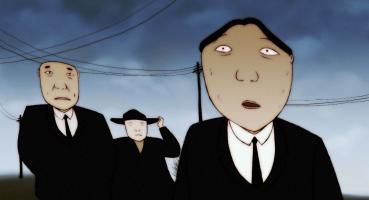
Loosely based on Korea in the 30?s, Vaudeville is a visual poem about despair, wandering and the loss of cultural identity.
Chansoo Kim studied animation in the Division of Animation and Digital Arts at the University of Southern California, and produced short animated films using various techniques, ranging from hand-drawn to stop-motion and CGI. His films, Woman in the Attic and Floating gained critical attention through the festival circuit. His new film, Vaudeville is currently touring the festivals since the spring of 2005. Chansoo recently finished the Animation Apprentice Program at Rhythm and Hues and is now working in CG animation.
Sung Hwan Kim
Catalogue : 2007Greenlotte | Experimental video | dv | color | 4:0 | Korea, South, USA | 2005
Sung Hwan Kim
Greenlotte
Experimental video | dv | color | 4:0 | Korea, South, USA | 2005
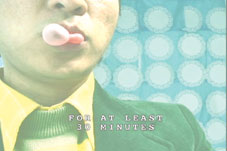
A curator, "Amalia Pica" writes an SMS to "I", asking to make a short video out of the gum stuck on the pavement in Amsterdam. "I" wander off to think about how "I" was educated to chew gum, brush teeth, and wear clothes. Then "I" make comparisons to a girlfriend who wears clothes differently, chews gum differently, and would have made this video differently.
Born in 1975 in Seoul, Korea, the artist Sung Hwan Kim holds a Master of Science in Visual Studies from M.I.T, and was a resident artist at the Rijksakademie van Beeldende Kunsten. He has shown his works at such venues as the Gwangju Biennial, the Busan Biennial, the Portland Institute of Contemporary Art, the Asia Society, D.U.M.B.O Art Center, Pacific Film Archive, Le Plateau (Paris), The Living Art Museum (Reykyavik), Mediamatic (Amsterdam), SMART Project Space, (Amsterdam), Objective-Exhibitions (Antwerp), and Leeum Samsung Museum of Art (Seoul) among others, as well as at various international film festivals. As a performer, he participated in Joan Jonas' "Lines in the Sand" at Documenta 11, Kassel; Tate Modern, London; and The Kitchen, NYC.
Andrew Kim
Catalogue : 2016THE PEACOCK | Experimental doc. | hdv | color | 12:0 | USA | 2015
Andrew Kim
THE PEACOCK
Experimental doc. | hdv | color | 12:0 | USA | 2015
A meditation on our fantastic condition of mortality and impermanence ... The peacock painted on the window will never dance or speak. It is only the peacock that lived in the forest which used to speak, dance, and walk in a sweet manner.
Andrew Kim (b. 1985) is an experimental filmmaker who received his MFA from School of Film/Video at the California Institute of the Arts in 2013. His work is inspired by the material properties of cinema and its unique ability to reify abstract ideas and ineffable feelings. Combining formal experimentation with at concern for the phenomenology of the cinematic experience, Andrew’s films are an attempt to understand the movement of the mind. Ultimately, his films attempt to transcend the exact mechanics of motion pictures such that a film might articulate a new kind of knowledge. Andrew’s films have screened at a variety of venues and festivals including the Ann Arbor Film Festival, International Film Festival Rotterdam, Festival du Nouveau Cinema (Montreal), Images Festival (Toronto), BAFICI (Buenos Aries), UnionDocs, and Los Angeles Filmforum, among others. Andrew lives in Los Angeles, California. There he is a staff member at the Echo Park Film Center and teaches film production at the California Institute of the Arts.
Woong Yong Kim
Catalogue : 2026gray matter | Documentary | 4k | black and white | 16:42 | Korea, South | 2024
Woong Yong Kim
gray matter
Documentary | 4k | black and white | 16:42 | Korea, South | 2024
For Filipino migrant workers employed in factories on the outskirts of Seoul, home is both a place they have left behind and a paradoxical space of longing and fear—one that has been swept away by floods yet still haunts their memory. They are constantly being displaced, resettled, and set in motion, their sense of home inseparable from the movement of their own bodies.The sounds of factory machines, fragments of horror films, and mobile phone images intertwine into a narrative that unfolds within the migrant worker’s body itself. I began to imagine a home for those who are always drifting.
Woong Yong Kim studied film directing and contemporary art at the Geneva University of Art and Design (HEAD – Genève), Switzerland, and works across video installation and film. He has participated in several artist-in-residence programs, including the Digital Arts Studios in Belfast, CEEAC in Strasbourg, MMCA Goyang Residency, SeMA Nanji Studio, ACC, and as a visiting artist at the Rijksakademie. He completed the doctoral coursework in Film and Media Theory at Chung-Ang University’s Graduate School of Advanced Imaging Science. He also translated and published in Korean, Exhibiting the Moving Image (JRP|Ringier)
Ayoung Kim
Catalogue : 2019Porosity Valley, Portable Holes | Experimental fiction | hdv | color | 21:20 | Korea, South, Australia | 2017
Ayoung Kim
Porosity Valley, Portable Holes
Experimental fiction | hdv | color | 21:20 | Korea, South, Australia | 2017
Petra Genetrix, who lives in the imaginary space “Porosity Valley”, is a composition of minerals living in a gigantic and bizarre-looking rock crystal protruding from the rock face. As people - fascinated or overwhelmed by its bizarre figure - often visit Petra Genetrix to purify their thoughts, over the years Petra has developed into a kind of pseudo-mythical being, regardless of its own will. One day Petra faces a situation in which it must attempt to migrate to another rock platform due to an explosion that occurred in Porosity Valley. In the process, as a would-be migrant, Petra faces various realistic problems unimaginable for a divine being. It is subject to an interview to confirm that it is a being appropriate for migration, and placed in quarantine for 40 days to rule out the possibility it is carrying any viruses that may pose a threat to the new platform. Later, it is presented with the opinion that Porosity Valley could be duplicated, as Petra’s mythological function has been found by the Immigration Data Center to be favorable to humans…
Ayoung Kim applies remote imagination and speculation in order to reflect the incoherent and anomalous properties of life and of the world. By acquiring fictional narrative devices and rhetoric, Ayoung Kim evokes unfamiliar forms of reading, listening and thinking of the conditions of the world by focusing on unlikely encounters of ideas. Recently, Ayoung Kim has been endeavoring to graft and collide the fictional and the historical together through distorting reality via the tool of “histofuturism”. In terms of the context of the works, they often deal with the issues and notions of crossings, transnational activities, transpositions, transmissions, and the altering and changing of platforms. The subjects of those movements are either humans or non-humans, such as minerals or data particles. Ayoung Kim had solo shows at Ilmin Museum of Art, Seoul (2018); Melbourne Festival, Melbourne (2017); Palais de Tokyo, Paris (2016) and created a performance piece at the national opera house in Paris, Palais Garnier (2016). Group shows and performance events include Sharjah Film Platform, Sharjah (2019); Gwangju Biennale, Gwangju (2018); Kunsthal Aarhus, Aarhus (2018); MMCA, Seoul (2018); the 56th Venice Biennale, Venice (2015), among others.
Wonwoo Kim
Catalogue : 2026Writing poems at the end of the world | Experimental doc. | mov | color and b&w | 29:55 | France, Korea, South | 2024
Wonwoo Kim
Writing poems at the end of the world
Experimental doc. | mov | color and b&w | 29:55 | France, Korea, South | 2024
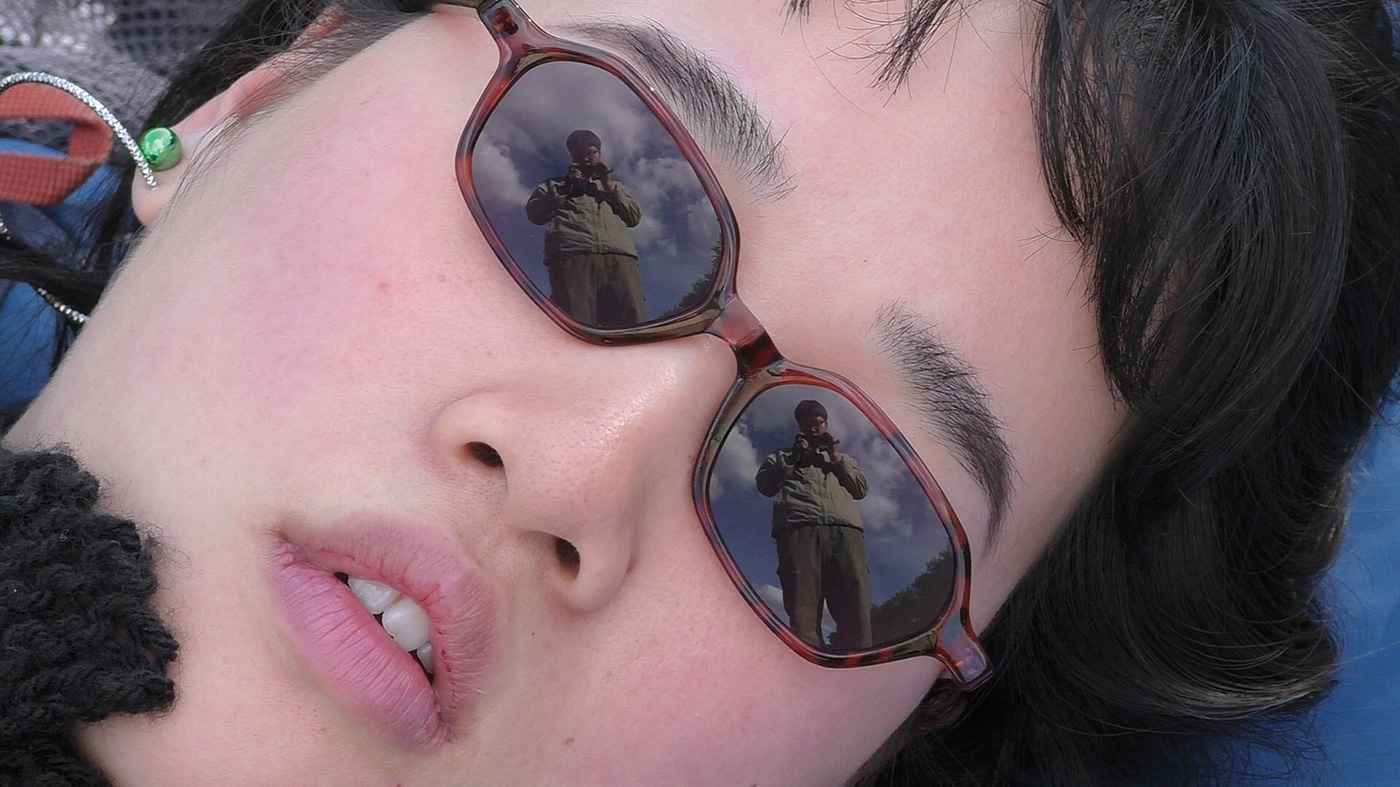
The flow of time is becoming unclear. Yesterday, today, and tomorrow no longer feel connected. Each day stands alone, as if there are only different versions of today. The only thing that links them is time moving forward—always toward the end.
Wonwoo Kim was born in Korea and currently lives in France. His work explores life, time, memory, and death through images drawn from his everyday surroundings. Trained in photography in Korea and later in visual arts at the École nationale supérieure d’arts de Paris-Cergy, he has developed a film practice where writing, image, and rhythm intertwine. His films, often composed of intimate images and ordinary gestures, question the perception of time and the presence of the world. They weave a dialogue between personal memory and collective experience, between reality and disappearance. His film Writing Poems at the End of the World (2025) received the Best Short Film Award at the Punto de Vista Festival 2025. His works have also been presented at several international festivals, including Jihlava IDFF and Images Festival. Writing — especially poetry — remains at the heart of his cinematic approach: it guides the construction of images and durations. Through video, he seeks to film what escapes — the passage of time, the end of a moment, the fragility of the real.
Jonna Kina
Catalogue : 2022After Life followed by Red Impasto Jar | Experimental film | 16mm | color | 9:0 | Finland | 2021
Jonna Kina
After Life followed by Red Impasto Jar
Experimental film | 16mm | color | 9:0 | Finland | 2021
The work is composed of two separate films followed by each other. Both films explore transcendental issues through archaeological and illegal excavations of tombs. "After Life" consists of a sequence of meditative short scenes picturing the ruins of a small Faliscan necropolis Cavone di Monte Li Santi in Italy and its surrounding natural elements. The rock-cut chamber tombs of the necropolis had been illegally excavated before they were archaeologically discovered in 2015 – a phenomenon still faced by many rural archaeological sites. At the center of "Red Impasto Jar" is a looted archaeological tomb object. In antiquity, the funeral was a significant ceremony where entombing of the body was just one component in the complex sequence of events. This ancient Faliscan tomb item dating back to the 6th century BCE was passed on to the archaeological museum (Mazzano Romano, Italy). The jar is radically altered and damaged by being cemented into the structures of a house as a decorative element. The film portrays the state of the pottery focusing on the detailed choreography and documentation of the object with a slow 360º rotation on a robust industrial motor against a monochromatic background.
Sound, perception and imagination are essential ingredients in the research and practice of Jonna Kina (b. 1984). Her work reveals the value of fictional viewpoints in non-fictional investigations. Kina’s works have been shown in the Tokyo Photographic Art Museum; Fondazione Pastificio Cerere, Rome; Dunkers Kulturhus, Helsingborg; Musée de l’Elysée, Lausanne; International Film Festival Rotterdam; Hasselblad Foundation, Gothenburg; Espoo Modern Art Museum EMMA; Kumu Art Museum, Tallinn and in Sara Hildén Art Museum, Tampere, among others. Kina has recently been awarded the Finnish Art Prize “Below Zero” (2018) and her film Arr. for a Scene was awarded as the “Best Nordic Short Film” at Nordisk Panorama Film Festival in Malmö (2017). She was also shortlisted for the VISIO Young Talent Acquisition Prize in Florence (2017).
Joe King, Rosie PEDLOW
Catalogue : 2006Sea Change | Experimental film | 35mm | color | 5:28 | United Kingdom | 2005
Joe King, Rosie PEDLOW
Sea Change
Experimental film | 35mm | color | 5:28 | United Kingdom | 2005
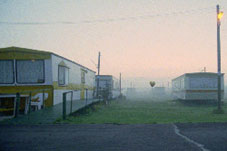
Filmed on a caravan park at the end of the season, this film reveals a landscape dramatically transformed by light and time, and resonating with the transience of human presence.
Rainer Kirberg
Catalogue : 2007Überfahrt | Experimental doc. | dv | color | 14:0 | Germany | 2006
Rainer Kirberg
Überfahrt
Experimental doc. | dv | color | 14:0 | Germany | 2006
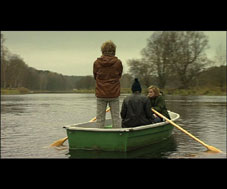
Brandenburg/GDR, 1979. In the custody of the East German Staatssicherheit, three battle-weary terrorists of the West German Red Army Faction design fictitious biographies in order to survive undercover in the socialist part of Germany. The conversation among the three about their false identities shifts to a requital of their own political past and an admission of moral defeat.
Author, stage manager, artist, Rainer Kirberg studied painting, cinema, art history, and philosophy at the Kunstakademie and at the University of Düsseldorf. Since the end of his scholarly period, in 1969, he has been making experimental short films, independent music clips (some bought by the 'Cinemathèque Française'), and is also the author and director of three feature-length films. It was in 1979 that he really started working in the artistic domain through cinema, scenic installation, and performance. In addition to his own projects, for which he has been in charge of production, scenery, architecture, filming, and editing, Rainer Kirberg works as an author for the German television and film industry. His prizes and achievements include the Prix du scénario de Rhénanie-Westphalie in 1991, and a nomination for Le prix du scénario allemand in 1996. Among the numerous artists that have collaborated on his work are: the star of French cinema, Tcheky Caryo ("Nikita"); renowned German actors Erwin Leder ("Das Boot"), Christopher Eichhorn ("Zuberberg" : "Montagne magique"), and Peter Lohmeyer; as well as such international personalities as Amanda Lear, a muse of Dali, and Kenneth Anger, a legend of underground film.