Catalogue > List by artist
Browse the entire list of Rencontre Internationales artists since 2004. Use the alphabetical filter to refine your search. update in progress
Mélissa Epaminondi
Catalogue : 2026Dione -Work-In-Progress Version: Not Yet Color Graded And Sound Mixed- | Experimental film | 16mm | color | 16:24 | France, Greece | 2025
Mélissa Epaminondi
Dione -Work-In-Progress Version: Not Yet Color Graded And Sound Mixed-
Experimental film | 16mm | color | 16:24 | France, Greece | 2025
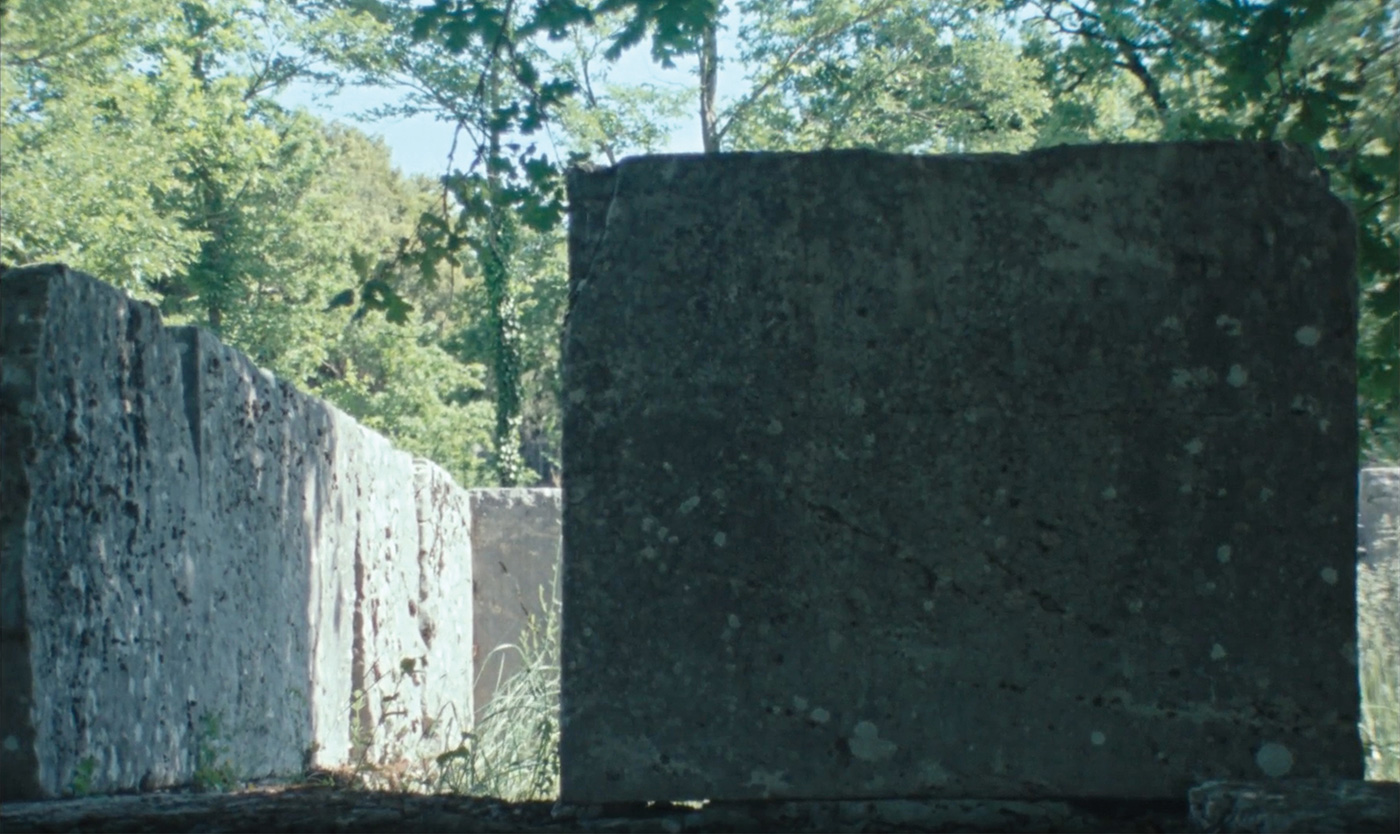
Dione offers a personal interpretation of the ancient sanctuary of Dodona in northern Greece, regarded as the oldest oracle in the Greek world. Nestled at the foot of Mount Tomaros, the site welcomed pilgrims from distant regions for centuries. They inscribed their questions on small lead tablets, addressed to Zeus Naios and Dione Naia. At the heart of the sanctuary stood the sacred oak, believed to speak through the rustling of its leaves and branches, and through the movements of the birds that lived within it. These signs were read and interpreted by priests and priestesses. At certain times, an installation known as the “Gong of Dodona” — a series of interconnected bronze cauldrons — amplified the sanctuary’s resonance. In this place, near the River Acheron, a threshold between life, death, and knowledge, I sought to craft my own interpretation of the ancient oracle using sounds gathered on- site and later reworked with composer Florent Caron Darras. In the film, each animal presence contributes to the mythological bestiary associated with Dodona. Water as both a natural and symbolic element, holds a central role. The film evokes a spring flowing from the sacred tree, whose murmuring, according to Servius, once held an oracular power.
Mélissa Epaminondi, architect and artist, lives between Paris and Corsica. A graduate of the Marseille School of Architecture, she explores the relationship between individuals and their environment through films, videos, and installations. Her work blends organic and built forms to evoke sensory inner landscapes. She co-founded L140 and co-directs Casa Conti – Ange Leccia, a contemporary art center dedicated to the moving image. Selected filmography: Deconstructive Niemeyer (2020), Lavezzi (2013), Plage (2012).
Mélissa Epaminondi
Catalogue : 2021Deconstructing Niemeyer | Experimental doc. | mp4 | color | 1:9 | France | 2020
Mélissa Epaminondi, Esteban Ulrich
Deconstructing Niemeyer
Experimental doc. | mp4 | color | 1:9 | France | 2020
Sur une succession d'images documentant le chantier de remise en état de la coupole du siège du Parti Communiste Français, la voix de l'architecte brésilien Oscar Niemeyer traverse le temps pour nous dévoiler le cœur de son œuvre et de sa pensée.
Mélissa Epaminondi est née en 1977. Elle vit et travaille entre Paris (France) et Oletta (Corse, France). Elle est DPLG diplômée de l’École d’Architecture de Luminy Marseille (France). Architecte et artiste, son travail reflète une vision sensible en même temps qu’une réflexion étayée sur les questions environnementales. Elle poursuit sa pratique initiale et réalise des films, vidéos et installations. Esteban Ulrich est né à Buenos Aires, Argentine, en 1975 il étudie dans des écoles françaises avant de commencer sa carrière professionnelle chez Los Inrockuptibles, la version argentine du magazine français. Depuis, il se partage entre le journalisme, le cinéma, la photographie et l'expérimentation avec les nouvelles technologies appliquées à l'art et aux médias. Il vit à Paris (France) depuis 2015.
Catalogue : 2020Princess | Video | hdv | color | 6:31 | France, USA | 2019
Mélissa Epaminondi
Princess
Video | hdv | color | 6:31 | France, USA | 2019
Défilent les façades de Brooklyn NY sur le trajet de l'aéroport. Au volant du taxi, Princess raconte son quotidien. Vis-à-vis / visage-à-visage / de corps de bâtiment à corps de bâtiment Fenêtres, bow-window, blocs, entrée, store, ventilateur de plafond, ONE WAY, bow-window, porche, CHINESE KITCHEN, fenêtre à guillotine, arbre, nuit, pluie, intérieure lumière jaune, guirlande, lumière rouge appartement, blanche, STOP, brique, bardage, bâche, bardage bois, fenêtre à guillotine, appuis de fenêtre, intérieur lumière jaune, linteau blanc, vitrine, escalier, GROCERY, DELI GROCERY, rideau, ampoules blanches…
Mélissa Epaminondi, née en 1977, travaille entre Paris et Oletta (Corse). Diplômée de l’Ecole d’Architecture de Marseille Luminy, architecte et artiste, elle poursuit sa pratique initiale et réalise des films, vidéos et installations. En 2009 elle co-fonde le collectif L140. Dans le prolongement des bâtiments qu’elle construit, ses films, vidéos et installations sont des architectures projectives révélant l’inconscient individuel ou collectif.
Catalogue : 2017La Villa | Video | hdv | color | 5:34 | France | 2016
Mélissa Epaminondi
La Villa
Video | hdv | color | 5:34 | France | 2016
LA VILLA Etre dans sa maison L’été 2016, je filme le caveau familial à peine achevé. Cet ouvrage minimaliste, projet de mon père, est bâti dans le cimetière d`Oletta en Corse. Le marbre de Carrare, reflète dans sa permanence l`architecture du village dont certaines villégiatures.
Mélissa Epaminondi est née en 1977. Elle vit et travaille entre Paris et Oletta (Corse). Elle est diplômée de l’Ecole d’Architecture de Marseille Luminy. Architecte et artiste, elle poursuit sa pratique initiale et réalise des films, vidéos et installations. Depuis 2008 elle mène son activité d’architecte au sein du collectif L140. Elle enseigne l’art-vidéo à l’Université de Corse Pascal Paoli. Dans le prolongement des bâtiments qu’elle construit, ses films, vidéos et installations sont des architectures projectives révélant l’inconscient individuel ou collectif. Les références à la culture populaire sont présentes dans ses oeuvres dont l’univers part d’un regard alternativement amusé et grinçant sur le monde. Tout dans son travail est à la faveur des projections mentales. Chaque non-dit, chaque manque, chaque vide permet l’ambiguité. Les objets y sont transitionnels, faisant appel à la mémoire, à l’interprétation, au désir à la faveur d`un renversement du regard. Les mouvements de caméra sont synthétiques. S’ils ne suivent pas la trajectoire du corps qui porte la caméra ils s’opèrent grâce à un mécanisme présent sur place au moment du tournage.
Catalogue : 2016Il Grattacielo Nuovo | Experimental film | hdv | color | 8:10 | France, Italy | 2015
Mélissa Epaminondi
Il Grattacielo Nuovo
Experimental film | hdv | color | 8:10 | France, Italy | 2015
La place Castello est surmontée de l’une des transformations urbaines les plus discutées de la ville de Sassari, construite par Fernando Clemente en 1965. Ce bâtiment, baptisé “Il Grattacielo Nuovo”, a été le premier édifice d’architecture moderne en Sardaigne. Le gratte-ciel est visible de tous les points de la ville, et jusqu’en 1970 une étoile filante lumineuse était installée à son sommet pendant les fêtes de Noël. Dans le même période, entre 1965 et 1970 l’homme a rejoint la Lune. Le film est une évocation de la chute des utopies. Deux plans séquences se succèdent : l’un suit le mouvement vertical de la nacelle électrique suspendue à la façade est du gratte-ciel en cours de rénovation ; l’autre, vue du ciel, traverse horizontalement la ville de Sassari depuis la campagne périurbaine jusqu’au centre historique de la place Castello. Sous la forme d’un karaoké la lecture de ces images est accompagnée par la chanson I want to know dans laquelle Adriano Celentano critique la société, son mode de vie et son urbanisme. Ce titre sort en 1976 dans les premières années d`existence de cette tour symbole de modernité. Sur la place Castello j’ai installé une sculpture représentant une étoile filante en métal. Elle est posée à l’horizontale au centre de la place à même le sol. Elle a été réalisée selon le dessin de l’artiste sarde Leonardo Boscani, faisant appel à son souvenir d’enfant.
Née en 1977 à Bastia, Mélissa Epaminondi est architecte et artiste, elle vit et travaille entre la Corse et Paris. Elle s’est engagée dans un processus de travail établissant des liens entre l’art et l’architecture au travers de la notion de projection. Son approche architecturale lui permet d’appréhender l’installation et l’art vidéo d’une manière singulière, questionnant le rapport entre le corps, l’architecture et le cinéma. Elle s’attache particulièrement aux espaces en lien avec l’intime. Depuis 2008 elle mène également son activité au sein du collectif l 140 (bureau de conception de projets d’art et d’architecture). Depuis 2013 Mélissa Epaminondi est représentée par la société de production Stanley White au sein de laquelle le producteur et historien d’art Fabien Danesi accompagne ses projets cinématographiques.
Zachary Epcar
Catalogue : 2026Sinking Feeling | Experimental fiction | 16mm | color | 20:0 | USA | 2024
Zachary Epcar
Sinking Feeling
Experimental fiction | 16mm | color | 20:0 | USA | 2024
Three white collar commuters recall an experience of getting trapped on a train in San Francisco's transbay tunnel, each drifting into fantasies of sex, death, and other intimacies with strangers. "A beguiling, spacious, and transportive work of suspended tension, that looks for new forms of intimacy in the antiseptic. An urban office park becomes a reflecting pool for the erotic fantasies of a derailed train where we wait, shake and survive together.”
Zachary Epcar (b. San Francisco) is a filmmaker whose work has screened at the international film festivals of Toronto, New York, Rotterdam, San Francisco, Vancouver, Edinburgh, and Melbourne; Berkeley Art Museum & Pacific Film Archive, Media City, IndieLisboa, European Media Art Festival, EXiS, 25 FPS; and in solo screenings at the Museum of Contemporary Art Chicago, Museum of the Moving Image, and Black Hole Cinematheque. His films have been featured online on MUBI, Le Cinéma Club, and Ecstatic Static. Zachary lives in Oakland, California where he is a member of the film programming collective Light Field. His films are distributed by Light Cone (Paris).
Zachary Epcar
Catalogue : 2021The Canyon | Experimental fiction | 16mm | color | 15:43 | USA | 2020
Zachary Epcar
The Canyon
Experimental fiction | 16mm | color | 15:43 | USA | 2020
A portrait of the urban residential complex as it slips into oblivion. No more beautiful babies, no more hand wrapped rattan chairs.
Zachary Epcar (b. San Francisco) is a filmmaker whose work has screened at the New York Film Festival, Toronto International Film Festival, International Film Festival Rotterdam, Museum of Contemporary Art Chicago, Pacific Film Archive, and elsewhere.
Catalogue : 2020Billy | Experimental fiction | 16mm | color | 8:3 | USA | 2019
Zachary Epcar
Billy
Experimental fiction | 16mm | color | 8:3 | USA | 2019
The reenactment of a scene from a primetime soap opens this domestic psychodrama, an anxious look into the horrors of interior decoration and the boundless entanglement of things.
Zachary Epcar (b. San Francisco) is a filmmaker whose work has screened at the New York Film Festival, Toronto International Film Festival, International Film Festival Rotterdam, Museum of Contemporary Art Chicago, Pacific Film Archive, Ann Arbor Film Festival, Rencontres Internationales, Onion City, Images Festival, and elsewhere.
Catalogue : 2019Life After Love | Experimental film | 16mm | color | 8:25 | USA | 2018
Zachary Epcar
Life After Love
Experimental film | 16mm | color | 8:25 | USA | 2018
A shifting in the light of the lot, where parked cars become containers for a collective estrangement.
Zachary Epcar (b. 1987, San Francisco) has screened at the New York Film Festival - Projections, Pacific Film Archive, Ann Arbor Film Festival, San Francisco Cinematheque's Crossroads, Images Festival, Rencontres Internationales Paris / Berlin, the Rotterdam, Edinburgh, San Francisco International Film Festivals, and elsewhere. He studied at Bard College and is a current MFA candidate in the Film, Video, Animation, & New Genres program at the University of Wisconsin Milwaukee.
Catalogue : 2017Return to Forms | Experimental film | 16mm | color | 10:13 | USA | 2016
Zachary Epcar
Return to Forms
Experimental film | 16mm | color | 10:13 | USA | 2016
A constellation of objects, each emerging into the soft peach-light void of an indeterminate condominium space.
Zachary Epcar (b. 1987, San Francisco) is a film and video maker based in Oakland, California. His work has shown at the New York Film Festival - Projections, Ann Arbor Film Festival, San Francisco Cinematheque’s Crossroads, Les Rencontres Internationales Paris/Berlin, Images Festival, and the Rotterdam, Edinburgh, and San Francisco International Film Festivals.
Catalogue : 2016Night Swells | Video | hdv | color | 5:14 | USA | 2015
Zachary Epcar
Night Swells
Video | hdv | color | 5:14 | USA | 2015
And you love that humid atmosphere/ And you look so lush under glass.
Zachary Epcar (b. 1987, San Francisco) is a film and video maker currently based in Oakland, California. His work has shown at the New York Film Festival - Projections, Ann Arbor Film Festival, San Francisco Cinematheque’s Crossroads, FLEXfest, Images Festival, 25 FPS, and the Rotterdam, Edinburgh, and San Francisco International Film Festivals.
Andro Eradze
Catalogue : 2026Flowering And Fading | Experimental video | 4k | color | 16:22 | Georgia, Italy | 2024
Andro Eradze
Flowering And Fading
Experimental video | 4k | color | 16:22 | Georgia, Italy | 2024
A dog and a human share sleep in the twilight of a calm house. Suddenly, the shapes of reality start to blur, and slowly, dream and fantasy take over. In his latest work, Andro Eradze shapes a new vision of surrealism, where impeccable image composition and a stunning sound work strike directly at the subconscious, submerging the senses in an ocean of absolute beauty.
Andro Eradze (b. 1993, Tbilisi, Georgia) is an artist and filmmaker whose multidisciplinary practice investigates the intersection of presence, memory, and spectrality. Through photography, installation, video, and experimental cinema, Eradze explores the agency of non-human entities within landscapes that blur the boundaries between human and non-human experiences. His projects often evoke liminal spaces, exploring the unexpected actions and relations among objects, plants, and animals. He took part in several solo and group exhibitions and screenings in international institutions including MoMA PS1, New York; The 59th Venice Biennale, Venice; The New Museum, New York; WIELS Contemporary Art Center, Brussels; GAMeC, Bergamo; 22nd Biennial Sesc_Videobrasil, Sao Paulo; 14th Kaunas Biennial, Lithuania; Fondation Vincent van Gogh Arles.
Andro Eradze
Catalogue : 2023Raised in the Dust | Video | 4k | color | 7:45 | Georgia | 2022
Andro Eradze
Raised in the Dust
Video | 4k | color | 7:45 | Georgia | 2022
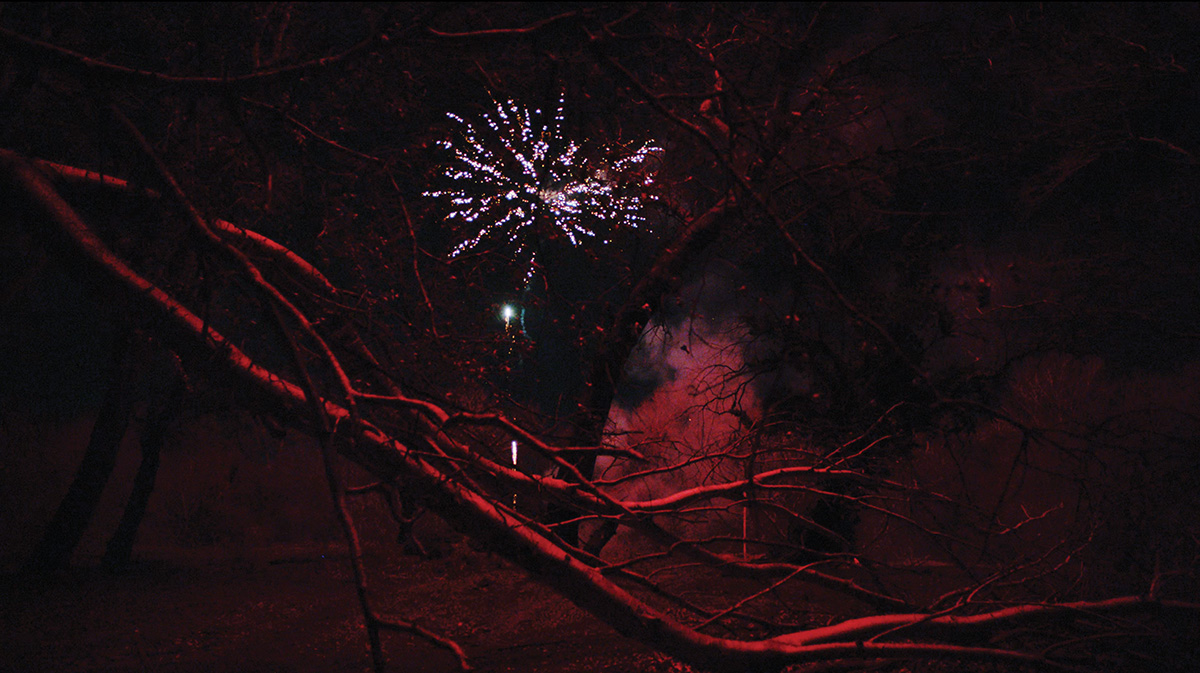
Inspired by Donna Haraway and John Berger’s contemporary theories on interspecies relations, Andro Eradze fills the frames of his works with plants and animals poised to exceed their boundaries. His camera follows scenes on the cusp of something undefined: a smouldering campfire, a stormy forest of wind-whipped trees, a flooding football pitch. Accompanied by haunting, transcendent soundtracks, his films feel like a compilation of the transitional moments of a feature film, leaving the viewer with a sense of expansive anticipation. Eradze’s new video installation for The Milk of Dreams, titled Raised in the dust (2022), stems from the conclusion of classical Georgian poet Vazha-Pshavela’s The Snake Eater (1901). The poem’s protagonist has a supernatural talent for understanding the language of nature; he must decide between his connection to nature and his social responsibilities, ultimately bowing to the latter. Eradze’s film takes place in a forest. Taxidermized animals appear one by one, disturbed by an uproar of New Year’s Eve fireworks. Critical of the human carnival that is disruptive, toxic, and fatal for wildlife, Eradze’s film repositions fireworks as an entry point onto the dark and mythological side of the forest, a world of plants, animals, and phantoms.
Andro Eradze (b. 1993) lives and works in Tbilisi, Georgia. He studied at the Shota Rustaveli Film Academy, as well as CCA-T (Center of Contemporary Art Tbilisi) MFA program. His works meditate on the qualitative nature of images, still as well as moving. Working primarily in Georgia, Eradze experiments with introducing narratives to the outskirts of human habitation, in the literal and figurative sense. The feeling of an uncanny, non-anthropocentric presence in his works invites the viewer to the liminal space between the subjective and the visceral, between cognition, perception and the alien otherness of non-human experience. Animals, objects, plants, and digital artifacts permeate a sense of presence in a landscape that exists simultaneously parallel and entangled human experience. Eradze’s practice investigates the potentiality of animism as method. Photography, installations, experimental cinema practices and video blend into a project contemplating the fading present, in which the Anthropocene is faltering, and everything operates independently of it. Building upon the legacy of alternative approaches to reality—surrealism and magical realism—his images blur the distinction between the imaginary and the real.
Daniel Erb, Patrik METZGER
Catalogue : 2007West-Berlin | Documentary | dv | color | 3:47 | Germany | 2006
Daniel Erb, Patrik METZGER
West-Berlin
Documentary | dv | color | 3:47 | Germany | 2006
Stories from the eastern West-Berlin. Or why West-Berlin is situated far away in the Kalmyk Republic.
Daniel Erb was born August 8, 1976. He is a cameraman and filmmaker. A selection of his films includes: "Die Affen in den Bäumen des Odysseus" (1999), experimental documentary film; "In Memoriam" (2003), documentary clip; "Partisan" (2004), documentary film; "The Pick-Up" (2004), short film; and "2800kn Nach Hause" (2005), short documentary film. Patrik Metzger was born May 19, 1969. He is an artist and filmmaker, notably of "Funkel" (2002), animated film.
Köken Ergun
Catalogue : 2007The Flag | Experimental video | dv | color | 9:1 | Turkey | 2006

Köken Ergun
The Flag
Experimental video | dv | color | 9:1 | Turkey | 2006
"The Flag" is the second part of Köken Ergun's video series about the state-controlled national day ceremonies of the Turkish Republic. Shot during the 'April 23rd Children's Day', which marks the establishment of the new Turkish Parliament and the official demise of the Ottoman Empire back in 1920, this split screen film documents a pompous patriotic performance devised by elders to be performed by children. Hosted by the mayor and governor of Istanbul, with the participation of a high ranking general, the ceremony features poems and oaths read out loud by primary schools students. Patriotism becomes a hard-lined nationalism. One of the texts, "The Flag", is recited passionately by a girl who vows to 'destroy the nest of any bird who doesn't salute [her country's] flag in flight' and 'dig the grave of anyone who doesn't look at the flag [the way she does]'.
Born in Istanbul, Köken Ergun was taught by the playwright Güngör Dilmen and the actress Yildiz Kenter at the Istanbul State Conservatory and completed his postgraduate degree in Classics at King's College London. Between 1998 and 2002, he worked with American director Robert Wilson. Ergun additionally worked with Aydin Teker in Istanbul, performing in "Density" and "iiao". In September 2001, Ergun presented "öte-oceanwide", an installation/performance project on the occasion of the Istanbul Biennial with Carlos Soto, Ferhat Karakaya and Dominic Reeves. A grantee of The American Center Foundation and The Jerome Robbins Foundation, Ergun has most recently exhibited a sound installation at Kiasma, Helsinki. He is currently writing his dissertation at the Istanbul Bilgi University on the subject of "The Element of Stress on the Contemporary Body in Today's New Media Arts." Ergun's residency at Location One is supported by The Jerome Robbins Foundation; Ministry of Foreign Affairs, Turkey; Mavi Jeans; Istanbul Bilgi University; The Marmara-Manhattan and The Moon and Stars Project.
Jan Erichsen
Catalogue : 2016Destroyer | Video | hdv | color | 1:30 | Norway | 2015
Jan Erichsen
Destroyer
Video | hdv | color | 1:30 | Norway | 2015
Destroyer is a video where several plants and food items are demolished in a dramatic fashion. A variety of kinetic sculptures have been constructed with the sole purpose of destroying these things most efficiently. In the video you can see the artist operating the machines in a very calm manner, sometimes destroying the object and sometimes doing little more damage than knocking it over.
Jan Hakon Erichsen is a Norwegian artist who works within a variety of media focusing on topics like fear, anger and frustration. He has spent several years perfecting a D.I.Y aesthetic with found objects being the main source of work material. Erichsen has exhibited widely in Norwegian and international galleries and partaken in numerous international video festivals after he finished his education at the National Academy of Arts in Oslo.
Jonas Erler
Catalogue : 2025Der Junge mit dem Perlenohrring | Experimental fiction | 16mm | color | 8:33 | Germany | 2023
Jonas Erler
Der Junge mit dem Perlenohrring
Experimental fiction | 16mm | color | 8:33 | Germany | 2023
The boy is familiar with his surroundings. His path is linear and without any detours. Slowly, doubts creep into his mind and he begins to question the status quo. Where does his path lead?
Jonas Erler is studying at the Academy of Fine Arts Leipzig (HGB) in the class of Heidi Specker. In 2022 he took part in the Connecting Talents program "Visegrád in Short(s)" of Filmfest Dresden under the mentorship of Csaba Bollók and in 2024 in the Oberhausen Seminar. He works closely with the Chemnitzer Filmwerkstatt. Currently he is working as assistant director for Luise Donschen.
Ryan Ermacora, Johnson, Jessica
Catalogue : 2016Ocean Falls | Experimental doc. | 16mm | color | 13:14 | Canada | 2015
Ryan Ermacora, Johnson, Jessica
Ocean Falls
Experimental doc. | 16mm | color | 13:14 | Canada | 2015
"We imagine the lives under the mortar, but how do we recognize the end of a bottomless silence?" - Michel-Rolph Trouillot
Ryan Ermacora (1991, British Columbia) and Jessica Johnson (1988, Nova Scotia) are award winning filmmakers based in Vancouver, B.C. Their work investigates the traces of history in landscape. While they make documentaries and documents, they’re critical of the genre`s claim to truth and objectivity, therefore they approach their practise using structuralist, self-reflexive and affective strategies to undermine the possibility of those claims in their own work. As a result, their films are often materially playful and inventive. They have screened at the Vancouver International Film Festival, DOXA Documentary Film Festival, WNDX: Festival of Moving Image, and as a two channel film installation at the Alternator Center for Contemporary Art.
Louise Ernandez
Catalogue : 2017Sarragan | Documentary | hdv | color | 10:36 | France | 2015
Louise Ernandez
Sarragan
Documentary | hdv | color | 10:36 | France | 2015
Four men dig tirelessly a mountain. From this excavating born a palace of a thousand corridors and colonnades. Man and limestone clash at the heart of a conflict of scale and materials. From this clash comes out a single and noticeable link, a metaphor for what we are, our origins.
Louise Ernandez graduated at the Photo-Video Department of the Parisian Art school ENSAD in 2015. After 10 years of practice of silver photography, she developed during her studies at ENSAD her own visual language in filmmaking, based on natural light and seeking the boundary between reality and abstraction. Exploring the notions of presence and absence, she captures the nostalgia that emerges from their duality.
Julian Ernst, Swan Lee
Catalogue : 2025Shady Talks | Experimental doc. | 4k | color | 93:43 | Germany, Austria | 2024

Julian Ernst, Swan Lee
Shady Talks
Experimental doc. | 4k | color | 93:43 | Germany, Austria | 2024
Based on the fascination for amusement parks and their connection to cinema, the film ‘Shady Talk’ was realized that documents a fictitious amusement park. The script was written in the form of an exchange of letters. We sent each other texts from an autobiographical perspective over the course of a year. Invented memories of a visit to the thempark accompany the visual material as descriptive fragments. Documentary footage was shot in various amusement parks in Europe: in Park Duinrell in Alkmaar, in Disneyland in Paris, in Praterpark in Vienna, in Tibidabo in Barcelona and in Tivoli in Copenhagen. The examination of these places is initially focussed on showing empty scenes of these places that are normally filled with crowds of people. We are interested in the connection between our everyday surroundings and film as fiction. We want to move away from aesthetic concepts that are based on reality as a stage. The environment does not serve us as a stage for the narrative in the film, itself becomes the main protagonist. The film differs from the actual amusement park. We are more interested in the formal expression of film than using it as escapism, enabling the experience of fictional places.
Swan Lee is currently based in Amsterdam and Julian Ernst lives and works in Vienna. In 2019, Swan Lee and Julian Ernst founded a collective ‘cicada’. The name ‘cicada’ describes a creature that only begins to become noticeable at dusk. With its loud chirping, the insect lends a sound to this time of day, which takes place in a transitional moment of transformation from light to dark. Conceptually, the exhibition formats also move in an intermediate space. The duo develop their exhibition formats based on architectural structures or the mystical past of places. The immersive installations attempt to explore the boundaries between the conventional idea of a suitable environment for artistic works and cinematic stagings. The individual objects themselves often recede into the background and become pillars of the overall concept. Focusing on the communal, i.e. by creating spaces for people to come together. The creation of walk-in sceneries is often associated with the combination of different techniques and media to create a world that seems very far from ours and at the same time very close to ours. In this in between space of seeing and remaining unseen is used to create vivid, moving shots in physical space.
Julian Ernst
Deniz Eroglu
Catalogue : 2021Blut und Boden | Experimental film | 4k | color | 10:3 | Denmark, Germany | 2019
Deniz Eroglu
Blut und Boden
Experimental film | 4k | color | 10:3 | Denmark, Germany | 2019
The title of the work refers to the nationalist slogan of “blood and soil”; a racist ideal of a national identity that stands in mythical relation to a settlement area. This term was later adopted by the Nazis to propagate the bogus ideal of the Aryan farmer and his divine right to Lebensraum. In this work it assumes a new meaning referring instead to the coming-of-age story of a second generation immigrant in Germany. At first the contemporarenous landscapes that accompany the narration are recognisable as such; cars passing over a bridge, two men walking a German shepherd dog. As the narrator recounts his story and the difficulties that he faced, the landscapes become increasingly empty and devoid of human traces, reminiscent of a rural, quieter Germany of past centuries. As the story builds towards a denouement, the twilight landscapes begin to exude an ominous and threatening character in tandem with the violence that is about to erupt. The footage was recorded in the area where these events took place. This region has experienced a surge in support for extreme-right political party AFD and has provided an arena for large Neo-Nazi uprisings in recent years.
Deniz Eroglu (b.1981) is a Danish/Turkish artist who is currently based in the Netherlands. He graduated from the art academy Städelschule in Frankfurt am Main in 2014. He took part in the Rijksakademie van Beeldende Kunsten residency in Amsterdam from 2016-17. He works across many media and genres - film, video, sculpture, performance and text-based works. Thematically his work centres around cultural identity, human relations, immigration, Utopias, “enlightened“ individuals, loneliness, power vs powerlessness, the individual vs the group and in recent years examinations of societal institutions.
Deniz Eroglu
Catalogue : 2025Hunter, Gatherer | Fiction | 4k | color | 49:10 | Denmark, Netherlands | 2023
Deniz Eroglu
Hunter, Gatherer
Fiction | 4k | color | 49:10 | Denmark, Netherlands | 2023
A solitary traveller is journeying around the Balkans where he is making a 16mm film about the architecture of psychiatric hospitals in the region in preparation for a PhD proposal. As his journey progresses he changes his original plan and begins to fraternise with the patients, filming them instead. As he becomes more immersed in the environments he visits, he is eventually noticed by relatives in one of the hospitals. They decide to teach him a lesson and follow him out of town to a cave.
Deniz Eroglu (b. 1981, based in Berlin and Amsterdam) works with film, video, performance, sculpture. Thematically his work centres around cultural identity, human relations, the institutionalisation of life, Utopias, “enlightened“ individuals”, loneliness. His work has been shown at Stedelijk Museum; Sharjah Art Foundation; MMK; Staatliche Kunsthalle Baden-Baden; MAXXI Museum; Statens Museum for Kunst; ARKEN Museum; Kunstverein Harbuger Bahnhof; Kunstmuseum Brandts; The Marrakech Biennial and Kunsthalle Darmstadt.
Ezequiel Erriquez
Catalogue : 2016Panambí, antes del agua | Experimental doc. | hdv | color | 12:0 | Argentina | 2014
Ezequiel Erriquez
Panambí, antes del agua
Experimental doc. | hdv | color | 12:0 | Argentina | 2014
Panambí, before the water, is the portrait of a village that is going to disappear after the construction of a hydroelectric dam between Argentina and Brazil. It is a sunset of a natural place and its family stories.
Ezequiel Erriquez was born on April, 1985 in Buenos Aires. Interested in cinema since childhood; in 2001 began studying photography, art and theatre. In 2002 he started studying Cinema at the University of Buenos Aires. In 2004 he mad experimental videos that were realizing his aesthetics, like Karma short film and in 2008 his short film Hidden behind was selected in the Georges Méliés contest, France. In the early begnning in his career, Ezequiel new ways of art in Performance and video art, like his works; Agua y la ausencia and Rostros invisibles. In 2011 he wrote and directed his first film To The Cantabrica. Ezequiel was selected in the Editing Studio the Berlinale Talent Campus in Germany and He worked in the Deutsche Film- und Fernsehakademie Berlin (DFFB) with Danish editor; Molly Malene Stensgaard ( dancer in the dark, Dogville, Nymphomaniac). The film has been supported by City of Buenos Aires, BAL, (BAFICI), won the INCAA prize to the best shoot film in 2012 and It was premiered at the 2012 in the Int. Film Festival Rotterdam, in The Netherlands. It was selected in several int. film festivals like; Taipei, Montevideo, La Habana, Mar del Plata and Texas. In 2014 he made Panambí, before the water, winner of the first prize for best documentary short film festival in the Latin American environment, Cine Migrante Film Festival, Festival Internacional de Uruguay, and others. He has been recently selected in the Writers lab en Binger film lab, The Netherlands, Raymundo Gleyzer, INCAA and Buenos Aires Bienal of art 2015.
Nick Ervinck
Catalogue : 2008Studies 2004-2006 | Experimental film | | color | 18:12 | Belgium | 2006
Nick Ervinck
Studies 2004-2006
Experimental film | | color | 18:12 | Belgium | 2006
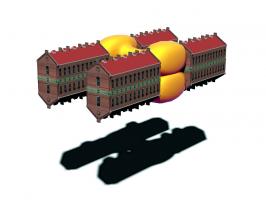
Nick Ervinck his work explores the borders between various mediums, including sculpture and architecture, in an attempt to fragment the mental image and to question the use and the perception of constructive elements such as material, proportions, space, colour and volume. He endeavours to trigger interaction between virtual constructions and hand-made sculptures with a view to eventually prompting the observer to look afresh at the ?world?. To this end he uses a range of mediums: digital prints, videos, drawings but first and foremost, sculptural forms made from painted plaster, polyester and wood, which are presented in a very precise manner within a given ?space?. The animations and digital prints provide a glimpse of a digital virtual world, but also a passage to ?a different reality?. Inside Ervincks artificial world things work very differently from any traditional understandings of logic. Polymorphic, synthetic forms are found in the ?seemingly? authentic rooms, racks and platforms and are brought to life as mutated molecules by means of an artistic computer simulation. In Ervinck?s conception wood is flexible, objects appear from the ground up, rooms are multi-directional movable ? everything is in disorder corresponding to common sense. The world in which the artist operates is a digitally fictionalized one, constructed and deconstructed by an omniscient creator and without any limitations. Walls are no longer walls and gravity seems non-existing. He is playing with sculptural forms. And monumental buildings are being lifted in a fraction of a second and injected with new life. Houses turn into sculptures and are being developed in space. It is a systematic game using images, materials and space and a balancing act between medium, objective and meticulous calculation brought about by inspired improvisation.
The Belgian visual artist Nick Ervinck (Roeselare, 1981) creates huge installations, sculptures, prints, workdrawings and animated films. His work is characterized by the creation of a constantly growing archive of numerous forms and objects. Basically he is making sculptures of different complexity. By creating an immense archive, an interesting interaction between the virtual constructions and the handmade sculptures is being achieved. Digital images continuously contaminate the 3D-objects, but also the other way around. He has for several years been involved in many individual projects and group shows. In 2005 he received the Godecharle prize for Sculpture and in 2006 the Mais prize of the City Brussel and the prize for visual art of West Flanders. Recently he showed work at SMAK Ghent, Koraalberg Antwerp, Brakke Grond Amsterdam, 80 WSE Gallery New York, Show off Paris, BE-part Waregem, Telic Los Angelos, studio Hermann Wagner Berlin, MAMA Rotterdam and Year07 Projects London
Goggel Erwin, Bioho ESPERANZA
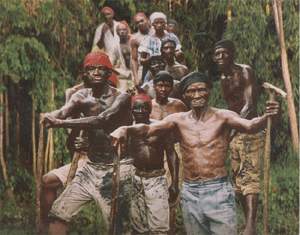
Catalogue : 2006Del Palenque de San Basilio | Documentary | 35mm | color | 85:0 | Colombia | 1989
Goggel Erwin, Bioho ESPERANZA
Del Palenque de San Basilio
Documentary | 35mm | color | 85:0 | Colombia | 1989
Africans who escaped from slavery in Colombia, as in many other parts of the Americas, built enclaves of freedom in areas they controlled. In Colombia they were known as "palenques." Del Palenque de San Basilio is a journey into one of those still existing palenques, documenting the community`s traditional music, dance and storytelling.
Luis David Esguerra Cifuentes
Catalogue : 2026Dos Veces Bestia | Experimental film | 16mm | color | 72:0 | Colombia | 2025

Luis David Esguerra Cifuentes
Dos Veces Bestia
Experimental film | 16mm | color | 72:0 | Colombia | 2025
On the city's outskirts, a strange moss proliferates in the forest. Despite the warnings of its supposed dangerousness, several people visit the place as a gesture of radical freedom. TWICE THE BEAST navigates through spaces-species where friendship and sensuality converge with science fiction.
Filmmaker and programmer, a graduate of the Master's Program in Filmmaking at Elías Querejeta Zine Eskola (EQZE). He has worked on the programming teams of the Cartagena International Film Festival (FICCI) and the Bogotá International Film Festival (BIFF). In 2019, he founded Bruma Cine, a production and distribution company that manages the works of Colombian filmmaker Luis Ospina and develops curatorial projects. He has directed four short films, which have been screened at international festivals such as FICUNAM, FICValdivia, and FIDMarseille.
Felipe Esparza
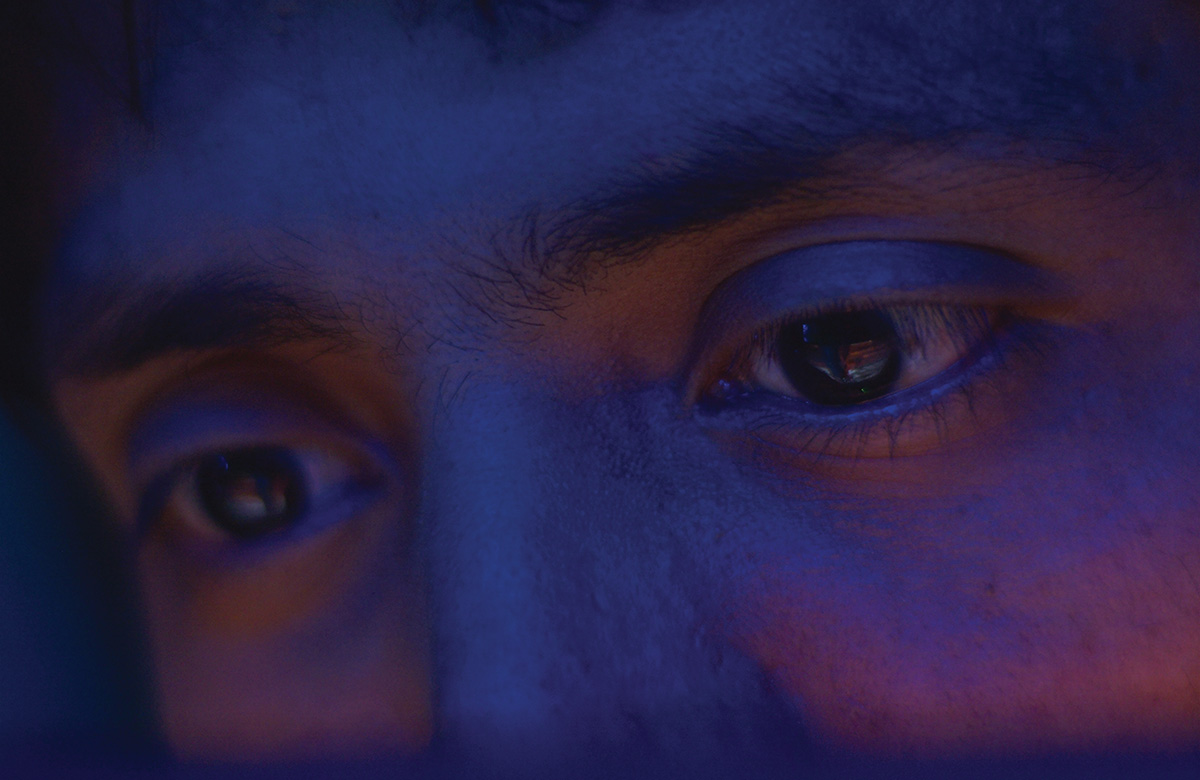
Catalogue : 2023Cielo abierto | Experimental doc. | 4k | color | 64:30 | Peru | 2022
Felipe Esparza
Cielo abierto
Experimental doc. | 4k | color | 64:30 | Peru | 2022
A Peruvian father labours patiently, chipping at the white volcanic stone that forms an extraordinary landscape. His son is part of the modern world: he uses cameras and drones in order to create the digital model of a church on a computer. Separated by the mysterious death of the wife/mother figure in the family, these men do not connect. And yet their paths cross in a ghostly manner, as do their professions: each in their own way works with textures and volumes, sensations and perceptions. Can the realm of digital art recreate and revivify the old world? Can it also awaken hearts grown lonely and cold?
Felipe Esparza Pérez (1985. Talara, Peru) graduated with a master's degree from Centro de la Imagen (Lima) and Le Fresnoy - Studio National des Arts Contemporains (France). His work creates dynamic links and tensions between film and visual arts, with a strong interest in rituals, faith and its symbolic derivations and the relationship between image and time, image and history, and image and truth. His work has been shown in Rencontres Internationales Paris/Berlin -New Cinema and Contemporary Art, Guangzhou Image Triennial (China), Shangyuang Museum of Contemporary Art (Pekín), Biennale Videobrasil (Sao Paulo), Los Angeles Film Forum, FIVA Videoart Festival, Rotterdam International Film Festival, Curtocircuíto, Moscow IFF, Torino IFF, Beijing BIFF, among others. He is currently a fellow at the Film Study Center at Harvard University.
Catalogue : 2022Cortar un arbol en luna verde | Experimental doc. | 4k | color and b&w | 8:0 | Peru | 2021
Felipe Esparza
Cortar un arbol en luna verde
Experimental doc. | 4k | color and b&w | 8:0 | Peru | 2021
From the diary of Christopher Columbus, October 15, 1492: "And deviated from the land by two lombard shots, there is in all these islands so much depth that one cannot reach it. These islands are very green and fertile and have very sweet airs, and there may be many things that I do not know, because I do not want to stop to go through many islands to find gold". They had only been on land for four days. The gold never existed. It is only possible to suppose the sweetness of the air. The islands are still green.
Felipe Esparza’s work creates dynamic links and tensions between film, visual arts and video creation. In his projects there is an interest in social content coexisting with an exploration of themes such as nature, the sacred, non-verbal communication, its symbolic derivations, and the relationship between image and time, image and history, and image and truth. He approaches the complex representation of these themes by developing visual narratives in which the contemporary visual imagination cohabits with archives and with local and universal cultural codes, to the point of creating pieces of metalanguage. He is currently focusing on rituals, focusing on themes such as post-colonial remains around the sacred and the raw material with which cities are built as a sensitive archaeological gesture. His videos and video installations have been shown in national art centers such as: MALI, Luis Miró Quesada, Lugar de la Memoria, Ministerio de Cultura (Lima), Festival de Lima Independiente, Festival Lima Alterna, and international ones such as: Rencontres Internationales Paris/Berlin - New Cinema and Contemporary Art, Guangzhou Image Triennial (China), Shangyuang Museum of Contemporary Art (Beijing), Videobrasil Festival (Sao Paulo), Cámara Municipal de Lisboa (Portugal), Los Angeles Film Forum, HANGAR Art Production Center (Madrid), Buenos Aires Video Art Festival, Rotterdam International Film Festival, Uppsala, Molodist, Curtocircuíto, among others. Graduated from the Master of Mal de Foco at the Centro de la Imagen (Peru), Director at the Berlinale Talent Campus and selected artist at Le Fresnoy - Studio national des arts contemporains, France.
Catalogue : 2016Soga de muerto | Experimental film | hdv | black and white | 6:26 | Peru | 2014
Felipe Esparza
Soga de muerto
Experimental film | hdv | black and white | 6:26 | Peru | 2014
Ayahuasca is a drink used by the Amazonian indigenous peoples, which is commonly called "medicine" to access higher states of consciousness, experimenting with different gods, emotions, fears and egos, `cures`, change habits, thoughts, emotional states . According to tradition, the ayahuasca is the rope that allows the spirit leaves the body without this die.
Graduated in Communications, specializing in audiovisual by the Peruvian University of Applied Sciences. I worked in several agencies like Pragma, McCann Erickson and audiovisual production companies such as 7 Samurai and Cine 70. Film worked as assistant director in two Peruvian films. I was art director for several magazines and independent design and cultural publications in my own studio. Explore the audiovisual language, graphic design and illustration and painting. In my audiovisual work, I have been in the official selection at the Independent Film Festival of Lima (2013-2015). Insurgency displays moving: anthology of Peruvian audiovisual margins. (MALI 2013). Intermittent sample Lima Film Festival (2012). It shows at the Cultural Center Expaña (2011). Latin American projection UnionDocs for Documentary Arts (NY).