Catalogue > Faire une recherche
Résultats pour : Tout le catalogue

Manuel Saiz
Parallel Paradises
Vidéo expérimentale | dv | couleur | 5:0 | Espagne | 2006
"Parallel Paradises" s?ouvre sur l'image éclatante d?une forêt aux couleurs automnales que quelques plans suffisent à représenter : de fins troncs d?arbres, un sol jonché d?aiguilles de pins et de feuilles mortes, les rayons du soleil perçant le feuillage. Deux jeunes filles sont là, comme sorties de nulle part, portant chacune une fleur dans leurs cheveux noirs. L?artiste espagnol aurait-t-il développé une obsession pour l?exotisme comme Paul Gauguin un siècle auparavant? Si son intention était de refléter sur la forêt l?érotisme séduisant des adolescentes, le choix de la saison est pour le moins étrange. Le printemps ou l?été sont en effet beaucoup plus adaptés aux connotations sensuelles. Qui plus est, le choix d?une forêt en zone tempérée plutôt qu?une forêt tropicale, et le fait que leurs talons hauts roses et blancs soient totalement déplacés dans un tel environnement, suggèrent une toute autre intention. Enfin, la danse effectuée par les deux jeunes filles de manière parfaitement synchronisée est trop rapide et moderne pour paraître ancienne et traditionnelle. Le titre reflète la principale intention de l?artiste : deux mondes très différents qui entrent momentanément en symbiose. Le documentaire sur la nature rencontre "Saturday Night Fever". Ces beautés japonaises dansent le parapara, une danse à la mode dans les boîtes de nuit au Japon. Les rayons du soleil couronnant leurs têtes remplacent les projecteurs de la piste de danse. Leurs mouvements accompagnent en rythme le chant des oiseaux.
Manuel Saiz est né à Logroño (La Rioja) en Espagne et vit à Londres. Il s?intéresse particulièrement aux structures narratives et à l?économie du récit, sur divers modes de réalisation - documentaire, publicité et film - qui configurent l'expérience quotidienne dans le présent de la vie urbaine. Son travail reflète les relations existant entre la nature humaine et les techniques et en particulier l'impact des nouvelles technologies numériques sur les sociétés contemporaines. Les événements qui ont lieu dans l'espace de cette civilisation technologique émergente requièrent de nouvelles techniques de langage. Son ?uvre a été exposée internationalement, notamment en Espagne, en Suisse, en Allemagne, au Japon et en France.

Manuel Saiz
Sic transit
Art vidéo | 0 | couleur | 5:0 | Espagne, Italie | 2009

Manuel Saiz
The Two Teams Team
Art vidéo | | couleur | 10:0 | Espagne, Royaume-Uni | 2008
A short film about the differences and similarities of video-art and cinema. Two actors are chatting in a film set, on a break, in the middle of props and cables. The conversation is about film sets in film and video-art projects, they are pointing out the differences of both ways of filming. They talk about budget, emotions and about the different approaches to fiction and reality that cinema and video-art have. Along the conversation the camera is getting closer and the quality of the image becomes more cinematographic. What at the beginning was a casual video in a break of a shooting is now a proper film of two characters talking. The reality becomes seamlessly fiction until the microphone irrupts on the frame and someone shouts: cut!
Manuel Saiz started working as an artist in the 1980?s in Spain, creating paintings, sculptures, photography and installations. He shows regularly since then in public and commercial galleries worldwide. In 1989 he showed a group of installations at the Sao Paulo Biennale and in 1990 he took part in Artificial Nature curated by Jeffrey Deitch at the Deste Foundation in Athens. Since 1995 he works mainly in video art and media installations. In 1998 he moved to London where he produced Video Hacking, a work that received an honourable mention in Hamburg Film Festival. In 2005 he produced Specialized technicians Required: Being Luis Porcar, which was shown widely and got the firmst Prize in the Winterthur Kurtztfilm Festival and an honorable mention in Transmediale 06. His installations have been shown in Intercommunication Center (Tokyo), Transmediale (Berlin), Whitechappel gallery (London), ICA (London), among others. His video productions have been shown at Impakt Festival (Utrecht), EMAF(Osnabruck), London Film Festival, Reina Sofia Art Centre(Madrid), Rencontres Internationales (Paris, Madrid, Berlin), VideoFormes (Clermont-Ferrand), World Wide Video Festival (Amsterdam), among many others. He has curated artist projects as Art Summer University (Tate Modern London), Communicating Vessels (Hara Museum Tokyo), 25hrs (El Raval Barcelona) or videoDictionary (multiple venues), involving internationally known media artists. Last year he had a 9 months fellowship at the Spanish Academy in Rome. He has published several books, as the 2009 101 Excuses. How Art Legitimizes Itself. His video work is distributed by Montevideo in Amsterdam and Vtape in Toronto. He is represented by Galeria Moriarty (Madrid).

Manuel Saiz
Upwards compatible
Vidéo | betaSP | couleur | 8:30 | Espagne, Royaume-Uni | 2001
"Upwards Compatible" est un générique d`ouverture pour le film "2001 : L`odyssée de l`espace", réalisé par Stanley Kubrick en 1968 - la projection emplit l`espace de la galerie, tant par la taille de l`image que par la qualité et le volume du son. Les images ainsi projetées sont conçues pour répondre aux critères des génériques d`ouverture de films, notamment ceux des grosses productions américaines. Le nom du film, ceux des acteurs et des membres de l`équipe technique apparaissent en rythme à l`écran et se déplacent en suivant le tempo de la musique. Cette ?uvre se veut un supplément à "2001 : L`odyssée de l`espace", auquel il manquait un générique d`ouverture. Sur cette vidéo, les noms des acteurs et des techniciens ayant collaboré au film de 1968 trouvent ainsi leur place au générique.
Manuel Saiz a commencé son parcours d?artiste en 1980 en Espagne, avec des peintures, des sculptures, de la photographie et des installations. Il expose régulièrement depuis lors dans des galeries publiques ou commerciales partout dans le monde. En 1989, il a pris part à une exposition de groupe à la Biennale de Sao Paolo et en 1990 à « Artificial Nature » curaré par Jeffrey Deitch à la Fondation Deste à Athènes. Depuis 1995 ; il travaille principalement avec la vidéo et les installations multimedia. En 1998, il a emménagé à Londres où il y a produit « Video Hacking », qui a obtenu la mention honorable au Festival de film d?Hambourg. En 2005, il a produit « Spectialized technicians Required : Being Luis Porcar », premier prix dans le Winterthur Kurtztfilm Festival et mention honorable à Transmediale 06. Il a également curaté des expositions importantes dans des institutions prestigieuses.

Rimas Sakalauskas
Synchronisation
Vidéo | dv | couleur | 7:45 | Lituanie | 2009
Like in a child?s dream, buildings from the Soviet era start leading their own life in a separate reality. Synchronisation has been compiled from free associations and small impossibilities. The slow tempo and spatial soundtrack give the film a compelling atmosphere and inner logic. Buildings from the Soviet era make the scenes monumental and suggestive.
Rimas Sakalauskas (b.1985) is youngest generation video artist from Lithuania. From early childhood he tend to visual arts and music and thereby was studying in National M. K. Ciurlionis School Of Art. In 2009 he received BA in audiovisual arts, department of photography and media art, Vilnius Academy of Arts. His diploma being awarded with special prize. From 1997 he successfully started to participate in various artistic competitions, shows, exhibitions, festivals and other events. Among most important of his achievements is Baltic Award for the Best Work in the Field of Visual Art in International video and contemporary art festival "Waterpieces 2009", held in Riga, Latvia. His bigest success as visual artist is first prize in International Art Competition "Sound and Vision" which took place in 1997 in Helsinki, Finland. Till now he is an active video artist.

Umut Sakallioglu
Rally
Vid�o | dv | couleur | 3:47 | Turquie | 2007
Rally est un documentaire sur une performance réalisée à Istanbul. L'artiste participe à des manifestations publiques organisées par plusieurs groupes, de nationalistes, d?islamistes, de gauchistes, de femmes, etc. Il s?agit de manifestations publiques qui ont véritablement eu lieu et l'artiste y prend part en tant que « participante factice » (ce que le spectateur va comprendre après avoir vu une série de clips). On y voit les manifestations de neuf groupes choisis au hasard dans la scène politique d?Istanbul et de Turquie. Des intertitres sont utilisés pour donner des informations sur ces groupes.
Umut Sakalıoğlu Born: 16.06.1986 Ordu, Turkey. Resides: İstanbul. Studying: Marmara University, Fine Arts Faculty, Cinema-TV Department, 3rd grade. Works: in/on video- art, short-film, performance-art, cinema. GROUP EXHIBITIONS 2006 - Fabrikartgroup 1.st International Modern Arts Festival, Sinasos, Turkey - Istanbul Urban Theaters, 22. Youth Days, Democracy Park of Machka, Istanbul, Turkey 2007 - Winds into Future I, Selected works for the 13th Biennial of Young Artists from Europe and Mediterranean, Kasa Gallery, Istanbul, Turkey 2008 - 4th Kargart Performance Days, Istanbul, Turkey - 13th Biennial of Young Artists from Europe and Mediterranean, Bari, Italy - Urban Jealousy, the 1st International Roaming Biennial of Tehran, Istanbul, Turkey - 7th Strange Screen, Film and Video Festival, Thessaloniki, Greece. PUBLIC SPACE PERFORMANCES 2006 - To throw in the towel, Yard of Marmara University Fine Arts Faculty, Istanbul, Turkey - Animals, Democracy Park of Machka, Istanbul, Turkey - Ilovethefairychimnies, Sinasos Bazaar, Cappadocia, Turkey 2007-2008 - Motorway Speeches, E-5 Motorway, Istanbul, Turkey - Rally, Several squares in Istanbul, Turkey ACADEMIC ACTIVITIES 2006 - ?Chaos? , installation, video installation, solo exhibition in a classroom, Marmara University, Istanbul, Turkey 2007 - Screening and presentation of DVD; Avant-Garde, Experimental Cinema of the 1920s and 1930s, Kino Video®, Marmara University, Fine Arts Faculty, Department of Painting, Murteza Fidan Studio, Istanbul, Turkey JOB EXPERIENCE 2007-2008 - Asisstant cameraman and assistant editor in Karincalar Film Production Company, Istanbul, Turkey - First assistant editor in feature film ?Autumn? ,dir. Özcan Alper, Istanbul, Turkey WORKSHOPS 2008 - Bari lungoilmare, organisators; DEDΆ Studio, Francesco Marocco, Bari, Italy

Paul Sakoilsky
Haroot's first experiment after arrival on earth
Vidéo expérimentale | dv | couleur | 1:23 | Royaume-Uni | 2006
D'après Nietzsche, la qualité d'un philosophe peut se voir à son rire et surtout à la façon dont il rit. Pour un visage fermé comme Hobbes il n'a, à juste titre, que du mépris. Le meilleur des rires, le plus long et le plus éclatant. Le pinacle étant le rire "doré", "olympien"; le rire des Dieux, le rire de Dionysos...Paul Sakpolsky engage le spectateur à tendre les bras et à tout étreindre.
Paul Sakoilsky. Né en 1964 à Norfolk, Angleterre. Elevé en Angleterre et dans le Sud-Est asiatique. Licence d'Art et de Philosophie (avec les Honneurs) à l'Université de Londres-Nord. Conservateur/ Programmateur pluridisciplinaire et Art Live, 30 Underwood St Gallery /underwoodaudio, 1995-2001. Artiste freelance basé à Londres et à Vienne, écrivain et conservateur.

Taiki Sakpisit
A Ripe Volcano
Film expérimental | hdcam | couleur | 15:15 | Thaïlande | 2011
A Ripe Volcano reflects Bangkok as a site of mental eruption and emotionally devastated land during the heights of terrors, primal fears, trauma, and the darkness of time. A Ripe Volcano revisits The Rattanakosin Hotel, the site where the military troops captured and tortured the civilians, students and protesters who were hiding inside the hotel during the Black May of 1992; and Rajadamnern Stadium, a Roman amphitheatre styled Muay Thai boxing arena, which was built in 1941-45 during the Second World War and since then has become the theatrical labyrinth of physical and mental explosions. The work builds around the recollections of human experiences that took place within these spaces and shifts through the mental space distilled from the possessed memory of wounded time.
Taiki Sakpisit is a visual artist and filmmaker living and working in Bangkok. Over the past years, he has been prolific as an experimental filmmaker in Thailand producing series of works that may have similar in narrative structures but vastly different in details of visual language that narrates the world of images and sound with a repetitive sense of enigmatic gloaming atmosphere. Sound has a big role in his films, by either working in collaboration with sound designer, or combining his cinematic languages with existing music, he paves to a unique situation to discover layers of meanings hidden in the stories. In latest work The Age of Anxiety (2013), he immerses into the world of sound and found footages from period Thai soap opera creating a textured and transforming experience. His works have shown in exhibitions and screened both in Thailand and many festivals abroad. (Bangkok Art and Culture Centre)

Taiki Sakpisit
The Mental Traveller
Doc. expérimental | hdv | couleur | 18:0 | Thaïlande | 2019
The Mental Traveller is a poetic reflection on the nature of remembrance. It navigates through the mental spaces of people consumed by memories of lost time. The film meditates on the passing of time, external behaviors, habitual patterns of thought and the sensorial realities of five mentally disordered men inside the psychiatric ward in Chanthaburi Province, east of Thailand, in which it is filmed. The film was conceived from the director’s connections to his parents and companions as they went through states of sickness, impending death, dementia, grief, and temporary insanity. At the same time it echoes upon the turbulent years of political upheavals and repercussions in Thailand, resulting the nation in a state of delirium, lunacy and trauma.
Taiki Sakpisit is a filmmaker working in Bangkok. His works explore the underlying tensions and conflicts, and the sense of anticipation in contemporary Thailand, through precise and sensorially overwhelming audio-visual assemblage using a wide range of sounds and images. His films produce heightened and uneasy modes of spectatorship that often relate to the tumultuous socio-political climate in Thailand. Taiki’s moving images and experimental shorts have been presented at numerous exhibitions and film festivals, including International Film Festival Rotterdam, Images Festival, Yebisu International Festival for Art, Les Rencontres Internationales, Dallas Contemporary and Kunstverein Gottingen. His previous work A Ripe Volcano (2011) has been screened internationally at more than 40 film festivals and museums. His first feature film The Edge of Daybreak is currently in post-production.
Taiki Sakpisit
The Spirit Level
Vidéo expérimentale | 4k | couleur et n&b | 20:30 | Thaïlande | 2024
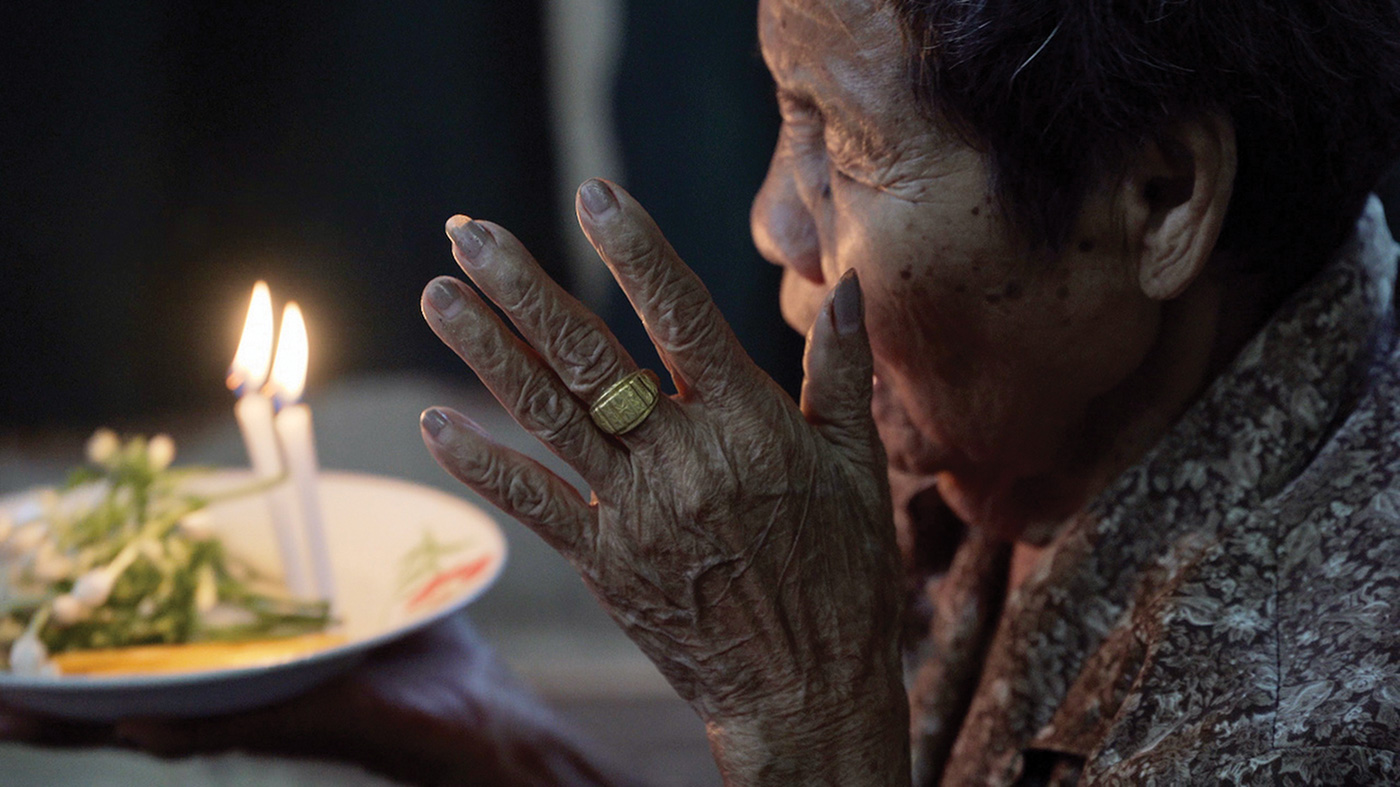
The Spirit Level médite sur les traumatismes et la violence qui traversent la Thaïlande troublée, reflétés à travers les voyages en voiture de l’artiste dans la région nord-est du pays, le long du fleuve Mékong. Le film commence avec une rivière descendant de la cascade Than Thong pour se jeter dans le Mékong, et explore une grotte souterraine mythique qui, selon la légende, abritait un royaume enfoui sous le Mékong, là où réside le divin Naga dans le monde inférieur. Au cœur de The Spirit Level se trouve une séquence frénétique montrant une médium en plein état de possession. Cet épisode épileptique émule un effet de rétroaction optique, suscitant des images spectrales semblables à une transe, alors que l’entité spirituelle s’inscrit dans le corps de la médium. Progressivement, ces images hallucinées se délitent et sont interrompues par une image figée. Cette suspension du temps surgit pour commémorer les esprits disloqués des trois militants anti-gouvernementaux dont les corps mutilés furent retrouvés dans le Mékong en décembre 2019. Exilés depuis le coup d’État de 2014, ils furent kidnappés par un escadron de la mort officiellement soutenu. Leurs corps furent découverts menottés, éventrés, lestés de blocs de béton, enveloppés dans des sacs de riz brun, puis jetés dans le fleuve. Il s’agit de l’un des innombrables cas de disparitions forcées et d’assassinats de dissident·e·s politiques perpétrés par l’État depuis les années 1970, une violence toujours en cours et jamais résolue. The Spirit Level évoque ainsi les courants souterrains d’obscurité qui ondulent sous la surface d’une Thaïlande profondément problématique.
Taiki Sakpisit (???? ?????????????) est un cinéaste et artiste visuel basé à Bangkok, reconnu pour son approche innovante du récit et son exploration profonde de l’histoire complexe de la Thaïlande. À travers le prisme du cinéma, Sakpisit met à nu le passé tumultueux du pays, imprégnant ses films expérimentaux d’un engagement politique subtil mais retentissant. Ses œuvres sondent les tensions, les conflits et les anticipations sous-jacentes de la Thaïlande contemporaine, méticuleusement façonnées par des assemblages audiovisuels précis et sensoriellement saisissants. Utilisant une vaste gamme de sons et d’images, Sakpisit crée des expériences immersives qui défient les récits conventionnels et suscitent la réflexion. Son long métrage The Edge of Daybreak a remporté le prix FIPRESCI au Festival international du film de Rotterdam pour sa « mise en scène d’une atmosphère mystérieuse et d’images riches dépeignant le traumatisme et la violence, pour sa capacité à aborder quarante ans de bouleversements politiques à travers un voyage cinématographique puissant et hypnotique, et pour sa volonté d’affronter le passé afin de confronter le présent et l’avenir ». Ses œuvres récentes ont été présentées à la 14e Biennale de Gwangju, au Museum of Contemporary Art de Busan, à la Bangkok Art Biennale 2024, à la 14e Biennale du Mercosur ainsi qu’à la Thailand Biennale.
Taiki Sakpisit
Seeing in the Dark
Film expérimental | digital | couleur et n&b | 29:0 | Thaïlande | 2021
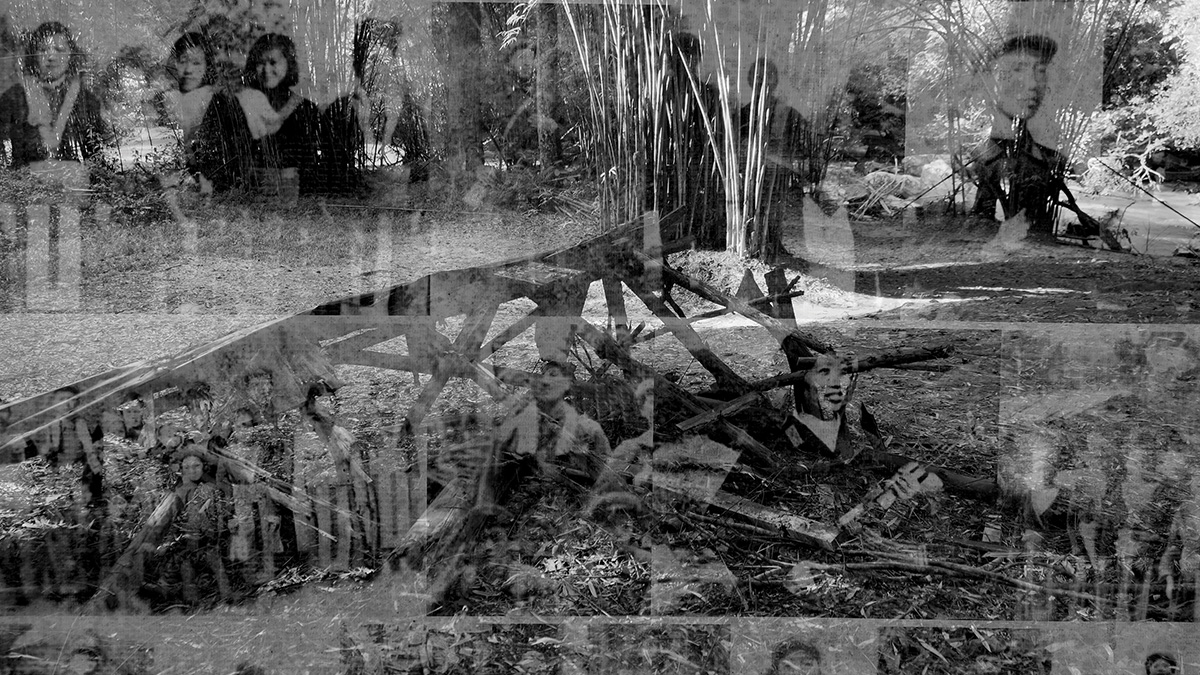
A sensorial, left-field take on Thai political history that moves between a subdued past etched in the landscape of Khao Kho mountain, once a stronghold of communist insurgents, and a dynamic near-present marked by Bangkok’s 2021 anti-government protests.
Taiki Sakpisit is a filmmaker and visual artist working in Bangkok. His works explore the underlying tensions and conflicts, and the sense of anticipation in contemporary Thailand, through precise and sensorially overwhelming audio-visual assemblage using a wide range of sounds and images. His films produce heightened and uneasy modes of spectatorship that often relate to the tumultuous socio-political climate in Thailand. Taiki’s moving images and experimental shorts have been presented at numerous exhibitions and film festivals. His feature length film The Edge of Daybreak premiered at the International Film Festival Rotterdam in the Tiger Competition and won the FIPRESCI award. His film, A Ripe Volcano was presented at Les Rencontres Internationales in 2014.
Taiki Sakpisit
The Spirit Level
Film expérimental | 0 | couleur et n&b | 20:30 | Thaïlande | 2024
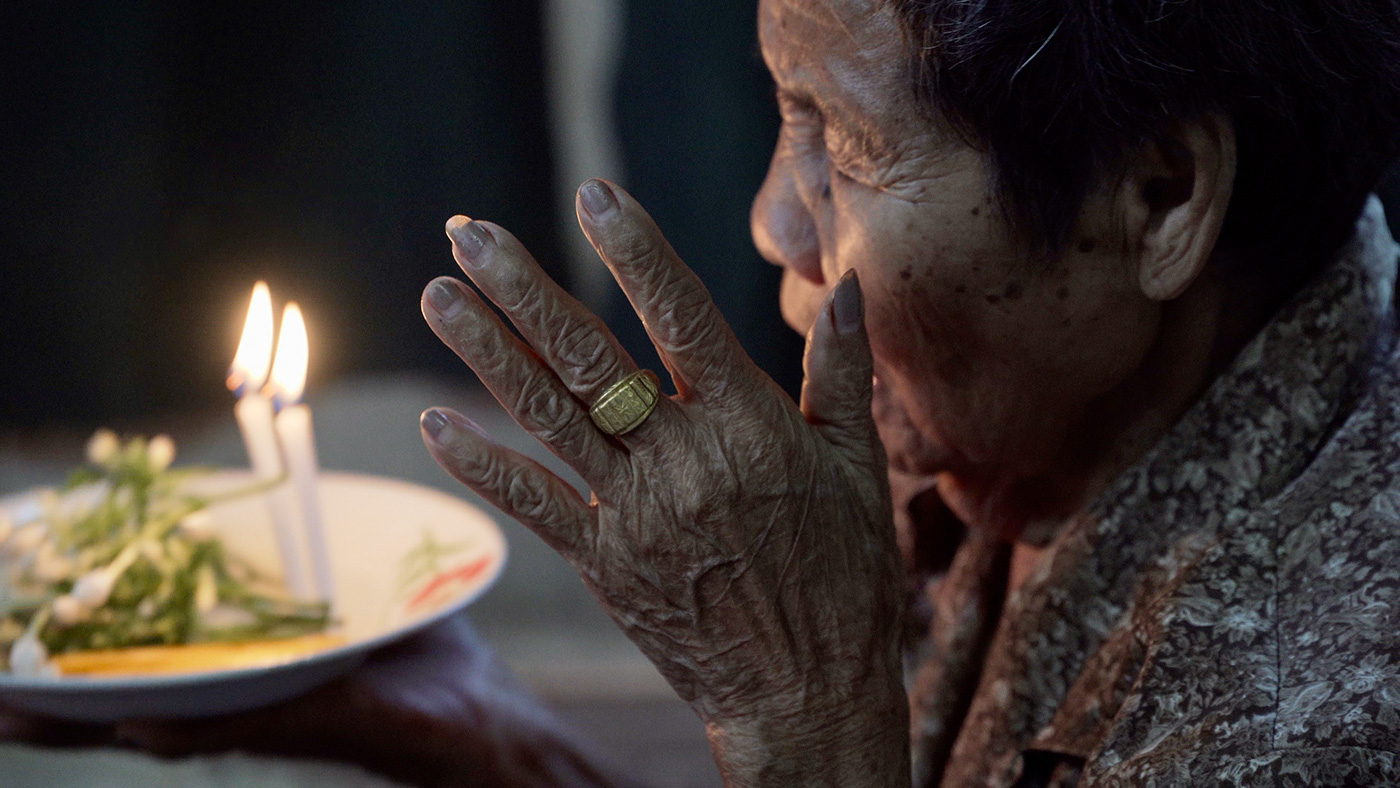
The Spirit Level hauntingly captures a psychic summoning a spirit to learn the truth about the deaths of Thai protestors who had been in exile since the 2014 coup d’état. In a frantic frame, the psychic appears to be paralyzed in the moment. Capturing the collective ethos, the section served as a reminder of everyday forms of resistance and touched deeply on the power and effects of human connections and encounters.
Taiki Sakpisit is a Thai filmmaker and artist based in Bangkok, known for his innovative approach to storytelling and his profound exploration of Thailand’s complex history. Sakpisit unpacks the nation's turbulent past, infusing his films with a subtle yet resounding political commitment. His works delve into the underlying tensions, conflicts, and anticipations of contemporary Thailand, meticulously crafted through precise and sensorially overwhelming audio-visual assemblage. Utilizing a diverse array of sounds and images, Sakpisit creates immersive experiences that challenge conventional narratives. His feature-length film The Edge of Daybreak won the FIPRESCI prize at the International Film Festival Rotterdam for its “Mysterious atmosphere and rich imagery in depicting trauma and violence, for its capacity of dealing with 40 years of political turmoil through a powerful and hypnotic cinematic journey, and for its compromise with the past in order to confront the present and the next future.” He was Artist-in-Residence at the Rijksakademie van beeldende kunsten in Amsterdam (2022-23) and the NTU Centre for Contemporary Art in Singapore (2018). His recent works have been exhibited at the Gwangju Biennale, MOCA Busan, M+ Hong Kong, Bangkok Art Biennale, the Mercosul Biennial, and Thailand Biennale, Phuket.

Ivan Salatic
Dvorista
Fiction expérimentale | 4k | couleur | 20:59 | Montenegro | 2015
In the backyards there are sheds, a huge old tree, wild plants with wild offspring, waste scattered around. This is where they spend their time. A decaying building is about to be destroyed and someone may go beyond. Soon one of them becomes aware of the sea.
Ivan Salatic was born in 1982 in Dubrovnik and grew up in Herceg Novi. He finished the School of Fine and Applied Arts in Belgrade and graduated from the Faculty of Dramatic Arts in Cetinje. He has directed several short films that have participated in festivals such as Venice Film Festival, Sarajevo Film Festival, Torino Film Festival.
Jonathan Saldanha
AFTER THE LAW
Fiction expérimentale | hdv | couleur | 27:0 | Portugal | 2020
"AFTER THE LAW" est un film court, où un tribunal d'humains et d'objets est contaminé par un virus impossible à trouver. Le verdict porte sur un accident inconnu, qui a fracturé la loi et érodé la parole. A travers une mutation toxique des rôles et des formes, des preuves, des gestes et des sensations haptiques, le tribunal perd sa capacité à délibérer. Tourné pendant une performance en direct, à l'aide d'un seul caméscope, ce tribunal a été conçu comme un dispositif cybernétique pour des réponses haptiques, où le mouvement collectif, la lumière, les vibrations, la reconnaissance des visages et l'empathie se heurtent à une voix synthétique. Tout le discours a été généré à l’aide de Google WaveNet, un modèle génératif utilisant des réseaux neuronaux pour simuler des voix humaines. Ce protocole a été exploré et accéléré pour trouver des moments où la voix de la machine se brise, bégaie et scande une glossolalie. En 2019, ces images ont été utilisées comme une partition visuelle pour qu'un groupe d'adolescents sourds les interprète dans une langue des signes étendue, explorant les lacunes de la description et les étendant à la description corporelle de cette cour aphasique. Les voix ont été enregistrées dans des états induits par l’hypnose, rendant floues les frontières qui séparent le corps de ses résonateurs spatiaux. Une voix cassée hante un paradoxe politique dans une bio-ingénierie inversée.
Jonathan Uliel Saldanha a étudié la sculpture à la Faculté des Beaux-Arts de l'Université de Porto (Portugal), et s'est consacré à l'étude du tabla – un instrument de percussion indien - avec le groupe musical hindou Jugalbandi. Il a fondé le collectif SOOPA, un laboratoire visuel, performatif et sonore, et le groupe Silorumor. Il est membre du Fujako duo, et est directeur du groupe HHY & The Macumbas. Depuis 2010, il a composé plusieurs œuvres sonores expérimentales, co-créé les pièces "Boca Wall", "Shark" et "King Trilogy", et réalisé "Jungle Machine", "Khorus Anima", "The Well" et "Oxidation Machine". Il a présenté ses œuvres dans divers lieux, notamment au musée Serralves, Porto (Portugal); au Rivoli Teatro Municipal do Porto (Portugal); au Palais de Tokyo, Paris (France); et au festival Accès(s), Billère (France). Il a collaboré avec des artistes tels que Carlos Zíngaro, Steve Mackay, Adrian Sherwood, Vera Mantero, Mark Stewart, João Fiadeiro entre autres. En tant que musicien, il s'est produit dans divers festivals, notamment au Nyege Nyege, Jinja (Ouganda); à Unsound, Cracovie (Pologne); à Sónar, Barcelone (Espagne); à Primavera Sound, Barcelone (Espagne); à Amplifest, Porto (Portugal); au Out.Fest, Barreiro (Portugal); Circular, Vila do Conde (Portugal); à Million Party; au Neopop, Viana do Castelo (Portugal); au Tapettefest, Campénéac (France); et à Elevate, Graz (Autriche). En 2019, il a présenté l'installation "Vocoder & Camouflage", dans "Vanishing Point: works from the António Cachola collection", Torreão Nascente Lisbonne (Portugal); la pièce "Scotoma Cintilante", pour chœur d'aveugles et sculpture-partition, à l’Université catholique de Porto (Portugal), au São Carlos Lisbon National Theater, Lisbonne (Portugal) et à la Biennale BoCa 2019 (Portugal); et "Broken Field Atlantis" un concert de nappes de lumière, a été présenté au Rivoli Teatro Municipal do Porto (Portugal). Toujours en 2018, avant cette exposition, il a présenté la pièce "SØMA", où un groupe d'adolescents sourds traduit en gestes le tournage d'un tribunal animiste, à Culturgest Lisboa, Lisbonne (Portugal) et au Rivoli Teatro Municipal do Porto (Portugal). En même temps, il a présenté les expositions "Behemoth Republic", dans le cycle "Sonic Geometry" au Archipelago São Miguel Arts Center, Ribeira Grande (Açores, Portugal); et "Dismorfia" à l'Université Catholique de Porto (Portugal).
Miranda Salvador
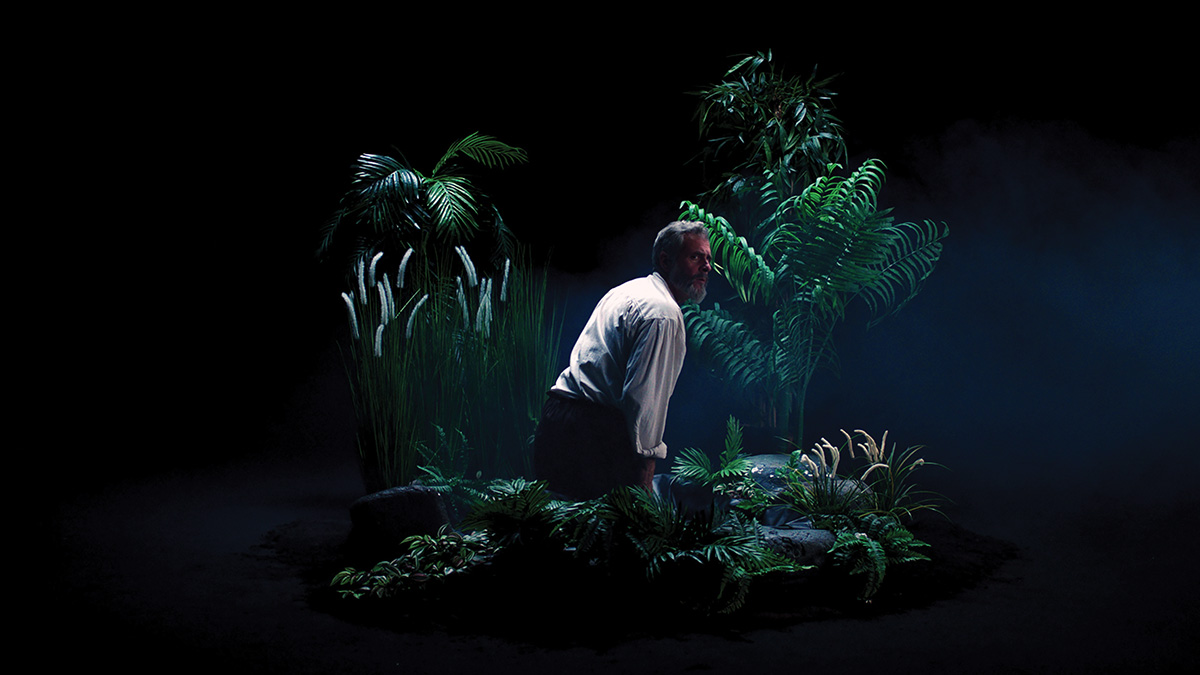
Life Eternal
Film expérimental | 4k | couleur | 23:19 | Canada, Pays-Bas | 2022
Life Eternal tells three intertwining stories about immortality. The first story is about Spanish explorer Juan Ponce de Leon and his legendary search for the Fountain of Youth. The second story tells us of Henrietta Lacks, a poor black tobacco farmer whose cancer cells were used to create the first immortal human cell line. The third story takes up James Bedford, the first person to undergo cryogenic freezing in hopes of future revival. Spanning centuries, the film installation explores the desires and emotional entanglements of these stories. At the same time, it touches upon the complex and troubling historical themes that jump out so vividly from them - colonialism, exploitation, and techno-utopianism. This work is a poetic dialogue on the eternal conversation on time, our place in a constructed reality and our attitude toward it.
Salvador Miranda is a Mexican-Canadian filmmaker, artist, and producer. His debut short film, This is my land... (2019), premiered at the International Film Festival Rotterdam (IFFR). His film installation, Life Eternal (2022), premiered at Kasseler Dokfest, received a nomination for the 2022 Golden Cube Prize, and won the 2024 Hertzog da Silva Award. His latest documentary short, Promised Land (2023), also premiered at IFFR. In addition to international screenings, his films are frequently featured in gallery and art festival settings, including Eye Filmmuseum (Netherlands), Ruhrtriennale (Germany), Proyector (Spain), and IMPAKT Festival (Netherlands). Miranda is an alumnus of the Kunstinstituut Parallel Curriculum programme and holds an MFA cum laude in Lens-Based Media from the Piet Zwart Institute.

Mark Salvatus
Jalan-Jalan
Fiction expérimentale | mp4 | couleur | 10:15 | Philippines | 2019
Kaliurang, à Yogyakarta, est situé près du volcan actif Merapi, un lieu où les fantômes des souvenirs et de l'histoire font partie du paysage. Il s’agit d’une vidéo subtile, créée spécialement pour 900mdpl en 2019, dans laquelle les habitants de la ville deviennent acteurs, dans le rôle de fantômes. De temps en temps, les habitants de Kaliurang voient un Hollandais à pied, ou un soldat japonais qui marche, ou une Javanaise portant une jarre d'eau, ou un animal sauvage ou un être surnaturel... passer comme s'ils étaient là, vivant parmi nous. Ils se cachent dans les arbres - comme si les arbres, la forêt et la montagne étaient les témoins nus de toute l'histoire du colonialisme, de la guerre et du processus néolibéral du développement. Une œuvre de fiction sans flux narratif. Les fantômes marchent-ils parmi nous ou sommes-nous les fantômes ?
Mark Salvatus (né en 1980) vit et travaille à Manille, aux Philippines. Il a étudié les arts publicitaires à l'université de Santo Tomas, à Manille. Ses œuvres ont été présentées lors de différentes expositions et dans différents lieux, notamment à la 2e Biennale de Lahore (Pakistan); au Kyoto Art Center (Japon); à l'ISCP, New York (USA); au Kunstraum Kreuzberg/Bethanien, Berlin (Allemagne); à la 14e Biennale de Sharjah (Émirats arabes unis); au Mill6 CHAT, Hong Kong (Chine); à la Biennale de Gwangju - Pavillon PCAN (Corée du Sud); au Musée d'art moderne et contemporain, Séoul (Corée du Sud); à l'Osage Art Foundation, Hong Kong (Chine); au Mori Art Museum, Tokyo (Japon); aux Rencontres internationales Paris/Berlin; à la Biennale d'architecture de Venise - Pavillon des Philippines, (Italie); à la 6e Biennale de Thessalonique (Grèce); SONSBEEK International, Arnhem (Pays-Bas); à la 3e Biennale de Singapour; à la 4e Triennale de Guangzhou (Chine); aux 14e et 16e Biennale de Jakarta (Indonésie); au Koganecho Bazaar, Yokohama (Japon); à l’Hotel Inmigrantes, Manifesta 9; à la Brunei Gallery - SOAS, Université de Londres (Royaume-Uni); à Hasselt (Belgique) ; à la Biennale d’Honolulu - Exposition Prologue (USA); au Survival Kit Festival, Umea (Suède); à la Sharjah Art Foundation (Émirats arabes unis); à l’Asia Society, New York (USA); au Art Center Ongoing Tokyo (Japon) ; au Museum Baerengasse, Zurich (Suisse); à La Trobe Art Institute, Bendigo (Australie); au Cultural Center of the Philippines et au Vargas Museum and Filipiniana Research Center (Philippines). Il a été artiste en résidence à l'ACC - Asia Culture Center, Gwangju (Corée du Sud); à la Rijksakademie van beeldende kunsten, Amsterdam (Pays-Bas); au IASPIS Umea (Suède); à la Art OMI, New York (USA); à la Common Room Networks Foundation, Bandung (Indonésie) et au Goyang Art Studio (Corée du Sud).

Mark Salvatus
Notes from the New World
Vidéo | hdv | couleur | 12:24 | Philippines | 2015
The Philippine Constabulary Band was a symphonic band formed in 1901 by African-American Lt. Walter Loving of the US Army’s 48th Volunteer Infantry during the American period in the Philippines. Since its first public performance on May 20, 1903, the band has brought the country international fame through its participation in international competitions, including the 1904 St. Louis Exposition in the USA, where the band placed second. In this infamous fair where live Filipinos were exhibited especially the dog-eating Igorot tribe, the band performed Rossini’s classical music ‘Willam Tell Overture’. Forward to the year 2015, the artist’s father’s has a vast vinyl record collection and one of them is a Philippine Constabulary band record that was released in the 70’s under the New Society period of the dictator Ferdinand Marcos. Creating a new narrative about the band and the collection, the current Philippine Army band played Rossini’s Willaiam Tell Overture after 100 years ago side by side by the vast collection of the artist’s father that were gathered slowly since the 70’s.
Mark Salvatus is a contemporary artist from Manila, Philippines. His works crosses various disciplines and media that deal with chance encounters and everyday politics creating his own narrative and visual language. Calling his works and practice as “Salvage Projects”, he has shown his projects in different international exhibitions including the Philippine Pavilion, Venice Architecture Biennale (2016); SONSBEEK International, Arnhem, The Netherlands (2016); Singapore Biennale (2011), Guangzhou Triennale (2011), Jakarta Biennale (2011/2015), Koganecho Bazaar, Yokohama (2011), Hotel Inmigrantes, Manifesta 9, Hasselt, Belgium (2012), Prologue Exhibition: Honolulu Biennale (2014), Survival Kit Festival, Umea, Sweden (2014) and Next Wave Festival, Melbourne (2010). He had also presented his works in different museums and galleries including La Trobe University, Visual Arts Centre, Bendigo; Asia Society, New York; Museum Brengasse, Zurich; Center for Contemporary Art, Singapore; Ateneo Art Gallery; Cultural Center of the Philippines, Vargas Museum; Metropolitan Museum of Manila; Osage Foundation, Hong Kong; 1335 Mabini in Manila; Art Center Ongoing, Tokyo. Mark is a recipient of the 13 Artists Award from the Cultural Center of the Philippines (2012) and Ateneo Art Awards (2010). In 2012 he founded and acts as the artistic director of 98B COLLABoratory, a multi-disciplinary site for creative sharing, discussion and collaboration.
Mark Salvatus
Should the Source of Fulfillment Be Seen with Our Eyes
Vidéo expérimentale | hdv | couleur | 16:25 | Philippines | 2024
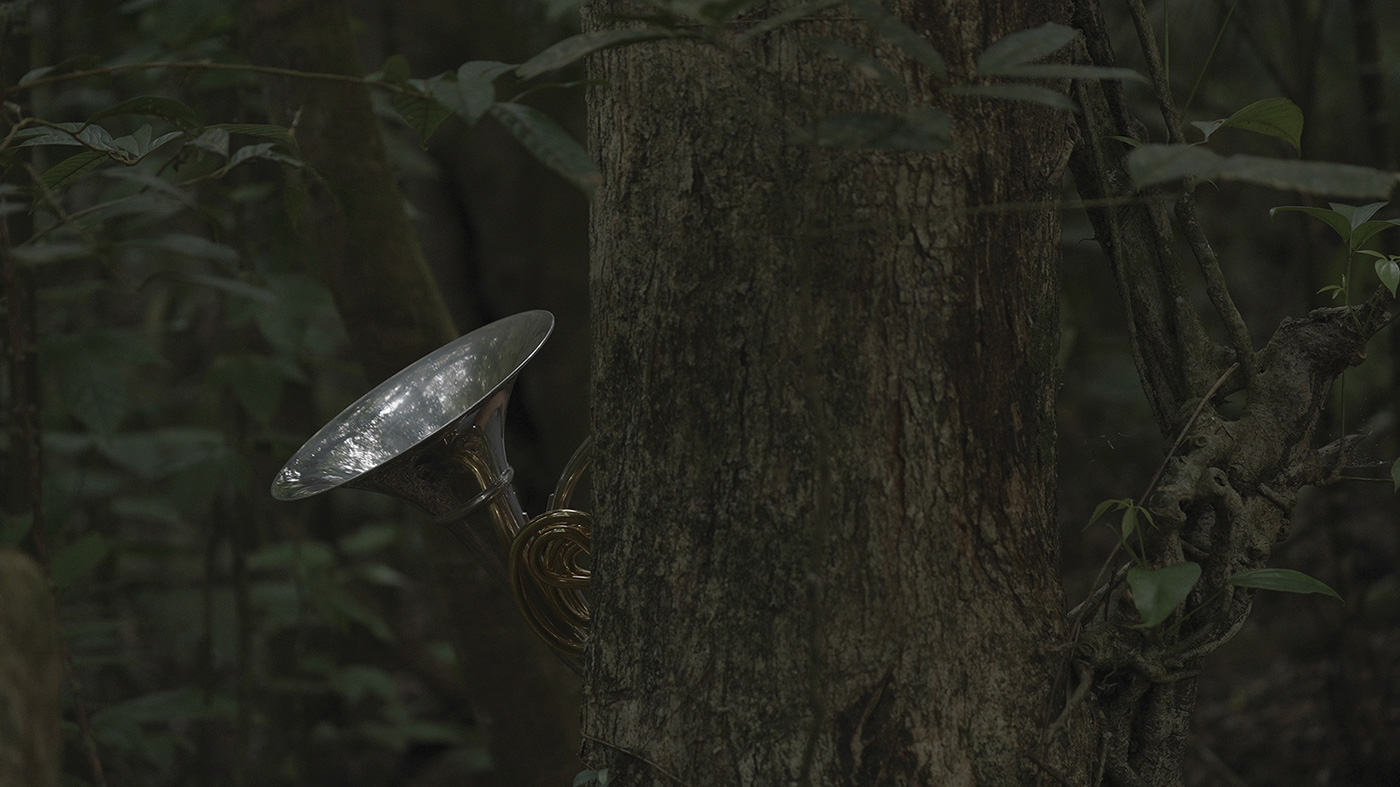
Kung ang Makagiginhawa ay Matingnan ng Ating mga Mata (Should the Source of Fulfillment Be Seen with Our Eyes) – 2024 Cette œuvre explore les ethno-écologies du mont Banahaw — la manière dont le monde plus-qu’humain qui l’entoure façonne, et est façonné par, les imaginaires culturels. Elle tisse ensemble les recherches continues de Salvatus sur les histoires vernaculaires du mont Banahaw et de Lucban, rassemblées à partir d’archives familiales, de récits populaires et de motifs mythiques. Elle examine plusieurs trajectoires de renouveau millénariste qui convergent vers le mont Banahaw en tant que topos mystique et ethno-écologique : d’une révolution destinée à encourager les populations locales à trouver leur propre idiome de discernement religieux, à une histoire de fanfares et de musiciens et leur rôle dans une modernité régionale postcoloniale, jusqu’à la propre pratique d’assemblage et de « salvaging » de Salvatus qui nous inscrit dans ce monde mystique partagé, éveillant en nous un esprit politique à l’échelle planétaire.
Mark Salvatus, artiste philippin originaire de Lucban et vivant à Manille, décrit son approche artistique étendue sous le terme de « Salvage Projects ». Ce concept, qui fait écho à son nom, constitue un cadre à partir duquel se déploient ses multiples investigations portant sur les vestiges de la politique urbaine, les strates narratives de l’histoire nationale, et le mouvement incessant de la vie contemporaine. Travaillant à travers une pluralité de disciplines — objets, photographie, vidéo, installations et pratiques participatives — Salvatus conçoit des formes d’engagement directes et indirectes qui mettent en lumière les résultats multiples des énergies, des significations et des expériences.

Roy Samaha
Sun Rave
Vidéo | hdv | couleur | 11:0 | Liban | 2018
This video explores childhood anecdotes heard around an apartment, which until 1989, when a major solar storm erupted, had been inhabited by a strange couple. Some suspected them of being undercover agents while others said they were just some new age sorcerers. The work addresses the relationship between layers of history, outstanding events in nature and ancient cyphering of language; how the cycles of the Sun’s unpredictable release of energetic flares affect the magnetic fields of the earth and influence radio transmissions, communication and reason on a mass scale.
Roy Samaha is a Lebanese artist, living and working in Beirut. He explores the boundaries of filmic language, perception of reality and the memory of personal objects.

Roy Samaha, Fakhoury Omar
Incarnation of a Bird from an Oil Painting
Fiction expérimentale | hdcam | couleur | 8:0 | Liban | 2013
??Once Dr. Dahesh referred to a painting made by Mrs Marie Haddad, and which showed a bird on a tree. The colours of the painting moved and took the form of flesh, blood and feathers and the bird in that painting was converted into a living bird, which was placed in a cage and remained there for several years. Its place on the linen remained white.?
Omar Fakhoury Artist, Beirut Born in 1979, Omar Fakhoury is a multidisciplinary visual artist. He holds a Bachelor in Painting and a Masters of Fine Arts Roy Samaha, Artist, Beirut Born in 1978, a video artist and photographer living and working in Beirut Lebanon where he completed a Masters degree in film studies.
Roy Samaha
Please rewind me later
Doc. expérimental | dv | couleur | 30:0 | Liban | 2007
Cette oeuvre se veut un outil de recherche dans son propre passé. Il s'agit de relier les lieux d'enfance, les rêves et les enregistrement VHS. Comment réaliser un autoportrait sans s'adonner aux clichés des archives historiques? Il a été dit : "Vous devez comprendre: la mémoire des objets enregistre et retient les actions humaines... de sorte que les générations futures en héritent... Mais on vous a aussi demandé de partir, de tout laisser derrière vous comme si vous n'étiez jamais venu. Les choses, les lieux possèdent une sorte de mémoire. Quand vous entrez dans un espace fermé, une partie de vous y reste attachée, vous perdez quelque chose. Vous devez apprendre à partir sans abandonner une parcelle de votre être... Apprendre à circuler sans laisser de trace."
Roy Samaha est né à Beyrouth en avril 1978. Il y vit et travaille comme vidéographe à ses heures. Il est diplômé en cinéma de la Holy Spirit University of Kaslik (USEK), au Liban.