Catalogue > Faire une recherche
Résultats pour : Tout le catalogue

Sergii Sabakar
Outwards
Animation | hdv | noir et blanc | 2:25 | Ukraine | 2016
The source for the "Outwards" are the fragments of the found footages of the manifestations and conflict situations. There are plenty of them in the Internet now and sometimes difficult to understand what is going on. For the animation I choose the moments of aggression, it is not clear whether it is a defense or an attack, but all gestures directed from itself. Media is a reality where gesture, protest, and violence also take place. The similar, even equivalent acts we observe not always the evidences of equality of situations. So the question is not only about the limits of the screen, but also about the limits of understanding what we see.
Sabakar Sergii is born in 1982 in Sumy, Ukraine. From 1997 to 2001 he studied at the Sumy College of Art and Culture And from 2001 to 2007 he was student of the National Academy of Fine Art and Architecture at Kiev. Since 2007 he has been attending a post graduate course there. He is based in Kiev.

Sachin Sachin
zemengel tua kadjunangan
Doc. expérimental | 4k | couleur | 14:46 | Inde, Taiwan | 2023
Logline - A sensorial flow in Image and sounds of the rituals of the paiwan indigenous tribe in the village and forest, nature becomes a culture and the past becomes present. Synopsis - In Paiwan indigenous culture, smoke is the means of communication with their ancestors. The film constantly navigates into a series of folktales which create the illusion of past, present, dream and reality. In these oral tales passed on from generation to generation, we witness that humans are not the center of the story but a part of it. After decades of repression in Taiwan, Paiwan indigenous tribes are trying to revive their language and culture again, started practicing their indigenous millet crops, singing their own paiwanese songs and following the paths of their ancestors.
Sachin was born in the village of Kakora in Rajasthan's Shekhawati region, India. He utilizes Lens-Based arts to comprehend the world around him and express his ideas through an experimental approach. His interests lie in agriculture and rural communities, and he communicates his thoughts through audio-visual arts that are intertwined with various sociological and ecological contexts. Sachin's educational journey comprises a Bachelor's degree in Cinematography from Rohtak, India, as well as a Master's in Documentary Directing from DocNomads, spanning Portugal, Hungary, and Belgium. Additionally, he holds a Master's degree in Culture and Media Studies from the Central University of Rajasthan. Sachin has garnered prestigious fellowships, such as the Taiwan Pitch Grant in 2022 and the Erasmus Mundus Scholarship from 2021-23. His films have graced international festivals, including IDFA, BIFF, and IFFI, and have been exhibited at The Design Museum and the Kochi-Muziris Biennale. Sachin's diverse portfolio encompasses directing, filming, editing, and producing films, as well as contributing as a cinematographer, and delving into photography and XR projects.

Kamran Sadeghi
Loss Less
Vidéo | mov | couleur | 22:53 | Iran, USA | 2020
"Loss Less" est une œuvre audiovisuelle in situ, enregistrée dans la tour de refroidissement de la centrale nucléaire désaffectée de Satsop. Dans les années 70, le programme d'énergie nucléaire américain avait commencé depuis plus de 20 ans. Dans l'État de Washington, un groupement de services publics a lancé ce qui devait être le plus grand projet de production d'énergie nucléaire de l'histoire du pays. La construction a été suspendue peu de temps avant l'achèvement des installations, et ce qui en reste est une structure de 129 mètres de diamètre à la base, s'élevant à près de 152 mètres. Kamran Sadeghi s'est servi de l’acoustique naturelle de la tour de refroidissement pour composer et remodeler le son, capturant l’intégrité architecturale et l’immédiateté holistique de la structure, tout en supprimant symboliquement son existence. Tout en mettant l'accent sur le son, Sadeghi a créé une œuvre abstraite en 3D à partir d'une photo prise sur place. Le titre, "Loss Less", est dérivé du terme "lossless" ("compression sans perte"), un processus qui permet de préserver et de reconstruire des données audio à la perfection. Dans le cas de cette réalisation, le son n'a pas été préservé, mais dégradé intentionnellement. Le titre exprime également la réalité des pertes et de la destruction catastrophiques causées par l'énergie nucléaire, et un appel à la réduction des risques.
Kamran Sadeghi est musicien, compositeur, producteur de disques et artiste interdisciplinaire. D’origine irano-américaine, il habite à New York (USA). Son récent album solo, disponible sur LINE, est composé d’un enregistrement fait à l'intérieur d'une tour de refroidissement nucléaire désaffectée, et d'une collaboration avec l'artiste d'installation Zimoun. La diversité de la pratique de Kamran Sadeghi peut être attribuée à son utilisation du son comme un matériau sculptural. Il est un alchimiste, guidé par la recherche thématique, l'expérimentation contrôlée et l'intuition, tout en travaillant avec la synthèse sonore, l'acoustique et les technologies d'enregistrement et de traitement du son. Ses performances, bandes sonores, collaborations et installations ont notamment été présentées au ICA – Institute of Contemporary Art, Boston (USA); au DTW – Dance Theater Workshop, New York (USA); à la Corcoran Gallery of Art, Washington (USA); au CTM Festival, Berlin (Allemagne); à la KW Gallery, Berlin (Allemagne); au K11 Museum, Shanghai (Chine); au MUDAM – Musée d’Art Contemporain du Luxembourg, Luxembourg-Kirchberg (Luxembourg); au MuCEM – Musée des civilisations de l’Europe et de la Méditerranée, Marseille (France); au Centre Pompidou, Paris (France); au Berghain, Berlin (Allemagne); à la galerie KOW, Berlin (Allemagne); et à la Biennale de Berlin (Allemagne). Parmi ses éminents collaborateurs figurent Patti Smith, chanteuse et poète américaine; Mulatu Astatke, jazzman éthiopien; Nan Goldin, photographe américaine; Jean-Luc Godard, réalisateur franco-suisse; et Sasha Waltz, chorégraphe. Ses enregistrements et productions ont été produits avec des labels tels que Sternberg Press, Vinyl Factory, LINE, Dragons Eye Recordings, Sacred Bones ou Apollo Records.

Katherina Sadovsky
Rage
Vidéo | digital | couleur | 12:36 | Russie | 2023
Experimental video work in which the artist explores how art and culture become tools of military propaganda, working for the authorities. And how in modern Russia, they are trying to start a second wind of Soviet monumental propaganda, justifying and supporting the war in Ukraine. The film is built on alternating long, slow shots of Soviet architecture of the 30s. One place in Moscow is shown - the VDNH park, built by Stalin in the 30s as a utopia for the Soviet people, as a future city in which we were never destined to be. Here architecture is seen as monumental propaganda before World War II. The use of baroque elements, massive columns, and other details of unthinkable dimensions was supposed to inspire horror and a sense of the worthlessness of a person before the authorities. And that means complete submission.
Katherina Sadovsky (1985) is a Russian contemporary artist, now based in Yerevan, Armenia. Her diverse approach to art practice encompasses art media such as video, CGI, 3D, sculpture, photography, AI, installation, sound, site-specific practices.

Mateusz Sadowski
Ksztalt chwili
Animation | 4k | couleur | 7:17 | Pologne | 2018
During the realization of three-dimensional stop motion animation, Sadowski experimented with film, sculptural and photographic practice. “The Shape of The Moment” concentrates the complex experience of time and emotion, casts doubt on the habits of perception. Each perception is preceded by a process, carefully planned or quite random, reminiscent of the work of nature. The list of processes preceding the origin of record in the form of the last film by Sadowski is not clear at first glance. It doesn’t even require any explanations. However, over time, further layers of performances are exposed to us, offering insight into the nature of selected media and their modification. The action of time takes the form of one of many processes that determine our perception and the ways in which its object are presented to us.
Mateusz Sadowski b. 1984. Lives and works in Poznan, Poland. B.A. Photography (2007) and Intermedia M.A. (2010) graduated at the Academy of Fine Arts in Poznan. Winner of the scholarship `YOUNG POLAND` of the Ministry of Culture and National Heritage. Prize winner of 7th edition of Samsung Art Master Award 2010. Winner of the Chris Frayne Award for Best Animated Film at 54. Ann Arbor Film Festival in 2016. Currently he lectures at the Photography Department and completed PhD at the University of Arts in Poznan. Cooperates with Galeria Stereo.

Tulapop Saenjaroen
A Room with a Coconut View
Vidéo expérimentale | dcp | couleur | 28:25 | Thaïlande | 2018
A tour guide and also a hotel rep automated voice, Kanya, leads her foreign guest, Alex, through a beach town in the east of Thailand called Bangsaen. Since Kanya’s presentation is overtly aestheticized and strictly regimented, Alex decides to explore the town by himself, fantasizing to get out of the frame.
Tulapop Saenjaroen (b.1986)is an artist/filmmaker whose works encompass performance, video/film, and public projects. Tulapop holds an MFA from the Slade School of Art, University College London, and MA in Aesthetics and Politics program at the California Institute of Arts. He was a recipient of Experimental Film/Video Grant from Office of Contemporary Art and Culture, Ministry of Culture, Thailand. He also worked as an associate producer and a casting director for Anocha Suwichakornpong’s By the Time It Gets Dark (2016). His works have been selected to participate in exhibitions and screenings internationally including Locarno Festival, International Film Festival Rotterdam, International Short Film Festival Oberhausen, 25FPS Zagreb, Kasseler DokFest, FICVALDIVIA, Vancouver International Film Festival, Singapore International Film Festival, National Gallery of Art Vilnius, Asia Culture Center Gwangju, Institute of Contemporary Art London, Seoul International New Media Festival, Moscow International Biennale for Young Art, Centre for Chinese Contemporary Art Manchester, Korean National Film Archive; and won awards including from Internationale Kurzfilmtage Winterthur, Arkipel Festival Jakarta, Moscow International Experimental Film Festival.

Tulapop Saenjaroen
Notes from the Periphery
Doc. expérimental | 4k | couleur | 13:32 | Thaïlande | 2021
Mainly shot in the peripheral areas of the ever-expanding Laem Chabang port in Chon Buri, Thailand, Notes from the Periphery interrogates the notion of territoriality, globalized networks, and ownership through fragmented relations of the affected sites and communities nearby, shipping containers that become a policing tool in protests in Bangkok, and the life cycle of a barnacle.
Tulapop Saenjaroen is an artist and filmmaker currently based in Bangkok, Thailand. His recent works interrogate the correlations between image production and production of subjectivity as well as the paradoxes intertwining control and freedom in late capitalism. In combining narrative and the essay film genre, he investigates on subjects such as tourism, self care and free labor through re-making and re-interpreting the produced images and their networks. Saenjaroen received his MFA in Fine Art Media from The Slade School of Fine Art and MA in Aesthetics and Politics from CalArts. Saenjaroen’s works have been shown in exhibitions and screenings internationally including Locarno Film Festival; International Film Festival Rotterdam; International Short Film Festival Oberhausen; Images Festival, Toronto; DOK Leipzig; Image Forum, Tokyo; Curtas Villa do Conde; CROSSROADS at SFMOMA; Abandon Normal Devices Festival, UK; FICVALDIVI, Chile; the Museum of the Moving Image, NYC; Asia Culture Center, Gwangju; 25FPS, Zagreb; Kasseler DokFest; Vancouver International Film Festival; Harvard Film Archive; Bucharest International Experimental Film Festival; Open City Documentary, London; Athens International Film +Video Festival; 100 Tonson Gallery; Display Gallery Prague; NUS Museum, Singapore; Seoul International New Media Festival; and the Moscow International Biennale for Young Art; among other venues.

Tulapop Saenjaroen
People on Sunday
Vidéo expérimentale | 4k | couleur | 20:53 | Thaïlande | 2020
Dans cet hommage à "Menschen am Sonntag" (1930), l’œil attentif de la caméra capte le paradoxe des acteurs qui tentent de se détendre tout en travaillant.
Tulapop Saenjaroen est artiste et cinéaste, il vit et travaille à Bangkok. Il est titulaire d'un MFA en Fine Art Media à la Slade School of Fine Arts, Londres (Royaume-Uni) et d'un MA en Esthétique et Politique à CalArts, Los Angeles (USA). Ses travaux récents interrogent la corrélation entre la production d'images et la production de subjectivité, ainsi que les paradoxes reliant le contrôle et la liberté dans le capitalisme tardif. En combinant le récit et l'essai, il s'intéresse dernièrement à des sujets tels que le tourisme, le self-care et le travail gratuit, en reproduisant et en réinterprétant les images produites et leurs réseaux. Ses œuvres ont fait l'objet d'expositions et de projections à l’international, notamment au Festival international du film de Locarno (Suisse); au Festival international du film de Rotterdam (Pays-Bas); au International Short Film Festival Oberhausen (Allemagne); au Images Festival, Toronto (Canada); au Image Forum Festival, Tokyo (Japon); au festival Curtas Villa do Conde (Portugal); au Asia Culture Center, Gwangju (Corée du Sud); au 25FPS, Zagreb (Croatie); au Kasseler DokFest, Kassel (Allemagne); au Festival international du film de Vancouver (Canada); à la Harvard Film Archive, Cambridge (USA); au BACC – Bangkok Art & Culture Centre (Thaïlande); à la 100 Tonson Gallery, Bangkok (Thaïlande); à la galerie Display, Prague (République tchèque); au Seoul International New Media Festival, Séoul (Corée du Sud) et à la Moscow International Biennale for Young Art, Moscou (Russie). Il a remporté plusieurs prix, notamment aux Internationale Kurzfilmtage Winterthur (Suisse); au Arkipel Jakarta International Documentary & Experimental Film Festival (Indonésie); au Moscow International Experimental Film Festival, Moscou (Russie) et au Thai Short Film and Video Festival, Bangkok (Thaïlande).

Mauricio Saenz
Meteorito
Fiction expérimentale | dcp | couleur | 15:0 | Mexique | 2018
Des hommes oiseaux subissent des chutes mystérieuses en cherchant l'endroit où le soleil se lève. Une réalité altérée par des rites qui convergent vers un seul objectif: mourir pour générer la vie.
Mauricio Sáenz est né en 1977 à Matamoros (Mexique). Il est cinéaste, et sa pratique expérimentale mêle des éléments de fiction à une approche principalement ethnographique. Son travail présente des contre-récits de résistance face à l'histoire et à l'ordre établi, imprégnés d'éléments qui vont de la performance à la poétique, avec une forte composante visuelle dans le contexte du film d’auteur. Parmi les festivals auxquels il a participé, citons le Festival international du film de Rotterdam (Pays-Bas); l’AFI Fest, Los Angeles (USA); le Festival international du film de Karlovy Vary, Carlsbad (République tchèque); le Ann Arbor Film Festival, Ann Arbor (USA); le Sao Paulo International Short Film Festival (Brésil); et les Rencontres Internationales Paris/Berlin (France/Allemagne). En 2020, il a obtenu une mention honorable dans la catégorie des films courts expérimentaux à Slamdance, Park City (USA). En 2017, il été nommé pour le prix Dialogue au European Media Art Festival, Osnabrück (Allemagne), et a également été nommé pour le prix LOOP Discover à Barcelone (Espagne) la même année.
Mauricio Saenz
Niño halcon duerme entre visiones de un incendio
Fiction expérimentale | 4k | couleur | 18:0 | Mexique | 2024
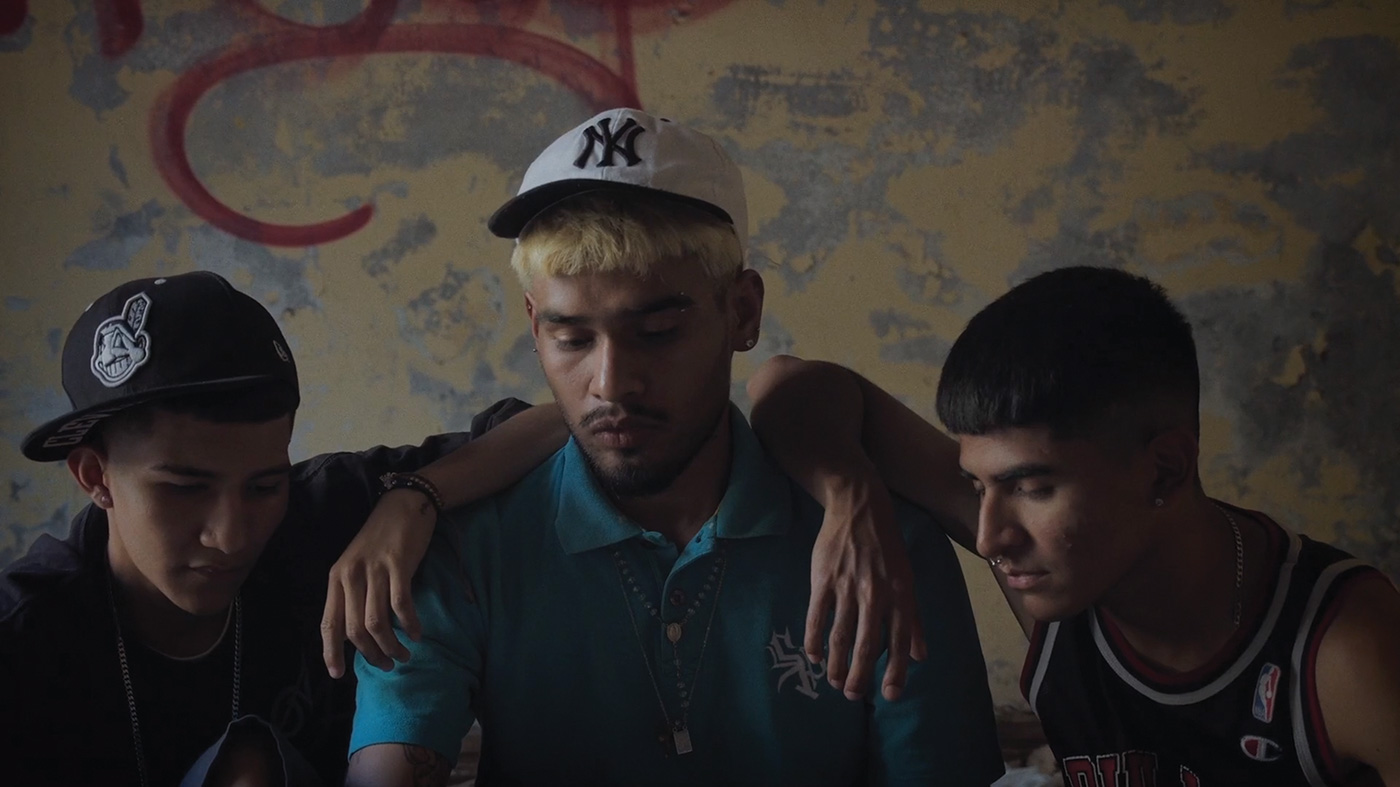
Un oiseau kamikaze qui s’est lancé dans un voyage vers un lieu sauvage, sans retour possible. Une représentation de l’état de violence débordante engendrée par le narcotrafic, à travers la vision onirique d’un adolescent marginal recruté par un cartel.
Mauricio Sáenz (né en 1977, Matamoros, Mexique) est un artiste visuel dont la pratique englobe l’installation, la sculpture et la vidéo. Son travail explore les limites de l’impossible en tant que moteur actif de transformation, à travers des notions telles que l’isolement, l’enfermement, l’incertitude et la mémoire historique. Il est titulaire d’un master de l’Université polytechnique de Valence, en Espagne, et a présenté son travail au Museo de Arte Carrillo Gil et au Foto Museo Cuatro Caminos à Mexico, à la Galerie Art Virus à Francfort, ainsi qu’à la Jonathan Ferrara Gallery à La Nouvelle-Orléans. Ses œuvres ont également été montrées dans des festivals de vidéo-art tels que Proyector et MADATAC en Espagne, Traverse et Instants Vidéo en France, ou encore FIVA en Argentine, parmi d’autres.

Mauricio Saenz
Meteorito
Film expérimental | hdv | couleur | 15:0 | Mexique | 2018
Les hommes-oiseaux souffrent de chutes mystérieuses dans la recherche de l'endroit où le soleil se lève. A travers des épisodes où la frontière entre la réalité et la fantaisie s'estompe, ces personnages parcourent à la fois le céleste et le terrestre avec un seul objectif: mourir pour générer la vie. L'impulsion obsessionnelle à tomber pour féconder se situe entre un récit scientifique et des mythes d'origine mésoaméricaine qui entremêlent les actions suscitées par plus qu'une force de gravité, conduisant à des défaillances poétiques et visuellement suggestives. Ce travail de docufiction ouvre un dialogue de coexistence entre la vie et la mort qui fusionne la représentation d?un phénomène naturel avec un rite millénaire à travers une réalité altérée.
Mauricio Sáenz (b. 1977, Matamoros, Mexico) is a visual artist and filmmaker with a practice between experimental and docufiction. Meteorito, his first film, is a short that opens a dialogue of coexistence between life and death by fusing the representation of a natural phenomenon with a millenary rite through an altered reality. He obtained a master?s degree in artistic production from the Polytechnic University of Valencia in Spain and has exhibited his audiovisual work in festivals such as International Film Festival Rotterdam, Ann Arbor Film Festival, Stuttgarter Filmwinter and European Media Art Festival in Germany where he was also nominated for the Dialogpreis of the German Ministry of Foreign Affairs. He was recently nominated for the LOOP Discover Award in Barcelona for outstanding international video artists.

Mauricio Saenz
The Origin of Stones
Vidéo expérimentale | hdv | couleur et n&b | 4:53 | Mexique | 2016
“ The origin of stones ” questions the ideals of the past and their validity in the present through the decay and fall of monuments built to preserve a historic memory. With a text based on a debate that puts in doubt the efficiency of a scale used to document the proportion and appearance of archaeological remains, this work looks to ruins as elements of live content linked to the present and emphasizes the powerful yet fragile nature of the narratives of history. Thus, it mirrors the impossibility to imagine the promises of a future on the ruins of the recent past, representing in this way a model of a fallen utopia.
Mauricio Saenz (b. 1977, Matamoros, Mexico) is a visual artist and filmmaker with a practice between experimental and docufiction. He obtained a master`s degree in artistic production from the Polytechnic University of Valencia in Spain and has exhibited his audiovisual work in festivals such as Stuttgarter Filmwinter and European Media Art Festival in Germany where he was also nominated for the Dialogpreis of the German Ministry of Foreign Affairs. He was recently nominated for the LOOP Discover Award in Barcelona for outstanding international video artists.

Niyaz Saghari
The Tigger of the Cone
Film expérimental | super8 | noir et blanc | 2:22 | Iran | 2016
A Visual experimentation with the dadaist poetry of Ali Sarandibi which juxtaposes the outer, urban life in Tehran with the inner, softer life of its inhabitants
Niyaz Saghari is an Iranian born,UK based documentary maker. Her work is focused on the urban life in her home town of Tehran and Bristol where is based .

Niyaz Saghari
The Stairs, The Suitcases and The Grand Hall of Books
Doc. expérimental | super8 | noir et blanc | 6:2 | Iran | 2019
The poet Ali Sarandibi takes us to an experimental journey in to his work place in The Grand Hall of Books (Tallar Ketab) in Enghelab street in Tehran,best known for its bookshops and Tehran University.The sound bites from the shopkeepers tell the story of the arcade and how their work condition has changed lately.
Niyaz Saghari is an Iranian born,UK based documentary maker. Her work is focused on the urban life in her home town of Tehran and Bristol where is based.She is mainly focused on using super 8 format and using echo developing methods specially Caffenol. She is a member of BEEF (Bristol Experimental Expanded Film) collective.

Niyaz Saghari
Ripple Effect
Doc. expérimental | 0 | noir et blanc | 9:0 | Allemagne, Royaume-Uni | 2023
The diver plunges into the sea (death), but also into life (eternity), where he will rediscover the primordial waters of life. This quote from Pierre Lévêque about the illustrations in Tomb of the Diver resonated when I watched the viral video of a young man who was executed in Iran in 2020.Few days after his death, the grainy mobile video of him was released .He ran in slow motion and dived in a pool. I watched the wave of his hands, the kick of his foot and crossing the border between air and water just as he leaped beyond fear when he spoke the truth, transitioned from life and became eternal in people’s memory. Like an act of preservation, I filmed the video with a super 8 camera. The camera became a tool of magnifying and grieving. 3 years later, men and women still chant his name in protests. Like the waves after a dive, injustice has a ripple effect.
Niyaz Saghari is a Bristol based filmmaker. Graduating from Film Directing from Art University of Tehran ( Iran), she continued her studies on the MA Animation at Newport. Besides following professional work in animation, she has been directing short documentaries and making experimental films.

Rijin Sahakian
Sada [regroup]
Doc. expérimental | digital | couleur | 54:0 | Iraq | 2022
From 2011-2015, Sada, an online and in person ad hoc art school, was set up in Baghdad to support artists working through the aftermath of US-led invasion and occupation. Nearly a decade later, former artists of Sada came together again, reflecting on their creative and disparate lives since that time. Artists Sajjad Abbas, Bassim Al Shaker, Ali Eyal, Sarah Munaf, and Rijin Sahakian each created video works, comprising one experimental, interconnected anthology film on individual and collective art practice in a protracted era of international warfare.
Sajjad Abbas is a multidisciplinary artist. Born in Baghdad, he graduated from the city’s Institute of Fine Arts in 2014. Since 2011, Abbas has created many graffiti works in Baghdad and has worked on almost ten films in the art department at the Iraqi Independent Film Center, where he was also a student. In addition to videos and films, he has completed two independent animation films. In his work, Abbas both creates and participates in political and social satire, protest, and community activism. Ali Eyal was born in The Forest, Small Abandoned Farm. He lives and works in no home yet. After earning a diploma from the Institute of Fine Arts, Baghdad in 2015, he studied from 2016 to 2017 at the Home Workspace Program, an independent study program launched by Ashkal Alwan in Beirut, Lebanon. Eyal’s work explores the complex relationships between personal history, transitory memories, politics, and identity, using a variety of mediums, with a focus on drawing transformed through other artistic modalities, such as text, installation, photography, and video. Sarah Munaf graduated from the Baghdad College of Fine Arts, Baghdad University in 2011, with a focus on sculpture and painting. She completed an MA in Sculpture in 2013. Her work explores form as one part of Iraq’s long history of production and formal education, and experiments with new forms of composition and storytelling. Munaf uses everyday objects as holders of history and as vehicles for a range of communal and personal experiences. She lives and works in Turkey. Rijin Sahakian (b. Baghdad, 1978) uses writing, art-making, and teaching to examine the relationship of images and rhetoric to experiences of violence. She founded Sada, an arts education initiative for Baghdad-based students, operating from 2010-15. Sahakian has lectured extensively on critical issues in the arts, organized public exhibitions and seminars, and was a visiting professor at the California Institute of the Arts. A Fulbright, ArtMatters and Open Society Foundation Fellow, she has contributed texts to e-flux Journal, n+1, Artforum, Mutanabbi Street Starts Here, Warscapes, and World Records Journal. Bassim Al Shaker is an Iraqi artist based in the United States. Bassim was born and raised in Baghdad during a period of political conflict and humanitarian torment. He received a BFA from the Baghdad College of Fine Arts, Baghdad University with a focus on drawing and painting. His style is the culmination of a background in academic drawing and painting techniques and the exploration of contemporary art. Bassim obtained an MFA from the School of the Art Institute of Chicago.

Eléonore Saintagnan
Une fille de Ouessant
Documentaire | 0 | couleur et n&b | 27:58 | France | 2018
L`île d`Ouessant est la plus à l`ouest, tout au bout de la pointe de la Bretagne. La dernière terre française avant l`Ame?rique... Autrefois, les hommes y travaillaient tous en mer, pour la pêche ou dans la marine, et de ce fait l`île e?tait peuple?e presque uniquement de femmes. En immersion sur cette terre, Eléonore Saintagnan plonge dans les archives, et dans un flottement entre rêve et re?alite?, s`identifie à Barba, une fille de Ouessant, dont le père a disparu en mer sans laisser de traces. Comment alors faire son deuil? Entre film de vacances, documentaire anthropologique et fiction, Une Fille de Ouessant prend la forme d`un conte ethnographique.

Eleonore Saintagnan
Un film abécédaire
Doc. expérimental | dv | couleur | 21:0 | France | 2009
Le Parc Naturel Régional des Ballons des Vosges et les habitants de ses villages. Ce film est un hommage à des individus qui vont chercher le bonheur en dehors des sentiers battus, là où n?est pas l?évidence. Ceux qui croient encore en quelque chose, qui alimentent leurs mythes et adorent leurs dieux, qu?il s?agisse des Dieux Vikings ou du Rock?n Roll, en passant par Saint Nicolas et frère Joseph.
Éléonore Saintagnan, née le 31 décembre 1979 à minuit, vit et travaille entre Bruxelles et Paris. Sa formation s`étend des arts plastiques au cinéma documentaire en passant par le film d`artiste, ayant entre 2002 et 2006 obtenu un DEA en Arts plastiques à Paris 1, puis un Master en Réalisation de film documentaire à Lussas ? L`école du Doc, et enfin le concours du Fresnoy ? Studio National des arts contemporains pour deux ans de formation audiovisuelle. Cette artiste vidéaste et/ou cinéaste réalise des ?uvres à mi-chemin entre réalité et fiction, document et expérimentation, dressant souvent les portraits d`individus pris au naturel, paraissant pourtant être mis en scène. Sa dernière ?uvre, Un film abécédaire, fût sélectionnée au 55ème Salon de Montrouge 2010 et a reçu le Prix du commissaire artistique pour la prochaine Biennale de la Jeune création contemporaine. Elle collabore sur plusieurs projets avec l`artiste Grégoire Motte. Son travail est régulièrement présenté en projection ou en exposition.

Azar Saiyar
Mun Koti
Doc. expérimental | 16mm | couleur et n&b | 12:0 | Finlande | 2022
"A bee stung me on my finger. It happened yesterday in the yard of a kindergarten, even though I am not in kindergarten anymore.” Fragmented memories of childhood and adulthood blend together in a song that an unknown narrator is humming.
Azar Saiyar (b. 1979) is filmmaker and visual artist whose art has been shown at film and media art festivals (e.g. Berlinale Forum Expanded, DOK Leipzig, Rencontres Internationales Paris/Berlin), galleries, exhibitions, museums and on television. She often uses archive materials and plays with images and words of our collective memory.

Azar Saiyar
Monument of Distance
Vidéo | hdv | couleur | 6:57 | Finlande | 2018
Googoosh, a popular and loved Iranian-Azerbaijani singer, performs a version of the song Ayrılıq – Separation. The performance is from a 1970s television show and it has been copied several times from one videotape to another. Ayrılıq could be a love song but it is told that composer Ali Salimi (who as a young man had to leave Soviet Azerbaijan, move to Iran and leave many of his loved ones behind) wanted to make music about his sense of longing.
Azar Saiyar is Helsinki-based filmmaker and visual artist whose art has been shown at film and media art festivals, galleries, exhibitions, museums and from television. Currently she is working with a short film project called The Story of a Badly Behaving Child and Monument of Distance – a found footage piece on immigration and memory. She often uses archive materials and plays with images and words of collective memory to look towards the ways of looking, speaking, remembering, growing, conforming and telling stories. She also does collaborative works with other artists.

Manuel Saiz
Buffer
Art vidéo | | couleur | 3:0 | Espagne | 2008
Le terme « buffer » (tampon) est utilisé dans la technologie informatique pour définir un espace de mémoire dans le quelle l'information est stockée, en attente d?un processus ou d?un transfert. Le « buffer » reçoit l'information de manière désorganisée et abrupte et la redistribue en des paquets bien ordonnés, aptes à être facilement manipulés. Le film décrit le fonctionnement d?un dispositif architectural en train d'exécuter métaphoriquement cette même fonction, et d?ordonner des êtres humains comme de simples données par l'intermédiaire de du déplacement physique dans l'espace. Ce mécanisme se réfère à des situations de la vie quotidienne dans lesquelles la population des grandes villes interagit avec les services publics. La sculpture représentée montre la structure de base de ces situations. Les visiteurs qui font l?expérience de cette ?uvre sentiront une excitation mécanique et répétitive proche de l'aliénation.
Manuel Saiz est un artiste visuel basé à Londres. Depuis le milieu des années 1980, il a exposé ses des sculptures, photographies et vidéos dans des galeries d'art et des musées du monde entier. Depuis 1995, il travaille principalement avec la vidéo et les installations vidéo. Ses créations ont été présentées dans de nombreux festivals de films d'art et de vidéo, notamment Impakt à Utrecht, VideoLisboa à Lisbonne, Videoex à Zurich, Int. Kurz Film Fest, à Hambourg et Transmediale à Berlin, entre autres. Ses installations vidéo ont été présentées dans des galeries et des espaces publics du monde entier. Parmi ses expositions récentes, signalons notamment « Parallel Universes » à la Galerie Moriarty de Madrid, « Nominal Politics » au T1+2 Space de Londres, ainsi que l?exposition collective « East End Academy » au Whitechapel de Londres ou « Save the Day » au Kunstbüro de Vienne. Son court-métrage « Being Luis Porcar » a reçu le premier prix de l'Internationale Kurzfilmtage de Winterthur.