Catalogue > Faire une recherche
Résultats pour : Tout le catalogue

Masbedo
Pantelleria
Vidéo | digital | couleur | 20:0 | Italie | 2022
Between 9 May and 11 June 1943, the island of Pantelleria was violently bombarded by the Allied troops in the first operation to reconquer Italian soil. Residents recall that, after the surrender, some of the buildings were blown up for the cameras of a propaganda combat film. Pantelleria traces the memories of this event in the local collective consciousness and looks at the contemporary implications of an episode that took place in the shadow of official history. Through a two-years long participatory process with the residents, the film explores the tension between the truth and its ideological distortion, and between the reality of the bombs and their telling through images. The Nervi hangar, a symbol of Mussolini’s militarisation of the island, is now shown empty and inhabited by a magical animal presence. Extracts from the combat film are projected onto the buildings of today’s Pantelleria, while the camera travels through the bunkers dug by the Italian army. The voiceover, written and read by writer Giorgio Vasta, gives expressive form to the island’s stories, while the sound by GUP Alcaro and Davide Tomat distorts the recordings of the local orchestra Spata, finding in dance music a space for the reactivation of the past, and liberation in the present.
MASBEDO is an artistic duo formed by Nicolò Massazza and Iacopo Bedogni. They have been working together since 1999 and they currently live in Milan and Piacenza (Italy). Different artistic languages such as video, installation, cinema, performance, theater, and sound design coexist in their work. They are interested in emotional and intense narratives that delve into the depths of human relationships and the complex subjectivity of the contemporary individual. They have identified the relationship between cinema and art as a preferred area of investigation, which they approach with an attentive gaze to both socio-anthropological elements and the most intimate and poetic ones. MASBEDO’s works have been exhibited in international institutions such as: Manifesta 15 Barcelona; Centre Pompidou-Metz; CCCB Centre de Cultura Contemporània de Barcelona; Fondazione ICA Milan; MAMM Multimedia Art Museum Moscow; Manifesta12 Palermo; Hong Kong Arts Centre; Fondazione Merz; Leopold Museum Wien; MAXXI Rome; Centre Pompidou/Forum des Images Paris. Among others, their short and feature films have been shown at: Venice International Film Festival; Locarno Film Festival; CPH:DOX; FIFA – Festival International du Film sur l’Art Montréal; Villa Medici Film Festival Rome; Sharjah Film Platform; Walter Reade Theater, Film Society of Lincoln Center, New York; Lo schermo dell’arte, Florence, IFFR-International Film Festival Rotterdam.

Masbedo
Condivisione di un ricordo
Vidéo | mp4 | couleur | 13:13 | Italie | 2020
La grande projection vidéo mise en place fait écho au documentaire "Condivisione di un ricordo": cette œuvre présente l'opération qui s’est déroulée à Bergame et dans les communes du Val Seriana pendant l'été, et au cours de laquelle de nombreuses affiches reproduisant le tableau de Pellizza ont été exposées, grâce à la participation de personnes rencontrées par les artistes.
Les deux artistes travaillent ensemble depuis 1999, se concentrant sur l'art vidéo et les installations. Ils s'expriment à travers le langage vidéo, et sous différentes formes telles que la performance, le théâtre, l'installation, la photographie et récemment le cinéma. En Italie, ils sont reconnus parmi les principaux artistes vidéo et innovateurs en art contemporain. Leur recherche artistique s'est concentrée sur le thème de l'incommunicabilité, soulignant le paradoxe de notre société de communication. Cela les a amenés à produire des pièces très intimes, ainsi que des œuvres à caractère plus anthropologique, social et politique. Ils s'efforcent d'impliquer leur public, en utilisant les images en mouvement comme une installation immersive. MASBEDO a également exploré la vidéo-performance, afin d'impliquer son public dans l'espace créatif et dans les gestes créés par la vidéo elle-même.

Ignacio Masllorens
Caudal
Vidéo | 35mm | noir et blanc | 11:0 | Argentine | 2023
A flow of images, each from a different movie, connected to each other based on certain criteria. Insert shots that were born to be mere appendages of more important ones. Anonymous images that now have a second chance and create another narrative. One that has no plot, no characters, no motive, but still runs irresponsibly to nowhere. A stream of pure moving cinema.
Ignacio Masllorens is an independent Argentine film director, producer and editor. He graduated from the University of Buenos Aires, where he currently works as a teacher. His films have been shown at Anthology Film Archives, Cinémathèque Française, Filmmuseum München, ArcoMadrid Art Fair, Museo de Arte Latinoamericano de Buenos Aires, Fundación Fortabat, Fundación Klemm and many international film festivals.
Monika Maslon
Control Negative
VR expérimental | 0 | couleur | 40:0 | Pologne | 2022
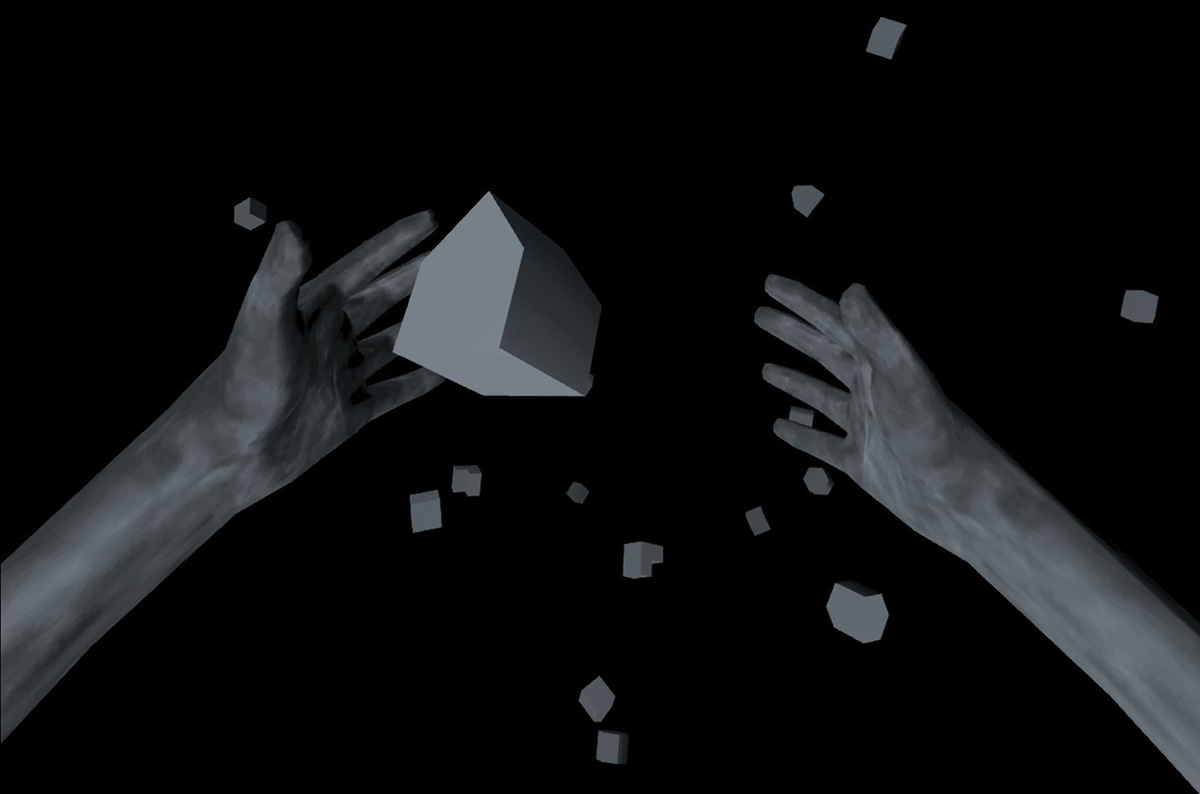
The CONTROL NEGATIVE experience is an exercise in a loss. Using VR technology, author Monika Mas?o? situates the viewer in an emotional state where frustration, helplessness, anger, and sadness are used to reveal basic human assumptions, including the illusory conviction of being fully in control of one's own life. The unreal world of the experience — a negative version of the real world — is a training space where you can better understand yourself and your emotions. The user is guided through seven chapters, which gradually move from physical activity to contemplation.
Dr. Monika Maslon (born 1982) - visual artist and art educator. She graduated from the Academy of Fine Arts in ?ód? and Ph.D. studies at the Film School in ?ód?, where she completed her Ph.D. thesis entitled “Do zobaczenia” (See you), under the supervision of Prof. Józef Robakowski. She is a lecturer at the University of Leipzig and the Maria Grzegorzewska University in Warsaw where she conducts classes with the students of the department of Arts education in fine arts. In 2014 she stayed at an artistic residence in Singapore, where she made an artistic project called “Comfort of Long-Distance Perceiving”. In 2016 she implemented the project “Template - a tool to learn how to use an image”, as a part of a scholarship awarded by the Ministry of Culture and National Heritage. The scope of her art activities is manifested mainly through realizations based on audiovisual material. She participated in numerous exhibitions and shows. She is the author of the VR experience - CONTROL NEGATIVE.

Valérie Massadian
America
| | | 6:57 | France | 0
One Place One Boy One Day One Shot One Wheel of Film

Valérie Massadian
Nana
Fiction expérimentale | hdv | couleur | 68:0 | France | 2011
...
It's through photography, and notably her collaboration with Nan Goldin, that Valerie Massadian came to image-making,Creating slide- show screenings (The Link, Mary Go Round, Journal de Bord), exhibited in Tokyo, London and Porto. What she has retained from photography is its freedom and the rigor of frontal contact. She has taken this same approach, committing to a project from concept to completion, in her collaborations with several film directors. From there came the need of her own film, NANA, which won the Price for Best First Feature Film at the Locarno Film Festival 2011, as well as the Price for Best International Feature Film at the Festival Internacional de Ciné de Valdivia.

Guy Massaux
La selva oscura
Fiction expérimentale | 4k | couleur | 19:0 | Belgique, Italie | 2018
La Selva oscura (La forêt obscure) film/vidéo, texte de Dante Alighieri, La Comédie, L’Enfer, Chant treizième (XIII) Préambule: Dans la forêt des suicidés, Dante et Virgile croisent deux formes humaines qui fuient devant eux, arrachant tout sur leur passage et brutalisant ainsi elles-mêmes leur chair jusqu’à ce que des chiennes faméliques (Harpyes) les rejoignent et les dépècent. Tel est le châtiment de ceux qui ont péché contre eux-mêmes par dissipation. Synopsis: Par une nuit obscure, A. et D. progressent, séparément, dans une forêt où nul sentier n’indique le chemin à suivre, où aucune issue ne se présente à eux. Ils se sont égarés, la forêt les retient. Ils surgissent de l’obscurité, débusqués par les éclairages qui les aveuglent. Un face-à-face s’installe entre eux et la forêt, à la présence des arbres répondent leurs propres regards et voix. A. s’est levé, D. de même, résonnent en eux les aboiements d’une meute de chiens qui progressivement se rapproche. Une course-poursuite est engagée où toute issue leur sera fatale.
Guy Massaux est artiste visuel, curateur d’exposition, professeur d’art à l’Académie des beaux-arts de Bruxelles. Après avoir consacré son travail d’artiste principalement à la peinture, il oriente, depuis plusieurs années, ses préoccupations de création autour de l’image en mouvement par l’écriture cinématographique, notamment à travers des dispositifs de vidéo-installations. Il a réalisé plusieurs courts métrages en langue italienne, La Selva Oscura (2018), Il Rifugio (2014) et "B.", film en cours de post-production (2020). Il partage ses principales activités et son emploi du temps entre l’Italie et la Belgique. Il collabore régulièrement avec Mirco Mencacci ingénieur du son. Créateur des univers sonores de films italiens tels que « Le Regard de Michel Ange (Lo Sguardo di Michelangelo) » de Michelangelo Antonioni, « Nos meilleures années (La Meglio gioventu)» de Marco Tullio Giordana ou encore «La Fenêtre d’en face» (Facing Windows) de Ferzan Ozpetec. Pour ses créations, il travaille sur une nouvelle manière de diffuser le son et développe le système du « son sphérique », utilisé pour la première fois dans le film « Le Regard de Michel Ange ».

Sabine Massenet
Patricia
Doc. expérimental | dv | couleur | 10:0 | France | 2012
Tout commence par une simple carte où est portée l?inscription « Si vous trouvez cette image veuillez écrire à l?adresse suivante? » . Sabine Massenet dépose ses messages énigmatiques comme d?autres jettent des bouteilles à la mer. Glissées au hasard des livres d?une dizaine de bibliothèques de Seine-Saint-Denis, ils sont le départ d?une aventure à la rencontre de lecteurs anonymes.
Sabine Massenet est vidéaste. Elle est née en 1958, vit et travaille à Paris. En 1997, après avoir travaillé différents médiums (terre, plâtre, photo) pour créer des installations auxquelles elle associait parfois des éléments narratifs, Sabine Massenet décide de se consacrer uniquement à la vidéo. Elle explore le portrait avec une ouverture sur le langage et sur la résonance des images dans la mémoire collective ou privée. Elle pratique également le recyclage d?images télé ou de cinéma, qu?elle ?re-monte? en se jouant des codes visuels propres à ces deux médiums. Elle obtient la bourse d?aide à l?art numérique de la SCAM 2003 pour «361° de bonheur», co-édition Incidences / Vidéochroniques. Elle crée aussi des vidéos pour le théâtre, et réalise également une des vidéos de la Maison Rimbaud à Charleville Mézières en 2005. Ses vidéos sont présentées régulièrement dans des festivals français et étrangers, centres d?art, musées. Des séances monographiques lui ont été consacrées en 2004 à la Cinémathèque Française, en 2005 au festival Némo et au Jeu de Paume, en 2009 au festival des Scénaristes à Bourges. Sa vidéo « Transports amoureux » est édité dans le n°1 de la collection TALENTS. L?ensemble de ses vidéos sont distribuées par Heure Exquise.

Agnieszka Mastalerz
NMSNNG
Installation vidéo | digital | couleur | 15:39 | Pologne | 2022
The video work "no mental scars, no nursed grudges," 2022, presents two young acrobats creating figures together — the older girl becomes a support for the younger one. There is also a pose performed by the younger girl individually, however on an object, which is the handstand canes. All the exercises are recorded with two cameras, one of which is fixed on a large bolt. The robot observes and analyses girls' movements in close-ups and slow motion, in order that all their gestures and strains are detectable. This anthropomorphic machine becomes a character itself — it is visible in the distance shots performing a choreography. The title of the work comes from Zygmunt Bauman's "From Pilgrim to Tourist – Or A Short History of Identity," from the passage "The Player."
Female visual artist based in Warsaw. Graduate of the Studio of Spatial Activities by Miros?aw Ba?ka at the Academy of Fine Arts in Warsaw (2018), former student of Candice Breitz and Eli Cortiñas at the HBK in Braunschweig (DAAD scholarship for 2019/20), guest by Adam Broomberg and Oliver Chanarin at the HFBK in Hamburg (2017/18). Her main focus is mechanisms of control and processes influencing and exploiting an individual. She uses poetic visual language to analyze restrictive rules established within intimate relationships, communities, states, or companies, and towards the natural environment. She exhibited in MOCAK – Museum of Contemporary Art in Krakow, eastcontemporary gallery in Milan (2022), Fabbri Schenker Projects in London, MAXXI – National Museum of 21st Century Art in Rome, Center for Contemporary Art Luigi Pecci in Prato (2021), Wschód gallery in Warsaw (2020), Palazzo Strozzi in Florence, Starak Family Foundation in Warsaw (2019), Deichtorhallen in Hamburg, Fondation Hippocrène in Paris (2018), Museum of Modern Art in Warsaw (2017 – laureate of the Hestia Artistic Journey Competition). Agnieszka was a resident of Hospitalfield in Scotland (2022), Muzeum Susch in Switzerland, the Artists Development Program at the EIB Institute in Luxembourg (2021), and Futura gallery in Prague (2020, Visegrad Fund). She participated in the Lucy Art Residency public program in Kavala (2022) and in the School of Expressions in PLATO Ostrava (2019). Works of her are in Fondazione in Between Art Film by Beatrice Bulgari, Ergo Hestia Group, and European Investment Bank collections, as well as in private ones. Represented by eastcontemporary gallery in Milan.

Agnieszka Mastalerz
Nodes
Vidéo | digital | noir et blanc | 3:16 | Pologne | 2023
Nodes is a project analyzing spells as an example of control over another being. I focused on the violence of persuading somebody to fall in love. I have been considering casting a spell as an influential but not direct act for which specific tools or gestures might be needed. I chose orchids whose roots were used to influence another person, both when it comes to feelings and sexual activity. In the areas of today’s Poland and Italy, dried wild orchid roots were hidden under somebody’s clothes, or an orchid-based powder was added to goat milk which was supposed to help sexual arousal. On the contrary, nowadays, in a huge industrial space, hundreds of almost identical orchids run through a commercial line. Although the production is highly mechanized and managed by technology, the final sculptural touch on every flower goes through the working hands of females — they manually shape this organic material by adding artificial backbones and cutting off the rotten parts. The women use this intimate act to fit the normalized aesthetics. With Nodes, I am bringing attention to the powerful operations both in private and industrial environments by looking at the human element in them.
Female visual artist based in Warsaw. Graduate of the Studio of Spatial Activities by Miroslaw Balka at the Academy of Fine Arts in Warsaw (BA, MA, 2018), former student of Candice Breitz and Eli Cortiñas at the HBK in Braunschweig (Deutscher Akademischer Austauschdienst (DAAD) Scholarship for 2019/2020), and a guest by Adam Broomberg and Oliver Chanarin at the HFBK in Hamburg (2017/2018). She also obtained her BA in Cultural Studies at the University of Warsaw (2013). Currently participant of the Autumn Intensive at the Malmö Art Academy. She exhibited with Catinca Tabacaru Gallery at the Goethe Institut in Bucharest (2024), NS-Dokumentazionszentrum in Munich (2023), MOCAK – Museum of Contemporary Art in Krakow, Manifesta 14 Prishtina, eastcontemporary gallery in Milan (2022), Fabbri Schenker Projects in London, MAXXI – National Museum of 21st Century Art in Rome, Center for Contemporary Art Luigi Pecci in Prato (2021), Wschód gallery in Warsaw (2020), Palazzo Strozzi in Florence, Starak Family Foundation in Warsaw (2019), Deichtorhallen in Hamburg, Fondation Hippocrène in Paris (2018), Museum of Modern Art in Warsaw (2017 – laureate of the Hestia Artistic Journey Competition), and TRAFO Center for Contemporary Art in Szczecin (2016). Art fairs include NADA Villa Warsaw (2024), Artissima, and Arco Madrid (2021). Agnieszka Mastalerz was a resident of Hospitalfield in Scotland (2022), Muzeum Susch in Switzerland, the Artist Development Program at the EIB Institute in Luxembourg (2021), and Futura gallery in Prague (2020, Visegrad Fund). She participated in the Lucy Art Residency public program in Kavala (2022) and in the School of Expressions in PLATO Ostrava (2019). She is a laureate of M?oda Polska scholarship for 2024. Works of her are in Fondazione in Between Art Film by Beatrice Bulgari, Ergo Hestia Group, European Investment Bank, and Warsaw Ghetto Museum collections, as well as in private ones. Since 2021, Mastalerz is represented by eastcontemporary gallery in Milan.

Pilar Mata Dupont
Mountain
Fiction expérimentale | hdv | couleur | 8:11 | Australie, Allemagne | 2015
Sigmund Freud and a Tyrant take a journey together on a boat into the mountains. My video work, ‘Mountain’, investigates Sigmund Freud’s connection to the neighbouring villages of Berchtesgaden and Schönau am Königssee, in Bavaria, Germany, where he often spent his holidays between the late 1800s and 1929. In a rented house in Schönau, Freud wrote his seminal work ‘The Interpretation of Dreams’ in 1898. The region is infamous as the base for the National Socialists. Hitler and Freud are reported to have been in the small village of Berchtesgaden at least twice in the 1920s at the same moment, a relatively unknown historical fact. In making ‘Mountain’, I have explored theories Freud examined in Group ‘Psychology and the Analysis of the Ego’ (1921), specifically his theories about mass psychology and the supplantation of the super-ego with the will of the Tyrant. His personal connection to the historical character of Hannibal, and neurosis about reaching Rome, alluded in ‘The Interpretation of Dreams’ (1899), are also reflected in the work. The footage was taken from a boat launched at Schönau am Königssee steered through the mountains to St Bartholomew. This trip was one Freud did almost daily, in a wooden boat rowed by ‘four strong local women’, while on holiday in the region.
Pilar Mata Dupont is an Argentinean/Australian artist based between Australia and the Netherlands working in video, installation, performance, and photography. Using highly theatrical and cinematic methods, she uses allegory and narrative to reimagine/rework histories and classical texts, and aims to create alternative readings that question the conditions of the construction of dominant narratives that shape history. In 2015, she won the Plymouth Contemporary Open in the UK, and the Wexner Center for the Arts residency prize at the ‘19th Contemporary Art Festival Sesc_Videobrasil’ in São Paulo. Her solo exhibition, ‘Kaiho’, opened in the Rappu space at the Pori Art Museum, Finland in 2014. Other recent exhibition highlights include the ‘SeMA Biennale – Mediacity Seoul’, at the Seoul Museum of Art and ‘Salon Fluchthilfe’, at Secession in Vienna and Württembergischer Kunstverein, Stuttgart. In 2012 she was a recipient of a Mid-career Fellowship from the Western Australian Government. In collaboration with Tarryn Gill, she participated in the Sydney Biennale and won the Basil Sellers Art Prize in 2010, and as part of collective Hold Your Horses, she made work commissioned by the Akademie der Künste in Berlin in 2012 for the exhibition ‘Wagner 2013: Künstlerpositionen’.

Jonas Matauschek, Culurgioni, Emerson
Leuna
Doc. expérimental | hdv | couleur | 13:0 | Allemagne | 2013
In the course of one day, the flm follows various characters in their local environment, which is infuenced by the presence of an industrial plant. Their individual sights tell about the relation between human being and industry.
Jonas Matauschek 1987 born in Dresden, Germany 2007 – 2014 studies of photography at the Academy of Visual Arts, Leipzig since 2015 Meisterschüler in the class of Prof.Peter Piller, Academy of Visual Arts, Leipzig Emerson Culurgioni 1986 born in Munich, Germany 2007-2009 studies of visual communication at the Free University of Bolzano 2010 - 2014 studies of media art at the Academy of Visual Arts, Leipzig currently Meisterschüler in the class of Prof. Clemens von Wedemeyer, Academy of Visual Arts, Leipzig

Leri Matehha
Tears will remain
Documentaire | hdcam | couleur | 13:0 | Estonie, Ukraine | 2022
Bakhmut, a small city in East of Ukraine, becomes an example of the dichotomy between the Soviet past and the present times. Until it finds the culmination of cultural and political borders in one product: the Soviet Champagne. The precarious, war-driven landscape and the dreams of financial stability dissolve in the remains of the leisure culture from the past.
Leri MATEHHA (b. in Tallinn, Estonia) is an Estonian-German artist and filmmaker. She studied Philosophy and Scandinavian studies before graduating from the Academia of Media Arts in Cologne, Germany with an emphasis on media theory and cinema. Her films and video works have been exhibited and awarded internationally. 2020 she received a development grant by the Wim Wenders Foundations for her debut „W“. 2021/22 she was working as a postgrad researcher in Tel Aviv, Israel with the DAAD grant. She lives and works between Germany, Estonia and Israel.

Ramon Mateos
HERRAMIENTAS DE CONSTRUCCION NACIONAL I
Vidéo | | couleur | 1:59 | Espagne | 2009
We live in a globalized world where national and supranational identity has been subsumed by the value and brand image; A world in which politics is written in capital letters on the desks of major companies and ends endorsed in the areas of representation of popular will: the parliaments, with the essential and necessary support of the media, which, in turn, are part of the fabric of these same corporations. However, it is a historical reality, the search for differentiation with respect to the other, from a political and socio-cultural. Today we can hardly distinguish the discourse of national identity distinct of riots, revolts and terrorism, for the sake of a flawed and corrupt information that is confusing the part with the whole in a universal metonymy, and that is where this project address. NATIONAL BUILDING TOOLS is formalized in video format that work as a manual that relates ideological instruments and tools, used to reaffirm a hypothetical national identity, using the techniques and applications specific to the media.
Ramón Mateos. (Madrid1968) Works and lives in Madrid. Graduated from the Faculty of Fine Arts ofthe Complutense University, Madrid. He has participated in numerous solo and group, nationals and internationals exhibitions, and his work is in major public and private collections. Founder and component, until its dissolution in 2006, of the ?EL PERRO? art collective. He has participated in: PROYECTO JUAREZ. Ciudad Juarez, Mexico (2007-2009); INTERFERENCIAS, PhotoEspaña 2008, Casa de America, Madrid, 10 th Istanbul Biennial, Istanbul (2007); FRECUENCIAS in 2008 and 2009 for the Cervantes Institute in Morocco
Mateo Maté
Thanksgiving turkey
Film expérimental | dv | couleur | 5:30 | Espagne | 2006
Le concept de camouflage s'est répandu dans presque toutes nos activités sociales. Au cours du siècle dernier, les entreprises ont progressivement acquis un pouvoir qui dépasse celui des Etats et ont inventé la science du marketing qui déguise les objets sous l'apparence du rêve : nous utilisons tous les marques comme une seconde peau pour nous intégrer au groupe social auquel nous voulons appartenir. Les produits que nous utilisons ne reflètent pas ce que nous sommes mais ce que nous voulons être ou simplement ce dont nous voulons avoir l'air. Le pouvoir économique s'est emparé du sens du mot vision qui signifiait jusqu'à présent "acte notarié de la vérité". Polyespan, Photoshop et la chirurgie esthétique ont fait de notre environnement un parc à thème où les objets, les messages et les corps sont faux. L'expression "Je ne crois que ce que je vois" ne veut plus rien dire aujourd'hui. Nous continuons pourtant à croire ce que nous voyons parce que nous sommes tous des acteurs évoluant sur la même scène, avec des rôles principaux ou secondaires, mais complices à différents niveaux. Le genre militaire s'est aujourd'hui étendu au niveau social. Les grandes chaînes de prêt-à-porter proposent maintenant des motifs camouflage pour l'école ou le travail, l'immobilier prend des airs de bunkers imprenables ou de kibboutz de "territoires occupés", même les véhicules sont contaminés par l'apparence des véhicules blindés. Avec la militarisation totale de nos frontières qui s'est faites sous prétexte de sécurité, nous sommes tous prêts pour une mobilisation générale. Nous ne savons pas quand et où naîtra le conflit, mais nous devons nous tenir prêt. Dans "Thanksgiving Turkey", un général harangue ses troupes et leurs fournit des instructions détaillées grâce auxquelles les soldats pourront, au cours d'un dîner mémorable, conquérir les invités avec la recette de la délicieuse et magistrale "Thanksgiving Turkey" (dinde de Thanksgiving). Mateo Maté, 2007
MATEO MATÉ Born in Madrid (Spain), 1964. Lives and works in Madrid (Spain) www.mateomate.com m.mate@mateo mate.com SOLO EXHIBITIONS 2007-?Paisajes uniformados?. Centro de Arte de Burgos, CAB. Spain. -?Nacionalismo Doméstico?. Galería Llucià Homs. Barcelona. Spain. -"Thanksgiving Turkey". Galería Trinta, Santiago de Compostela. España. 2006-?Cartografías personales?. Sala CAI Luzán. Zaragoza. Spain. -?Nacionalismo Ibérico?. Fundación Encosta, Lisboa. Portugal. -?Fronteras interiores?. Casa de España, Lima. Perú. 2005 -?Delirios de Grandeza?. Galería Grita Insam. Viena. -?Nacionalismo Doméstico?. Galería Oliva Arauna, Madrid. Spain. 2003 -?Desubicado?. Galería Oliva Arauna. Madrid, Spain. -?Desubicado?. Galerie Six Friedrich & Lisa Ungar, Munich. Germany.
Stephan Mathieu, Mathieu STEPHAN
Radiance
Vidéo expérimentale | dv | couleur | 2:0 | Allemagne | 2005
Un film rapide et sale analogue pour accompagner mon morceau audio "Radiance".
Je suis né en octobre 1967 à Saarbrücken en Allemagne et j?ai passé une bonne partie des années 90 comme batteur professionnel à Berlin. En 1998, je suis retourné à Saarbrücken où je travaille aujourd?hui dans le domaine des arts numériques. Depuis 1999, seize de mes albums musicaux ont été publiés par des labels internationaux. En 2002, le magazine britannique The Wire a voté l?album ²frequencyLib³ parmi les 10 meilleurs albums de musique électronique de l?année. Je crée des installations sonores, graphiques, design et j?ai travaillé comme chargé de cours sur les arts numériques et leur conception à la Royal Academy off Art Göteborg, au Backhaus de Weimar, à la University off Arts and Designs HBKSaar à Saarbrücken et au Merz-akademie de Stuttgart parmi d?autres.

Nonoka Matsuo, Tomi Katz
Empty Shell
Vidéo expérimentale | mp4 | couleur | 4:3 | Japon | 2024
On the day we vanish from the world, what will remain? Fragments, like memories, spread in nature, creating ripples. As we rethink the future with AI's rise and authoritarian values, how will we repent? How will we move forward, unable to live forever? -We focused on creating a sense of déjà vu with a touch of dissonance, like a parallel world, by using unconventional over colors and effects. The focal points and layers were intentionally designed to avoid naturalism.
Nonoka Matsuo and Tomi Katz from Japan. We both graduated from Musashino Art University. We came from different backgrounds —from the fashion field and from art academia. During the COVID period, we decided to collaborate and created an experimental video piece called Temperature Gap. In 2023, we made our first short film Empty Shell, which was selected for several film festivals including Aesthetica, Interfilm Berlin and Teheran international short film festival.
Yuiko Matsuyama
Hana
Film expérimental | 16mm | couleur | 5:30 | Japon | 2004
Dans ce film, Yuiko Matsuyama s'intéresse à la lumière et aux mouvements qui existent à l'échelle microscopique. Elle essaie notamment d'évoquer métaphoriquement une fleur. Pour la réalisation de ce film, elle a procédé à des surimpressions en utilisant la même pellicule à plusieurs reprises. Cette ?uvre réalisée avec de l?encre de Chine est la quatrième d?une série commencée avec Field en 2000.
Yuiko Matsuyama naît en 1972 à Mehime, au Japon. Elle étudie la psychologie sociale à l´école Tsuda et en 1997 commence à réaliser des films. Yuiko vit désormais à Tokyo. Elle fait partie du collectif ISLANDS.
Gordon Matta-clark
Conical intersect
Doc. expérimental | 16mm | noir et blanc | 19:0 | USA, France | 1975
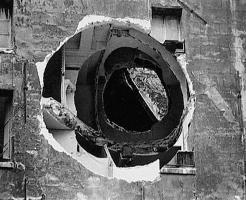
Conical Intersect, la contribution de Matta-Clark à la Biennale de Paris de 1975, manifestait sa critique de l?embourgeoisement urbain sous la forme d?une incision radicale dans deux immeubles adjacents datant du 17ème siècle qui devaient être démolis, non loin du très contesté Centre Georges Pompidou qui était encore en construction à cette époque. Pour cet anti-monument, ou ?nonument?, qui envisageait la poétique de la ruine municipale, Matta-Clark a percé un trou en forme de tornade qui formait une spirale à 45 degrés pour sortir par le toit. Dans l?esprit d?un périscope, le vide offrait aux passants une vue sur les squelettes internes des immeubles.
Gordon Matta-Clark a étudié l?architecture à la Cornell University mais n?a jamais exercé en tant qu?architecte conventionnel. Il a également étudié la littérature française pendant un an à la Sorbonne à Paris et il se trouvait là-bas lors des manifestations étudiantes de Mai 68. C?est à Paris qu?il a découvert les philosophes déconstructionnistes, Guy Debord et les Situationnistes. Ces radicaux, aussi bien sur le plan politique que culturel, ont développé le concept du ?détournement? ou de la ?réutilisation d?éléments artistiques préexistants dans un nouvel ensemble.? Des concepts tels que celui-ci ont inspiré son travail par la suite. On le connaît surtout pour des travaux qui altèrent des structures existantes. Ses ?coupes d?immeubles? (dans lesquelles une maison est coupé en deux sur la hauteur par exemple) altèrent la perception de l?immeuble et de son environnement. Matta-Clark a utilisé bon nombre de media pour décrire son travail, y compris des films, des vidéos et des photos. Son travail comprend des performances et le recyclage de pièces, des travaux sur l?espace et la texture et ses ?coupes d?immeubles?. Matta-Clark utilisait également des calembours et autres jeux de mots pour re-conceptualiser des rôles et des relations pré conditionnées (ce sui était valable dans tous les domaines, allant des relations entre individus à l?architecture). Il a démontré que la théorie de l?entropie s?appliquait au langage aussi bien qu?au monde physique et que le langage n?est pas neutre mais qu?il est bel bien un outil qui porte les valeurs de la société et sert à véhiculer une des idéologies. Matta-Clark est mort d?un cancer du pancréas le 27 août 1978.
Gordon Matta-clark
The Wall (1976-2007)
Art vidéo | 35mm | couleur | 15:4 | USA | 1976
Cette ?uvre récente est une des rares traces de la performance de Gordon Matta-Clark en 1976 à Berlin. Le film s'ouvre sur le texte suivant : "En 1976, dans le cadre de l'exposition "Soho in Berlin" de l'Akademie der Kunst et de la Berliner Festwochen, Gordon Matta-Clark s'est rendu en Allemagne avec l'intention de faire exploser une section du mur de Berlin. Ses amis l'ayant finalement dissuadé d'entreprendre cette action suicidaire, il a réalisé la performance suivante.". Le film montre l'artiste écrire "Made in America" sur le Mur, coller des publicités sur des graffitis et s'empoigner avec la police. Enregistrement remarquable d'une performance peu connue de Gordon Matta-Clark, cette ?uvre constitue également un témoignage d'un paysage politique et physique aujourd'hui disparu.
Gordon Matta- Clark (New- York 1943- 1978) a étudié la littérature française à la Sorbonne et l'architecture à la Cornell University. À partir du début des années 1970 il a participé à plusieurs projets expositions collectives en tant que co-fondateur avec d'autres artistes du Food Restaurant à Soho (New- York). Ses ?uvres ont été présentées à la Documenta V, Kassel (Allemagne), à la 9e Biennale de Paris et dans des expositions à Sao Paulo, Berlin, Zurich. Certains de ses projets majeurs ont été montés à Aix-la-Chapelle, Paris et Anvers. Après sa mort, des rétrospectives lui ont été consacrées par le Musée d'Art Contemporain de Chicago, le Badischer Kunstverein, Karlsruhe (Allemagne) et IVAM Centro Julio Gonzalez, Valence, Espagne.

Todd Mattei
BloodLight (Draft 1)
Vidéo | hdv | couleur | 5:17 | USA | 2014
BloodLight (Draft 1) is an impressionistic depiction of vampires in real life, hungry and sensual beings among inky shadows. The vampires are observed in a document which blurs the distinction between fictional narrative and video documentary. Picking up on the reinvigorated interest in vampire mythology in the last 10 or so years (Twilight, Let the Right One In, etc..), BloodLight investigates this mythology from a perspective that is scaled down, sensual, and existing in shadows of our day to day. The vampire performers are Cameron Gibson, Claire Arctander, and Todd Mattei. As artists themselves, they live just outside the full exposure of 9 to 5, familial life.
Todd Mattei: Bio Todd Mattei is a media artist working in animation, video, music, performance, the written word, and the spaces in between these discrete media. Todd has screened and exhibited throughout the US and abroad, made records with several notable music groups, and toured and performed throughout the US, Europe, and Japan. www.toddmatteiart.com