Paris 2026 Programme
Opening
Le Louxor - Palais du cinéma
170 boulevard de Magenta - 75010 Paris / Metro: Barbès-Rochechouart, lines 2 and 4
Free admission for all, subject to availability, by reservation (reservations will open shortly)
Professional accreditation and youth badges: free priority access subject to availability
Welcome to the Paris 2026 edition !
We look forward to seeing you at the opening night on Monday, 23 November 2026, with the inaugural session at 7.30pm, a screening session at 9.30pm, and much more.
Opening
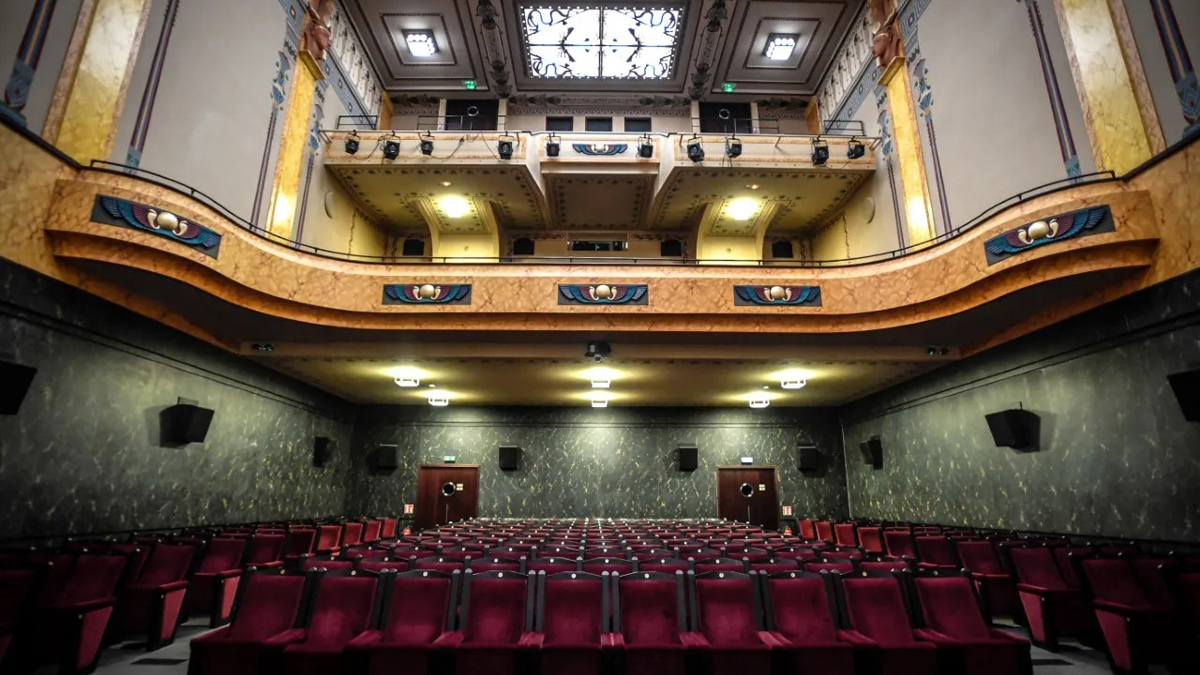
Le Louxor - Palais du cinéma
170 boulevard de Magenta - 75010 Paris / Metro: Barbès-Rochechouart, lines 2 and 4
Free admission for all, subject to availability, by reservation (reservations will open shortly)
Professional accreditation and youth badges: free priority access subject to availability
Inaugural session
A surprise screening session to open the Paris 2026 edition.

Opening
Le Louxor - Palais du cinéma
170 boulevard de Magenta - 75010 Paris / Metro: Barbès-Rochechouart, lines 2 and 4
Free admission for all, subject to availability, by reservation (reservations will open shortly)
Professional accreditation and youth badges: free priority access subject to availability
"Utopian Scores"
Diego Behncke : Aggregate Body - Experimental film | 16mm | color and b&w | 18:19 | Chile, Germany | 2026
Diego Behncke
Aggregate Body
Experimental film | 16mm | color and b&w | 18:19 | Chile, Germany | 2026
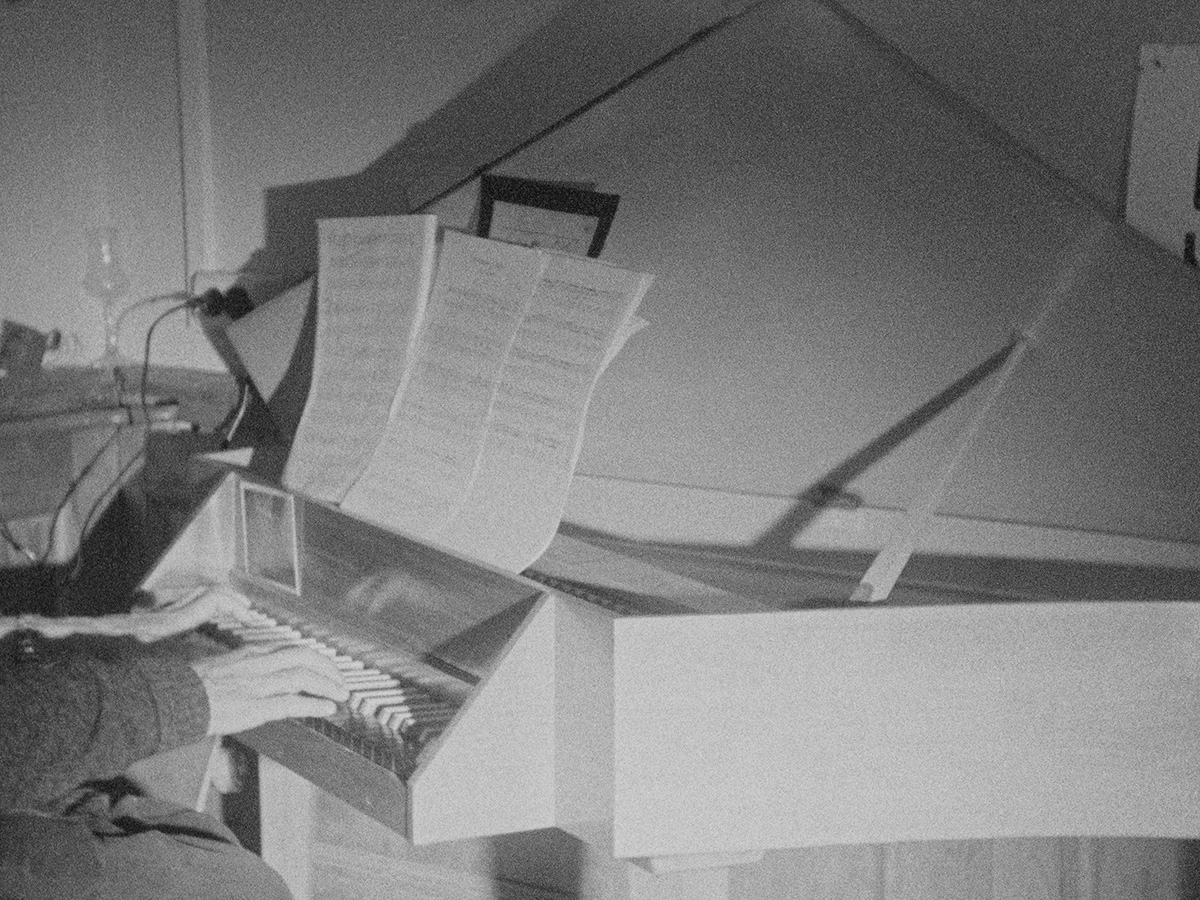
Aggregate Body is a diagonal exploration into the dreams of transparency, utopia, and the radical fetishisation of commodities that ultimately flattened the distinctions between human subject and objects in the World Exhibitions of the 19th century. Examining mimicry mechanisms as mythological lures toward the inorganic, the film sketches a zone of encounters between biology and myth, iron-and-glass constructions, and computational reason, establishing a non-linear, time-folding narrative of a rogue concrete computer that dreams of the Crystal Palace before it’s conception.
Diego Behncke is a Berlin-based artist and musician working with sculpture, installation, synthetic sound and film. His work explores gesture in its relation to technology, using abstraction and synthetic procedures to build fictional systems through a material perspective. Recurring concerns in his work include automatism, artifice, machine-listening, bio-mythographic structures, and anorganicity. His work has been exhibited and performed in Germany, Canada, Japan, South Korea, The Netherlands, France, Belgium, Portugal, and Chile. As part of his practice, he runs the experimental music label Prensa Manual.
Roberto Fassone : Aldous Harding Is Playing At My Mother's House - Experimental doc. | 4k | color | 24:18 | Italy | 2026
Roberto Fassone
Aldous Harding is playing at my mother's house
Experimental doc. | 4k | color | 24:18 | Italy | 2026
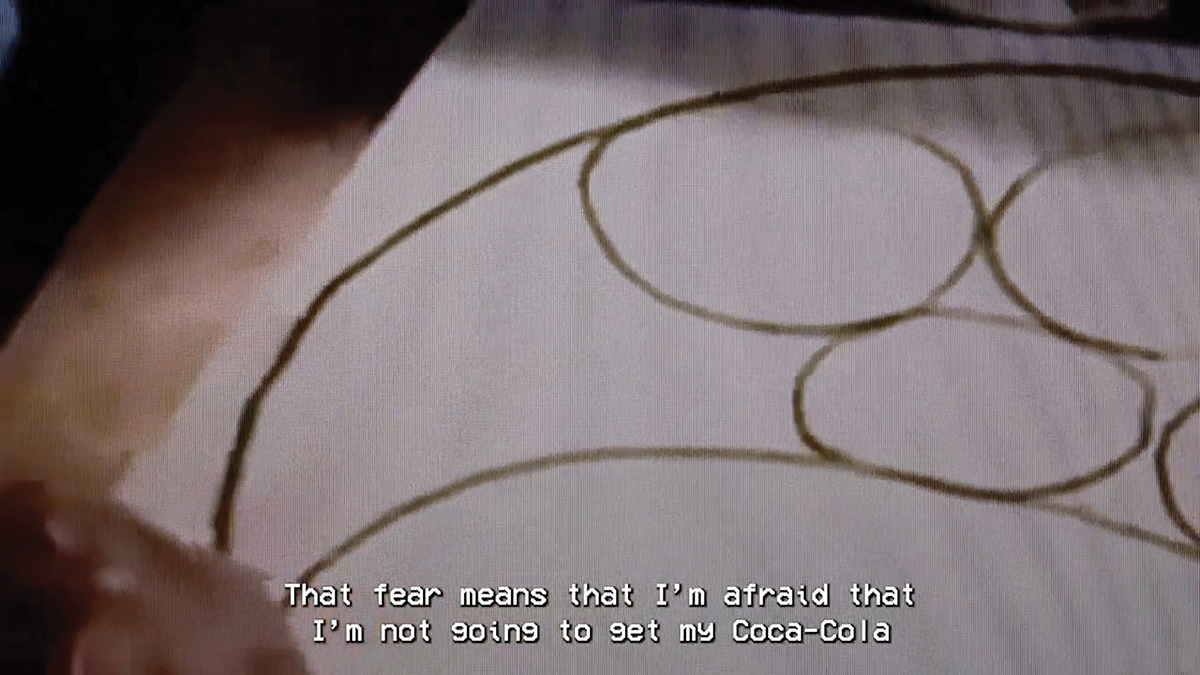
Aldous Harding is playing at my mother's house interweaves the voices of artists, philosophers, and musicians with a sonic composition designed to evoke a pivotal moment in the artist's life: the death of his mother, to whom the film is dedicated, and the existential crisis that followed. Constructed as a collage of YouTube videos, the film revisits the melologue, a lesser-known relative of melodrama and a musical form popular in the eighteenth century, in which spoken monologues are accompanied by music, particularly at moments of heightened emotional intensity. This expressive form seems to be re-emerging today in unexpected contexts, including social media reels and shorts, where emotionally charged soundtracks accompany the voices of public figures, contributing to the construction of intensely dramatized narratives. The final film emerges from a performative gesture: during a full moon, the artist recorded the collage as it played on his television screen. The resulting work oscillates between an associative, non-linear structure that remains opaque and enigmatic, and the immediacy and emotional force characteristic of Hollywood melodrama.
Roberto Fassone (1986) is a visual artist and performer. He lives and works in Florence. His research explores the limits of imagination and the strangeness of existence. In 2023, he received the MAXXI Bulgari Prize for Digital Art with a trilogy created in collaboration with an artificial intelligence fed with hallucinogenic mushrooms. In 2025, he received the Termoli Prize with a documentary dedicated to his own basketball team. In recent years, he has exhibited and presented his work in national and international venues, including: Current Plans (Hong Kong, 2026); MAXXI (Rome, 2026, 2025); Museo del Cinema (Turin, 2026); MACTE (Termoli, 2025); Palazzo Collicola (Spoleto, 2024); MAMbo (Bologna, 2024); Maison du Savoir (University of Luxembourg, 2023); Ars Electronica (Linz, 2022); Visions du Réel (Nyon, 2022); ICA (Milan, 2022); MACRO (Rome, 2022); MAXXI (L’Aquila, 2021); Mattatoio (Rome, 2021); Lo schermo dell’arte (Florence, 2021); Italian Cultural Institute, Paris (2020); Fanta-MLN (Milan, 2016, 2019, 2023). While this biography was being written, the sun was shining at the Vismarkt in Groningen.
Caroline Poggi, Jonathan Vinel : The Blessing - Fiction | 2k | color | 23:58 | France | 2026
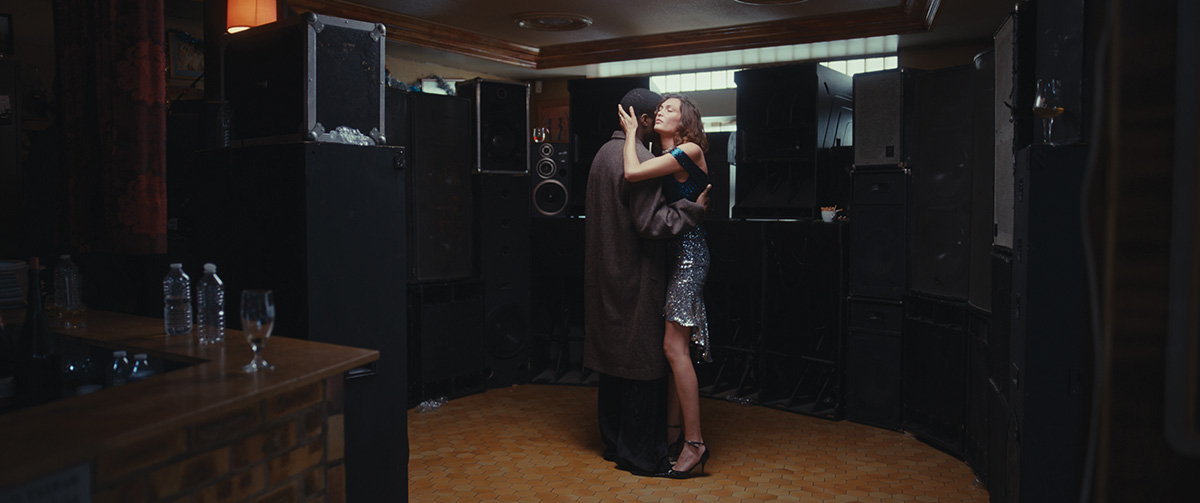
Caroline Poggi, Jonathan Vinel
The Blessing
Fiction | 2k | color | 23:58 | France | 2026
Bárbara Wagner, Benjamin de Burca : Future Of Yesterday - Experimental documentary | 2k | color | 22:0 | Germany | 2026

Bárbara Wagner, Benjamin de Burca
Future Of Yesterday
Experimental documentary | 2k | color | 22:0 | Germany | 2026
Future of Yesterday (2026) invites viewers into the rehearsal rooms, skate parks, and venues of the Rhine-Main region. Marking fifty years of punk history, the film traces a sonic evolution—from the operatics of a 1910s gramophone to the crash of 1980s hardcore. Developed in horizontal collaboration with the bands Blinded and One, the musicians steer the narrative, using their own lyrics to articulate a stance of sobriety. The Straight Edge ethos of "clean fun" is presented not merely as a subculture, but as a deliberate political choice: a rejection of hedonism in favor of a self-determined life. Captured through tracking shots and rhythmic slow-motion that mirror the scene’s self-imposed discipline, the film follows a generation finding its voice. As the narrative moves from the privacy of the garage to the shared ritual of the stage, the protagonists refashion inherited codes into anthems like "The only way to be free is to be myself." In doing so, they reclaim the Future of Yesterday as a sovereign presence in the now.
Bárbara Wagner (1980, Brazil) is a filmmaker and photographer. Since 2011, she has collaborated with Benjamin de Bruca, whom she met at the Dutch Art Institute. Their work often addresses the current culture’s relationship with traditions and cultural preservation, especially in emerging economies and in the postcolonial framework. Their work has been shown around the world, including at the Berlin International Film Festival and the Locarno Film Festival. In 2019, they represented Brazil at the Venice Biennale.