Catalogue 2025-2026
Below, browse the 2025-2026 Rencontres Internationales catalogue, or search the archives of the works presented since 2004. New video clips are routinely posted and the images and text are regularly updated.
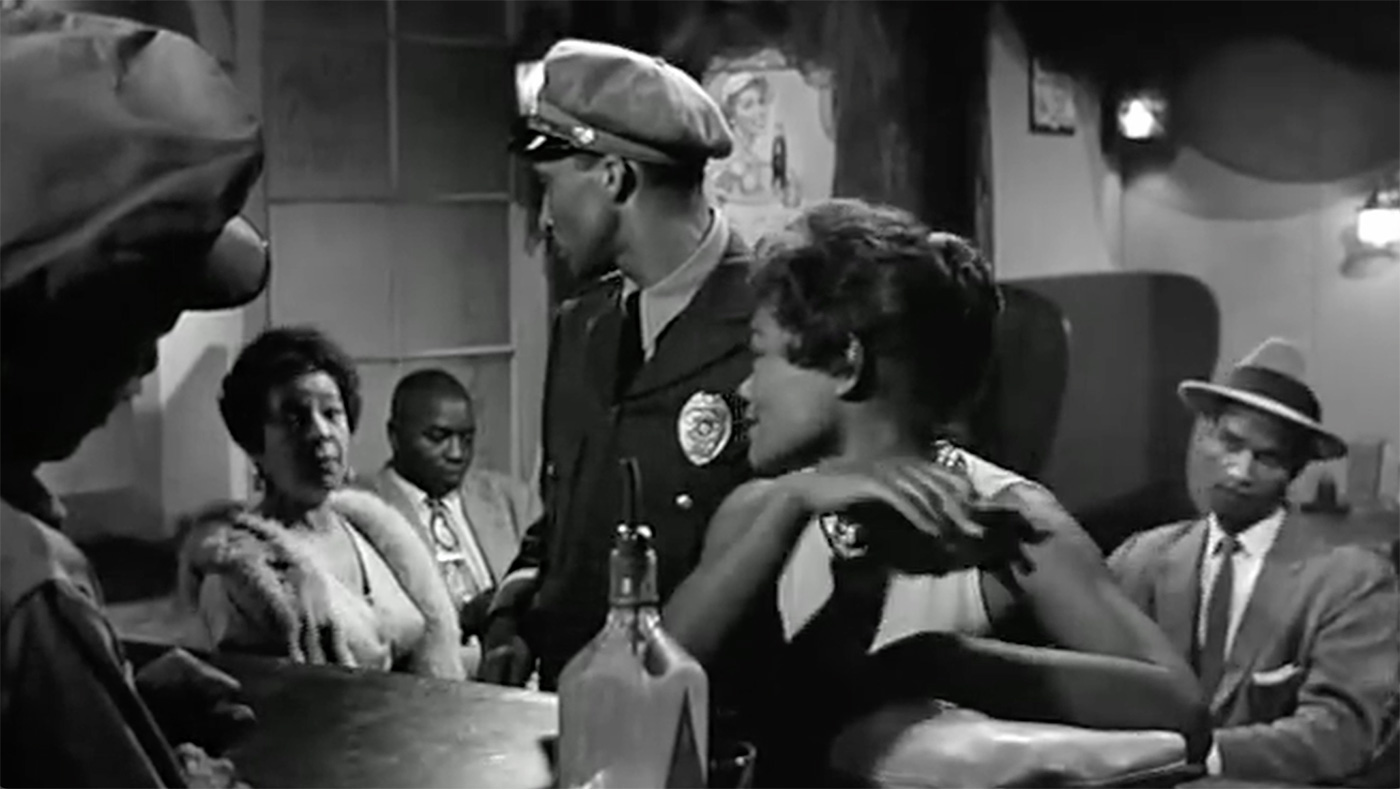
Ewa Effiom
WHEN ONE DOOR OPENS
Experimental doc. | mp4 | color | 10:44 | United Kingdom, Belgium | 2024
WHEN ONE DOOR OPENS emerges as an exploration of the intricate dynamics between authorship, representation, and history. Drawing inspiration from the groundbreaking methodologies of Arthur Jafa and the evocative aesthetics of Christian Marclay. Eschewing from the conventional confines of mainstream cinema, the filmwork delves deep into the rich tapestry of found footage, excavating and appropriating the untold narratives embedded within race films predominantly from the period immediately after the pre-Code era. In this respect it presents itself as a counterpoint to established somewhat one-dimensional work of Marclay. Through a, seemingly circuitous, narrative lens, WHEN ONE DOOR OPENS challenges conventional notions of identity and belonging, inviting viewers to confront the complexities of historical representation. Each frame serves as a portal to a bygone era, where characters navigate through the architectural spaces of both literal and metaphorical significance. The film's exploration of movement within these spaces resonates with profound symbolism, illustrating the transformative power of cinematic storytelling. Ultimately, standing as a testament to the enduring allure of cinema and the implied spaces as a medium for capturing and reimagining the complexities of human experience.
EWA EFFIOM is a London-based Belgo-Nigerian architect, writer and producer. Image Culture, Futurism and Mythology are recurring themes in his work with a focus on their association to space. He was a member of the Architecture Foundation’s New Architecture Writers’ second cohort which culminated in a critically acclaimed public programme and has been published in the Architect’s Newspaper, Dwell, the AJ, ICON, Wallpaper, Frame, OnOffice, Architecture Aujourd'hui, the Modern House magazine, A Daily Dose and Ex Libris amongst others. His piece Architecture, Buildings and Conservation in MAJA was nominated for best piece in the 2022 Estonian Architecture Awards a year after he came second place in the Tallinn Architecture Biennale’s 2021 Curatorial Competition with a proposal entitled Adaptive Re-use. His film Eagle Mansions was premiered at the 2021 Urban Film Festival in Perth and screened at 2022 Melbourne Design Week, before he was awarded the 2022 How To Residency at the Canadian Centre for Architecture entitled “How Not To Be A Developer.” 2022 was also the year that his second film “Beck Road” premiered at the Open City festival before screening at the 18th Venice Architecture Biennale. He was a 2023 LINA Fellow and awarded both the Film Lab residency at the MAXXI Museum in Rome where he made “When One Door Opens” which screened at Demanio Marritimo-278 before being shown at restless architecture exhibition curated by Diller Scofidio and Renfro at the MAXXI Museum. He also took part in the Theatrum Mundi Staging Ground Residency with his collaborative exploration of infrastructural change in Paris in the aftermath of the Olympics. He later returned to LINA to give the State of Architecture Address in 2025 which was met with critical acclaim which was a plea for the archtiecture industry to return to imagination. Though he hasn’t been a lecturer at MA in Architecture + Urbanism at the Manchester School of Architecture since 2022, he is still a visiting critic at the Estonian Institute of Technology and London Metropolitan University.

Marwa El Sharkawy
Rhythms of a girl’s dream
Documentary | mov | color | 17:27 | Egypt | 2025
In a secluded village nestled in the heart of southern Egypt, two young girls dare to dream amidst a sea of conservatism. Their love for music, once a secret passion, propels them on a daring journey to master their art against the backdrop of stringent family and societal norms. This intimate documentary paints a poignant portrait of hope and resilience in a world where the aspirations of girls often face the harshest chords of reality.
Marwa Elsharkawy is a passionate storyteller drawn to the personal and human shadows of tales. Has been born at 1989 ,She studied media at Cairo University, she has participated in writing, filming and directing workshops at the American University and the EU-supported Cine Delta school, as well as the Creative Documentary Film workshop at the Cairo International Women’s Film Festival, her first film “Forgotten Dreams, “won Best Documentary awards at Iran's “2021 International Moving Film Festival” and a grant from Cairo's International Women's Film Festival. and screened at the 43rd Durban International Film Festival. UNFPA produced her first short fiction film, "My Dear Rose" about female circumcision, which won over 7 awards, including the jury award at Festival du Cinéma Africain de Khouribga. Her film, “Young Hearts,” was screened at several international festivals, including the Karama Human Rights Festival in Tunisia, and the 41st Iran International Short Film Festival.
Ali El-darsa
The Image Remains the Same
Experimental video | 4k | color | 18:27 | Germany | 0
A collage of personal and public accounts, The Image Remains the Same contemplates water as an allegory of journeys shaped by desire, belonging, hope, and demise—stretching from the shores of the Pacific Ocean in Los Angeles to the Mediterranean Sea in Lebanon. The work specifically focuses on the El-Mina port, where I speak with locals about emigration from Tripoli’s shores to Europe. The camera moves from the Californian deserts to my hometown in the Southern Suburbs of Beirut (before its heavy destruction in the recent war) and to the North of Lebanon, tracing formal and historical ties as well as contrasts between these places.
Ali El-Darsa works across moving image, installation, performance, and sound. His practice examines structures of belonging in transnational contexts, foregrounding the specificity of time-based media in creating networked, mediated memories and cultural imaginaries. His interdisciplinary research in performance engages with the fields of text, word, sign, and language, questioning—often collaboratively—how language shapes movement, systems of thought, and, by extension, the discourse surrounding the interpretation of a work of art, both materially and metaphorically. His work approaches communication through its means, methods, and media—oral, written, or coded—examining the transmission of customary, historical, and contemporary narratives. El-Darsa lives and works in Berlin, and is a 2025–2026 fellow at the Akademie Schloss Solitude in Stuttgart, Germany.
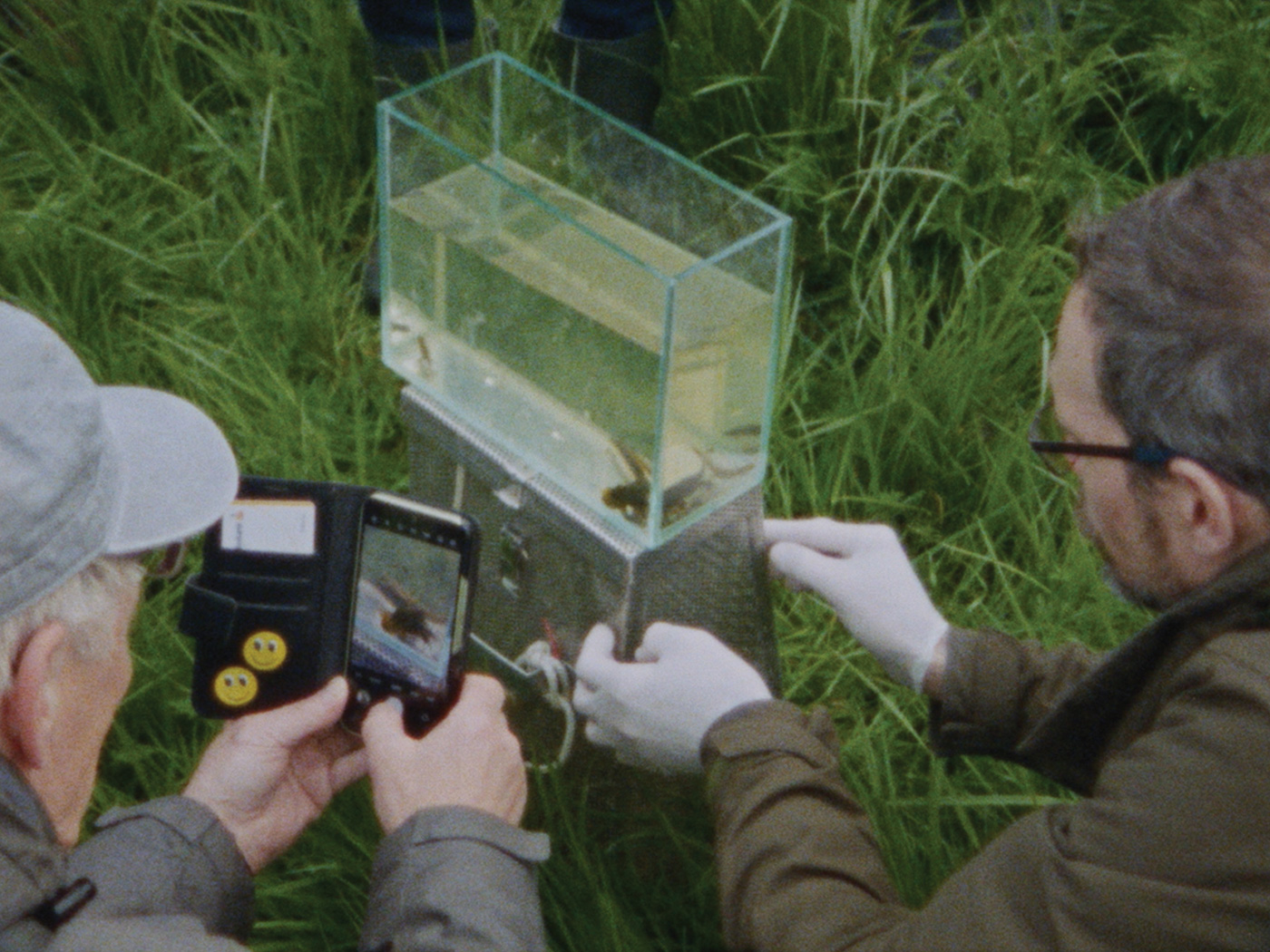

Leon Emonds-pool, Emilia Auhagen-Kuoppamäki
Seen From Here, I Feel Like Belonging
Experimental doc. | super8 | color | 30:0 | Germany | 2025
June 1971 - in a fluid landscape completely below sea level, a young biology student dies during the last year of his studies, leaving behind an unfinished scientific collection. More than fifty years later, a group of ecologists and volunteers are trying to understand and document the same environment as it is today.
Leon Emonds-Pool holds a degree as a Director of Photography from the International Filmschool Cologne and is currently studying at the Friedl Kubelka School for Independent Film in Vienna. After working for short films solely as a cinematographer, he is now also directing his own projects, mainly in the various fields between documentary and experimental filmmaking. In his films, which are often shot on analog Super 8 or 16mm material, he tries to explore the complex relationship of humans with the natural environment. He also works as an analog projectionist and is one of the founding members of the Cologne-based artist-run-filmlab and event series collective "Film auf Film". Emilia Auhagen-Kuoppamäki completed her master’s degree in North American Studies in 2024. In the course of her studies, she developed a growing interest in cultural ecology, particularly in film and literature. Her current research interest lies in exploring how artists generate change in human interaction with the non-human world through their artistic practice. Complementing her research, Emilia is engaged in creative projects in the visual arts. She is one of the five founding members of the Cologne-based artist-run-filmlab and event series collective "Film auf Film".
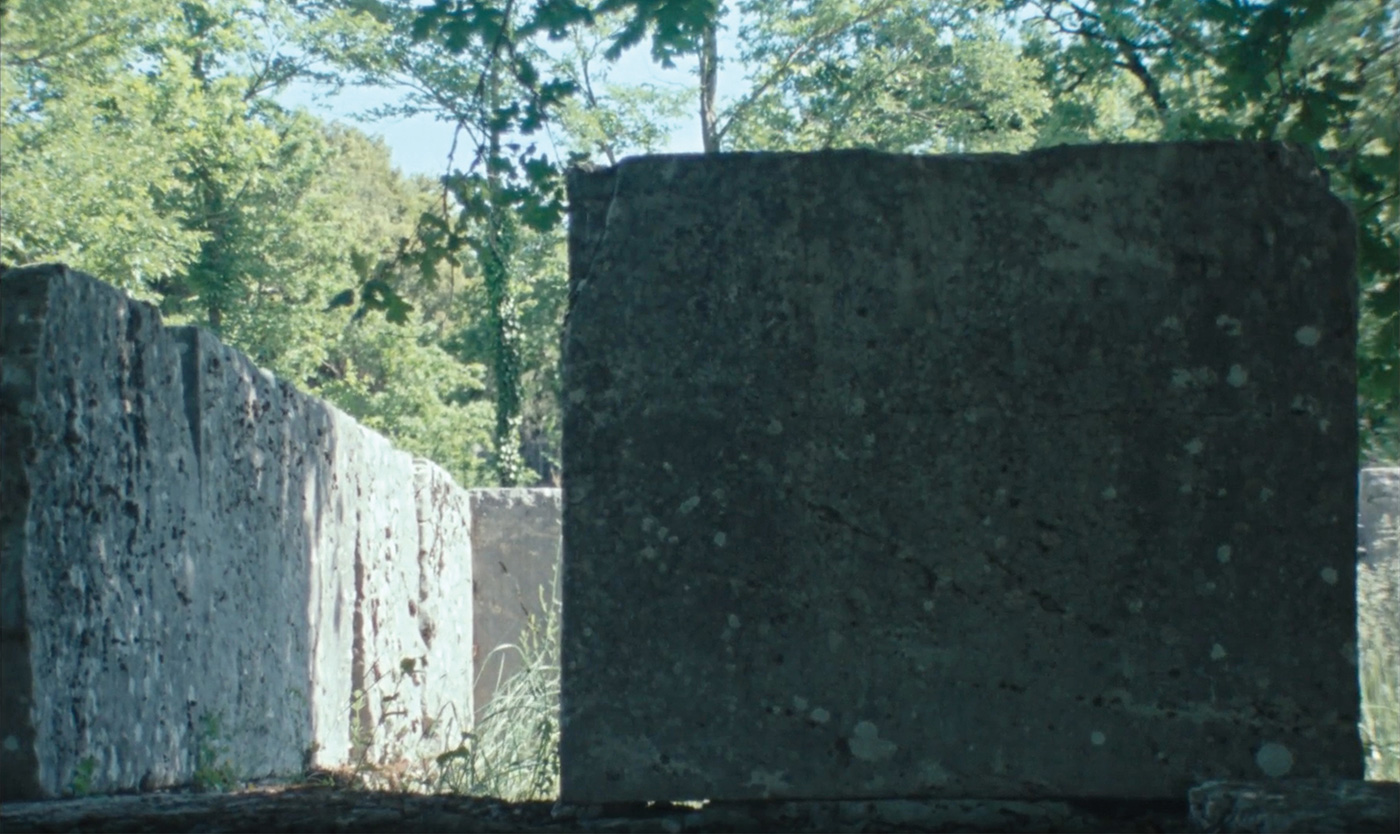

Mélissa Epaminondi
Dione -Work-In-Progress Version: Not Yet Color Graded And Sound Mixed-
Experimental film | 16mm | color | 16:24 | France, Greece | 2025
Dione offers a personal interpretation of the ancient sanctuary of Dodona in northern Greece, regarded as the oldest oracle in the Greek world. Nestled at the foot of Mount Tomaros, the site welcomed pilgrims from distant regions for centuries. They inscribed their questions on small lead tablets, addressed to Zeus Naios and Dione Naia. At the heart of the sanctuary stood the sacred oak, believed to speak through the rustling of its leaves and branches, and through the movements of the birds that lived within it. These signs were read and interpreted by priests and priestesses. At certain times, an installation known as the “Gong of Dodona” — a series of interconnected bronze cauldrons — amplified the sanctuary’s resonance. In this place, near the River Acheron, a threshold between life, death, and knowledge, I sought to craft my own interpretation of the ancient oracle using sounds gathered on- site and later reworked with composer Florent Caron Darras. In the film, each animal presence contributes to the mythological bestiary associated with Dodona. Water as both a natural and symbolic element, holds a central role. The film evokes a spring flowing from the sacred tree, whose murmuring, according to Servius, once held an oracular power.
Mélissa Epaminondi, architect and artist, lives between Paris and Corsica. A graduate of the Marseille School of Architecture, she explores the relationship between individuals and their environment through films, videos, and installations. Her work blends organic and built forms to evoke sensory inner landscapes. She co-founded L140 and co-directs Casa Conti – Ange Leccia, a contemporary art center dedicated to the moving image. Selected filmography: Deconstructive Niemeyer (2020), Lavezzi (2013), Plage (2012).
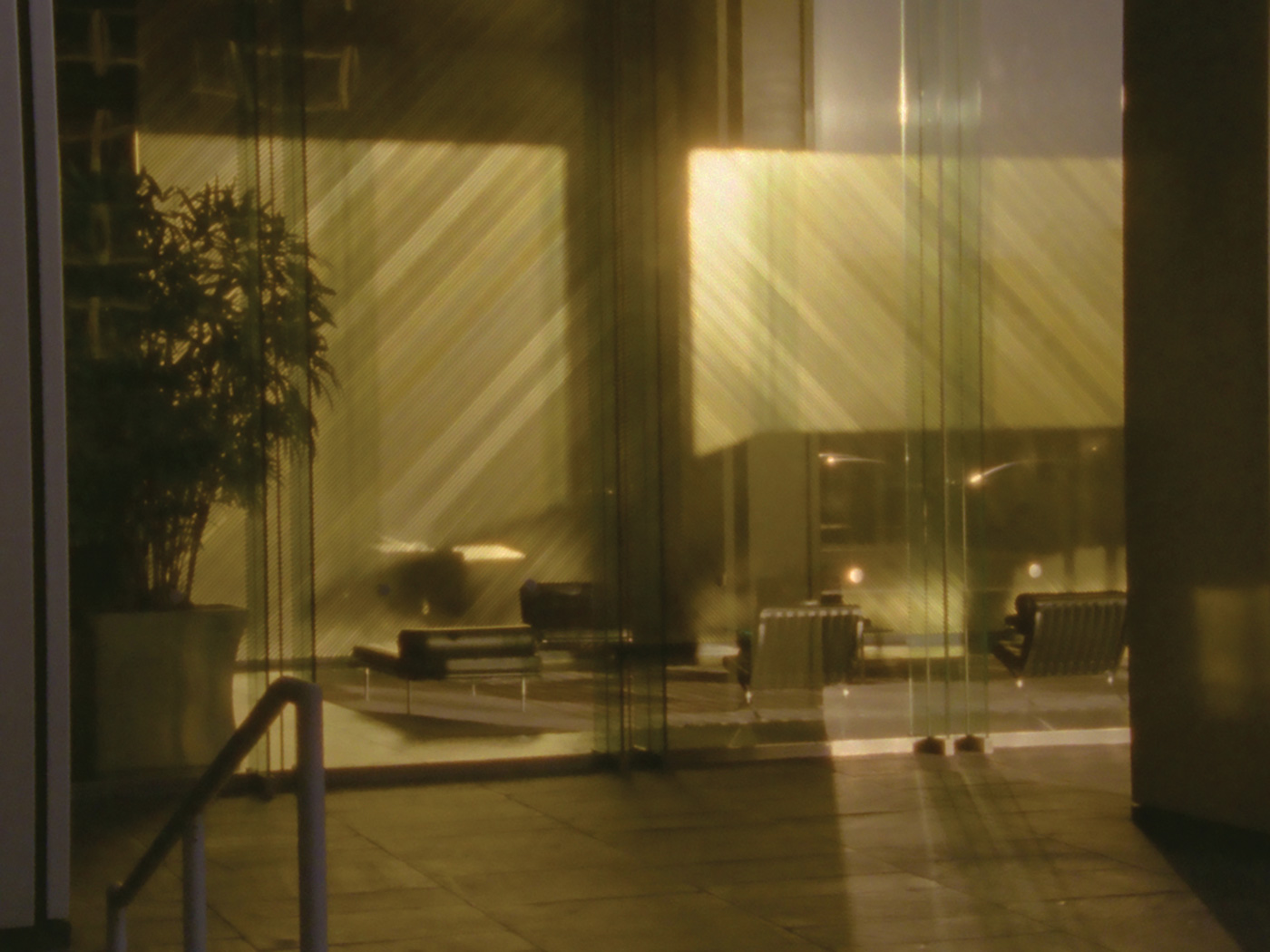
Zachary Epcar
Sinking Feeling
Experimental fiction | 16mm | color | 20:0 | USA | 2024
Three white collar commuters recall an experience of getting trapped on a train in San Francisco's transbay tunnel, each drifting into fantasies of sex, death, and other intimacies with strangers. "A beguiling, spacious, and transportive work of suspended tension, that looks for new forms of intimacy in the antiseptic. An urban office park becomes a reflecting pool for the erotic fantasies of a derailed train where we wait, shake and survive together.”
Zachary Epcar (b. San Francisco) is a filmmaker whose work has screened at the international film festivals of Toronto, New York, Rotterdam, San Francisco, Vancouver, Edinburgh, and Melbourne; Berkeley Art Museum & Pacific Film Archive, Media City, IndieLisboa, European Media Art Festival, EXiS, 25 FPS; and in solo screenings at the Museum of Contemporary Art Chicago, Museum of the Moving Image, and Black Hole Cinematheque. His films have been featured online on MUBI, Le Cinéma Club, and Ecstatic Static. Zachary lives in Oakland, California where he is a member of the film programming collective Light Field. His films are distributed by Light Cone (Paris).
Andro Eradze
Flowering And Fading
Experimental video | 4k | color | 16:22 | Georgia, Italy | 2024
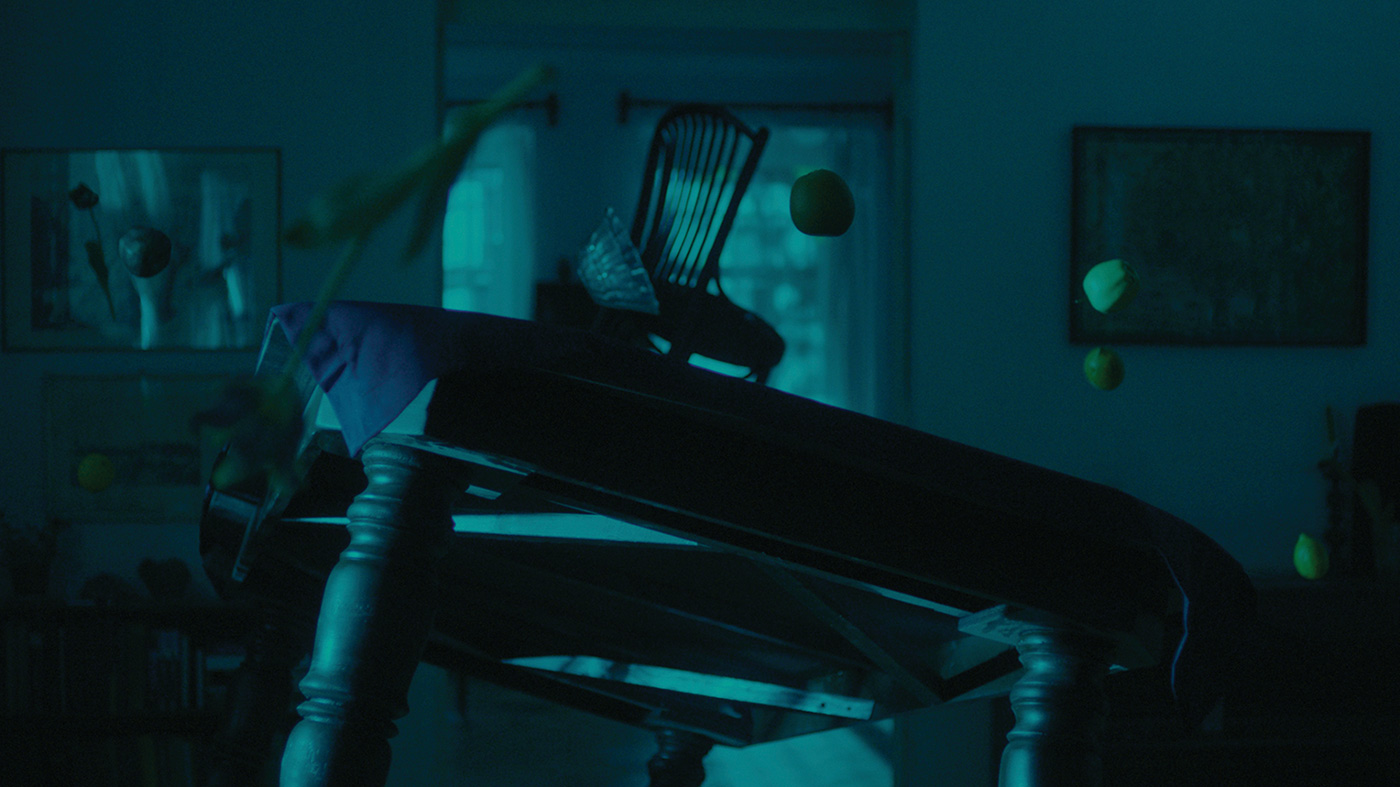
A dog and a human share sleep in the twilight of a calm house. Suddenly, the shapes of reality start to blur, and slowly, dream and fantasy take over. In his latest work, Andro Eradze shapes a new vision of surrealism, where impeccable image composition and a stunning sound work strike directly at the subconscious, submerging the senses in an ocean of absolute beauty.
Andro Eradze (b. 1993, Tbilisi, Georgia) is an artist and filmmaker whose multidisciplinary practice investigates the intersection of presence, memory, and spectrality. Through photography, installation, video, and experimental cinema, Eradze explores the agency of non-human entities within landscapes that blur the boundaries between human and non-human experiences. His projects often evoke liminal spaces, exploring the unexpected actions and relations among objects, plants, and animals. He took part in several solo and group exhibitions and screenings in international institutions including MoMA PS1, New York; The 59th Venice Biennale, Venice; The New Museum, New York; WIELS Contemporary Art Center, Brussels; GAMeC, Bergamo; 22nd Biennial Sesc_Videobrasil, Sao Paulo; 14th Kaunas Biennial, Lithuania; Fondation Vincent van Gogh Arles.
Luis David Esguerra Cifuentes
Dos Veces Bestia
Experimental film | 16mm | color | 72:0 | Colombia | 2025
On the city's outskirts, a strange moss proliferates in the forest. Despite the warnings of its supposed dangerousness, several people visit the place as a gesture of radical freedom. TWICE THE BEAST navigates through spaces-species where friendship and sensuality converge with science fiction.
Filmmaker and programmer, a graduate of the Master's Program in Filmmaking at Elías Querejeta Zine Eskola (EQZE). He has worked on the programming teams of the Cartagena International Film Festival (FICCI) and the Bogotá International Film Festival (BIFF). In 2019, he founded Bruma Cine, a production and distribution company that manages the works of Colombian filmmaker Luis Ospina and develops curatorial projects. He has directed four short films, which have been screened at international festivals such as FICUNAM, FICValdivia, and FIDMarseille.
Eteam
Our Non-Understanding of Everything #10
Experimental video | mp4 | color | 17:35 | Germany, Taiwan | 2025
“Our Non-Understanding of Everything #09” is part of a larger series that explores how the structures of architecture, semiconductors, and circuits become forms of expression reflecting hierarchies, cognitive processes, and relationships to the natural environment. The project is the daily practice of observation, questioning and switching perspectives in order to understand our relationship to our tech-devices and their existence in the world. Motivated by finding ways to imagine what our smart phones want from us and if we can communicate with them, we are using our natural and human built environments to possibly entertain, relax and stimulate the technical devices, that so profoundly influence our conception of the universe and our relation to it.
eteam uses video, performance, installation and writing to instigate and articulate encounters at the edges of diverging cultural, technical and aesthetic universes. Through their artistic practice eteam finds ways to collaborate with people who operate on the edges of mainstream culture and the marketplace. They are drawn to those willing to experiment, cross genres and cultural boundaries, together we forge proximity and make visible the interconnections we humans share with land, animals, plants, ghosts, deities and objects. Practicing art is their way to enter the “outside,” pay close attention to the details, while trying to understand the whole. Eteam’s narratives have screened internationally in video- and film festivals, they lectured in universities, presented in art galleries and museums and performed in the desert, on fields, in caves in ships, black box theaters and horse-drawn wagons. They could not have done this without the support of Creative Capital and The John Simon Guggenheim Memorial Foundation, Art in General, NYSCA, NYFA, Rhizome, CLUI, Taipei Artist Village, Eyebeam, Smack Mellon, Yaddo and MacDowell, the City College of New York, the Academy of Visual Art HKBU and the Fulbright Scholar Program, among many others. Their novel “Grabeland” was published by Nightboat Books in February 2020.
Bojan Fajfric
Greetings from Kosovo 1989
Experimental doc. | mov | color | 13:39 | Slovenia, Netherlands | 2025
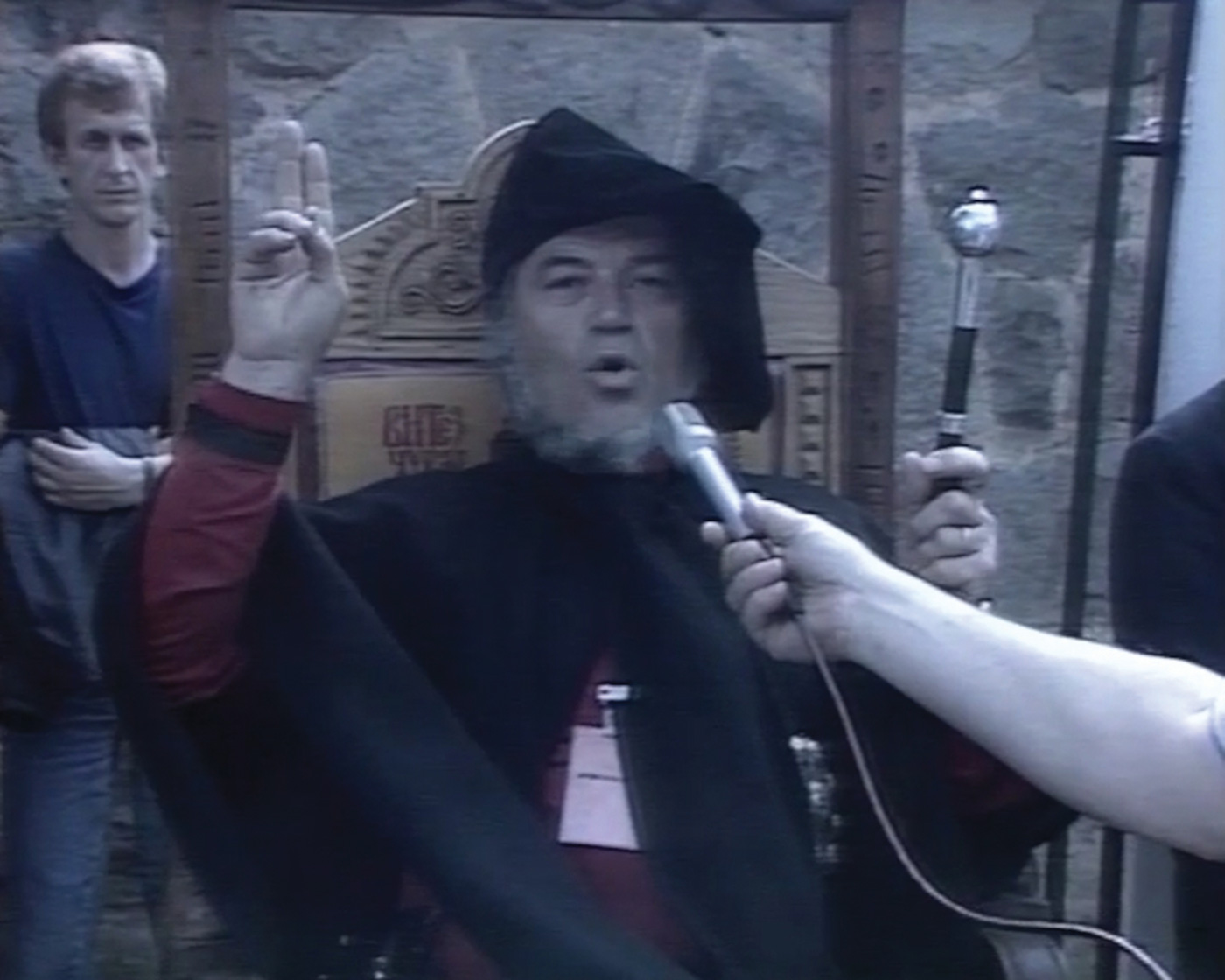
Greetings from Kosovo 1989 (2025) nSingle-channel video, (DV Pal 4:3), 13:39 min. Greetings from Kosovo 1989 deals with archive footage from the 1989 gathering in Kosovo, made famous by Slobodan Miloševi?’s speech. Addressing a crowd of over a million, he spoke amid rising ethnic tensions in Kosovo and growing political unrest in Yugoslavia. His mention of “armed battles” in Serbia’s future has made this speech infamous, often seen as foreshadowing the Yugoslav Wars. Reframing and subverting the format of a TV reportage, the work emphasizes the mass hysteria, madness, and banality of nationalistic and religious iconography. In light of recent world events, revisiting this episode—an inseparable part of the history that profoundly marked the end of the 20th century—is a crucial gesture, as this history remains very much alive.
Bojan Fajfri? (Belgrade, former Yugoslavia) is an artist and filmmaker based in the Netherlands since 1995. A graduate of the Royal Academy of Fine Arts in The Hague and former resident at the Rijksakademie in Amsterdam. Working primarily with moving images and photography, he creates layered narratives that reflect on history’s impact on individual lives. His interest lies in the porous relationship between memory and the moving image. His work has been presented at institutions such as Palais de Tokyo (Paris), Baltic Centre for Contemporary Art (Gateshead), San Telmo Museum (San Sebastián), De Appel (Amsterdam), the Belgrade October Salon, NGBK (Berlin), and the Center for Cultural Decontamination (Belgrade). His films have screened widely at international festivals including the International Film Festival Rotterdam, International Short Film Festival Oberhausen, Vienna International Film Festival, DOK Leipzig, Sharjah International Film Festival, Tempo Documentary Festival (Stockholm), Rencontres Internationales Paris/Berlin/Madrid, and Impakt Festival (Utrecht).
Laurence Favre
Zerzura
Experimental doc. | 16mm | color | 11:0 | Switzerland | 2024
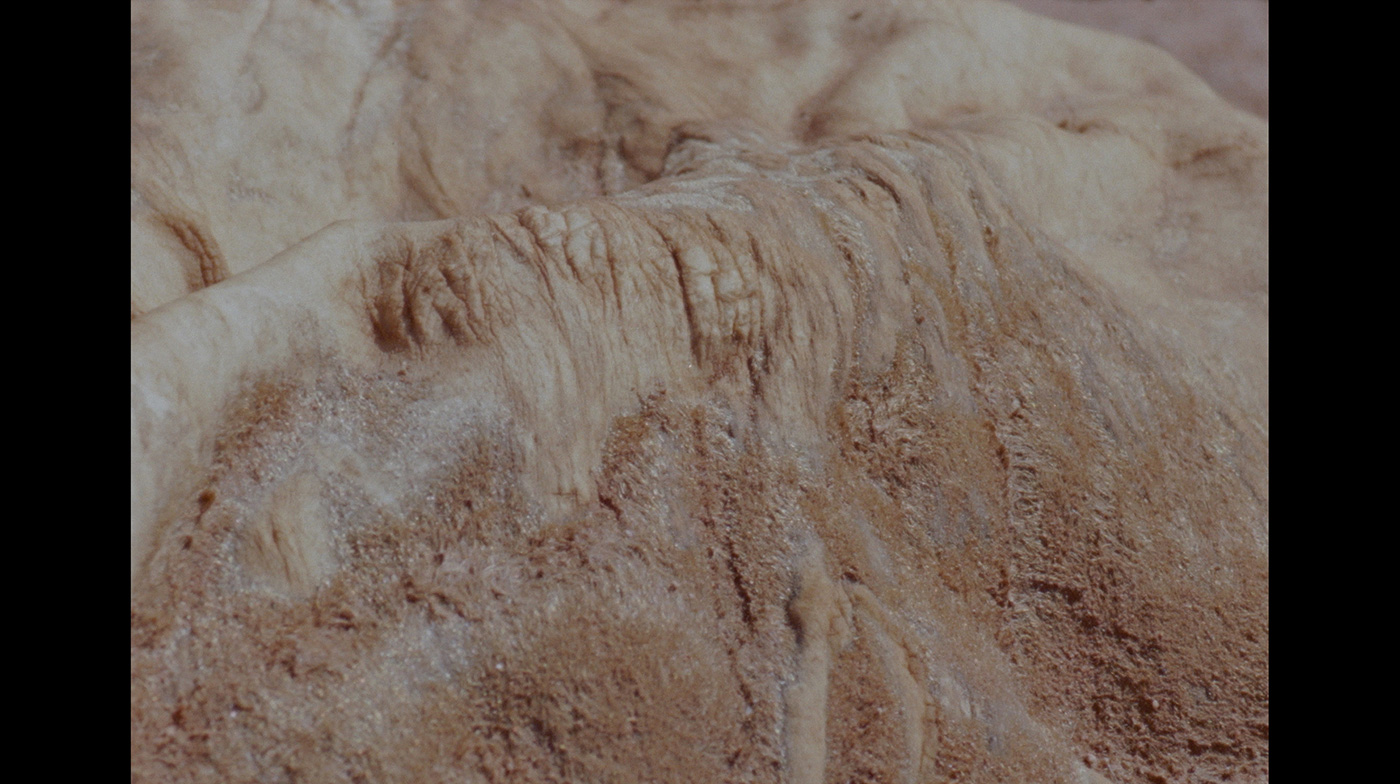
Named after a mythical lost oasis, Zerzura addresses questions on our relations to the non human: How do we perceive 'nature'? Is it a 'thing' to which we humans are external? Or are we all part of a mesh where there is no centre nor periphery? Can an assemblage of sounds and images invite us to see 'nature' as living, sentient and endowed with agentivity? Following 'Resistance' (2017) and 'Osmosis' (2022), 'Zerzura' closes the trilogy 'Corpus Animale'.
Laurence Favre is an artist, filmmaker and researcher. Her practice revolves around analog images, sounds and writings. She makes experimental films, installations and film performances, looking for ways of triggering epistemic changes through sensory perception. Her films are shown internationally in film festivals (Locarno Film Festival, Visions du Réel, Rotterdam IFFR, Ann Arbor Film Festival and others), in art spaces as well as in informal spaces and in the frame of symposiums. She has been awarded several artist grants and residencies. Laurence is an active member of the artist-run filmlab LaborBerlin, and a co-funder of SPECTRAL, a platform for the creation and diffusion of Expanded Cinematic Arts.
Aurèle Ferrier
Claws
Experimental doc. | 4k | color | 18:27 | Switzerland, China | 2025
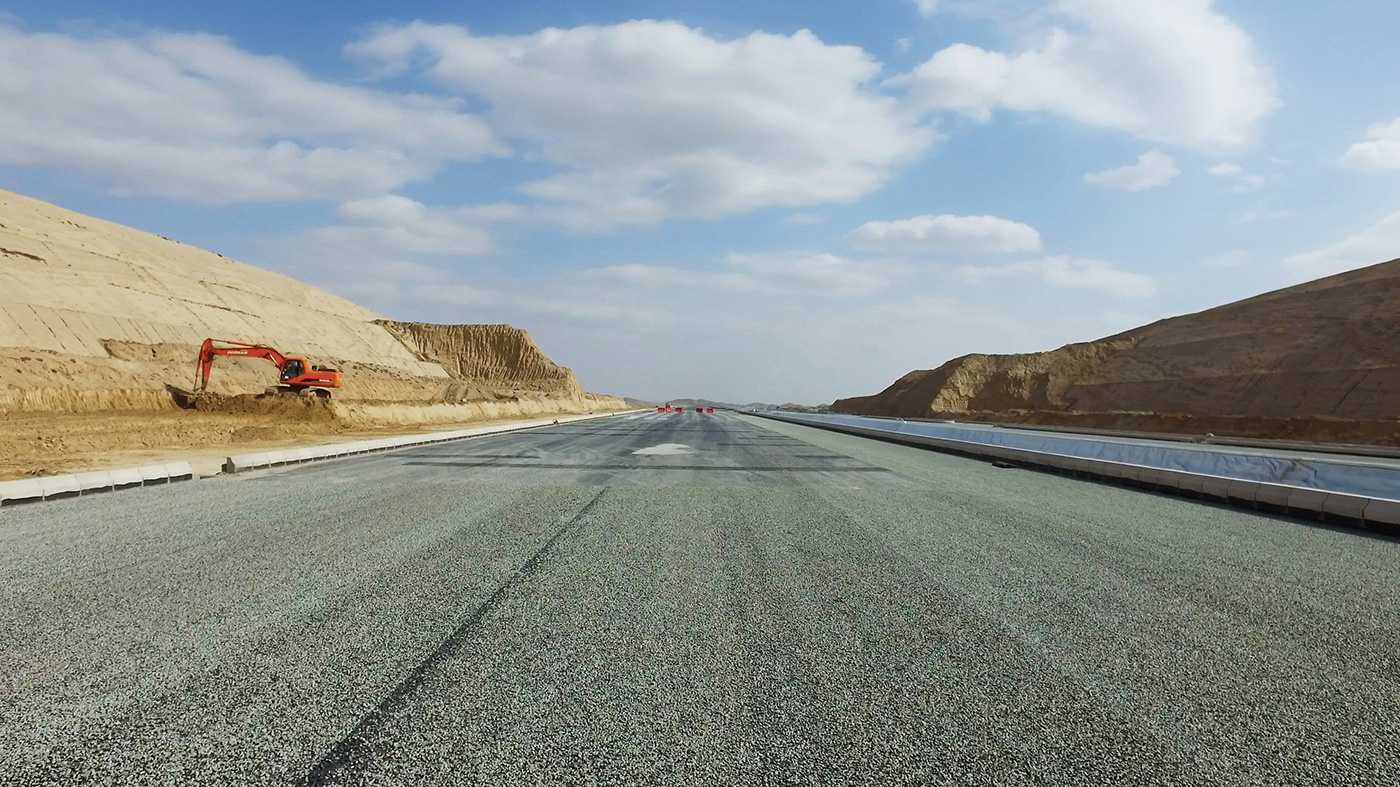
CLAWS is a moving-image essay of gliding takes through rapidly expanding cities, drifting from peripheral terrains into dense cores before opening back to the horizon. In largely unpopulated frames, architecture, materials and sound turn urban expansion into a field of perception—where geometry persists, intention falters, and the land remembers.
Aurèle Ferrier is a Swiss visual artist working with film, exploring built environments and urban peripheries. CLAWS concludes his trilogy on human-made landscapes. His moving-image works have been shown at the Hiroshima City Museum of Contemporary Art (Hiroshima), IDFA (Amsterdam), Rencontres Internationales (Paris/Berlin), Open City Documentary Festival (London), Anthology Film Archives (New York) and Image Forum (Tokyo).
Liliia Filina
INNER IMMIGRATION
Experimental film | 35mm | color | 3:36 | Russia | 2025
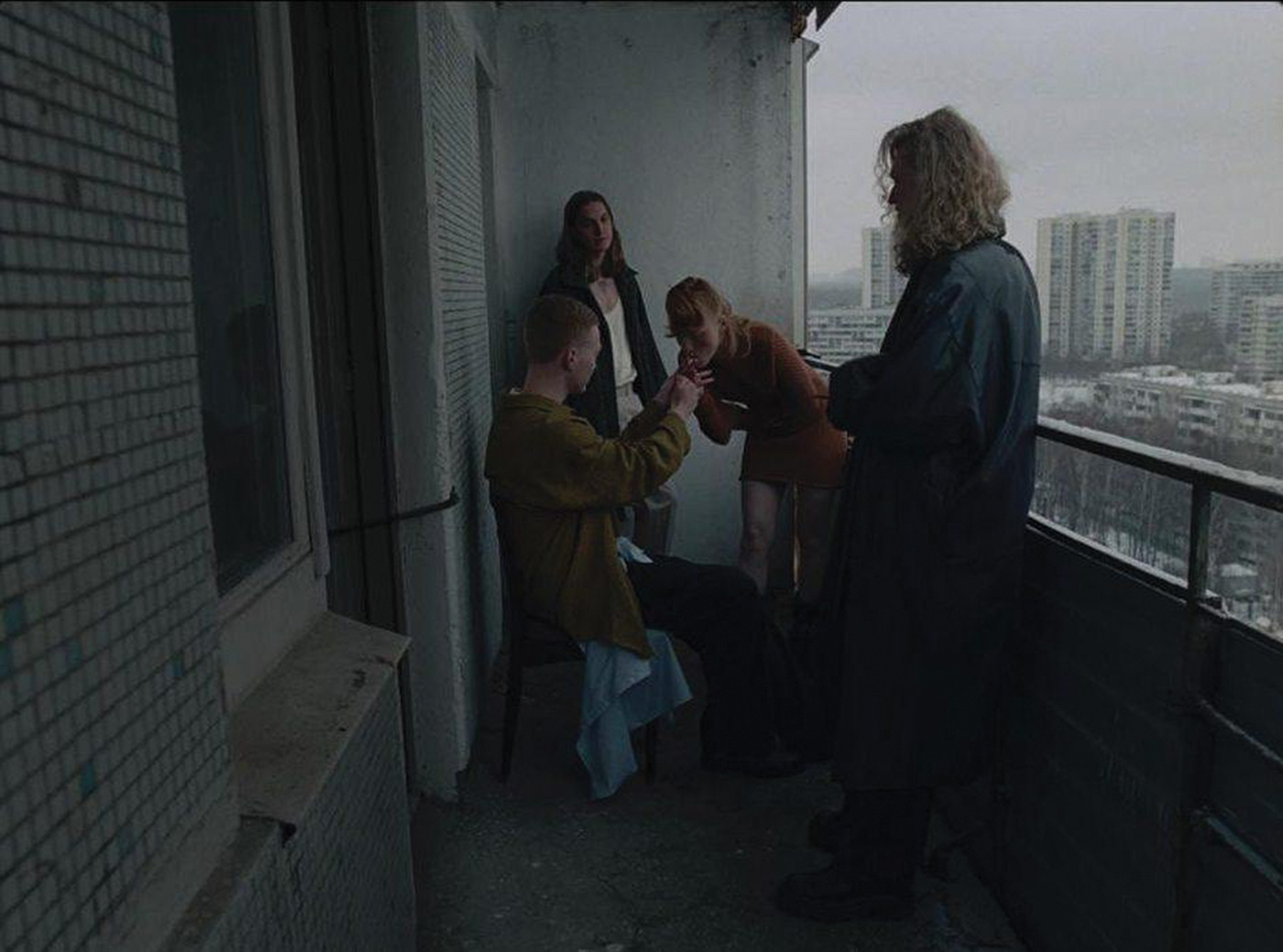
In a nameless Eastern European city, few young people, finds themself trapped between silent resistance and passive complicity as their country descends into war. The city’s streets, once familiar, become a landscape of fear. Shot in stark, observational style, Inner emigration is a haunting portrait of a generation suspended in stillness, forced to navigate a crumbling reality that no longer offers clear choices.
Lily Filina is an artist and director, born in Kaluga, Russia, 1999. A graduate of the Rodchenko Art School, class of Sergei Bratkov, she works as an advertising director and develops independent projects at the intersection of cinema and video art. In 2024, Liliya's film participated in the program of the Rotterdam Film Festival. In 2024, Liliya's project "Internal Emigration” was supported by the Yandex360 program.

Filmsaaz
And How Miserable is the Home of Evil
Video | 4k | color | 7:30 | Iran | 2023
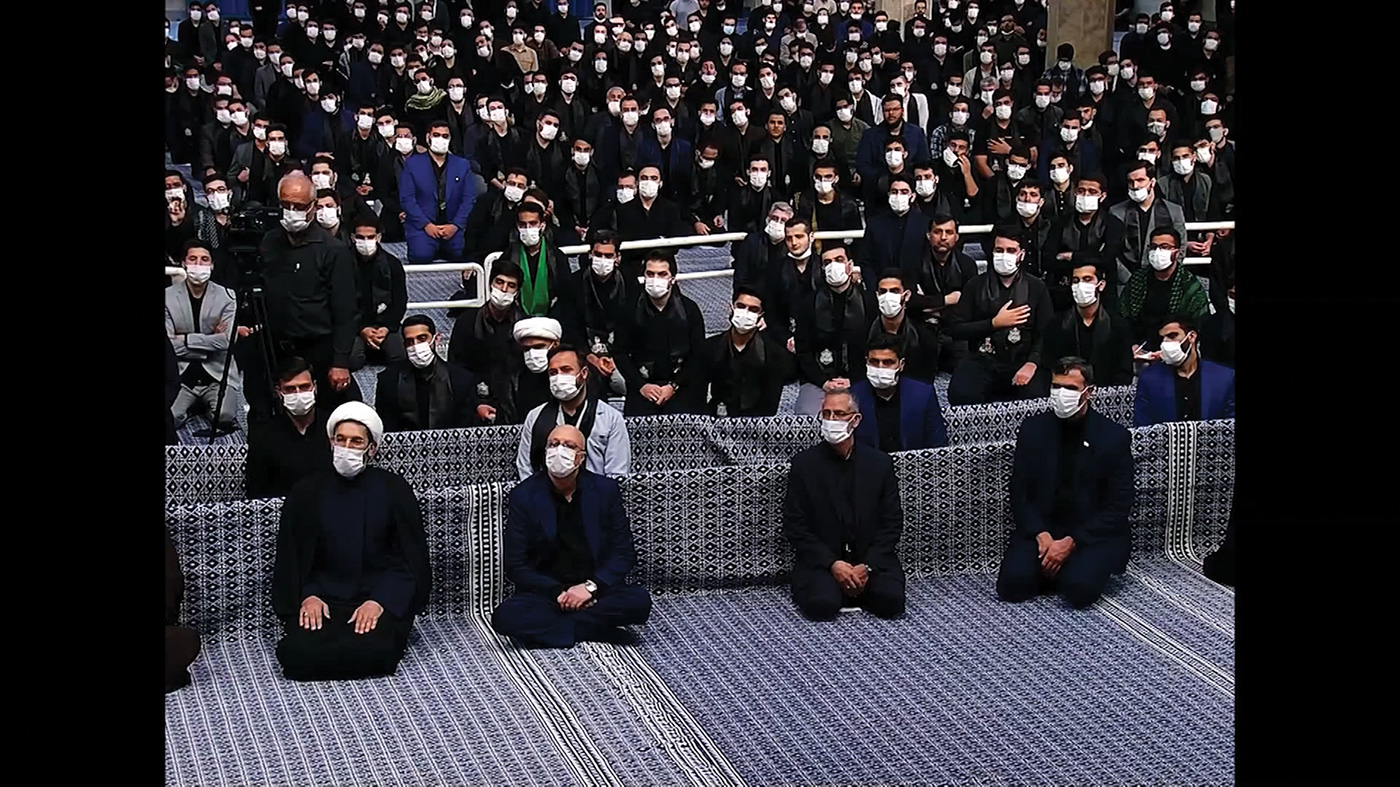
A dictator says his last words in front of his followers before spending the last seconds of his life sitting on a chair as people break into his house to kill him.
Saleh Kashefi also known as Filmsaaz (1999, Tehran) is an audiovisual artist whose works bring a bold lens upon contemporary youth culture, making ‘no-budget’ films which have gone on to be screened with international acclaim. They have been part of festivals like Cannes, Berlinale, Venice, Locarno, Visions du Réel, IDFA and FID. A recipient of Prince Claus Seed Awards, l'Abri associated artist, Master ECAL/HEAD alumni and currently enrolling in Le Fresnoy, Saleh has made 16 short films which have been included in over 200 film festivals around the world and have won 40 awards.

Christian Fogarolli
Esprits Rebelles
Video | mp4 | black and white | 5:2 | Italy, Belgium | 2025
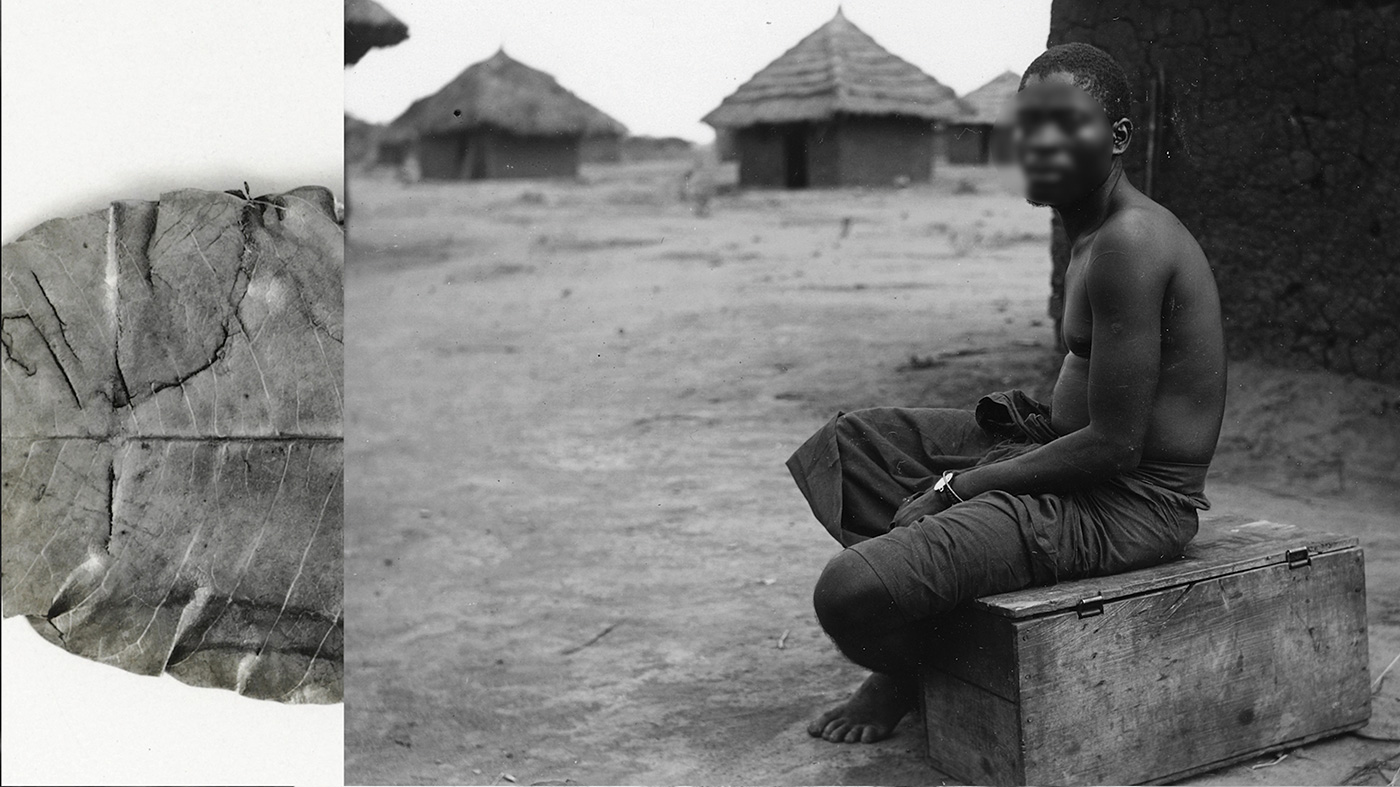
Through an evocative sequence of archival photographs from the Royal Museum for Central Africa in Tervuren, Belgium, the video work Esprits Rebelles explores the ritual and therapeutic universe in traditional practices in the Congo during the period of the second phase of Belgian colonization from about 1908 to 1960. Medicinal plants, healers, sorcerers, spells, ritual objects and organic remains emerge as visual evidence of a deep knowledge, rooted in the earth and bodies, designed to deal with psychic illnesses, adverse events and invisible imbalances. The images, originally documented in a colonial context, now reveal the silent but powerful resilience of an animist and spiritual healing system that has survived the imposition of monotheistic religions, the colonizing work of disruption, and globalized modernity. These rituals and beliefs, far from being folkloric remnants, persist and transform, crossing social classes, creeping even into the contemporary elite. The video editing conveys the fragmentary and opaque nature of these practices, many of which remain elusive, ambiguous, and esoteric to this day. The gaze becomes inquisitive: who is observing, and what remains concealed? In this short circuit between documentation and vision, a critical space emerges, one that interrogates the history of representation, the violence of the colonial gaze, and the indecipherable vitality of what continues to resist Western codification. The plants shown in these sequences are used by Congolese populations to treat psychological problems and mental disorders, and were identified by the author following encyclopedic and archival research. Esprits Rebelles seeks to offer a respectful reflection on the power of ancestral knowledge, while providing a critical perspective on the lasting consequences of colonialism. It promotes an inclusive reading that affirms the dignity and cultural richness of traditional African practices.
Born in Italy in 1983, Christian Fogarolli obtained a degree in archeology in 2007 to then pursuing his historical-artistic studies with a master’s degree in 2011 at the University of Trento, alongside a master’s degree in diagnostics and restoration of works of art at the University of Verona. Since 2011, he has been dedicated to studies and research of artistic, philosophical, and historical practices. His theoretical and field research unfolds in archival and museum contexts, from which he draws inspiration with the aim of enhancing little-known heritages. His practice develops at the intersection of visual art and scientific disciplines, investigating how the latter have used the artistic medium to progress. Through historical and archival research, he attempts to deconstruct the binary condition that separates deviance and normality, reflecting on the normative attributions of disease, marginalization and categorization in contemporary society. He works through different forms of expression, from installation to photography, from sculpture to video. Fogarolli’s works stimulate critical thinking on the relationship between the mind and the brain, reflecting on how the functional processes of the latter interact with the subjective ones of the mind, and investigating how these acts of thought develop into behaviors considered lawful or prohibited.

Lisa Freeman
Hook, Spill, Cry Your Eyes Out
Experimental film | mp4 | color | 2:26 | Ireland | 2024
A headfirst rush into the capitalist, urban landscape, using dynamic camerawork and canny editing. Productivity, optimisation, constant forward motion. In this experimental short from artist and filmmaker Lisa Freeman, frenetic camerawork and quickfire editing convey the body’s lacklustre requirement to always be working in our capitalist society. Using glimpses of concrete environments, bodies on treadmills, crash-test dummies, and other ubiquitous urban images, and melding these with a soundscape of ragged breathing and disjointed conversations, Hook, Spill, Cry Your Eyes Out provides a cutting commentary on what our society inflates with importance.
Lisa Freeman is an artist and filmmaker based in Dublin, Ireland. Her work draws into question economic and power structures and explores how intimacy might be employed as a form of resistance. Recent works have examined the everyday, where the city’s sounds play in the dreams, nostalgias, or hopes of another and where small moments lead to more surreal events (Slipped, Fell and Smacked my Face on the Dance Floor), and social isolation in the public realm (Hook, Spill, Cry Your Eyes Out). Freeman is a studio member at Temple Bar Gallery + Studios, Dublin. She has received several Bursary and Project awards from the Arts Council of Ireland. Her work is held in the collection of the Arts Council of Ireland. Freeman has taken part in residencies in South Korea (BARIM Arts, 2016), and Cité Internationale des Arts Paris x Institut Francais, supported by Temple Bar Gallery + Studios Dublin and Bétonsalon, Paris (2025).

Lisa Freeman
Approx 1 Second of a Sweet Kiss
Experimental fiction | 4k | color | 13:0 | Ireland | 2024
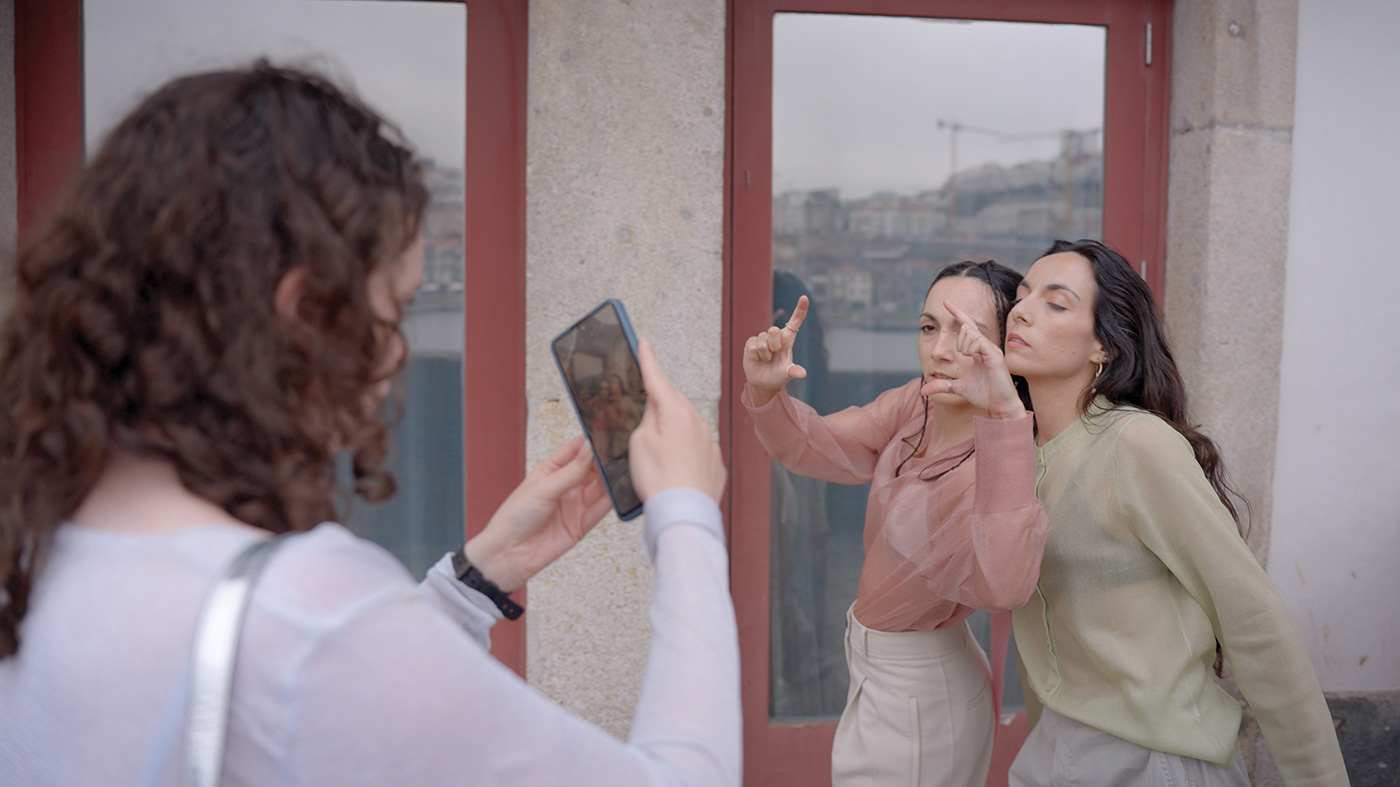
By pulling the four women in the film together, with particular focus given to footage of the busy streets, Approx 1 Second of A Sweet Kiss draws attention not only to the intimacy of their dialogue but also to a broader sense of rhythm, imagined, as Franco ‘Bifo’ Berardi puts it, not just as ‘vocal emissions or […] the sound of acoustic matter’ but also rhythm as ‘the vibration of the world’. [3] In this context, touch becomes a connective tissue between the protagonist and the city. A long hug amid the backbeat of an ultra-quiet, ultra-manic drum set strengthens the disordered pattern of the work. The film is punctuated by several technological interventions. In one scene, a dusty television on mute displays a video of Lana Del Rey singing, an ‘image of a moment bathed in a light that is its alone’ to borrow Annie Ernaux’s phrase, from her collective feminist autobiography, to describe those images which follow us, both ordinary and imaginary, and then inexplicably vanish.
Lisa Freeman is an artist and filmmaker based in Dublin, Ireland. Her work draws into question economic and power structures and explores how intimacy might be employed as a form of resistance. Recent works have examined the everyday, where the city’s sounds play in the dreams, nostalgias, or hopes of another and where small moments lead to more surreal events (Slipped, Fell and Smacked my Face on the Dance Floor), and social isolation in the public realm (Hook, Spill, Cry Your Eyes Out). Freeman is a studio member at Temple Bar Gallery + Studios, Dublin. She has received several Bursary and Project awards from the Arts Council of Ireland. Her work is held in the collection of the Arts Council of Ireland. Freeman has taken part in residencies in South Korea (BARIM Arts, 2016), and Cité Internationale des Arts Paris x Institut Francais, supported by Temple Bar Gallery + Studios Dublin and Bétonsalon, Paris (2025).
Moritz Frei
Am I the sleeping bag of my soul?
Experimental film | mp4 | color | 3:53 | Germany | 2025
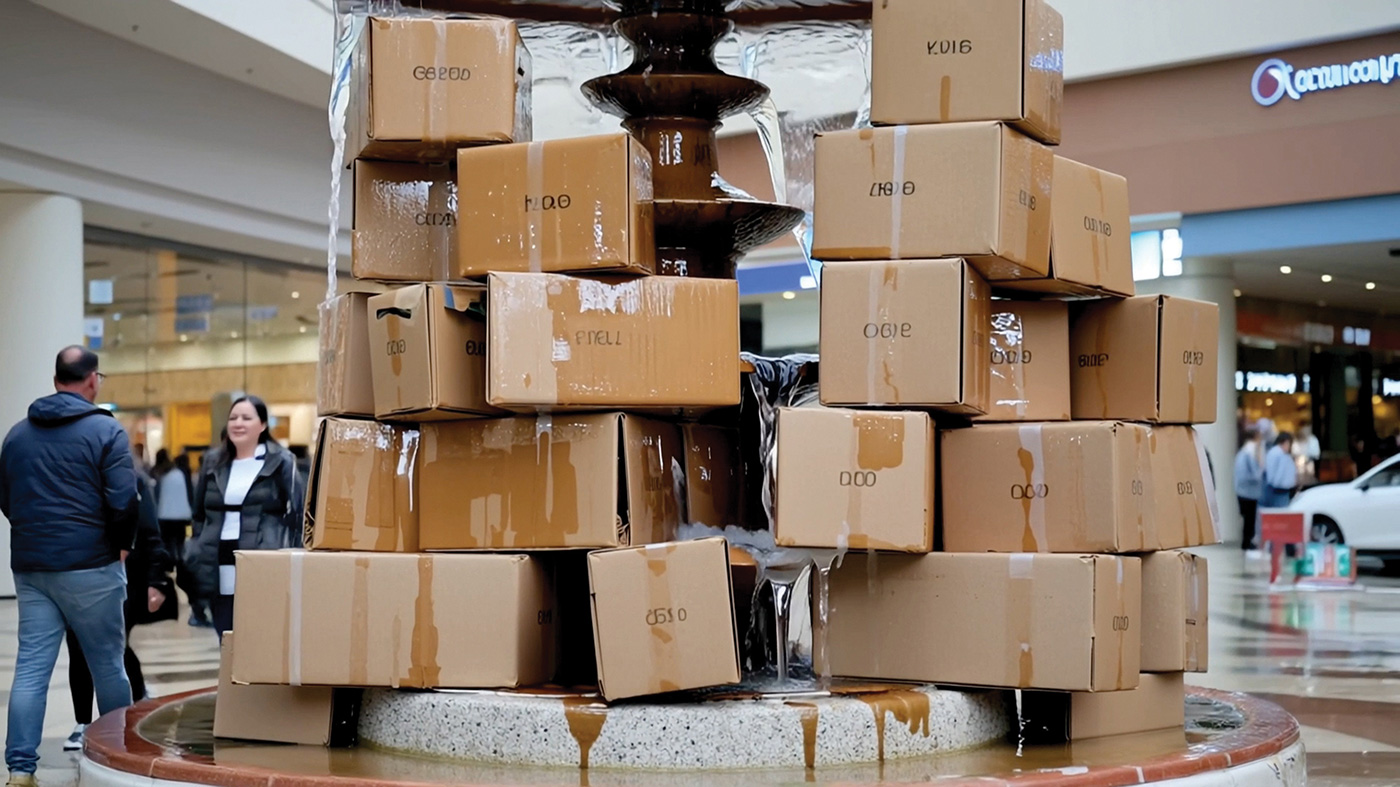
Clowns at a flooded piano, eerie stockbrokers, cardboard fountains in urban spaces. Without a clear narrative structure, the boundaries between self, body and consciousness become blurred. Familiar signs appear alienated, spaces dissolve, meanings remain elusive. Despite its abstraction, the film seems strangely connected to our present. It is as if it were uncovering a deeper unease beneath the surface of everyday images, one that is difficult to name but remains palpable.
Moritz Frei is a visual artist who works with installation, video, text and sound. His practice moves between analysis and absurdity, using humour as a strategy to question social and media structures. Experimentation and possible failure are integral parts of his artistic process, allowing him to playfully explore control mechanisms and perception. Frei studied at the Academy of Visual Arts in Leipzig. For many years, he worked part-time in video stores, the Filmgalerie 451 Berlin and Alpha 60 Leipzig, both renowned centres for experimental and international cinema. This experience sharpened his eye for the materiality and power of moving images. The initial moment for his artistic and cinematic work was Moritz Frei's first cup of coffee with Bruno Ganz for his film ‘Meine erste Tasse Kaffee’ (My first Cup of Coffee).

Soren Thilo Funder
Mirror Touch (Archipelago DLC_01)
Fiction | 4k | color | 19:21 | Denmark | 2024
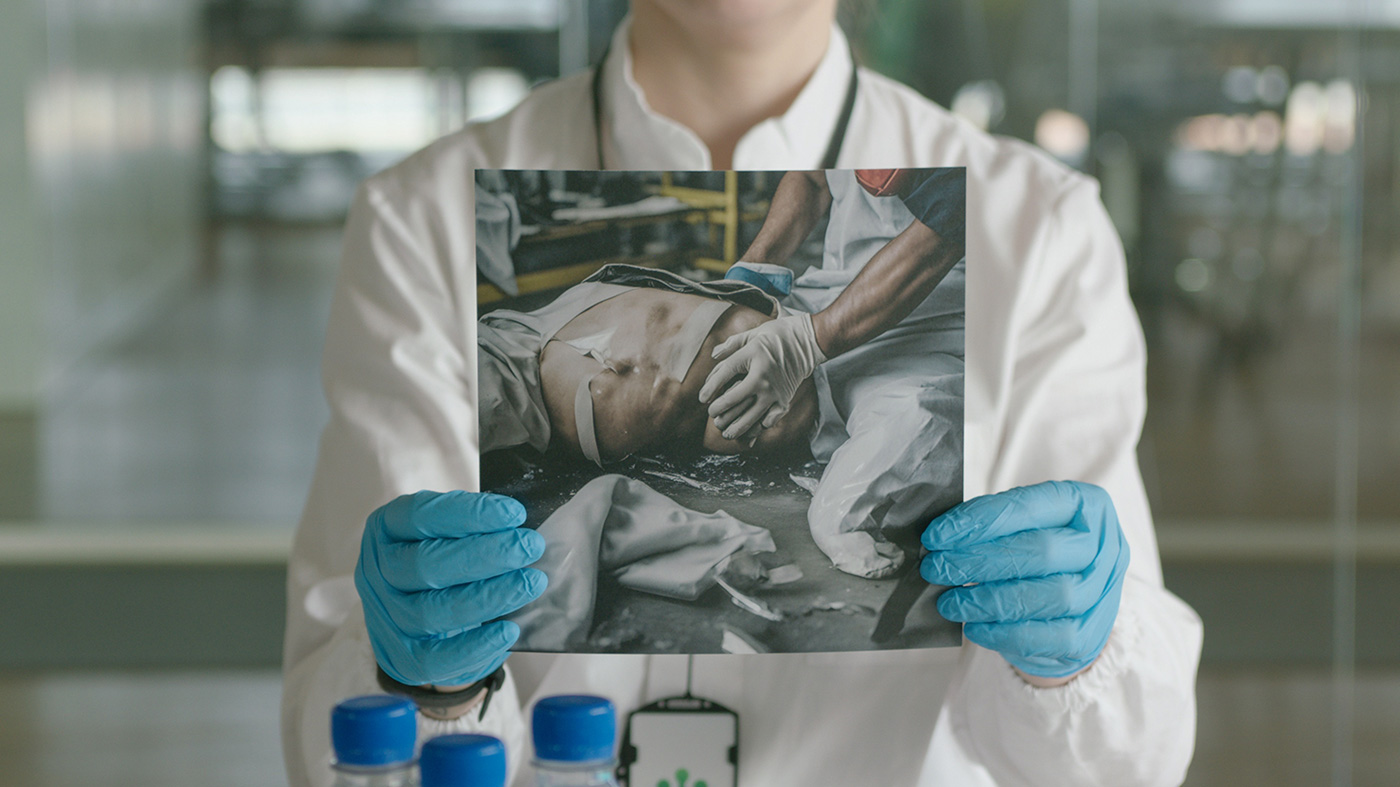
Mirror-touch synesthesia" is a neurological phenomenon where a person feels the same touch as they see another person experiencing. Stimuli on one sense thus trigger a feeling in another. In the video work ’Mirror Touch (Archipelago DLC_01)’, employees at the high-frequency trading company Archipelago™ are subjected to a series of experimental tests in the development of synthetic empathy. The process aims to reunite the body's space with the cognitive; the corporeal with the immaterial; the real with the imaginary. Accompanied by the film's actors, the viewer is led by a commanding voice on a suggestive journey from the trading terminals to the physical reality of the factory. Here, we are reminded of the factory floor's still indisputable and violent physical reality and the worker's body as a physical witness to the violent imprint of progress.
Søren Thilo Funder is a visual artist working primarily with video and installation. His works are mash-ups of popular fictions, cultural tropes and socio-political situations, projections and histories. They are narrative constructions that insist on new meaning being formed in the thin membrane separating fictions from realities. Invested in written and unwritten histories, the paradoxes of societal engagement, temporal displacements and a need for new nonlinear narratives, Thilo Funder proposes spaces for awry temporal, political and recollective encounters.
Thomas Fürhapter
Cleaning & Cleansing
Documentary | 4k | color | 91:37 | Austria | 2024
In Cleaning & Cleansing, director Thomas Fürhapter offers a meticulous and haunting meditation on modern society’s obsession with purity, order, and control. Through a series of observational vignettes, the film examines spaces and practices where physical cleanliness intersects with psychological and ideological cleansing. With precise cinematography and a minimalistic narrative approach, Fürhapter challenges viewers to reflect on the boundaries between hygiene, surveillance, and conformity. The film unfolds like a quiet, unsettling symphony of routines and regulations, inviting us to question what lies beneath the surface of our polished realities.
Thomas Fürhapter was born in Vienna, Austria. He studied philosophy at the University of Vienna and is now a writer, director and producer. His films have been screened and awarded at numerous festivals including Sarajevo, Zurich FF, CPH:DOX, DOK Leipzig, DOK.Munich, Sheffield, DOCVILLE Leuven, BAFICI, Anthology Film Archives NY, DOXA Vancouver, FID Marseille, etc.

Sophia Lorena Gamboa Huamán
I thought about leaving traces
Experimental film | mov | color | 5:10 | Germany | 2025
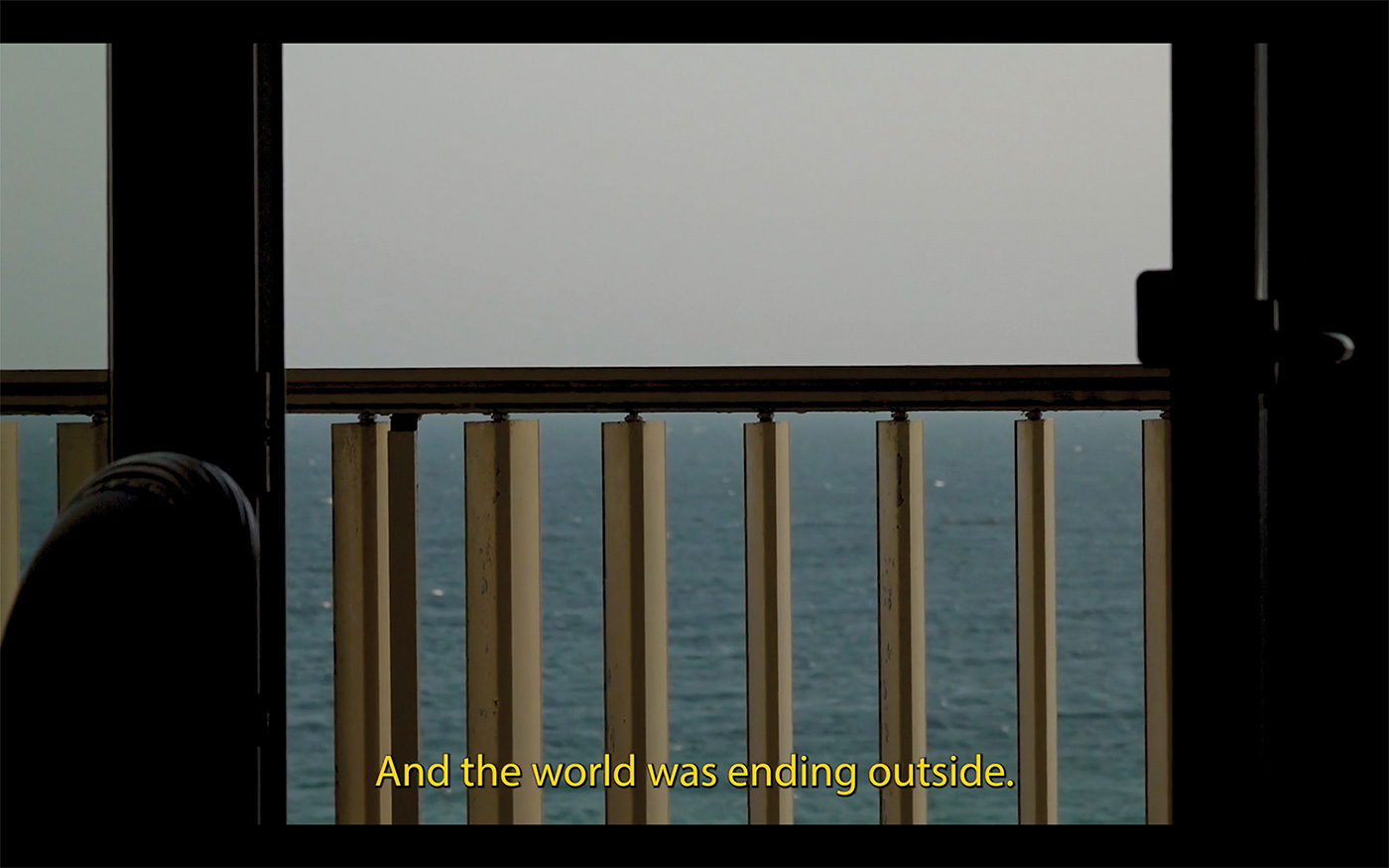
A silent, dreamlike monologue by an invisible figure. Past, present and future intermingle - are we watching or being watched? Fear of the future seeps through fragments of recollection, where truth shifts like light on water. Beneath the silence lies a quiet reclusion — a retreat from others, yet a yearning for connection.
She studied Media Arts at the Academy of Media Arts Cologne, followed by studies in Archaeology and Musicology. For the past ten years, the filmmaker has worked in various roles including as an editor and producer. As such, and as a director, her short and feature films have been screened at festivals including Oberhausen Short Film Festival, the Max Ophüls Prize Film Festival, Hof International Film Festival, the Cannes Film Festival, and others.