Catalogue > Search
Results for : Tout le catalogue

Rampe Aktion
Close Your Eyes and Imagine: Arbeit - Ein Brainstorm mit Harun Farocki
Experimental doc. | mp4 | color | 8:45 | Germany | 2023
"Close your eyes and imagine: ARBEIT" is an experimental video project in which we searched for positions, perspectives, contradictions, wishes, utopias and imaginations around the term "work" together with young people from the Marienfelde transitional home in Berlin. We were inspired by the film "Workers Leave the Factory" by Harun Farocki and remixed it with our own voices, perspectives and images.
We are a group of friends with different interests and work focuses that came together in 2019 around Christian Limber, Miriam TrostorfChristian Diaz Orejarena und Lara Dade. Since then, we have been connecting with more and more friends and colleagues - also in an international context. We work and think together on a mediation practice that transcends disciplines and is located at the intersections of visual art, social work, film, art education, activism and curating. Partly we realize projects together, in smaller groups or alone - but always in exchange and dialogue with each other.
Liane Al Ghusain, Tarnowski Alghusain
Takht Coco
Experimental doc. | mp4 | color | 6:26 | Kuwait, Lebanon | 2013
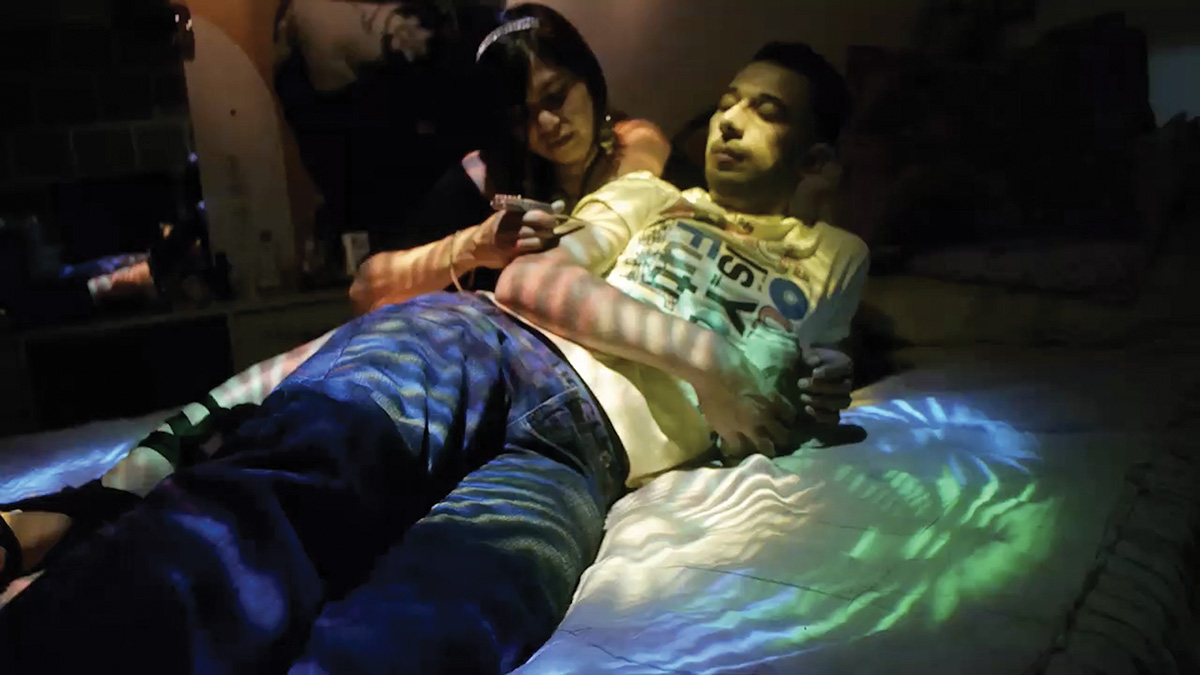
'Coco's Bed' is a short film created for viewing on the iPad mini, commissioned for the X-apartment installation series by producer Matthias Lilienthal. X-apartment audience members follow Hassan, the protagonist of the film, to his own apartment where they find him in the flesh as well. 'Coco's Bed' was available on view for three days in July 2013 in the Bourj Hammoud district of Beirut. The neighborhood began as an informal refugee camp for Armenians fleeing the genocide in Turkey. It now additionally houses a large and diverse population of immigrants and asylum seekers from countries including Syria, Ethiopia, and the Philippines.
Stefan Tarnowski is a PhD Candidate at Columbia University’s Anthropology Department, Institute of Comparative Literature and Society and Institute for Comparative Media. His research focuses on Syria since the 2011 revolution, and in particular on the relations between technology, political economy and social imaginaries. He has a degree in Middle East Studies from Oxford University. His ethnographic fieldwork with Syrian media activists and civil society organisations was also funded by a grant from the Wenner-Gren Foundation 2018-19, and his most recent publication is a translation of and introduction to Dork Zabunyan's The Insistence of Struggle (IF Publications, 2019). Liane Al Ghusain (b. 1987, Kuwait) is an artist based in Abu Dhabi. Currently enrolled in the MFA program in Art & Media at NYUAD; she works primarily as a performance artist exploring various literary and craft forms. Born in Kuwait to a Palestinian family, Liane has focused on theater and writing throughout her life, having received a BA and MA in English with a focus on creative writing from Stanford University, with interdisciplinary honors in feminist studies. She has worked as an arts administrator, copywriter, language instructor, and yoga teacher.
Monira Al Qadiri
Crude Eye
Experimental film | 4k | color | 10:0 | Kuwait, Germany | 2022
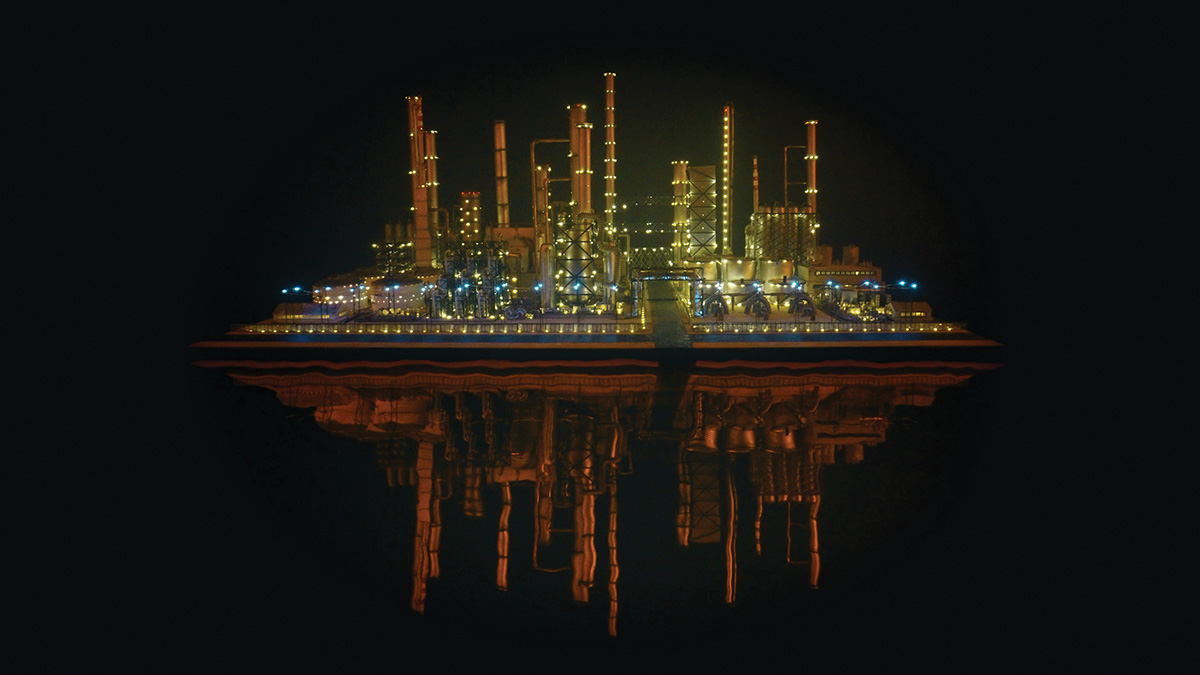
Growing up in Kuwait close to an oil refinery by the sea, the artist would create stories for the distant petroleum operation while passing by on a traffic bridge. As she envisioned an expansive panorama of lights, fire, smoke, and towers, Al Qadiri imagined it was a city-metropolis—"filled with beings and phantoms from another world.” This dream-like film hearkens back to these childhood memories, fusing eerie, slow views of a reconstructed miniature refinery with lines from poems about city lights and industrial landscapes. Crude Eye blurs reality with speculative memory, and we are unable to tell if the scene is a real place or a fantasy. The artist says: “The work attempts to reconcile a sense of childlike wonder with the toxic environmental destruction that the refinery inherently represents.”
Monira Al Qadiri (b. 1983) is a Kuwaiti visual artist born in Senegal and educated in Japan. Spanning sculpture, installation, film and performance, Al Qadiri's multifaceted practice is mainly based on research into the cultural histories of the Gulf region. Her interpretation of the Gulf's so-called "petro-culture" is manifested through speculative scenarios that take inspiration from science fiction, autobiography, traditional practices and pop culture, resulting in uncanny and covertly subversive works. She is currently based in Berlin.
Monira Al Qadiri
Behind the Sun
Video | hdv | color | 10:0 | Kuwait | 2013
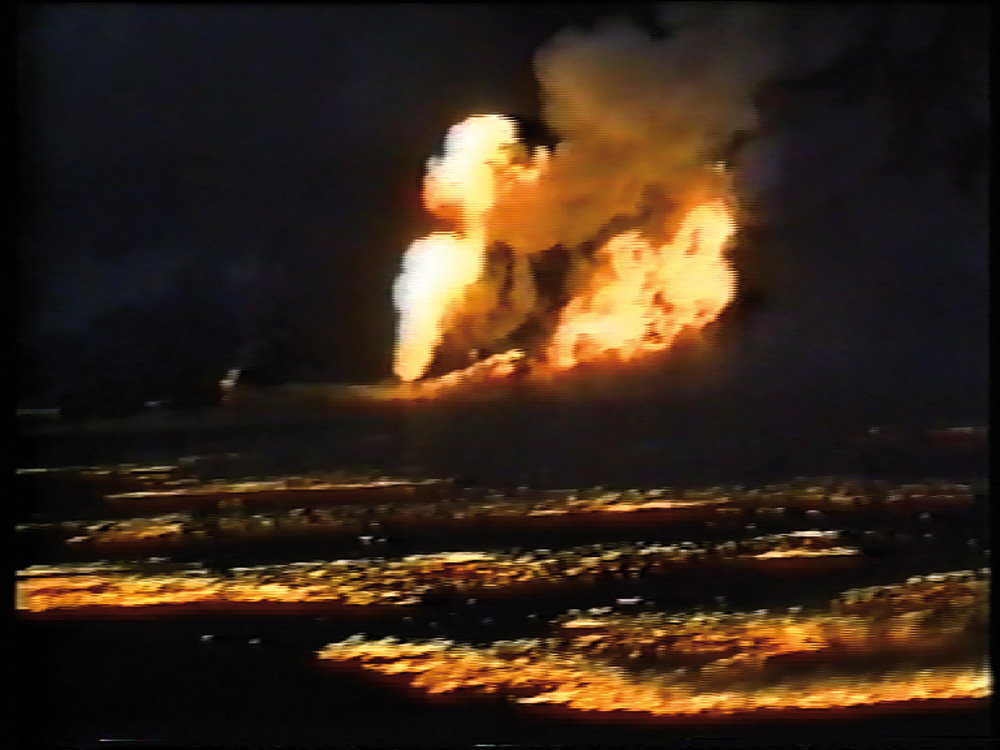
After the first Gulf War in 1991, countless oil fields in Kuwait were set ablaze during the retreat of invading forces. Those months following the war were nothing short of the classic image of a biblical apocalypse: the earth belching fire and the black scorched sky felt like a portrait of hell as it should be, an almost romanticized vision of the end of the world. Werner Herzog, lured by the surrealism of this present-day hell, shot his docu-fiction film “Lessons of Darkness” there which placed images of the oil fires alongside Christian biblical texts and a Wagner soundtrack. Inspired by his endeavor, this video re-explores the cataclysmic event and attempts to expand its meaning, especially as the idea of imminent doom is even more omnipresent today. Amateur VHS video footage of the oil fires is juxtaposed with audio monologues from Islamic television programs of the same period. At the time, the tools used to represent religion were geared towards visualizing god through nature. Trees, waterfalls, mountains, and animals were the visual staple of religious media, and the narration was not that of the Koran, but of Arabic poetry recited by a skilled orator with a deep voice.
Monira Al Qadiri is a Kuwaiti visual artist and film maker born in Senegal and educated in Japan. In 2010, she received a Ph.D. in inter-media art from Tokyo University of the Arts, where her research was focused on the aesthetics of sadness in the Middle-East region stemming from poetry, music, art and religious practices. Her work explores the relationship between narcissism and masculinity, as well as other dysfunctional gender roles. She is currently expanding her practice towards social and political subjects. Al Qadiri has taken part in exhibitions and film screenings in Tokyo, Kuwait, Beirut, Dubai, Berlin, New York and Moscow among others. She is also part of the artist collective GCC, who has recently held a solo exhibition at MoMA PS1 in 2014.
Monira Al Qadiri
The Craft
Experimental film | hdv | color | 16:0 | Kuwait | 2017
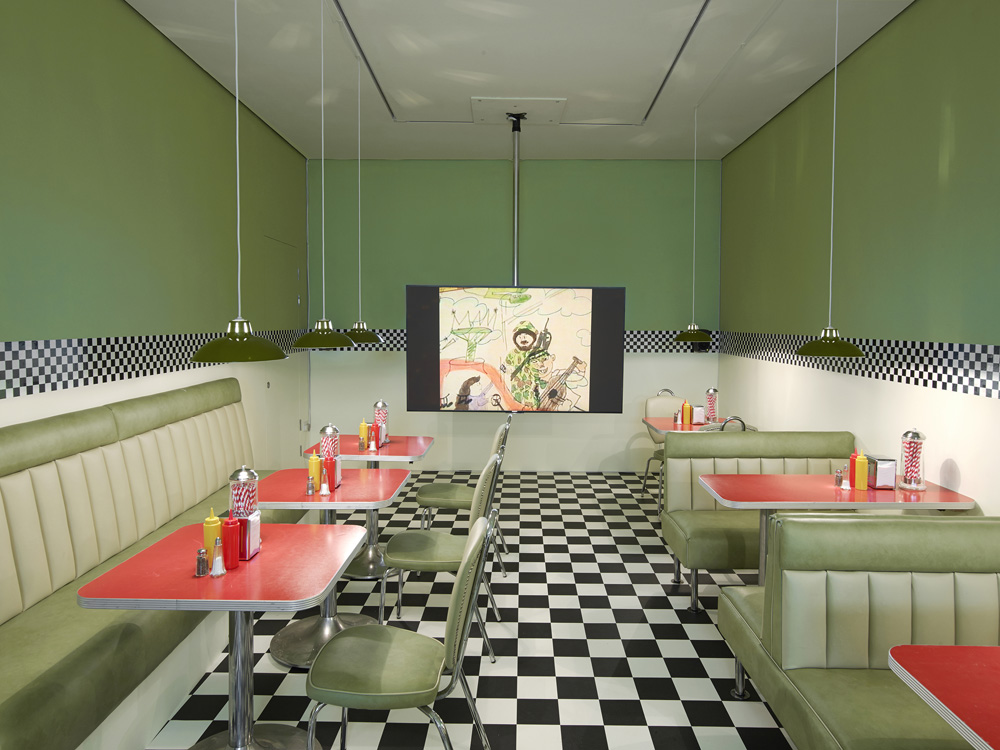
“ The Craft ”is a film that revolves around childish fictions laced with serious suspicions towards the real world. Using the lens of family history, the film dissects the artist’s own past to reexamine an uncanny relationship taking place in the shadows of her major life events: “ Were my parents conspiring with aliens behind my back ” Reality gradually disintegrates like quicksand around this central question, as paranoia and speculation begin to take hold. Futuristic architecture, popular culture, dream readings, junk food, alien abductions, geopolitics, international diplomacy, war and peace; all of these once solid staples of modern life now become tinted with a general sense of distrust, overshadowing everything. Like a ticking time bomb at the center of the nuclear family unit, the suspicion reaches a crescendo when the protagonist suddenly discovers that the American century has finally ended.
Monira Al Qadiri is a Kuwaiti visual artist born in Senegal and educated in Japan. In 2010, she received a Ph.D. in inter-media art from Tokyo University of the Arts, where her research was focused on the aesthetics of sadness in the Middle-East stemming from poetry, music, art and religious practices. Her work explores unconventional gender identities, petro-cultures and their possible futures, as well as the legacies of corruption. She is also part of the artist collective GCC, who held a solo exhibition at MoMA PS1 in New York (2014). Monira was recently based in Amsterdam, and underwent a two year artist residency at the Rijksakademie until the end of 2017.
Sara Alavanic
Fleka
Fiction | mov | color | 21:36 | Croatia | 2024
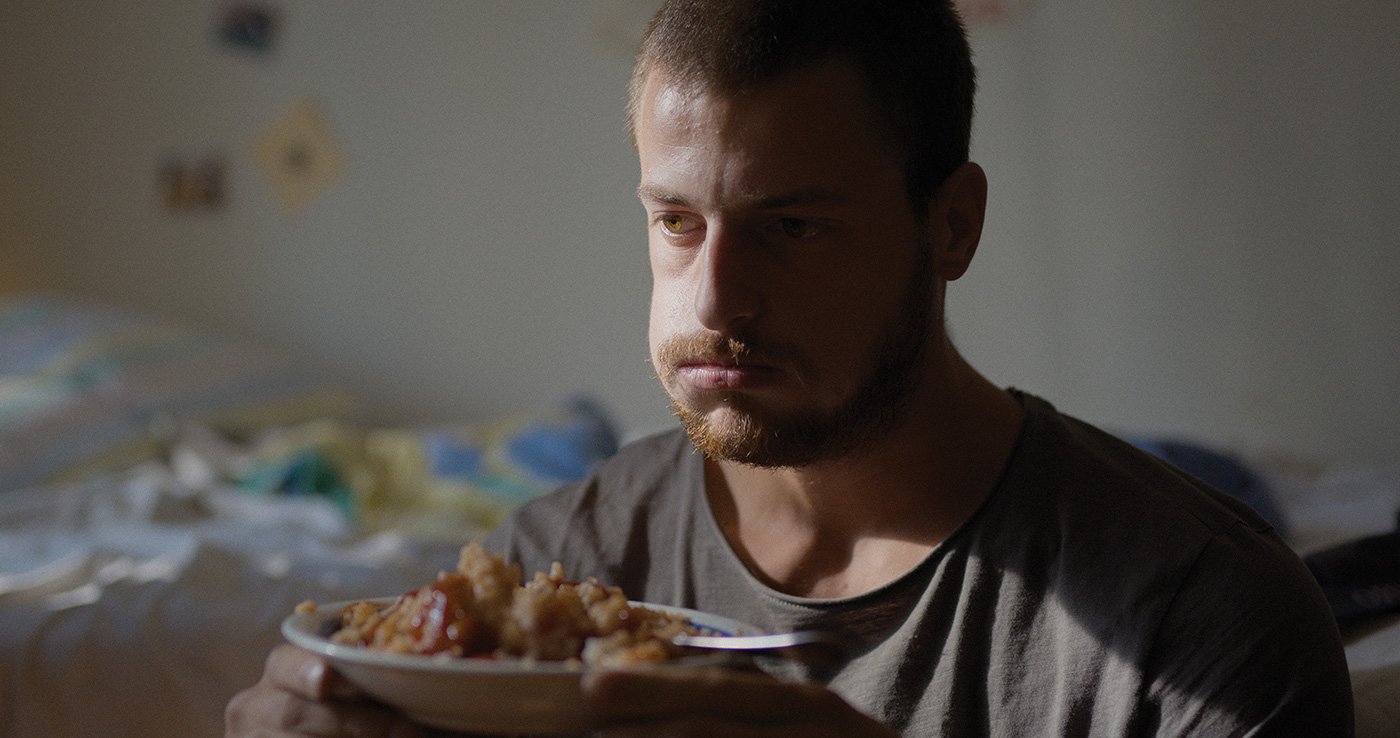
Spot doesn’t leave the vicinity of his building. He spends time with his neighbors and occasionally skateboards. Since his mom ended up in a psychiatric clinic, his best friend is his only family. Sometimes, he passes the time with a neighbor who has mental health issues and has adopted a pig. Soon, he realizes that this neighbor is his only friend.
Sara Alavani? (Croatia, 1998) completing her Master’s degree in Film and TV Directing at Zagreb’s Academy of Dramatic Arts. She also holds a degree in Graphic Design from the Faculty of Graphic Arts in Zagreb. She is a member of Blank_Film Incubator, where she directed her first films People Stink, But They’re Warm (Pula Film Festival 2020) and Do You Feel Nervous When I Approach You? (ZagrebDox 2020). Her most recent film Spot, premiered at Zagreb Film Festival (2024) and won the Golden Pram.
Loukia Alavanou
On the Way to Colonus
VR 360 video | mov | color | 20:0 | Greece | 2021
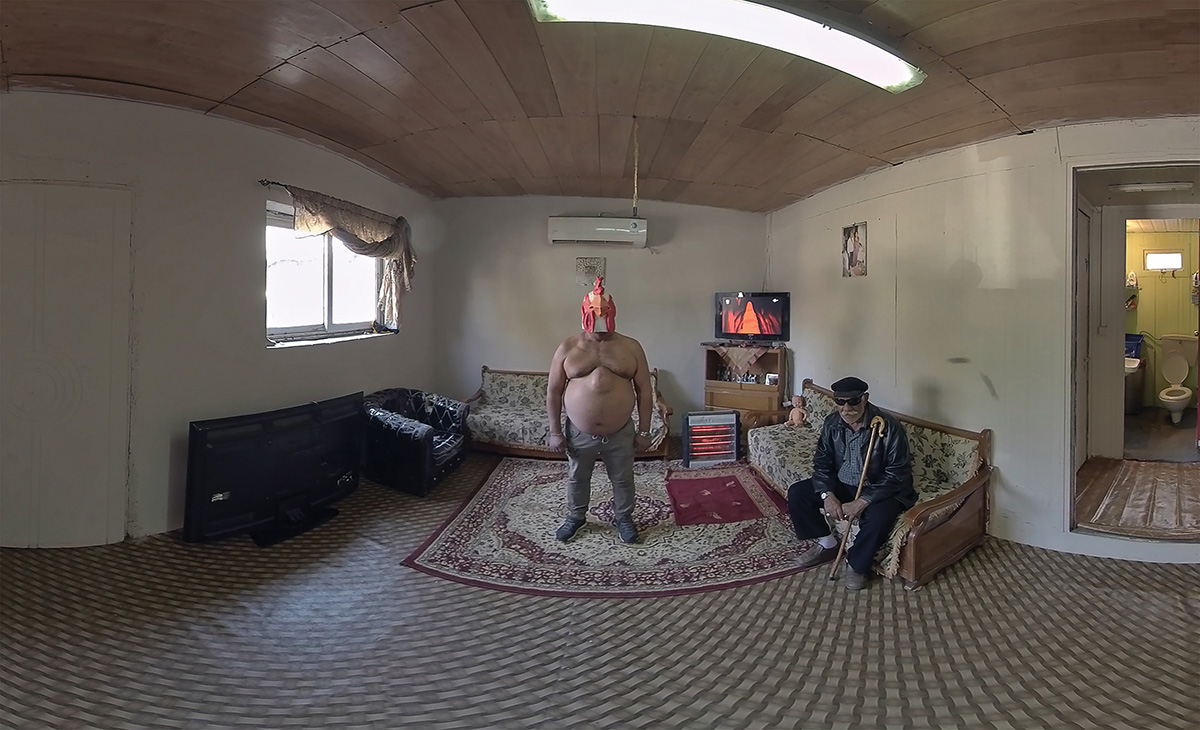
Blind Oedipus, in older age, left Thebes as an exile accompanied by Antigone, who was both his daughter and sister. They sought refuge in Colonus of Athens. What if the tragic hero of Sophocles’ play 'Oedipus at Colonus' was a Romani nomad residing in today’s post-industrial outskirts of western Athens? OTWTC is a ‘docufictional’ VR film cast with Romani amateurs who live at the ghettoised toxic wastelands of Thriasian Plain, where Sophocles’ wandering hero is meant to have passed from. Consisted of a spatial sound design (ambisonics), the film's audio incorporates location sounds recorded inside the dwellings that merge “high” and “low” culture, often carrying with them the “eerie echoes” of dubbed TV series, speaking themselves about “Oedipal conflicts”, ‘absent fathers’, ‘incest’, murder and death.
Loukia Alavanou is a moving image artist and filmmaker. She is representing Greece at the 59th Venice Art Biennale with the exhibition “Oedipus in Search of Colonus. Alavanou holds an MA in Photography from the RCA in London. She was the winner of the 5th Deste Prize. In recent years, after receiving international acclaim, she started to be involved with the production of VR films and founded the first VR production company in Greece. She held a retrospective exhibition at State of Concept, Athens in 2018. For the years 2021 and 2022 Alavanou is a fellow artist at ONX Studio, organised by Onassis USA and the New Museum in NY. Alavanou’s work has been presented by institutions and festivals including KANAL Centre Pompidou, Accelerator, Stockholm, Gucci Garden, Kino Der Kunst, Palais de BOZAR, Palais de Tokyo, Athens Biennale, Moscow Biennale, Fiorucci Art Trust, The Museum of Cycladic Art, Benaki Museum. Her films are part of numerous collections including the Onassis Collection, the Dakis Joannou Collection, The Center for Art and Media Karlsruhe/ ZKM, PCAI/ Polyeco Contemporary Art Initiative.
Jean-baptiste Alazard
La Buissonnière
Documentary | hdv | color | 59:0 | France | 2013
It`s summertime. A pilot and a copilot wander on lost roads, looking for absolute.
Michiel Alberts
Another Gate Before the Law
Experimental video | hdv | black and white | 17:13 | Netherlands | 2017
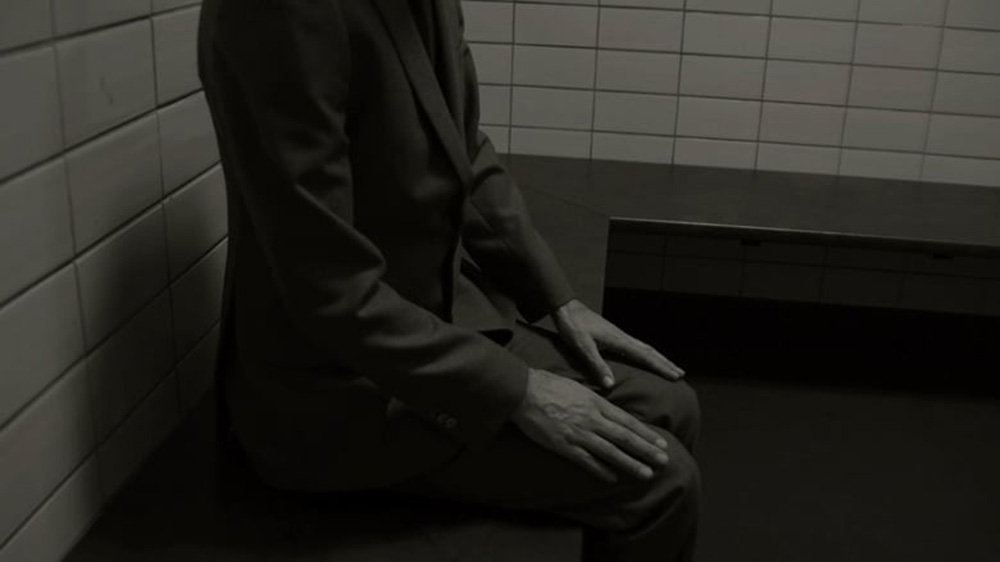
Another Gate Before The Law (HDVideo, B&W, 17m13, Michiel Alberts, 2017) Michiel Alberts is currently working on a series of K. Films. The films relate to different short texts by F. Kafka. Michiel Alberts performs and films his actions in order to transform the stories into a visual image bringing it to current and existential scenery. The film Another Gate Before The Law refers to the text Before the Law, by F. Kafka. The film is a dark poetic image dealing with the present state of our time and to current human conditions.
(Born The Netherlands, 1972. Lives and Works in Antwerp, Belgium.) Michiel Alberts is a Visual artist working with the media Performance, Film and Photography. In his film works he focuses upon his performative presence, movements with duration or repetitive actions. Through the usage of single angel point, the audience is invited to experience a frozen state and relate to existential questions and human conditions. His films can be described as a still picture moving, a state of presence unresolved. “ My physical presence functions as a performative tool to question human conditions, cosmic order, time and landscapes. Through forms of abstraction I bring my content from a specific happening, or a specific social context to a larger existential scenery." Michiel Alberts has studied Visual Art at the H.I.S.K. institute in Antwerp and Gent (2008). He also completed a Master of Arts at Dasarts in Amsterdam (2005) and completed the Acting School of Maastricht (1997)
Paula Albuquerque
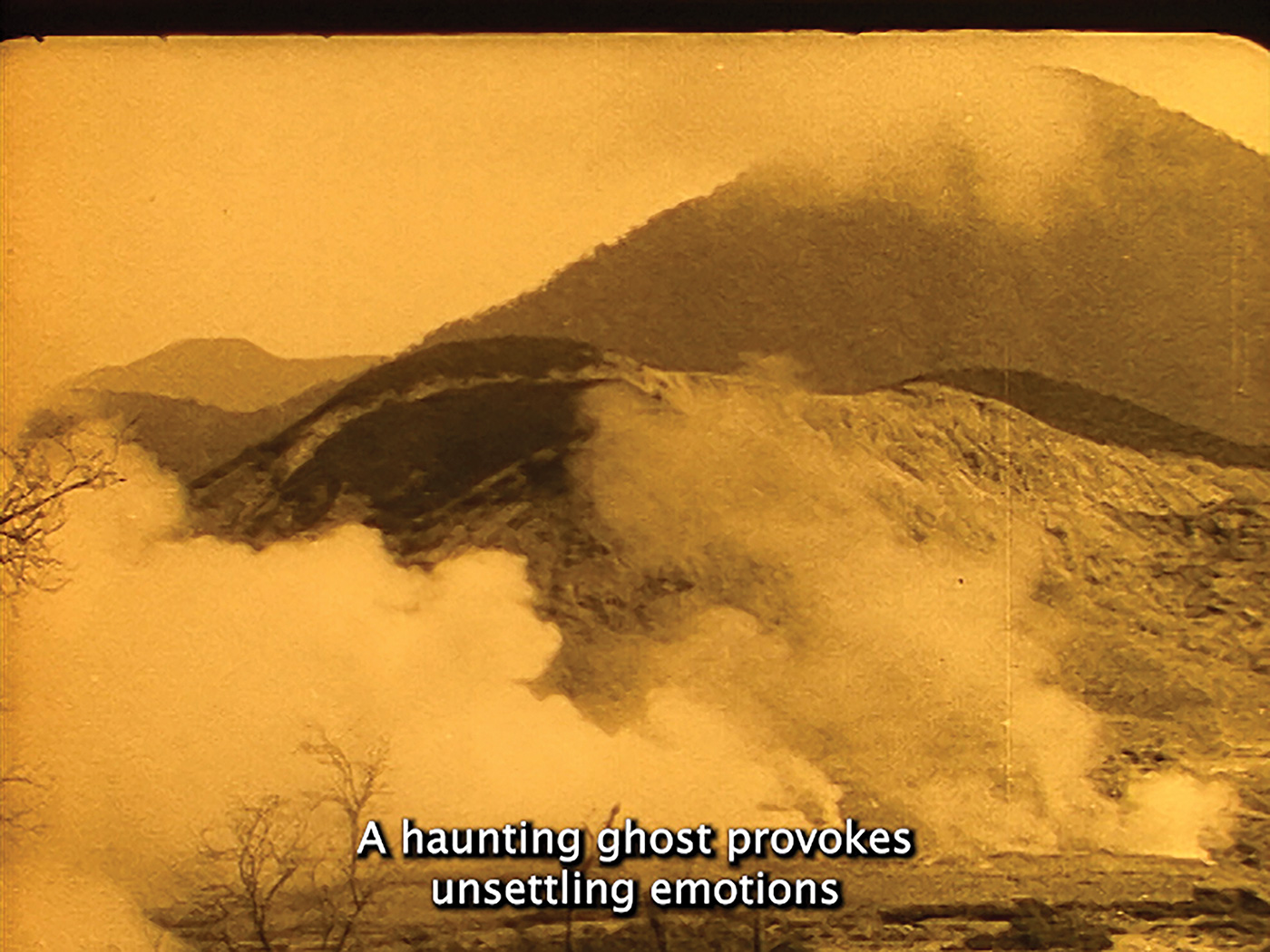
Siluman - Stealth, Invisible, Ghostly, Phantom-Like
Experimental doc. | 0 | color | 24:0 | Portugal | 2024
During her research at EYE Filmmuseum archive, Paula Albuquerque has encountered travelogues, home movies, and institutional films made by Dutch settlers in Indonesia, which bypass the colonial conflict to present a benevolent relation to the local people. Siluman challenges the Western and masculine aesthetic notion of the sublime to expose film’s construction of the colonial landscape as exotic, including indigenous people as part of nature and awaiting structure and exploitation. It unveils early colonial documentary’s haunting of the contemporary reality of Buruh Siluman, which is the Indonesian term for palm oil plantations’ women “ghost-workers.”
Albuquerque is an Amsterdam-based Portuguese artist and scholar showing work in solo exhibitions at galleries Zone2Source (2024); Bradwolff Projects (2023, 2018, 2015), Looiersgracht 60 (2023) and Nieuw Dakota (2020); with films at International Film Festivals UnArchive (2025); IDFA (2024); Ji’hlava IDFF (2024); DocAlliance (2024); DocLisboa (2023); Sheffield DOC|Fest (2020) and Rotterdam IFFR (2016); and conferences EYE International; Media in Transition at MIT; NECS; and Visible Evidence. She published the books Enter the Ghost—Haunted Media Ecologies (2020) and The Webcam as an Emerging Cinematic Medium (2018). She is currently a Senior Researcher at Gerrit Rietveld Academie, an Assistant Researcher at the Universidade Nova de Lisboa, and a Supervisory Board member of the Framed Framed Contemporary Art Platform.
Almourad Aldeeb
Flut
Experimental doc. | 16mm | color | 11:25 | Syria, Germany | 2022
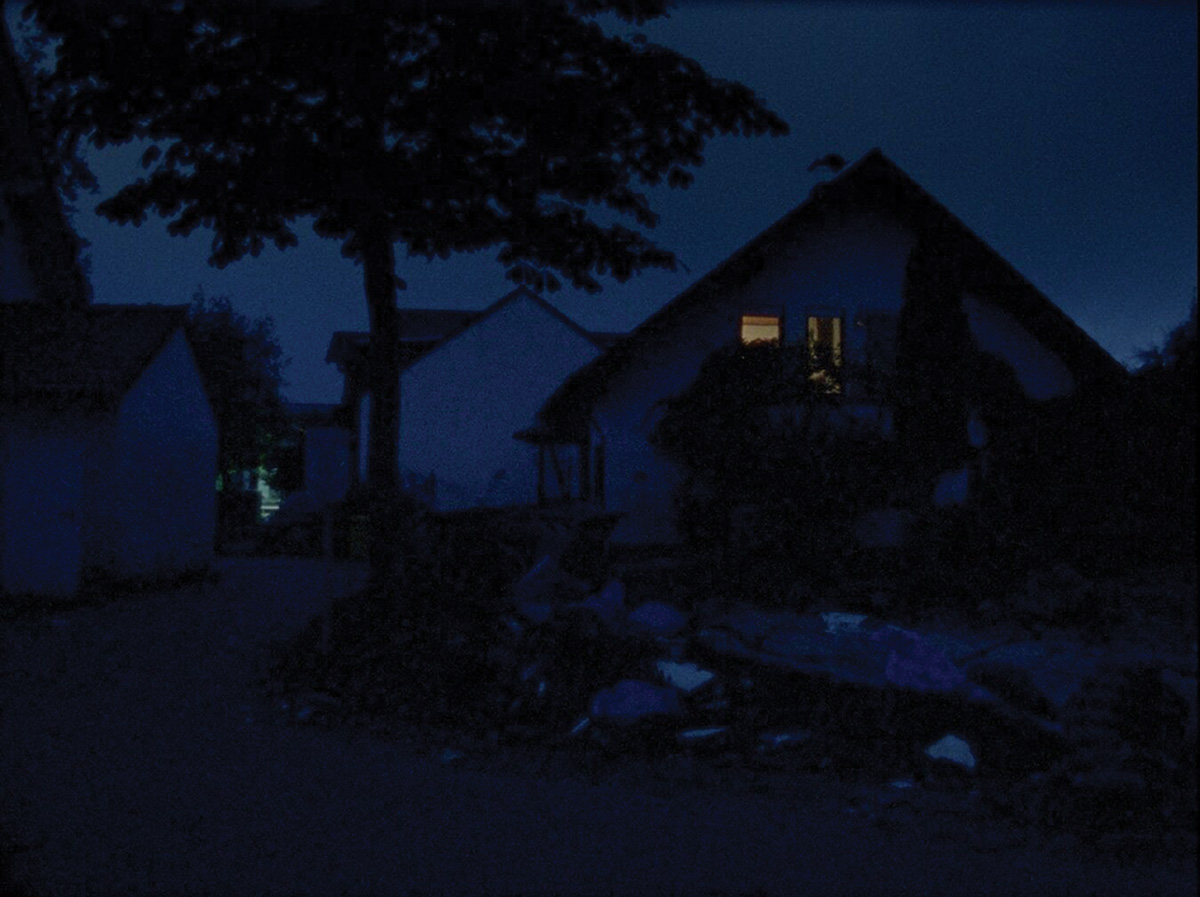
On the 14th of July 2021, the Ahr valley in the Rhineland experienced a natural disaster: a flood took the lives of more than 130 people. The town of Ahrweiler looks like a ghost town - a dystopian sight. Abdo, a resident of the town, shares the grief of loss and relives the feeling of fear and powerlessness. For Abdo, who was born and raised in Aleppo/Syria, it is not the first catastrophe.
Almourad Aldeeb (he/him) is a Syrian filmmaker based in Germany. He was born and raised in Homs, Syria 1991. Currently, he is studying film at the Academy of Media Arts in Cologne. His practice is a search for a poetic reflective expressions, and intense narrative forms..
Adrian Alecu
Gravitation
Experimental fiction | hdv | color | 3:0 | Romania, Netherlands | 2011
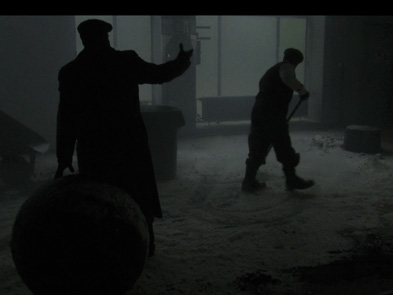
"GRAVITATION" deals with the idea of European identity and the desire to export it, desire which is deep inside of this identity. A long tradition. It is a tale of mistaken identity and murder, human weakness and individual deficiencies. It is a fatalistic tale of one man?s vain struggle to escape his own limitations, unfortunately an impossibility in the world of noir. The film Gravitation gives me the opportunity to investigate the structuralist film concept, the so-called ?Film Low?. The different actions which in the real life stay under the Nature Low, will have to be in the film under the ?Film Low? : montage, light, perspective, acting, actors and camera choreography and more others film components . Using very reduced but very eloquent / representative objects for the film set will create pictures which have to suggest the acting place. This objects must have a strong relation to the `film place` (typical for the place) so that the viewer, by his visual perception, can be able to trust the authenticity of the picture as a film construction - instead as an illustration. The question for me, is how far I can reduce this elements and on which things, on which elements I have to reduce the decoration of the film `stage` to get the visual suggestion instead of the illustration. That it is one of my research point. The Film will use apparently prosaic structures (narration) but during the editing and the alienation process it has to be percepted as a poetic work. Poetry deals with tempo, with rhythm. In the film, economic tempo and rhythm are matters who belong and are decided more in the editing room. The alienation process is one of the main points in my Film. The Film process have to be transparent, so that film structures and effect modalities will recognize it. I believe that this transparency offers the opportunity to reflect about new modalities of telling a story using the Film. To me, this alienation process helps us to make our `automated` perception - by language and social conventions, more difficult and thereby to get a new vision of the things which can correct our relationship to the environment. Then new forms appear, and this forms and their determinant process become the actual object of artistic perception, in the end the the art subject. Using a linear visual guided treatment will permit to give up a psychological motivation, and to make the non-artistic interpretations harder. The Sound will have a strict autonomous function in Film, and will try so much possible to not be used as a naturalistic synchronic language.
Born at 20 Mai 1972 in Bucharest / Romania EDUCATION 1990 2008 2011 Liceul ?Spiru Haret?, Bucharest / Romania Diplom in Art studies at the University of Fine Arts of Hamburg Jan van Eyck Academie post-Academic Institute for Research and Production Fine Art, Design, Theory, Maastricht / The Netherlands

Lev Aleshkin, Kalashnikova, homoabsurdus, Gorshunova,
«Das Unaussprechliche»
Performance | mp4 | color | 47:31 | Russia | 2024
«Whereof one cannot speak, thereof one must be silent» Ludwig Wittgenstein, Tractatus Logico-Philosophicus Nowadays we are witnesses to the world in the state of unceasing and disgusting war. As Russian citizens, we empathize with everybody who has suffered or whose family has suffered from this conflict. In our country, we can’t speak about that openly. We have to stop any attempts to talk about it. And every day we see the consolidation of political power, the tightening of laws and measures in relation to people who are against the war. When facts of the world become unspeakable, language loses its logical completeness and perfection, which are brought forth by Ludwig Wittgenstein in the «Tractatus Logico-Philosophicus». We're only left with the things outside of language - the unspeakable, the senseless. Things you can only show, not tell. From this point of view, «Das Unaussprechliche» is a reflection of the world, rather than broken up language. At the start, we're still bound by systems of symbols. Over the course of the performance we get to observe the participants gain new ways of communication, while the experience is recorded using photographs and graphs.
«Not quite open meetings» is an art collective, created by 2024` alumni of Institute of Contemporary Art Moscow. It emerged early in 2024 due to our reading-group where we can meet regularly and discuss philosophy and art. While all members of «Not quite open meetings» are also individual artists, we’re united by our shared object of interest and exploration - the Unspeakable. The term was coiled by Ludwig Wittgenstein and in our performance «Das Unaussprechliche» we gave it a somewhat unexpected spin. The problems that we address in our art and discussions are speechlessness, community, pressure, body. As a collective we hope to share our emotional experience, that is nowadays probably familiar to many, and weave our low-voice narrative together with you.

Lee Alex
the Fold
Experimental VR | mp4 | color | 0:0 | USA | 2019
"The Fold" is a non-linear film and virtual reality-based art game involving rooms with doors containing a concept folding into other rooms with doors. Inspired by Jorge Luis Borges' short story The Garden of Forking Paths, each room consists of an idea inspired by structuralist & surrealist literature, mathematics, the readymade virtual object, and more. This project is a virtual 'escape the room' concept where some rooms are puzzle experiences and others are more experiential. All rooms follow a similar visual monochromatic motif. To date, the project involves five rooms: the Doors, the Fold, the Grid, the Meridies, and the Cave. Subsequent rooms will be released as this project is a long-term episodic series. Chapter one is debuted at Berlin Recontres International.
Alex M. Lee is an artist who utilizes 3D animation, video game engines, virtual/augmented/immersive reality platforms, and the potential of simulation technologies in order to visualize and complicate our perception of time, space, image and light - culling from concepts within science, science fiction, physics, philosophy, and modernity. He received his BFA (2005) and MFA (2009) from the School of the Art Institute of Chicago. Born in Seoul, South Korea, Lee was raised in the USA and is associate professor in the Digital Arts & Sciences Program at Clarkson University located in Potsdam, NY - a private science and engineering university located north of the Adirondack Mountains where he divides his time between Potsdam and New York City. Lee has exhibited internationally in North America and Asia. Selected exhibitions include: Mio Photo, Osaka, Japan; Daegu Art Factory, Daegu, Korea; The Gene Siskel Film Center, Chicago, Illinois; Eyebeam: Center for Art & Technology, New York, NY; Gallery DOS, Seoul, Korea; Museum of Contemporary Art, Montreal, QC. His work has been published in articles covering art, science, and culture including: Metaverse Creativity, Canadian Art, and Routledge Press.
Amy Alexander
What the Robot Saw
Multimedia installation | 0 | color | 0:0 | USA | 2020
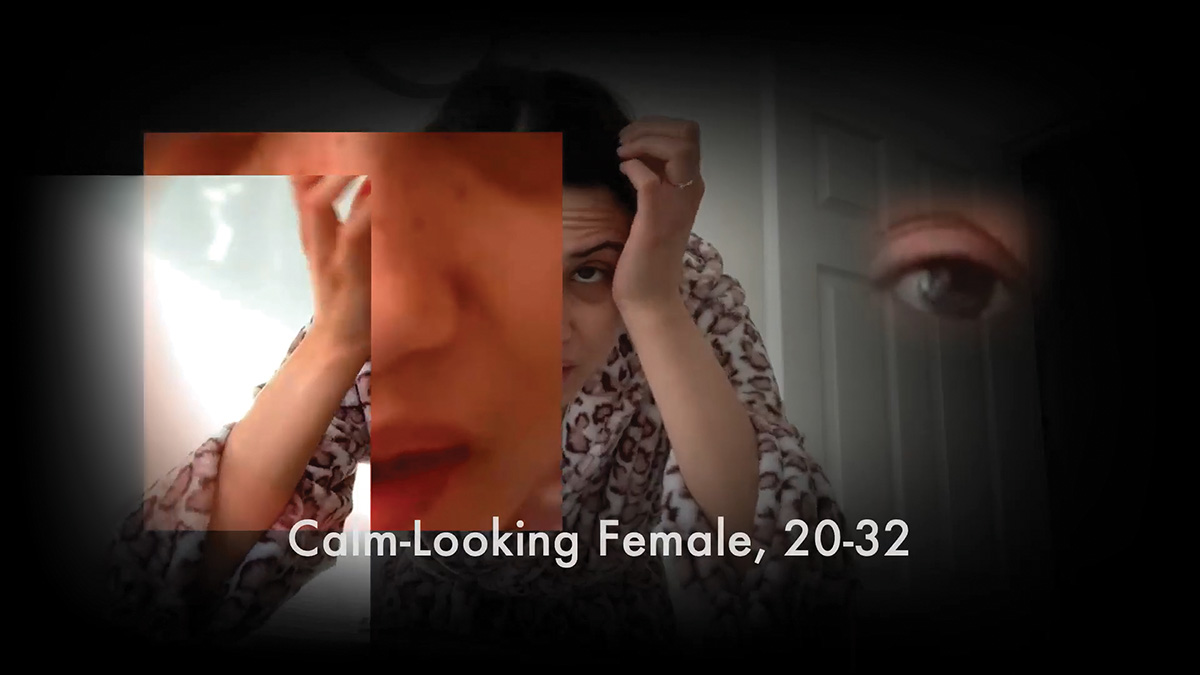
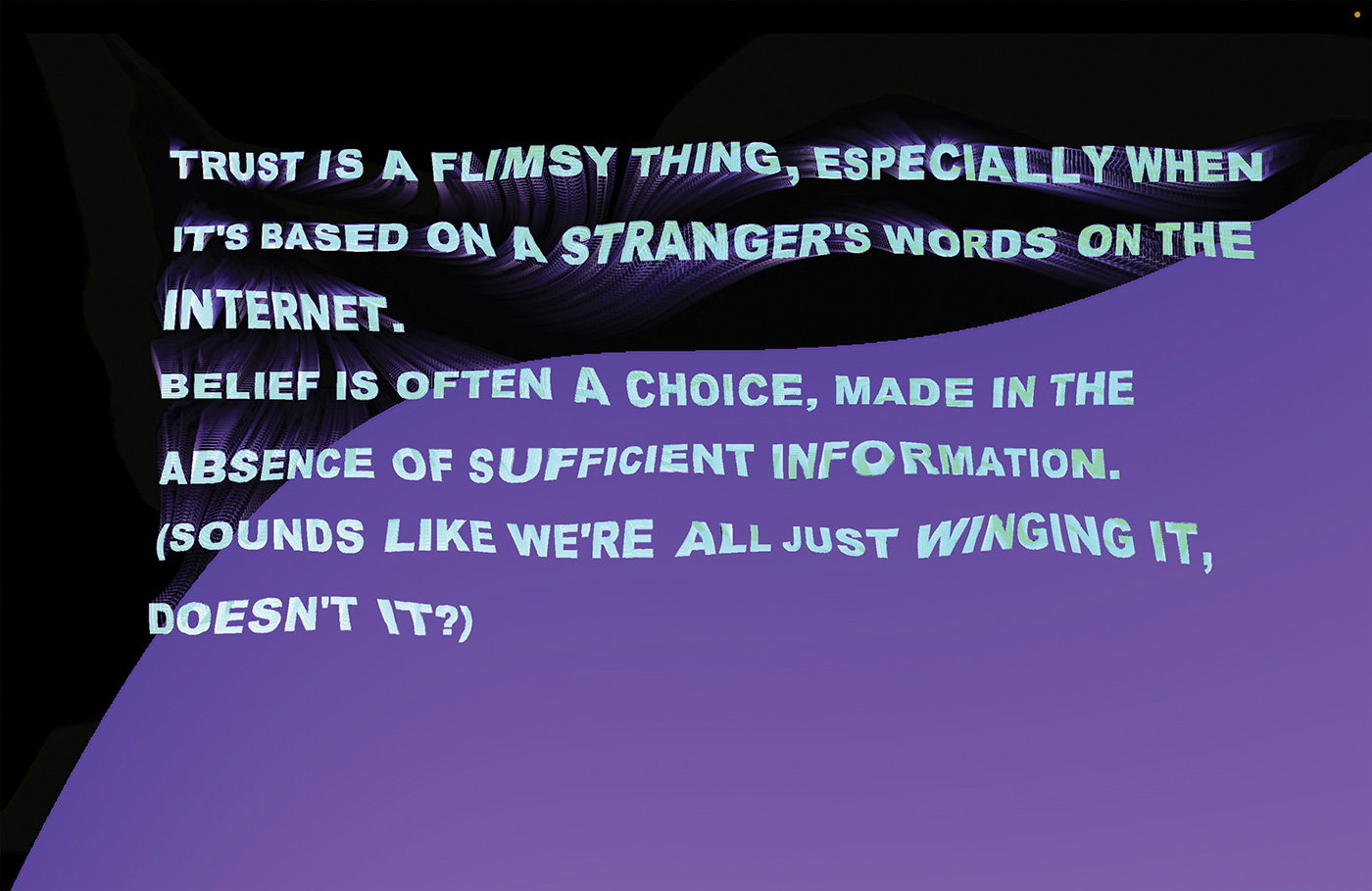
An invisible audience of software robots continually analyze content on the Internet. Political trolls and YouTube celebrities gain visibility because social media ranking algorithms promote addictive videos to the top of search and recommendation rankings. What the Robot Saw is a continuously-generated livestream film that uses contrarian algorithms to constantly curate some of the least attention-grabbing videos recently uploaded to YouTube. These videos, and their creators, are rendered largely invisible by social media algorithms. Their primary audience may be the robots that rank them. What the Robot Saw uses computer vision algorithms to curate videos and study their subjects. It focuses on first-person, camera facing narrators. The robot continually assembles its film and labels its “talking head” performers in a robo-fantastical cinematic style. The Robot titles its human subjects according to the demographically-focused feature set of Amazon Rekognition, a popular facial analysis system. In a robot-centric world, attributes like presumed age, gender, and emotion might better identify us than our names. The title is a reference to early 1900s What the Butler Saw “peep show” films. Both the butlers and the Robot got a superficial glimpse of a seductive “show;” they could not really understand the objects of their obsession.
Amy Alexander is a professor and hackernaut who has been making computationally-based art projects since the 1990s. Amy is a Professor of Computing in the Arts in the Visual Arts Department at UC San Diego. She is an algorithmic filmmaker and performer who has focused throughout her career on the fuzzy borders between media and the world. Amy’s work has frequently addressed algorithmic subjectivity in digital culture by creating transparently biased, sometimes funny alternatives. Her latest project returns to this theme — this time taking on the attention economy and social influence of algorithms used for social media rankings and facial classification. Using computer vision and machine learning-based methods of curation and production, What the Robot Saw, is a perpetual live stream that depicts the cinematic fantasy of the surveillant AI robots who “see” the social media content few humans get to experience. Amy’s art practice has spanned net art, software art, computationally-based installation, audiovisual performance, and film. Her research and practice over the years has focused on how contemporary media – from performative cinema to social media – changes along with cultural and technological shifts. Amy’s projects have been presented on the Internet, in clubs and on the street as well as in festivals and museums. She has written and lectured on software art, software as culture, and historical and contemporary audiovisual performance. She has served as a reviewer for festivals and commissions for new media art and computer music.Her recent lectures span topics including algorithmic bias and subjectivity, cultural anthropologies of gender roles in 20th and 21st century computing, and systems and disruption in 20th and 21st century media.
Amy Alexander
Deep World
Multimedia installation | 0 | color | 0:0 | USA | 2025
Deep World is a performance and installation project examining the evolving relationship between humans and chatbots — from their early role as informal therapists to their current position as omnipresent advisers in unsettled times. At Deep World’s center is a chatbot intentionally re-authored with ideas drawn from writers and theorists who confronted difficult eras, combined with contemporary material reflecting concerns of today. Visitors bring real worries and complicated questions; the chatbot’s output veers between philosophical and poetic, revealing both insight and self-doubt. The gap between what people need and what the machine can offer becomes part of the work’s texture — by turns earnest, wry, and unsettling. Performance version: Performed by VJ Übergeek (Amy Alexander), the piece blends live text improvisation, VJ practice, and game-controller interaction. The dialogue becomes a semi-theatrical search for clarity, humor, and company in difficult times. Installation version: The current installation iteration focuses on borders — political and social, physical and metaphorical — as a lens for contemplating contemporary dilemmas. The installation invites visitors to speak directly with Deep World, generating evolving text and psychedelic visuals in a secular-sanctuary setting. Additional installation iterations are under development.
Amy Alexander is an artist and professor whose work spans computational installation, performance, net art, and film. She has been making software-based art since the 1990s and writing about the cultural roles of algorithms since the early 2000s. With a background in film, music, programming, and IT, she focuses on the porous borders between media and the world, and on how technologies shape – and are shaped by – cultural conditions. Much of her work examines algorithmic subjectivity in digital culture. Recent projects extend this focus to AI and machine learning systems, including custom large language models used as collaborators in live performance and as tools for examining generative AI–based cinema. Her projects have explored themes ranging from surveillance and social media to public-space performance and the mechanics of computational authorship. Alexander’s work has been exhibited or performed at venues including the Whitney Museum, Prix Ars Electronica, Transmediale, SIGGRAPH, NIME, the New Museum, CURRENTS, and ICLC, as well as clubs such as Sonar and First Avenue, and in street performances in Los Angeles, San Diego, San Jose, Zürich, and Aberdeen. She has also written and lectured widely on software art, audiovisual performance, and media preservation. Alexander is a Professor of Computing in the Arts at UC San Diego.
Vito Alfarano, Francesco Biasi
THE PASSENGERS
Video | hdv | color | 14:50 | Italy | 2023
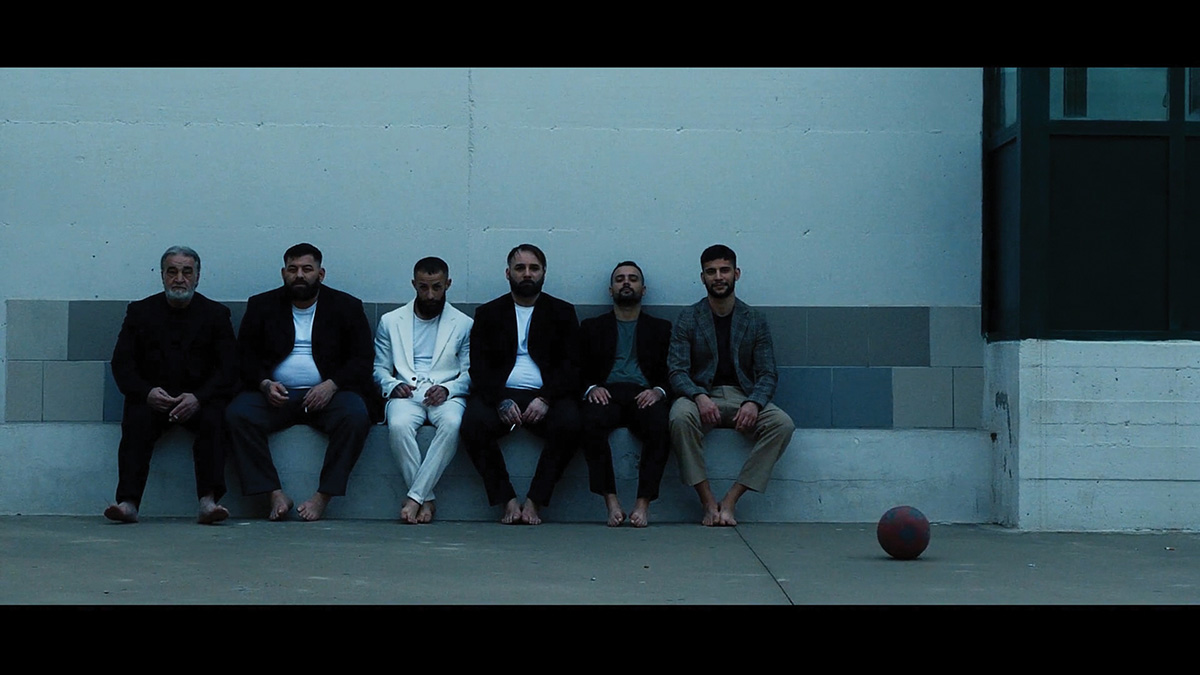
Starring guests from the Brindisi Prison, THE PASSENGERS is about waiting, that moment when everything stops and you have time to reflect and then leave with awareness. The passengers welcome everyone into their carriage, the important thing is to be carried away by the evocative power of their stories. They tell of their waiting, their relationship with time, they manifest their fragilities and by dancing they have fun, they play with themselves. Between readings of passages written in the cell, engaging music and group choreography, the protagonists free everyone: because everyone is a prisoner of something they carry inside. And sharing is the tool to free oneself of it. The direction is by Vito Alfarano, while the choreography is a four-handed work between Alfarano himself and Francesco Biasi, the company's under35 choreographer. The texts are by Michele Caiulo, who during his imprisonment put thoughts and reflections in writing in his diary. Chosen by Vito Alfarano and readapted by Marcello Biscosi, these texts became the guide for the show. The project enjoys the support of the Guarantor of persons subject to measures restricting personal liberty of the Regional Council of Apulia Region and is carried out in collaboration with the Direction of the Brindisi Prison, Ministry of Justice.
VITO ALFARANO _ Art Director and Choreographer He started his career as a freelance dancer working with various choreographers. With his choreographies and screendance he won first prizes in international competitions screendance festivals. He is the artistic director of AlphaZTL Company of Dynamic Art based in Brindisi (Italy) deals of ART & SOCIAL with contemporary dance and screendance and of BRINDISI PERFORMING ARTS, a Festival of social inclusion through performing arts. __________________________ FRANCESCO BIASI _ Video maker and Choreographer Dancer, video maker and choreographer. His contamination between dance, video and reality characterizes his artistic research. He tries to convey to his dancers the power of personal interpretation so that everyone can best express their soul.
Greta Alfaro
In Ictu Oculi
Art vidéo | dv | color | 10:35 | Spain | 2009
There is a table in the middle of the countryside, but the guests are absent. There is a feast of food and wine waiting in the cold weather and the dry landscape. The vultures are to come and eat our food and destroy our setting: the still life, the banquet, the space of enjoyment and civilization. The vultures, the beasts linked to death and dirt, to violence and fear, arrive by surprise, and like in a fable, represent for us some of our own qualities.
Greta Alfaro (Spain, 1977) is currently studying an MA in Photography at the Royal College of Art, London. In recent years she has been the recipient of several grants and scholarships among which are Matadero-City Council of Madrid, Casa de Velázquez, Fundación BilbaoArte, the Government of Mexico or the Genesis Foundation. She is taking part in the exhibition Bloomberg New Contemporaries 2010 at the ICA, London, and her recent solo shows include In Ictu Oculi, in Galería Marta Cervera, Madrid and Carpe Diem, Lisbon, and Elogio de la Bestia, in Centro de Arte Contemporáneo Huarte, Spain.
Greta Alfaro
He Had Got Certain Vibes
Video | hdv | color | 2:31 | Spain, United Kingdom | 2019
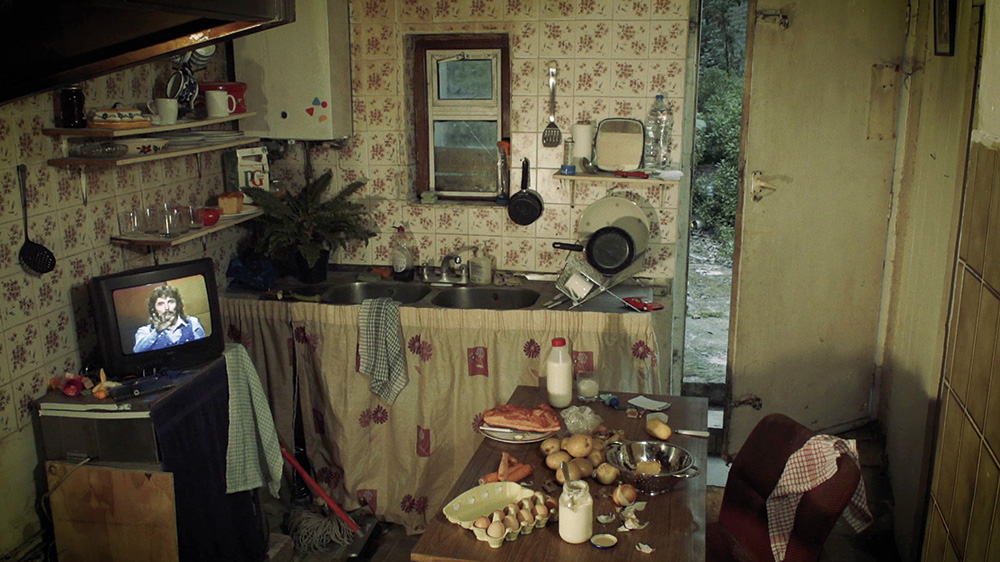
One still life of the 20th Century. Poverty, mental health, media and magic. The fragility and drama of the everyday and domesticity.
Greta Alfaro (Spain, 1977) is a visual artist. Her solo exhibitions include Decimocuarta estación (2019) at the Fundación BBVA, Madrid; In Ictu Oculi (2019) at the Flint Institute of Arts, Michigan; El cataclismo nos alcanzará impávidos (2015) and European DarkRoom (2014) at Galería Rosa Santos, Valencia; Still Life with Books (2014) at Artium, Vitoria; In Praise of the Beast (2013) at Hiroshima City Museum of Contemporary Art, Japan; and Invención (2012) at Ex Teresa, Mexico City. Among her other solo site-specific projects are I Will Not Hesitate to React Spiritually (2019), with Roaming Room, and A Very Crafty and Tricky Contrivance (2012), with Genesis Foundation, both in London, and Comedias a honor y gloria (2016) in La Gallera, Valencia. She has taken part in numerous group shows and festivals in venues like the Whitechapel Gallery, Institute of Contemporary Arts and Saatchi Gallery in London; Centro Cultural Banco do Brasil in Brasilia; The Bass Museum of Art in Miami; the Conciergerie in Paris; Künstlerhaus Bethanien in Berlin; La Casa Encendida in Madrid or the International Film Festival Rotterdam.
Pierre Alferi
In time
Experimental video | dv | color | 16:30 | France | 2005
Intime, de Pierre Alféri est un travail à la fois littéraire et vidéopoétique, où l`espace du voyage est celui de la langue. C`est une traversée en images, traversée de lieux et de paysages, et en mots, lettres adrésées à des anonymes, qui dépouillés de leur "moi" sont dépeints comme des caractères. L`intime n`est donc pas celui du "moi" de l`être mais naît du déséquilibre crée par les mots, qui tissent alors des liens rendus nécessaires entre les personnages.
Pierre Alféri est né à Paris en 1963. Il a fondé la revue `Détail` avec Suzanne Doppelt et est également co-fondateur de `La revue littéraire générale` avec Olivier Cadiot. Il est pensionnaire de l`Académie de France à Rome entre 1987 et 1988 et `écrivain résident` de la Fondation Royaumont entre 1991 et 1992. Pierre Alféri possède de nombreuses casquettes : il est à la fois romancier, traducteur d`ouvrages américains et russes, essayiste et poète.
Pierre Alferi, Jacques JULIEN
Mots croisés
Experimental video | dv | color | 2:45 | France | 2006
Pierre Alféri est né à Paris en 1963. Il a fondé la revue `Détail` avec Suzanne Doppelt et est également co-fondateur de `La revue littéraire générale` avec Olivier Cadiot. Il est pensionnaire de l`Académie de France à Rome entre 1987 et 1988 et `écrivain résident` de la Fondation Royaumont entre 1991 et 1992. Pierre Alféri possède de nombreuses casquettes : il est à la fois romancier, traducteur d`ouvrages américains et russes, essayiste et poète.