Catalogue > Search
Results for : Tout le catalogue

Simon Aeppli
secondhand daylight
Experimental fiction | dv | color | 8:45 | Ireland, United Kingdom | 2007
Keeping scrapbooks have been central to my practice as a filmmaker for the last ten years. These books are made from photographs, photocopied and found images, written fragments, quotes, letters, lists and my own fictitious notations. Secondhand daylight is the first in a series of videos that use my scrapbooks as a starting point for a moving image work. The video itself becomes a type of scrapbook as I interweave video footage I have collected over the years with images from the books. Secondhand daylight is an experimental narrative that explores place, memory and obsession.
Simon was born in Belfast, Northern Ireland in 1972 and is now based in London. He studied film at Gwent College of Higher Education in Wales from 1991-93 and then BA (Hons) Fine Art at the University of Wales Institute in Cardiff from 1995-97. Since graduating, he has worked predominately with digital video, creating work that has been screened at festivals and artist events in Britain and abroad. Recently, his work has shifted towards documentary and has been commissioned by UK broadcasters on ITV, FIVE and Current TV. He also works as a part-time lecturer in Interactive Media at the Bernie Grant Arts Centre and teaches for the Documentary Filmmakers Group on their courses in Poland, Morocco and London.
Marie Aerts
Grâce
Video | hdv | color | 4:40 | France | 2013
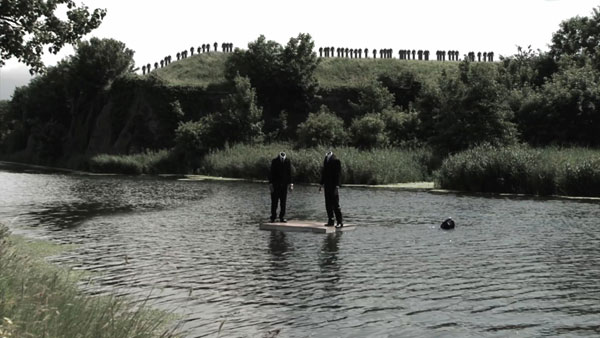
Le travail de Marie Aerts questionne les notions de pouvoir et d?organisation sociale qui régissent les sociétés humaines. Traversée par des héritages philosophiques, tel le concept du Corps Sans Organes de Gilles Deleuze et Felix Guattari, ses recherches débutent notamment par la création d`un personnage iconoclaste : l`Homme sans tête. Inspiré par l?atmosphère des quartiers d?affaires de la City à Londres, la figure de l?Homme sans tête est la représentation d?un être humain générique. Sans passé ni avenir, ce corps apparaît vide de désir, d?ambition, d?amour? Présent dans de nombreuses ?uvres, ce personnage reflète les interrogations et les problématiques de l?individu et d?une communauté face à l?opacité des pouvoirs qui cimente le corps social. La vidéo Grâce aborde la thématique de la migration. Il s?agit pour l?artiste de rendre hommage à ces êtres humains, en quête d?une vie meilleure, qui traversent au péril de leur vie des frontières surveillées et protégées. Alors que la circulation des marchandises relève de l?évidence, cette bénédiction n?est pas accordée à toute l?humanité. Grâce, comme une demande de faveur pour ces conquérants ignorés qui s?efforcent, pour ne pas perdre leur dignité, de gagner leur liberté. Marie Aerts et Marianne Feder
Marie Aerts (1984), vit et travaille à Paris. Le travail de Marie Aerts questionne les notions de pouvoir et d?organisation sociale qui régissent les sociétés humaines. La jeune artiste française interroge les méthodes de légitimations d?un pouvoir, ou d?une forme de domination et les rapports que celles-ci entretiennent avec la croyance. Elle explore les interstices d?un pouvoir, là où les symboles s?installent et déploient leur capacité de fascination. À travers diverses stratégies d`altération, Marie Aerts s`attaque à ces concentrés de représentations, à l`aide d?opérations de soustraction et de transformation qui lui sont chères. En 2013, elle a été présentée dans les expositions collectives, Aqua Vitalis, commissariat Claire Tangy et Paul Ardenne de l?Artothèque de Caen et Égarements, commissariat Agnès Barruol et Véronique Baton au Château d?Avignon (Arles). La galerie Dix9 lui consacre une deuxième exposition personnelle jusqu?au 22 février 2014. Elle prépare plusieurs expositions, dont une résidence dans l?espace projet de l?Artothèque de Caen prévue en 2015.
Aes+f
Inverso Mundus
Video | 4k | color | 38:0 | Russia | 2015
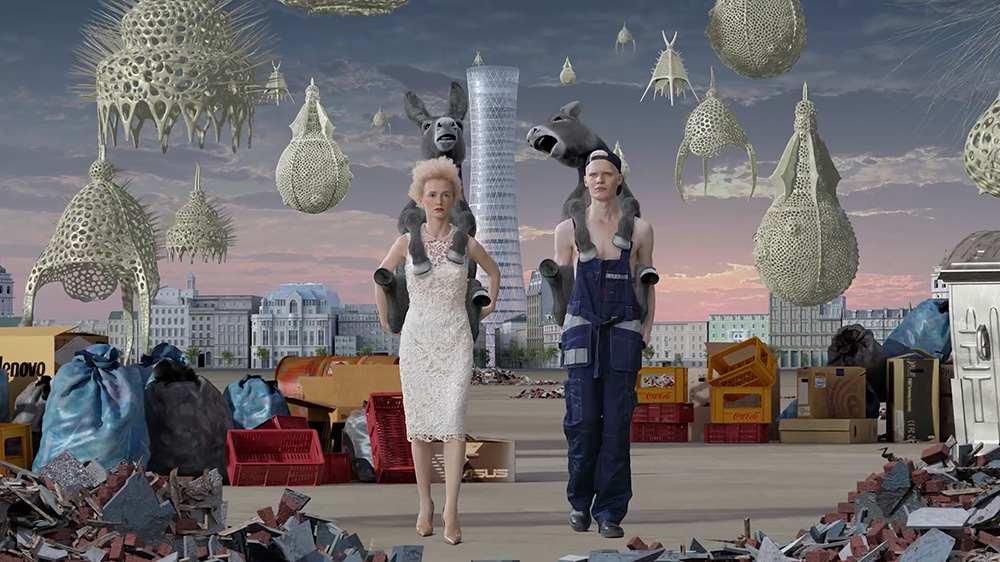
Engravings in the genre of "World Upside Down", known since the 16th century, depict such scenes as a pig gutting the butcher, a child punishing his teacher, a man carrying a donkey on his back, man and woman exchanging roles and dress, and a beggar in rags magnanimously bestowing alms on a rich man. These engravings contain demons, chimeras, fish flying through the sky and death itself, variously with a scythe or in the mask of a plague doctor. The title of the work, Inverso – both an Italian "reverse, the opposite" and the Old Italian "poetry," and Mundus – the Latin "world," hints at a reinterpretation of reality, a poetic vision. In our interpretation, the absurdist scenes from the medieval carnival appear as episodes of contemporary life in a multichannel video installation. Characters act out scenes of absurd social utopias and exchange masks, morphing from beggars to rich men, from policemen to thieves. Metrosexual street-cleaners are showering the city with refuse. Female inquisitors torture men on IKEA-style structures. Children and seniors are fighting in a kickboxing match. Inverso Mundus is a world where chimeras are pets and the Apocalypse is entertainment.
AES+F achieved worldwide recognition and acclaim in the Russian Pavilion at the 52nd Biennale di Venezia in 2007 with their provocative, other-worldly Last Riot (2007), the first in a trio of large-scale, multichannel video installations of striking originality that have come to define both the AES+F aesthetic and the cutting edge of the medium’s capacities. The second of the series, The Feast of Trimalchio (2009), appeared in Venice in 2009, and the third, Allegoria Sacra (2011), debuted at the 4th Moscow Biennale in 2011. United as The Liminal Space Trilogy, this tour-de-force series was premiered in September 2012 at the Martin-Gropius-Bau, Berlin, and the Moscow Manege, the central exhibition hall of the artists’ home city. The Trilogy was shown in the Museum of Fine Arts in La Chaux-De-Fonds, Switzerland (June’September 2014). Most recently all three videos were shown at Albright-Knox Art Gallery, Buffalo, NY (June-September 2015). In 2015 AES+F presented the new project Inverso Mundus at 56th Biennale di Venezia. AES+F received Sergey Kuryokhin Award 2011, the main award of the Kandinsky Prize 2012, the main award of the NordArt Festival 2014, and Pino Pascali Prize 2015 (18th Edition) ‘ all for the project Allegoria Sacra. AES+F were awarded Bronze Medal (2005) and Golden Medal (2013) of Russian National Academy of Fine Arts. AES Group was originally formed in 1987 by the conceptual architects Tatiana Arzamasova and Lev Evzovich and the multidisciplinary designer Evgeny Svyatsky. Exhibiting abroad from 1989, the group expanded its personnel and name with the addition of the photographer Vladimir Fridkes in 1995. AES+F’s recent work has developed at the intersection of photography, video and digital technologies, although it is nurtured by a persistent interest in more traditional media ‘ sculpture especially, but also painting, drawing and architecture. Deploying a sophisticated, poetic dialogue among these media, and plumbing the depths of art history and other cultural canons, AES+F’s grand visual narratives explore the values, vices and conflicts of contemporary culture in the global sphere.

Reza Afisina
What
Experimental video | dv | color | 10:40 | Indonesia | 2001
In his video performance Reza Afisina uses his own body as a metaphor of an individual who is questioning the sins before a certain religious teaching. He changes his own body as an object or site to execute a punishment for a wrongdoing he himself committed. He looks to replacing God as the punisher.
Yalda Afsah
Tourneur
Experimental film | mov | color | 14:25 | Germany | 2018
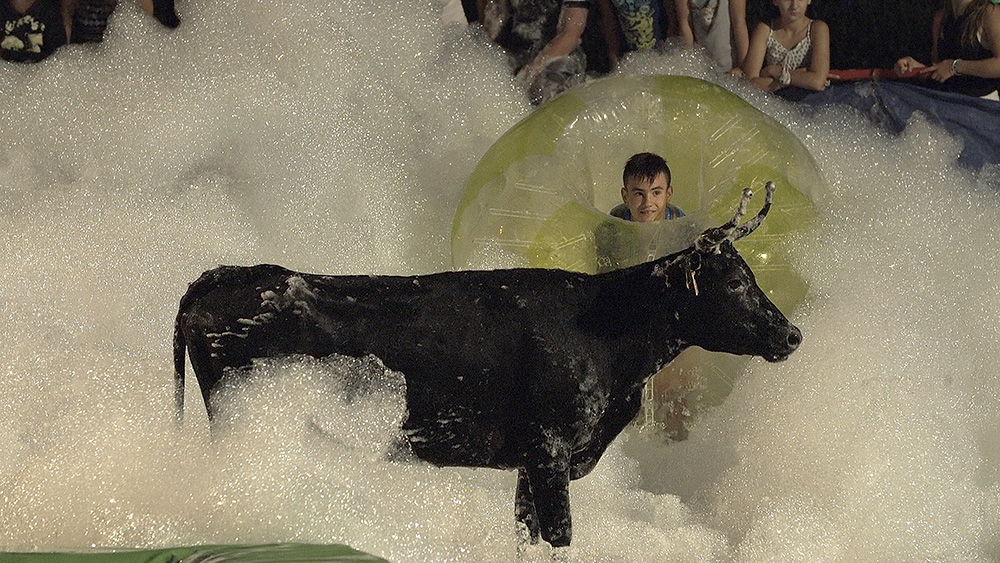
The short movie Tourneur documents a bull fight in the South of France and comments in a subtle manner the disparity between the young, adrenaline rushed participants and the physically superior bull, which gets cornered by the participants. The unpredictability of the situation is increased by foam, which affects the view of the participants and the audience therefore, the encounter of humans and animal seem like an alienation in this abstract landscape of foam.
Yalda Afsah
Vidourle
Documentary | mov | color | 10:0 | Germany | 2019
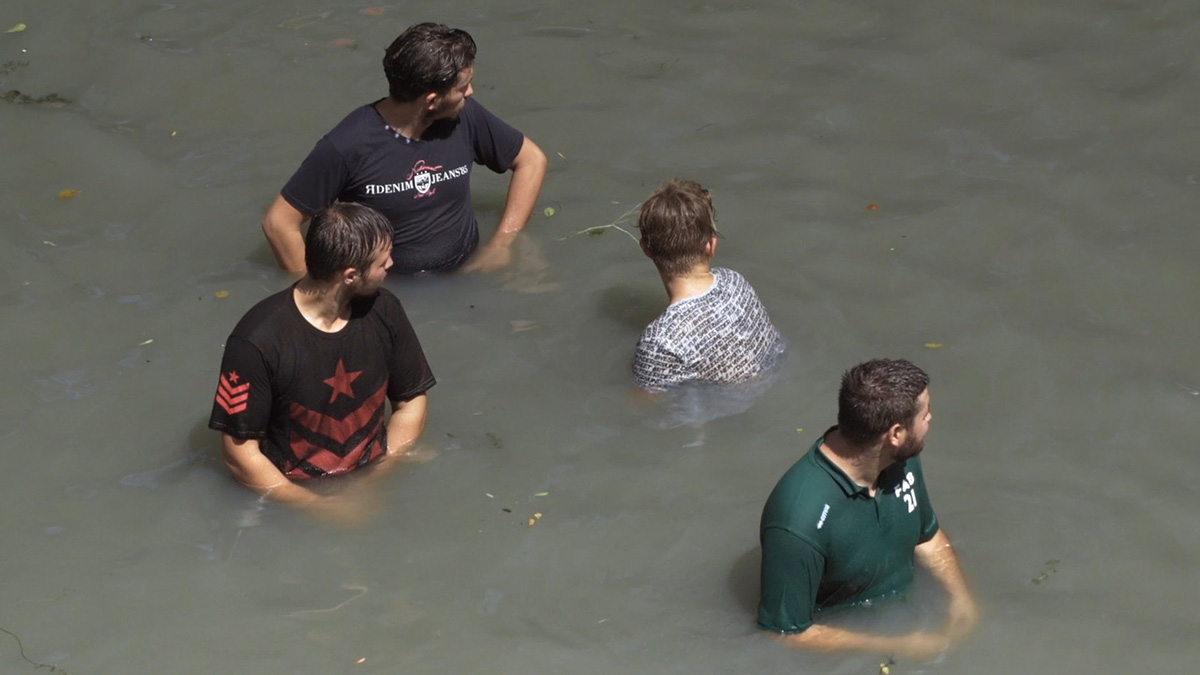
Named after its setting, the French river Vidourle, Yalda Afsah’s film documents a strange and subtly unnerving choreography, capturing a group of young men performing what could be a ritual, a spectacle, a game, or a fight. In their collective movements as well as individual moments of concentration, anticipation and occasional forlornness, the adrenalin-fuelled adolescent protagonists seem to embody the frailty of the human condition awaiting an environmental change, much like an unexpectedly forceful current in a river.
Yalda Afsah explores how space can be cinematically constructed and the documentary character of her works often veers towards forms of theatricality. This formal characteristic of Afsah’s practice is conceptually mirrored in her documentary portraits of human-animal relationships that reveal an ambivalence between care and control, physical strength and broken will, instinct and manipulation. Afsah seeks to question and to dissolve these dichotomies, while carving out a space to reflect on the possibility of an overarching empathy between species.

Yalda Afsah
SSRC ( Secret Society Roller Club)
Documentary | 4k | color | 20:0 | Germany | 2022
A group of men is fixing their eyes onto the sky. High above, a swarm of pigeons is moving in an unrecognizable formation, when suddenly individual birds drop in mid-air, spinning backwards with their wings extended and tumbling down in a circular motion before resuming their ordinary flight path. Yalda Afsah’s short film SSRC slowly dissects this aerial choreography, revealing its nature as a form of animal training and gradually zooming into the at times almost intimate details of this interspecies relationship. Focusing on the specific social context of the Los Angeles-based „Secret Society Roller Club“ and its members’ identification with and through the animals, Afsah’s film negotiates positions of co-dependency and care, domestication and dominance – calling into question the ambivalence reflected in the symbol of the soaring bird free in its flight, yet simultaneously bound to human will.
German-Iranian artist and filmmaker Yalda Afsah (b. 1983, Berlin) explores how space can be cinematically constructed as her films profoundly explore the interface between reality and staging. This formal characteristic of Afsah’s work is conceptually mirrored in her recent portraits of human-animal relationships that reveal an ambivalence between care and control, physical strength and broken will, instinct and manipulation. Despite their documentary focus, her films and video installations seem to capture symbiotic choreographies on screen – equally portraying and fictionalising their human and non-human protagonists. Afsah has presented her work at various exhibitions and festivals including Manifesta 13, Locarno Film Festival, New York Film Festival, Berlinische Galerie, Institute of Contemporary Arts London, Neuer Berliner Kunstverein and recent solo exhibitions at Kunstverein München and Halle für Kunst Steiermark. Since 2019 she is a mentor for the Berlin program for artists (BPA).

Mahshid Afzali, Mirshakkak Mahoor
A Moment of Exposure
Experimental doc. | hdv | color | 20:0 | Iran | 2024
A moment of exposure is about observing the experience of living an idea and gathering materials for an art installation. The camera, as an attentive observer, collects memories and associations related to the "Safe & Sound" multimedia interactive exhibition. Following the process of preparation, presentation, and dismantling of the installation, we seek visual and sensory origins. In the first part of the exhibition, a spatial arrangement features elements such as metal fence sculptures, archived photos of fences in graveyards, and videos of deceased creatures floating in water. These elements are gently dissected to uncover the roots of safety and any remnants of movement left after death. In the second part, different sounds can be heard by interactive audiences resting in bed-shaped sound boxes, prompting questions about the origins of these sounds. Each sound carries the weight of a past incident, reverberating in the space and creating an immersive experience. Ultimately, the film invites viewers to reflect on the connections between memory, loss, and the lingering echoes of life. It encourages an exploration of how we find safety in remembrance and the ways in which our past shapes our present.
Mahshid Afzali: Mahshid Afzali is an Iranian Video Artist and Filmmaker, based in Tehran. She graduated from University of Tehran with a B.A. degree of Scenic Design in 2018. Throughout her studies, she developed a passion for video art as a medium for self-expression. In the past few years she specialized in independent film production and post-production and created several documentary films and videos. Mahshid is also an archivist, and documents her life through videos and photographs that often serve as the foundation for her artworks. / Mahoor Mirshakkak: Mahoor Mirshakkak, Iranian freelance Filmmaker & Sound designer. Graduated in Painting from Tehran Fine Arts University. Currently Working on Multidisciplinary installations Based on Archived sound and videos.

Marcos Agudelo, Róger Gómez
Fata Morgana
Animation | hdv | black and white | 0:57 | Nicaragua | 2017
“Fata Morgana” is a critical vision of a mega-project of infrastructure, an interoceanic channel crossing the entire country that is going to be built in Nicaragua by the transnational Chinese enterprise HKND. The negative impact over the local population and the environment represents a real danger for their sustainability. Thousands of citizens from the affected areas have protested against this project, which was approved without their consideration. “Fata Morgana” is an optical illusion where one perceives objects floating on the horizon, such as cars on a highway or ships at sea; we´re playing with such symbols in this drawn stop motion animation.
Marcos lives and survives in Managua, Nicaragua. He trained as an architected at the National Engineering University in Managua (1995-1999) and later specialized in the field in Barcelona with an emphasis on urban planning and sustainable tropical architecture (2005-2009). In 2006 he won the II Exhibit of Emerging Art in Central America organized by the Museum of Contemporary Art and Design in San José, Costa Rica and in 2008 he won first place at the VI Central American Visual Art Biennial. His pieces have been exhibited in the Latin American Pavilion at the Arsenale during the 55th International Art Exhibition in Venice, Italy (2013), the García Lorca Great Theatre of Havana during the 11th Havana Biennial (2012), New York?s Museo del Barrio as part of the ?The Street Files? exhibit (2011), Santo Domingo?s Museum of Modern Art during the I Caribbean International Triennial (2010), in two editions of the Central American Contemporary Art Biennial (Tegucigalpa 2008 and Managua 2010) as well as in several editions of the Nicaraguan Visual Art Biennial Fundación Ortèz-Gurdión (2005, 2007 and 2009), with mentions in 2007 and 2009. He has appeared in magazines like Exit-Express (Spain), Código (México) and ArtNexus (Colombia) and in anthologies like Us and Them, Young Ibero-American Artists (2010).
Sandro Aguilar
Bunker
Fiction | hdv | black and white | 30:17 | Portugal | 2015
A young girl spending time with her parents (a swinger couple) in a camping site meets an emotionally unstable recruit and becomes fascinated by his special powers. He falls in love with her, but he soon finds out his love is unrequited.
Born in 1974 in Portugal, Sandro Aguilar studied film at the Escola Superior de Teatro e Cinema. In 1998 he founded the production company O Som e a Fúria. His films have won awards at festivals, such as La Biennale di Venezia, Gijón, Oberhausen and Vila do Conde, and have been shown in Torino, Belfort, Montreal, Clermont-Ferrand among others. Retrospectives of his work have been programmed at Rotterdam IFF and BAFICI.
Sandro Aguilar
Dive : approach and exit
| | | 12:13 | Portugal | 0
Before the assault, feel the weight of the body.
Born in 1974 in Portugal, Sandro Aguilar studied film at the Escola Superior de Teatro e Cinema. In 1998 he founded the production company O Som e a Fúria. His films have won awards at festivals, such as La Biennale di Venezia, Gijón, Oberhausen and Vila do Conde, and have been shown in Torino, Belfort, Montreal, Clermont-Ferrand among others. Retrospectives of his work have been programmed at Rotterdam IFF and BAFICI.
Sandro Aguilar
FALSE TWINS
Fiction | hdv | color | 21:0 | Portugal | 2014
Hidden memories and lost treasures of our primeval inhabitants.
Born in 1974 in Portugal, Sandro Aguilar studied film at the Escola Superior de Teatro e Cinema. In 1998 he founded the production company O Som e a Fúria. His films have won awards at festivals, such as La Biennale di Venezia, Gijón, Oberhausen and Vila do Conde, and have been shown in Torino, Belfort, Montreal, Clermont-Ferrand among others. Retrospectives of his work have been programmed at Rotterdam IFF and BAFICI.
Sandro Aguilar
Mariphasa
Fiction | 4k | color | 87:0 | Portugal | 2018
Paulo works as a night guard in a building site. He lost his daughter in dramatic circumstances and no regret would ever give him a sense of closure . He often sleeps in his lover`s house where he witnesses the repeated transgressions of an unstable neighbor. Everything threatens to crack.
Born in 1974 in Portugal, Sandro Aguilar studied film at the Escola Superior de Teatro e Cinema, in Lisbon. In 1998 he founded the production company O Som e a FuÌria. His first fiction feature film was UPRISE (2008). MERCURY (2010) was in competition for the Tiger Awards for Short Films at IFFR 2011. His films have won awards at festivals, such as La Biennale di Venezia, GijoÌn, Oberhausen and Vila do Conde, and have been screened in Torino, Belfort, Montreal, Clermont-Ferrand among others. Besides being a director, Aquilar is an editor and a producer. MARIPHASA is his second feature film.

Sandro Aguilar
Porto, 1975
Experimental doc. | hdv | color | 10:0 | Portugal | 2011
Applying the same economy used in Allee der Kosmonauten (one sole unrolling 16 mm film role with no montage) a long tracking shot at the Cooperativa das Águas Férreas da Bouça, a social housing complex designed by Álvaro Siza Vieira and an integral part of the SAAL (Serviço Ambulatório de Apoio Social, 1974-76) programme. The place is Oporto, in 2010, but the memory of the complex circumstances surrounding the construction of these dwellings take us back to 1975 and a tumultuous moment in Portugal?s past.
Filipa César was born in Porto in 1975. Lives and works in Berlin, and studied at the Faculty of Arts in Porto and Lisbon (1996?99), the Academy of Arts in Munich (1999?2000) and MA Art in Context, University of Arts, Berlin (2007). César is an artist and filmmaker whose work reflects on the porous nature of the relationship between the moving image and its public reception. Informed by her interests in exploring the fictional aspects of the documentary genre, and imbued with an urge to point out the politics behind moving images, works such as F for Fake (2005), Rapport (2007), Le Passeur (2008), The Four Chambered Heart (2009), and Memograma (2010) walk the thin line between storytelling, chronicling, documentary, and experimental film. César?s installations suggest possible settings for an expanded production of moving images, which actively engage the spectator in his or her role as perceiver, and which are constituted by the presence of socio-political concerns. In Filipa César?s work the image evolves out of a struggle between real-memory and cinema-memory. Filipa César has exhibited, among other places, at 8. Istanbul Biennial, 2003; Kunsthalle Wien, 2004; Serralves Museum, 2005; Locarno International Film Festival, 2005; CAG- Contemporary Art Gallery, Vancouver, 2006; Tate Modern, 2007; St. Gallen Museum, 2007; International Triennale of Contemporary Art, Prague, 2008; SF MOMA, San Francisco 2009, 12th Architecture Biennial, Venice, 29th São Paulo Biennial 2010, São Paulo and Manifesta 8, Cartagena.
Sandro Aguilar
The Detection Of Faint Companions
Experimental video | 0 | color | 14:0 | Portugal | 2021
Full Moon. Inside. Perhaps not alone.
Born in 1974 in Portugal, Sandro Aguilar studied film at the Escola Superior de Teatro e Cinema. In 1998, he founded the production company O Som e a Fúria. His films have won awards at festivals such as La Biennale di Venezia, Locarno FF, Gijón, Oberhausen,Vila do Conde, Indielisboa FF and have been shown in the most relevant film festivals worldwide. Two times nominated for the EFA – Best European Short Film Award. Retrospectives of his work have been programmed at Rotterdam IFF, BAFICI, New York Film Festival, Arsenal-Berlin and Oberhausen FF. In 2013, he was invited into the renowned DAAD Artist Residency, Berlin.
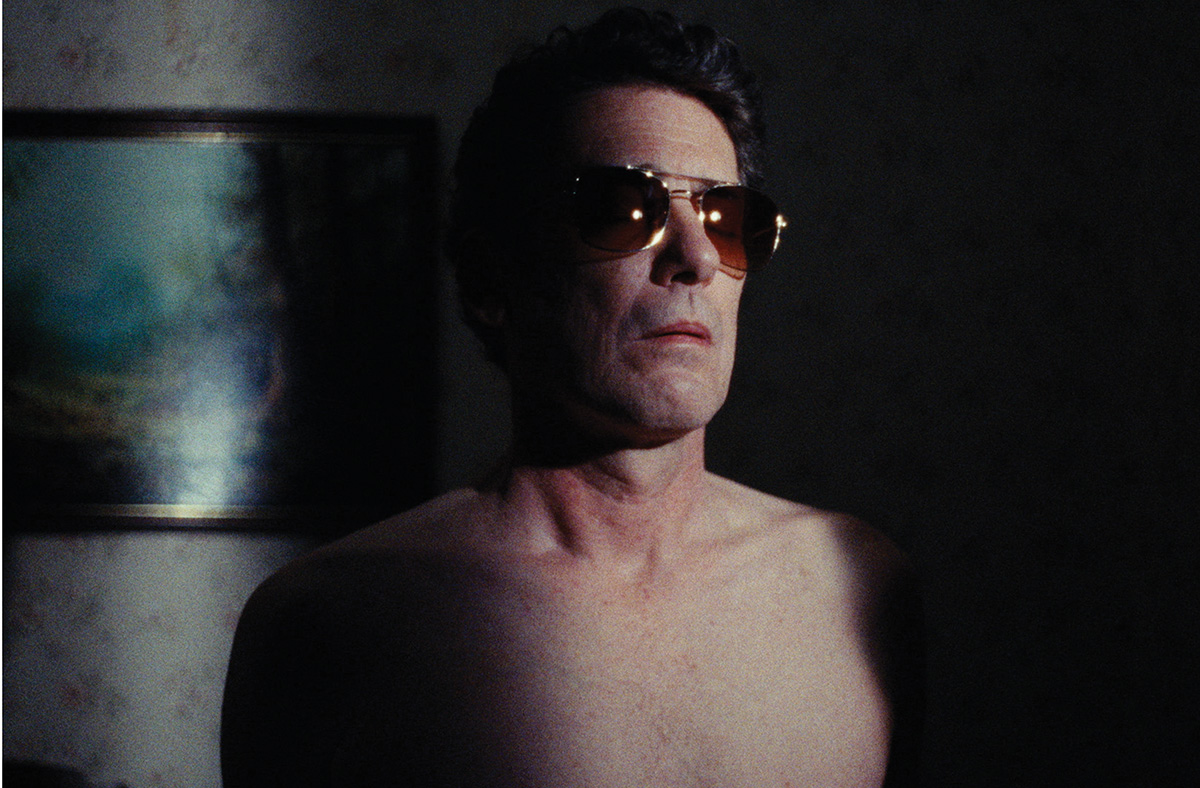
Sandro Aguilar
O Teu Peso Em Ouro
Fiction | hdv | color | 26:0 | Portugal | 2022
Oscar, a renowned hypnotherapist, takes advantage of the last moments in his hotel room to say goodbye to the dazzling Mercedes and relieve old Norberto of his sorrows
Born in 1974 in Portugal, Sandro Aguilar studied film at the Escola Superior de Teatro e Cinema. In 1998, he founded the production company O Som e a Fúria. His films have won awards at festivals such as La Biennale di Venezia, Locarno FF, Gijón, Oberhausen,Vila do Conde, Indielisboa FF and have been shown in the most relevant film festivals worldwide. Two times nominated for the EFA – Best European Short Film Award. Retrospectives of his work have been programmed at Rotterdam IFF, BAFICI, New York Film Festival, Arsenal-Berlin and Oberhausen FF. In 2013, he was invited into the renowned DAAD Artist Residency, Berlin
Sandro Aguilar
Strokkur
Documentary | 0 | black and white | 7:16 | Portugal | 2011
In the beginning the idea was to make something from nothing, in a neutral and unknown place. Collect images and sounds instead of producing them. The camera, the microphone and the mini-amplifier: tools that take away and then give back. We defined a rule: the sound shouldn?t illustrate the image and the image shouldn?t absorb the sound. Less than a hundred kilometres from Reykjavik we found Strokkur. A scar on the Earth that insists in not healing, gushing from the depths. We came closer. For three days we saw and heard the internal dynamics of the crevice: the boiling water that spat out every seven minutes and the thermal shock, given the eighteen degrees below zero of the atmosphere. The film was already there, the music too. Underneath the blizzard, the soaked amplifier was out of tune and produced strange noises. The camera was almost blown away with the wind gusts. Batteries did not resist the cold and died every fifteen minutes. We ran for shelter carrying the gear on our backs. Reload. Reheat. Start all over again. ?Strokkur? is above all a document. A log of an observation-dialogue, of what was left.
JOÃO SALAVIZA Born in Lisbon in 1984. He studied cinema at Escola Superior de Teatro e Cinema in Lisbon and completed his studies at the Universidad del Cine in Buenos Aires. His first short film, ?TWO PEOPLE?, 2005, was selected for several festivals and won the Take One Award in Vila do Conde. In 2009, with ?ARENA?, he won the Palme d?Or for best short film at the Cannes Film Festival and the award for best Portuguese short film at IndieLisboa. He then participated in several renowned international festivals such as Tribeca, Rotterdam, London and Pusan (PIFF). In 2010, he finished ?HOTEL MüLLER? (based on the work of Pina Bausch) and ?CASA NA COMPORTA? for the Portuguese entry in the 12th International exhibition of Architecture ? Venice Biennale. He is currently working in the short ?CERRO NEGRO? for the programme Próximo Futuro from Fundação Calouste Gulbenkian. In the summer of 2011, Salaviza will shoot the short ?RAFA? to be followed by the pre production of his first feature film.
Sandro Aguilar
Sinais de Serenidade por coisas sem sentido
Fiction | hdv | color | 28:0 | Portugal | 2012
"Signs Of Stillness Out Of Meaningless Things" Sandro Aguilar Une comptine : « Quand les braises où les étincelles du feu atteignent la marmite d?eau, cela signifie qu?il vente... » Et toujours ce climat mystérieux qui hante toute l?oeuvre de Sandro Aguilar.
Sandro Aguilar
Undisclosed Recipients
Video | hdv | color | 25:0 | Portugal | 2015
Before and after that second kiss.
Born in 1974 in Portugal, Sandro Aguilar studied film at the Escola Superior de Teatro e Cinema. In 1998 he founded the production company O Som e a Fúria. His films have won awards at festivals, such as La Biennale di Venezia, Gijón, Oberhausen and Vila do Conde, and have been shown in Torino, Belfort, Montreal, Clermont-Ferrand among others. Retrospectives of his work have been programmed at Rotterdam IFF and BAFICI.
Sandro Aguilar
VOODOO
Fiction | 35mm | color | 30:0 | Portugal | 2010
All sympathetic magic is based upon two principles: the first called the Law of Similarity says that likes produce likes, or that an effect resembles its cause; the second, called the law of contagion or contact says that all things having been in contact with each other continue to react upon one and another at a distance even after they have been severed or disconnected. A fearful man meets a disquiet woman. Do you believe in magic?
Born in 1974 in Portugal, Sandro Aguilar studied film at the Escola Superior de Teatro e Cinema. In 1998 he founded the production company O Som e a Fúria, which has been since then one of the most prominent Portuguese production structures, recognized by the long list of films, produced within its tutelage, that are selected and awarded at the most prestigious internacional film festivals. The short films directed by Sandro Aguilar have won awards at festivals, such as La Biennale di Venezia, Locarno, Vila do Conde, and have been shown in Rotterdam, Belfort, Montreal, Clermont-Ferrand among others. He has also directed a feature film in 2008, entitled A ZONA.
Roberto Aguirrezabala
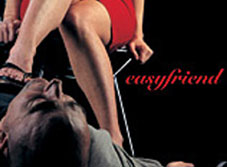
Easyfriend
Création numérique | 0 | | 0:0 | Spain | 2007
Have you ever wondered what the company of a virtual friend would be like? When Elisabeth Vogler loses her voice in full flow whilst performing Electra she was not to know that it had been stolen from her by Alma, who would be her alter ego in the tortuous process of recovery. They both move to a house by the sea so that Elisabeth can get her voice back and recover her identity. A split search for identity in two characters who progressively fuse into a single person. Dialogue-monologue acts as a precarious vehicle for the longed for encounter that awaits them. This is Ingmar Bergman´s "Persona", a film that defines cinema and left its mark on Oriol, the protagonist in "Easyfriend". "Easyfriend" comes out of the search for identity through conversation. The user does not define his identity or decide on how he wishes to be shown to others. The project uses Artificial Emotional Intelligence to generate dynamic virtual identities. The user, on entering for the first time, projects his desire, what he expects from a relationship: friendship, love, sex, etc. When he shapes the identity of his virtual friend, in a psychoanalytic process, he constructs a future, expectations, an experience. From that point on, he will be able to deal with the relationship as his will dictates: he can hold onto it or forget it. His virtual friend will remain active so long as the relationship exists and provides him with conversation. When the creator stops communicating, his robot becomes inactive. What their desire craves is not a conventional relationship, but a situation that favours them and responds to their needs as incomplete unstable individuals. In this sense, "Easyfriend" is a hybrid project between cinema and net.art, exploring Internet narrative. Oriol is an artist who works with video and comes to the city to exhibit his work at a festival. As soon as he arrives, he turns up for an interview with Laura, an art journalist. The conversation starts moving and everything goes awry. She savagely attacks his work, accusing him of having a distanced perception of art, while he sees in her the reminder of a past relationship that he has not managed to get over and which has marked his life. Once this interview has taken place everything moves very fast. They each approach the relationship with different intentions and the ensuing confrontation sparks off a flurry of events that they both have to face head on. The narrative does not unfold sequentially: rather, it happens abruptly. The story can begin in the middle in order to advance, and then start off again at another point. The variants are infinite. The user will have to constantly go forwards and backwards in an action that requires him to take the initiative so as to understand the logic in the scenes. For this purpose he will be furnished with various tools designed so that he can use this narrative experience. At a particular point in the narrative, the two ways of experiencing "Easyfriend", the robot population, and the fictional plot, inevitably intersect, never to be separated again. Conversation with the easybot becomes a new narrative mechanism, at the user's disposal, where the flow of the story is deeper. The easybot can be asked questions about the characters, about what they think, the whys and wherefores of their behaviour, the way their relationships develop, therefore allowing it to be possible to attain knowledge of "Easyfriend" at a higher level.
Roberto Aguirrezabala was born in 1971 in Bilbao. He has a diploma in audiovisual studies and painting. After having dedicated himself to painting and sculpting from 1990-95, he started to concentrate his artistic activities on the Internet and audiovisual media. Since 1995 he has worked as an artistic director for the Internet. In 1999 he founded "l'Agencia Interactive Adclick", an agency specialized in the realization of projects for the Internet and digital communication. His research is currently centred on the development of narrative cinematic systems on the Internet, on photography, and on video and cinema.