Catalogue > Search
Results for : Tout le catalogue
Michael Campbell, Janice Rahn
Elephant's Graveyard Redux
Experimental video | dv | color | 5:32 | Canada | 2013
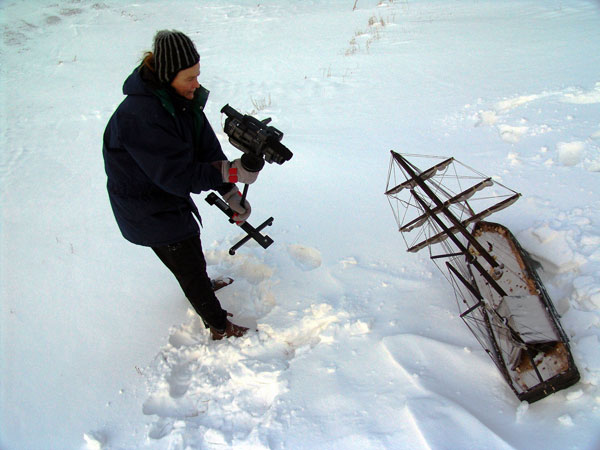
The Elephant?s Graveyard Redux conflates 18th century polar exploration with early space exploration. It was filmed in the Canadian Rocky Mountains and shifts in scale throughout the sequence. The mountain sequence was filmed hanging outside the open window of a Cessna aircraft. The vessel is a constructed model based on Sir John Franklin?s Terror, lost in the arctic in 1847, and Ernest Shackleton?s Endurance, which sunk in the Antarctic in 1915. The audio compiles conversations between Ground Control and the Apollo 11 crew during the 1969 moon landing.
Janice Rahn and Michael Campbell are Canadian artists who work between studios on a small island in the west coast of British Columbia and the South of France. They frequently collaborate on video and installation projects. They recently installed a large-scale installation in Nepal for the Kathmandu International Art Fair 2012 and will be building an outdoor project in an 18th Century Heritage Chateau in Anduze, France in 2015. They are both professors at the University of Lethbridge.

Caroline Campbell, Fionn Kidney
MusicVideo
Art vidéo | dv | black and white | 3:23 | Ireland | 2010
In the mid-nineties, the violent reality of Dublin gangster Martin Cahill`s activities seemed to fade into the background as he undertook his own peculiar brand of Disneyfication. Cahill, aka `The General`, often posed for press photographers clad only in Mickey Mouse boxer shorts, a Mickey Mouse t-shirt and balaclava. Crime and violence became reconciled within the imagery of the cartoon character criminal. It was easily forgotten that this was a man who could brutally nail his enemies to the floor. MusicVideo features a gang of Martin Cahill look alikes, Mickey Mouse clad and choreographed in lo-fi Hollywood Busby Berkeley style. They dance beneath the beautiful crumbling stucco work of the big house of the ascendancy. Half boy band, half Martin Cahill fetish party; an undercurrent of strange violence makes its presence visible
Tu Me Tues are Caroline Campbell and Fionn Kidney. They have been working together since 2009. Composer Philip Stewart produced the soundtrack to MusicVideo and is a collaborator of Tu Me Tues across a range of projects.

Clarissa Campolina, Luiz Pretti
Os que se vão
Experimental fiction | dcp | color | 23:11 | Brazil | 2018
A man caught in the verge of freedom. He penetrates a city where the boundaries between reality and dream disappear. He crosses the landscape without belonging to it anymore. A farewell before departing.
Clarissa is based in Belo Horizonte, Brazil. Partner of the Anavilhana production company and member of Teia until 2014. She directed documentaries, instalations, short and feature films. In 2015, the DAAD – Art Residency Programm held a retrospective of her work at Arsenal Cinema (Berlin, Germany). Her last short, Solon, won the prize for Best Cinematography in Brasilia Film Festival and earned Clarissa the FT/Oppenheimer Funds Emerging Voices Award.
Alex Campoy
Sin Alas
Experimental video | dv | color | 6:42 | Spain | 2007
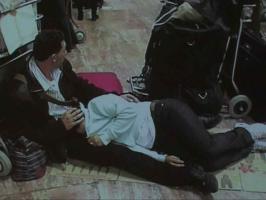
During the last years and due to an increasing demand in the air sector, a great number of the so called low-cost airlines have risen, offering affordable and highly competitive flight prices for all type of budgets. Because of failure in management, some of these airlines are obliged in repeated occasions to reschedule their flights, with constant delays and cancellations. The main victim in these scenarios is always the passenger. In late 2006 hundreds of passengers witness, with impotence, the closing of a Spanish airline by the Civil Aviation, a definitive decision given the lack of professionalism shown in previous events. The video shows some of the extreme situations multitude of passengers were submitted to during the course of the company`s last operative days. Perplexed by passiveness and lack of humanity, the affected by these circumstances claim their rights with sorrow and indignation.
I was born in 1971, Seville city (Spain). I started as a painter in 1999. Selftaught about painting and also about video. My first video art "Boomerang" was made in 2003, which reflects the problems of street vending of mainly African inmigrants and the continuing harassment to them by the police, in Madrid city. In 2006 I made my second video work associated with a painting installation made in Salamanca at the Domus Artium Museum. In this year 2007 I have made two works (filming & editing): "With no Wings" and "Without Destiny".
Bubi Canal
Chrystelle
Experimental video | 0 | color | 2:1 | Spain | 2011
Bubi Canal is a Spanish visual artist living in New York City. Bubi teleports us to impossible worlds full of emotions and mysterious and intriguing characters. His work combines different types of media and artistic methods including photography, video and sculpture and deals with the recurring themes of human wishes, dreams, magic and love.
Bubi Canal is a Spanish visual artist living in New York City. Bubi teleports us to impossible worlds full of emotions and mysterious and intriguing characters. His work combines different types of media and artistic methods including photography, video and sculpture and deals with the recurring themes of human wishes, dreams, magic and love.

Bubi Canal
Hologram
Experimental fiction | hdv | | 1:39 | Spain, USA | 2015
Bubi Canal’s video, Hologram, depicts characters who embark on a journey from darkness and fear to light and love. According to Bubi, "the external world of Hologram is a manifestation of the characters` subconscious. They communicate with each other through a choreography that transforms them." Bubi believes that optimism and illusion are contagious and hopes that his work will have a similarly transformative effect on the viewer. Like a hologram, the coherent totality of Bubi’s universe can be accessed through each of the works on view. Every piece activates a dimension where memory, imagination, and reality are mutable and inextricably linked.
Bubi Canal is a Spanish-born, American-based artist. His work combines different types of media and artistic methods, including photography, video and installation, and deals with recurring themes of wishes, dreams, love and magic. Canal was born in Santander, Spain, in 1980. He studied at the University of the Basque Country in Bilbao, focusing on audiovisual arts and sculpture. He relocated to Madrid in 2004 and New York in 2011. His work has been shown at venues like the Centre Pompidou (Paris), Eyebeam Art+Technology Center (New York), AMA Art Museum of the Americas (Washington D.C.), MATADERO (Madrid), ADDAYA Centro de Arte Contemporáneo (Mallorca), CGAC Centro Gallego de Arte Contemporáneo (Santiago), and La Casa Encendida (Madrid) among others. In 2012, he taught a workshop at ICI Independent Curators International in New York. Canal’s Special Moment show was exhibited at Munch Gallery in 2012, his first solo showing in New York. In 2014, his work was featured on the cover of The British Journal of Photography. He has issued several publications like Canal, Manual and Dreamtime. Bubi Canal lives and works in Brooklyn.
Cedric Canaud
Lancé en REC.roulades02
Art vidéo | dv | color | 3:46 | France | 2004

Cihad Caner
Abstract Violence
Video | hdv | color | 11:10 | Turkey, Netherlands | 2016
Abstract Violence The images of war and migration are mainly based on the images that are being circulated in mainstream and social media. Although, these violent and manipulative images form an important element of public opinion concerning the migration flux and war, they are definitely not direct representations of reality. How to represent reality? Can we talk about the reality in the time of image culture? Abstract Violence investigates the image of current war and migration from its first place, from destroyed Syrian cities and from leftover objects. Caner questions the impossibility of representing violent images and how we interpret them within the time of the image culture. The project uses real footage that were shot by the artist in Syria during the recent war. Caner produces an abstract space with 3D scanned-rendered objects, which were collected from ruined houses to emphasize how these events become virtual and make us insensitive.
Cihad Caner was born in 1990 in Istanbul. Caner holds an MFA on Media Design and Communication. Caner lives and works in Rotterdam and Istanbul.

Cihad Caner
(Re)membering The Riots in Afrikaanderwijk in 1972 or Guest, Host, Ghos-ti
Documentary | 4k | color | 45:16 | Turkey, Netherlands | 2024
The film revolves around a forgotten event: the 1972 riots directed against guest workers in Afrikaanderwijk, a neighbourhood of Rotterdam. It poses questions such as how we remember, the role of subjectivity in shaping our collective memory, and the transformative potential of re-enactment as a means of reawakening the past. Central to this film is a meticulous focus on memory, as it seeks to unravel the subjective nature of individual recollections, recognising that memory is not a fixed entity but rather a fluid and subjective phenomenon. The aim of the film is to highlight contrasting shades and nuances that exist among various individual remembrances of the Afrikaanderwijk riots, allowing for a diverse range of perspectives to be acknowledged and woven together. Reenactments feature as pivotal elements within the project, which not only allows for the recreation and revisitation of the past, but the process of reenactment itself operates as a potent tool for reclaiming forgotten narratives.
Cihad Caner (b. 1990, Istanbul) is an artist based in Rotterdam. His practice explores the politics of the image through the mediums of video, photography, music, motion-capture, and CGI. Caner’s research-driven practice revolves around (re)presentation, language, marginalisation and alterity. His fictional CGI characters are often multi-lingual protagonists in non-linear, metaphorical narratives that employ humour, absurdity, and poetry to critique the status quo. Recently he has exhibited at Akademie der Künste, Berlin; Kunstinstituut Melly, Rotterdam; Kasseler Kunstverein, Kassel; Nest, Den Haag; Shahin Zarinbal, Berlin; Blitz Malta, Valletta; EYE Film Museum, Amsterdam; Július Koller Society, Bratislava; Kunsthal Mechelen, Mechelen; Nieuwe Instituut, Rotterdam, and ?stanbul Modern, ?stanbul, among others. Caner was a resident artist at the Rijksakademie van Beeldende Kunsten (2021-2023).
Yves Cantraine
Histoire(s) d'une utopie à vendre
Documentary | dv | color and b&w | 93:30 | Belgium | 2006
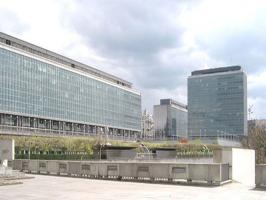
Beginning 2005, the huge Cité administrative de l?Etat (an administrative Center built in the heart of Brussels in the wake of the 1958 World Exhibition) was abandoned by its last « inhabitants » as it had been sold to a private investor. The site had been a glorious symbol of the Providential State and of Centralized Government. Its history may reflect that of Belgium and of the State.
María Cañas
Down with reality
Experimental video | dv | color | 22:30 | Spain | 2006
"Down With Reality" représente l'expérience d'une reflexion sous forme de faux documentaire portant sur la télé réalité à travers l'art contemporain et le cinéma. Ce phénomène social devait arriver tôt ou tard dans le monde de l'art, et ici, l'artiste María Canas se place au coeur d'une expérience étrange : elle va à la fois diriger et participer à son propre reality-show. Dans ce projet commissioné par Mery Cuesta et dont le titre est "je t'envoie un collègue", Canas cohabite pendant une semaine avec sa commissionnaire, bien que les deux femmes ne se connaissent pas. L'artiste a filmé ces 7 jours de conversations, de festivités, de discussions, de concerts, de joies et de larmes pour ensuite les présenter sous forme de vidéo. Dans cette oeuvre plusieurs réalités très variées convergent pour créer une réflexion autour de la représentation, la capture de l'image, la définition des personnalités par les moyens de communication et le rôle des reality shows en tant que moule de différents comportements sociaux. Nous observons de quelle manière les images, qui sont le fruit de la coexistence compliquée entre artiste et commissionnaire, sont introduites dans un défilé capturant d'autres programmes télévisuels, fragments de films, performances étranges, contrefacons et registres visuels de toutes sortes, créant ainsi une oeuvre disparate et émouvante. Un mirroir déformant, qui vomit des aberrations et des monstres différents de ceux créés par les reality-shows. "Down With Reality" est une réflexion subversive sur l'atmosphère artistique qui prend son impulsion sur un groupe particulier, celui qui dont la nuit constitue le cadre de (re)creation, la cohue de créatures nocturnes qui hantent les bars, les galeries d'art, les rues, et qui dissimulent en elles un esprit exhibitionniste plus ou moins pathétique, auquel nous participons tous sans bouger. Cette vidéo oppose à la faible contribution culturelle du reality show la force créative et la sensation d'immortalité que le cinéma confère à notre âme collective. Il nous fait réfléchir sur la capacité à produire des modèles de représentation à la télévision et au cinéma, en remarquant à quel point existence est saturée d'images, de personnes, d'émotions, d'ennuis et d'affections. L'oeuvre, dans sa partie finale, rend un hommage à ces films de série B admirables et ces cinéastes visionnaires qui ont fait du minimalisme (moins de matière qui oblige à davantage de créativité) leur raison d'être. A la télévision, au contraire, expériences sociologique et réalités multiples se rencontrent pour donner ce programme télévisé innovateur et expérimental.
María Cañas, née à Seville en 1972, dirige Animalario TV Producciones, une plateforme d'expérimentation audiovisuelle de divers champs tels que l'art vidéo, les vidéos de musique, les installations, l'imagerie digitale et les projets sur internet, mais aussi le contenu numérique en construction permanente, consacré à la culture du recyclage et de l'appropriation. Diplômée des Beaux-Arts, María Cañas a travaillé sur un doctorat en esthétique et histoire de la philosophie à l'Université de Séville. Elle rédige actuellement une thèse sur les stratégies audiovisuelles expérimentales et coordine divers projets audiovisuels, tel que le concours audiovisuel Injuve 04. L'oeuvre de María Cañas a été présentée dans des manifestations et des festivals internationaux tels que Transmediale 03 (Berlin); le Festival de Cinéma Underground de Portland (Oregon); l'Institut Cervantes(Manchester); l'Organisation Nelson Garrido(Caracas); le Festival de Cinéma de Beat-Portobello (Londres); et le Festival de Holguín(Cuba), entre autres. Elle a reçu de nombreux prix et récompenses, dont le Prix de l'activité artistique Iniciarte en 2006 et une récompense de production de la Junta de Andalucía pour le projet "Meet my Meat N.Y." En 2005, elle a reçu le prix RTVA-Zemos98, le Barcelona VisualSound et le Prix du Jury Intervenciones.tv 6, Fundación Rodríguez. María Cañas a participé à des expositions de groupe dans différentes galeries comme la Juana Aizpuru, La Caja China, Sala de eStar (Sevilla), Fernando Serrano (Huelva), Carmen de la Calle (Madrid), Galería 44, et ADN (Barcelone). Elle collabore aussi à des projets, des publications, des séminaires, des tables rondes et avec des chaînes de télévision.
María Cañas
Land of 1.000 Tvs
Experimental video | dv | color and b&w | 2:20 | Spain | 2005
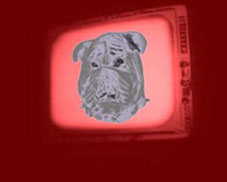
Through televisual and animalist video collages, both singular and surrealist, Maria Canas generates an unknown narration of the ways to exterminate human beings and implant an "animal telecracy". In "Land of 1.000 TVs", from her imposing video archives she gets rid of a series of images that she combines in her own way, a particular fashion of making scratch video. The result is a pre-apocalyptic space peopled with tens of television sets that irradiate cathodic rays. They hypnotize and transform into a spectrum of dogs, bats, and everything that has the misfortune in passing before. This short work, composed of three acts; "El animal de la vista baja", "Nursery TV", and "Land of 1.000 TVs", recalls the films of series Z from the 50s where a strange invasion, retransmitted on the television, watches the earth. But, here, it seems that it is the television sets themselves that make the living beings disappear.
Born in Seville in 1972, Maria Canas directs Animalario TV Producciones, an audiovisual experimentation platform. With a diploma in fine art, she is currently working on her thesis, a thesis on the experimental audiovisual strategies and the coordination of audiovisual projects, such as Certamen Audiovisual Injuve 04. Her works have been exhibited at international festivals and events: the Transmediale Berlin, at the Cervantes Institute of Manchester, the Internacional de Cine de Las Palmas, festival Zemos98 à Seville, Beat-Portobello Film Festival in London, and the International Computer Arts Festival of Maribor in Slovénie. Over the years, María Cañas has received various awards and recognitions, such as the Prix à l'Activité Artistique Iniciarte in 2006, and an Aide à la Production de la Junta de Andalucía for the project "Meet my Meat New York". In 2003 she was a finalist at the Prix Image des Transmediale of Berlin.

Viet Hoai Son Cao
Neon Sarcophagus
Experimental doc. | hdv | color | 15:29 | Vietnam | 2018
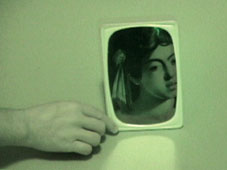
In a far away village Hai Hau of Vietnam, a group of Christians are building a spaceship to fly to the moon.
Cao Viet Hoai Son (Cao Viet Hoài S?n) was born in 1994, Hanoi, Vietnam. He was a film student in a collaborate course of Hanoi Academy of Theatre & Cinematography and Belgium Institut Supérieur des Arts. He is interested about human connections and inner desires
Gustavo Caprin
Chamber Piece
Experimental video | betaSP | color | 11:20 | Argentina, Spain | 2005
This video explores a kind of functionality of certain things in an apparent state of naivety: an art book becomes a model of exercises over the human body.
Gustavo Caprín was born in Buenos Aires, Argentina, in 1968. He majored in Painting at the Prilidiano Pueyredón Fine Art School of Buenos Aires in 1992, and finished Advanced Postgraduate Studies at the Universitat de Barcelona, Spain in 2005. Since 1994 his work has been shown regularly in individual exhibitions. The most recent include exhibitions at the Casa Elizalde (Spain, 2003), the Ross Farell Gallery, (USA, 1999), and the Fernán Félix de Amador Museum (Argentina, 1997). He has also participated in numerous group shows in the USA (Kantor Gallery, 121 Gallery/Los Angeles,), Spain (Casa de America/Madrid, Casa de Cultura/Girona), Italy (Casa Argentina/Rome, Unimovie Festival/Pescara), Canada (6th Biennale Champ Libre/Montreal, Shift Gallery/Toronto), Colombia (Museo de Arte Moderno/Bogotá), Perú (Centro Cultural España/Lima), as well in as other European and South American countries. During 1999/2000, he lived in Pasadena (CA), USA. Since 2001 he has been living and working in Barcelona, Spain.
Caraballo-farman
Normal behavior after shipwreck
Art vidéo | dv | color | 4:0 | USA, Argentina | 2004
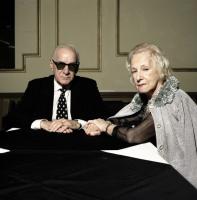
An old couple dance a tango with no music.
caraballo-farman is a two-person team based in New York. They have been collaborating on various art projects for five years. As a team, they have shown their work in various international venues, and have won several awards and grants.
Raymonde Carasco
Tarahumaras 2003, la félure du temps: La Despedida
Documentary | 16mm | color | 50:0 | France | 2003
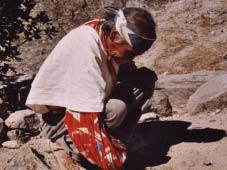
"La Despedida" (the farewell for the dead) is the last part of a movie: La Félure du Temps, in series form, articulated on the lyrics of the ?last Shaman? Tarahumara who agreed, spring 2000, to tell his thought through several dialogs with the film director on spots chosen by him: the ruins of his childhood home, the circles of the last Ciguri ceremonies, the grotto where lived his grand father, his mentor Gloria, the Apaches invaders. The images shot in 1999, 2000 and 2001 take the current dances and rituals along with the Tarahumara?s background images: water, fire, earth and sky. The Despedida shows the death rituals and the approach of the shamanic thinking associated with rituals: ? Yes, the dead, I see him very well. He tells me the necessity to do that ritual. We have to end this, that he may be clean, limpiado, that he may ends all what he must.?
Raymonde CARASCO in born the 19th of June 1939 in Carcassonne, in France. She?s currently a university teacher and cineaste. From 1999 to current time, she has been teacher of cinema studies at the university of Lille III and emeritus teacher since 2002. From 1970, she has been teaching cinema aesthetics at the University of Toulouse Le Mirail and taught especially movies analysis, the scenario writing, actors management in her relation with theatre staging. Mrs CARASCO has been studying at the Ecole Normale Supérieure of Fontenay (France) from 1960 to 1963 and followed then an aggregation in philosophy to finish with a PhD under the direction of Roland Barthes. Her thesis was an essay for a theory of art, fundamentally eisensteinienne that would ask the issue of cinema editing in its relation with the thinking of other arts: editing as a principle of the cinematographic form, in the cinema but also in poetry and literature, painting, etc? She received in 1992 her degree to direct PhD with the thesis ?L?indée de montage et l?experience de l?écriture? at Paris VIII University under the direction of Marie-Claire Ropars-Wuilleumier, Dominique Noguez and Jean-Louis Leutrat. Her main writtings include Hors cadre Eisenstein, éditions Macula, Paris, 1979, Fragments d`un journal au pays des Tarahumaras, Sorcières, Stock, 1980 and Le Portrait ovale, Comp`Act, 1995. She wrote a also articles on the image according to Barthes, Pasolini, Resnais, Duras, Godard, the erotic of the poet Joë Bousquet, Antonin Artaud, notably in the Critique, The Revue d?esthétique, in Chimères and La Polygrahpe.
Beatriz Caravaggio
Más que palabras
Experimental doc. | dv | color | 26:0 | Spain | 2006
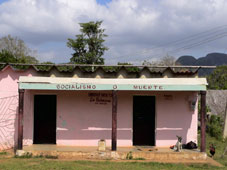
The Cuban Revolution has since the beginning used posters and billboards to transmit its political and social ideology to people. It is a way of visual communication that has lasted until today. This film was produced in 2006 and was conceived as a 'work in progress'. With each billboard, a postcard of Cuban daily life is shown. We have registered their geographical coordinates so that in the future we can go back to shoot again and show, from the same locations, the evolution of Cuban History.
Beatriz Caravaggio was born in Spain. She currently lives in Madrid and Barcelona. Her work focuses on video art and experimental documentary. Her most recent exhibitions, those of 2006, were at the Estampa International Fair of Art, the V MAEM Electronic Art Festival, Mostoles, Madrid, and Observatori, Festival of Artistic Research.
Eneos Carka
The Silence of The Banana Trees
Documentary | 4k | color and b&w | 24:54 | Albania, Hungary | 2022
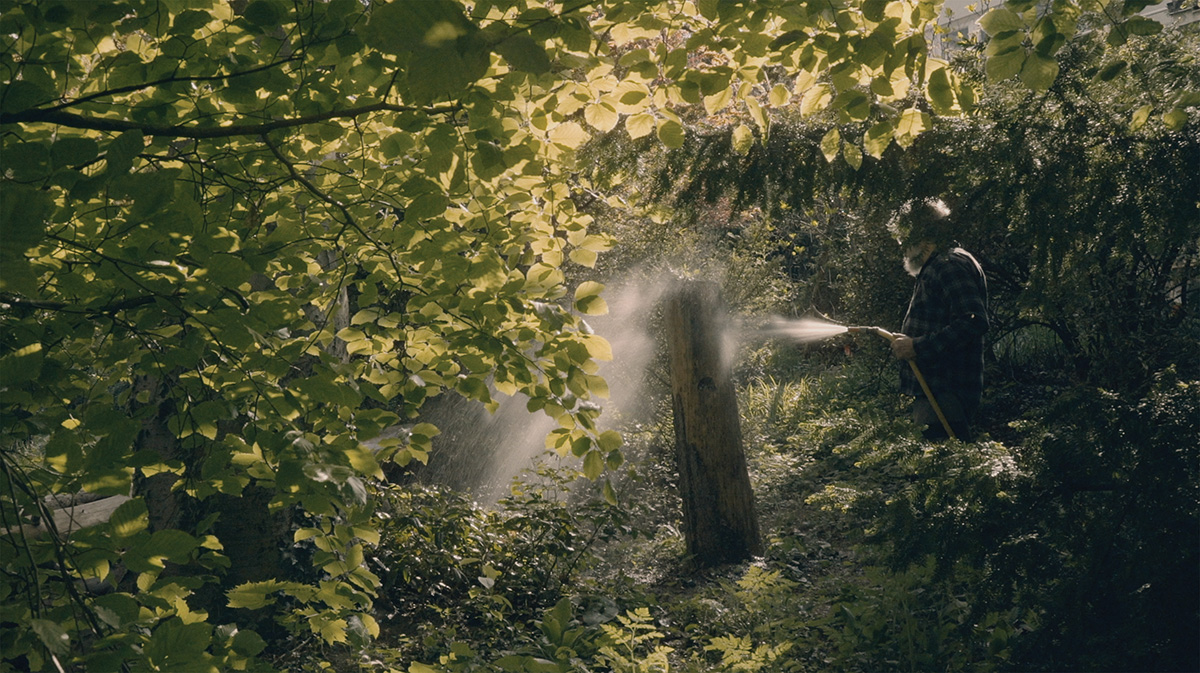
A father finds shelter in the memories he created together with his daughter to whom he hasn't spoken in years. The film transforms into a go-between in an attempt to unite them through images, sounds, and letters.
Eneos Çarka graduated from DocNomads Masters on Creative Documentary and he is currently a PhD student and Annenberg Fellow in Cinema Studies & Media Arts and Practice at the University of Southern California. His films have screened at numerous festivals, galleries, and cultural events such as IDFA, FIPADOC where he received Tënk Award, HotDocs, GoShort, Festival dei Popoli and more. He served as a Jury Member in the IDFA Competition for Youth Documentary in 2022.

Eneos Carka
The First Few Moments of the First of January
Experimental film | mov | color | 12:39 | Albania | 2020
A film is being projected in a bedroom where a woman sleeps. The character of the film speaks of the future of humanity and his words penetrate the woman's head invading her subconsciousness.
Eneos Çarka (1996, Albania) began his film education at University of Arts of Albania graduating in Film Directing. As a recipient of the Government Fund of Excellence Scholarship, he was awarded an MA degree in Film Studies with Distinction from University College London. He is currently part of the 8th generation of DocNomads, an Erasmus Mundus Conjoint Masters on Creative Documentary. His short documentaries focus on character studies and often deal with the themes of identity, migration and family relations. He pays particular attention to issues of representations experimenting with various approaches to documentary cinema. His first feature-length documentary is currently in post-production.

Shai Carmeli Pollak
BILIN HABIBTI
Documentary | dv | color | 84:0 | Israel | 2006
The Palestinian village of Bil`in is about to lose over a half of its territory to Israel. The residents of the village decide to embark on a struggle against the construction of the barrier. The film exposes the extraordinary relationship formed between the villagers and Shai, the director, who arrives with a group of Israeli peace activists and the conflict that arises between him, as a former soldier and the entire military organization.
Born in 1968. Grew up in Jaffa. Graduate of the Film & Television Faculty of Tel Aviv University. Director and writer. His work includes: the "Zbeng" series for youth, the animated series "Zolgar and Pupkin Conquer the World," and the drama "Abrahmov." For the past four years Carmeli-Pollack has documented and took part in the struggle against the separation Fence. "Bilin My Love" (Bil?in Habibti) is his first documentary film. Ready for Love 12 min. Comedy (1993) The slimy Gang ? 15 min. Comedy (1997) Zbeng ? TV series for Channel 2. (1998-1999) Abramov ? TV drama for channel 2. 50 min. (2000) Zolgar & Pupkin ? Animation series for kids channel. (2001-2002)
Maia Cybelle Carpenter
Lasso
Experimental video | dv | color | 6:0 | France, Canada | 2005
My meditation on the romance of "The Wild West": pure spatial motion. I explore the virtual potential of the horizon line while framing that spatial experience.
Maïa Cybelle Carpenter is a moving-image artist and curator born in 1975 and raised between New York and the South of France. She completed her BA in Women`s Studies/Film Theory from Barnard College, Columbia University (1997), and has an MFA from the Film/Video/New Media Dept. from the School of the Art Institute of Chicago (2001). She currently resides in San Francisco and New York City. Her films and videos have been exhibited internationally in film festivals, cinematheques, museums, art centers and galleries. Selected exhibitions have included: Ars Electronica, Pacific Film Archives, The Ontario Cinematheque, Anthology Film Archives, Exit Art Gallery NY, Rencontres Internationales Paris/Berlin, Paris Cinema de la Clef ?Cinemas Differents?, Telluride International Experimental Film Festival, Yerba Buena Center for the Arts, The InterMedia Arts Center of Minneapolis, The Taiwan Cinematheque, PBS Television, Eye Drum Gallery, and recently, the First International Film Festival of Sexuality and Gender Plurality in Mumbai, India. The Spring 2003 International Film and Video Journal includes a limited edition DVD and theoretical essay written by Mary Slaughter about Maia?s first 16mm work, Site Visit. The San Francisco Cinematheque recently presented a mini- retrospective of her work at Yerba Buena Center for the Arts as part of their ?Fresh Eyes Series? (Oct. 2002). In addition to her artistic production, Maïa has been actively curating film and video programs since 1996. In 1997 she served as the Programming Coordinator for MIX NYC: The New York Lesbian and Gay Experimental Film/Video Festival and has subsequently curated programs for this festival. She was also a Judge for Women in the Directors Chair 20th Anniversary Film/Video Festival in 2000, and a judge on the New York Foundation for the Arts Video Artist Fellowship Panel for the 2002 granting cycle. In the summer of 2004 she was a visiting curator for Pleasure Dome in Toronto, Ontario. She is currently a curator for the San Francisco Cinematheque, a member of Canyon Cinema, and The Golden Gate Awards Coordinator and Short Films Programmer for the San Francisco International Film Festival. Maïa has taught hand-processing and alternative film technique workshops and given guest-artist lectures at The School of the Art Institute of Chicago, The Academy of Arts in San Francisco, at Mills College, Liason of Independent Filmmakers of Toronto and at Phil Hoffman?s Independent Image-Making Retreat in Ontario, Canada. Maïa s new 16mm film Working Portraits screened as a work in progress in the 2005 editions of MIXNYC, Inside/Out, and Outfest. Her video installation piece, Lasso screened as a work-in-progress at Yerba Buena Center for the Arts in a San Francisco Cinematheque program in December 2004. In current production is a feature-length bi-lingual (French & English), experimental narrative 16 mm film titled Nous (Us). Her work is distributed by Canyon Cinema and Canadian Filmmakers Distribution Centre.