Catalogue > List by artist
Browse the entire list of Rencontre Internationales artists since 2004. Use the alphabetical filter to refine your search. update in progress
Vaughan Pilikian
Catalogue : 2009Household Gods | Experimental fiction | 16mm | color | 6:30 | United Kingdom | 2008
Vaughan Pilikian
Household Gods
Experimental fiction | 16mm | color | 6:30 | United Kingdom | 2008
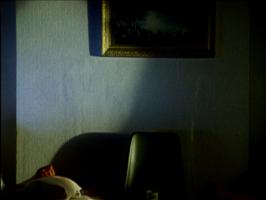
Alone at home, but haunted by other voices: six people is six rooms somewhere in London.
Vaughan Pilikian is a writer, director and artist who lives in London. His short films have screened in festivals around the world, and he is currently at work on his first feature.
Michael Pilz
Catalogue : 2006Across the river | Documentary | betaSP | color | 151:0 | Germany, Zimbabwe | 2004
Michael Pilz
Across the river
Documentary | betaSP | color | 151:0 | Germany, Zimbabwe | 2004
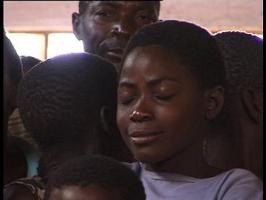
Across the River is a documentary focusing on the cultural exchange that took place when the Tonga music ensemble \"Simonga\" and people living in the village of Siachilaba near Zimbabwe\`s Lake Kariba met a group of Austrian musicians and composers. It highlights the cultural strength and resistance of the Tonga people.
Joana Pimenta
Catalogue : 2015AS FIGURAS GRAVADAS NA FACA COM A SEIVA DAS BANANEIRAS | Experimental doc. | 16mm | color | 16:30 | Portugal | 2014
Joana Pimenta
AS FIGURAS GRAVADAS NA FACA COM A SEIVA DAS BANANEIRAS
Experimental doc. | 16mm | color | 16:30 | Portugal | 2014
The rapid turning of a light draws a circle. In the space bound by its line unravels an archive of postcards sent between the island of Madeira and the former Portuguese colony of Mozambique. The figures carved into the Knife by the Sap of the Banana Trees circulates between a fictional colonial memory, and science-fiction.
Joana Pimenta (b. 1986, Lisbon) works in film and video installation. Her work has been recently presented at the Carpenter Center for the Visual Arts, Fundacion Botin, Galeria da Boavista, R4, and The Pipe Factory. Her short film "The Figures Carved into the Knife by the Sap of the Banana Trees" received the Pixelbunker Award for Best Short Film in the National Competition at Indielisboa `14, where it premiered, and has been selected for the Toronto International Film Festival (Wavelenghts)and the New York Film Festival (Projections, former Views of the Avant-Garde). She is a Teaching Fellow and PhD candidate in the Department of Visual and Environmental Studies at Harvard University, a fellow at the Film Study Center, and is pursuing her MFA in Film/Video at the Milton Avery School of the Arts at Bard College. She lives and works in Lisbon and Brooklyn, NY.
Antoni Pinent
Catalogue : 2010FILM QUARTET / POLYFRAME | Experimental film | 35mm | color and b&w | 9:0 | Spain | 2008
Antoni Pinent
FILM QUARTET / POLYFRAME
Experimental film | 35mm | color and b&w | 9:0 | Spain | 2008
FILM QUARTET / POLYFRAME is conceived as a small cinematographic bomb attempting to question the established definition of frame as the minimum unit of (cinematographic) time by dynamiting it in four fragments. A step further in the so-called sub-genre practice of found footage film -recycled material- is also put forward for consideration in this project. The appropriationism applied in this work makes use of material found in Hollywood cinema (Singin?in the rain, Stanley Donen, 1952); Pink Panther; Buster Keaton; etc., the first avant-garde period (Un chien andalou, Luis Buñuel & Salvador Dalí, 1929) and American experimental film (Wavelength, Michael Snow, 1966-1967). Such method makes possible, therefore, to maintain image ecology while it provides an analysis of the history of cinema. An explosive artifact has been inscribed as cinematographic notation on musical staffs in order to facilitate the interpretation and development of the piece beyond its mere projection. Such being the case, unchanging cinematographic would pushed for their reinvention-destruction-explotion. This piece celebrates the 50th anniversary of A Movie (1958), by Bruce Conner (1933-2008).
Pink Twins
Catalogue : 2026Firewalk | Animation | dcp | color | 9:35 | Finland | 2025
Pink Twins
Firewalk
Animation | dcp | color | 9:35 | Finland | 2025
A pre-apocalyptic midnight walk takes you through a burning forest to witness a looming destruction. A fire in the forest either marks an impending doom or serves as a metaphysical gateway between realities.
Helsinki based duo Pink Twins, Juha and Vesa Vehviläinen, have worked in the fields of media art, moving image and electronic music since 1997. The boundaries of human perception, immersion and physicality are central to their works. Pink Twins implement their complex animations through parametric design and programming. Their works are performed not only in exhibitions and festival screenings but also as live performances combining music and video projections. Pink Twins have been seen on all continents, and in all kinds of venues from concert halls, festivals, theaters to churches. In recent years, Pink Twins have also made audio and video works directly online, e.g. the sound piece Infinity for Kiasma’s online art collection.
Pink Twins
Catalogue : 2011Defenestrator | Experimental video | dv | color | 8:30 | Finland | 2008
Pink Twins
Defenestrator
Experimental video | dv | color | 8:30 | Finland | 2008
A spectacle of grandiose spaces, monumental halls and majestic architecture. Overpowering architectural constructions disintegrate, deform and transform into a flowing stream of lava, creating new distorted spaces as building blocks of a new order.
Pink Twins, brothers Juha (b.1978) and Vesa Vehviläinen (b.1974) are Helsinki-based visual artists and musicians working with digital music and video. The video works by Pink Twins are usually processed on Framestein, a video software developed by Juha, and combined to a soundtrack of Pink Twins music. Live Pink Twins deliver improvised digital soundscapes, often with video screenings.
Catalogue : 2007Live Paris Villette | Performance | 0 | color | 40:0 | Finland | 2006
Pink Twins
Live Paris Villette
Performance | 0 | color | 40:0 | Finland | 2006
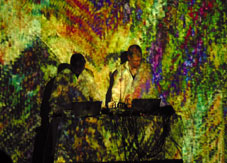
Pink Twins is a duo of musicians and video artists, brothers Juha and Vesa Vehviläinen from Helsinki, Finland. Active since 1997, Pink Twins have played their music to audiences in Europe and Asia, in festivals, clubs, art museums, churches and outdoor events. Based on improvisation and the brothers` symbiotic collaboration, music of Pink Twins is a chaotic whole of intense soundbursts, melodies and infinitely detailed sounds. In their concerts Pink Twins create a constantly changing multilayered wall of sound and aim for a physical, mental and spatial experience. Pink Twins often incorporate video projections to their concerts. Mostly created with their self-made software, the video works are abstract and painterly, from formal compositions to extremely fast shapeless pixelstorms.
Pink Twins is a duo of musicians and video artists, brothers Juha and Vesa Vehviläinen from Helsinki, Finland. Active since 1997, Pink Twins have displayed their video works and played their music to audiences in Europe and Asia, in festivals, art spaces, clubs, churches, and outdoor events. Mostly created with their self-made software, Pink Twins' video works are abstract and painterly, from formal compositions to extremely fast shapeless pixel storms. Music of Pink Twins, based on improvisation and the brothers' symbiotic collaboration, is a chaotic whole of intense soundbursts, melodies, and infinitely detailed sounds. In their concerts, Pink Twins create a constantly changing multi-layered wall of sound, and aim for a physical, mental, and spatial experience. The live music is normally accompanied by video projections. During 2005 and 2006 Pink Twins performed actively in Europe and Asia. Their most notable performances have been the Venice Biennial Music Festival and a tour in China. Pink Twins has also had several solo and group exhibitions, for example, in Sweden, Luxembourg, China, and Mongolia. Pink Twins have released five CDs on their own label Pink Twins Media. A double DVD compilation will have been released in late 2006.
Catalogue : 2007Splitter | Experimental video | dv | color | 6:0 | Finland | 2006
Pink Twins
Splitter
Experimental video | dv | color | 6:0 | Finland | 2006
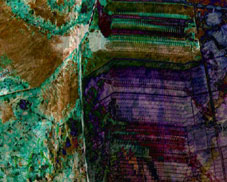
"Splitter" is a macrocosmos of interleaving streams of colour, a digital mass of endlessly transforming surface. Created from simple satellite photos and transformed into a richly detailed, multi-layered landscape, the static motion of "Splitter" creates a sacramental space that carries the layers of our perception and consciousness.
Pink Twins is a duo of musicians and video artists, brothers Juha and Vesa Vehviläinen from Helsinki, Finland. Active since 1997, Pink Twins have displayed their video works and played their music to audiences in Europe and Asia, in festivals, art spaces, clubs, churches, and outdoor events. Mostly created with their self-made software, Pink Twins' video works are abstract and painterly, from formal compositions to extremely fast shapeless pixel storms. Music of Pink Twins, based on improvisation and the brothers' symbiotic collaboration, is a chaotic whole of intense soundbursts, melodies, and infinitely detailed sounds. In their concerts, Pink Twins create a constantly changing multi-layered wall of sound, and aim for a physical, mental, and spatial experience. The live music is normally accompanied by video projections. During 2005 and 2006 Pink Twins performed actively in Europe and Asia. Their most notable performances have been the Venice Biennial Music Festival and a tour in China. Pink Twins has also had several solo and group exhibitions, for example, in Sweden, Luxemburg, China, and Mongolia. Pink Twins have released five CDs on their own label Pink Twins Media. A double DVD compilation will have been released in late 2006.
Catalogue : 2007Splitter 2 | Experimental video | dv | color | 10:0 | Finland | 2006
Pink Twins
Splitter 2
Experimental video | dv | color | 10:0 | Finland | 2006
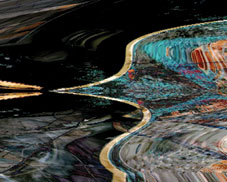
"Splitter 2" is an abstract sci-fi epic, where satellite photos from the surface of planet earth are reformed into a cosmic stream. "Splitter 2" shows a static, frozen, transforming, and moving space in which matter, light, and colour are interleaved with the darkness of the void to create a new universe.
Pink Twins is a duo of musicians and video artists, brothers Juha and Vesa Vehviläinen from Helsinki, Finland. Active since 1997, Pink Twins have displayed their video works and played their music to audiences in Europe and Asia, in festivals, art spaces, clubs, churches, and outdoor events. Mostly created with their self-made software, Pink Twins' video works are abstract and painterly, from formal compositions to extremely fast shapeless pixel storms. Music of Pink Twins, based on improvisation and the brothers' symbiotic collaboration, is a chaotic whole of intense soundbursts, melodies, and infinitely detailed sounds. In their concerts, Pink Twins create a constantly changing multi-layered wall of sound, and aim for a physical, mental, and spatial experience. The live music is normally accompanied by video projections. During 2005 and 2006 Pink Twins performed actively in Europe and Asia. Their most notable performances have been the Venice Biennial Music Festival and a tour in China. Pink Twins has also had several solo and group exhibitions, for example, in Sweden, Luxemburg, China, and Mongolia. Pink Twins have released five CDs on their own label Pink Twins Media. A double DVD compilation will have been released in late 2006.
Catalogue : 2006Pink Twins Live | performance | | | 35:0 | Finland | 2005
Pink Twins
Pink Twins Live
performance | | | 35:0 | Finland | 2005
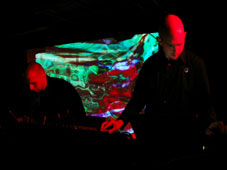
Pink Twins are brothers Juha and Vesa Vehviläinen from Helsinki. Their music and video work is a constant mass flow of abstract, electronic and concrete sound and visuals, where the logical and analytic thematic developments surrender to the frenetic and non-repetitive information overflow. The concert is a dynamic, improvised epic that follows an organic logic to build a dramatic unity out of seemingly opposing movements. The performance is backed by a live mix of Pink Twins` video works.
Pink Twins (brothers Juha and Vesa Vehvilainen from Helsinki) have been working together since 1997. Working as computer musicians and video artists, Pink Twins perform live as well as show video and sound installations in exhibitions.
Pink Twins
Catalogue : 2009Pink Twins Live | 0 | 0 | | 30:0 | Finland | 2008
Pink Twins
Pink Twins Live
0 | 0 | | 30:0 | Finland | 2008
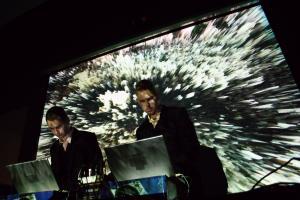
Pink Twins work on the crossing of visual art and music. Their computer-treated imagery and sound, often processed on selfmade software, focus on human perception, its functionality and limits. For their live performances Pink Twins incorporate live electronic music and a live mix of video works. The music of Pink Twins is based on improvised live sound processing of concrete and electronic sounds, noises and musical elements. The mix of live sound and video projections creates a hyperactive, constantly changing and extremely detailed experience of time and space.
Pink Twins (musicians and video artists, brothers Juha and Vesa Vehviläinen from Helsinki, Finland) build a tissue of connections between their sound work and their visual work, attempting to intimately join together mundane fragments usually disjoint. They work from fragments of images, sounds and sensations which our daily life is subjected to in order to break them down into small particles and reunite them once again in audacious constructions formed from chaos, pulverising and rendering them abstract, according to a unified artistic sensitivity. Their concerts are surprising chromatic combinations with strong sonic collusions which correspond to a deep need, with nothing superfluous. Active since 1997, Pink Twins have played their music to audiences in Europe, Asia and Americas, in festivals, art museums, clubs, churches and outdoor events, and displayed their video works on all continents.
Catalogue : 2006Box | Experimental video | dv | color | 8:0 | Finland, Fiji | 2004
Pink Twins
Box
Experimental video | dv | color | 8:0 | Finland, Fiji | 2004
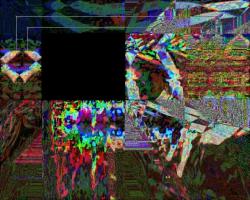
Box is based on photographs from Tunguska, Siberia, where a large area of land was destroyed when a huge meteorite exploded above the ground in 1908. The video is a slow composition, where landscape images go through several stages of transformation. The video material which was further developed into "Box" was originally made for a stage version of Stalker, produced by Circus Maximus at Helsinki City Theater in 2003.
The Finnish duo Pink Twins, the brothers Vesa and Juha Vehviläinen, started to work together in 1997. Since then they have been exploring visual and sonic noise combined in a most physical experience. Sampling the everyday images and tearing them apart to pixels then putting them together again to a chaotic and blasting unity. In Pink Twins` music and video works "the logical and analytic thematic developments surrender to the frenetic and non-repetitive information overflow.
Rui Pires
Jörg Piringer
Catalogue : 2006SIG/B | Experimental video | dv | color | 2:0 | Austria | 2005

Jörg Piringer
SIG/B
Experimental video | dv | color | 2:0 | Austria | 2005
Jörg Pringler est né en 1974, et vit actuellement à Vienne en Autriche. Pringler est membre de l´institut pour la recherche trans-acoustique et du vegetable orchestra (l´orchestre de légumes/das erste Wiener gemüseorchester). Il a étudié à la Schule für Dichtung à Vienne, et a obtenu un Mastère en informatique. On peut le considérer comme un poète du son.
Sasha Pirker, Lotte Schreiber
Catalogue : 2016Exhibition Talks | Experimental doc. | 16mm | black and white | 9:0 | Austria | 2014
Sasha Pirker, Lotte Schreiber
Exhibition Talks
Experimental doc. | 16mm | black and white | 9:0 | Austria | 2014
Wenn, wie Walter Benjamin behauptet hat, Gebäude auf doppelte Art, durch Gebrauch und Wahrnehmung rezipiert werden, d.h. taktil und optisch, dann könnte man Sasha Pirkers und Lotte Schreibers Exhibition Talks als Versuch verstehen, diese doppelte Rezeptionsweise ein Stück weit zu entkoppeln. Während auf der Tonspur vom Gebrauch der Ausstellungsräume des Tiroler Architekturforums aut die Rede ist, von den Gegebenheiten der einzelnen Räume und den Möglichkeiten, sie für eigene Bedürfnisse zu adaptieren, liefert die Bildspur fragmentarische, statische und in Schwarzweiß gehaltene Ansichten derselben Räume, die allein schon deshalb im optischen Register verharren, weil sie über die Montage zu keinem kohärenten Raumganzen verbunden werden. Anstatt die Größe der Räume und ihre gebaute Anordnung etwa über einen Rundgang durch das Gebäude zu "erzählen", fängt die Kamera Details der Fassade und der Innenräume ein, die zum einen mit ihren klar gezogenen Linien und den vielfältigen Gelegenheiten zu Ein-, Aus- und Durchblicken von der Formensprache der klassischen Moderne zeugen, zum anderen diese Formensprache einem optischen Spiel von Licht und Schatten, von Grauwerten und Schwarzweiß aussetzen, das die drei Dimensionen des Bauwerks grafisch auflöst. Bestand die Pointe der doppelten Rezeptionsweise von Gebäuden bei Benjamin in der Übertragung auf die Wahrnehmungsbedingungen am Ort des Kinos (Zerstreuung statt Kontemplation), scheint die experimentelle Entkopplung von optischer Wahrnehmung und taktilem Gebrauch in Exhibition Talks einer anderen Logik zu folgen. Obwohl vom Bild strikt getrennt, suchen die Möglichkeiten des Gebrauchs nach Wegen ins Sichtbare. "Normalerweise ist der Eingang hier": Zu sehen ist eine Öffnung, durch die Licht auf eine Wand fällt, während der übrige Raum im Schatten versinkt. Die Öffnung ist ein Fenster, sie könnte aber auch eine Tür sein bzw. ist sie gerade im Begriff, zu einer solchen zu werden. Von solchen Übergängen handelt Exhibition Talks: vom Offenen, vom Beweglichen und Veränderlichen des gebauten Raums. (Vrääth Öhner)
Sasha Pirker
Catalogue : 2014Paperwork | | | | 15:0 | Austria | 2013
Sasha Pirker
Paperwork
| | | 15:0 | Austria | 2013
Factory and office?these two architectural poles characterize Sasha Pirker?s Paperwork. On the one hand is the paper factory in the Italian town of Verzuolo whose largely automated processes the film captures in its first and final thirds in mainly static takes. On the other hand, Paperwork leads us into, around, and through the company headquarters of the Burgo Group, located in San Mauro near Turin, whose production sites include the aforementioned paper factory. The administrative building, which has largely been preserved in its original state, was built in the late 1970s according to plans drawn up by Oscar Niemeyer, a star architect in today?s terms. The building sits in the landscape like an elegant, curved, circular space ship, bearing witness to an era in which the administrative and service sector began to overtake industrial work.
Born in Vienna in 1969. Studied Linguistics. Artist and Filmmaker.Born in 1969 in Vienna, studied linguistics. Teaches at the Academy of Fine Arts Vienna. Video and video installation THINKING THE FORM at the Viennale in 2011. Sasha Pirkeris not just a filmmaker but a philosopher of space: Her architectural explorations of public and private buildings by eminent architects, such as Lautner, Schindler and Niemeyer aren?t documentaries on buildings but dialogues with these structures? social, political and societal dimensions. Pirker?s close look at detail speaks for the whole: with a downright affectionate understanding of space, she looks out from the inside (less often the other way round), foregoes the big picture of overall views for a gaze into interiors, as if into the bowels of utopias and sanctuaries cast in stone. The power of her films is frequently due to the interplay of images and sounds, when, for instance, the weird and wonderful stories told by people off camera make the architectural space come alive with astonishing tales.
Sasha Pirker
Catalogue : 2013THE FACE - Storefront for Art & Architecture | Video | 16mm | color | 4:30 | Austria, USA | 2011
Sasha Pirker
THE FACE - Storefront for Art & Architecture
Video | 16mm | color | 4:30 | Austria, USA | 2011
The face is usually the expressive surface which marks a person`s identity. "Face" does not, however, just refer to the human face, but could also mean the face of a building: the façade that "adorns" a building. In Sasha Pirker`s so-named short film, shot on 16 mm using a hand-held camera, these two meanings come at one another from diametrically opposed positions. On one hand Pirker is trying to show the building as a whole, plucking out individual fragments in an entirely subjective manner; fragments which the viewer then has to piece together. One clue to this interpretation is a quote by the artist Birgit Baldasti which flashes up right at the start: "If I was a poet I?d say that pleasure lies in other people refining your own imagination." On the other hand Pirker selects the clips of the building such that the individual faces of the passers-by remain hidden. In THE FACE all entities, both architectural and human, exist without their primary identifying feature: their face. Metaphorically only the eyes, mouth, nose and ears of the architecture can be seen, while people are generally cut off, or are filmed in silhouette from behind. The framing means that each image in the film just shows a clipping: here, there is no longer any suggestion of anything being shown as a whole. In Sasha Pirker`s view, the architectural elements are also given sculptural accents. At the same time, Pirker juggles with views from within and without, bringing out the limited, snippet-like view and precisely thus firing the imagination. Almost incidentally she also succeeds in connecting the gallery space and the street ? the primary aim of the two men of action Vito Acconci and Steven Holl when they renovated the façade of the Storefront for Art and Architecture (NYC) in 1993. (Dietmar Schwärzler) Translation: Anne Koth
Sasha Pirker, artist/filmmaker, born 1969 in Vienna, Austria. Studies in Linguistics in Vienna/Austria. From 1995-2000 she worked as a curator of contemporary architecture at the Architecture Center Vienna (Az W). Since 2006 she is a teaching member at the department ?Video and Videoinstallation? at the University of Fine Arts in Vienna, Austria. Her films are distributed by sixpackfilm Vienna, www.sixpackfilm.com (selection) 2011 Retrospective ?Philosopher of Space? at the VIENNALE - Vienna International Filmfestival 2010 67. Mostra Internazionale d?Arte Cinematografica, La Biennale di Venezia/I
Catalogue : 2012The future will not be Capitalist | Documentary | 0 | color | 19:16 | Austria, France | 2010
Sasha Pirker
The future will not be Capitalist
Documentary | 0 | color | 19:16 | Austria, France | 2010
At the end of the 1960s, when there was still a future, Oscar Niemeyer, living in France, designed the headquarters of the French Communist Party. Sasha Pirker`s film studies the relationships between this building, with its futuristic qualities, and the contemporary situation of political projects, economic realities and aesthetic attitudes. The cinematic means employed are chosen so as to provide various ways of viewing this unusual building as a physical space, an institution or a historical document, thus looking into its aesthetic effect, its practical use or its political and symbolic meaning. The Future will not be Capitalist alternates between sober insights into the everyday working life of those employed at the party headquarters and shots which make reference to the modernist effect of the shapes and materials of Niemeyer`s building. Off-camera, comments and memories related by the administrator of the headquarters lead the viewer through the building, painting a picture of the current politics of a shrunken party constantly reminded of its ideal state by its magnificent headquarters. Text: Christian Kravagna (Translation: Anne Koth)
Born in Vienna in 1969. Studied Linguistics, Artist and Filmmaker.
Catalogue : 2010Once at Miracle Mile | Experimental doc. | dv | color | 9:10 | Austria | 2009
Sasha Pirker
Once at Miracle Mile
Experimental doc. | dv | color | 9:10 | Austria | 2009
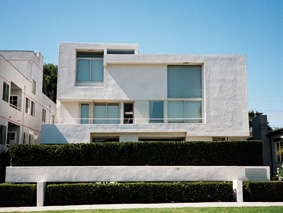
?Once at Miracle Mile? The Pearl M. Mackey Apartment House in Los Angeles, built in 1939 by Rudolph M. Schindler, is completely compelling to Sasha Pirker. In her work, she doesn?t strive to merely capture architecture on film, nor to simply record and document what she sees, but rather to work with the building itself (albeit in a restrained and respectful way), indeed to map it. Intriguingly, Sasha Pirker takes what would seem awkward in a conventional feature film and makes it her own: the idiosyncratic use of cross dissolves in this short film becomes in fact its main stylistic principle, and ? stunningly ? it works. In ?Once at Miracle Mile,? several calm, steady and yet at times even hesitant circular camera pans are intertwined, playing with the gaze and the expectations of the audience. Into the background of one pan enters a second, although this one refuses to displace the first ? at least not initially ? but rather, the two camera pans exist simultaneously, allowing the viewer?s attention to move between the coming and going of the images, jumping ? no, gliding ? back and forth. A slow-motion dance through the building, a dance with the building, a fusion of inside and out, a simultaneity of views ? as if we were passing the house and just happened to catch a glimpse of ourselves in one of the windows. Why not? Everything is possible at Miracle Mile on this mild Californian afternoon. This film is a declaration of love, made with solemn and tender affection for the house it?s also a remembrance of: Once ? (Bernhard Seiter) Translation: Janet Grau
Sasha Pirker, artist, born 1969 in Vienna/Austria. Studied linguistics and architecture in Vienna. She lives in Vienna. Since 2006 she is a teaching member of the department ?Video and Videoinstallation? at the University of Fine Arts in Vienna.
Pascal Piron, Karolina Markiewicz
Catalogue : 2023Metamorphosis | Experimental VR | 4k | color | 24:0 | Luxembourg | 2021
Pascal Piron, Karolina Markiewicz
Metamorphosis
Experimental VR | 4k | color | 24:0 | Luxembourg | 2021
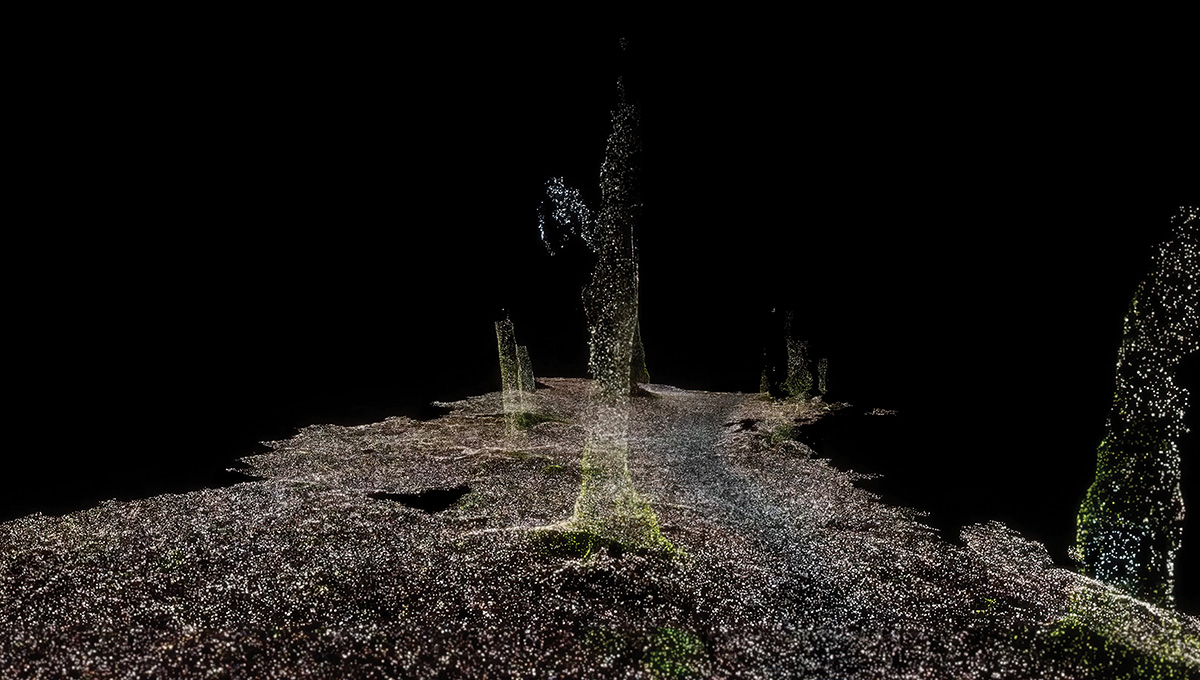
METAMORPHOSIS is a location based experience in virtual reality. It thematises the state of fear, astonishment and need for human exchange, as well as the the new comprehension and the physical reduction of the world during an ontological rupture such as the Coronavirus pandemic. In History (from the Antique with the first plague to Modern times with the Spanish flu) every kind of epidemic or pandemic has brought significant changes in societies, people had to adapt and reinvent their lives exchanging as they could. The experience refers to this kind of societal metamorphosis that imply on one hand the awareness of a reduced and different environment as well as related to the exchange of different ideas about the future . For METAMORPHOSIS, different nature and urban places (outside and inside) have been scanned and recreated as 3D scenes in a point cloud aesthetic. These eight scenes form a large corridor that brings the visitor slowly through different stories and ideas. From naive, stunned to more elaborate projections about the future of existence.
Since 2013 Karolina Markiewicz (born in 1976 in Luxembourg, lives and works in Luxembourg) and Pascal Piron (born in 1981 in Luxembourg, lives and works in Luxembourg) have been developing a collaborative body of work that stretches across cinema, visual arts and theatre. At its centre lies the individual as part of the human community, torn between resignation and hope. In their poetically charged investigations, the two artists question contemporary myths and construct metaphorical narratives based on past events.
Catalogue : 2020Fever | Experimental VR | 0 | color | 8:0 | Luxembourg | 2019
Pascal Piron, Karolina Markiewicz
Fever
Experimental VR | 0 | color | 8:0 | Luxembourg | 2019
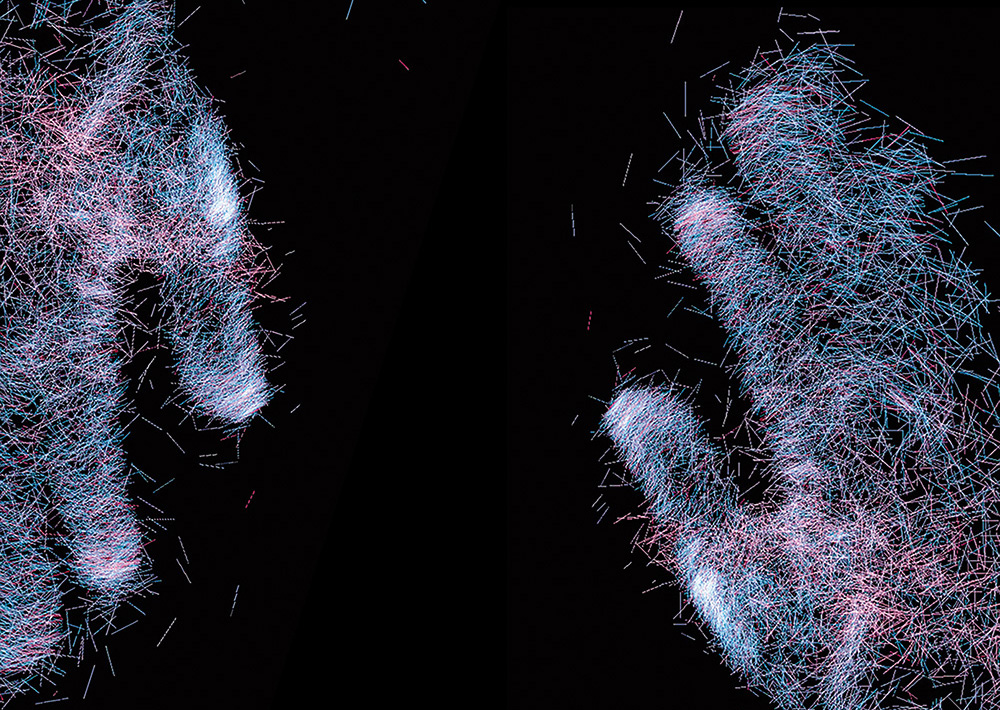
FEVER (8-10 minutes) is an experience in virtual reality. For both adults and children, a high fever can mean hallucinations — mainly auditory and visual, lucid and in dreams. As a VR experience, FEVER refers to this brief hallucinatory state, acknowledging and interpreting the metaphysical process that occurs when one is within and yet removed from one’s own body, and the limits presented herein vis-à-vis body/environment and self/other. FEVER is also a virtual poem about illness and body fictions. FEVER is written and created by Karolina Markiewicz and Pascal Piron, in technical collaboration with Fabrizio Palmas, Antoine Thiry and Stefan Laimer (D). The music is created by Kevin Muhlen (L) joined by the voice of Ásta Fanney Sigurdardottir (IS) and by the narration of Elisabet Johannesdottir (L/IS).
Karolina Markiewicz and Pascal Piron’s collaborative work creates links between film, visual arts and theatre. At the center is the individual person as part of a human community, oscillating between resignation and hope. Karolina studied political science, philosophy and theatre and works as a film and theatre director. Pascal studied visual arts and works as an artist and film director. Both work also as teachers. They are currently working on several cinematographic and artistic projects. Sublimation – an interactive installation based dance interactive VR piece with butoh dancer Yuko Kominami, was part of College Biennale Cinema VR by the Mostra di Venezia in 2019 and had its premiere at the festival. The duo also works on My Identity is this expanse!, a location based VR piece on exile and resilience through poetry. The Living Witnesses, a feature documentary about anti-Semitism is currently in post-production and will be released this year.
Catalogue : 2019Europe in Autumn - Polish Family | Experimental doc. | hdv | color | 8:41 | Luxembourg | 2018
Pascal Piron, Karolina MARKIEWICZ
Europe in Autumn - Polish Family
Experimental doc. | hdv | color | 8:41 | Luxembourg | 2018
Europa im Herbst - Polska Rodzinka (Europe in Autumn - Polish family) is a short portrait of a tormented Poland, a tormented and conflicted Europe in 2018. Not only populists raise their brutal voices but also right extremists reappear in a very quick rhythm like in the 30s. This experimental short documentary is the result of a journey through Poland where several families co-exist and argue: our own family, the one of the anti-fascist and pro-European protesters, the one of the police, the one of the musicians... The last ones reinterpret old pre-Second World War songs, written by polish Jews, in which people dance and die. Europa im Herbst - Polska Rodzinka is a short merry-go-round ride of our stay in Poland and in Europe in the summer of 2018.
Karolina Markiewicz and Pascal Piron's collaborative work creates links between film, visual arts and theatre. At the center is the individual person as part of a human community, oscillating between resignation and hope. Karolina studied political science, philosophy and theatre and works as a film and theatre director. Pascal studied visual arts and works as an artist and film director. Both work also as teachers. They are currently working on several cinematographic projects. Sublimation "an interactive installation based dance VR piece developed in collaboration with Yuko Kominami" butoh dancer, this project is selected among 12 international projects by the Mostra di Venezia for the the festival and the College Biennale Cinema VR. The duo works also on My Identity is this expanse! an installative VR piece on exile and resilience through poetry and The Living Witnesses, a documentary about anti-Semitism. Their former short films and films: Les Formidables, 2013 Mos Stellarium, 2015 - selected for the 56. Biennale di Venezia di Arte to represent Liechtenstein Side Effects of Reality (2016 - ongoing) - a series of short films on history and contemporary myths: De Rerum Natura, Artis, Kostas, Okopowa-Warszawa, La Figurine, Eos+Aeneas, To not be destroy by powder to the powder and the fist, Here Be Dragons, Europa im Herbst - Polska rodzinka.
Catalogue : 2018Okopowa, Warszawa | Experimental film | hdv | color | 7:16 | Luxembourg | 2017
Pascal Piron, Karolina Markiewicz
Okopowa, Warszawa
Experimental film | hdv | color | 7:16 | Luxembourg | 2017
Among the insurgents of Warsaw, there is Kazia. A young Jewish woman whom the Nazis ended up killing. She now wanders in the cellars of the old ghetto, the Jewish cemetery, on Okopowa Street and tells bits of her memories. Memories that haunt.
Karolina Markiewicz (1976, Luxembourg) and Pascal Piron (1981, Luxembourg) work as an artist duo since 2013. Their collaborative work creates links between film, visual arts and theatre. At the center is the individual person as part of a human community, oscillating between resignation and hope. Karolina Markiewicz studied political science, philosophy and theatre and works as a film and theatre director. Pascal Piron studied visual arts and works as an artist and film director. Both work as teachers.
Catalogue : 2017Artis | Video | hdv | color | 5:12 | Luxembourg, Netherlands | 2016
Pascal Piron, Karolina Markiewicz
Artis
Video | hdv | color | 5:12 | Luxembourg, Netherlands | 2016
In Amsterdam, there once was a zoo, lions, elephants, people and Nazis. The elephants, who never forget, tell the story to the young lions. During the Second World War, the story goes, eighteen Jews hid above the lion’s cages. The Nazis, who loved the zoo, cared about the lions and bought them the best meat, usually lamb. The old lions couldn’t eat all they were given, so they left some of it to their new “roommates” for three years.
Karolina Markiewicz and Pascal Piron’s collaborative work creates links between film, visual arts and theatre. At the center is the individual person as part of a human community, oscillating between resignation and hope. Karolina Markiewicz studied political science, philosophy and theatre and works as a film and theatre director. Pascal Piron studied visual arts and works as an artist and film director. Both work as teachers. Their cooperation started in 2013, with an exhibition for Aica Luxembourg entitled Everybody should have the right to die in an expensive car. In 2014, they made a first documentary called Les Formidables, which tells the story of five young migrants in Luxembourg. In 2014, they found the video blog kulturstruktur.com. In 2015 they worked on the project Philoktet, which includes the homonymous play by Heiner Müller and an exhibition relating the Greek tragedy to Robert Oppenheimer and the atomic bomb. At the same time they released their second documentary Mos Stellarium, produced by Tarantula and supported by Film Fund Luxembourg. Part of this project is the installation of Mos Stellarium, which offers different parts of the movie simultaneously, thus giving a non-linear reading of the film. Their current work includes a video series entitled Side-effects of reality. It consists in a number of short films and video installations. Our reality is a vague and imprecise thing, hardly accessible. The core idea of Side-effects of Reality is to push this inaccessible reality to a poetic level, thus creating through video and text a new image of reality. This image is not the same as its content, it has its own mythology, and by this offers a different take on understanding our reality.
Catalogue : 2015Les Formidables | Documentary | hdv | color | 29:51 | Luxembourg | 2014
Pascal Piron, Karolina Markiewicz
Les Formidables
Documentary | hdv | color | 29:51 | Luxembourg | 2014
Documentaire sous forme d`extraits de témoignages autour des peurs et des angoisses de cinq jeunes. Quatre d`entre eux sont demandeurs d`asile et doivent conserver l`anonymat (prénoms d`emprunt). Ils ont entre 18 et 21 ans et ont tous endossé les enjeux de la vie d`adulte. Par hasard, ça se passe au Luxembourg. Il y a plus de 90 nationalités différentes qui se croisent, au Luxembourg, dans nos écoles, nos lycées, nos foyers, avec toutes ces histoires bien particulières : de guerre, d’après-guerre, de manque d’argent, d’exil. Ce sont ces couloirs des exilés auxquels fait référence le sociologue français, Michel Agier. Le documentaire, en trois chapitres donne la place à quelques uns de ces couloirs - quelques uns de ces récits.
Karolina Markiewicz (1976), diplômée en sciences politiques, philosophie et théâtre, et Pascal Piron (1981) diplômé en arts plastiques, travaillent tous deux dans l’enseignement au Luxembourg. Parallèlement, ils développent des travaux artistiques (peinture pour Pascal et mise en scène et écriture pour Karolina) - indépendamment jusqu’en 2013, où démarre leur parcours commun avec l’exposition Everybody should have the right to die in an expensive car réalisée pour le Kiosk de l`Aica Luxembourg. La collaboration qui en découlera permettra aux deux d’envisager leurs travaux artistiques différemment. Pascal ne verra plus l’image de façon bidimensionnelle et reprendra des travaux portée sur la vidéo, quant à Karolina, elle se tournera vers un théâtre d’images, plus abstrait. Tous deux s’intéressent désormais à l’image comme trace qui évolue dans le temps. Ainsi, les travaux s`axent autour de l`installation, la vidéo, du théâtre et des arts plastiques. Plusieurs projets en découlent, notamment le documentaire Les Formidables ainsi que Kulturstuktur /audio+video blog (le projet d’entretiens). Ces projets observent l`individu comme faisant partie d’une communauté humaine, quelque peu résignante d`apparence, mais qui aux travers de certains événements ou objets: film, œuvre d`art, pièce de théâtre, réalisation architecturale ou composition musicale, s`avère être lucide et forte.
Leonardo Pirondi
Catalogue : 2023Visão do Paraíso | Experimental doc. | 16mm | color and b&w | 16:0 | Brazil, United Kingdom | 2022
Leonardo Pirondi
Visão do Paraíso
Experimental doc. | 16mm | color and b&w | 16:0 | Brazil, United Kingdom | 2022
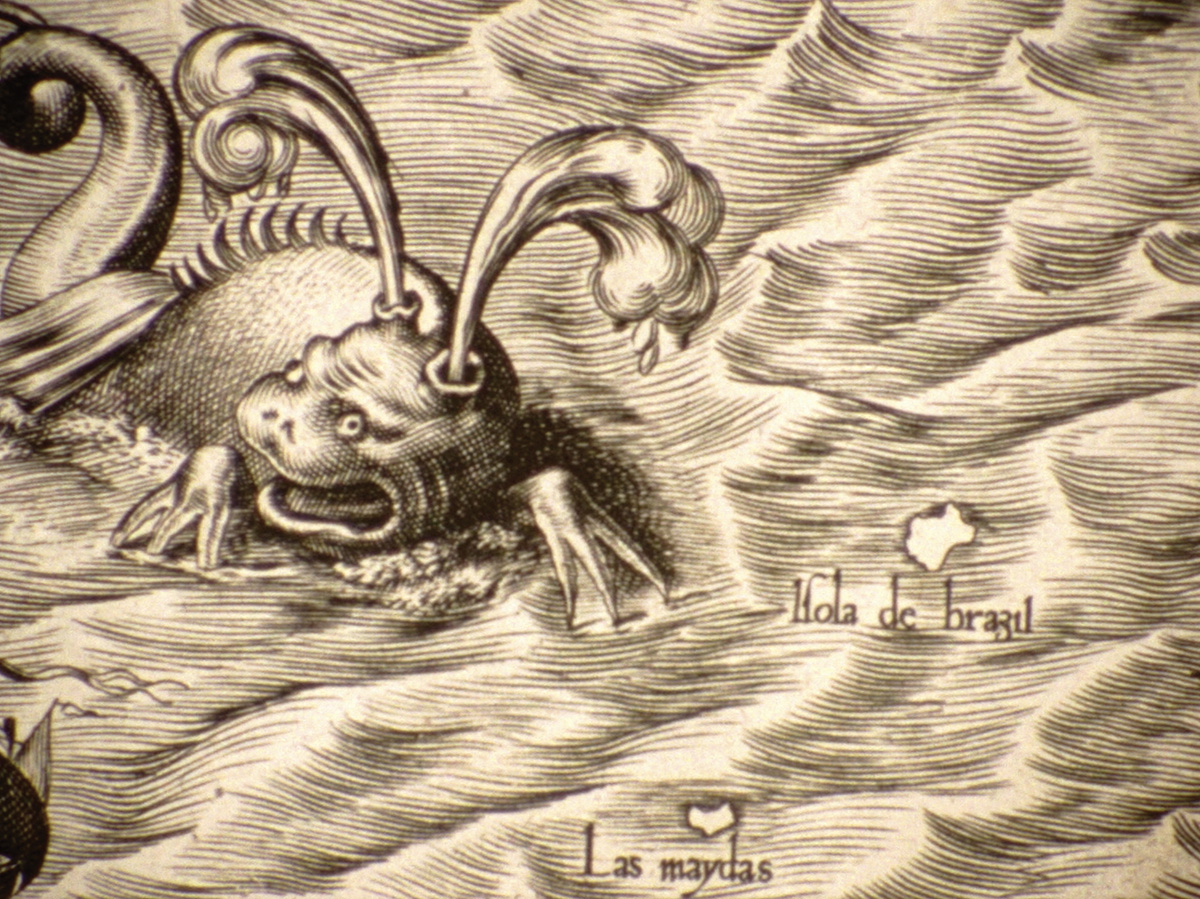
The great voyages to the "New World" were seen as expanding the frontiers of the visible and displacing those of the invisible. Therefore maps from that time render the real and imaginary. The film follows a voyage of the Brazilian Military in search of an imaginary island with the same name as their country. In the myth from 1483 Brazil, or Hy-Brazil, is known to exist to the west of Ireland and above the Fortunate Islands. ‘Visão do Paraíso’ is an examination of the capacity of the human imagination and computer simulations to construct environments. Amidst the fine threshold of the real, simulated, and imagined, the film analyzes the contemporary ideas of virtual reality and their ambition to expand the frontiers of the physical world into a "New World."
Leonardo Pirondi is a Brazilian filmmaker based in Los Angeles, São Paulo, and Porto. His films explore the infinite abyss between the multiple derived versions of reality through documentary, experimental, and narrative modes. Much of his work uses analog and digital manipulations on celluloid to examine the sociopolitical unfoldings of the intersections between imagination, science, myth, and technology. His films have been exhibited at various film festivals, institutions, and venues internationally, such as the International Film Festival Rotterdam, New York Film Festival, BFI London, Melbourne, Edinburgh, True/False, Ambulante, Curtas Vila do Conde, Guanajuato, Wexner Center, REDCAT, and others. Some of his work exists in the collection of Cinematheque of the Museum of Modern Art in Rio de Janeiro and The Film-Makers' Cooperative in New York. He holds a Film/Video degree from CalArts, is a Sundance Ignite Fellow, and is the recipient of the Allan Sekula Social Documentary Fund and the Tim Disney Prize for Excellence in the Storytelling Arts.
Leonardo Pirondi
Catalogue : 2026Potenciais À Deriva | Experimental doc. | 16mm | color and b&w | 11:30 | Brazil, USA | 2024

Leonardo Pirondi
Potenciais À Deriva
Experimental doc. | 16mm | color and b&w | 11:30 | Brazil, USA | 2024
This pseudo diary film is made of found materials from an unfinished 16mm film. Potenciais à Deriva is a film started by a Brazilian artist under a pseudonym while living in exile in Los Angeles, California. Isolated shots and previously assembled scenes reveal an intention to create a mysterious film comprised of disembodied interviews, empty rooms, radio recordings, soccer games, and sudden apparitions of the filmmaker that slowly ruminates on Brazil's colonial past, imperialism, and the military dictatorship of the time in a paranoid and anxious manner. Be aware that the film's final version never came to exist. This version presented is my mere attempt to produce a film with these otherwise lost images.
LEONARDO PIRONDI (b. São Paulo, Brazil, 1999) is a filmmaker and artist who lives and works between Los Angeles, Porto, and São Paulo. His films create and inhabit alternate worlds that blur the lines between reality and fiction, challenging conventional storytelling structures. Pirondi's films have screened internationally at festivals such as the Toronto International Film Festival, the Tiger Short Competition in Rotterdam, the New York Film Festival, the Viennale, Mar del Plata, FICUNAM, the BFI London, the Festival du Nouveau Cinéma, Edinburgh, Melbourne, Guanajuato, Ambulante, and Media City, UNDERDOX, among others. His work has been presented in art centers such as CCCB (Spain), the Wexner Center for the Arts (USA), and REDCAT (USA). He has had solo shows at Galeria Mola in Portugal and Spectacle Theater in New York. Some of his films live in the UCLA Film & Television Archive collection, the James Baldwin Library at MacDowell, the Cinematheque of the Museum of Modern Art in Rio de Janeiro, and The Film-Makers' Coop. in New York City. He holds bachelor's and master's degrees in film from the California Institute of the Arts (CalArts), was named one of Filmmaker Magazine’s 25 New Faces of Independent Film in 2025, is a Sundance Institute Fellow, and was awarded a MacDowell Fellowship in 2025. His work has been featured in publications such as ARTFORUM, Filmmaker Magazine, MUBI Notebook, Senses of Cinema, Talking Shorts, and InReview Online. His short and feature films have been supported by the Instituto do Cinema e do Audiovisual of Portugal (ICA), the Locarno Residency, Projeto Paradiso, the Allan Sekula Social Documentary Fund, San Diego Underground Arts, and the Tim Disney Prize for Excellence in the Storytelling Arts. He is a programmer for the Climate Film Festival NYC and is part of the board of directors and selection committee for Badam Film and its film development fund.
Piscine, Bergman & Salinas
Catalogue : 2019Be A Pattern For The World | Video | hdv | color | 5:48 | Denmark | 2018
Piscine, Bergman & Salinas
Be A Pattern For The World
Video | hdv | color | 5:48 | Denmark | 2018
Be a Pattern for the World is acollaboration between artist group Piscine (consisting of Mark Tholander, Jens Settergren & Ida Thorhauge) and the artist duo Aeron Bergman & Alejandra Salinas. Be a Pattern for the World circulates around the concept of the chameleon. The chameleon as an abstract machine: "The chameleon, maybe. It hovers, as a turbine. An object can be monitored better by the turbine. These days anything can be imitated." The chameleon most of all stands for shape-shifting and adaptability. Adapting patterns of a given environment, while at the same time creating new patterns in the given space. The ability of changing one's appearance as a response to one's surroundings. What can be seen and what cannot; blending in and standing out; becoming distinct while also becoming part of the given space. The chameleon is the abstract machine which initiates a production of subjectivity in the relation between the individual and the surroundings, the figure and the background, the shape and the pattern, as well as the singular and the univocal.
Piscine is an exhibition phenomenon that handles solo, group and collaborative situations: a hybrid apparatus that sometimes acts as an artist group and at other times acts as a curatorial unit. Current members are: Mark Tholander, Ida Sønder Thorhauge, and Jens Settergren. Aeron Bergman and Alejandra Salinas are an artist duo who co-founded Institute for New Connotative Action: an artist run initiative, and INCA Press.
Bojana Piskur
Catalogue : 2007Ljubljana Modern Art Museum | 0 | 0 | | 0:0 | Slovenia | 2007

Bojana Piskur
Ljubljana Modern Art Museum
0 | 0 | | 0:0 | Slovenia | 2007
The Moderna Galerija (Modern Art Museum) is the Slovenian national institution for modern and contemporary art. A museum which has a double calling, the exploration and showing of the Slovenian modern art and its tradition since the beginning of the 20th century, and the exploration and showing of contemporary art, its practice and its context. Situated in the town of Ljubljana, Slovenia's capital city, the Moderna Galerija contains three different areas; a major building, the Moderna Galerija itself; an old barracks of the Yugoslavian Army, the Metelkova; and the Mala Galerija. Such an organization and geographical relocation, allows the Moderna Galerija to specialize each building. The Metelkova is a great place for alternative Slovenian culture. The Mala Galerija is a space for innovation where personal exhibitions are shown, and the major building houses the museum's permanent collection, temporary exhibitions, a library and, an education center. The Moderna Galerija perceives itself as a go-between between the national and the international, between the local and the global. A place where modern society's realities are frozen, halfway between contemporary Europe's various geopolitical and cultural realities, between East and West, and between North and South.
Born in 1970, Bojana Pi?kur studied Philosophy at the Ljubljana University in Slovenia, and at the Prague Charles University, in Czech Republic, where she obtained a PhD in Artistic Theory. She is a curator at the Moderna Galerija and the Ljubljana Modern Art Musem, and she researches the phenomenon of contemporary art.
Alexandros Pissourios
Catalogue : 2025A full life, I suppose. | Experimental doc. | 16mm | color | 25:0 | Cyprus | 2023
Alexandros Pissourios
A full life, I suppose.
Experimental doc. | 16mm | color | 25:0 | Cyprus | 2023
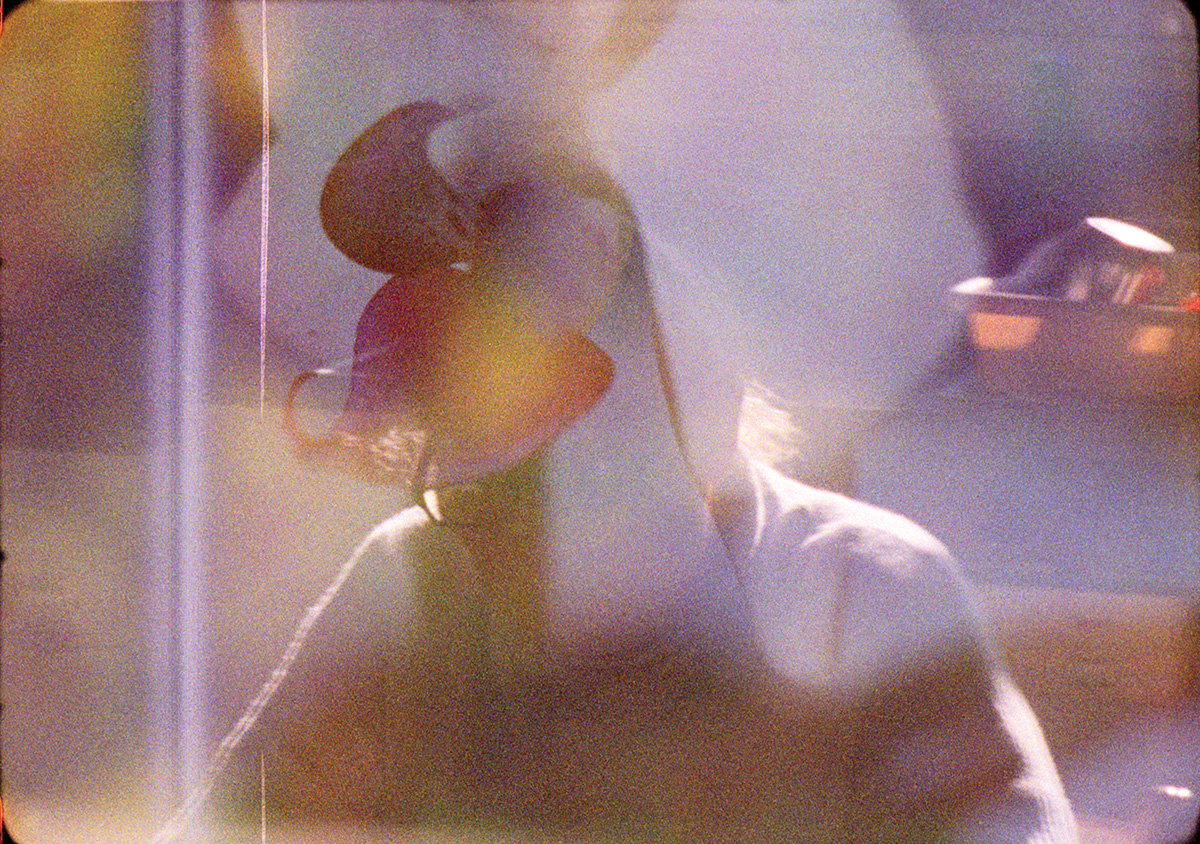
A full life, I suppose is a filmic portrait of the time shared between the filmmaker and his mother, Androulla, combining new 16mm material shot during his recurring visits to Cyprus with Super 8mm footage shot by his father in the 1970s to chronicle the evolution of bodies and the desires that mark a life. Attempting to balance between observation and construction, the film captures dailiness and domesticity while transfiguring Androulla’s body and inhabited space through close-ups, double exposures and time-lapses. As fragments of conversations between filmmaker and mother about her life wander mostly sync-free over the images, encounters with light and darkness in the nooks and furnishings of her otherwise ordinary dwelling arouse a sense of unreality.
Born in 1982 in Limassol, Cyprus, Alexandros Pissourios lives and works London and Cyprus. Pissourios explores the possibilities inherent with 16mm film and cameras, blending ethnographic approaches with experimental cinema. Many of his films make use of people and places that are in his proximity, weaving a a body of work that explores the complexities of relating to the world around him. Selected screenings/exhibitions of his films include London Short Film Festival (2024), FilmDairy NYC (2024), Annual Copenhagen Film Festival (2024), Lemesos International Documentary Festival (2023/2020), Cubitt Gallery London (2023), Queerwave festival (2023), Supernormal Festival (2017), International Ankara Film Festival (2016) ICA/Lux Moving image Biennial (2012), Fringe! Film Festival (2012), London Gay & Lesbian Film Festival (2011)
Marianne Pistone, Gilles DEROO
Catalogue : 2010Hiver (les grands chats) | Fiction | 16mm | color | 55:0 | France | 2008
Marianne Pistone, Gilles DEROO
Hiver (les grands chats)
Fiction | 16mm | color | 55:0 | France | 2008
Les enfants s?en tapent de l?hiver qui arrive A se marrer sous les grands chats, à s?embrasser Sous de pauvres abris Il fera nuit de plus en plus tôt L`hiver tombé comme une sentence, Ça y?est faut allumer. J?aurais voulu que Mimi soit intact, rien n?aurait dû l?atteindre... Ni l?hiver.
Marianne Pistone et Gilles Deroo Vivent et travaillent à lille
Robert Harding Pittman
Luis Pizarro Pérez
Catalogue : 2020Yutupis | Documentary | hdv | color | 46:55 | Peru | 2019
Luis Pizarro PÉrez
Yutupis
Documentary | hdv | color | 46:55 | Peru | 2019
Yutupis starts off with the filmmaker undertaking a ritual. It evokes images, memories of a village in the Peruvian rainforest. From felling trees and fishing during the day to dancing and drinking at night. Influences from the past and contemporary times are clear: the colonization of the 16th century initiated the cross-cultural mixture that is further amplified by the ongoing of globalization.
The director, Luis Pizarro, is originally from Lima, Peru. He studied Communication Science (in Lima) and went to film school (in Ghent, Belgium). He made several short films and contributed (direction, editing, sound) to various productions (short films, documentaries, video clips etc.)