Catalogue > List by artist
Browse the entire list of Rencontre Internationales artists since 2004. Use the alphabetical filter to refine your search. update in progress
Michael Paulus
Catalogue : 2022A View of Above | Video | mov | color | 3:53 | USA | 2021
Michael Paulus
A View of Above
Video | mov | color | 3:53 | USA | 2021
A reconstructed assemblage of the opening title sequence from the feature film The Shining (1980) by Stanley Kubrick, “A View of Above” was shot in reverse perspective at the actual locations used in the feature film. The original viewpoint is now inverted, looking up, and back at the ominous "eye in the sky" which shadows the yellow Volkswagen as it winds its way up the American Rockies to the Overlook Hotel. The framing, movement, and pacing of the original, feature film sequence is replicated shot by shot in duration and in relationship to the sun and weather. The intent is to recreate the original, but from an altogether different perspective: the gaze defiantly flipped, the viewer is no longer a complicit voyeur of the hapless victim.
Michael Paulus is an interdisciplinary artist living in Portland, Oregon. USA Exploring potential connections between often disparate relationships, his video work often attempts to reveal the hidden, censored, or unassumed in culture, cartography, mechanisms and commonplace conventions. Films and videos have screened at the NW film festival, PDX film festival, various domestic and international film festival as well as the Taipai Biennial, Scope Basel, various gallery installations and recently as part of CORE, -the Nagasaki-Hanford project as part of an installation at Whitman College in Walla Walla, WA in 2018
Raphaëlle Paupert Borne, Jean-François Neplaz
Kristina Paustian, film
Catalogue : 2016ZAPLYV (ЗАПЛЫВ) | Experimental doc. | hdv | color | 77:50 | Russia, Germany | 2015
Kristina Paustian, film
ZAPLYV (ЗАПЛЫВ)
Experimental doc. | hdv | color | 77:50 | Russia, Germany | 2015
SWIMMERS is a sketch of an attempt to maintain collective belief on the border of cosmology and psychedelic trance theater. Run-down houses in an abandoned settlement in the southern corner of Russia. A controversial physicist, Boris Zolotov lives here. In the mid-1980s, Zolotov decided to leave the walls of the Soviet research institutions to follow his own beliefs. Today these take the form of hour-long swimming rituals and night-time theater performances. A group of people have collected around him, who choose to share his journey Like many in the group, the young Ekaterina was led here by the many questions which remained unanswered elsewhere. Together with Boris Zolotov, she discusses the concept of happiness in contemporary Russia.
Kristina Paustian, born 1985 in Omsk, Russia. 2003 she moved to Germany to study at the University of the Arts in Berlin. She worked as a director of photography and editor for other artists before starting out as a video artist herself. Today Paustian`s artistic practice covers video art, film and installations. In her art she always tries to find and preserve a particular human constant into cinematographic forms. This constant (if there is any) goes far beyond language barriers, geographical borders, collective and social concepts or political structures. SWIMMERS is her first feature film.
Temra Pavlovic
Catalogue : 2014On all fours | Experimental doc. | | color | 6:40 | Netherlands, Mexico | 2013
Temra Pavlovic
On all fours
Experimental doc. | | color | 6:40 | Netherlands, Mexico | 2013
There is a German Shepherd in Tepoztlan who guards a brick villa where the walls are painted white and the furniture is modern. In the kitchen there are people chatting, the TV is on and the German Shepherd is waiting by the door. The villa is enclosed by a wall and you can hear church singing from the mountains, especially in the garden, where there is a sprinkler, purple flowers on the lawn and a woman dressed in Baby Blue.
Temra Pavlovic was born in the Netherlands and received her BFA in Film/Video from California Institute of the Arts (CalArts). She combines documentary and fiction, and uses materials from her direct surroundings. Her work has shown in different contexts, i.e. at Otras Obras in Tijuana, the RedCat theater and Human Resources in Los Angeles and the Sensory Ethnography Lab at Harvard University. She is currently living in Mexico City, working on a series of narrative documentary scenes under the umbrella title `Soluciones,` and she is a member of the three-headed collective Oa4s.
Denis Pavlovic
Catalogue : 2018Zwischen Gestern und Morgen (Between Yesterday and Tomorrow) | Documentary | 16mm | color | 25:15 | Germany | 2016
Denis Pavlovic
Zwischen Gestern und Morgen (Between Yesterday and Tomorrow)
Documentary | 16mm | color | 25:15 | Germany | 2016
The story of a man who came to Germany 17 years ago. It’s the 31.12.2017, a day in the life of Niaz Ahmadzai from Afghanistan. A never ending story of work, existence, love, familiy and an unfulfilled personality. The perfect integration of a fully functioning machine.
Denis Pavlovic, born in 1987 in Stuttgart, presented his first film "Smoother in 350ml" at the No Budget Festival in Tubingen in 2008. Thereupon he studied 3 years Film & Video at the Merz Akademie in Stuttgart. After his graduation he worked as an interne at the Documentary Production Company "Kloos und Co. Medien" in Berlin. In 2011 Denis accomplished his first long movie called "Paranoid Places" and in 2013 his second full-length documentary „Wo tanzen wir morgen" which celebrated its Premiere at the 19th Filmschau Baden-Wurttember Festival. In order to its success it was distributed via Teamwerk Stuttgart. Today Denis is studying documentary direction at the Filmakademie Baden- Wurttemberg and works as a freelancer filmmaker and artist. The main themes his films are about modern society in the midst of globalism and industrialism.
Temra Pavlovic
Catalogue : 2016Vehicle | Video | hdv | color | 9:40 | Netherlands, Mexico | 2014
Temra Pavlovic
Vehicle
Video | hdv | color | 9:40 | Netherlands, Mexico | 2014
Resting in the grass waiting for the rest, eating candy in the back of the truck. Driving on the bumpy road to where Paco arrives with his bebé on the Dinamo. Eating sugar cane.
Temra Pavlovic is an artist based in Amsterdam. She makes momental videos, sculptures and installations, and is a member of poetry group Oa4s (On all fours). Her work has been exhibited at e.g. Lodos gallery in Mexico City, Human Resources in Los Angeles, Les Rencontres Internationales in Paris, Interstate Projects in Brooklyn and Seventeen gallery in London.
Simon Payne
Catalogue : 2020Set Theory I-IV | Video | hdv | color and b&w | 5:0 | United Kingdom | 2018

Simon Payne
Set Theory I-IV
Video | hdv | color and b&w | 5:0 | United Kingdom | 2018
Set Theory I–IV explores every corner of flat screen space and corresponding illusions of depth. Part I (2mins) involves dissolving surfaces. Part II (2mins) adds alternating planes and the numbers 0 and 1, as graphic components. Part III (12mins) slowly takes the screen into depth, evoking architectonic principles of the video frame. Adding another dimension, Part IV (2mins) introduces pure, constantly changing colour fields. In the first instance, Set Theory involved producing and collating different sets of vertical, horizontal, diagonal and curved graphic transitions. These were subsequently combined or sequenced by way of different rules that keep the conflict of planes, forms, tonal values and colour foremost.
Simon Payne studied at the Kent Institute of Art and Design, Maidstone; Duncan of Jordanstone College of Art and Design, Dundee; and the Royal College of Art, London. His work has shown in numerous festivals and venues including. He has also written widely on experimental film and video. He co-edited the book Kurt Kren: Structural Films (2016) with Nicky Hamlyn and A.L. Rees and is currently editing a posthumous book by A.L. Rees, entitled Fields of View: Film, Art and Spectatorship. Simon Payne is Reader in Film and Media at Anglia Ruskin University, Cambridge and lives and works in London.
Carlos Pazos
Catalogue : 2009Escenario vaciado | Art vidéo | betaSP | color | 2:42 | Spain | 2008
Carlos Pazos
Escenario vaciado
Art vidéo | betaSP | color | 2:42 | Spain | 2008
Carlos PAZOS : Escenario vaciado The video "Emptied Setting" shows the transition of a setting with a storyline and of characters in an emptied and lifeless setting. On Christmas Eve 2006, on the first floor of a building on Pau Claris Street in Barcelona, Emilia Fox, the artist's wife's mother, passed away. She was ninety years old. When she settled down with her husband Claudi Cuchillo and their four children, at the end of January 1951, she was heavily pregnant. The author's wife was born in this apartment, at the beginning of spring. Just as mother and daughter were together when the latter one was born, they were also together when Emilia passed away. During all these years her apartment was fully decorated, sometimes crammed. The sudden death of her husband left her mute for some months, the furniture and the walls. When Emilia fell ill, spaces slowly became empty.
Carlos Pazos was born in Barcelona in 1949. He received the National Prize for Visual Arts in Catalonia in 2008, the National Prize for Plastic Arts from the Spanish Ministry of Culture in 2004, and the City of Madrid Prize in 2003. He studied architecture at the Universidad Politécnica, philosophy at the University of Barcelona, and design at EINA School. He held his first individual exhibition on January 1970, at the age of twenty. In 2007, the Museum of Contemporary Art in Barcelona and the Reina Sofia Art Center National Museum in Madrid held the retrospective exhibition "Don't Say Anything," and he is currently preparing a version for the Museum of Contemporary Art in Sao Paulo for 2009. In 1987 he played the main character in the film "Es quan dormo que hi veig clar" by Jordi Cadena, based on the writings of Catalan poet J.V. Foix. In 1998 he directed and developed the scenography for the theater piece "El bell lloc" by Joan Brossa.
Catalogue : 2008En blanc i negre, une vez mas | Experimental film | 35mm | color | 10:30 | Spain | 2006
Carlos Pazos
En blanc i negre, une vez mas
Experimental film | 35mm | color | 10:30 | Spain | 2006
The encounter between an albinos chimpanze (dressed in black) and a black roman virgin (in white chocolate). Nouveau synopsis: «En blanc i negre, una vez mas » (En noir et blanc, encore une fois) Le spectateur se trouve dans une pièce de théâtre drôle et absurde basée en la rencontre de deux personnages: la «Dame de la montagne de Montserrat», vierge noire, «La Moreneta » (Brunette), patronne de la Catalogne et «Copito de nieve», (Flocon de neige), seul gorille albinos connu au monde. Son nom d?origine est Nfumu Ngi (White gorilla), il a été trouvé agrippé à sa mère, tuée le 1er octobre 1966 en Guinée Equatoriale. Un primatologue Catalan acquis l?orphelin et le conduisit au zoo de Barcelone, dont il devint la mascotte jusqu?à sa mort, a l?âge de 39 ans. Carlos Pazos a longuement travaillé sur l?association et la juxtaposition de ces deux symboles de la Catalogne dont surgit une autre histoire pas encore écrite. Le compositeur Tom Johnson a créé la musique, une déconstruction de la Macarena (vierge blanche, patronne de Seville) du groupe «Los del Rio», fameux tube des années 90. Dans le film, ce n?est pas Copito qui joue, mais un chimpanzé en négatif. Son image à l?envers, dans des teintes blanches et roses. La vierge est une reproduction en chocolat blanc, son image aussi à l?envers. À la fin du film, les couleurs redeviennent des couleurs réelles, avec le chimpanzé noir et la vierge blanche. L?artiste met à nu son artifice et démontre son processus comme pure fiction.
Please, see the catalogue of the exhibition "No me digas nada" ("Tell nothing"), 2007, cited below. Nouvelle biographie: Né à Barcelona le 23 décembre 1949. Prix National des Arts Plastiques, 2004, Ministère de la Culture espagnol et Prix Villa de Madrid, 2003. Fait des études d?architecture à l?Universidad Politécnica, philosophie à l?Universidad de Barcelona et design à l?Ecole EINA de Barcelona. Il a exprimé son amour pour la musique et la nuit avec la direction d?un salon de bal (Salón Cibeles, 1978-1983), d?un cocktail bar (Bijou, 1983-1986) et d?un bar musical (Je-rrix, 1994-1995). Dans ce dernier local il a établi le siège de son Club de Fans, le "C.P.FANS CLUB", fondé en décembre 1994. En 1987 il est le protagoniste du film « Es quan dormo que hi veig clar » de Jordi Cadena sur des textes du poète Catalan J.V. Foix. En 1998, il dirige et réalise la scénographie de la pièce de theatre "El bell lloc", de Joan Brossa, au Espai Joan Brossa de Barcelona. Cette même année est publié "El Mundo del Ritmo" (édité par Tabelaria + Antojos), en collaboration avec Eduardo Mendoza et il est le protagoniste du video "Pianito", de Jordi Colomer. L?année 2002 il publie le scénario du film, en attente de producteur, "Aquí en la tierra como en el infierno" et en décembre 2004 il publie son livre ?Garabatos y Zarpazos?, édité par l?Université de Barcelona, dans la collection ?Les arts i els artistes?, en 2007 il publie « Fidelidad Total », en collaboration Ramón de España, édité par Raina Lupa et en 2008 « Diodrama », avec textes d?Eduardo Lago, edité par Atelier Clot. Il a fait sa première exposition individuelle en janvier 1970, à l?age de vint ans. En 2007 il a fait l?exposition rétrospective «No me digas nada» au MACBA (Museo Arte Contemporáneo de Barcelona) et au MNCARS (Museo Nacional Centro de Arte Reina Sofía), dont il prépare une version pour le Musée d?Art Contemporain de Sao Paulo, en 2009. Pour son exposition rétrospective il a réalisé le film « Mnemocine. Film à découper », un collage audiovisuel constitué par 11 épisodes, d?une durée de 26 minutes.
Justin Peach
Catalogue : 2010Kleine Wölfe | Documentary | dv | color | 47:0 | Germany | 2009

Justin Peach
Kleine Wölfe
Documentary | dv | color | 47:0 | Germany | 2009
Together with other children, the eleven year old Sonu lives on the streets of Katmandu. Their daily routine is a fight to survive in the chaotic capital of Nepal: always on the prowl for food, drugs, charitable tourists and what they seek most - as small boys do anywhere? is fun and adventure. The life of Sonu and his pack is shaped by hunger and violence but is also filled with childlike moments of freedom on the streets! This film follows ideas of
Justin Peach. Born 1982 in El Paso, Texas. Curiosity and love for technical things fueled first attempts in the media world. Internships at ZDF, SWR and Maran Film followed. 2003 begin of media-design studies at the University of Applied Sciences in Mainz, Germany with a major on documentary camera work. 2005 six months in Ecuador for an NGO documentary film about illegal animal transports. 2005 founder of PENG - a young collaborative art, communications and Design group. 2008 Final Diploma with "Lonely Pack" in Nepal. Since end of 2008 studying for a Masters degree in Journalism at the Johannes Gutenberg-University in Mainz.
Jens Pecho
Catalogue : 2021Housebound | Experimental film | mp4 | color | 4:46 | Germany | 2020
Jens Pecho
Housebound
Experimental film | mp4 | color | 4:46 | Germany | 2020
The film combines a scene from the movie "Copycat" (1995) with footage of my editing the film. It is a reflection on the idea of artistic originality as well as the art world’s constant desire to instantly transform everything – even the current health crisis – into works of art. The chosen scene shows Sigourney Weaver playing a psychologist suffering from agoraphobia having a nervous breakdown in a well equipped apartment in which she has been living housebound for several months. Despite the luxurious interior, her only source of social comfort is provided by the back then recently invented internet. Sitting at her desk admidst several clunky computer monitors she exchanges short messages with her distant chat partners. This footage is contrasted by textual inserts questioning the necessity and original value of artistic production in contemporary art. Weaver’s dramatic performance and the questionable 1990’s chic of the apartment add a humorous layer of critique on egocentric and classist character traits not uncommon in the art world. "Housebound" was commissioned by the 66. International Short Film Festival Oberhausen. It is my contribution to the festival's discussion: "Can and should one make films now?"
Jens Pecho studied at the Academy of Media Arts Cologne as well as the Staatliche Hochschule für Bildende Künste – Städelschule in Frankfurt am Main. As a visual artist, he works mostly with text- and video-based installations. His works have been shown internationally at museums as well as film festivals, among them the Art and Exhibition Hall of the Federal Republic of Germany, the Forum d'Art Contemporain – Casino Luxembourg, the Herzliya Museum of Contemporary Art, Israel, the Bangkok Biennial, Thailand, the Museum Kunstpalast Düsseldorf, Germany, the International Short Film Festival Oberhausen, Germany, the Message to Man IFF Saint Petersburg, Russian Federation, and the Uppsala International Short Film Festival, Sweden. He received several awards for his work, including the Spiridon-Neven-DuMont-Prize, the Young Artist Award from the State of North Rhine-Westphalia and most recently the Video Art Award of the city of Bremen.
Jens Pecho
Catalogue : 2023Aah, Awe, and Ugh | Video installation | digital | color | 7:8 | Germany | 2023
Jens Pecho
Aah, Awe, and Ugh
Video installation | digital | color | 7:8 | Germany | 2023
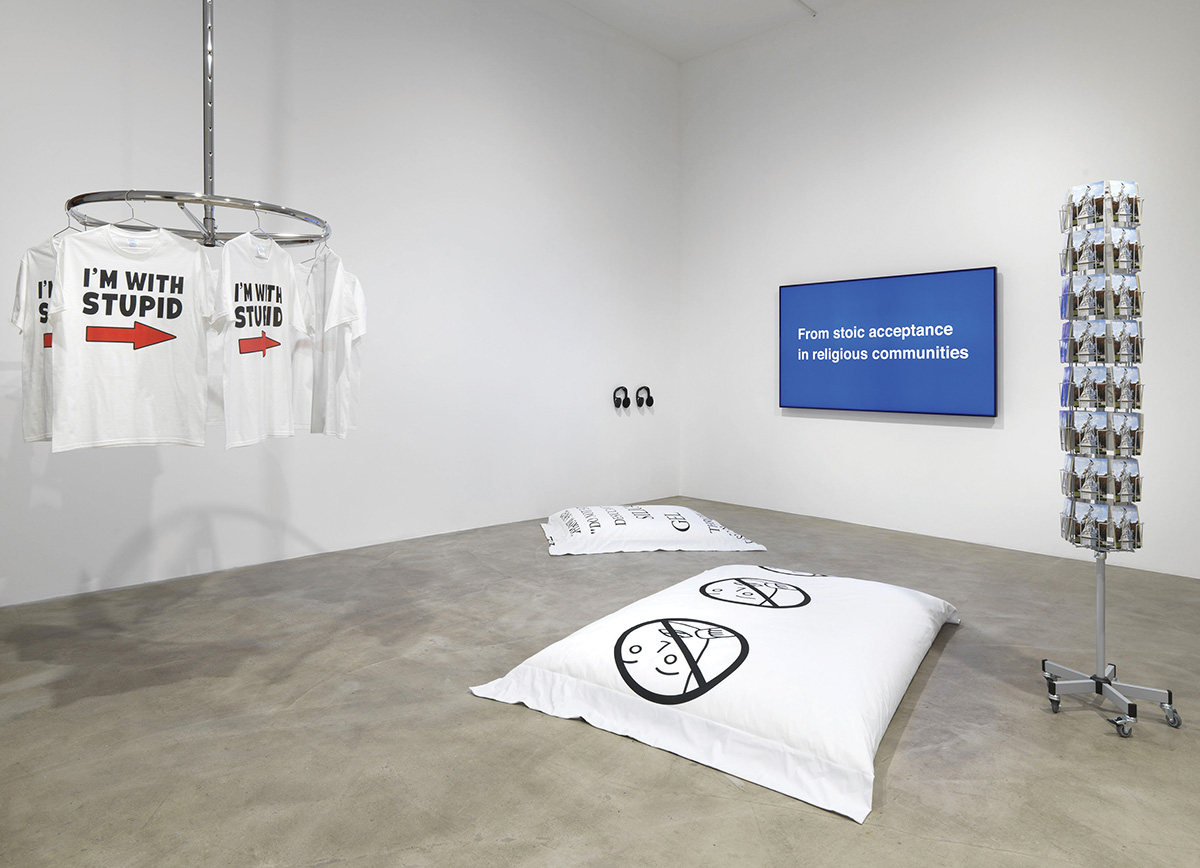
The video work "Aah, Awe, and Ugh" explores the changing connotations of the term "awe". It moves in a sophisticated rise and fall of narrative tension between the production of knowledge and constantly newly generated uncertainty. Pecho's essayistic video is accompanied by the rousing first chords of the pop song "Let's Dance" by David Bowie, which are played in a continuous loop whose promise of a euphoric climax never materializes. The work is embedded in an ensemble of sculptural works, including the soft sculptures "Throw Away, Do Not Eat" (oversized replicas of silica bags), and two round clothing racks hung with T-shirts, "Unisex" and "Perfect Fit". The postcard multiple "Ceres and Triptolemos with Corvus cornix" shows a scene of Greco-Roman mythology photographed in the park of Sanssouci Palace. The group of figures is temporarily accompanied by a hooded crow.—The allegory captures the moment when man learns the first cultural technique: agriculture. Altogether the installation confronts us with the disillusionment that follows the enlightenment, but instead of proposing a re-mystification, it embraces the absurdity we are left with. The installation was produced with support of the Video Art Award Bremen, which Pecho received in 2019.
Jens Pecho (*1978 in Frankfurt am Main / Germany) studied at the Academy of Media Arts Cologne as well as the Staatliche Hochschule für Bildende Künste – Städelschule in Frankfurt am Main. At the end of his studies he was awarded with the Spiridon-Neven-DuMont-Prize. As a visual artist, he works mostly with text- and video-based installations. From 2014-2016 he was a fellow of the Karl Schmidt-Rottluff Foundation, in 2019 he received the Video Art Award Bremen. His works have been shown internationally at museums as well as film festivals, among them the Art and Exhibition Hall of the Federal Republic of Germany, the Forum d'Art Contemporain – Casino Luxembourg, the Herzliya Museum of Contemporary Art, Israel, the International Short Film Festival Oberhausen, Germany, the Message to Man IFF Saint Petersburg, Russian Federation, and the Uppsala International Short Film Festival, Sweden.
Francesco Pedraglio
Catalogue : 2016The Protagonist | Video | hdv | color | 17:39 | Italy, Swaziland | 2015
Francesco Pedraglio
The Protagonist
Video | hdv | color | 17:39 | Italy, Swaziland | 2015
Loosely constructed from a collage of literary references, filmic vocabulary, broken-up narratives and improvisations, ‘The Protagonist’ is a work where the construction of a main character for a film is treated as an event for camera, a happening that becomes the film itself. Shot in two different interiors (an empty cinema and a house-party turning into a karaoke night) and constructed through six interconnected scenes, the film uses the tropes normally associated with the basic shaping of a narrative persona - looks, behaviours, personal details, surroundings etc. - and turns them all into the only available storyline to be followed. In an empty cinema, two unnamed men discuss the treatment for a possible narrative. Their abstract discussions are continuously interrupted by a second, parallel sequence: the movements and behaviours of a series of men and women abstractly portrayed while drinking, dancing, singing and carelessly chatting during a karaoke party. The juxtaposition of the two scenes is an open proposal: mere rhythmic punctuation for the previous sequence, it might as well become a cypher for the two men’s unfinished storytelling. The film never starts, its constant deferral unveiling its basic mechanics, rendering them the only possible matter of interest: a story about the making of a character, about the becoming of a protagonist.
Francesco Pedraglio is an artist working with writing, performance, film and installation. He was born in Como (Italy) in 1981. Recent performances and exhibitions include: Norma Mangione Gallery, Turin (2015); The Physics Room, Christchurch, New Zealand (2015); Kunsthalle Wien (2015); DropCity, Newcastle (2015); MAZ-Museo de Zapopan, Mexico (2014); CCA Glasgow (2014); Hayward Gallery, London (2014); Rowing, London (2013); Jeu de Paume (2013), Kunsthalle Basel (2012); ICA (2012); Auto Italia South East (2012); Galerie Kamm, Berlin (2012); Hollybush Gardens, London (2011), The National Portrait Gallery (2011); Wysing Arts Centre, Cambridge (2011). His first novel "A man in a room spray painting a fly" was published by Book Works in summer 2014. Also in 2014 he was also the co-editor of the anthology of artists writings "Cadavere Quotidiano", published by X-TRA (Los Angeles). "The Object Lessons", a novella made in collaboration with Nina Beier and Marie Lund, was published by Mousse in 2012. Pedraglio is a founding member of the London based curatorial initiative FormContent (www.formcontent.org).
Domenico Singha Pedroli
Catalogue : 2025Au Revoir Siam | Experimental doc. | hdv | | 29:50 | Switzerland, France | 2023
Domenico Singha Pedroli
Au Revoir Siam
Experimental doc. | hdv | | 29:50 | Switzerland, France | 2023
Following Jaran Ditapichai, a Thai political refugee living in Paris, in his metaphorical journey to his hometown, we un-map a political territory. Through the archives of the National Library of France, a sum of fragile human gestures is exposed, the past is released against the backdrop of an indifferent present made of guitar players, ruins, and an ever-flowing river. Forgotten faces left underwater reappears as we wonder what they have seen, what have they witnessed during the process of border-making of Thailand.
Domenico Singha Pedroli (1994) is an architect, artist and filmmaker based in Lugano (CH), Paris (FR) and Bangkok (TH). Through a multicultural approach, and driven by extended observation and curious research, his works articulate complex narratives, exploring the nature of traces, places and identities in all their mutability. Having studied architecture at the Accademia d’Architettura di Mendrisio (CH) and visual arts at Le Fresnoy – Studio national (FR), he has developed sensitivity in photography, cinema, video art, and virtual reality (VR).
Rune Peitersen
Catalogue : 2006Cross003 | Art vidéo | dv | color | 4:0 | Denmark, Netherlands | 2004
Rune Peitersen
Cross003
Art vidéo | dv | color | 4:0 | Denmark, Netherlands | 2004
In Cross003, an image resembling a cross is seen, first as a seemingly tangible manifestation - a glowing or burning cross ? but secondly as a crevasse in a curtain in a window. The cross consists purely of light, and is only manifest as an interpretation of dark surroundings, lack of visual information. When people ? shadows ? appear and block the light, the cross momentarily disappears and the scene changes character and meaning. In the act of trying to decipher and categorize the changing imagery the viewer must engage his own views on voyeurism and iconography.
Rune Peitersen was born in Denmark in 1971. He lives and works in Amsterdam Education 1999-2001 MFA, Frank Mohr Instituut, Groningen, www.mohr-i.nl 1995-1999, BA, Royal Academy of Art, The Hague, www.kabk.nl Represented by: Gallery Ellen de Bruijne Projects
Didem Pekun
Catalogue : 2026Bazen Hep Birlikte | Experimental doc. | 4k | color and b&w | 75:0 | Turkey | 2024
Didem Pekun
Bazen Hep Birlikte
Experimental doc. | 4k | color and b&w | 75:0 | Turkey | 2024
A creative dance documentary, Otherwise in Istanbul, follows the Istanbulian dancer Mihran Tomasyan, in a narrative told through his Armenian family history and identity, woven with archives, a collectively improvised choreography and the bamboleo of contemporary Istanbul. Otherwise in Istanbul looks at life in Istanbul through Mihran’s story - a look at life through affirmation and communitarianism embodied in dancing together and living otherwise.
Biography Didem Pekün (b. 1978, Istanbul) is an award-winning artist-filmmaker and academic based in London and Istanbul. She works across moving image, text, photography, sound and theory. ? Both in her education and in her approach as an artist and educator, Didem’s work is characterized by a synthesis of theory and practice. She has made several works that address political violence, displacement, and their many intersections. Her films and installations are shown internationally at festivals, museums, and exhibitions. ? For her, both artistic practice and pedagogy have always been about becoming—ephemeral communities working together toward a shared goal. Whether on a film set, in a classroom, or in a garden with more-than-human collaborators, she is driven by work that is liberatory while also being ecodependent; thinking through the combination of the two is her core motivation. ? Didem received her BA (Hons) in Music from SOAS and holds an MA and a PhD in Visual Cultures from Goldsmiths. She has held fellowships at UdK Berlin, the Artistic Research Fellowship, and the Institute for Advanced Studies at Central European University. After faculty positions at CEU, Koç, Sabanc?, and Bo?aziçi universities, she currently teaches at Goldsmiths. ?
Artavazd Pelechian
Catalogue : 2010Notre siècle | Documentary | 35mm | color | 30:0 | Russia | 1982
Artavazd Pelechian
Notre siècle
Documentary | 35mm | color | 30:0 | Russia | 1982
Catalogue : 2010Nous | Documentary | 35mm | black and white | 30:0 | Russia | 1969
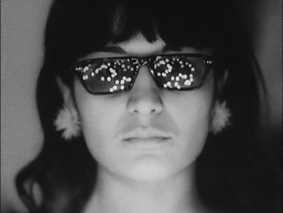
Artavazd Pelechian
Nous
Documentary | 35mm | black and white | 30:0 | Russia | 1969
Artavazd Pelechian
Catalogue : 2009Fin | Experimental doc. | 35mm | black and white | 8:0 | Armenia | 1992
Artavazd Pelechian
Fin
Experimental doc. | 35mm | black and white | 8:0 | Armenia | 1992
Pelechian films with the camera over his shoulder men and women of different ages and ethnic groups on the train from Moscow to Erevan.
Artavazd Pelechian?s cinema ? who, Jean-Luc Godard assures us, is the greatest filmmaker in the world - remains still today not very known in the West. The film maker of Armenian origins got his formation with the VGIK between 1963 and 1968. He lives and works in Moscow, city that he very seldom leaves. His work, which is built film upon film, for the sake of research and experimentation implies what we have discovered, tired levels in movement of evolution. Pelechian films little and only short films. The density of any new opus is in fact every time a rare piece of work.
Catalogue : 2009Les saisons | Experimental doc. | 35mm | black and white | 30:0 | Armenia | 1972
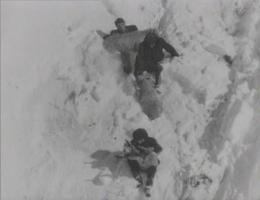
Artavazd Pelechian
Les saisons
Experimental doc. | 35mm | black and white | 30:0 | Armenia | 1972
?The seasons? is a very beautiful poem evoking in a vast parable certain moments in Armenian history, from its volcanic origins, up to the industrial period.
Artavazd Pelechian?s cinema ? who, Jean-Luc Godard assures us, is the greatest filmmaker in the world - remains still today not very known in the West. The film maker of Armenian origins got his formation with the VGIK between 1963 and 1968. He lives and works in Moscow, city that he very seldom leaves. His work, which is built film upon film, for the sake of research and experimentation implies what we have discovered, tired levels in movement of evolution. Pelechian films little and only short films. The density of any new opus is in fact every time a rare piece of work.
Catalogue : 2009Les habitants | Experimental doc. | 35mm | black and white | 10:0 | Armenia | 1970
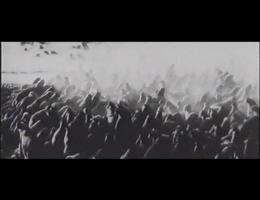
Artavazd Pelechian
Les habitants
Experimental doc. | 35mm | black and white | 10:0 | Armenia | 1970
The film is built on the idea of `` a relationship full of mankind with nature and animals. It deals with the attacks perpetrated by man against nature, and the threat of the destruction of the natural harmony.
`Artavazd Pelechian?s cinema ? who, Jean-Luc Godard assures us, is the greatest filmmaker in the world - remains still today not very known in the West. The film maker of Armenian origins got his formation with the VGIK between 1963 and 1968. He lives and works in Moscow, city that he very seldom leaves. His work, which is built film upon film, for the sake of research and experimentation implies what we have discovered, tired levels in movement of evolution. Pelechian films little and only short films. The density of any new opus is in fact every time a rare piece of work.
Catalogue : 2009Vie | Experimental doc. | 35mm | color | 6:30 | Armenia | 1993
Artavazd Pelechian
Vie
Experimental doc. | 35mm | color | 6:30 | Armenia | 1993
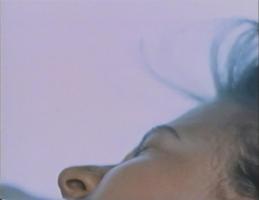
The profile of a woman, lying disfigured - as in pleasure ? in an ancestral gesture. The holding of the child which has just been born, magnified by an ideal, a contrast and abstraction of space which surrounds them, evokes a religious iconography just like the portrait of the mother and child.
`Artavazd Pelechian?s cinema ? who, Jean-Luc Godard assures us, is the greatest filmmaker in the world - remains still today not very known in the West. The film maker of Armenian origins got his formation with the VGIK between 1963 and 1968. He lives and works in Moscow, city that he very seldom leaves. His work, which is built film upon film, for the sake of research and experimentation implies what we have discovered, tired levels in movement of evolution. Pelechian films little and only short films. The density of any new opus is in fact every time a rare piece of work.
Sini Pelkki
Catalogue : 2020Sheet N°4 | Experimental film | 16mm | color | 12:0 | Finland | 2018
Sini Pelkki
Sheet N°4
Experimental film | 16mm | color | 12:0 | Finland | 2018
Sheet No4 examines the outlines and borders of a photograph -and a human being. How to look, how to see, how to move. Using repetition and reinterpretation to both construct and deconstruct the image and its boundaries. A Conflict between outlines and content. One of the starting points of the work was the dialogue between Pelkki and the four multidisciplinary artists, whom she invited to collaborate; Emma Hammarén, Magnús Logi Kristinsson, Johan Jonason and Keiko Yamamoto. The interaction and diverse interpretations embodied in those exchanges becomes the core of Sheet No4. The name of the work refers to a contact sheet, a proposal for a photograph, where all the options are there with possible re-framing and remarks.
Sini Pelkki (b. 1978 Helsinki) works with photography and moving image. She is interested in the subjectivity of seeing, introspective lives of spaces within spaces. In her works landscapes, figures and objects turn into layered narratives that lead to various paths and ambiguous readings. Recent years her work has been going towards different kind of collaborations. Her first work in book form Arranged Lines was released in 2018. Sini Pelkki (b. 1978 Helsinki) works with photography and moving image. She is interested in the subjectivity of seeing, introspective lives of spaces within spaces. In her works landscapes, figures and objects turn into layered narratives that lead to various paths and ambiguous readings. Recent years her work has been going towards different kind of collaborations. Her first work in book form Arranged Lines was released in 2018. Pelkki gained her Bachelor degree in Fine Art from Chelsea College of Art and Design, London (UK) in 2002 and MA from the Academy of Fine Arts Helsinki in 2008. Her works have been shown in exhibitions and film festivals internationally.
Catalogue : 2018Length | Experimental film | 16mm | color | 7:23 | Finland | 2016
Sini Pelkki
Length
Experimental film | 16mm | color | 7:23 | Finland | 2016
the work examines the length of a thought, the length of a moment. Through repetition and rhythm, the piece builds a sense of a narrative, distance and closeness at the same time. We are looking at a figure in an urban landscape, soon to be dislocated. The Gaze abandons and re-draws the images. Perception grapples with distances; between the figure and its landscape, between the viewer and the piece itself.
Sini Pelkki (born 1978) is an artist based in Helsinki, Finland. She gained her BA (Hons) Fine Art from Chelsea College of Art and Design, London (UK) in 2002 and her MFA from the Academy of Fine Arts, Helsinki in 2008. Sini Pelkki’s work derives and evolves around photography and the photographic image. Focusing on the subjectivity of seeing and the diverse dialogue between environments and the layers of spaces within spaces.
Catalogue : 2014Embarkation | Experimental film | 16mm | color | 7:10 | Finland | 2012
Sini Pelkki
Embarkation
Experimental film | 16mm | color | 7:10 | Finland | 2012
Embarkation is a moving image that is framed like a photograph. Through repetition it builds up into a single image, like a photograph that consists of countless images. With simultaneous presence and absence, the work explores the realtionship between still and moving image.
Sini Pelkki is an artist working with photography and moving image. Her work derives and evolves around photography and the photographic image. Her film works are often based on photographic images. Focusing on the subjectivity of seeing and the relation between a human and different physical and psychological environments and spaces. Her work has been shown across Europe in exhibitions and festivals. Pelkki was born 1978 in Helsinki, Finland. She studied fine art in Chelsea College of Art and Design in London (UK) and at the Academy of Fine Arts in Helsinki. She is currently based in Helsinki.
Christelle Pellerin
Catalogue : 2026En plein désert, il y avait un puits | Documentary | dcp | color | 45:2 | France | 2025
Christelle Pellerin
En plein désert, il y avait un puits
Documentary | dcp | color | 45:2 | France | 2025
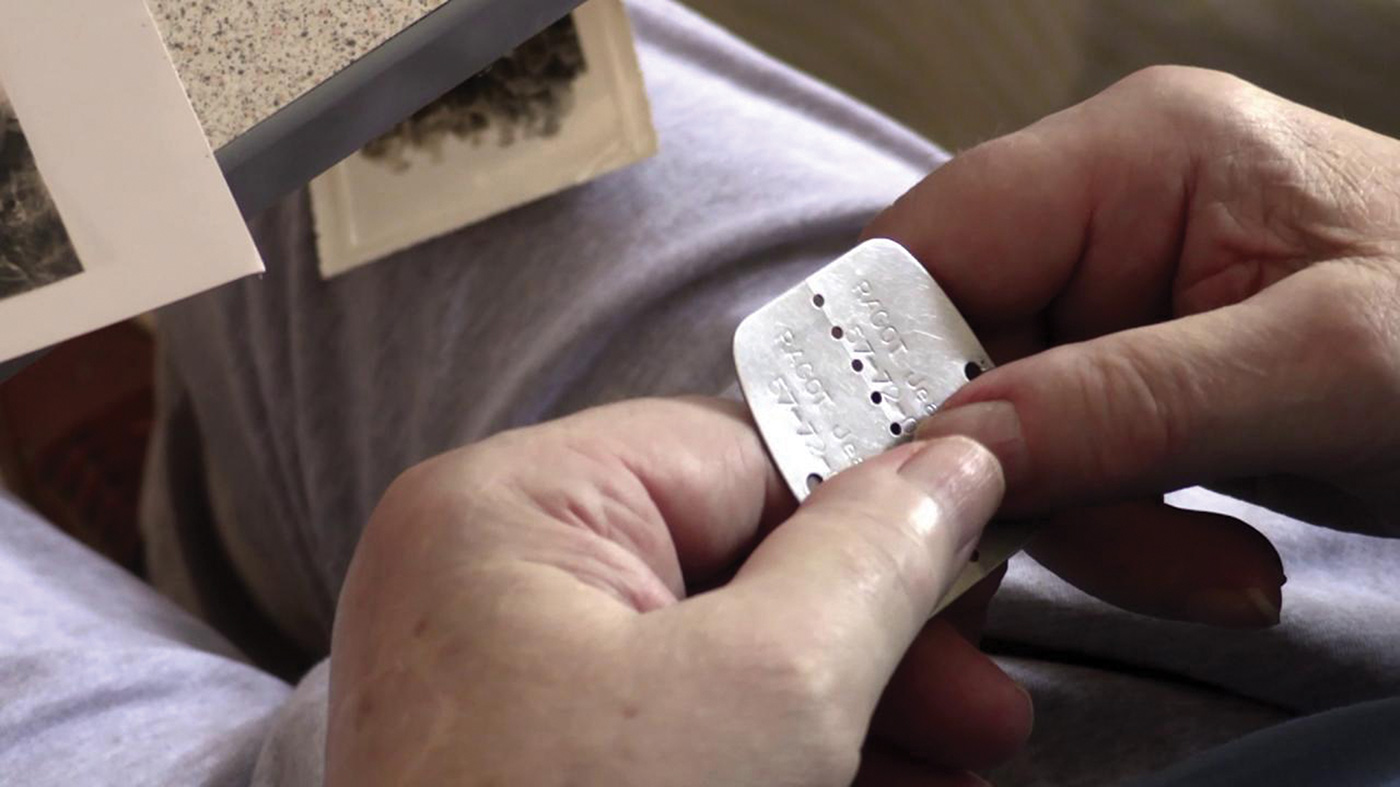
Jean is 84 years old. He looks at photos of his past in Algeria wishing to ‘relive it to forget’. At 20, he was called up for military service. Amateur archives resonate with his visions, revealing the paradox between a colonialist and paternalistic political discourse and the reality of a war that lasted 7 years. He tells his story to exorcise. "We were killing civilians. We tortured the guy." It was in the desert, where there was a well — a source of life — which couldn't withstand the contamination of a war that wasn't even acknowledged as such.
Chris Pellerin, born in Brest in 1970, studied theatre in England and modern foreign literature in Italy, where she joined an experimental Shakespearean theatre lab. A self-taught artist in drawing and painting, she later returned to France and earned a Master of Fine Arts from the Beaux-Arts in Caen. There, she developed a dual practice of drawing and video, using the latter as a visual diary where intimacy and transience intertwine. She went on to create experimental visual and plastic art workshops in confined institutions—psychiatric hospitals, prisons, hospices—seeking to restore identity and visibility to people often forgotten or labeled. Her work focuses on self-portraiture and self-representation as tools for personal emancipation. Participants actively take part in the creative process, expressing themselves beyond words through what unconsciously emerges. Her films approach intimacy through visual devices, particularly drawing, avoiding any voyeuristic gaze. This protean cinematic practice has led to a filmography marked by formal and narrative experimentation, including Vue d’intérieurs (psychiatric center) and Fort intérieur (prisons). Since 2010, she has lived and worked between France and Belgium, where she directed En attendant le déluge and In the middle of the desert, there was a well, both awarded in numerous national and international festivals.
Caroline Pellet
Catalogue : 2017Birds Bark | Experimental doc. | hdv | color | 20:30 | France | 2016
Caroline Pellet
Birds Bark
Experimental doc. | hdv | color | 20:30 | France | 2016
Birds bark is inhabited by dogs, cats, beetles, ants, parrots, humans, snails, chickadees, verms. These beings appear as shadows, stains, abstract forms, projections, in a kind of ventriloquist image. They imitate, hunt, love each other and engage with, hide from and play with each other. The one making noises is not who you think it is; dialogues punctuate these noises, from the man imitating birds in front of an hilarious assembled, to this girl asking questions about prehistorical dragonflies, and the concomitant existence of mosquitos, or this man making his dog resolve math equations, and this group of persons trying to identificate a nocturnal insect. The film is crossed by duplication and imitation through the choice of "indirect" images and the "noisist" sound, forming a strange bestiary which human is a part of.
BIOGRAPHY/EXHIBITIONS 2016 : -Residency at atelier 105 @lightcone -Dome, group show, ELA projects, Athen 2015 : -Streaming festival, cyan program -Festival des cinémas différents, Paris 2014 : -Streaming festival, orange program -Rencontres internationales Paris-Berlin-Madrid -"Point de curie", opening show @laTrap with Thu Van Tran and Pier Francesco Lerose 2013 : -Artist film festival, Cutlog official selection, Paris -Cologne OFF: section ExDoc Before : -Workshop & conference run by Gabrielle Reiner at National School of Fine Arts, Paris-Cergy (ENSAP-C) about Oblique, Imagos and Silex -Independant film festival, Lisboa -FID, section cahiers du cinéma, Marseille
Catalogue : 2014Oblique | Experimental doc. | hdv | color | 13:24 | France | 2010
Caroline Pellet
Oblique
Experimental doc. | hdv | color | 13:24 | France | 2010
OBLIQUE (Texte de Gabrielle Reiner) Oblique est un documentaire expérimental sur un groupe d'astronomes. L'artiste filme ces chercheurs d'étoiles et entrecoupe ces plans avec ceux des «objets » (le nom donné aux étoiles par les astronomes) observés au travers de l'oculaire. La prise de vue adopte les caractéristiques de la caméra de surveillance(1) et une voix-off évoque les techniques utilisées pour améliorer la vision scotopique (2). Les astronomes se documentent avec des photographies d'astres génériques ce qui leur permet à l'observation de mieux discerner les détails des astres. On peut parler d'« expérience améliorée ». Le spectateur est invité à une « expérience esthétique » (Cf. Jauss) paradoxale qui oscille entre deux points de vue: l?exploration optique des observants répond à celle sensible et relative de l'?uvre artistique. En confrontant théories scientifiques et théories esthétiques de la perception, la vidéaste interroge de manière critique la normativité de l'expérience perceptive. 1. Le night shot est le procédé qui permet de filmer la lumière infra-rouge, invisible à l'?il nu. Fait à l ́origine pour les caméras de surveillance, il a été transposé sur les caméras amateurs. 2. Il faut en effet entre vingt et quarante cinq minutes à l'?il pour basculer en scotopique, perception qui sollicite des cellules appelées bâtonnets situées non pas au centre de l'?il mais en périphérie. A cause de cette répartition des cellules ayant la plus grande sensibilité, les astronomes utilisent un regard « oblique » ou décalé, c'est à dire qu'ils visent à coté de l'objet qu'ils veulent voir afin d'obtenir une perception plus détaillée.
BIOGRAPHIE Vit et travaille à Saint-Ouen (France) née en 02/02/1984 en France
Eric Pellet
Catalogue : 2025Sept micro-films aporétiques | Video | mov | color and b&w | 37:25 | France | 2024
Eric Pellet
Sept micro-films aporétiques
Video | mov | color and b&w | 37:25 | France | 2024
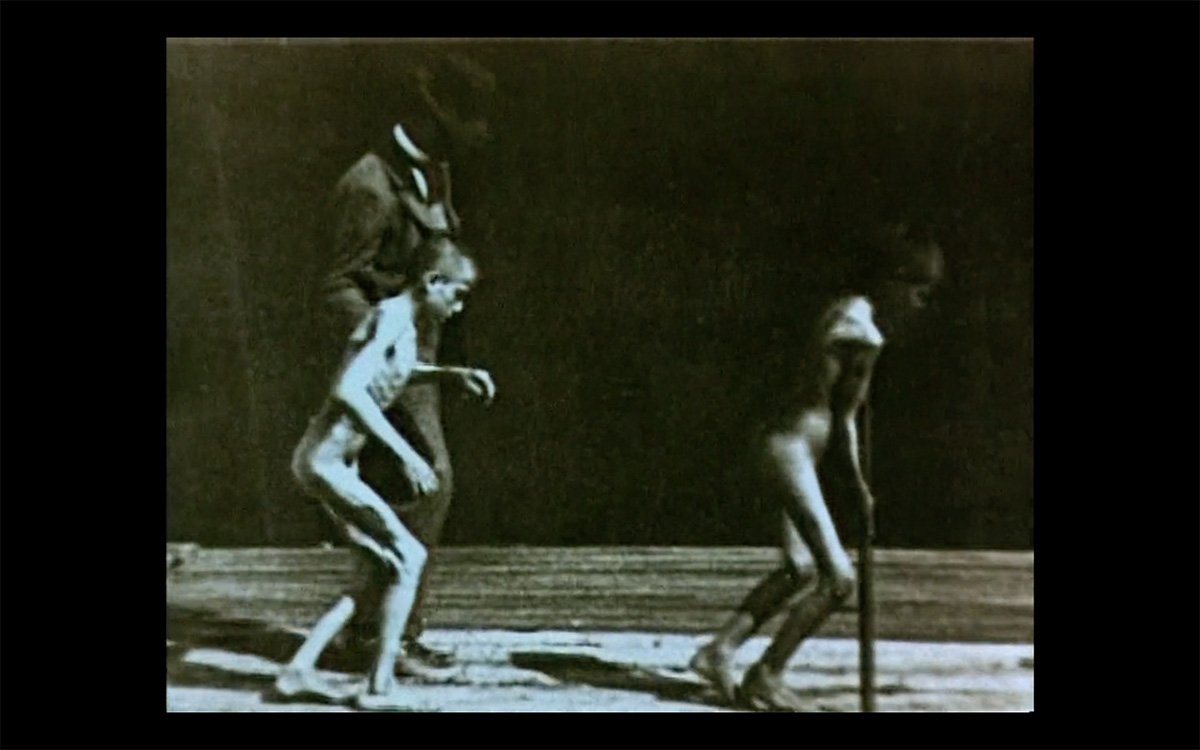
It's a question of taking this title literally, as a literal statement: seven filmic forms of very short film, whose sum of titles ironically renders their vanity, their impossibility: war, magic, murder, love, death, trance, resurrection; all in less than thirty-eight minutes. In terms of images, this is an exclusively montage film, with material taken from sequences or rushes from the history of world cinema. The music, meanwhile, is entirely composed to induce a magnetic field of force and tension between them. The literary fragments are used in two forms: as reading cards, or embodied by voices and interwoven with the musical composition. The idea is to organize a constellation of signs, to weave poetic correspondences, to make affects as intelligent as they are enigmatic. How to move things in time through feelings, crystallize them in forms, so that these feelings move inner mountains.
Eric Pellet is a director, composer and artist. He creates experimental forms of fiction, documentary, essay and poem, interacting with dance, contemporary literature and poetry, sound creation and cinema. He works in a variety of complementary media, including film, photography, installation, radio, sound and music. He has made some thirty personal films, including Le désastre ne figure pas dans l'image, Livre des morts, Admosh, Noir-écran, Le premier jour, Né un peu étonné, Passion(s), Je ne suis personne. He has taken part in some twenty group exhibitions in France and abroad. His films are shown at dozens of film festivals.