Catalogue > Faire une recherche
Résultats pour : Tout le catalogue

Floris Schönfeld, Michaël SEWANDONO
WEIGHT - End of the World
Vidéo | dv | couleur | 5:0 | Pays-Bas | 2009
Weight is a series of short films that are each based on different excerpts from literature. The selected excerpts served as the scenario for the films, and demonstrate the moments of subtle tension that precede a significant event in the plot. A search for the moment, and for the physical state of the decision making. Removed from the context of the original story these excerpts are enigmatic, but retain the same tension inherent to their former position. As they start to interact on a suggestive level a new, highly tense, charged story emerges. The project strives to convey the `weight` of the moments without the context of their original narratives. The series currently consists of four films; 1. Oracle Night based on Oracle Night by Paul Auster 2. Miso Soup based on In the Miso Soup by Rui Murakami 3. End of the World based on Hard-boiled wonderland and the End of the World by Haruki Murakami 4. The Outsider based on The Outsider by Albert Camus
Floris Schönfeld (Houston, VS, 1982) is a visual artist and filmmaker working in Amsterdam and The Hague. He studied time-based arts at the Gerrit Rietveld Academy in Amsterdam and has recently completed a masters at the Interfaculty ArtScience at the Royal College of the Arts/Royal Conservatoire The Hague. In his film and performance work he is primarily concerned with the awesome power of fiction and it?s effects on humanity. Michaël Sewandono (1979) studied audiovisual art at the Gerrit Rietveld Academy in Amsterdam and he studied at the Escuela Internacional de Cine Y Television de Cuba, Havana. Between 2005 and 2008, he has been working on film projects, commercials and music videos. Sewandono currently works on the completion of short films and the development of two feature films.
Volker Schreiner
Cycle
Film expérimental | betaSP | couleur et n&b | 4:14 | Allemagne | 2010
?Clips from Curtiz to Lynch, from A Place in the Sun to White Noise. Assembled under the aspect of the dominating light source in each particular excerpt, which in this unsettling four minutes work shows off as the merciless ruler over the sound. Or, in the words of found-footage-virtuoso Volker Schreiner: ?Rooms illuminated by oscilling light, lightened up in rhythmic intervals by lamps and neon signs or irregular flashes of light . People are waiting, awaiting, pondering, searching, worrying.?? (catalogue Viennale 10, 2010)
VOLKER SCHREINER 1988/89 grant Cité Internationale des Arts Paris, 1993 lectureship HfG Karlsruhe, 1994-98 lectureship HBK Braunschweig, 1998/99 grant Deutsche Akademie Villa Massimo Rome, 2000/01 visiting professor HBK Braunschweig, 2002/03 visiting professor Johannes-Gutenberg-Universitaet Mainz, lectures, workshops and seminars a.o. in Rome, Istanbul, Ankara, Casablanca, Jerusalem, Bangkok, participation in numerous festivals and tours, works owned a.o. by the NBK Berlin, the ZKM Karlsruhe, the Ludwig Museum Cologne, the Museum fuer Neue Kunst Karlsruhe, the Amsterdam Film Museum www.volkerschreiner.de
Volker Schreiner
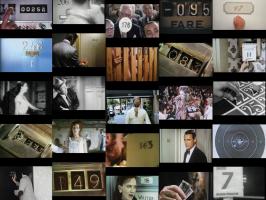
Counter
Art vidéo | dv | couleur et n&b | 6:30 | Allemagne | 2004
?This is a work based on found footage. Schreiner extracted sequences with numbers from many movies, both classic and obscure. Using these short fragments he compiled a countdown starting from the number 266. A strong effect of suspense is created, the tight-paced montage holding the viewer`s attention.? (catalogue Invideo, Milan 2004)
Né en 1957 à Isingerode/Harz. 1977-83 Hochschule für Bildende Künste (école supérieure d'arts)de Braunschweig/ 1993 enseignant à la Staatliche Hochschule für Gestaltung (école nationale supérieure d'arts) de Karlsruhe/1991 premier prix du 3ème festival Sound Basis Visual Art de Breslau/ 1992 premier prix du 5ème Prix d'art vidéo de Marl/ 1994-98 enseignant à la Hochschule für bildende Künste de Braunschweig/ 1998/99 résidence à la Deutsche Akademie Villa Massimo, Rome/ 200-01 professeur invité à la Johannes Gutenberg-Universität de Mayence/ présentations dans différents festivals nationaux et internationaux, entre autres à Berlin, Oberhausen, Bonn, Paris, La Hague, Rotterdam, Madrid, Rome, Moscou, Montréal, New York, Osaka, Tokyo, Sydney; travaux avec le Neuen Berliner Kunstvereins, la médiathèque du centre d'arts et de technologies des médias de Karlsruhe, l'Université du Québec Montréal, de l' Ecole Nationale des Beaux Arts de Paris, du musée Ludwig à Cologne , du musée d'art contemporain de Karlsruhe, du musée du cinéma d'Amsterdam;
Volker Schreiner
Cell
Film expérimental | dv | couleur | 4:27 | Allemagne | 2006
Des salons froidement éclairés par l'écran blanc d'une télévision sont des présages familiers d'une apocalypse approchante dans la plupart des films. Dans Cell c'est justement cet element troublant qui est étudié à la loupe. Un montage de multiples fragments d'écran couvert de cette neige vascillante tirés de films hollywoodiens. L experience de meta-cinema ultime. Pas de message, juste du medium.
Volker Schreiner, since 1988 videos, video-installations and video sculptures/ a.o. grant Villa Massimo Rome, grant Cité des Arts Paris, grant Kunstfonds Bonn, prize winner of the 5th Marl Video-Kunst-Preis/ lectureships at the HfG Karlsruhe and the HBK Braunschweig, associate professor at the HBK Braunschweig and the Johannes Gutenberg-University Mainz/ works owned a.o. by NBK Berlin, ZKM Karlsruhe, Museum Ludwig Cologne, Museum fuer Neue Kunst Karlsruhe, Film Museum Amsterdam
Volker Schreiner
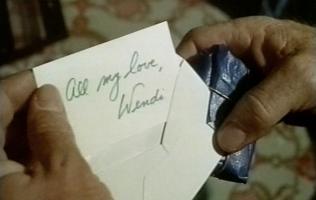
From Afar
Film expérimental | dv | couleur et n&b | 5:25 | Allemagne | 2007
Une compilation de 200 citations extraites de films.
Volker Schreiner, since 1988 videos, video-installations and video sculptures/ a.o. grant Villa Massimo Rome, grant Cité des Arts Paris, grant Kunstfonds Bonn, prize winner of the 5th Marl Video-Kunst-Preis/ lectureships at the HfG Karlsruhe and the HBK Braunschweig, associate professor at the HBK Braunschweig and the Johannes Gutenberg-University Mainz/ works owned a.o. by NBK Berlin, ZKM Karlsruhe, Museum Ludwig Cologne, Museum für Neue Kunst Karlsruhe, Film Museum Amsterdam
Volker Schreiner, Christoph GIRARDET
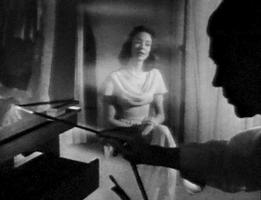
Fiction Artists
Art vidéo | dv | couleur et n&b | 45:0 | Allemagne | 2004
Les artistes vus dans les films, dont la vie est fabriquée, des artistes fictifs : qui sont-ils, comment vivent-ils, comment travaillent-ils ? Quels genres de clichés transportent-ils ? Est ce qu'ils reflètent la vision qu?ont les artistes contemporains d?eux-mêmes, ou représentent-ils une image anachronique de l?artiste dans une société extrêmement influencée par les médias modernes? Les douze montages, issus d?extraits de plus d?une centaine de films, allant du classique à la série B, engagent avec ces questions un jeu subjectif.
Christoph Girardet est né en 1966, à Langenhagen, en Allemagne. Il étudie à l?Ecole des Beaux-Arts de Braunschweig. Il a bénéficié de plusieurs bourses et obtenu des prix pour son travail : du DAAD pour une résidence à Tokyo, le Preis des Kunstvereins de Hanovre, le prix de la critique allemande du meilleur film expérimental, l?Award for the best international film and video à l?Image Festival de Toronto. Il obtient en 2002 une bourse pour une résidence, et le programme curatorial à New York. Il obtient également en 2002 et 2003 le prix pour la meilleure contribution allemande au festival du film d?Oberhausen. En 2004, il séjourne à l?Académie Allemande à Rome, la Villa Massimo. Il travaille seul ou en collaboration, notamment avec Matthias Müller. Ces deux artistes étaient présents à Paris lors des précédentes Rencontres internationales Paris/Berlin. Il travaille également en collaboration avec Volker Schreiner. Le travail de Christoph Girardet est présenté dans les festivals nationaux et internationaux, à Berlin, Oberhausen, Bonn, New York, Montréal, Toronto, Venise, Vienne, Rotterdam ; et dans des musées et centre d?art, comme la Fondation de Appel, à Amsterdam ; au PS1 à New York ; au Stedelijk Van Abbemuseum, à Eindhoven, au New Museum for Contemporary Art de New York. Volker Schreiner est né en 1957, à Isingerode. Il étudie à l?Ecole des Beaux-arts de Braunschweig, puis à l?Ecole de Karlsruhe. En 1991, il obtient le premier prix au troisième festival au Sound Basis Visual Art de Breslau, et en 1992, le premier prix aux 5ème Marler Video-Kunst-Preis. Il séjourne en 1998-1999 à l?Académie allemande de Rome, la Villa Massimo. Il est professeur invité en 2000-2001 à l?Ecole des Beaux-Arts de Braunschweig, puis en 2002-2003 à la Johannes Gutenberg-Uniersität de Mainz. Son travail est présenté dans les festivals internationaux, à Berlin, Oberhausen, Bonn, Paris, La Haye, Rotterdam, Madrid, Rome, Moscou, Montréal, New York, Osaka, Tokyo, Sydney. Son travail est présent dans les collections de plusieurs institutions et écoles, notamment au Neuen Berliner Kunstvereins, à la Médiathèque du Zentrums für Kunst und Medientechnologie de Karlsruhe, à l?Université du Québec de Montréal, à l?Ecole Nationale des Beaux Arts Paris, au Musée Ludwig à Cologne, au Museums für Neue Kunst à Karlsruhe, au Musée du film d?Amsterdam.
Volker Schreiner
GRID
Film expérimental | betaSP | noir et blanc | 5:32 | Allemagne | 2009
Traces, devices, indications, found and discovered, clues and hints referring to absentees - a compilation of excerpts from movies and feature films.
VOLKER SCHREINER 1988/89 grant Cité Internationale des Arts Paris, 1993 lectureship HfG Karlsruhe, 1994-98 lectureship HBK Braunschweig, 1998/99 grant Deutsche Akademie Villa Massimo Rome, 2000/01 visiting professor HBK Braunschweig, 2002/03 visiting professor Johannes-Gutenberg-Universitaet Mainz, participation in numerous festivals and tours, works owned a.o. by the NBK Berlin, the ZKM Karlsruhe, the Ludwig Museum Cologne, the Museum fuer Neue Kunst Karlsruhe, the Amsterdam Film Museum

Volker Schreiner
Hollywood Movie
Film expérimental | hdv | couleur et n&b | 7:0 | Allemagne | 2012
A transformation of Nam June Paik`s text "film scenario" into a movie. Hollywood stars speak Paik: "You can make any Hollywood movie interesting, if you cut the movie several times ..." Michael Caine, Humphrey Bogart, Elizabeth Taylor, John Torturro, Katharine Hepburn and other protagonists of mainstream cinema are assembled to speak a text about deconstructing film watching.
Volker Schreiner video works since 1988/ grants at the Cité Internationale des Arts Paris, the Deutsche Akademie Villa Massimo Rome/ lectureships at the HfG Karlsruhe and the HBK Braunschweig/ visiting professorships at the HBK Braunschweig and the Johannes-Gutenberg-Universitaet Mainz/ lectures, workshops and seminars a.o. in Rome, Istanbul, Casablanca, Jerusalem, Bangkok/ participation in numerous festivals and tours/ works owned a.o. by the NBK Berlin, the ZKM Karlsruhe, the Ludwig Museum Cologne, the Museum fuer Neue Kunst Karlsruhe, the Amsterdam Film Museum/ distribution by Heure Exquise! and Light Cone Paris/ internet: volkerschreiner.de
Volker Schreiner
Pair Of
Film expérimental | betaSP | noir et blanc | 4:38 | Allemagne | 2011
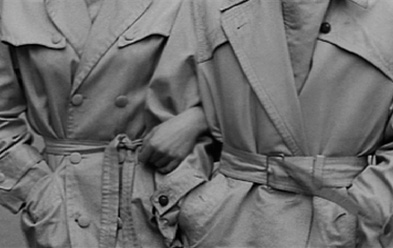
A pair of hands, a pair of rings, two candles, cards, cables, fingers, photos, needles, glasses, chairs ? a couple, a pair, pairwise, pairs of words ? close-distant, longing-leaving, connecting-separating, remembering-forgetting, inside-outside, ahead-behind, before-after.
Volker Schreiner video works since 1988/ grants at the Cité Internationale des Arts Paris, the Deutsche Akademie Villa Massimo Rome/ lectureships at the HfG Karlsruhe and the HBK Braunschweig/ visiting professorships at the HBK Braunschweig and the Johannes-Gutenberg-Universitaet Mainz/ lectures, workshops and seminars a.o. in Rome, Istanbul, Casablanca, Jerusalem, Bangkok/ participation in numerous festivals and tours/ works owned a.o. by the NBK Berlin, the ZKM Karlsruhe, the Ludwig Museum Cologne, the Museum fuer Neue Kunst Karlsruhe, the Amsterdam Film Museum/ distribution by Heure Exquise! and Light Cone Paris/ internet: volkerschreiner.de
Volker Schreiner
Radar
Film expérimental | dv | couleur et n&b | 5:14 | Allemagne | 2006
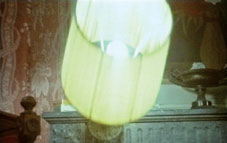
Une compilation de faisceaux lumineux provenant de lampes de poche. "Radar" conduit à une inquiétante recherche. Des faisceaux de lumière tâtonnants, montés à partir des fragments d'innombrables films, éclairent de façon sporadique un chemin qui mène vers le néant. Une réflexion métaphorique sur les parts d'ombre de l'existence comme sur la lumière de la connaissance. (Kristina Tieke:"Lumière de la connaissance", in:Hannoversche Allgemeine Zeitung, 9.5.2006)
Volker Schreiner est né en Allemagne en 1957. Ses films sont présentés dans des musées et festivals nationaux et internationaux, par exemple Berlin, au festival du film d'Oberhausen, à Paris au centre George Pompidou, à La Haye, au festival du film de Rotterdam, à la Viennale, au Museo Nacional Centro de Arte Reina Sofia à Madrid, à Rome, au Portugal à Curtas Vila do Conde, à Moscou, Montréal, New York, Tokyo, Sydney, au Musée d'art moderne de New York, au Musée d'art contemporain de Washington. Il participe à de nombreux programmes de tournées, et réalise des travaux pour le Neuen Berliner Kunstverein, la médiathèque du ZKM de Karlsruhe, l'Université du Québec de Montréal, le Ludwig Museum de Cologne, le musée d'art contemporain de Karlsruhe, le musée du film néerlandais d'Amsterdam, entre autres. Il est invité à diverses conférences, séminaires et ateliers. Il est également d'enseignement et professeur invité dans plusieurs écoles d'art et universités. Il a bénéficié de divers prix et bourses, parmi lesquelles, en 1988/89 la résidence de la Cité Internationale des Arts à Paris, en 1998/99 une résidence à l'académie allemande Villa Massimo, Rome.
Volker Schreiner
Scope
Film expérimental | betaSP | couleur et n&b | 4:57 | Allemagne | 2008
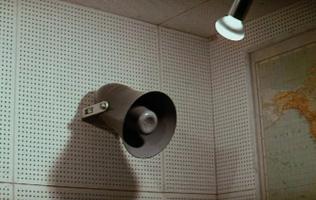
Le monde est ce que le bruit est: le motif central de ?Scope? est le haut-parleur sur des pylônes, dans les halls des gares, sur les toits, dans les autoradios, dans les radios de salon, dans les écouteurs, les combinés téléphoniques ou dans les postes émetteurs-récepteurs. On n?aperçoit les auditeurs que dans les coupes ou dans les flous. Les haut-parleurs diffusent des montages de tons et de sons, morceaux incompréhensibles de communication, des musiques déformées, des annonces et des ondes brouillées. Volker Schreiner prête au bruit général et tout contemporain, que l?on ne perçoit plus depuis longtemps en raison de son omniprésence dans le monde moderne, une voix nouvelle, autre, oubliée.
En 1988/89 Volker Schreiner obtient une bourse de la Cité Internationale de Paris, en 1993, il est chargé de cours à la HfG de Karlsruhe, et de 94 à 98 à la HBK du Braunschweig. En 1998/99, il bénéficie d?une bourse de l?Académie allemande pour la Villa Massimo à Rome, il est professeur invité successivement à la HBK du Braunschweig en 2000/2001, et à l?Université Johannes Gutenberg à Mainz en 2002/2003. Ses travaux ont été acquis par la NBK de Berlin, la ZKM de Karlsruhe, le Musée Ludwig de Cologne, le Musée pour les Nouveaux Arts de Karlsruhe, et le Musée du Film d?Amsterdam parmi d?autres.

Volker Schreiner
Sites
Film expérimental | hdv | couleur et n&b | 8:20 | Allemagne | 2015
A filmic tryptic of three landscapes.
video works since 1988/ grants at the Cité Internationale des Arts Paris, the Deutsche Akademie Villa Massimo Rome/ lectureships at the HfG Karlsruhe and the HBK Braunschweig/ visiting professorships at the HBK Braunschweig and the Johannes-Gutenberg-Universitaet Mainz/ lectures, workshops and seminars a.o. in Rome, Istanbul, Casablanca, Jerusalem, Bangkok/ participation in numerous festivals and tours/ works owned a.o. by the NBK Berlin, the ZKM Karlsruhe, the Ludwig Museum Cologne, the Museum fuer Neue Kunst Karlsruhe, the Amsterdam Film Museum/ distribution by Heure Exquise! and Light Cone Paris/ internet: volkerschreiner.de

Luise Schroeder
UNAMERICA-Relocating memories
Installation vidéo | 0 | couleur et n&b | 16:31 | Allemagne | 2018
`UNAMERICA Relocating memories’, by the artist Luise Schröder, deals with the commemoration of the internment of Japanese-Americans at the former War Relocation Center in Manzanar, USA during World War II. Once a year survivors, their relatives, as well as sympathizing groups come together to commemorate the forced displacement and detention of more than 10,000 people to Manzanar authorized by president Roosevelt through the Executive Order 9066. In 1985 the place was declared a national memorial site. Since 9/11 the Japanese-American community intensively expresses its solidarity also with Muslim communities in the USA and invites them to participate in the events at Manzanar. The video focusses on different historical, political and visual narratives with the purpose to understand how and in which way the historical events are represented and reconstructed today. The historical photos used in the video are taken by Ansel Adams and Dorothea Lange.
Luise Schroeder is a visual artist, photographer and filmmaker, who is based in Potsdam, Leipzig and Berlin. Within her artistic practice she is dealing with aspects of “history in the making” from a today’s perspective and how cultures of remembrance and commemoration are influenced and formed by media and image production. In recent years, the artist has taken part in solo exhibitions at the Kunstverein Bielefeld and the C/O Berlin Amerikahaus in Germany and in numerous group exhibitions. Among others in the Brno House of Arts (Czech Republic), in the 7th Berlin Biennale for Contemporary Art in 2012 and in the Gallery Eigen+Art in Berlin as well as in the Goethe Institut Washington DC, USA. In 2016 she was awarded a three-months scholarship in Los Angeles at the Villa Aurora and in 2018/19 she was holding a residency at the Cité des Arts in Paris, France.

Stefanie Schroeder
40h, max. 2 Monate
Doc. expérimental | hdv | couleur | 0:0 | Allemagne | 2017
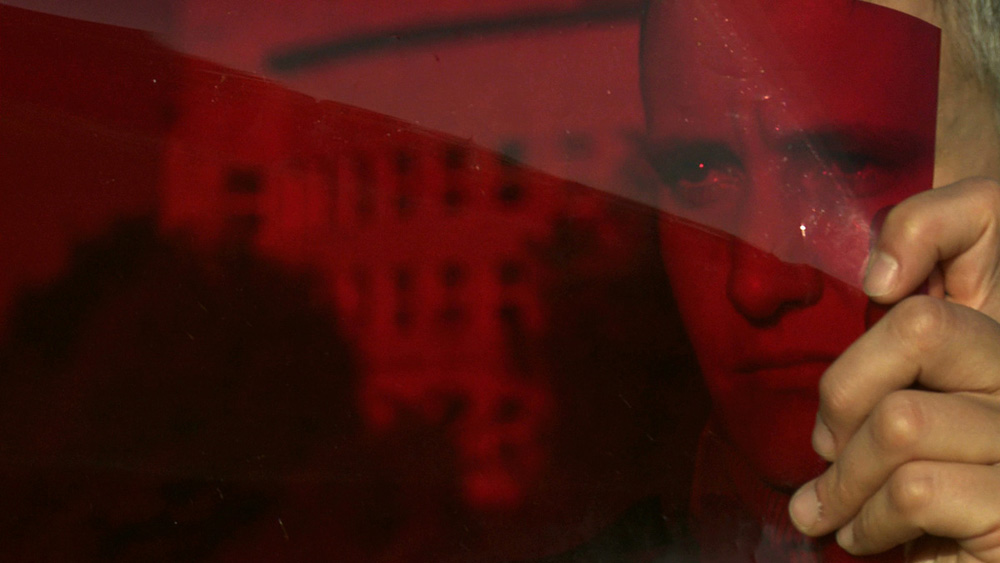
To speed up the process of becoming an independent self-employed artist and to end my dependence on Hartz 4 unemployment benefit, I had to participate in a program for business optimization, carried out by a management consultancy that was engaged by the Jobcenter. My proposal to make a film documentation of the process was denied. I transformed recordings of conversations, hand-outs, correspondence, my dream diary and the pre-printed form F 5.5 into a scenario about my “project on the artistic business personality,” in which the role models of artist, entrepreneur and welfare recipient, all represented by myself, clash and make me grapple with their compatibility. What does optimization mean? Which language is used? How are my actions and how am I described, adapted and, if so, deformed?
Studies in art education, art history, communication science, Greifswald University. Organisation of WBS70, independent culture centre, Greifswald. Participant of art squat project prora.allinclusive Guest student in media art at HFG Karlsruhe. Exchange student at Villa Arson, Nice. Studies in photography at HGB Leipzig. Participant of Professional Media Master Class / PMMC LAB at Werkleitz e.V. Halle/Saale. Member of the Cinematic Initiative Leipzig FILZ https://filz.works/de/about. Supervisor/teacher for digital photography and image editing, Kulturbahnhof e.V. Markkleeberg. Participant of Pilot Programme for emerging filmmakers, MDM. www.schroederstefanie.de
Kerstin Schroedinger, Bernien Mareike
Rainbow's Gravity
Doc. expérimental | hdv | couleur | 32:50 | Allemagne | 2014
Rainbow's Gravity is a cinematic study on the Agfacolor-Neu colour film stock made in Nazi Germany. Along its three layers of emulsion, the film digs deep into the escapist colourised landscape of this time and asks for the material requirements, retentions and ideological continuities of the Agfacolor palette. The film sequences, projected in the former production line, dismantle not only themselves, but also our view accustomed to historicise. Those scenes aim to visualise what the colour does not show. The film tries to realise, not only how it had been - in the darkrooms of the Agfa film factory - but also how it can be possible at all to face this reality today within film, in images and movements without a final or even conciliatory view of the past
Mareike Bernien (Berlin) and Kerstin Schroedinger (London / Zurich) working in collaboration since 2006 in joint film, exhibition and text projects. In their work they seek to critically interrogate image productions and to produce and reproduce images as material of thought. They work with film, radio play, music and text with a historiographical practice, questioning the means of production, historical continuities and ideological certainties of representation. They are interested in an experimental and critical approach to media formats, with an implicit entanglement of content and form.
Susanne Schuda, Florian SCHMEISER
Chaos in the trolley
Création sonore | 0 | | 10:0 | Autriche | 2005
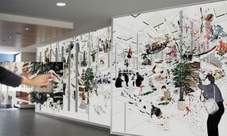
"Chaos in the Trolley" est une installation sonore et picturale qui joue avec le système d'information des transactions - des codes barres. L'information sous forme de code barre est transformée en sons influencés par des algorythmes chaotiques. Sur le plan visuel du travail, le chaos devient visible via des produits fictifs. Le sujet, de type publicitaire, d'un charriot rempli avec des des produits "chaotiques" est montré devant un supermarché et les champs environnants.
Schuda et Schmeiser travaillent ensemble dans le domaine de l'espace publique et des installations médias fixes depuis 1998. Florian Schmeiser est né en 1973 à Graz. Il a étudié la philosophie à l'université de Vienne et a été diplôme dans les médias visuels à l'université des arts appliqués de Vienne. Il travaille avec un large panel d'installations, de vidéos, de son et aussi sur le web. Susanne Schuda est née en 1970 à Vienne. Elle est diplômée en médias visuels à l'université des arts appliqués de Vienne. Elle travaille dans les limites de l'art dans l'espace public, les installations vidéos, le web et les collages numériques.

Florine Schueschke
After a while what is strange
Fiction expérimentale | mov | couleur | 19:50 | Allemagne | 2020
Dans un futur proche, des événements étranges se produisent au cœur d’un Berlin inondé. L’eau monte jusqu'au premier étage des immeubles, mais la vie continue. Ce film combine des scènes surréalistes filmées dans une maquette, des scènes narratives jouées par des acteurs et actrices, ainsi que des montages des deux. Le quotidien laconique de la ville oscille entre catastrophe et catharsis, mais les images donnent aussi l'espoir de nouvelles façons de vivre. Malgré la précarité contre laquelle luttent les personnages, leur environnement est celui d'une société post-capitaliste qui a réalisé des changements positifs par nécessité: de nouvelles dispositions spatiales et architecturales dans les maisons, une source locale de nourriture et d’énergie sur le toit, l'autonomie. Le film présente donc différentes possibilités pour le futur, des possibilités qui sont accessibles à partir de l’état actuel des choses, des futurs porteurs d'espoir et de menace.
Florine Schueschke est artiste et architecte. Elle vit à Berlin (Allemagne). Elle a étudié l'architecture à la Universität der Künste Berlin (Allemagne) et à la University of Illinois at Chicago (USA).

Roswitha Schuller, Markus Hanakam
Mobile
Vidéo expérimentale | 0 | couleur | 8:0 | Autriche | 2017
In the pieces by Hanakam & Schuller, the device is a recurring motif. That is to say, all that apparatus that is used to render optical imagery and also generate their specific formats, to control or trigger images or even manipulate them. The device - or gadget - is a type of artifact, a functional object that is charged with both everyday and mystical meaning. In their recent video piece Mobile, two hands move one object after the other into focus, creating an endless sequence of object chains. In his allegorical reference to a kind of Jacob’s ladder of the media, the video in the loop becomes a sort of perpetuum mobile. The mobile can also be understood as a mobile. The mobile device allows data to flow and data to be exchanged. The accompanying voice over with a computer-simulated voice reproduces several tracks from Tree of Technologies of the classic computer game Civilization that was released again in 2016, revealing the absurdity of the strictly linear development of technology and culture, as illustrated here by the game.
Many of the artifacts of Hanakam & Schuller, an artist duo that lives in Vienna, are shapeshifters, changing their outer form and then reappearing in a variety of contexts. As artists and explorers, Markus Hanakam and Roswitha Schuller redesign the rules of the fine arts for their own purposes and create unconventional arrangements and new world designs in videos and objects. They also work with applied artforms. Their works have been shown in Berlin’s Haus der Kulturen der Welt, the Eyebeam art and technology center in New York, Paris’ Palais de Tokyo, Moscow’s Garage Museum of Contemporary Culture, Vienna’s MAK, the MAK Center for Art and Architecture in Los Angeles, and Tokyo’s National Art Center.

Roswitha Schuller, Markus Hanakam
The Emblematic Cabinet
Doc. expérimental | 4k | couleur | 11:39 | Autriche, USA | 2019
More recently, the artist duo has looked at the artistic practice of the emblem. This is to consider an emblem as a variety of being a symbol, a trick, or a figure of thought. By so doing, Hanakam & Schuller rely on their profound examination of the formal language of everyday objects, liberating these from their context or their supposedly mysterious meanings. Inspired by the “Building Duke” research, Hanakam & Schuller worked on Duke University’s (Durham, NC) variety of architectural forms during their stay in spring 2019. In other words, the idea is to develop a short film featuring both physical architectural details of the campus buildings, and also virtually twisting these by means of a playful range of emblems.
Markus Hanakam (1979) and Roswitha Schuller (1984) both studied at the Universtiy of Applied Arts in Vienna. Since 2004 they collaborate as duo, their work is shown at Museums and Festivals in an international context, including Rencontres Internationales at Haus der Kulturen der Welt, Berlin and Palais de Tokyo, Paris, Eyebeam Center for Art and Technology, New York, , SIGGRAPH 2012 Los Angeles, ISEA 2011, Istanbul, 4th Moscow International Biennale for Contemporary Art 2011 among others. Recently they have been visiting artists at Duke University, Durham, NC. The artefacts made by the two artists who live in Vienna are often shape-shifters, changing their exterior forms and reappearing in different contexts. As artists and researchers they are engaged in restructuring the visual art rulebook and building up idiosyncratic systemic orders and new visions of the world in their videos and objects. In the process they reflect and make ironic various historical and contemporary artistic strategies as well as their means of expression. They work primarily in the realm of video, interactive computer applications and applied forms of art.

Roswitha Schuller, Markus Hanakam
Trickster
Film expérimental | hdv | couleur | 13:15 | Autriche, Japon | 2014
In all chaos there is a cosmos, in all disorder a secret order. In C.G. Jungs sense the archetype as an object conduce to determination of a “big picture” - of wholeness - as a subject it serves as structure for universal and individual experiences. Like a role-play-gaming kit Markus Hanakam & Roswitha Schuller’s video-work Trickster provides a card index on archetypical places, figures, artifacts and actions; a mode of narration on a coherent world design. To support the layer of moving image a text layer is composed by assembling passages from a historical inventory catalogue of the National Gallery of Scotland. A traditional spectrum of subjects, mostly Genre painting like landscape and portrait, declares the semiotics of art historical reading and puts it into a gaming context.
Markus Hanakam was born 1979 in Essen, Germany. After studying two years at the University Essen (Faculty for Art and Design), 2000-2002, he graduated in 2006 with a Master degree in Art Education, 2009 Master degree in Sculpture and Multimedia from the University of Applied Art Vienna. Roswitha Schuller was born in 1984 in Friesach, Austria. She graduated 2007 with a Master degree in Art Education, 2009 Master degree in Sculpture and Multimedia from the University of Applied Art Vienna; she holds a Doctoral Degree in Art Sociology. Since 2004 they collaborate as duo, their work is shown at Museums and Festivals in an international context, including Videodumbo Festival 2013 at Eyebeam Center for Art and Technology, New York, Recontres Internationales 2012 at Palais de Tokyo, Paris, ISEA 2011, Istanbul, 4th Moscow International Biennale for Contemporary Art 2011. They gained several awards like the MAK Schindler Fellowship in Los Angeles as well as an Artist in Residency at the Citè International des Art, Paris. Their short Film “INVASION” is awarded as Jury Selection Work at Japan Media Arts Festival 2012. Markus Hanakam & Roswitha Schuller have been visiting curators at Medienwerkstatt Wien 2014.
Liv Schulman
Une Vieille Terre Pour Une Nouvelle Chanson Qui Sonne Comme La Vieille Chanson Avec Le Même-Même Et Le Vieux-Vieux Et Rien de Nouveau
Vidéo | hdv | couleur | 40:25 | France | 2023
Cette fiction, tournée à Carnac en Bretagne, montre un monde où un groupe d’appareils électroménagers ont acquis, ou sont possédés, par une série d’affects. Ensemble, ils mettent en scène une version d’un drame victorien, une adaptation très libre de Jane Eyre de Charlotte Bronte, où un climatiseur nommé AC subit les aventures d’un pauvre et d’un orphelin dans un monde sans amour en plein changement climatique.
Liv Schulman est née en 1985. Elle a grandi à Buenos Aires et vit à Paris. Les vidéos de Liv Schulman sont inspirées de séries télévisées. Assumant les contradictions des différentes formes de résistance politique et « la frustration d'un potentiel révolutionnaire bridé », ses personnages « tendent à construire des thèses autodestructrices et deviennent ce qu'ils semblent critiquer », dans des monologues à la fois logiques, psychotiques et sarcastiques. Après des études à l'École nationale supérieure d'arts de Cergy, elle s'est formée à la Goldsmiths University de Londres et au post-diplôme des Beaux-Arts de Lyon. Son travail a notamment été présenté au CRAC Alsace, au Bemis Art Center, à la Fondation Ricard, à la Biennale de Rennes (commissariat François Piron) ou à la Galerie, Centre d'art contemporain, à Noisy-le-Sec (commissariat Vanessa Desclaux & Emilie Renard), au SixtyEight Art Institute à Copenhague (« The Obstruction », commissariat Céline Kopp). En 2019, le Prix de la Fondation Ricard lui est décerné à l'occasion de l'exposition « Le Vingtième Prix de la Fondation d'entreprise Ricard », conçue par Neil Beloufa, et elle bénéficie également d'une exposition personnelle à la Villa Vassilieff. En 2022, Liv Schulman est résidente à la Villa Médicis à Rome. En 2023, elle présente une exposition personnelle au FRAC Bretagne intitulée « Adidas, Jennifer, Ariel, Woolite, le Chat, la Croix, le Temps, la Sangsue, les Problèmes, la Transformation, l'Ennui ». En 2024, Liv Schulman est artiste en résidence à la Fondation Fiminco à Romainville et présentera une nouvelle exposition à la galerie anne barrault en octobre 2024.