Catalogue > Faire une recherche
Résultats pour : Tout le catalogue

Miranda Pennell
Why Colonel Bunny Was Killed
Doc. expérimental | hdcam | noir et blanc | 27:30 | Royaume-Uni | 2010
Triggered by the memoirs of a medical missionary on the Afghan borderlands, the film is constructed from some remarkable still photographs of colonial life on the North West frontier of British India at the turn of the 20th century. Searching for clues to the realities behind images framed during a time of colonial conflict, the film plays sound against image and finds striking continuities in Western portrayals of a distant place and people.
Miranda Pennell originally trained in contemporary dance and later studied visual anthropology at Goldsmiths University, London. Her recent and current film work explores social performances framed within photographic archives. Much of Pennell`s work before this explored performance in the `real` world through film and video, and centred on a diverse range of human subjects that have included teenage ice-skaters, amateur and professional dancers, fight directors, soldiers and a marching band, and aspiring drummers.
Miranda Pennell
You made me love you
Vidéo expérimentale | dv | couleur | 3:36 | Royaume-Uni | 2005
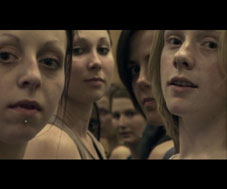
Dans les travaux de Miranda Pennell, les activités mineures de chaque jour sont transformées en chorégraphies fascinantes. De fait, elle n'a pas été formée comme une réalisatrice de films ou comme artiste de l'audiovisuel mais comme danseuse. Elle pointe sa caméra vers des gens ordinaires dans leur propre maison et de cette façon analyse les facettes variées et les significations du mouvement. Dans "You Made Me Love You", les règles du jeu sont simples, une caméra se déplace de façon inattendue, rapidement ou lentement, en arrière et en avant le long d'un rail. Une troupe de danseurs de ballet s'efforcent d'établir ou de garder un contact visuel avec la caméra. Seulement quelques visages sont continuellement sur l'écran. Parfois d'autres danseurs parviennent à voler l'attention du public pour un instant. Les pas de danse rapides qui parfois peuvent à peine suivre la caméra constituent le seul son audible. Un vrai combat pour l'attention a lieu sur la piste de danse. Parce que l'opprobre vous échoit si vous terminez en dehors de l'écran et sombrez dans l'oubli ! Avec "You Made Me Love You", l'artiste nous met en présence d'une allégorie sur la fixation que l'on fait sur les caméras et la célébrité de nos jours.
Miranda Pennell
You Made Me Love You
Vidéo expérimentale | dv | couleur | 3:0 | Royaume-Uni | 2005
Dans les oeuvres de Miranda Pennell, les activités mineures de la vie quotidienne deviennent des chorégraphies fascinantes. En fait elle n?a pas de formation en tant que réalisatrice ou artiste audiovisuelle mais plutôt en tant que danseuse. Elle a pour habitude de diriger sa caméra vers des gens ?ordinaires? dans leur propre maison et analyse ainsi les différentes facettes et les différents sens du mouvement. Dans ?You Made Me Love You?, les règles du jeu sont simples : une caméra se déplace de manière inattendue, vite ou lentement, en avant et en arrière sur un rail. Une troupe de danseurs de ballet essaie d?établir ou de garder un contact visuel avec la caméra. Seuls quelques visages sont à l?écran tout au long du film. Parfois, d?autres danseurs parviennent à voler les feux de la rampe pendant un instant. Le travail rapide des pieds, avec lequel la caméra a du mal à rester en rythme, est le seul son que l?on entend. Une véritable bataille pour attirer l?attention a lieu sur la piste de danse. Car malheur à vous si vous vous retrouvez hors du champ de la caméra et sombrez dans l?oubli ! Avec ?You Made Me Love You?, cette artiste nous présente une allégorie de la fixation que font la plupart des gens sur les caméras et la célébrité.
Alee Peoples
Hey Sweet Pea
Film expérimental | 16mm | couleur | 11:0 | USA | 2023
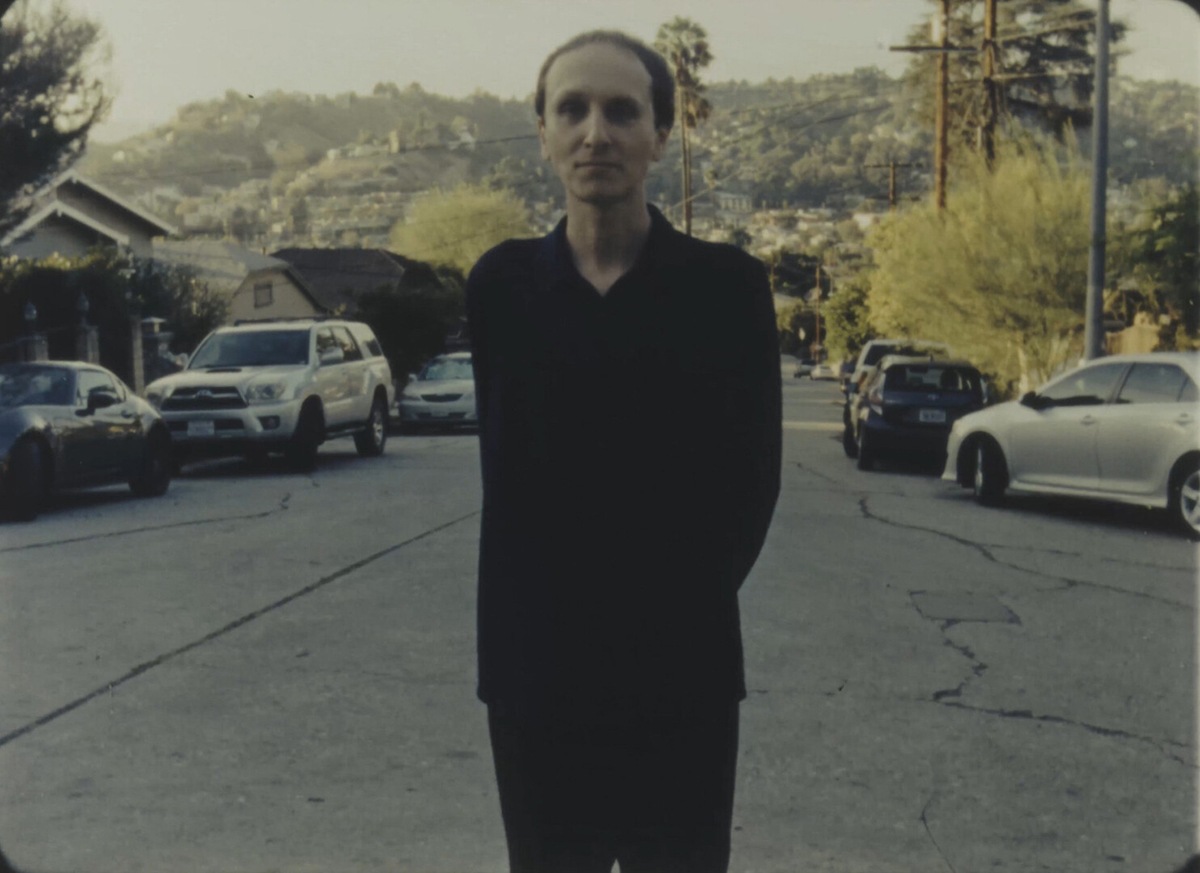
Parental aging and an existential wave collide together in funny ways. Hey Sweet Pea borrows scenes from the 1984 children’s sci-fi movie The Neverending Story to process our collective grief.
Alee Peoples maintains a varied artistic practice that involves screen- printing, sewing, sculpture and film. Currently living in Los Angeles, she has taught youth classes at Echo Park Film Center and shown her sculpture and film work at GAIT, 4th Wall and elephant. Peoples has shown her films at numerous festivals including Edinburgh, Images (Toronto) and New York Film Festival, and at museums and spaces including SFMoMA, Brooklyn Museum of Art, The Pompidou Center, Dirt Palace (Providence) and The Nightingale (Chicago). Started in 2022, Arroyo Seco Cine Club is a thematically programmed film series she co-curates with Mike Stoltz. She is inspired by pedestrian histories, pop song lyrics and invested in the hand-made.
Edgar Pera
Guitar with people inside
Vidéo expérimentale | dv | couleur | 5:0 | Portugal | 0
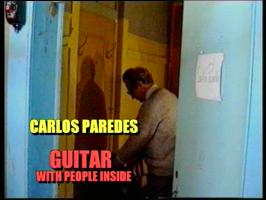
GUITAR (With People Inside) is sudwestern fiction with biografic details of legendary guitar-player Carlos Paredes. This video won the National Best Video Award and it was shown during the Lisbon Video Festival in 2003 and the World Wide Video Festival Amsterdam 2004
In 1981 Pêra is expelled from the 4th Year of University of Psychology and is exiled to the Royal Cinema High-School (Bairro Alto). In 1984 he starts working as a screenwriter for radio, tv and cinema. 1985-86 he is involved in doing Neuropunk Katodyk-films. During 1987 Ego (or Pêra?) rediscovers Sonik Grammatiks? book under the lost bed of UlisseZ. In 1988, shortly after the The Great Fire of Chiado (in the heart of Lisbon) Pêra directs his first short film: Reproduta Interdita. Since then its work has been under the Spell of Kaos Koincidence & DyZaster.
Edgar Pera
Impending Doom
Film expérimental | super8 | couleur | 7:30 | Portugal | 2006
Impending Room a été tourné au format super 8. C'est un témoignage visuel et une interprétation sonique de deux cérémonies de communion qui ont eu lieu à Rome et à Lisbonne en l'an 2005 après J.C.. Malgré des croyances et des idéologies différentes, les deux communautés ont partagé la douleur, la peine et un sentiment de paix dans un monde en guerre.
Edgar Pêra est né à Lisbonne au Portugal en 1960.

Vladimir Perales
La Fiambrera Obrera
0 | 0 | | 0:0 | Espagne | 2007
Fiambrera est un groupe ouvert qui a travaillé et qui est intervenu dans des régions où les conflits politiques sont fréquents, comme par exemple les frontières entre pays riches et pays pauvres, ou dans des endroits (pas si) différents comme le centre de Madrid, de Barcelone ou de Séville. Leurs méthodes consistent à intervenir et à organiser des actions directes avec d?autres moyens sociaux et politiques plus conventionnels, fournissant des graphiques, des outils de communication et des outils et des équipements d?action directe. Ils ont été invités en tant qu?artistes résidents par des institutions telles que le MIT, Calarts, l?université de Yale, NYU, etc. et plus récemment à Transmediale et Ars Electronica. Il y a quelques années, ils ont organisé ?The Agencies?, travaillant de Barcelone avec l?aide du Contemporary Art Museum de Barcelone (MACBA) et essayant de proposer des mouvements sociaux et des resources pour créer des campagnes, des lieux d'information alternatifs, des actions et des interventions. Au fil des ans ils ont collaboré avec d?autres groupes tels que The Yes Men, Rtmark, et ?Kein Mensch ist Illegal?. Ils ont participé à l?édition de deux livres à propos des pratiques artistiques publiques et politiques : "Manual de la Guerilla de la Communicación" (Editorial Virus, Barcelone, 2000), et Modos de hacer : Arte Politico, esfera pública y acción directa (Ediciones Universidad de Salamanca, Salamanca, 2001). La recherche d?autonomie étant un de leurs principaux principes, ils ont organisé récemment une série d?événements et ont produit un certain nombre de vidéos sous l?identité ?PornoLab? dans lesquelles leur énergie converge vers l?exploration de l?intimité et du désir sexuel en tant qu?outils d?analyse politique et d?action.
Vladimir Perales vit et travaille à Madrid.
Agustín Peralta Lemes
centella va venir
Vidéo | hdv | noir et blanc | 12:0 | Uruguay | 2013
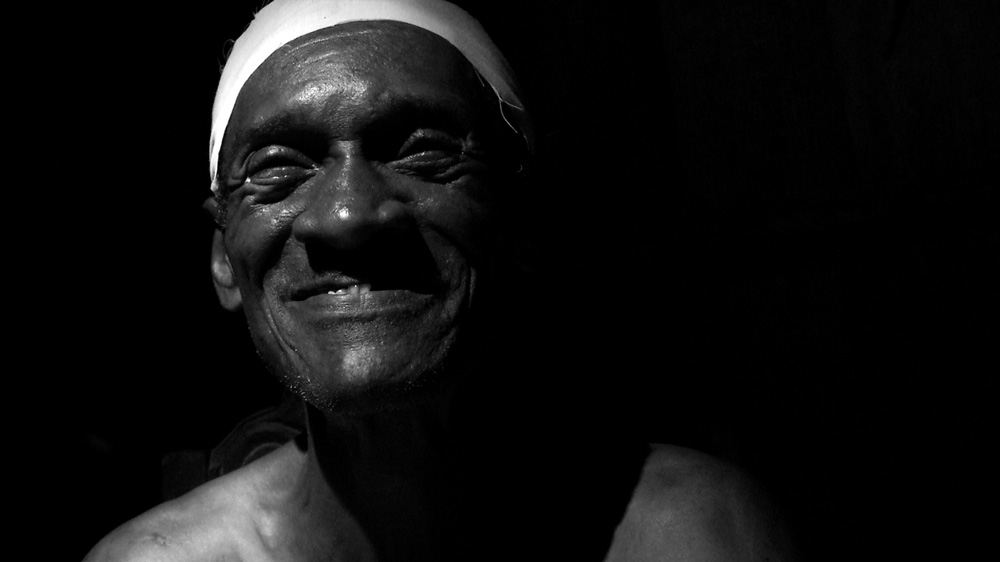
Centella is coming is Alberto´s portrait. Peasant in the Sierra Maestra, santero in an American and African descent Cuba. In a day we see and accompany the passage of Alberto on a trance to another Alberto. Coffee, leather, wood transcend to mysticism, while we move into the privacy of faith.
Agustín Peralta Lemes, 1988. Studied at the Film School Dodeca and Film Making in the ECU. In 2011 he entered in EICTV - Cuba, in Documentary, and recently graduated in July 2014. In 2010 directed the short documentary What I don`t want to understand. He was co-producer and photographer of the short To avenge May (2011), winner of the 10th International Film Festival of Uruguay Moviecenter, and the 12th International Festival of Film Schools of Uruguay. In 2011 directed the experimental short intimacies of a lonely train, and in 2012 the short documentary tobacco and cosmonauts. In 2013, directed two documentaries shorts: centella will come, winner of the 1st Detour Film Festival in Uruguay, and Best Photography in 15th IMAGO Festival, in Havana; and Cleine. His last work is his thesis, Notes about the absence, July 2014.

Galería Perdida
The blind don't see black, they see nothing
Film expérimental | 16mm | noir et blanc | 5:41 | Mexique, USA | 2015
This film marks an investigation into the halftone print. Specifically, the spherical and diamond pattern that makes up an image found commonly in offset printing. These tessellations form a corollary to the structure of language where each "dot" is akin to a phoneme. In linguistics, the collated phonemes make up a morpheme—what we can call a meaningful word. The dot in the halftone print functions much the same way. With these dots, the reach of an image is made possible, exploded and distributed for the masses. Its legibility is a consumable currency by being illustrative for accompanying texts. When enlarged, the text loosens its hinges on the atomized image. The dots establish a dominant vocabulary contingent only on one another. For The Blind Don`t see Black, They See Nothing, the poetics lie within the parts of a whole, hidden amidst a constituted body.
The artist collective Galería Perdida are known for their multidisciplinary practice that brings together an inquiry of traditional crafts and the absurd, typographical design with semantic operatives. Fundamental to their research are encounters with idiosyncratic found texts and humor, design principles and the moving image; these irrational sources form the basis of a sculptural vocabulary. The use of humor is just one of many interests that Galería Perdida pursue in their body of work. Textiles, dead languages, redundancy, negation, display and the gallery, glyphs, organic matter, and graphic design are among the multiple reference points. Their constellation of objects and situations formulate a place for these subjects to collide, interact, and push against one another while defining the decree that the production of an object is not a singular but collective act.
Carlos Pereira
Unruhe
Film expérimental | 16mm | couleur | 11:50 | Portugal, Allemagne | 2024
« Une étrange épidémie s'est récemment propagée Parmi la population, Si bien que beaucoup, dans leur folie, Se sont mis à danser. Ils ont continué jour et nuit, Sans interruption, Jusqu'à perdre connaissance. Beaucoup en sont morts. »
Carlos Pereira, né à Lisbonne, étudie la réalisation cinématographique à la Deutsche Film- und Fernsehakademie Berlin (DFFB). Ses films ont été projetés dans des festivals tels que Locarno, San Sebastián et Rencontres Internationales Paris/Berlin. Son film Slimane (2023) a remporté le Prix de la critique cinématographique allemande du meilleur court métrage. Son premier long métrage, Remote Islands, écrit lors d'une résidence à la Fondation Bergman sur l'île de Fårö, est actuellement en préproduction.

Carlos Pereira
Histórias de Fantasmas (Ghost Stories)
Doc. expérimental | hdv | couleur | 13:32 | Portugal, Allemagne | 2017
I. A storm in Berlin. Lightnings. The sound of thunders. II. Searching for a face in the dark. III. Inside an old Stasi building, a painter of ruins talks about being human.
Carlos Pereira (Lisbon, 1989) studied film directing in Lisbon (Escola Superior de Teatro e Cinema) and Barcelona (Escuela de Cine Bande à Part) and film studies in Stockholm (Stockholms Universitet). His films have been screened in festivals such as IndieLisboa, DocLisboa, Vila do Conde and Córtex and venues such as The Portuguese Cinematheque. Lives and works in Berlin, where he is as a member of the selection committee for Generation (Berlinale).

Carlos Pereira
Vulkan
Fiction expérimentale | mov | couleur | 6:2 | Portugal, Allemagne | 2021
Berlin, 2020. On that cloudy summer day by the lake, while observing something terrible, their bodies blocked with fear.
Carlos Pereira (1989, Lisbon) is a filmmaker and programmer. He is currently studying Film Directing at the Deutsche Film- und Fernsehakademie Berlin (dffb), having previously studied film in Lisbon, Barcelona and Stockholm. His films have been shown at festivals such as Rencontres Internationales Paris/Berlin, IndieLisboa, Doclisboa and Vila do Conde, and screened at venues such as Cité Internationale des Arts, Haus der Kulturen der Welt and Museum of Modern Art of Rio de Janeiro. He worked as a member of the selection committee for Sheffield DocFest and is a member of the advisory selection committee for Berlinale Generation.
Jonathan Perel
LAS AGUAS DEL OLVIDO
Doc. expérimental | hdcam | couleur | 9:0 | Argentine | 2013
The poems to death are a deception. Death is death. The river was filled. Ghostly extensions. A grave in the air was dug, in the course of the wide river, where there is no stricture. All sank into the deepest shadows. A river as grave. What is the color of this water? How to swim or sail in the darkness of our history? Hairs are still crossing the waters, remain under a poisonous sky. The skin, river sand. In a glass are collected every day, bodies. We drink water of forgetfulness. There is fog.
Born in 1976, lives and works in Buenos Aires. In 2013 he premieres Tabula Rasa, his third feature film at BAFICI 15° Panorama Selection, and his last short documentary Oblivion Waters at the Official Competition of FIDBA. In 2012 he premieres his second documentary feature 17 monuments at BAFICI?s Official Selection. In 2011 he premieres his documentary short Los Murales at BAFICI 13°. In 2010 he premiered El Predio, his first feature film, at the Cinema of the Future Competition of BAFICI 12°. He also directed the short documentaries 5 (five) (2008, Official Competition BAFICI 10°) and The Murals (2011, BAFICI 13°). Two times awarded with the Metropolitan Fund for the Arts in Buenos Aires. His films have been screened in numerous international film festivals, such as: FIDMarseille (France); Rencontres Internationales Paris/Madrid/Berlin at Palais de Tokio & at Haus der Kulturen der Welt; Festival Internacional del Nuevo Cine Lationamericano, La Havana (Cuba); Semana de Cine Experimental de Madrid (Spain); Cine//B (Chile); Festival Cinematográfico Internacional del Uruguay; Óptica, Gijón Festival Internacional de Video Arte (Spain); FIACID Festival Iberoamericano de Cine Digital (Perú); La Sudestada, Quinzaine de culture et Cinéma Argentin à Paris (France).

Jonathan Perel
TOPONIMIA
Documentaire | 4k | couleur et n&b | 82:0 | Argentine | 2015
De la toponymie, branche de la linguistique, à l’espace politique, les liens peuvent être inattendus. Telle est l’entreprise de dévoilement de nouveau fi lm de Jonathan Perel, qui fait de son cinéma un outil d’exploration et de documentation précise des traces des dictatures passées en Argentine. Nous sommes dans la province de Tucuman, au nord de l’Argentine, région emblématique où fut signé en 1816 le premier acte d’indépendance de l’Amérique du Sud, et où se déroula l’« Opération Indépendance » dès 1974, répression sanglante contre la guérilla. Répression qui eut pour auxiliaire singulier l’urbanisme. Comment ? Par l’établissement d’une série de villages construits à neuf selon un schéma directeur identique, et dont la structure porte le projet politique. Perel déplie systématiquement ces espaces, les après les autres : la place, l’inscription de sa devise, le monument dédié à celui auquel elle doit son nom, combattants morts dans la lutte contre la guérilla, l’église, sans omettre l’ordinaire de ses logements et de ses rues. Inquiétante répétition que dévoile la rigueur du dispositif, en quatre chapitres eux aussi à la structure identique, ouvrant chaque fois sur les documents officiels fondateurs de ces villages, et fi lmant le morne des lieux, aujourd’hui. Systématisme d’où sourd l’effroi du projet, d’un lieu à l’autre, mené à rythme de métronome, dessinant le quadrillage du paysage, ses survivances et son épuisement.
Jonathan Perel, born in 1976, lives and works in Buenos Aires. He attended a degree in Arts at the Faculty of Philosophy and Letters (University of Buenos Aires). He directed the feature films Toponimia (2015), Tabula Rasa (2013), 17 Monumentos (2012) and El Predio (2010), and the short films Las Aguas del Olvido (2013), Los Murales (2011) and 5 (cinco) (2008). Two times awarded with the Metropolitan Fund for the Arts, his films have been screened and awarded in numerous international film festivals, such as: FIDMarseille (Prix Camira), Viennale, BAFICI, YIDFF Yamagata, First Look at Museum of the Moving Image New York, Porto/Post/Doc, Underdox, Rencontres Internationales Paris/Madrid/ Berlin at Palais de Tokio (France) & at Haus der Kulturen der Welt (Germany); Festival Internacional del Nuevo Cine Lationamericano La Havana.
Jonathan Perel
TABULA RASA
Documentaire | hdcam | couleur | 42:0 | Argentine | 2013
A few architectonic shots, graphics of abstract shapes that slowly turn into recognizable images, pictures of facades, and descriptive texts. Perel goes back to the lot were the Clandestine Center of Detention, Torture, and Extermination ?the ESMA? once operated. But this time, his approach is different. Not only because it goes into it from a physical perspective that is different from its entry into social imaginary, but also because his approach aims to contemplate not so much the building of a new place, but the destruction of space. This annihilation, Perel seems to be saying, tears down a lot more than just columns, cement, and metal beams. Between the River Plate and a city that gives his back and misses out on everything that happens, Tabula Rasa takes less than an hour to rescue a fraction of the urban landscape (the back of the Navy School) that remains anonymous to most citizens who pass through that fraction of the Lugones Avenue. And once it recognizes it, it forces us to rethink the connections between memory, space and society.
Born in 1976, lives and works in Buenos Aires. In 2013 he premieres Tabula Rasa, his third feature film at BAFICI 15° Panorama Selection, and his last short documentary Oblivion Waters at the Official Competition of FIDBA. In 2012 he premieres his second documentary feature 17 monuments at BAFICI?s Official Selection. In 2011 he premieres his documentary short Los Murales at BAFICI 13°. In 2010 he premiered El Predio, his first feature film, at the Cinema of the Future Competition of BAFICI 12°. He also directed the short documentaries 5 (five) (2008, Official Competition BAFICI 10°) and The Murals (2011, BAFICI 13°). Two times awarded with the Metropolitan Fund for the Arts in Buenos Aires. His films have been screened in numerous international film festivals, such as: FIDMarseille (France); Rencontres Internationales Paris/Madrid/Berlin at Palais de Tokio & at Haus der Kulturen der Welt; Festival Internacional del Nuevo Cine Lationamericano, La Havana (Cuba); Semana de Cine Experimental de Madrid (Spain); Cine//B (Chile); Festival Cinematográfico Internacional del Uruguay; Óptica, Gijón Festival Internacional de Video Arte (Spain); FIACID Festival Iberoamericano de Cine Digital (Perú); La Sudestada, Quinzaine de culture et Cinéma Argentin à Paris (France).

Jonathan Perel
5-T-2 Ushuaia
Doc. expérimental | 4k | couleur | 4:0 | Argentine | 2016
Adolfo Scilingo was the only military officer to confess the dictatorship crimes. Among the details he gave of the way the genocide worked, throwing prisoners from planes into the water to their death, Scilingo specifies the model that was used in the flights he participated in: an Electra. Of the eight Electras that belonged to the Argentine Navy, five of them were bought in 1982. Only the three bought in 1973 could have been used in the flight that Scilingo describes. Those three Electras are at present in Argentina. This film of Jonathan Perel searches cartographically the traces of those planes.
Jonathan Perel, born in 1976, lives and works in Buenos Aires. He attended a degree in Arts at the Faculty of Philosophy and Letters (University of Buenos Aires). He directed the feature films Toponimia (2015), Tabula Rasa (2013), 17 Monumentos (2012) and El Predio (2010), and the short films Las Aguas del Olvido (2013), Los Murales (2011) and 5 (cinco) (2008). Two times awarded with the Metropolitan Fund for the Arts, his films have been screened and awarded in numerous international film festivals, such as: Viennale, IFFR Rotterdam, FIDMarseille (Prix Camira), BAFICI, YIDFF Yamagata, Rencontres Internationales Paris/Madrid/Berlin (Palais de Tokio & Haus der Kulturen der Welt), First Look (Museum of the Moving Image), Porto/Post/Doc, Underdox, La Havana.

Miguel Peres Dos Santos
Voices
Film expérimental | hdv | couleur et n&b | 18:48 | Portugal, Pays-Bas | 2015
That one is able to speak does not mean that one has a voice. In Voices, Miguel Peres do Santos constructs a comparison between the collective consciousness and a censored archive. Just like in our own lives, we “choose” to keep what we do not want to remember as far from our consciousness as we unconsciously can; the same method we apply on public archival material that we would rather not be confronted with as a societal whole. At the television archive of Beeld and Geluid, Miguel Peres dos Santos and Sharelly Emanuelson found a significant amount of footage relating to migration from the public television memory of the Netherlands. In it, the essence of the Dutch relation to the alleged “other” can be viewed. In Voices Peres dos Santos uses this material to try to find out if the perceived voiceless were really silent, and if those who do not have a voice today are only mute to the ones who refuse to listen.
Miguel Peres dos Santos (Lisboa, 1976) is an independent artistic researcher graduated in his MA in 2012 from the Royal University of the Arts in The Hague, The Netherlands. His work is frequently screened in The Netherlands, but also in Belgium, France, Denmark, Norway, Portugal and the U.S. He lectured in 2012 for the University College Leiden, and is a policy advisor for Foundation Focus. He currently lives and works in The Hague.
Dan Perez, Benjamin Klintoe
Cantine
Fiction expérimentale | hdv | couleur | 32:16 | France | 2013
Ismaël est venu en France dans l'espoir de trouver le pardon. Ex-prisonnier, il a quitté les Etats-Unis pour Paris, où il pense trouver calme et paix. Il atterrit finalement dans une zone sinistrée de la banlieue parisienne. Il déambule à la bordure du périphérique et, parfois, il tente d’oublier ses démons dans un sommeil trouble et agité. Des souvenirs de son enfance viennent le hanter alors que la vie en France semble être de plus en plus difficile, entre contrition et abandon.
Dan Perez et Benjamin Klintoe sortent tout juste de la prestigieuse Ecole Nationale Supérieure des Arts Décoratifs de Paris. Ils pratiquent la vidéo ou la photographie dans une pratique régulière et personnelle.

Jeffrey Perkins
George - The Story of George Maciunas and Fluxus
Documentaire | hdv | couleur et n&b | 120:0 | USA | 2018
An epic journey with many angles and perspectives, George Maciunas (1931-1978) was the founder of Fluxus, a radical avant-garde art movement of the 20th century. The film starts in Lithuania before moving to New York, where émigré Maciunas, became an exceptional artist with roots in the Soviet avant-garde and Dada. The film uncovers his complex character and distinctive practice, expounding the rebellious creativity that imitated a whole international movement of artists, composers, designers and poets in the 1960s and 70s, and whose radical legacy powerfully endures. The film’s playful editing evokes a key tenet of Fluxus, where process is more meaningful than end product. From developing the first artist-owned lofts in SoHo, New York, to his attempt to realize a utopian society on a desolate island in the Caribbean, Maciunas was an uncompromising visionary with a rebellious sense of humor. What emerges in the film, is a kaleidoscopic, often contradictory but always revealing portrait of Maciunas' bold and tragic life. Archival and original interviews with major artists and commentators, including Mekas and Yoko Ono, create a scintillating portrait of underground New York; where radical art, gender diversity and encroaching gentrification existed in tandem.
Nicknamed 'the Fluxus cabdriver' by Nam June Paik, Jeffrey Perkins is an artist and filmmaker who has worked in relative obscurity for over five decades, having collaborated in the 1960s with Fluxus artists including George Maciunas, Yoko Ono, and Alison Knowles. Perkins co-founded the multi media group The Single Wing Turquoise Bird, which was the premier rock and roll concert light show in the sixties. Until recently he was best known for his light projection performances and his Movies for the Blind, based on sound recordings of interviews with passengers in his cab. He completed the feature documentary portrait of George - the story of George Maciunas and Fluxus in 2018 and his feature The Painter Sam Francis in 2008. Other films of his hand are Fluxus Film #22: Shout (1966), Stan Brakhage on Gregory Markopolous (1998) and Meet the Kuchar Brothers (1999). Jeff Perkins has been associated with Anthology Film Archives in New York since 1986, and has produced several programs and performances there since then.
Jenny Perlin
A Landing
Doc. expérimental | 4k | couleur et n&b | 9:5 | USA | 2025
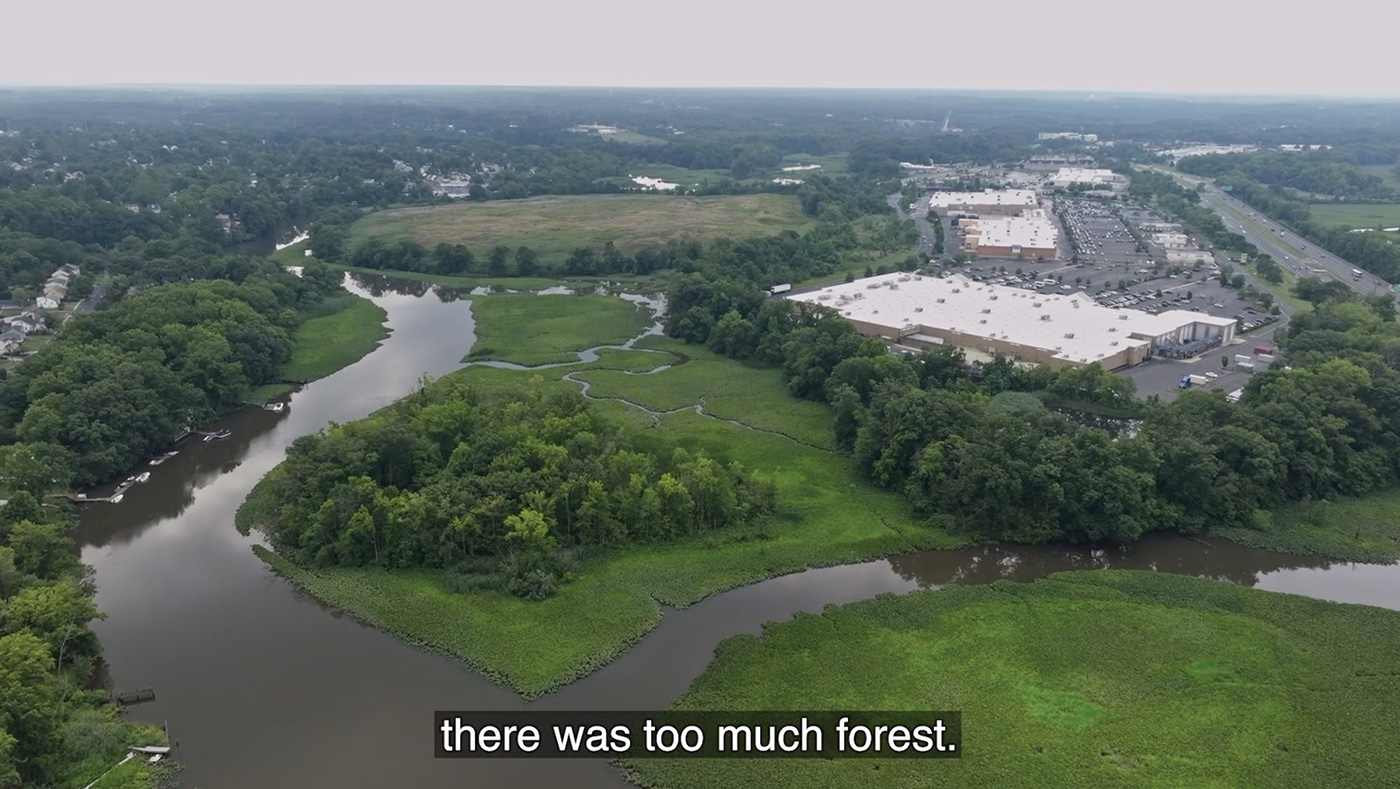
This short film is about the first manned balloon flight in the United States, in 1793, when the country was only 17 years old. The aeronaut (balloonist) for this adventure was the celebrated Frenchman Jean-Pierre Blanchard. The idea that the 18th century United States was empty territory to be overtaken by settlers was, in part, supported by the new technology of balloon flight. The film carries us along with the story of Blanchard’s famous journey but by the end we find ourselves in contemplation of a five-hundred year old oak tree called the Clement Oak that sits, damaged from climate-catastrophic storms, behind a Walmart Supercenter in New Jersey. Blanchard’s flight is described in Journal of my 45th Ascension, Being the First Performed in America, on the 9th of January 1793.
Jenny Perlin’s work in film, visual art, and writing engages documentary traditions, incorporating innovative stylistic techniques to engage issues around truth, misunderstanding, and personal history. Her projects look closely at ways in which social machinations are reflected in the fragments of everyday life. Perlin’s work has been shown in numerous exhibitions and film festivals, including at the Whitney Museum of American Art, the Guggenheim Museum, the Museum of Modern Art, the New York Film Festival, the Berlin Film Festival, the Rotterdam Film Festival, and others. In addition to her work as an artist and educator, Perlin is director of?The Hoosac Institute, a platform for text and image focusing on works that exceed or challenge conventional disciplinary narratives.?
Jenny Perlin
Possible Models
Animation | 16mm | | 10:45 | USA | 2004
Le film en 16mm fait à partir d'images fixes animées regarde la tentation du capitalisme d?acheter le paradis par trois "études de cas": les Mall of America qui échoua à vivre à la hauteur de son potentiel comme complexe utopique ; le Mall of Dubaï en tant que nouveau super galerie marchande ; et le ??freedom ship??, flottant en autarcie, une commune/communauté basée sur une galerie marchande qui fait des cercles autour des continents. Jeffrey Uslip, The Project, New York, July, 2004
Les films, vidéos et dessinées 16mm de Jenny Perlin travaillent pour et contre la tradition du documentaire, incorporant des techniques stylistiques pour mettre l?accent sur des questions de vérités, d?incompréhensions et d?histoires personnelles. Les films de Perlin ainsi que ses vidéos ont gagné de nombreux prix dans beaucoup de festivals, ont été exposés dans des galeries et musées aussi bien aux USA qu?ailleurs. Perlin est actuellement présentée à la Annet Gelink Gallery à Amsterdam, aux Pays-Bas. Un livre de l?artiste sera publié en 2006 par D.Marzonan à Berlin, mais elle a aussi d?autres publications dans de nombreux catalogues d?expositions récentes.