Catalogue > Faire une recherche
Résultats pour : Tout le catalogue

Mike Olenick
The Cure
Fiction expérimentale | hdv | couleur | 19:35 | USA | 2017
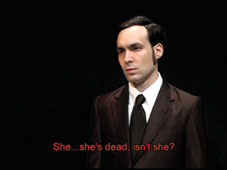
A mom cries, photos fly, cats spy, and bodies collide in this sci-fi soap opera about people who are desperately searching for ways to cure their fears of loneliness. Dad is dying, mom can’t sleep, and Nancy is determined to find a photograph so she can forget something that she saw. Linda relives a past trauma and fears what might happen while she is away from home. Meanwhile, her boyfriend Mark entertains a mysterious stranger, who is secretly conducting a deadly experiment.
Mike Olenick’s perverse films focus on memories, reproduction, appropriation, transformation, and forbidden desire. His films have screened at Slamdance, Fantasia International Film Festival, Fantastic Fest, Palm Springs ShortFest, Hamburg International Short Film Festival, and the World Wide Video Festival; streamed on MUBI; and won awards at the Slamdance, Ann Arbor, Big Muddy, and Chicago Underground film festivals. For nearly fifteen years Mike was a video editor in the Film/Video Studio residency program at the Wexner Center for the Arts. He’s worked as an editor on projects for Guy Maddin (including “Keyhole” and “The Forbidden Room”), the Quay Brothers, Sadie Benning, and Lucy Raven, among others. Since 2003 he has edited numerous films for Jennifer Reeder including “A Million Miles Away,” which screened at Sundance. He also edited her feature “Knives and Skin,” which premiered at the Berlin Film Festival and is distributed by IFC Midnight. Projects he has worked on as an editor are in the collections of MoMA, the Guggenheim, the Whitney, and the Tate. Mike has an MFA in Photography from the Cranbrook Academy of Art. In 2016 he was awarded a fellowship at the inaugural Shudder Labs.
Mike Olenick
For a Blonde...
Vidéo expérimentale | dv | couleur | 5:57 | USA | 2005
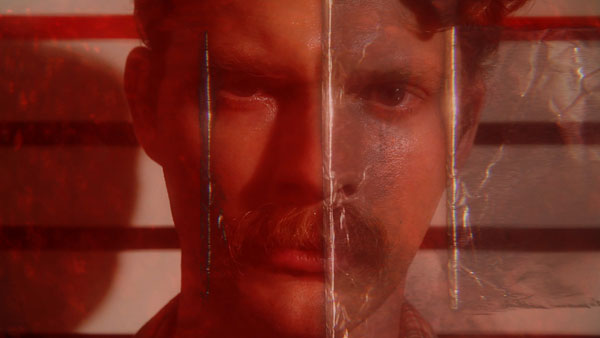
"For a Blonde... For a Brunette... For Someone... For Her... For You..." est une vidéo réalisée dans le style d'un karaoke qui reprend une scène culte du film d'Alfred Hitchcock "Vertigo" ("Sueurs Froides"). L'artiste joue le rôle de John Ferguson au moment où il redécouvre sa Madeleine. Les sous-titres "Karaoke" permettent au spectateur d'interpréter le rôle de Kim Novak et ainsi jouer la scène avec l'artiste.
Mike Olenick (né en 1978) est réalisateur de vidéos, photographe et monteur. Ses créations réunissent souvent des situations fictives de sa propre vie à des séquences réelles empruntées au cinéma et à la culture pop. Les vidéos et photographies qui résultent de ce travail mélangent faits et fiction; comédie et tragédie; amour et mort. Ses oeuvres ont été présentées au Ann Arbor Film Festival, The Oberhausen Film Festival, VIPER Basel, Cinematexas, The Brooklyn Underground Film Festival et au World Wide Video Festival. Actuellement, Mike travaille comme monteur au Art & Technology Studio au Wexner Center for the Arts, où il a travaillé sur des projets en collaboration avec, notamment, Jennifer Reeder, Sadie Benning, Deborah Stratman, Andrea Fraser, Joe Sola and Josiah McElheny. Il enseigne également la production vidéo au Columbus College of Art and Design. Il a obtenu son MFA (avec une spécialisation en Photographie) à la Cranbrook Academy of Art et son BFA d'études média au Columbus College of Art and Design.
Mike Olenick
Red Luck
Fiction expérimentale | | couleur | 25:41 | USA | 2013
As a sunny day comes to an end, a handful of seemingly disparate characters converge in this experimental psycho-sexual thriller. Something bad is blowing in the wind and it?s not a good day to go out looking for love. Weeds are growing, the sun is setting?and Red Luck is coming. You had better do the things that you dream.
Mike Olenick is a Columbus based filmmaker and artist interested in photographs, movies, memories and murder. His films alternate between epic found footage edits and perverse live-action narratives that take the form of karaoke videos, space operas and psycho-sexual thrillers. He has exhibited internationally in numerous festivals and his films have won awards at Ann Arbor and Cinematexas. He recently established the Museum of Fauxtography to archive and exhibit photographs that appear onscreen in movies.
Ciclón L.t Olivares, Cheto Castellano
Kiltr@
Film expérimental | hdv | couleur | 24:54 | USA, Chili | 2012
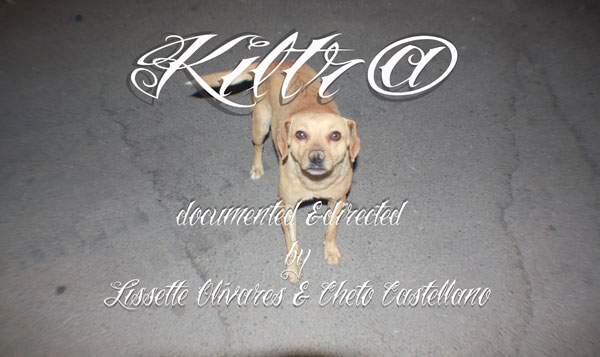
Kltr@ is an emotive journey in search of alternate kinship approaches between people and street dogs. Through a series of interviews with artists, cultural institutions, and their companion species, as well as primary footage of dogs who live beyond the borders of domestic life in Santiago de Chile, we explore the co-evolutionary relationships between kiltr@s and ?humans?, looking for clues about how they help each other to survive. In its everyday use Kiltro is a term that codifies species and racial hybridity and that translates as mutt, mongrel, or mixed breed. Kiltro is also the most common term used to classify the roughly half a million ?homeless? or street dogs found across Chile. In this project we hope to resuscitate Kiltr@ as a decolonization term, that resists against colonial and modern notions of purity across nature, culture, race, ethnicity, class, gender and sexuality, and that reminds us of our co-constituted and co-evolutionary subjectivities. For the past decade, feminists, anarchists, and artists have been primary agents in rescuing kiltr@s and resisting against the militarized extermination policies that threaten their survival; here we follow a few of them.
Lissette Olivares and Cheto Castellano are the co-founders of Sin Kabeza Productions, a collective of activist researchers that work as a symbiotic team. Their name translates as ?without a head? and reflects the collaborative and non-individual aspect of their collective production. The work they do consists of transmedia storytelling, where they create hybrid cultures that illustrate their concerns. Told from a post-colonial, feminist and ecological perspective, these stories work as models for envisioning a world where political and cultural hierarchy, as well as rationality, are abandoned in favor of a new, creative capacity to respond to the complex environmental and cultural challenges facing our contemporary world.
Jacco Olivier
Calling
Animation | dv | couleur | 1:9 | Pays-Bas | 2005
Dans cette animation des scènes d?horreur et des scènes de thriller typiques se succèdent : un corbeau, un téléphone qui sonne sans cesse, des escaliers qui craquent, une ombre passe en glissant, un rideau qui flotte dans le vent et des gens qui marchent dans la rue tels des zombies. Tous ces éléments semblent se retrouver dans une fin surréaliste. Une ombre bouge derrière la fenêtre d?une maison qui flotte. Est-ce que ce que nous avons vu plus tôt pouvait être la visualisation de ses pensées ? Ceci n?est probablement qu?une des diverses histoires possibles. Chaque spectateur peut construire une histoire différente grâce aux éléments disponibles.
Jacco Olivier
Comfort
Vidéo expérimentale | dv | couleur | 1:13 | Pays-Bas | 2005
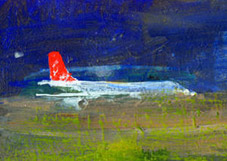
L'animation 'Comfort' nous éclaire sur la manière de travailler de Jacco Olivier. L'histoire qu'il a en tête au départ, peut évoluer en fonction des idées qui peuvent se dégager pendant le processus de création. De cette façon, une animation peut éventuellement se construire à partir de diférentes histoires. Les différentes intrigues sont reliées grâce à des images qui se font écho : de la queue rouge d'un Boeing à l'arrêt, au logo rouge de Vodafone, et de là à un téléphone qui sonne. l'animation semble également s'auto-examiner lorsque la caméra plonge en profondeur et retires les couches successive d'un tableau une par une, pour ensuite ressortir par la couche supérieure. On reprend le fil de l'histoire sans effort. Contrairement à ce que le titre suggère, ce qui prédomine dans ce travail est une atmosphère de peur et d'oppression.
Erik Olofsen
Public Figures
Film expérimental | 0 | couleur | 10:22 | Pays-Bas, Belgique | 2007
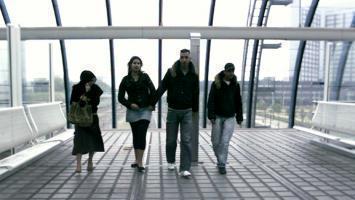
Le film fut filmé en utilisant une camera digitale a haute vitesse depuis un métro arrivant dans une gare très fréquentée. Le résultat est un plan sans fin des personnes sur un quai passant au ralenti. Le mouvement tranquille de la caméra et le calme des gens dépeints donne de la place pour une chaîne de pensées et d'associations hypnotiques. Le quai semble avoir été transformé en scène sur laquelle les gestes quotidiens et simples des gens se changent en performance.
Erik Olofsen est né aux Pays-Bas en 1970. Ses installations ont été exhibé dans plusieurs pays et mêlent différents supports tels que la sculpture, des éléments architecturaux, de la vidéo, des photos et du son. Il a aussi introduit de nouvelles technologies dans son travail d'artiste, entre autres, des robots industriels et cameras digitales à haute vitesse. Il a été résident à la Rijks Académie à Amsterdam, au Centre Chinois d'art Européen a Xiamen et au Bilbao Arte. Ses prix comprennent le prestigieux grand prix hollandais Prix de Rome pour l'installation "Remotly Here", le prix international espagnole Vidalife pour son oeuvre "Divine methods/ Hidden motives" et le prix Media Forum au Festival International du Film de Moscou pour sa vidéo "In Places".
Lisette Olsthoorn
Ghost Workers
Doc. expérimental | 4k | couleur | 26:23 | Pays-Bas | 2024
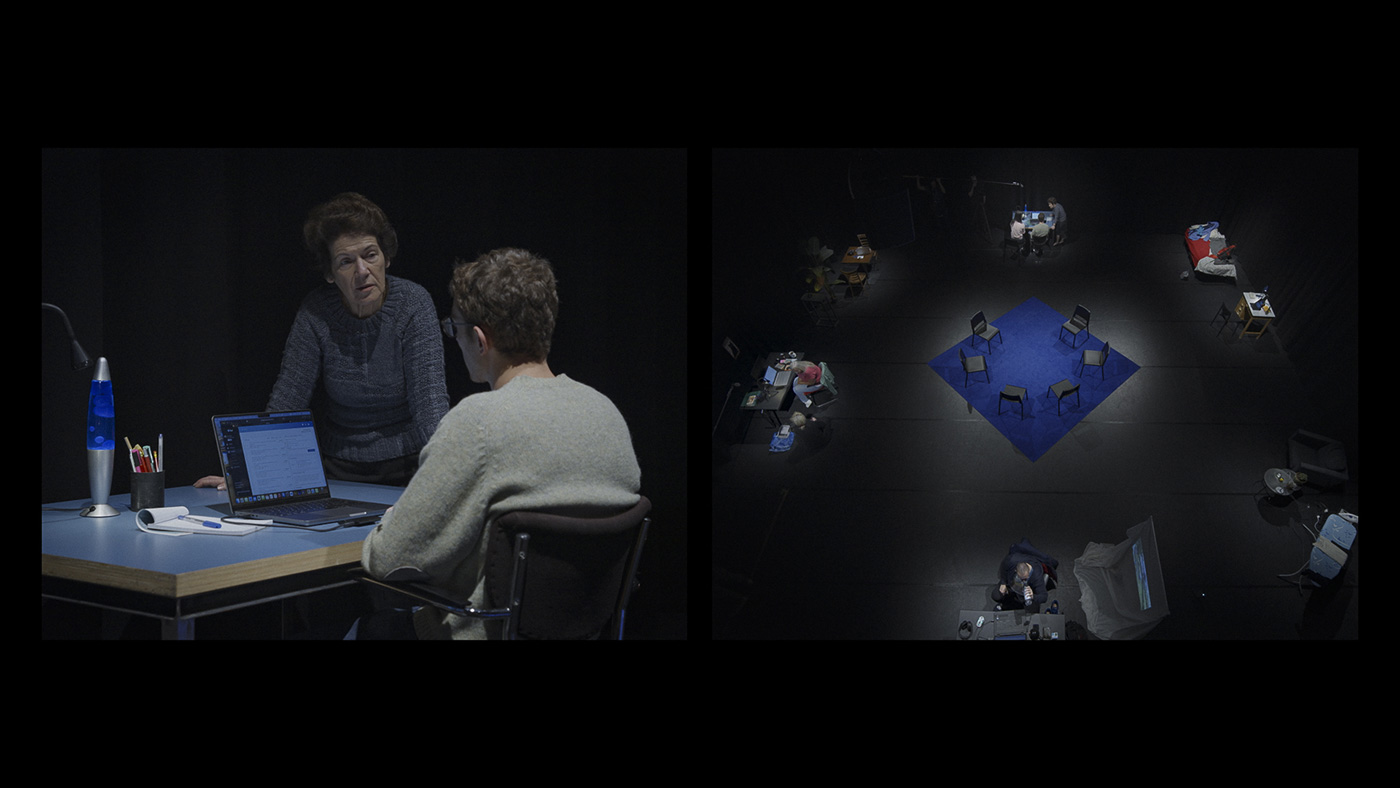
Ghost Workers is a cinematic research project into the people conducting the often hidden labor necessary to make artificial intelligence work. Working from home, not being recognized as a worker by the platforms that they work for and being misunderstood by family and friends all together creates strong feelings of isolation. Therefore, the filmmaker invited six workers from across Europe to share their work experiences with her and with each other. Focusing on the theme of isolation and recognition as a 'real worker,' the film engages in a collective conversation about this type of work.
Lisette Olsthoorn got her BA in writing and visual arts at Gerrit Rietveld Academy, followed by an MA at Dutch Film Academy (both Amsterdam). She gained script development skills from Binger Institute (Amsterdam) and Franz Rodenkirchen (Berlin) and worked as a script supervisor for renowned Dutch film directors Nanouk Leopold and Paula van der Oest. Her work concerns hybrid film and inventive research. Being intrigued by everyday speech and gesture, her work often evolves around staging seemingly random interactions between people, revealing layers of common experiences and political tensions. For her re-enactments she works both with the persons the speech and experiences originated from as well as occasionally with actors, yet always staying close to the reality she has drawn from. For her cinematic research into precarious labour titled Fantasies on how to Strike she was a 2022 participant at SIC SoundImageCulture (Brussels). The first film made as part of this ongoing project was exhibited and acquired by the Zeeuws Museum (Middelburg, NL). In 2023 she was invited by Erasmus University (Rotterdam) to conduct cinematic research on the topic of ghostwork. From 2024 she is collaborating with editor Kersti Grunditz Brennan (LUCA School of Arts, Brussels, BE) for In This Together, her film on Uber cab drivers. In 2025 / 2026 she is a participant of ReCENTR Europa Lab (Leiden University, KU Leuven, Bologna University) on multimodal research practices. From 2026 she conducts PhD research on collaborative film practices titled Cinematic explorations at work (LUCA School of Arts / KU Leuven, BE).
Olta
From Dawn to Dawn
Vidéo | 4k | couleur | 69:45 | Japon | 2023
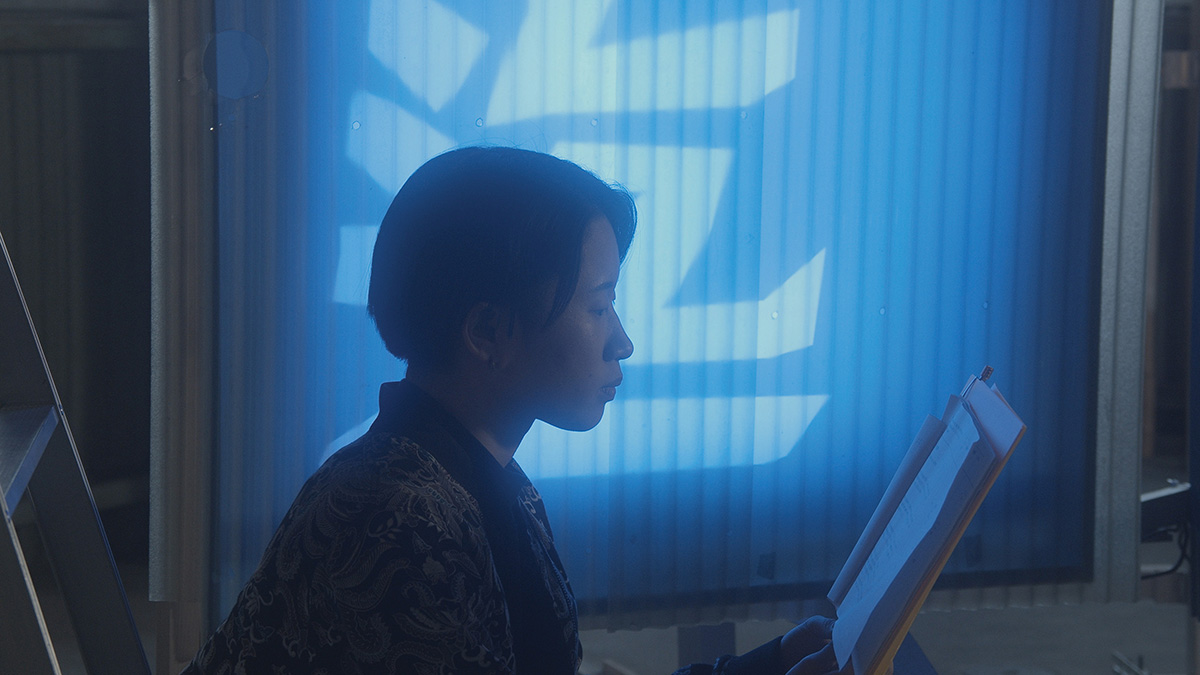
In downtown Tokyo, the author encounters a variety of events. The Tokyo Skytree has brought big changes to this urban landscape, which is now packed with condominiums. Its inner workings remain, built on racial and economic divisions and a history of many people’s hardships. It was learned that the 1911-1930 construction of the Arakawa spillways saw the river enormously expanded by human hands, particularly Korean and Chinese immigrant workers. Many Koreans were then murdered as false rumors spread in the immediate aftermath of the Great Kant? Earthquake of September 1, 1923. For this work, Olta created a script that interwove recreations of interactions experienced in the area with stories and records from literary figures, folklorists, and film directors, including Nagai Kaf?, Shaku Ch?k?, Takehisa Yumeji, and Ozu Yasujir?. The set references the sketches collected by Kon Wajiro of temporary barrack structures built in the wake of the Great Kant? Earthquake, as well as the stage design by Murayama Tomoyoshi for a production of Georg Kaiser’s “From Morning to Midnight”. “From Morning to Midnight” was staged at Japan’s first dedicated theater for “Western-style” shingeki plays, Tsukiji Sh?gekij?, which was built in 1924, the year after the earthquake.
An artist collective formed in 2009. Members are Toru Inoue, Takafumi Saito, Yoshiro Hasegawa, MEGUNINJA, and Jang-Chi, who focus on collective action and the communication that takes place in it, presenting their work in a variety of formats including painting, performance, and video. Recent exhibitions include Aomori Museum of Art (2019), Busan Biennale (2016), 21st Century Museum of Contemporary Art, Kanazawa (2014). Major performances include KAAT Kanagawa Arts Theatre (2021, 20222), Rohm Theater Kyoto (2020), Lilith Performance Studio (Sweden, 2015), and Seoul Marginal Theater Festival (Korea, 2014). In 2023 and 2024, they plan to present a work commissioned by YPAM(Yokohama International Performing Arts Meeting) in Yokohama and Rohm Theater Kyoto.

Arianne Olthaar
Gesamtschule
Film expérimental | 16mm | couleur | 5:23 | Pays-Bas | 2016
Images of a comprehensive school in West Germany that was built between 1972 and 1978. At the time it was very modern and progressive, both in the way of its education as well in its interior design. An example is the integrated disco in the cellar where up untill today schoolchildren can dance during their lunch break.
Arianne Olthaar (1970, Netherlands) is making experimental films, photographs and miniature models. Her work has a strong focus on the once-luxurious interiors of public spaces that were built in the 1970s and 80s, such as primate enclosures, dining cars, hotel nightclubs, discotheques, a school interior. Interiors that once represented an explicit modern luxury but nowadays have an aura of faded glory and are increasingly disappearing by renovation or demolishment. Her work has been presented in a variety of exhibitions as well as numerous international film festivals, including Cinematexas; Media City Film and Video Festival, Windsor; International Short Film Festival Oberhausen; EMAF Osnabrück; New York Film Festival; Onion City Experimental Film and Video Festival, Chicago; VIDEOEX; Zürich, International Film Festival Rotterdam; Rencontres Internationales, Paris/Berlin.

Arianne Olthaar
Hotel Forum
Vidéo | hdv | couleur | 9:30 | Pays-Bas | 2016
The film is inspired by the once huge and luxurious hotels in the former Eastern Bloc designed in the 1970s and 80s. In the meantime their glamour is considered out of date and most of the hotels have been shut down, renovated or demolished.
Arianne Olthaar (1970, Netherlands) graduated as a painter from the Hagues? Royal Academy of Art in 1992. She is making experimental films, photographs and miniature models. Her work has a strong focus on the once-luxurious interiors of public spaces, built in the 1970s and 80s (primate enclosures, dining cars, hotel nightclubs, discotheques, a school interior). Interiors that once represented an explicit modern luxury but nowadays have an aura of faded glory and are increasingly disappearing by renovation or demolishment. Her work has been presented in a variety of exhibitions as well as numerous international film festivals, including Cinematexas; Media City Film and Video Festival, Windsor; International Short Film Festival Oberhausen; European Media Art Festival, Osnabrück; New York Film Festival; Onion City Experimental Film and Video Festival, Chicago and International Film Festival Rotterdam.
Jonathan Omer Mizrahi
LUCKY EMBER
Film expérimental | hdcam | couleur | 41:0 | Israel, Allemagne | 2022
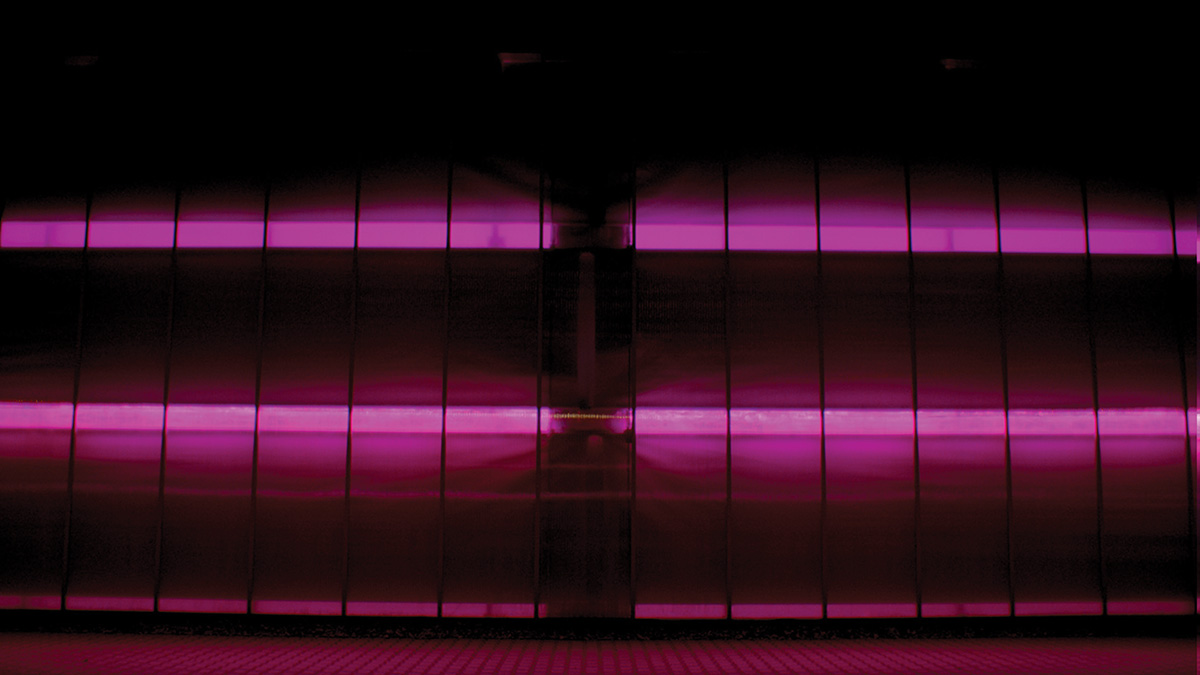
A reconstructed ritual from Georges Méliès’s ?Astronomer's Dream” resurrects the first film studio as a celestial projection of the greenhouse effect.
Jonathan OM is an artist, curator and researcher working primarily in video art and film. OM explores cultural images and their relation to power with artistic projects that transpire at the encounter of creativity and emergency. OM participated in film festivals, exhibitions and screenings in various art spaces including Centre for Contemporary art (CCA), (Tel Aviv ISR-PS) IKOB Museum of Contemporary Art (Eupen, BE), European Media Art Festival (EMAF), among others. Besides that, OM was an artist in residencies in Germany, Britain, Austria, Israel, Greenland, and Denmark.
Igwe Onyeka
A Radical Duet
Film expérimental | 4k | couleur et n&b | 28:47 | Royaume-Uni | 2023
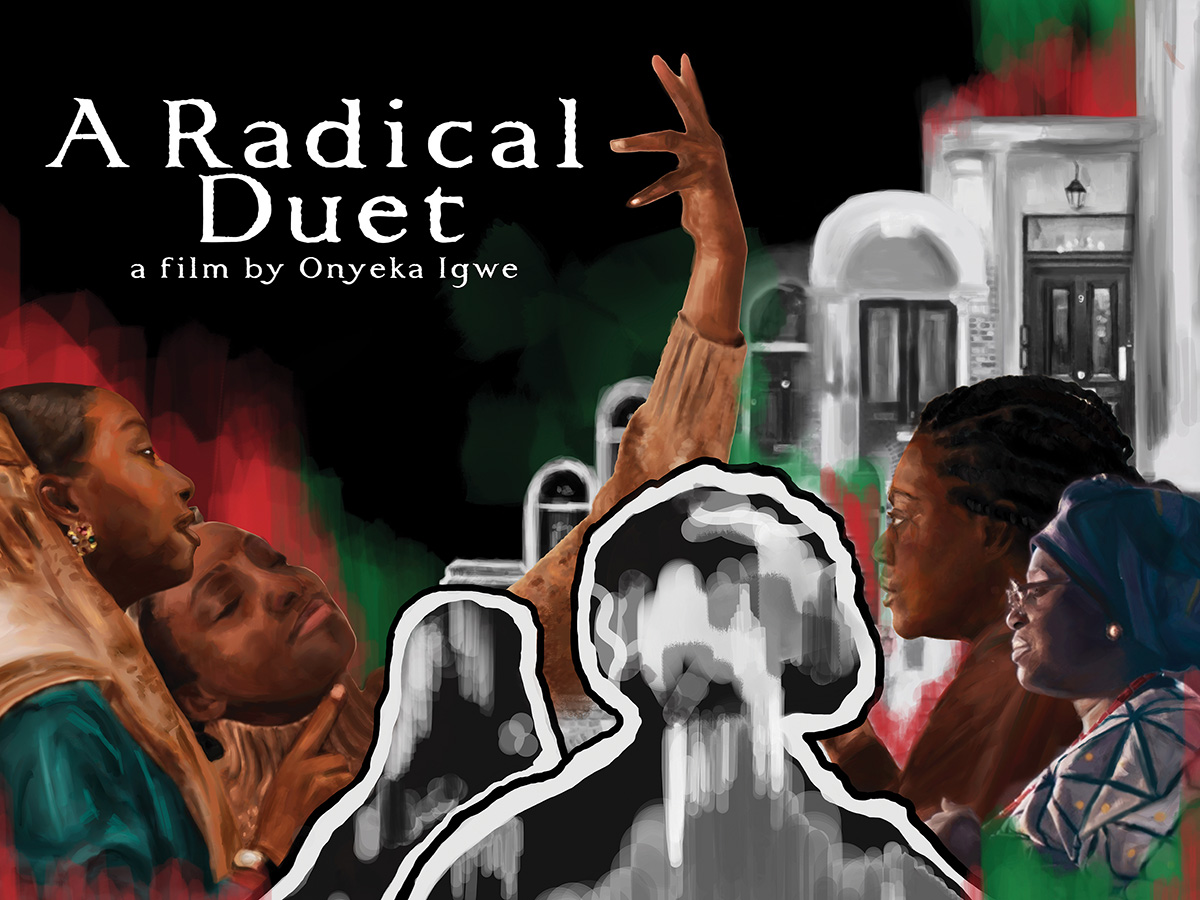
1947 London was a hub of radical anti-colonial activity. International intellectuals, artists, and activists like Funmilayo Ransome-Kuti, Sylvia Wynter, C.L.R. James, Kwame Nkrumah, and George Padmore were all in London at the eve of the end of British colonialism. Individually, they were agitating for their respective countries' national independence, but did they meet? And if they all did, what did they discuss? What did they conjure?

Juanita Onzaga
The Jungle Knows You Better Than You Do
Doc. expérimental | 4k | couleur | 20:20 | Colombie | 2017
Colombia is a land of ghosts. Two siblings roam these mystical landscapes in search of their dead father`s spirit. Their journey takes them from Bogota to the Colombian jungle, through realms of thought and deep into their haunted dreams. Here they will find some answers and attract unexpected company.
Juanita Onzaga is a Colombian-belgian film director and cinematographer playing with hybrid forms between the fiction, the documentary and the experimental. Within her narrations she touches the importance of memory, death and imagination, creating tales that reflect different ways of perceiving reality within strong political contexts. We wander in dreams, jungles and cities surrounded by spirits. Marrying this way a sense of emptiness in realism in an intimate way with a quest for mysticism, where the invisible gives more answers and meanings than the physical world. Her short film The Jungle Knows You Better Than You Do won the International Jury prize for best short film generation 14plus at Berlin International Film Festival 2017, the highly acclaimed VAF Wildcard and other prizes, while being selected worldwide in festivals as San Sebastian, Sao Paulo, Reykjavik, Vilnius and Cartagena. She studied cinema in Brussels, obtaining a Bachelor in Direction of Photography at IAD and a Master in Film Direction at Sint-Lukas Brussel. She worked as a director and DOP for several short films, documentaries and video clips. Now she is currently developing her first feature film "The Landscapes That You Seek" at Torino Film Lab.

I Oñederra
HEZURBELTZAK, una fosa común
Animation | 35mm | noir et blanc | 4:30 | Espagne | 2007
Hezurbeltzak est un mot basque qui n?apparaît dans aucun dictionnaire. Il s?agit d?un mot inexistant qui permet de désigner, d?un ton péjoratif, des groupes de personnes socialement invisibles. Traduction littérale: aux os noirs.
Azkoitia, 1979. Elle est licencié en Beaux-Arts par l?Université du Pays Basque et spécialisée dans la peinture et dans la branche de la communication audiovisuelle, plus précisément le film d´animation. Elle a registré sa thèse portant sur la figure de l?Antihéros et ses formes de représentation dans l?art contemporain. De plus, elle fait régulièrement des expositions auprès de la galerie Epelde-Mardaras de Bilbao. Elle dirige des ateliers d?animation pour enfants et elle a participé au projet d´animation Berbaoc, mené par Isabel Herguera dans le centre Arteleku de Donostia.
Hans Op De Beeck
All together now...
Vidéo expérimentale | betaSP | couleur | 6:20 | Belgique | 2005
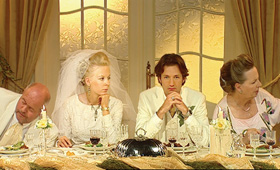
"All together now?" est un portrait tragicomique vivant de trois groupes de compagnons de table, représentés lors de trois occasions différentes: un groupe de personnes de près de quatre-vingts ans assis à une table sur laquelle il y a du café et des gâteaux, après un enterrement ; une mariée nostalgique, son futur époux et leur famille dans une salle des fêtes excessivement décorée ; et un dîner d?anniversaire organisé pour un père de famille nanti dans un intérieur de designer froid. Ces moments autour d?une table sont peut-être les situations où les gens se rassemblent le plus clairement d?une manière plus ou moins artificielle. Les rancunes mutuelles, les sentiments inavoués et les tensions entre les membres de la famille sont cachés entre les lignes du rituel. La caméra fait un lent panoramique des personnes autour de la table. Cette chorégraphie miniature des actions, des conversations et des regards entendus de six minutes clarifie les relations autour de la table. Certains personnages sont comiques, d?autres plutôt tragiques ou touchants. Grâce à la technique de ralenti, chaque détail devient franchement visible. "All together now?" est un portrait contemporain d?êtres humains autour d?une table, dans lequel le vide, qui fait réfléchir, après la fête peut déjà être détecté pendant la fête.
L?artiste visuel belge Hans Op de Beeck est né à Turnhout en 1969. Il crée d?énormes installations à taille réelle, des sites urbains imaginaire à l?échelle, des installations vidéo, des sculptures, des photos, des dessins et des films d?animation. Pendant plusieurs années, il s?est investi dans beaucoup de projets individuels et d?expositions collectives qui se sont succédés rapidement. Son travail a été exposé à travers l?Europe et les Etats-Unis. En 2002-2003 il a été artiste résident au MoMA-PS. à New York. Au Art Unlimited (Art Basel 2004), il a exposé un restaurant d?autoroute à taille réelle qui surplombait une autoroute, de nuit. Dernièrement il a exposé au MARTa à Herford, au Kunstverein à Hannover, au MuHKA à Anvers, au Casino du Luxemburg, au Shanghai Art Museum, au PSK à Bruxelles, au GEM-Museum of Contemporary Art à La Hague et The Drawing Center à New York.
Hans Op De Beeck
Before the rain(a village)
Doc. expérimental | hdv | couleur | 12:0 | Belgique, Inde | 2013
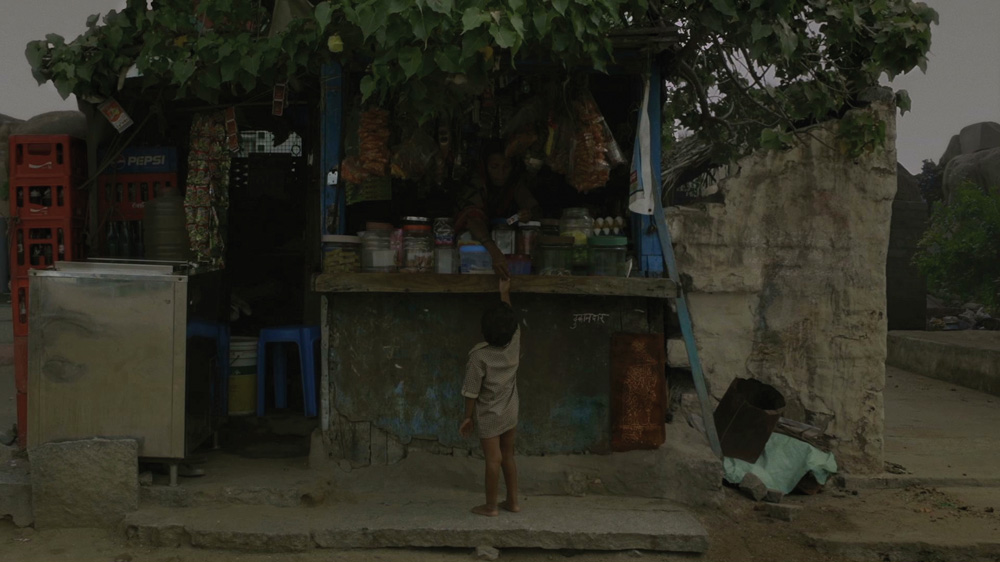
Before the Rain (A Village) shows us the daily events in this South Indian region, which combines a mineral, eroded landscape with rice fields, sheep herds and the impressive ruins of the Vijayanagara dynasty (1336-1565). During the rain season the artist stayed in the remote South Indian village, where humans and animals live together in small huts and sheds. He filmed only just before the onset of a new shower of rain—a time when the light becomes very diffuse and the sky becomes strangely, vaguely white. Oddly enough, as a result the Indian village bathes in a typically subdued, Western European light that is very unusual in the south of India. The film is constructed as a series of silent tableaux vivants that are filmed with a static, frontal camera on a tripod. Op de Beeck quite deliberately sought the small, everyday things we share beyond cultural borders, and consciously stayed away from the spectacular and that which is explicitly related to religion, mysticism or “being different”. Thus with this film he tried to create a sort of imaginary, universal village that speaks about how time silently passes in a small community, while avoiding the “exoticizing” glance of the idealizing idyll. The work invites a silent, sensory perception and reflection.
Hans Op de Beeck (° 1969 - Turnhout, Belgium) Lives and works in Brussels, Belgium Education/ Programs/ Awards 2009: Catholic University of Leuven Culture Prize 2009-2010 2006: Winner of the Prize Eugène Baie 2003-2005, Antwerp 2002-2003: Artist at the MoMA-P.S.1 Studio Program, New York 2001: Winner of the `Prix Jeune Peinture Belge 2001`, Palais des Beaux Arts, Brussels 1998-1999: Participant at the Rijksakademie, Amsterdam (post-MA) 1996-1997: Participant at The Higher Institute for Fine Arts-Flanders, Antwerp (post-MA) 1992-1996: Masters Degree in Visual Arts, Higher Institute Sint-Lukas, Brussels Situating the artist and his oeuvre Visual artist Hans Op de Beeck lives and works in Brussels, where he has developed his career through international exhibitions over the past ten years. His work consists of sculptures, installations, video work, photography, animated films, drawings, paintings and writing (short stories). It is his quest for the most effective way of presenting the concrete contents of each work that determines the medium that the artist ultimately selects. The scale can vary from the size of a small watercolour to a large, three-dimensional installation of 300m2. The artist not only uses a very wide variety of media, but also deliberately employs a diversity of aesthetic forms, ranging from an economical, minimalist visual language to overloaded, exaggerated designs, always with the aim of articulating the content of the work as precisely as possible. Thematically, the work concentrates on our laborious and problematic relationship with time, space and each other. Op de Beeck shows the viewer non-existent, but identifiable places, moments and characters that appear to have been taken from contemporary everyday life, aiming thereby to capture in his images the tragicomic absurdity of our postmodern existence. Key themes are the disappearance of distances, the disembodiment of the individual and the abstraction of time that have resulted from globalisation and the changes to our living environment that developments in media, automation and technology have brought about. Hans Op de Beeck sometimes calls his works "proposals"; they are irrefutably fictional, constructed and staged, leaving it up to the viewer whether to take the work seriously, as a sort of parallel reality, or immediately to put it into perspective, as no more than a visual construct. His work is nourished by a keen interest in social and cultural reflection. The artist also questions the difficult relationship between reality and representation, between what we see and what we want to believe, between what is and what we create for ourselves in order to make it easier to deal with our own insignificance and lack of identity. The visual output of that investigation often produces slumbering, insidious, melancholy and astonishing images.
Hans Op De Beeck
Night Time (extended)
Animation | hdv | noir et blanc | 19:18 | Belgique | 2015
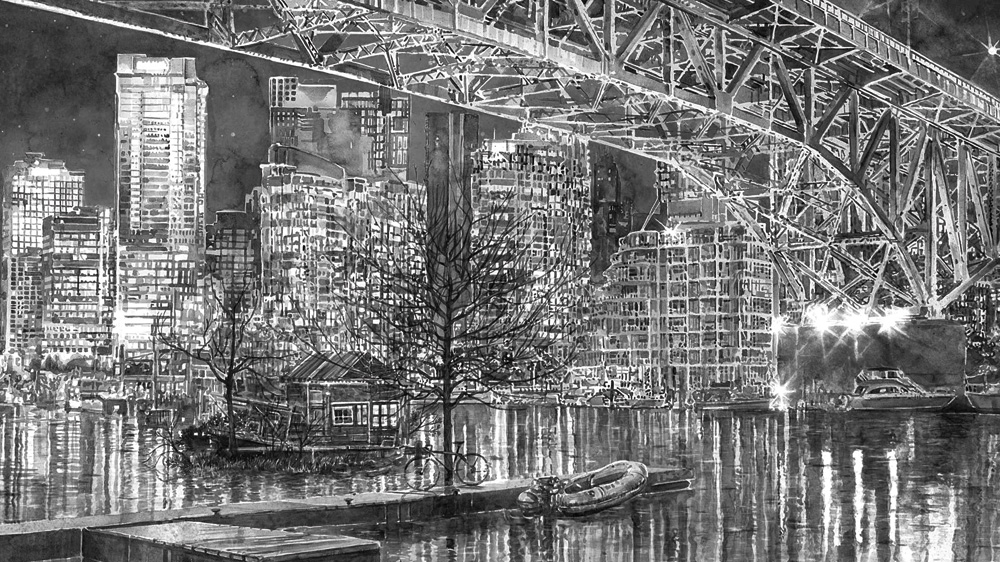
"Night Time (extended)" - Hans Op de Beeck 2015 Full HD video, black and white, sound, 2015 (19 minutes 20 seconds) ‘Night time (extended)’ is a dark, enigmatic animation without text based on a large series of monumental monochrome watercolours which Op de Beeck steadily realised over the past five years, in between all his other multidisciplinary projects. All the watercolours were painted by the artist at night in complete solitude and concentration.This nightly atmosphere is a tangible presence in the metropolitan landscapes, the images of nature, the buildings, interiors and characters which the artist brings to life in the film. "Night time (extended)" is conceived as a mysterious dream in which all proportions, perspectives and environments are fictitious. In this way, intimate close-ups are made to alternate with sweeping images; every image clearly and visibly the product of deliberate construction. The film is comforting and soothing, yet also exudes a sense of dormant danger and derailment, just as in the film noir tradition. Here, Op de Beeck brings together an anachronistic whole of both classical and distinctly contemporary themes into an effortless blend of both highly cultivated and more visceral subcultural elements.
Hans Op de Beeck produces large installations, sculptures, films, drawings, paintings, photographs and texts. His work is a reflection on our complex society and the universal questions of meaning and mortality that resonate within it. He regards man as a being who stages the world around him in a tragi-comic way. Above all, Op de Beeck is keen to stimulate the viewers’ senses, and invite them to really experience the image. He seeks to create a form of visual fiction that delivers a moment of wonder and silence. Over the past fifteen years Op de Beeck realized numerous monumental ‘sensorial’ installations, in which he evoked what he describes as ‘visual fictions’: tactile deserted spaces as an empty set for the viewer to walk through or sit down in, sculpted havens for introspection. In many of his films though, in contrast with those depopulated spaces, he prominently depicts anonymous characters. Hans Op de Beeck was born in Turnhout in 1969. He lives and works in Brussels and Gooik, Belgium. Op de Beeck has shown his work extensively in solo and group exhibitions around the world. He had substantial institutional solo shows at the GEM Museum of Contemporary Art of The Hague, The Hague, NL (2004); MUHKA Museum of Contemporary Art, Antwerp, B (2006); Centraal Museum, Utrecht, NL (2007); the Smithsonian’s Hirshhorn Museum and Sculpture Garden, Washington DC, US (2010); KunstmuseumThun, CH (2010); Centro de Arte Caja de Burgos, Burgos, ES (2010); Butler Gallery, Kilkenny, IRL (2012); Kunstverein Hannover, D (2012); Tampa Museum of Art, Tampa, USA (2013); the Harn Museum of Art, Gainesville, FL, USA (2013); FRAC Paca, Marseille, F (2013); MIT List Visual Arts Center, Cambridge, Boston MA, US (2014); MOCA Cleveland, OH, US (2014); Sammlung Goetz, Munich, D (2014), … Op de Beeck participated in numerous group shows at institutions such as The Reina Sofia, Madrid, ES; the Scottsdale Museum of Contemporary Art, AZ, US; the Towada Art Center, Towada, JP; ZKM, Karlsruhe, DE; MACRO, Rome, IT; the Whitechapel Art Gallery, London, GB; PS1, New York, NY, US; Musée National d’ArtModerne, Centre Pompidou, Paris, FR; Wallraf-Richartz Museum, Köln, DE; Hangar Bicocca, Milano, IT; the Hara Museum of Contemporary Art, Tokyo, JP; 21C Museum, Louisville, Kentucky, US; The Drawing Center, New York, NY, US; Kunsthalle Wien, Vienna, AT; Shanghai Art Museum, Shanghai, CN; MAMBA, Buenos Aires, AR; Haus der Kunst, Munich, DE; Museod’ArteModerna di Bologna, Bologna, IT; Kunstmuseum Bonn, Bonn DE, … His work was invited for the Venice Biennale, Venice, IT; the Shanghai Biennale, Shanghai, CN; the Aichi Triennale, Aichi, JP; the Singapore Biennale, Singapore, SG; Art Summer University, Tate Modern, London, GB; the Kochi-Muziris Biennale, IN, and many other art events.

Hans Op De Beeck
The Girl
Film expérimental | hdv | couleur | 16:0 | Belgique | 2017
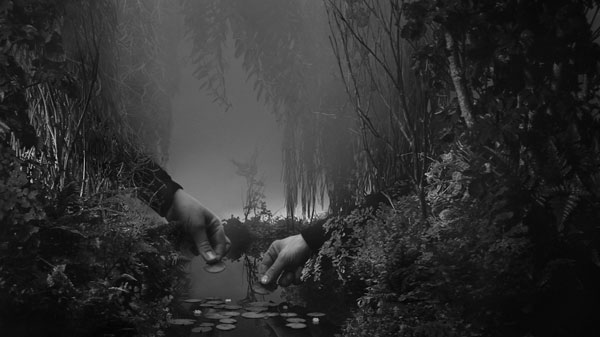
"The Girl" is a slow, suggestive, perception-oriented animated film in which the viewer is transported to the strange world of a silent, 14-year-old girl. The dreamy landscape images show a dark forest, a vast landfill, a gas station, a highway landscape, a meadow, a factory site and a mysterious lake. Amidst all this stands an old caravan. The scene seems to suggest that the protagonist leads a lonely life on these premises. For a further unspecified reason, she must at one time have left her parental home, which is presented to us at the beginning of the film, both in perfect condition, and later in a neglected, abandoned state. In a variety of different landscapes, we see the girl perform small acts such as gather usable waste or pick herbs. We often get to see her cargo bike; the vehicle she uses to gather the bear necessities in order to survive. Nighttime, breaking dawn, wind, rain, fog, cold and warming fire are present throughout the film. Occasionally, we get to see the girl “resting serenely” from up close, as if we were right beside her, and could feel her breath. At the end of the film we understand that she is resting on a raft in the lake, floating, passive, as a metaphor for surrender. An original soundtrack for the film was composed by Tom Pintens, on a text by the artist.
Hans Op de Beeck produces large installations, sculptures, films, drawings, paintings, photographs and texts. His work is a reflection on our complex society and the universal questions of meaning and mortality that resonate within it. He regards man as a being who stages the world around him in a tragi-comic way. Above all, Op de Beeck is keen to stimulate the viewer’s senses, and invite them to really experience the image. He seeks to create a form of visual fiction that delivers a moment of wonder and silence. Over the past twenty years Op de Beeck realized numerous monumental “ sensorial ” installations, in which he evoked what he describes as “ visual fictions ”: tactile deserted spaces as an empty set for the viewer to walk through or sit down in, sculpted havens for introspection. In many of his films though, in contrast with those depopulated spaces, he prominently depicts anonymous characters. Hans Op de Beeck was born in Turnhout in 1969. He lives and works in Brussels and Gooik, Belgium. Op de Beeck has shown his work extensively in solo and group exhibitions around the world.
Hans Op De Beeck
Staging Silence (2)
Vidéo expérimentale | | noir et blanc | 20:48 | Belgique | 2013
Hans Op de Beeck`s film `Staging Silence (2)` is based around abstract, archetypal settings that lingered in the memory of the artist as the common denominator of the many similar public places he has experienced. The video images themselves are both ridiculous and serious, just like the eclectic mix of pictures in our minds. The decision to film in black and white heightens this ambiguity: the theatre like approach of the video invokes the legacy of slapstick, as well as the insidious suspense and latent derailment of film noir. The title refers to the staging of such dormant decors where, in the absence of people, the spectator can project himself as the lone protagonist. Memory images are disproportionate mixtures of concrete information and fantasies, and in this film they materialise before the spectator`s eyes through anonymous tinkering and improvising hands. Arms and hands appear and disappear at random, manipulating banal objects, scale representations and artificial lighting into alienating yet recognisable locations. These places are no more or less than animated decors for possible stories, evocative visual propositions to the spectator. Op de Beeck`s film is accompanied by a score which, inspired by the images themselves, has been composed by composer-musician Scanner (UK).
Hans Op de Beeck Situating the artist and his oeuvre Visual artist Hans Op de Beeck lives and works in Brussels, where he has developed his career through international exhibitions over the past ten years. His work consists of sculptures, installations, video work, photography, animated films, drawings, paintings and writing (short stories). It is his quest for the most effective way of presenting the concrete contents of each work that determines the medium that the artist ultimately selects. The scale can vary from the size of a small watercolour to a large, three-dimensional installation of 300m2. The artist not only uses a very wide variety of media, but also deliberately employs a diversity of aesthetic forms, ranging from an economical, minimalist visual language to overloaded, exaggerated designs, always with the aim of articulating the content of the work as precisely as possible. Thematically, the work concentrates on our laborious and problematic relationship with time, space and each other. Op de Beeck shows the viewer non-existent, but identifiable places, moments and characters that appear to have been taken from contemporary everyday life, aiming thereby to capture in his images the tragicomic absurdity of our postmodern existence. Key themes are the disappearance of distances, the disembodiment of the individual and the abstraction of time that have resulted from globalisation and the changes to our living environment that developments in media, automation and technology have brought about. Hans Op de Beeck sometimes calls his works ?proposals?; they are irrefutably fictional, constructed and staged, leaving it up to the viewer whether to take the work seriously, as a sort of parallel reality, or immediately to put it into perspective, as no more than a visual construct. His work is nourished by a keen interest in social and cultural reflection. The artist also questions the difficult relationship between reality and representation, between what we see and what we want to believe, between what is and what we create for ourselves in order to make it easier to deal with our own insignificance and lack of identity. The visual output of that investigation often produces slumbering, insidious, melancholy and astonishing images.

Hans Op De Beeck
Sea of Tranquillity
Vidéo | | couleur | 29:50 | Belgique | 2010
The medium-length film `Sea of Tranquillity` is a combination of live video recordings of actors and digitally-generated 3D environments in which the viewer makes a night-time visit to a mysterious, mythical cruise liner, the `Sea of Tranquillity`. This fictitious cruise liner has been designed by Hans Op de Beeck, following a short residence at Saint-Nazaire in France in 2008, during which the artist became intrigued by the remarkable Second World War story and postwar reconstruction of this harbour town, whose shipyards produce the worlds largest cruise liners. It seemed to the artist that the Queen Mary 2, then just completed, was, like the Burj Khalifa in Dubai (the highest building in the world), a suitable metaphor for our belief in spurious values and in such concepts as work, leisure time and luxury consumerism. We nowadays use such categories as the highest, the first and the biggest, but what do these terms say about the actual quality of things?
Hans Op de Beeck est un artiste belge, il vit et travaille à Bruxelles. Sa pratique se déploie sous une diversité de médiums : sculpture, installations, vidéo, photographie, film d?animation, dessin, peinture, écriture de nouvelle, avec une recherche constante du médium le plus approprié au contenu de chaque ?uvre. L?échelle pourra ainsi varier, de la taille d?une aquarelle à une installation tridimensionnelle de grande ampleur. L?artiste utilise également une diversité de formes esthétiques, couvrant aussi bien un langage visuel minimaliste et sobre, qu?un dessin surchargé, exagéré, dans le but de toujours articuler la forme au contenu de l??uvre, avec la plus grande exactitude. Du point de vue thématique, le travail se concentre sur notre relation laborieuse et problématique avec le temps, l?espace et les rapports humains. Op de Beeck montre l?inexistence du spectateur, mais des lieux identifiables, des moments ou des personnages qui semblent captés de la vie contemporaine, pour saisir dans ses images l?absurdité tragicomique de notre existence postmoderne. Les thèmes essentiels de son travail sont la disparition des distances, la désincarnation de l?individu et le caractère abstrait du temps, qui résultent de la globalisation et des changements de mode de vie que les médias, l?automatisme et les technologies ont suscités. Hans Op de Beeck nomme parfois son travail « propositions », elles sont de manière irréfutable fictionnelles, construites et mises en scène, laissant au spectateur le choix de prendre l??uvre au sérieux, comme une sorte de réalité parallèle, ou de la mettre immédiatement en perspective, comme une construction visuelle. Son ?uvre se nourrit des champs de réflexion sociale et culturelle. L?artiste questionne aussi les relations entre la réalité et la représentation, entre ce que nous voyons et ce que l?on veut croire, entre ce qui est et ce que nous créons pour nous-mêmes pour rendre plus simple notre rapport à notre propre insignifiance et notre manque d?identité. Le résultat visuel de cette enquête produit souvent des images somnolentes, insidieuses, tristes et étonnantes.