Catalogue > Faire une recherche
Résultats pour : Tout le catalogue

Kika Nicolela
Tropico de Capricornio
Doc. expérimental | dv | couleur | 30:0 | Brésil | 2005
Quatre travestis sont amenés dans une chambre d'hôtel la même nuit. L'un après l'autre ils se prêtent au jeu du réalisateur : s'allonger sur le lit et rester dans la chambre vide avec une caméra. Ils se recréent un personnage et à travers celui-ci ils commencent doucement à se dévoiler : leurs rêves, leurs espoirs, leurs interrogations et leurs expériences dans les rues de Sao Paulo.
Diplômée en Cinéma et Vidéo à l'Université de Sao Paulo en 1999, Kika Nicolela a débuté sa carrière comme assistante réalisateur pour des longs-métrages. En 2002, après avoir terminé des cours de cinéma à UCLA (Université de Californie), Kika fonde sa propre société de production, Dilema Studio, basée à Sao Paulo. Depuis, elle a produit et réalisé plusieurs vidéos expérimentales et documentaires. Ses ?uvres ont été exposées dans plusieurs festivals dans le monde entier.

Charly Nijensohn
El exodo de los olvidados
Vidéo | hdv | couleur | 9:50 | Argentine | 2011
Regions that remain inaccessible and deserts of ice that extend beyond sight. Geographies that have attracted the thought of explorers and navigators fascinated by the end of the world. Situated in the southern region of the Andes mountain range, the Patagonian Ice Fields represent the largest mass of ice in South America. The exodus of the forgotten explores the impulse that drives humans to leave everything behind to immerse themselves in an unknown territory. In their fascination for the abyss and the search for the unreachable, they are united in a strange act of intensity.

Charly Nijensohn
Patagonian Ice Fields
Vidéo | hdv | couleur | 6:24 | Argentine, Allemagne | 2020
Alors que tout s’était arrêté et que le confinement s'étendait à toute la planète, je me suis consacré à créer de nouvelles musiques originales et à revoir certaines de mes œuvres antérieures, avec du matériel qui avait été laissé de côté lors de leur postproduction initiale. C'est ainsi que j'ai abordé de nouveau l'expédition dans les champs de glace de Patagonie, un projet que j'ai réalisé en collaboration avec des membres d'une équipe de sauvetage en montagne. La Patagonie est affectée dramatiquement par les changements climatiques et par le réchauffement de la planète. Les glaciers disparaissent sous nos yeux. Dans ce contexte, un groupe de personnes se retrouve perdu dans un labyrinthe de glace. Unis et isolés, ils envisagent l'effondrement de leur univers.
Charly Nijensohn est né Buenos Aires (Argentine) en 1966. Il vit et travaille à Berlin, et est artiste multidisciplinaire. Son travail artistique comporte plusieurs niveaux. Charly Nijensohn travaille sur l'idée d'une confrontation entre l'être humain et les forces naturelles de l'univers qui nous entoure. La relation entre l’humain et l'espace qui l'entoure représente un conflit à la fois réel et existentiel. Il a représenté l'Argentine avec une exposition personnelle à la 50e Biennale de Venise (Italie). Son travail a été notamment présenté à la BienalSur, Buenos Aires (Argentine) [2017], et à la Mediations Biennial, Poznan (Pologne) [2012]. Il a exposé à la Biennale de Valence (Espagne) [2001], dont le curateur était Peter Greenaway; à la Biennale de Singapour (Singapour) [2008], dont le curateur était Fumio Nanjo; et à la Dojima River Biennale, Osaka (Japon) [2009]. Il a également présenté son travail dans de nombreux festivals, notamment à la Transmediale, Berlin (Allemagne); à Videobrasil, São Paulo (Brésil); aux Rencontres Internationales Paris/Berlin – qui se sont tenues à la Haus der Kulturen der Welt, Berlin (Allemagne), au Museo Nacional Centro de Arte Reina Sofia, Madrid (Espagne), et au Centre George Pompidou, Paris (France); au Monitoring, Kassel (Allemagne); à Visions of Nature, Kunst Haus Wien, Vienne (Autriche) [2017/2018]; à Video Art in Latin America, LAXART, West Hollywood (USA) [2017]. Il a également exposé au Kröller-Müller Museum ["Windflower, Perceptions of Nature", 2011], Otterlo (Pays-Bas); au Morsbroich Museum ["Radical Shift"], Leverkusen (Allemagne); à la Akademie der Künste ["Realidad y Utopía, Argentiniens künstlerischer Weg in die Gegenwart", 2011], Berlin (Allemagne); à la Whitechapel Gallery [2010], Londres (Royaume-Uni); à Políticas de la diferencia, MALBA - Museo de Arte Latinoamericano, Buenos Aires (Argentine); et à Latin America: Video Views - Latin American Artist of the Twentieth Century, MOMA – Museum of Modern Art, New York (USA).

Charly Nijensohn
El ciclo de la intensidad
Vidéo | 4k | couleur | 12:53 | Argentine, Bolivie | 2018

Nemanja Nikolic
Double Noir, Sketch for one erasable plot
Vidéo | hdv | noir et blanc | 4:4 | Serbia | 2016
Double Noir is a video animation made of 60 sequences relating a man pursuing his own double. Each sequence is made of drawings realized with white chalk and pastel on wood blackboards. Altogether there are circa 1800 drawings. But just the last drawing stay visible on the surface of each sequence, as an indice of that sequence. The iconic character of this project is Humphrey Bogart whose various figures are inspired by 19 black movies.
Born in Serbia in 1987, Nemanja Nikoli? currently lives and works in Belgrade. He graduated from the Faculty of Fine Arts in Belgrade, department of painting (2010), and received his PHD in art studies at the same faculty in 2019. He won several awards, such as Award for drawing from Vladimir Veli?kovi? Fund, special award for mural and wall installation from Raiffeisen Bank and Gallery 12HUB and Award for an exceptional creative innovation from Miloš Baji? Fund. Since 2010 his works have been exhibited on numerous exhibitions and festivals in Serbia and abroad such as the Art Gallery of the Cultural Center of Belgrade, the Youth House of Belgrade, the Gallery of Rome in Kragujevac, 57th October Salon in Belgrade curated by Gunar and Danielle Kvaran and 56th October Salon curated by David Elliott, KunstlerHaus in Wien, Austria, Caixa Forum in Barcelona and Madrid (« Cinema and painting », curated by Dominique Païni, Rencontres Internationales Paris-Berlin, Kunsthal KAdE, Amersfoort NL(« Chalk » curated by Judith van Meeuwen). He currently has a solo show at the Center for Contemporary Art of Montenegro. His works figure in many public and private collections including Lucas Museum of Narrative Art in Los Angeles, Ekard collection in Wassenaar, NL, ABN AMRO Amsterdam, NL, WAP Art Foundation in Seoul, JSM collection in Paris, Telenor Collection and collection of Sumatovacka Center for Art Education, both in Belgrade Nemanja Nikoli?

Nemanja Nikolic
The Plot
Animation | 4k | couleur | 9:43 | Serbia | 2021
Art project The Plot was created in a span of three years and it consists of about 5,000 drawings that have been turned into a sound film by frame-by-frame animation. Fragments taken from various cinematographic achievements made during the period of Cold War by major film productions of "Western Powers" (USA, UK) are drawn on book sheets, maps and encyclopedias written and published during the same period in the territory of SFR Yugoslavia. Books and encyclopedias used as a background for the drawings have for subject theoretical reflections on the socialist system, while maps represent cartographic documents of cities, borders, states and continents from the same era. In this historical period, Yugoslavia was one of the few countries behind the "iron curtain" in which Hollywood movies, TV series, jazz, rock'n'roll and Coca-Cola were not only allowed but were an integral part of everyday life. American film, as the most massive form of artistic expression, entertainment, and often propaganda, played a special role in Yugoslav society, holding absolute dominance among foreign cinematography in domestic cinemas. Getting to know luxury, wealth and unconventional way of life through it, the ordinary man in Yugoslav socialism had the opportunity to dream the American dream in non-American conditions.
Nemanja Nikoli? (born 1987) graduated from the Faculty of Fine Arts in Belgrade in 2010, department of Painting. He finished his PhD studies at the same faculty in 2019. From 2018 he works on Faculty of Fine Arts in Belgrade as assistant professor. Nemanja Nikoli? is initiator of Belgrade based U10 Art Space, independent artist-run space dedicated to supporting young contemporary artist. Nemanja has presented his works on solo exhibitions since 2010: in the Art Gallery of the Cultural Center of Belgrade, Gallery Dix9 Helene Lachermoise in Paris, ERD Gallery in Seoul, Rima Gallery in Belgrade, U10 Art Space in Belgrade, etc. He has participated in many group exhibitions in the country and abroad: Caixa Forum in Madrid and Barcelona, Kunsthal KadE in Amersfoort in the Netherlands, Kunstlerhaus in Vienna, 56th and 57th October Salon in Belgrade (Belgrade Biennale), Center for Contemporary Art of Montenegro, etc.

Nemanja Nikolic
The Plot
Animation | 4k | couleur | 9:43 | Serbia, 0 | 2021
The Plot (2021, 9’43’’) is a sound film composed of approximately 5,000 drawings, created over a period of three years and animated frame by frame. The drawings reproduce fragments from Cold War–era films produced by major Western studios (USA, UK), rendered on pages from books, maps, and encyclopedias published in socialist Yugoslavia during the same period. While the cinematic images originate from Western popular culture, their drawn backgrounds consist of theoretical texts on socialism and cartographic documents depicting cities, borders, and territories of that time. During the Cold War, Yugoslavia occupied a unique position: despite being a socialist country, Hollywood films, television series, jazz, rock’n’roll, and Coca-Cola were widely present in everyday life. American cinema, as a dominant form of entertainment and ideological projection, shaped collective imagination, allowing Yugoslav audiences to dream the American dream within a non-American system. Growing up in the aftermath of this contradictory reality profoundly influenced my worldview. Through scenes of nightmares, pursuits, fear, and surveillance, the film unfolds as a surreal collage that exposes the entanglement of political, social, and cultural histories. Rather than offering a fixed conclusion, The Plot invites viewers to navigate multiple layers of meaning and experience.
Nemanja Nikoli? (b. 1987) graduated from the Faculty of Fine Arts in Belgrade, Department of Painting (2010), where he also completed his PhD (2019). He is currently Associate Professor at the same faculty and the initiator of U10 Art Space, an independent artist-run platform dedicated to supporting emerging contemporary artists. Since 2010, Nikoli? has held numerous solo exhibitions, including at the Cultural Center of Belgrade; Galerie Dix9 Hélène Lacharmoise, Paris; the Museum of Contemporary Art of Montenegro, Podgorica; ERD Gallery, Seoul; Rima Gallery, Belgrade and Kragujevac; B2 Gallery, Belgrade; and U10 Art Space. He has participated in many group exhibitions, notably at CaixaForum (Madrid and Barcelona), Kunsthal KadE (Amersfoort), Künstlerhaus (Vienna), the 56th, 57th, and 60th October Salon (Belgrade), the 20th Pan?evo Art Biennial, and the Cinémathèque Française (Paris). His awards include the Special Award of the 60th October Salon (2024), the Drawing Award of the Association of Fine Artists of Serbia (2021), and the Vladimir Veli?kovi? Foundation Drawing Award (2011). His works are included in several international public and private collections. He lives and works in Belgrade.

Nemanja Nikolic
Panic Book
Animation | hdv | noir et blanc | 5:45 | Serbia | 2015
Panic Book is both a set of drawings and an animated video. The drawings are made on book pages. The books often come from the family library, and deal with the political and philosophical thought of Yugoslav socialism. The pages then become part of a reconstruction of cult sequences of Hitchcock movies: scenes of fear, panic or flight. This rereading of the legacy of Tito`s socialism that ended in a “cul de sac” is close to power-up mechanisms and disaster announcements used by the master of suspense
Born in 1987, Nikolic lives and works in Belgrade, Serbia. Graduated from the Faculty of Fine Arts (painting department) , currently in PhD, he received several prizes for drawing and a special prize for his mural installations. Initiator of U10 Art Space, a self-managed artist space, he was exhibited since 2007 in numerous solo and group shows in Serbia and abroad. In 2015 he was invited to Basel (List), Vienna (Parallel) and Paris (Cultural Center of Serbia). He is currently on show at Caixa Forum in Barcelona, Spain and Kunslerhaus in Vienna, Austria

Faezeh Nikoozad
Degar Disi
Film expérimental | 16mm | couleur | 9:15 | Iran, Allemagne | 2020
Il s'agit d'un état où l’on se retrouve entre deux. La décision de grandir ou de rester enfant - la transformation d'une fille en femme.
Faezeh Nikoozad (née à Téhéran, Iran 1984) habite en Allemagne depuis 2009. Elle est réalisatrice et artiste vidéo indépendante. Elle a étudié la scénographie (licence) à Téhéran (Iran) et la réalisation (licence et master) à la HFBK - Hochschule für Bildende Künste Hamburg, Hambourg (Allemagne). Son travail couvre un large éventail de thèmes tels que le déplacement, l'absence, la terre natale, la famille et les souvenirs d'enfance. Ses modes d'expression vont du film expérimental au film documentaire en passant par les techniques mixtes. Ses films ont été présentés dans divers festivals et ont remporté de nombreux prix.

Miljana Nikovic
Two Simple Letters
Vidéo | mov | couleur | 2:34 | Serbia, Allemagne | 2020
Mars 2020. Dans un monde compliqué et apocalyptique, que se passe-t-il si votre esprit est égoïstement obsédé par votre vie amoureuse? Si vous commencez à chercher des amants potentiels sur des sites de rencontre? Si la plupart d'entre eux ne réagissent pas à vos messages (bien que vous puissiez voir qu’ils sont en ligne), probablement pas assez stimulés par votre profil? D'autres conviendraient peut-être d'une promenade, s'il ne pleut pas, samedi après-midi ou mardi prochain. Cela ne semble pas très prometteur. Presque toujours, la communication s'arrête sans raison évidente, même si tout le monde reste en ligne. L'attention et la curiosité disparaissent. Est-ce que toutes ces conversations resteront des fantasmes virtuels? Était-ce différent avant le confinement? Grâce à Internet, les écrans multipliés sont nos nouvelles fenêtres fragmentées sur le monde extérieur. En contact avec n'importe qui, n'importe où, n'importe quand. Mais isolés: seuls et solitaires dans une pièce. Ce poème vocal et visuel consiste en une déconstruction des courtes phrases que l'on utilise pour arranger un rendez-vous avec un inconnu. Hésitantes et polies, "Two Simple Letters" ("deux simples lettres") évoquent une insécurité permanente, une modestie, une timidité - pour éviter d'offenser ou d'effrayer son ou ses interlocuteurs. L’utilisation consciente d'éléments pop ludiques, tant au niveau des effets sonores que des couleurs, permet d'alléger cette situation auto-dérisoire.
Miljana Nikovic est architecte et chercheuse. Elle expérimente par la vidéo, la photographie, le son, le collage et l'écriture. Née à Belgrade (Serbie), elle vit à Berlin (Allemagne). Après avoir obtenu une Licence à l’École nationale supérieure d'architecture de Nancy (France) en 2013, et un Master à la Hochschule für Technik, Wirtschaft und Kultur Leipzig (Allemagne) en 2015, elle a travaillé dans le domaine de la stratégie des espaces de travail, et comme coordinatrice de projet. Elle entame actuellement un doctorat archivistique-artistique à l'Université HafenCity, Hambourg (Allemagne). Il porte sur les parallèles entre les villes, le cinéma et les perceptions historiques des souvenirs collectifs. Elle a récemment fondé un collectif de poètes francophones, et a été sélectionnée dans des festivals internationaux de cinéma avec son court métrage expérimental "Seven Seven" et le vidéo-poème "La Rive Virale" [Los Angeles (USA), Mexico (Mexique), Athènes (Grèce)].
Natacha Nisic
e
Doc. expérimental | 0 | couleur | 20:0 | France | 2010
− e est le récit d`un voyage dans le nord du Japon à la recherche d`un territoire inaccessible : un territoire transformé, meurtri par un tremblement de terre d`intensité 6,7 sur l`échelle de Richter en juin 2008. La montagne déplacée, ouverte en quelques minutes par le choc violent des éléments, est une cicatrice ouverte d`une étrange beauté dont le sort reste indéterminé Cette cicatrice qui ne peut se refermer, reste un paysage d`une grande beauté, un grand canyon qui pourrait devenir un parc d`attraction, un « ecopark » qui attirerait les touristes, faisant de la catastrophe un argument de vente, .. − Nous survolons ce territoire, tentons d`y accéder malgré les barrages qui le clôturent. Ne peuvent y accéder que les camions des travailleurs à la reconstructions et les résidents reclus. Ceux qui ont vécu le tremblement de terre racontent et rejouent ces instants violents. Apprivoiser la catastrophe est une attitude culturelle japonaise. Si on ne peut apprivoiser le futur, on peut le prévenir.
Née en 1967 à Grenoble, Natacha Nisic poursuit des études d`art à l`ENSAD de Paris, et de cinéma à DFFB de Berlin et à la Femis. Son travail se situe à la frontière des différents supports de l`image en mouvement, Super 8, film et vidéo, mais aussi par la photographie et l`installation. Elle réalise de nombreuses expositions en France, Printemps de Cahors, Centre National de la Photographie, Le plateau-Frac Ile-de-France. Ses films ont été récemment présentés au Centre Georges Pompidou à Paris, K21, Düsseldorf, Metropolitan Museum of Photography, Tokyo, British Film Institute, Londres.

Natacha Nisic, en collaboration avec Ken Daimaru
Osoresan
Vidéo | hdv | couleur | 17:15 | France, Japon | 2018
OSORESAN Natacha Nisic & Daimaru Ken 3 channels installation, stereo sound, 17’, 2018 The Itako are women who train to become spiritual mediums in Northeast region of Japan and to evoke departed spirits for the living seeking to communicate with the dead. Most of them have visual disabilities and learn language and rites to describe a rich spiritual world entirely through oral communication. Our first meeting wit Nakamura Take took place in Hachinohe city in Jully 2015. Fiming a blind person is a challenge, in one hand, we would see what she would never share with us, and on the other hand, it seems that she « sees » things that we aslo don’t see. We met her two times in 2015 and in 2017. Each sequence was very short between clients who were regularely knocking at her door. Those fragments of her life, moments of remembering songs, rites and legends were too short to build up a large portrait. They became elements of a constellation we wanted to draw : balancing her humility and modesty versus the huge scale of the desaster which happened not so far fom a living region. Her way to travel in unknown countries of dead and spirits, using a treasure of words, notes, incantation, has been guiding own journey into the landscapes revealing the traces of the post catastrophy. (imprégnant par ses paroles chacune de nos visions des paysages que nous traversions). She told us the legend of «Oshirasama», the founding tail for Itakos, a cruel story of a father, a beloved daughter and a horse. As we crossed the city of Soma, we remembered the Horse Festival organized by the city just one year after the disaster. The horses are still there, waiting. The desire to make peace with the dead motivates each one visiting an Itako. What could help us to make our own peace with the heritage of the post catastrophy ? What kind of political individual gestures could face the large scale of political environmental decisons ? We still have to deal wih nuclear threat. As a symbol of fear, the mount Osoresan, a lansdcape of ashes, smoke and dark water, responds to the hyptnotic beauty of the fragmentation of alpha an beta rays displayed at the Rokkasho PR Center. Fear, to be acclimated must show a fascinating face, as Itakos used to be represented ; stranges, unreachable and dangerous figures of women. Witches. We discovered a touching, smily, opened woman. We realized that Take Nakamura is a monument of Japan history. Very precious, rare and fragile. With participation of Take Nakamura and Itakos of Osorezan Cast: Satoko Abe, Fumie Kubota, Yohei Kobayashi, Kyoko Takenaka, Mika Shigemori

Natacha Nisic
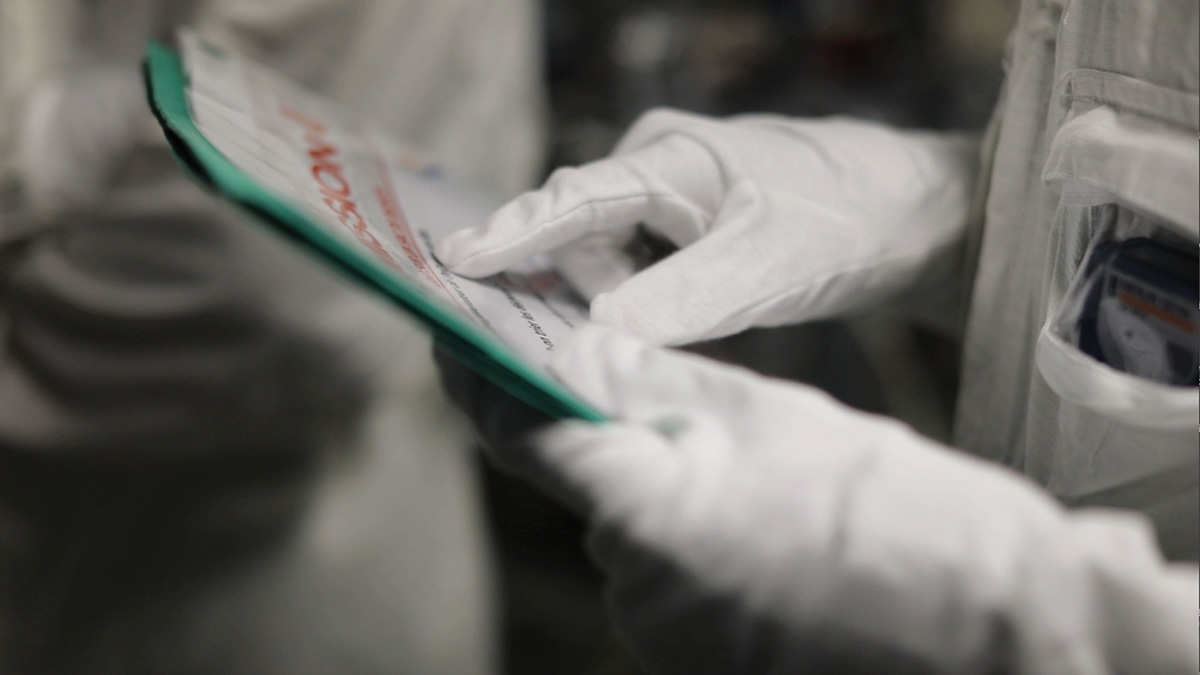
Le textile est mort mais les gens vivent encore
Doc. expérimental | 16mm | couleur | 11:6 | France | 2008
Natacha Nisic
Saint-Désir l'Exil
Vidéo | mov | couleur | 9:15 | France | 2020
Au coeur de Saint-Désir l'Exil se trouve une piscine. Au coeur de la piscine se trouvent les corps nocifs. A côté de la piscine, ma maman vit ses derniers instants sous le soleil.
Natacha Nisic,born in 1967 in France. Studies at Ecole Nationale Supérieure des Arts Décoratifs of Paris (1986-90) and at the Deutsche Film und Fernseh Akademie of Berlin (1989-91), and at the Fémis, Paris. Natacha Nisic continually explores the invisible, even magical relationship between images, words, interpretation, symbol and ritual. Her work interweaves links between stories, accounts of the past and the present, to reveal the complexities of the relationship between what is shown and what is hidden, the spoken and the unspoken. Her fixed and moving images function as substrata of memory, memory torn between its value as proof and its loss, and are all statements about the status of images and the possibilities of representation. She exposed in France, Japan, Italy, Germany, Spain, United Kingdom, Korea and Argentina. Her most notable personal exhibitions in Paris (France) are Haus/raus-aus (Le Plateau, Frac Ile-de-France), Effroi (Musée Zadkine), La porte de Birkenau (Mémorial de la Shoah) Nord, Carmel (Centre Georges Pompidou), and Echo (Galeries nationales du Jeu de Paume). Abroad : KW Complex (Atelier Hermès, Seoul, Korea), Trying to land (MACRO, Rome, Italy), Loop Barcelona (Dominique Fiat, Barcelone, Spain). She has participated in several group exhibitions in France and abroad, such as Regard fatigué (with Christophe Marchand-Kiss, Schloß Solitude, Stuttgart, Germany, 1998), Contemporary Utopia (Centre d’art contemporain Letton, Riga, LT, 2001), Tempered Ground (Museum of Garden History, Londres, UK, 2004), elles@centrepompidou, les artistes femmes de la collection du Mnam ( Centre Georges Pompidou, FR, 2009), Yebisu international festival for new vision tokyo (Metropolitan Museum of Photography, JP, 2010), and Immigrantes in Arte Contemporeano (Munfret, curator Diana Wechsler, Buenos Aires, AR, 2015). She won almost 10 grants, among the Arbeitstipendium (Senatsverwaltung für Wissenschaft, Forschung und Kultur, Berlin, Germany). She also stayed at the Villa Medici (Rome, Italy, 2007) and two times at the Villa Kujoyama Duo (Japan, 2001 ; 2016).
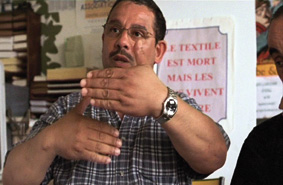
Natacha Nisic
Le textile est mort mais les gens vivent encore 1
Doc. expérimental | super16 | couleur | 5:47 | France | 2009
L`usine Desurmond à Tourcoing a fermé en 2004. C`était la dernière usine de filature de cette région. Les ouvriers se sont regroupés en association afin de faire valoir leurs droits et créer une communauté, au delà de la perte du travail. Les hommes puis les femmes ont reproduits la chaine et les gestes du travail à la chaine dans cette filature. Certains y ont travaillés en équipe de nuit pendant 35 ans.
Née en 1967. Ecole Nationale Supérieure des Arts Décoratifs de Paris, poursuit des études à la Deutsche Film und Fernseh Akademie de Berlin et à la Femis à Paris pour l`écriture de scénario. Elle réalise de nombreuses expositions et films où la question de l`image est mise en jeu. Elle utilise pour cela différents médiums : super 8, 16 mm, vidéo, photographie. Images fixes ou en mouvement fonctionnent comme substrat de la mémoire, mémoire tendue entre sa valeur de preuve et sa perte. Les différentes expositions personnelles comme au Plateau, Frac île de France, puis au musée Zadkine à Paris, sont des autant de prises de positions sur le statut des images et les possibles de la représentation.Ces oeuvres ont été montrées dans de nombreux pays, Allemagne, Espagne, Japon, Corée, canada, Argentine... Ses films sont diffusés sur Arte et au Centre Georges Pompidou à Paris. Pensionnaire de la Villa Kujoyama (2001) et Villa médicis (2007).
Natacha Nisic
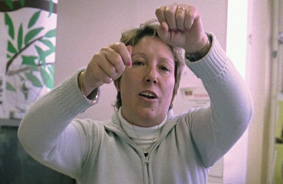
Le textile est mort mais les gens vivent encore 2
Doc. expérimental | super16 | couleur | 5:20 | France | 2009
voir ouvrier 1
Voir ouvrier 1
Natacha Nisic
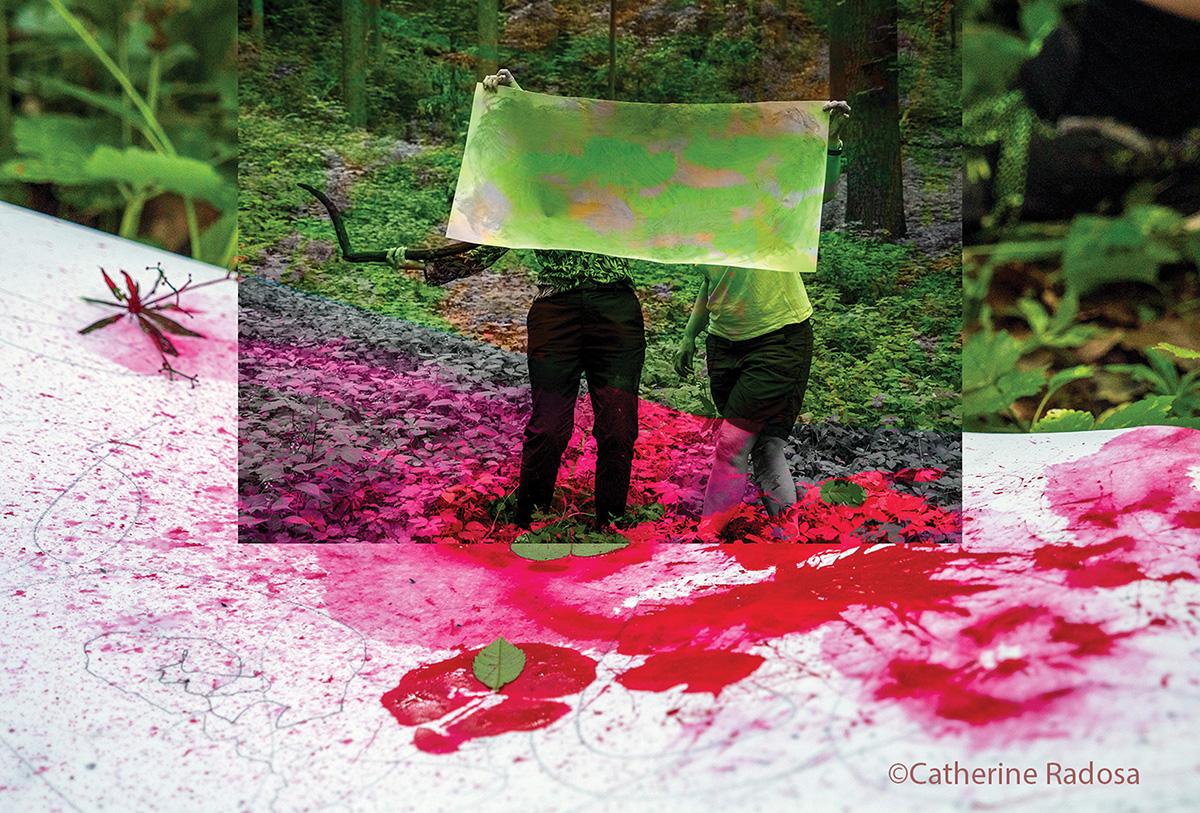
The Crown letter
Film expérimental | digital | couleur | 50:0 | France | 2022
The Crown Letter The Crown Letter is an international collective of women artists. It was founded by Natacha Nisic in April 2020, in response to the first wave of the coronavirus pandemic. Natacha Nisic created this art project to respond to a needandsupport women artists at a time when their lives, their networks and the visibility of their work were particularly disrupted. Beyond the circumstances that gave birth to it, The Crown Letter has become a fertile, organic, self-managed and independent space for creation and dialogue, crystallizing the lack of such openings to creation and the encounter of women artists. From the beginning, the artists have published a new edition of The Crown Letter online every week, with the works of many international contributors. These works reflect our current times through drawing, sculpture, photography, collage, writing, sound and video. In 2022, Natacha Nisic received the Hans und Lea Gründig Preis for the project in Berlin. Fluxus Art Project has promoted the project in 2022.
Exhibitions 2020 - Publication of the website 2021 - Photodays Paris, outdoor exhibitions at the square Chatelet and Vuillemin garden, Paris. Hyperfestival. - Fondation Fiminco, Photodays 2022 - KG+, French Institut Kyoto, Japan - Bienal Sur, Centro Cultural Cordoba - MAPI, Montevideo, Uriguay 2023 - Residencie at Luxfer, in Ceska Skalice, Czech Republic - We will want to dance tomorow. Tales for the future, Galerie 35, Institut Français, Prague Publication 2021 - Trigger magazine 3, "Care" - Moving Image Review and Art Journal, Volume 9, Number 2, London
Natacha Nisic
Et n'être que brume
Film expérimental | 0 | couleur | 15:0 | France | 2023
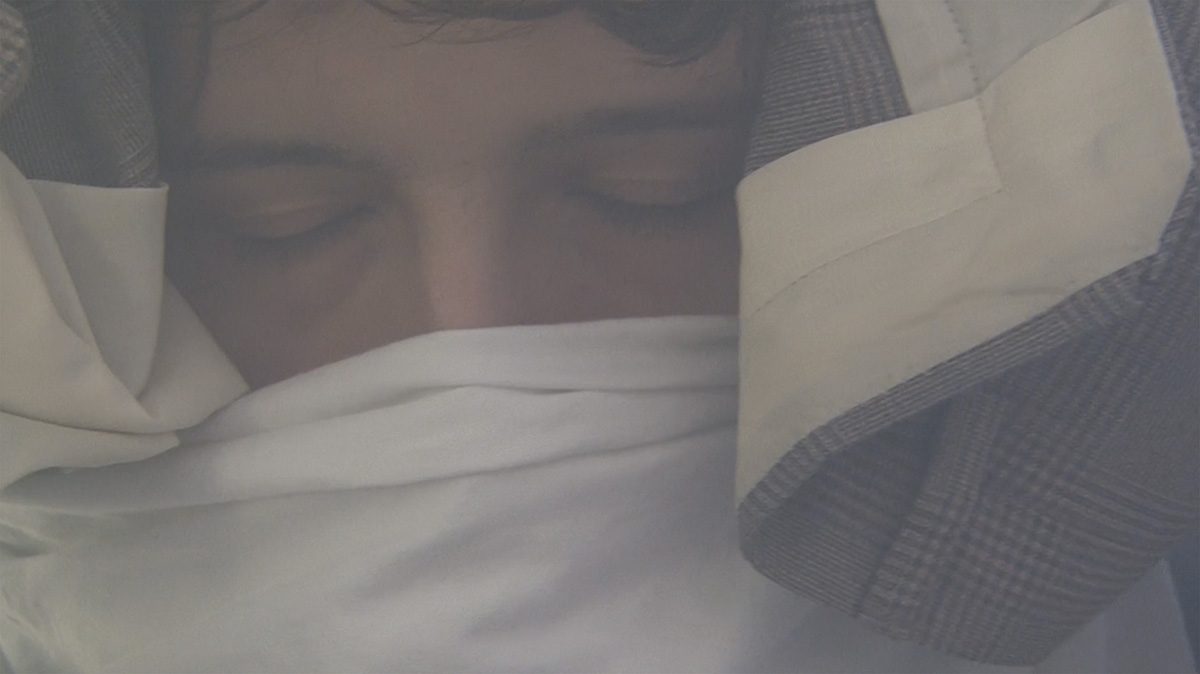
Dans la tour de la ville de Malakoff "Et n’être que brume » met en place le cadre expérimental d’une improvisation.Plongés dans les brumes, les êtres se révèlent. L’écran de la fumée permet une libération des affects car au sein du brouillard se logent les souvenirs, les torpeurs et les désirs. Le film est en hommage à la Crimée annexée depuis 2014 par la Russie.
Natacha Nisic is an artist and filmmaker. She weaves links between history, representation and memory and its implications in the political, social and cultural fields. She explores the invisible relationship between images, words, interpretation, symbol and ritual. Her work questions the nature of the image through different media: Super 8, 16MM, video, photography and drawing. She created The Crown Letter (2020), an international platform of women artists, in response to the Corona virus crisis. She directed “Rather Die Than Die” (2018) a documentary essay on the First World War and the art historian Aby Warburg as part of the commemorations of the Centenary of the First World War, and, for Arte, “Andrea’s Sky” (2014) on a Bavarian shaman initiated in South Korea. Natacha Nisic exhibits worldwide — recent exhibitions include, MNAV, Uruguay, 2023, Frise, Hambourg(2023), Leopold Hoesch Museum (2022), Centre Pompidou (2020), Sharjah Film Platform (2019), the Yebisu Film Festival, Tokyo (2018), the Media City Biennale in Seoul (2016), Bienal de la Imagen en mouvement in Buenos Aires, Munfret in Buenos Aires (2016). In 2014, about his highly acclaimed solo exhibition, Echo at the Jeu de Paume in Paris, the Art Press newspaper writes “His work offers a mediation on cultural differences, on the necessary struggle to consolidate memory against oblivion”. Natacha Nisic created the Children’s Memorial at the Shoah Memorial in Paris in 2005, questioning the question of the monument and its evolution over time. Nisic has obtained numerous scholarships and residencies, notably at the Villa Kujoyama, Tokyo in 2001 and 2016, at the Gyeonngi Creation Center, South Korea (2010) and at the Villa Medici, Rome in 2007. Education: Ecole Nationale Supérieure des Arts Décoratifs, Paris; Deutsche Film und Fernseh Akademie, Berlin; La Femis, Paris. Born in Grenoble, France, in 1967.

Rossella Nisio
The Silent Ray
Vidéo | hdv | couleur | 18:1 | Italie, Pays-Bas | 2019
The man’s presence lingers in the room that for years served as his study. Present and past intertwine as he follows threads of his memory and recalls events from the time of his participation in the colonial war against Ethiopia in 1935-36.
Rossella Nisio [IT] is a visual artist based in Rotterdam whose work has a strong focus on notions of memory, imagination and space. She has a background in the theory of cinema and performing arts; she pursued her practical training first within the field of documentary photography, eventually moving towards a more autonomous approach to still and moving image-making. She completed the advanced photography studies in Ar.Co in Lisbon in 2017 and earned an MA in Fine Art and Design at the Piet Zwart Institute in Rotterdam in 2019.

Rossella Nisio
The Price for Fire
Animation | hdv | couleur | 18:40 | Italie, Pays-Bas | 2021
Against the backdrop of a vacant house, two voices pursue the shadows of 1968 and its aftermath: Drifter, brooding over the revolution that never came, and his unnamed comrade, who addresses him from the ranks of a funeral procession. The film is based on the events surrounding the death of M.A., a left-wing activist.
Rossella Nisio is an Italian visual artist based in Rotterdam. She has a background in the theory of cinema and performing arts at the University of Roma Tre and holds an MA in Fine Art and Design from the Piet Zwart Institute in Rotterdam. Her moving image works have been shown in festivals in the Netherlands and abroad and are included in the collection of the EYE Film Institute. She is a resident artist at the Rijksakademie in Amsterdam in 2021-22.
Ana Njemoga-kolar
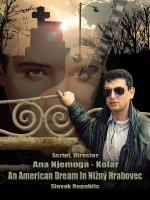
Americky sen v Niznom Hrabovci
Documentaire | betaSP | couleur | 10:0 | Slovaquie | 2000
Dans un contexte de relations complexes entre la majeure partie de la population et la communauté tzigane en Slovaquie, Gabriel apparaît, jeune gitan déterminé à créer une vie culturelle dans son petit village endormi. Le village se réveille parfois, mais la seule animation a alors lieu au pub. Gabriel offre plus : sa propre musique ainsi qu'un groupe folk, faisant des danses tziganes et non tziganes. Les habitants du village le regardent avec méfiance. Que s'est-il vraiment passé, et qu?est-ce qui n?appartenait qu?au rêve ? L'histoire ne répond pas à cette question. C'est seulement un témoignage d'une tentative continuelle faite par une personne qui croit en lui-même et en son peuple.
Ana Njemoga-Kolar est née en ex-Yougoslavie. Elle vit en République Slovaque depuis 1993. Elle a apporté sa contribution à la culture des deux pays. Ses pièces ont été retransmises à la Radio Beograd, Novy Sad, Sarajevo, Ljubljana? et en République Slovaque dans les émissions de la station de diffusion Slovaque. Elle est l'auteur de nombreuses pièces de théâtre, et est également publiciste. Dans ce nouvel environnement, elle a commencé à se consacrer aux documentaires. Elle a reçu de nombreuses récompenses pour ses ?uvres documentaires et littéraires. Ana Njemoga-- Kolar prépare également d'autres projets consacrés aux thèmes de son nouvel environnement, et qui, en effet possèdent toujours une nuance humaine universelle.