Catalogue > Faire une recherche
Résultats pour : Tout le catalogue
Christoph Oertli
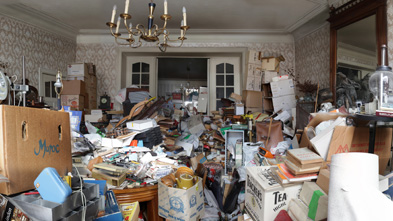
Monsieur René
Vidéo | hdv | couleur | 11:11 | Suisse, Belgique | 2012
The camera is invading an over-stuffed apartment, floating through an almost surreal material world. There is a presence of the real tenant, supposedly an old man, who we don?t get to see. Instead, a younger man in search of a place to rest is wandering about. The rooms reveal the standstill of a lonley person, who has separated himself from life and the outside world by pileing up consumer objects. A glance out of the window shows a formerly fancy boulevard in Brussels, ruled today by Moroccan traders and African immigrants.
1962* Winterthur/Switzerland, lives and works in Basel/Switzerland and Brussels/Belgium HGK Zürich, Graphic design; Swiss Television Zürich, stage design; HGK Basel, audiovisual design. videotapes, video installations, documentary videos. Works 1995-97 on cruise-ships around the world, lives 1998-2000 in Montréal/Canada and 2002-07 in Paris, then moves to Brussels. 2000-02 lecturer for video Fachhochschule Vorarlberg/Austria. From 2004 guest lecturer HGK Lucerne/CH.
Christoph Oertli, Ahmad El-Sawy
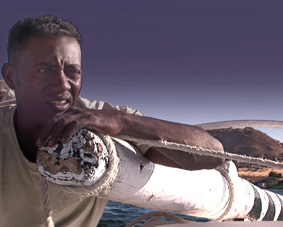
Sinbad - new voyages
Vidéo | dv | couleur | 43:0 | Suisse | 2009
This project consists of a musical live-performance by Ahmad El-Sawy (oud/voice/electronics) with a video-projection by Christoph Oertli. Starting point is the legend of Sinbad and his journeys on the sea. What would Sinbad get to see if he?d be travelling nowadays? This interrogation should produce images and music, which juxtapose past realities and myths with the actual situation of the Arab World. The cooperation of the Egyptian musician and the Swiss video artist combines different medias and view points: Ahmad El-Sawy has transferred Arabic poems into music. Some of those texts can be read as comment about our times dispite the fact that they originate from past centuries. The writers talk about the loss of values and most importantly about the loss of the own culture. Christoph Oertli has shot video images during two longer stays in Egypt and compressed these images into a visual strand, which resembles a journey through different centuries: landscapes, urban scenes and ultramodern building complexes slowly drift past the camera. A young man embodies todays? Sinbad; occasionally he?s travelling within his own country, but he undertakes as well virtual journeys at his computer, since means and possibilities are missing for travelling abroad.
1962* Winterthur/Switzerland, lives and works in Basel/Switzerland and Brussels/Belgium education: HGK Zürich, Graphic design; Swiss Television Zürich, stage design; HGK Basel, audiovisual design. Works as video artist, produces videotapes, video installations, documentary videos.
Christoph Oertli
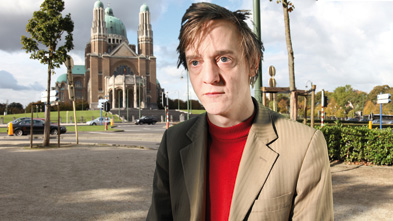
The ground is moving
Vidéo | hdv | couleur | 10:30 | Suisse, Belgique | 2010
1962* Winterthur/Switzerland, lives and works in Basel/Switzerland and Brussels/Belgium. HGK Zürich, Graphic design; Swiss Television Zürich, stage design; HGK Basel, audiovisual design. videotapes, video installations, documentary videos. Works 1995-97 on cruise-ships around the world, lives 1998-2000 in Montréal/Canada and 2002-07 in Paris, then moves to Brussels. 2000-02 lecturer for video Fachhochschule Vorarlberg/Austria. 2004/06/11 guest lecturer HGK Lucerne/CH.
Christoph Oertli
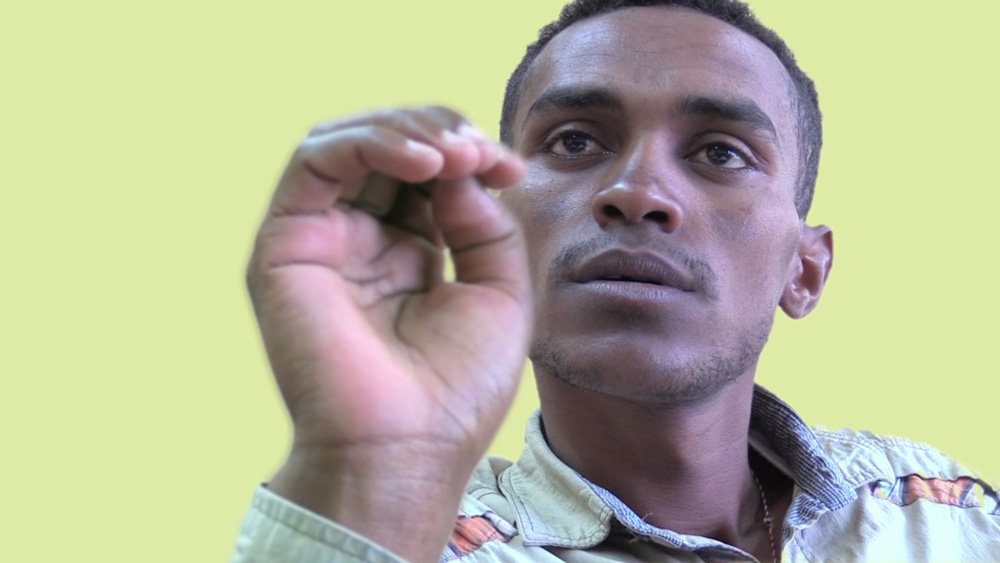
Tension Box
Doc. expérimental | hdv | couleur | 16:22 | Suisse | 2014
Two young Ethiopians tell about their lifes as students of Addis Ababa University; they focus on the sharing of a small room in the dormitory and the reality of a multi-ethnic country like Ethiopia. The observing camera shows the dormitory, as it were a stage, consisting of bunk beds, built-in cupboards and a corridor. Eight young men share this narrow space, where they sleep, eat, study or pray. They are Christians or Muslims, communicate in one of the many local languages or help themselves with English in order to understand each other. What may look like a refugee camp allows us actually to gain an insight into a community of young people, who prepare their future in a promising African country.
* Winterthur/Switzerland, lives and works in Basel/Switzerland and Brussels/Belgium education ZHdK Zürich, Graphic design; Swiss Television Zürich, stage design; FHNW Basel, audiovisual design. from 1995: videotapes, video installations, documentary videos, video for dance and theater. Works 1995-97 on cruise-ships around the world, lives 1998-2000 in Montréal/Canada and 2002-07 in Paris, then moves to Brussels. 2000-02 lecturer for video Fachhochschule Vorarlberg/Austria. 2004-14 guest lecturer HSLU Lucerne/Switzerland.

Christoph Oertli
Sensing Bodies
Doc. expérimental | 4k | couleur | 48:0 | Suisse | 2019
Le film traite de l‘utilisation de nos corps dans un environnement parfaitement structuré et construit. Le film se penche sur une société hautement organisée et explore les questions de l'expérience corporelle active par rapport à l'état statique de l‘expérience virtuelle. A quelle distance de la nature l‘homme peut-il vivre?
1962* Winterthur/Switzerland, lives and works in Basel/Switzerland. education ZHdK Zürich, Graphic design; Swiss Television Zürich, stage design; FHNW Basel, audiovisual design. from 1995: videotapes, video installations, documentary videos, video for dance and theater. Works 1995-97 on cruise-ships around the world, lives 1998-2000 in Montréal/Canada and 2002-07 in Paris, 2008-16 in Brussels. 2000-02 lecturer for video Fachhochschule Vorarlberg/Austria. from 2004 guest lecturer HSLU Lucerne/Switzerland.

Christoph Oeschger, Waltenspül/Schulze
Unlearning Flow
Documentaire | hdv | noir et blanc | 11:9 | Suisse | 2019
“Machining of Steel”, “Mating of Two Males”, “Dumdum Bullet Effect” and “String Figures” played by the Inuit, the Krahô or the Taulipang in Guyana exemplify that the Institute for Scientific Film (IWF) in Göttingen aimed at capturing all the movement processes of the world on celluloid. The scientific films that the IWF produced, archived and distributed were supposed to be “documents of reality”. Without using commentary, they should make movements visible, storable and re-analyzable at any time. Can there be pictures that are more real than others? The essay film “unlearning flow” examines both National Socialist prehistory and the legacy of the IWF. It reveals the ideology of the distant, objectifying camera view and also the active white washing of the Institute’s history after World War II. With their film, filmmaker Christoph Oeschger and the historians of media and knowledge, Sarine Waltenspül and Mario Schulze, touch only the tip of the iceberg: (war) research with film, the (re-)production of colonial power relations and the creation of (a lack of) knowledge through film.
Christoph Oeschger (1984*) lives in Zurich as an artist, photographer and publisher. In 2014 he founded the book publisher cpress an in 2020 cpressfilms an agency for artist films together with Christof Nüssli. He works with various forms of the documental. His work has been shown in various museums including Fotomuseum Winterthur (CH), Zentrum für Kunst und Medientechnologie , Karlsruhe (DE), Centre de la Photographie Geneve (CH). Mario Schulze (*1986, Halle/Saale) is a cultural scientist and scientific researcher who works on the history of exhibitions, object theories and scientific films. His doctoral thesis is due in 2017 under the title "How things learned to speak. A History of the Museum Object 1968-2000". He has taught at the universities of Leipzig, Berlin, Zurich and Frankfurt as well as at the Zurich Art Academy. Sarine Waltenspül (*1986, Basel) works as a media historian on scientific films. In 2018, she received her doctorate on cinematographic models in films. She co-directs the SNSF research project Aerial Photographs/Light Images and the DFG network Lens On! Furthermore, she has been involved in various functions in the conception and production of music videos, theatre documentaries and feature films and was head of the "Hungerkünstler Verlag".
Martin M. Oesterheld
LA MULTITUD
Documentaire | hdcam | couleur | 60:0 | Argentine | 2012
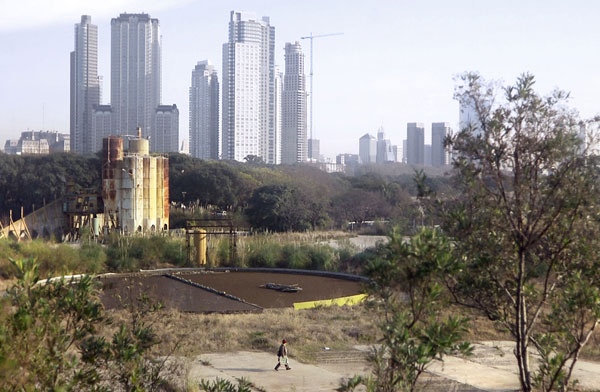
In the margins of the city, two lots sharing coincidences are placed in a dialogue. They were both locations for entertainment built by different dictatorships: The Sport City of La Boca, and the Interama amusement park. Today both places are in ruins and their surroundings harbor settlements and shanty towns where thousands of families live, many of them migrants and in extreme poverty. Through a thorough investigation, the documental shows the transit of those characters as they frequently pass though these places, and it depicts the present day over the tracks history left on the urban landscape. The result is a Buenos Aires City seen from its ends with perplexity, beauty, emotion and a neutral eye. The film combines densities with an analytical storytelling that is yet deeply atmospheric and transforming through the reality it manages to capture.
Born in 1974, Martín M. Oesterheld is a visual artist with a scholarship from the UBA / CC Rojas Research Lab for Arts Parctices. His most recent work includes the documentary "La Multitud" (Crowd), the video shorts ?Tránsito? (Transit), and ?Para la Defensa? (To the defense) made together with Julián D?Angiolillo and premiered in the Tecnopolis Exhibition.

Barbara Oettinger, Sabatini Pedro
Sombra
Animation | mp4 | couleur | 8:12 | Chili | 2020
L'une de nos grandes préoccupations pendant la pandémie a sans doute été de savoir à quel point nous serions affectés physiquement, et mentalement, par le confinement et l’impossibilité de voir nos proches. Pour répondre à cette question, et en lisant certains articles trouvés sur Internet, nous avons trouvé une expérience menée par Donald Hebb dans les années 50, au cours de laquelle il a isolé (séparément) un certain nombre de volontaires dans un espace totalement dépourvu de stimuli. Dans ces conditions extrêmes, ils ont développé au fil du temps de multiples hallucinations auditives et visuelles. "Sombra" est une vidéo qui a été réalisée dans des conditions de confinement dues à la pandémie, pendant laquelle nous avons aussi été privés de tout contact humain significatif. Ainsi, "Sombra" explore, métaphoriquement, les effets de l'isolement en relation avec notre perception du corps, du temps et de l'espace. Comme mentionné plus haut, notre perception sensorielle peut être affectée par l'isolement, ce qui amène notre esprit à créer un monde de science-fiction, à remettre en question l'idée d'authenticité, ou à se demander si ce que nous voyons et entendons est bien réel. Pour réaliser "Sombra", nous avons utilisé une plateforme de jeu vidéo, dans laquelle nous réutilisons des scénarios et des personnages déjà créés / simulés, en modifiant certaines fonctionnalités et certains éléments esthétiques typiques de ces jeux, et en les réorganisant au sein du scénario virtuel, dans le but de produire un film court de machinima. Les personnages et les mondes fictifs sont clonés numériquement, versions multiples d'un personnage piégé et dupliqué un nombre infini de fois, qui parvient parfois à "s'échapper" de son esprit en projetant son corps sur d’autres informations simulées, générant diverses couches de représentations. *Projet en collaboration avec Pedro Sabatini.
Bárbara Oettinger est née à Santiago (Chili) en 1981. Elle a obtenu une Licence en beaux-arts à l'Université du Chili, Santiago (Chili), et un Master à la Pontificia Universidad Católica de Chile, Santiago (Chili). Elle a participé à diverses expositions et projections dans des centres culturels, des galeries et des musées au Chili, au Pérou, en Bolivie, en Argentine, en Uruguay, au Brésil, aux États-Unis, en Inde, en Indonésie, en Ukraine, en Slovénie, en Espagne, en France, au Portugal, en Corée, et à Taïwan. Elle suit actuellement des études de Master of Fine Arts en pratiques intégrées au Pratt Institute, New York (USA), financé par le gouvernement chilien et la CONICYT – Comisión Nacional de Investigación Científica y Technológica. Ses projets actuels sont des rencontres avec des dialogues, qui mettent l’accent sur des témoignages conservant un sens historique, tout en racontant l'expérience psychologique. Des témoignages basés non seulement sur l'immédiateté et l'exactitude supposées de la source historique, mais aussi sur la construction subjective de récits différents. Pedro Sabatini est né à Santiago (Chili) en 1979. Il est titulaire d'une Licence en cinéma. Ces trois dernières années, il a travaillé à la production de films publicitaires. Il sait d’expérience s'adapter à toutes sortes de budgets, tout en restant compétitif. Ses contributions sont liées à sa fascination pour le cinéma indépendant et à sa recherche de nouveaux langages. Son travail a été reconnu comme meilleur film court de fiction à la UNIACC – Universidad de las Artes, Ciencias y Communicaciones, Santiago, Chili; a reçu le prix Best international documentary ARCOS, Santiago (Chili); et a fait partie de la sélection officielle au Festival Biarritz Amérique Latine (France).
Dietmar Offenhuber, Sam AUINGER
Heinz weiss (naredmanet)
Vidéo expérimentale | dv | couleur | 4:0 | Autriche | 2005
fghrt
Dietmar Offenhuber, born 1973, graduated in Architecture and has been working since 1994 in animation, interactive environments and digital architecture. Between 2002 and 2004 Dietmar worked as key researcher in the Interactive Space departement at the Ars Electronica Futurelab. Since Fall 2004 he is Professor for animation and interactive media at the University of Applied Sciences in Hagenberg / Austria.

Anna Ogden Smith
The Lie
Vidéo | | couleur | 2:40 | Liban | 2008
Anna Ogden Smith
The Dream
Vidéo | | couleur | 2:10 | Liban | 2008
Anna Ogden-smith
The Dream (VHS: 1989-1994)
0 | dv | couleur | 4:20 | Liban | 2008
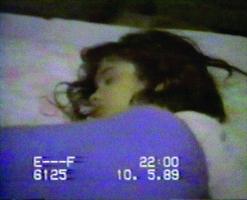
En tombant par hasard sur une collection de vidéos maison réalisées par sa mère, datant de 1989 à 1994, Anna Ogden-Smith s?est tout à coup intéressée à la manière dont les archives VHS sont actifs dans processus de filtration de notre mémoire.
Née à Beyrouth (Liban) en 1984, Anna Ogden-Smith a obtenu une licence en design graphique à l'Université américaine de Beyrouth en 2006. Depuis, elle a principalement travaillé en free-lance dans le design imprimé et a poursuivi sa vocation de danseuse contemporaine à Londres (Royaume-Uni) et à Beyrouth. Récemment, elle a commencé à explorer différents médiums, en réalisant deux autofictions, « Le mensonge » et « Le Rêve ».
Senem Gökce Ogultekin, Levent Duran
Void
Film expérimental | digital | couleur | 16:57 | Turquie, Allemagne | 2024
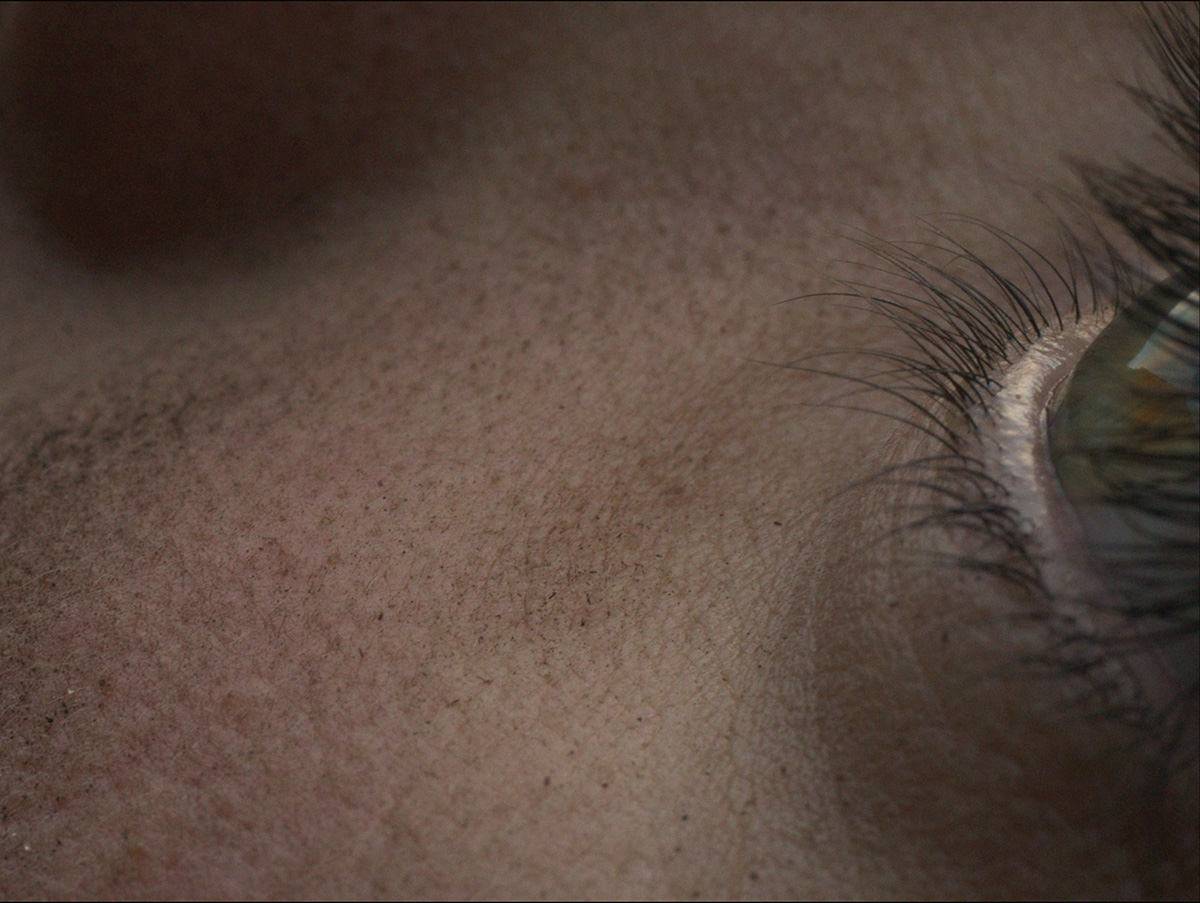
While the shade of a tree is being stolen away, bodiless organs sit in the enormous gaps of the drained earth. Under the constant noise of unseen machines, disjointed body parts touch the drying soil and breaths are only audible to insects. In this quiet, distorted world, old songs of goodwill are sung: “Future times of vain sorrow do not disturb our gentle sleep...” While we are waiting for the miracle to come the sand continues to fly.
SENEM GÖKCE OGULTEKIN work spans the disciplines of choreography, performance, vocal work and film. In 2019, "Dun/Home" was chosen for Artist´s Film International, an international event initiated by Whitechapel Gallery in London and was shown at various museums and galleries of the world. In 2020, Senem Gökce Ogultekin was awarded the Allbau Foundation Culture Prize and was appointed to the Young College by the North Rhine-Westphalian Academy of Sciences and Arts in 2021. LEVENT DURAN is a multidisciplinary artist and writer. They studied sociology at Istanbul University and film at the Fine Arts University of Hamburg, where they obtained their master's degree. Their writings have been published in major magazines and newspapers in Turkey, and their visual creations (video, painting, sculpture, installation) have been exhibited internationally. Their film project "Murmuring Draft Dodgers" received the Courageous Citizen Award from the European Cultural Foundation.

Noriko Okaku
The Interpreter
Animation | hdv | couleur | 6:29 | Japon, Royaume-Uni | 2015
The Interpreter contains a vague narrative that follows the structure of original tarot card, Major Arcana, such as The fool’s journey throughout the rest of 21 scenes to acquire enlightenment towards the end. Okaku created her original Derbyshire tarot card during a residency in Derby, England (2015). Each card draws on the artist’s own insight of Derbyshire’s history and myths - spanning a myriad of symbolic imagery. The animation is revealing an intimate interpretation of stories between each card. As this work is titled ‘”The Interpreter”, it contains many metaphor expressions in order to query audience what is their own interpretation. It is similar to how people play with tarot card. It has the multitude of possible interpretations. Messages can be revealed depending on which combination of the cards they pick - the translation of the cards are distinct as to who is reading, where they are reading, when they are reading and what intention is being transmitted in the moment of the reading.
Noriko Okaku was educated at Chelsea College of Art and Design and the Royal College of Art, completing an MA (RCA) in Animation. She is a collage artist who borrows, adopts, copies and recycles existing images to explore the diverse avenues of perception.

Yuki Okumura
Countdown in NYC
Art vidéo | dv | couleur | 1:43 | Japon | 2006
L'artiste a filmé des gens sur la route à New York portant des t-shirts avec des nombres, et les a rassemblés de façon à créer un décompte de 99 à 0. Il s'agit de révéler ou de reconstruire un ordre caché derrière le chaos de la ville.
Yuki Okumura est né à Aomori, au Japon, en 1978. Il vit à Tokyo et crée des installations vidéo. Son oeuvre à été montrée dans son pays et sur le plan international. Il a reçu le grand prix du Philip Morris Art Award en 2000. En 2006, il a obtenu de l'Asian Cultural Council Fellowship la possibilité d'être artiste en résidence à Location One, à New York. Il a participé à d'autres programmes de résidence comme le Taipei Artist Village, à Taipei et l'Irish Museum of Modern Art, à Dublin, en 2007.
Erwin Olaf
dusk & dawn
Vidéo | 35mm | couleur et n&b | 5:12 | Pays-Bas | 2009
Dusk: A mother mourns the death of her husband while her son questions his existence. Dawn: A mother mourns the death of het child, while her husband tries to deal with the death and the misshapen newborn.
Erwin Olaf Born in Hilversum in the Netherlands in 1959, Erwin Olaf lives and works in Amsterdam since the early 80`s. His current studio is situated in a former church hall. Mixing photojournalism with studio photography, Olaf emerged in the international art scene in 1988 when his series `Chessmen` was awarded the first prize in the Young European Photographer competition. This award was followed by an exhibition at the Ludwig Museum in Cologne, Germany. Since then Olaf has continued to explore issues of gender, sensuality, humor, despair and grace in each successive series. Printing his early work in documentary style black-and-white, he first gradually introduced color and then digital manipulation. There is great contrast between each series. Mature (1999): golden-hued portraits of elderly women in the poses of kittenish supermodels; Fashion Victims (2000): a lewd commentary on the consumerism of sex and designer labels; Royal Blood (2000): minimalist white-on-white portraits, depicting the vengeful nature of members of the aristocracy who have suffered unsavory deaths; Paradise (2001): picturing a dark and baroque underworld of gleeful clowning and lunacy; Separation (2003) portraying an ice cold and introverted family in a sterile living room. In his four most recent series Rain, Hope, Grief and Fall, Erwin Olaf returns to classic imagery with minimal computer retouching. Video and film offer new possibilities to explore. His first film Tadzio (1991, co-directed with painter F. Franciscus) was soon followed by comic videos for children`s television, short documentaries, music clips and commissions by the Dutch National Ballet. Recently Olaf has created autonomous video works like Separation, Rain and Grief, starring models who also appear in the accompanying photo series. In the films they play a different character, as though his moving images provide a parallel history to his color photographs. These short films have been selected for film festivals all over the world. Over the years many of Olaf`s works - from his unabashed nude portraiture and intense symbolism to the unflinching gaze in his blood-drenched images of staged violence - have provoked controversy. Not surprisingly, this ability to attract attention has seen his work embraced by the advertising world, resulting in commercials for Lavazza, BMW, Microsoft and Nintendo among many others. Lately Erwin is frequently shooting in commission for magazines such as The New York Times Magazine, The Sunday Times Magazine, Elle and Citizen K. In 1999 his worldwide campaign for Diesel Jeans won him the coveted Silver Lion at the Festival for Advertising in Cannes. He was awarded the same prize two years later for his imagery produced for Heineken. Among numerous other international art and media prizes, in 2006 he was awarded Photographer of the Year in the International Color Awards. In 2007 Kunstbeeld magazine chose him Artist of the Year of the Netherlands. Recently he received a Lucie Award for his entire oeuvre
Erwin Olaf
Grief
Vidéo expérimentale | dv | couleur | 3:59 | Pays-Bas | 2007
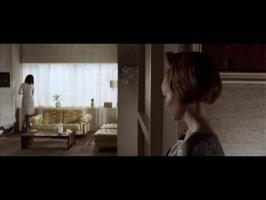
Grief NL, 2007, 3`59? Semblables à du tonnerre, des bruits accompagne l'image d'une femme qui, renfermée sur elle-même, fixe par la fenêtre. Une voix radiophonique, partiellement intelligible, fait un rapport sur certain évènements, et une autre femme entre dans la pièce en hésitant. Aucune des deux femmes ne dit un mot; le silence persiste entre les deux. La pluie, la radio, la tension du visiteur, se maintiennent en haleine. Les coups de tonnerre interagissant avec la radio prennent tout à coup une sonorité menaçante et le public commence à suspecter une connection entre l'orage, les vagues messages se glissant dans la pièce et l'état de santé mentale de la femme qui attend qui reste physiquement inapprochable pour l'autre. Elle continue de tourner son dos à l'autre; elle cache ses larmes silencieuses. En une seule scène et avec des moyens minimes, "Grief" conjures une histoire entière de développement miséreux.
Erwin Olaf was born in 1959 in Hilversum, The Netherlands. Olaf has a passionate love affair with life, and enjoys to the full everything it has to offer. His oeuvre is a manifestation of his passion and of his genuine engagement with his subjects. Olaf has been professionally active for twenty-five years and in this period he has succeeded in evolving from a participating photographer to a director who creates his own reality. Olaf's pictures are filled with humor, imagination and exuberance, but they go much further than simple visual intrigue. His works deal with freedom, beauty, loneliness, and being different. He convinces his public in a shameless and versatile manner, questioning established norms. Olaf consistently expresses his own standpoints, fulminating against narrow-mindedness, smugness, and rigid norms, but not without humor, bravura and bite. An authentic Olaf is a blow to the head, ruthlessly direct, but simultaneously wrong footing the viewer and poking fun. One reviewer remarked that in Erwin Olaf's photographs everyone stares unwaveringly into the lens--thus looking straight into the photographer's big blue eyes, as it were. Olaf approaches the world openly and enthusiastically and this is also the way in which, in his work, he dares to enter the public debate. Olaf is a master in generating his own world, whether this be in autonomous photographic series or film projects. He is also hypercritical, nothing escapes him, so that pictures are created with a placement composed so meticulously that it is almost painful to examine. With these, Olaf manages to produce fictitious yet convincing images of bygone days, fairytales and dreams, populated by historical figures, elves, dwarves, lunatics, and god knows who.
Erwin Olaf
La tristesse riche
Fiction expérimentale | hdcam | couleur | 10:30 | Pays-Bas | 2010
Erwin Olaf was born in 1959 in Hilversum, The Netherlands. Olaf has a passionate love affair with life, and enjoys to the full everything it has to offer. His oeuvre is a manifestation of his passion and of his genuine engagement with his subjects. Olaf has been professionally active for twenty-five years and in this period he has succeeded in evolving from a participating photographer to a director who creates his own reality. Olaf's pictures are filled with humor, imagination and exuberance, but they go much further than simple visual intrigue. His works deal with freedom, beauty, loneliness, and being different. He convinces his public in a shameless and versatile manner, questioning established norms. Olaf consistently expresses his own standpoints, fulminating against narrow-mindedness, smugness, and rigid norms, but not without humor, bravura and bite. An authentic Olaf is a blow to the head, ruthlessly direct, but simultaneously wrong footing the viewer and poking fun. One reviewer remarked that in Erwin Olaf's photographs everyone stares unwaveringly into the lens--thus looking straight into the photographer's big blue eyes, as it were. Olaf approaches the world openly and enthusiastically and this is also the way in which, in his work, he dares to enter the public debate. Olaf is a master in generating his own world, whether this be in autonomous photographic series or film projects. He is also hypercritical, nothing escapes him, so that pictures are created with a placement composed so meticulously that it is almost painful to examine. With these, Olaf manages to produce fictitious yet convincing images of bygone days, fairytales and dreams, populated by historical figures, elves, dwarves, lunatics, and god knows who.

Jaamil Olawale Kosoko, Ima Iduozee
Chameleon (A Visual Album)
Vidéo | hdv | couleur | 21:16 | USA, Allemagne | 2020
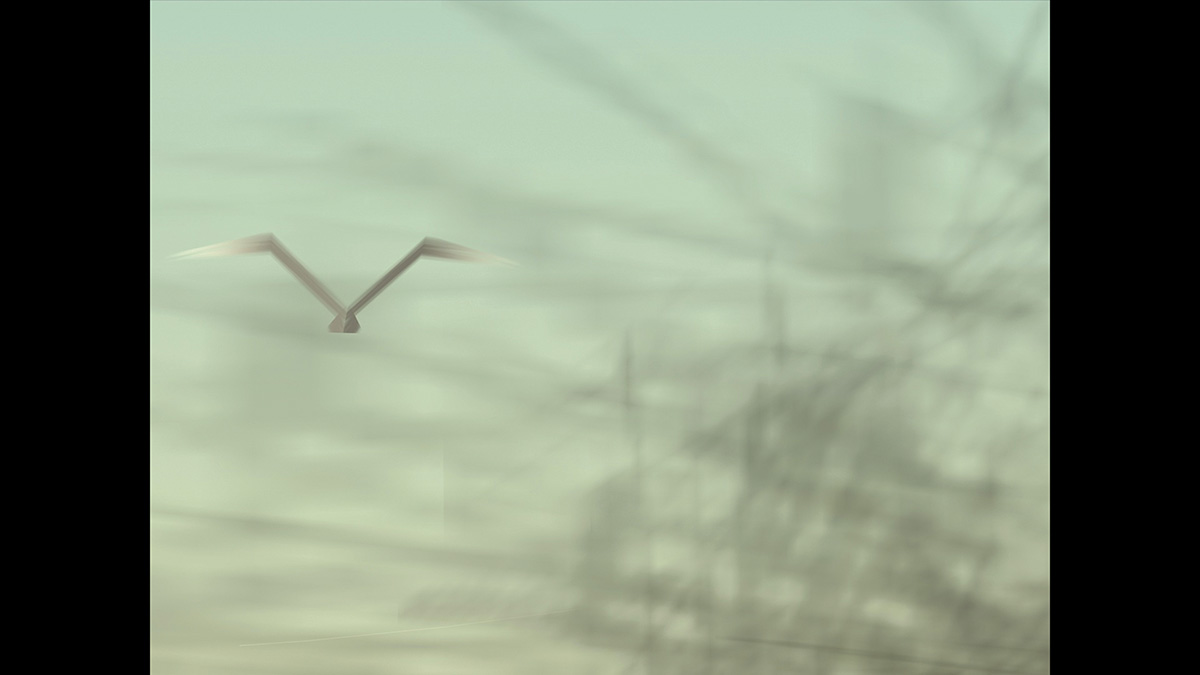
Chameleon is an experimental visual album inspired by the radical queer feminist genre of the “Biomythography” which refers to Audre Lorde’s foundational work entitled Zami: A New Spelling of My Name published in 1982. It combines history, biography, and myth, and holds a literary perspective that serves as a guiding light for complex narrative storytelling rooted in a queer, Black self-defined, feminist imagination.
jaamil olawale kosoko, (they/them) of Yoruba and Natchez descent is an award winning filmmaker, movement artist, poet, and facilitator whose work in embodied poetics and performance has been presented internationally and is rooted in the intergenerational passage of Black feminist knowledge, queer theories of the body, and sacred rituals of intimacy & wellness as a means to craft perpetual modes of freedom, healing, and care where/when/however possible. Their new book, Black Body Amnesia: Poems & Other Speech Acts was released in Feb. 2022. jaamil is the recipient of a MacDowell Fellowship, PEW Fellowship in the Arts, Princeton Arts Fellowship, 2019 Red Bull Writing Fellowship, and a 2017 Cave Canem Poetry Fellowship. Their works in poetry, curation, performance and education have taken them all around the world having performed and taught in over 21 countries on 5 continents including Morocco, South Africa, Germany, Finland, Sweden, UK, Norway, Switzerland, Canada, Mexico, Japan, and throughout the Americas. Of Nigerian and Finnish descent, Ima Iduozee is a choreographer, director, dancer and filmmaker based in Helsinki, Finland. His debut solo work, This is the Title, premiered in 2012 and went on to garner international acclaim, touring in 15 countries across Europe, North America and Asia. In 2015 the annual honorary prize of the Finnish Critics Association, Critics Spurs´, was given to Iduozee, as an acknowledgement for the best artistic breakthrough of the year. Earlier commissions include works for The Finnish National Theatre, Aalto International, Stockholm City Theatre, Helsinki City Theatre, Finnish National Opera and Helsinki International Film Festival. In 2016 Iduozee graduated from the Arts University of Helsinki (Theatre Academy).
Hoisan Oleksandr
analohiia prostoru
Doc. expérimental | mp4 | couleur | 12:0 | Ukraine | 2022
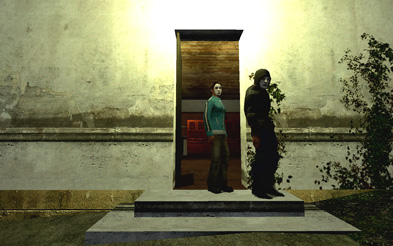
Due to long-term observation of the NPCs (Non-Playable Characters) in the classic GTA: San Andreas (2004) video game the player witnesses certain documentary events that take place in different parts of the in-game world. To some extent, the constant movement which accompanies the player-observer throughout the in-game space is the only salvation from quotidian violence on the streets but not always.
Oleksandr Hoisan (b. 2001, Ivano-Frankivsk, Ukraine). A member of the NGO CUC (Contemporary Ukrainian Cinema), a member of the Ukrainian Guild of Directors. The first student films participated in more than 100 national and international festivals (incl. Oberhausen, Sarajevo Film Festival, FIDMarseille, BRNO16, Molodist), received awards. In 2022, he graduated from the bachelor's degree in film and television directing at the Kyiv National University of Culture and Arts, in the Roman Shirman studio. Currently, he continues his studies at the master's degree.
Joachim Olender
Tarnac. Le chaos et la grâce
Animation | hdv | couleur | 23:0 | France | 2012
Le 11 novembre 2008, cent cinquante policiers envahissent le petit village de Tarnac en Corrèze. Neuf personnes sont soupçonnées d?avoir posé des crochets métalliques sur des caténaires pour désorganiser les lignes SNCF. A l?issue de leur garde à vue, cinq d?entre elles sont placées en détention provisoire pour terrorisme. Le principal suspect restera incarcéré durant six mois sans preuve à l?appui. Voici l?affaire de Tarnac. Ce film en retrace la fiction.
Joachim Olender est scénariste, réalisateur et vidéaste. Sa démarche découle d?un va-et-vient entre l?écriture et l?image, le cinéma et la vidéo. Il a étudié le droit et le cinéma à Bruxelles. En 2006, il débute une thèse à l?EHESS sur la faille dans le cinéma US des années 2000. Accompagné par le cinéaste Luc Dardenne, il écrit un scénario de long métrage, adapté du roman Les Choses de Georges Perec, dont une première apparition se déroule à la BNF dans l?exposition « Choses lues choses vues » conçue par Alain Fleischer (fin 2009). Il est publié dans Pylône Magazine. En 2010, il intègre Le Fresnoy studio national des arts contemporains et réalise Bloody eyes (fiction 22 min, prod. Le Fresnoy, 2011), tiré d?une nouvelle de Luc Dardenne. En 2012, il réalise Tarnac. Le chaos et la grâce, documentaire d?animation entièrement tourné dans un jeu vidéo, qui explore les méandres de cette fiction d?Etat. En 2012, il entame le développement d?un documentaire sur Herman Daled et sa collection d?art conceptuel rachetée par le MOMA et s?associe à Camille de Toledo et Grégoire Hetzel dans l?opéra vidéo « La chute de Fukuyama ». Il poursuit actuellement sa recherche avec Le Fresnoy. Joachim Olender est né en Belgique en 1980. Il vit et travaille entre Paris et Bruxelles.