Catalogue > Liste par artiste
Parcourez la liste complète des artistes présentés dans le cadre des Rencontres Internationales depuis 2004. Utilisez le filtre alphabétique pour affiner vos recherches.
Dominik Ritszel
Catalogue : 2025The Body Dissolver | Doc. expérimental | 0 | couleur | 11:0 | Pologne | 2023
Dominik Ritszel
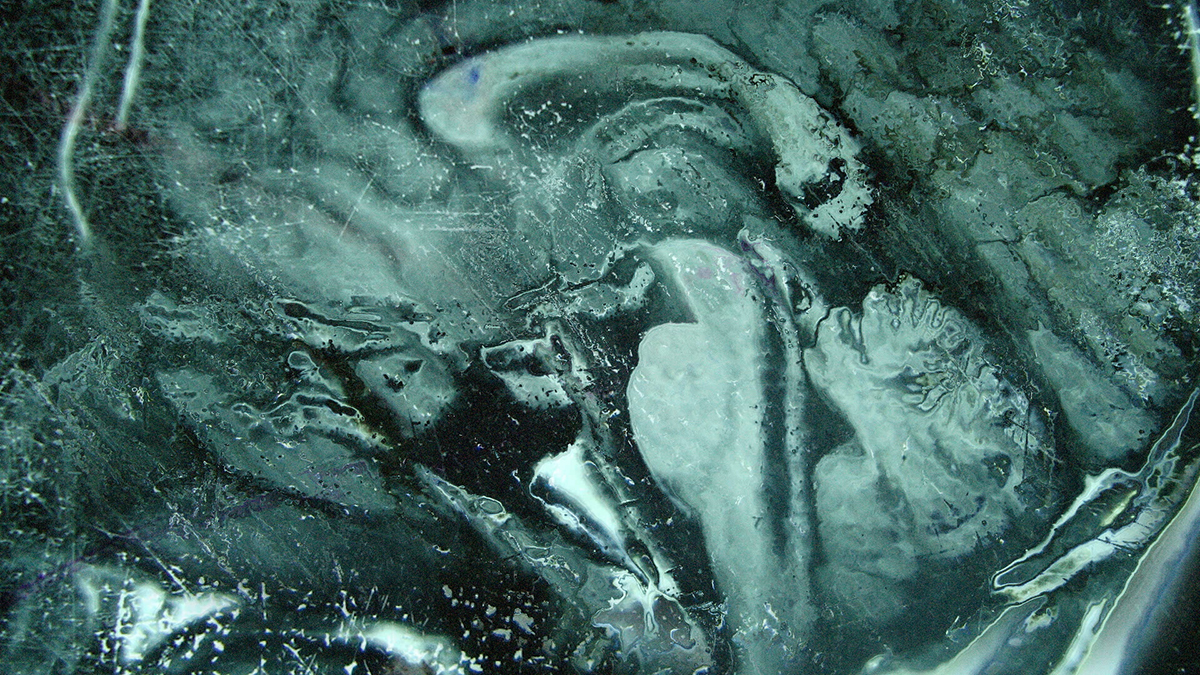
The Body Dissolver
Doc. expérimental | 0 | couleur | 11:0 | Pologne | 2023
“The Body Dissolver” is based on interviews with professional boxers recalling the moment they were knocked out. The Film combines documentary and fictional elements into a dense parafiction, tinted with body horror genre. Unreal 3D animations generated by the artist are confronted with found footage and the images of human bodies with the representations of imaginary, hyperbolic machines. The storyline reveals the recurring fantasies about the abandonment of the body and the visions of ecstasy, exploited in various spiritual discourses and pop-culture alike.
Dominik Ritszel was born in 1988. A visual artist who creates films, objects and video installations. In 2013, he graduated from the Academy of Fine Arts in Katowice at the Faculty of Workshop Graphics. In his works, he refers to phantasms and images of masculinity set in historical, cultural, and political contexts. His creations constitute a critical reflection on issues related to power, institutions and mechanisms of exclusion.
Dominik Ritszel
Catalogue : 2023Ziemia wch?onie to wszystko | Vidéo expérimentale | mp4 | couleur | 8:48 | Pologne | 2022
Dominik Ritszel
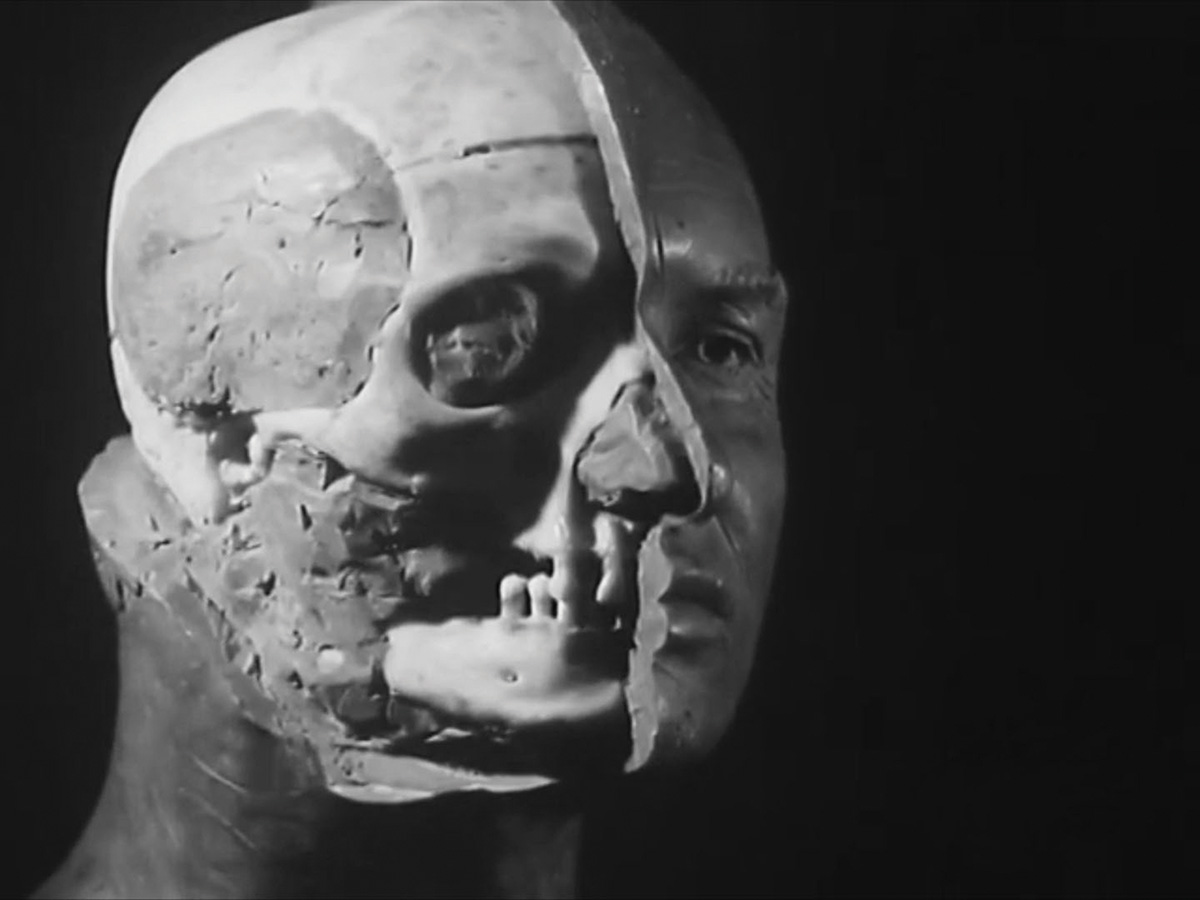
Ziemia wch?onie to wszystko
Vidéo expérimentale | mp4 | couleur | 8:48 | Pologne | 2022
The change of the political system that occurred in Poland in the early 1990s brought not only hopes related to the social and economic transformation, but also anxieties and fears. At the time, such fears were treated as evidence of incompatibility with the new capitalist order and thus consistently relegated to the margins of public debate. The film is an attempt to recall the traumatic experiences of this period. In this context, the concept of trauma is directly related to the process of repression, the essence of which coincides with the naturalizing, hegemonic discourse which justifies the social costs of transformation as necessary on the way to modernization. "The Earth Will Swallow it All" is a story about Upper Silesia. It was based on the accounts of mining families, the archives of the Polish Film Chronicle, 3D animations and seismographic charts. The collected materials connect into a description of the social catastrophe, which is shown from the perspective of people who in the past were united by the working-class community.
Dominik Ritszel (b. 1988) active in the area of visual arts. Working with film and video instalations. B.A. Graphics M.A. (2013), doctoral degree (2020) graduated at the Academy of Fine Arts in Katowice. Winner of the scholarship Young Poland, listed on the Forbes lists 30 Under 30 Europe, Prize winner of the Trieste Contemporanea Award 2015. Lives and works in Katowice, Poland.
Catalogue : 2022Studium postaci | Vidéo | mp4 | couleur | 7:46 | Pologne | 2020
Dominik Ritszel
Studium postaci
Vidéo | mp4 | couleur | 7:46 | Pologne | 2020
Figure Study is a video collage consisting of found footage and the artist's original recordings. It consists of a video installation, archival material and training videos filmed by the US government during the Cold War, as well as recordings of the Spartakiada, a mass sports competition organised in the Eastern Bloc during the period of Soviet domination. In his work, Dominik Ritszel manipulates the content of these materials by juxtaposing them with his own images, focusing on individual narrative elements as well as formal techniques. The issues raised in the work, ie. public safety, physical hygiene and a healthy lifestyle outline the political meanings attributed to the body, especially the male body. The figurative representations of unified military force and society as a mass aim to reveal the hidden content contained in the archival recordings and reconstruct a vision of patriarchal society.
(b. 1988) active in the area of visual arts. Working with film and video instalations. B.A. Graphics M.A. (2013) graduated at Academy of Fine Arts in Katowice, (2020) Doctoral degree in fine arts at Academy of Fine Arts in Katowice. Winner of the scholarship YOUNG POLAND (2014) and the Polish Ministry of Culture and National Heritage (2017). Prize winner of the Trieste Contemporanea Award 2015, Listed in Forbes magazine in category of Arts (2016). Lives and works in Katowice, Poland. Co-op with Szara Gallery in Warsaw.
Paul Ritt
Catalogue : 2015Connected | Vidéo | hdv | noir et blanc | 2:2 | Pays-Bas | 2014
Paul Ritt
Connected
Vidéo | hdv | noir et blanc | 2:2 | Pays-Bas | 2014
Connected,a video/drawing of a short journey through fragments of intuitive moments. The work is about following, exploring known/unknown directions, registering, leaving traces,emerging into patterns, maps of the free spirit.
Paul Ritt was born in the Netherlands (1957). He studied monumentale vormgeving at the Academie Beeldende Kunst, Maastricht, (1980-1984). He lived and worked in Australia from 1984 -1999. After studying for the Advanced diploma of Arts in Electronics, design and interactive media at the Royal Melbourne Institute of Technology Melbourne (1997-1998), he started making short films.
Cao River Yuhao
Catalogue : 2026The Glass Essays | Film expérimental | dcp | couleur | 16:33 | Chine, Royaume-Uni | 2025
Cao River Yuhao
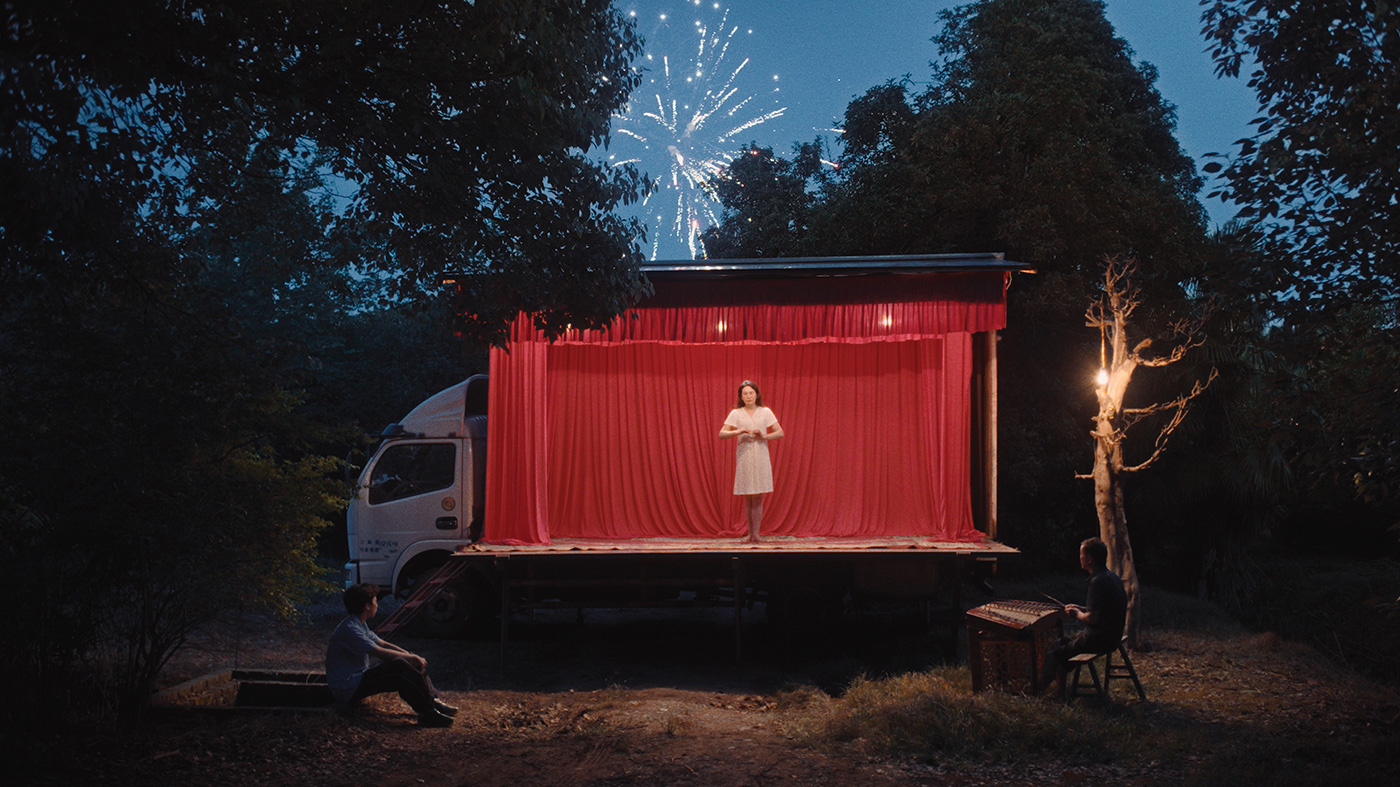
The Glass Essays
Film expérimental | dcp | couleur | 16:33 | Chine, Royaume-Uni | 2025
Unable to sleep, a young man is lured into the woods by a mysterious sound. He follows it across a river, through forest and shadows, until he finally comes upon the red curtains of a travelling funeral performance stage. The mesmerising mourning recital that unfolds is a dreamlike invitation into a sensorial exploration of memories, rituals, and ghosts.
River Yuhao Cao ??? (b. 1997, China) is an artist filmmaker and performance artist based in London. Inspired by the performative aspects of mourning in regional Chinese folk traditions, River explores it as a regenerative practice. Through this lens, he reconstruct landscapes from his early memories of Southern China in his work, while uncovering the perspective of the revenant. River is interested in how lamentation as a translation strategy interprets the fluidity of the subject. Cao’s first artist film ‘The Glass Essays’ has been featured in Visions du Réel, Switzerland; Vancouver International Film Festival, Canada; Kassel Dokfest, Germany; South London Gallery, UK; Middlesbrough Institute of Modern Art (MIMA), UK; His previous work has been featured in B3 Biennial of the Moving Image, Germany; Tofu Collective, Denmark; Sadie Coles HQ, UK; Saatchi Gallery, UK; Nottingham Contemporary, UK; and the London Institute of Contemporary Arts (ICA), among others.
Esteban Rivera Ariza
Catalogue : 2016Die Versteinerten | Vidéo | hdv | couleur | 7:27 | Colombie, Allemagne | 2015
Esteban Rivera Ariza
Die Versteinerten
Vidéo | hdv | couleur | 7:27 | Colombie, Allemagne | 2015
An interview with David Stodolsky, member of the Cryonics Institute, who guides us trough the Building-Monument built over the previous house of Walter Gropius in Dessau, Germany. Renovated by Bruno Fioretti Marquez Architects in 2008, the construction reproduces the original volume of Gropius` house. In the film, the house works as a metaphor of what is fossilized. The idea of Modernism remains in this case in a fossil state, and survives in time as a trace of what once was. This video is part of a reflection on the act of conservation (of ideas, of bodies) as a human activity.
Esteban Rivera, Bogotá, Colombia (1981). He is finishing his Master studies in Art and Media in the Arts University in Berlin (Universität der Künste, Berlin) under Prof. Ai Weiwei and also as student of Prof. Anna Anders. He studied Graphic Design and a Master in Arts in the National University of Colombia (Universidad Nacional de Colombia). He makes films and videoinstallation and currently works in Berlin.
Jorge Rivero
Catalogue : 2010La presa | Doc. expérimental | 35mm | couleur | 20:0 | Espagne | 2009

Jorge Rivero
La presa
Doc. expérimental | 35mm | couleur | 20:0 | Espagne | 2009
Ben Rivers
Catalogue : 2019Trees Down Here | Doc. expérimental | 16mm | couleur | 13:56 | Royaume-Uni | 2018
Ben Rivers
Trees Down Here
Doc. expérimental | 16mm | couleur | 13:56 | Royaume-Uni | 2018
Trees are the silent characters, narrating the architecture and life of Churchill College (opened in 1960) through its natural history. 6’s Cowan Court (completed in 2016) inverted the spatial and material order of the picturesque Brutalism of the original college, shifting its mineral world of brick and shuttered concrete to timber. Cowan Court’s oak, both new and old, defines its structure and in turn encloses a central court filled with recently planted birch trees. The analogue materiality of Churchill College is matched by the film which, like the architecture and landscape, leaves traces of its own development. The human habitat is seen through nature ‘ swaying trees, lost animals, birds of prey, the seasons “ to create a new dreamlike environment in which any distinction between human life, architecture and nature is erased.
Ben Rivers studied Fine Art at Falmouth School of Art, initially in sculpture before moving into photography and super8 film. After his degree he taught himself 16mm filmmaking and hand-processing. His practice as a filmmaker treads a line between documentary and fiction. Often following and filming people who have in some way separated themselves from society, the raw film footage provides Rivers with a starting point for creating oblique narratives imagining alternative existences in marginal worlds. He is the recipient of numerous prizes including: FIPRESCI International Critics Prize, 68th Venice Film Festival for his first feature film Two Years At Sea; the Baloise Art Prize, Art Basel 42, 2011; shortlisted for the Jarman Award 2010/2012; Paul Hamlyn Foundation Award for Artists, 2010. Recent exhibitions include: Slow Action, Hepworth Wakefield, 2012; Sack Barrow, Hayward Gallery, London, 2011; Slow Action, Mattâ’s Gallery, London and Gallery TPW, Toronto, 2011; A World Rattled of Habit, A Foundation, Liverpool, 2009. Artist-in-focus include Courtisane Festival; Pesaro International Film Festival; London Film Festival; Tirana Film Festival; Punto de Vista, Pamplona; Indielisboa and Milan Film Festival. In 1996 he co-founded Brighton Cinematheque which he then co-programmed through to its demise in 2006 “ renowned for screening a unique programme of film from its earliest days through to the latest artistâ’s film and video.
Ben Rivers
Catalogue : 2017There is a Happy Land Further Awaay | Film expérimental | 16mm | couleur et n&b | 20:0 | Royaume-Uni | 2015
Ben Rivers
There is a Happy Land Further Awaay
Film expérimental | 16mm | couleur et n&b | 20:0 | Royaume-Uni | 2015
THERE IS A HAPPY LAND FURTHER AWAAY (20 mins, S16, col/b+w, 2015) There Is A Happy Land Further Awaay (2015), captures the landscapes of the remote volcanic Republic of Vanuatu archipelago, before they were devastated by Cyclone Pam in early 2015, the footage becoming a ghostly document of an ecosystem now irrevocably altered. A hesitant female voice reads a poem by Henri Michaux, recounting a life lived in a distant land, full of faltering and mistakes. Island imagery of active volcanoes, underwater WW2 debris, children playing, and wrecked boats transform into intangible digital recollections of the island, made on the opposite side of the world. Images of the eroded land merge with eroding film, a lone figure on a boat drifts at sea.
Ben Rivers (born in 1972) is an artist and experimental filmmaker based in London. His work has been shown in many film festivals and galleries around the world and has won numerous awards. His work ranges from themes about exploring unknown wilderness territories to candid and intimate portrayals of real-life subjects. Rivers`s practice as a filmmaker treads a line between documentary and fiction. Often following and filming people who have in some way separated themselves from society, the raw film footage provides Rivers with a starting point for creating oblique narratives imagining alternative existences in marginal worlds. Rivers uses near-antique cameras and hand develops the 16 mm film, which shows the evidence of the elements it has been exposed to – the materiality of this medium forming part of the narrative.
Ben Rivers
Ben Rivers
Catalogue : 2009Ah, Liberty! | Doc. expérimental | 16mm | noir et blanc | 16:0 | Royaume-Uni | 2008
Ben Rivers
Ah, Liberty!
Doc. expérimental | 16mm | noir et blanc | 16:0 | Royaume-Uni | 2008
La maison d?une famille dans le désert, en dehors du temps ; des animaux élevés en plein air et des enfants, un bric-à-brac et la nature, le tout dans un paysage des plus sublimes. Le travail vise à représenter l?idée de liberté, qui se reflète dans l?utilisation manuelle du format scope, affaiblie par une sorte de mauvais pressentiment. Il n'y a pas d'histoire particulière, seulement des fragments de vie vécue, de rites effectués.
Ben Rivers a étudié les Beaux-Arts à la Falmouth School of Art (Royaume-Uni). Il a travaillé ensuite principalement sur des films en format 16mm. Ses ?uvres sont montrées dans des galeries et des festivals internationaux, qui lui ont décerné de nombreux prix. Parmi ses expositions récentes, signalons notamment « If » au Bloomberg Space de London, « Nought to Sixty » à l?ICA de Londres, ou encore « On Overgrown Paths » à la Permanent Gallery de Brighton.
Catalogue : 2008The Coming Race | Film expérimental | 16mm | noir et blanc | 5:0 | Royaume-Uni | 2006
Ben Rivers
The Coming Race
Film expérimental | 16mm | noir et blanc | 5:0 | Royaume-Uni | 2006
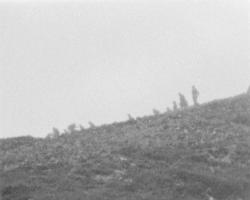
Ce film retravaillé à la main montre des milliers de personnes faisant l'ascension d'un terrain sur une montagne rocheuse. La destination et l'objet de leur ascension restent obscurs. Un pèlerinage incertain, mystérieux et troublant pavé d'intentions inconnues. Le titre "The Coming Race" est tiré d'un roman de l'époque victorienne de E.G.E Bulwer-Lytton portant sur un peuple vivant sous une montagne.
Studied Fine Art at Falmouth School of Art. Co-founded and programmed Brighton Cinematheque from 1996-2005, while developing his artistic practice -predominantly working with moving-image. He has exhibited at many international film festivals and galleries, and won various awards, most recently Jury Prize at IFF Rotterdam. He has been the recipient of a number of commissions, most recently a London Artists Film and Video Award, for which he will make a new work: « Origin of the Species ». Current/upcoming shows include 'If' Bloomberg Space, London, 'Art with Strangers' Turnpike Gallery, Leigh, and solo show with Measure, London, and retrospective screenings in Chicago, Hull IFF and Courtisane, Ghent.
Catalogue : 2007The Hyrcynium Wood | Film expérimental | 16mm | noir et blanc | 3:0 | Royaume-Uni | 2005
Ben Rivers
The Hyrcynium Wood
Film expérimental | 16mm | noir et blanc | 3:0 | Royaume-Uni | 2005
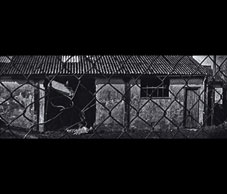
Un récit fragmenté et l'exploration d´espaces abandonnés, utilisant les sons et la musique pour créer un suspense et jouer avec les attentes des spectateurs.
Ben Rivers a étudié les Beaux Arts à l´Ecole des Arts des Falmouth. Depuis lors il travaille essentiellement des films 16mm qui sont projetés lors de festivals internationaux, dans des galleries et des cinémas britanniques. En 1996 il co-fonda la Cinémathèque de Bighton qu´il co-dirige/prgramme depuis.
Ben Rivers
Catalogue : 2021Look Then Below | Film expérimental | 16mm | couleur | 22:30 | Royaume-Uni | 2019
Ben Rivers
Look Then Below
Film expérimental | 16mm | couleur | 22:30 | Royaume-Uni | 2019
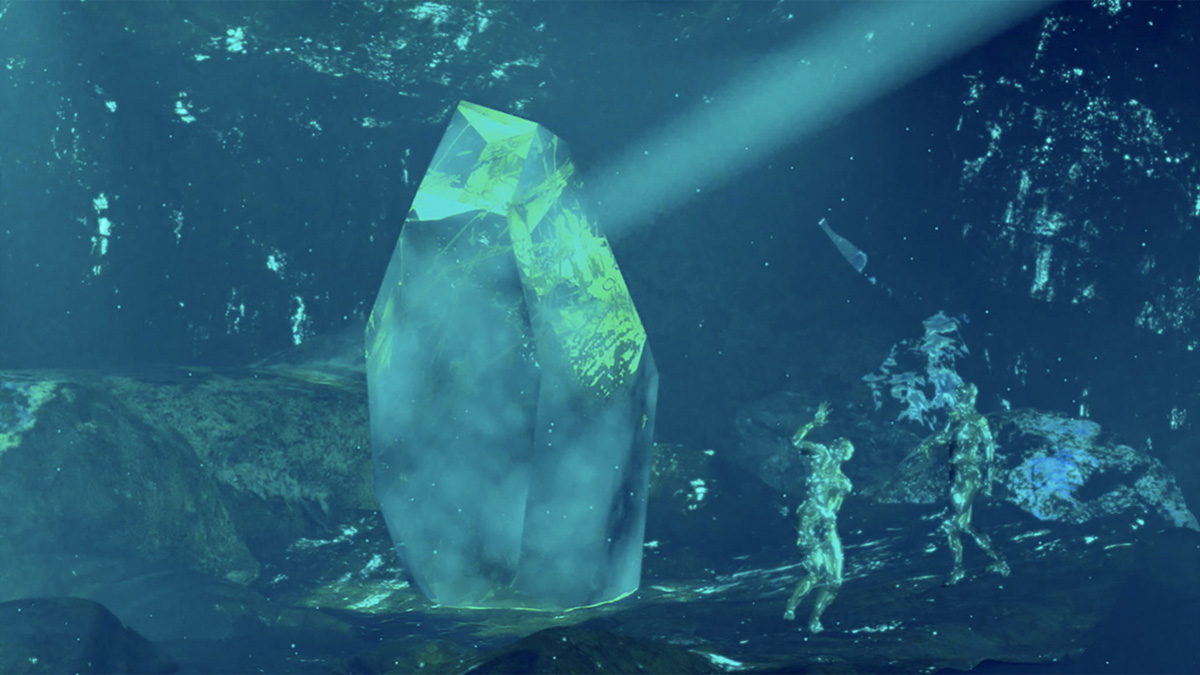
Les films de Ben Rivers étudient ce qui semble venir d’un autre monde, à la recherche de lieux et d'histoires échappant aux conventions quotidiennes de la réalité. "Look Then Below" a été filmé dans un Somerset transformé en une île colorée et envahie par la brume, sur une mer d’huile, et avec une grotte baignée par une lueur souterraine. Là, le temps semble s'arrêter. Après "Slow Action" et "Urth", il d’agit du dernier volet d'une trilogie développée avec Mark von Schlegell, auteur américain de science-fiction.
Ben Rivers a étudié les beaux-arts à la Falmouth School of Art (Royaume-Uni): après la sculpture, il s’est tourné vers la photographie et le film en super8. Après avoir obtenu son diplôme, il a appris par lui-même la réalisation et le traitement manuel des films 16mm. Sa pratique en tant que réalisateur se situe entre le documentaire et la fiction. Souvent, il suit et filme des personnes qui, d'une manière ou d'une autre, se sont séparées de la société. Des images brutes lui fournissent un point de départ pour créer des récits obliques, imaginant des existences alternatives dans des mondes marginaux. Il a remporté de nombreux prix, dont le FIPRESCI International Critics Prize, 68e Mostra de Venise (Italie), pour son premier long métrage, "Two Years At Sea"; le Baloise Art Prize, Art Basel 42, Bâle (Suisse) [2011]; la présélection pour le Jarman Award, Londres (Royaume-Uni) [2010/2012]; et le Paul Hamlyn Foundation Award for Artists, 2010. Parmi ses expositions récentes, citons: "Slow Action", Hepworth Wakefield, Wakefield (Royaume-Uni) [2012]; "Sack Barrow", Hayward Gallery, Londres (Royaume-Uni) [2011]; "Slow Action", Mattâ's Gallery, Londres (Royaume-Uni), et Gallery TPW, Toronto (Canada) [2011]; et "A World Rattled of Habit", A Foundation, Liverpool (Royaume-Uni) [2009]. Il a notamment participé au Courtisane and Film Fest, Gand (Belgique); à la Mostra internazionale del Nuovo Cinema di Pesaro (Italie); au London Film Festival, Londres (Royaume-Uni); au Tirana International Film Festival, Tirana (Albanie); à Punto de Vista, Pampelune (Espagne); à Indielisboa, Lisbonne (Portugal); et au Milano Film Festival, Milan (Italie). En 1996, il a co-fondé la Brighton Cinematheque (Royaume-Uni), dont il a ensuite été co-programmateur jusqu'à sa fermeture, en 2006. Cette institution était réputée pour sa programmation unique de films, depuis ses débuts jusqu'aux derniers films et vidéos d'auteur.
Catalogue : 2021The House Was Quiet | Film expérimental | 16mm | couleur | 4:25 | Royaume-Uni | 2020

Ben Rivers
The House Was Quiet
Film expérimental | 16mm | couleur | 4:25 | Royaume-Uni | 2020
Les éléments d'une maison: une porte, le plafond miteux, les planchers de bois, le portrait d'une petite fille. Et le crépitement de la pellicule 16mm sur laquelle elles sont imprimées, aussi "concrète" que les objets qu'elle filme, et en opposition à l'effacement des choses dans les pixels du numérique. Les vers d'un poème de Wallace Stevens accompagnent les images: "La maison était tranquille et le monde était calme/ le lecteur devint le livre/ et la nuit d'été fut comme l’être conscient du livre". Dans la succession des vers - et dans la répétition des jours enfermés dans la maison pendant le confinement - le lecteur, le livre, la maison et la nuit d'été ne font plus qu'un, bercés par le crépitement du film.
Ben Rivers a étudié les beaux-arts à la Falmouth School of Art (Royaume-Uni): d'abord la sculpture, avant de se tourner vers la photographie et le film super8. Après avoir obtenu son diplôme, il a appris en autodidacte la réalisation et le traitement manuel des films 16 mm. Sa pratique de réalisateur se situe entre le documentaire et la fiction. Souvent, il suit et filme des personnes qui, d'une manière ou d'une autre, se sont séparées de la société. Les images brutes lui fournissent un point de départ pour créer des récits obliques, imaginant des existences alternatives dans des mondes marginaux. Il est le lauréat de nombreux prix, dont le Prix de la critique internationale FIPRESCI, 68e Mostra de Venise (Italie) pour son premier long métrage, "Two Years At Sea"; le Baloise Art Prize, Art Basel 42, Bâle (Suisse) [2011]; la présélection pour le Jarman Award 2010/2012, Londres (Royaume-Uni) ; et le Paul Hamlyn Foundation Award for Artists, Londres (Royaume-Uni) [2010]. Parmi ses expositions récentes, citons: "Slow Action", Hepworth Wakefield (Royaume-Uni) [2012]; "Sack Barrow", Hayward Gallery, Londres (Royaume-Uni) [2011]; "Slow Action", Mattâ's Gallery, Londres (Royaume-Uni), et Gallery TPW, Toronto (Canada) [2011]; et "A World Rattled of Habit", A Foundation, Liverpool (Royaume-Uni) [2009]. Il a notamment participé au Courtisane Festival, Gand (Belgique); au Festival international du nouveau cinéma de Pesaro (Italie); au London Film Festival, Londres (Royaume-Uni); au Tirana International Film Festival (Albanie); à Punto de Vista, Pampelune (Espagne); à Indielisboa, Lisbonne (Portugal); et au Milano Film Festival, Milan (Italie). En 1996, il a co-fondé la Brighton Cinematheque (Royaume-Uni), dont il a ensuite été co-programmateur jusqu'à sa fermeture, en 2006. Cette institution est réputée pour sa programmation unique de films, depuis ses débuts jusqu'aux plus récents films et vidéos d'artistes.
Ben Rivers
Catalogue : 2010Origin of the Species | Doc. expérimental | 16mm | couleur | 16:0 | Royaume-Uni | 2008
Ben Rivers
Origin of the Species
Doc. expérimental | 16mm | couleur | 16:0 | Royaume-Uni | 2008
?Some things didn?t really matter, you know, some mutations didn?t matter all that much?they were neither beneficial to survival nor detrimental to survival?but if they just hung on, there?d come a time when?that was the thing that saved the day.? Charting the beginnings of the time, through the descent of man, on to an uncertain future - all shot throughout the seasons in the garden of S, who lives in the wilderness and builds contraptions.
Born 1972. Studied Fine Art at Falmouth School of Art. Co-founded and programmed Brighton Cinematheque from 1996-2006. He has exhibited at many international film festivals and galleries, winning various awards, including Tiger Award, IFF Rotterdam 2008. He has been the recipient of a number of commissions, most recently a London Artist?s Film and Video Award. Recent shows include; ?A World Rattled of Habit? A Foundation, Liverpool; ?An Entangled Bank? Talbot Rice Gallery, Edinburgh; and artist-in-focus screenings in Courtisane Festival; Pesaro International Film Festival, London Film Festival, Punto de Vista, and upcoming at Tirana Film Festival and Indielisboa.
Ben Rivers
Catalogue : 2020Ghost Strata | Doc. expérimental | 16mm | couleur | 45:44 | Royaume-Uni, 0 | 2019
Ben Rivers
Ghost Strata
Doc. expérimental | 16mm | couleur | 45:44 | Royaume-Uni, 0 | 2019
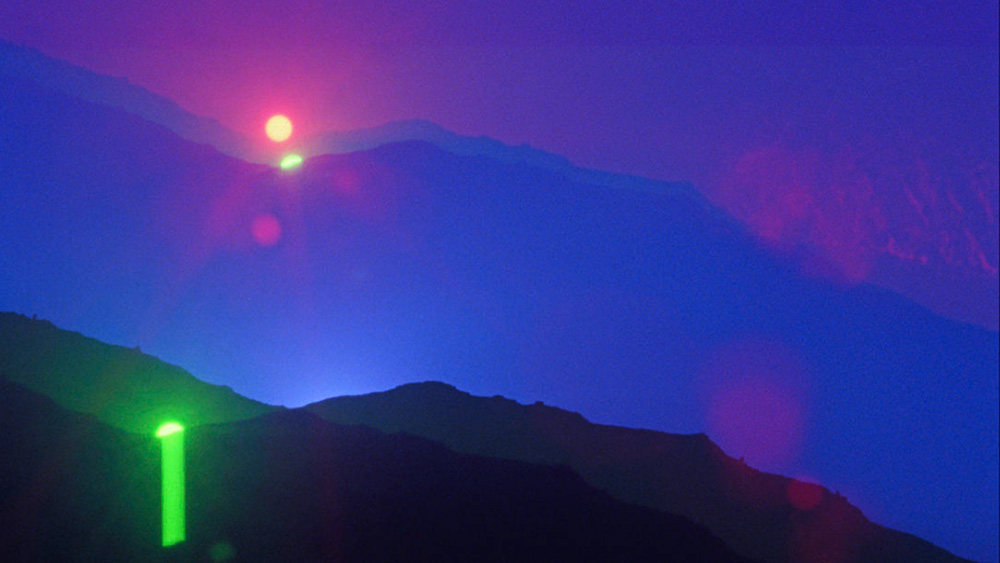
Le terme “Ghost Strata” désigne les éléments manquants des strates rocheuses qui, malgré leur absence, offrent des indices de ce qui s’y trouvait autrefois. Le film est divisé en fonction des mois de l’année au cours desquels les images ont été filmées. Filmé en divers endroits du globe, retraçant les divers mouvements personnels du cinéaste, Ghost Strata explore les différentes échelles d’impact de la présence de l’humanité sur la terre dans le passé, le présent et l’avenir. Les sons et les textes trouvés créent une méditation sur le temps, la mémoire, les restes et l’extinction.
Né en 1972, Ben Rivers est un artiste britannique primé pour ses films dans de nombreux festivals. Il est notamment lauréat du Grand Prix à Art Basel pour son film Sack Barrow et a été sélectionné à la Mostra de Venise en compétition officielle pour Two Years at Sea en 2011. En 2013, il a fait l’objet d’un focus lors du festival Hors Pistes au Centre Pompidou. Ben Rivers tourne en 16mm et s’intéresse à des individus ou communautés vivant en marge de la société et propose un travail à la lisière du documentaire, frôlant l’ethnographie, doté d’une grande puissance visuelle. Ainsi, empruntant une voie plus picturale que narrative, son œuvre se place au cœur des enjeux contemporains où l'on constate l'émergence sensible d'une approche documentaire expérimentale, qui se nourrit d'apports artistiques multiples. Cette forme hybride lui a notamment permis de se déplacer de la traditionnelle salle de cinéma pour s'exposer dans les centres d'art à travers des installations.
Jacob Rivkin
Catalogue : 2017Fortunate Isles: Landings | Vidéo | hdv | noir et blanc | 3:50 | USA | 2016
Jacob Rivkin
Fortunate Isles: Landings
Vidéo | hdv | noir et blanc | 3:50 | USA | 2016
Drawing upon the name of earthly paradise in Greek mythology, the film ‘Fortunate Isles: Landings’ explores the awakening of sentience and biological complexity within digital images. To fully inhabit utopian and cinematic visions of analog & digital interpretations of landscape, ‘Fortunate Isles: Landings’ is filmed on location at sites of human achievement and continuous habitation; the level Bonneville Salt Flats, Utah and remote cliffs of Salvage, Newfoundland. During filming, performers wore chroma-key suits on location that, in post-production, allow the suit’s geometric faces to be digitally blanked and replaced with hand-drawn animation. Through the dialogue of gaps and joins created by the subtle collapsed spaces between layers of inter-narrative animation, questions of evolution, reality, and wonder begin to surface. The figures each carry a drawn experience inscribed into their outer forms. A patina of frames progressing forward echoes an imprinted memory; Landscapes are portable.
Jacob Rivkin is an interdisciplinary artist living and working in Philadelphia, PA, USA. His animations and sculptures focus on how we experience and internalize landscape, memory, and desire. His work has exhibited widely, including at the Arlington Arts Center, the Chemical Heritage Foundation Museum, the Vancouver Art Gallery, the Animation Block Party, and the National Museum of Australia. He holds lecturer positions at the University of Pennsylvania and the Mason Gross School of the Arts at Rutgers University. He received his MFA from the University of Pennsylvania in 2013 and BA from Vassar College in 2007. His awards include selection as a finalist for the anthropoScene Film Competition in 2016, a Fulbright Student Grant in 2008 to study Chinese Traditional Landscape Painting in Hangzhou, China, and the Weitzel Barber Art Travel Prize in 2006 to study Buddhist Sculpture Practices in Western China. He is a member of the OOF Animation Collective and in 2014 he was an Artist-in-Residence at the Hacktory in Philadelphia, PA.
Labrini Rizaki
Faozan Rizal
Catalogue : 2007Yasujiro Journey | Fiction expérimentale | dv | couleur | 46:0 | Indonésie | 2006
Faozan Rizal
Yasujiro Journey
Fiction expérimentale | dv | couleur | 46:0 | Indonésie | 2006
"Yasujiro?s Journey" fait le portrait de l`errance fictionnelle de Yasujiro Yamada qui, en 2002, voyage en Indonésie à la recherche du grand père dont il a reçu le nom. Ce grand père a apparemment été un soldat japonais qui a survécu à un crash d`avion au dessus de l`Indonésie, sur sa route vers Pearl Harbor en 1942, mais qui n`est jamais rentré chez lui. Le voyage du jeune homme n`est pas tant une quête au sens littéral pour retrouver le vieil homme, mais est une recherche spirituelle, dans ce paysage étranger que son ancêtre a parcouru. Le fait qu`il ne trouve pas ce qu`il cherche, et que c`est lui-même qu`il ne trouve pas, est particulièrement significatif dans l`une des scènes du film, où il empile des pierres qui emplissent la hauteur de l`écran, puis s`éloigne, est insatisfait, les renverse et construit à nouveau un monticule. Le son du vent, très présent tout au long du film, fonctionne comme un avertissement, comme si un démon socratique l`avertissait d`une erreur. Le thème du voyage est central dans ce film, et dans l`?uvre du cinéaste. Il interroge également son pays natal et les générations antérieures, qui n`ont pas vécu dans un environnement urbain. Faozan Rizal veut aussi explorer le paysage du point de vue d`un étranger, et il est significatif que le protagoniste de cette errance soit un Japonais.
Faozan Rizal est un jeune cinéaste indonésien. Ses films ont fait l`objet d`une rétrospective non officielle au 18ème festival international du film de Singapour en 2005. Il a réalisé plusieurs courts métrages de type expérimental, ou se situant aux frontières de différentes pratiques. Il explore les propriétés et les textures du film, explorant les régions entre cinéma et photographie. Il a également réalisé une série de moyens métrages, d`environ 30 minutes, en collaboration avec la danseuse Katia Engel, dans lesquels la danse et la photographie sont si intimement unies que ce serait une erreur de les décrire comme de simples films expérimentaux. Il serait en effet difficile d`imaginer la performance indépendamment de sa retranscription dans le film. L`imbrication de différentes formes d`art n`est pas surprenante dans le travail de Faozan Rizal, qui a étudié et pratiqué la danse javanaise dans sa jeunesse, et qui a étudié la peinture avant de s`inscrire à la Fémis. Il a été acteur, directeur de la photographie, scénariste et réalisateur. Son travail se situe au-delà de la narration linéaire. Il exprime des sentiments et transmet des idées par la juxtaposition d`images concrètes et spécifiques, par la répétition de mouvements, l`usage de longs plans séquences. Ses films ne sont pas transparents au niveau de la narration, mais le son y est hautement significatif. Rizal n`a pas abandonné l`idée de récit d`histoires, mais il abandonne ce qui n`est pas nécessaire au c?ur essentiel de la narration, c?ur qui est l`essence de toute narration.
Riar Rizaldi
Catalogue : 2021Kasiterit | Fiction expérimentale | hdv | couleur | 18:22 | Indonésie | 2019
Riar Rizaldi
Kasiterit
Fiction expérimentale | hdv | couleur | 18:22 | Indonésie | 2019
Un tiers de l'approvisionnement mondial en étain est extrait de l'île de Bangka, en Indonésie. L'étain est le minerai le plus affecté par les développements technologiques à venir, notamment l'intelligence artificielle et les technologies de production d’énergie renouvelable. Natasha est une voix d'I.A. alimentée par l’énergie solaire, et, dans ce film, elle retrace leur généalogie et la vérité de leur origine, de la liquidité du capital à la dynamique du travail. Avec sa voix féminisée - comme c'est souvent le cas pour les autres assistants vocaux basés sur l’intelligence artificielle, produits par les grandes entreprises technologiques - Natasha raconte l'émergence de l'étain sur l'île de Bangka, et sa propre existence, du point de vue d’une anthropologie tropicale de la nature, de la théorie de la valeur, de la philosophie du temps, des mutations génétiques, de la géopolitique, et de l'automatisation.
Riar Rizaldi est artiste et chercheur. Né en Indonésie, il vit actuellement à Hong Kong (Chine). Il s'intéresse principalement à la relation entre le capital et la technologie, à l'extractivisme, et à la fiction théorique. À travers ses œuvres, il questionne la notion de politique de l'image, la matérialité, l’archéologie des médias et les conséquences inattendues des technologies. Par ailleurs, il compose et interprète activement des fictions sonores, à l’aide des méthodes du field recording et du bruitage par le biais du langage de programmation. Il a également été le curateur du ARKIPEL Jakarta International Documentary & Experimental Film Festival - Penal Colony [2017], Jakarta (Indonésie); de "Internet of (No)Things" [2018], au Jogja National Museum, Jogjakarta (Indonésie); et a été co-curateur de "Open Possibilities: 'There is not only one neat way to imagine our future'", au JCC – Japan Creative Centre, Singapour (Singapour), et au NTT ICC – InterCommunication Center, Tokyo (Japon) [2019-2020]. Ses œuvres ont été présentées notamment au Festival international du film de Locarno (Suisse); au BFI Southbank, Londres (Royaume-Uni); au Festival international du film de Rotterdam (Pays-Bas); au NTT InterCommunication Center, Tokyo (Japon); et à la National Gallery of Indonesia, Jakarta (Indonésie).
Riar Rizaldi
Catalogue : 2023Notes from Gog Magog | Doc. expérimental | 0 | couleur | 19:32 | Indonésie | 2022
Riar Rizaldi
Notes from Gog Magog
Doc. expérimental | 0 | couleur | 19:32 | Indonésie | 2022
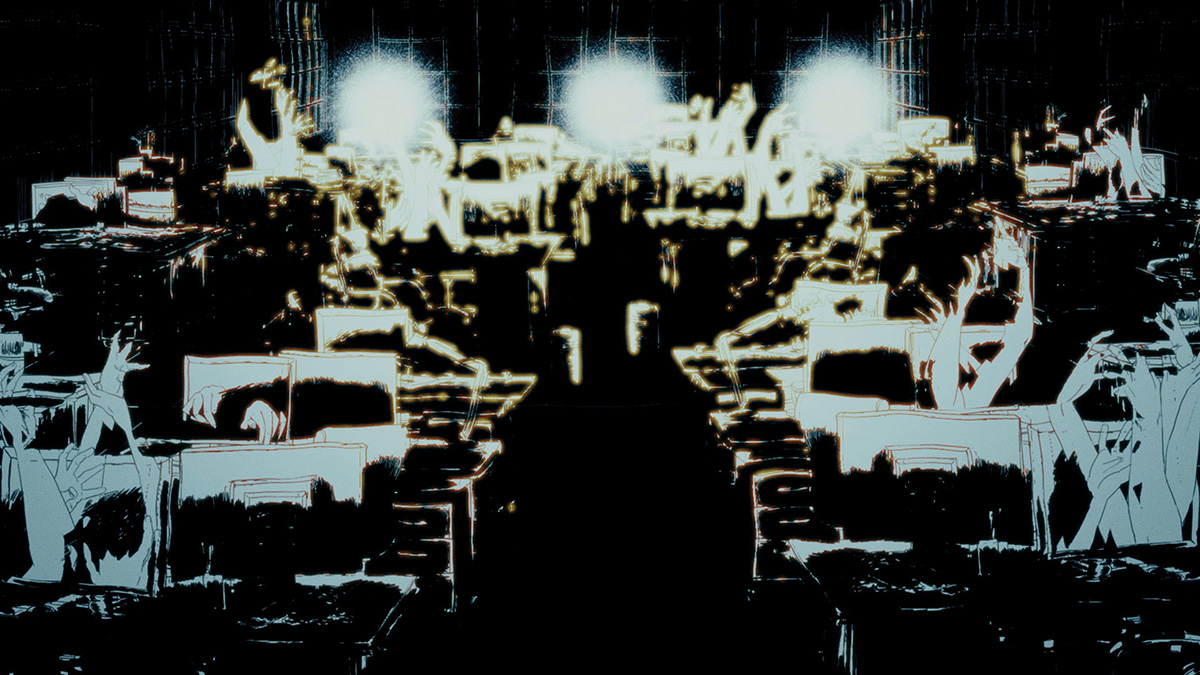
An exploration of the interconnection between ghost stories, tech company culture in South Korea, and the economy of logistics in Indonesia told through a notebook/premake film and dossier of an unmade techno-horror feature-length film set in between port in Jakarta and an unnamed employee assistance programme office in Seoul.
Riar Rizaldi works as an artist and filmmaker. He works predominantly with the medium of moving images and sound, both in the black-box of cinema settings as well spatial presentation as installation. His artistic practice focuses mostly on the relationship between capital and technology, labour and nature, worldviews, genre cinema, and the possibility of theoretical fiction. His works have been shown at various international film festivals (including Locarno, IFFR, FID Marseille, Viennale, BFI London, Cinema du Reel, Vancouver, etc) as well as Centre Pompidou Paris, NTT InterCommunication Center Tokyo, Taipei Biennial, Istanbul Biennial, Venice Architecture Biennale, Biennale Jogja, National Gallery of Indonesia, and other venues and institutions. In addition, solo exhibitions and focus program of his works had been held at Batalha Centro de Cinema, Porto and Centre de la photographie Genève amongst others.
Dylan Rizzo
Catalogue : 2025Nogooddream | Film expérimental | 35mm | couleur | 3:14 | USA | 2024
Dylan Rizzo
Nogooddream
Film expérimental | 35mm | couleur | 3:14 | USA | 2024
A man wakes up in a nightmare where he finds his grandmother's favorite tree burning outside his window, and is haunted by whispers of his childhood. The text is adapted from a page in my notes app dedicated to things my younger sister says that I find strange, or sad, or hopeful. The images are from a recurring nightmare. This film was shot on 500 ft of 5219 Kodak 35mm film stock.
Dylan Rizzo is a filmmaker and photographer based in New York City. He is currently pursuing his MFA in directing at Brooklyn College’s Feirstein Graduate School of Cinema. His work draws from his experiences as a native New Yorker and Chinese - Italian American, often dissecting the meaning of memory and how reconciling the past informs the process of becoming. Last year he completed a 18 min short film titled “One Day I’ll Open My Fist”, shot on location in NYC’s Chinatown on 16mm film. It is currently being submitted to festivals.
Louis Rizzo Naudi
Catalogue : 2026In Here | Fiction expérimentale | mov | couleur et n&b | 8:50 | Royaume-Uni | 2024
Louis Rizzo Naudi
In Here
Fiction expérimentale | mov | couleur et n&b | 8:50 | Royaume-Uni | 2024
« Nous rêvons de voyager à travers l’univers… mais l’univers n’est-il pas en nous ? Nous ne connaissons pas les profondeurs de notre esprit. Le chemin mystérieux mène vers l’intérieur. L’éternité, avec ses mondes du passé et du futur, est en nous ou n’est nulle part. Le monde extérieur est un monde d’ombres ; il projette son ombre dans le royaume de la lumière. À présent, en effet, il semble si sombre, solitaire, informe en nous ; mais combien différent il nous apparaîtra lorsque cette éclipse sera passée, et que le corps et l’ombre se seront retirés. Nous jouirons plus que jamais, car notre esprit aura été privé. » — Novalis, Pollen (1798). Traduction et adaptation à partir de l’édition allemande originale, avec l’aide de la traduction anglaise de W. Hastie dans Hymns and Thoughts on Religion (1888).
Louis Rizzo Naudi est un cinéaste britanno-maltais. Sa pratique explore l’expérience du sublime et la nature construite de la perception visuelle, sa caméra se tournant souvent vers les phénomènes naturels, les paysages et la technologie. Il est titulaire d’une licence en études cinématographiques de King’s College London — où il a reçu le prix de mémoire pour son essai consacré au sublime dans les images de la Station spatiale internationale — ainsi que d’un master en anthropologie cognitive et évolutionnaire de l’Université d’Oxford, où il a mené des recherches sur la manière dont les expériences du sublime peuvent encourager des comportements prosociaux, tels que la générosité. Ses films ont été projetés dans toute l’Europe, notamment à l’International Film Festival Rotterdam, au Festival international du film de Karlovy Vary, au British Film Institute et au Tate St Ives, et ont également été utilisés comme supports de relaxation dans des hôpitaux, pour des patient·es en cours de procédure médicale.
Daniel Robin
Catalogue : 2019All The Leaves Are Brown | Doc. expérimental | super8 | couleur | 11:0 | USA | 2017
Daniel Robin
All The Leaves Are Brown
Doc. expérimental | super8 | couleur | 11:0 | USA | 2017
What do we become when we realize that we are no longer what we used to be? Are we still ourselves, even though we no longer remember what we used to be? Through a collage of excerpts from conversations, thoughts, pictures of places and intimate family moments, "All the Leaves are Brown" is an autobiographical reflection, in film, of the American director Daniel Robin. The nostalgia for the past and for his life in California (as in the music by "The Mamas & The Papas" suggested by the title) is imprinted in the beautiful landscapes shot in Super8, which are in contrast with the narrator`s feeling of anguish, regarding the present and the future, a time that is characterised by what no longer exists or what has ceased to be. In a touching and intimate portrait about memory, family and loss, the fallen leaves of "All the Leaves are Brown" represent the end of a season and the beginning of another cycle: Daniel knows that, next year, the tree he sees from his window will once again be filled with leaves. He will have to learn to be another one. (LQ)
Daniel Robin’s film, “my olympic summer,†won the 2008 Sundance Film Festival Jury Prize for Short Filmmaking. The film also won the Grand Jury Award for Best Documentary Short at the Florida Film Festival, Best Documentary Short at the Nashville Film Festival, and best documentary short at several other festivals. The film was also selected to screen at the prestigious New Directors/New Films Festival in New York. His other films have twice screened at Sundance, at the SXSW Film Festival and festivals in Bogota, Cartagena, Abu Dhabi, Ireland, Israel, Italy, Spain, Philadelphia, London, Atlanta, Baltimore, Humboldt, Ann Arbor, and elsewhere. Filmmaker magazine recently named Robin one of the “25 New Faces of Independent Film,†a major honor. Robin is an innovative online artist, having pioneered web video in 2001, and with 6 episodic web series to date available at his website www.neighborhoodfilms.com. Robin recently wrote an essay about his experiences with web video for Movement, the NYU Tisch School journal. Daniel has been invited to present web video work at the Amsterdam Worldwide Video Festival and elsewhere. His projects have received support from the San Francisco Arts Commission, Apple Computers, the Fleishbacker Foundation, and the Film Arts Foundation. As Robin puts it: “My film/video work is primarily made for two distinct exhibition venues: film festivals and the Internet (web series). My short films are personal and, for the most part, interrogate relationships I have with women, my family, and Judaism. While the majority of my filmmaking can be read within a documentary framework, I’m more inclined not to use labels to categorize my work. I have a deep love and appreciation for narrative cinema and have incorporated some fictional devices in my more recent films. I use narrative strategies both as a means to critique how we consume documentaries and, in some sense, as a way to liberate my work from the constraints of conventional non-fiction storytelling. The most important aspect of filmmaking, for me, is to arrive at an emotional truth that resonates with the viewer.I began making web series at my site www.neighborhoodfilms.com in 2000. My first series, the valet chronicles, set the thematic standard for each new series, my relationship with a specific neighborhood, and or community. My work here maintains an aesthetic and tonal consistency that aligns itself with familiar tropes of documentary practice, yet I consider these web series an extension of my personal filmmaking.â€