Catalogue > List by artist
Browse the entire list of Rencontre Internationales artists since 2004. Use the alphabetical filter to refine your search. update in progress
Tomas Hendriks
Catalogue : 2015Decision Pending | Experimental doc. | hdv | color | 29:55 | Netherlands, Belgium | 2014
Tomas Hendriks
Decision Pending
Experimental doc. | hdv | color | 29:55 | Netherlands, Belgium | 2014
Decision Pending is an alienating observation of politicians stuck in the daily routines of decision making. During committee meetings and plenary sessions everyone seems under the spell of difficult decisions that have to be made. Decision Pending is a non-political film about politics, which unfolds itself as an audiovisual symphony.
Tomas Hendriks (°1985) studied Composition at the Royal Conservatory in The Hague (NL) and Film / Audiovisual Art at KASK School of Arts in Ghent (BE). His compositions have been performed and awarded throughout the Netherlands and Belgium. His films are characterized by a strong sense for composition and focus on the experience of image and sound. They can be best described as moods, shaped or stretched out over a course of time. Consequentially, the unspoken and unexplained are prominent. In 2009, his graduation film Strangers (15min) was screened and awarded at several film festivals. For Decision Pending, his first independent film, he also wrote the music, which is performed by Spectra Ensemble.
Catalogue : 2010Strangers | Experimental fiction | | color | 14:58 | Netherlands, Belgium | 2009
Tomas Hendriks
Strangers
Experimental fiction | | color | 14:58 | Netherlands, Belgium | 2009
`Strangers` shows someone after a disturbing discovery. The shock of this moment disrupts his perception. The film takes you into his experience of a world losing its coherence
Since his early childhood, Tomas has been occupied with composing music. He studied composition with Roderik de Man from ?99 till ?03, at the Royal Conservatory The Hague. During this period, he was awarded in several national youth composition competitions (such as the ?Prinses Christina Concours, 2000?). His works have had professional performances, varying from solo pieces to orchestral scores, by ensembles such as the Nieuw Ensemble (Metempsychose 1999), the Netherlands Wind Ensemble (Acres Diver 1999, Petit Histoire 2001), the Radio Chamber Orchestra directed by Peter Eötvös (Qwerty 2003), and recently the young Belgian Ensemble Nadar (Monologue 2009). Tomas? interest in film rose over the years and after graduating high school, he decided to study film. He studied Film and Television at the University of Amsterdam for one year (2003-2004), worked on several film sets in Amsterdam for another year (2004-2005), and then moved to Belgium to study Film at the Royal Academy of Fine Arts in Ghent (2005-2009). Through the years, Tomas? musical background has always been a great influence on his work as a filmmaker. Strangers is Tomas? master graduation film for the Academy.
Paul Hendrikse
Catalogue : 2015The Tape-Recorded Surprise, Interview With I.J. | Video | dv | color | 11:36 | Netherlands | 2009
Paul Hendrikse
The Tape-Recorded Surprise, Interview With I.J.
Video | dv | color | 11:36 | Netherlands | 2009
The video-installation The tape recorded surprise; Interview with I.J. starts from the intriguing life of South African poet Ingrid Jonker (1933/1965). Jonker became politically engaged in the fifties when she vehemently opposed a law imposing censorship on publications and entertainment. Her work was published in Drum, a clandestine ‘black’ magazine and rewarded South Africa’s most prestigious literature prize, but she was forgotten after her suicide in 1965. After the fall of the Apartheid-regime in 1990 Jonker became a figure of mythical proportions. Since then, Jonker’s texts and mediated identities are assumed, transformed into symbols then imbued with various meanings by interested parties. Actresses, biographers, admirers and politicians piece together Jonker’s story, growing it into something ghost- like – unfixed yet omnipresent. In the videowork two actresses are presented to us. Nicola Hanekom, recently played Jonker in a theatre-play. Grethe Fox, an older actress, knew Jonker when she was a child, and always wanted to play her. Paul Hendrikse worked with them and carried out various interviews. Subsequently he swapped the positions. Both actresses had to work together and try to close their respective gaps on both sides, each coaching the other on how to depict her falsified relationship to the iconic poet.
Paul Hendrikse biography Paul Hendrikse is a visual artist who lives and works in Antwerp and Berlin. His work explores the interfaces between historiography and fiction. In his search for alternative knowledge about historical events, Hendrikse shuns the big narratives in favour of individual micro-histories. It is an approach that expresses his rejection of the possibility of representing history in a single, authoritarian way. His projects – many of them performances or work of a performative nature – frequently result from prolonged and extensive research. This can culminate in a variety of media, including publications, installations, audio-visual work and performances. Hendrikse’s work has been shown in recent years at S.M.A.K. in Ghent, the Kunsthalle Basel, Onomatopee and the Contour Biennial 2013. He was awarded the Prix Jeune Peinture Belge, Prix Langui. in 2011. paulhendrikse.net
Laura Henno
Juliane Henrich
Catalogue : 2015schleifen | Vidéo | hdv | color | 5:50 | Germany | 2014
Juliane Henrich
schleifen
Vidéo | hdv | color | 5:50 | Germany | 2014
A detailed study of the architecture in a small German village slowly reveals an uncanny sense of displacement, erasure and doubling. New houses line freshly paved streets that all have the suffix '-neu' at the end. This journey ends on the outskirts of the village, opening onto the pit mine that will displace the old village.
Juliane Henrich, born 1983, studied at the University of the Arts Berlin with Heinz Emigholz and Thomas Arslan and at the Bezalel Academy of Arts and Design Jerusalem with Avi Mograbi and Efrat Shalem. All films are represented by Arsenal Disbribution (Arsenal – Institute for film and videoart e.V.) Her work has been shown at Berlinale/Forum Expanded, Berlinische Galerie, International Short Film Festival Oberhausen, The Images Festival and ZKM Karlsruhe among others.
Juliane Henrich
Catalogue : 2022Time Before Land | Experimental doc. | 0 | color | 80:0 | Germany, Poland | 2021
Juliane Henrich
Time Before Land
Experimental doc. | 0 | color | 80:0 | Germany, Poland | 2021
A woman arrives in a Polish village. As the director’s alter ego, she embarks on a search. An ancestor, we learn, originally came from this region of Silesia. The film follows her journey through the summertime landscape. She meets people of both German and Polish descent, who, after the war’s end, were forced to leave their homes, or who remained in what became a new country. She encounters shadows of the past: monuments, dioramas, the ruins of Nazi architecture. In a dinosaur park, paleontologists dig for the bones of a prehistoric creature, the one they call the grandfather of dinosaurs. Again and again, there is the presence of water—in the floods that swept fossils from one place to another and in fear-inflected metaphors: waves of Slavs or refugees. Where do the monsters of the past lurk? Fact and fiction interweave into a fantastic tapestry, as the process of genealogical research begins to go off course. Layer by layer, traces of migration routes are uncovered, and the roots of racial ideology are shaken loose from the ground— because almost nothing originally comes from the place where it’s found.
Juliane Henrich studied writing, art and film in Leipzig, Berlin, and Jerusalem with Thomas Arslan, Heinz Emigholz, and Avi Mograbi among others. In 2012, she graduated with honors from the University of the Arts Berlin. Her work often deals with the ways in which the definitions of places change. Her films and video installations have been shown at international film festivals and art exhibitions, including the Berlinale, the International Short Film Festival Oberhausen, Duisburg Documentary Film Week, DOK Leipzig, ZKM Karlsruhe, Visions du Réel in Nyon, the Images Festival in Toronto, and at various Goethe Institutes. The Goethe Institute Buenos Aires and DocBuenosAires featured her work in a monographic show. In 2018, she was an artist in residence at Villa Aurora, Los Angeles. Her films are distributed by Arsenal – Institute for Film and Video Art, Berlin.
Juliane Henrich
Catalogue : 2017Aus westlichen Richtungen | Experimental doc. | 4k | color | 61:0 | Germany | 2016
Juliane Henrich
Aus westlichen Richtungen
Experimental doc. | 4k | color | 61:0 | Germany | 2016
The film essay "From the West" opens with a child’s question of what ‘the West’ means beyond the cardinal direction, then goes on to retrace how ‘the West,’ as a model of society, inscribed itself in the Federal Republic of Germany’s postwar history and architecture. Long panning shots through unidentified West German cities alternate with interior footage of a house being cleared out. Long drives ‘ down highways, through suburbs and industrial zones ‘ traverse urban sprawl and car-friendly cities to the rhythm of abstract, mellow music inspired by evening news theme tunes. In the film’s searching movements, the narrator shifts among reflections on modern architecture and property relations, detailed scenes from childhood, and a passed-down memory of a ‘hemmed-in West Germany,’ recalling the years of her parents’ membership in a 1970s communist splinter group. Over and over, the rallying point is the single-family home ‘ which Konrad Adenauer and his contemporaries once touted as a bastion against the East and which Engels, much earlier, had decried as a tool for quashing rebellion. For all its deconstruction, West Germany also appears in the film as a site of childhood longing where everyone was ‘still tuned in to the same TV show.’
Juliane Henrich was born in 1983. She studied writing in Leipzig and media-art at the University of the Arts Berlin and the Bezalel Academy of Arts and Design in Jerusalem with Heinz Emigholz and Avi Mograbi. Her work has been shown at international film-festivals and exhibitions, among them: Forum Expanded/Berlin Film Festival (Berlinale) at Arsenal Cinema and Berlinische Galerie, HKW Berlin, International Short Film Festival Oberhausen, Duisburg Documentary Film Week, ZKM Karlsruhe, Visions du Reél/Nyon, The Images Festival/Toronto, DEAF-Biennale Rotterdam, Les Rencontres Internationales/Paris, Kav 16 Gallery/Tel Aviv, Hong-Gah Museum/Taipeh, and in different Goethe-Institutes. Her films are part of Arsenal disbribution (Institute for film and video-art).
Nelson Henricks
Catalogue : 2006Satellite | Experimental video | dv | color | 3:0 | Canada | 2004
Nelson Henricks
Satellite
Experimental video | dv | color | 3:0 | Canada | 2004
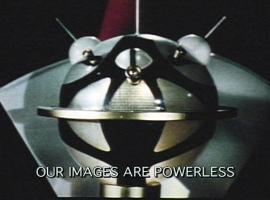
In the video SATELLITE, Nelson Henricks combines found footage and techno beats to question western society?s ongoing obsession with science, technology and the future. Juxtaposing images derived from old educational films with absurd, aphoristic slogans, Henricks offers up a witty, entertaining and provocative commentary of our need to make sense of everything, at any cost.
Nelson Henricks was born in Bow Island, Alberta and is a graduate of the Alberta College of Art (1986). He moved to Montréal in 1991, where he received a BFA from Concordia University (1994). Henricks continues to live and work in Montréal, where he teaches at Concordia University (1995 - 2002) and McGill University (2001- 2002). A musician, writer, curator and artist, Henricks is best known for his videotapes, which have been exhibited worldwide. A focus on his video work was recently at the Museum of Modern Art in New York, as part of the Video Viewpoints series (2000). His writings have been published in Fuse, Public, Coil magazines, and in the anthologies "So, To Speak" (Editions Artexte, 1999) and "Lux" (YYZ Press, 2000). Henricks co edited an anthology of artist?s video scripts entitled "By the Skin of Their Tongues" (YYZ Press, 1997) with Steve Reinke. In 2002, Henricks was the recipient of the Bell Canada Award in Video Art (2002). He has recently completed a new tape entitled "Satellite" (2004).
Nelson Henricks
Catalogue : 2026STOPPING | Experimental video | mov | color | 4:25 | Canada | 2025
Nelson Henricks
STOPPING
Experimental video | mov | color | 4:25 | Canada | 2025
Night. The moon is a rock. The ears are stopped. A chair balances on the roof of a house. A silver box composes itself: a mysterious instrument. A marble rolls around in somebody’s head. Two rocks spin. Is it possible to stop the mind?
Nelson Henricks graduated from the Alberta College of Art in 1986. He moved to Montréal in 1991 and received a BFA from Concordia University. He recently completed a PhD at Université du Québec à Montréal. Henricks has taught art history and studio art at Concordia University, McGill University, UQAM and Université de Montréal. A curator and artist, Henricks is best known for his videotapes and video installations, which have been exhibited worldwide. A focus on his video work was presented at the Museum of Modern Art in New York, as part of the Video Viewpoints series in 2000. Henricks was the recipient of the Bell Canada Award in Video Art in 2002, the Prix Giverny Capital in 2015, and the Prix Louis-Comtois in 2023. An exhibition of his work was presented at the Musée d’art contemporain de Montréal in 2023. His work is in the collections of the National Gallery of Canada, the Museum of Modern Art (New York), the Montréal Museum of Fine Arts, the Musée national des beaux-arts du Québec, the Musée d’art contemporain de Montreal and others. He is represented by Paul Petro Contemporary Art in Toronto.
Camille Henrot
Catalogue : 2008King Kong addition | Experimental video | dv | color | 93:0 | France | 2006
Camille Henrot
King Kong addition
Experimental video | dv | color | 93:0 | France | 2006
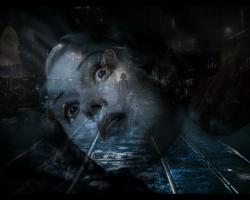
Neither remake nor reappropriation, this version of ?King Kong? simply puts three Hollywood versions of the film (1933, 1976 and 2005) into superimposition. The mythical work that is ?King Kong? is above all a film about cinema and for cinema. And the outcome of this mathematical addition yields a troubling film, with dark and sometimes unreadable images, one whose opacity is a veritable ?screen,? a screen on which any fantasy may be projected. From this jungle of shadowy images only the two principal figures of the film stand out: the gorilla and the female character. King Kong emerges from this darkness and resists the visual static. Thus, the film proves Theodor Adorno's point: the repetition of a work changes its constitution, and winds up altering it. And yet, King Kong emerges from obscurity and resists annihilation, remaining a figure in whom the spectator refuses to stop believing. Is it, perhaps, on account of the destiny of this monumental character that the relationship between humankind and their environment has been thrown out of balance every 15 years since 1933? King Kong returns unceasingly, like a subterranean fear: that of a savage, terrifying state, and especially the fear of that what our new, ?civilized? world is becoming as it replaces this savage state, a new world of music halls and fighter jets. Courtesy of the Galerie Kamel Mennour, produced with the support of the Première heure group.
Catalogue : 2007sCOpe | Experimental video | dv | color | 3:0 | France | 2005
Camille Henrot
sCOpe
Experimental video | dv | color | 3:0 | France | 2005
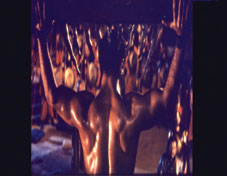
"sCOpe" is a snake film. The soundtrack is a long whistle. It is a film a bit sadistic that wishes to 'completely remove sight" (in reference to the slogan "Gimme more!" praising the interest of the CinémaScope format). The original film is a peplum essentially composed of large shots of numerous extras. The image on the filmstrip is slowly comprised on lateral boards, it grows longer and longer, and it contracts on the sides until it is nothing but a ribbon. The particularity of the Scope format is to allow for the spectator to have bigger images to see because the image is unusually enlarged. This advanced technique goes along with Dolby sound: the spectator is thus genuinely at the heart of the film, enveloped by its image and sound. In this film, this envelopment takes the form of a confinement. In addition, the large images solicit A.O. (action oriented) vision, the most primitive, "of the surveillance of territory", while the semantic vision, vision P.O. (perception oriented), is centred. The CinémaScope procedure, with a slightly outdated emphasis on the capital letters, interests the artist because it asserts the supremacy of the "show" fact over the contents of the show itself.
Born in 1978, Camille Henrot lives and works in Paris. Educated at the Decorative Arts School of Paris, she was revealed by the exhibition "J?en rêve" at the Cartier Foundation, and then by her first personal exhibition, "Room Movies", at the Dominique Fiat Gallery and by the "Jeu de Paume Workshop" where she was inaugurated in November 2005. Her work proceeds by substraction and erasure, so that a sort of "nostalgia of possibilities" is created: not a nostalgia of what was, but a nostalgia of what could have been. It is as a machine made to recall a fictitious hypothetical past that cinema is one of the privileged fields of her work. While traditional cinema tends to make features disappear to absorb the spectator, Camille Henrot makes the material of the film itself reappear: the film. She thus proposes a permanent return trip between fiction and reality, or rather the desire for fiction and the conscience of cinematic processes that make it possible. Considering films as objects of memory, the series "Room Movies" thus films a disappearance of the image by compression, masking, or scratching. In negative then come up the contours of an absence in the form of a vacillating flame, like a ghost that would come to haunt the amnesic psyche of the images. The original fiction becomes a screen on which the artist inscribes her own emotional universe.
Kevin Henry
Catalogue : 2008Last Thoughts | Documentary | 16mm | color | 72:0 | USA | 2006
Kevin Henry
Last Thoughts
Documentary | 16mm | color | 72:0 | USA | 2006
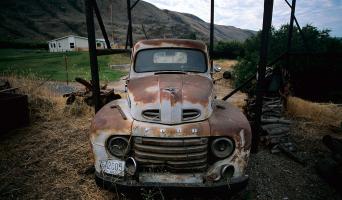
In 1926, a sixteen-year-old boy hopped his first train from Oklahoma to California, beginning a ten-year odyssey marked by life-changing experiences. He kept his stories from those Depression years to himself until the eve of his death, when he made a tape recording for posterity. Seventy-five years after that first train ride, his grandson would set out with that tape and a 16mm camera, looking for echoes of those experiences in the modern landscape. Last Thoughts is an impressionistic tour of the American West, past and present, guided by the voice of a dying hobo.
Kevin Henry grew up in Austin, Texas before settling in the San Francisco Bay Area. Despite a degree in Computer Science and a job as a software engineer, he devoted most of his attention to traveling, music, and the arts. After hearing his grandfather?s tape-recorded stories, he turned his attention to filmmaking in general, and Last Thoughts, his first film, in particular.
Margaux Henry-thieullent, en collaboration avec Molpé
Catalogue : 2021Sublime | Experimental video | mp4 | color | 2:10 | France | 2020
Margaux Henry-thieullent, en collaboration avec Molpé
Sublime
Experimental video | mp4 | color | 2:10 | France | 2020
"Sublime" est un texte écrit en 2018 par la plasticienne Margaux Henry-Thieullent. Elle a ensuite donné carte blanche à la musicienne Molpé en 2019 pour la création musicale. En 2020, "Sublime", devient un projet a vocation immersive et expérimentale. À partir d'un travail de sculpture digitale sur iPhone, Margaux Henry-Thieullent réalise une série intitulée "Encore des Morceaux" de quatre vidéos, toutes produites au début de la période de confinement en France. "Sublime", est la première vidéo de cette série. Elle questionne la construction de notre mémoire contemporaine laissant place à l’émergence de récits organiques. Dans le projet "Sublime", on assiste directement à l'éclatement de la caverne digitale. Notre société du spectacle navigue violemment au cœur de lieux oniriques, des théâtres virtuels où se désacralise le réel. D’autres perceptions du dehors se dessinent alors, certainement par nécessité, à la frontière d’un nouveau langage : celui qui nous rassemble encore.
Margaux Henry-Thieullent, est une artiste plasticienne française. Architecte, diplômée de Paris Malaquais en 2019, elle montre pour la première fois son travail de dessin la même année au salon DDessin à Paris (France) ainsi qu'au Festival Vrrraiment à Toulon (France). En octobre 2020, la Galerie 5un7 à Bordeaux (France) présente son travail. Dès la réouverture des lieux de culture, Margaux Henry-Thieullent participera à l'exposition collective, "Vaste Monde #2" organisée par la Villa Beatrix Enea, Centre d'Art Contemporain d'Anglet (France). Elle travaille actuellement sur son premier solo show pour 2021, qui sera présenté à la Cité des Arts de Bayonne (France).
Linn Nora Henz
Catalogue : 2021She is leaving home | Experimental film | mov | | 5:25 | Switzerland | 0
Linn Nora Henz
She is leaving home
Experimental film | mov | | 5:25 | Switzerland | 0
Discovery of a girl in Red Cross footage - a sensorial journey towards her, exploring her intimacy. Dreaming of her growing up to be a woman in this desert world, this wind, this water, under the sun, while time seems to spin in circles.
Born in 1997, Linn Nora Henz starts a Bachelor in Philosophy at the University of Zurich and leaves for an art propedeuticum at Lausanne School of Arts (ECAL). To further work in essay and art film, she continues her studies at HEAD Geneva, Cinéma Department and focuses on editing. She persues her interest in sound creation as a medium of its own, but also for film and installation works. Besides, she has been collaborating in multidisciplinary projects and curatorial researches.
Mauro Herce
Catalogue : 2016Dead Slow Ahead | Documentary | 4k | color | 74:0 | Spain, France | 2015
Mauro Herce
Dead Slow Ahead
Documentary | 4k | color | 74:0 | Spain, France | 2015
A freighter crosses the ocean. The hypnotic rhythm of its pace reveals the continuous movement of the machinery devouring its workers: the old sailors’ gestures disappearing under the mechanical and impersonal pulse of the 21st century. Perhaps it is a boat adrift, or maybe just the last example of an endangered species with engines still running, unstoppable.
Born in Barcelona in 1976, Mauro Herce graduated in engineering and fine arts before enrolling in film school at the Escuela Internacional de Cine y TV in San Antonio de los Baños (Cuba) and the École nationale supérieure Louis-Lumière in Paris. He started his career as a director of photography and screenwriter on such films as Ocaso (2010), Arraianos (2012), A puerta fria (2012), El quinto evangelio de Gaspar Hauser (2013) and Slimane (2013). Dead Slow Ahead (2015) is his first feature film as a director.
Carlos Heredero
Catalogue : 2007Débat | | dv | color | 0:0 | Spain | 2007

Carlos Heredero
Débat
| dv | color | 0:0 | Spain | 2007
The creation of the Spanish "Cahiers du Cinéma" (cinema reviews) represent a considerable event in the world of Spanish movie critics and movie theory. This magazine deliberately follows the historical path of its French counterpart (from which it does not only borrow its name, but also its philosophy and current editorial line), but is also based on the legacy that was built after the itinerary of some of the most important magazines ever to have existed in Spain. Because of this legacy we must constantly question ourselves, with Serge Daney, about "How to come to an image", and it allows us to understand that the activity of movie critic has to evolve, as it is confronted to all the challenges the audio-visual world suggests us nowadays. In the face of growing uniformity in the leading cinematographic talk, in the face of the temptation of only staying away from reality (and passively accepting this reality we are forcefed with), the pages of this magazine come into life in order always to seek critical and constructive thoughts, and a scale of values which can bring more freedom about and open new horizons.
Carlos F. Heredero was born in Madrid in 1953. He is an historian and movie critic. He teaches Spanish cinema History at the ECAM Escuela de Cinematografía y del Audiovisual de la Comunidad de Madrid) and the ESCAC (Escuela de Cine de Barcelona). He has also written numerous books, historiographical studies and monographies about various authors (Wong Kar-wai, Aki Kaurismäki, John Huston, Sam Peckinpah, Joseph L. Mankiewicz, José Luis Borau, Manuel Gutiérrez Aragón, etc.). In 1995, he received with the cinema Sant Jordi award for the books "the language of light" ("El lenguaje de la luz"), a book gathering interviews with Spanish directors of photography, and "time's traces. Spanish Cinema 1951-1961" ("Las huellas del tiempo. Cine español 1951-1961"). He wrote a series of four documentaries produced by Canal Plus and directed by Carlos Rodriguez : Traces of a spirit (1998), Alfred Hitchcock : unlimited fiction (1999), Orson welles in the country of Don Quixote (2000), and Huston and Joyce. Dialogues with the Death (2001). He directed the Spanish national catalogue of specialized cinematographic publications (the REC database) and has prepared, with Antonio Santamarina, the library of Spanish cinema, a catalogue gathering all literary sources (Spanish, Latin-American and foreign) of the Spanish cinema. He is currently (2003/2007) co-directing the Dictionary of Spanish and Latin-American Cinema in 7 volumes with Eduardo Rodriguez and Ivan Giroud. This Dictionary is prepared by the Auteur Foundation (SGAE). He has also been leading the Spanish edition of the Cahiers du Cinema since May 2007.
Christophe Hermans
Catalogue : 2011Etrangère | Documentary | | color | 13:0 | Belgium | 2010
Christophe Hermans
Etrangère
Documentary | | color | 13:0 | Belgium | 2010
Sophie est seule. Elle partage sa vie entre des petits boulots et son déménagement. Pour combler ce vide, Sophie sculpte son corps.
Feguenson Hermogène
Catalogue : 2026En mil pedazos | Documentary | mov | color | 12:51 | Haiti | 2023
Feguenson HermogÈne
En mil pedazos
Documentary | mov | color | 12:51 | Haiti | 2023
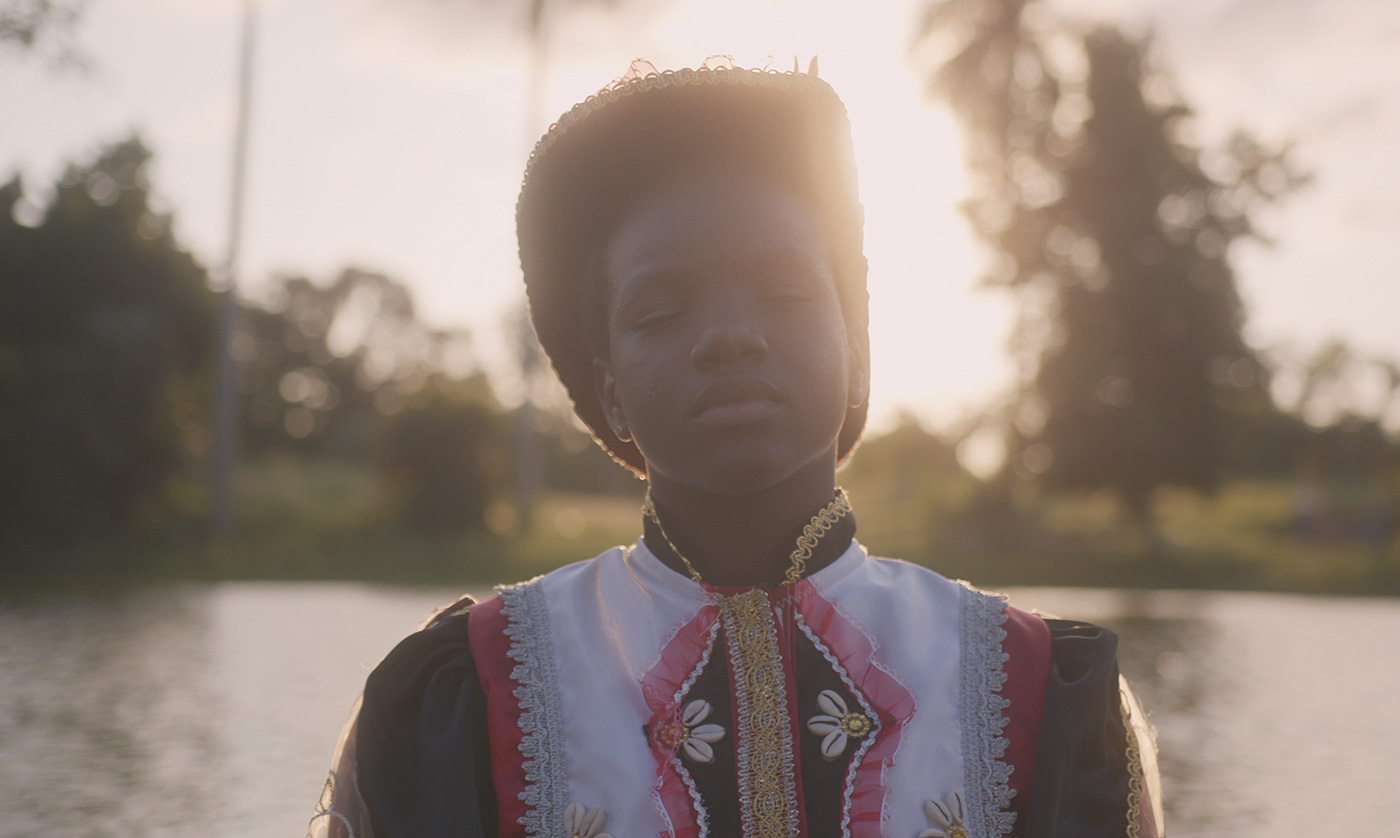
A Bauta, un groupe de danseurs.ses professionnels.les revisitent l’histoire de la communauté afro-cubaine à travers la figure mythique de Legba, le gardien des routes, l’esprit médiateur entre le monde des humains et celui des dieux. Originaire du royaume Dahomey, Legba qui a traversé L’Atlantique au même moment que les captifs africains réduits en esclavage dans les champs de cannes à sucre en Amérique, va guider ces corps-machines, ces corps racisés, déshumanisés, dépaysés vers l’émancipation tout en renversant le narratif chrétien.
Né en Haïti en novembre 1988, Feguenson Hermogène a étudié la sociologie à l'Université d'État d'Haïti. Après avoir participé à plusieurs ateliers de réalisation et de production de documentaires à la Fondation Connaissance et Liberté (FOCAL Haïti), il a réalisé son premier documentaire « La déchirure » en 2016. Ce film, sélectionné dans plusieurs festivals internationaux, a reçu une mention honorable au « Festival Internacional De Cortometrajes Libélula Dorada de La República Dominicana ». En 2022, il a réalisé le court métrage « Cuando llegue la noche », qui a remporté le prix du meilleur court métrage au festival « Cine Plaza de Cuba, 2023 » et celui du meilleur court métrage étranger au festival « Mostra de Audiovisual Universitário e Independente da América Latina (22ª MAUAL) », au Brésil, en 2023. En 2023, il a également réalisé les courts métrages « La sombra de la ceiba » et « En mil pedazos » (Fragmented). Feguenson a travaillé sur plusieurs longs métrages en tant qu'assistant de production, notamment « Zombie Child » du réalisateur français Bertrand Bonelo et « Kidnapping Inc » du réalisateur haïtien Bruno Mourral. Avant de rejoindre la section documentaire de l'EICVT (Escuela Internacional de Cinema y Television de Cuba) en 2021, il a travaillé pour le journal haïtien Ayibopost. Cette expérience lui a permis de produire plusieurs reportages audiovisuels.
Catalogue : 2025La sombra de la ceiba | Documentary | mov | color | 13:30 | Haiti, Cuba | 2023
Feguenson HermogÈne
La sombra de la ceiba
Documentary | mov | color | 13:30 | Haiti, Cuba | 2023
Aux abords du village de Cumanayagua à Cuba, Feguenson, un jeune cinéaste haïtien rencontre Armando Abril, un adepte du culte afro-cubain « Palo Monte ». Vivant seul, Armando offre son service comme “Transporteur” aux personnes qui souhaitent communiquer avec les morts, les esprits. Puis un jour, Feguenson sollicite l’aide d’Armando afin de communiquer avec son grandpère maternel Dolciné Jean, ancien prête vodou, décédé il y a 11 ans. Le film met en scène cette rencontre et la complicité entre un homme riche d’expérience, de connaissances supposées occultes et un jeune ingénu, à travers un voyage dans l’univers « Palo Monte », très proche du vodou haïtien, où la frontière entre le réel et l’imaginaire se fusionne.
Feguenson Hermogène a étudié la sociologie à l'Université d'État d'Haïti. Après plusieurs ateliers de réalisation et de production à la Fondation Connaissance et Liberté (Fokal) à Port-au-Prince, il réalise son premier documentaire "La déchirure" en 2016. Ce court métrage a été sélectionné dans des festivals en France, au Canada, et a remporté une mention honorable au Festival Internacional De Cortometrajes Libélula Dorada en République dominicaine. Il a travaillé comme assistant de production sur des longs métrages tels que "Zombi Child" du réalisateur Bertrand Bonello et "Kidnapping INC’’ de Bruno Mourral. Et en tant que réalisateur de reportages audiovisuels pour le journal Ayibopost. En 2022, Feguenson a réalisé le court métrage documentaire "Cuando llegue la noche" qui a remporté le prix du meilleur court métrage documentaire à la 31e édition du Festival Cine Plaza à Cuba, et le prix du meilleur court métrage étranger lors de la "Mostra de Audiovisual Universitário e Independente da América Latina (22e MAUAL)" au Brésil. En juillet 2024, Feguenson a été gradué en réalisation documentaire à l’EICTV (Escuela Internationale de Cine y Television de Cuba).
Jaiziel Hernandez
Diego Hernandez, n/a
Catalogue : 2026Un techo sin cielo | Experimental fiction | 4k | color | 90:0 | Mexico | 2025
Diego Hernandez, n/a
Un techo sin cielo
Experimental fiction | 4k | color | 90:0 | Mexico | 2025
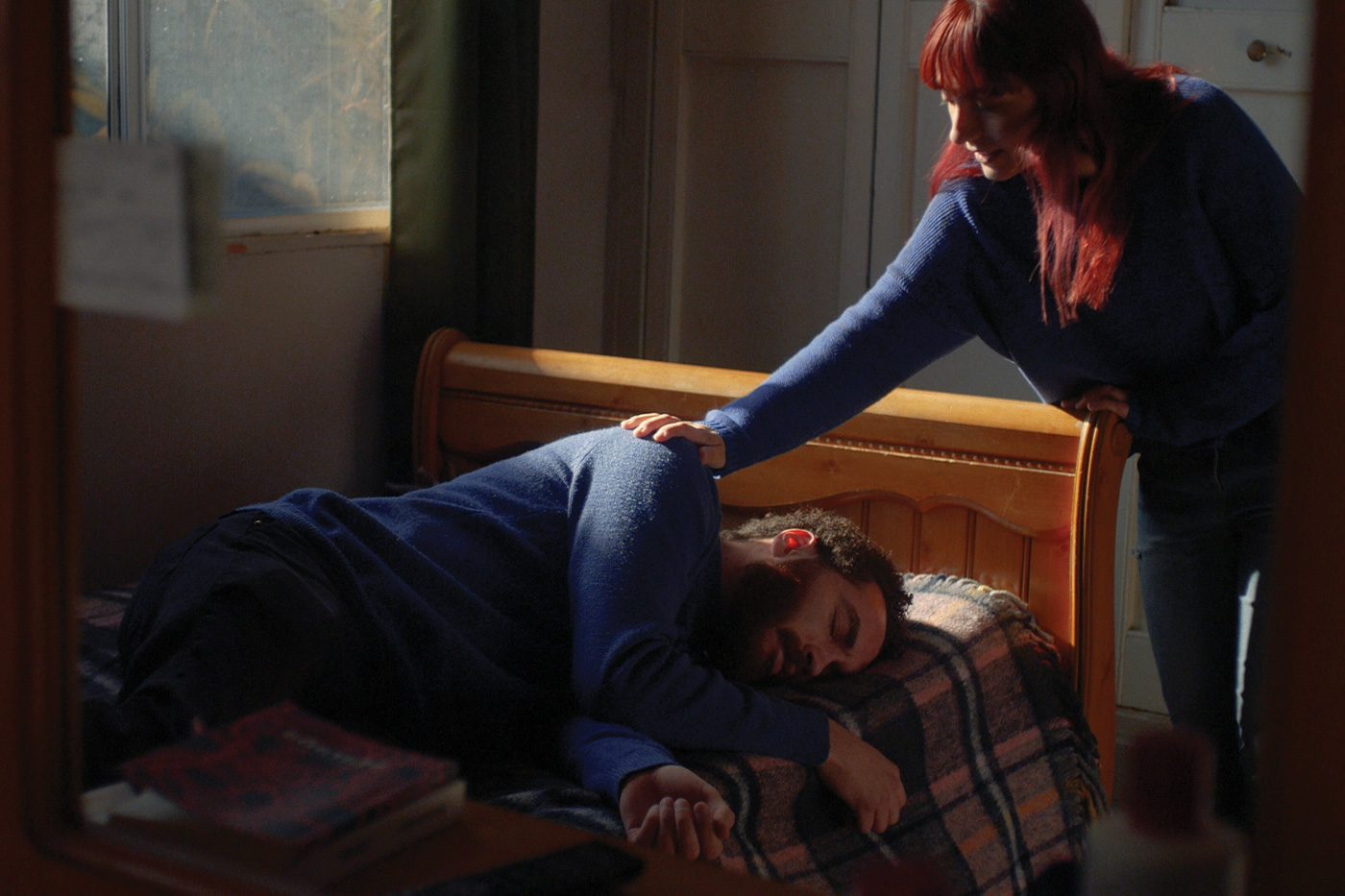
After opening a shoebox, Diego begins to feel severe fatigue that prevents him from performing everyday activities and leaves him bedridden. At the same time, his friend Liz suffers from a mysterious insomnia while working on a stage production.
Tijuana, 1997. Gaduated from the Faculty of Humanities at UABC. His work blends documentary, experimental, and autofictional methodologies through the record of his daily life. In his films he humorously addresses themes such as modes of protest, working conditions, student identity, the construction of emotional ties and the collective memory; challenging the dominant narratives around violence in Tijuana. His films have been awarded at FICUNAM, FIDMarseille, Ji.hlava, MIDBO, ZINEBI and FICENS. They have also been featured at Mar del Plata, FICValdivia, Ji.hlava, Márgenes, Black Canvas, Cámara Lúcida, Bogoshorts, FICMonterrey, Corriente – Latin American Non Fiction Forum, and the International Forum of Mexican Cinematheque. His work has been the subject of retrospectives at the EUREKA University Film Festival (2022, Bogotá) and at Spectacle Theater (2025, New York). His film Un techo sin cielo (2025) won the Silver Puma Prize for Best Mexican Film and a Special Metion of the Fosforo Jury in FICUNAM 15. Prince Claus Fund - Seed Award 2025 recipient (Netherlands).
Ibai Hernandorena
Catalogue : 2018Terramar | Video installation | mov | color | 0:0 | France, Spain | 2017
Ibai Hernandorena
Terramar
Video installation | mov | color | 0:0 | France, Spain | 2017
L’autodrome de Terramar, est un circuit abandonné de type ovale ouvert en 1923. Situé dans la ville de Sitges dans la province de Barcelone. Il reste inutilisé depuis les années 50. Le circuit a une longueur d’environ 2 km et sa piste est remarquable de par ses rampes à 90 degrés. Déambuler dans un monument de la modernité qui appartient au passé est en quelque sorte un paradoxe temporel. C’est une faille dans laquelle le projet Terramar se développe et trouve son étrangeté. Ce portrait du lieu est une tentative de représentation de l’espace et de son épuisement grâce à un relevé poétique, filmique, sonore et sculptural de son architecture.
Après deux ans en résidence, dans le cadre d’un programme de recherche, à la Villa Arson à Nice, Ibai Hernandorena vit et travaille à Paris aujourd’hui. En 2000, il a obtenu son DNSEP à l’école nationale d’arts de Paris-Cergy. Le déplacement est un mécanisme qui consiste à passer d’un point A à un point B, d’un état à un autre. Qu’il s’agisse de voyage, de rêverie ou de construction, le mouvement est en jeu. Il s’amorce dans un désir de changement provoquant une nouvelle situation. Convoquant différents médiums (vidéo, installation, photographie, sculpture), Ibai Hernandorena modifie sensiblement la nature des choses et des espaces, leur conférant un caractère illusoire. On ne sait plus s’il s’agit de réalités montrées comme des fictions, des fictions empruntes de réalités ou encore de situations totalement chimériques. Il crée de facto des espaces autres où cohabitent plusieurs temporalités parfois incompatibles dans le réel.
Catalogue : 2017Principe d'inertie | Video | hdv | color | 23:0 | France | 2016
Ibai Hernandorena
Principe d'inertie
Video | hdv | color | 23:0 | France | 2016
Principe d`inertie soulève la question de l`objet mobile et de sa trajectoire. Ce film-essai met en parallèle notre perception du mouvement par rapport à l’espace et au temps, et la recherche de l’accélération absolue d’un père et sa fille lors d’une course de moto dragster.
Ibai Hernandorena (b.1975, St Jean de Luz), est un artiste plasticien diplomé de l’école nationale supérieure d’arts de Paris-Cergy en 2000. Il vit et travaille à Paris. Sa pratique est multi-disciplinaire, se centrant principalement sur l’installation, la sculpture, la vidéo et la photographie. Qu’il s’agisse de voyage, de rêverie ou de construction, Hernandorena questionne la nature des espaces. Faisant cohabiter plusieurs temporalités parfois incompatibles dans le réel, il leur conférant ainsi un caractère illusoire. Ibai Hernandorena a exposé au MAK Center, Los Angeles; Palais de Tokyo, Paris; APAP2010 festival, Anyang, Corée du Sud; Galerie Laurence Bernard, Genève; Villa Arson, Nice; Retina video art festival, Rome; Galerie Sintitulo et Frac PACA, Marseille; Nuit Blanche, Paris. Il a également été lauréat de commandes publiques à Paris-St Denis, Grenoble, Avignon, Marseille. Il est actuellement en production pour une commande des Nouveaux Commanditaires de la Fondation de France.
Rodrigo Hernández
Catalogue : 2008Water | Art vidéo | | color | 1:8 | Spain | 2007
Rodrigo HernÁndez
Water
Art vidéo | | color | 1:8 | Spain | 2007
Water is a common chemical substance that is essential to all known forms of life. Water is considered a purifier in most religions. The Greek philosopher Empedocles held that water is one of the four classical elements along with fire, earth and air, and was regarded as the ylem, or basic substance of the universe. Water was also one of the five elements in traditional Chinese philosophy, along with earth, fire, wood, and metal. Water plays an important role in literature as a symbol of purification and permanent change. That`s why we want to make an installation with a hot water vaporizator-humidificator, images of water and the sound of rain, common to everyone. This VideoArt installation is something like a ritual, wants to modify the way we experience a particular space, trying to convert it in a familiar and confortable space, good for soul and body, common to everyone.
Rodrigo Hernández is a spanish artist that works on photography and video art. He has studied Arts and Media at Spain and Czech Republic (FAMU School of Arts). And he has arranged exhibitions around Europe (Spain, Andorra, France, Czech Republic). He is working on Spanish Television (RTVE) and cinema critics. Nowadays he is leading a project in Spain, called "Gira Peonza Project", they are investigating on the ontology of the digital image.
Gabriel Herrera Torres
Catalogue : 2022Al motociclista no le cabe la felicidad en el traje | Fiction | mov | color | 10:0 | Mexico | 2021
Gabriel Herrera Torres
Al motociclista no le cabe la felicidad en el traje
Fiction | mov | color | 10:0 | Mexico | 2021
There he sits proudly on his motorbike, encompassed in majestic red and the dazzling admiration of the others. Round and round he goes, becoming more and more beautiful and exalted. For only he can explore the jungle. And no, he won’t hand over his motorbike, not even on loan. A playful re-enactment with reversed roles that takes aim at the hubris of the colonial conquerors.
The filmmaker and video artist was born in Mexico. He studied film at the Escuela Nacional de Artes Cinematográficas in Mexico City and at the Polish National Film School in ?ód?. He has made several short films and video works. He currently lives in Mexico where he is taking a doctorate in film theory while teaching film and making social documentaries. He is also developing his debut feature film.