Catalogue > List by artist
Browse the entire list of Rencontre Internationales artists since 2004. Use the alphabetical filter to refine your search. update in progress
Filipa Cesar
Catalogue : 2008F for Fake | Experimental video | dv | color | 19:0 | Portugal | 2005
Filipa Cesar
F for Fake
Experimental video | dv | color | 19:0 | Portugal | 2005
F FOR FAKE by Filipa César When the flush of a newborn sun fell first on Eden`s green and gold, Our father Adam sat under the Tree and scratched with a stick in the mold; And the first rude sketch that the world had seen was joy to his mighty heart, Till the Devil whispered behind the leaves: "It`s pretty, but is it Art?" (?) Rudyard Kipling F for Fake is a video on truth, lies, forgery and authorship concerning both art and life. Selecting Orson Welles last feature film as a departure point, Filipa César adds one more level to this meta-narrative by introducing 5 new characters: a lawyer, an actor, a writer, an art-critic and a guinea pig who play themselves and the roles of the characters Elmyr de Hory, Oja Kodar, Orson Welles, Clifford Irving and the guinea pig, Monsieur Hugo, who stars as Howard Hughes. F for fake is a movie where an intriguing lack of correspondence can be found between the levels of form and content, for if F for Fake displays a quite romantic concern with expertise and the author?s signature, it, for sure, displays it under a quite (post-) modern structure; meaning that its TV-styled editing techniques spell an altogether different reality from the one they depict. Thereby "what is said" and ?how it is said? belong to different tracks. As a narrative, the movie tells us about a biding connection between deed and doer and the whole ethical demeanour that springs thereof, namely the value of authorship and the chimerical crediting of symbolic totality upon the artistic. However if we place ourselves at the level of montage, we belong to a world acutely aware of its own mediaware, which utters its rived reality by displaying its own devices. This world, which is nonetheless our own, begotten by cinema among other discrete technologies, cannot help to look back at the world which preceded it, and deem it the real deal. While dwelling in its schizo nature, at once raving and mocking its cultural heritage, namely painting and literature, it nonetheless always already comments it. Using, by her turn, video as a means of commenting on a cinematographic device, and quoting the movie?s own editing techniques, Filipa César makes the leap into the electronic era, coming full circle with Orson Welles. F for Fake becomes an ongoing process of juxtaposition and insertion where we are never in or out the film since in and out have long became a mere point of view, being the sender-receiver poles inter-exchangeable. F for Fake, 2005: Video, PAL, colour, sound, 19` 04?? Edition of 3.
Filipa César Born in Porto 1975 Lives and works in Berlin 1999 Graduated in Fine Arts ? Painting at the Fine Art Faculty, University Lisbon 1996 BA in Fine Arts ? Painting at the Fine Art Faculty, University Porto Grants and Prizes 2007 Fellow Artist, HFF Konrad Wolf, Potsdam 2005 Hauptstadtkulturfonds Berlin, Ringbahn Project 2003-04 Fundação Calouste Gulbenkian Grant, Berlin 2003 União Latina Preis, Lisbon 2002 Pépinières européennes pour jeunes artistes Grant, Bad Ems 2001 Post-Graduation ? DAAD Stipendium, Munique 2000 Young Creators ? Centro Nacional de Cultura Stipendium, Lisbon Solo Exhibitions 2007 Allee der Kosmonauten, Museu Atelier António Duarte, Caldas da Rainha (curated by David Etxeberria) Rapport Raccord, Distrito Cu4tro, Madrid 2006 Filipa César, Mai 36 Galerie, Zurich F for Fake and Ringbahn, Sint-Lukas Gallery, Brussels ( curated by Filip Luycky) 2005 Ringbahn, Serralves Museum, Porto (curated by João Fernandes) Berlin, Noga Gallery of Contemporary Art, Tel Aviv Ringbahn, Küchenstudio, Schaubühne am Lehniner Platz, Berlin F for Fake, Cristina Guerra Contemporary Art, Lisbon Aura, Galeria Espacio Distrito Cu4tro, Madrid 2004 Transmediterráneo, Centre d?Art Santa Mónica, Barcelona (curated by Miguel von Hafe Pérez) Berlin Zoo, Part 02, Project Space, Karlsplatz ? Kunsthalle Wien, Vienna Menschen Tiere Attraktionen, bergstueblPROJEKTE, Berlin 2003 Product Displacement, Fundação Calouste Gulbenkian, Lisbon 2002 Sets for thoughts, Galeria Cristina Guerra, Lisbon Hotel, Emser Arkaden, Bad Ems SlowMotion, Estgad, Caldas da Rainha and Fundação Calouste Gulbenkian, Lisbon Group Shows (selection) 2007 Stream, White Box, New York (curated by João Silvério) Art Summer University, Tate Modern, London (curated by Manuel Saiz) Por Entre as Linhas, Museu das Comunicações, Lisbon ( curated by Isabel Carlos) Shot an go, Isola di San Servolo, Venice (curated by Raffaele Gavarro) In the Eye of the Storm, Kunstmuseum St. Gallen, St. Gallen (curated by Konrad Bitterli) Unversagt, Das Hotel Balzer!, Schloss Balmoral, Bad Ems (curated by Rainer Hofmann) Sines Local, Emmerico Nunes Cultural Center,, Sines (curated by Isabel Silva) 2006 Tales from the Travel Journal Vol. 1 CAC Vilnius (curated by Catherine Hemelryk) Concrete language, CAG, Contemporary Art Gallery, Vancouver ( curated by Christina Ritchie) Urban Spaces, Galerie Dina 4, Munique (curated by Patricia Drück) Das Fest, Residenz der Portugiesischen Botschaft in Berlin (curated by Ana Pinto) Diegesis, Schleswig Holsteinhause, Staatliches Museum Schwerin, 16. Filmkunstfest, Schwerin (curated by Nuno Faria) Sede e Museu da F.C.G: A Arquitectura dos anos 60, Fundação Calouste Gulbenkian, Lisbon (curated by Ana Tostões) 2005 Portugal Novo: Artistas de Hoje e amanhã, Pinacoteca, São Paulo (curated by Alexandre Melo) Tableaux Vivants, Museu de Arte Contemporânea Serralves, Porto (curated by Ulrich Loock und Sandra Guimarães) Temporary Import, Artforum, Berlin (curated by Suzanne Titz) In Progress, 58. Internationales Film Festival in Locarno, Locarno Art Unlimited, Basel (curated by Simon Lamunière) Artstars-Shooting Star, ON25, Luxemburg (curated by Diana Baldon) 60th Anniversary of ONU, NUOI, Geneva (curated by Simonetta Luz Afonso) Portugal: Algumas Figuras, Alameda Art Laboratory (LAA), Mexico City (curated by João Pinharanda) 2004 Video Zone, 2nd International Video Art Biennial, Tel Aviv, Israel (curated by Sergio Edelsztein) Believe it or not, Kunstraum Kreuzberg / Künstlerhaus Bethanien, Berlin (curated by C. Burbaum, M. Röhrborn und O. Pietsch) Continental Breakfast, 45 October Salon, Cultural Center, Belgrade (curated by Anda Rottenberg) Close by (Time Space Architecture), Mai 36 Galerie, Zurich Re-Produtores de Sentido, SESC Rio, Rio de Janeiro (curated by Miguel Von Hafe Pérez) Carte Blanche, Théâtre des Salins (curated by Rui Pedro Morais) Video Shop, Intervenciones en la calle Alfonso, Zaragoza (curated by Pilar Cruz and Maribel Perpiñá) True Lies, Kallmann-Museum, Munique (curated by Reinhard Spieler) Arte Contemporânea na Assembleia: César, Queiroz, Sendas, Vasconcelos, Palácio de S. Bento, Lisbon (curated by Simonetta Luz Afonso) SESIÓN CONTINUAD VIDEO, Galería DV, San Sebastián, (curated by Margarita Sanchez) PØRTUGÅL- 30 artists under 40, The Stenersen Museum, Oslo (curated by Pedro Portugal) True Lies, Franz Gertsch Museum, Bern (curated by Reinhard Spieler) Meeting between 2 Collections: Serralves Foundation ? ?La Caixa? Foundation, Caixa Forum, Barcelona 2003 Off Loop`00, Post-Portugal, met. Room, Barcelona (curated by Pilar Cruz and Maribel Perpiñá) Otras alternativas. Novas experiencias visuales en Portugal, MARCO, Vigo (curated by David Barro) Trabalho, Centro de Artes Visuais, Coimbra (curated by Albano da Silva Pereira und Miguel Amado) Poetic Justice, 8. Istanbul Biennial, Yerbaten Cistern, Istanbul (curated by Dan Cameron) União Latina Prize, Culturgest, Lisbon Balmoral in Berlin, Landesvertretung Rheinland-Pfalz, Berlin Cutting Edges, ARCO, Madrid (curated by Miguel von Hafe Pérez) 2002 Video Lounge, Art Basel, Miami Contemporary Art from Portugal, European Central Bank, Frankfurt (curated by Pedro Lapa/ Heike Sutter) Video Zone, 1st International Video Art Biennial, Tel Aviv, Israel (curated by Miguel Wandschneider/ Catarina Campino) Seiten, Antiquariat Gundel Gelbert, Cologne Home Sweet Home, MAN, Nuoro (curated by Chiara Leoni) and then there were nine, Kulturamt in der Fruchthalle, Kaiserslautern (curated by Andrea Edel) Narrando Espaços, Tempo, Histórias?, XXVII Bienal de Arte de Pontevedra, Pontevedra (curated by Maria de Corral) Deutsches Eck, Galerie Václava Spály, Prag (curated by Jiri Suruvka) Expect the world, moi non plus, Sparwasser HQ and Parkhaus, Berlin (curated byAna Pinto) 2001 Voyager ? Experimenta Design, Lisbon (curated by Pedro Gadanho) Situation Zero, Yerba Buena Center for the arts, San Francisco (curated by René de Guzman) Night Visions ? Schnittraum, Ludwig Museum, Cologne (curated by Corinna Schnitt) Biberstein, César, Onofre, Sarmento, Sendas, Toscano, Galeria Cristina Guerra, Lisbon Streetwear, Galeria da Mitra, Lisbon (curated by Fransisco Vaz Fernandes) Milano Europa 2000 ? Anteprima Bovisa, Triennale, Milan , (curated by Alexandre Melo) Voyager-Experimenta Design, Milan, (curated by Pedro Gadanho) Disseminações, Culturgest, Lisbon (curated by Pedro Lapa) Ausgewählte Bibliographie / Bibliography (selection) Edelsztein, Sergio `Filipa César` Ice Cream, edited by Phaidon, 2007 Hemelryk, Catherine "Tales from the Travel Journal Vol. 1" edited by CAC Vilnius, 2006 Faria, Nuno, Diegesis, mit Essays von Antje Weitzel "Two or 3 Thing I know about her"; Nuno Faria "Raccord (on the diegesis project) edited by Fundação Calouste Gulbenkian, 2006 Cesar, Filipa, Ringbahn, essays by João Fernandes "Filipa César?s Video-situations: exception and rule", Ana Pinto "Mind the Gap" und David Gieselmann "Die Berliner Ringbahn" (eng. und port.), edited by Serralves Museum, 2005 César, Filipa, Belgradee Footnotes, mit einem Essay von Simone Homem de Mello (eng.) edited by Revolver, 2004 Spieler, Reinhard, In-between realities, in "True Lies. Lies and other trues in the contemporary photography", edited by Reinhard Spieler und Museum Franz Gertsch, 2004 Rottenberg, Anda, Continental Breakfast, 45th October Art Salon, edited by Cultural Center, Belgradee, 2004 Wandschneider, Miguel, Filipa César, in "Narrando Espacios, Tempos e Histórias... XXVIII Bienal de Arte de Pontevedra", edited by Deputación Provincial de Pontevedra, 2002 Wandschneider, Miguel, 9 Portuguese artists, 18 Video Works, in ?Video Zone, First International Art Biennial, Tel Aviv?, edited by Center for Contemporary Art, Tel Aviv, 2002 Lopes, Diogo, Berlin Zoo, in "Poetic Justice, 8. Istanbul Bienal", edited by Istanbul Foundation for Culture and Arts, 2003 Barro, David, Filipa César, in "Outras Alternativas visuais: Novas experiências visuais em Portugal", edited by Museo de Arte Contemporánea de Vigo, 2003 Silva Pereira, Albano / Amado, Miguel, Trabalho / Work, edited by Centro de Artes Visuais, 2003 Edel, Andrea, Observations from offstage, in "Sets for Thoughts", edited by Filipa César and Künstlerhaus Schloß Balmoral, 2002 Leoni, Chiara, Case: un Catalogo, in ?Casa Dolce Casa?, edited by Museo d?arte provincia di Nuoro, 2001 Lapa, Pedro, Disseminações, edited by Culturgest, 2001 Melo, Alexandre, Filipa César, in ?Milan Europa 2000?, edited by Electa, 2001
Filipa Cesar
Joanne Cesario
Catalogue : 2021Here, Here | Experimental fiction | mov | color | 18:32 | Philippines | 2019
Joanne Cesario
Here, Here
Experimental fiction | mov | color | 18:32 | Philippines | 2019
Years after mining operations began, a once rugged and undisturbed town changes drastically. Koi, 22, returns home for the first time since leaving for college, and does so with an infected ear. He joins his mother Tonet in waiting for his father, both of them clueless as to whether his father could make it home alive after an accident in the extraction tunnel. As Koi reconnects with his hometown in slow decay, he fears the impending possibility of losing both his father and his hearing. Part fiction, part experiment, and purposefully blurring the distinction, Here, Here is a loose visual study on landscapes and terrains, both natural and beyond.
Joanne Cesario grew up in the Province of Batangas and moved to Metro Manila to pursue film studies at the University of the Philippines. Both her childhood experiences and political undertakings have deeply shaped her beliefs and sensibilities. Working across film, publication, and photography since 2013, she melds personal and collective histories on labor, female identity, and ever-shifting landscapes and spaces. In 2020, her first professional short film 'Here, Here' was selected to the Pardi di domani Competition of the Locarno Film Festival and was awarded with the Special Jury Prize at the 68th FAMAS Awards in the Philippines.
Chin-yun Kuo Cetus
Filipa César
Catalogue : 2017Transmisson from the Liberated Zones | Experimental doc. | hdv | color | 30:0 | Portugal | 2016
Filipa CÉsar
Transmisson from the Liberated Zones
Experimental doc. | hdv | color | 30:0 | Portugal | 2016
Transmission from the Liberated Zones, is an experiment bringing together statements and documents accessed and presented by a young boy through a low-fidelity feedback channel – a resonance studio to wander back and forth through time and subjects, between tepid and tropic encounters. This essay departs from the concept of Liberated Zones a designation used to describe areas freed from Portuguese domination, organised and managed by the guerrilla militants of the PAIGC in Guinea, during the 11-year liberation war 1963-74. The Swedish protagonists are diplomate Folker Löfgren, filmmaker Lennart Malmer, filmmaker and psychologist Ingela Romare and politician Birgitta Dahl, all of them visited the zones in the early 1970. The contemporary presenter reflects his own condition and states that recalling instances of liberation prepares the ground for further recurrences.
Filipa César is an artist and filmmaker interested in the porous boundaries between the moving image and its reception, the fictional dimensions of the documentary and the economies, politics and poetics inherent to cinema praxis. Great part of César’s experimental films have been focussed on the spectres of resistance in Portugal’s geo-political past, questioning mechanisms of history production and proposing spaces for performing subjective knowledge. Since 2011, César has been researching the origins of cinema in Guinea-Bissau, its imaginaries and potencies, developing that research into the collective project Luta ca caba inda (the struggle is not over yet). She was a participant of the research projects Living Archive (2011-13) and Visionary Archive (2013-15) both organised by the Arsenal - Institute for Film and Video Art, Berlin.
Catalogue : 2016Sol miné | Experimental doc. | hdv | color | 34:0 | Portugal | 2014
Filipa CÉsar
Sol miné
Experimental doc. | hdv | color | 34:0 | Portugal | 2014
The film-essay Mined Soil revisits the work of the Guinean agronomist Amílcar Cabral, studying in the 50's the erosion of soil in the Portuguese Alentejo region through to his engagement as one of the leaders of the African Liberation Movement. This line of thoughts intertwines a documentation on an experimental gold mining site, operated today by a Canadian company and located in the same Portuguese area once studied by Cabral. The reading of the essay explores the space, surfaces and textures of the images, proposing past and present definitions of soil as a repository of memory, trace, exploitation, crisis, arsenal, treasure and palimpsest.
Filipa César was born in Portugal in 1975 ; she lives and works in Berlin. She studied at the University of the Arts in Porto and Lisbon, at the Academy of the Arts in Munich and obtained a master’s in Context at the University of the Arts in Berlin (2007). Her work interrogates the porous relation between the animated image and its reception by the public. Interested by the fictional aspects of documentary and motivated by a desire to reveal the political behind the moving image, the artist positions herself at a crossroads between storytelling, chronical, documentary and experimental film. Her films—F for Fake (2005), Rapport (2007), Le Passeur (2008), The Four Chambered Heart (2009) and Memograma (2010)—were presented at the 8th Istanbul Biennale, 2003 ; at the Kunsthalle Vienna, 2004 ; the Serralves Museum, 2005 ; at the International Film Festival at Locarno, 2005, at the CAG—Contemporary Art Gallery, Vancouver, 2006 ; the Tate Modern, 2007 ; the St. Gallen Museum, 2007 ; the SF MOMA, San Francisco, 2009 ; the first Architecture Biennale in Venice, the 29th São Paulo Biennale and Manifesta 8, in Cartagena.
Filipa César
Catalogue : 2021Quantum Creole | Experimental film | hdv | color and b&w | 40:0 | Portugal, Germany | 2020
Filipa CÉsar
Quantum Creole
Experimental film | hdv | color and b&w | 40:0 | Portugal, Germany | 2020
"In the beginning was the weave, and the transmission of its workings, a curse of mortality" — so ends Quantum Creole with the fabulous words of the Papel weaver, Zé Interpretador. While the Punch-card technology, designed for the textile loom was fundamental for the development of the computer, the binary code is closer to the ancient act of weaving than to that of writing. Quantum Creole is an experimental documentary film of collective research into creolization, addressing its historical, ontological and cultural forces. Referring to the minimum physical entity in any interaction—quantum—the film utilizes different imaging forms to read the subversive potential of weaving as Creole code. West African Creole people wove coded messages of social and political resistance into textiles, countering the colonists’ languages and technologies. As the new face of colonization manifests itself as a digital image, upgrading terra nullius in the form of an ultra-liberal free trade zone in the Bissagos Islands, it also marks the continuation of the violence that erupted several centuries ago with the creation of slave-trading posts in the place then known as the Rivers of Guinea and Cape Verde.
Filipa César is an artist and filmmaker interested in the porous boundaries between the moving image and its reception, the fictional dimensions of the documentary and the economies, politics and poetics inherent to cinema praxis. Great part of César's experimental films have been focussed on the spectres of resistance in Portugal’s geo-political past, questioning mechanisms of history production and proposing spaces for performing subjective knowledge. Since 2011, César has been researching the origins of cinema in Guinea-Bissau, its imaginaries and potencies, developing that research into the collective project Luta ca caba inda (the struggle is not over yet). She was a participant of the research projects Living Archive (2011-13) and Visionary Archive (2013-15) both organised by the Arsenal - Institute for Film and Video Art, Berlin. César premiered her first feature-length essay-film Spell Reel (2017) at the Forum section of the 67. Berlinale, 2017. Selected exhibitions and screenings have taken place at: 29th São Paulo Biennial, 2010; Manifesta 8, Cartagena, 2010; Haus der Kulturen der Welt, Berlin, 2011–15; Jeu de Paume, Paris, 2012; Khiasma, Paris, 2011–2015; Kunstwerke, Berlin, 2013; SAAVY Contemporary, Berlin 2014–15; Tensta konsthall, Spånga, 2015; Mumok, Vienna, 2016; Contour 8 Biennial, Mechelen and Gasworks, London; MoMA, New York, 2017.
Jeamin Cha
Catalogue : 2013One on One | Documentary | | color | 26:56 | Korea, South, United Kingdom | 2012
Jeamin Cha
One on One
Documentary | | color | 26:56 | Korea, South, United Kingdom | 2012
One on One is a documentary video piece based on a site in New Malden, London which is shared by a South Korean food market and a group of North Korean defectors. At this site there is a small office for establishing the exile government of North Korea. It shows an ironic situation where an unexpanded democracy movement coexists with busy distributive trucks and people try to be their apolitical selves, then, this is a video about how capitalism surround their radical life. It focusses on their dream of establishing a government in exile whilst pursuing a day to day business distributing food. The film is composed of separate fragments and micro-narratives that function as a kind of bait. This open narrative is intended to lead the audience into creating their own sense of story.
Jeamin Cha was born in Republic of Korea in 1986, and studied fine art at Korean National University of Arts (BA) from 2005 to 2010. She also studied video at Chelsea College of Art and Design (MA), London. She researches the delicate conflict in significance between the individual and the social, visualising it in dramatic format. Her primary medium is video, she is making moving image works about the social and political dissension. She currently lives and works in Seoul.
Catalogue : 2012It is not a question but a balloon | Art vidéo | | color | 9:41 | Korea, South | 2010
Jeamin Cha
It is not a question but a balloon
Art vidéo | | color | 9:41 | Korea, South | 2010
It is not about a question but a balloon is composed of installation and video. Throughout the work, the artist focuses on making a way of experience to unforget and evokes the details of what happened during the summer of 1989 through Su-Kyung Lim?s narration. She participated in the recording after correcting the wrong statements of the articles. The script is corrected by Sukyung Lim?s testimony. As a result, the narration of the video transmits mixed tenses: the past, the present and the future were arranged for the incident in 1989. In order to withdraw the fixed trust from the recorded history, one should have one?s own belief in incidents from the past through personal experiences. Hence it was concentrated to make a way of experience. This video is only to show a little incident against the propaganda heading somewhere with a timer attached to it. - Su-Kyung Lim went to Pyongyang when she was twenty-one. In order to participate in the 13th annual World Student Celebration, she traveled secretly on June 30,1989 without South Korean governments? knowledge. After the visiting North Korea, she was put in the prison due to violating the National Security Law.
Jeamin Cha was born in Republic of Korea in 1986, and studied fine art at Korean National University of Arts (BA) from 2005 to 2010. She also studied video at Chelsea College of Art and Design (MA), London. She researches the delicate conflict in significance between the individual and the social, visualising it in dramatic format. Her primary medium is video, she is making moving image works about the social and political dissension. She currently lives and works in London.
Anne Chabert
Catalogue : 2006Provisoire définitif, définitivement provisoire | Documentary | dv | color | 11:52 | France, Cameroon | 2003
Anne Chabert
Provisoire définitif, définitivement provisoire
Documentary | dv | color | 11:52 | France, Cameroon | 2003
Née à Tours en 1978, elle s`engage dans des études artistiques à l`Ecole supérieure des Beaux Arts de Tours, puis à l`Ecole Supérieure des Arts Décoratifs de Strasbourg où elle valide un diplôme de communication évènementielle, option scénographie qui se poursuivra par un post-diplôme à l`atelier numérique.
Catalogue : 2006Pitou, la perle de New Bell | Documentary | dv | color | 7:0 | France, Cameroon | 2003
Anne Chabert
Pitou, la perle de New Bell
Documentary | dv | color | 7:0 | France, Cameroon | 2003
Pitou, a young girl from Douala, a working-class neighbourhood in Cameroon, arouses respect and amazement after she was elected as the best player in a men's football championship. Standing as a symbol for a whole community, Pitou would like to become a world-famous football player.
Anne Chabert was born in Tours in 1978. She studied art at the art college of Tours and then at the School of Decorative Arts in Strasbourg where she obtained a degree in Publicity Events with an option in scenography. She then attended a workshop in digital technology.
Julie Chaffort
Catalogue : 2026Anil | Video | mov | | 0:0 | France | 2025

Julie Chaffort
Anil
Video | mov | | 0:0 | France | 2025
ANIL Vidéo, Couleur, Son Stéréo, 11 min, HD, - 2025 Production : Centre d’art les Tanneries, Amilly Avec Anil et Antoine Roux-Briffaud Anil, jeune homme aveugle de naissance, s’abandonne aux gestes du danseur professionnel, Antoine Roux-Briffaud, soucieux et attentif à son partenaire de danse. Entre retenue et abandon, la chorégraphie exprime une tension entre l’intimité et l’altérité, illustrant un dialogue silencieux où le corps devient un médium de communication non verbal, une écriture en mouvement. Avec Julie Chaffort, le corps redevient un territoire d’exploration, un espace de résonance où la danse mène à une réappropriation de soi. Le spectateur, témoin de cette libération progressive, est lui-même invité à éprouver ces gestes chorégraphiés et à ressentir ce corps en mouvement. Ainsi guidé, touché et mis en mouvement, le corps s’éveille pour reprendre peu à peu conscience de sa présence dans l’espace et au monde. Les doigts frétillent, les yeux pétillent et des sourires se dessinent aux rythmes de gestes inattendus et des libérations progressives du corps qui semble nous rappeler qu’il ne doit en rien être réparé ou compensé, mais plutôt admiré et aimé.
Née en 1982, Julie Chaffort vit et travaille à Bordeaux. Artiste pluridisciplinaire, elle explore le cinéma, la vidéo, la performance et la musique grâce à des œuvres immersives, poétiques et sensibles. Plaçant la rencontre avec l?autre au cœur de son processus de création, Julie Chaffort, en tant qu?exploratrice curieuse, navigue et dialogue avec son environnement, provoquant des situations drôles, surprenantes, émouvantes ou fantasques. Elle met ainsi en scène des présences humaines, animales ou encore végétales qui spontanément interagissent, se connectent et entrent en communion les unes avec les autres. Déplaçant le regard à travers cette idée de « pas de côté », l?artiste décale les perspectives habituelles pour ouvrir vers de nouvelles perceptions. En jouant sur l?étrangeté, l?humour et l?absurde, elle invite le spectateur à questionner ses repères et à envisager l?altérité sous un angle nouveau. Tournées en plan séquence, la plupart du temps au sein de paysages naturels, des scènes imprévisibles aux temporalités étirées se font jour face à l?objectif de la caméra qui, à l?image d?un témoin silencieux et immobile, observe patiemment la scène et contemple la fragilité de l?instant. Julie Chaffort est lauréate de plusieurs prix dont le « Prix Bullukian » de la fondation Bullukian, le prix « Talents Contemporain » de la fondation François Schneider, le prix des amis des Abattoirs « Mezzanine Sud », le prix Mécènes du Sud Montpellier-Sètes; elle a été finaliste par deux fois des « Audi talents Awards". Ses oeuvres figurent dans les collections du Frac MECA Nouvelle-Aquitaine, Frac Artothèque Nouvelle- Aquitaine, Frac de la Réunion, Frac Occitanie. Ses films sont diffusés en festivals notamment au FID Marseille.
Catalogue : 2026Sandra | Video | mov | color | 18:58 | France | 2025
Julie Chaffort
Sandra
Video | mov | color | 18:58 | France | 2025
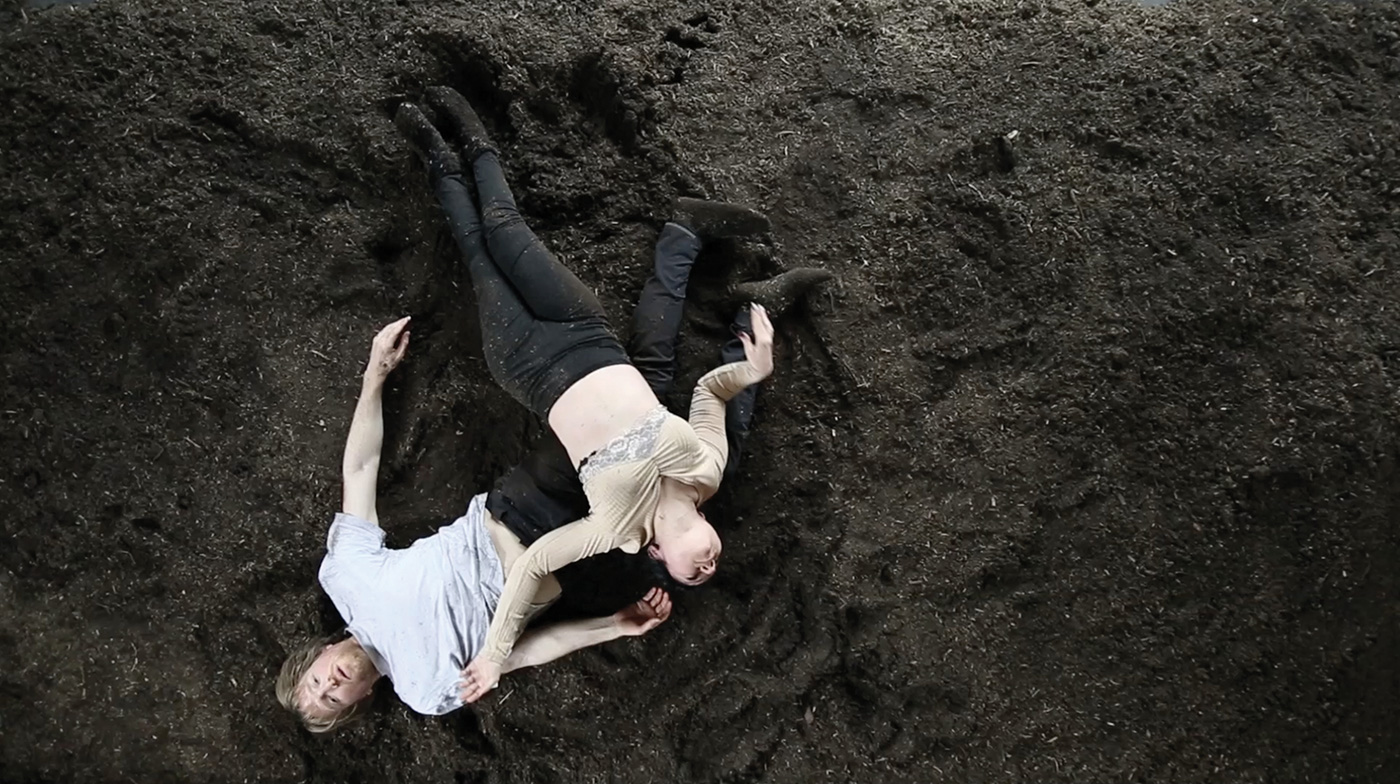
SANDRA Vidéo, Couleur, Son Stéréo, 24 min, HD, - 2025 Production : PETIT FOX avec le soutien dy Centre d’art les Tanneries, Amilly Avec Sandra et Antoine Roux-Briffaud Sandra, jeune femme en situation de handicap moteur, danse au sol avec le danseur professionnel, Antoine Roux-Briffaud. Couchés sur un sol de terre, les danseurs, tels des végétaux explorants leur territoire et tentant de prendre racine s’éveillent doucement, s’enlacent, s’entrelacent, progressent lentement et délicatement dans leur exploration sensorielle. Ces mouvements initiatiques guident la protagoniste vers de nouveaux possibles, parmi les confins de son territoire intérieur – à l’image d’une chanson-itinéraire qui conduit les Aborigènes Australiens au-delà de leurs contrées, vers des ailleurs inexplorés. Le visible et l’invisible sont ainsi confondus : à travers le chant ou la danse, le monde devient une traduction intuitive via une autre forme de langage – qu’elle soit visuelle, sonore, ou encore gestuelle.
Née en 1982, Julie Chaffort vit et travaille à Bordeaux. Artiste pluridisciplinaire, elle explore le cinéma, la vidéo, la performance et la musique grâce à des œuvres immersives, poétiques et sensibles. Plaçant la rencontre avec l?autre au cœur de son processus de création, Julie Chaffort, en tant qu?exploratrice curieuse, navigue et dialogue avec son environnement, provoquant des situations drôles, surprenantes, émouvantes ou fantasques. Elle met ainsi en scène des présences humaines, animales ou encore végétales qui spontanément interagissent, se connectent et entrent en communion les unes avec les autres. Déplaçant le regard à travers cette idée de « pas de côté », l?artiste décale les perspectives habituelles pour ouvrir vers de nouvelles perceptions. En jouant sur l?étrangeté, l?humour et l?absurde, elle invite le spectateur à questionner ses repères et à envisager l?altérité sous un angle nouveau. Tournées en plan séquence, la plupart du temps au sein de paysages naturels, des scènes imprévisibles aux temporalités étirées se font jour face à l?objectif de la caméra qui, à l?image d?un témoin silencieux et immobile, observe patiemment la scène et contemple la fragilité de l?instant. Julie Chaffort est lauréate de plusieurs prix dont le « Prix Bullukian » de la fondation Bullukian, le prix « Talents Contemporain » de la fondation François Schneider, le prix des amis des Abattoirs « Mezzanine Sud », le prix Mécènes du Sud Montpellier-Sètes; elle a été finaliste par deux fois des « Audi talents Awards". Ses oeuvres figurent dans les collections du Frac MECA Nouvelle-Aquitaine, Frac Artothèque Nouvelle- Aquitaine, Frac de la Réunion, Frac Occitanie. Ses films sont diffusés en festivals notamment au FID Marseille.
Catalogue : 2022Printemps | Video | mov | color | 7:40 | France | 2020
Julie Chaffort
Printemps
Video | mov | color | 7:40 | France | 2020
Un chant d’oiseaux nous, ouvrant sur une forêt verdoyante un jour de pluie. Une langue de brume s’insinue lentement dans l’image et s’enroule autour des arbres. Des silhouettes humaines la traversent, paisibles malgré les flammes qui lèchent leurs vêtements. Ces âmes errantes fuient-elles quelque catastrophe urbaine ou font-elles partie du bestiaire de créatures merveilleuses peuplant les forêts ? Sont-elles des messagers de l’Apocalypse ou des martyrs, après un geste ultime de protestation ? Le cheval qui les observe sans broncher, tapis dans les fougères, se contente de renforcer l’inquiétante tranquillité de la scène sans donner de réponse. Julie Chaffort connaît bien ce sentiment, pour avoir tourné dans les forêts nombre de ses vidéos, la figure animale y étant quasi omniprésente. Pour l’artiste, le cheval est le « témoin privilégié de quelque chose que l’on arrive plus à percevoir en tant qu’humain ». Un témoin dans une partition tragi-comique nous menant d’un univers « intemporel » et obscur propre aux contes.
Les vidéos de Julie Chaffort mirent le paysage, le toisent et le parcourent ; on y croise des hommes au destin tragique et des héros aussi beaux que les chants qui les accompagnent – peut être pour en donner la mesure. Les gestes accomplis sont tout à la fois drôles et absurdes, l’avenir toujours incertain et les paroles s’envolent, attrapées par les branches d’une forêt ou englouties dans les eaux d’un lac. Les plans fixent les branches ; ils convoquent les tableaux de l’école de Barbizon où les bruns apparaissent comme chargés de bitume et les lumières s’accrochent aux pâtes colorées. Les récits s’écrivent entre les longs plans-séquence et se devinent dans les détails que la lenteur permet d’observer comme l’on admire une nature morte. L’artiste ouvre des univers parallèles, atemporels et insituables, où le monde se signale à nous par ses infimes déplacements et l’infinité de ses signaux – étrangement menaçants. Pour Julie Chaffort, le cinéma est un médium dominant, naturel, qu’elle choisit très tôt de développer, à l’école des Beaux-Arts de Bordeaux où elle étudie, puis auprès de Roy Andersson qu’elle assiste en Suède, et de Werner Herzog dont elle suit le séminaire à sa Rogue Film School à New-York. Elle expose en France et à l’international. Ses œuvres font parties de collections nationales et privées Julie Chaffort est née en 1982. Elle vit à Bordeaux et travaille partout.
Catalogue : 2022Fauves | Experimental doc. | mov | color | 52:0 | France | 2021
Julie Chaffort
Fauves
Experimental doc. | mov | color | 52:0 | France | 2021
"L’odeur des fauves en nous". L’oeuvre s’inscrit dans la démarche assurément poétique de Julie Chaffort qui imagine et fabrique des situations relevant de l’instant magique. Les ingrédients sont le vivant, le chant, la musique, la visibilisation de corps contraints à une trop grande discrétion. Au coeur de ces situations aussi fascinantes que troublantes, Julie Chaffort filme les relations qui existent entre les terrestres (l’ensemble des êtres vivants, sans hiérarchie), les éléments (eau, terre, air et feu), les voix, les sons et les musiques qui prolongent les corps. Le chant des oiseaux, la voix d’une humaine, la puissance d’une chorale, le râle du vent. Les animaux (humain.es compris.es) interagissent avec ferveur et tendresse avec les arbres, la neige, les rivières, les sols. Pensées comme des scènes refuges où les corps existent librement, exultent et s’expriment, les oeuvres réveillent des émotions et des sentiments profondément inscrits dans nos chairs terrestres : l’attention, l’inquiétude, l’écoute, l’amour, la perte, la sensibilité, l’absence, la jouissance, la vulnérabilité ou encore le réconfort. Un ensemble d’états qui nous attache les un.es aux autres et qui rythme les cycles d’une longue métamorphose commune aux êtres visibles et invisibles qui peuplent le vivant.
Pour Julie Chaffort, le cinéma est un médium dominant, naturel, qu’elle choisit très tôt de développer, à l’école des beaux-arts de Bordeaux où elle étudie, puis auprès de Roy Andersson qu’elle assiste, et de Werner Herzog dont elle suit le séminaire à sa Rogue Film School. Les vidéos de Julie Chaffort mirent le paysage, le toisent et le parcourent ; on y croise des hommes au destin tragique et des héros aussi beaux que les chants qui les accompagnent – peut être pour en donner la mesure. Les gestes accomplis sont tout à la fois drôles et absurdes, l’avenir toujours incertain et les paroles s’envolent, attrapées par les branches d’une forêt ou englouties dans les eaux d’un lac. Les récits s’écrivent entre les longs plans-séquence et se devinent dans les détails que la lenteur permet d’observer comme l’on admire une nature morte. L’artiste ouvre des univers parallèles, atemporels et insituables, où le monde se signale à nous par ses infimes déplacements et l’infinité de ses signaux – étrangement menaçants. En 2013, Julie Chaffort expose au Centre International d’Art et du Paysage de Vassivière, le film « Hot-Dog », moyen-métrage qu’elle y a réalisé la même année en résidence. L’année suivante, elle présente sa première exposition personnelle « Jour Blanc » au Centre Clark de Montréal, avec des installations vidéos et sonores créées in situ. En 2015 lors de sa résidence à Pollen à Monflanquin, elle réalise le moyen-métrage « La barque silencieuse » ; ce film, « aussi facétieux qu’émouvant, aussi déroutant que respectueux de tout ce qui s’offre à voir et à entendre » pour Jean-Pierre Rehm, est sélectionné en 2016 en compétition française et premier film au FID Marseille. Il est également projeté à la galerie Thaddaeus Ropac à Paris Pantin lors de l’exposition Jeune création 66ème édition et remporte deux prix indépendants, avec deux expositions à la clé, l’une pour la Progress Gallery, « Entre chiens et loups », et l’autre pour la galerie du Pavillon à Pantin, « Les cowboys », sélectionné également au FID 2017. Julie Chaffort remporte en 2015 le prix Bullukian et crée « Somnambules », une exposition personnelle présentée à la fondation. L’artiste a été lauréate du prix « Talents Contemporains » 2015 de la fondation François Schneider pour l’oeuvre « Montagnes Noires » et obtient la même année, le prix Mezzanine Sud et expose au Musée des Abattoirs de Toulouse. Le film « La barque silencieuse » entre en 2017 dans la collection du FRAC Aquitaine ainsi que la vidéo « Nostalgia » dans celle du FRAC Occitanie Toulouse. En 2018, Julie Chaffort est lauréate du prix Mécènes du Sud Montpellier-Sète et obtient en 2019 la bourse de soutien à la création du CNAP pour l’élaboration de son projet vidéo « PRINTEMPS » dont une exposition monographie du même titre est présentée à l’ancien palais épiscopal des musées de Béziers avec le soutien de Mécènes du Sud Montpellier-Sète en 2020. Son dernier film « Légendes » a fait partie de la compétition officielle française et la compétition CNAP du FIDMarseille 2020.
Catalogue : 2020Summertime | Experimental doc. | hdv | color | 24:36 | France | 2018
Julie Chaffort
Summertime
Experimental doc. | hdv | color | 24:36 | France | 2018
Une trentaine de personnes qui ne se connaissent pas acceptent de voyager ensemble pendant 5 jours et de tourner dans un film sans scénario préétabli. Chacun tiendra son propre rôle, vêtu de costumes choisi par la réalisatrice. Portraits de familles, blagues, danse, roller, chants se dévoilent aux spectateurs sous le regard d’un cheval tranquille et bienveillant.
Oeuvrant dans les champs du cinéma et de l’art contemporain, Julie Chaffort s’intéresse tout particulièrement à l’immensité et à la vacuité des territoires naturels, à leur aspect désertique et délaissé ; ses films et vidéos sont habités par une certaine lenteur, invitant à l’écoute et à la contemplation, mais jouant aussi sur les registres de l’absurde, de la chute, de la surprise et du décalage. Pour Julie Chaffort, le cinéma est un médium dominant, naturel, qu’elle choisit très tôt de développer, à l’école des beaux-arts de Bordeaux où elle étudie, puis auprès de Roy Andersson qu’elle assiste, et de Werner Herzog dont elle suit le séminaire à sa Rogue Film School. En 2013, elle expose au Centre International d’Art et du Paysage de Vassivière Hot-Dog, moyen-métrage qu’elle y a réalisé la même année en résidence. L’année suivante, elle présente sa première exposition personnelle Jour Blanc au Centre Clark de Montréal, avec des installations vidéos et sonores créées in situ. En résidence à Pollen à Monflanquin 2015, elle réalise le moyen-métrage La barque silencieuse ; ce film, "aussi facétieux qu’émouvant, aussi déroutant que respectueux de tout ce qui s’offre à voir et à entendre" pour Jean- Pierre Rehm, est sélectionné en 2016 en compétition française et premier film au FID Marseille. Il est également projeté à la galerie Thaddaeus Ropac à Paris Pantin lors de l’exposition “Jeune création 66ème édition” et remporte deux prix indépendants, avec deux expositions à la clé, l’une pour la Progress Gallery, Entre chiens et loups, et l’autre pour la galerie du Pavillon à Pantin, Les cowboys (également selectionné au FID en 2017). Julie Chaffort remporte aussi en 2015 le prix Bullukian et crée Somnambules, une exposition personnelle présentée à la fondation. L’artiste a été lauréate du prix "Talents Contemporains" 2015 de la fondation François Schneider pour l’oeuvre Montagnes Noires et obtient la même année, le prix Mezzanine Sud et expose au Musée des Abattoirs de Toulouse. Le film La barque silencieuse entre en 2017 dans la collection du FRAC Aquitaine et la vidéo Nostalgia dans celle du FRAC Occitanie Toulouse. Julie Chaffort vient d’être lauréate du prix Mécènes du Sud Montpellier-Sète. et d’obtenir une bourse à la création du CNAP pour la réalisation de son projet vidéo PRINTEMPS.
Catalogue : 2019HUNT HUNT | Fiction | mov | color | 32:48 | France | 2018
Julie Chaffort
HUNT HUNT
Fiction | mov | color | 32:48 | France | 2018
HUNT_ Figurant. Personne chargée de tenir un emploi secondaire, généralement muet, et, le plus souvent, dans un groupe tenant le même rôle. Par analogie Personne qui, dans la société, tient un rôle dont l’importance n’est qu’apparente et non effective. Ce qui caractérise le plus le travail de Julie Chaffort, c’est le refus des figurants. Même ceux qui nous tournent le dos, ceux qui marchent trop loin pour que l’on distingue leurs traits ou ceux qui se dissimulent derrière les fougères, ceux qui apparaissent masqués ou ceux qui conservent le silence, tous ceux-là sont des personnages et non des figurants. Et même le buisson aux reflets roux, qui rampe sous la pluie. C’est toute la grâce du film de Julie Chaffort de nous rappeler que chaque détail est signifiant : les frottements que les gants des boxeurs produisent quand ils s’entraînent à ne pas prendre de coups, le rythme doux des gouttes de pluie dans les arbres de la forêt, les gestes de goéland dans les violents rouleaux océaniques pour continuer à résister. "Hunt" est un film réalisé avec des jeunes en situation de rupture et des habitants du pays basque.
Les vidéos de Julie Chaffort mirent le paysage, le toisent et le parcourent ; on y croise des hommes au destin tragique et des héros aussi beaux que les chants qui les accompagnent – peut être pour en donner la mesure. Les gestes accomplis sont tout à la fois drôles et absurdes, l’avenir toujours incertain et les paroles s’envolent, attrapées par les branches d’une forêt ou englouties dans les eaux d’un lac. La vacuité des territoires impose à l’artiste des images qu’elle fait naître de façon sensible, voire irraisonnée. L’artiste ouvre des univers parallèles, atemporels et insituables, où le monde se signale à nous par ses infimes déplacements et l’infinité de ses signaux – étrangement menaçants. Aussi l’artiste réussit-elle l’exploit de ramener le sujet humain au même niveau que le paysage dans lequel il se trouve ; changeants et imprévisibles, l’un comme l’autre communiquent au-delà du langage, à l’aide de signes pluriels et non autoritaires que les films nous invitent à recomposer. Pour Julie Chaffort, le cinéma est un médium dominant, naturel, qu’elle choisit très tôt de développer, à l’école des beaux-arts de Bordeaux où elle étudie, puis auprès de Roy Andersson qu’elle assiste, et de Werner Herzog dont elle suit le séminaire à sa Rogue Film School à New-York. En 2015, elle réalise le moyen-métrage La barque silencieuse, sélectionné en 2016 en compétition française et premier film au FID Marseille. Il est également projeté à la galerie Thaddaeus Ropac à Paris Pantin lors de l’exposition Jeune création 66ème édition et remporte deux prix indépendants. Julie Chaffort obtient en 2015 le prix Bullukian, puis le prix «Talents Contemporains 2015 » de la fondation François Schneider. Elle obtient l’année suivante le prix Mezzanine Sud et en 2018, elle est lauréate du prix Mécènes du Sud Montpellier/Sète.
Catalogue : 2014Hot-Dog | Experimental fiction | hdcam | color | 47:21 | France | 2013
Julie Chaffort
Hot-Dog
Experimental fiction | hdcam | color | 47:21 | France | 2013
Against a backdrop of thick fog and snow, on the island of Vassivière, ?Hot Dog? follows the wanderings of Ignatius, pushing his hot dog cart along the lake shore, meeting other uncanny characters along his path. As outlandish situations unfold, the characters in ?Hot Dog? find themselves confronted with both nature and artifice. In the winter landscape, on lunar shores, strange, surreal and absurd scenes reflect a jubilant and decadent world. In the melancholy and mysterious atmosphere, we lose our bearings and the landscape becomes a source of contemplation and danger, the natural setting becoming transfigured into a dream theater or a hallucination.
Julie Chaffort
Catalogue : 2025Pour la peau | Experimental doc. | hdv | color | 68:0 | France | 2024

Julie Chaffort
Pour la peau
Experimental doc. | hdv | color | 68:0 | France | 2024
“Pour la peau” is a very sensual film. The whole film is a love poem. A love poem to life. It's an ode to the animal, but also to the craftsman who works in the shadows to make his object. Julie Chaffort highlights man's relationship with animals, with their skins, and the delicacy they share with each other. It's a film that plays with the codes of cinema. It's not a documentary, but some of the images are. Sometimes the editing is clip-like, but it's not either. The soundtrack was composed by the Cabadzi duo. The film is edited like a slam, changing register and rhythm according to the characters, locations, songs, music and animals.
Julie Chaffort, born in 1982, lives and works in Bordeaux, France. Working in the fields of cinema and contemporary art, Julie Chaffort is particularly interested in the vastness and emptiness of natural territories, their deserted and abandoned aspect; her films and videos are inhabited by a certain slowness, inviting us to listen and contemplate, but also playing on the registers of the absurd, the fall, the surprise and the shift. For Julie Chaffort, cinema is a dominant, natural medium, which she chose early on to develop, at the Bordeaux School of Fine Arts where she studied, then with Roy Andersson whom she assisted, and with Werner Herzog whose seminar she followed at his Rogue Film School in New York. In 2013, she exhibited at the Centre International d'Art et du Paysage de Vassivière Hot-Dog, a medium-length film she had made there the same year during a residency. The following year, she presented her first solo exhibition Jour Blanc at Montreal's Centre Clark, featuring video and sound installations created in situ. In residence at Pollen in Monflanquin 2015, she made the medium-length film La barque silencieuse; this film, “as facetious as it is moving, as puzzling as it is respectful of everything that offers itself to be seen and heard” for Jean-Pierre Rehm, was selected in 2016 in French competition and first film at FID Marseille. It was also screened at the Jeune création 66ème édition exhibition at Galerie Thaddaeus Ropac Paris Pantin and won two independent awards, with two exhibitions in 2016, one at Progress Gallery, Entre chiens et loups, and the other at Galerie du Pavillon in Pantin, Les cowboys. Julie Chaffort has also won numerous other prizes, associated with exhibitions: the 2015 “Talents Contemporains” prize from the François Schneider Foundation for the work Montagnes Noires with an exhibition in 2017, the 2016 “Mezzanine Sud” prize from the Frac Midi-Pyrénées associated with the CIC Sud-Ouest with an exhibition in 2016-2017 at Les Abattoirs in Toulouse, and the 2016 Bullukian prize for which Julie Chaffort created Somnambules for an exhibition at the Bullukian Foundation in Lyon. In 2018, Hunt was shown at La Poudrière in Bayonne, and in the same year, she won the Prix Mécènes du Sud Montpellier/Sète. Most recently, she took part in the second edition of the biennial Movimenta festival in Bayonne, and in the residency for the Paysages en Mouvement exhibition (Médoc).
Mi Chai
Catalogue : 2015梦雀 | Animation | hdv | color | 10:15 | China | 2014
Mi Chai
梦雀
Animation | hdv | color | 10:15 | China | 2014
This film is about birds and dreams. Birds dream is shot using stop-motion technique, and its ‘actors’ are bird models handcrafted by the artist. Its concept derives from the artist’s own live performance the Sparrow and the Raven (2012). Story: A new-born sparrow entered a strange world. When curiously idling in this world, the sparrow found a young raven with which it began to explore the place together. They encountered all sorts of strange birds and mysterious geometric shapes of different colours. Their encounters have made them bewilder and fantasise, soon their body start to change as well…
Born in 1985, Chai Mi currently lives and works in Beijing as an artist. Chai Mi’s fine art practice involves a range of media, including painting, paper-craft, video and live performance. Her works have been shown at many art museums, cultural organizations, film festival and music festival nationally and internationally.
Chanasorn Chaikitiporn
Catalogue : 2023Blinded by the Light | Experimental doc. | mp4 | color and b&w | 22:23 | Thailand | 0
Chanasorn Chaikitiporn
Blinded by the Light
Experimental doc. | mp4 | color and b&w | 22:23 | Thailand | 0
The film aims to interrogate double-sided effects of how cinema itself has changed and developed through time, and how it affected both workers in film productions and its audiences along its journey.
Chanasorn Chaikitiporn is a filmmaker and moving image artist. Who is interested in exploring and interrogate socio-political histories of Thailand with questions of culture, political thought, identity and personal historical memory in perspective and relation to the semi-coloniality. In combining fiction film and documentary film genre, he investigates on archival, found footages and declassified documents. Chaikitiporn is a member of Rapid Eye Movement (REM), a experimental film and media screening in Bangkok, Thailand
Chanasorn Chaikitiporn
Chanasorn Chaikitiporn
Catalogue : 2025Here We Are | Experimental doc. | digital | color | 19:0 | Thailand | 2023

Chanasorn Chaikitiporn
Here We Are
Experimental doc. | digital | color | 19:0 | Thailand | 2023
A housekeeper receives a film made by her daughter. Combining found footage of Thailand during the Cold War with present-day images of Bangkok, the film reminds her of anecdotes she heard from the woman she works for and it triggers a re-telling of her own story of coming to the capital. HERE WE ARE seeks to portray the present by reflecting on the past, how the legacy of colonization has survived and been normalized nowadays. - ("19th Forum Expanded: Distant Connections", 74th Berlinale).
Chanasorn Chaikitiporn is a filmmaker and moving image artist whose interest lies in exploration and interrogation of socio-political histories of Thailand. His works examine questions on culture, political thought, identity and personal historical memory through the lens of semi-coloniality. In combining fiction film and documentary film genre, he investigates on archival, found footages and declassified documents. Chanasorn is a member of ELSE, a moving image screening series based in Bangkok, Thailand.
George Chakravarthi, Chakravarthi
Anouk Chambaz
Catalogue : 2026Di Notte | Experimental film | 16mm | color | 8:10 | Switzerland, Slovenia | 2025
Anouk Chambaz
Di Notte
Experimental film | 16mm | color | 8:10 | Switzerland, Slovenia | 2025
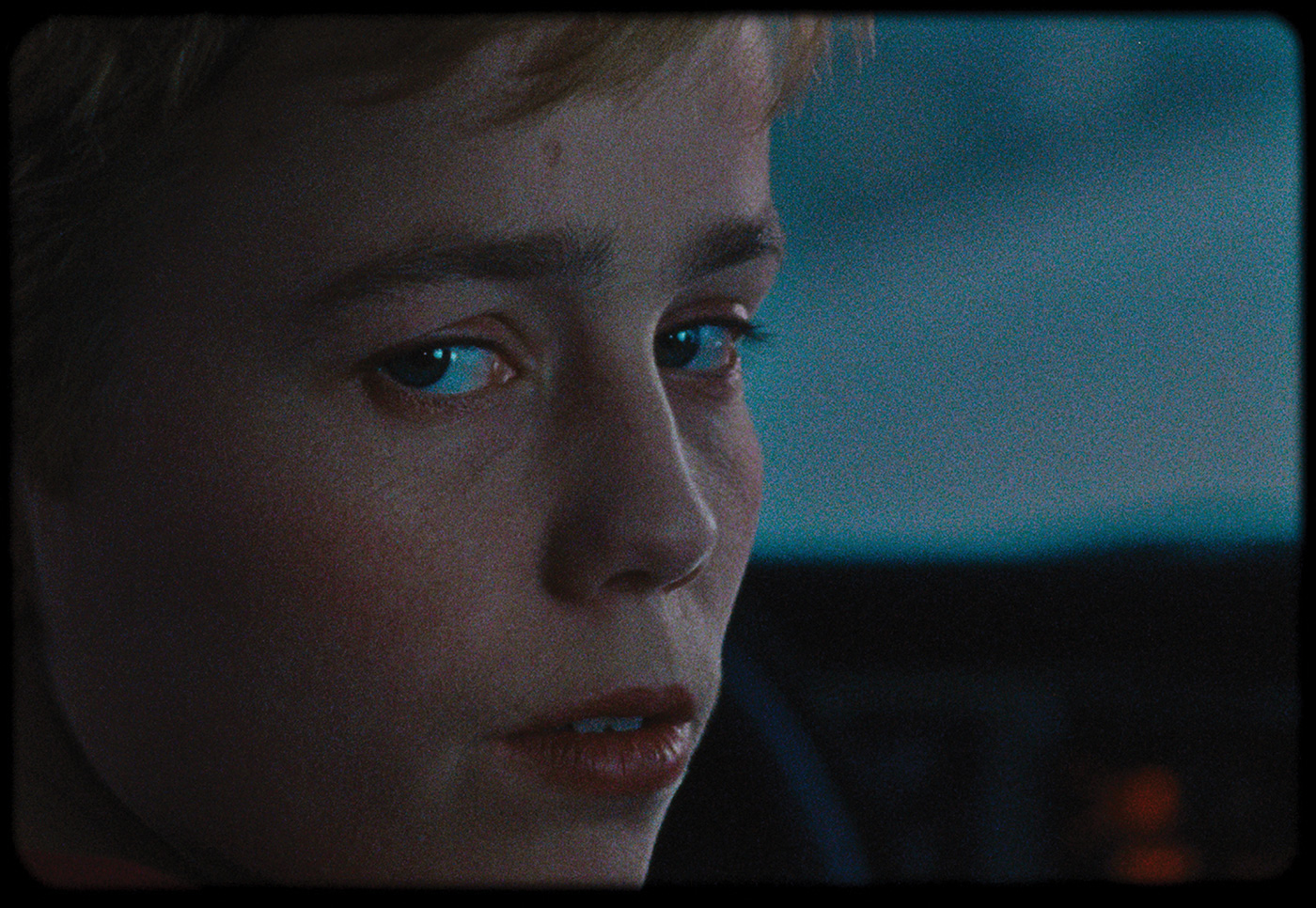
It’s almost night on the mountain. A solitary car moves along the road. At the wheel, someone starts singing a strange lullaby
Anouk Chambaz (Renens, 1993) works with moving images, exploring the thresholds between spaces, dreams, and individuals. She holds a degree in cinema from ECAL, Lausanne, and in philosophy from La Sapienza, Rome. She received the Combat Prize (video) in 2022, and special mentions at the Francesco Fabbri Prize in 2023 and the Rio de Janeiro International Film Festival in 2024. In 2025 she is finalist for The Talent Prize.
Agathe Champsaur
Catalogue : 2019Cowboy drags | Experimental video | 35mm | color and b&w | 0:54 | France, USA | 2018
Agathe Champsaur
Cowboy drags
Experimental video | 35mm | color and b&w | 0:54 | France, USA | 2018
"Hair done/ boots on/ tell me this ain`t the usa" Surreal portraits of americans. The contrasts and extremes in nowadays austin, Texas`s life.
Documentary filmmaker and photographer. I live and work in Paris. I`m currently working on two documentaries in Lebanon, detailing the life of two different but very inspiring figures, Abdulrahman Katanani a Palestinian visual artist that broke free from palestinian camps through art, and Therese Basbous, a poet often known as Michel Basbous` wife.
Kent Chan
Catalogue : 2015Orphic Oracular | Experimental fiction | hdv | color | 10:16 | Singapore | 2014
Kent Chan
Orphic Oracular
Experimental fiction | hdv | color | 10:16 | Singapore | 2014
A woman follows a man through a man-made forest. Night falls and she narrates a tale that is at once distant yet familiar. The man she follows undergoes a transformation. Elsewhere we find a wanderer concocting a recipe and deep at night, in an empty amphitheatre a man performs with fire. Orphic Oracular, as it’s title suggests is a vision of a future that recalls the past.
Kent Chan (b. 1984) is an artist, filmmaker and curator based in Singapore and Amsterdam. His practice revolves around our encounters with art, fiction and cinema that explore the links between aesthetic experience and knowledge production. The works and practices of others often form the locus of his works, which examines the ambiguity that lies at the interstices of art (making) and daily life. His works have taken the form of film, text, situations and exhibitions. Trained as a filmmaker, filmmaking forms the basis of his work. Not merely in terms of medium, the cinematic as aesthetic and methodology underpins and informs his practice. Kent uses text and the image medium to construct narratives that investigate the inherent conflicts and issues within the subject matter that he examines. Areas of interest that his works have explored include notions of cultural identities, myths and modernity. His works has been shown internationally in both film festivals and exhibitions in Asia and Europe. He has held his solo exhibition at The Substation in Singapore. Recent group exhibitions include the 4th Taiwan International Video Art Exhibition 2014 and the Busan Biennale 2014.
Kent Chan
Catalogue : 2025Future Tropics | Fiction | digital | color | 33:22 | Singapore | 2024

Kent Chan
Future Tropics
Fiction | digital | color | 33:22 | Singapore | 2024
In a future global tropics of eternal summer, a woman named Vicki realises she’s been receiving messages from her past life. Perspectives and narratives change as the film moves between different times and spaces, piecing together the herstory of the New and Old Tropics.
Kent Chan (1984, Singapore) is an artist, curator and filmmaker based in Netherlands and Singapore. His practice revolves around our encounters with art, fiction and cinema that form a triumvirate of practices porous in form, content and context. He holds particular interest in the tropical imaginary, the past and future relationships between heat and art, and contestations to the legacies of modernity as the epistemology par excellence. His works have taken the form of moving-image, text, performances, and exhibitions. He is an upcoming resident at Art Explora and a former resident of Gasworks, Jan van Eyck Academie, Pivô Research, NTU Centre for Contemporary Art Singapore and Medialab Matadero. He has held solo and two-person presentations at Gasworks, Kunstinstituut Melly, Bonnefanten Museum, National University Singapore Museum, and de Appel. His works and films have been exhibited in institutions and festivals including Tate Modern, Liverpool Biennial, Videobrasil, International Film Festival Rotterdam, Seoul Mediacity Biennale, Times Museum, EYE Film Museum, Onassis Stegi, and Bienalsur. He is the 2023 winner of the Paulo Cunha e Silva Award and Impart Art Prize, and 2021 winner of Foundwork Artist Prize. His works are collected by the Kadist Foundation, the Rijkscollectie, Netherlands, Bonnefanten Museum, and Galerie für Zeitgenössische Kunst Leipzig.
Charlie Chaplin
Catalogue : 2008The Idle Class | Fiction | 16mm | black and white | 31:0 | USA | 1921

Charlie Chaplin
The Idle Class
Fiction | 16mm | black and white | 31:0 | USA | 1921
Chaplin essayait souvent de nouveaux rôles pour son personnage de vagabond. Dans "The Idle Class" , il joue deux rôles distincts : le Vagabond, et un jeune mari riche et alcoolique. A eux deux, ils représentent le riche oisif et le pauvre oisif ( d?où le titre original, The Idle Class, la classe oisive]. Tous les personnages du film partagent l?obsession dominante de l?Amérique d?alors : le golf. L?action se passe dans un hôtel de Miami, où les quiproquos s?enchaînent lorsque la belle Edna prend le Vagabond, étonné mais prêt à tout, pour son mari alcoolique distrait et négligent.
Antoine Chapon
Catalogue : 2026Al Basateen | Documentary | dcp | color | 24:41 | France | 2025
Antoine Chapon
Al Basateen
Documentary | dcp | color | 24:41 | France | 2025
In 2015, the Basateen al-Razi district of Damascus was razed to the ground as punishment for the population’s uprising against Bashar al-Assad’s regime. This area is set to be replaced by Marota City, a modern and connected district featuring 80 skyscrapers. Ten years later, having lost everything, two former residents reflect on their neighborhood, where their homes and the oldest orchards in Damascus once stood. Through their testimonies and the repurposing of regime-produced 3D animations, memory is awakened and resists this deliberate erasure.
Antoine Chapon (b. 1990, France) is a filmmaker and multidisciplinary artist. His work creates hybrid forms using cinema, CGI animation and archives. His first short film "My Own Landscapes" premiered in Visions du Reel where it won the Best Short Film Award. It was then selected in more than 40 festivals, such as Sundance, Telluride, Palm Springs, Sarajevo and Premiers Plans. His work has been showcased at ZKM|Karlsruhe, Centre Pompidou, the 17th Venice Architecture Biennale and the Singapore Art Museum. He is a Berlinale Talents alumnus and he is currently writing his first feature documentary.