Catalogue > Liste par artiste
Parcourez la liste complète des artistes présentés dans le cadre des Rencontres Internationales depuis 2004. Utilisez le filtre alphabétique pour affiner vos recherches.
Ana Edwards
Catalogue : 2023La Partida de las Imagenes | Doc. expérimental | 16mm | | 11:11 | Chili, France | 2022
Ana Edwards
La Partida de las Imagenes
Doc. expérimental | 16mm | | 11:11 | Chili, France | 2022
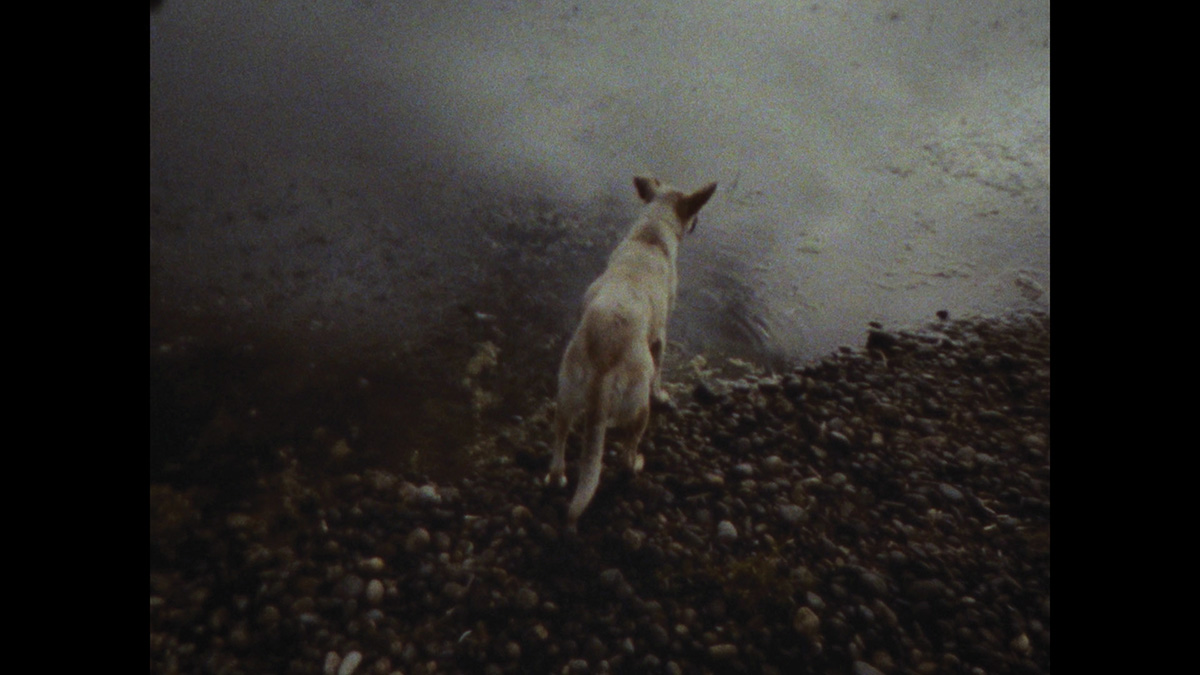
Between ethnography and reverie, La Partida de las Imágenes immerses in-between the spaces of dreams to explore how human and nonhuman social cartographies arise through dreaming alongside a Mapuche family in the south of Chile.
Ana Edwards studied Visual Arts in Chile. In 2019 she completed an MA in Visual Anthropology in the UK. She is currently taking part at Le Fresnoy Studio national des arts contemporains in France. Her practice begins as a search for human and non-human worlds as unstable and in constant transformation. She is interested in film and ecology as systems of interconnected elements subject to influence each other.
- Edwin, -
Jussi Eerola
Catalogue : 2023Grasshopper | Film expérimental | 4k | couleur | 9:0 | Finlande | 2023
Jussi Eerola
Grasshopper
Film expérimental | 4k | couleur | 9:0 | Finlande | 2023
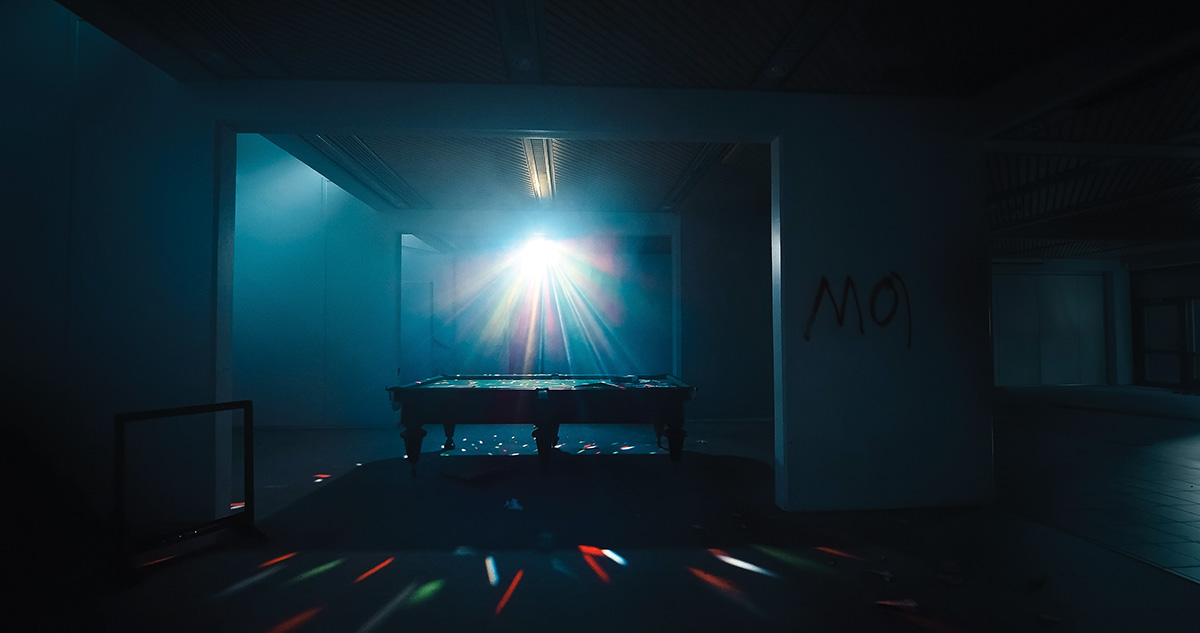
During the darkest hours of the night a small disco light appears and shines lights to empty business premises. A minimalistic musical.
Jussi Eerola has worked as a cinematographer on many internationally awarded films since 1992. His directional debut was a documentary about electro-hypersensitive people titled Refugees of Technocracy (2009). The Return of the Atom directed together with Mika Taanila premiered at TIFF 2015 and won the NORDIC:DOX Award at CPH:DOX in 2015. Eerola’s first minimalistic short film Blue Honda Civic premiered at IFFR in 2020 and continued to many international festivals receiving three awards. Eerola is a founding member of the production company Testifilmi Oy started 2014 together with Mika Taanila and visual artist duo IC-98 (Patrik Söderlund and Visa Suonpää). Testifilmi emphasizes the vast potential of cinematic possibilities over standard formats and storytelling.
Jussi Eerola
Catalogue : 2022Obsidian Blue Pearl | Vidéo | 4k | couleur | 11:3 | Finlande | 2021
Jussi Eerola
Obsidian Blue Pearl
Vidéo | 4k | couleur | 11:3 | Finlande | 2021
The romantic landscape paintings often portrayed weather condition, topography of national landscape, religious themes, spirituality of nature and hunting scenes. Obsidian Blue Pearl is a minimalistic road movie mirroring the emotions of the driver through the landscapes (s)he has chosen to look at.
Jussi Eerola (b.1969) has worked as a cinematographer on many internationally rewarded short films, documentaries and tv-features since 1992. He has collaborated with many visual artist’s e.g. Eija-Liisa Ahtila, Mika Taanila, IC-98, Elena Näsänen and Anu Pennanen. His directional debut was a documentary about electro-hypersensitive people titled Refugees of Technocracy (2009). Documentary film The Return of the Atom written & directed together with Mika Taanila premiered at Toronto IFF 2015 and was given the NORDIC:DOX award at CPH:DOX in 2015. In 2014 he started a production company Testifilmi Oy together with Mika Taanila and visual artist duo IC-98 (Patrik Söderlund and Visa Suonpää) and has produced several of company's films. Eerola's first short film Blue Honda Civic (2020) premiered at IFF Rotterdam and was awarded three times at international film festivals.
Effi & Amir
Catalogue : 2022Places of Articulation: Five Obstructions | Doc. expérimental | mov | couleur | 22:0 | Belgique | 2020
Effi & Amir
Places of Articulation: Five Obstructions
Doc. expérimental | mov | couleur | 22:0 | Belgique | 2020
Places of Articulation: Five Obstructions takes the spectator on a journey across borders, from Northern Ireland to Tibet, passing through Germany, Albania and Flanders. However, it explores a more deeply engraved border, the invisible border of our oral cavity, which marks and defines the sounds we can emit and the words we can pronounce. Since biblical times and up till nowadays asylum procedures, this border is exploited to discriminate and divide. Moving between territories – sonic, anatomical and political ones – this installation examines how voice and pronunciation are used as identifiers, eventually become mobile checkpoints, determining fates and sometimes costing lives. Employing different imaging methods and visualisations, it renders these checkpoints visible, while questioning the limits of identification and revealing blurred lines or zones of ambiguity that defy binary categorisation.
Effi & Amir, nés et grandis en Israël, travaillent en duo depuis 1999 et vivent à Bruxelles depuis 2005. Ils ont étudié les beaux-arts à l'Académie Bezalel de Jérusalem et au Sandberg Institut d'Amsterdam et ont appris eux-mêmes, bien plus tard, comment faire des films. Leur travail, qui utilise les médias audiovisuels, la performance et les stratégies participatives, se situe à la frontière floue entre le documentaire et la fiction, et traite des mécanismes de construction - de l'identité, de l'appartenance au groupe, de l'histoire et de l'œuvre elle-même. Le travail d'Effi & Amir a récemment été primé dans des festivals de films documentaires (docAviv, IndieLisboa, En ville !, festival Jean rouch) et ils sont les lauréats du Prix de parcours documentaire audoiovisuel 2022 de la Scam.
Catalogue : 2021CHANCE | Documentaire | 0 | couleur | 75:0 | Belgique | 2020
Effi & Amir, Amir Borenstein
CHANCE
Documentaire | 0 | couleur | 75:0 | Belgique | 2020
Joué magnifiquement par eux-mêmes et sans scénario, "CHANCE" raconte la tentative nocturne de quatre jeunes soudanais, demandeurs d’asile, de rejoindre l’Angleterre depuis la Belgique. Filmé entièrement dans la remorque d’un camion, ce docu-fiction est une rencontre rare, privilégiée et profondément humaine avec quatre individus et avec une réalité trop souvent invisible.
Effi Weiss (née en Israël en 1971) et Amir Borenstein (né en Israël en 1969) sont un duo d’artistes-cinéastes qui travaillent ensemble depuis 1999. Leur travail croise différentes disciplines comme la vidéo, les installations et les projets participatifs. Leurs œuvres sont diffusées dans des musées, centres d’Art contemporains et festivals. En dehors de leurs projets communs, ils animent aussi des ateliers avec des publics de toutes origines. "CHANCE" est leur troisième long métrage.
Effi & Amir, Amir Borenstein
Catalogue : 2022Places of Articulation: Five Obstructions | Doc. expérimental | mov | couleur | 22:0 | Belgique | 2020
Effi & Amir
Places of Articulation: Five Obstructions
Doc. expérimental | mov | couleur | 22:0 | Belgique | 2020
Places of Articulation: Five Obstructions takes the spectator on a journey across borders, from Northern Ireland to Tibet, passing through Germany, Albania and Flanders. However, it explores a more deeply engraved border, the invisible border of our oral cavity, which marks and defines the sounds we can emit and the words we can pronounce. Since biblical times and up till nowadays asylum procedures, this border is exploited to discriminate and divide. Moving between territories – sonic, anatomical and political ones – this installation examines how voice and pronunciation are used as identifiers, eventually become mobile checkpoints, determining fates and sometimes costing lives. Employing different imaging methods and visualisations, it renders these checkpoints visible, while questioning the limits of identification and revealing blurred lines or zones of ambiguity that defy binary categorisation.
Effi & Amir, nés et grandis en Israël, travaillent en duo depuis 1999 et vivent à Bruxelles depuis 2005. Ils ont étudié les beaux-arts à l'Académie Bezalel de Jérusalem et au Sandberg Institut d'Amsterdam et ont appris eux-mêmes, bien plus tard, comment faire des films. Leur travail, qui utilise les médias audiovisuels, la performance et les stratégies participatives, se situe à la frontière floue entre le documentaire et la fiction, et traite des mécanismes de construction - de l'identité, de l'appartenance au groupe, de l'histoire et de l'œuvre elle-même. Le travail d'Effi & Amir a récemment été primé dans des festivals de films documentaires (docAviv, IndieLisboa, En ville !, festival Jean rouch) et ils sont les lauréats du Prix de parcours documentaire audoiovisuel 2022 de la Scam.
Catalogue : 2021CHANCE | Documentaire | 0 | couleur | 75:0 | Belgique | 2020
Effi & Amir, Amir Borenstein
CHANCE
Documentaire | 0 | couleur | 75:0 | Belgique | 2020
Joué magnifiquement par eux-mêmes et sans scénario, "CHANCE" raconte la tentative nocturne de quatre jeunes soudanais, demandeurs d’asile, de rejoindre l’Angleterre depuis la Belgique. Filmé entièrement dans la remorque d’un camion, ce docu-fiction est une rencontre rare, privilégiée et profondément humaine avec quatre individus et avec une réalité trop souvent invisible.
Effi Weiss (née en Israël en 1971) et Amir Borenstein (né en Israël en 1969) sont un duo d’artistes-cinéastes qui travaillent ensemble depuis 1999. Leur travail croise différentes disciplines comme la vidéo, les installations et les projets participatifs. Leurs œuvres sont diffusées dans des musées, centres d’Art contemporains et festivals. En dehors de leurs projets communs, ils animent aussi des ateliers avec des publics de toutes origines. "CHANCE" est leur troisième long métrage.
Ewa Effiom
Catalogue : 2026WHEN ONE DOOR OPENS | Doc. expérimental | mp4 | couleur | 10:44 | Royaume-Uni, Belgique | 2024
Ewa Effiom
WHEN ONE DOOR OPENS
Doc. expérimental | mp4 | couleur | 10:44 | Royaume-Uni, Belgique | 2024
WHEN ONE DOOR OPENS se déploie comme une exploration des dynamiques complexes entre autorat, représentation et histoire. S’inspirant des méthodologies décisives d’Arthur Jafa et des esthétiques évocatrices de Christian Marclay, le film s’écarte des cadres conventionnels du cinéma dominant pour plonger au cœur d’un riche tissu de found footage, exhumant et réappropriant les récits enfouis au sein des race films, principalement issus de la période qui suit immédiatement l’ère pré-Code. À cet égard, l’œuvre se présente comme un contrepoint aux propositions parfois unidimensionnelles de Marclay. À travers une narration en apparence sinueuse, WHEN ONE DOOR OPENS bouscule les notions conventionnelles d’identité et d’appartenance, invitant le spectateur à se confronter aux complexités de la représentation historique. Chaque image devient un passage vers une époque révolue, où les personnages évoluent dans des espaces architecturaux à la fois littéraux et métaphoriques. L’exploration du mouvement au sein de ces espaces résonne d’une forte charge symbolique, révélant le pouvoir transformateur du cinéma. Au final, le film se dresse comme un hommage à l’attrait durable du médium cinématographique et à ses espaces implicites, capables de saisir et de réinventer les multiples strates de l’expérience humaine.
EWA EFFIOM est un architecte, auteur et producteur belgo-nigérian basé à Londres. L’imaginaire visuel, le futurisme et la mythologie sont des thèmes récurrents dans son travail, avec une attention particulière portée à leur relation avec l’espace. Il a fait partie de la deuxième promotion du programme New Architecture Writers de l’Architecture Foundation, qui s’est conclu par un programme public salué par la critique. Ses textes ont été publiés dans Architect’s Newspaper, Dwell, The AJ, ICON, Wallpaper, Frame, OnOffice, Architecture Aujourd’hui, The Modern House Magazine, A Daily Dose, Ex Libris, entre autres. Son essai Architecture, Buildings and Conservation in MAJA a été nommé dans la catégorie Meilleur article aux Estonian Architecture Awards 2022, un an après avoir obtenu la deuxième place au concours de commissariat de la Tallinn Architecture Biennale 2021 avec une proposition intitulée Adaptive Re-use. Son film Eagle Mansions a été présenté en première au Urban Film Festival de Perth en 2021, puis projeté à la Melbourne Design Week 2022. Il a ensuite obtenu la résidence How To au Centre canadien d’architecture, sous le titre How Not To Be A Developer. En 2022, son second film Beck Road a été présenté en première au festival Open City, avant d’être projeté à la 18? Biennale d’architecture de Venise. Il a été Fellow LINA en 2023 et a reçu la résidence Film Lab du musée MAXXI à Rome, où il a réalisé When One Door Opens, présenté au Demanio Marittimo–Km 278 puis dans l’exposition Restless Architecture commissariée par Diller Scofidio + Renfro au MAXXI. Il a également participé à la résidence Staging Ground de Theatrum Mundi, avec une exploration collaborative des transformations infrastructurelles de Paris après les Jeux olympiques. Il est ensuite revenu au réseau LINA pour prononcer le State of Architecture Address 2025, salué par la critique — un plaidoyer pour que la discipline architecturale retrouve la voie de l’imagination. Bien qu’il n’enseigne plus dans le programme MA in Architecture + Urbanism de la Manchester School of Architecture depuis 2022, il demeure critique invité à l’Estonian Institute of Technology et à la London Metropolitan University.
Chrystel Egal
Catalogue : 2025Statement | Doc. expérimental | mov | couleur et n&b | 2:37 | France | 2023
Chrystel Egal
Statement
Doc. expérimental | mov | couleur et n&b | 2:37 | France | 2023
STATEMENT, mes essentiels Je frictionne les mots avec les images. Dans ma famille, on s’est toujours beaucoup écrit. On a toujours beaucoup photographié et filmé. Les lettres, messages, un livre avec une couleur pour chaque enfant. Films, photos, textes, des espaces à travers lesquels je me faufile. Images traces, anagrammes d’écart, de perte et de retrouvailles. Architecturer le vertige de mes voyages. Créer un espace refuge parmi les dérapages de vie. Créer des précipités visuels pour s’ôter des maux. Redécouvrir les images par la boucle. Ne pas suivre la ligne… C.=
Écrivaine, photographe, cinéaste. Chrystel Egal est une artiste pluridisciplinaire. Sa pratique artistique oscille entre l’exploration des expériences limites et une démarche introspective méditative. Ses installations mêlent photographies, films et textes. Elles, visent à “cartographier les centralités humaines”. Elles s’inscrivent dans un parcours initiatique où son « Je » est un désir profond de s’accorder avec l’Autre. En 1993, elle a inventé le "Portrait-fiction". Son travail s’articule autour du rapprochement des êtres. Cela passe d’une part par le corps [matériel] et d’autre part, par l’émotion [immatérielle]. D’un côté, le corps est sondé au travers d’expériences limites. Des initiations comme rituels de révélation : le risque, le travestissement, les laissés pour compte, la drogue. Le corps est considéré comme outil de perception du monde. Un champ d’expérimentations. Un lieu de mise à l’épreuve. En 1993, elle a inventé le "Portrait-fiction". Un autoportrait ouvert sur l'autre. De l’autre, l’émotion, la vibration, l’énergie et la lumière sont appréhendées comme moyens d’investigation de ce qui est au-delà du physique et qui révèle un autre langage. La série (my) mandalas, blancs sur noir, en est une expression. Ces calligrammes sont autant de tatouages intérieurs, palpitations de son existence. À la croisée de différents champs de l’art contemporain, elle a été tour à tour : Ecrivaine Kovalam Beach – New York est mon excès-Romans publiés aux éditions Actes Sud. Photographe, vidéaste avec plus de 40 films réalisés depuis 1993. Certains font partie de la collection de la Maison Européenne de la Photographie à Paris.
Anders Eiebakke
Catalogue : 2013Proportional, Integral, Derivative. Registration of an expanding parametre around Kunstnernes Hus | | | couleur | 7:33 | Norvège | 2012
Anders Eiebakke
Proportional, Integral, Derivative. Registration of an expanding parametre around Kunstnernes Hus
| | couleur | 7:33 | Norvège | 2012
.
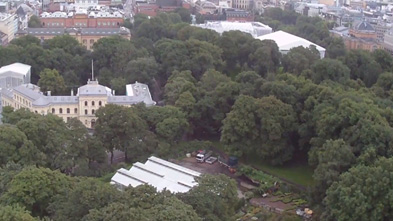
Born 1970 Lives and works in Oslo In the project "Proportional, Integral, Derivative: Registration of an expanding perimeter around Kunstnernes Hus" I utilise the board´s room in Kunstnernes Hus as a base for drone flying inside and outside of Kunstnernes Hus. The structures and Neo Classicist ideals of the Royal Palace Park create a web programmed into the drone. The Functionalism in Kunstnernes Hus defines the framework of video based piloting.
Charlotte Eifler
Catalogue : 2022The pattern thieves | Fiction expérimentale | 4k | couleur | 4:0 | Allemagne | 2021
Charlotte Eifler
The pattern thieves
Fiction expérimentale | 4k | couleur | 4:0 | Allemagne | 2021
Two thieves are in an ambiguous room, lights cast a security grid.? How do patterns of dominance shape our bodies and actions? Grids secure, grids order, grids categorize and evaluate. The logic of the grid is not only found in (colonial) geography, but also in digital evaluation systems. Diverse information about bodies, landscapes and situations are fed into binary systems to be classified. The thieves in the video intend to bend, deform and discard the grids - to create space for new disorder.
Charlotte Eifler is an artist and filmmaker. Her works address the politics of representation in relation to technology. Focusing on feminist approaches and elements of science fiction, she explores processes of image production, computation and imaginations of alternative futures. Currently she lectures at the Karlsruhe University of Arts and Design (HfG) in the department of Media Art/Film. Charlotte has presented work at Ann Arbor Filmfestival; ACM Siggraph Art, Los Angeles; Museum Würzburg; Le printemps de Toulouse; Sapporo International Art Japan; Haus der Kulturen der Welt, Berlin; IMPAKT Utrecht; Kurzfilmtage Oberhausen and ARD Mediathek among others.
Charlotte Eifler, Clarissa Thieme
Catalogue : 2023Archival Grid 1 | Doc. expérimental | 0 | couleur | 13:0 | Allemagne, Bosnie-Herzégovine | 2022
Charlotte Eifler, Clarissa Thieme
Archival Grid 1
Doc. expérimental | 0 | couleur | 13:0 | Allemagne, Bosnie-Herzégovine | 2022
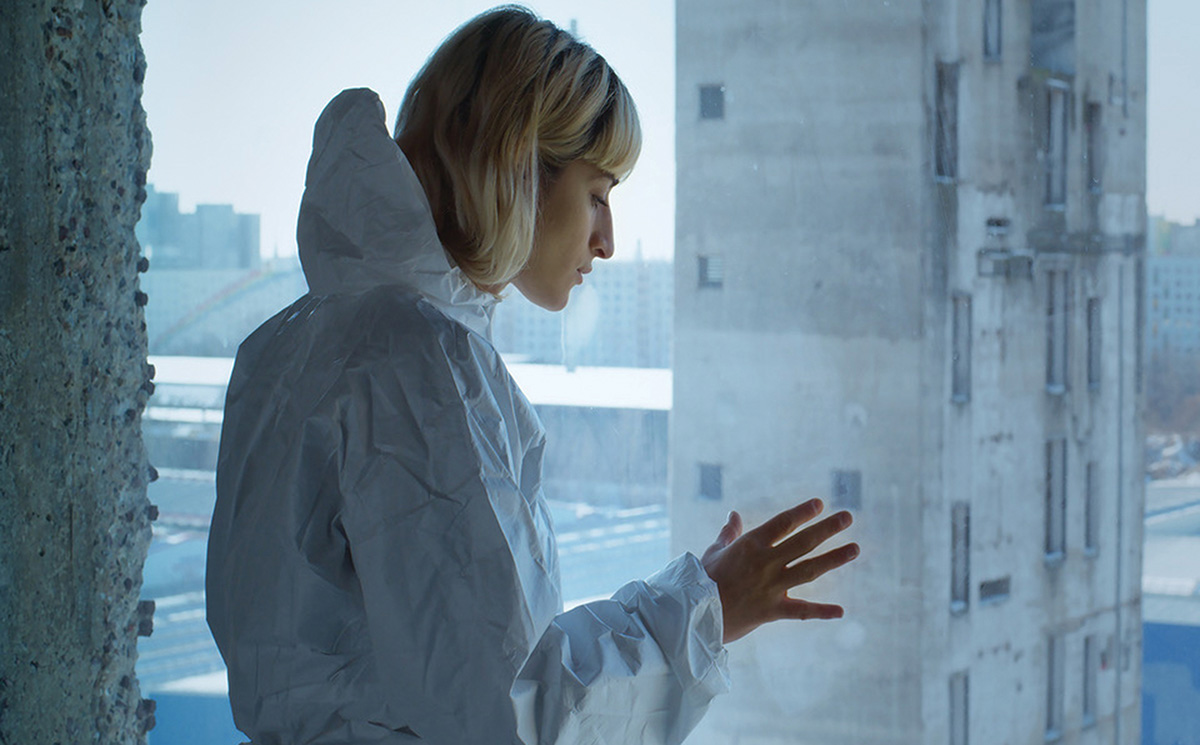
With the installation ARCHIVAL GRID, Charlotte Eifler and Clarissa Thieme present a filmic analysis in three parts. The work explores the tools of evidence production, the legal impact of cartographic surveys and the social processing of collective traumata and war crimes, as well as the criticism of it by those affected. The source materials are videos from one of the most extensive publicly accessible archives on war crimes: the archive of the International Criminal Tribunal for the former Yugoslavia (ICTY). In 2001, the ICTY conducted site visits with witnesses in Sarajevo to prepare indictments related to the 1992–1996 siege of the city. The purpose of these site visits was the detailed reconstruction of war crimes, particularly the targeted shelling of civilians. Interviews with the local witnesses at the original sites were documented on video, combined with 360-degree photographs and geographical surveys. The first part of ARCHIVAL GRID combines the forensic materials gene- rated from the ICTY evidence documents with transcripts from the court proceedings and interviews conducted today with witnesses and former employees of the ICTY. These recordings of different surveying practices in the fictitious setting of a future archive architecture shape the cinematic discursive framework. This reflects close parallels of perspectives in the technologies of witnessing, evidence and testimony and juxtaposes them with the demands of the affected people for recognition of their suffering. In a second part, ARCHIVAL GRID analyses the historical backdrop of tools of inquiry and their database logic as well as their entanglements with governmentality and coloniality. Algorithms collect data from digital archives and constantly create, combine and re-organize existing and emerg- ing databases. Through historical surveying instruments, maps and globes from the Mathematisch-Physikalischer Salon in Dresden collected und used by the Electors of Saxony, Augustus (1526– 1586) and Augustus II the Strong (1670–1733), Eifler and Thieme reflect on the historic interplay between survey and data collection, its visual representations and absolutistic claims to power. A third part turns once again to the archival ICTY videos to reflect on the specific forms of image production. Juxtaposing the processes and practices of the ICTY film team and the artistic methods that were used in the production of ARCHIVAL GRID, Eifler und Thieme engage with their own positions as filming artists and their role in the interrelation with witnesses of the war.
Charlotte Eifler is an artist and filmmaker spanning performance, video, installation, XR, and sound. Her works address the politics of representation, abstraction, and computation, and are characterized by interdisciplinary forms of collaboration. Focusing on feminist approaches and elements of science fiction, she explores processes of image & history production and imaginations of alternative futures. Charlotte is co-founder and/or member of the networks Digital Critique Leipzig, G-Edit, cobratheater.cobra, FACES – gender,art,technology und feat.Fem. Since Nov 2020, she’s teaching in the department of Media Art/ Film at the Karlsruhe University of Arts and Design (HfG). Eifler’s works have been presented at ACM Siggraph Art, Los Angeles (US); Staatliche Kunsthalle Baden Baden (DE), Le printemps de Septembre, Toulouse (FR); Sapporo International Art Japan (JN); Haus der Kulturen der Welt, Berlin (DE); IMPAKT Utrecht (NL); Kurzfilmtage Oberhausen and RENCONTRES INTERNATIONAL Paris among others. Residencies and scholarships facilitated her research in Moskau (Rosa Luxemburg Foundation), New York (KdFs Foundation) and Mexico City (Institutio Nacional de Bellas Artes y Literatura). /// Clarissa Thieme works with film, performance, text, and installation, combining documentary and fictional methods to explore processes of memory and historical translation as well as their identity implications. For this purpose, Thieme often deals with subjective testimonies in the context of collective traumas and their reconstruction with technical and legal means to trace the fissures that open up between the languages of individual memory and their translation into processes of historical objectification. Her practice is research-oriented and takes a collaborative approach. In series, many of her works link together to form long-term studies that span several years. Since the early 2000s, various artistic projects have taken her to the post-Yugoslav space, where she has collaborated with various archival collections and initiatives.
Klaus W. Eisenlohr
Catalogue : 2007Slow Space | Film expérimental | 16mm | couleur et n&b | 72:0 | Allemagne | 2006

Klaus W. Eisenlohr
Slow Space
Film expérimental | 16mm | couleur et n&b | 72:0 | Allemagne | 2006
Slow Space emmène le spectateur dans un voyage visuel à travers les structures de verre de la ville de Chicago. Intégralement filmé dans l´environnement urbain construit qui compose cette ville Nord-Américaine contemporaine, Slow Spaces représente une enquête frappante dans la manière dont l´espace est décrit, défini et, finalement, vécu. Le réalisateur berlinois Klaus W. Eisenlohr interchange cette relation avec le ´monde´ extérieur grâce à un éventail de transparences structurées, dans les dômes de verre et les atriums qui occupaient tellement les préoccupations modernistes de l´architecture à la recherche d´une dialectique intérieur/extérieur structurée. Les descriptions et ultimement, les avis concernant le statut de l´espace public de Chicago constituent une partie de l´identité du film, à travers une série d´interviews réalisées dans les propriétés privées des participants. Des scènes de rue avec des acteurs complètent cet essai filmique. Ce projet a permis à Klaus W. Eisenlohr d´enquêter sur la relation entre le corps et l´environnement architectural urbain sur une période de trois ans.
Klaus W. Eisenlohr, est basé à Berlin,où il travaille en tant qu´artiste freelance et réalisateur. Il est diplômé d´un MA (équivalent du Master) en photographie, réalisation et projets conceptuels, Université d´Arts de Berlin, 1996. Il a obtenu par la suite un MFA de la School of the Art Institute de Chicago, Etats-Unis. Ila été membre à temps partiel de la faculté d´Arts de Berlin, à la Duncan of Jordanstone College of Art à Dundee et au College of Art Institute de Chicago. En tant qu´artiste-commissaire il est un membre fondateur du festival d´art média Directors Lounge à Berlin. Exposition et projets séléctifs: 2006, Artist-in-Residency à HIAP, Helsinki, Finlande; 2006, ?Standlinien?, Lines of Reference, show de deux artistes à la Banque House Merck Finck & Co. Berlin, DE; 2006, ?Slow Space? Premiere à Arsenal/ Friends of German Kinemathek, Berlin, DE; 2004, ?Match? show de groupe, Kunsthalle Faust Hannover, DE and Inner Spaces Gallery, Poznan PL; 2004, ?Stadt der Plätze?, City of Plazas, show individuel au Foro Artistico, Hannover, DE; 2004, Projet ?Stadtrandzone Mitte? Centre de périphérie urbaine, financé par la bourse "Cast & Cut? et qui a reçu le prix Stiftung Kulturregion Hannover und Nordmedia Fonds GmbH, Hannover, DE; 2003, ?Slow Spaces? projection individuelle à la Cinémathèque de San Francisco, Etats Unis; 2001, Artist-in-Residence à la Künstlerhaus Hooksiel, Wangerland, sur la côte de la Mer du Nord en Allemagne; 1999-2001 Projet ?Slow Space? à Chicago, Etats-Unis, partiellement financé par Airlift Memorial Fellowship, Berlin; 1999, ?Cupola?, show individuel à la galerie municipale de Tuttlingen, DE; 1997, Bourse de travail de Kunststiftung Baden-Württemberg, fondation d´art du Baden-Württemberg, Allemagne;
Jeroen Eisinga
Catalogue : 2014Springtime | Installation vidéo | 35mm | noir et blanc | 19:5 | Pays-Bas | 2011
Jeroen Eisinga
Springtime
Installation vidéo | 35mm | noir et blanc | 19:5 | Pays-Bas | 2011
Performance artist Jeroen Eisinga is seated at a small table in front of a wall, which is entirely covered by bees. The pulsating, squirming bee mass gradually covers the artist?s body and face as well. In this gruesome, yet beautifully filmed performance the artist balances on the border between life and death. A claustrophobic image of fearlessness and patience.
Jeroen Eisinga began to work in performance art and film in the early 1990s. He made a series of controversial films in which the idea of suffering and personal danger as artistic expression were central. In his first performance (40-44-PG, 1993) a Volkswagen Beetle without a driver, circles mechanically in circles around the blindfolded artist who walks in circles in the opposite direction. Eisinga`s work deals increasingly with death and transience.
Saara Ekstrom
Catalogue : 2022Shadow Codex | Film expérimental | 16mm | couleur | 12:30 | Finlande | 2021
Saara Ekstrom
Shadow Codex
Film expérimental | 16mm | couleur | 12:30 | Finlande | 2021
The black-and-white 8mm film of the abandoned facilities of Turku County Prison (1835–2007), documents the layers of messages drawn, scratched and burned on the cell walls. The markings are passages to the shadow of an individual’s psyche, and expose an underbelly which a society simultaneously both generates and hides. The film becomes a codex of a collapsed civilization and evidence of a forbidden zone in the centre of the city. On top of the inmates’ messages, a second layer of graffiti by building squatters, trespassers and other participators has emerged, turning the walls into thickets of obscure visual information and indecipherable communication. The flow of images is punctuated by John Cage’s (1912–1992) composition “Perilous Night” (1964), described as a journey to the nocturnal side of the soul.
Saara Ekström works in film, photography, text and installation. Chronotopes where time and place densify, time that nurtures and erodes, the ambivalent desire to both remember and forget are at the core of her art. Ekström’s work has been shown extensively in various museums and festivals in Europe, the Americas and Asia. She received the Finnish media art prize AVEK-award in 2018 and the prizes of SW Finland in 2017, Finnish Art Society in 1995 and the Aboa prize in 1994. She has been the Helsinki Festival Artist in 2005 and was nominated for both Ars Fennica and Carnegie Art Award prizes in 2010.
Hakima El Djoudi
Catalogue : 20092 avenue M | Fiction expérimentale | dv | couleur | 9:14 | France | 2008

Hakima El Djoudi
2 avenue M
Fiction expérimentale | dv | couleur | 9:14 | France | 2008
Dans « 2 Avenue M », Hakima El Djoudi dépeint les scènes de conflits et de rupture très intenses et, apparemment très passionnées mais aussi très contrôlées et elliptiques, entre un homme et une femme de la haute bourgeoisie. Le développement de séquences dans un appartement luxueux sans éclairage artificiel, et le dialogue entre les deux personnages, intensifient la tension suffocante entre l?homme et la femme, et leurs conflits profonds, pris trop tard pour pouvoir revenir en arrière.
lives and works in Paris and Corsica
Catalogue : 2008mesure vague | Art vidéo | dv | couleur | 6:24 | France | 2006

Hakima El Djoudi
mesure vague
Art vidéo | dv | couleur | 6:24 | France | 2006
Ces images avec leurs couleurs et leurs esthétisme formelles, les rythmes, les sonorités, lorsqu?elles sont combinées évoquent et suggèrent des sensations, des mots et des émotions. Mesure vague, un poème. Mais la naïveté n?est pas de mise. Derrière ces belles images, ces couleurs, toutes ces formes (de casiers gris, de machine pleine de graisses?), cette sonorité de western, tous ces éléments qui m?ont toujours attiré, séduits, tous ces moments réunis qui m?ont ému, finalement m?entraînent, vers ceux que j`avais rejetés en premier lieu, le labeur quotidien des marins pêcheurs, mais filmé, monté, cadré et montré différemment de ce que l?on peu imaginé ou attendre. Mesure vague est un film vidéo ambigu. Derrière ce poème qui se voulait paisible, se trouve une violence d?une constance inaltérée.
Mesure vague, est une vidéo réalisée lors d?une résidence à la Villa Saint Clair de Sète, avec le soutien de la Collectivité Territoriale de Corse en 2006.
Maroan El Sani, Nina Fischer
Catalogue : 2019Freedom of Movement | Doc. expérimental | hdcam | couleur et n&b | 9:45 | Allemagne | 2018
Maroan El Sani, Nina Fischer
Freedom of Movement
Doc. expérimental | hdcam | couleur et n&b | 9:45 | Allemagne | 2018
Evoking the Olympic marathon from Rome 1960, in which the Ethiopian runner Abebe Bikila conquered the African continent’s first gold medal, running barefoot and becoming a sporting legend and a symbol of the Africa that was freeing itself of colonialism, Fischer & el Sani have recontextualised amidst Rome’s controversial rationalist architecture, a new race involving refugees and immigrants staking a claim to their freedom of movement. Fischer & el Sani are examining the complexity of ideological, political and architectural implications of Bikila’s 1960’s Olympic gold medal run to this day.
Nina Fischer & Maroan el Sani are visual artists and filmmakers, based in Berlin. They have been working together since 1995. From 2007 until 2010 they have been Associate Professors for Film and Media Art at Sapporo City University, Japan. Since 2015 Nina Fischer is Professor for Experimental Film and Media Art at Uninversity of the Arts, Berlin. International art exhibitions and film festivals they have participated in include Berlinale - International Filmfestival Berlin, International Film Festival Rotterdam, Istanbul Film Festival, Sydney Biennale, Gwangju Biennale, Liverpool Biennial of Contemporary Art, Manifesta 4, Frankfurt, Media City Seoul Biennale, Aichi Triennale, and solo exhibitions e.g. at Tokyo Photographic Art Museum, Stedelijk Museum Bureau Amsterdam, Museum of Contemporary Art Hiroshima, K21 - Kunstsammlung Nordrhein Westfalen, Düsseldorf, Maxxi Museum, Rome.
Ahmed El Shaer
Catalogue : 2018Aobor El Mashhad (Crossover the Scene) | Vidéo | hdv | couleur | 7:0 | Egypte | 2017
Ahmed El Shaer
Aobor El Mashhad (Crossover the Scene)
Vidéo | hdv | couleur | 7:0 | Egypte | 2017
Exploring hybrid spaces that have been created through strategy games which reflect the relationships between the virtual and physical world. In these spaces, you have the opportunity to explore a different world or create your own with tools available within this space. This is how the controversy ended over how novelist Jules Verne extraordinary journeys were the end of its era, where it was said that it was no longer possible to travel to unknown places on earth. In “ other spaces ” man became wandering with space-time scenarios of different and unusual premise in the virtual worlds or redesigning the place with the concept of hybrid spaces in the virtual world but in reality. The project came through walking around the sites and places that got the trait of the hybrid space with the same hypothesis and tools of these spaces in the virtual world of strategy games in which i found several points that have this particular trait.The starting point was a refugee camp in Calais, northwestern France and the site of the Atlantic Wall in Dunkirk. The first part of the project has been carried out in France and the second part in cairo
Born in 1981, Ahmed El Shaer is a multi-disciplinary artist with a particular interest in digital technologies. His videos combine Machinima, stock footage, 3D animation and experimental soundscapes. His work has been highlighted in numerous exhibitions and festivals, among which; Art Game Demos -Festival Nuage Numérique Curated by: Isabelle Arvers Lyon-France 2017, 56th Venice Biennale, "In the Eye of the Thunderstorm" Collateral Event, Curated by: Martina Corgnati, Venice, Italy. “ Experiments in Arab Cinema ” at (Simon Fraser University) “ SFU ”, Vancouver, Canada, 2013 and (Rochester University) New York, USA, 2014. Bamako Biennale, Bamako National Museum, Bamako, Mali (2011). He is the recipient of numerous awards and has participated in several residency programs, such as: Cité internationale des arts Invited by Institut Francais, Paris-France 2016. Art Omi Artist-in-Residence New York, USA, the Pro Helvetia Artist-in-Residence cycle (Zurich, Switzerland, 2009) and the Summer Academy of Fine Arts (Salzburg, Austria, 2006 and 2007) and lately Fulbright Grant for 2018-2019.
Catalogue : 2013التكرار في زمن الفعل | Vidéo | hdv | couleur | 2:35 | Egypte | 2011
Ahmed El Shaer
التكرار في زمن الفعل
Vidéo | hdv | couleur | 2:35 | Egypte | 2011
Since the beginning of the Egyptian revolution, which is not over yet, repeat of the scenes and actions and demands in different ways suggest to you that the scenes are repeated, and acts similar to the chosen scene is composed of fine-conversation is about an act of revolution in the case of repeated systematic and careful with the small increase in the course of the event and we find it in the last minute, and this has turned into two minutes and the same actions but at the same time periods.
Ahmed El Shaer Born in Cairo, Egypt in 1980; lives and works in Egypt. Ahmed El Shaer is a multi-disciplinary artist (installation, photography, sound, video), with a particular interest in digital technologies. His videos combine Machinima, stock footage, 3D animation and experimental soundscapes. He is Co-Founder of ?CAIRO DOCUMENTA? an independent event and he started to establish ?TOLON STUDIO FOR CONTEMPORARY ART? - as an Individual Company, a non-profit organization devoted to contemporary arts. His work has been highlighted in numerous exhibitions and festivals, among which: (2012) Cairo Documenta, Cairo, Egypt, (2011) After the Rage, Beton7 Art Center, Athena, Greece, (2011) Disconnect , the Town House Gallery, Cairo, Egypt, (2011) Bamako Biennale , Bamako National Museum, Bamako, Mali, (2011) The Changing Room, Group Exhibition, Torino-Italy, Presidents Remix, SALT Beyo?lu, Istanbul, Turkey (2011); The Oakland Standard, Contemporary Arab Video Encounter (CAVE), Oakland Museum, California, USA (2011); Cairo Documenta, Cairo, Egypt (2010); Sanctioned Array, White Box, New York, USA (2010); Living Spaces The 2nd AllArtNow Festival for Contemporary Arts, Damascus, Syria (2010); Awkward Conversations, The 17th New York African Film Festival, New Museum, New York and Axis Gallery, New York, USA (2010);Under Current: Contemporary Art from Egypt, SAWA Gallery, Dubai, UAE (2009); Fugitive Video Project 2009 (International Festival for Alternative Film and Video, Dublin and Mantua, 2009); Under Current: Contemporary Art from Egypt (SAWA Gallery, Dubai, 2009); Orebro International Video Art Festival (Orebro, Sweden, 2008); International Biennial of Young Artists from Europe and the Mediterranean, Bari, Italy (2008). He is the recipient of numerous awards and has participated in several residency programs, such as the Pro Helvetia Artist-in-Residence cycle (Zurich, Switzerland, 2009) and the Summer Academy of Fine Arts (Salzburg, Austria, 2006 and 2007).
Marwa El Sharkawy
Catalogue : 2026Rhythms of a girl’s dream | Documentaire | mov | couleur | 17:27 | Egypte | 2025

Marwa El Sharkawy
Rhythms of a girl’s dream
Documentaire | mov | couleur | 17:27 | Egypte | 2025
Dans un village isolé niché au cœur du sud de l'Égypte, trois jeunes filles osent rêver au milieu d'un océan de conservatisme. Leur amour pour la musique, autrefois une passion secrète, les propulse dans un voyage audacieux pour maîtriser leur art dans le contexte de normes familiales et sociétales strictes. Ce documentaire intimiste dresse un portrait poignant d’espoir et de résilience dans un monde où les aspirations des filles se heurtent souvent aux cordes les plus dures de la réalité.
Marwa Elsharkawy is a passionate storyteller drawn to the personal and human shadows of tales. Has been born at 1989 ,She studied media at Cairo University, she has participated in writing, filming and directing workshops at the American University and the EU-supported Cine Delta school, as well as the Creative Documentary Film workshop at the Cairo International Women’s Film Festival, her first film “Forgotten Dreams, “won Best Documentary awards at Iran's “2021 International Moving Film Festival” and a grant from Cairo's International Women's Film Festival. and screened at the 43rd Durban International Film Festival. UNFPA produced her first short fiction film, "My Dear Rose" about female circumcision, which won over 7 awards, including the jury award at Festival du Cinéma Africain de Khouribga. Her film, “Young Hearts,” was screened at several international festivals, including the Karama Human Rights Festival in Tunisia, and the 41st Iran International Short Film Festival.
Ali El-darsa
Catalogue : 2026The Image Remains the Same | Vidéo expérimentale | 4k | couleur | 18:27 | Allemagne | 0
Ali El-darsa
The Image Remains the Same
Vidéo expérimentale | 4k | couleur | 18:27 | Allemagne | 0
A collage of personal and public accounts, The Image Remains the Same contemplates water as an allegory of journeys shaped by desire, belonging, hope, and demise—stretching from the shores of the Pacific Ocean in Los Angeles to the Mediterranean Sea in Lebanon. The work specifically focuses on the El-Mina port, where I speak with locals about emigration from Tripoli’s shores to Europe. The camera moves from the Californian deserts to my hometown in the Southern Suburbs of Beirut (before its heavy destruction in the recent war) and to the North of Lebanon, tracing formal and historical ties as well as contrasts between these places.
Ali El-Darsa works across moving image, installation, performance, and sound. His practice examines structures of belonging in transnational contexts, foregrounding the specificity of time-based media in creating networked, mediated memories and cultural imaginaries. His interdisciplinary research in performance engages with the fields of text, word, sign, and language, questioning—often collaboratively—how language shapes movement, systems of thought, and, by extension, the discourse surrounding the interpretation of a work of art, both materially and metaphorically. His work approaches communication through its means, methods, and media—oral, written, or coded—examining the transmission of customary, historical, and contemporary narratives. El-Darsa lives and works in Berlin, and is a 2025–2026 fellow at the Akademie Schloss Solitude in Stuttgart, Germany.
Pary El-qalqili
Catalogue : 2017Zooland | Documentaire | 4k | couleur | 32:0 | Allemagne | 2016
Pary El-qalqili
Zooland
Documentaire | 4k | couleur | 32:0 | Allemagne | 2016
Spacious landscapes, a cloudless sky decorate the walls surrounding the little zoo in Palestine: Screaming illusoric allegories of freedom. The humans feed the animals and speak to them. A usual day. If it were not for the Giraffe, which was shot dead by the Israeli military; or for the Lions who are only allowed to be imported sterilized. Timidly the workers start talking about what it means to live and work under occupation.
Pary El-Qalqili is a writer, director and curator, based in Berlin. She studied Directing at the University of Television and Film Munich. Her first feature documentary THE TURTLE`S RAGE was released in German cinema in 2012 and won several awards on international film festivals, such as the Dubai International Film Festival, Visions du Réel in Nyon and the Al Jazeera Documentary Festival. The short documentary „ZOOLAND“ is her Diplom movie. For her artistic work she got support and scholarships by the Academy of Arts in Berlin, the Robert-Bosch-Stiftung and Künstlerinnenförderung Film/Video of the City of Berlin.
Samira Elagoz, Z Walsh
Catalogue : 2025You Can't Get What You Want but You Can Get Me | Doc. expérimental | 4k | couleur et n&b | 13:0 | Finlande, Pays-Bas | 2024
Samira Elagoz, Z. Walsh
You Can't Get What You Want but You Can Get Me
Doc. expérimental | 4k | couleur et n&b | 13:0 | Finlande, Pays-Bas | 2024
A unique slideshow documenting two long-haired trans men falling madly in love. Over the course of one year, the artist couple Samira Elagoz & Z Walsh gathered photographs from real-life events such as their first kiss, meeting each other's parents, long-distance thirst traps, a beach wedding, and top surgery and its subsequent recovery. A sweet and steamy celebration of T4T love with life and art all tangled up.
Samira Elagoz is a Finnish/Egyptian transmasculine artist. He has toured in various international film, visual art, and performance contexts, and won several awards, including Silver Lion at the Venice Biennale Teatro in 2022. Elagoz combines performance art and film, creating his unique brand of “docu-fiction”. Z Walsh is a Brooklyn-based transmasculine artist focusing on photography. Z is known for his raw, intimate depictions of his subjects and himself. Throughout his work, Z is dedicated to elevating trans voices and combating transmasculine erasure.